Brian Lishak: How to be a master tailor
0April 23, 2014 by Ville Raivio
Category Savile Row, Tailors, Videos
Keikari on Parisian Gentleman
0April 20, 2014 by Ville Raivio
About a month ago Hugo from PG asked me to contribute to his large RTW suit guide. This guide is now in virtual reality and includes a small piece on Oxxford Clothes, my favourite maker, as well as several dozen other names of more or less repute. Nothing groundbraking for the man in the know, but short and handy presentations for neophytes all over.
http://parisiangentleman.co.uk/2014/04/17/pgs-recommendations-the-2014-ready-to-wear-suits-edition/
Category Links
The philosophy of Michael Drake
1April 18, 2014 by Ville Raivio
The following essay comes from Drake’s, the very English clothing store that received its name from Michael Drake, the founder and main man behind the company.
“Style, comfort, and quality – rather than just fashion – have always been the hallmarks of a gentleman’s wardrobe. A beautifully tailored suit, a perfect shirt, and handmade shoes send a message of natural assurance. But it doesn’t matter who your tailor is or how beautifully your suit has been cut (or what it cost), you will not be well dressed without paying attention to some rather simple details.
The small consideration, the subtle element, the fine points really do matter.
It’s not a question of having the world’s largest wardrobe, and certainly not an elaborate one. It’s a matter of the right clothes, clothes that illustrate the inspiration and taste of the man wearing them. The aim is a relaxed elegance, a nonchalant nod towards a simple refinement.
First there’s what I call the V area, that’s the jacket collar and lapel, the shirt collar and the tie. This V, which both supports and causes us to visually focus on the face, is arguably the most important aspect of the whole wardrobe, and getting it wrong will be even more obvious than you might fear.
Start with the shirt. Keep it simple; blue is always a good colour, as is white, in solids, small stripes or checks. Avoid extremes; theatrical collar shapes are really dumb, as is edge stitching or fancy-coloured buttonholes. Go for softness and simplicity; allow the make to show through.
Avoid jacquard weaves, anything that looks shiny, and select twill weaves only if it’s a cotton flannel. Opt for two-ply, crisp cottons. If the fabric is too fine chest hair will show through and this is, let’s be delicate, not a good look. Best stick to 2x100s or 2x120s cotton broadcloth. Good buttons are mother-of-pearl, of course.
Next the tie. The tie is important not only because it’s so much the focus of attention, but because it’s more symbolic than utilitarian. The best ties are hand made, never stitched by machine. You have a suit made in the round, and so the tie should be three-dimensional as well.
Avoid extremes: no wider than nine centimetres and no narrower than seven. Eight will look right on any occasion.
The pattern should not be overly designed, with too many colours, or too shiny; although solid satin in navy, grey or purple is fine for the evening, for a more formal look. The time-honoured tradition of lighter coloured ties in the morning, a little darker in the afternoon and darker still in the evening is hard to beat.
Seventy percent of the ties we produce at Drake’s of London are shades of blue. It’s always a good starting point.
There are only two knots worth considering, the four in hand and the half Windsor, the second also being a good standby if the tie is too long or a slightly fuller knot is required.
Best not to use the loop or ‘keeper’ at the back of the tie, to remain nonchalant. It’s ok to see part of the tail. Avoid a look that’s too stiff and rigid – think the Duke of Windsor or Snr. Gianni Agnelli rather than your local bank manager, whose ties will often look ironed flat.
Wearing a tie that is either too long or too short is another give away. In an ideal world the tie should reach the top of the trouser waistband with both the front and tail finishing at the same length. If this can’t be achieved, better to have the tail slightly longer than the front. Often the rise of the trousers can cause the tie to be the wrong length.
The choicest suit, the softest handmade shirt is a sartorial dream; but with an inappropriate tie the dream becomes a nightmare.
Similarly simple things are making sure your cufflinks do not resemble Byzantine coffin lids and the metals match up. If you are wearing a stainless steel watchstrap, your cufflinks shouldn’t be gold. For me the simple choice is a knot link made from both white and yellow gold.
A few other small, but telling details. Never puff up a white linen hank, always wear it folded. Choose the leather trim on your braces to match your shoe colour. It’s difficult but possible to find braces with silk braided ends, which are preferable to fasteners. A slight and personal disregard for coordination can be charming, but carried too far one drifts from harmony into jarring chaos.
Socks are another give away. Never wear short socks with a suit. Navy socks always work with brown shoes but black socks do not with brown. Personally I am inclined to wear purple socks with almost anything, and like to think of it merely as a signature eccentricity.
Avoid extremes in shoes: those that are too flamboyant, too pointy (or too square for that matter) or over designed. It’s too easy for shoes to call attention to themselves and spoil the overall effect.
The idea is to not look as if you have just arrived on the boat from Naples. The best-dressed Neapolitans aim for an understated English style.
As Coco Chanel once said, women should dress to either look chic or sexy. Men should look stylish.”
~ Michael Drake
Category Quotations
Austerity oxfords from Rozsnyai Shoes
2April 18, 2014 by Ville Raivio
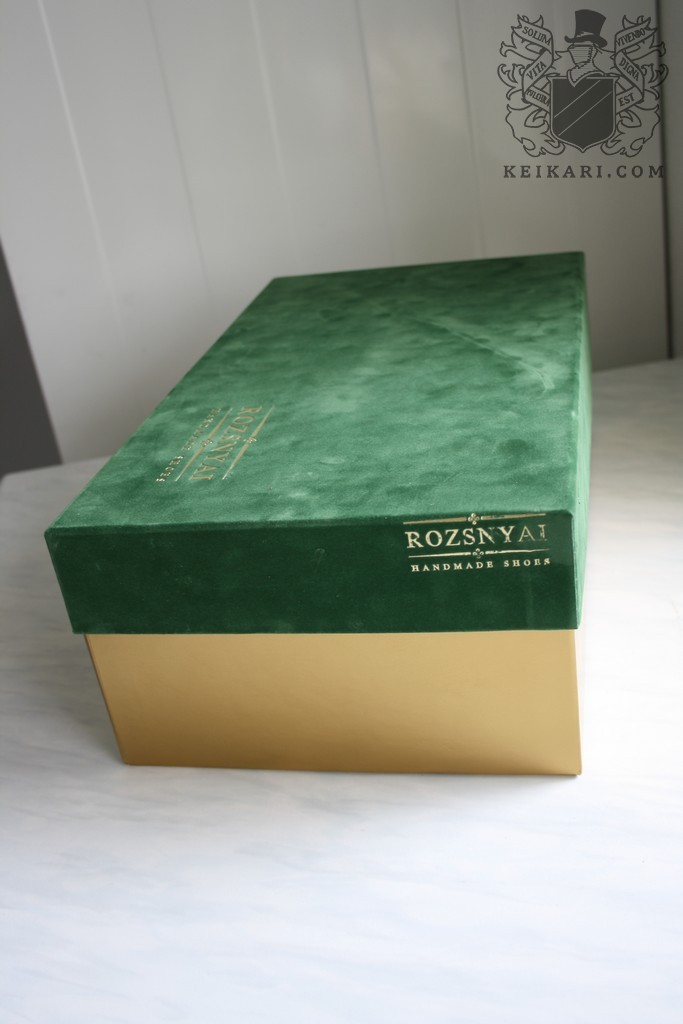
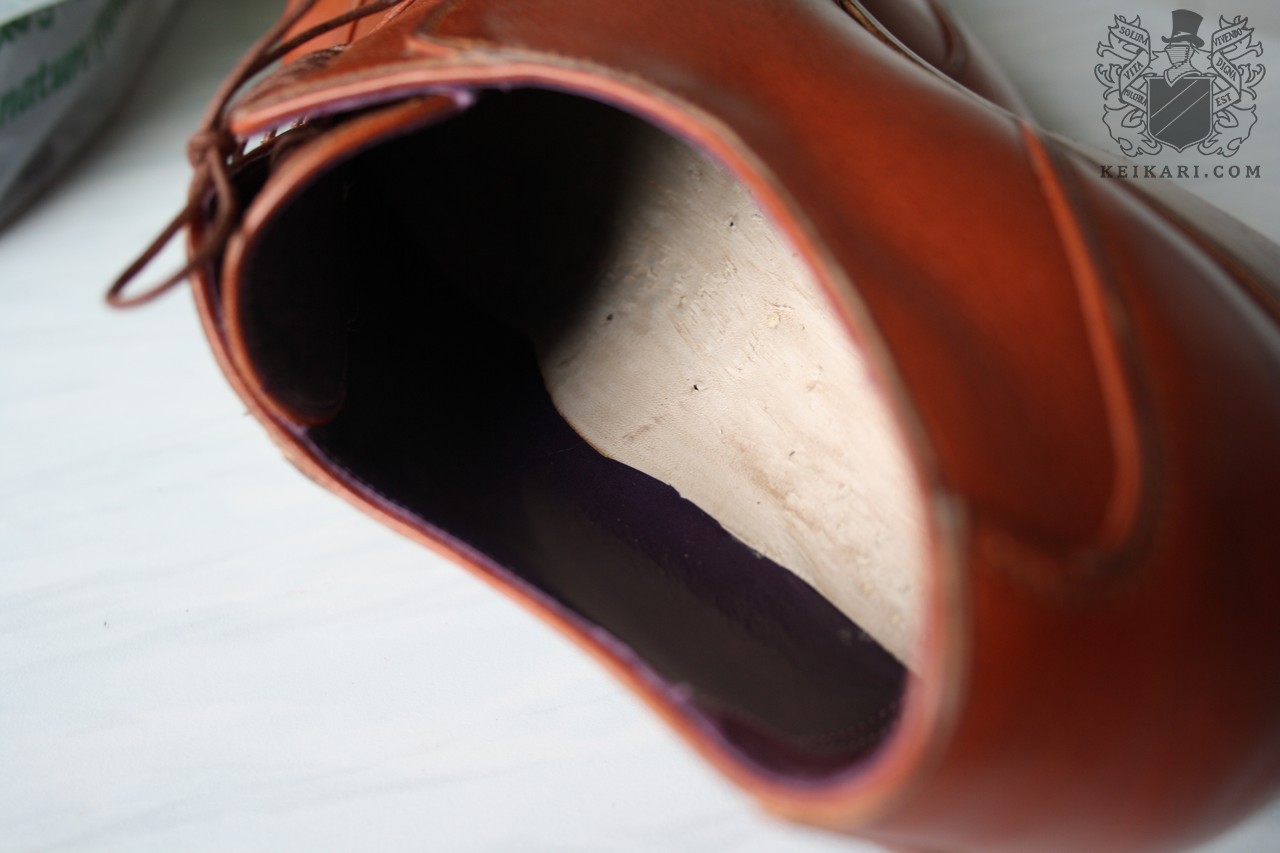
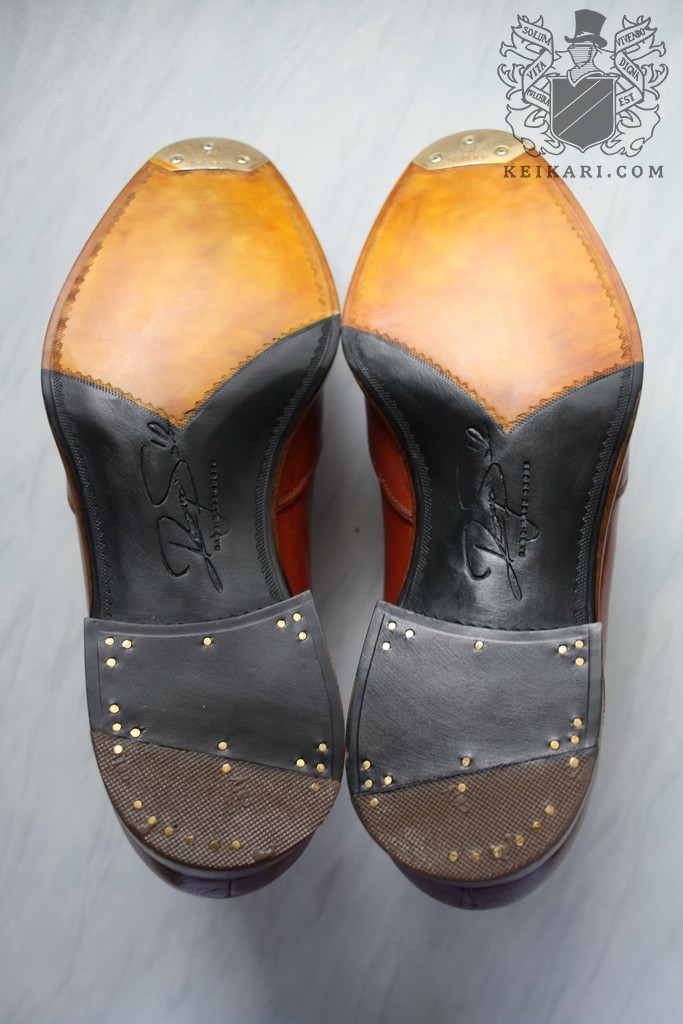
This latest post in a series on the fineries of Austro-Hungarian shoemaking picks off where the last Budapester post concluded. The newer example pair is a MTM austerity oxford in orange-brown Italian buffalo leather with round but chiseled toe, natural welt with white stitching, dark purple lining, flush steel toe guards and single oak bark leather soles with beveled waist. The pair arrived in a sturdy gold colour box with dark green velvet lid and wooden shoe trees.
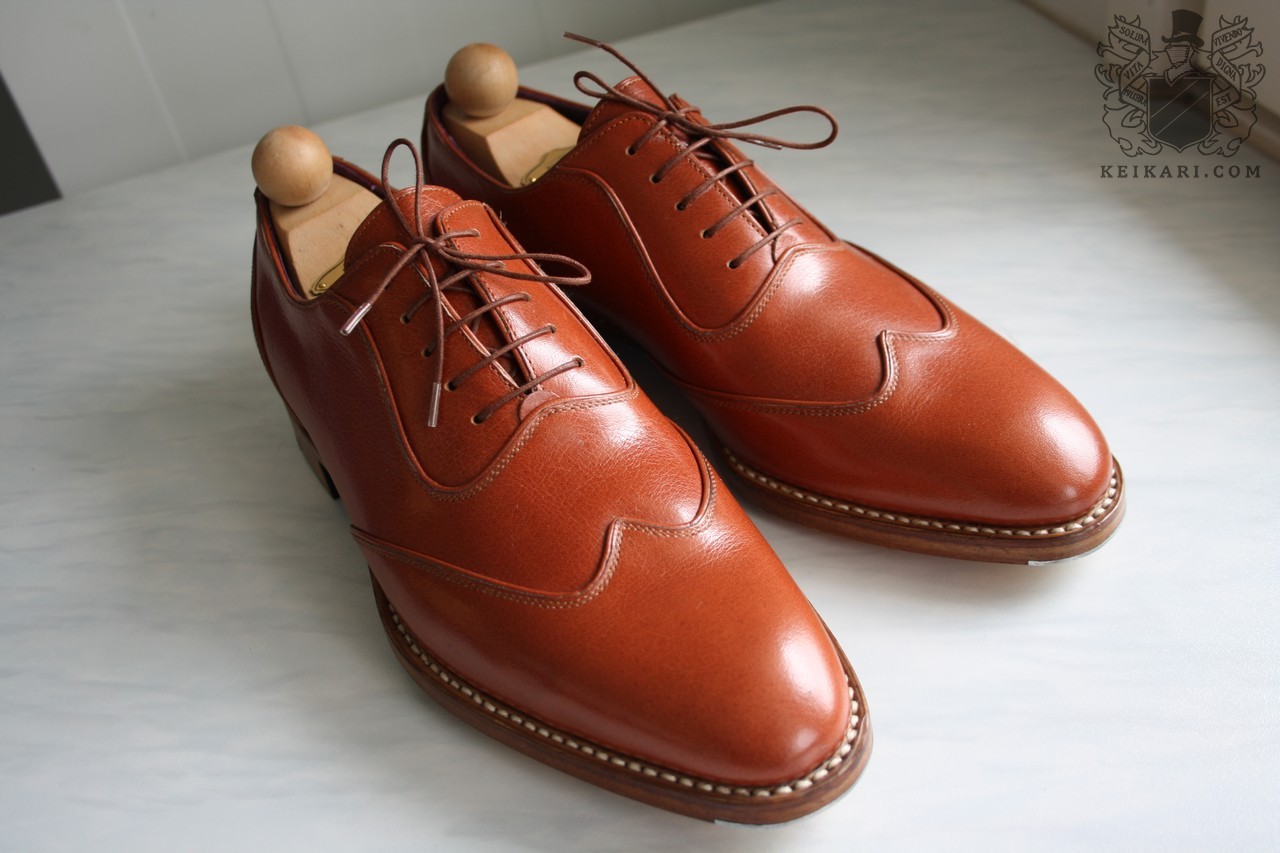
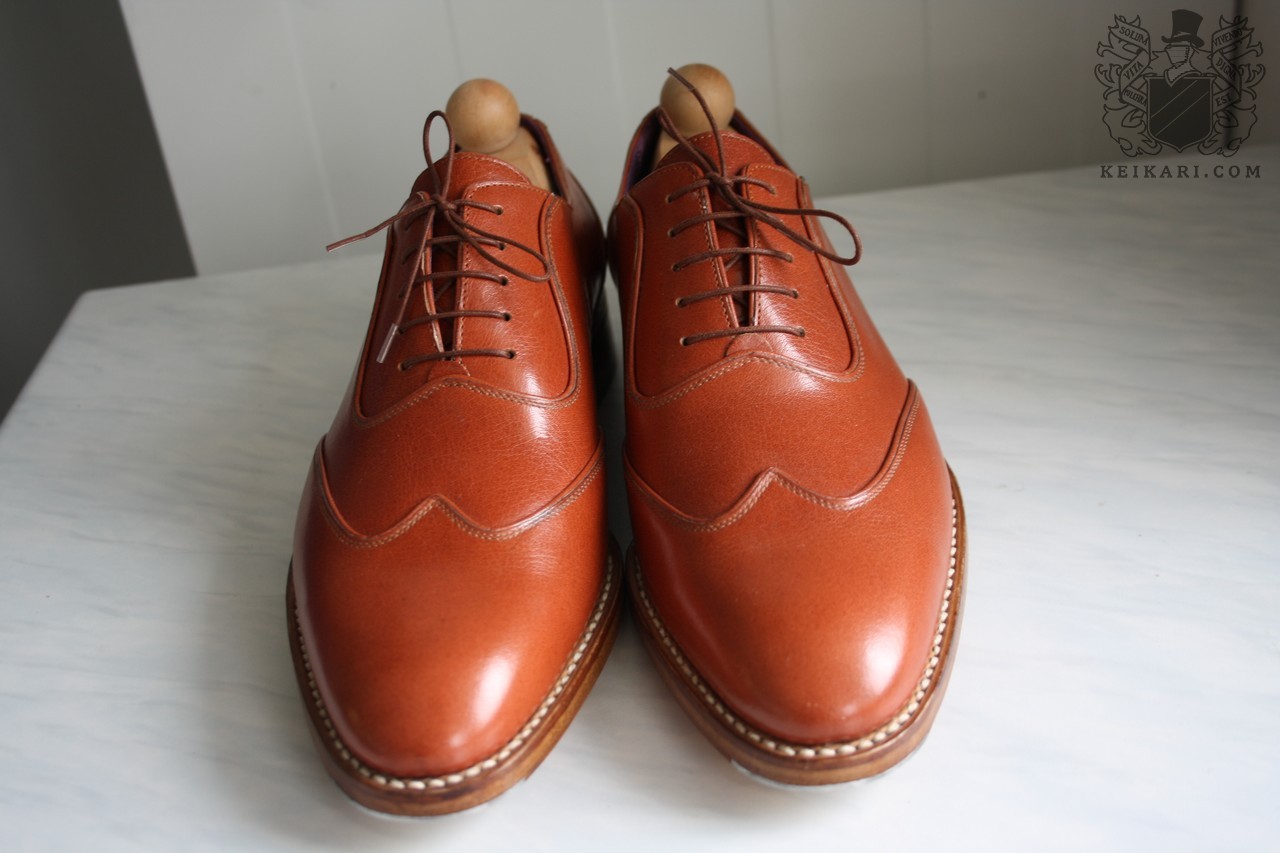
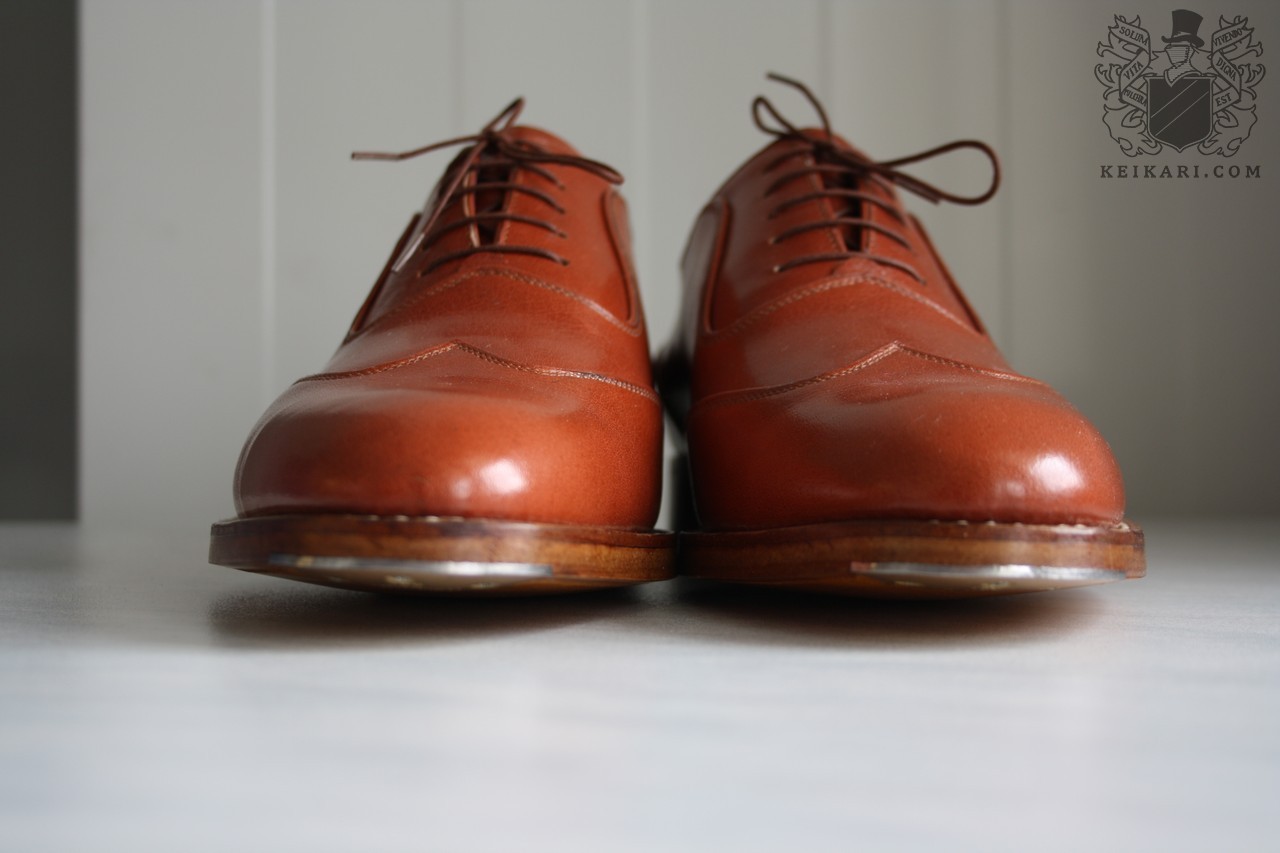
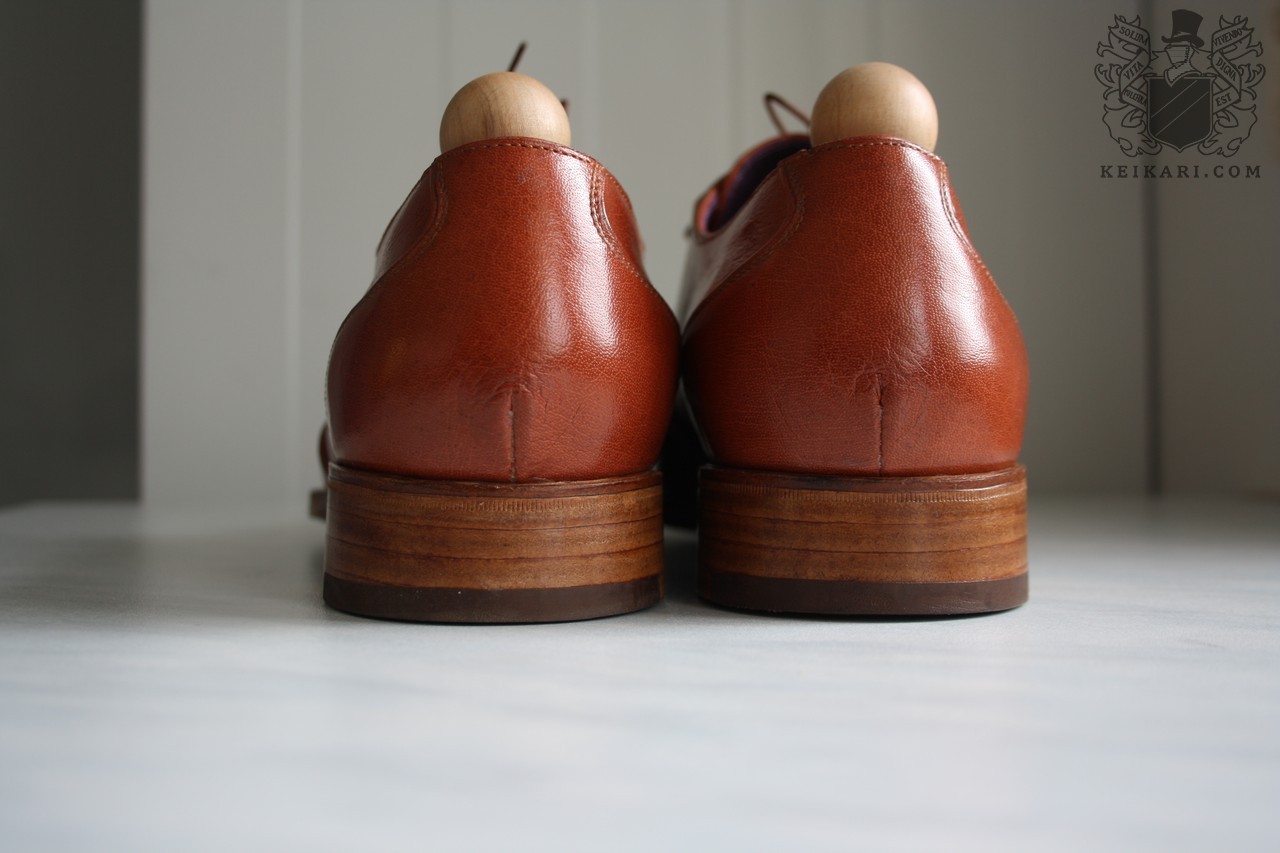
They were made with my measurements and choice of features, and a critical look on fit is crucial. These austerities fit closer than any other pair in my ever-growing collection. Somewhat thicker socks will do, but anything above three-ply will make an uncomfortable fit. The last was adjusted most at the heelcups, which will simply not bulge in any direction when worn. Again, this is something I haven’t experienced with other shoes and the sensation will need some time to accustom to.
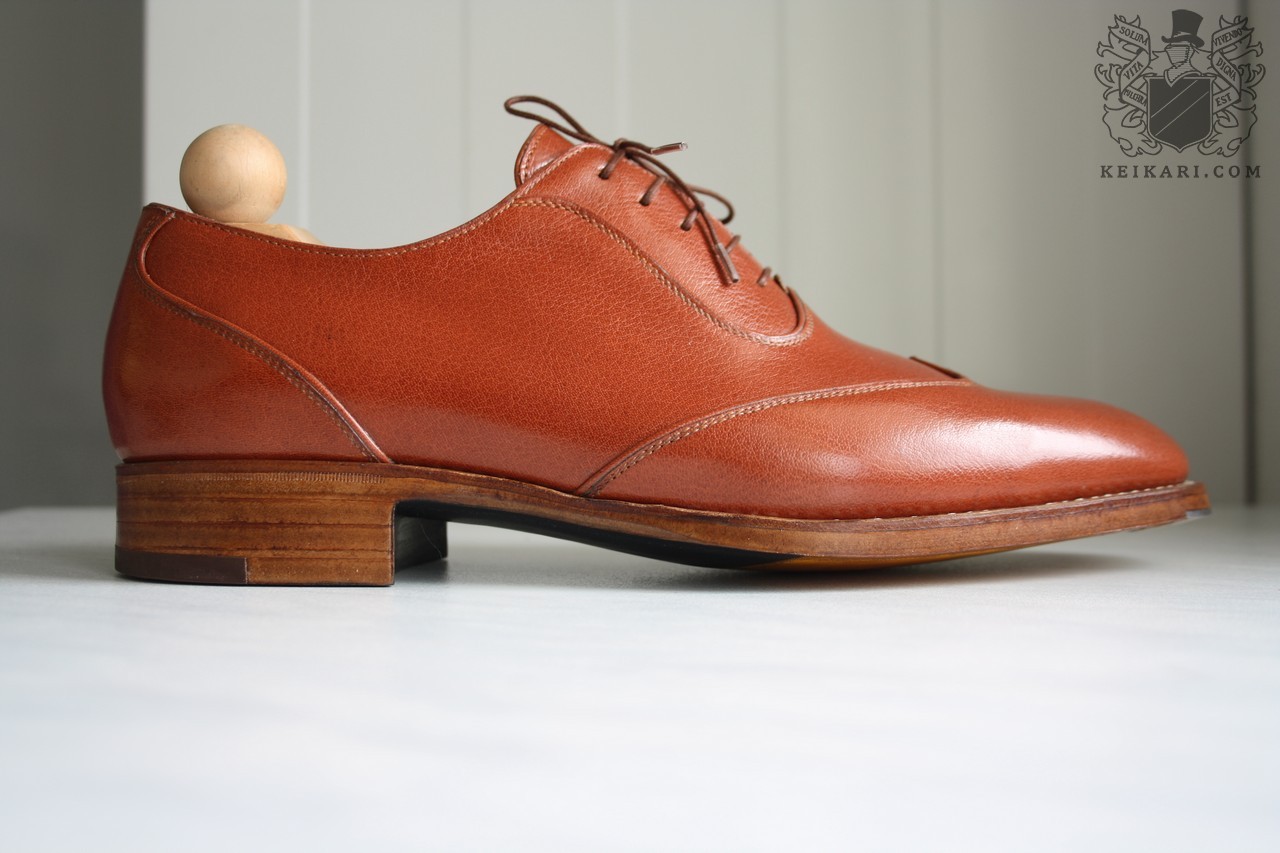
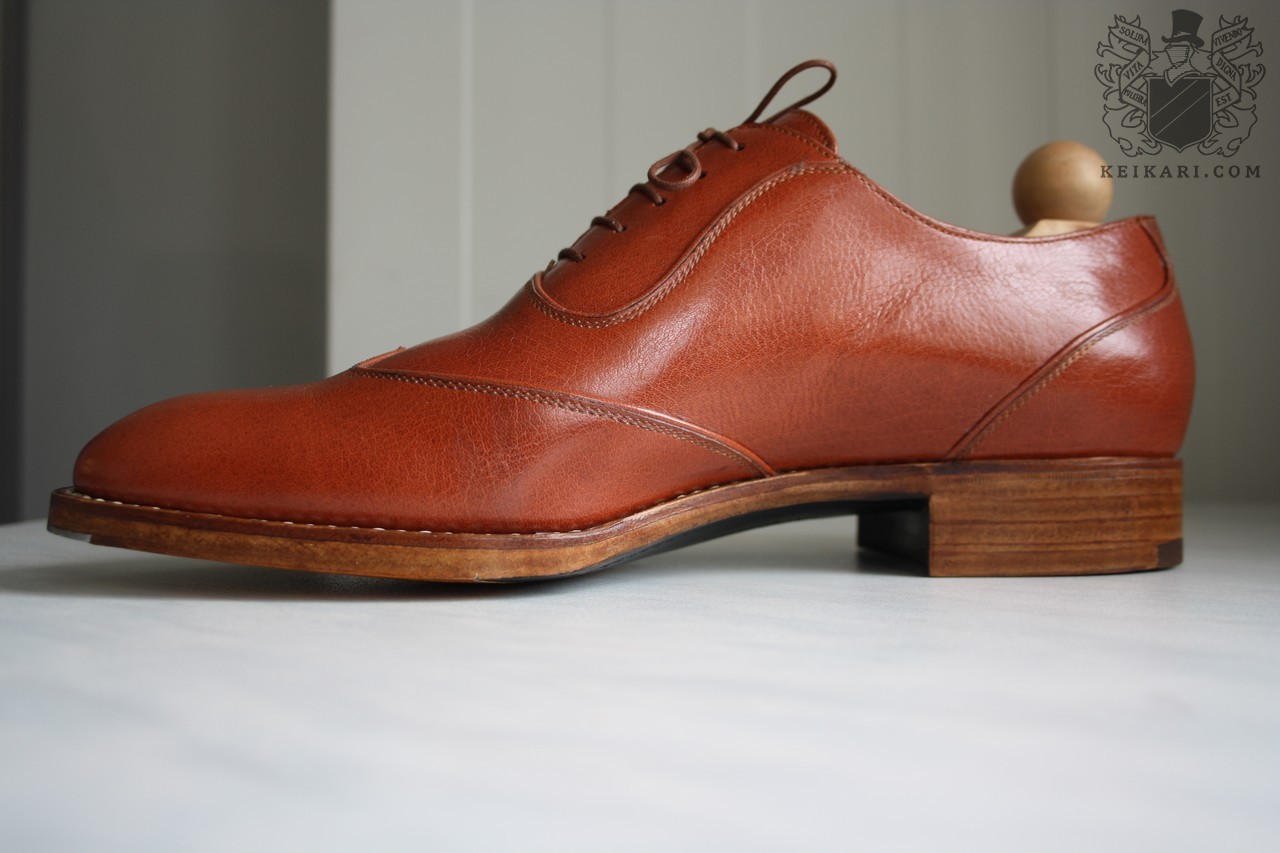
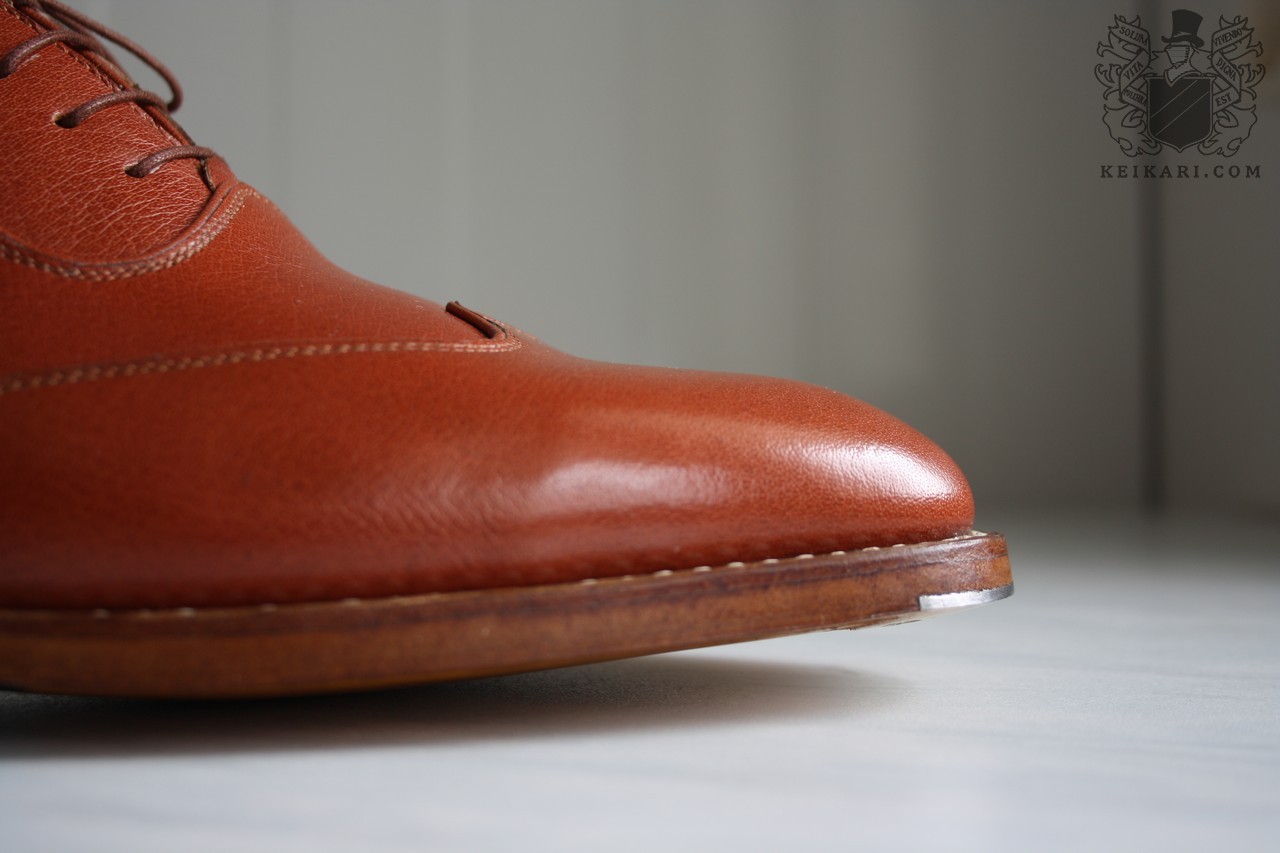
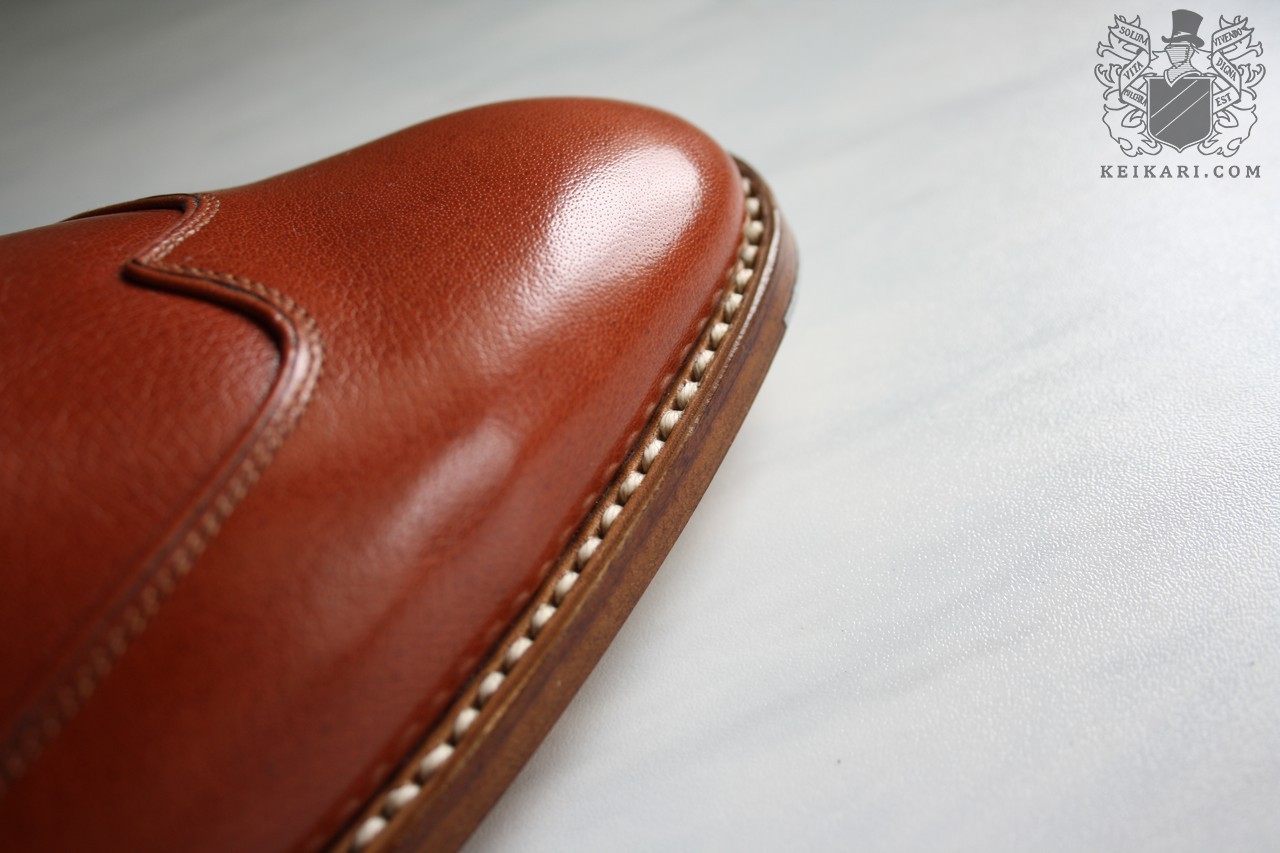
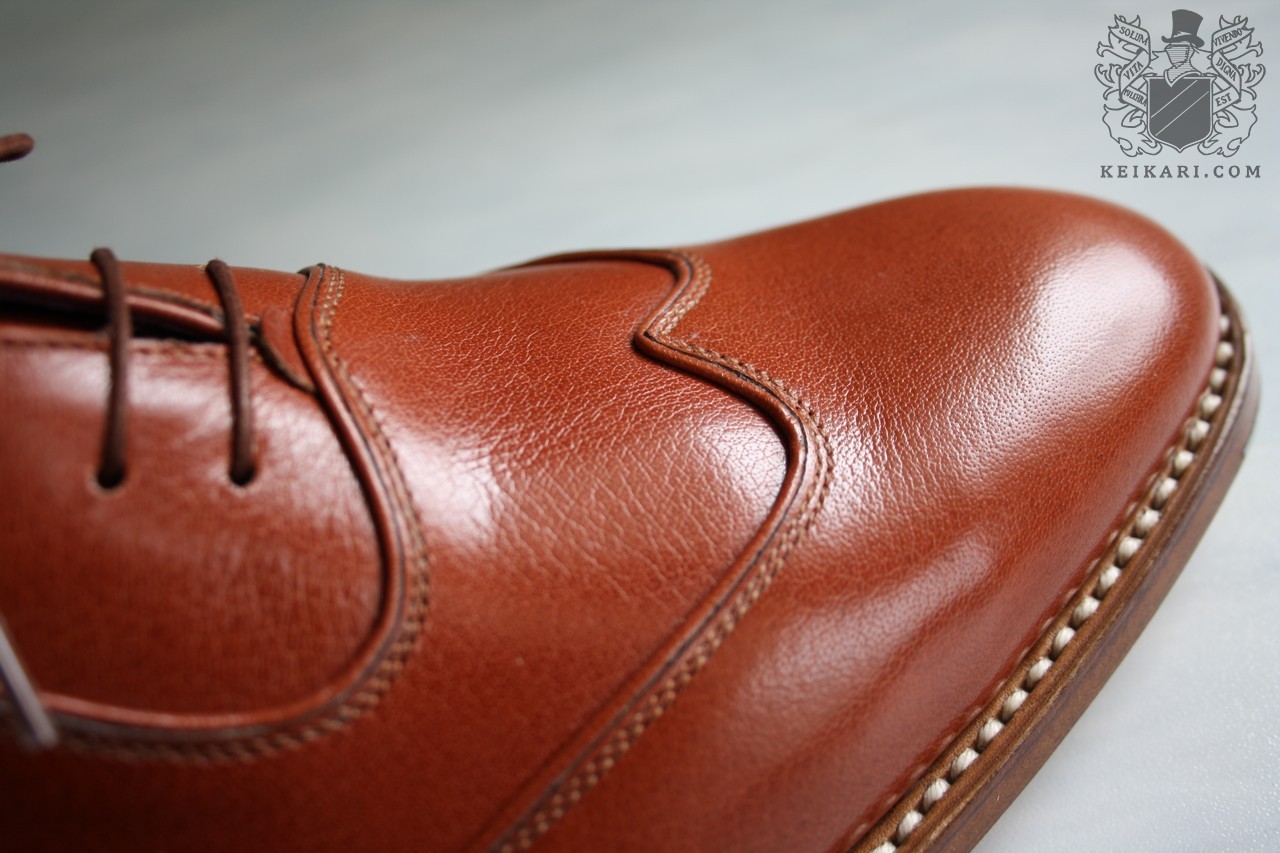
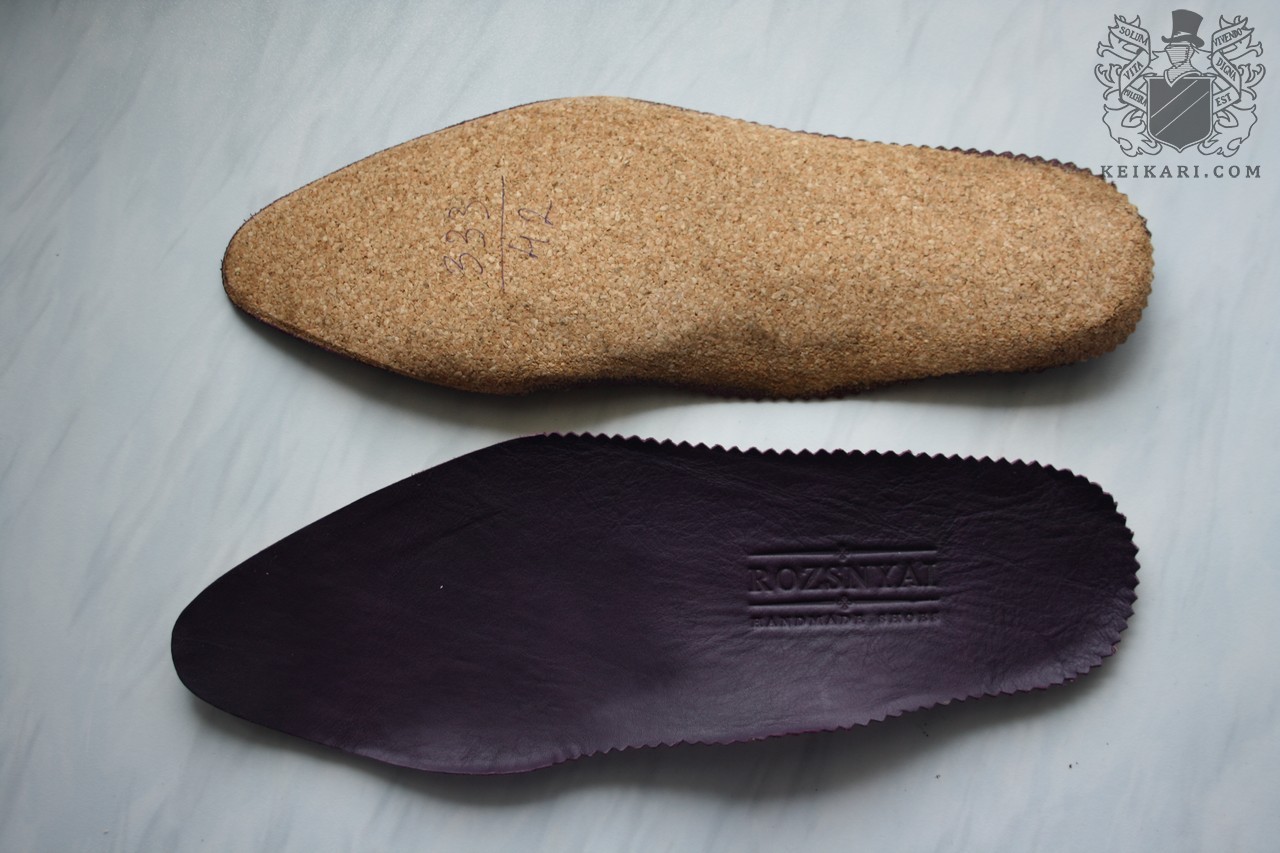
Some discomfort was due as the left pair isn’t as wide on the ball of foot as I’d prefer, but the upper stretched nicely with the help of simple wear and several layers of corn bandaids applied on the left shoe tree. This trick I found from Shoegazing.se, the Swedish gift to shoe nerds the world over. Apart from the very close fit, the pair feels different on pavement. They’ve hardly any cork under the midsole and any bumps or rocks do feel through the soles. This will also take some time to get used to. Like other Hungarian cordwainer wonders, the pair is very light and has the Rozsnyai house style features: leather stiffeners and arch support reaching almost to the vamp, lace keeper on the tongue, separate gimped cork sock liners and unfinished leather insoles.
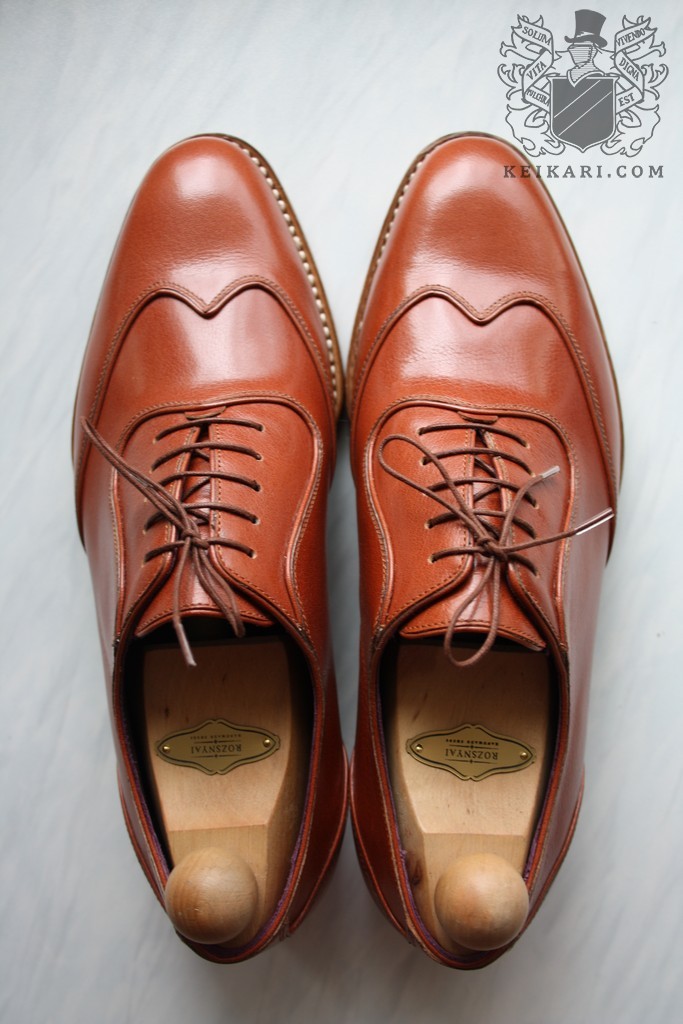
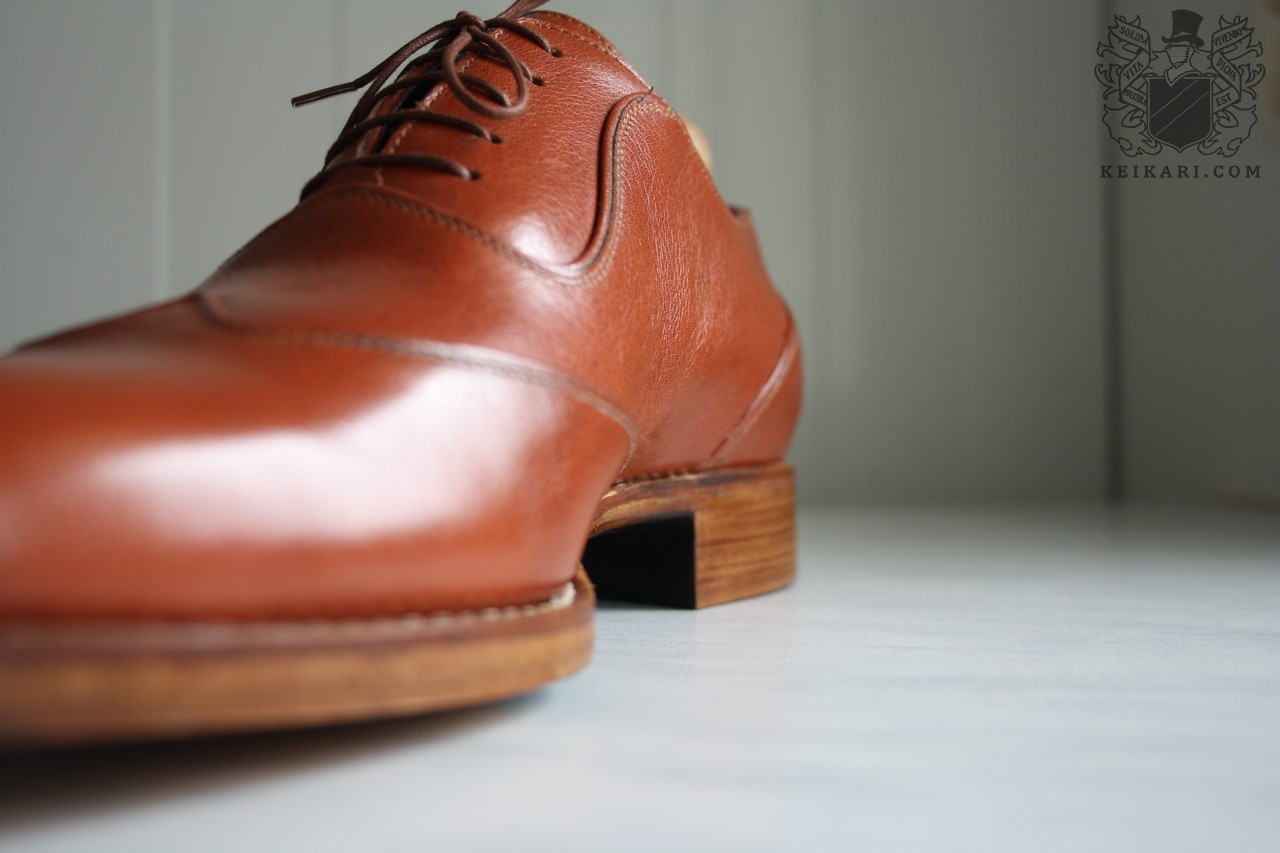
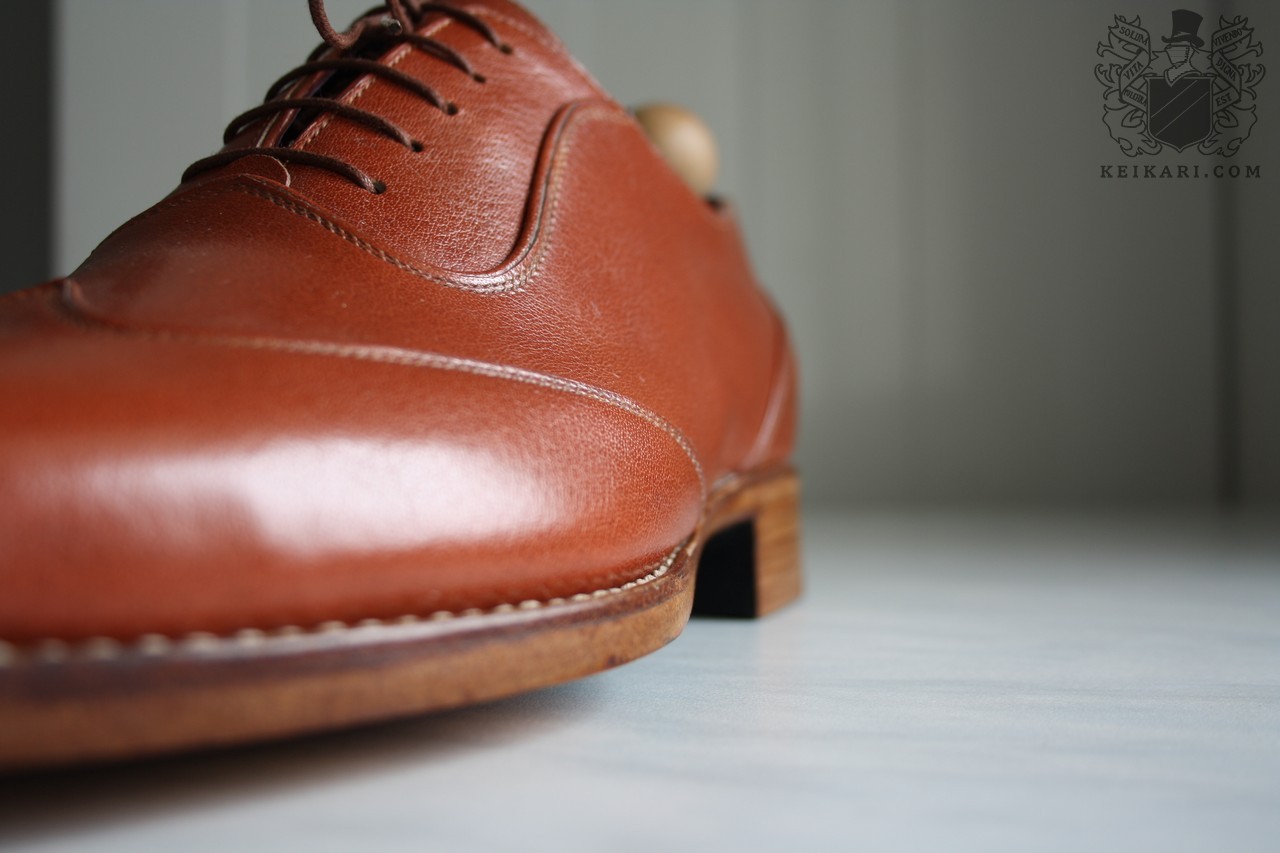
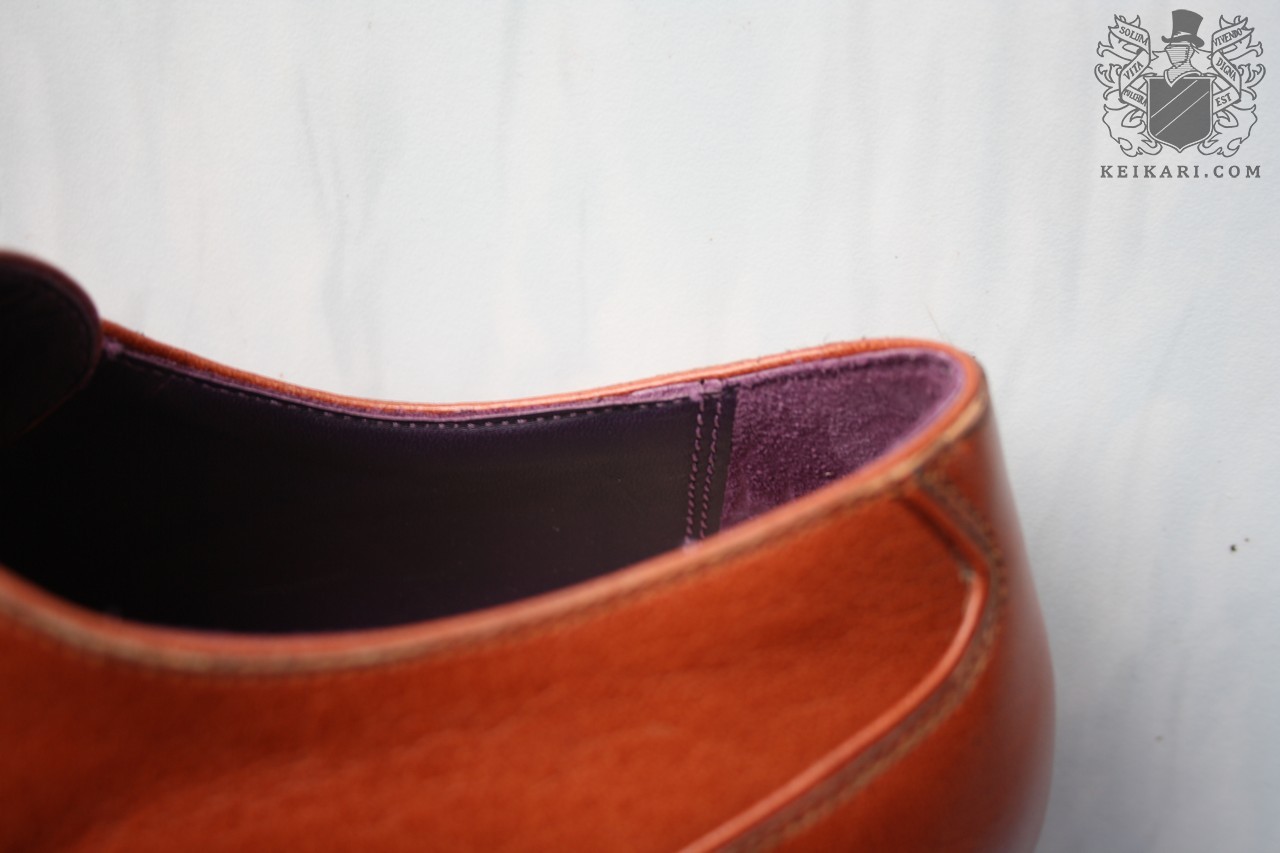
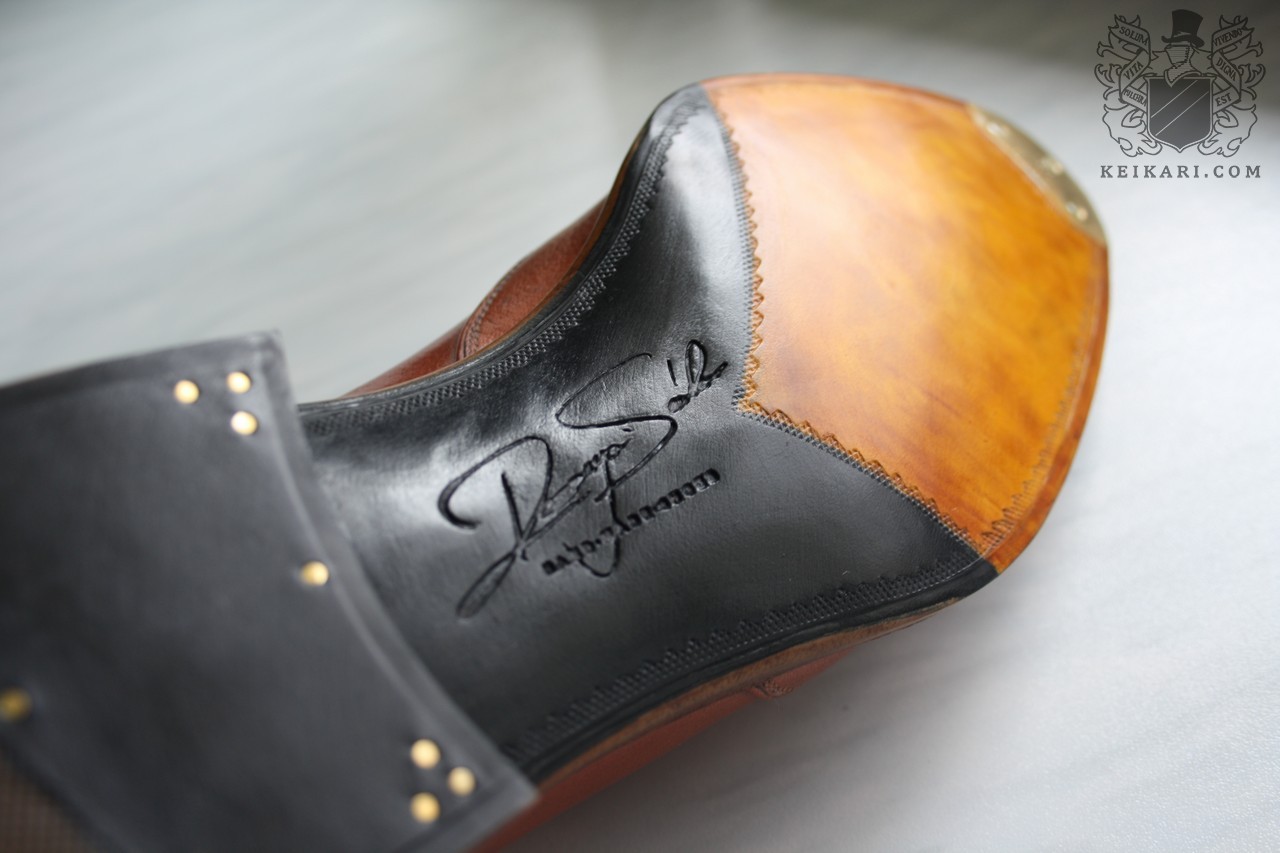
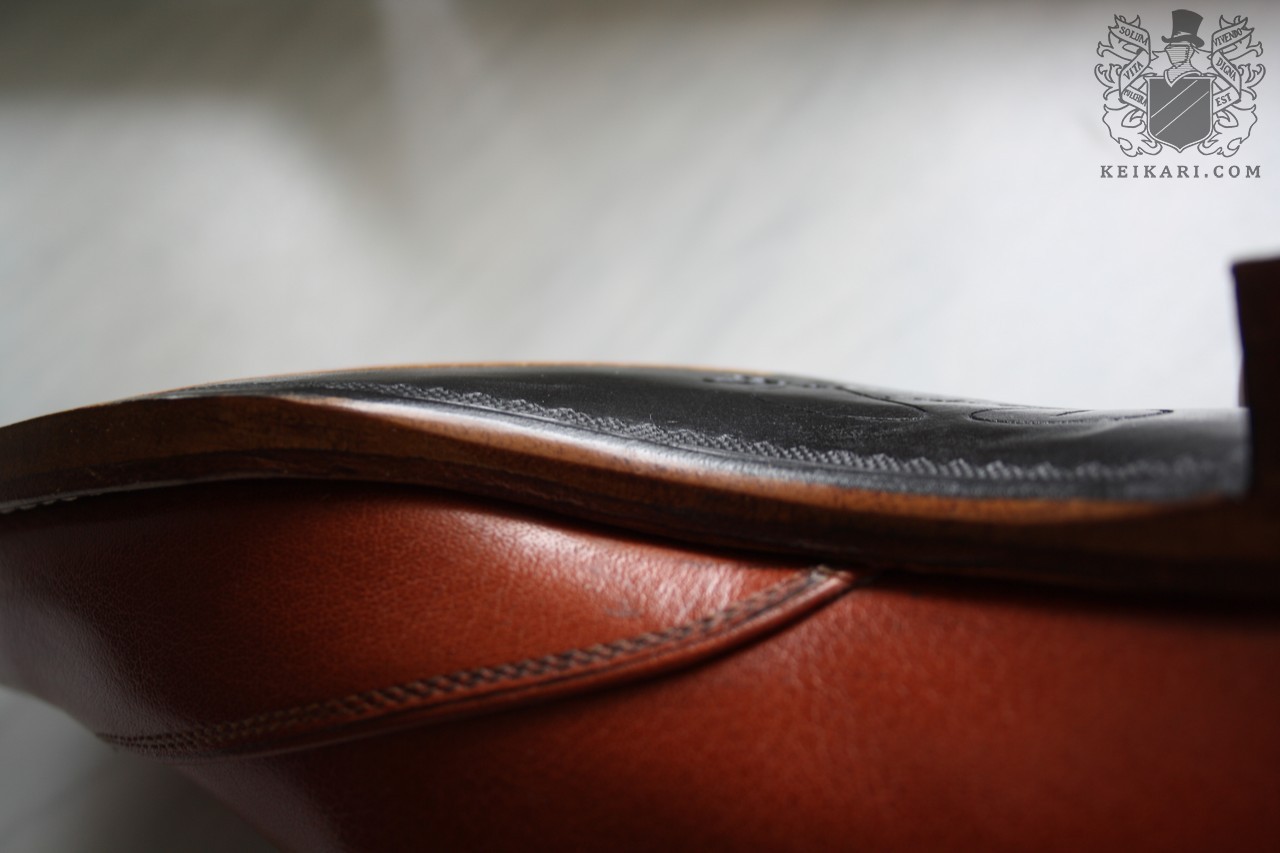
The smooth buffalo leather has a nice inner glow, and the photos attached were taken before any additional layers of shoe polish. While fine calf is baby bum smooth, the buffalo uppers have a nice surface grain that suits the brogue-less austerity style well. As for the beveled waist, it’s narrower and more curvaceous than those offered by, say, Edward Green, but not as aggressive as the likes on Gaziano&Girling pairs. They’re finished with the maker’s signature and black-yellow staining and wheeled details. I look forward to many comfortable years together.
A history of Black Watch tartans
0April 17, 2014 by Ville Raivio
The most common Black Watch tartan is a navy blue-dark green-black clothes pattern as well as one of the oldest tartans still in use. An official from The Scottish Register of Tartans tells me that the pattern’s history is unclear, but it gained favour after 1725 when the English government clothed its Royal Scottish Watch in this tartan. The band of brothers answered to the name of Black Watch to set themselves apart from the five other Highland companies. Several theories try to explain the name: the soldiers watched over Scottish Highlands, the tartan has very dark colours and the watch was formed from Scotsmen, who were used to rein in and keep check of other Scots. Bitter clansmen declared that those of the watch had black hearts.
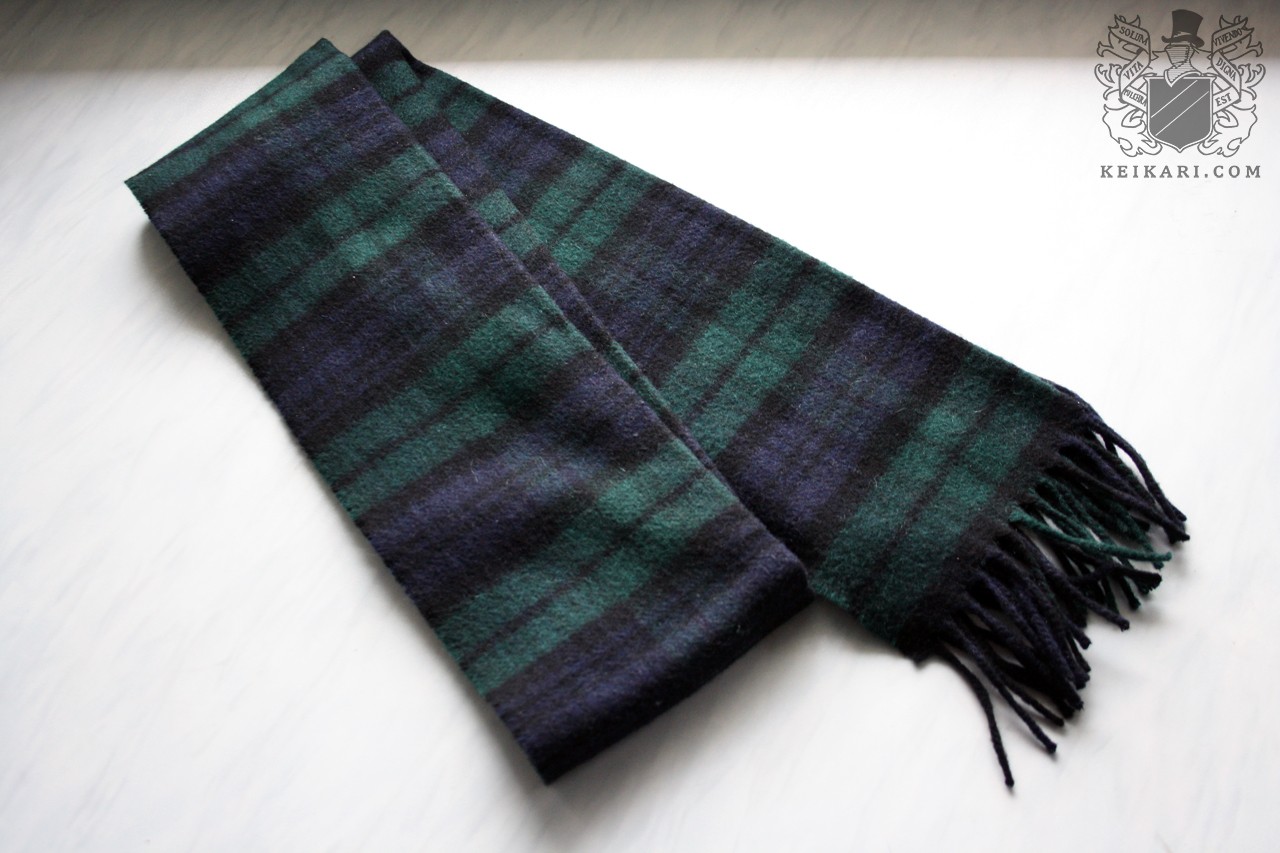
Bright tartans are best in separating men from each other, declaring membership to groups or in times of celebration, but the Black Watch, thanks to its dark palette, was camouflage on the moors and bushes before the age of camo fatigues. In The Scottish Register of Tartans this pattern goes by the name of Grant Hunting or Black Watch, but the dear old tartan has other names as well, such as Old Campbell, The 42nd Universal and Government (Tartan). Several variations on this theme are also listed, all with similar names and mostly dark colours. Along with the bright red Royal Stewart Tartan, Black Watch is among the most popular Scottish patterns of today. My little bird tells me that not many Scots look too kindly on the man wearing tartans to which he’s no familial or regional ties to, but while family and estate tartans are protected, Black Watch is free for all in any use. A universal tartan if ever there was one.
Should the reader feel like it, he can cover the whole body in Black Watch. It’s used in socks, trousers, suits, jackets, shirts, scarfs, so on, and because the colour shades are dark, it’s among the most serene tartans. The common Black Watch may also appeal to the man who usually frowns on gaudy, bright tartans. That old tip about using strong patterns in small amounts is a good one, but one can make an exception with Black Watch clothes thanks to these calm colours. The Royal Regiment of Scotland still uses Black Watch as an emblem of the 3 SCOTS battalion, and the tartan has been a symbol of service and courage for some three hundred years. It also happens to be one of the most beautiful tartans, and a personal favourite, which will not shy away from the company of any man.
Category British Style, Patterns
Copyright © 2013 Ville Raivio