Everything You Always Wanted to Know About PREP, But Were Too Stuck-Up to Ask
0July 31, 2014 by Ville Raivio
Everything You Always Wanted to Know About PREP, But Were Too Stuck-Up to Ask
By Mike Steere
Toledo Blade staff writer
For lack of a better word, we’ll stick to the label that has been so cavalierly sewn on the recent resurgence of classic conservative clothing – Preppy. What Preppy really means is someone who went to a fancy eastern boarding school, which is to say somebody whose daddy and grandaddy had pots of money. In clothing, the word denotes a style based on a small number of expensive, natural-fabric, subdued-color pieces. The things that have been worn for at least 35 years by the spoiled scions of old money.
The basic idea of preppiness is to look rich and as though you’ve been rich so long you don’t have to flash it. The hard part of it is that you have to look rich while wearing different combinations of a half-dozen garments that come in dull colors and crumple up as soon as you put them on. There are rules here. You can’t, for instance, money up your appearance with Las Vegas displays of gemstones. Nothing gaudy is allowed. Preppy is not an easy look. If you don’t FEEL preppy, you can’t possibly look preppy.
The idea is to wear a $250 blazer and $80 slacks like coveralls. Even if you got it last week, the prep ensemble should look as if you were born in it and that, at the time of your birth, your father was wearing the same thing. Prep knows no age. The basic prep components are about the same from high school through retirement. There’s nothing new here. For at least 35 years – through all the vagaries of fashion weather – the ship of classic conservatism has sailed on. The same people have bought traditional in the same places, and they will continue to do so until the last martini is mixed and the last bridge hand dealt.
If you want to wear these time-honored styles with authority, it is necessary to look like one of those people. With the newcomer to prepdom in mind, we have prepared the following short encyclopedia of prep.
The Preppy Look For Men
From Frank Kahle, owner of Neil’s Men’s Shop in Ottawa Hills, one of Toledo’s shrines to traditional clothing:
Like most people who are serious about this stuff, Mr. Kahle doesn’t like calling what he sells “preppy.” This appellation is merely a glib commercial label for a system of dress whose devotees are, like Mr. Kahle, religious. This man is an absolute fetishist for tradition. If a garment isn’t cotton, wool, silk, or lambskin suede, he wants nothing to do with it. To be a purist, he says, is to cultivate snobbery. Basic prep items, according to Mr. Kahle, are the all-cotton button-down shirt, cotton khaki trousers, Shetland woolen sweater, serge regimental-striped belt, wool blazer, and the various species of Ivy League shoe.
The khakis are “the jeans of traditional clothing.” Mr. Kahle also acknowledges the admission of blue denim jeans and corduroy Levis to prepdom. Regretfully. Ties ought to be silk, maybe wool or cotton for summer, in either a regimental stripe or Foulard pattern, (plain field with rows of little colored cells). The apogee of tie tradition is a burgundy and navy-blue regimental stripe. A true believer might have two or three of these. Mr. Kahle frowns on club ties, the ones with little sporty things like pheasants, golf clubs, or sailboats. A preppy pretender, Mr. Kahle says, can be spotted at 100 yards.
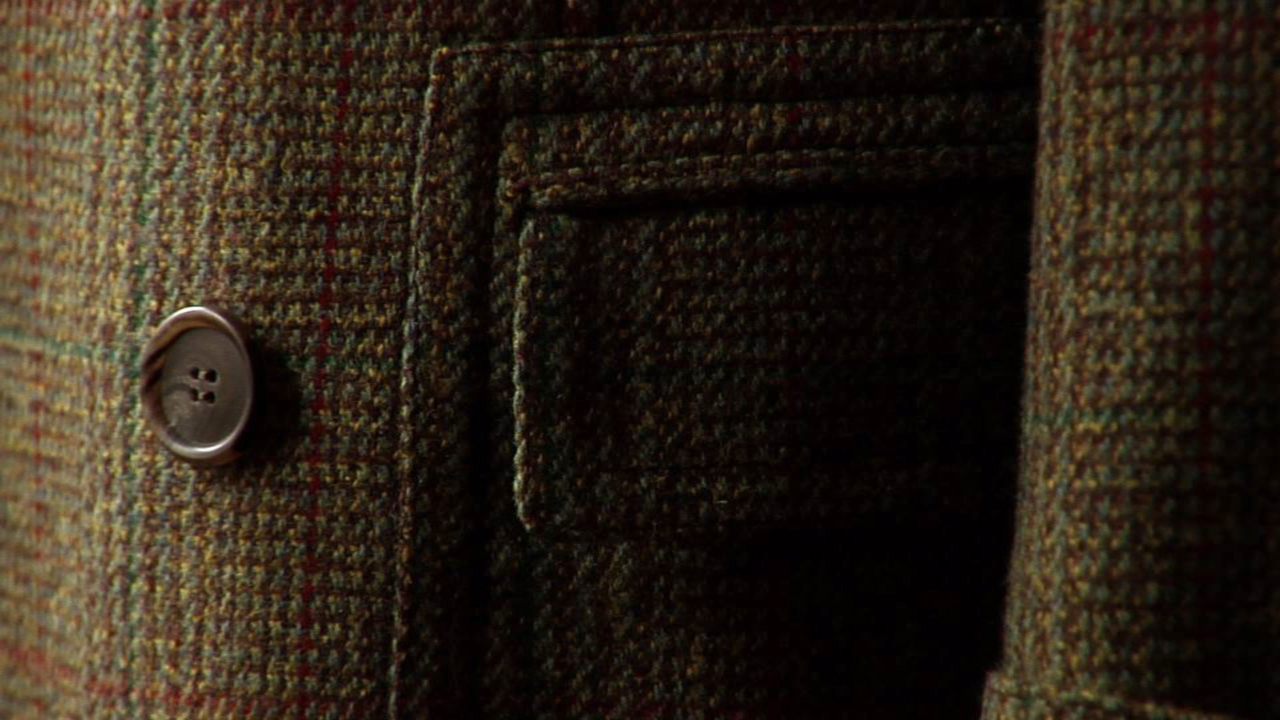
Suit or suit jacket shoulders tell the tale. Padded shoulders are very unprep, as are jackets with too much tailoring. True traditional clothing has natural shoulders and a sack shape. Count the jacket buttons. Two is unprep. Three is the thing. Pay attention to the rumple, Mr. Kahle says. Natural fabrics, unlike natural-synthetic blends, wrinkle. “Traditional clothing rumples, and it looks rumpled, and that is a very accepted, prestigious look.” Pills around the collar – those minuscule fuzzballs – are another sign of the unprep, Mr. Kahle says. The pills only form on synthetic-blend shirts, which are not part of the purist’s wardrobe.
Cuffs are the stuff of tradition. You can get by with plain-bottom khakis, but Mr. Kahle encourages cuffs on all trousers. The true believer doesn’t like new clothes. Certainly not new-looking clothes. The rapport between man and garment has to be relaxed and intimate, like old friends. Your sheepskin suede sport jacket (ultra-suede is absolutely outre) doesn’t come into its own for two years. Old preppy saying: “Weejuns aren’t worth a damn unless you’ve worn them in the shower.” Shoes should look broken-in. Shined, but never too shined. Shoe advice from Mr. Kahle for women: Don’t move into colored Sperry Topsiders until you have a standard brown pair. Always build from the traditional ground up.
The Look For Women
The garment vocabulary for women is more or less the same as the men’s prep pantheon – blazers, woolen pullover sweaters, oxford button-down shirts, penny loafers and slacks. Also on the list, according to Madonna Corrigan, fashion director for Lasalle’s, are knee-highs or textured hose, kilts (plain or plaid), berets, plaid pants or bermudas, trench coats, and pea coats. Jewelry is minimal. An acceptable piece, Mrs. Corrigan says, is the geometric pin.
The traditional dress code was established in men’s fashions, and most of the toniest prep women’s clothes come from companies that once belonged exclusively to men, Mrs. Corrigan said. The Old Villager company, for instance, was a man’s shirtmaker that began making women’s shirts. One day it occurred to the owner to lengthen the woman’s shirt, and so the shirt dress was born. An original Villager shirt dress is fabulously preppy. The rules of prep dress aren’t quite as rigid for women, Mrs. Corrigan says. There is room to play with colors and textures.
The traditionally dressed woman can, by making very small adjustments, transform her look from the school-girlish true preppy to a classic professional or dressy appearance. Penny loafers and argyle knee sox yield preppy, and textured hose and low pumps mature the appearance. Good women’s traditional clothing is of the same weight and quality as corresponding men’s items. And the cost is about the same. The trend toward high-priced taste is a sign of the economic times, Mrs. Corrigan says. The initial outlay for classics is high, but clothes of this caliber are investments that pay off over the years.
The Body
For men, broad-shouldered and athletic, but never overmuscled. Preps pushing 30 are sleek in a slightly dissipated way, the sort of body that is build on a regimen of martinis and light exercise. Preps are never fat or overly robust. The prep body doesn’t call attention to itself. It is a rack for expensive clothes. Prep women, like prep men, shouldn’t have overly generous proportions. This is a very good year to be flat-chested. Preps should cultivate a sallow tan – outdoorsy, but not baked cocoa-brown. All things in moderation.
Parameters of the Preppy Life-Style
Anomals: Dogs can be very preppy. Tops are floppy, affable, big breeds that swim and retrieve. The Golden Labrador is as preppy as anything sold at Brooks. Any bird dog with a high-price pedigree is acceptable. It pays to spend a little extra for a distinctive breed. English setters, for instance, are preppier than Irish setters. Avoid miniatures and long-haired Orientals. If you must have a cat – a big tabby with a name like Bob, who has a few funny eccentricities, can dress up a prep household. No show cats.
What to find in the mailbox: Fraternity newsletter, alumni-association fund appeal, Bergdorf Goodman, Inc., fall catalog, and a letter from anyone on Nantucket.
Wheels: Two seater convertibles. Sport car names with age – MG, Triumph, Austin, Fiat – are high on the prep list. The Japanese are building tremendous sports cars, but Datsuns and Mazdas somehow don’t achieve preppiness. It’s tradition, not how the thing runs, that counts. Classic Mercedes coupes, Jaguar XKEs, and restored Morgans are the absolute pinnacle. For family preppies, a green Volvo wagon.
Smokes: Any American brand dating before World War II. The serious preppy smoker shuns filters. Smoke whatever dad smoked. English imports like Players are a very preppy option. Nothing funny-colored, too long, or menthol. For those who are quitting or cutting down (a very preppy thing these days), Benson and Hedges lights.
A preppy memento: Stateroom key from the R.M.S. Olympic (sister ship to the Titanic). Grandmamma’s 1927 crossing.
Labels: Brooks (of course), Villager, J.G. Hook, L.L. Bean, Hickey-Freeman, Pendleton, Cole-Haan, Sperry, Etienne Aigner, Burberry, Izod, John Henry, Bass, Evan Picone, Calvin Klein, Sero, Troy Shirtmakers Guild, Southwyck.
Numbers: For men, 3-1/2. In inches, it’s the correct width for jacket lapel, tie and shirt collar. The cuff on pants is 1-3/4 inches deep.
Jobs: Preppiest of all is an easy berth in Dad’s or Uncle’s company. Lawyer, accountant, or banker will do. It is very preppy to follow in male ancestor’s footsteps. Medicine can pass; if done in the correct, relaxed spirit. A preppy wants most of all to be able to wear fabulous suits to the office, take long lunch hours, and get away early for squash or skeet shooting.
Politics: GOP, as if you didn’t know. Distant involvement in politics, which to the true prep is a mite unsavory, like food wholesaling or auto parts.
Fun and games: Sailing, tennis, or any other racket sport, fly-fishing, volunteer work, tailgate parties at the alma mater’s football games, grouse hunting, and bridge. In all things the true preppy is a very sporting second-stringer – a better cruiser than racer. Marathon running, although very chic, is not preppy.
Colors: For everything. Khaki, forest green, charcoal, maroon, navy-blue, white and camel.
Libations: The operative word is clean. Martinis, very dry. Scotch by the label. Bombay Gin. For mixers, tonic, soda, or water. Sipping sherry is acceptable, as is after-dinner liqueur, or brandy. Preppy soft drinks are apt to be gin drinks minus the gin – iced tonic or soda water with a lime wedge. Preppiest citrus is grapefruit juice. Booze is in decanters at home. For travel, silver flask with granddad’s initials.
Food: Fresh, never frozen. Meat cut to order. The prep-steak is New York strip 1-1/4 inches thick. Nothing from cans. Marketing is four-or-five stop adventure. Preppy moms bake secret-recipe oatmeal cookies for little prepsters. (Chocolate chips might make them break out).
Branch of service: Navy.
Habits: Regimentation – ordered and secure. No oversleeping. Social calendars. Little leather notebooks with lists of things to do. It is very preppy to slavishly follow any personal pattern observed in one’s family for three or more generations, whether or not it makes sense.
Prepourri: Helly-Hansen foul-weather gear. Wooden-shafted golf clubs. Watches worn inside of the wrist. Tortoiseshell glasses’ frames (See color photos of John Dean in Senate Watergate hearings). Gladstone bags. Anything British. Last year’s Topsiders repaired with sailing twine from dunnage bag on Uncle Roy’s ketch. Ancestor formerly on the board of Pierce-Arrow Motorcar Co.
Where Ivy League Traditions Began
The men’s Ivy League clothing traditions on which preppy fashions are based emanate from Brooks Brothers in New York. This classic look might as well be known as the Brooks look. The venerable clothier, established in 1818, started and perpetuated the traditions of “traditional” clothing. Brooks, according to a company spokesman, introduced the button-down collar about 1900, after one of the Brooks family had seen British polo players with collars buttoned down so they wouldn’t fly up during games.
At Brooks, the button-down is still called the polo collar. In 1890, Brooks brought over from England the silk Foulard necktie. The company introduced the Shetland woolen sweater for men in 1904, and they began selling the crew-necked woolen sweater for women in 1912. The pink shirt for men – absolutely nothing is preppier – was born at Brooks Brothers in 1890. Women got pink Brooks shirts in 1949. Seersucker and cotton cord are Brooks innovations from the 1930s.
Brooks gave birth in the United States to Argyle hose. In 1918, the company made its first natural-fitting, three-button suit. Formerly, suit jackets had four buttons. Brooks was also responsible for the first cotton-and-polyester blend shirt, an innovation which clothing purists won’t wear. The coming-together of all the components of today’s preppiness didn’t transpire until just before World War II, the Brooks spokesman said. And the establishment of the “classic” collegiate look didn’t occur until after the disruption of campus life occasioned by World War II.
The Shoe
Guess – you’ll never get this one – how come the G.H. Bass and Co.’s classic penny loafer is called the Weejun? It is not a cute contraction of an Indian name, an entirely plausible etymology for a hand-sewn moccasin made in Maine. Weejun is short for Norwegian. The basic uniform shoe of prepdom is an import from Scandinavia. According to Joseph Peach, Bass marketing director, Bass family members saw the shoe in Norwary in 1936, and bought permission to bring the design back home.
The distinctive yoke across the front of the shoe is for reinforcement, Mr. Peach said. He doesn’t know if the decorative slit was designed to hold coins, or how and when the first penny was put into the penny loafer. The Weejun as we see it now is the way Bass began building it in the late 30s. Rolled leather on the sides and heavily decorative stitching are penny-loafer innovations introduced by other companies. It wasn’t until the late 50s that the penny loafer became a collegiate standard. One of the earliest indications that the Weejun was becoming a campus must-have was a1960 note in the University of North Carolina Daily Tar Heel. Those “with-it” just had to have Weejuns, the Tar Heel said. Prep-crazed 1980 Americans are buying Weejuns as fast as the company can make them.
First published in Toledo Blade 27.8.1980.
Category American style, Reading
In praise of Berg&Berg
0July 27, 2014 by Ville Raivio
The attentive reader will notice that Keikari flies the banner of Berg&Berg. I still wish to remind him that I was interested in the company long before it decided to join virtual hands with me. A quick search on these pages of mine will also show that I’ve only written two posts of B&B, and this here is the other. Advertisers have very little say on Keikari’s content and my praise is not for sale. Today I want to sing Berg’s praises gratis. How do I love B&B? Let me count the ways.
First, the designs. I’m sure there are thousands of men’s accessory webstores and very few of them own their manufacturing factories or small-scale ateliers. To set a company apart from the rest, it must offer either price-quality deals, excellent selection, unique designs or a “brand” concept. You will notice the quote signs as I loathe that word, which substitutes actual clothing with concepts, mental images, anything but very good clothes. Berg&Berg’s designs are mostly interesting, different, contemporary. They remind me of Drake’s without the high prices.
Second, the colour range. B&B offers a great selection of colourful accessories in many forms. Socks, ties, scarfs, bowties, leathery charms are not limited to blues, blacks, greys or browns only, which have their uses but become dull as time goes by. Patterns, too, offer excellent options for combining apparel in a surprising, inventinve, interesting way.
Third, the prices and manufacturers. While Berg&Berg owns no factories or shops, they have selected careful makers and offer clothes for good prices. Knitwear from Johnston’s would usually retail for much higher prices but J. for B&B is another thing entirely. Bresciani guarantees socks of interest. Most ties cost less than 100 euros and bi-annual sales offer great percentages off. Stock clearances are better still.
Fourth, the look. B&B has been awarded in Norway for their webstore and visual look, comprising packaging, invoices, stickers, tags, the whole deal. It’s clear, minimal and instantly sets them apart.
Fifth, I actually find myself waiting for Berg&Berg’s latest Summer/Spring or Autumn/Winter collections. Not that I’d take of each accessory, but I’m always waiting to see what Karin and Mathias have come up with. It’s not collections as fashion but style. A few examples of things that I’ve stored in my mind or wardrobe: slim cashmere-merino high shawl collar knitwear, coarse purple silk grenadine ties, marled or wavy or combed or zibellino-fur-like cashmere scarfs in all the colours of the rainbow, suede brogue-punched leather belts and socks with pattern and colour combinations that would make the late Duke of Windsor proud.
Category Quality makers, Web stores
The Arbuturian with Timothy Everest
1July 26, 2014 by Ville Raivio
Ash J. Lipkin, whose name might as well be a character in one Dickens novel, met Timothy Everest a few years back. The interview in the pages of The Arbuturian is extensive, and covers the story of Mr E.’s business, the British “New Bespoke Movement” of the ’90s and the latest company arrowhead of bespoke casual wear.
Delight in Disorder by Robert Herrick
0July 19, 2014 by Ville Raivio
Category Quotations
Interview with Gianluca Migliarotti
0July 18, 2014 by Ville Raivio
VR: Your age and occupation?
GM: I’m turning 40 in July. I’m a director and producer, a film-maker, I guess.
VR: Your educational background?
GM: I’ve studied at NYU film school and at The Lee Strasberg Theater Institute.
VR: Have you any children or spouse (and how do they relate to your style enthusiasm)?
GM: I have a girlfriend but no children (yet). My style enthusiasm is a very personal thing that I think I’ve always had. I and my girlfriend are different; I know she appreciates my vision but she has other interests, and I like that.
VR:…and your parents and siblings’ reactions back when you were younger?
GM: They have always been very open-minded and have always supported me in my choices, even though they were always worrying.

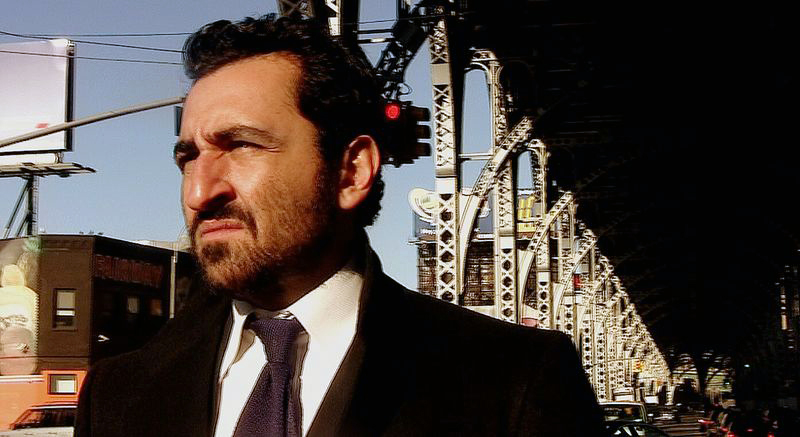
All stills from O’Mast by Gianluca Migliarotti
VR: What other hobbies or passions do you have besides apparel and moving pictures?
GM: One thing I like about my vision of life, which is something you cannot project or design, I think, is that I’m interested and fascinated by a lot of different things: the concept of quality overall and the expression of the self through arts, especially paintings and photography. I’ve always been interested in cars and motorbikes too, and I observe everything that has an interesting aesthetic and performance. Traveling is wonderful and meeting people and different cultures has always been a must for me.
VR: How did you first become interested in clothing, and when did you turn your eyes towards classic style? Why classics instead of fashion?
GM: I grew up in Naples in a family where the male side had already this custom of going to the tailor and to the shirt maker. My father is a real connoisseur in terms of bespoke suits and my uncle used to be a very elegant man himself, a little more focused on vanity, though. I’ve always had this interest in aesthetics it seems and I’ve been through different periods of style; I’ve been a motor biker, too, one of those tough-looking guys with boots and leather jackets. I was searching inside me, because I think that dressing is a language and you have to find your own.
But I have to admit that I’ve always been bonded to classic Neapolitan style and the quality of bespoke suits. It’s very personal, but believe me, when I look at some details in my jackets, I still get excited like when I was a teen. Fashion is interesting to research, but it cannot have that quality in terms of thr product and it doesn’t even look for it; it’s all about surface and this, I think, pushes it far from elegance.

VR: How have you gathered your knowledge of apparel — from books, in-house training, workshops or somewhere else?
GM: No, simply by observing and using clothes, asking questions from my tailor and so on. It’s all about experience, I guess, and a sense of things. I’m not a very technical person and I’m not very interested in the technical details, but I think I have a strong sense of quality.
VR: How would you describe your own dress? Have you any particular style or cut philosophy?
GM: For suits and sport coats, I can only say that it’s the purest Neapolitan style, the real Vincenzo Attolini style that I can now see only in the cut of a few tailoring houses. I obviously mix it with more international ingredients, playing with colors and fabrics, especially in shirts. I like to put in some rock’n’roll. Nothing too crazy, though. I used to like dandies, but I now find them over-designed. Elegance should be natural.
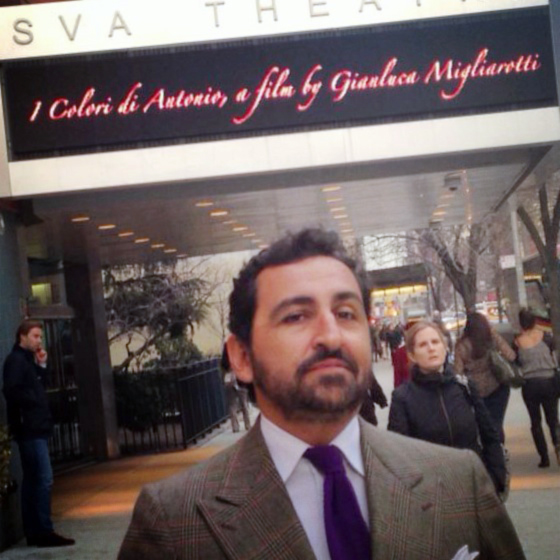
Antonio’s Colours, the second latest from GM
VR: Which shoemakers, RTW clothes makers or tailors do you favour today?
GM: I like Edward Green, Crockett&Jones and Carmina for shoes. For RTW, I do not like many things but I’ve tried a RTW jacket from Sartoria Formosa that was almost a bespoke piece. I tend to be very loyal to my tailor; therefore this is what I really like, even though, if I had to go for a Casentino coat, I would obviously choose Antonio Liverano. It depends on what you need; for example, a smoking jacket has to be from Savile Row.
VR: Please describe how you fell in love with films, and why you chose documentaries over other art forms.
GM: I started to feel the need to tell stories, I mean any story I found interesting. Catching reality is the most exciting and direct thing for me, therefore I chose documentaries as my form of story telling; though there’s the financial part, too, ‘cause docs are less expensive to produce.
VR: While we’re on the subject of moving pictures, which directors have affected your work?
GM: I have no answers for this; really, I like and respect a wide number of directors. Obviously there are influences in my work, but nothing that I’ve really decided on.
VR: Any future films my readers should know about?
GM: Sure! I’ve just presented E’ poi c’è Napoli (And then there is Naples) produced with Pitti Immagine. I’m very proud of it! The next will be Driving Dreams , a doc about Italian car designers of the ’60s and ’70s. We are now starting a crowdfunding campaign on INDIEGOGO. Support us!
VR: How would you describe the “House style” of your films?
GM: Strongly human, strongly aesthetic.
VR: Who or what inspires you?
GM: Reality, human beings with a will and a strong vision. Everyday heroes. Smart people. Free spirits.
VR: What is your definition of style?
GM: Whatever expresses one person’s personality with certain details, basically. Good taste or elegance is something else, though. For me, dressing is a language.
VR: Finally, what tips would you like to share to men who are unsure which Neapolitan tailor would suit them best? After all, not all of them have the time to visit each and every one in the city or the towns around Naples.
GM: Go with the classics; don’t trust exaggerations like the mappina shoulder or crazy lapels. My tailor used to say that anything that’s too crazy is just commercial, and not for tailors.
Copyright © 2013 Ville Raivio