
Edward Green Catalogue
0April 4, 2013 by Ville Raivio
The latest EG catalogue has just been uploaded on Issuu’s site, featuring several new models along with new shell cordovan pairs.
Category Links, Northampton
Interview with Francis Bown
1April 4, 2013 by Ville Raivio
‘I think I must have been born with an interest in good clothes, for I have no recollection of a time when sartorial matters did not fascinate me. I like order, discipline, “correctness” and fine workmanship. All these come together in a beautiful bespoke suit or a pair of bespoke shoes. I spent many years as a clergyman of the Church of England (I resigned my parish and converted to Roman Catholicism, because I believed that the creation of women “priests” was an act of apostasy). When I was a parish priest (of an inner-city parish which was far from affluent), it was my constant endeavour in public worship to offer to God only the best. Part of that endeavour involved the use of the most beautiful liturgical vestments I could obtain. This I viewed as an imperative – both because it reflected the dignity of what was happening and because it assisted in that “glimpse of Heaven” which is a part of every Mass.
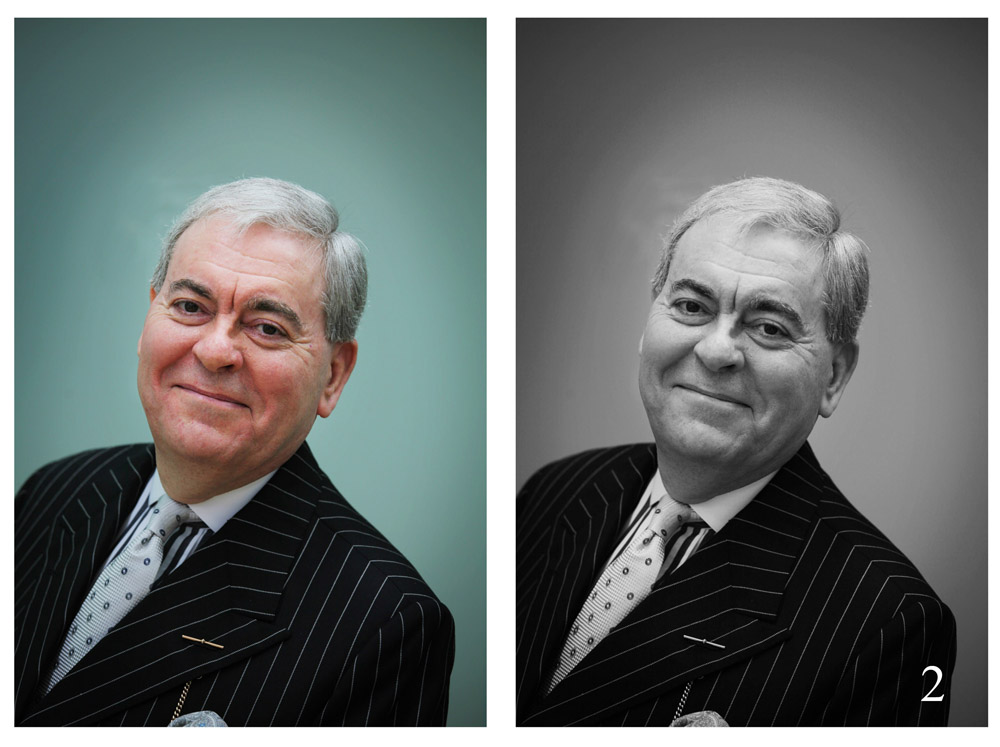
Now that I dress in secular clothes, smartness is a requirement which reflects my own desire for seemliness and – more importantly – which speaks of my respect for all the people with whom I have to do, whatever their function or social rank. It is therefore a question of morality. The prevailing cult of scruffiness degrades its practitioners and indicates an unpleasant indifference to the dignity and worth of others. When I go to a restaurant, for example, it is deeply depressing to see those who consider it acceptable to arrive as a slovenly shambles and who then expect to be treated with the utmost respect by waiters for whom they clearly care not a jot.
I began to write about sartorial matters for the news agency, Reuters. I was already producing restaurant reviews for the agency’s website, and it was suggested to me that I should also broadcast my thoughts on sartorial matters to the site’s readers. When the site eventually closed, I decided that Bown’s Bespoke (www.bownsbespoke.com) should be born.
I love true bespoke, but, of course, I understand that for many gentlemen – particularly younger gentlemen – true bespoke is simply too expensive for their current circumstances. But remember that a ready-to-wear cotton tunic shirt can be obtained relatively cheaply from one of the lawyers’ shops on or near Chancery Lane in London and a separate white, starched collar from the same shops will not cost more than £12. To wear such a shirt with a stiff collar has been the first step to sartorial greatness for many a young fellow.
I urge everyone who cares about his appearance to study the Ten Commandments on Bown’s Bespoke. There I counsel perfection – of course, I do – and some will find this annoying. But, if a thing is truly desired, it is strange how often life has a pleasing habit of fulfilling one’s dream, sometimes in the least expected way.
I am by nature conservative, and my taste in clothes is conservative. And I want the best. It is fortunate, therefore, that I live in London – for the best means a bespoke suite from Henry Poole in Savile Row, bespoke shoes from Cleverley & Co. in the Royal Arcade and bespoke shirts from Harvie&Hudson in Jermyn Street. Dressed thus, a gentleman is ready to encounter the high and the low and – with the good manners which go with sartorial propriety – to treat both with respect and courtesy.’
Picture: © Jack Hill
~ originally published in Finnish on the 13th of October 2011
Category Bloggers, Interviews, Men of style, Savile Row
Flusserism
0April 4, 2013 by Ville Raivio
“For a man, no other form of dress is as steeped in such a ritualistic sense of propriety as formalwear. There is something so elegant about the simplicity of black and white, with its stark contrast and lack of pattern, that when the elements are properly put together, they present a man at his most debonair.”
~ Alan Flusser
Category Quotations
Interview with Harold Koda
0April 3, 2013 by Ville Raivio
“63 years old, Curator in Charge, The Costume Institute, The Metropolitan Museum of Art. BA/BFA English Literature/Art History, University of Hawaii, MLA (Masters of Landscape Architecture), Graduate School of Design, Harvard University. No children. My spouse is a lawyer. If I begin to speak about fashion or details of style, he rolls his eyes as if forced to endure something incredibly inconsequential as well as a waste of time. Growing up, I had strong opinions about dress. Without knowing it, I was an evolving minimalist. I was always telling my family to wear less pattern—in Hawaii there was a lot of kitschy, but in retrospect fun, use of prints—and my mother to wear less jewelry.

When I was 7 or 8, I began to go to Saturday art classes in Honolulu. I lived in the suburbs, and my mother thought that dressing for the city meant a button-down collared shirt, chinos, a belt and polished lace-up shoes. I got to the Academy of Arts early, and was waiting in front for the building to open when a green Jaguar XKE pulled up. A girl, my age, jumped out wearing tennis whites—she had clearly come from an early lesson—but barefoot! I realized immediately the status implications of her deliberate casualness. The next week I didn’t come barefooted, but I did insist on flip-flops.
Individuals of great style generally appreciate being noticed for their appearance, enjoy the creative process of dressing which requires no small amount of attention and discipline, tend to have a strong aesthetic focus, and a willingness to dedicate the time to their efforts. As a disorganized person who prefers to be judged on other aspects of my personality than my taste, a uniform of classic dressing is expedient. The codes are established, and though menswear is susceptible to change over time, those trends are relatively diurnal compared to the more rapid and quixotic shifts in women’s wear, so it is possible to have an established look or style, even while subtly adapting to the current mode with rather little effort. Also, I love fashion, but unlike the person of style who tends to edit to a very personal and individuated sensibility, I am completely omnivorous. If I dressed in the styles I appreciate as a curator, I’d be in debt AND I’d look so erratic as to be thought insane. It is best for all that I sublimate my appreciation for fashion into my work and not my personal style.
My first job as an associate curator at the Fashion Institute of Technology was to go through the whole collection to review it for deaccessioning. The Director at the time, Bob Riley, was incredibly knowledgeable, but so much of his connoisseurship was intuitive, having been derived from decades of seeing historic examples. When I’d ask him, “How is it you know that this bustle dress is from the 1880s and that from the 1870s?,” he’d answer, “You just know.” I was left to really look at the pieces to understand how he immediately just knew: the length of the waist, the slope of the shoulder, the types of fabrics, all the separate elements that contribute to the gestalt. Nothing, nothing is better than the simple looking at an object, and really studying its details, to learn about it.
Men today are so much more literate about style than when I was younger. It is a given now that how you dress is a language that can be manipulated to your specific intentions and advantage. Other than suits meant that you were Establishment, and cotton shirts and bell-bottoms meant that you were counter-culture, I don’t think there was among most men in the 1960s, the self-awareness that what you wear is something that could be a proactive means of communication.
In the 1980s and ‘90s I wore a lot of Armani, always some Ralph Lauren, and now Thom Browne, and shoes from John Lobb. With every designer, though, I pick the most Brooks Brothers looking examples from their designs. Brooks never fitted me, but that is what I think of myself as: the man in the grey flannel suit. Today when I wear Thom Browne, it doesn’t actually look very Thom Browne unless you’re someone who really follows fashion and notices the small details like the grosgrain touches and lifted button stance. The reason is that as someone short, Thom’s sizing fits me perfectly in a conventional way. On me the sleeve lengths are not cropped, but fall exactly where they would if I had the jacket ordered to fit.
When my former boss and colleague, the great fashion critic and curator, Richard Martin, died, I was asked to take over his role. Richard was intellectually, on a plane of his own, of a level not usually seen in our field. Clearly, a new path had to be established, as no one could easily have continued with the scholarly rigor and accelerated calendar that Richard had established. My intention was at first to simply keep up the level of thoughtfulness and conceptual focus introduced by Richard’s exhibition themes, but with an additional focus on the mise-en-scene. I’ve always argued that as good a job as we do as curators, we are relinquishing our responsibility if we do not make an effort to get as many people to see our exhibitions. You cannot educate, if the public hasn’t shown up for the lesson. In this regard, The Costume Institute has been very successful. We are among the most widely attended exhibitions in the category of the decorative arts in the world.
I love food! I’ll eat anything if it is appealingly plated. I just returned from a long weekend centered on a reservation at Noma. Unfortunately, we are part of the recent group that caught the norovirus from eating there. But, and this is an important point, despite everything, the experience of the meal was sublime. I want to go back in every season to see how the menu changes with the sourcing of the dishes. But I’m not restricted to farm-to-table or foraging, globalized cuisine fascinates me. When I was in Hawaii a few months ago, I ate at a restaurant called Mavro. There was a side dish with white truffles, from the South of France where the chef had just been, shaved onto a chestnut puree in HONOLULU!!
Always get the best version of whatever you can afford. Great materials and construction make a difference. But, whether formal or informal, the most important thing in dressing is proper fit. Sometimes proper, fit especially in sports clothing, does not mean the same as in tailored apparel, but there is always a proportion and cut that is intended for a garment. The closer a man comes to wearing items that relate to his body as they were intended to appear, the more comfortable he will be. And when we are comfortable, the projection of confidence is effortless.”
Picture: © Karin Willis, Courtesy of The Metropolitan Museum of Art
Category Interviews, Men of style
Copyright © 2013 Ville Raivio