
Michael Anton in Quote
0May 9, 2013 by Ville Raivio
‘Beware of sales and “deals” and don’t end up buying stuff that’s heavily marked down just because it’s cheap. Ugly is ugly and stuff you fall out of love with in a year is expensive no matter how much you paid for it.
~ Michael Anton, in his interview with Keikari
Category Quotations
Interview with David Lewis of D.C. Lewis
0May 9, 2013 by Ville Raivio
‘I recently turned 30. I have a men’s clothing and footwear resale business. I’m also a leather craftsman, and, of course, the owner of D.C. Lewis. I have an animal science degree from Mississippi State University. I originally wanted to be a veterinarian until I discovered my passion for business and entrepreneurialism. My wife and I will celebrate our 5th anniversary next month. She is incredibly proud and supportive of the line. I don’t think anyone was surprised as I’ve started several related ventures. You can find my father and brother sporting D.C. Lewis shoes on any given day.
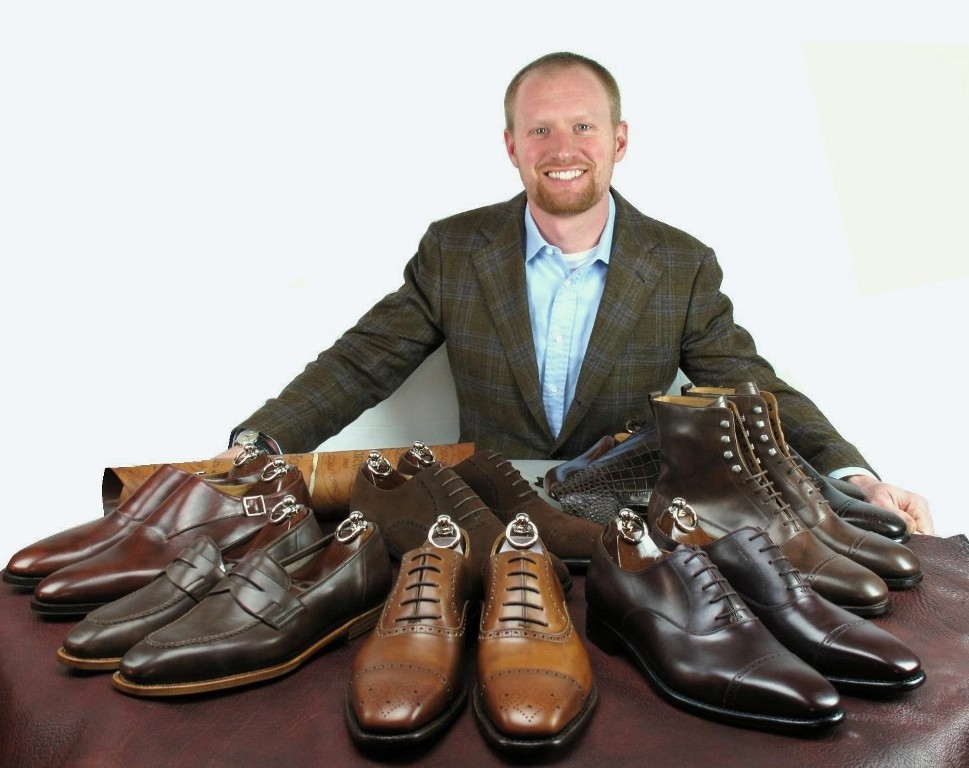
I guess my interest in shoes started when I was a teenager, volunteering to polish my father’s Cole Haan loafers (back when they made quality shoes). I was intrigued by the fact that you could make an old, worn-out pair of shoes come back to life again with a little wax and elbow-grease. Not too long after that, I began fixing and reselling shoes on the internet. A lot of my knowledge is from hands-on experiences: hours spent at the local cobbler shop, experimenting with leather and finishing on my own shoes, conversations with employees in high-end shoe departments, trips to tanneries and plants, etc. I can’t ignore the depth of knowledge found on websites such as Styleforum, Ask Andy, etc. It’s great to have such comprehensive resources at my finger tips. Of course I have the usual library of Flusser books, Japanese magazines, etc.
I think living in the south (Athens, GA) is dictated by more of a casual style of dress. I am typically wearing loafers and wingtips from brands like Carmina, Alden, Grenson MP, and of course D.C. Lewis. As far as clothing, I prefer the aesthetics of Cucinelli and Partenopea. I have been selling shoes by other brands for years and have developed my own tastes which, I believe, has given me a good grasp of what my potential customers are looking for. I have always wanted to develop my own line and things just came together organically. So far we have had an excellent response with multiple repeat customers. I think the most pleasant reaction of my customers is finding out how comfortable the shoes are.
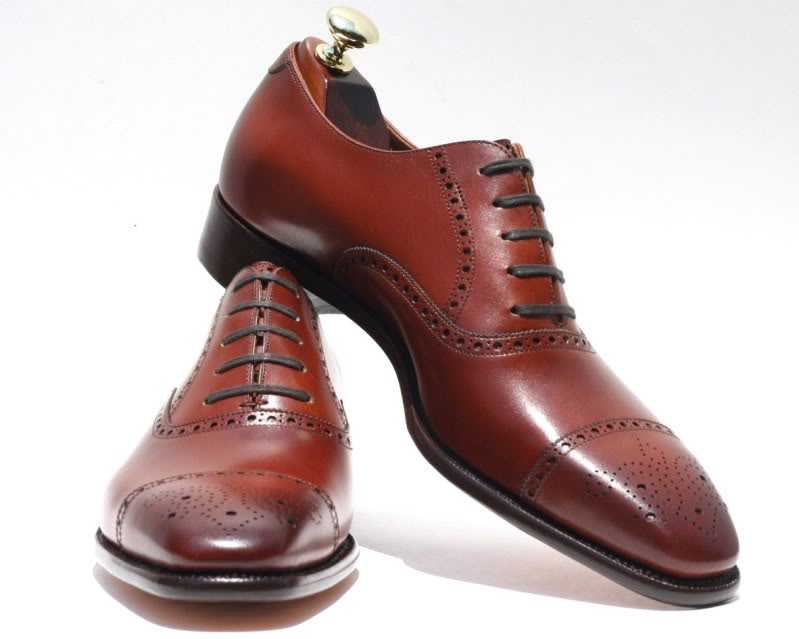
I try not to stick to the limitations of one genre. I like to think of my shoes as sort of a hybrid between English and Italian design. I think the future will also show my fondness for American vintage, and possibly some influence from Hungary. A top priority of mine has been, and will always be, to select the best quality materials made to the highest standards while maintaining value for the money. All of our shoes feature Goodyear construction with full leather linings. A large portion of our shoes are hand-crafted. I have taken on the role of sourcing the materials myself which helps to ensure a consistent level of quality. With the exception of Horween, almost all of our leathers come from European tanneries, such as Ilcea. We also use American alligator sourced from Florida and Louisiana. The brand has only been around for a little over a year so at this time, I would like to round out a complete collection of styles and models using different leathers.
[Keikari’s readers should choose Lewis due to] simply put: value. I strongly believe that there is no better value for this level of quality out there. One of the largest hurdles I’ve faced is getting over the stigma placed on country of origin. I have been fortunate to find a small outfit that will produce extremely high-quality footwear while avoiding some of the extensive labor costs found in countries such as England and Italy. The craftsmen have had extensive training from some of the best shoemakers in Italy and Japan. I have a strong interest in unique designs and styles not made by every brand out there. I am a perfectionist and I will not settle for anything less.
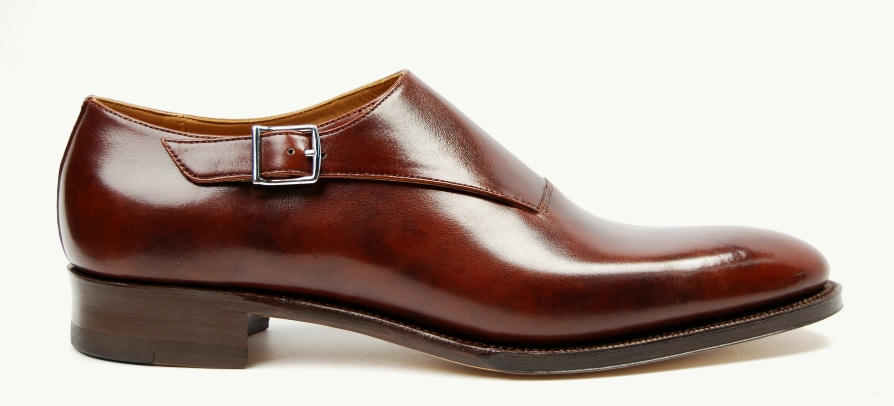
I’ve always been an admirer of John Lobb and Gaziano & Girling. What inspires me the most, though, is the desire to provide people with a product that is built to last and one that I am proud to call my own. My definition of style is classic and personal portrayal of oneself. My hobbies include leatherworking, carpentry, art, dogs, and travel, in no particular order.
There are so many great brands out there that are dedicated to the craft but do not get the recognition they deserve because they do not have the advertising budget. These brands will often present the best value. I would encourage those younger readers to purchase shoes made from high-quality leathers with a solid construction that allows for recrafting. A well-made shoe can last a lifetime if properly cared for.’
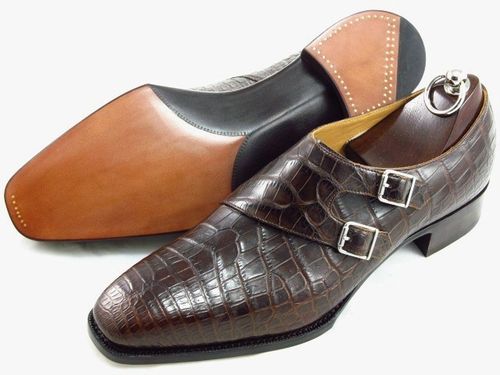
D.C. Lewis is only available at http://www.kentwang.com/shoes
Pictures: © D.C. Lewis
Category Interviews, Styleforum, Tradesmen
Pelham’s Maxims
0May 8, 2013 by Ville Raivio
I.
Do not require your dress so much to fit as to adorn you. Nature is not to be copied, but to be exalted by art. Apelles blamed Protogenes for being too natural.
II.
Never in your dress altogether desert that taste which is general. The world considers eccentricity in great things genius; in small things, folly.
III.
Always remember that you dress to fascinate others, not yourself.
IV.
Keep your mind free from all violent affectations at the boar of the toilet. A philosophical serenity is perfectly necessary to success. Helvetius says justly, that our errors arise from our passions.
V.
Remember that none but those, whose courage is unquestionable, can venture to be effeminate. It was only in the field that the Spartans were accustomed to use perfumes and curl their hair.
VI.
Never let the finery of chains and rings seem your own choice; that which naturally belongs to women should appear only worn for their sake. We dignify foppery, when we invest it with a sentiment.
VII.
To win the affection of your mistress, appear negligent in your costume — to preserve it, assiduous: the first is a sign of the passion of love; the second, of its respect.
VIII.
A man must be a profound calculator to be a consummate dresser. One must not dress the same, whether one goes to a minister or mistress; an avaricious uncle, or an ostentatious cousin: there is no diplomacy more subtle than that of dress.
IX.
Is the great man whom you would conciliate a coxcomb? Go to him in a waistcoat like his own. “Imitation,” says the author of Lacon, ”is the sincerest flattery.”
X.
The handsome may be showy in dress, the plain should study to be unexceptionable ; just as in great men we look for something to admire — in ordinary men we ask for nothing to forgive.
XI.
There is a study of dress for the aged, as well as for the young. Inattention is no less indecorous in one than in the other; we may distinguish the taste appropriate to each, by the reflection that youth is made to be loved — old age to be resoected.
XII.
A fool may dress gaudily, but a fool cannot dress well — for to dress well requires judgment; and Rochefoucauld says with truth, “On est quelquefois un sot avec de l’esprit, mais on ne lest jamais avec du jugement.”
XIII.
There may be more pathos in the fall of a collar, or the curl of a lock, than the shallow think for. Should we be so apt as we are now to compassionate the misfortunes, and to forgive the insincerity of Charles I, if his pictures had portrayed him in a bob-wig and a pig-tail? Vandyke was a greater sophist than Hume.
XIV.
The most graceful principle of dress is neatness — the most vulgar is preciseness.
XV.
Dress contains the two codes of morality — private and public. Attention is the duty we owe to others — cleanliness that which we owe to ourselves.
XVI.
Dress so that it may never be said of you ‘What a well-dressed man” — but, ” What a gentlemanlylike man.”
XVII.
Avoid many colours ; and seek, by some one prevalent and quiet tint, to sober down the others. Apelles used only four colours, and always subdued those which were more florid, by a darkening varnish.
XVIII.
Nothing is superficial to a deep observer. It is in trifles that the mind betrays itself. “In what part of that letter,” said a king to the wisest of living diplomatists, “did you discover irresolution?” — ” In its ns and gs,’ was the answer.
XIX.
A very benevolent man will never shock the feelings of others, by an excess either of inattention or display: you may doubt, therefore, the philanthropy both of a sloven and a fop. There is an indifference to please in a stocking down at heel— but there may be malevolence in a diamond ring.
XX.
Inventions in dressing should resemble Addison’s definition of fine writing, and consist of “refinements which are natural, without being obvious.”
XXI.
He who esteems trifles for themselves, is a trifler — he who esteems them for the conclusions to be drawn from them, or the advantage to which they can be put, is a philosopher.
~ Edward Bulwer-Lytton, 1st Baron Lytton in his novel ‘Pelham; or, The Adventures of a Gentleman’ (1828)
Category Dandyism, Quotations, Reading
Interview with Clay Tompkins
1May 8, 2013 by Ville Raivio
‘My age is 60 and I am the owner and CEO of “Tompkins”, a ready to wear men’s clothing business. From 1982-2012 I was a proprietary trader on the New York Futures Exchange (1982-1991) and the New York Stock Exchange (1991-2012). I attended the boys prep school Deerfield Academy (1966-1970) and graduated from the University of Virginia in 1974. I’ve been married for 30 years this December to Karen Moody and have two daughters, Frederica (26) and Suzanne (24). They all love elegant style. Karen’s father was chic and both of my girls worked in fashion when they graduated from Vanderbilt University: Frederica, at Ralph Lauren as marketing manager for RL Home, and Suzanne at Michael Kors. I play a lot of squash. I think it’s the finest game ever created, and the only one where men and women can compete on an equal footing.
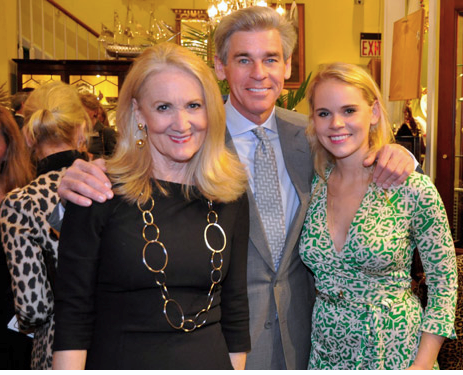
Mr Tompkins at a benefit for The Fund for Park Avenue, which manages the flowers and art work on the Park Avenue median, with wife Karen and younger daughter Suzanne
Not one of my brothers or sisters (I’m one of five) were startled by this business decision. My style has been consistent since I was old enough to make my own choices. When I was at Deerfield, fashion was defined by three icons: Brooks Brothers (for Harris Tweed sports jackets, they were the thing then), L.L. Bean for the boots and their grey “Woodsman” trousers that were something like a 30oz. weight, and could practically stand on their own, and Bass Weejuns for shoes. That was it, and how you put it together defined you. So that was the first taste of the classic look. My father was a member of the New York Stock Exchange, as well, and he bought everything in London, Norton for suits and Maxwell’s for shoes. He was a handsome gentleman and his taste certainly informed my own.
My knowledge came naturally. By that I mean, when you care enough about anything, you’re always trying to improve the result. I met George Glasgow, my shoemaker at Cleverley, 36 years ago when he was working at New & Lingwood. A friend introduced me to Simon Cundey, who owns Poole, in the late nineties. Aside from the artistry they’ve produced for me everything else came by just being observant. I don’t wear suits every day as I did for so many years. Usually I wear my make of trousers and shirts and a jacket. One thing I never wear, and haven’t owned for 35 years, are bluejeans. For serious dress I only wear Poole. My shoes, as above, are from Cleverley bespoke. I think Beretta makes sensational outerwear at prices that are astoundingly reasonable. I also, occasionally, wear Schneider tracht.
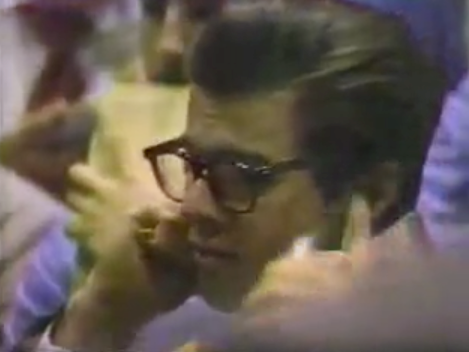
Mr Tompkins as a young trader in the New York Futures Exchange trading pit at the beginning of his proprietary trading career, 1982
My business was born as I listened to my daughter’s beaus complain about a lack of upmarket shirts and trousers to wear in an office setting that no longer demanded suits. The demand was, clearly, solid, but the supply was sparse. So last June I designed the shirts and trousers that became the collection which launched in November (see The Trad for that coverage). I’ve been well received so far, especially in the South and West of America where this kind of clothing cant be bought in a store.
There are two items I’m developing to fill out the line. First, I’m working with a factory in Portugal to produce an elegant loafer with a chisel toe. In mens’ shoes there are only two evergreen models here in the States, Gucci and Belgian shoes. Neither has changed, like the Porsche 911, for the past 50 years. I expect this loafer will have the same appeal. The other thing Im designing is a casual jacket along the lines of a gamekeeper’s smock. Both Arny’s (the “Forestiére”) and Beretta (the Maremmana) are examples of what I’m driving toward. Men need jackets for the pockets, but I think as formality has declined a less structured jacket is called for. My inspiration came directly from Patrick MacNee in the Avengers. His suits and jackets were designed at his direction in the earlier seasons of the show, and, later, by Pierre Cardin.

The Tompkins store, with elder daughter Frederica as model
How you look in any mode of dress begins and ends with the shoes. If the shoe isn’t elegant, everything else is diminished. Aside from Cleverley, there are three shoe makers that I consider quality. Corthay and Aubercy in Paris, and Gaziano and Girling in the U.K. My shoe size is 12 1/2 so I always have my shoes blind welted (that’s where the welt of the sole is flush with with the uppers). This refines the silhouette of the shoe further.’
Pictures: © Clay Tompkins
Category Interviews, Men of style, Tradesmen
Copyright © 2013 Ville Raivio