In Search of Grandfather’s Style
0July 16, 2013 by Ville Raivio
Daily lore: The Wall Street Journal published a nice little article about the men taking style ques from their grandfathers instead of fathers more sportswear-inclined. With most 21st century guys in t-shirts and sweatpants, tailored and draped cloths have become a way to both stand out and attune to something permanent. Technologies buzz, the Internet is intangible, venues change — the suit stays.
http://online.wsj.com/article/SB10001424127887324577904578559470104122526.html
Category American style, Links, Reading
British Fabrics eBay Store
0July 15, 2013 by Ville Raivio
Sometimes a name is an omen. Howard Cantor’s British Fabrics works with, well, British fabrics and its eBay store is among the most useful for those looking for small batches for great prices. Worsteds, suitings, coatings, tweeds, all woven on British soil, with super numbers ranging from 100s to 200s. As most of the selection are ends of bolts, prices range from around 10£ upwards to 400£. Vintage fabrics are sometimes available.
http://stores.ebay.co.uk/BRITISH-FABRICS
Category Fabrics, Links, Web stores
A Brief History of British Shoe Making
0July 15, 2013 by Ville Raivio
First published by John Lobb (Paris) in four parts, with consulting from Rebecca Shawcross from the Northampton Shoe Museum.
Northamptonshire has a long history of shoemaking in the town and county. In the Middle Ages Northampton was a busy market town. It had a street of cordwainers (shoemakers) making footwear for the locals as other towns, but it had the advantage of being a stopping place on the road to London, and many people, including the King, stayed in the town. In 1213 King John purchased a pair of boots in the town for 9d (4p). His son Henry III ordered one hundred and fifty pairs of shoes for distribution among the poor while he visited the town. In 1401 The Shoemakers Guild was set up which laid down rules for shoemakers and had the powers to punish those whose work was unsatisfactory. Northampton was slowly becoming a town where shoes were made and sent for sale in other places.
Northampton developed in this way as the town had the advantage of possessing three raw materials: cattle for the leather, oak bark and water to use in tanning. Northampton was also within easy reach of London and other large towns where many people needed shoes. In 1642 Thomas Pendleton, a Northampton shoemaker, was given an order for 4,000 pairs of shoes and 600 pairs of boots for the army in Ireland. He had to get twelve other shoemakers to help him but they delivered the boots on time.
By 1660 Thomas Fuller wrote that “The town of Northampton may be said to stand chiefly on other men’s legs…the most cheapest, if not the best, boots…in England are to be bought in Northampton.”
From this 17thcentury period shoemaking was carried out in workshops at home and due to the different skills required for women’s shoes; the town specialised in men’s footwear. The turning point for the industry was the introduction of machinery. The Singer sewing machine had been introduced from America, modified to stitch leather rather than cloth. It was used to close uppers. The American Lyman Blake perfected his machine, the Blake Sewer, for stitching on soles in 1864. This machine was too large, heavy and expensive to have at home and needed power to drive it. It drove the shoemakers into factories over the next thirty years.
Northampton boomed in the 19th century, with the boot and shoe industry dominating the town and county. By 1841 there were 1,821 shoemakers in Northampton.
Northampton continued to prosper particularly during World War One producing millions of boots for the Forces of Britain and its allies. From the 1940s cheaper synthetic materials and quicker manufacturing processes became available and the traditional industry, based on high quality leather footwear, found it hard to adapt to the new market.
From the 1950s and into the 1970s many of the well-known footwear manufacturers were bought out. They often kept their high street shops, but gradually closed their factories, buying cheaper supplies from developing countries.
All these changes led the industry to shrink to a fraction of its former size.
Despite this shift there are still a number of manufacturers in the town and county who have remained successful, particularly producing high quality classic men’s footwear. One of these manufacturers is John Lobb.
Category Northampton, Reading
Personal Style with Simon Crompton
0July 15, 2013 by Ville Raivio
Last year GQ had an in-depth chat with Simon Crompton, the main man of Permanent Style, the finest British style site. SC shares some pointers on suits, alterations, wardrobe additions as well as personal favourites.
Interview with Nick Anderson from Bespoke-england
0July 15, 2013 by Ville Raivio
VR: Your age and occupation?
NA: I’m 43 yrs, owner of webstore Bespoke-england.
VR: Your educational background?
NA: Local schools and trained and qualified as a horse riding instructor and hire of horses for hunting which grew my attention to fine English riding boots and clothing.
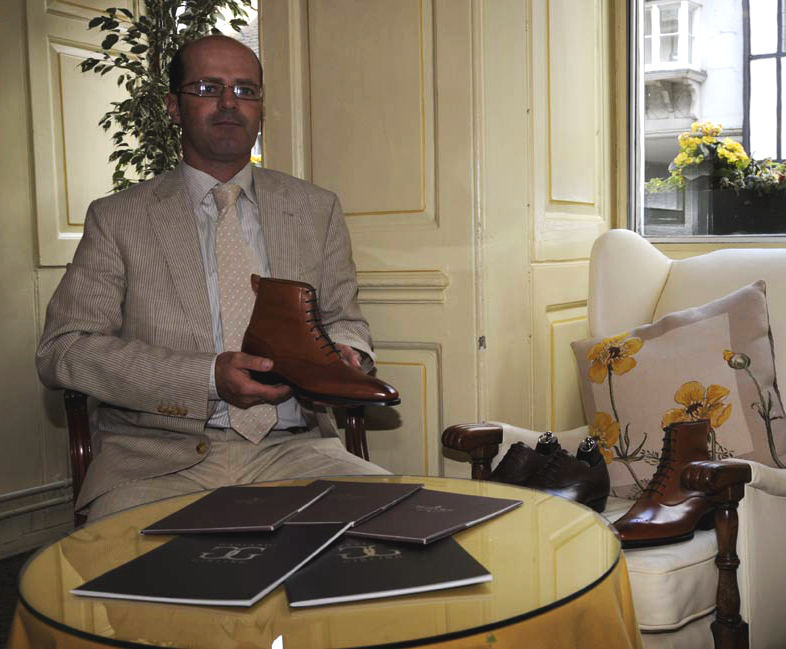
VR: Have you any children or spouse (and how do they relate to your shoe enthusiasm)?
NA: Partner who initially helped me decide which shoes to buy for sale purposes and daughter of 21 years who helps with packing shoes and some social media tasks. Neither work full time for Bespoke-England.
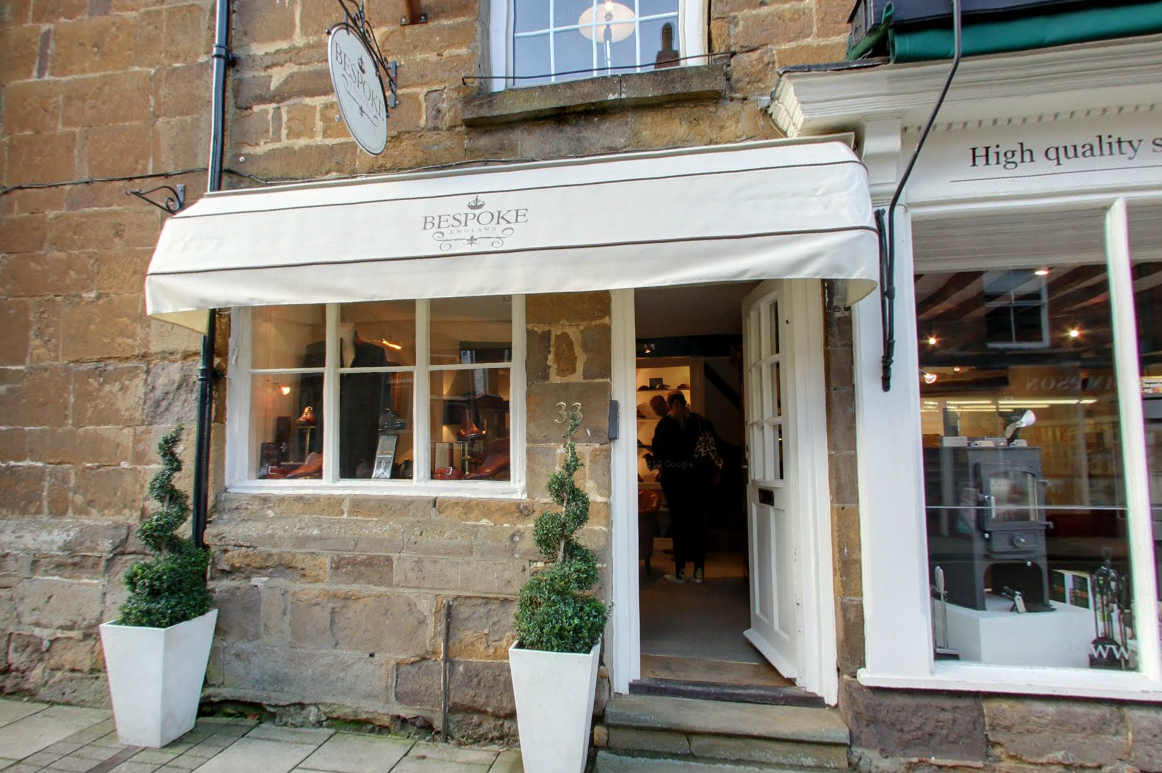
VR: What other hobbies or passions do you have besides fine footwear and the business?
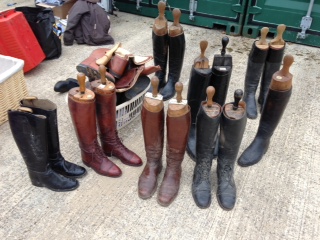
NA: Horse riding and hunting which grew my attention to fine English riding boots and clothing. Etiquette on the Hunting field in England is very important with different attire for various events. Autumn hunting, Hunting and Evening wear for Hunt Balls. Here’s a photo of a collection of my hunting boots.
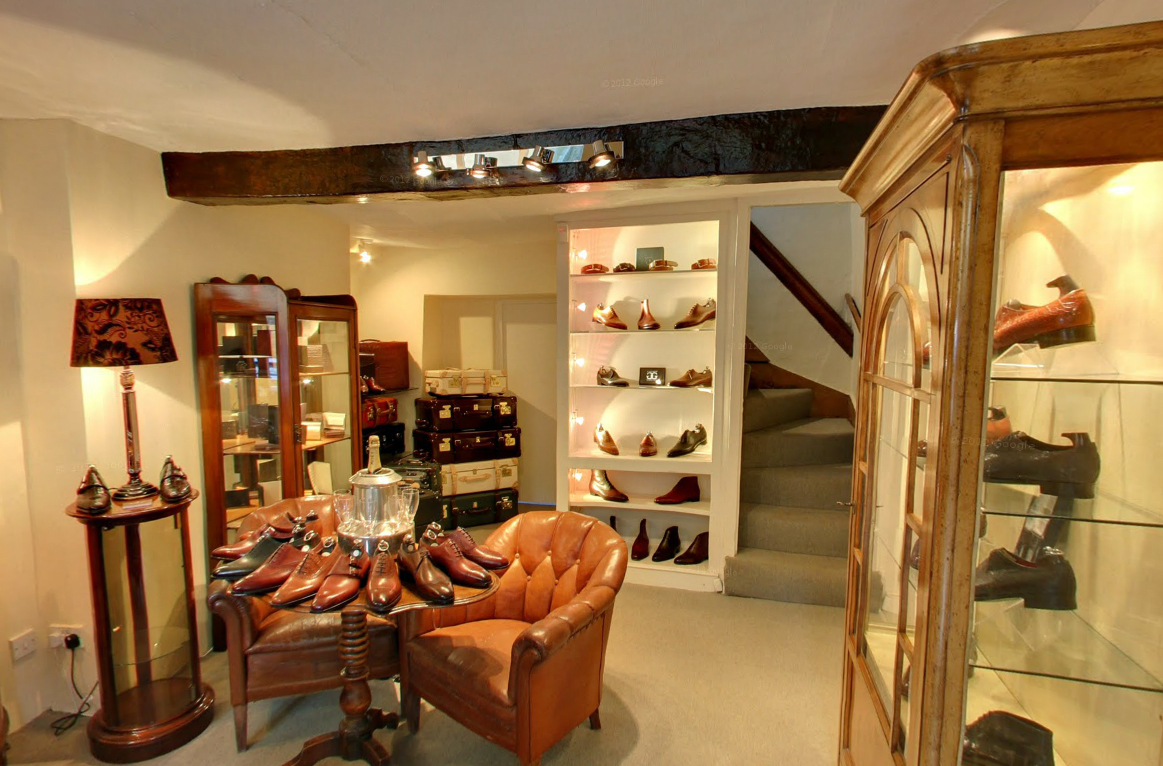
VR: How did you first become interested in footwear, and when did you turn towards more or less handmade pairs? Why classics instead of fashion?
NA: You will note that the boots here are very high quality, always made in England but often purchased second hand due to difficulties in finding makers of riding boots these days. It was when I began to research the boot makers of Northampton that I began to find a small number of fine shoemakers still producing shoes to a very high standard. This was the beginning of my passion for such shoes.
VR: How have you gathered your knowledge of shoes — from books, in-house training, workshops or somewhere else?
NA: Yes I’m passionate. I love walking around the factories. The smell of the leather. The noise of the tools and the knowledge of the craftsmen and women involved. It’s great to know people here really care for their work.
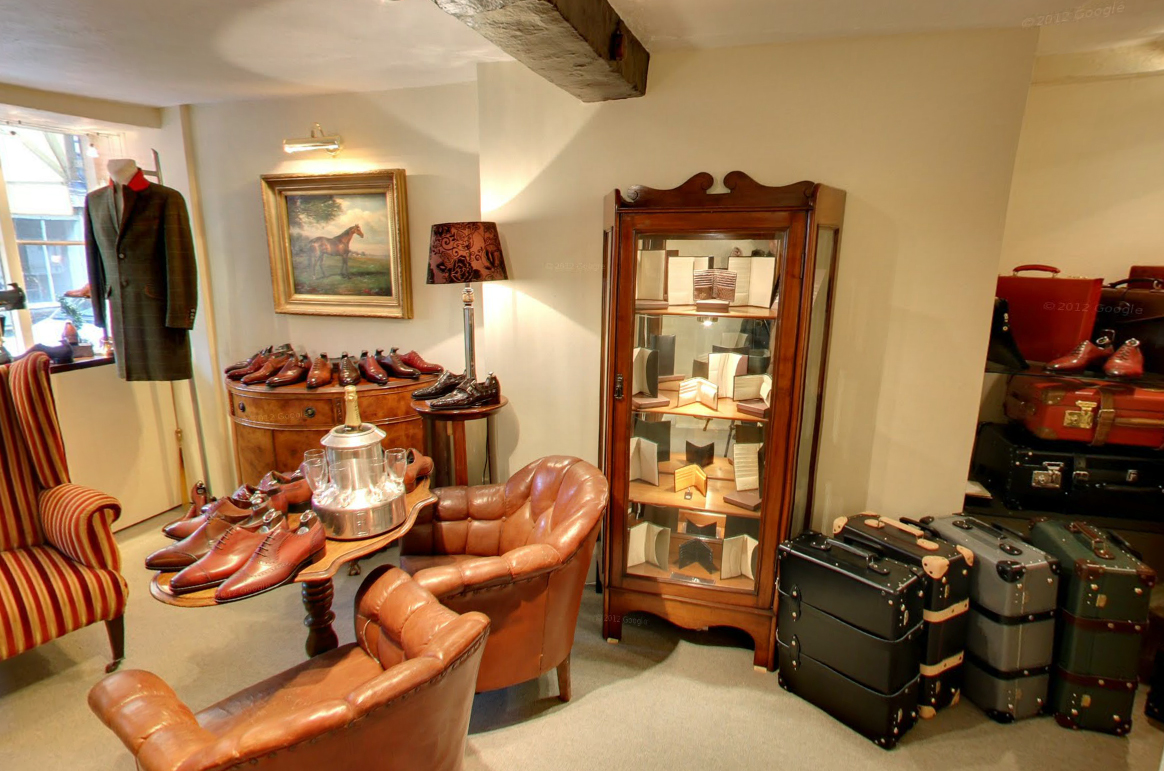
VR: How would you describe your own dress? Have you any particular style or cut philosophy?
NA: I don’t have a particular style but I do like things to fit me. I sometimes wear casual denims but more often wear something more like Armani Jeans with a shirt and jacket. It’s often cold or wet in the UK so there are many opportunities for jackets. In winter I wear a lot of jackets and coats by Paul Smith and Holland Esquire. Both are English designers and have a nice twist to their designs with new collections regularly available.
VR: Apart from G&G’s products, which RTW makers or tailors do you favour today?
NA: I still wear a pair of John Lobb shoes and one pair of Crockett&Jones boots. These are a pair of Patent Dress shoes and a pair of boots for shooting. G&G have recently introduced patent shoe models which I have some currently being made for Evening wear.
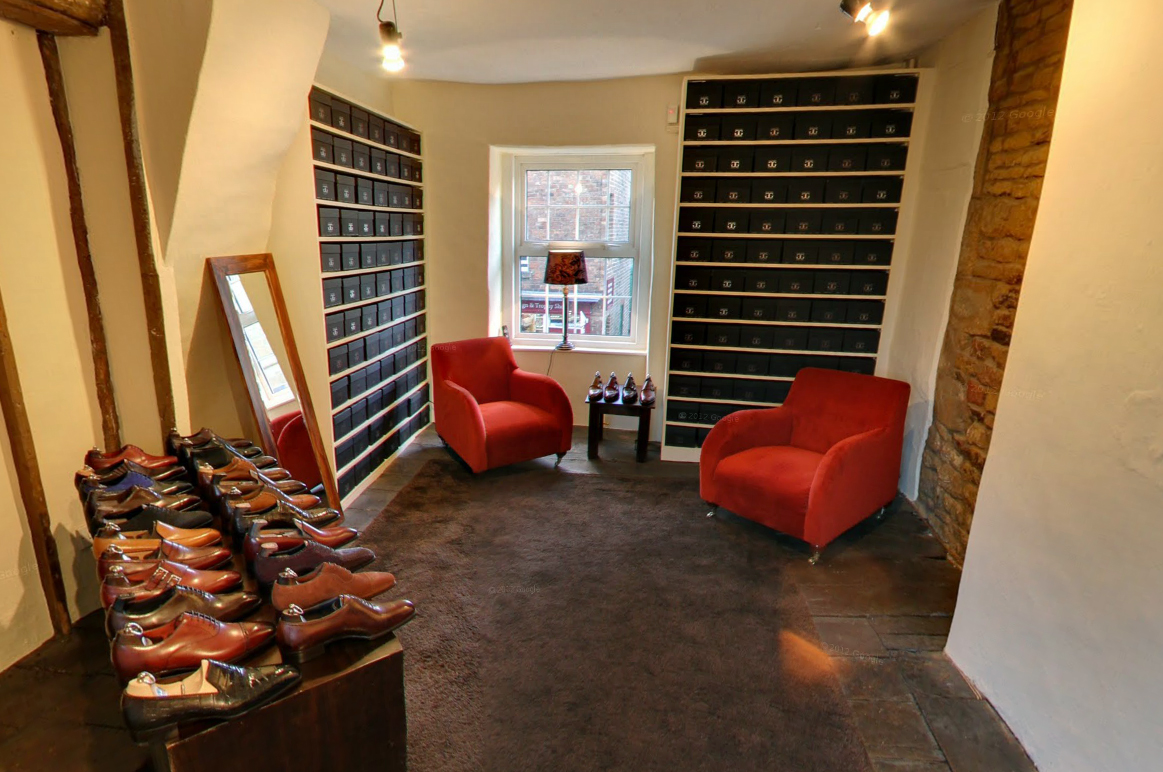
VR: Please tell us how Bespoke-england was born and what goals you set for yourself in the beginning. How have you been received so far?
NA: Bespoke-England was launched because I was buying shoes as a personal shopping basis where people would ask me to find certain shoes from different Northampton factories. This was taking too much time and often resulted with me not finding what was asked for. I realized that it had to be more professional and an e-commerce store was the answer. G&G had only been on the market for a year so I approached them. Fortunately with such a vast range of shoes to choose from I could offer this to my clientele. Now people can have what they want rather than what a larger factory tends to offer. For example, with my Made to Order programme with G&G my clients can choose the style, last, colour, sole type and other options if they want to go further. No other shoemaker will do this to this detail. Most have only a small amount of colours for each style and only one last that style is made on.
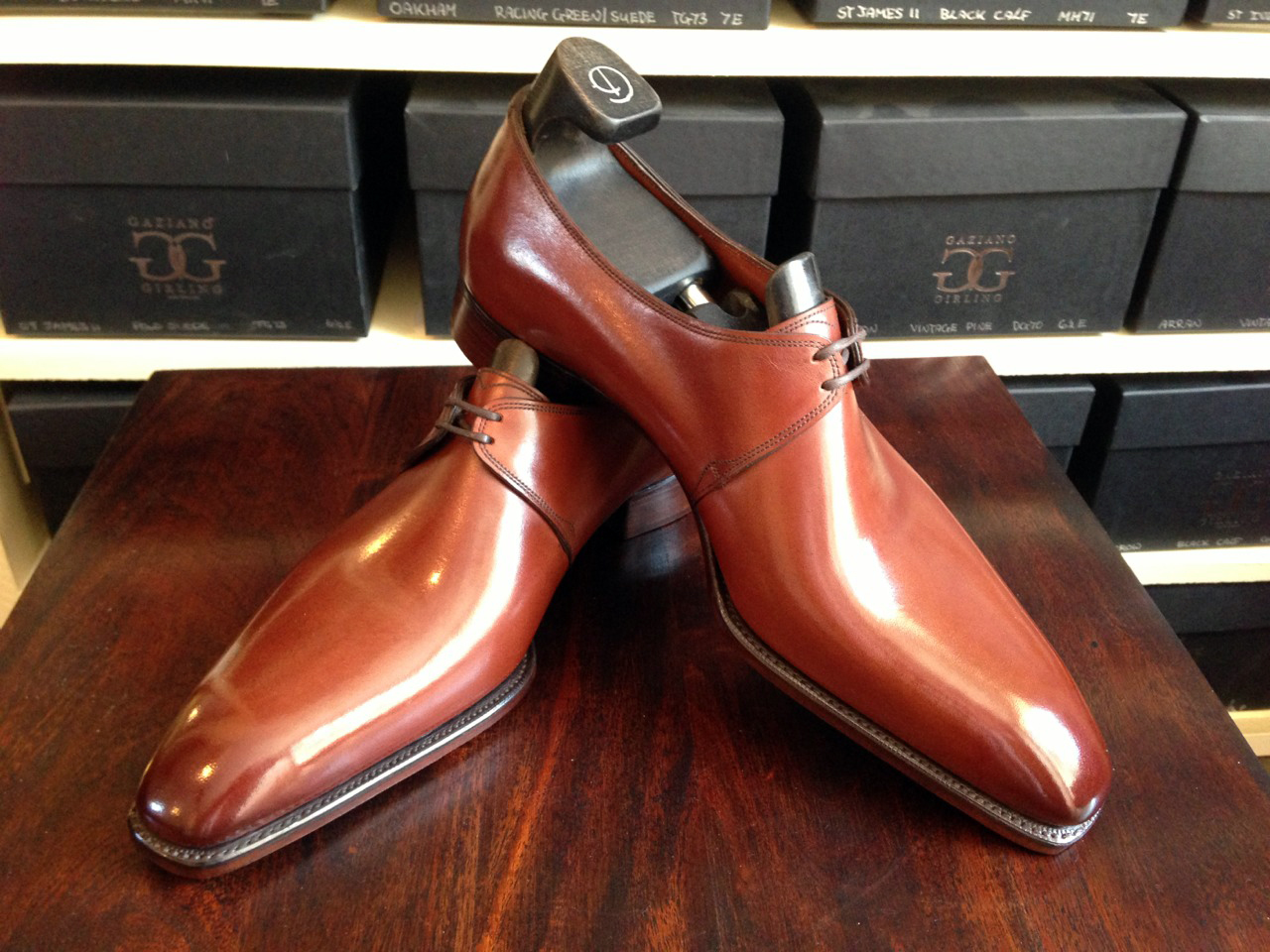
VR: You must have been among the first webstores — if not the first — to stock G&G. How did Tony and Dean choose you?
NA: There was Edwards [of Manchester] who also sold other brands so I was the first to only sell G&G and we work well together. I feel that you can sell too many brands and this takes you away from the importance of one brand. My personal love of G&G shoes helps me advise my clients too. When I know they have come to me for G&G, my interest is only for G&G shoes and they won’t be pushed towards another brand.
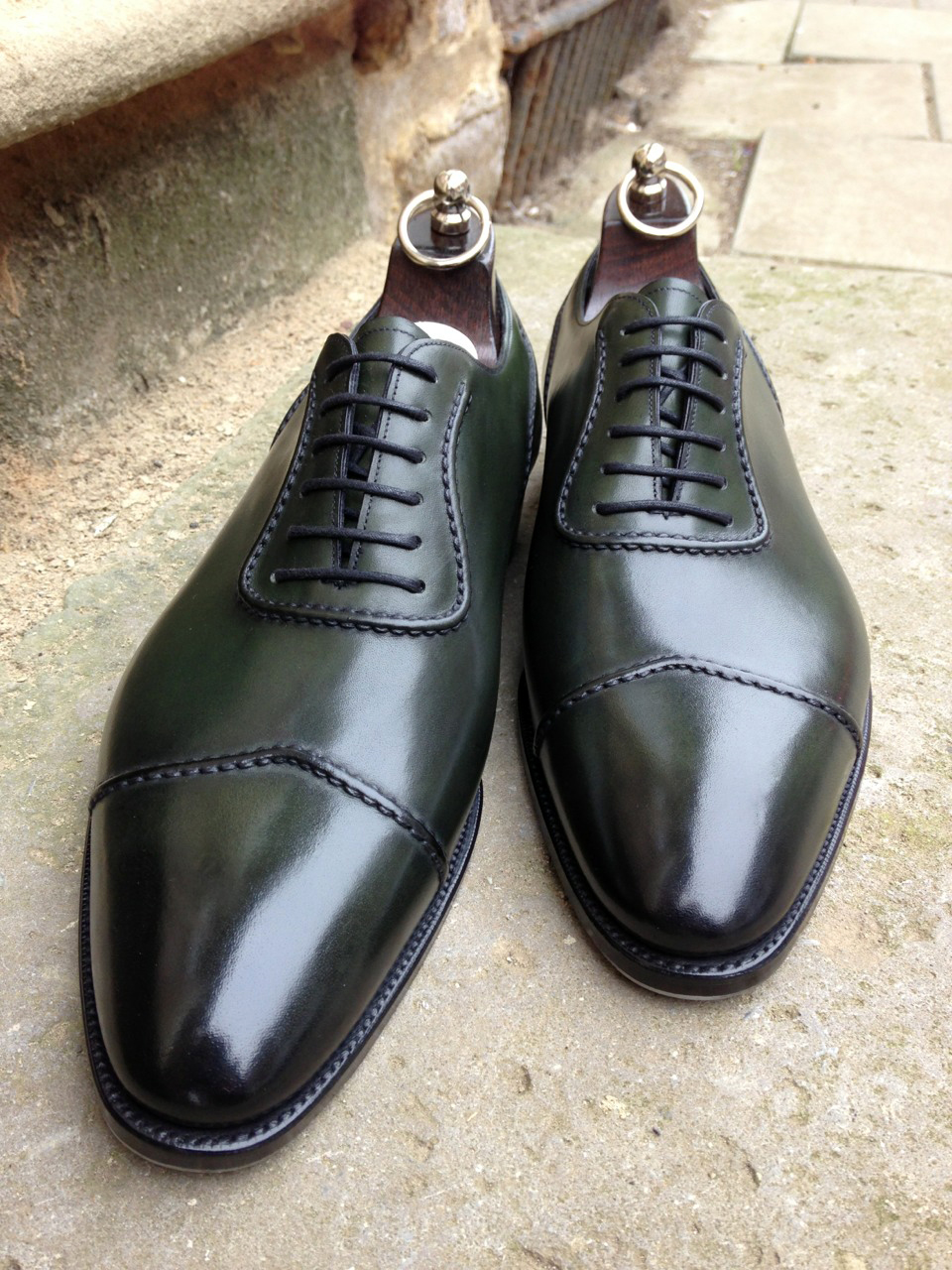
VR: How would you describe the goods B-e offers?
NA: My knowledge of G&G is second only to the makers themselves and with my personal knowledge and expertise with selling thousands of pairs of other Northampton shoe brands over the 8 years prior to Bespoke-England I believe I can advise a client’s fit if he emails me his size in other shoes of his. Although I wouldn’t claim to have a huge knowledge of how they are made, people can trust I will do my absolute best to see that their shoes are made to their desired taste.
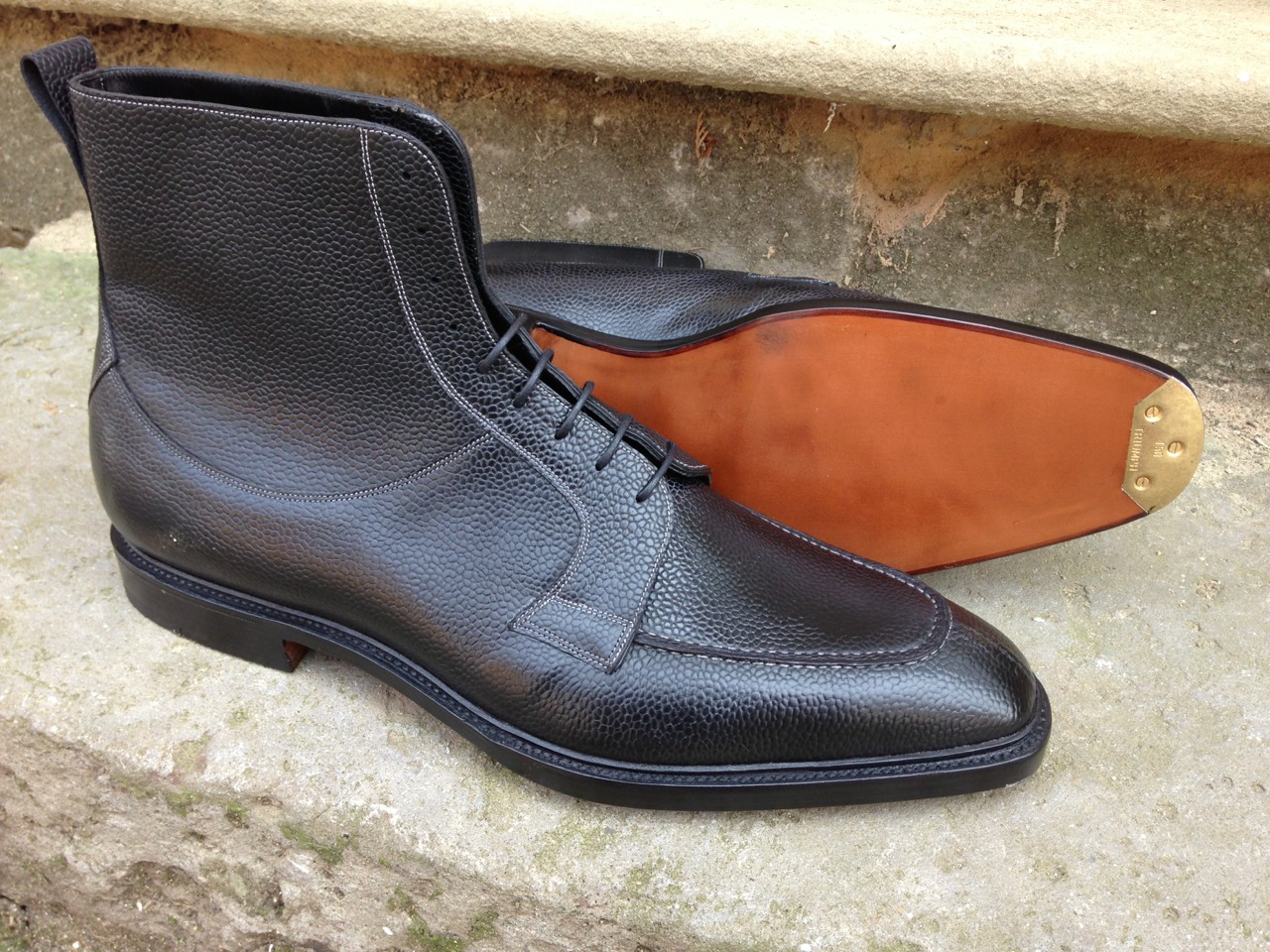
VR: There are hundreds of men’s shoe stores online — why should my readers try you?
NA: As above and additional: I can offer to ship trial shoes anywhere in the world so the client knows a pair of MTO shoes will fit him when be receives them. No other online retailer offers this service, to my knowledge.
VR: What’s your definition of style?
NA: Classic well-fitting. Well cared for and clean.
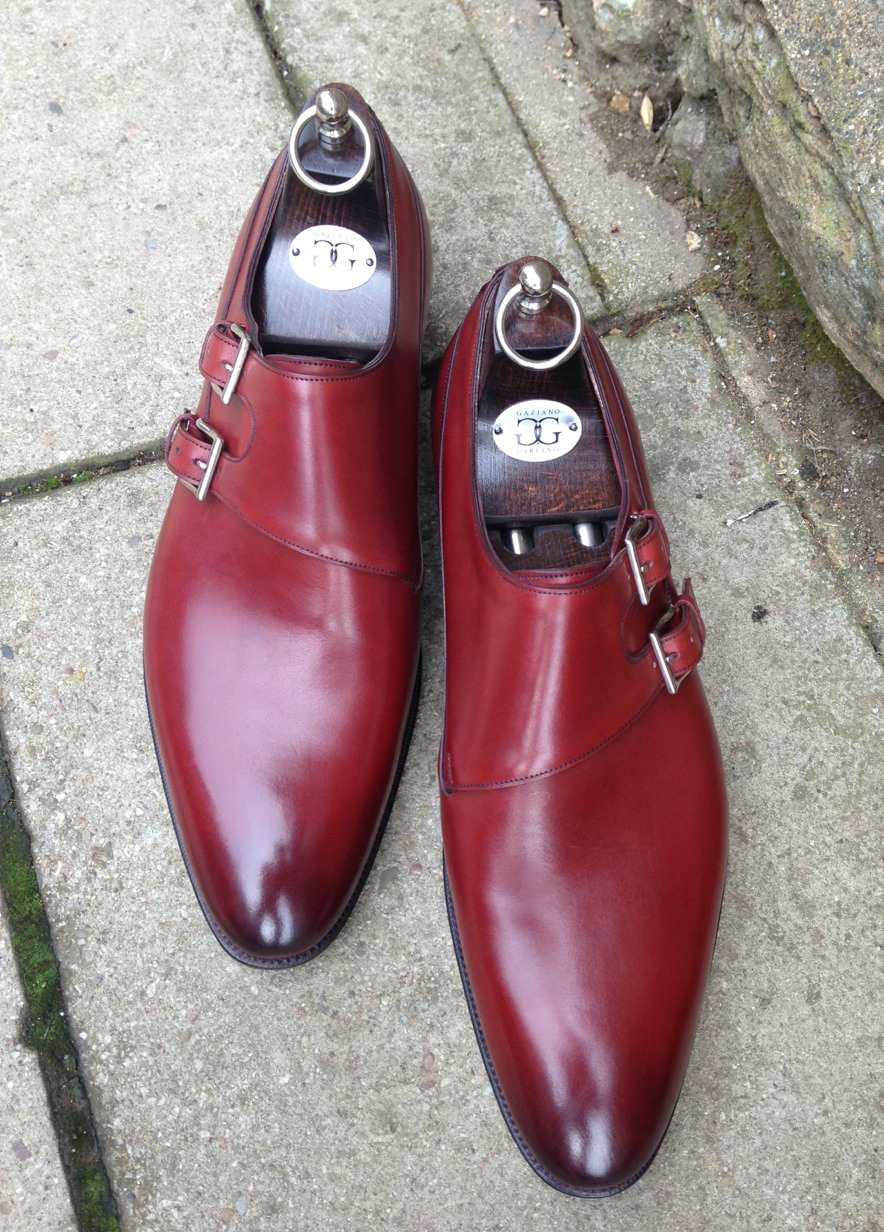
VR: Who or what inspires you?
NA: Tony Gaziano and Dean Girling. Everyone should be inspired by their creations and everyone who meets them usually is.
VR: Over the years you must have learned quite a bit about G&G’s products. Is there something you wish more men would know about them?
NA: Yes. Many men purchase many well-known brands such as Gucci, Hermès and Louis Vuitton not really looking at the quality. If they have time to stop and look at G&G to compare, there would be only one choice…G&G. Available at Bespoke-england.
Pictures: © Nick Anderson and Chris Jones
Category Interviews, Tradesmen, Web stores
Copyright © 2013 Ville Raivio