Prince Charles Is a Clotheshorse Who Gets His Shoelaces Ironed
0October 4, 2013 by Ville Raivio
‘Prince Charles employs 133 staff to look after him and Camilla, more than 60 of them domestics: chefs, cooks, footmen, housemaids, gardeners, chauffeurs, cleaners, and his three personal valets—gentleman’s gentlemen—whose sole responsibility is the care of their royal master’s extensive wardrobe and choosing what he is to wear on any particular day. A serving soldier polishes the prince’s boots and shoes every day—he has 50 handmade pairs each costing over £800 [sic] by Lobb of St James’s—and a housemaid washes his underwear as soon as it is discarded. Nothing Charles or Camilla wears is ever allowed near a washing machine. Particular attention is paid to handkerchiefs, which are monogrammed and again all hand-washed, as it was found that when they were sent to a laundry, some would go missing—as souvenirs. HRH’s suits, of which he has 60, cost more than £3,000 each, and his shirts, all handmade, cost £350 a time (he has more than 200), while his collar stiffeners are solid gold or silver. Charles’s valets also iron the laces of his shoes whenever they are taken off.’
~ Brian Hoey in Not in Front of the Corgis, excerpt first published by The Daily Beast
Category Eccentricities, Links, Quotations
Interview with Michael Kuhle from Epaulet
1October 1, 2013 by Ville Raivio
The Origins
‘I’m 36 years old. I’m the co-owner and the principal menswear designer of Epaulet New York. I grew up in Long Island, New York – a suburb just to the east of New York City. I went to Catholic school throughout my early education – right up to college. My grammar school was nothing to write home about, but my high school was a pretty formative place for me. I went to Chaminade H.S. – which is all boys and has a fairly strict dress code. We were required to wear dress trousers, jackets, a shirt and tie, and dress shoes every day. Although I certainly didn’t appreciate it then, my sartorial experience there has had a large impact on my career today. For college I went to Penn State University. I majored in Marketing and International Business.
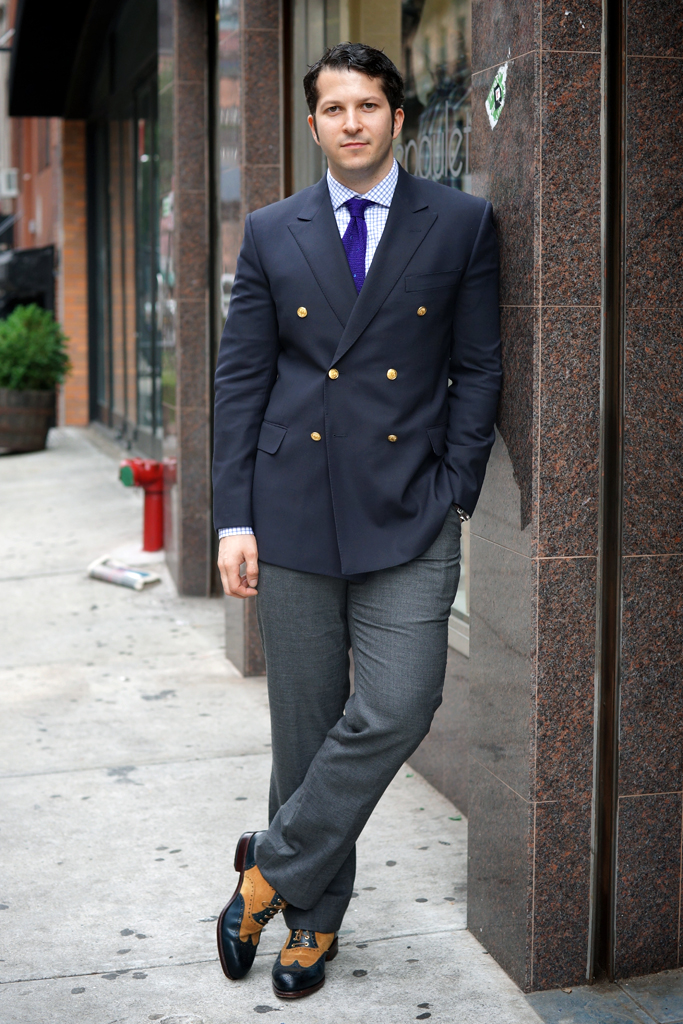
Michael Kuhle wears Epaulet by Epaulet for Epaulet in front of Epaulet
I’m married to a wonderful woman, but we don’t have any children just yet. Adele relates quite well to my style enthusiasm as she’s my business partner. We started Epaulet together back in 2008. We’ve worked side by side every day since then. So she’s clearly very supportive of my personal style, and she’s very understanding of my need to own about four times the amount of shoes and jackets that she does. I’ve met many of my customers’ spouses, and I’d say that most of them are supportive and appreciative of their husband’s love for style. The kind of things we make – and most of the items discussed on Styleforum – are tasteful, complimentary, and mature. It makes a guy look good and partners of both genders generally like that. As long as the guy’s not breaking the bank and spending all of the family money on made to order suits, then he’s usually golden.
Youth in Style
[As for my family’s reactions,] haha, we’ll we’d have to qualify what my style enthusiasm was back in the days. It certainly wasn’t Alt Wiens and hopsack jackets. My parents were none too jazzed with my collection of semi-offensive punk, hardcore, and industrial T-shirts. But I guess that’s pretty typical for your teen years. They didn’t give me too hard of a time though, and definitely understood that I needed to express myself. Especially since I wore a uniform to school each day. They did give me the freedom to express myself and be an individual though.
It’s funny – many of my customers and other guys that I know in the clothing industry share the same youthful love of counter-culture clothing. With the Internet these days, it’s easy for young people to discover menswear style. But when I was a teenager back in the early ‘90s, there weren’t any real resources for me to learn about it. I watched MTV, I shopped at the mall, I went to concerts. My father was a cop and a small business owner, and most of my male relatives were blue collar guys, so there wasn’t anyone to really educate me about suit canvassing or Goodyear-welted shoes. I was pretty clueless about all of this until my early 20s when I started working as a menswear buyer for Saks Fifth Avenue.
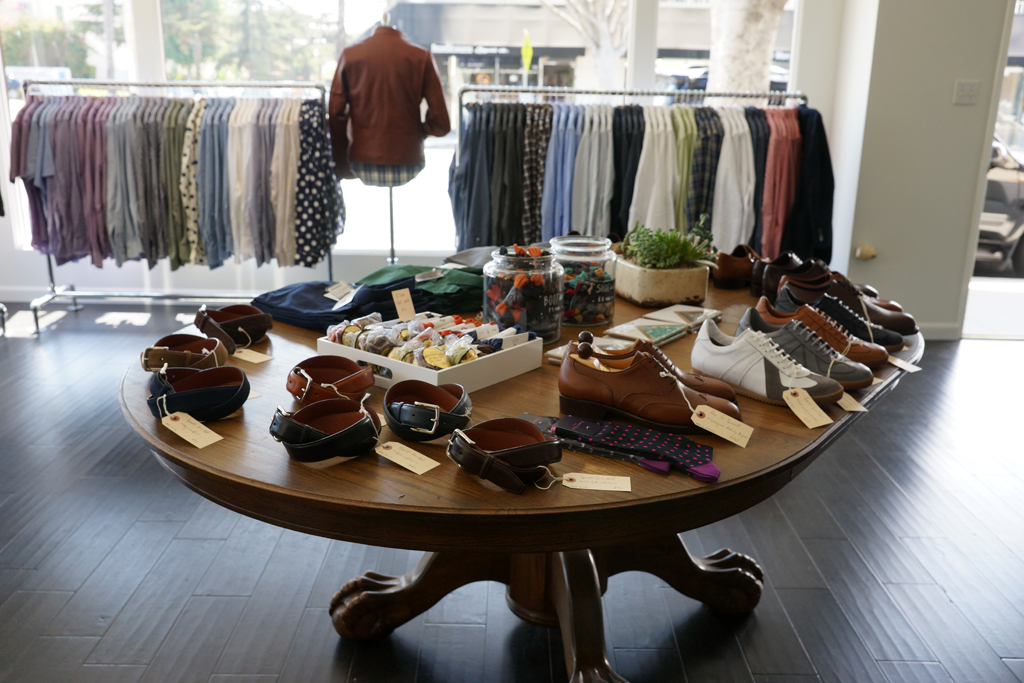 At the first Epaulet store in NY
Well, as I mentioned, music sparked my first interest in clothing. As an awkward 15-year-old, I watched a LOT of MTV. I loved aggressive rap videos – especially Public Enemy, N.W.A, and Cypress Hill. I wanted to wear a lot of the things that I saw, so I was picking up dark jeans, Raiders hats, and Air Jordans. I kind of transitioned into a “grunge” look when that was popular, and then finally settled into the “ska-hardcore” style that still endures a little bit in my wardrobe and menswear design today.
In my early 20s, I had a progression of fashion industry jobs. I worked in marketing for Calvin Klein, then as Men’s Shoes Assistant Buyer for Lord & Taylor and Men’s Clothing Associate Buyer for Saks Fifth Avenue. My job at Saks was the most intensive, as I became the primary buyer for all menswear merchandise on their e-commerce site. I bought a lot of “fashion” goods from the likes of Burberry, Dolce & Gabbana, Zegna, Brioni, and Ferragamo, but also a lot of artisanal merchandise from small makers in Europe and the United States. That merchandise was primarily done private label.
I came to appreciate the artisanal side of it then. While I was very friendly with the people from large companies like Hugo Boss and I enjoyed their enormous booze-filled holiday and tradeshow parties, it was really satisfying to work with the smaller manufacturers. They treated me like gold because Saks was a HUGE account for them. They knew everything about their products and they were very patient and willing to teach me about them. I’ve always been a nerd for things that I like, and it was fascinating to talk to the actual owners of knitwear, shoe, and accessory manufacturers. It was far and away my favorite side of the business.
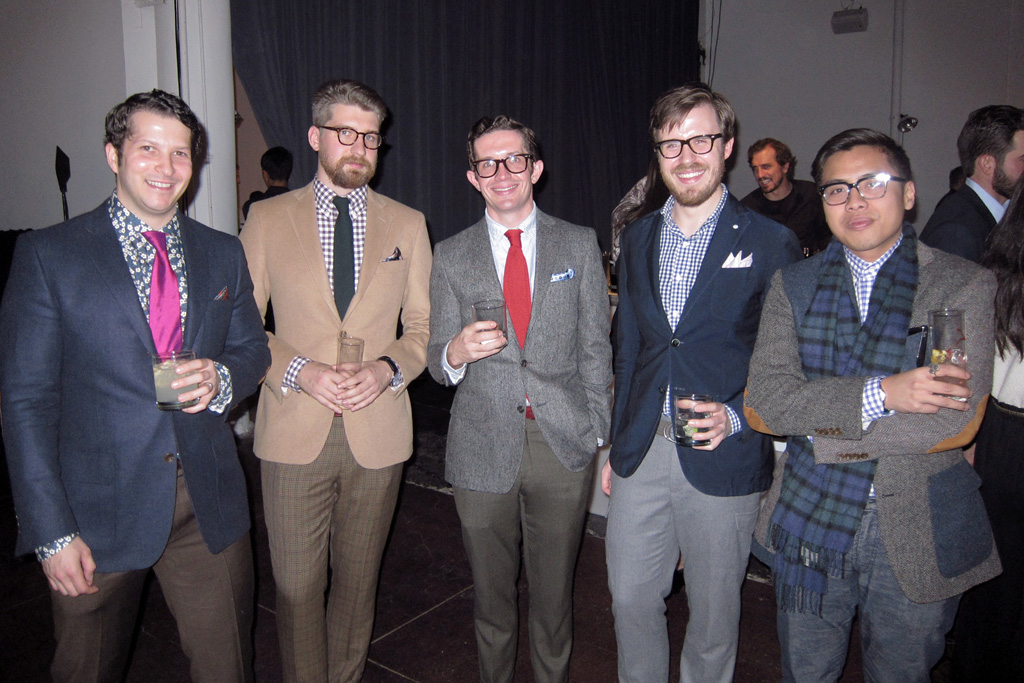
At the 2011 Awards for Racked NY, where Epaulet won The Menswear Store of the Year award, with: Dylan Eckman, Epaulet Operations Director; Matt Smith, Epaulet Associate Designer; Jonathan Evans, Details Magazine; Jian DeLeon, GQ Magazine.
Gettings Serious
When Adele and I became serious about Epaulet, we knew that the artisanal side of manufacturing was going to be our future. These people have enormous pride in what they do. They make excellent products. They’re open to your designs and input. They’re great partners, and they’re people that you can grow your business with. By working with small manufacturers and selling direct to your customers, you can offer an outstanding product at a fair price. And both you and your customers can feel good about supporting the artisans who produce the items.
Fashion brands have their place, and I understand their appeal. It’s important to recognize that branding is a very real commodity for most customers. It’s not that you’re just “paying for a name” and that it means nothing. To the person buying that name, it means a lot – and it allows them to form a relationship with the lifestyle presented by that brand. That’s why the fashion industry spends so much on advertising and PR. So that ultimate customer buys more than just a bag, a jacket, or a fragrance…they buy a small slice of a lifestyle.
It’s thrilling to see all of the new small-scale and artisanal brands and shops in menswear today. This certainly didn’t exist 10 years ago (or it if did, I had no idea about it). Internet sales and marketing has really lowered the barriers to entry, and it’s great that young and passionate people can carve out their own corner of the industry. And many excellent, small factories are benefitting from it. Although the concepts of mass-retailing and lowest-cost production killed off many good factories, I feel that we’re at a sustainable point now for the ones that still exist – and the new ones that are starting up. It’s great to be a part of that.
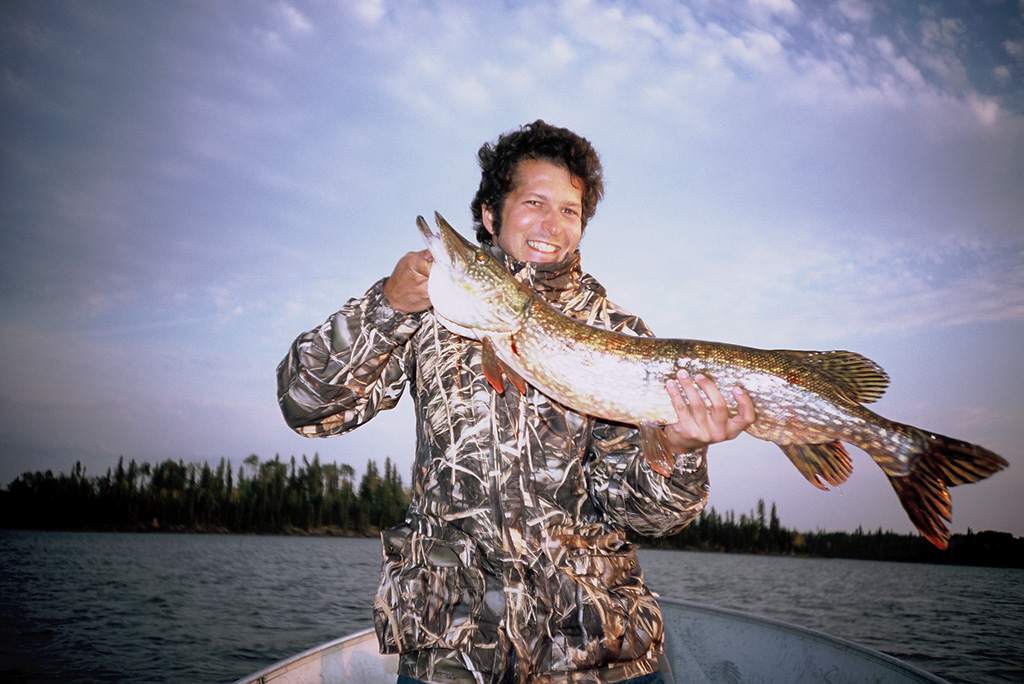
A 20lb Northern Pike caught in Red Lake, Canada, in 2007
Leisure Pursuits
Photography is probably my number one passion. It’s been a huge part of my life for a little over 15 years. Before opening Epaulet, I was the product director for Lomography Cameras in Vienna, and I’ve done a number of professional freelance gigs over the years. Nowadays I mostly shoot things for our store and for our website, but it still brings a lot of joy to me. I love taking photos, collecting cameras, and teaching photography. And I feel that the quality of Epaulet’s photography makes us stand out from the pack.
Everyone around me could immediately tell you that my second hobby is karaoke. It’s hard to state how much I love karaoke. But only a very specific kind – it typically has to be in a private room (“karaoke box”) and it has to be in a group of people that I know. I don’t like doing it in a crowd or at a bar. It’s how I cut loose and I’m proud to say that our entire staff is on-board with screaming, chaotic karaoke. Our top three songs are surely “Mother” by Danzig, “Slow Hand” by the Pointer Sisters, and “First of the Gang to Die” by Morrissey. And don’t hold me to that, it seems like our top three songs changes every month. We’ve been known to do some Iron Maiden, Meatloaf, DMX, Spinal Tap, Whitesnake, and Red Hot Chili Peppers as well.
I’ve recently moved to Santa Monica in California, so I’m also trying to live the West Coast outdoors life these days. I’m trying to get out more – take hikes, bicycle, and swim in the sea. I’ve never spent much time in nature, so it’s a nice change. It definitely helps that it rarely rains here and the weather is pretty much perfect every day.
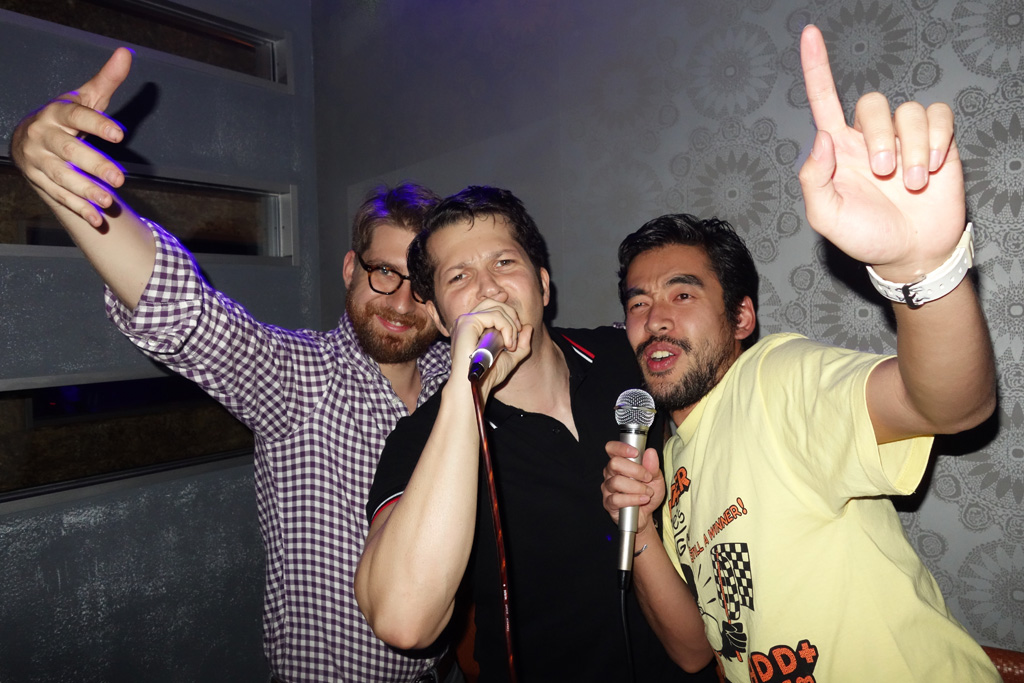
A tender karaoke rendition of California Love from 2Pac and Dr. Dre with colleague and client/friend.
Knowledge
Well, the base of my knowledge came from on-the-job training in my various buying positions. These days, I learn from three places: 1) the Internet, 2) my customers, and 3) my manufacturers. The internet is my primary resource, and I learn so much from sites like Styleforum and Reddit, and from all of the blogs that I read. There’s so much inspiration to be found out there.
My customers teach me and my staff about style every single day. They’ll post fit photos which blow our mind, and all of us think “wow, I never thought to put those things together.” Our customers are some of the most stylish and innovative people that we know.
And I learn very much from our manufacturers. I’ve visited most factories that we work with, and I’ve had in-depth meetings with the owners of every single one of them. If I’m going to sell high-value items to intelligent guys, then I need to know everything about how they’re made: what makes them so good, why they’re worth the money we charge. So I exhaustively discuss the production process and materials with all of our partners.
I’d say that these three elements form the basis of Epaulet’s designs. I don’t have “inspiration boards” in my office that are covered in photos of Steve McQueen and Cary Grant. I don’t come up with a whimsical collection concept each season and work to sell that to my customers. I’ll look first to my customers and work to develop the items that they’re interested in. I’ll search through the Internet and see what’s “missing” and what people are looking for. What we can make better than anyone else. And I’ll meet with my factories to find out what they’ve designed in-house and what new capabilities or resources they might have. We design a huge collection each season and a massive amount of products – all of which are released in a constant stream.
 Elegance in motion in the nightlife, featuring James McCaffery (in knit tie), Epaulet’s Press Coordinator.
Personal Take
Haha, I’m definitely a man of repetition when it comes to my personal dress. I definitely have more style when it comes to dressing other people then dressing myself. But I’ll typically have one of two looks.
The first one I’ll call “Anglo-Italian Semi Casual.” It’s typically a soft sport coat, patterned shirt, knit tie, wool or cotton trousers, and calf or shell cordovan shoes. I like plaids, checks, windowpanes, and gingham. If I wear a tie, it’s typically a knit silk one – especially with dots. I have a pretty large shoe collection, and I especially favor shortwings, double monks, and Alt Wiens. I’ll wear bold socks on most days and coordinate my belt and shoes in complimentary leathers. On hot days I’ll sometimes wear shorts and sockless shoes with the shirt & jacket.
The second one I’ll call the “Mike Kuhle Default.” This is a polo shirt (either our Epaulet Luchino polo or a twin-tipped Fred Perry UK-made polo), a pair of shorts, and sneakers. I have my own custom fit 7″ inseam shorts and I must have about a dozen pairs of them. I’m pretty comfortable in this outfit, and if I’m not careful then I’ll tend to wear it every day. Now that we’ve got our new store in Santa Monica, I have to be careful about this, as it’s easy to fall into the rut. And I’ve got to keep it real and show the full breadth of the Epaulet style. So I’m going to do my best to only wear this outside of work.
For cut, I use the idea of “slim but not skinny” as a guiding principle for both my personal style and everything that I design. We make clothing that’s fairly body-conscious, but it’s not skin tight or trendy. To be stylish you have to be comfortable, and I’m always working to strike the proper balance between garments that are slim but still allow for movement.
And to digress for a second: the idea of “comfort” in menswear is often something that you have to develop. Since I went to Catholic school, I wore jackets, ties, and dress shoes every day. In really hot and really cold weather. I learned to be comfortable whilst fully dressed at a young age. I appreciate the fact that this is a strange experience for many younger guys getting into classic menswear in their post-college years. They only wore suits, dress shirts, ties, and shoes on special occasions. Being fully and properly dressed is often a lot less comfortable than wearing something casual, but it’s important to stick with it. Ultimately if you feel good and you’re proud of how you look then you can tolerate and breeze through all kinds of physical discomfort. Just ask a girl celebrating New Year’s Eve in New York City in a cocktail dress and bare legs when it’s minus 10 degrees outside. She likes how she looks and she grins and bears it. Be like her when it’s 95 degrees out and you want to wear that white double breasted jacket! It’s worth a little bit of sweat.
The Michael Kuhle Warrant Holders
I’m a big proponent of “bang for the buck.” I generally favor makers who are delivering what I consider to be the finest product at their respective price points. That’s one of the guiding principles at our store. So with that in mind, below are my favorites.
Tailored Clothing:
– Southwick Clothes: the best US-made jackets and suits at their price. Half-canvassed, classic cuts, dependable quality, great fabric.
– Samuelsohn Clothes: made in Canada, fully canvassed and with a bit more hand-work than Southwick. A bit more expensive as well.
– Luigi Bianchi Mantova: made in Italy, really unique fabrics and a phenomenal soft and comfortable shoulder. We’re bringing out a co-branded collection with them in the Spring.
– Primo Coat: a New York-based manufacturer who used to do Thom Browne’s production. We typically recommend them for MTM custom work. Great attention to detail.
– Kiton: okay, you’re probably paying more than you need to, but, my God, they can make a gorgeous jacket.
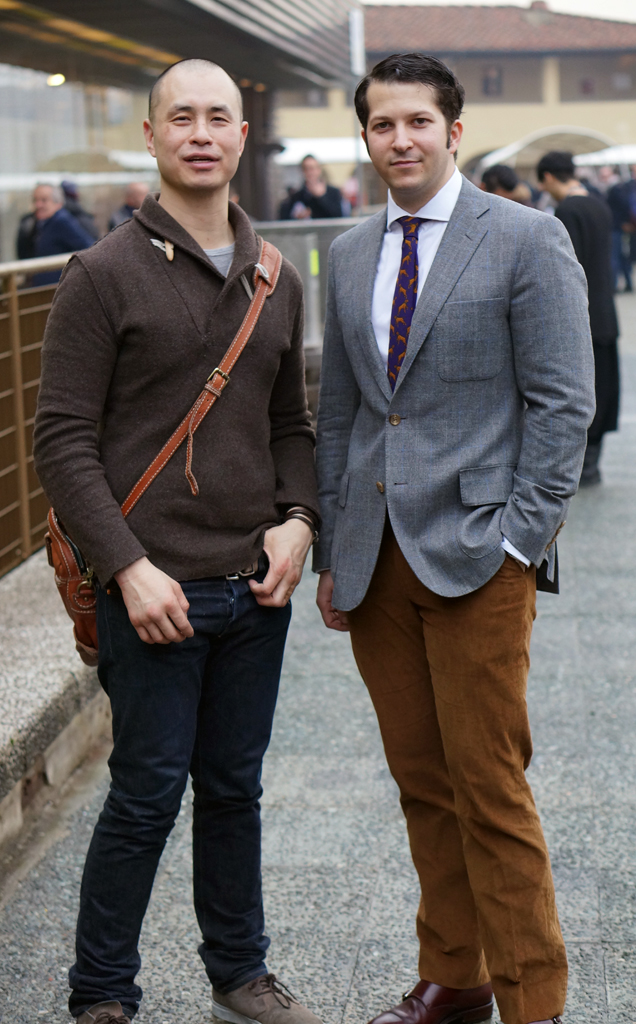
With Styleforum main man Fok-Yan Leung at Pitti Uomo, January 2013
Footwear:
– Alden: the best-made shoes in the United States. We’ve carried them for years and their popularity is well-earned.
– Carmina: brilliant Goodyear-welted shoes from Spain. Great value for the price, and some of the nicest lasts we’ve seen from anyone. Very clean production and exceptional finishing with shell cordovan.
– Vass: handmade in Hungary. Unbelievable finish and an absolute joy to wear. They really own the Austro-Hungarian style too, which are generally my favorite shoe designs.
– Ludwig Reiter: their line of classics is exceptional, and their factory is right in Vienna, one of my favorite cities in the world.
– Edward Green: Absolutely masterful finishing and burnishing. Great lasts and patterns.
Accessories:
– Croots England: Absolutely stunning bridle leather briefcases and weekenders. Shotgun slips too for the skeet shooters and hunters out there.
– Jaeger LeCoultre: My Reverso is far and away my favorite watch. What a gorgeous, timeless design.
– Comme des Garçons Fragrances: their scents are unique, and really stand out from the pack. I love the original EDP, it smells kind of like cinnamon toothpaste, but in the best possible way
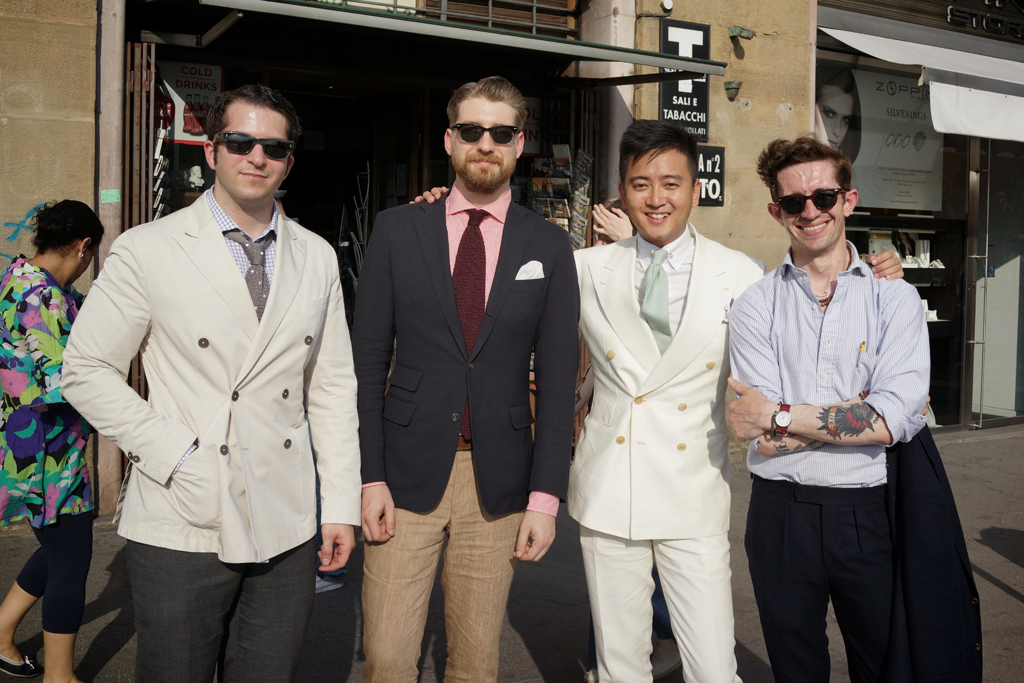 Part of the Epaulet team with The Man in the Cream Liverano Suit, Alan See, at Pitti Uomo, June 2013.
The Store
We opened the store back in 2008. Originally we were actually a women’s store with a tiny sprinkling of mens’ merchandise. We opened in May of ’08 to a really strong reception. Our neighborhood in Brooklyn has a pretty vibrant scene for women’s fashion, and business was great straight off the bat.
Then the recession came. And…my God…there was no selling anything to our female customers. In November of ’08, there was crazy apocalyptic talk of the US economy crashing, and everyone held onto their wallets. We nearly went out of business that season.
But, we worked like hell to face the challenge and figure out how to negotiate that rough patch. It became very clear that the classic multi-brand, physical-only store was going the way of the dinosaur. We started our own in-house development and private label line (beginning with shirtings) and we launched our e-commerce site that season. It wasn’t an overnight success, but it got us through some dark days.
Since then, we’ve worked to grow our in-house and put our “stamp” onto an increasing amount of product categories. We’ve grown from one store to three and from one coast to both coasts. Our customers have been incredibly supportive and loyal, and we’ve worked to honor their attention by creating the best products that we can. So the reception has been great.
We offer stylish, well-made menswear pieces – both dress and casual – at a fair price. The fit is always precise and the construction is excellent. Everything is made in North America or Europe. We’re not committed to a single look, and we don’t create ephemeral trendy styles every season. We work to strike a balance between dependable basics like hopsack blazers and seasonal fashion items like Antelope Leather boots. New merchandise is delivered every single week, so the assortment is constantly being refreshed. And our collection works to encapsulate an entire lifestyle for our customers. We offer suitings and footwear that would suffice for a law office first interview, and we also sell casual chinos and sneakers for more easygoing occasions.
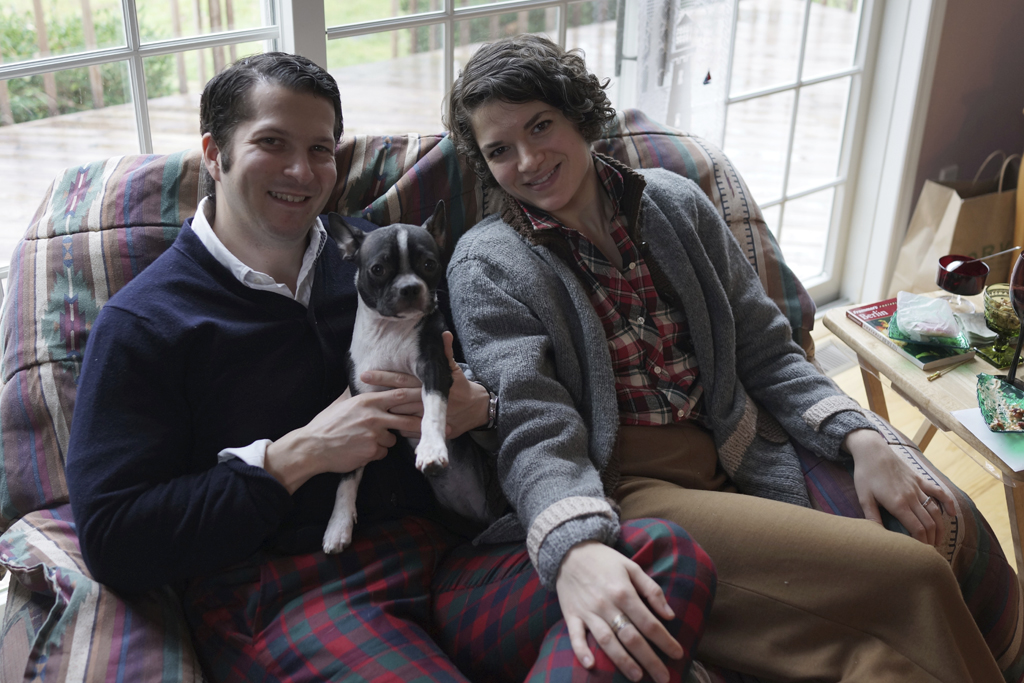 With wife and Epaulet co-owner Adele and Boston terrier Roxy (who looks confused by Scottish heritage apparel). Poor pooch.
The Epaulet Lens
When I hold product meetings with our staff, I talk about the “Epaulet Lens.” That’s really the key to what we do. We look at a variety of items (things that we find personally appealing, things our customers ask for, things that can be done better, etc.), and work to see them through the Epaulet Lens. And that means the union of:
(1) solid manufacturing
(2) fair price
(3) precise fit
(4) good style
Epaulet customers can see new products that we create and trust that they tick off all four of those boxes.
I believe that we offer something that no one else does. Despite being small boutiques (both of our NYC shops are less than 1,000sq feet), you find that each one is filled to brim with exclusive product that you won’t find elsewhere. It’s possible to walk out with a full suit and cordovan shoes or chinos, a parka, and lug-soled boots. Entering our store takes you into a unique collection where every single piece is carefully considered, and the staff can tell you about all of its details and origin. We treat our customers like friends and offer high-end merchandise without pretense. But we’re also not too casual about it, and you can expect that you’ll have a pleasurable and professional experience with us. Many of our customers consider us to be their favorite brand and their favorite shop, and we tirelessly work to fulfill their expectations
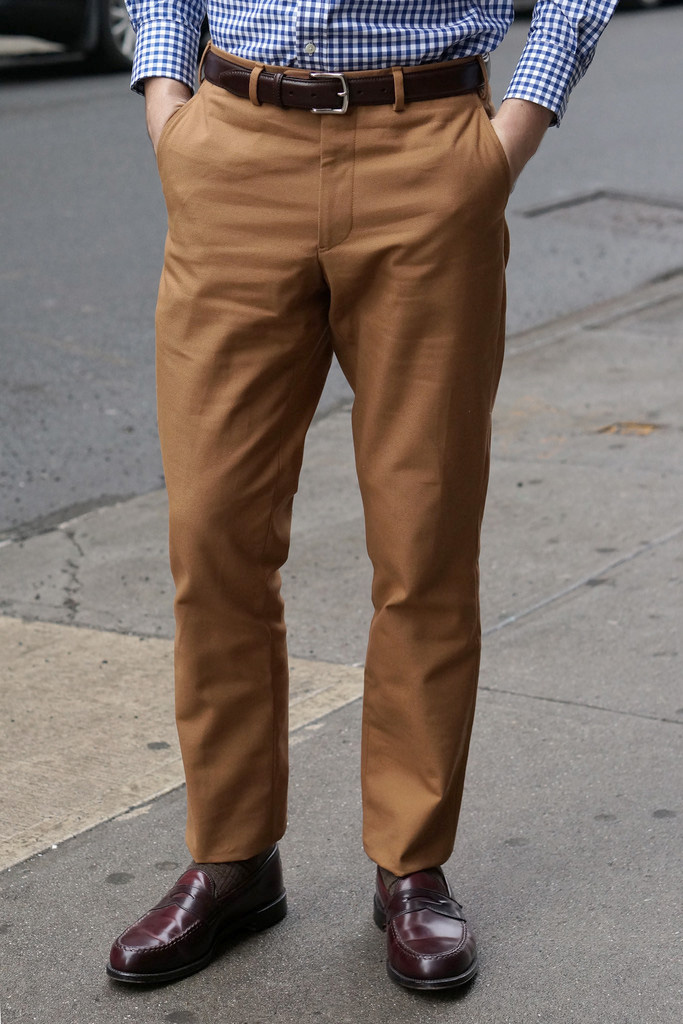
Walt model pants in slim fit, caramel duck canvas
Style Definitions
[As for my definition of style,] ah, that’s a hard one. I largely agree with the standard definition of “style” as personal and (relatively) timeless while “fashion” is trendy and often short-lived. But of course “style” will change and evolve with time.
When it comes down to it, I believe that good style requires (1) confidence in yourself (2) pride in your appearance and (3) knowledge of current fashion, in that order of importance. Every stylish man is confident. When you’re stylish, you tend to stand out from the pack, and you require the right mentality to do that. Shy people want to blend in. Pride in your appearance and attention to it is the next requirement. This can take different forms – from an impeccably-dressed banker in a 3-piece suit to a 17yo punk kid who spent 1 hour putting his hair into liberty spikes. I’d argue that both are very stylish in their own way.
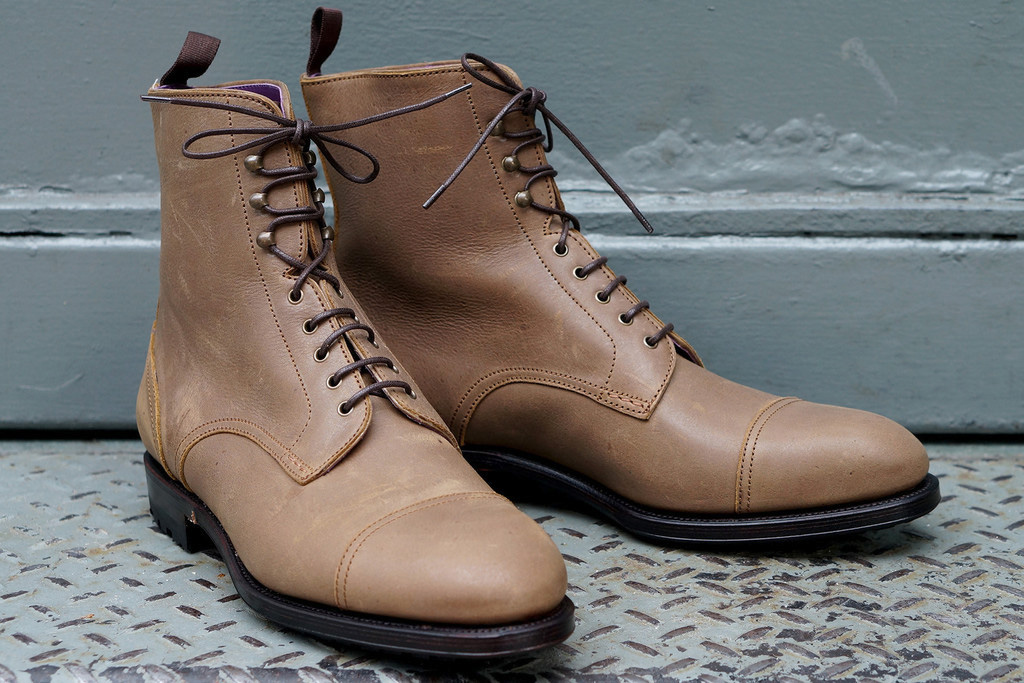 Anderson Jumper Boots in Natural Kudu Antelope Hide by Carmina for Epaulet
And then comes the third part – acknowledgement of what’s popular and in fashion. Many guys would argue that style is timeless, and certain things are always in style, etc. This is true to an extent, but you don’t have to look very far back to find once-timeless menswear staples that became very dated. Things like 3-button, high-stance jackets. Oblique-toed shoes. Pleated trousers. Skinny ties. Just because you looked stylish as hell in 1999 doesn’t mean that the same outfit works today. Style doesn’t exist in a vacuum, and most people will not accept you as stylish if you’re not embracing some kind of current look (or currently accepted retro look, like 1950s Ivy Style or 1960s Mad Men). If your retro look isn’t currently in vogue (let’s say… a member’s only-jacket, tight jeans, and white running shoes), then most people won’t consider you to have style. But we’d be inclined to invite you to a karaoke party.
It’s a cliché to say that I’m inspired by everything. Plus that’s not true – there’s all kinds of crap out there that is distinctly non-inspirational. But I’m inspired by too many things to list here. Primarily though, it’s my beautiful wife Adele, my staff, my customers, press and bloggers that we follow, and my friends. They’re the reason that I’m able to do what I do.
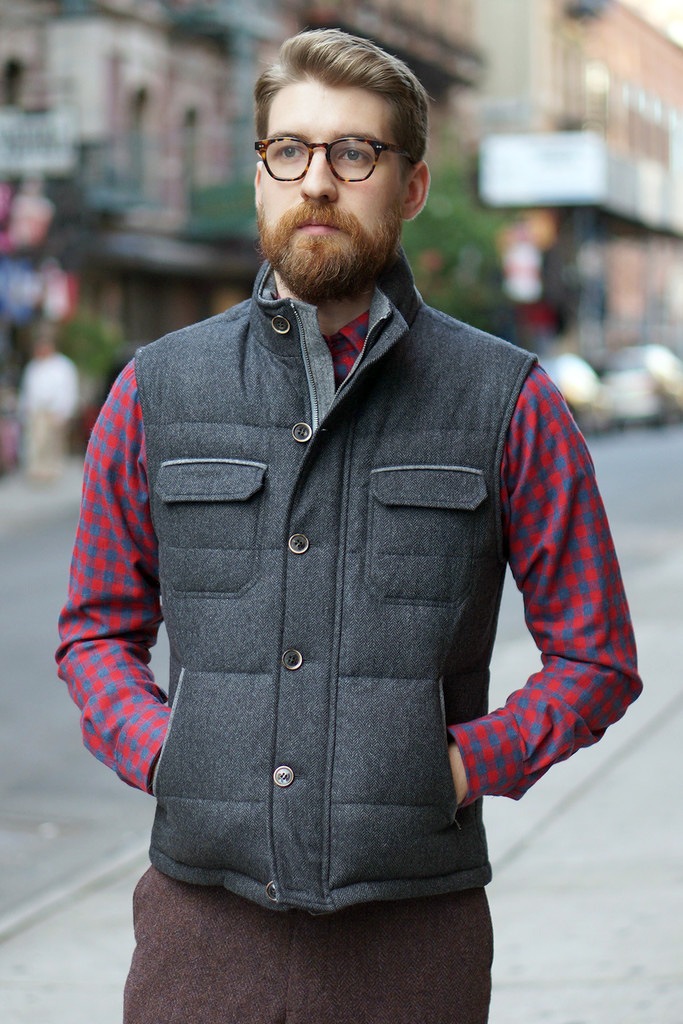
Goose down cashmere herringbone vest by Veneto for Epaulet, modeled by Dylan Eckman, Epaulet Operations Director, long-standing fit model and the owner of a beard worth envying.
The Tips
Here’s ten tips that have helped me along:
1. Quality Vintage is always Better than New Garbage
If you’re on a budget, then shop on eBay and in second hand shops for quality tailored clothing, shirts, and footwear. It’s better than buying a cheap, fast-fashion variant of the good stuff. More fun too.
2. Good Shoes Are Your Best Investment in Style
Get a pair of proper Goodyear-welted shoes that are made in the United States or Europe. Go second hand if you have to. The premium in price will pay off many times over in comfort and longevity.
3. Have a Tailor and a Cobbler
Proper clothing and shoes need maintenance. Tailors can reshape garments to fit you perfectly. And Cobblers can expertly maintain your shoes.
4. Don’t buy something because of a perceived discount
“Oh my god, this $5000 suit is now $900 dollars! I have to get it! Wait until I tell everyone that the suit was $5000!”No, the suit was not $5000. It may have been priced there. That doesn’t mean that anyone ever spent that or that the price was real. I remember the outrage that people felt at Gilt Groupe for playing these inflated pre-markdown price games. Don’t let yourself be fooled. The only price that matters is how much the item is worth to YOU. It’s human nature to want a bargain, and many retailers know how to exploit this.
5. Have multiples of your staple items
Most guys have a uniform of pieces that they enjoy wearing. If you try to wear the same navy blazer or the same wingtips or the same grey trousers every single day, you’ll wear them out with quickness. Get multiples of the items that fit you best so that you can rotate them. Two pairs of the same shoe worn in rotation will last much longer than 2x the duration of a single pair.
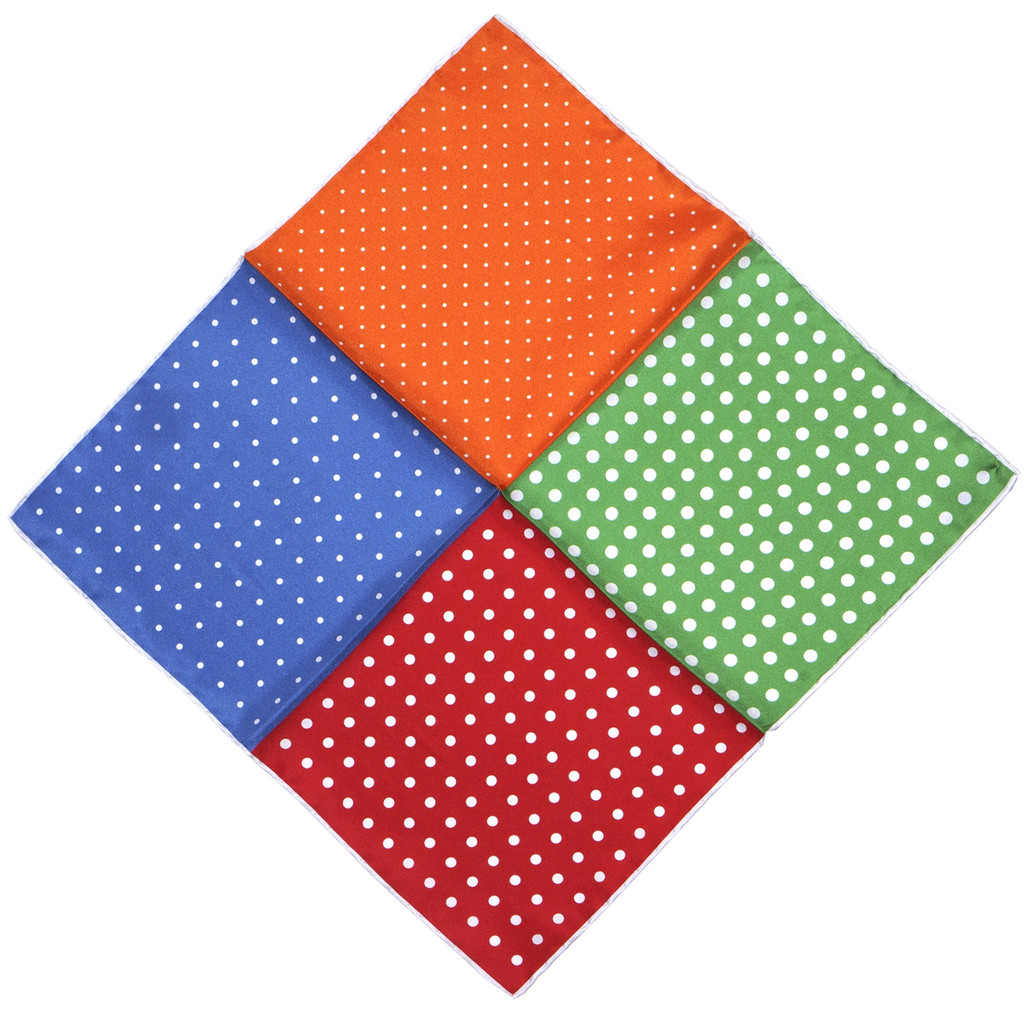 Four Way Multi Dot Pocket Square by Rhineland for Epaulet
6. Wear an Interesting Watch
Watches are fantastic accessories. Get an automatic one that fits your personality. And a cheap vintage watch with character always trumps an expensive new one that looks garish. And there are plenty of those.
7. Get to Know the People at the Independent Stores That You Like
Whether offline or online, it’s great to chat with the people behind the stores that you patronize. We love speaking with our customers. Introduce yourself and all kinds of good things can happen. And the experience of shopping will be more personalized and rewarding.
8. A Proper-Fitting Sport coat is Crucial
The proper sport coat that’s well-fitted to your frame will transform everything about you. It’s the most flattering piece that a man can own. Some guys can find a perfect fit off the rack, and that’s great. If you can’t, don’t hesitate to use a tailor to dial it in. It’s often a necessity. And this is a crucial piece for any wardrobe.
9. Use Your Personality In Social Media
I may be guilty of doing this TOO much, but if you write about style, then it’s fun for your readers to beyond your clothing and outfits and into other parts of your life. The restaurant you went to, the trip you took, the dog you saw. Blogging and such is a bit of an ego-trip by definition, so it’s important to let your guard down and poke fun at yourself from time to time.
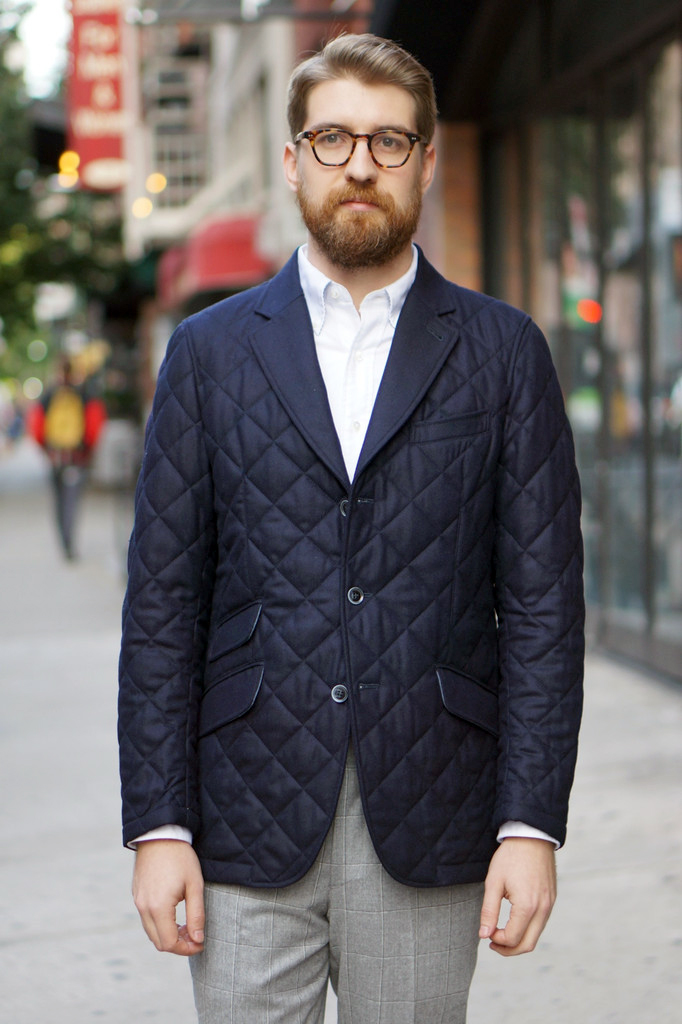
Single-breasted quilted technical sportcoat by Veneto for Epaulet
10. Be Open to New Things
Fashion and Style should be fun. It’s great to try out new looks for yourself, to learn about new designers and brands, and to rework your image every now and then. Nothing in the world of clothing is truly “timeless,” and pretending that style never changes you will miss much of the excitement. Women understand this very well. While I love that menswear is generally more serious, more detail-oriented, and slower-paced than womenswear, its important to remember that clothes are meant to be changed.’
Category Interviews, Quality Stores, Tradesmen, Web stores
G. Bruce Boyer on Writing with Style
6September 30, 2013 by Ville Raivio
Foreword
I had this little idea, but since I want to make it seem more important, I’m going to call it a theory. The thought came to me during this year while reading one of my favourite style sites and noticing how the amount of advertising banners and more or less ad-like content had slowly piled up. I had difficulties in differentiating whether the writer featured and covered the latest moves from certain makers as a personal favour to his friends or was money or a closetful of goods exchanging hands. Such is the case with several style sites which have taken their first virtual steps with an earnest mind, only to become yet another site in someone else’s pocket. Then again, I don’t have the details or insight into the workings of one writer from another. I won’t name names as I’m sure the differences on certain sites are clear to so many of us who’ve either grown into young adults or spent countless working hours (the trick is to look busy and pucker your lips) pouring over menswear.
This little theory on the half-life of earnest style blogging was something I kept myself busy with while reading my favourites and several others. It’s a great feeling, having a topic in mind and eventually seeing it online just as intended. It’s also a great feeling, the sound of the doorbell, the UPS guy with his eyes on his shoes or anywhere else than the customer, putting down an X to mark the spot, closing the door and — yes, finally — sniffing that shoe box, running fingers on that new, perfect pair of Timeless, Classic, Tasty Brogues in exchange for a feature or two. Is the pair an earnest one? Will it be featured and reviewed with a clean conscience? Perhaps the half-life is running thin or gone already, perhaps it doesn’t matter. Perhaps, perhaps, perhaps. Be that as it may or may not, I wanted to know G. Bruce Boyer’s thoughts on the current state of style writing, men’s magazines and the explosion of style sites. He was kind enough to devote his time for another Keikari interview since his first one. I had much to ask, he had more to answer. What follows is one man’s journey in writing with style.
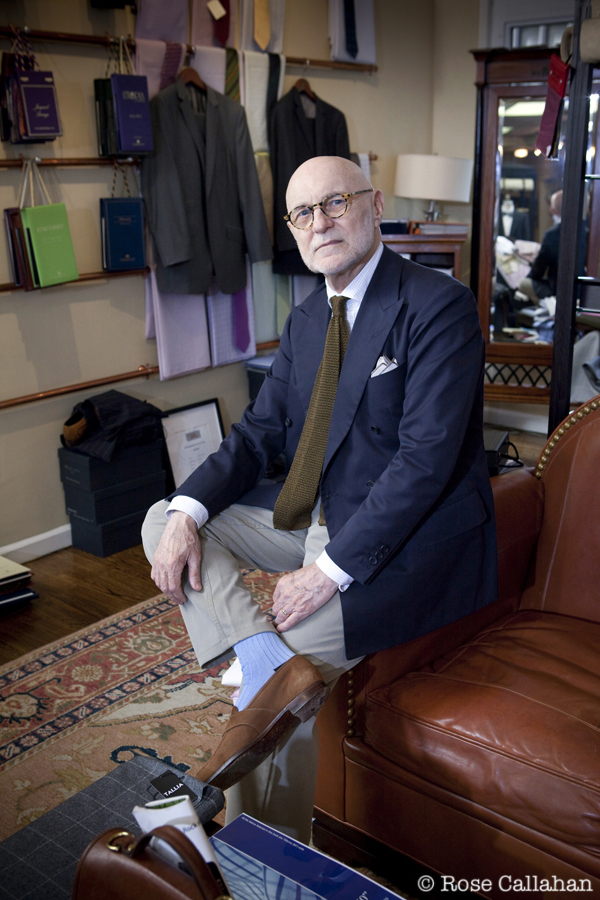 As seen by the inimitable Rose Callahan
The Interview
VR: How did you first take up style as a subject matter? What lead you to this, should we say, somewhat lighter topic?
GBB: My interest in style comes from my background, which was lower Middle Class, growing up in a mid-sized East Coast US city. I’ve said this before, and still believe it’s true: those with little money must count on brains, hard work, and style to get ahead. Good manners and a sense of humor help as well. This is the nature of both the Dandy and Democracy: that our destinies are not written before we are born. I understood this from a very early age, and was lucky enough to have a mother who allowed me to experiment with my vision of myself. My belief is that we all invent ourselves to one degree or another. I tried all sorts of clothes, and noticed how people reacted to them. I carefully noticed how costumes on actors helped them play their parts. And I was quickly aware that some men in our neighborhood got more attention and respect because of their style. Style is neither superficial nor inconsequential. So when I came to writing, style was a good subject for me, I felt I understood it because, in a way, I had been studying it all my life.
 Town&Country, the makings of a journalist
VR:I trust magazines have worked in tandem with makers and merchants since Apparel Arts, so more or less marketed content is not a new invention. Back in your time, did editors choose these makers and merchants themselves or did the highest payer receive kudos?
GBB: The relationship between advertising and editorial is one that has bothered me more and more over the years. I must say that when I was at Town & Country magazine the subjects about which I wrote were never tied to advertising, there was never even any discussion of this. It’s difficult to believe today because so many magazines are completely “ad driven”, and editorial space is obviously allotted to those who have some sort of financial relationship with the magazine. My feeling is that this is bad because it puts the reader deviously at the mercy of the advertiser. Not to mention that it makes the taste of the editor logically irrelevant impotent. Coming from an educational background — I was a teacher for eight years — my thought was always to educate the reader (the educational analogy would be that you get money for the school by producing good students), to help him with his choices and understanding. In other words, to put the reader first. When editorial and advertising are in bed together, the reader loses a great deal in my opinion, and this partially explains the importance and significance of blog sites which can go around this incestuous relationship by not being so dependent on ads.
I should add, in the spirit of transparency and disclosure, that since I have returned to Town & Country, there has been no discussion of advertising with relation to my choices of subject.
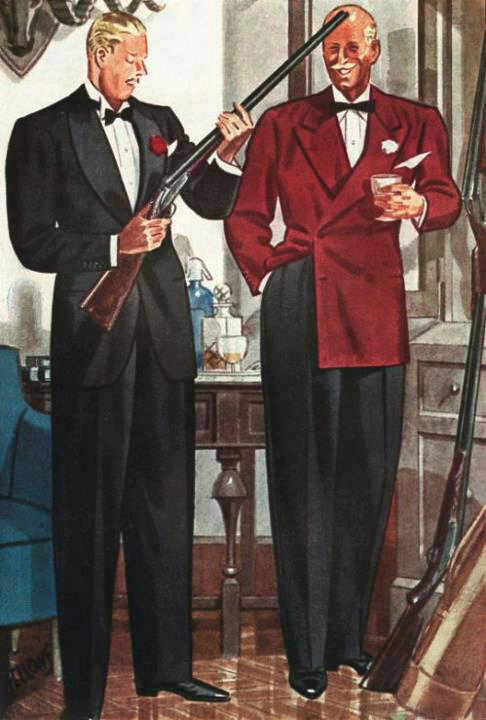 An L. Fellows illustration from the good old days of hunting
VR: You have no homepage, so I took a look at your Wikipedia entry. It states that you have worked as style editor for several magazines. How did you select topics for these men’s publications back then? How much say did style editors hold over the published content?
GBB: Wikipedia entries, at least in my case, are very misleading and erroneous. I’ve written for many magazines — including L’Uomo Vogue, The New Yorker, The New York Times, The Rake, Forbes, among them — but I was never a fashion editor at any magazine in any sense except Town & Country and Cigar Aficionado. My lance has always been for hire. Over the years most of the topics on which I’ve written I’ve selected myself. When I first started with T&C I wrote down a list of roughly a hundred ideas I wanted to write about, and I eventually went through the list and published articles about almost every one. I usually submit (the word is “pitch”) several ideas to an editor; occasionally an editor will ask me to write about a particular subject. Public relations people also pitch ideas to me, but not many of those usually fit my inclinations.
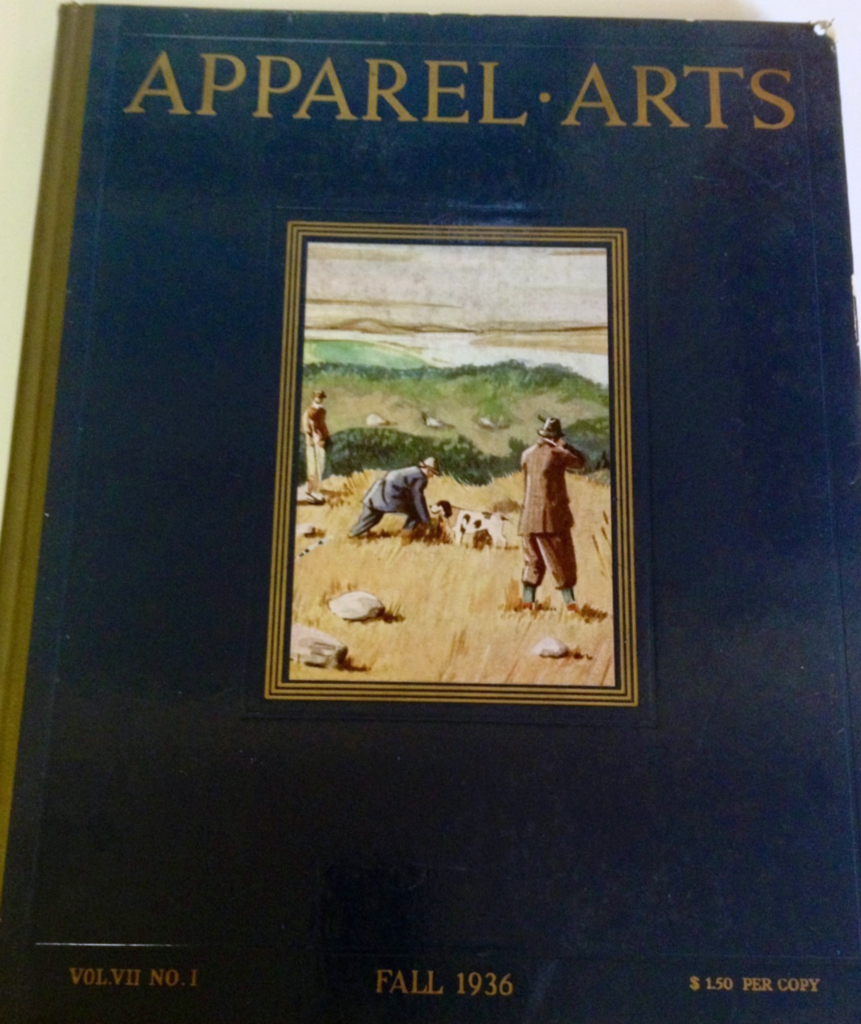 Apparel Arts, the originator
VR: All magazines, we’ll, at least those worth mentioning, have an editorial policy. Was it ever the done thing to give negative reviews, or were those companies or stores with poor service, quality and such just not mentioned?
GBB: I prefer to ignore rather than to attack. I’ve never given a negative review simply because I don’t write about things I don’t like. Things I find inferior in style and quality, or uninteresting, or of poor value I ignore. I don’t write about stores which give bad service, I simply don’t recommend them by ignoring them. I leave trashing to others who have the talent for it. But this question leads me to consider tangentially another question: for whom do I write? The answer is that I write for myself and for people whom I imagine are like me. I never try to “second guess” who my reader might be and what his interests are. I write about things I’m interested in and enjoy. It’s as simple as that. I’ve always, in fact, assumed that my readership was rather small, although our interests are broad. I like to write about jazz, literature, the art of acting, and craftsmanship generally as well as clothes, and have found that many of my readers share these interests.
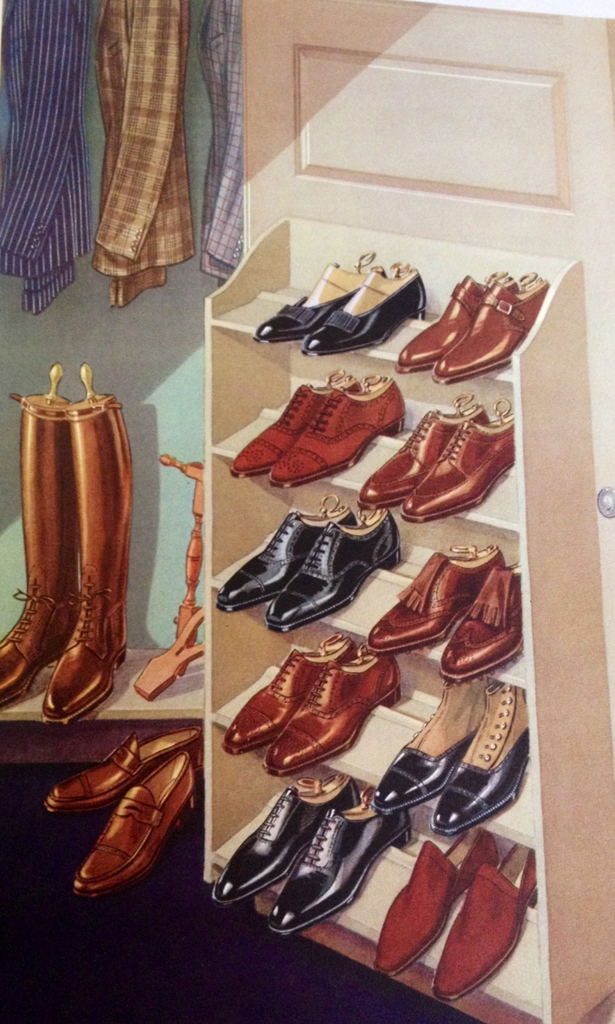 Apparel Arts on the suitable shoe collection
VR: Based on what I’ve read, you and George Frazier (whose collected works we’re still waiting for) are often mentioned as journalists who’ve used ‘high writing style’ with the topic of clothing. What lead you to use paragraphs and quotations from novels on your Cigar Aficionado columns and the collected pieces on Eminently Suitable?
GBB: George Frazier and I have been schooled in literature, philosophy, and history. In other words, we both have a good Liberal Arts background on which to draw. I think that accounts for us peppering our writing with quotes from Shelley and Keats, or referring to a historic battle, or the philosophy of Marx, or the music of Billie Holiday. These references are touchstones for us. I’ve noticed, to put it another way, that Frazier never gets into the business aspects of clothing, and neither do I. I think it’s because neither of us has been very adept at that approach. We both happen to think that Dickens, Emily Dickinson, Alan Ginsberg, A. E. Housman, and Homer have a lot to teach us.
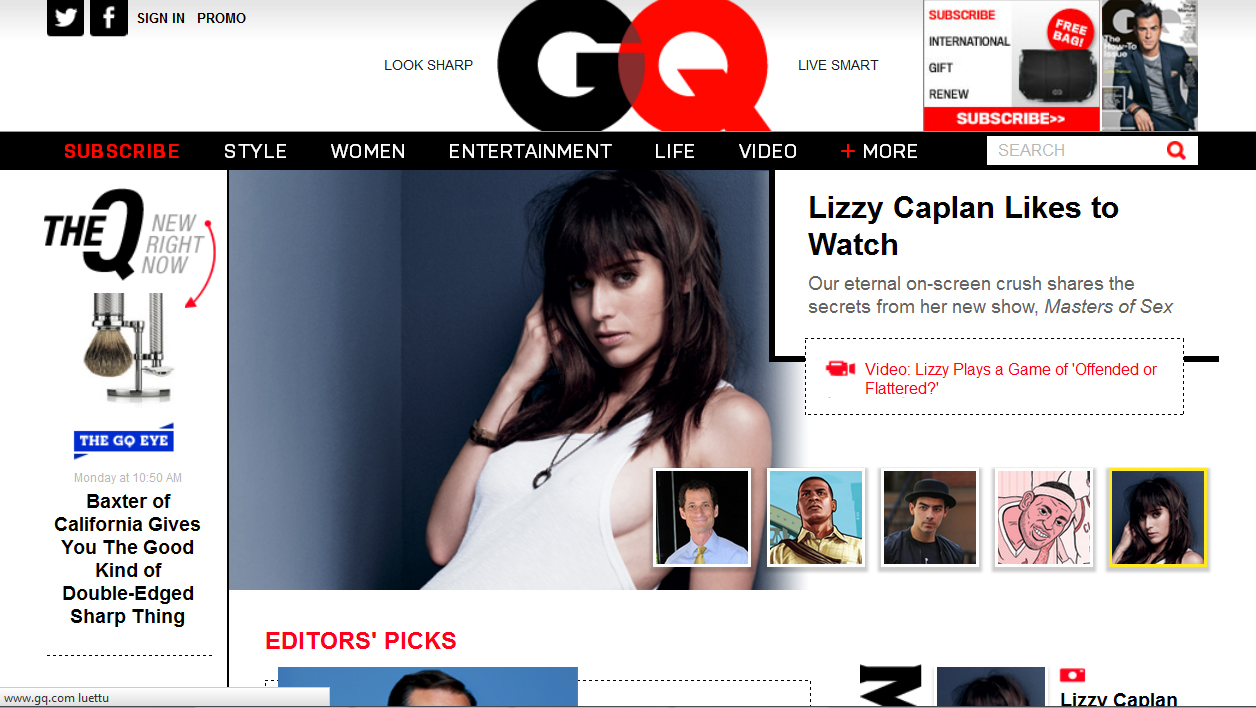 GQ, which lost its way
VR: I trust you’ve followed the likes of Esquire and GQ over the decades. How do you feel their style articles have changed through the years? Has content been sacrificed to make room for pretty pictures and quick fixes?
GBB: I wish I could speak more highly of GQ and Esquire, because they both have such an incredible heritage. I remember when the covers of GQ were graced by the likes of Astaire and Cary Grant, and the drawings of Laurence Fellows and Leslie Saalburg in Esquire were more beautiful than any photograph. Style, quality, and taste ruled. Today the bottom line is very hard currency indeed. I suppose this is a bit of tumbrel talk, but I think there’s a lot of misplaced enthusiasm which is the product of rigorous effort but not natural taste. I know that a number of bloggers have lamented that so much tradition, rather than a body of living beliefs, has become a commodity, more a matter of decor than piety. All the references to “heritage”, “vintage”, and “curated” clothing in ads and magazines today indicates a self-conscious effort and yearning. Much of my view is of course dictated by my age. The way I dress is somewhat imprisoned by the years of my youth — but my appreciation of style and quality is not. I monitor about forty blog sites every day and see many young guys, who dress with pride and individual style, but they do that for private, personal reasons, and you understand that there’s substance to these guys. It’s more than a matter of just learning all the golden labels mouthed by the media. There’s education and a desire for personal distinction there. As my friend Charlie Davidson has said, “Who the fuck would want to look like a Ralph Lauren window?”
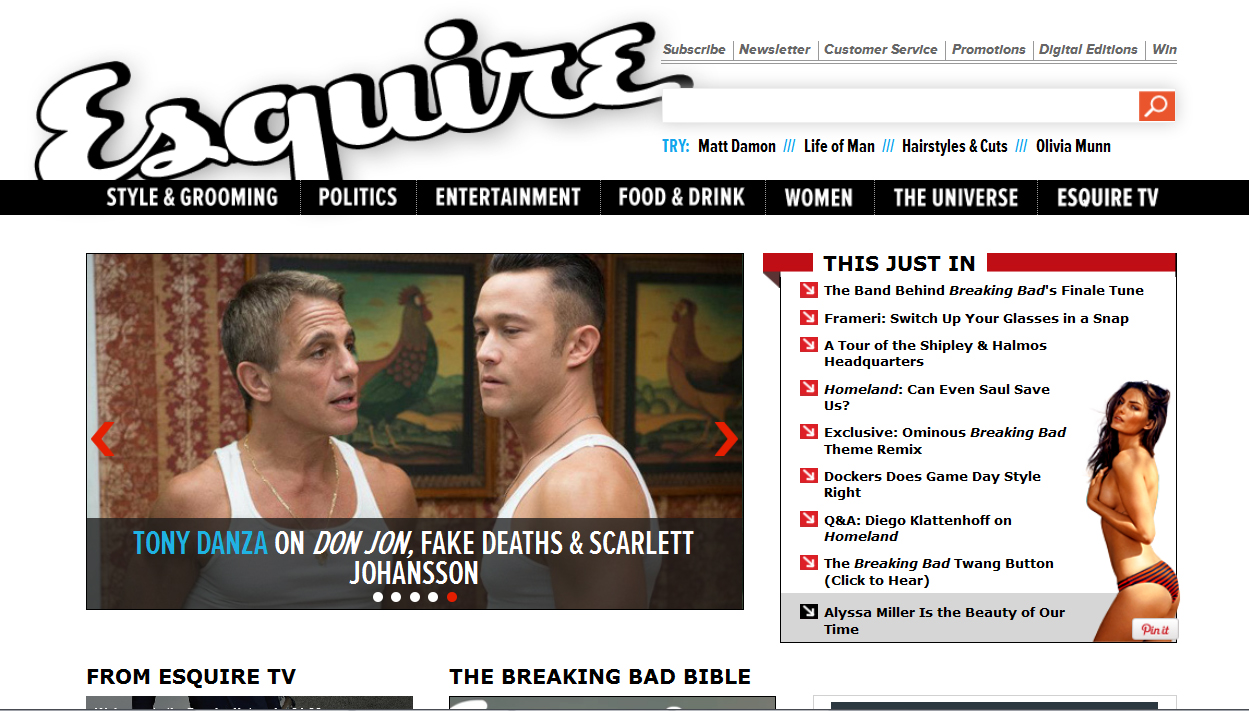 Esquire, from Hemingway articles to funny jokes from half-naked ladies
VR: How do you view the explosion in the number of style websites and blogs, which has only escalated since 2000? I feel it’s wonderful that we’ve so much to choose from, but, once again, it’s difficult to tell marketed content from that written with honesty. Do you have favourite sites that you can recommend wholeheartedly?
GBB: GBB: The bloggers I most appreciate, empathize with, and respect are many: Ivy Style and Dandyism are both authored by the same gentleman and both are very much The Real Thing. The Trad is a wonderful perspective on life that incorporates but doesn’t take clothes as its necessary focus. This is also true of Maxminimus and Tweedland. For stunning photography of well-dressed, stylish men, you can’t beat Rose Callahan, The Sartorialist, Rugged Old Salt. And for erudite discussions of clothing, my picks would be Put This On, Die Workwear, Parisian Gentleman, Permanent Style, The London Lounge, Gentlemen’s Gazette. And last, but certainly not least, Keikari.com for the extensive interviews with professional people in the clothing field which center on style and craftsmanship, as well as the historical analyses and insightful quotes. Keikari and Gentleman’s Gazette are really what I think a stylish men’s magazine should be. The thread that holds all of these together in my mind is their intelligent aesthetic. The gentlemen who produce these sites are erudite and unimpeachable purists.
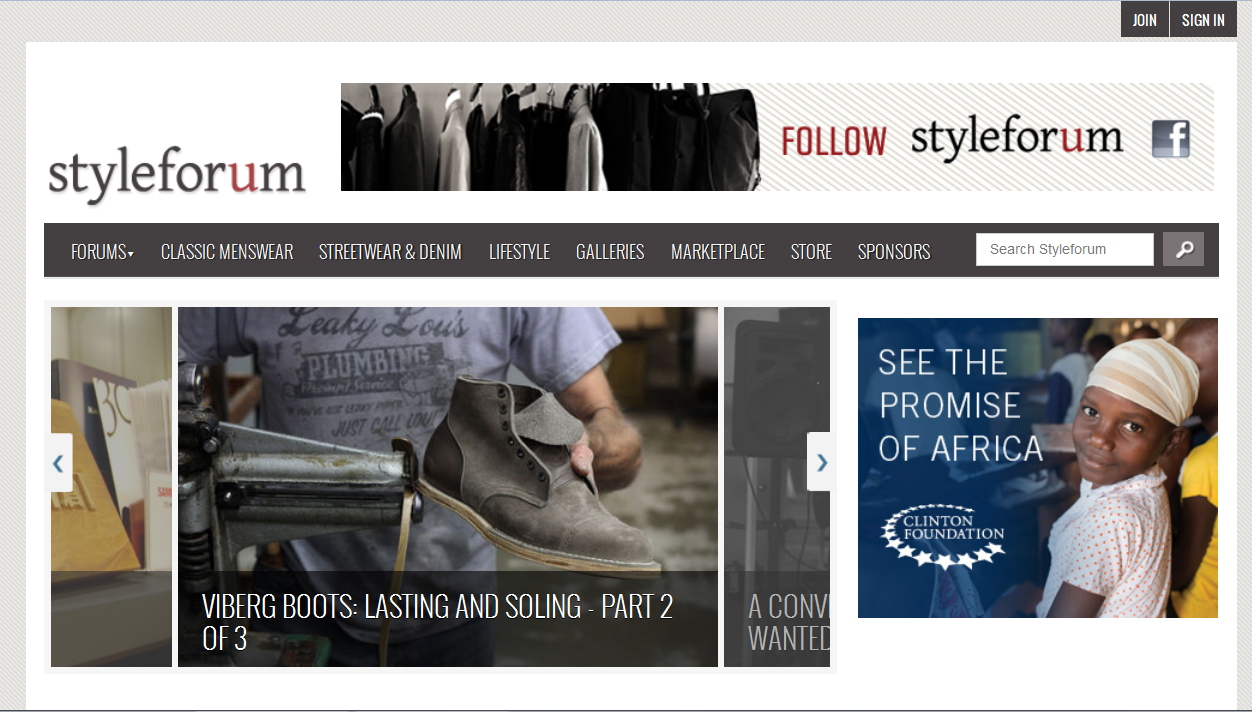 Styleforum, the fountainhead
VR: Have you visited any of the major online style forums, like Askandy, Styleforum and such?
GBB: I almost never post anything on these sites myself, although I have contributed to several of them on a few occasions, as well as infrequently commented on something posted. My reason is simply because I make my living from writing; it’s not an anonymous avocation for me. I feel much more comfortable commenting on sites which have nothing to do with my profession — as most blog commentors do — where I am truly an amateur in the financial sense of the word.
VR: I feel so-called classic men’s clothing are now more popular than they’ve been in decades, but I’m unsure whether this popularity is only a fleeting fashion. You must have talked to quite a few within the industry; has the tailored style come back to stay?
GBB: I believe it was Bismarck who said that he felt much more comfortable predicting the past than the future. I couldn’t agree more. Most of my time has taken up trying to understand the past, how and why we arrived at where we are now, and parenthetically what that says about us. If I could predict the future I would probably be both rich and unhappy. At the moment tailored clothing is enjoying something of a renaissance. My explanation is that it is an elective luxury status symbol in a world of the cheap and shoddy. “Custom-made” anything is the height of luxury in a world of the mass produced. And there are more choices now than ever, and because of the internet more people are aware of these choices. This is all wonderful.
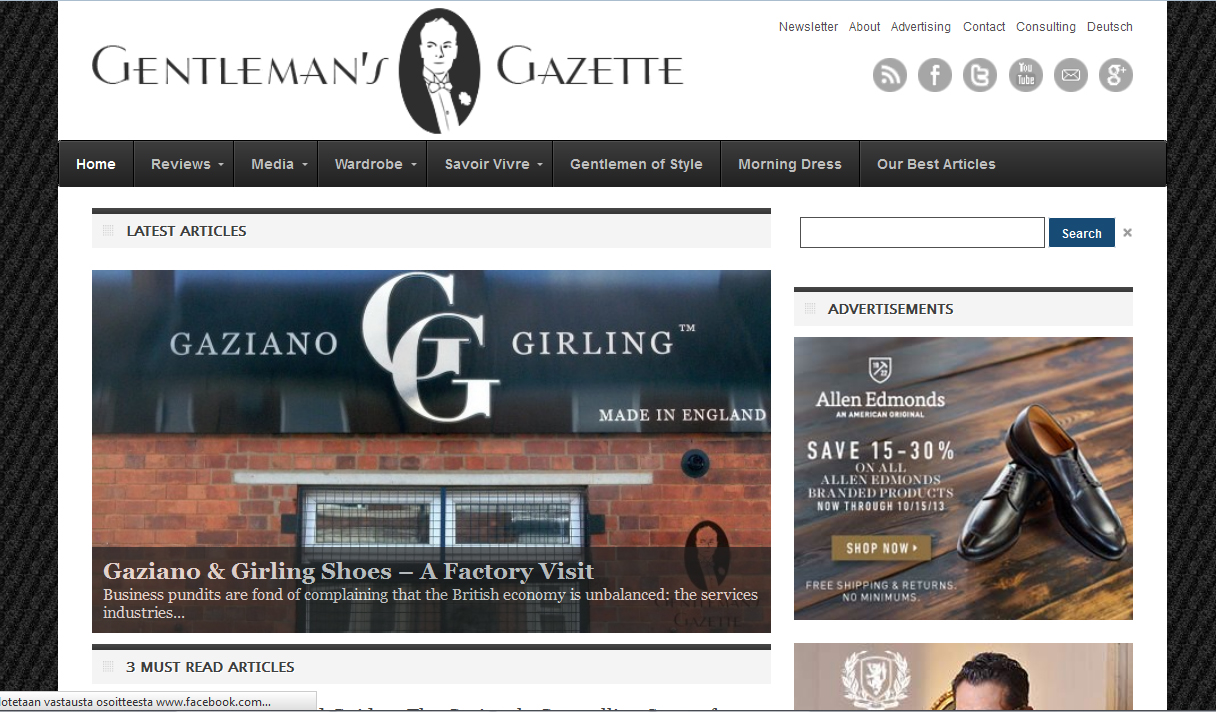 Gentleman’s Gazette, what a stylish men’s magazine should be
VR: How do you see the future of menswear journalism? Have you any predictions of what the future might hold?
GBB: The downside to journalism today is that false, misunderstood, and misguided information is so easily and quickly published and transported to so many. And because so much of it is anonymous, and therefore unaccountable, ethical and moral guidelines and answers once again lag behind technology. The question was very much on the Victorian mind: should we do something merely because we can? Their vexation was horrible in a multitude of ways. We can only hope that we will fare better.
Category Arbiter Elegantiae, Interviews
The SwissArmySuit™
0September 30, 2013 by Ville Raivio
Six years ago, the artist currently known as Voxsartoria had a dream. He had a dream that one day tailoring will rise up and live out the true meaning of its creed; that of covering and protecting the body in a method that is both practical and eminently stylish. From this dream was born The SwissArmySuit™, devised and given shape by his thoughts while cut and given form by his tailors by the name of Steed. This dream took the form of a 3-piece suit which could be worn with either the waistcoat or not, and a jacket with inter-changeable buttons to transform it from a suit jacket to blazer or to a more relaxed sports jacket, with mother of pearl buttons — and so did it come to pass that from that day on, the thought had form and that form was timeless, stylish, practical; and the man saw all that he had made, and it was very good.
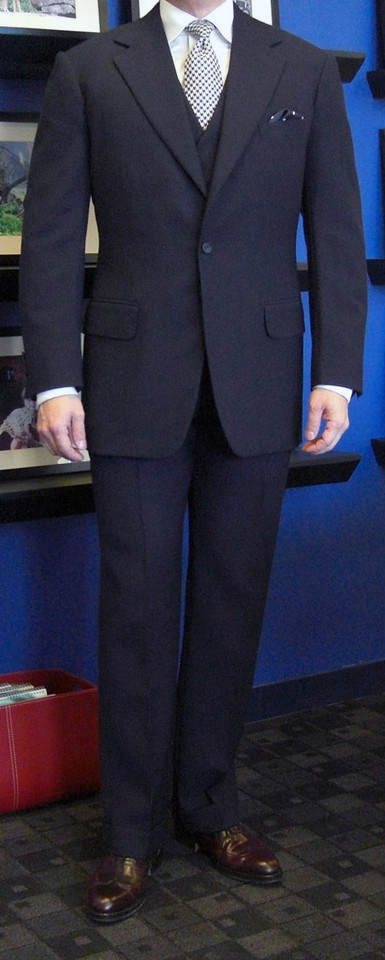
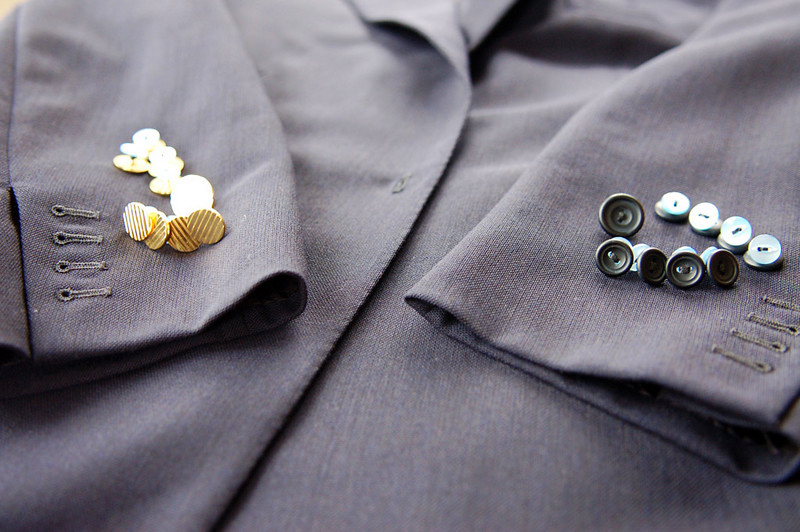
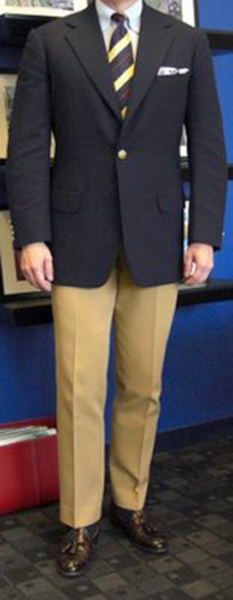
http://www.styleforum.net/t/111076/the-swissarmysuit-a-sartorial-strip-tease/0_100
http://steeds-view.blogspot.fi/2009/04/sas-swiss-army-suit.html
Category Inspiration, Jackets, Links, Suits
The Style of Regency Men
0September 29, 2013 by Ville Raivio
‘The clothes of the eighteenth-century aristocrat were in general very badly made and did not fit at all snugly to the body. Such snug fitting was the very essence of dandyism, and George Brummell prided himself on the fact that his clothes did not show a single wrinkle and that his breeches fitted his legs like a natural skin. Dandyism does not imply gorgeousness in male attire; the exact opposite is the case. There was no embroidery on the dandy’s coat; it was made of plain cloth, with the cut-away originally derived from the hunting coat, and with a preference for the primary colours. Brummell’s coat was invariably dark blue, but it was usual to wear waistcoat and breeces of a different colour; for example, a crimson waistcoat and yellow breeches could be worn with a blue coat, or a white waistcoat and sage-green breeches with a black coat. The collar, which stood rather high at the back of the neck, was sometimes of velvet. Waistcoats were in general short and square-cut, with perhaps a couple of inches showing below the front parts of the coat. The upper buttons were left undone to display the frill of the shirt. In Court dress the waistcoat was of white sating embroidered with gold thread.
In the daytime it was usual to wear tight-fitting breeches fitted into riding boots, but in the evening silk stockings were worn with pumps. Some men wore pantaloons or tights with tasselled hessians. Trousers were also worn, but, although close-fitting, did not show the shape of the leg and ended above the ankles. Very wide trousers à la Turque were also worn, with an anticipation of the wide trousers which were later to be called “Cossacks“.
The dandy was shown not only by the cut of his clothes and the snugness of his breeches but by elaboration of his neckwear. The collar of the shirt was worn upright; the two points projected on to the cheeks and were kept in place by a neckcloth, either in the form of a cravat or a stock. Some dandies were alleged to spend a whole morning in the arrangement of their cravats. Large squares of lawn, muslin or silk, folded cornerwise into a band, were wrapped round the neck and tied in a knot or bow in front… The stock was a made-up, stiffened neckband, buckled behind. Since the wearing of either a cravat or a stock made it difficult to, if not impossible, to turn or lower the head, it contributed in no small degree to the dandy’s imperturbability and hauteur.
Top hats of some form were worn at all times of day, but the correct hat for evening was the bicorne, in the shape of a crescent, the two brims being pressed against one another, which enabled the hat to be carried under the arm. Hair was short, and it was the fashion to wear it somewhat dishevelled à la Titus. Most civilians were clean-shaven, but side-whiskers and occasionally moustaches were worn by military men. The wearing of swords had been entirely abandoned, but it was fashionable to carry a cane; indeed, no well-dressed man was ever seen without one.
Brummell’s dress had always been of solid sobriety, but after his departure in 1819 (he fled to the Continent to escape his creditors) the clothes of the dandies, or those who thought themselves such, began to develop all kinds of extravagances. The top hat swelled out at the top until its crown was wider than the brim, the visible ends of the shirt collar came up almost to the eyes, the stock or cravat grew tighter and higher, the shoulders of the coat were padded and the waist nipped in with the aid of a [men’s] corset. Trousers has now become almost universal, either ending just above the half-boots or strapped under the instep.’
~ James Laver in Costume and Fashion: a Concise History
Category Dandyism, Quotations, Vintage
Copyright © 2013 Ville Raivio