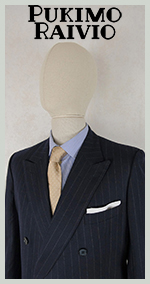
A history of Chesterfield coats
4January 24, 2014 by Ville Raivio
I am reluctant to write that there ever was the Chesterfield model, but rather many improvisations on a single tune. Any Chesterfield is an understated, woollen, usually dark and formal coat. It was born sometime in the mid 1800s and its name has a few theories behind it. Either the name came from the town of Chesterfield or the sixth Earl of Chesterfield, a favourite of contemporary high society. Jenny Lister, fashion curator at the Victoria and Albert Museum in London, states the following: “The origin is not immediately clear, but [the name] was used as a marketing tool by coat manufacturers of the 1840s to attach it to a person of influence, which at that time was usually a titled aristocrat, even if he never actually wore or promoted the style.”
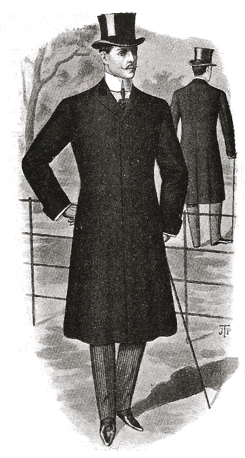
Victorian stiffness in tiny lapels
When the first models appeared, they really were different. Waist seams, so common in form-fondling Victorian jackets and coats, were not used in these models, and the cut was loose. While the current viewer may mix Chesterfields with frock coats worn indoors instead of our latter-day suits, Chesterfields were made and reserved for outerwear and worn by gentlemen and esquires. Chesterfield versions have changed in cut and details with the times, and no variable has been carved in stone. Looking at historical samples in various museums, there are a few details which can be used to identify a Chesterfield. Although they rarely have waist suppression, nipped models are offered today by a few makers. A single-breasted Chesty, if you may, usually has a clean and tidy fly front.
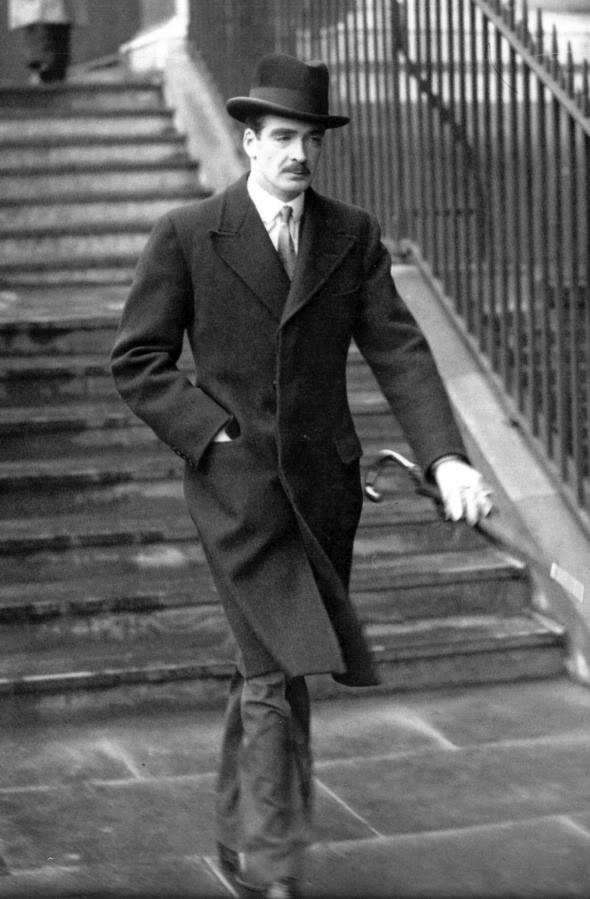
Anthony Eden in single-breasted Chesterfield with double-breasted lapels
Double-breasted Chesties usually sport six buttons, three on either side, of which two or three are used for closing. Some models also have a breast pocket for housing one handkerchief, pair of glasses, liquor bottle, so on, while some have none. One detail to note are velvet collars, but not all makers and models have them. The story states that velvet collars were very handy back when men wore long perukes. When collars under these heavy, powdered, perfumed creations were soiled or brushed to ruin, the velvet parts were easier to replace than searching for an exact or close bolt of cloth. Most Chesterfields also have flapped pockets with an occasional ticket pocket. To make a long chapter shorter, if a coat has no waist suppression, is understated, dark and has a fly front along with velvet collars, it is most likely a Chesterfield.
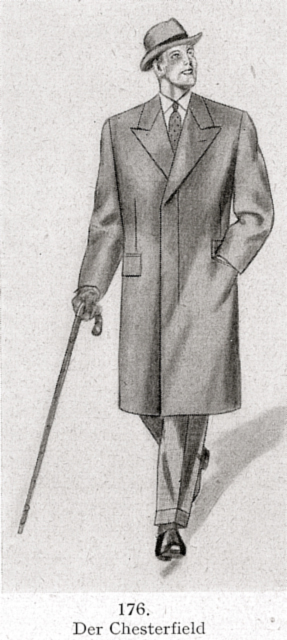
A light German version from the ’30s
Today, thanks to their plain look along with interesting visual details, Chesterfields are the most formal coat a man can don. They are an excellent complement to the most formal suits from the rare three-piece ones with double-breasted vests to the usual navy workhorses, but seem too formal with light suits and casual cloths. The grandest occasions calling for dinner suits or even tails definitely require Chesterfields, though there have been occasional sightings of go-to-hell men in black and white with camelhair polo coats. Mon estomac, Hercule Poirot would think, and close his eyes determinedly.
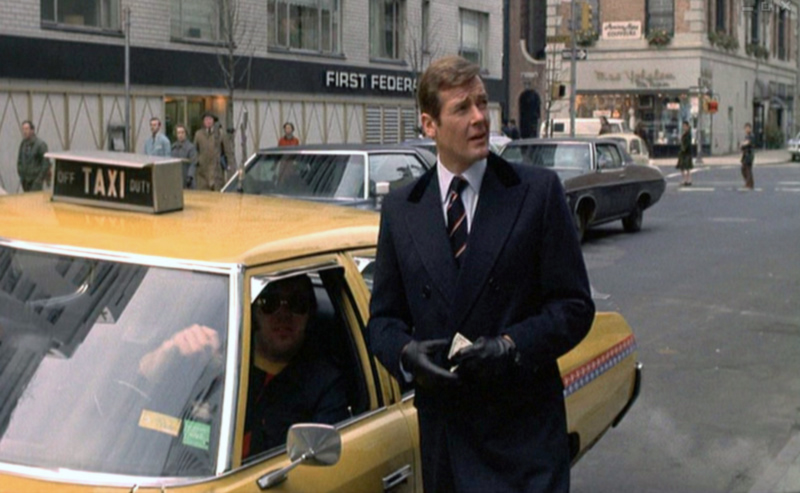
Good old James in Live and Let Die
Should the reader be on the lookout for the most formal, the finest Chesterfields have a plain black, dark grey or navy blue cloth, breast pocket, a smallish lapel with fly front or a wider double-breasted one, suitably loose cut and buttons on the sleeve end. The casual version, still somewhat available, is a light-grey herringbone one. Although Chesterfields won’t lend themselves easily to sets with jeans, the coat has allowed men to offer the best version of themselves in celebration and everyday work for around 150 years. Formality can also be a joy.
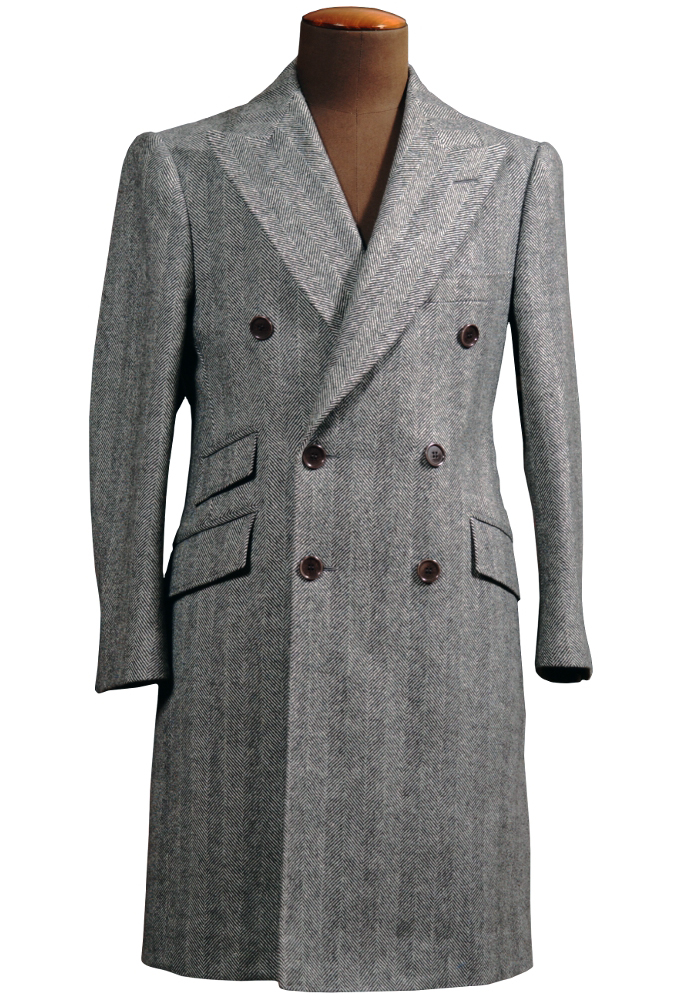 Cifonelli’s modern French glory
Photos: vintage, screen cap, Cifonelli
Category Coats
Beau Brummell’s hot pants
0January 23, 2014 by Ville Raivio
‘Nineteenth-century prints show Brummell in very fitted riding coats with tails. The coat cuts away to reveal his pelvis and thighs. Brummell wore long pants when knee-length breeches were still considered the fashion and he was responsible in part for the trend towards ultra-tight pants in the early 1800s. When it passed, one female fan of Brummellian tightness bemoaned, “At least we always knew what a man was thinking.”‘
~ J.J. Lee in The Measure of a Man: The Story of a Father, a Son, and a Suit
Category Arbiter Elegantiae, Quotations, Vintage
The oral history of menswear blogging by David Greenwald
0January 22, 2014 by Ville Raivio
Here’s a little sentence I rarely use: the following is a must-read. On December 13, 2011, GQ published an interesting interview with some familiar names and faces among the strange world that is menswear blogging. Prior to year 2000, there might have been a few odd threads on Usenet about men’s clothing but no such thing one could call a blogosphere. Then came men.style.com, The English Cut, Hypebeast, Askandy’s forum, Styleforum and countless others after 2008. The article is archived on the writer’s home page and offers reminiscences from Michael Williams, Jesse Thorn, Will Boehlke, Michael Bastian, Mordechai Rubinstein, Scott Schuman, Lawrence Schlossman, Josh Peskowitz, Cory Ohlendorf, Derek Guy, F.E. Castleberry, Nick Wooster, Tommy Ton and a few others. If the reader has been part of the virtual posse of menswear, the article will raise memories of the way we lived.
http://davidgreenwald.net/writing/
The differences between great and poor leather bags
0January 21, 2014 by Ville Raivio
Category Bags and cases, Videos
Oprah’s interview with Ralph Lauren
0January 19, 2014 by Ville Raivio
In May 2011, Oprah and her viewers were invited to the ranch that is Double RL, one of the homes of Ralph and Ricky Lauren. The 17,000-acre property lies close to Telluride, Colorado, as a testament to Lauren’s American Dream come true. While all this is old news to Oprah’s ardent viewers, Ralph Lauren is always big news when all things classic are concerned. Not too keen on giving personal interviews, the following sees the man go through his childhood, his collections, dreams, Ethos and Logos, though I wish the guest would have let RL speak his mind. Still, this bit is recommended.
Category American style, Arbiter Elegantiae, Videos
Copyright © 2013 Ville Raivio