A visit to Corgi and Fox Brothers
0March 2, 2014 by Ville Raivio
Category British Style, Videos, Weavers
Interview with Erik Mannby from En Förlorad Värld
0March 1, 2014 by Ville Raivio
VR: Your age and occupation?
EM: I’m 35 and run a few companies with a friend and business partner. We have a communications company (www.fyyr.se), a clothing brand (www.e-f-v.com) and our online vintage shop, En Förlorad Värld (www.enforloradvarld.se).

VR: Your educational background?
EM: I have a bachelor degree in business and economics, and another degree in journalism.
VR: Have you any children or spouse (and how do they relate to your style enthusiasm)?
EM: No children, but I have a fiancée and 2 dogs. My fiancée thinks my interest in classic menswear is “cute”, haha. She does like it that I’m passionate about things though.
VR:…and your parent’s and siblings’ reactions back in the days?
E: They’re extremely supportive. I have 2 brothers who are both very supportive. My parents have helped me out financially to be able to start up our clothing brand E-F-V. People generally tend to like it when they meet someone who’s really passionate about what he/she does.
VR: What other hobbies or passions do you have besides apparel?
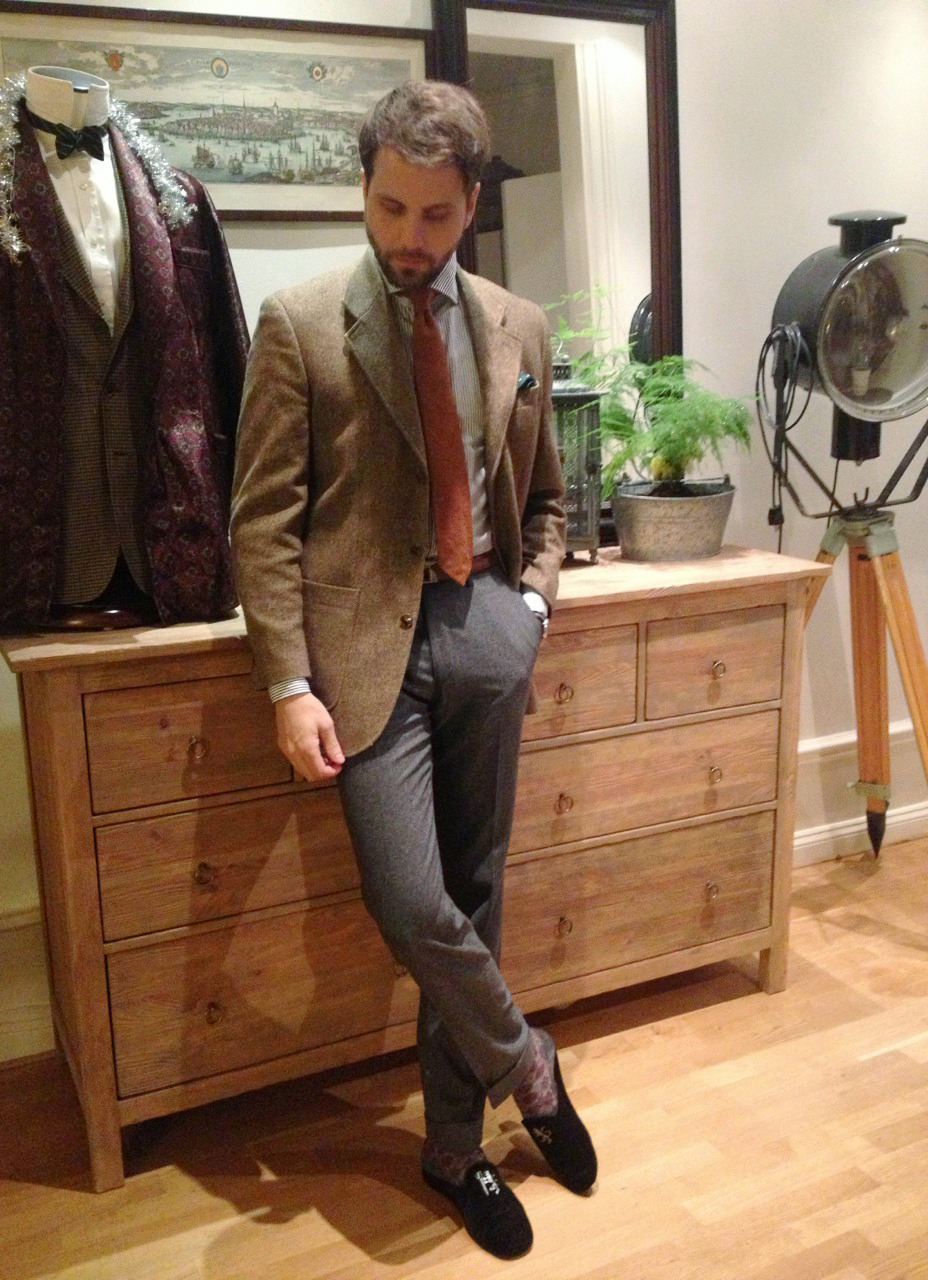
EM: I play guitar & sing (schooled since the age of 5), build furniture, write and think out new business strategies. Sometimes I go skateboarding with a bunch of other old timers.
VR: How did you first become interested in clothes, and when did you turn your eyes towards the classics? Why these instead of fashion?
EM: I used to have an interest in fashion when I was younger. I have always loved the Mod look (influenced by ’60s bands), and found my way into classic menswear that way. I started collecting ties and suits, and soon started getting a more general interest in classic menswear. I bought all the literature I could get my hands on, I sought out online forums and learned all I could about what makes quality in shoes, suits, ties, shirts, etc. It’s an entirely different world from fashion. Classic menswear is made to last. There’s no need to get rid of last year’s clothes due to new trends. In fact, I still wear some of my dad’s Harris Tweed jackets he bought when he was my age. I also like the simplicity of only using variations of the same garments, but depending on how you combine them, you’re telling completely different things about yourself.
VR: How have you gathered your knowledge of clothing — from books, in-house training, workshops or somewhere else?
EM: As mentioned earlier, I have gathered knowledge from books, online forums, new friends I have met through my interest in classic menswear. I have also learned quite a few things by learning how to sew, and picking apart garments to review different kinds of constructions.
VR: What’s the story behind En Förlorad Värld and when was the webstore founded? How do you select the goods on offer?
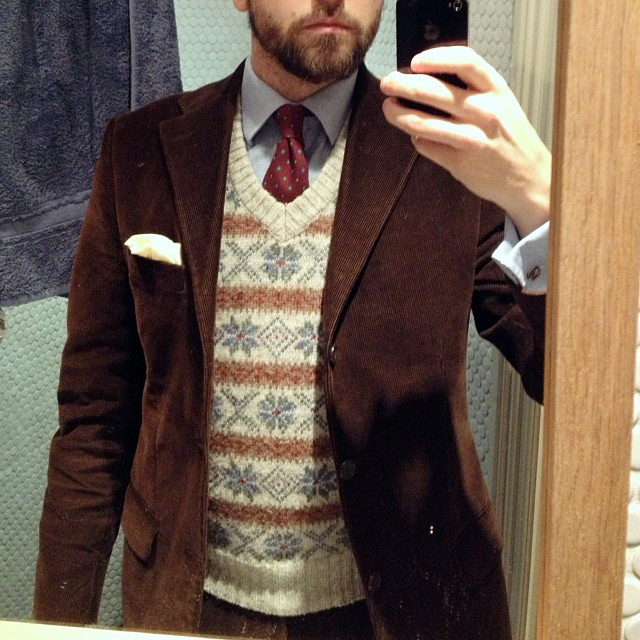
EM: En Förlorad Värld is actually awaiting an update at the moment, we are now mainly focusing on getting our own brand E-F-V going. The stories are intertwined though. Me and my business partner and friend, Lars Holmberg, started a company called Fyyr in 2010. It’s a communications company, through which we have helped out numerous other companies with advertising, campaigns, online marketing, etc. We created En Förlorad Värld as a trial and error project to try out different SEO strategies. I had a big interest in classic menswear, so we thought it would be a good idea to start an online vintage shop. Initially we sold stuff from my own wardrobe to get things going.
The interest for this kind of business was bigger than we had expected though. We were very successful in the SEO work we did and got a great hit status on Google. Soon we expanded our initial idea of just selling a few items to participating in vintage fairs and acquiring contacts all over the world, from whom we sourced lots of vintage clothes. It was mainly my pet project, I bought all the goods that we sold. Since both me and Lars wanted to do something creative, we started playing with the idea of launching a brand of clothes of our own design. We have now designed a line of suits and coats that will be released F/W 2014/2015. En Förlorad Värld has been in hibernation for a while but is planned to be back as soon as we have time to do a total makeover of the site.
VR: Based on your observations, how would you say the average Swedish man dresses?
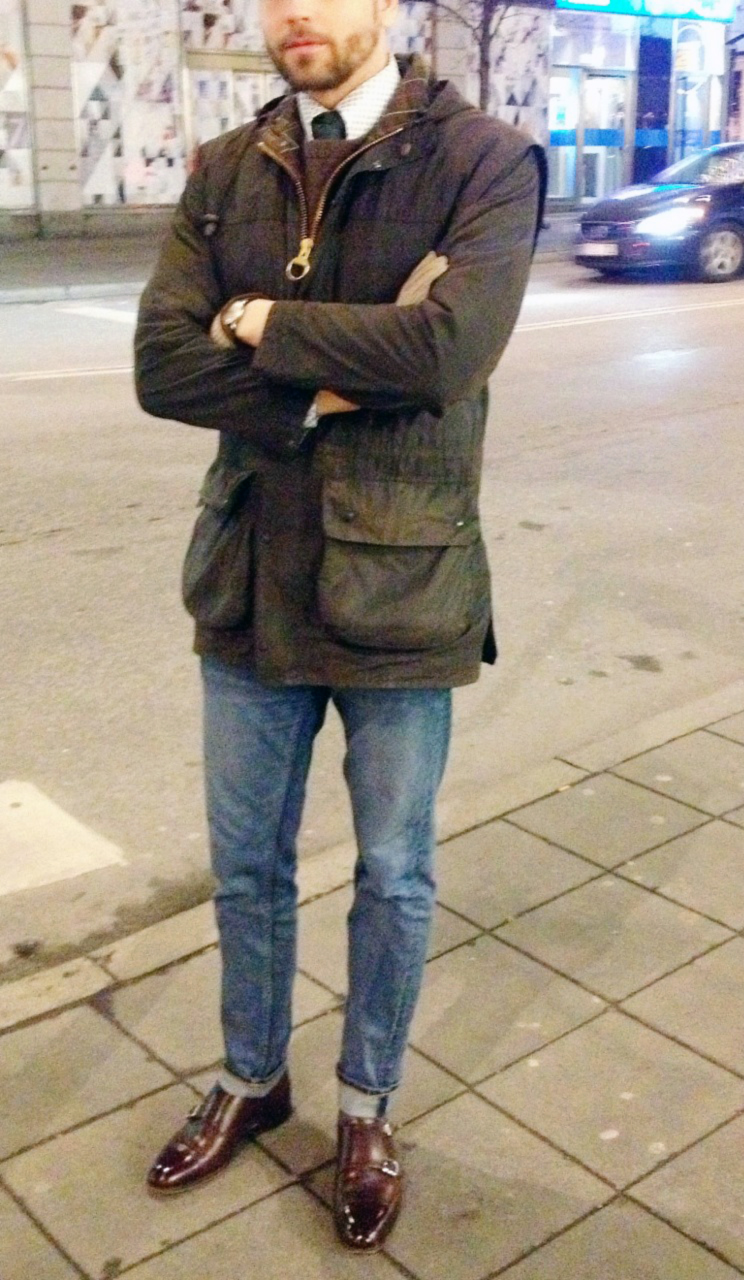
EM: I think Swedish men dress with consciousness. Swedish men are generally more into fashion than classic menswear. Things have definitely changed over the past 7-10 years though. The demand for long-lasting quality garments has increased immensely. Today you can walk through Stockholm and see a whole lot more quality suits with a good fit (not to mention quality shoes) than you did just 5 years ago. People are willing to spend more money on quality. When technology and an economically unstable world has put the rest of our lives into hyper drive, I guess we start appreciating genuine things, such as handmade quality garments made in a slow-moving process, so much more.
VR: How would you describe your own dress? Which RTW makers or tailors do you favour?
EM: I’d probably describe it as a work in progress. I favour clothes from classically British, American and Italian brands. Where the rest of the world of classic menswear seem to be mostly into Italian tailoring at the moment, I can still appreciate the virtues of a British-constructed jacket at times. I can also love the look of the classic American sack suits and Ivy style. Some of my favourite garments at the moment come from Kiton, RL Polo, Borrelli, Hackett and, of course, E-F-V.
VR: Who or what inspires you?
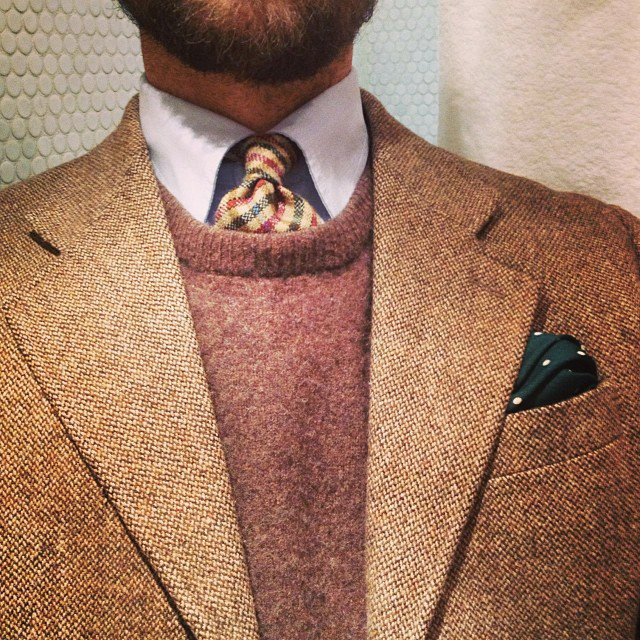
EM: I’m inspired by everything I see around me. Not just things that are naturally connected to classic menswear, it can be through art and nature as well. Right now I’m very inspired by the DIY spirit that’s sweeping through the classic menswear crowd. The last couple of years we have seen lots of new tie makers, self learned tailors and menswear entrepreneurs spawn from the vast and very differentiated world of classic menswear.
VR: What is your definition of style?
EM: Something that is truly personal and yours. You can of course look to, and be influenced by, others but all men (and women) with great style do it with a sense of personality. This transcends (way beyond) the boundaries of classic menswear, you can see it in all kinds of fashion, music, art and life in general.
VR: Is there something you wish more men would know about dressing well?
EM: Don’t start out by purchasing a whole wardrobe at once, make every piece count when you start out.
Get the basics:
- Navy suit + black oxford shoes + some repp ties with simple patterns or solid muted colours
- Grey suit
- Brown shoes of your own liking
- Navy sport coat, preferably in a non-worsted material
- Mid-grey flannel pants
- Khaki chinos
It goes without saying that all pieces must have a decent fit. Most people need to get clothes adjusted at a tailor’s to get them fit properly (if they don’t go bespoke at once, which I wouldn’t recommend as a start). When you’ve got these things down you can start increasing your wardrobe with all the things you find interesting. A good idea is to visit some of the clothing forums and get hands-on tips from experienced posters.
Some forums worth mentioning:
- http://www.styleforum.net/f/5/classic-menswear
- http://askandyaboutclothes.com/
- http://www.thelondonlounge.net/forum/
Some people posting on these forums are kind of harsh, so you’ve got to have thick skin when starting out.
http://sowhatelseisnew.tumblr.com
Photos: Erik Mannby
Category Bloggers, Men of style, Styleforum, Tradesmen, Vintage, Web stores
Ralph Lauren’s Brooks Brothers inspiration
0March 1, 2014 by Ville Raivio
Interviewer: I guess you’re more than partially responsible for the preppy rage?
Ralph Lauren: Brooks Brothers was the foundation, and I revived it. I worked for them and wore all their clothes; I also left them as a consumer when they started making Dacron and polyester. They no longer had a style, and I was a traditional guy. So I saw the opening in the whole market and said, “Well, I want to look like this, and I don’t want to shop here anymore. They’re not moving.” They did change, but they became more ordinary, more mundane. I was not going to be high fashion, but I did believe in individual sophistication, a more customized look – what Brooks Brothers used to be when they were great. That was what I went after, what I love, which is a life-style. Men who had a lot of money would go into Brooks Brothers to buy shirts, and say, “Give me three white, three blue, and three pink,” and they’d walk out. They’d do it every year, year in and out. They weren’t interested in what was the latest this or the latest that. I recognized a certain mentality and security about them. Working there was like going to an Ivy League school; there was an “in-ness,” a quiet “in-ness” about that kind of place.
~ New York magazine, 1985
Category American style, Quotations
The English Country House Look by G. Bruce Boyer
0March 1, 2014 by Ville Raivio
GBB wrote about the ECHL on ASW in 2009, succesfully spread into the States through Brooks Brothers and later on by the house of Ralph Lauren. In eight pithy sections, Boyer lists the tenets of the very English country house look, which seem very preppy if one has first been reading about Stewardship, Authenticity and Belonging to The Society of the Descendants of the Founding Fathers of New England of the United States.
http://asuitablewardrobe.blogspot.com/2009/12/guest-post-english-country-house-look.html
Category British Style, Reading
Interview with Zachary Deluca from Newton Street Vintage
2February 27, 2014 by Ville Raivio
”I’m 29 and my main gig is Newton Street Vintage, where I sell vintage menswear that I like. Mostly tailored stuff. I also write for and help edit Ivy-Style.com, and I help friends with their stores and small branding projects. I’ve worked in custom tailoring and retail menswear. I have a master’s in literature. I think my love of clothing is related to my earliest aspirations to tell stories. I went to the University of Edinburgh for grad school so I could look at tweed when I wasn’t reading books. Also, the whisky. I have a long-term domestic “spousal equivalent,” which is far more romantic than that term sounds. She responds very well to my love of clothes, and she gives me sewing projects, which is always fun. We have the same tailor. She wears navy blazers and gray cropped trousers.

I got into clothing because I wanted to look like my early rock’n’roll heroes. Somewhere out there is a photo of me at 18, imitating young Bob Dylan imitating old Woody Guthrie. I was into jeans at first. Vintage Levis. I went nuts for them. I remember seeing in the liner notes to the Bruce Springsteen Live 1975 box set that Bruce had an orange tab on his Levis, and it started a relentless hunt for that orange tab that opened up the world of vintage. I think getting into vintage trains the eye for the classics. It’s so much easier to accidentally stumble onto the classics when you’re into vintage. [For hobbies I’ve] reading, writing, cooking. I’ve been reading Michael Chabon’s The Mysteries of Pittsburgh, and it’s a crime that it has taken me this long, seeing as I am from Pittsburgh and it was written 4 years after I was born.
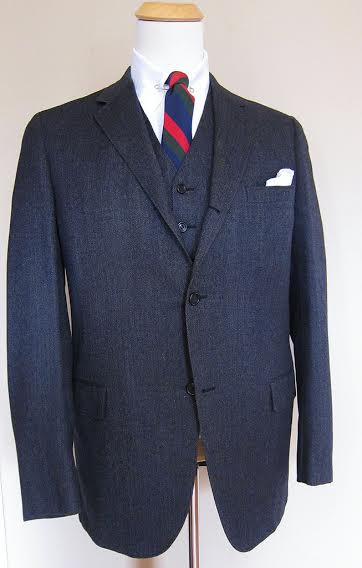 Gray three-piece sack cheviot tweed suit by H.Freeman and Son., 1960s
I think in America, most men have a vague sense of the Ivy League style, even if they don’t have the term for it. Button-down shirts, khakis, and penny loafers are pretty ubiquitous here, even if they’re worn in a banal way. I gravitated toward it before I knew the term. It was an offshoot of a youthful fascination with the ‘60s, but I’ve definitely moved past that now. I think it started with a feeling. I liked the way the soft shoulders felt. There was something imperceptibly different about it, and I couldn’t put my finger on it at first. I was big into Godard films at the time, and without understanding the subtle differences I thought my Ivy suit made me look like Godard. The premature baldness also helped.
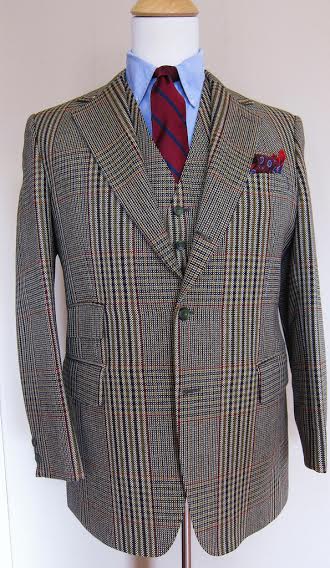
Big plaid three-piece suit by J.Press, 1970s, with cloth from John G. Hardy Alsport
I gained my knowledge by working with the clothing, handling a lot of it. For me it is a tactile pursuit. The internet is obviously a major factor, but I would use it to research something that I found, something that I had in my hands and could touch. You learn about clothes by handling clothes in the same way that you learn about cooking by working with food. Years ago I was also desperate to learn how to sew and construct, so I paid a local tailor/patternmaker for private lessons. She was great and really helped me get a firm foundation in construction methods.
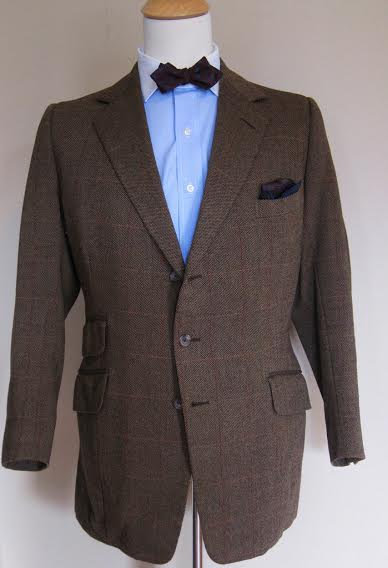
Brown tweed suit with crows foot weave by Bernard Weatherill of London, circa 1980
I’m constantly experimenting with clothes. I know this isn’t what I’m supposed to be saying. I’m supposed to describe my “uniform” and how I’ve edited my wardrobe to reflect my unique self. Truthfully, I like trying new things, and working with vintage and second-hand gives me room to experiment. I tend not to dismiss things unless I’ve taken them for a spin to see how I feel. I love old Brooks and J.Press obviously, but I also love the cut of Ralph Lauren’s Italian-made tailoring. I’d definitely spend a ton of money in Sid Mashburn if I had it. I love the Andover Shop, and I had a blast working there. That place has the best colors and fabrics of any store on Earth. If I had to describe how I’ve been dressing lately, I would say it is “soft tailoring with lots of color and pattern.” I definitely haven’t been on a minimalist kick lately, and I think the idea that Ivy precludes color is an internet myth. The Andover Shop has always been a testament to color. Which tailors do I favor? I don’t have very much MTM clothing, although I have a gorgeous windowpane suit from Martin Greenfield which I had made for me back when I worked at a shop that contracted to the Greenfield workshop. It is beautifully made. I think if I had the money, my tailored wardrobe would be equal parts Anderson and Sheppard, Paul Winston, and Cesare Attolini.
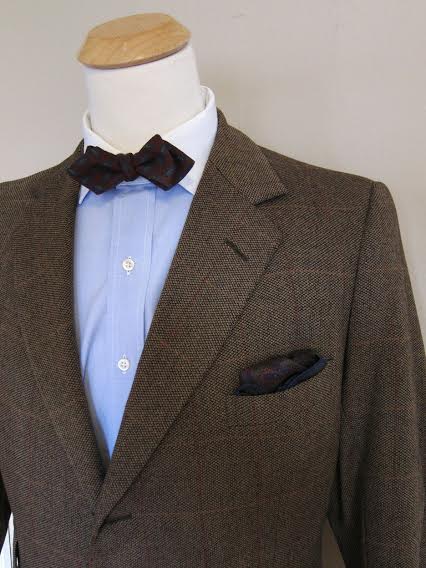
Cambridge, MA. inspires me. The old guys that you see around here. Sometimes it is the more typical idea of the old Ivy Leaguer, with a blazer or a Shetland, but other times it is a really interesting hodgepodge — a Kiton jacket with J.Press chinos, or a double-breasted blazer with blucher mocs. Again, lots of color, more than you would expect. The guys used to come into the Andover Shop and I would just be amazed at the style. Authentic, individual dressing. Not an Apparel Arts facsimile, not a Take Ivy facsimile either. Guys who knew their way around Jermyn Street as well as J.Press. I am also continually inspired by estate sales. You go into this guy’s house and his whole life is in the closet. It’s a hard thing to do at first, rifle through other people’s belongings, but you learn to do it with a certain amount of reverence. You see the evolution of personal taste, and the changing of details with the passing decades. What ties he wore in the ‘60s, ‘70s, and ‘80s. I’m definitely a postmodernist and I like eclectica. From what I have seen, well-dressed men have eclectic wardrobes.
I could talk about personal style, or use the Gore Vidal quote, but my favorite quote about style is from Jean Genet:
‘To achieve harmony in bad taste is the height of elegance’
I started Newton Street after many years of collecting this stuff. I had a friend who sold objects and small furniture on Etsy, which was still pretty new at that point. She talked me into it. At first I was using a camera phone to take pictures of clothes in my kitchen, but I sort of built it up and refined it from there. I had no goals in the beginning other than to get rid of some clothes. But once the demand became apparent, I started hunting specifically to sell, instead of just for myself. I think it has been pretty well-received. I got a nice mention in the retailers section of Hollywood and the Ivy Look, I’ve sold clothes to TV shows like Mad Men and Vegas, and to the design teams from major brands which shall remain nameless. Mostly though I love it because it gave me the opportunity to have fun for a living and leave an office job that wasn’t going anywhere. It also helped me talk my way into working in tailored menswear, which was my initial goal.
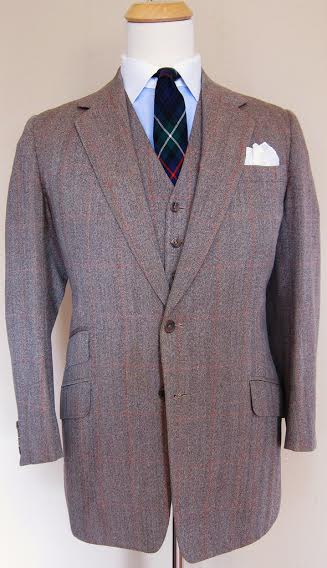
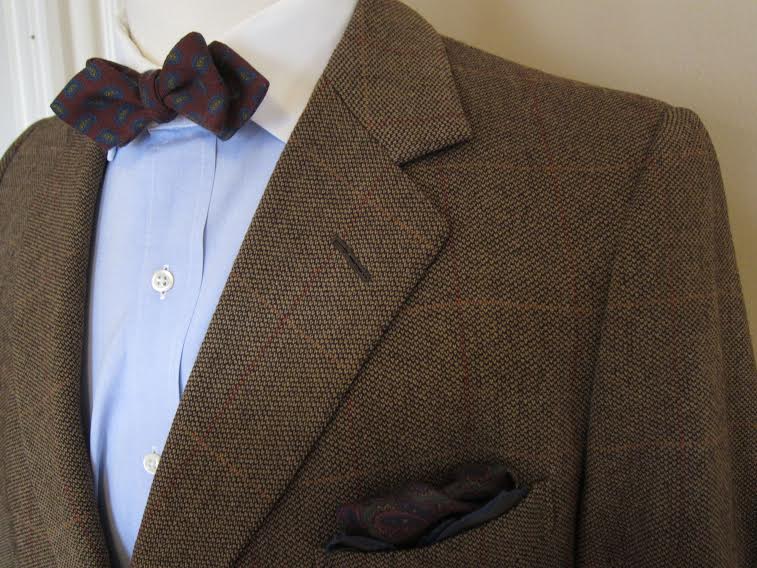
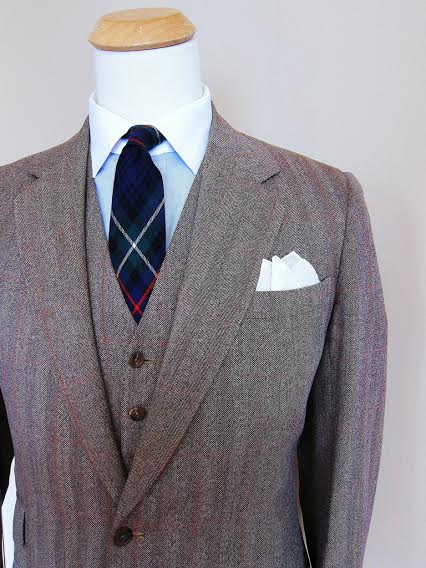
Herringbone tweed with red windowpane by Hogg and Son of London, circa 1960
I think, ultimately, that when it comes to vintage clothing, people who know what they want will get it where ever they can find it. I’d like to think that I present my items well, describe them in a way that makes people think about them as independent goods, and not just a cheaper means to an end, or something that is at the end of its life cycle. There are people out there who would rather have old clothes than new, and I try to speak to them. I think I also have a pretty good eye for this stuff, so I try to balance the staple gray herringbone with the crazy plaid tweed, and the occasional piece of workwear.
I’d say it is actually important to learn about traditional style while keeping one eye on fashion. Even if it is only so that you know what to reject. Experiment; it’s all too easy to find some sort of ‘manual’ and paint by numbers. Be playful. Humor invigorates style. I think the internet has created a judgmental culture of ‘face palms’ and ‘fails.’ I’m a total disaster most of the time. But, to quote Samuel Beckett: ‘Try again. Fail again. Fail better.’”
https://www.etsy.com/shop/NewtonStreetVintage
http://thesuitroom.tumblr.com/
Photos: Zachary Deluca
Category American style, Bloggers, Interviews, Tradesmen, Web stores
Copyright © 2013 Ville Raivio