
Marc Chevalier, the vintage menswear expert
0March 5, 2014 by Ville Raivio
Marc Chevalier is on a mission. Raiding vintage tombs both online and in real life, he aims to uncover the lore and craft behind the men’s clothing of the past century. Particularly all things concerning American style. While he declined to take part in Keikari’s interview series without explanations, I’ve been reading his extensive and detailed posts on The Fedora Lounge and similar vintage communities for several years. Mr Chevalier knows the obscure, the nearly forgotten and the many makers and merchants now long gone. Should the reader have any questions, he need only ask on Facebook’s clever Ask a Vintage Menswear Expert page. There are no secrets — just things not yet found.
https://www.facebook.com/AskVintageMenswearExpert?fref=ts
Category Arbiter Elegantiae, Links, Vintage
The Nikolaus Tuczek chisel toe
0March 4, 2014 by Ville Raivio
The skill and Ethos of Tuczek was featured on Keikari around a year ago, and last month I updated the old article with new photos and some tidbits I found. After having learned of Aubercy’s small private collection of masterpieces from old-world cordwainers, I contacted Xavier Aubercy for a closer follow-up on Tuczek’s masterful and suspicious chiseled toe.
For the reader’s eyes only: a mid-red brown half brogue model with ram’s head medallion (a Tuczek favourite), trimmed heels, tight and spade-like welt, five hidden eyelets, leather soles and that chisel toe; round but sloping, curvaceous but chiseled. Art in sculpting wood and leather, never to be shaped again quite like the master.
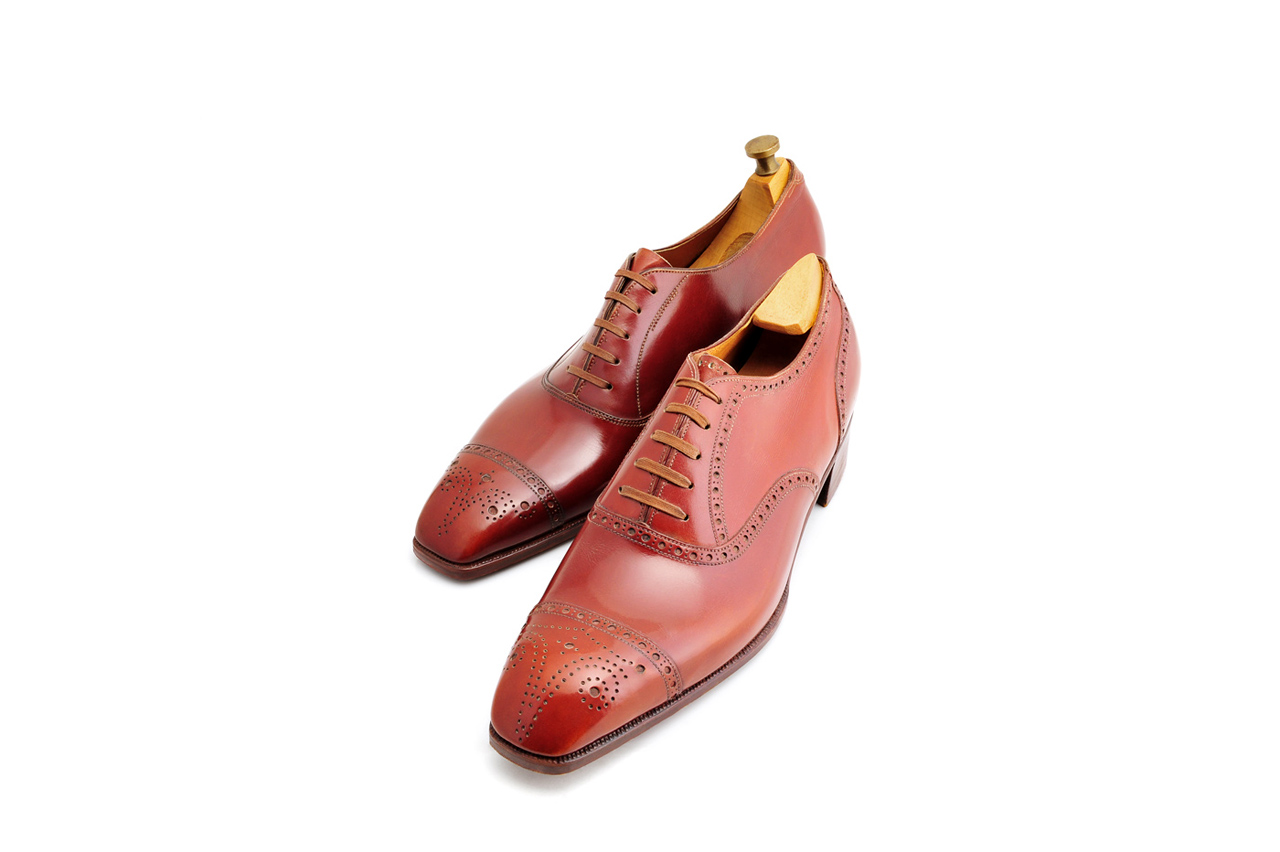
Photo: Aubercy
Category British Style, Cordwainers, Footwear
Braces: Brummell’s secret weapon
0March 3, 2014 by Ville Raivio
“Over his white shirt and perfect neckcloth, Brummell wore a pale or white waistcoat – or ‘vest’ in the parlance of the tailors of the period and in modern American usage. The waistcoat hid a small addition to a gentleman’s wardrobe that is often forgotten in the annals of fashion history and Brummell’s place in it: braces or suspenders. These are absent from the wardrobes of the previous generation… Without them, the severe line along the thighs and lower legs was impossible, as belts were both inimical to the style and unflattering to the majority. Brummell wore breeches or pantaloons in the morning, in soft stocking-woven fabric or often soft leather.
All this pale and white palette was thrown into sharp relief with two items in dark colors. A dark jacket — always deep blue — was cut away at the front to form tails, for ease on horseback but also to increase the apparent length of the wearer’s legs. Black Hessian boots — from Hesse in Gemany — completed the ensemble. These were walking or riding boots with a tassel at the front that served to distinguish them from turn-top riding boots, which briefly had about them the taint of Napolean. The perfection of the cut and sculptural strength of the style were communicated with even greater clarity and strength by the sober palette.”
~ Ian Kelly in Beau Brummell: The Ultimate Dandy (2005)
Category Dandyism, Quotations
Socksfox outlet
0March 3, 2014 by Ville Raivio
Socksfox is in the business of socking it to men, women and children. Among others, they stock Corgi, Pantherella, Marcoliani, Falke and Burlington. Those looking for nice and cheap deals will enjoy their eBay outlet, which offers random models and sizes for the bargain hunters among us. Sea Island cotton socks, for one, rarely come this cheap. They’re something best felt instead of read about.
Category Socks, Web stores
A history and characteristics of Guernsey knitwear
5March 3, 2014 by Ville Raivio
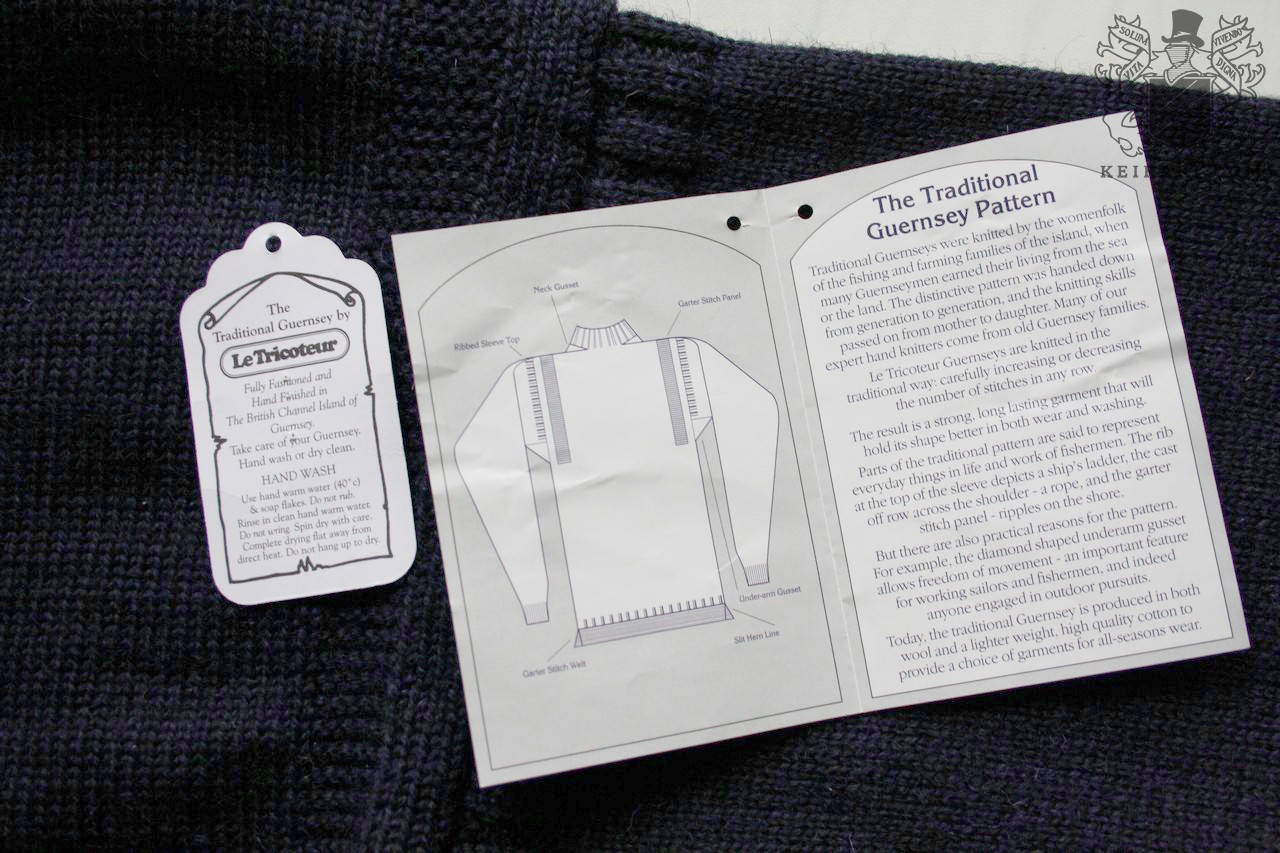
Guernsey jumpers are original work and leisure models born on the British protectorate island of Guernsey. One of the oldest pieces of knitwear, Guernseys have been knitted since the 1600s as fishermen’s work clothing. The Island has produced knitwear for export since the 15th century, when Guernsey was granted a royal permit for importing English wool and selling jumpers and such made from the raw material. The rolling swells and surging gusts of the English Channel are still a challenging place to fish in, but these must be thanked for the particular jumpers: the fishermen needed very warm, durable, waterproof and flexible workwear for the settings, so these characteristics took a woollen form.
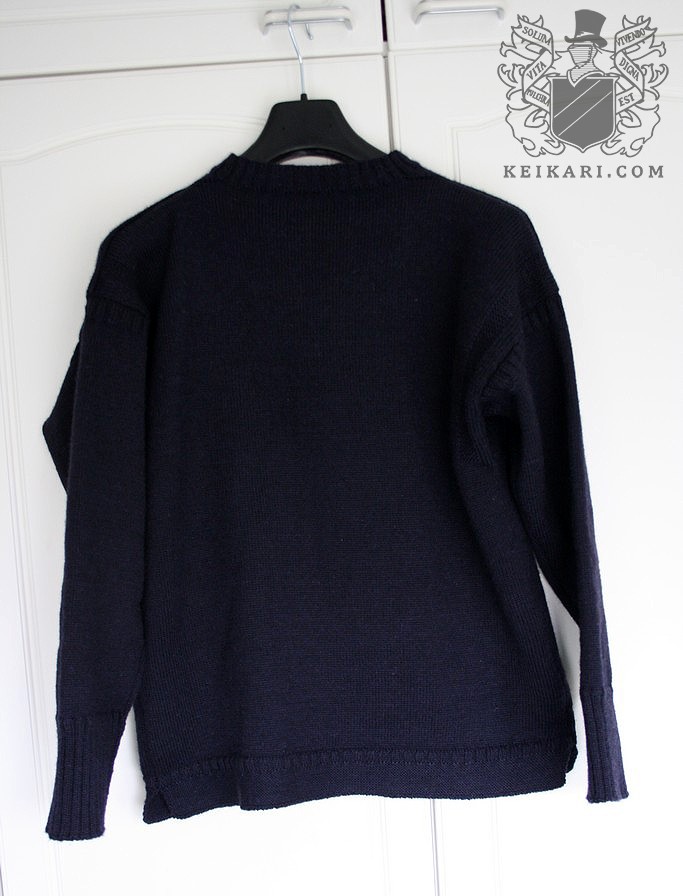
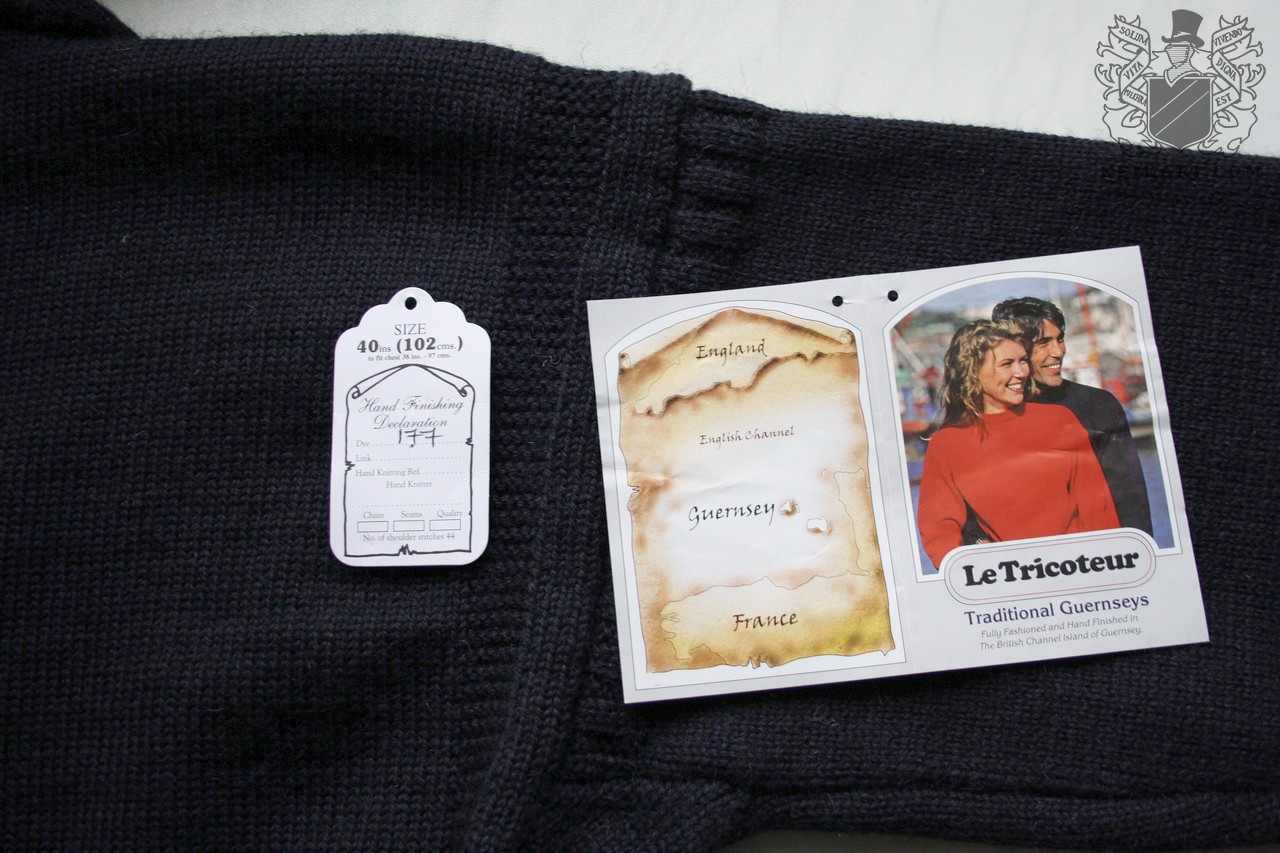
A Guernsey, made by Le Tricoteur, with shoulder seams set on biceps
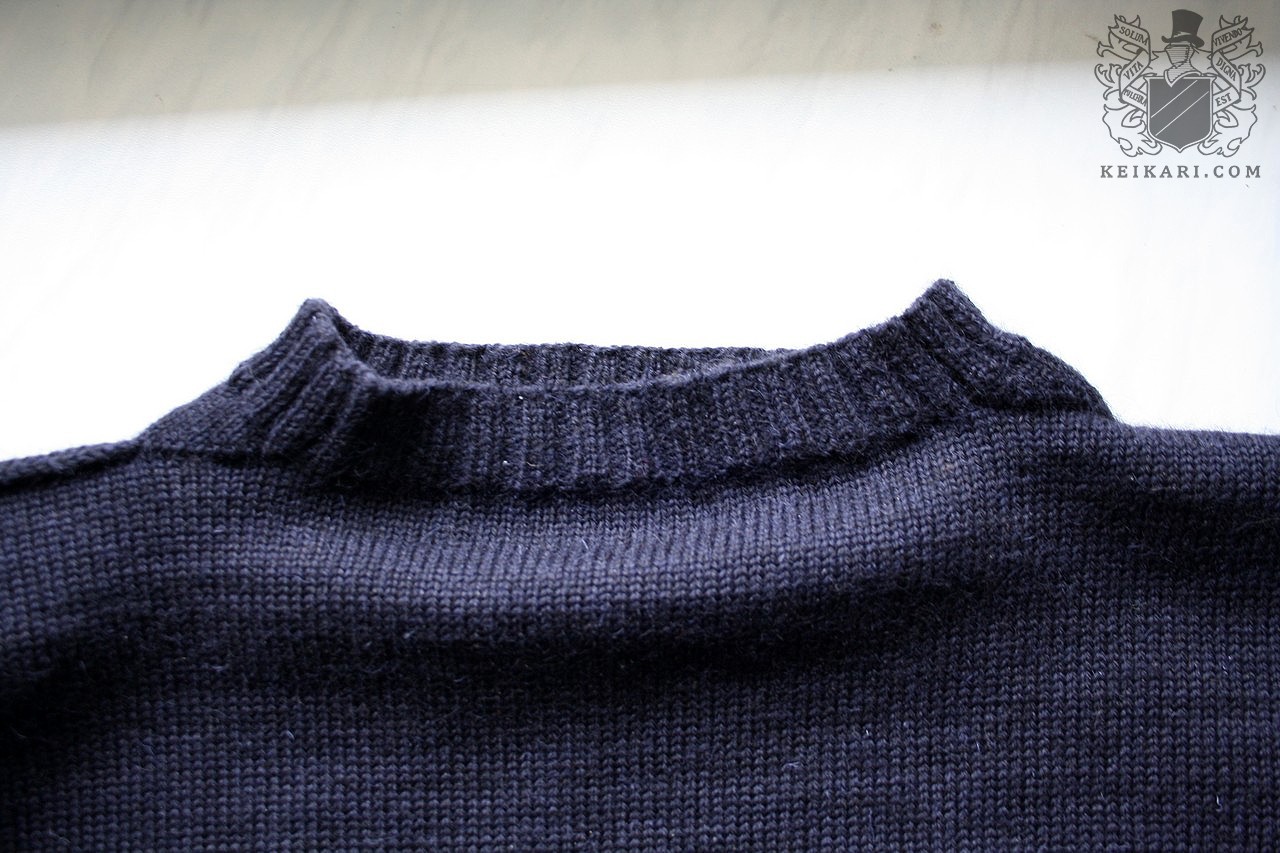
The collar is of even height and form on both sides
While there cannot be The Guernsey jumper, as knitters have always used different patterns and marks of individuality, most of them share many details which combine to make Guernsey jumpers unique. Most of them are made from unfinished British worsted wool, with the sheep’s natural lanolin left in the yarn. These jumpers have more or less bestial smell, but the wool grease helps them strongly to repel water and dirt. Traditional models have a many-plied construction, with 5-ply choices common, where the individual yarns are twisted tightly together to combine one thick and durable yarn. The body of the jumper is straight, sleeves tapering close to the cuff, and the models have no front or back side. The jumper can be worn with either side facing front over the years, so the yarns won’t rub or wear from the same places each time.
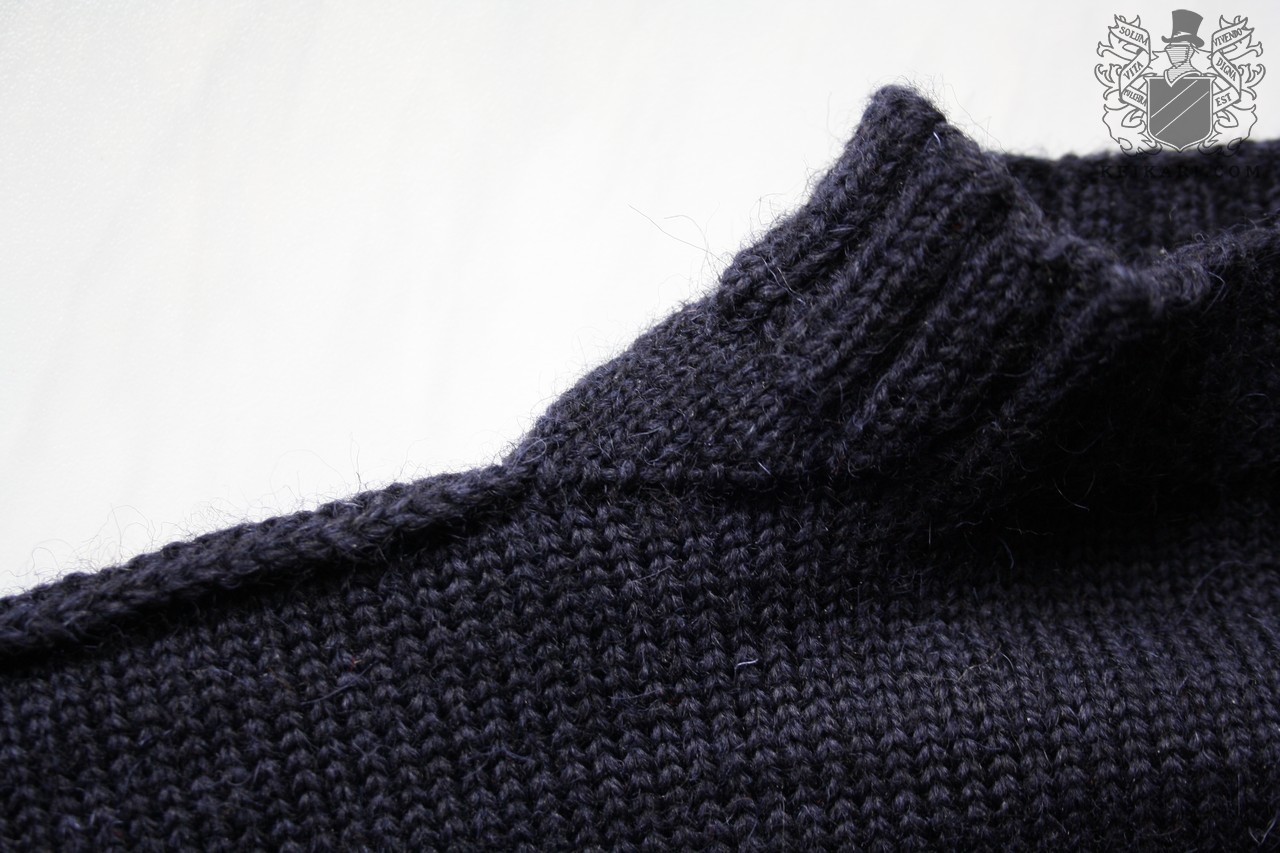
Neck gusset on both sides of the O-neck
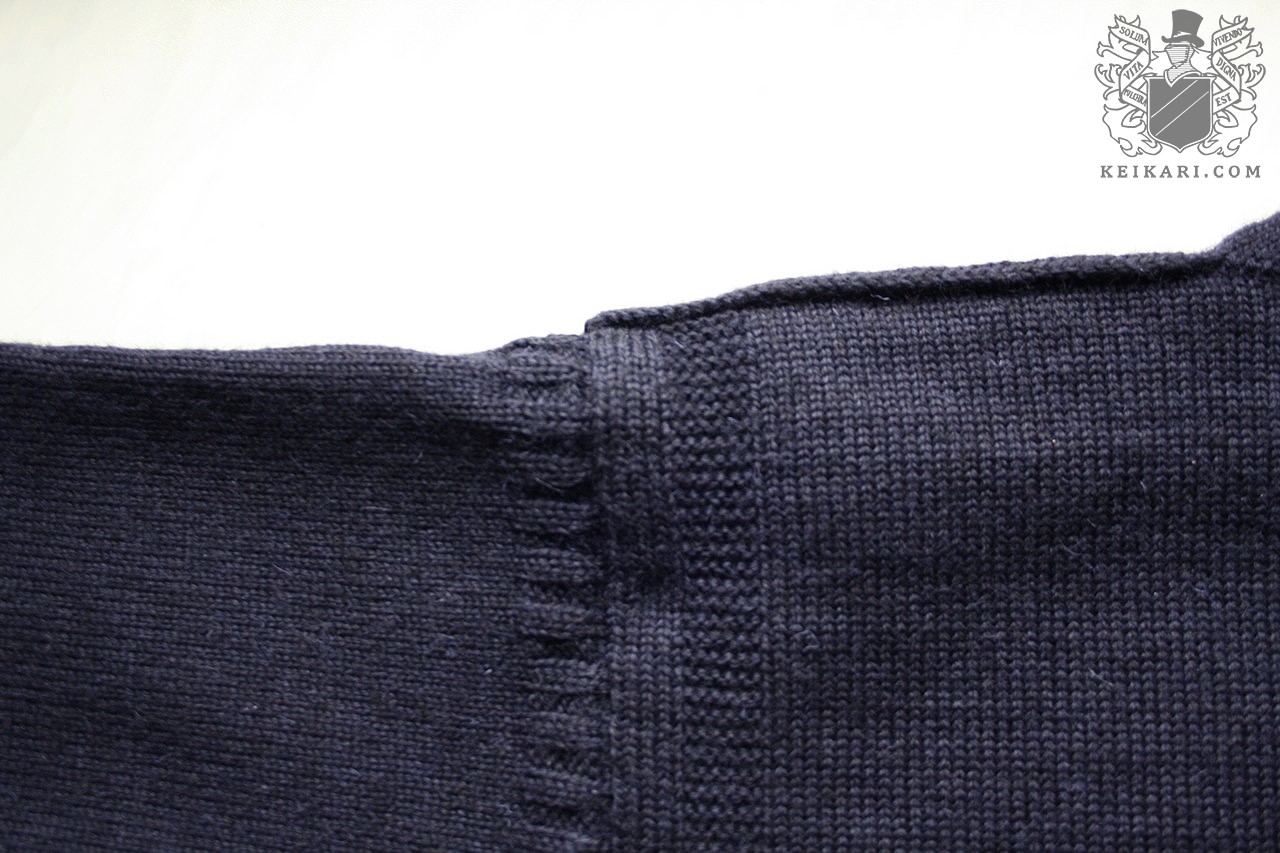
Ribbed sleeve tops
Guernseys have a high O-neck with gussets for strength, and cuffs are longer than average to protect from cold winds. Two slits in the hem line and shoulder seams placed on the biceps guarantee flexibility. Large, separate underarm gussets provide great range of movement. The hem also has a garter stitch welt for burly good looks. Guernsey jumpers are longer than average to cover and protect the waist at all times. All of these many, wonderful characteristics are designed to protect the wearer and form the perfect knitted work garment. Well, very close to perfect as the wool is scratchy and has an odd smell for us landlubbers. The odour will lessen with washes, but the reader with dry or tender skin should be advised to wear a long sleeve shirt under Guernseys.
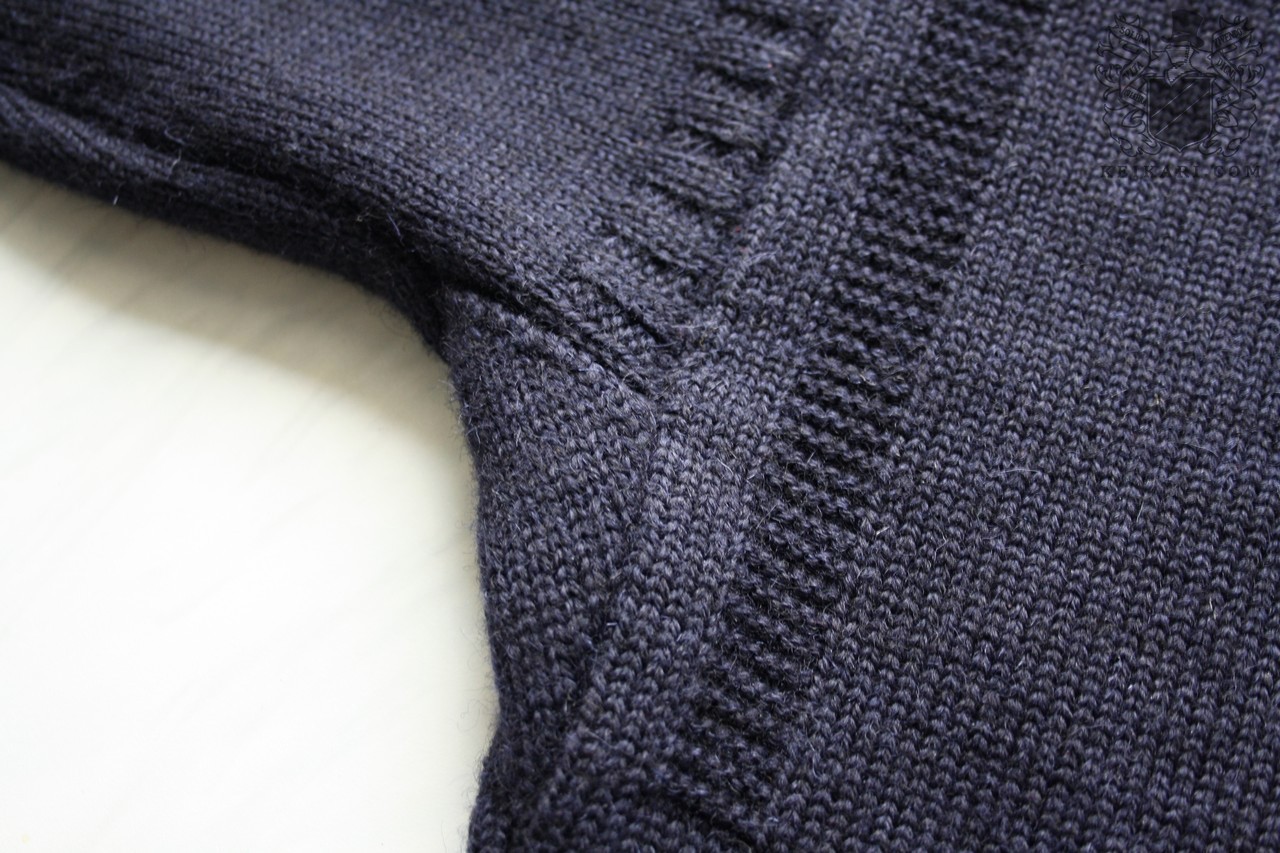
Underarm gusset
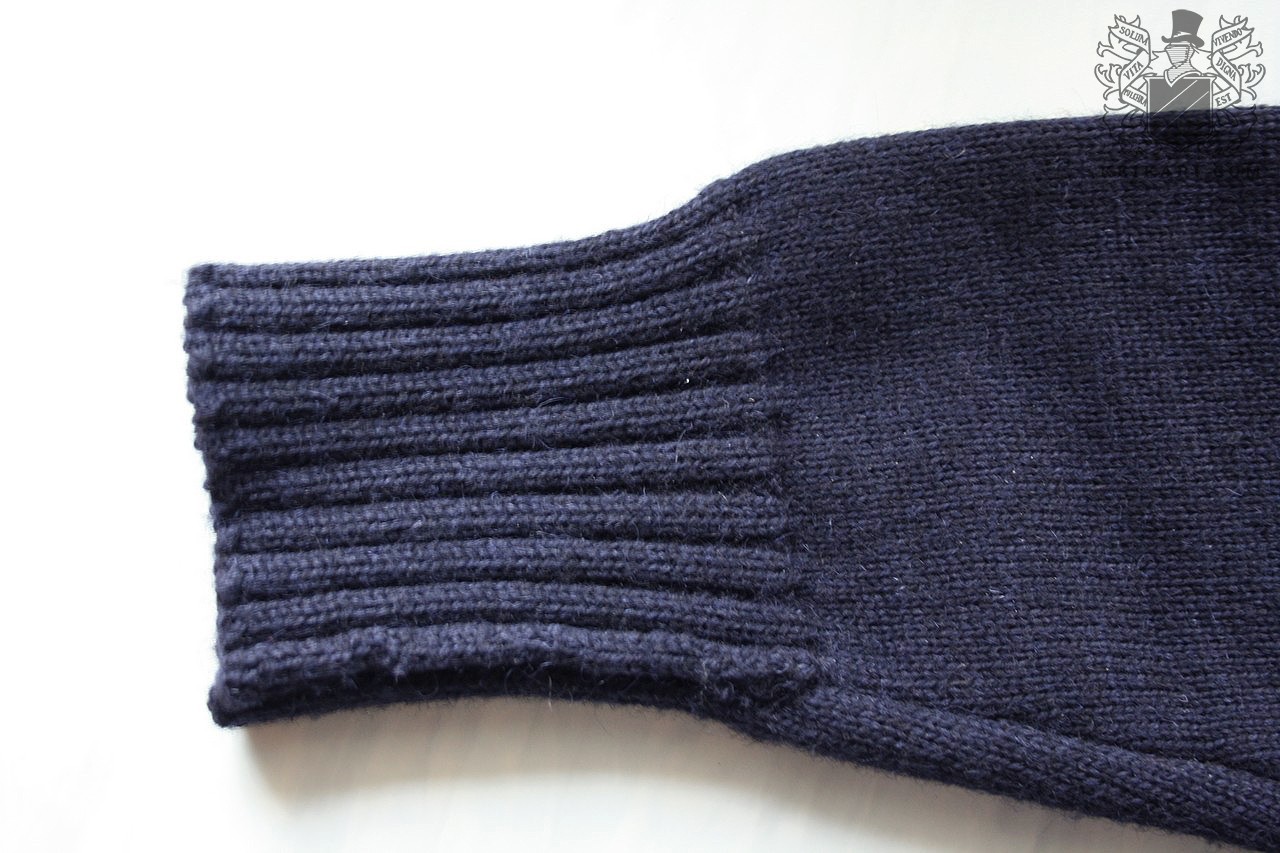
Long, long cuffs
Traditionally the fishermen’s wives would knit jumpers for the whole family and pass on their patterns to the daughters. The isle’s knitwear would travel through trade to other British nations in the 17th century, and many coastal villages created their own interpretations from Guernseys. The original, modest models became more decorative the higher up North they travelled. The most colourful (or garish) jumpers were created in Scottish altitudes. The strong Guernseys were also taken as part of the British navy’s regulation uniform in the 19th century.
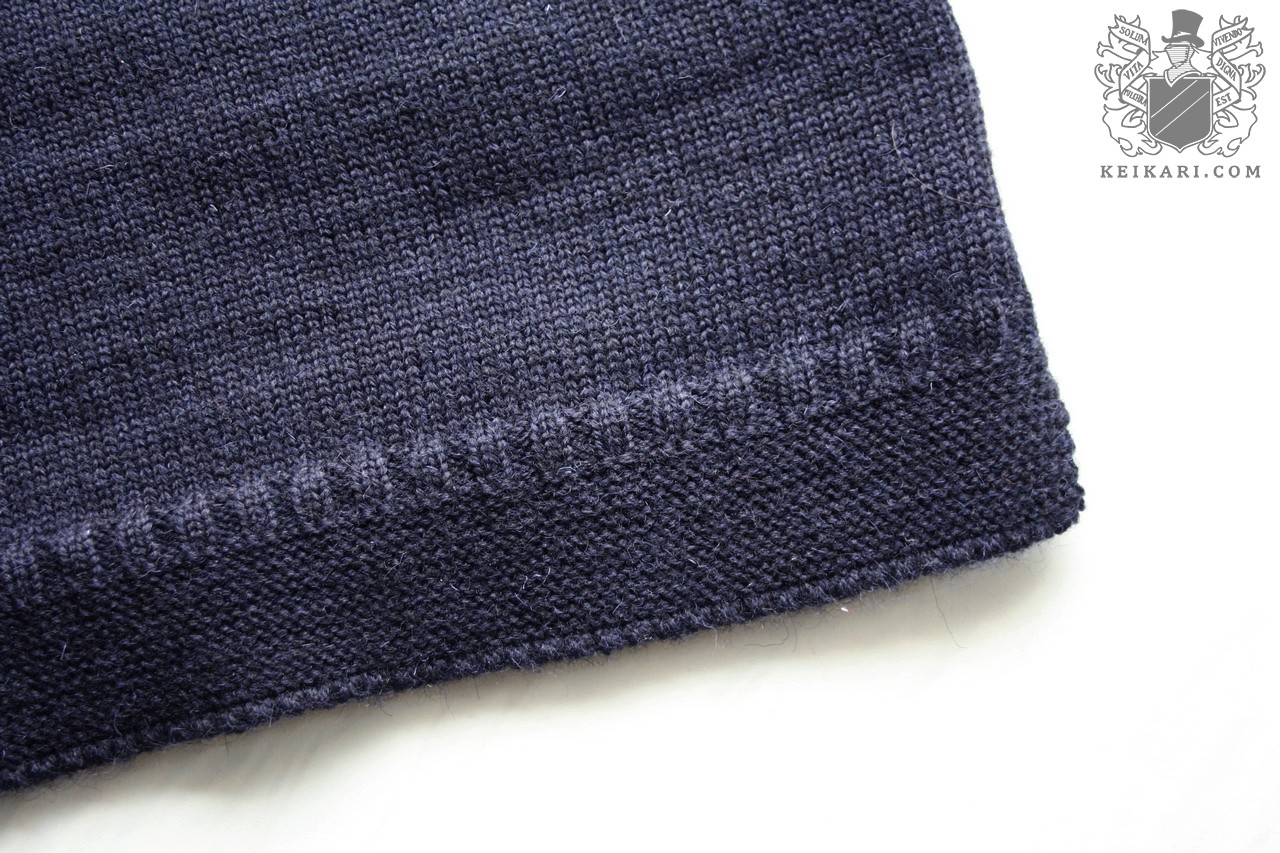 Garter stitch welt
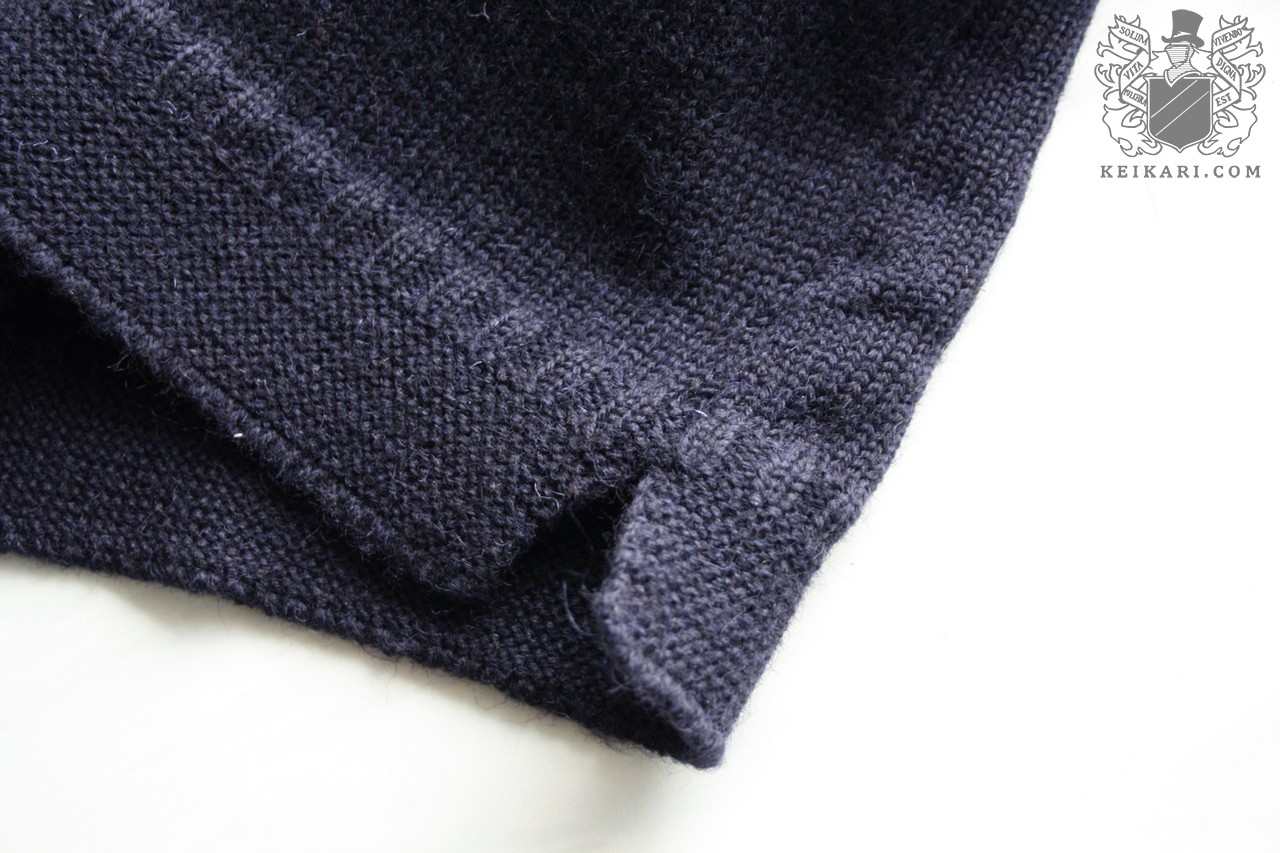
Slit hem line for movement
The jumper patterns were symbolic for the fishing men, representing ropes, waves, chains, nets and traces on the sand. The Guernsey island has numerous versions of its namesake jumper, but a crude split can be made into two archetypes: the modest work garment and the decorative holiday piece. The simple jumper was easier and faster to knit, and most of the export models were humble but handy. Still, any fully hand-knitted Guernsey takes dozens of hours to create. Knitwear was an important source of income for the isle’s people like the Aran jumpers were up North.
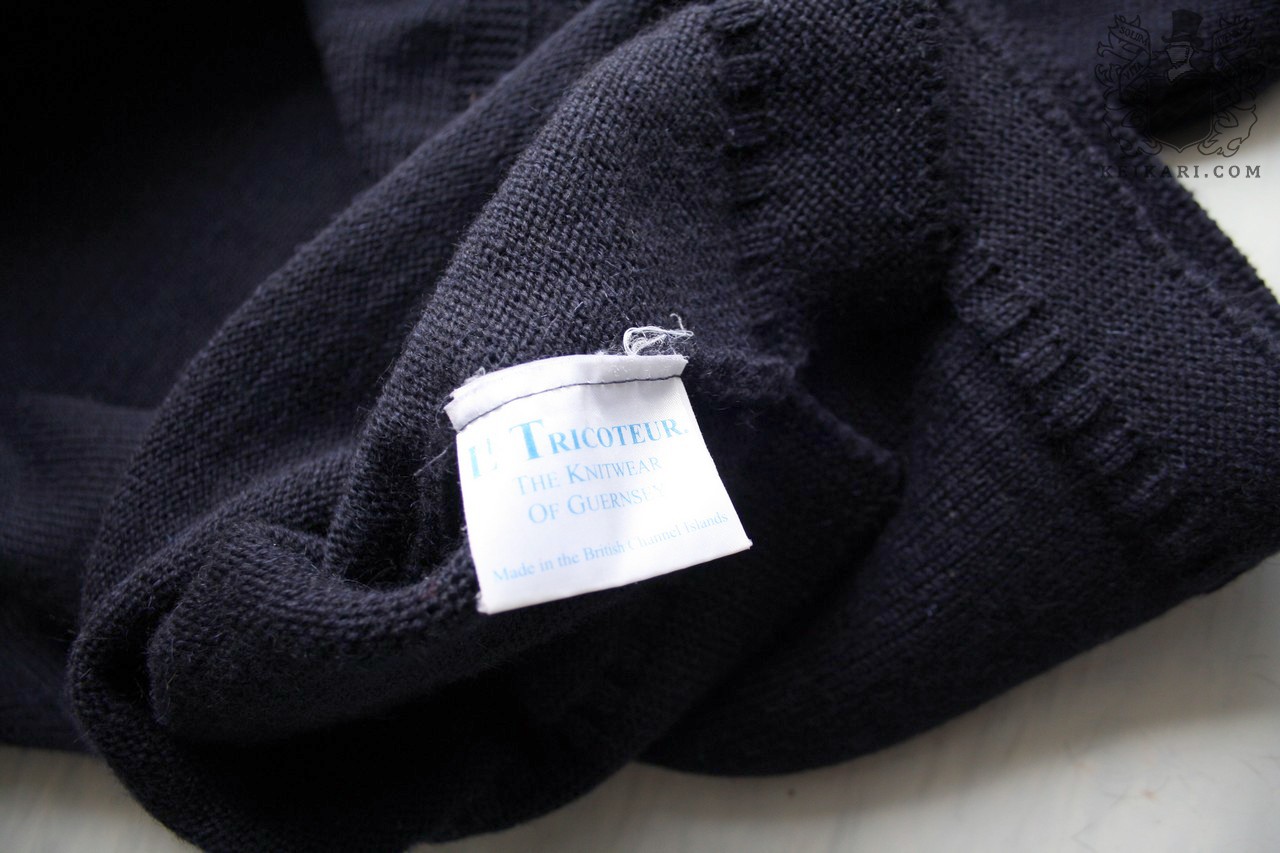 The X marking the spot
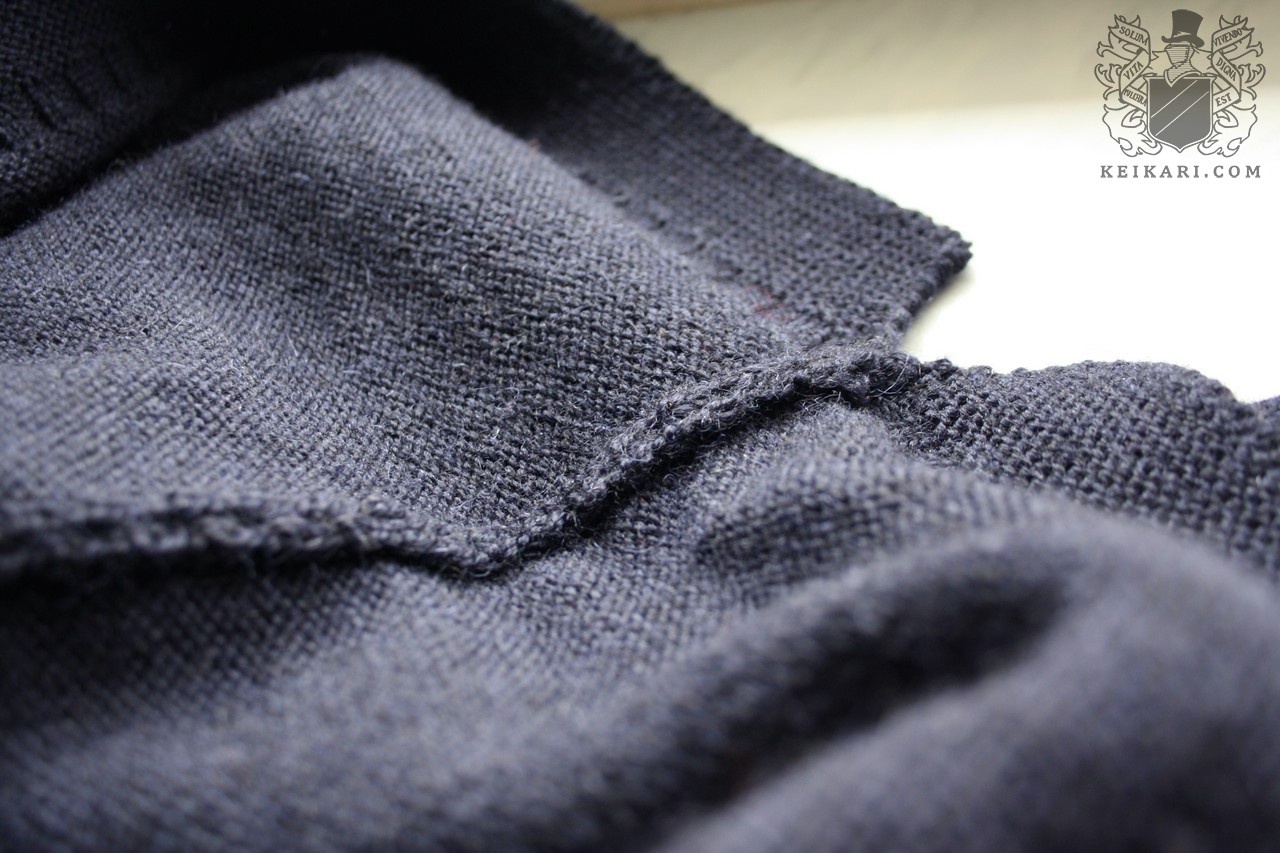 Flat and comfy seams
When the knitwear’s strong 5-ply yarn and details are summed correctly, one understands that Guernseys are nearly perfect work clothes. Flexible, warm, strong and durable from one year to another. The factories still working on the island have been forced to broaden their range in the hopes of prospective customers — Guernsey jumpers are difficult to wear through. When the classic navy blue one has been bought, there is no need for other pieces for the random buyer in many years. Factories have also taken to bright colours and cotton versions for summer to help the business. Most of the jumpers on offer today are hand-finished, but knitting hasn’t been discarded in the island so the old-world make can still be found. Guernsey knitwear is far from dressy, the thickness alone won’t make it in an office setting, but in work, leisure, sailing and fishing it protects any wearer from the elements like woollen armour.
Category Knitwear
Copyright © 2013 Ville Raivio