Interview with Damian Kot from Bespoke social club
0May 13, 2014 by Ville Raivio
VR: Your age and occupation?
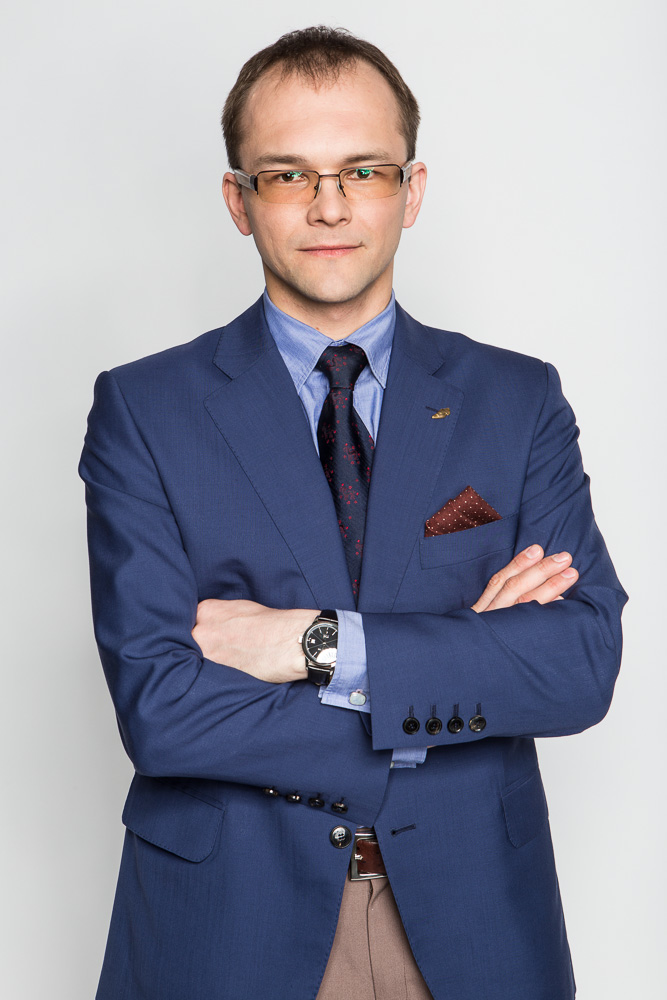
DK: I’m a product manager in a bank, and 36 years old (1978).
VR: Your educational background?
DK: I graduated from University of Lodz in Finance & Banking.
VR: Have you any children or spouse (and how do they relate to your tailoring enthusiasm)?
DK: I have two daughters (1 and 7 years old). Because my wife is a fashion designer, mainly doing wedding fashion, with tailoring & pattern making skills, the tailoring climate is everywhere in our home, so my interest in bespoke shoes and suits is seen as a „normal” state of mind J.
VR:…and your parent’s and siblings’ reactions back in the days?
DK: My evolution in style was not rapid – it rather took years than months. What was noted by my surrounding was my shift from RTW suits and shirts to made to measure.
VR: What other hobbies or passions do you have besides apparel?
DK: The oldest ones are photography and watches, but my beloved field of interest is free market economy. Especially the ‘Austrian school of economy’ represented by such great economists like Ludwig von Mises (what should be noted is that he was born in Poland) and Friedrich August von Hayek (the Nobel Prize-winner). Before I seriously engaged in the Bespoke Social Club, I was running my own Internet site about economy journalism (closed a year ago).
VR: How did you first become interested in clothes, and when did you turn your eyes to classic style? Why classics instead of fashion?
DK: During my studies in Lodz I met students of the fashion design faculty. This was a nice shift from the material world of finance to the artistic climate of catwalks. But fashion designers have nothing to say about classic style. They can only derive inspiration. My pre-classic times gave me a chance to learn about fabrics and mainstream prêt-a-porter. My turn to classic style was a natural step when I was hired in my first job in a bank. An in-depth interest evolved after I discovered the Internet forum then called “bespoke”.
VR: How have you gathered your knowledge of this area — from books, in-house training, workshops or somewhere else?
DK: The forum was a fascinating source of knowledge. Established in 2010 by Wojtek Szarski, who was previously only blogging (as Macaroni Tomato), on classic style, showing his bespoke suits made by local tailors. That forum was a center of revolution which led to a rapid renaissance of interest in classic suits and shoes. A few artisans who survived to our times — most of them could now be our grandfathers — were surrounded by young clientele. There was no need for workshops because real knowledge came from real orders. Books on classic style were a rarity. One of the best publications available in the Polish language was The Gentleman by Bernhard Roetzel. Other ones could be bought on Amazon, etc. Every new artisan introduced to the forum’s society was a potential partner for us. Orders shown on the forum let us create our own, independent rankings.
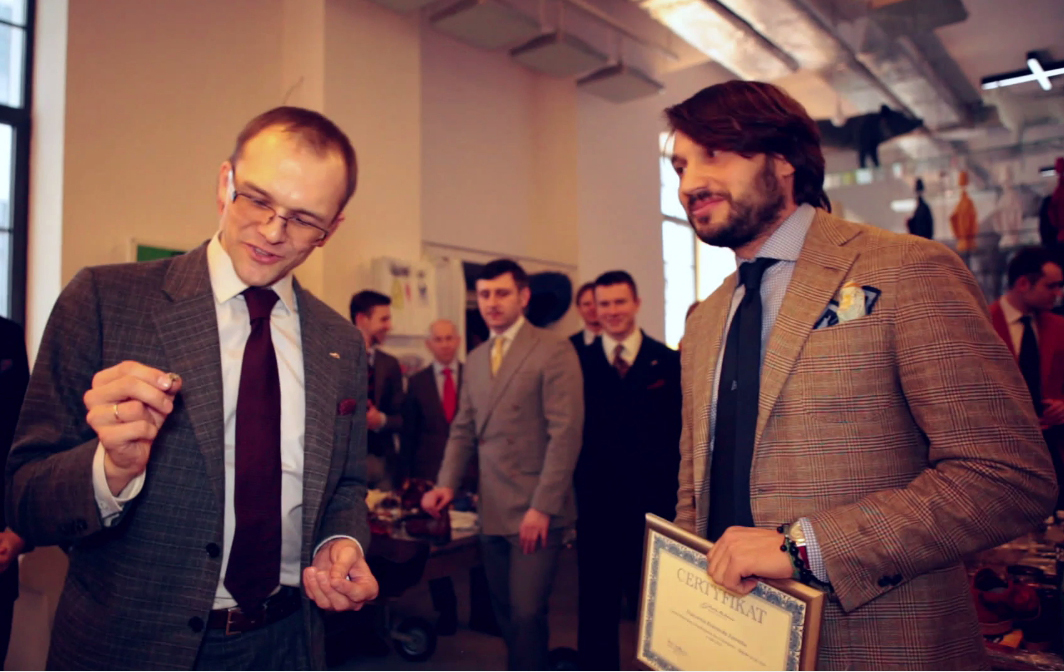 Damian Kot presenting a BSC award to tailor Zaremba
VR: How would you describe your own dress? Which RTW makers or tailors do you favour?
DK: I’m neither a blogger nor a freelancer so my personal style is rather toned-down but evidently different from the style of corporate folks who still prefer black suits. My favourite weave in suits is plain in a pale shade of grey or blue. My everyday dress is very often composed of jeans with a jacket, influenced by my workplace – a dealing room. A great space for individualism I have found in shoes. The majority of them are made by shoemakers in exotic leathers. As to RTW makers — of shoes or suits — I don’t have favorites because my experience in RTW garment is accidental. I don’t have two pairs of shoes or two sets of suits bought from the same RTW maker, but I very much like my Weston, Yanko and Ambiorix pairs. To be honest, I use only one jacket which was not made by a tailor. And my favorite tailor now is…my wife, who was trained by master tailors, and utilizes her knowledge predominantly with classic female jackets. I’m the only non-female customer.
VR: Why did you first setup the Bespoke Social Club, and where did you come up with the concept? What goals did you set for yourself in the beginning, and how has the club been received so far?
DK: The idea to set up the Bespoke Social Club was inspired by the happenings explored in another club where I’ve been a member from the very beginning, The Polish Watch Collectors Club. In 2010, this club organized a trip to Glashutte – a center of German watch industry with such flag brands like Glashutte Original and Lange&Sohne. It was clear to me that if our bespoke.pl forum would like to be a real benefactor of high-end producers of classic garments, we should be organized in the same way as the watch collectors. I was convincing Wojtek that such a society could manage the forum and serve as a formal representation of our group. He decided to start up his own business in MTM clothing, taking into account that he had a large group of followers through his own blog. The “bespoke” forum was handed over to an IT guy who was hosting Wojtek at this time. And this fact was a real trigger for other colleagues to act. During long negotiations, we took control over the forum. This was in spring 2012. Sixteen core members of our forum established But w Butonierce – the Bespoke Social Club. Our short-term goal was to re-brand the forum under this new name (www.butwbutonierce.pl, bespoke was not our property), and to organize the content on the site (almost all moderators are members of our club). Our club is the only one of its kind in Poland and is continuously expanding. The media are interested in our society, so we have opportunities to promote the classic lifestyle.
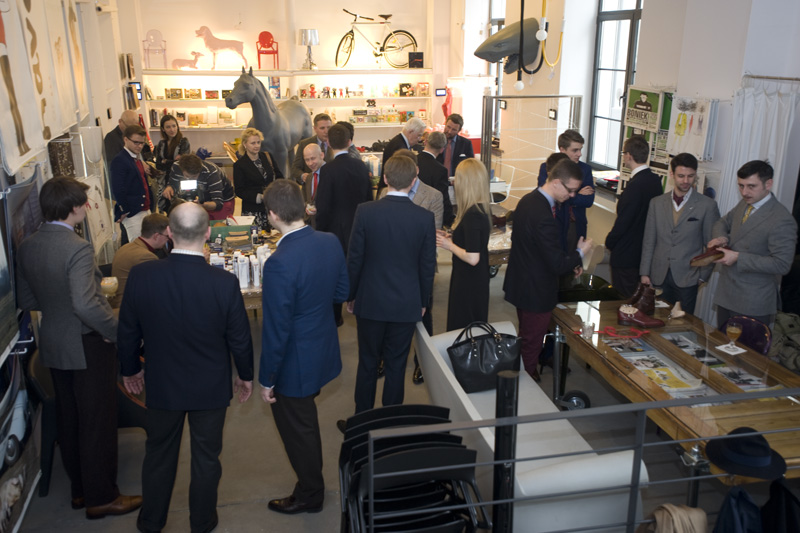 Mingling at a BSC meeting
VR: What sort of activities does the club offer?
DK: First of all, the club offers networking. This is very important. We have our roots in the forum, though some people I have never seen, but personally I know at least 60 users (while the club has 30 members and we have over 5000 users registered on the forum). The most valuable asset of the club, and the forum, are the people. Some are experts in tailoring techniques, others in shoes, cigars, watches, etc. What should be stressed: the forum has inspired some of our members who’ve started successfully in the blogosphere (for example www.szarmant.pl, www.milerszyje.pl, www.wdrugiejskorze.pl, www.smaknabyty.pl, www.theformalstyle.pl, www.styleman.blog.pl) and/or decided to set up new ventures in the market. It may sound like a joke now, but in 2010 it was almost impossible to buy real horn buttons or find a reasonable selection of fabrics – so there was space for new entrepreneurs.
This unique mix of specialists has built the content, so our forum may be regarded as a competence center on classic style. The club organizes theme events and represents our members in so-called “forum projects”. So far we’ve organized two events devoted to shoe and leatherwork artisans and a few forum projects. What are these forum projects? We find a producer/artisan who can offer us MTO/bespoke products made according to our specifications. As the owners of our organization, we also set up contests open to the public, and sponsored by our partners (supporting members) or companies looking for advertising opportunities. Because we have good relations with local artisans, if somebody is looking for professional advice on – for example – where to have a jacket made, we can help in such cases.
 Cordwainer Tadeusz Januszkiewicz (right), at the BSC shoe event
VR: Should we look forward to new ventures from your BSC in the future?
DK: In the nearest future, we are preparing a new event which will take place in June. This occasion will start a new series of events concerned with lifestyle. These “Only the classic man” events will have a broad perspective: shoes, suits, services addressed to men, and even cars, will be discussed…
In the long term, we would like to invite more partners, not only tailors and shoemakers, and to be able to organize first trade fairs for niche and luxury brands. Our strategic goal is also to maintain relations with artisans and “classic” bloggers from abroad.
VR: From your observations, what does the future look like for Polish artisans?
A lot of factors influence their future. After the collapse of the so-called communism in our country, local family companies were not prepared for real competition on the market when international brands appeared. Wearing a suit with the label of Hugo Boss or Pierre Cardin was in vogue. Another factor: professional teaching in hand crafts was dismantled by reforms in educational system. On the other hand, the young generation was not interested in such traditional occupations. Artisans are a niche. We have rather “old school” artisans and a few representing the young generation, for example the tailors Piotr Kamiński, and Sebastian Żukowski. In general, Polish artisans don’t have successors, which is in my opinion a crucial risk factor. Only those companies with successors in the family, like tailors Krupa&Rzeszutko (Mr. Krupa is the grandfather of Mr. Rzeszutko) can survive as a family business in the long term.
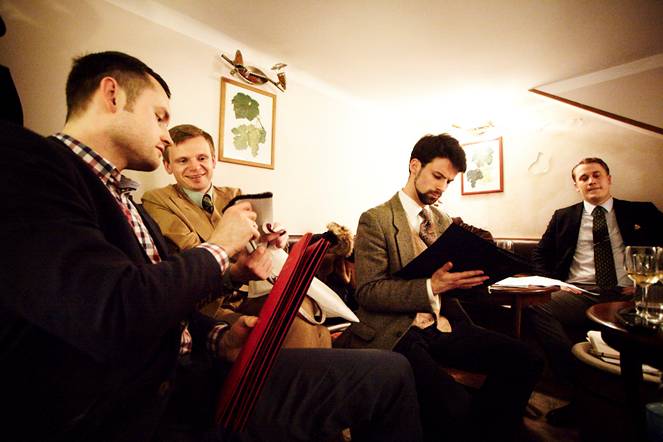 Drinks and swatch books, tools of the trade for BSC
Textbook examples of artisan brands, which will not survive, are Mr. Jan Wielądek and Mr. Tadeusz Januszkiewicz. Nowadays they are regarded as the best Polish shoemakers, with crowds of customers waiting for months to place an order, but with no successors. Of course, we also have such very well-known names like Kielman, but no one from the family is a cordwainer, so the prosperity of this brand as a bespoke shoemaker depends partially on the people hired and trained in-house. Kielman does not offer RTW shoes, but I’m sure such a step taken a decade ago would have helped make this brand more international. Another interesting example of a family business is Zaremba. The business has been running continuously now into the third generation represented by Maciej Zaremba. He is not only a tailor like his father and grandfather, but a modern manager who transforms the brand by adding new elements like MTM or accessories. At the end, the future of all artisans depends on the purchasing power and brand-awareness of local customers. And here is our mission as the association supporting the local artisans and niche brands.
VR: Who or what inspires you?
DK: I find inspiration by reading our forum and watching people showing their outfits.
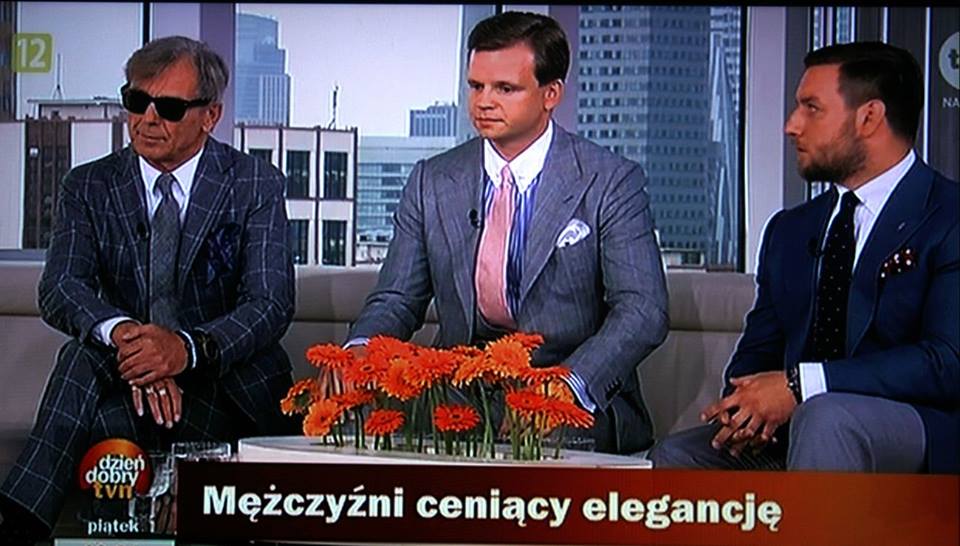 BSC members featured on Polish television
VR: What is your definition of style?
DK: Style is my own way of dressing and being in line with my sense of aesthetics.
VR: Is there something you wish more men would know about dressing well in Poland?
DK: Poland is still an interesting place to explore because the artisans who survived tough times offer good or excellent quality for competitive prices (bespoke shoes and suits starting at 500 EUR). A few names were mentioned above, but you should also know Jacek Kamiński, who is a cordwainer in the 2nd generation with experience also in historical shoes made for movies. His uncle, Brunon Kamiński, got international recognition in the ‘60s and ‘70s, even in Japan. Then there’s Gest Moda (tailors), Tadeusz Kierepka (tailor, deputy head of The Warsaw Tailors’ Guild). If anyone needs guidance when visiting Poland in search for classic suits, shoes, etc., he would do well to contact our association and ask for help.
Photos: Damian Kot
Category Interviews, Men of style
Tweed clothes from Cordings of Piccadilly
4May 13, 2014 by Ville Raivio
Keikari readers will likely know the heritage of Cordings, its relationship with Eric Clapton, the vast selection of very English country clothing and the beautiful store that has no peers, so I won’t even mention them. This sentence, too, has no message (Ceci n’est pas une pipe, and so on). Instead I offer a presentation of tweed trousers made in the Cordings house style, which has several pleasant factors that produce a unique whole. A pair of trousers was shipped to my door for sensations drawn from careful perusal. All trousers from Cordings are made in the UK and all tweeds are woven in Scotland for the company alone. The firm has one concession at Orvis Harrogate, but no other stores except the Piccadilly address from 1877.
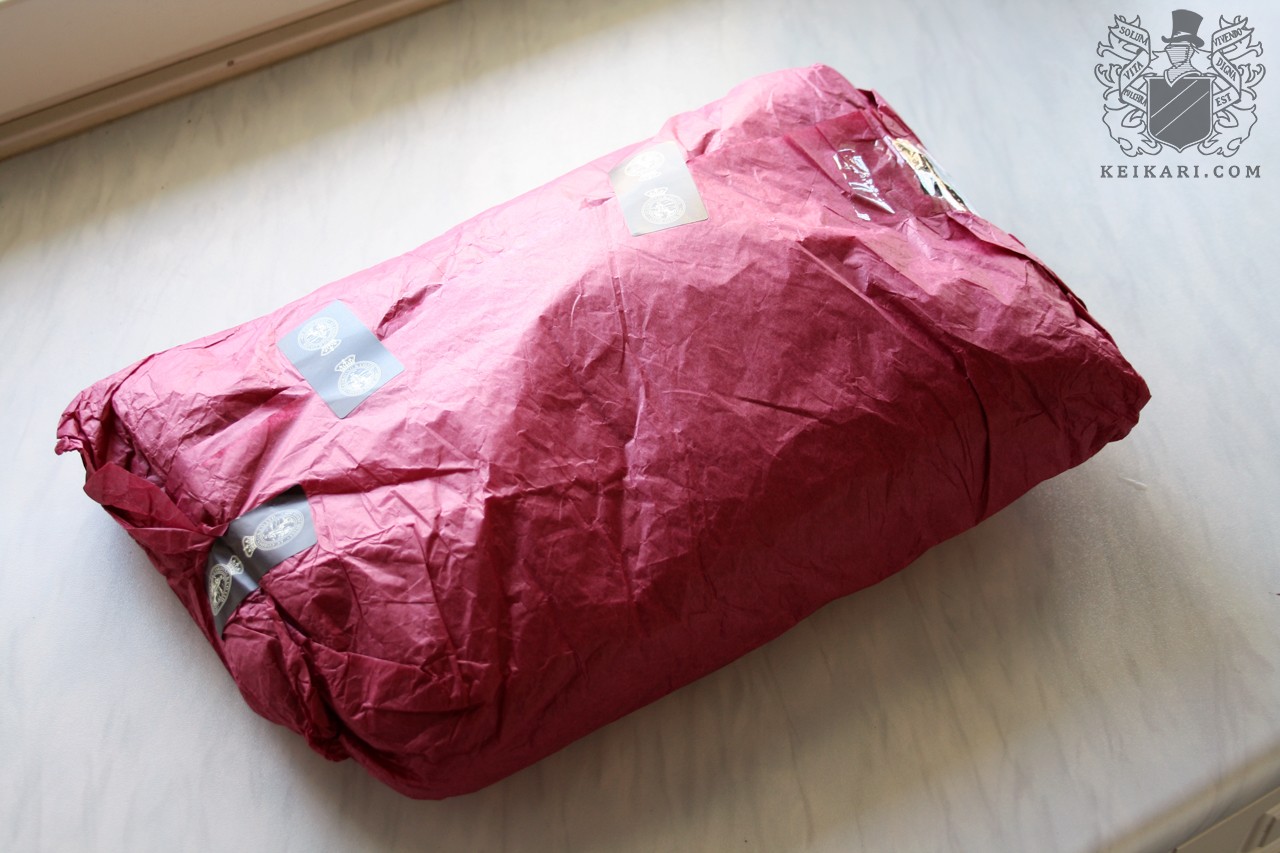
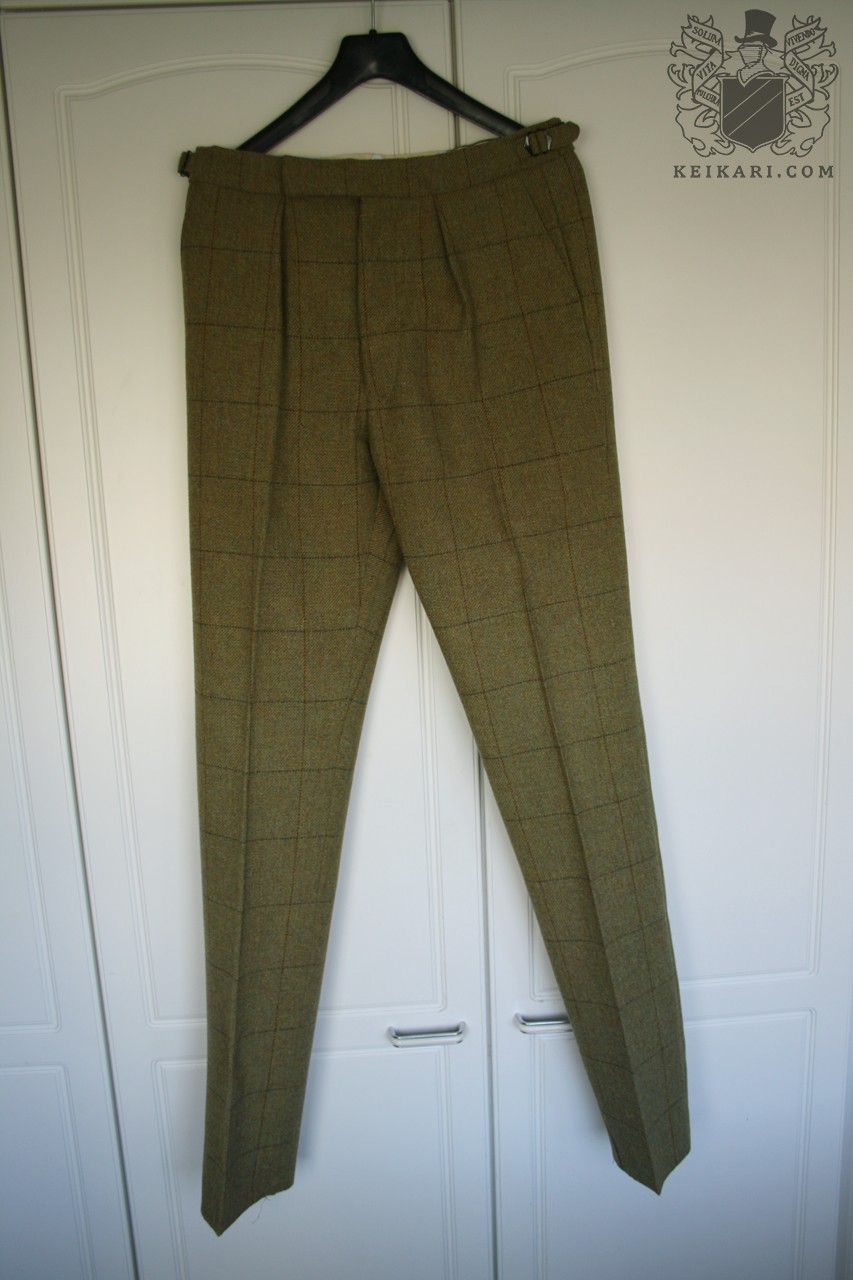
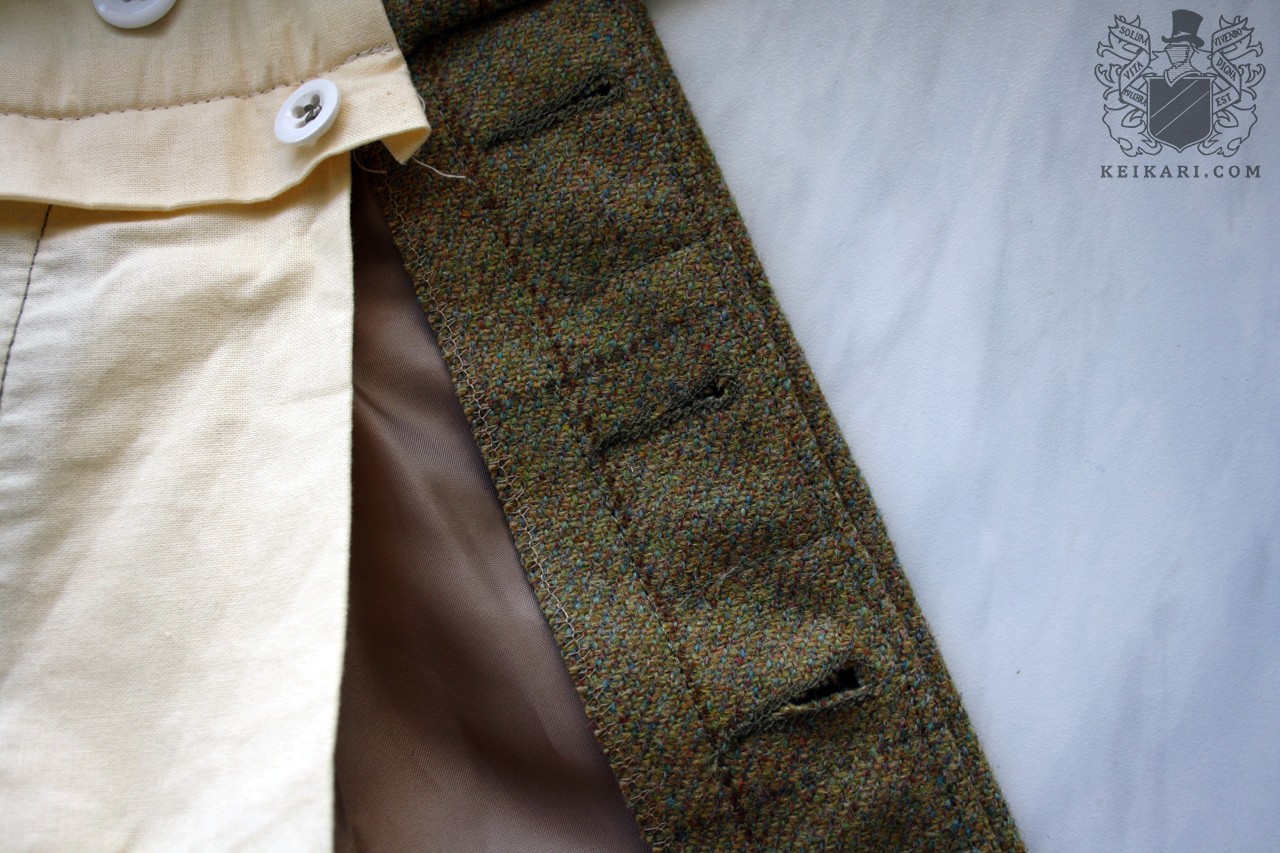
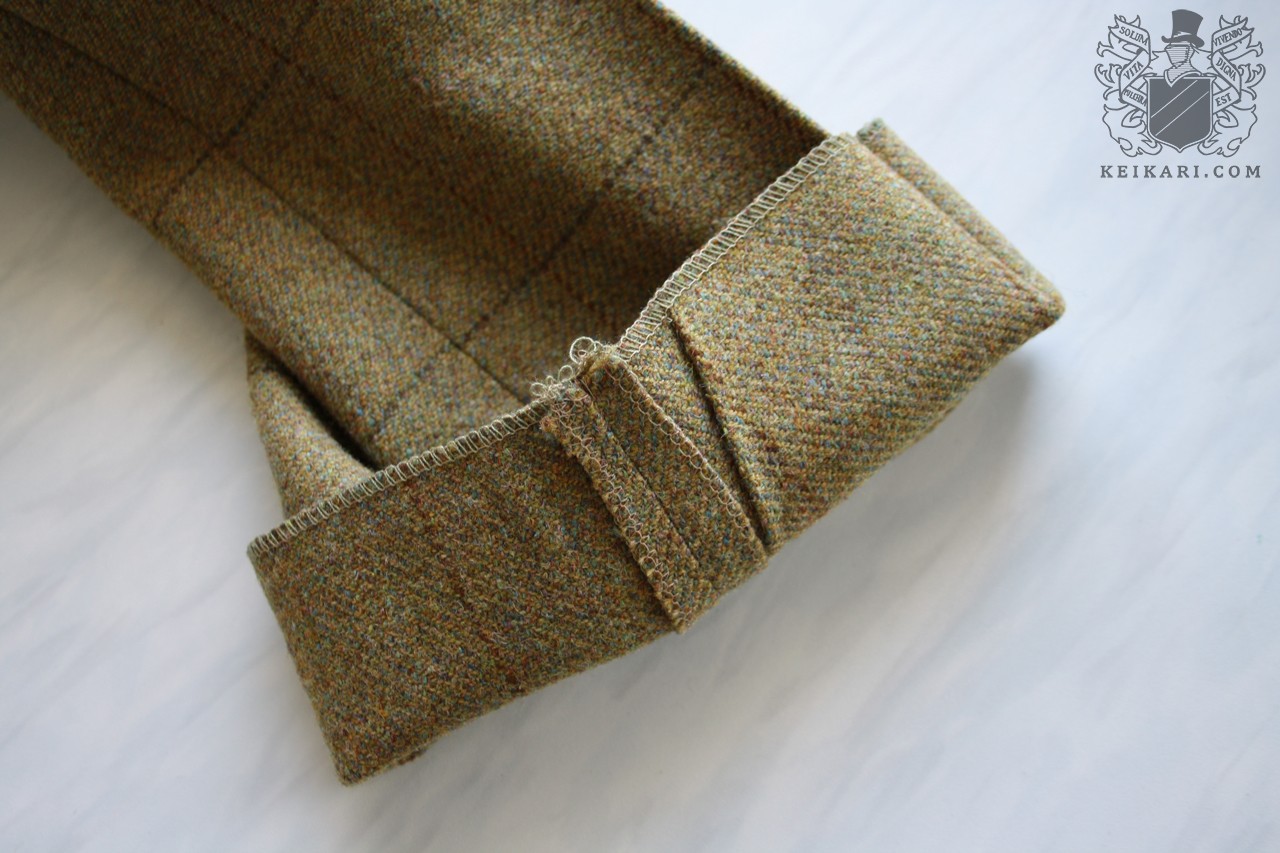
The example pair is titled 21oz. windowpane tweed trousers; that is, made from tweed with a windowpane pattern in the weight of 595 grams. Cordings insists on button flies for all men’s trousers, and most models have no belt loops, instead attaching with plain waist bands with tunnel top side adjusters. In practice, this means that the customer must have his waist tailored close or wear braces, and all trousers have brace buttons on the inner waistband. Not a common feature on men’s trousers of 2014, and a thrilling surprise for me. The trousers have deep pleats, one whole inch, and the fabric is as tough and heavy as the weight implies. The windowpane tweed will not stretch in any direction and is likely to outstand the common European marriage duration. It is scratchy, coarse and lovely, with a motley of threads in yellow, green, brown, grey. While the fly buttons are firmly attached, the buttonholes seem rather sparse. All buttons are urea instead of horn. Patterns are matched precisely around the legs. Details also include one jetted back pocket with button, and hook and bar plus button fastening on waistband.
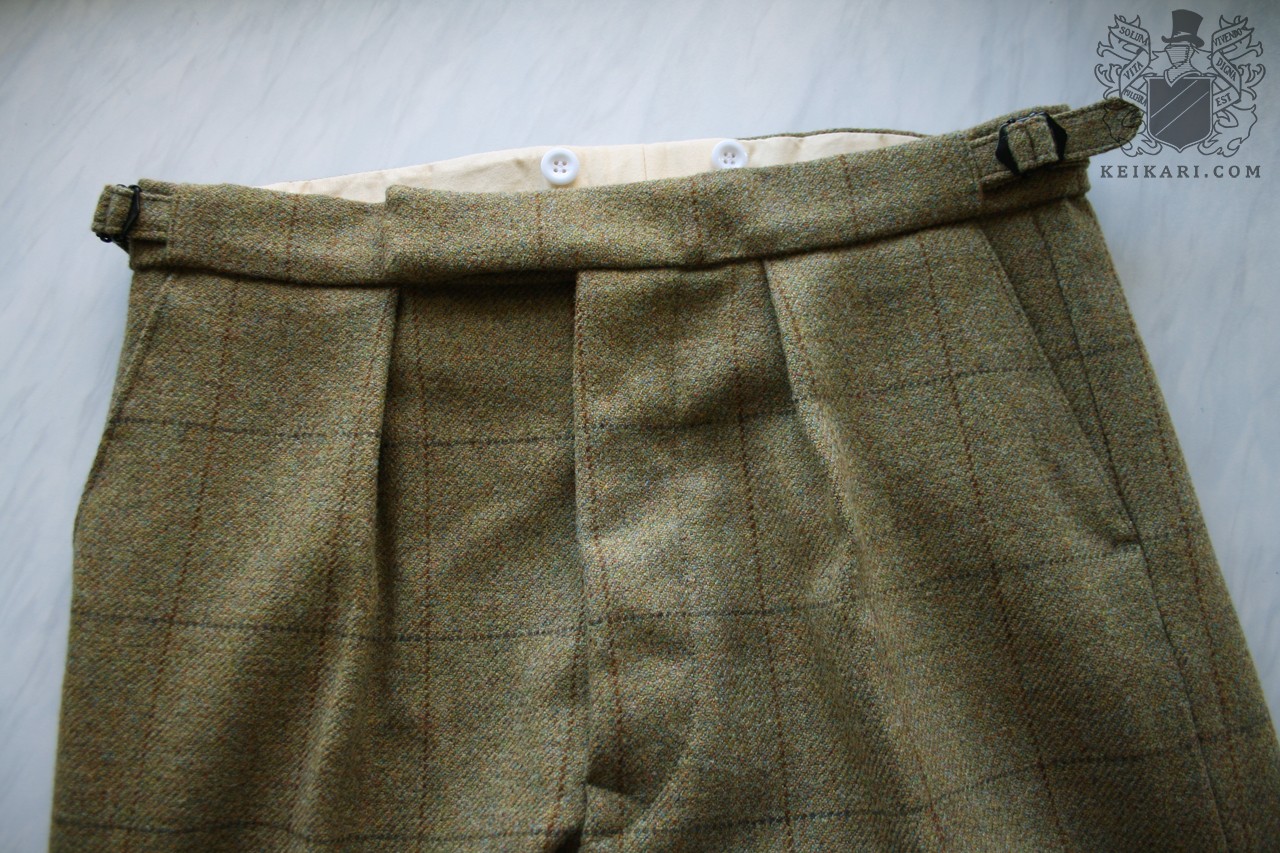
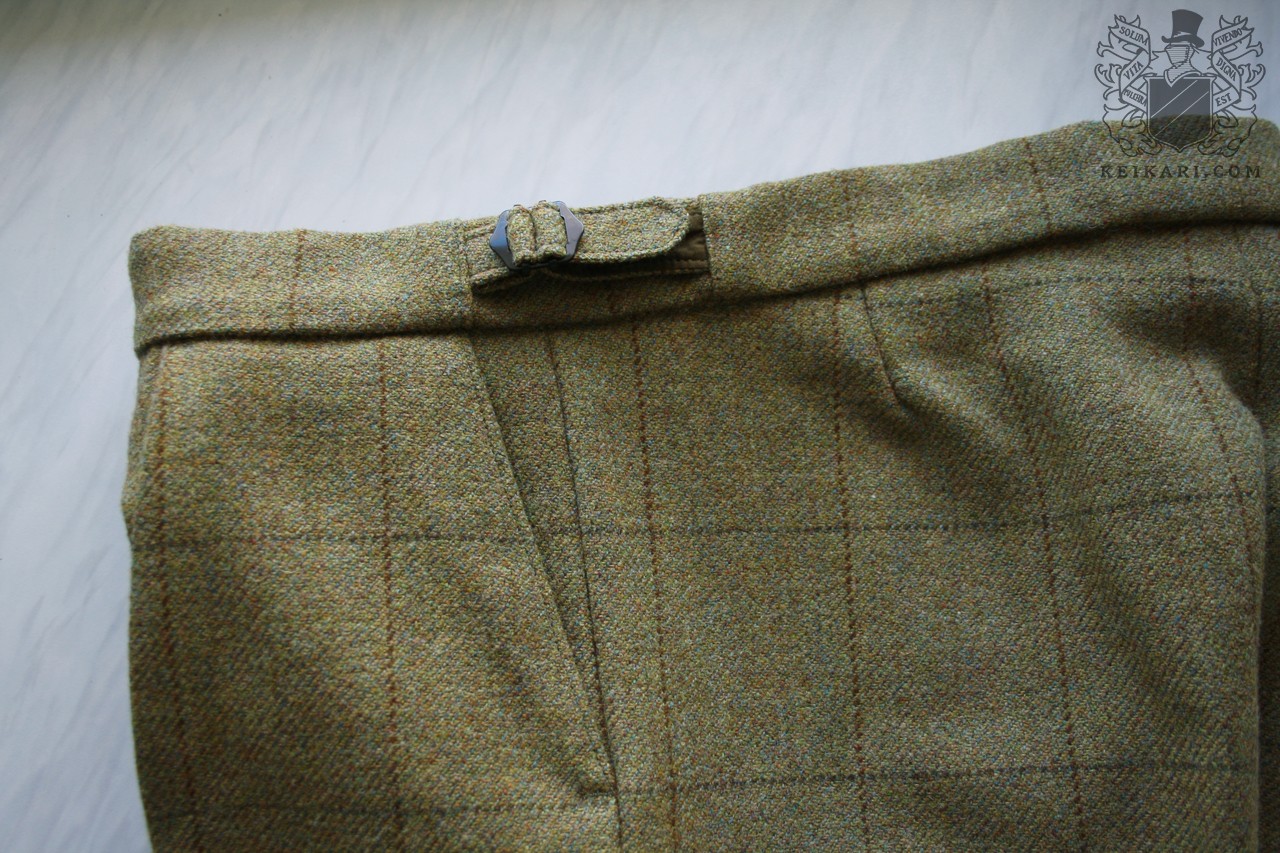
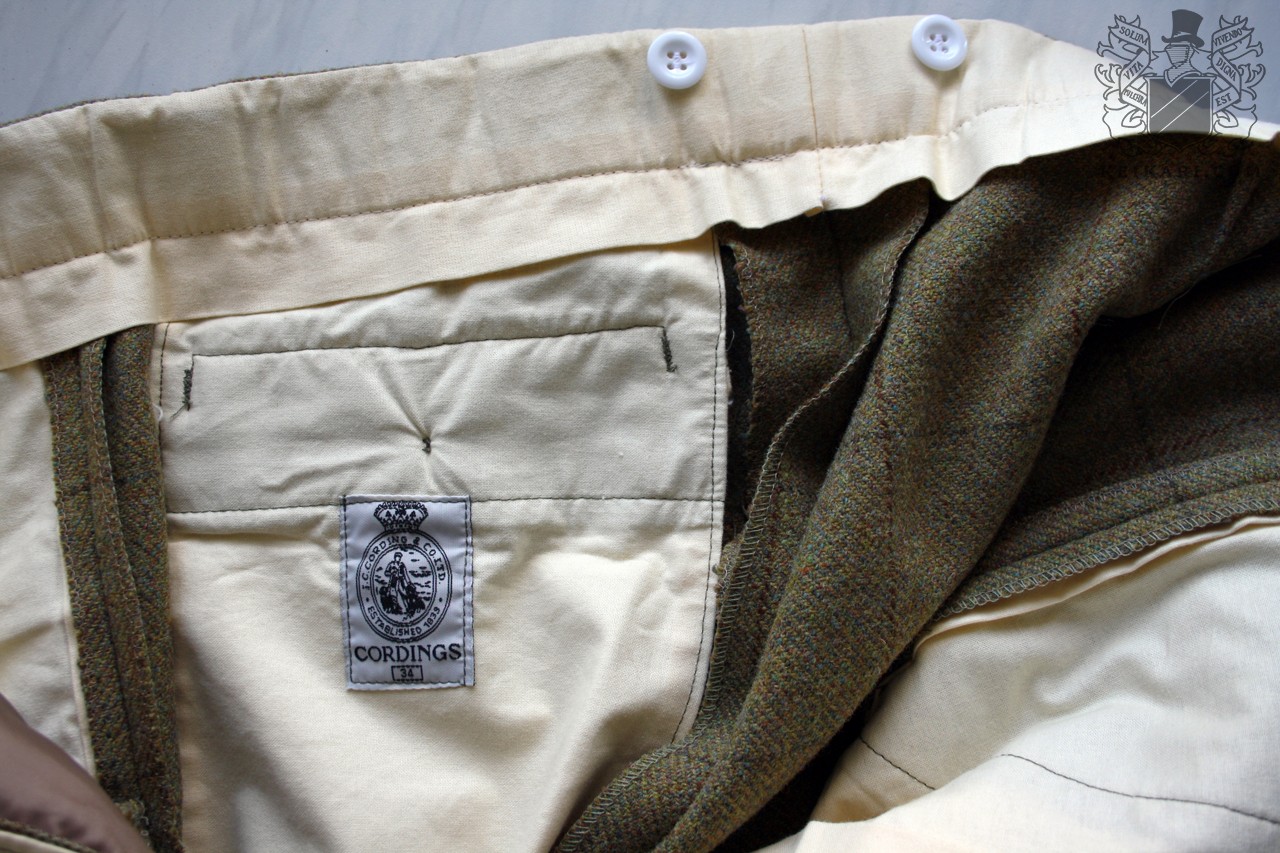
The waistband lining and pocket bags are coarse, light-yellow cotton; the trousers are lined to the knee in plain cupro. If the reader has dry or sensitive skin, it’s best to wear the coarse Cordings tweed with long johns or long socks. The pockets are around 20 cm deep and the cotton feels strong. The plain waistband has a nice height of 4 cm with a very soft inner fabric; the side adjustors are black metal and have cotton backing. The most striking feature of Cordings trousers, apart from the mostly rare button fly with adjustors, is the cut. They are slim. I really should repeat the word for added effect, but tautology really is a sign sign of poor style. Instead I will state that most British makers of traditional country clothing have a nasty habit of cutting loose and blobby clothes. Cordings is different: their trousers really fit the male figure. The leg girth is 30 cm just below the crotch and only 21 cm around the ankle. While the waist is cut high for a traditional look and feel, the legs are narrow. This won me over.
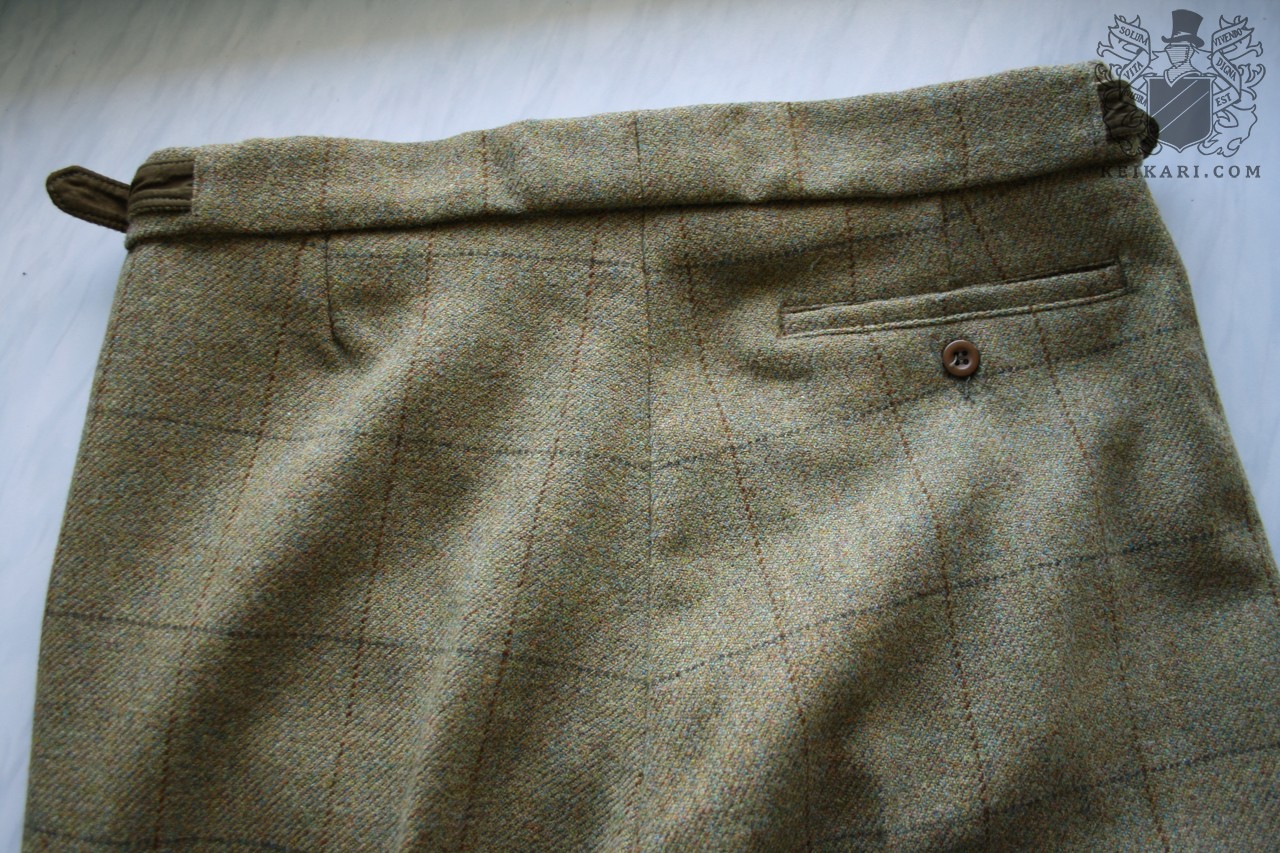
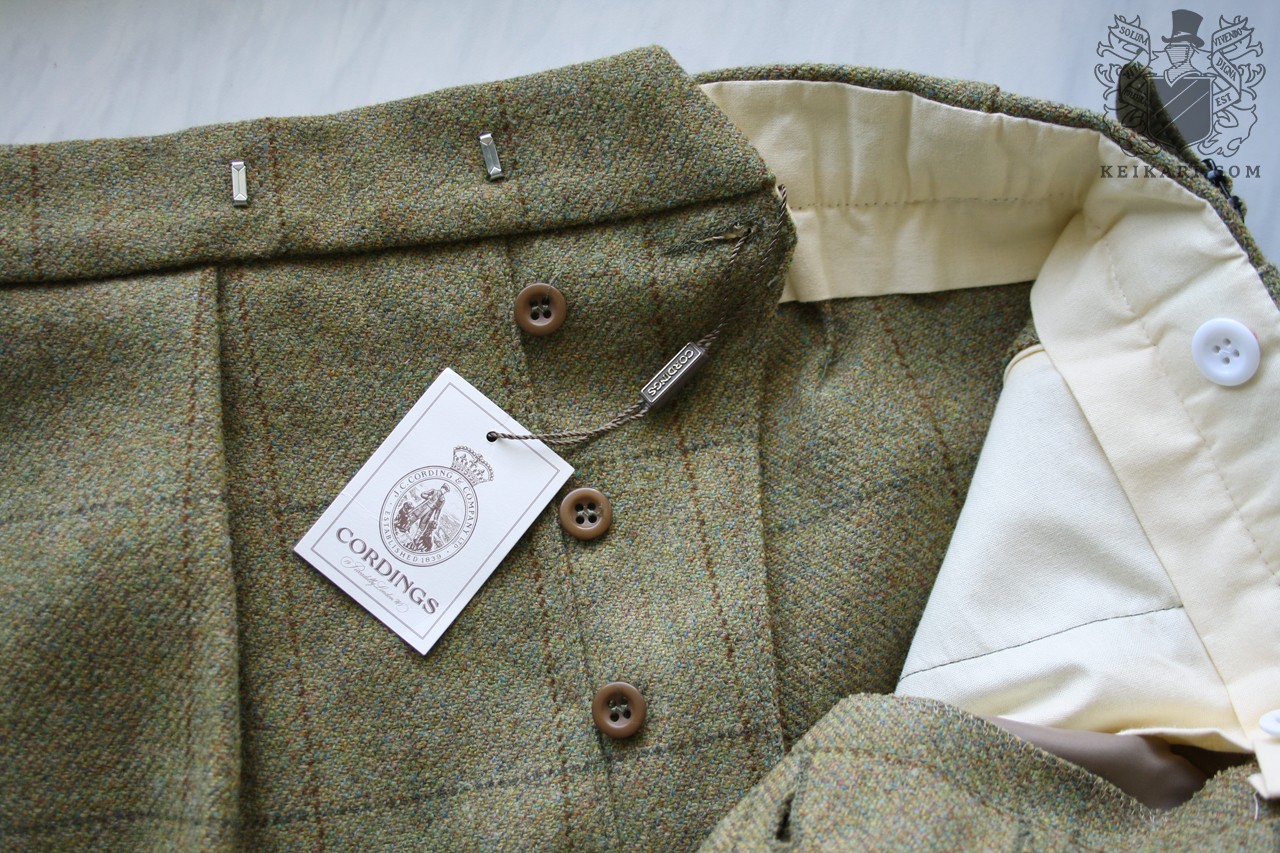
I feel Cordings offers excellent off-the-peg trousers. The house cut offers a button fly, slim legs, high waist, brace buttons, strong and unique tweeds, side adjustors, clean waistband and strong pockets with British make. The prices reflect this: at around 150 pounds for a pair of tweed trousers, the reader can expect, and will receive, much. As all tweeds are woven for Cordings and the company has but one store along with their virtual one, these trousers are also an uncommon sight on the high street or country setting. Many a trouser maker can, and should, learn a thing or two from Cordings. While I’d prefer deeper pockets, some nice horn buttons, more seam allowance and denser buttonholes, these are small things to pick on. All’s well in Piccadilly.
Category British Style, Quality Stores, Trousers, Web stores
The Duke of Windsor’s Fair Isle knitwear
0May 3, 2014 by Ville Raivio
“I suppose the most showy of all my garments was the multicoloured Fair Isle sweater, with its jigsaw of patterns, which I wore for the first time while playing myself in as Captain of The Royal and Ancient Golf Club at St. Andrews in 1922. Its consequent widespread popularity brought some relief, I like to think, to many a Hebridean crofter family.”
~ DoW in A Family Album, his obsessive style memoirs disguised as austere life memoirs
Category Quotations
Copyright © 2013 Ville Raivio