The Balmacaan coat
2June 29, 2014 by Ville Raivio
The Balmacaan is a long, loose-fitting single-breasted coat, usually styled with the triad of fly front, short bal collar and Raglan sleeves. The model is named after an estate in Inverness, Scotland, and created for protection rather than rakish good looks. The clothes chronicler Alan Flusser tells us that the model comes from the coats once worn by the Prussian army. The purpose of Raglan sleeves in this case is to improve the coat’s waterproof qualities, as this construction has the sleeve cut and attached to the collar. The more common set-in sleeve leaves a straight seam on top of each shoulder, and from this seam moisture is more apt to seep inside, when the crooked Raglan makes rain drip better to ground.
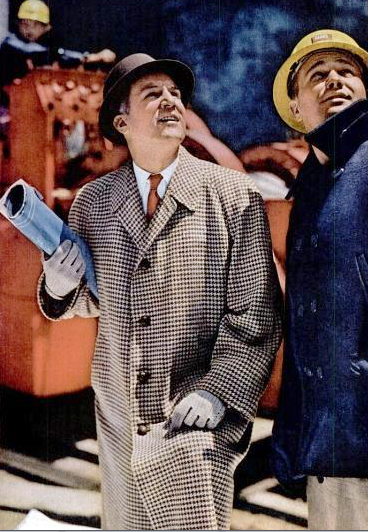
Woollen 1950s Balmacaan with leather buttons
Thanks to its loose cut, the Balmacaan will fit nicely over several layers of clothes and movement is unhindered. The coat usually has a clean, rain-proof fly front and often comes with hacking pockets with buttons. It can be cut and made from any fabric available, but the densely woven and impregnated gabardine is among the finest in wind and rain. Woollens and worsteds, in turn, keep one warmer in chilly climes.
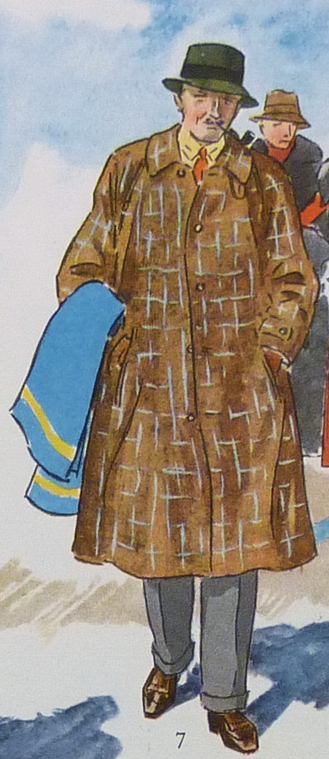
A 1930s version in windowpane wool
The Balmacaan’s collar is rounded, at least 8 cm high and short-pointed. It can be handily turned up for protection in the wind, and most models have a button below the collar for closing. The traditional and protective coat reaches the knees, fashion cuts have shorter hems. The cuffs have no buttons, but some versions have sleeve straps for added comfort and looks. The back has one vent for comfy wear.
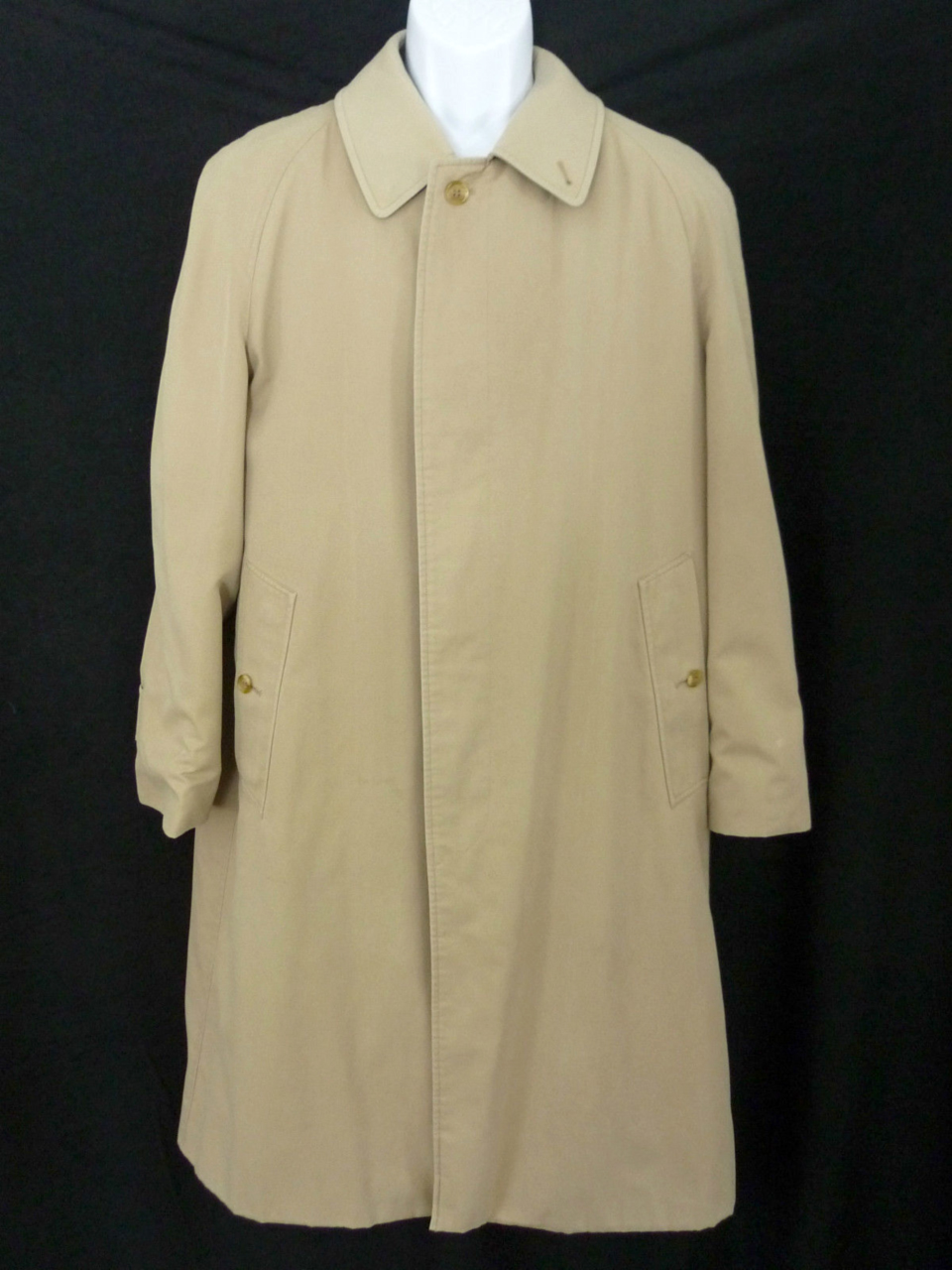
A contemporary Balmacaan with loose, understated cut
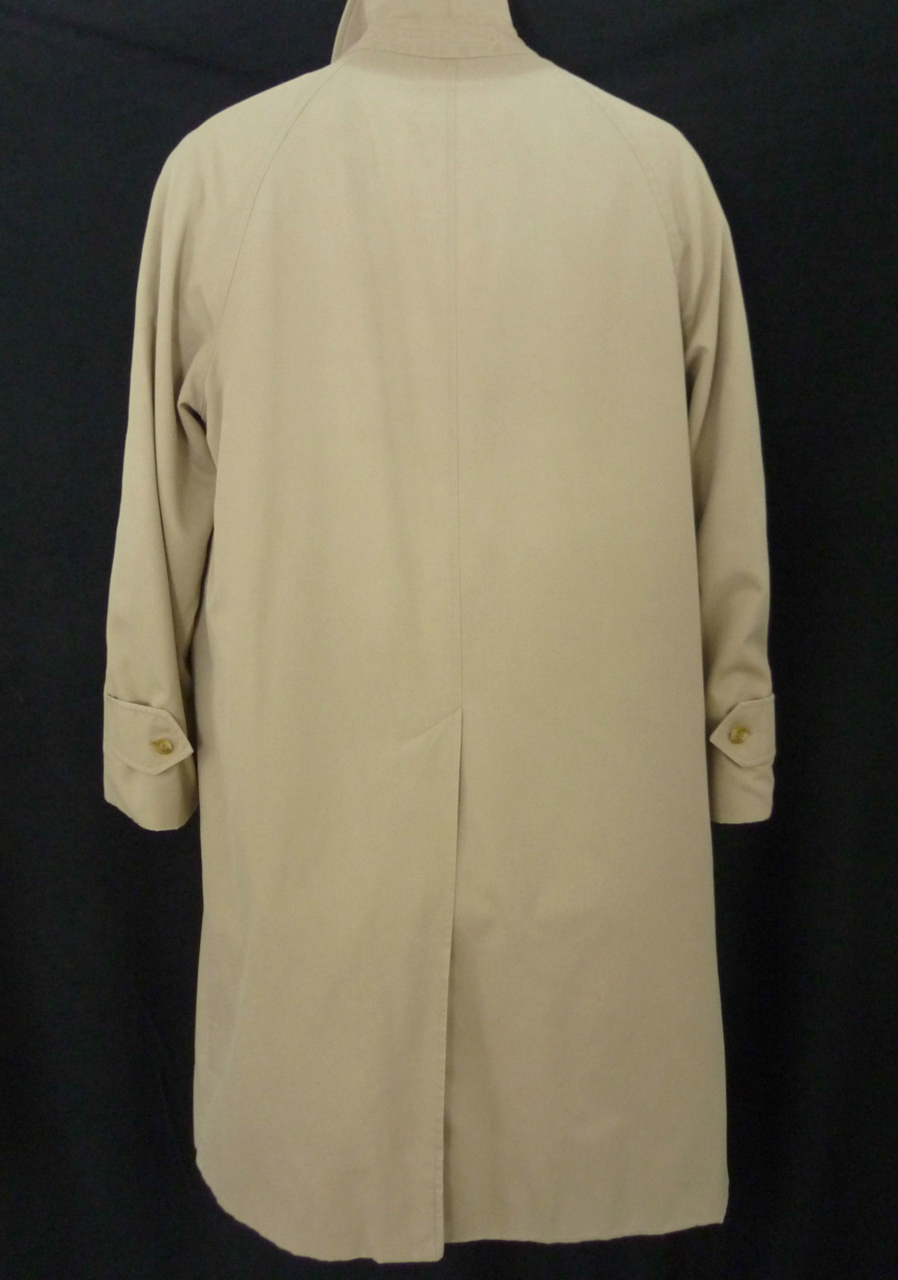
Woollen Balmacaans usually sport a chest canvas for comfort and form, but true rain coats are typically unstructured and very light. Some makers offer belts that hug the waist and guarantee a nice silhouette in any storm. The coat’s name is Gaelic, but the Joneses have shortened it to bal, which also serves as the name of the collar.
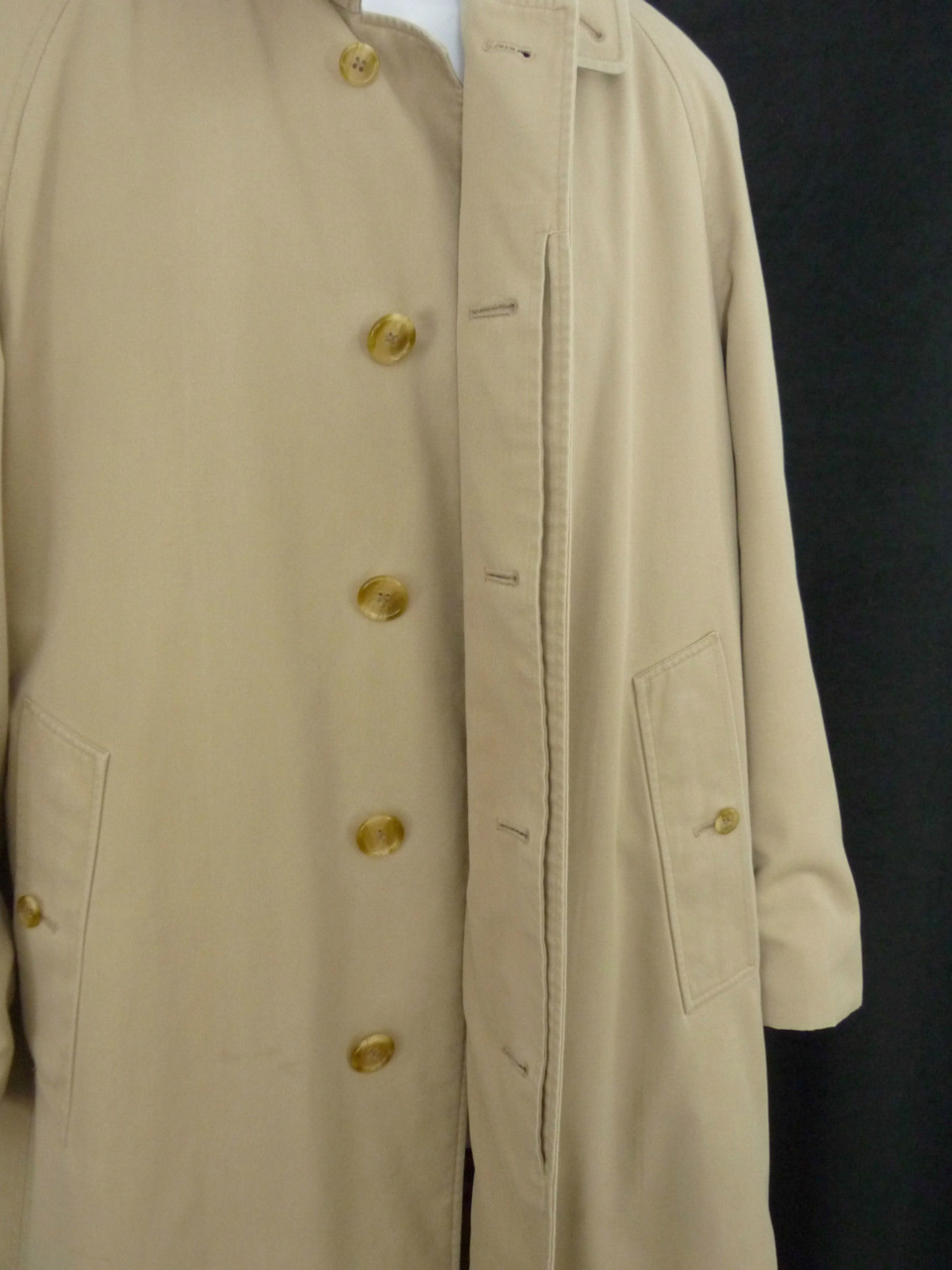
Fly front
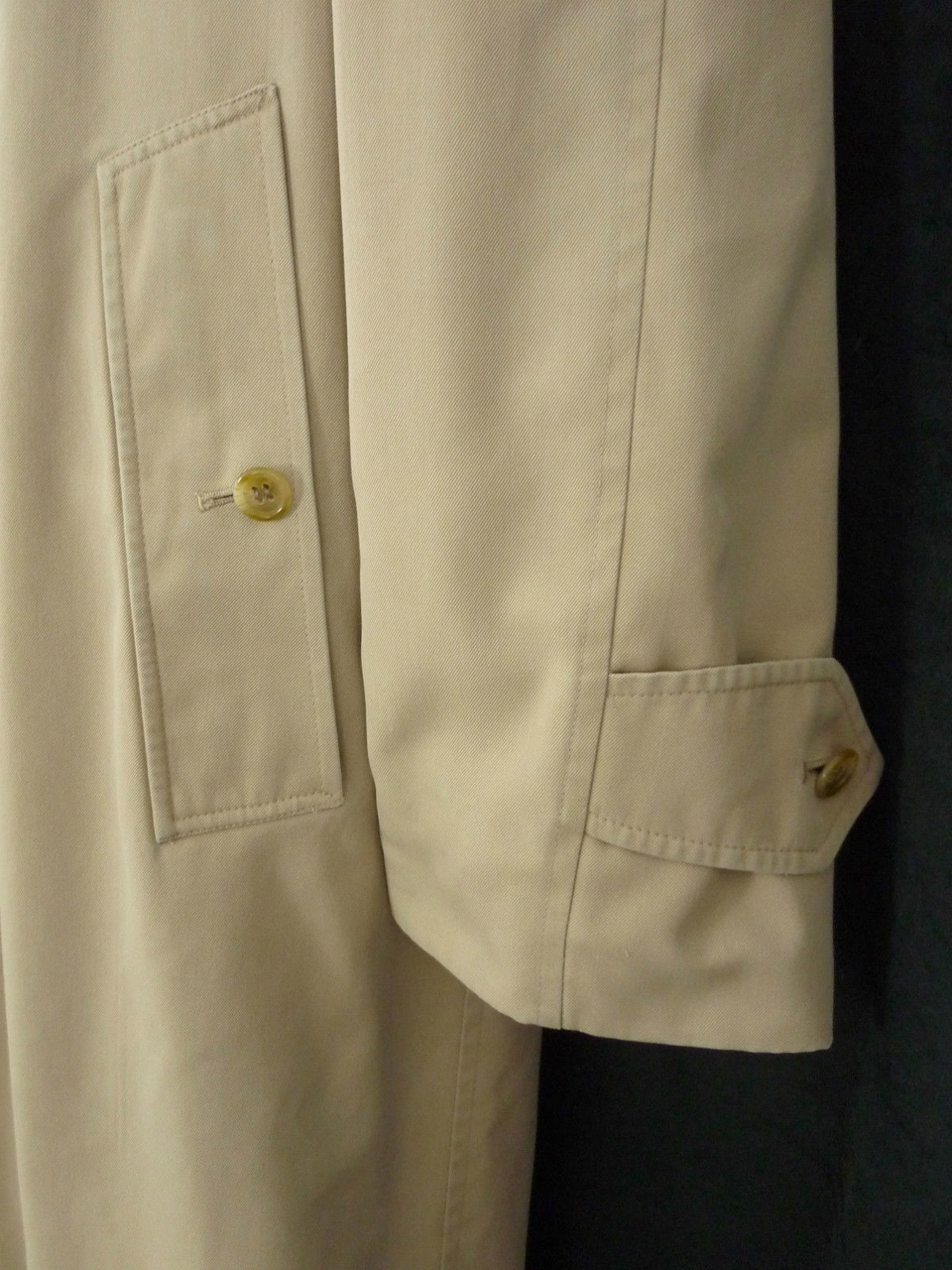
Sleeve straps and hacking pockets with buttons
The word itself is rarely used in 2014 as all rain coats can be handily called rain mac(k)s. This name comes from Charles Macintosh, who developed the very first rubbery rain proof fabrics in the first decades of the 19th century. Still, it’s useful to know the Balmacaan because this model is among the oldest coats still in use. This piece of clothing is simple, eminently functional and timeless proof against all climates. It can be made from any fabric, which guarantees nearly endless variation. As long as one wants protection in style, the humble Balmacaan is topical.
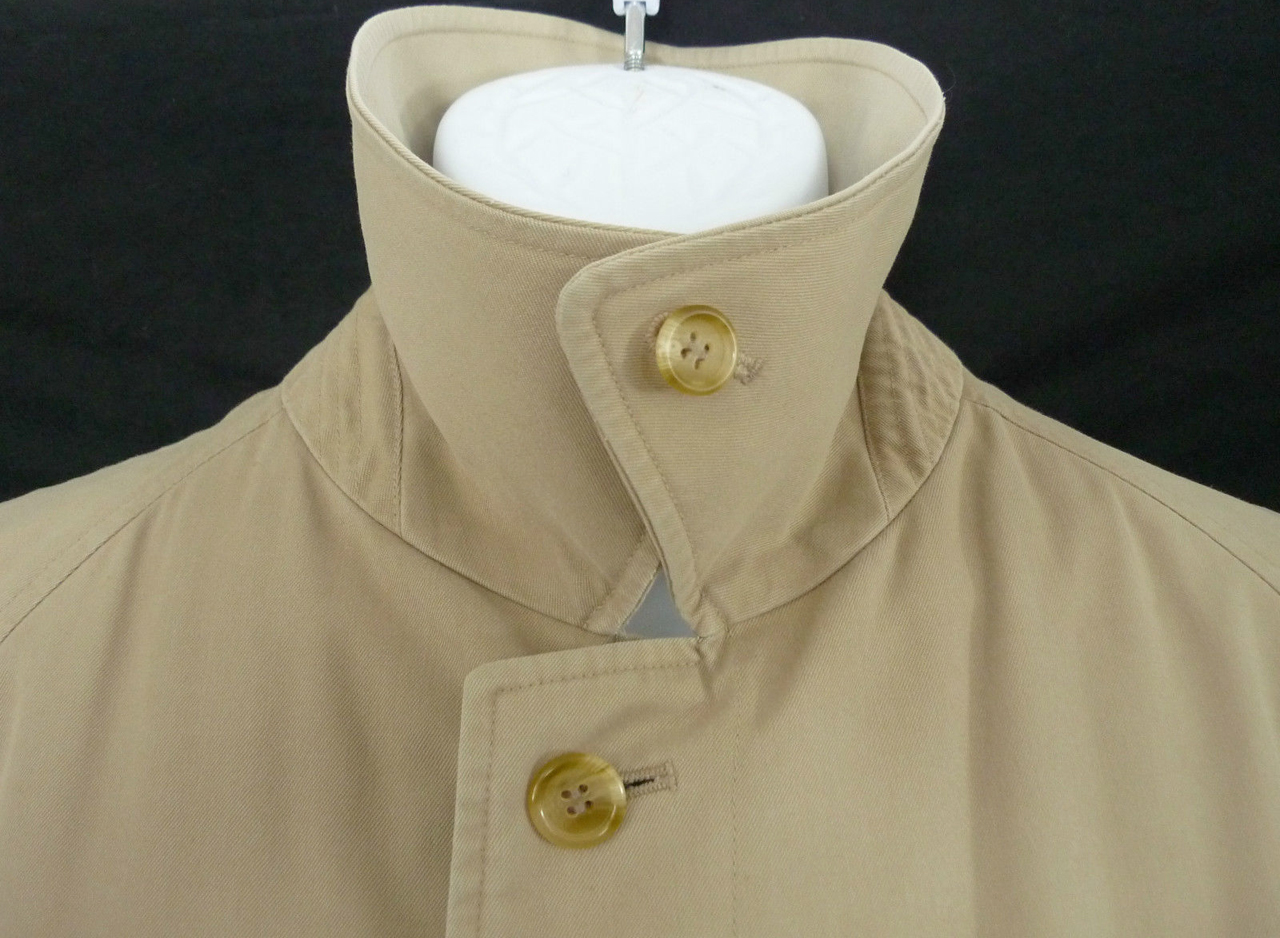
The bal collar in its element
Photos: original uploaders
Category Coats
Douglas Fairbanks, Jr. in Vogue
0June 27, 2014 by Ville Raivio
“Mr. Fairbanks’s eye for strong, but un-obvious combinations of colour was apparent in his clear-blue shirt striped and collared in white, canary-yellow wide tie, teal-blue and magenta sari-silk pocket handkerchief, and red carnation in the lapel of his slate-grey suit.
* * *
[Says Fairbanks:] ‘The most important thing is that the suit be well cut. Then it needn’t be particularly new or even particularly well pressed. It will always hang properly. I make my suits last for years. The other day, I took one that’s, oh, eight years old, in to be altered — have the lapels narrowed and the trousers taken in. I go to Stovel&Mason in Old Burlington Street where I’ve trained the cutter to what I like, and he never commits the classic fault of London tailors — leaving too much fullness in the seat of the trousers.
For sports things, I go to Huntsman, in Savile Row, but in any case I’m rather conservative about suits. Being an actor, I plan my clothes rather more. No one in public life can afford to overstep. One has a responsibility, and before I get anything new, I brood about it, try it out on my wife and daughters, and perhaps on someone in the Club. Once the suit is settled, then the only thing is shoes and linen. I usually wear proper shoes except when I’m travelling, then I wear [polished tan loafers] because they’re so comfortable on planes. Otherwise, I go to Maxwell’s in Dover Street, and I always have shoes with elastic sides. I’ve been having them made since shortly after the war, and I don’t even own any lace-ups any longer.
I suppose I spend more on shirts than on anything else, and I’m not so conservative about them. Mainly they’re from Turnbull&Asser. Beyond Turnbull, I go, oh, all over. I might buy something at Sulka here, in Paris at Charvet. I would rather buy in London than any place, though, because London is to men what Paris is to women. It’s a town that’s set up for it. You find a variety. In Rome or Paris or New York there are two or three top tailors or shirtmakers; in London there are fifty-two all over the joint. I never buy ties because I have so many. The other day a man came up to me and said, “You’re really right up to the minute, wearing a wide tie.” I said, “No, I’ve had this one since 1932″.
When it comes to combinations of patters and colours, my wife tells me that I run to reds and blues, but I assure you that it’s not conscious. I do like blues, and yellows, but not beige or tan. Combining the patters and colours is simply a question of getting a contrast. With a striped suit, I wouldn’t wear a striped shirt. With a striped shirt I would wear a plain woven tie in a much deeper or brighter colour. The thing to keep in mind really is that the shirt, tie, and suit can’t look all the same in colour or scale of pattern, and, of course, not to be self-conscious about combinations. The one thing that I am especially conscious of is combining ties and pocket handkerchiefs. I avoid matching them at all costs. The pocket handkerchief should be coloured and patterned, but not matching the tie. Better to have it related, or even entirely unrelated, so long as they don’t look wrong together.'”
~ D.F. Jr. in Vogue, August 15, 1966
Category Reading, Style Icons
The truth that sets him free
0June 26, 2014 by Ville Raivio
“Like most men, I dress to please myself. For any heterosexual male this is inextricably linked with the ability to attract the fairer sex. And women — even if they know nothing about single-button fishtail cuffs or matched pocket jettings — have an incredible eye for proportion. That is because genetically encoded in them is the ability to quickly identify the fittest mates through unconscious rapid calculation to seek perfection in proportions between breadth of shoulder, chest relative to waist, and length of leg relative to torso. In every instance, when donning one of my bespoke garments, the collective reaction of the female audience was one of arched eyebrow puzzlement. The words ‘This is our house style, sir’ rang in my ears, to which the retort, ‘Your house style should be adopted as a way to preserve male virginity forever,’ formed on my lips.
In comparison, slipping on a Tom Ford blazer literally made the formerly insouciant ladyfolk go weak in the knees and their pink parts behave like frightened puffer fish.”
~ Wei Koh in The Rake, issue 10, volume 4
Category Eccentricities, Quotations
The Parisian lapel
2June 26, 2014 by Ville Raivio
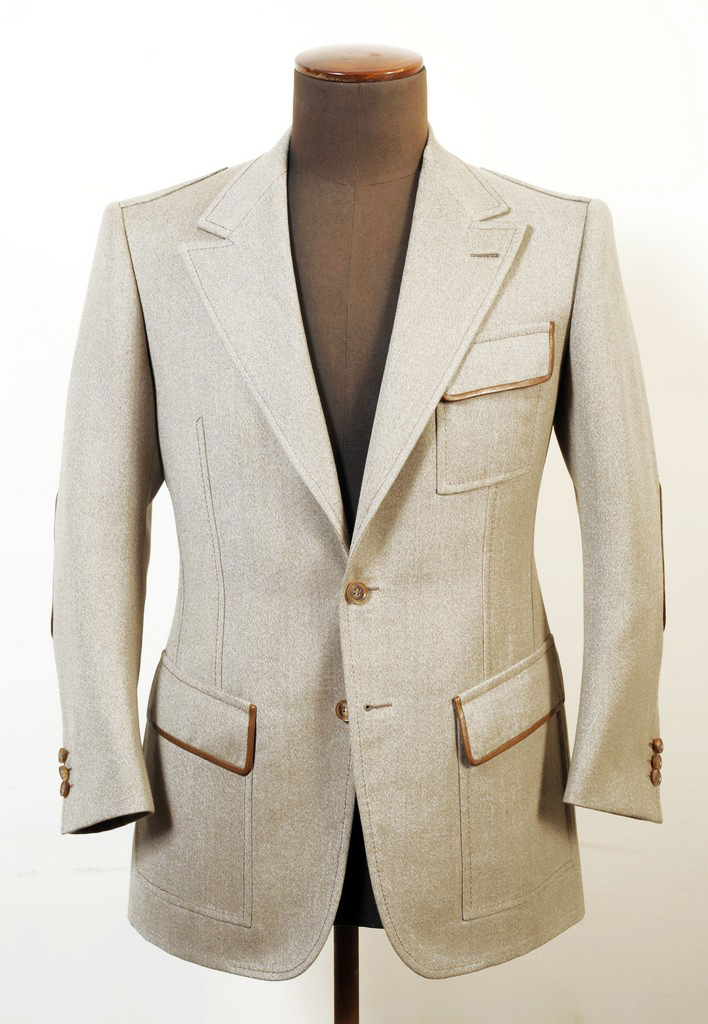
As cut by Cifonelli
It is debatable whether Cifonelli’s sharp and angular notch model can be termed as Parisian; theirs is a notch not as sharp or deep as the likes of CdL and Smalto’s. The Parisian designer Marc Guyot has also favoured Parisian lapels in his readymade and made to measure jackets, though the points are shorter still. The late but not forgotten Arnys offered Parisian models for the discerning few, with an upwards-pointing and short gorge. André Guillerme-Guilson, David Diagne and Marc di Fiore cut Parisian lapels with somewhat thinner collars. Wicket offers yet another, slim Parisian lapel in their moderately-priced readymade range. In formality, the Parisian lapel centres somewhere between the peak and notch lapel — perhaps not in best use in white or black tie.
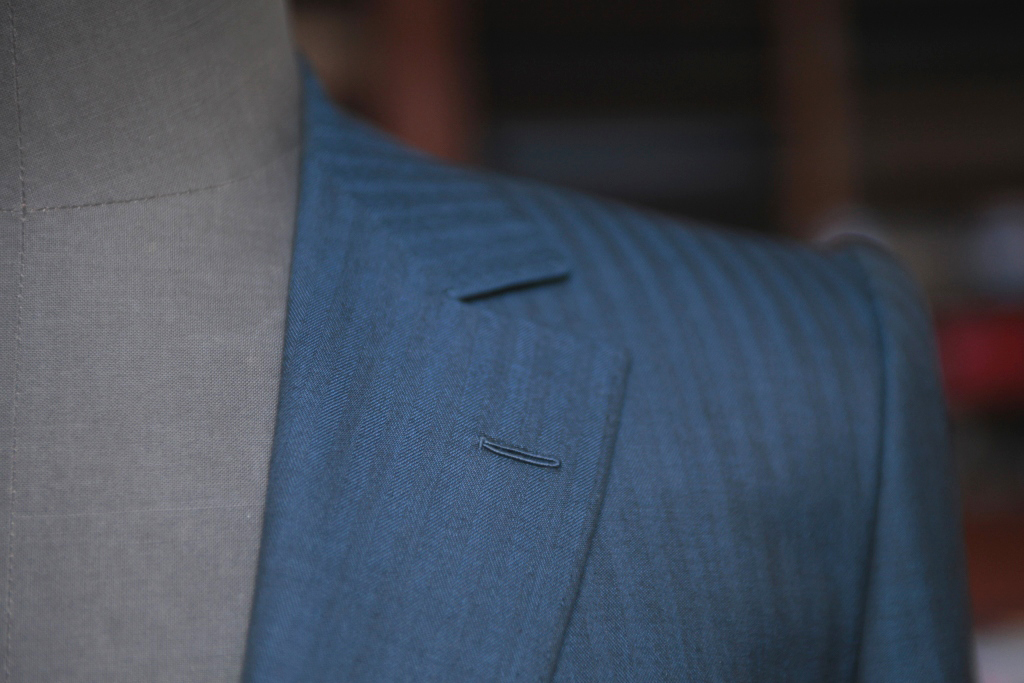
The CdL look
While the notch lapel, peak lapel, shawl lapel and throat latch lapel are more or less seen in films, advertisements and the media, the Parisian lapel is a rare sight outside of France. French tailoring houses have clients all over the world, though; once the reader has seen and read of le cran Parisien, he is likely to recognise one. I have never seen the detail offered by non-French manufacturers or tailors, but I’m sure there’s a few to go around. Please let me know of them in the comments or by email, and I will update this title accordingly. The Parisian lapel is still as beautiful as it was in the ’50s, and a uniquely French touch.
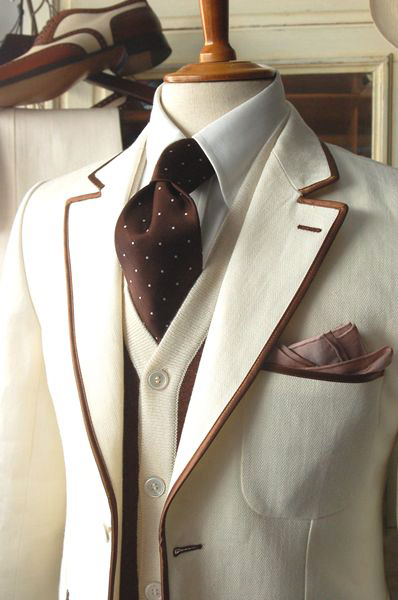
Guyot styling
With the kind assistance of Julien de Luca and Julien Scavini.
Photos: Marc Guyot, Cifonelli, Camps de Luca
Category French style, Jackets, Suits
Copyright © 2013 Ville Raivio