Interview with Lasse Ellingsen from Norskegentlemen.com
0August 23, 2014 by Ville Raivio
VR: Your age and occupation?
LE: I’m 23 and married to the most beautiful woman in the world!
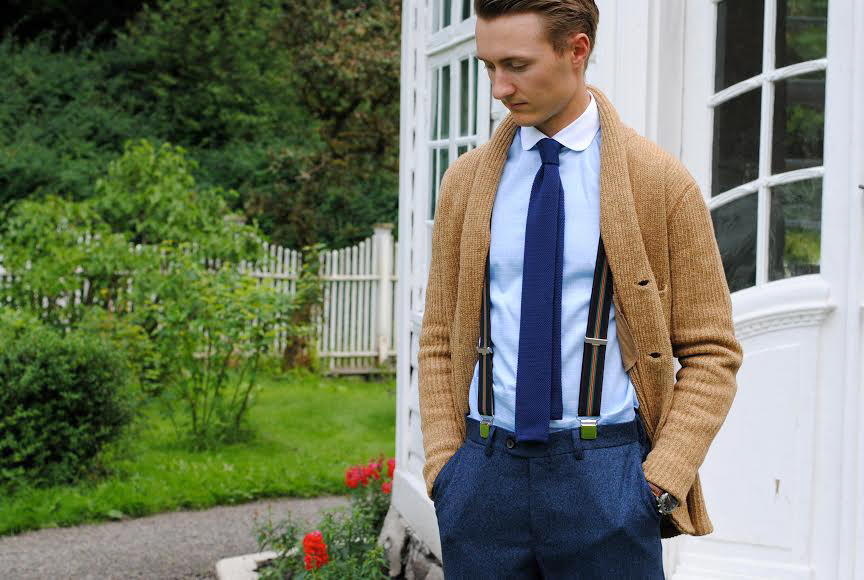
VR: Your educational background?
LE: I have no official degree and high school is my highest education. This is because I’m working with sales and have no need for any bachelor or master.
VR: Have you any children or girlfriend (and how do they relate to your style enthusiasm)?
LE: My wife likes that I’m into fashion, because she doesn’t mind that her husband looks and acts like a Gentleman. However, sometimes she gets a little tired with my interest in fashion because she thinks some of the trends are over the top, and I like to shop more than her. For me, men’s fashion is a hobby, while she thinks it’s nothing but clothes. I can’t see any problem with having 5 different suits, since they are all in different styles and colors. She thinks one’s enough ;-)
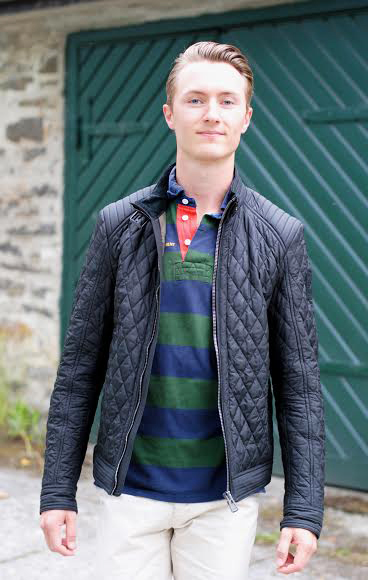
VR: …and your parent’s and siblings’ reactions back when you were younger?
LE: My parents have always dressed me in nice clothes and think it’s important to dress appropriate. My father was always wearing a suit, so for me and them it’s been natural to be more interested in fashion than other people.
VR: What other hobbies or passions do you have besides apparel?
LE: Besides men’s fashion, I’m crazy about cars and motorsports. BMW and Porsche are brands that lay close to my heart. Fun fact: I drive a blue 2007 BMW Z4 Coupé and I drove it on the Nuremberg in Germany this summer.
VR: How did you first become interested in clothes, and when did you turn your eyes towards the classics? Why these instead of fashion?
LE: Besides that I’ve always liked to dress appropriate, my interest in men’s fashion had a kick start some years ago when I started in sales. I had to dress professional, but I didn’t want to look like typical “white collar”. Because of this, I started to read different overseas blogs about men’s fashion and developed an interest in clothes.As you can understand, I’ve been raised to dress and act presentably — the swag/hipster-style doesn’t appeal to me. I mean, style is subjective and you dress the way you feel so it’s more natural for me to wear a suit than the latest Justin Bieber-fashion.
VR: How have you gathered your knowledge of clothing — from books, in-house training, workshops or somewhere else?
LE: I’ve gathered knowledge and inspiration mainly from blogs all over the world. I also like to talk to people, so whenever I’m shopping, I really like to talk to the retailer about their personal style and the latest products.
VR: When was Norske Gentlemen founded and what goals did you have in mind back then? How has the site been received?
LE: NorskeGentlemen.com was founded in October 2013. I’ve always been trash-talking about the “pink-bloggers” (a Norwegian expression) who are blogging about their life and fashion. So I never thought that I would someday have my own blog. But people have been giving me compliments about my way of dressing, and have encouraged me to start a blog so that I can inspire other people as well.
So my vision with the blog is to inspire men all over the world to dress better. Even though you are already deep into men’s fashion or just want to look at some cool clothes, I´m sure you’ll find something inspiring on NorskeGentlemen.com.
VR: How would you describe your own dress? Which RTW makers or tailors do you favour?
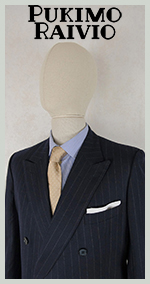
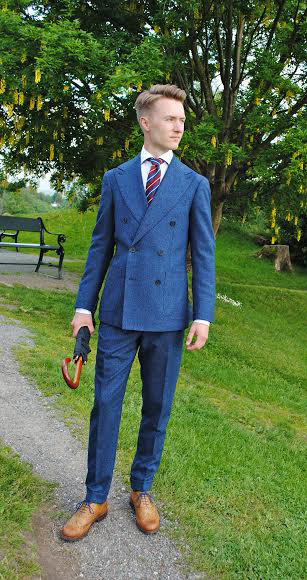
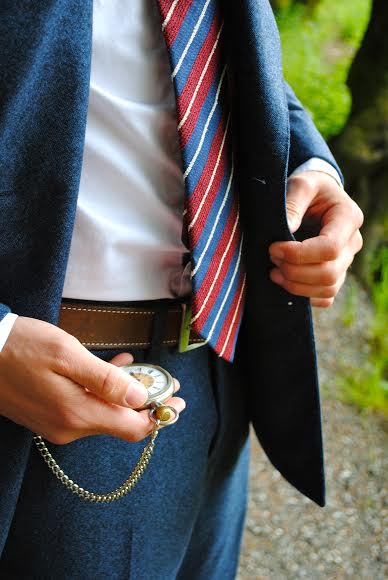
LE: I would describe my own style as classical. I love to wear double-breasted suits, wingtips, braces and a hat. I don’t do that every day, so if you meet me on the street you’ll probably see me in my monk shoes, chinos and a blazer. In my everyday-outfits, it’s important to dress practically as well as stylishly.I really like brands like SuitSupply and Morris. Their collections and style appeal to me, and I’m pretty sure I could wear anything they have.
VR: Who or what inspires you?
LE: My nr.1 inspiration is www.TSBmen.com. I love Dan and the team’s personal style, and the work they do. A lot of people inspire me, like Khaled Nasr, DanielRe (on Instagram) and Angel Bespoke.
VR: What is your definition of style?
LE: Style is subjective, either you like it or you don’t.
VR: Finally, how would you describe the style of Norwegian men and businessmen in general?
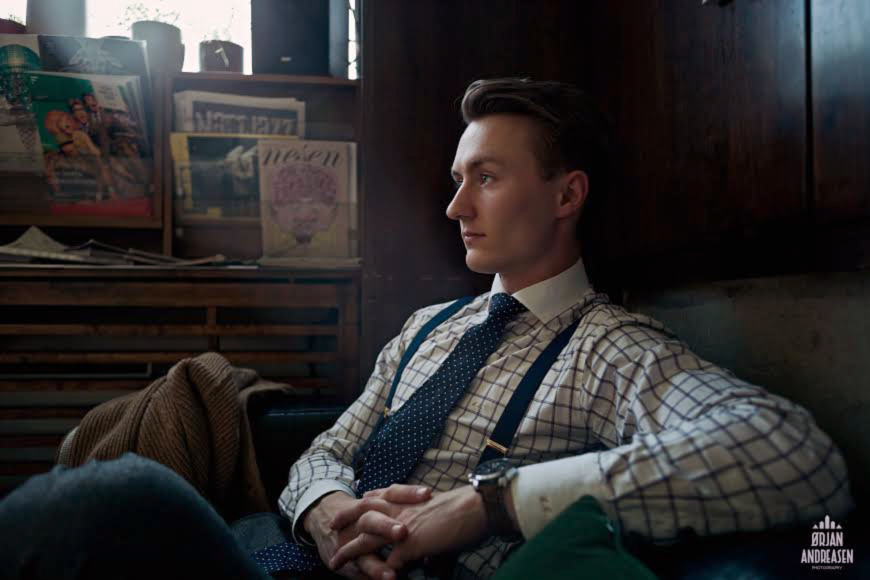
LE: In Norway, we have something called “The Jante law”. I´m not sure if you’re familiar with it, but basically it says that you should not think that you are better or greater than someone else. I think this affects the way we dress, which results in that people don’t want to stand out. Hopefully my blog can change that, and people will try to experiment with fashion. But don’t get me wrong. There are a lot of great looking Gentlemen all over Norway. And since we have a lot of money over here, many can afford those expensive clothes.
http://www.norskegentlemen.com
Photos: Norskegentlemen.com and Ørjan Andreasen
Category Bloggers, Interviews, Nordic Style
Anatomy of the Valstarino jacket
4August 21, 2014 by Ville Raivio
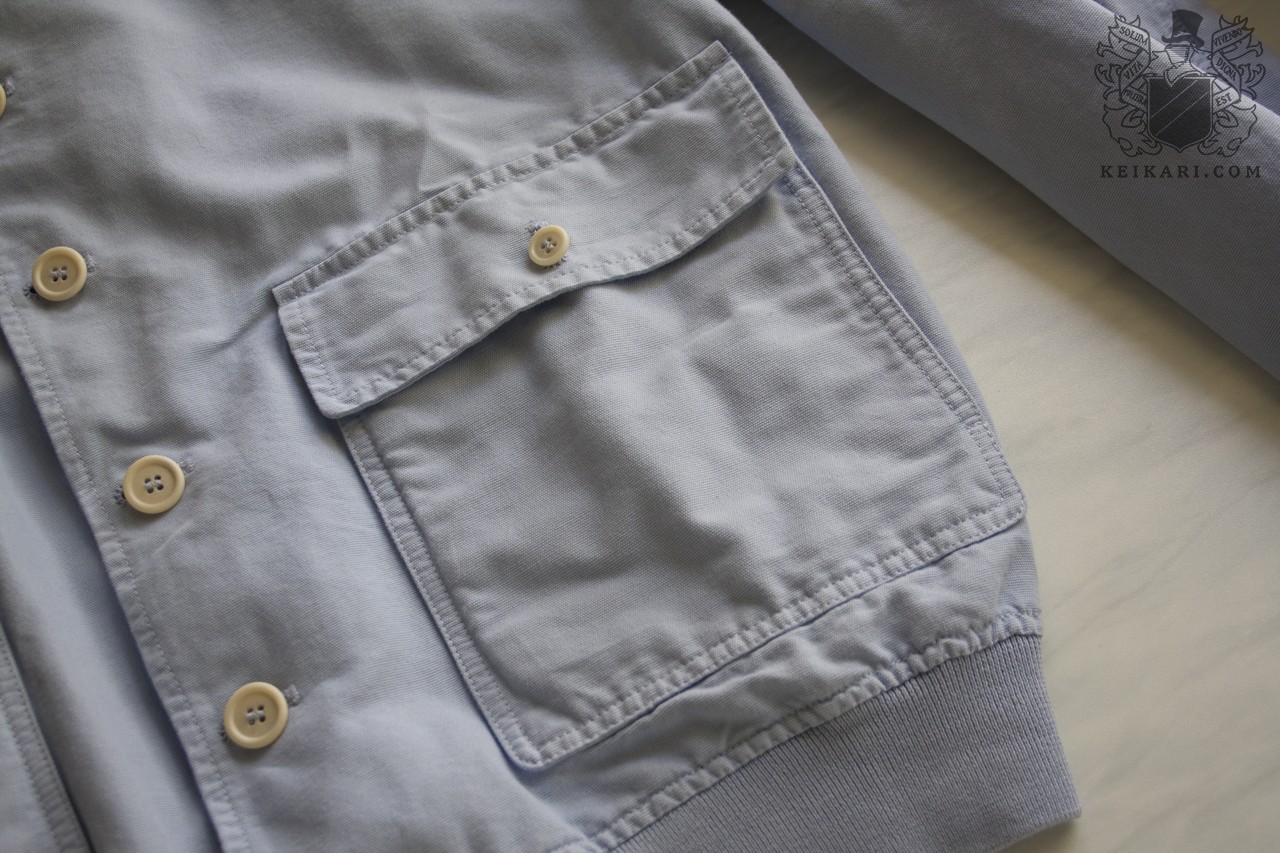
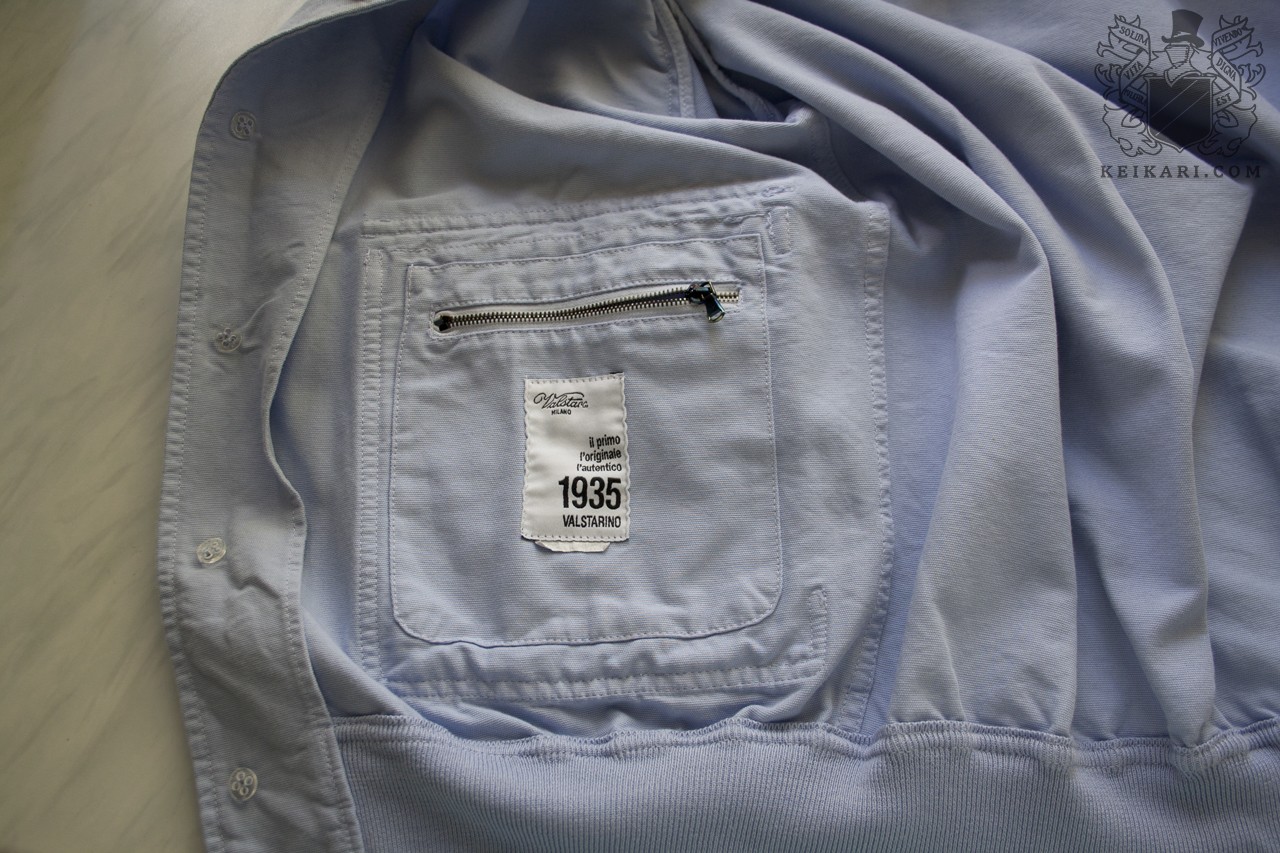
Valstar is an Italian maker with a penchant for outerwear, best known for their A-1 flight jacket version, Valstarino, born in 1935, and first made of leather. In its previous life, the company was English, making very English rainwear in England, and known as English Fashion Waterproof right until 1911. That year the maker moved to Milan, changed names and was born anew as the first Italian rain coat specialist. Obviously they did something right as the Princess of Savoy and the Duke of Ancona granted Valstar their snooty royal warrants in 1939 and 1942. While the old A-1 examples I’ve seen have small hip pockets, Valstar’s Valstarino sports large flapped patch pockets with side entry. Otherwise theirs is a faithful interpretation of a tried-and-true design.
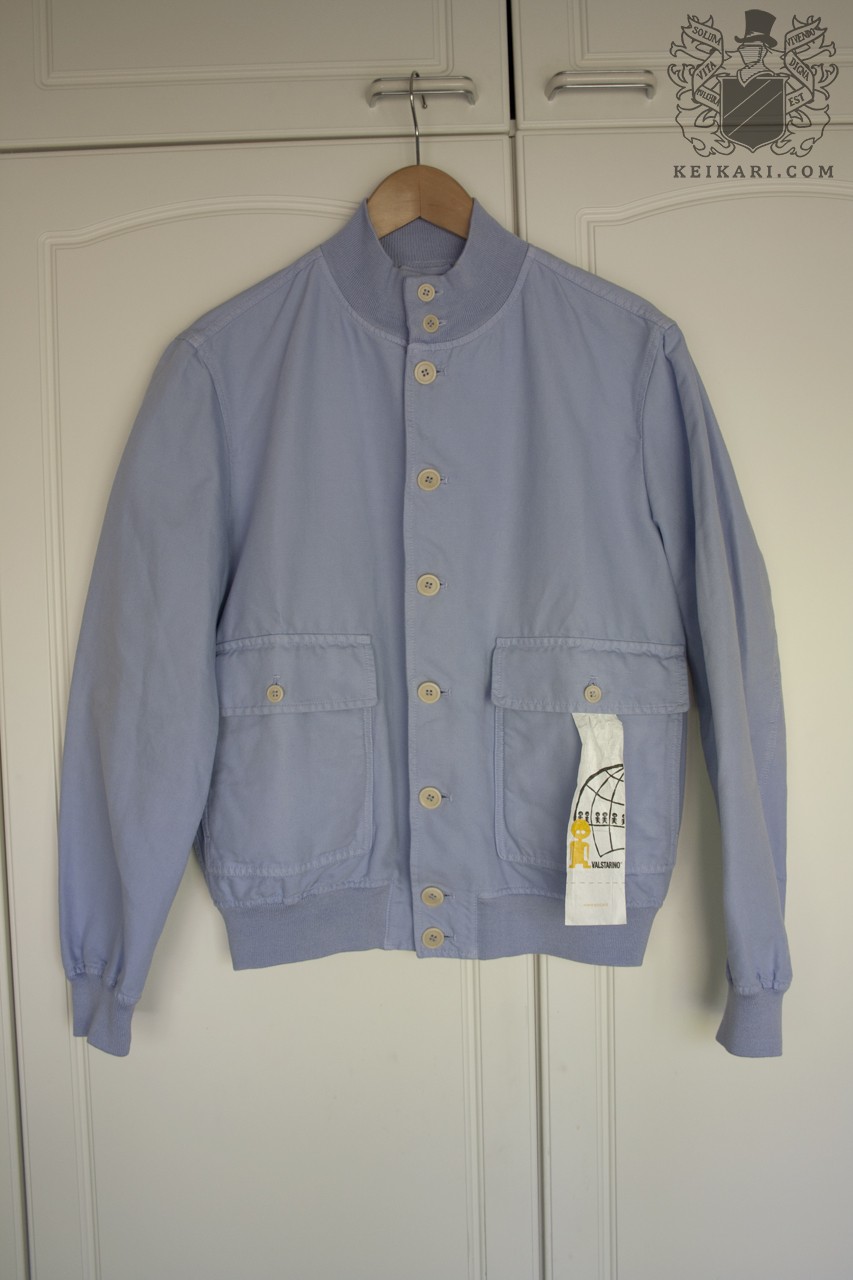
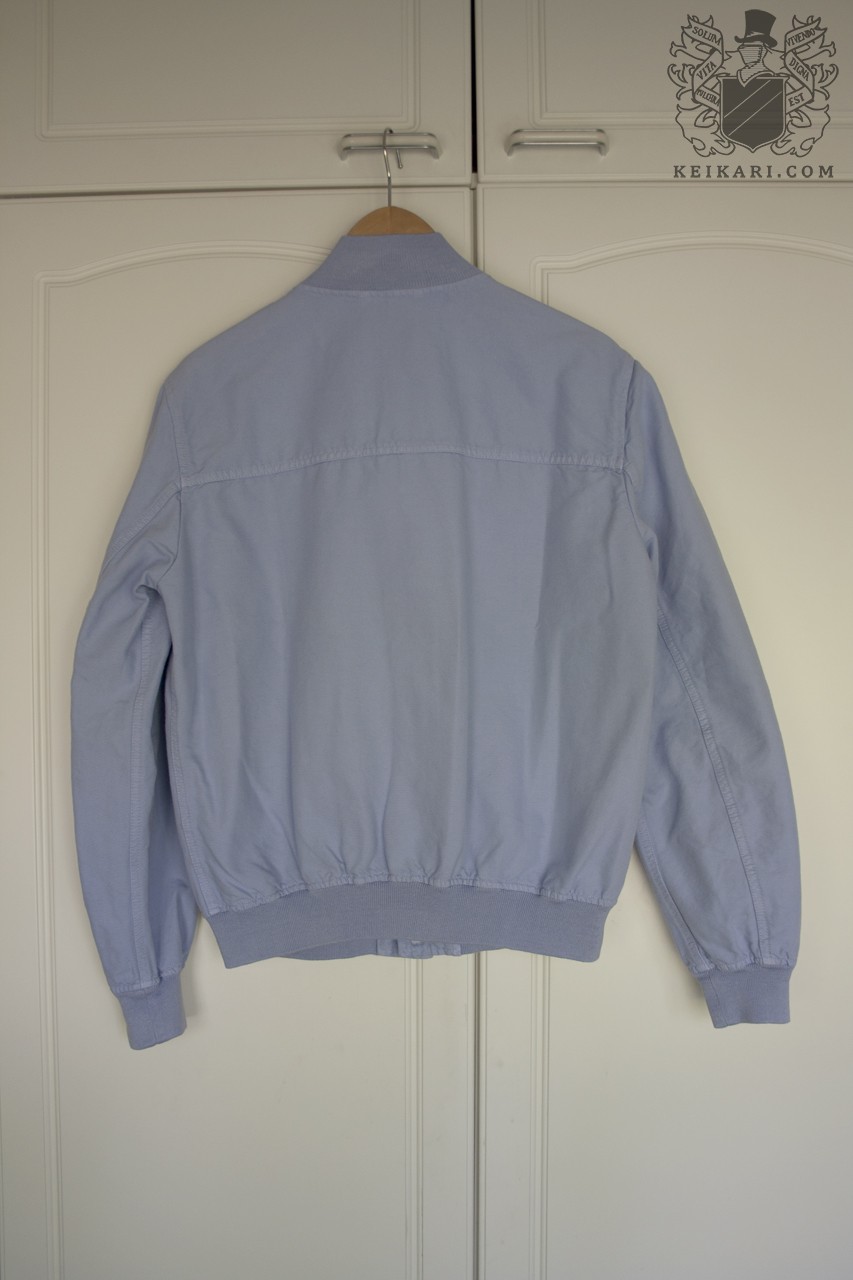
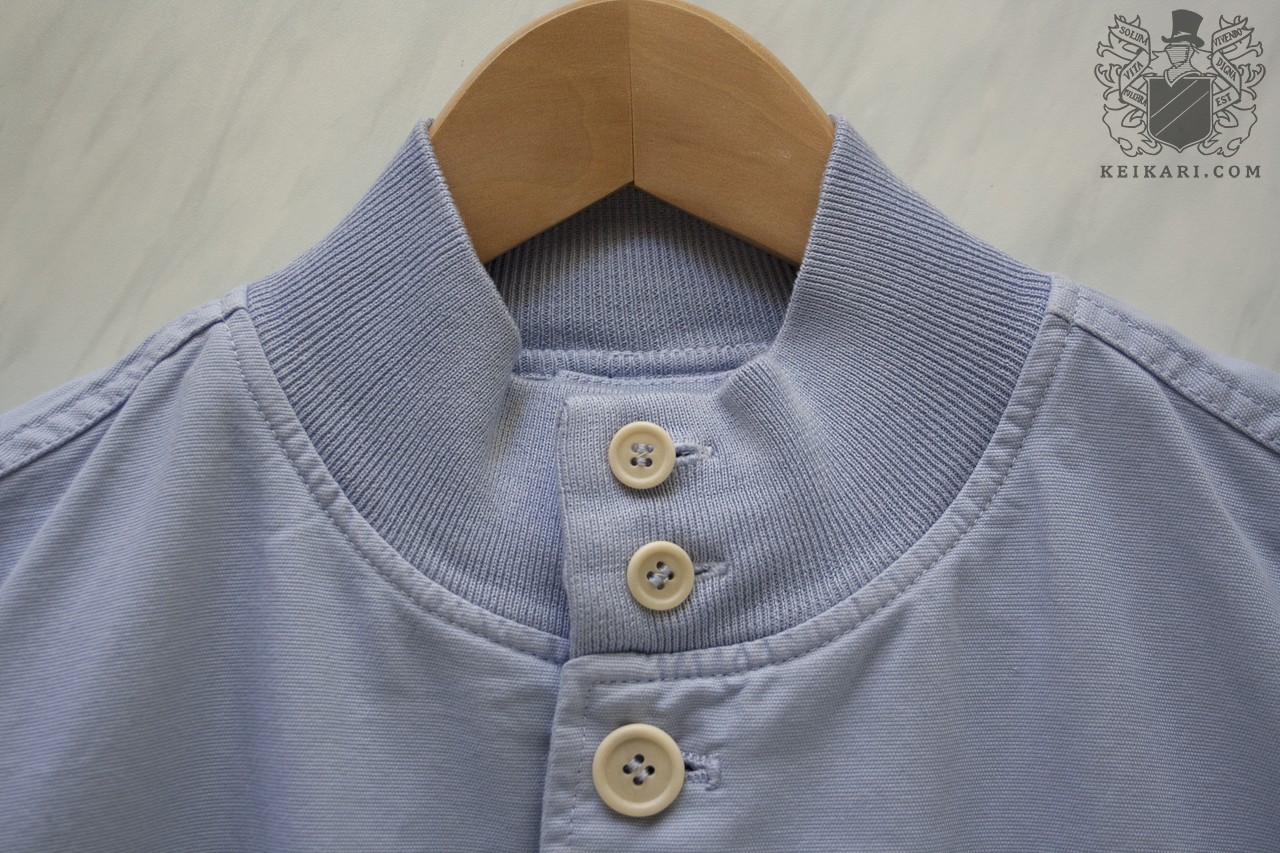
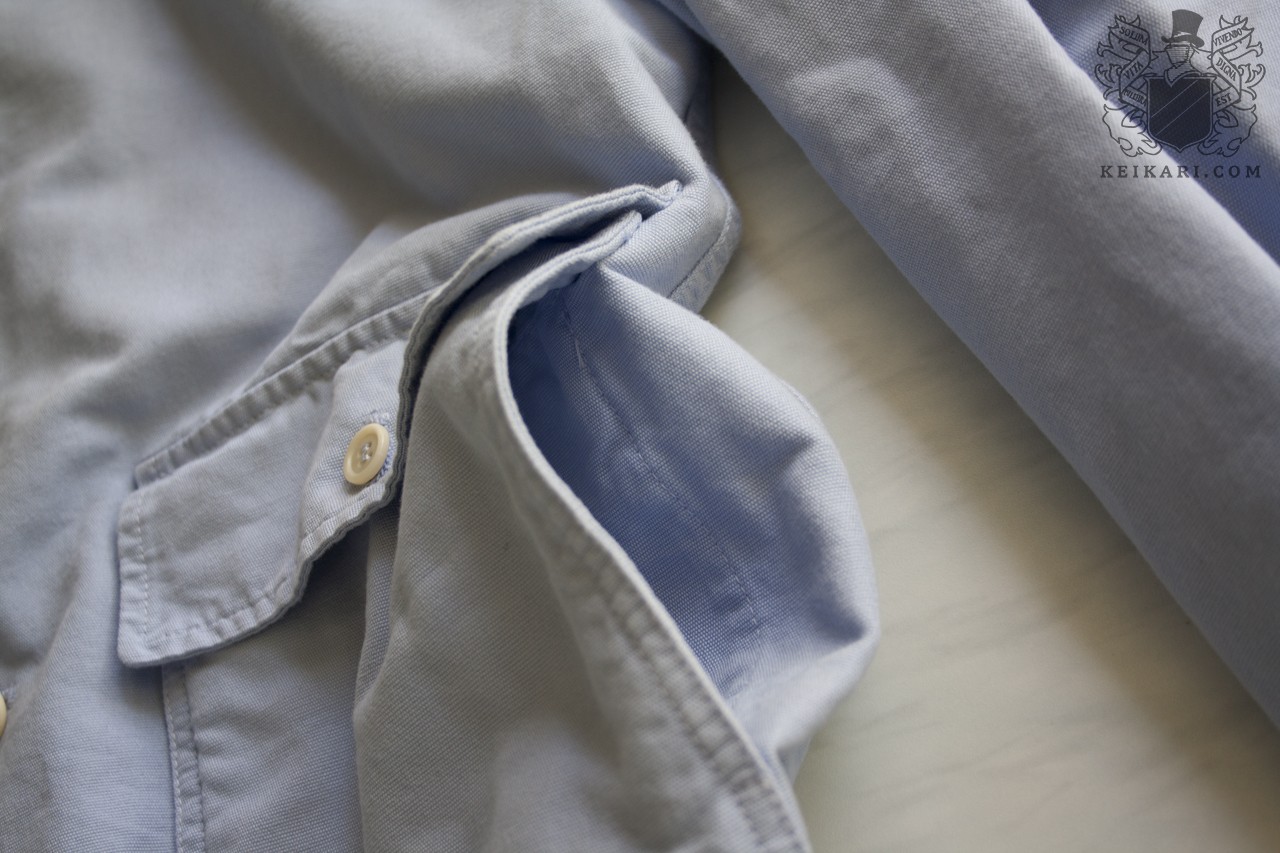
The example Valstarino is made from lavender cotton canvas with no lining, and has the usual A-1 details: button front; patch pockets; knitted stand collar, cuffs and waist; shirt-like construction. The fabric is strong, medium-weight and has no give. The cut is very slim, so much so that I had to size up from 38” to 40”, which never happens. After having tried on five different variations, I must mention that this cut is not standard in all Valstarino jackets, and ease of wear depends on the fabric. While this canvas version and another double-faced gabardine-flannel Valstarino are both slim and drape well, the other three were huge by comparison and bloused all over. The knitted collar, cuffs and waist don’t have much give, and, when coupled with the slimmer cuts, I’m confident to add that the Valstarino will not suit the fat man at all. The hem is short and the jacket best worn with high-waisted trousers. The dry clean only tag won’t please the lazy owner.
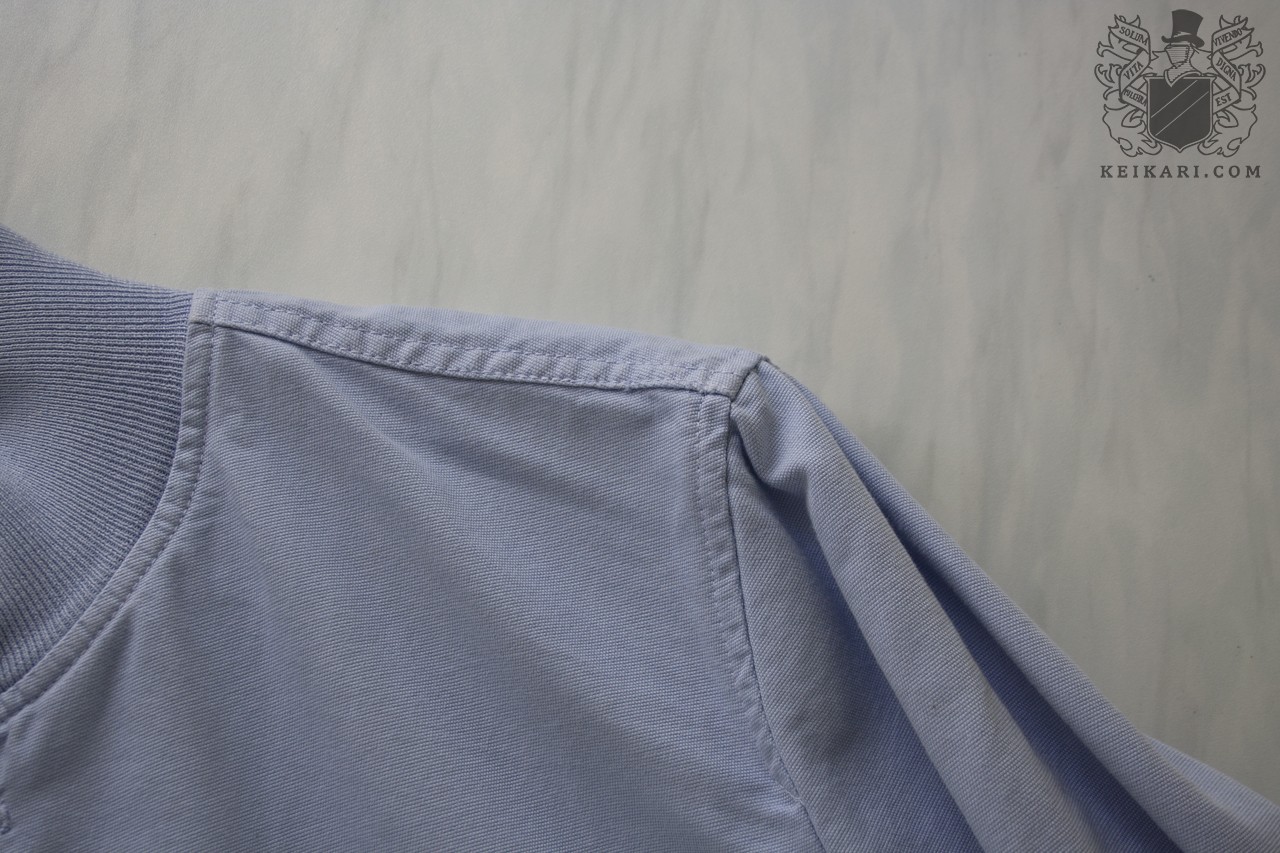
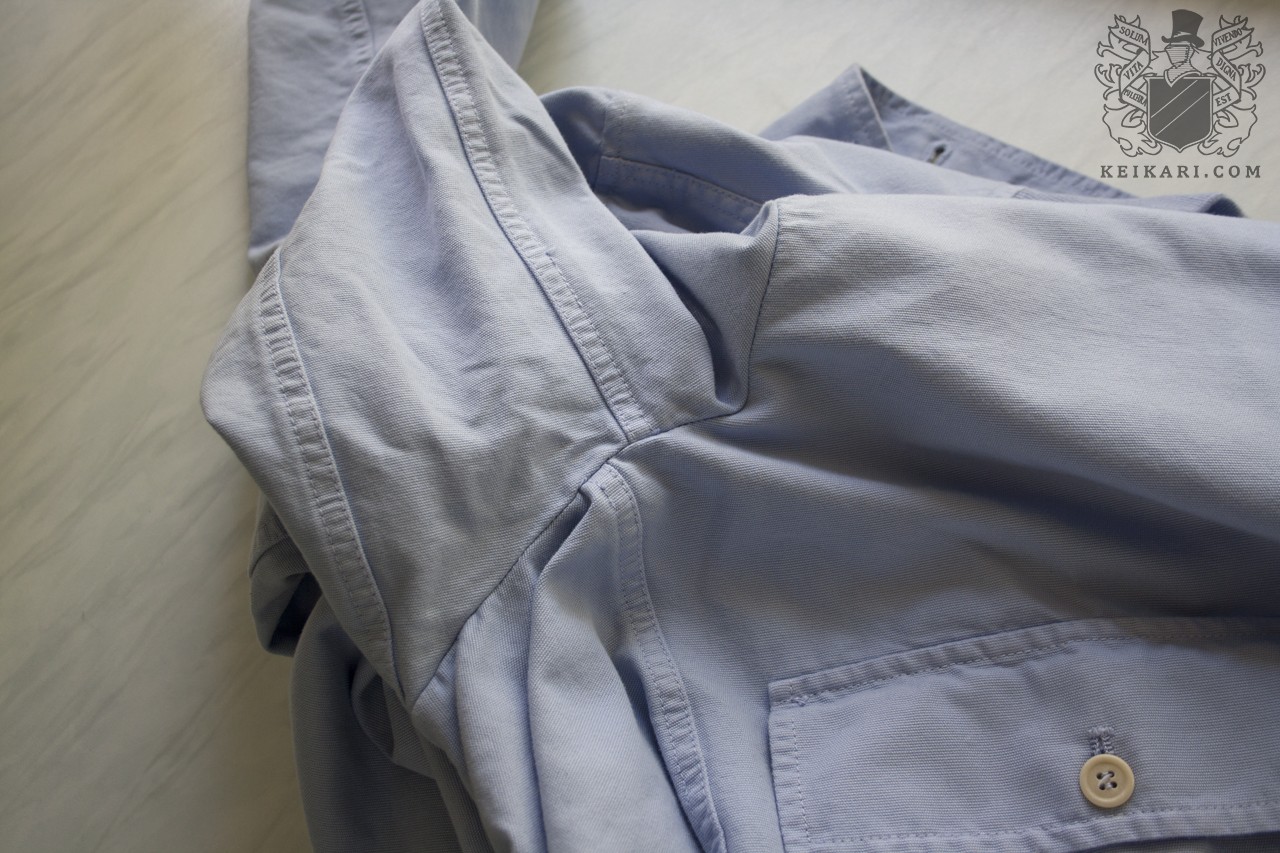
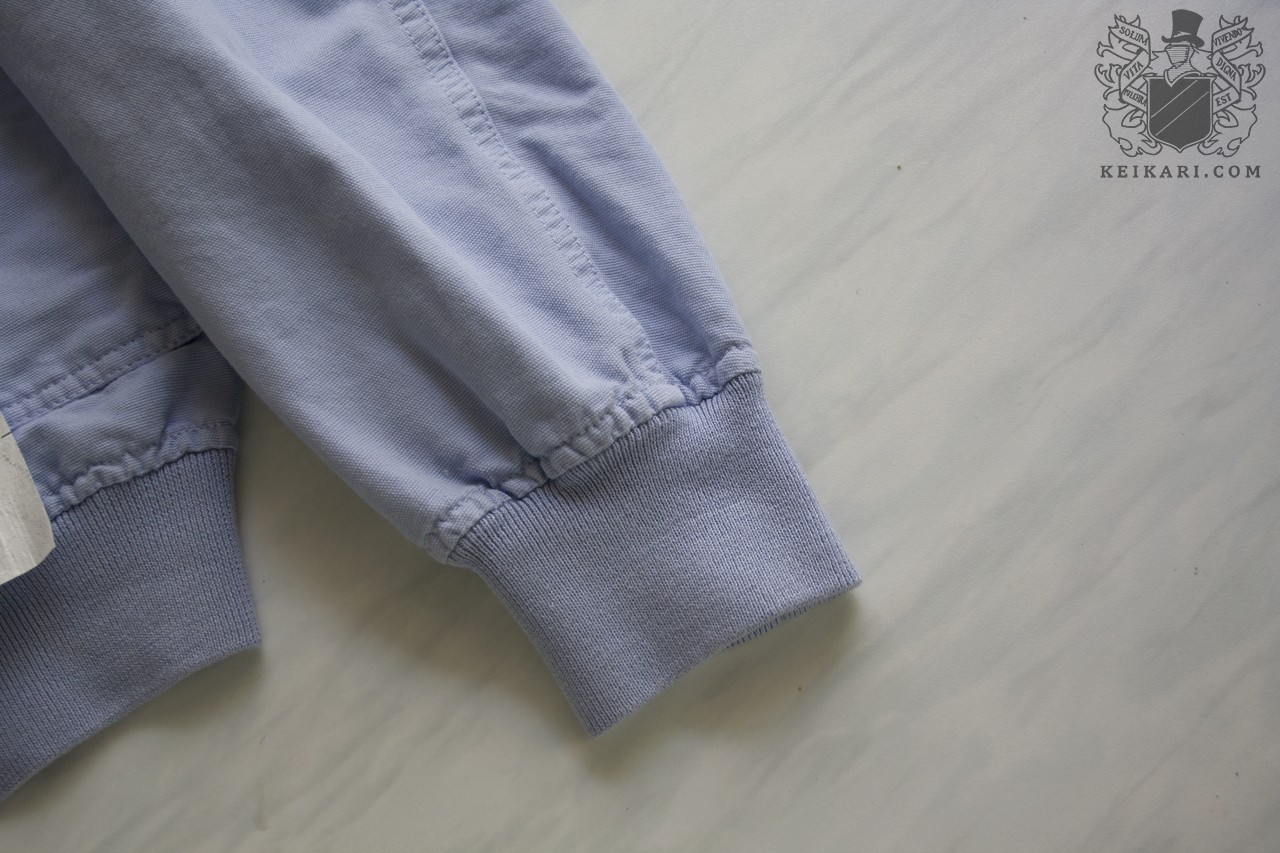
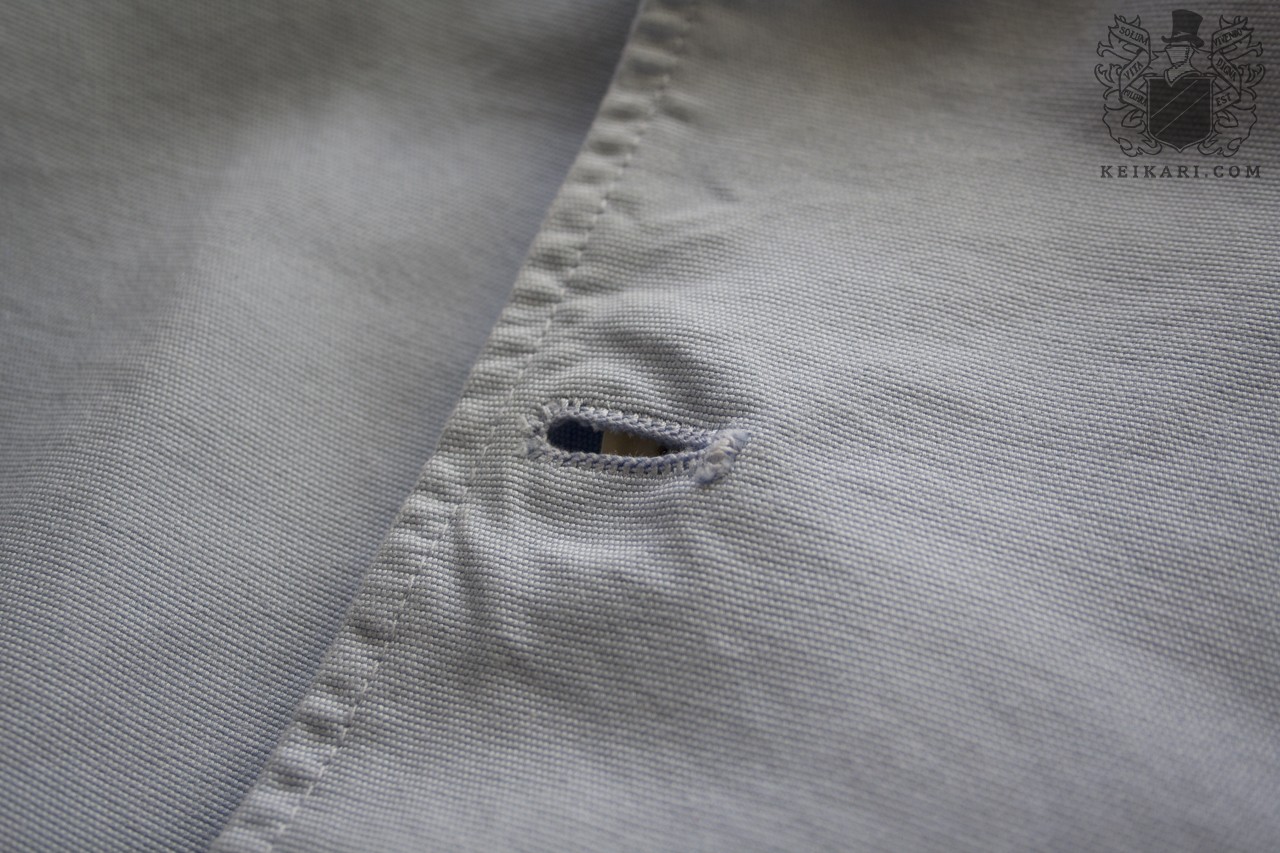
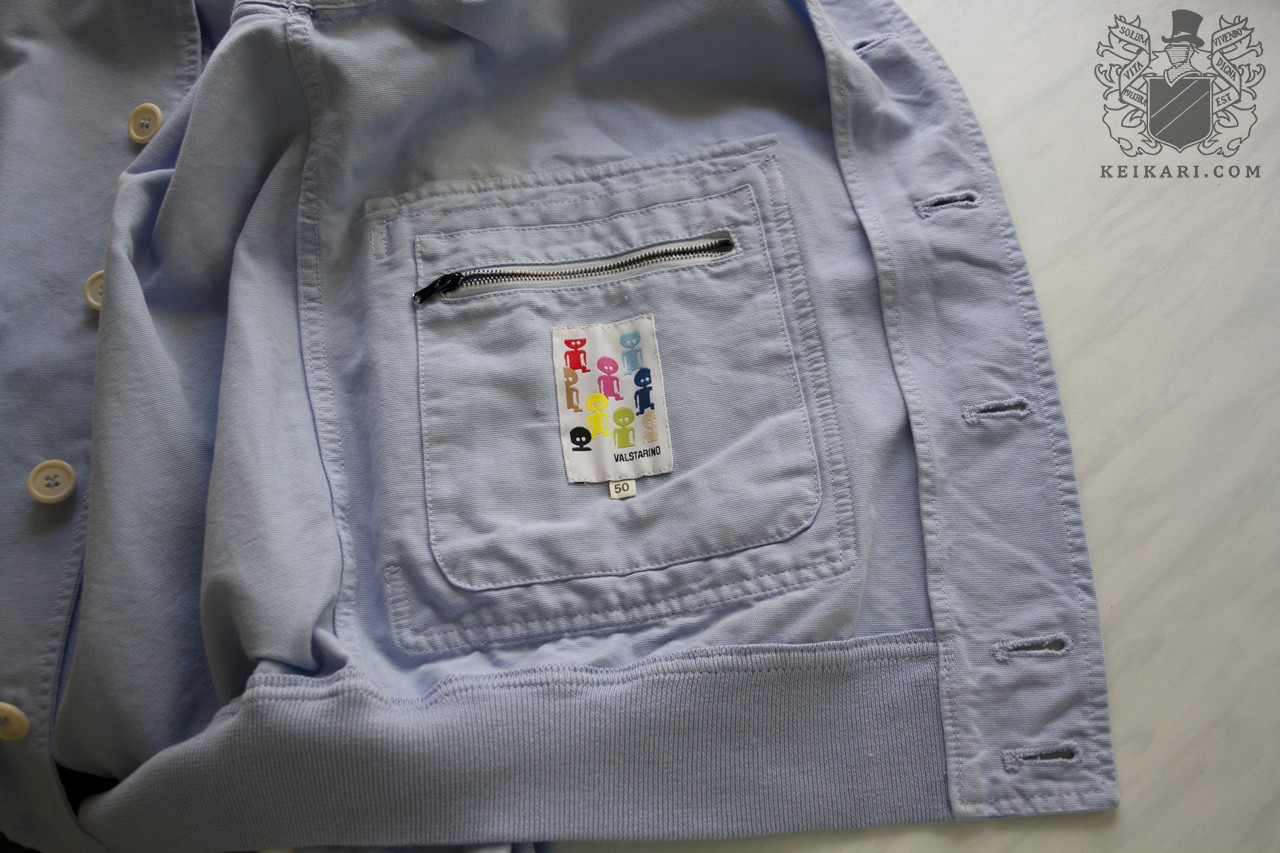
While all of them are straight and even, the jacket is sewn with a coarse, loose stitch that is on the ugly side. All buttonholes have a bit of purl on them, but they, too, are sparse. All buttons are lifeless plastic, attached poorly and droop already. The jacket has two medium-size inner waist pockets with metal zippers and a silly Valstar alien logo on one. A large hanger loop decorates the inner neck. The main interest for me are the large hip pockets, which I adore for looks alone. The button front is slow and cumbersome to use when done up fully, but closing just a few at the middle gives a nice, slouchy look not really accomplished with zipper jackets. Another high point are the sleeves that are cut high and taper to the wrist nicely, guaranteeing comfy use and form-fitting look.
After pondering these great and poor things, I will end by declaring that the Valstarino is one of my favourite short outer layer jackets. The maker offers it in hundreds of fabric and colour combinations, made from leather, suede, cotton, wool, lined, unlined, light, dark, that there really is a Valstarino for every man who fits into the cut. The look is clean enough to be worn with tailored trousers, and not many short outer layer jackets can accomplish the same. The largest, most convenient and affordable selection of Valstarinos can be found from Yoox. My thanks to American WWI materiel designers and Valstar for the jacket that has no peers.
Category Jackets, Quality makers, Reviews, Royal Warrant Holders, Web stores
Balance in men’s clothing
0August 18, 2014 by Ville Raivio
Master tailor Chris Despos and tailoring savant Michael Anton have kindly answered questions of balance in men’s clothing, and the following link leads us back to the early days of style forums for men.
http://www.askandyaboutclothes.com/forum/showthread.php?60268-What-the-heck-is-balance
A stylish interview with Gay Talese
0August 17, 2014 by Ville Raivio
Category Style Icons, Videos, Writers
The P3 eyeglass frames
4August 16, 2014 by Ville Raivio
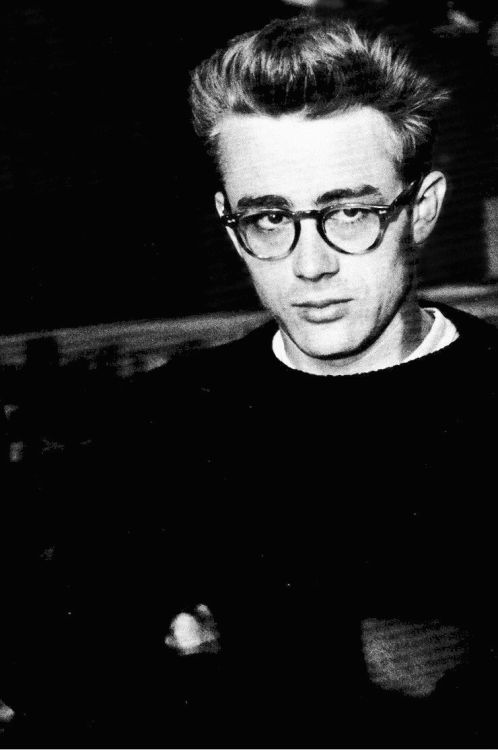
The P3 is a classic frame model shaped somewhere between the terrain of round and oval. In these frames, the bridge is cast or carved as part of the same piece as the frame around glasses. The P3 is not usually wide but it is higher than most frames, and the lower part curves more than the upper one. Both the frame borders and earpieces are thin in this shape, and the model is usually decorated with round metal attachments. The earliest mentions of the P3 in optical publications are dated in the 1930s, and these first versions sported earpieces attached to the middle of the frame along with cushions below the bridge.
Later on, earpieces rose up and were attached to the top piece of the frames and cushions disappeared from many versions. The bridge is usually shaped in the form of a keyhole. The curator of The British Optical Association’s Museum, Neil Handley, tells me that this model got its American name of P3 from the US army. During the Second World War, The U.S. Army Materiel Command distributed frames in this shape to myopic soldiers, and named them dryly.
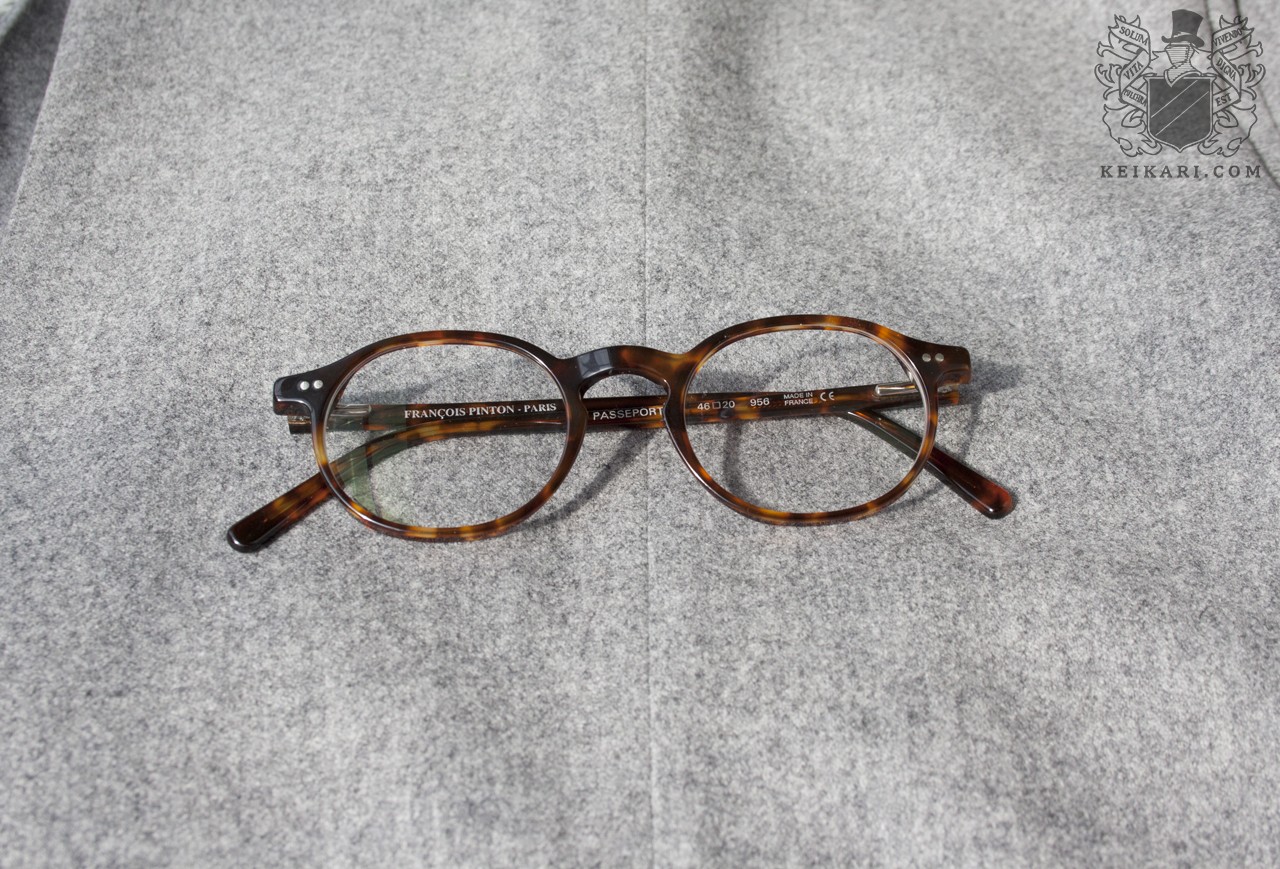
This shape is known as Panto or PRO in Britain, while P3 means the pantoscopic, or meridian, sum where the longitudal and latitudal angles of the lens differ by three millimetres. The meridian of P3 frames in America was during the 1950s to 1960s, when an ever-increasing number of people took a liking to the frames they’d seen on soldiers’ faces, and chose the similar shape on their noses. Another name for the P3 is horn rim frames as this material was most popular before the progress of the plastics industry. A more rarefied material was tortoiseshell, hand-carved for that special artisanal make. Acetate is the most popular one today as horn frames are delicate and turtles shall not be touched anymore.
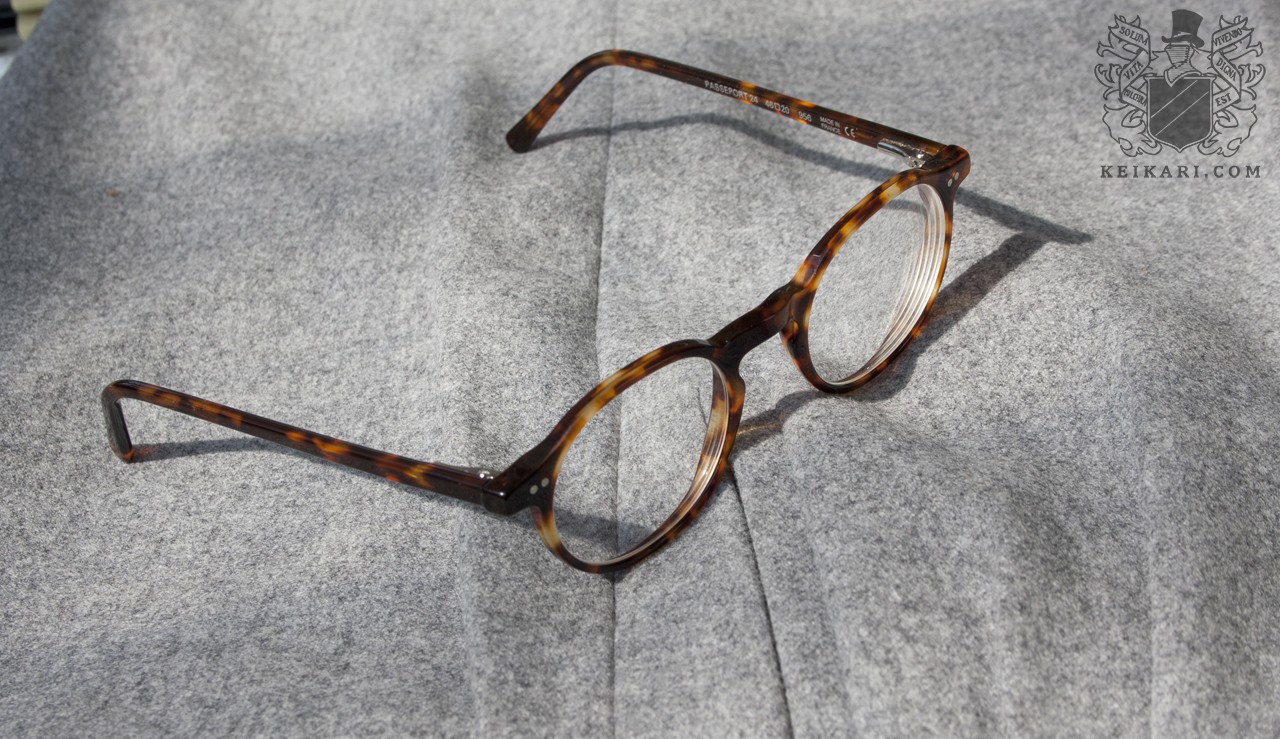
Both horns and tortoiseshells had a natural, beautiful colour alternating in shades of brown that was an important factor in the popularity of P3s, Pantos or PROs. This shape can be made from metals, too, as the shape alone has meaning for this name. Metals in the colour of gold have been more popular than silvery ones. Looking at some choice photos of old, I notice that P3s have been popular on the faces of writers, lawyers, journalists, architects, academics and men of other creative bents. This band of brothers also includes some discerning politicians.
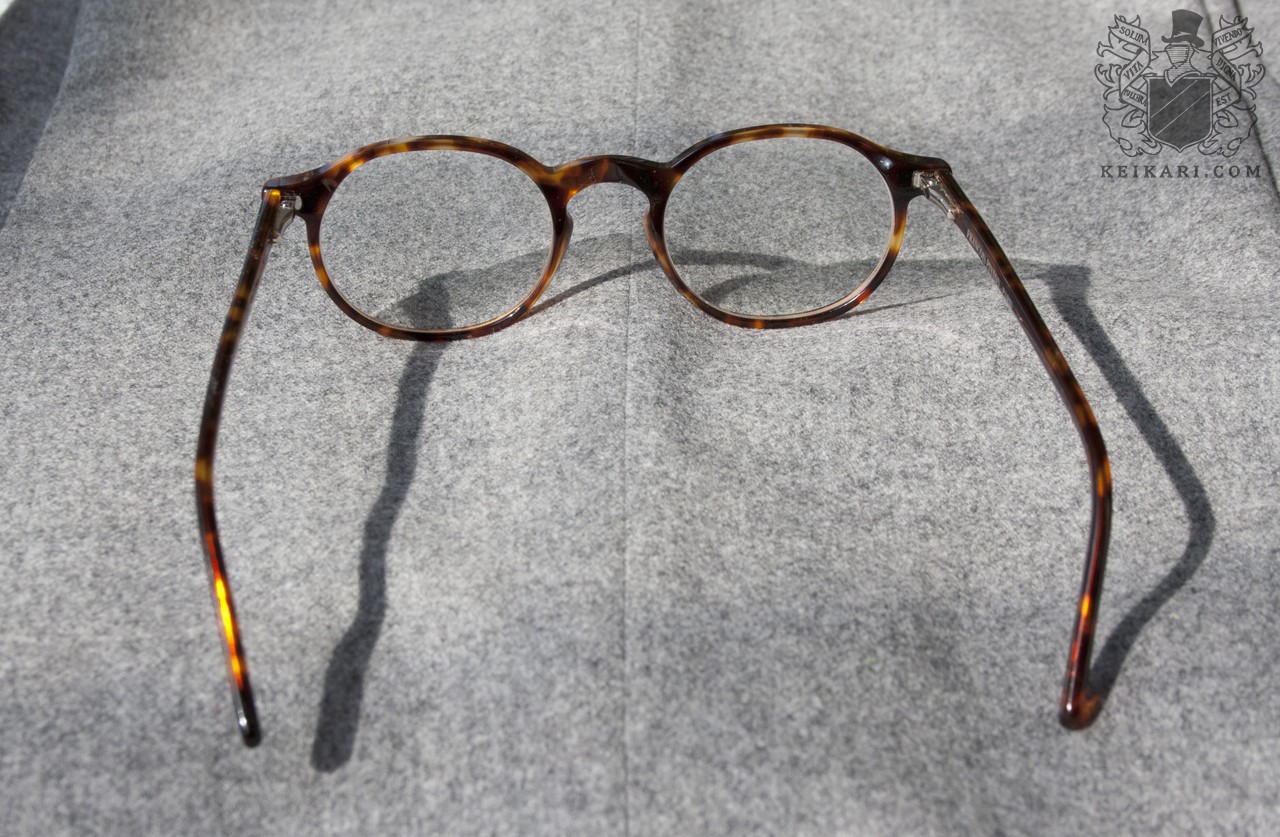
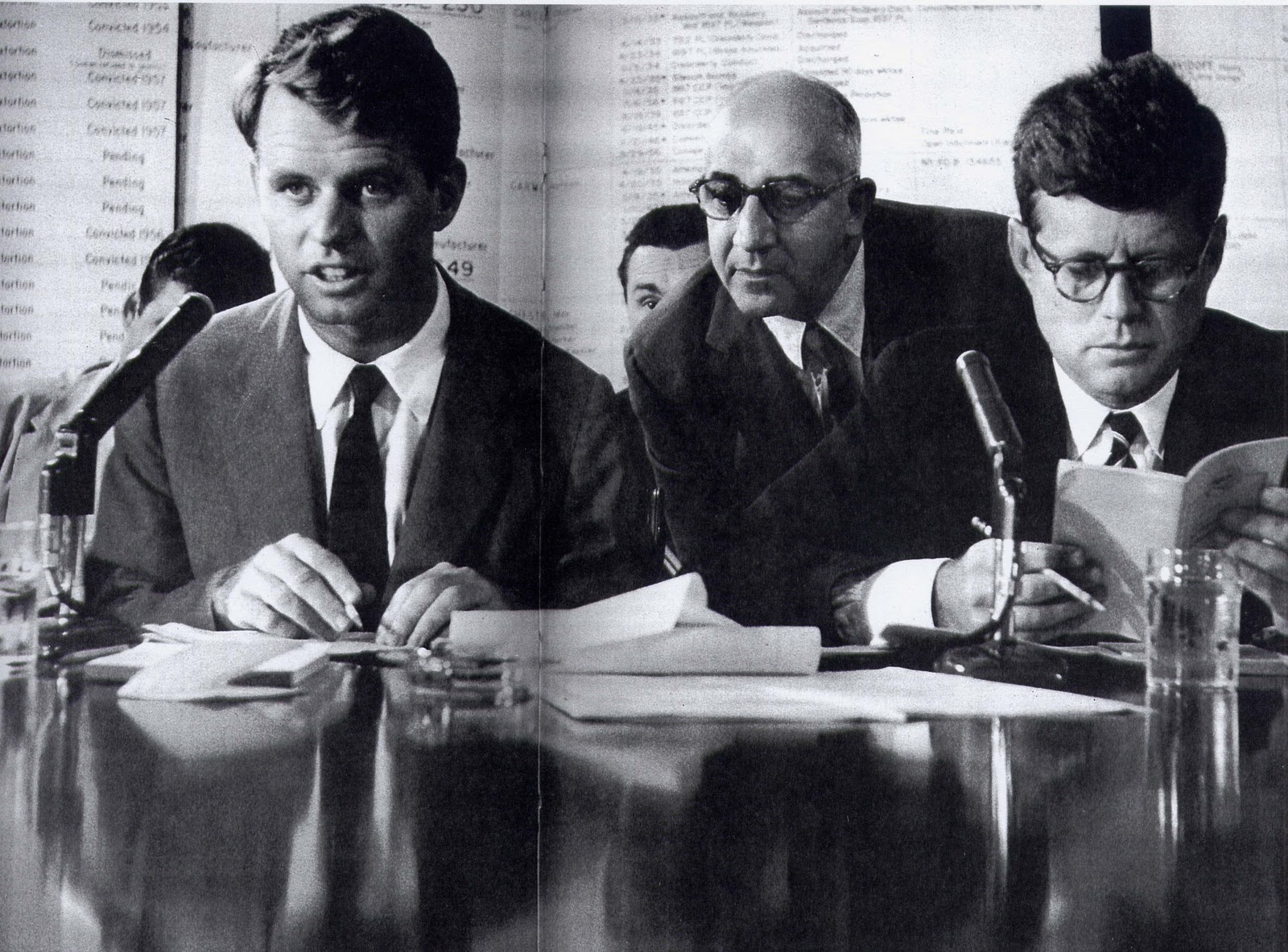
As for naming names, I can link John F. Kennedy, Harry S. Truman, James Dean, Mohamed ElBaradei, Tom Brokaw, Arthur M. Schlesinger Junior, history professor Matti Klinge, Finnish president Paasikivi and belligerent banker Björn Wahlroos. I feel the finest main colour for P3s is dark brown, this way the frames are also nice and dark for occasions as well. Beige versions are best in the shining of spring and summer. Those frames that are mottled, translucent and alternating in shades of brown are always interesting and lively. The P3 loses part of its charm in black or metallic, though the shape still stays.
The largest and most handy selection of P3 frames I’ve found is offered by the American Ben Silver, who has a shape to frame each occasion and taste.
Category Accessories
Copyright © 2013 Ville Raivio