Interview with Gabor Gyöngyösi from Buday Shoes
0December 27, 2016 by Ville Raivio
VR: Your age and occupation?
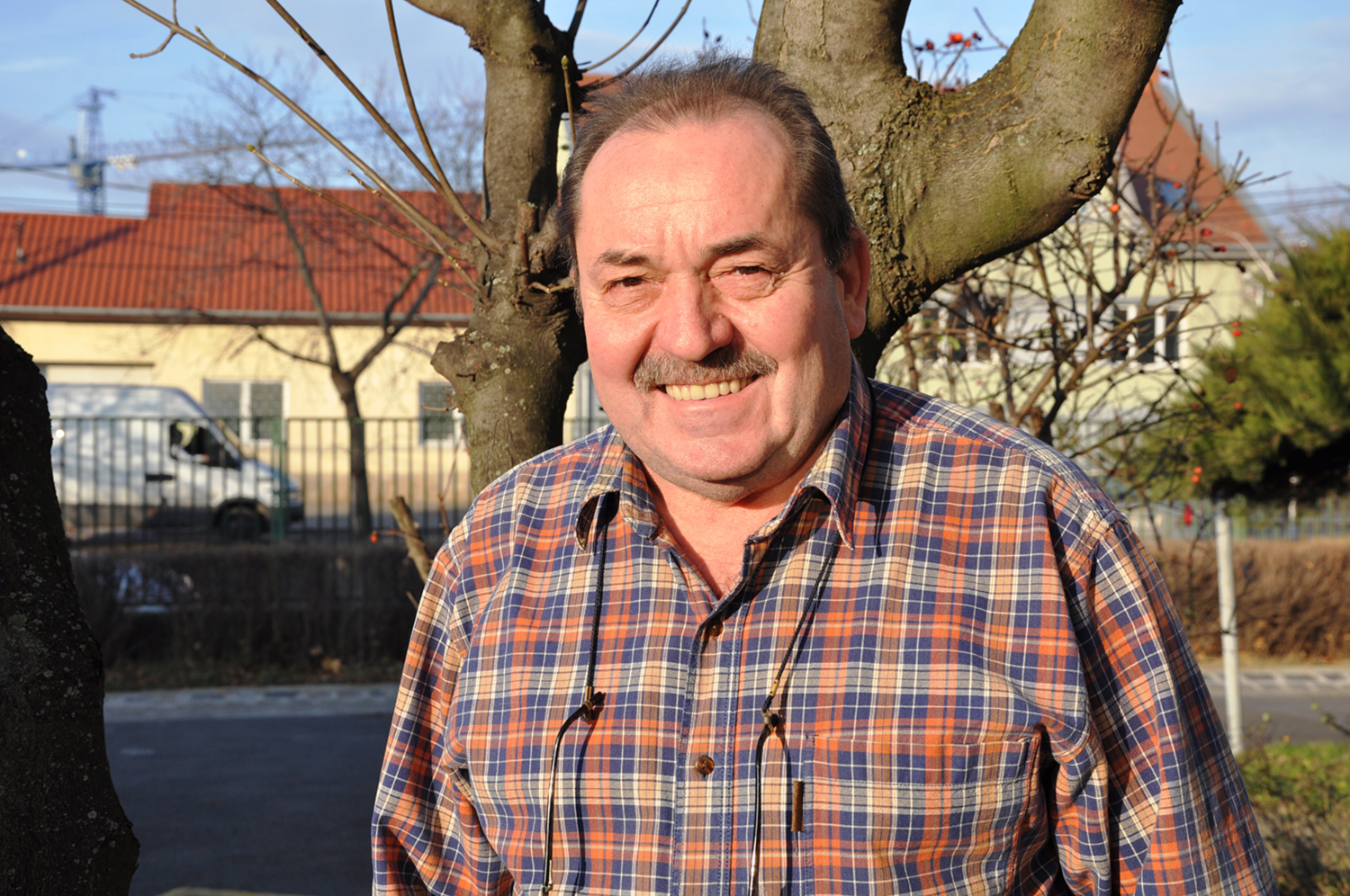
GG: 66, founder/owner of Buday.
VR: Your educational background?
GG: Mechanical engineer.
VR: Have you any children or spouse (and how do they relate to your shoe enthusiasm)?
GG: I have two children, a son and a daughter, they are also infected with the „shoe virus”.
VR: …and your parent’s and siblings’ reactions back when you decided to become a shoemaker?
GG: I have been working with shoes for 32 years, so my family wasn’t surprised when I told them I wanted to deal with handmade shoes.
VR: What other hobbies or passions do you have besides footwear?
GG: I love sports, sailing, and tasting good wines.
VR: How did you first become interested in shoes, and when did you turn your eyes towards artisanal shoemaking? Why classic models instead of fashion?
GG: I was about 18 years old and a young sport shooter. We often travelled to „western” countries with the national team. That is where I saw fantastic shoes, and bought myself one or two pairs on every trip. The other athletes gave me the nickname „little shoemaker”. I never thought back then that the joke would become reality one day.
VR: How have you gathered your knowledge of the crafts — from books, in-house training, workshops or somewhere else?
GG: I learned my professional knowledge from books, I have read nearly everything with the word „shoe” in it. I was taught shoemaking itself by old Hungarian masters, and, of course, I am still learning, I think it lasts a lifetime.
VR: How would you describe the House Style of Buday shoes?
GG: Our company is a family-run business. We can be characterized by a pursuit of perfection. In the early days I liked cool and trendy models. As time went by, I became more and more interested in excellent quality. I think the most outstanding shoes are classical Budapesters.
VR: Do you have a favourite shoe model (eg. monk, derby, oxford, balmoral boot) and leather type?
GG: I tend to love all models equally if we manage to make them perfectly. Then I can adore them for weeks.
VR: There are several quality shoe companies in Hungary — why should my readers choose yours?
GG: I find the fact that we have several excellent shoe manufacturers in Hungary a good thing, as a healthy competition leads to good results. Naturally customers should choose us because we are unique in Hungary (and not only here) in using 6 different welt sewing techniques. We are also unique in offering practically any colour choice, we finish dying the leathers outselves, sometimes we make as many as 3-4 different colour effects on one shoe. Finally, the perfect fit for our customers.
VR: What is your definition of a well-made shoe?
GG: Well-made shoes are created from outstanding materials, they conform on the last perfectly. They attract attention by their comfortably perfect fit, and noble simplicity.
VR: Who or what inspires you?
GG: Drive: we would like to manufacture the best, most beautiful, the most expensive instead of the worst, the ugliest or the cheapest Budapesters in the world.
VR: Finally, how can my readers find out if a shoe has a good fit?
GG: I would like to highlight a few criteria out of many. Firstly, the shoes must have the right length; second, they should fit around the bunions (it is not a problem if they are a bit tight first); third, the instep height has to be right with derby and oxford models. If these three things fit, and your heel is not loose, then we can say that the last and the model are both right.
Category Cordwainers, Interviews, Tradesmen
How woven cashmere cloth is made at the Ermenegildo Zegna factory
0December 22, 2016 by Ville Raivio
Interview with Andy Poupart
6November 12, 2016 by Ville Raivio
VR: Your age and occupation?
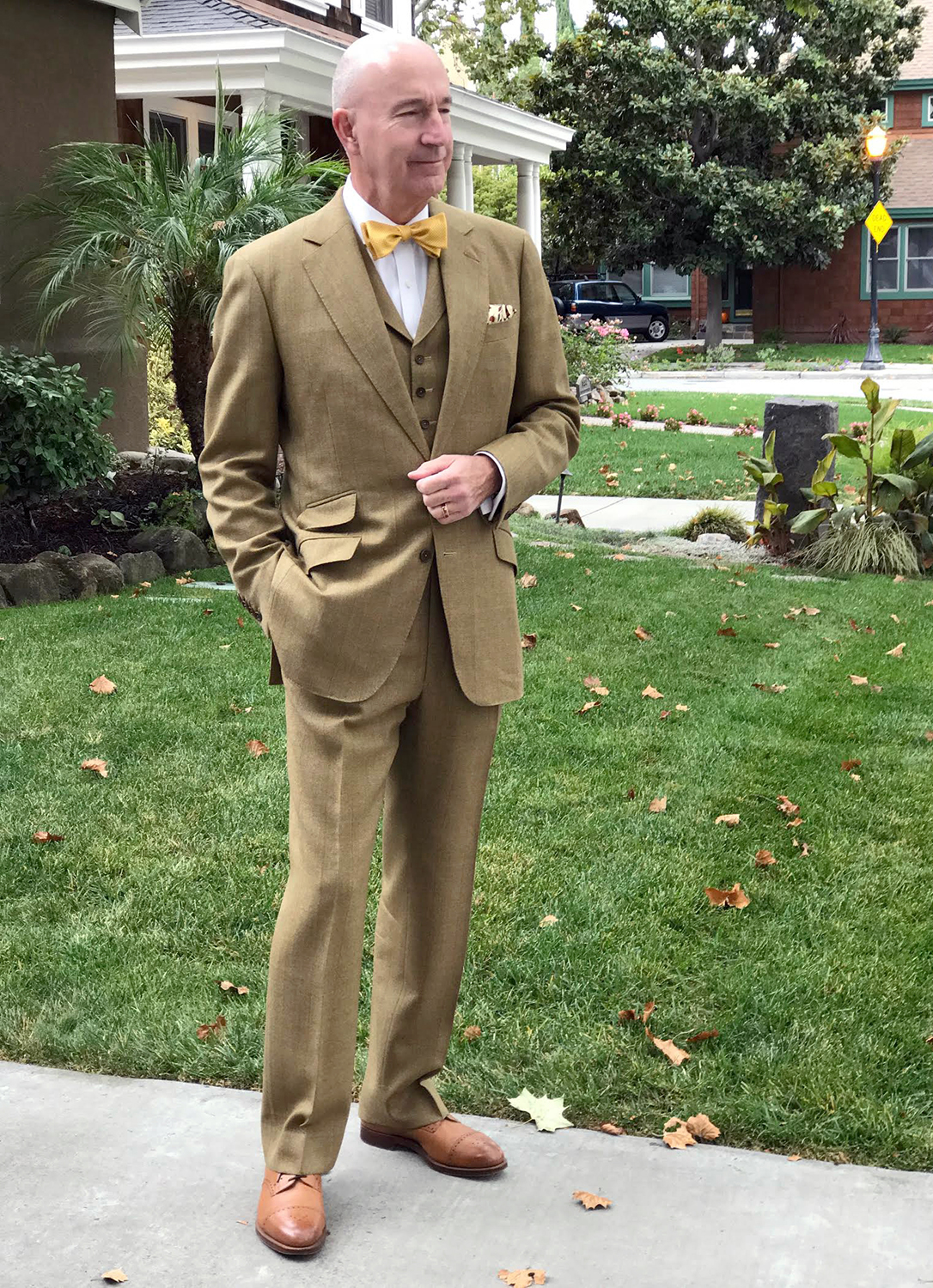
AP: I’m 59 years old and I’ve spent my entire career in the computer industry. I started out working in the computer center of a British university and moved to the US in 1981 and started working for a computer manufacturer and I’ve spent the majority of my career since then working for several computer companies. For most of my career I’ve been either a software engineer or I’ve managed software engineering teams.
VR: Your educational background?
AP: I have a bachelor’s degree in computer science and physics.
VR: Have you any children or spouse (and how do they relate to your style enthusiasm)?
AP: I have two grown daughters who are largely bemused by my style renaissance. It’s also true to say, however, that my Instagram presence is largely due to their prompting. But when they were young, I did not dress remotely like I do now. They knew me as a father who largely dressed in jeans and polo shirts, a man who wore sneakers most days. So, the father they see now does not look like the father of their memories and I think that is disconcerting for them on some level.
I am very happily married. It is the second marriage for both of us. My wife is a stylish and elegant woman in her own right and it is perhaps because of her that I started dressing better than I did. Not at her prompting, however. It was more because I wanted to honor her, to try to be someone that she would be proud to be escorted by.
VR: …and your parents and siblings’ reactions back when you were younger?
AP: My mother was also a stylish woman and I think she recognized when I was fairly young that I knew how I wanted to look. She knew that if I wanted a particular look, whatever it might have been, that I was not prepared to compromise. I can look back and recognize now that, within the limits of a family budget, she helped me to express myself in the way that I wanted. She let me experiment.
VR: What other hobbies or passions do you have besides apparel?
AP: I am a fairly accomplished photographer, although I don’t shoot as much as I used to. I cook and my wife and I enjoy enjoy wine. We do travel a fair bit, too.
VR: How did you first become interested in style, and when did you turn your eyes towards the classics?
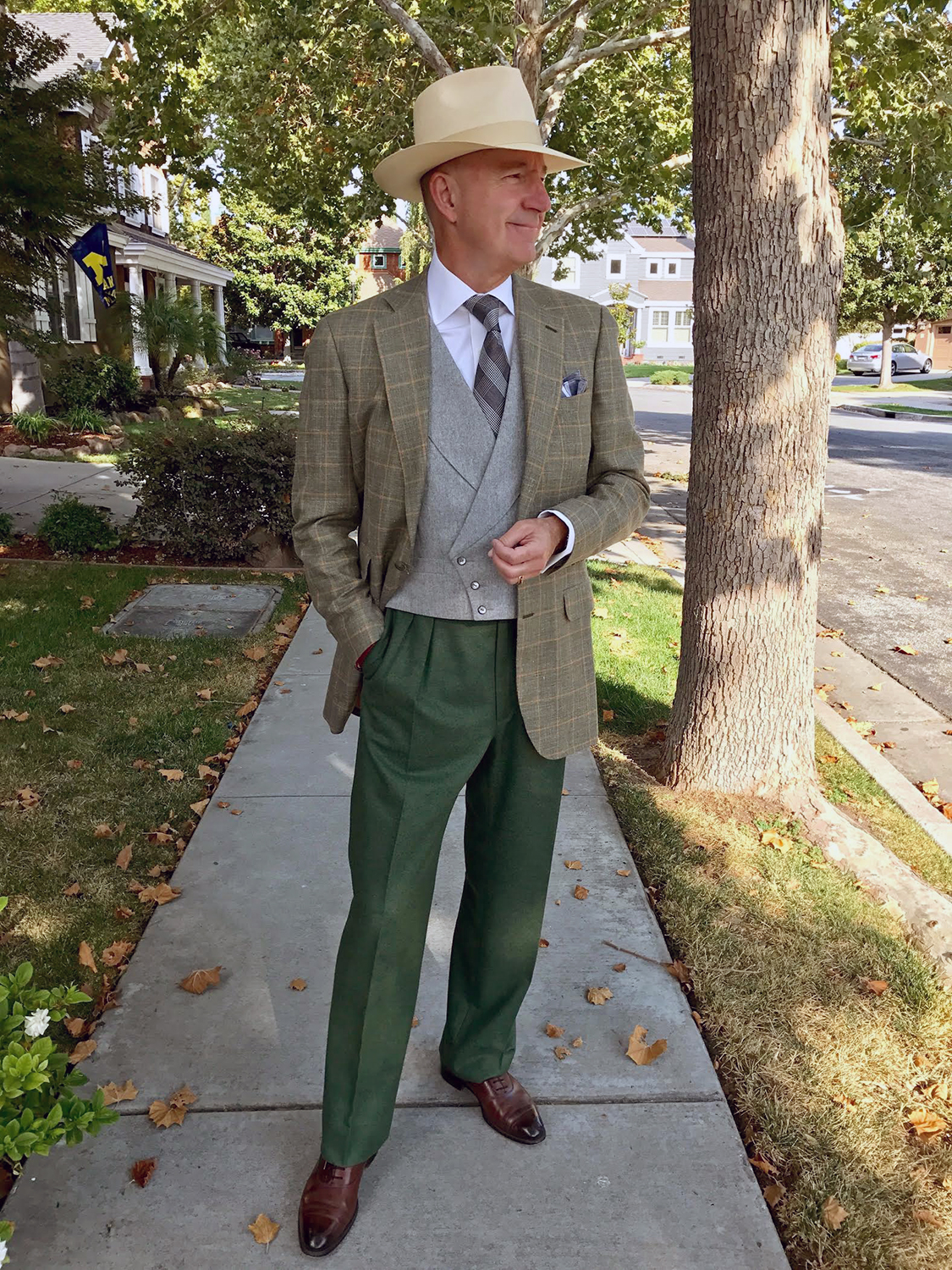
AP: I’ve always been interested in style and fashion, both men’s and women’s. But, as I mentioned above, I’ve lived most of my adult life in jeans and polo shirts. About four years ago, I had to make some changes in my diet and lifestyle to reverse a trend of increasing blood sugar. These changes had a side effect for me of losing around 30 pounds, too, and so I needed a new wardrobe. Over the years, I had accumulated a number of jackets, some of which now fit me better than they had in years. But even the jackets that fit me were rarely worn and I decided I wanted to change that. so I started to wear them, even though I was still wearing jeans and sneaker, for the most part. But over time, I realized I needed better trousers, which led to better shoes, which led to wearing a tie occasionally, which led to bow ties, and so on.
Then I began to do some research. I began to learn about how clothes were suppose to fit. I realized that most of my clothes were too big, for example, and as I learned more and came into contact with more resources, from which I learned more, I began to understand.
In addition, I had always harbored a desire to have a suit made for me by a Savile Row tailor. But I did not know which tailor to select and I was somewhat daunted at the prospect. But I heard of a tailoring firm called Steed Bespoke Tailors that is part of the Anderson&Sheppard diaspora and that visited San Francisco regularly and I decided to go with them. And it has been a good relationship.
VR: How have you gathered your knowledge of the tailored look — from books, talks with salesmen or somewhere else?
AP: All of the above, I would say. Except, perhaps, salesmen. I would add online resources, too, as a major learning resource for me. I’ve learned a tremendous amount in direct conversations with some of the people that I have met online.
Clearly, menswear has standard texts by Boyer, Flusser, Manton, and others. But there’s no escaping that the internet is and continues to be a tremendous tool for learning and for obtaining items that, without it, one simply would not encounter. An example of that might be the French sock vendor Mes Chaussettes Rouge. I would never have encountered them if were not for their online advertising and for an article I read, online, about the socks that they carry that are used by the Catholic church. I’ve been to the physical store in Paris and I think it’s fair to say it’s not in an area where a typical tourist might wander. So that experience is a direct result of discovery online.
VR: How would you describe your personal style?
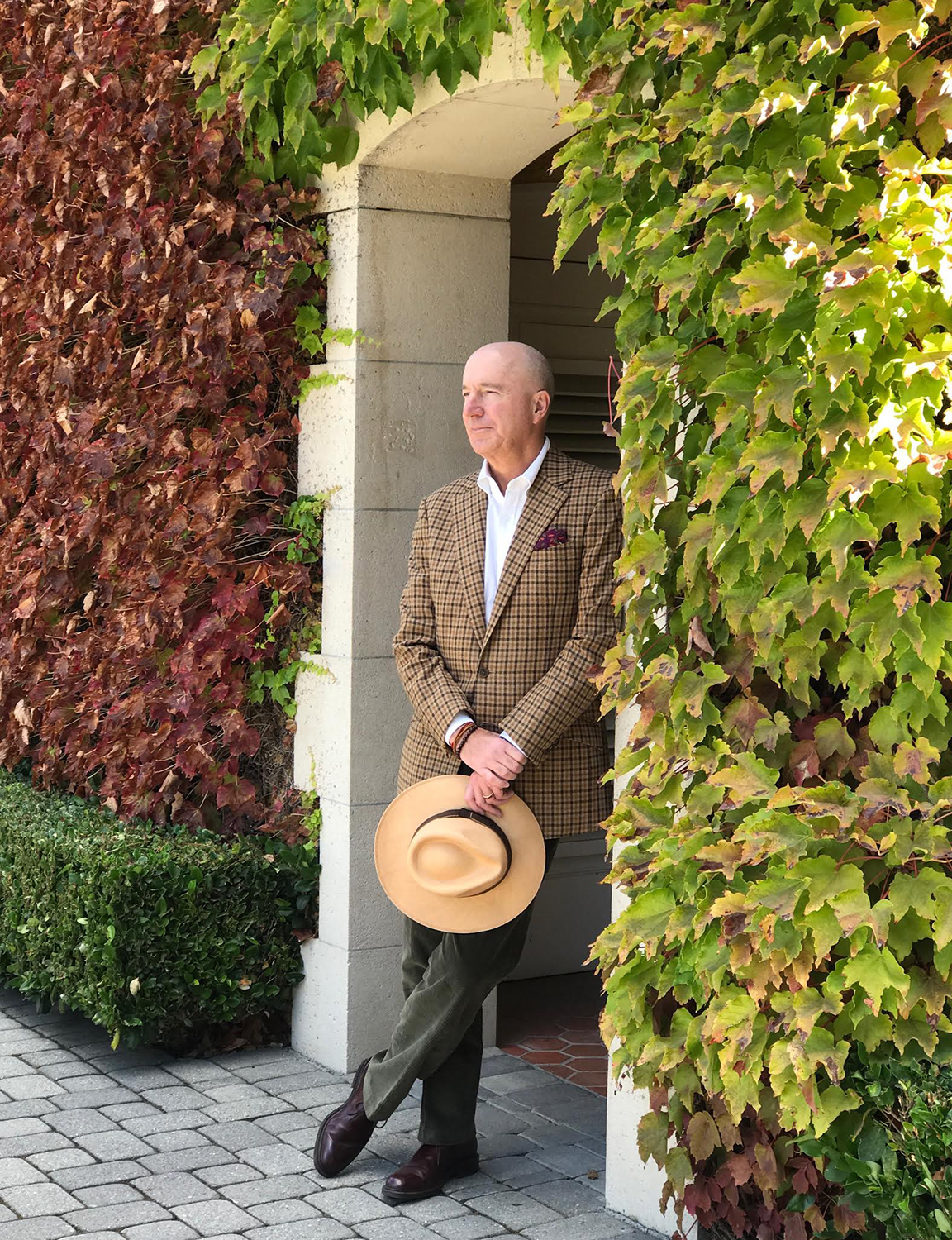
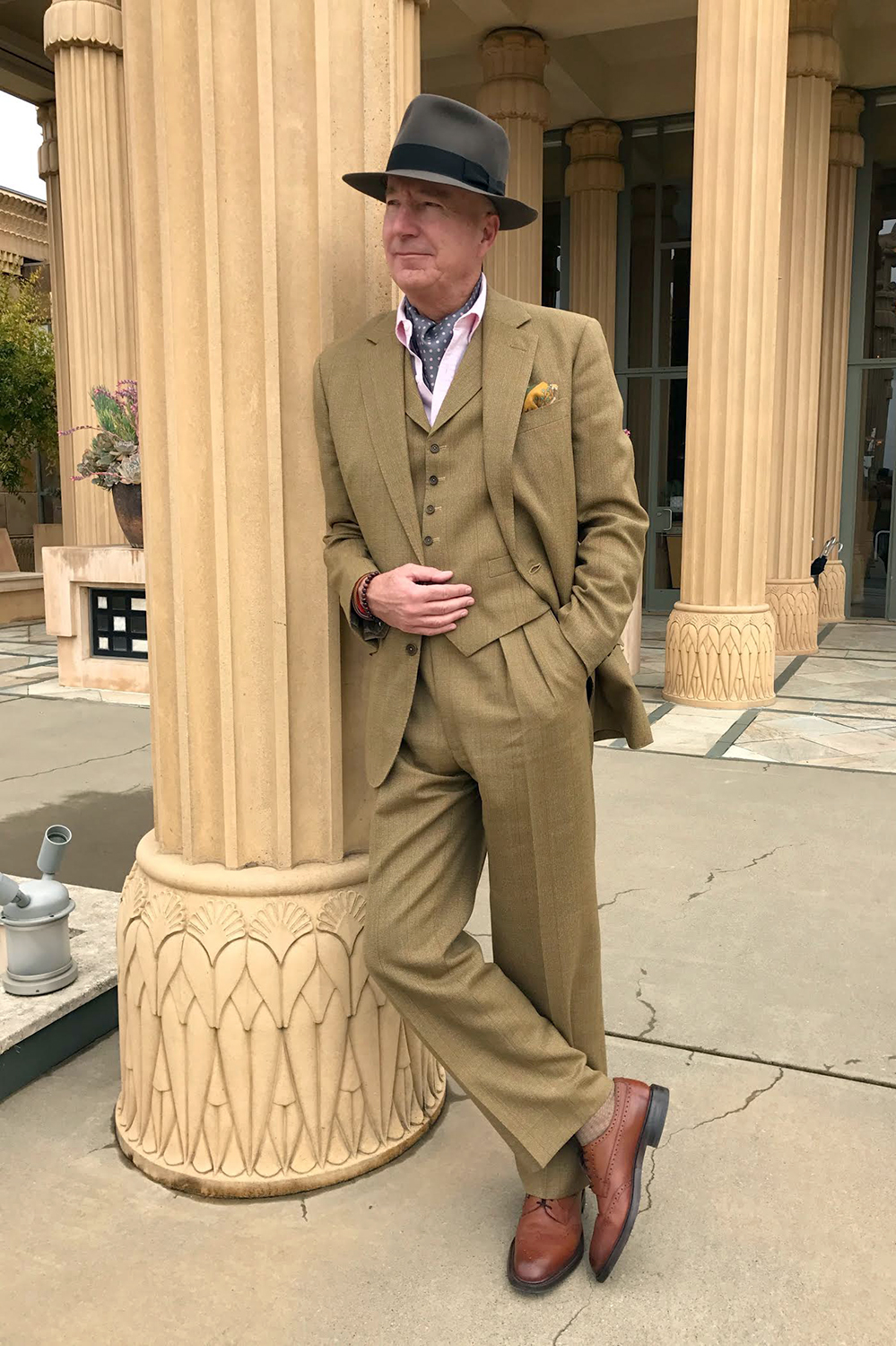
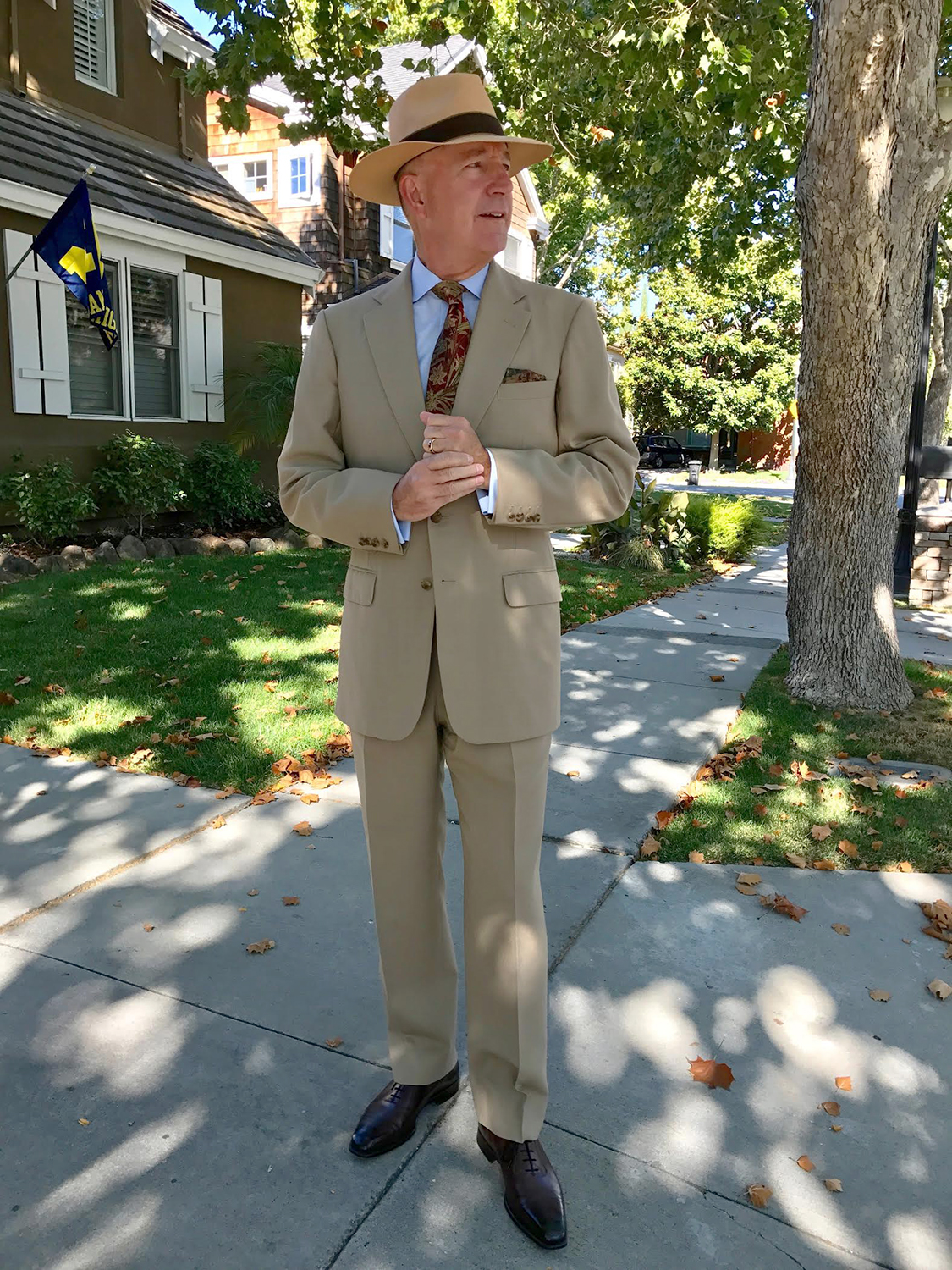
AP: To the extent that I have a style, it’s a combination of what I hope is a classic English style and then at times a fairly unrestrained exuberance bordering on dandyism. I love color and I love wearing things that few others would wear. For example, I bought some of the last few meters of an ivory flannel with a navy pindot windowpane from Fox and had it made up into a lovely double-breasted suit. I wear it on warm evenings, or sunny summer days and I love it. People notice it because you almost never see anyone wearing such a thing. But I have a gorgeous lovat green tweed jacket that is classic and conservative and occasionally people notice it because it is so classic and well cut.
VR: Which tailors or RTW makers do you favour and why?
AP: I use Steed, as mentioned earlier and Hemrajani Brothers for my tailored clothing. I have more or less stopped buying ready-to-wear clothing.
VR: Have you any particular style or cut philosophy behind your items?
AP: I like to create a long line. I have my jackets cut longer than is “fashionable” today, and somewhat longer than many people are comfortable with. But it creates the line I’m looking for. I want my clothes to be well cut, to be comfortable, and to look like they were made for me.
VR: Who or what inspires you?
AP: My wife inspires me. She empowers me to express myself and to follow my own path. In terms of men’s style, I admire Fred Astaire and Cary Grant. If I could have a sliver of their style and gracefulness I would be a lucky man.
VR: What’s your definition of style?
AP: That’s a tough one. Style is individual. Style is harmony. Style is beauty. Style is being comfortable in your own skin and having confidence in your appearance. I don’t think you can have style without confidence.
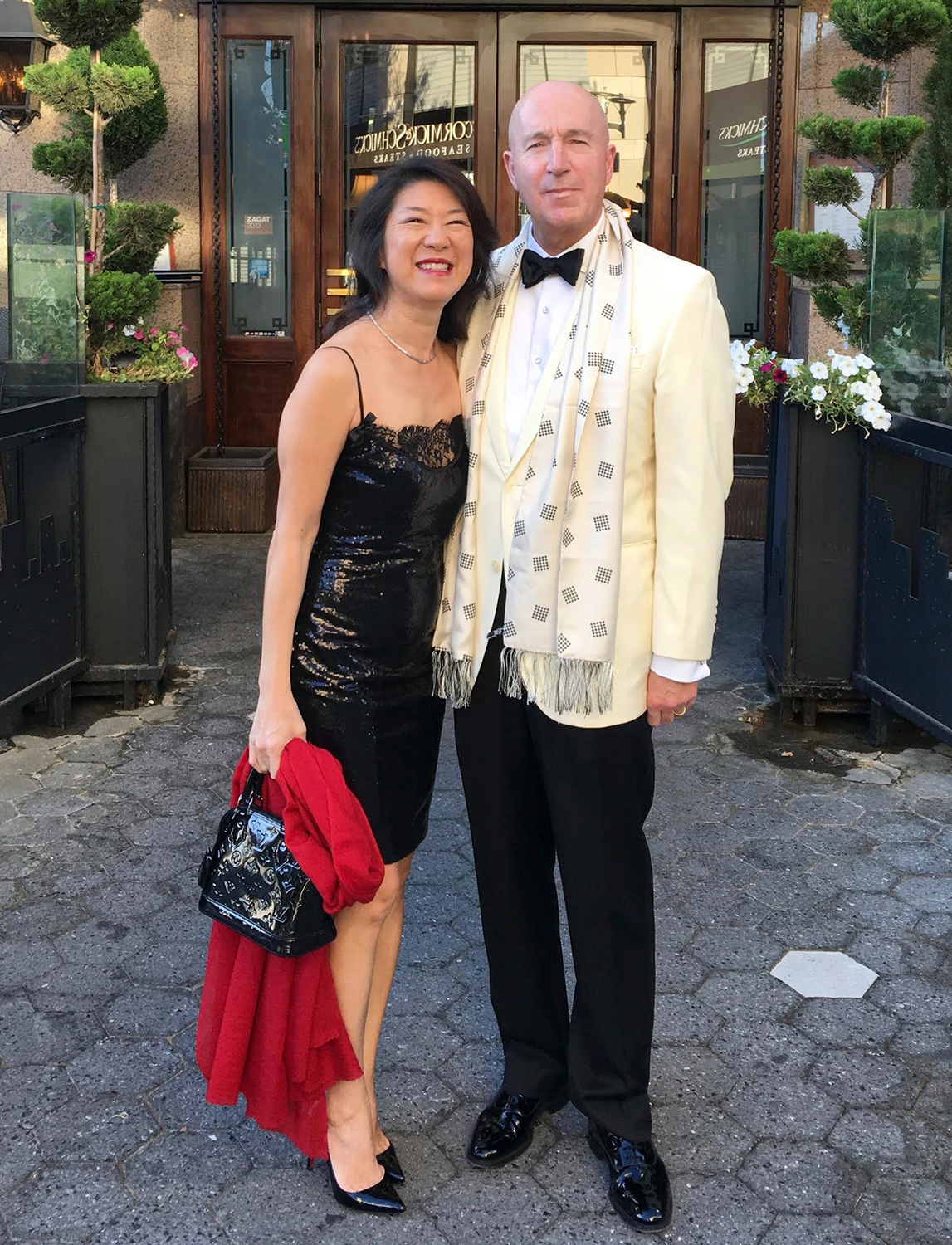 Featuring the lovely Michèle Free
VR: Finally, given your knowledge on the subject, how would you describe the dress of the American IT-crowd?
AP: Extremely casual. In my little corner of the industry, dress is virtually irrelevant. It simply does not matter how you dress. What matters is how you do your job. I accept that I work in an industry that is, even now, somewhat unusual in that regard. But where most of my colleagues interpret that freedom to mean they can dress extremely casually, which I also used to do, I have used it to dress the way I do now, in tailored clothing. Why? Because I want to.
https://www.instagram.com/styleafter50/
Photos: The Poupart Archives
Category Interviews, Men of style, Styleforum
A tour at the Chester Jefferies glove factory
0October 15, 2016 by Ville Raivio
Category Accessories, Quality makers, Videos
Interview with Craig Featherstone from Henry Poole
0September 15, 2016 by Ville Raivio
VR: Your age and occupation?
CF: 41, Master Tailor & head cutter/company director, lifestyle blogger.
VR: Your educational background?
CF: BTEC fashion design, apprentice and then head tailor with David Chambers bespoke 1994-2007, Freelance tailor – Ozwald Boateng 2007-2008. In current role with Henry Poole ltd. since march 2008.
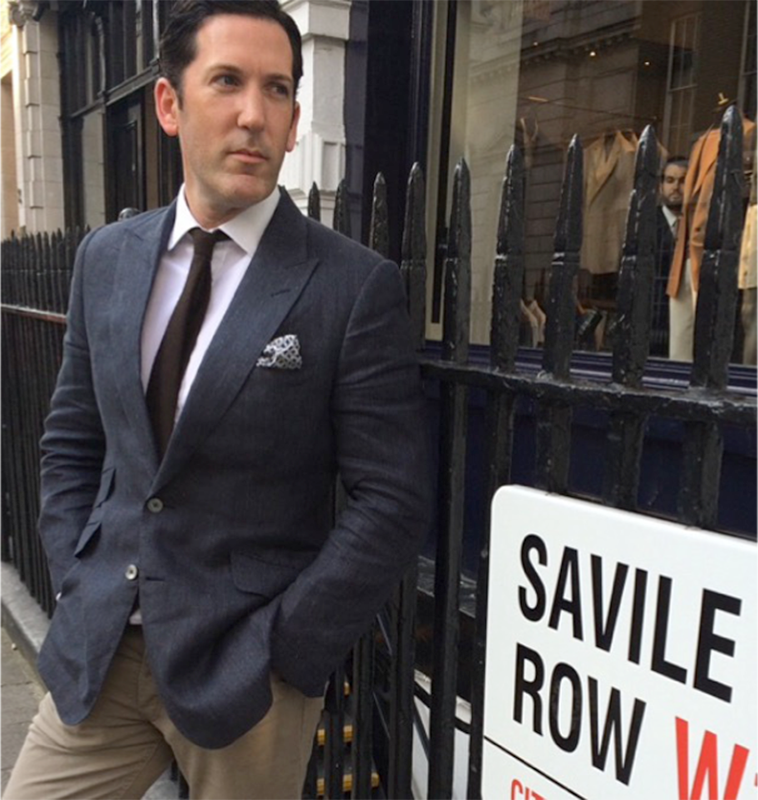
VR: Have you any children or spouse (and how do they relate to your tailoring enthusiasm)?
CF: I aptly have a ‘Gentleman’s family’ (one of each). Daughter Reili, 9 years old, and son Coiry, 6 years old. They have to put up with a lot, as much of my business is abroad. I am all over America more than 5 times a year, for up to 2 weeks at a time. My wife works as a Senior Assistant Director for Sky Sports. Working in the media, she also likes to dress well. We compliment one another.
VR: …and your parent’s and siblings’ reactions back in the days when you began?
CF: I used to be in a band as a teenager and I would design and make our outfits, I went to fashion college and always had a passion for clothing and design. My parents knew whatever profession I decided on, I would strive to make it to the highest level, and tailoring is quite an unusual profession, a great talking point. I always want to be the best I can and encourage myself to learn every element of my trade. For me, it’s important not only to talk the talk but actually to have the skills to back this up. Plus I’m naturally curious and can turn my hand to most things!
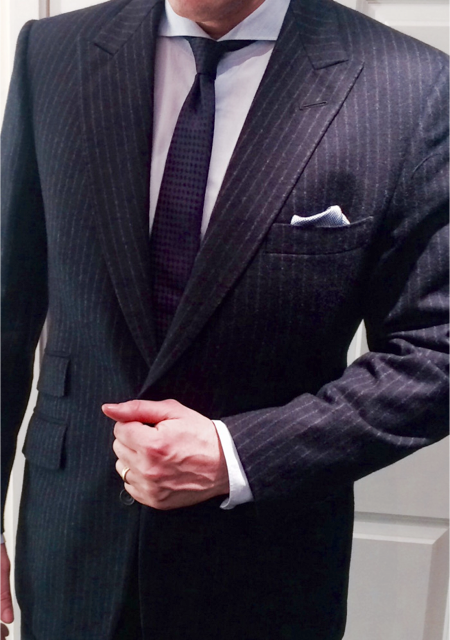
VR: What other hobbies or passions do you have besides tailoring?
CF: I have a black belt in kickboxing and jujitsu from when I was younger. I enjoy playing golf and football. I also do some charity work and event organising. I cook a mean steak. I love to travel and visit new places. I property develop, too, when the opportunity arises.
VR: How did you first become interested in clothing, and when did you turn your eyes towards classic style? Why classics instead of fashion?
CF: I have always had an interest in looking good and from a very young age I was self-aware, and understood how I dress has a real impact on how people perceive me. I think I have progressively veered more towards classic style as I have got older (my mantra is, better with age). For me, you can’t go wrong with a classic suit, as it will never date. Although at times I like to experiment with my outfits, with a different-coloured trouser and jacket combo or use an unusual material.
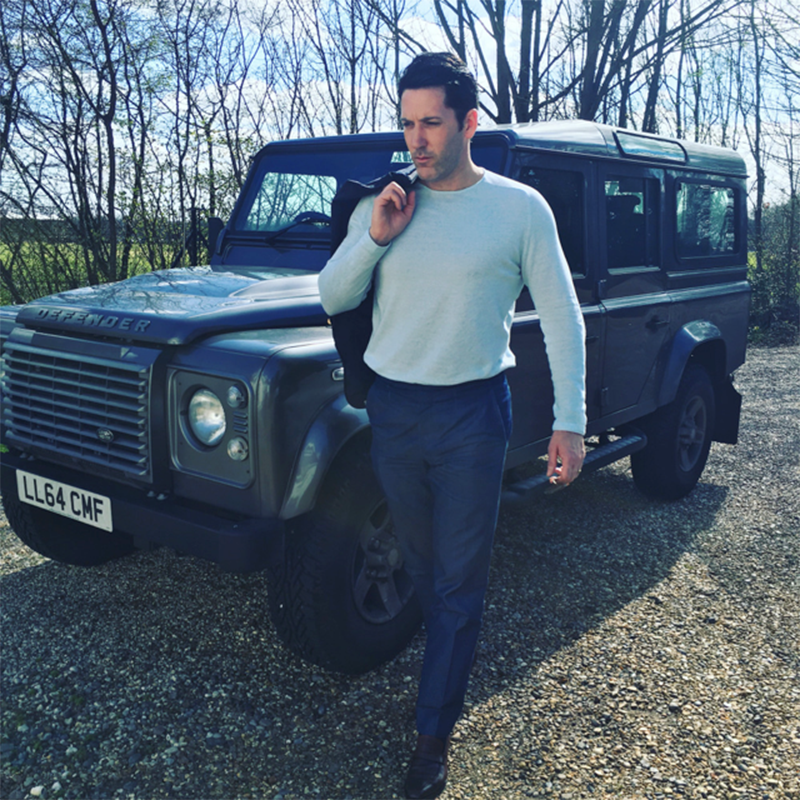
VR: How have you gathered your knowledge of tailoring– from books, in-house training, workshops or somewhere else?
CF: I have read a few books but mainly my love of learning and creating new things helps drive me. I was the only person willing to attempt making a bespoke cover for the Aston Martin one77 for a Paris car show reveal, I will always push myself to take on new and unusual challenges as that’s how I can further develop my knowledge of how materials drape and problem solve to perfect and modify a structure. If I don’t know how to make something, I will keep experimenting until I can work it out!
VR: How would you describe your own dress? How about your “house cut”?
CF: There isn’t a ‘house cut’ — the whole point of bespoke is to make sure we meet the needs of the customer and create whatever they request. I would always advise, though, to select a structured suit jacket over an unstructured one as much of the hand work goes into the canvassing of a bespoke creation. I would define my own image as classic and clean with a modern twist.
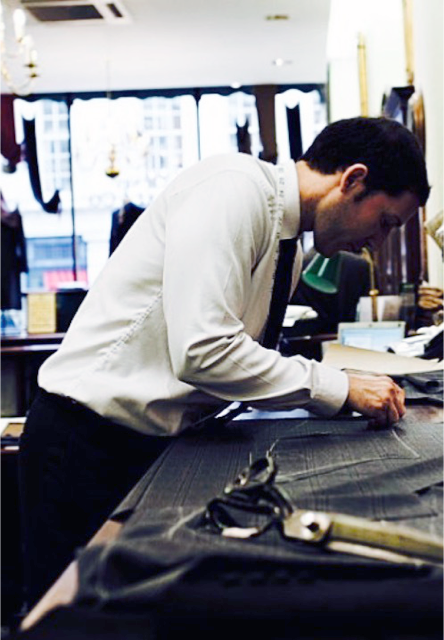
VR: Please tell us when you joined the team at Poole, and what goals you set for yourself in the beginning. How have you been received so far?
CF: I set myself the task of becoming company director within 5 years when I first started at Henry Poole in 2008 (I actually did it in 3!). I joined Poole initially to learn the final part of my trade, pattern cutting which made me a complete ‘Master Tailor’. There are very few of us on Savile Row who can literally do everything from start to finish, I am proud to be one of them, that was my aim!
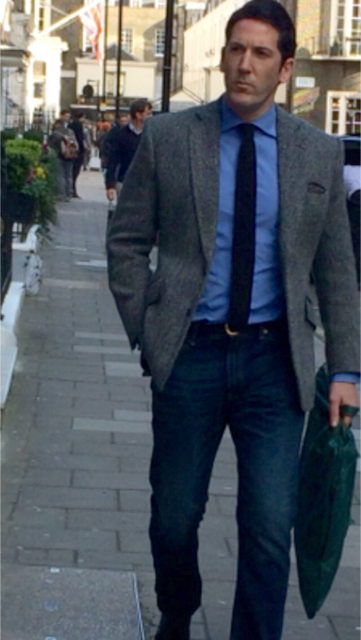
VR: Why should my readers choose the house of Poole over other Savile Row tailors?
CF: Poole is the founding and first tailor’s shop to open on Savile Row and the inventor of the Dinner suit. There is so much history at Poole’s (and a great ledger library in-house — customers dating back to 1800, including Winston Churchill, Charles Dickens and, more recently, David Gandy). We have just as many American clients right now as we do British. For me, personally, I’m in my 5th year working in America, so I have developed some expertise for that market. I’m very aware of my clients’ preferences in the U.S. The most important relationship to maintain through the bespoke process is with your cutter.
VR: Who or what inspires you?
CF: I find inspiration in everything, everyday. Whether it be through Architecture, Art, music or clothing. I love anything that looks good. I am motivated always to make the best of what God gave me. I dress to impress, no matter where I am. Perception is key in my trade, so I must make my choices wisely, to be the best I need to look it. I never know who I will meet from one day to the next.
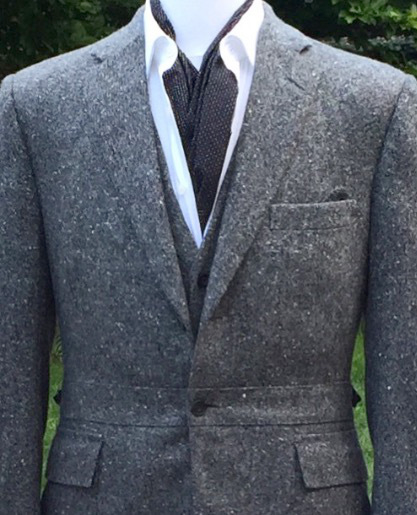
VR: What’s your definition of style?
CF: Style is creating your own identity, which expresses who you are. It shouldn’t feel forced. I don’t follow fashion generally as it dates pretty quickly. I understand what suits me already, therefore I don’t feel the need to jump onto a trend but I do keep an eye on it, though. Sometimes I find inspiration in a look which helps me develop patterns that work better for modern day tastes. I choose clothing to compliment my silhouette and enhance my image. I wear the clothing, not the other way ’round. People will always judge you initially based on your look, so remember; your clothing choices should be synonymous with the message you want to deliver and how seriously you wish to be taken.

VR: Finally, what’s your estimate on the effects of Britain’s EU exit on the business of bespoke tailoring?
CF: As a luxury product, we make for the super elite so I would like to hope it won’t affect our trade too hard, although it’s too early to say, really. I definitely think most industries will feel a bit of a pinch in the coming months, or even years, as people may be more careful what they spend their money on and be less frivolous. At the end of the day, business still goes on as usual, and to do good business you need to look sharp, nothing is going to get you noticed more than an amazing bespoke suit. My thoughts are that perception is key, so if you can look like you’re doing well in life, then you usually will!
Category Interviews, Savile Row, Tailors, Tradesmen
Copyright © 2013 Ville Raivio