Interview with John Hunter Lobb
0March 17, 2013 by Ville Raivio
“I am the senior Lobb. I am Chairman and MD and am 73. After leaving school I spent 6 months at the French university Grenoble before joining the firm and learning the practical aspects of the craft with several craftsmen. I subsequently learnt lastmaking which took up a lot of my time for many years. Other branches of the family do various things. I have 2 sons and one young cousin working with me. My uncle was in charge until 1993 when he died and I took his place; this removed me more and more from the shop floor as other duties came my way.
Training young people is a vital part of our work these days. Ther is no shortage of young people keen to work with their hands. I would not rate any particular part of a shoe as more important than another; they all play in important part in producing the best quality shoe. Baker’s is indeed a favorite of ours. Upper leather tanneries are more remote and the leather comes through an agent. We have to be sure of selecting the best. I think kangaroo has been somewhat neglected because it is strong flexible and light weight but I suppose not as dressy as calf. We have however used it regularly for many years. With us it is always a matter of giving the customer exactly what he or she wants. The classic styles continue to please because of their looks and practicality.
Personally I favour the classic styles but my working life has always been directed towards the craft and the work we do for customers rather than a personal stylishness. The John Lobb readymade shoes run by John Lobb Paris within the Hermes group are where stylishness is more in evidence and indeed they make excellent readymade shoes. I don’t have any exciting hobbies being a family man with rather a large garden and am fairly active in my local parish. My personal opinions are not in the forefront of my mind when it comes to the business. I am always grateful for the faithful customers who are pleased with what we do and also to new customers who come to make a start.”
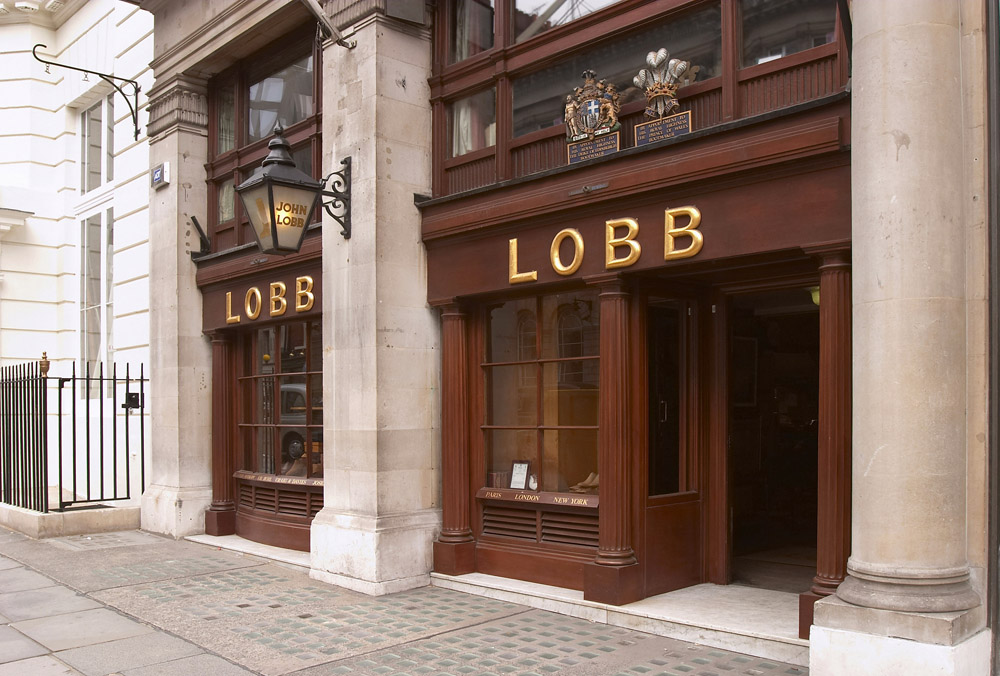
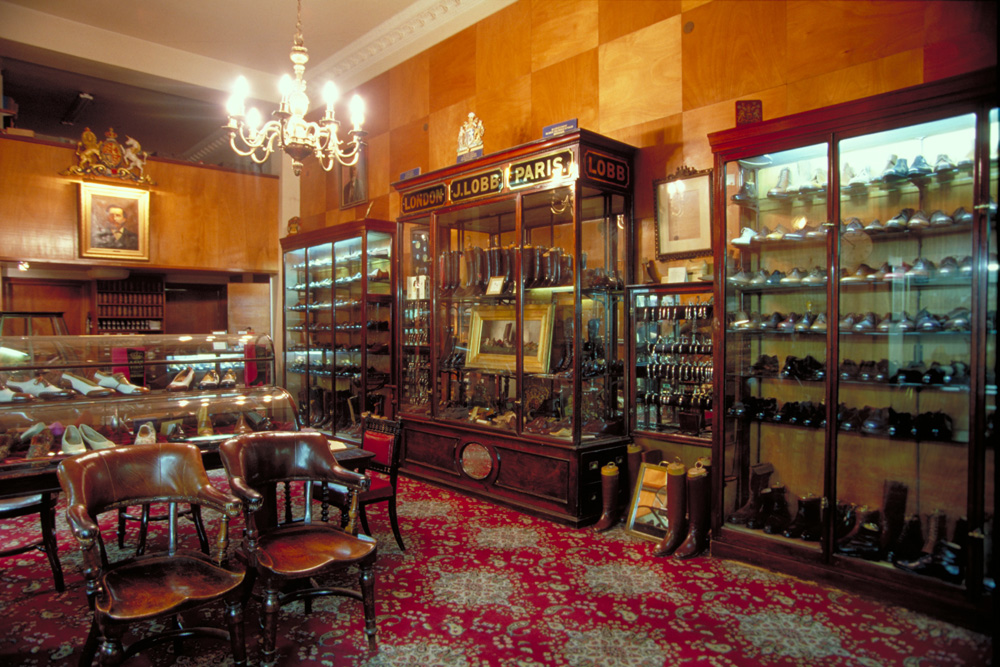
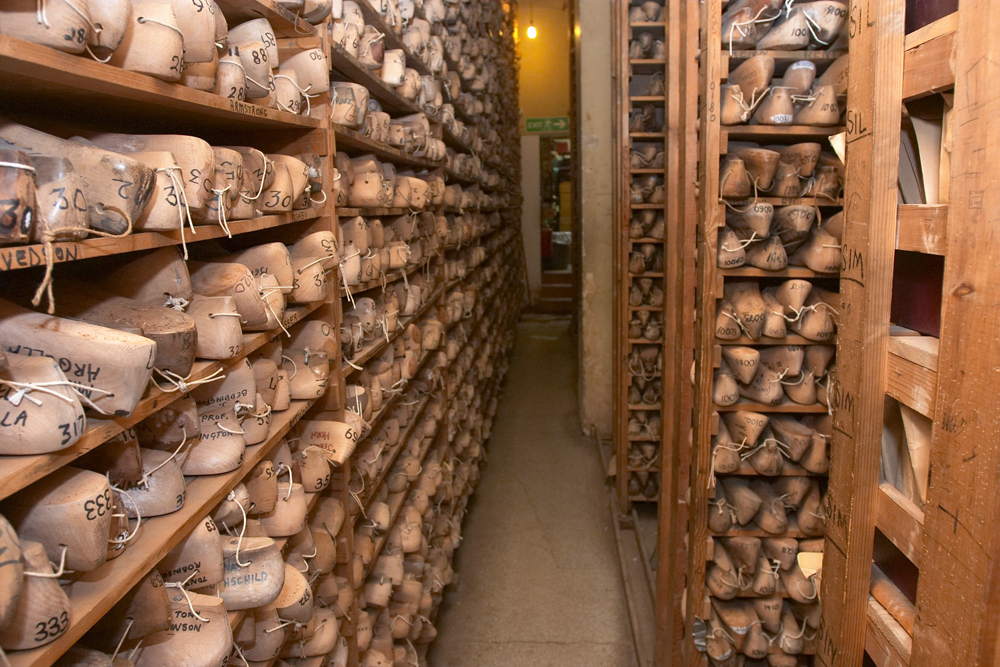
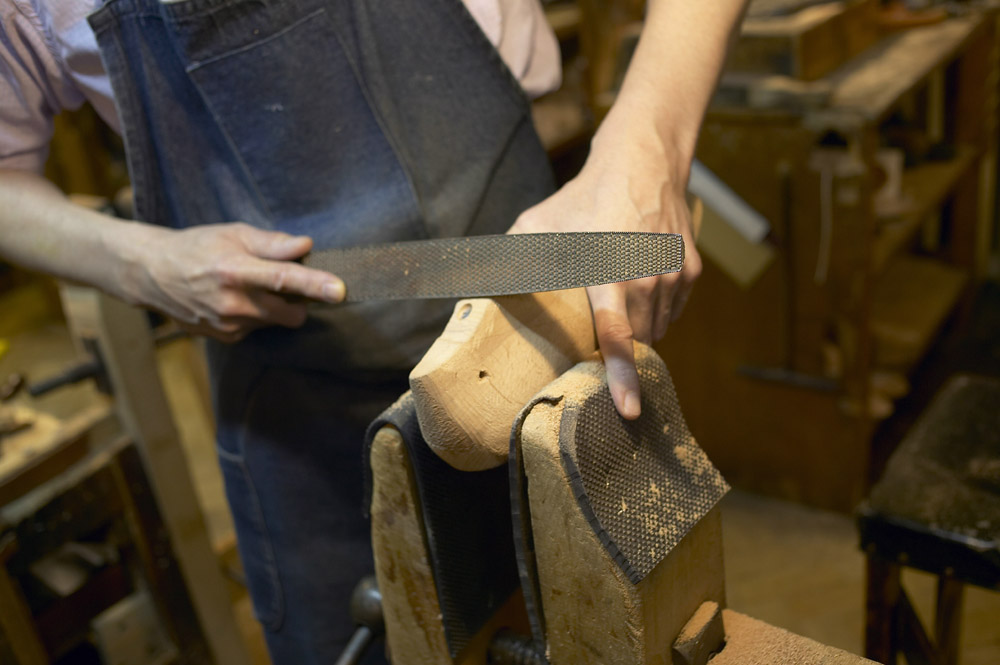
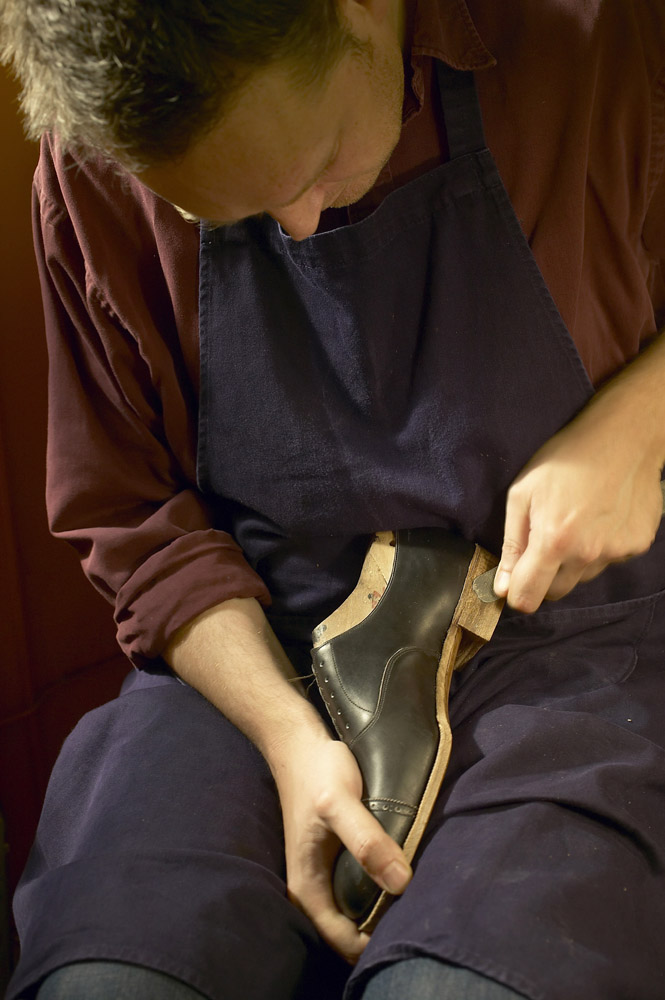
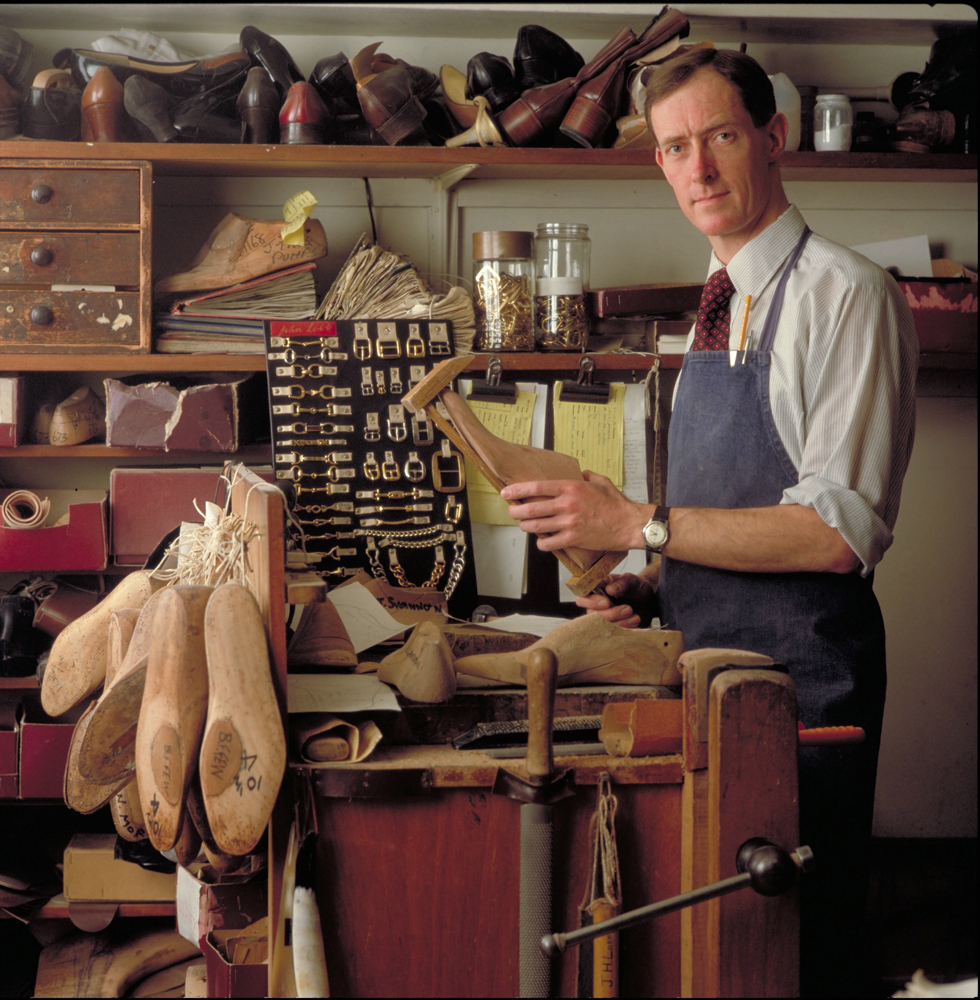

Pictures: © John Lobb Ltd.
Category Cordwainers, Footwear, Interviews
What’s in a Logo
0March 16, 2013 by Ville Raivio
The Keikari logo features a silly coat of arms. The escutcheon holds the site’s colours: dark purple, navy blue and light silver. For sheer Pythonesque whim, the helm wears a top hat with a strongly curved brim, silver puggaree and concave crown. Mantling has been spread all over, and the motto follows Keikari’s original words, “Vain kaunis elämä on elämisen arvoinen,” in Latin: solum vita pulchra vivendo digna est. Only a beautiful life is worth living.

Logo: design by Ville Raivio, execution by Offsuit.
Category Site info
Solaro Fabric
0March 16, 2013 by Ville Raivio
Solaro is a unique suiting trademarked and manufactured by the secretive Smith&Co. (woollens). The company’s short history can be found on PS’s fine website. Several mills weave similar fabrics, but Smith’s is the original, offered with a weight of around 300 grams. The fabric is made from wool or cotton, with an open weave, and usually with a herringbone pattern, allowing the softest of breezes to pass through and cool the wearer. The cloth’s warp is beige in colour, with a red weft to reflect sunrays away, making for an excellent summertime fabric. Solaro is a sort of chameleon, changing its colour depending on the strength and direction of light source. Shades of beige, green and red combine to form a unique colour. The fabric is crease-resistant and suprisingly soft against the skin, allowing for comfortable unlined trousers.
Solaro is used for suits, the tops and bottoms of which are easily worn as separates. The fabric’s colour does not make for a very formal end result, and Solaro suits and separates work best in casual offices, as leisurewear or in occasions calling for Smart Casual.
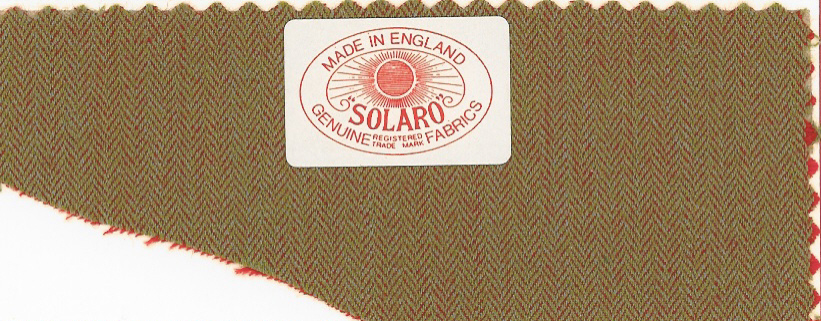
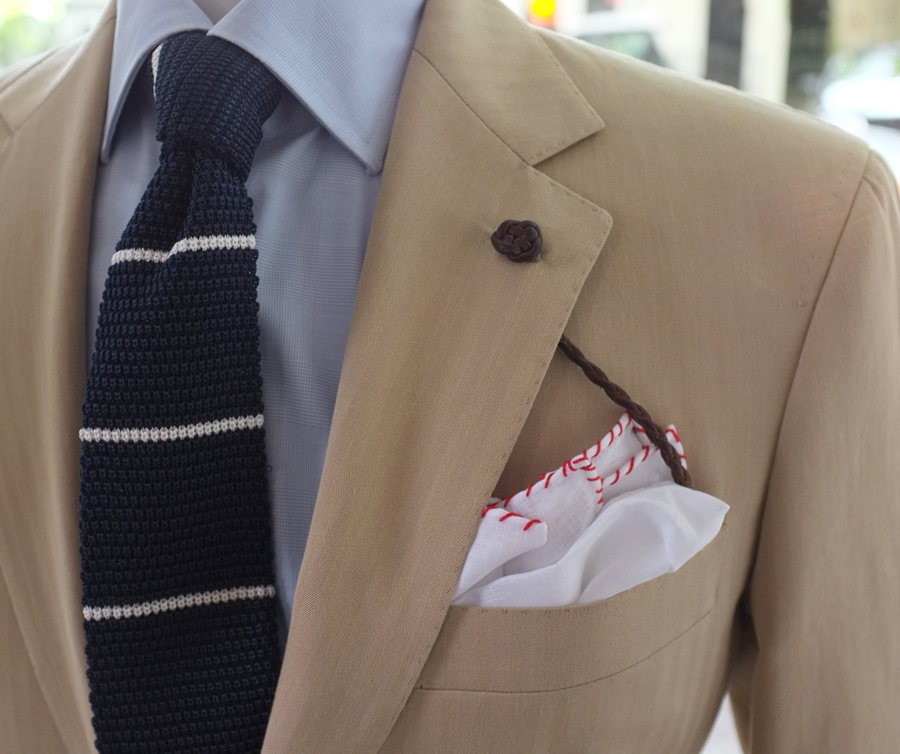
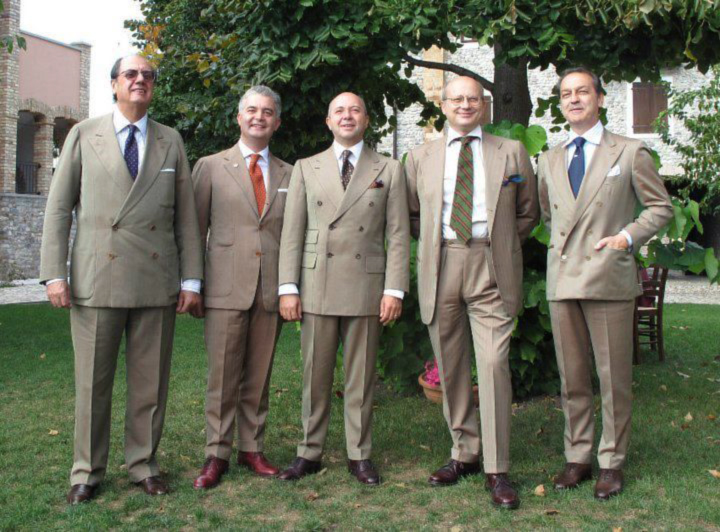
Pictures: © Noveporte and P. Johnson
Category Fabrics
Interview with Richard Smith
0March 16, 2013 by Ville Raivio
“Age 47, Co-Owner of Shoehealer. Left School with no formal qualifications. and went straight into work as a vehicle mechanic. No Children, but very happily married to Michelle, who is part of our business too as Shareholder and Director. I am afraid I do not have a close family, although I am sure they are happy that I have always worked, and had reasonable success in whatever type of work I have done. My working life has been varied over the years.
Looking for a change in direction, I started to spend some time at my Business Partner ‘Antony’ Shoe Repair Shop. I soon started helping out during busy periods, which led to me starting work with him Full Time, and him teaching me how to Repair Shoes. My interest in shoes developed from then on. There is something about English Traditional Shoes, that most often cannot be replicated by others, and they are also ‘Ageless’. Having said that, I also like the ‘Twists’ on these traditional styles that we make with Tricker’s and Sargent. I like to see something ‘different’.
As a Shoe Repairer, frequenting and spending a lot of time at the Factories, and working with customers in our store, and at the Country Shows and Gamefairs we attend. I have a very simple philosophy too. Whatever type of work I have done, I have always aspired to be the best, no matter what. There is always something new to learn, and my approach to customers and business, is one of total honesty and integrity. I answer many questions each day from lots of different customers. Some of these questions I need to research, in order to provide the right and best answer. I am always happy to take the time to do this.
I am always most comfortable in Casual Dress. I wear several of the shoes we keep but my favourite Shoemaker is Alfred Sargent. I wear several of their models including Dalham, Risby and Hand Grade ‘Milton’. I also wear several pairs of Tricker’s, Church’s Loake and Barker. [My facourite maker is] unquestionably Alfred Sargent, but then again I am always honest and I try to judge with an unbiased opinion. Every Shoemaker we work with has in their products ‘Strengths and Weaknesses’. This is that there are some models that arrive in our store, with a keen eye we might think they could be better, should be better, or perhaps they are as good as the need to be, or as good as they can be. We should always remember that our shoes are largely Hand Made and Finished, and because of that there has to be margin for ‘difference’.
My business Partner Antony has been repairing shoes in his own small shop for nearly 30 years. We actually have two shops, but only one carries a vast amount of RTW Shoe stock. 7 1/2 years ago when I joined the company, a Gentleman brought in a high quality pair of shoes for repair. I discussed with Antony where these shoes may have been purchased, and where would he buy another pair should he wish. In our town, and in most other towns there is a distinct lack of very high quality footwear. Our High Streets are flooded with cheap foreign imports, and of course not everyone can afford the finer things in life. As well, we must purchase every pair of shoes that comes into our store, and we never return stock unless it is faulty. We decided to research different brands, for quality and price, as well as canvassing our customers for their thoughts. The reaction from customers was very positive, so we decided on Loake, Tricker’s and Grenson.
We later decided to drop Grenson, and introduced Crockett and Jones, Barker, Church’s, Cheaney and Alfred Sargent to our Brand Line Up. Shoehealer now carries well over 2000 pairs of England’s Finest in our own stock, and we continue to invest. Shoehealer has a very good reputation in our locality for the vast range and quality of products and services on offer. Because of the rarity of some brands and models on the High Street in general, we find customers will ‘search’ for stockists of their favourite footwear, and many will travel considerable distances to visit our store.
Most people appreciate the quality and product on offer in our store, but some still can not comprehend that a pair of shoes can cost in excess of 200gbp. Imagine the shock when we show them some models we have on display that cost in excess of 700gbp ! In the best possible way we try to educate customers, about the quality of Materials and Build, in the differences in Fitting, and the Life Expectancy of a great pair of shoes. My work in store would be so much easier if everyone knew this. Until they do, I am always happy to help and advise.
Nowadays at home I enjoy to watch a great game of Football, with a nice bottle of Red Wine. I also enjoy good food and cooking with my Wife Michelle. Shopping is also a great way to chill out. I hold a 3rd Degree Black Belt in the Korean Martial Art of Tae Kwon Do, but I haven’t trained for many years now. As much as I would like to return to training, time and energy is a problem.
A young good looking Gentleman came into our store today, wearing a smart pair of Trousers, Nice Shirt and a Neck Tie. His shoes were ‘High Street Rubbish’. In my opinion, and for what it is worth his shoes cancelled pout the rest of his outfit. You never have a second chance to make a first impression. Start with the best quality shoes you can afford, and build the rest of the outfit around it. With an expensive pair of shoes, you can get away with an inexpensive outfit. An inexpensive pair of shoes will ‘let down’ and in some ways ‘Devalue’ an outfit.”

Picture: © Richard Smith
Category Interviews, Tradesmen
Interview with Fred Astaire
1March 15, 2013 by Ville Raivio
Today’s interview was first published in GQ, the publication fallen from grace to become the pre-chewed and -digested lads’ mag it is today, in August, 1957. Back in its glorydays, GQ was different, with articles and features to match the likes of Esquire in both wit and substance. The interview centers on one Fred Astaire, who shares his take on style with Richard Hublar and the reader.
Interview with Fred Astaire
by Richard Hublar
‘”I know that once in awhile I’ve been on lists of best-dressed men,” says Fred Astaire, the famous star of stage and screen, “but it always comes as a surprise to me. I never think of myself as spic and span or all duded out—just as someone who wants to be comfortable and satisfy his own taste.”
Sitting his cool living-room above Beverly Hills, surrounded by its muted shades of green and gray, Astaire looks the part. He is dressed in a light pink shirt, tieless, with tan cotton slacks, gray-figured wool socks and dark brow suede shoes. A small gold “bit” pin holds the throat of his shirt together.”
“Of course,” he says, “in my business you have to dress for the role. At home, I dress for myself.”
Astaire likes to think of himself as a conservative, inconspicuous dresser. He has his own ideas on what men should wear. He always has suits custom-tailored. Once he had it done in London, but now nearly all of them are worked up in a Beverly Hills shop at about $250 a copy. “As a kid,” he recalled, “I used to abide by the judgment of Brooks Brothers in New York. I think I’m away from that now.”
Roughly reckoned, his wardrobe consists of two dress suits (rarely sued except in movies), a couple of dinner jackets, both double-breasted (with a single-breasted on “on the way”), and about 20 other suits. “I gave away about a half dozen the other day,” he says. “I hate to see them hanging in the closet, unused.” Added to this he has perhaps a dozen sport coats and a variety of gay flannel trousers and cotton slacks—”a couple of dozen leisure combinations.”
“I’m fairly careful about the tailoring,” he says, “I usually take my suits back to the shop at least half a dozen times—too much shoulder or too loose or too tight. What I dislike is wearing a lot of material.” He meditates for a moment. “I don’t see any reason to carry all that extra cloth about,” he adds.
If has any preferences for a cloth, Astaire says that it is for a light silky cashmere of vicuna. “There’s nothing that makes me feel quite as well as a light overcoat of dark blue vicuna,” he says.
His standard of taste in dressing is simple. “I just don’t like a suit to stand out. I don’t want someone looking twice at me and saying in an incredulous tone: ‘What was that?'”
Astaire does not care for the new Ivy League look. “I simply don’t understand it,” he says. “It may look well on some people, young ones, but it’s terrible on me.” He believes that his measure of male dress is basically British. “You have to give them credit. They have been very stable in their designing and tailoring. They hardly ever change.”
One of the present-day fashions that roils him is the prejudice against the double-breasted suit. “It’s incredible how they have maligned that garment,” Astaire declares. “Abroad, you will see three or four double-breasted suits to one single-breasted.” For instance, he points out, he prefers the double-breasted dinner jacket—”for one thing, you don’t have to wear a vest or that hideous invention, the cummerbund. And I can’t comprehend red evening ties or fluffy shirt fronts or that sort of thing.”
In suitings, he prefers the sober colors such as dark blue, dark gray, and dark brown—”the only light color I like is light gray.” He is also partial to stripes but he wants them at least an inch or an inch-and-a-half apart. “That’s distinctly British,” he says. “We go away from or toward them in styles, but we always seem to basically revolve around their ideas.”
Astaire is willing to confess that the East and the West are twain in fashion and have difficulty meeting on a common ground. “In Hollywood,” he says, “you have big hats, long coats, brighter colors, insane combinations, and shirts that stick out over the pants. This has spread to the East but not yet, thank God, to the British.”
One of his horrors is the present condition of the male suit coat. He feels that this is the outstanding mistake that most men make in their appearance. “The coat should be just long enough to cover the rear,” he states. “The way most of them are today, they nearly reach the knees. I put on one belonging to a friend about my size the other day and I swear it came down to my knees.”
Astaire admits that he has been told he has a good figure for fitting. He is inclined to be doubtful about it. “I don’t think I look too well in suits,” he says. “I’m really quite sloppy—casual, you know. I dress for myself and to feel relaxed.” To this end, he possesses a couple of tweed coats in a small pattern of herringbone and one coat with a small gray-and-red plaid.
On tailoring, he feels that all coats should have the British side-vents—”quite deep, about seven inches.” He favors two-button jackets, although he used to be an addict of three-buttoners at the age of 20. “I only button one,” he says, “and I think it looks better that way.” His trousers are cuffed and inclined to be a little shorter than most—”I don’t want them slopping over onto my shoes.
Astaire often returns to his outspoken dislike of the present rage for “Ivy League” tailoring. “The unpadded shoulders, the three-buttoned long and boxy coat, the too-short, thin pants, and the thin ties with striped buttoned shirts in dark colors—well, I suppose this may go very well with some personalities but it’s not for me. To me, all such look like TV producers. Maybe they want to.” It seems amusing to Astaire to recall that when he was young such “outlandish” getups would have dubbed the wearers as “sissies”—but today the most extreme rigs of clothes are worn by the toughest gangs.
As for his shirts—they cost him from $12 to $25—he sometimes has them custom-made but usually picks them up from the counter. Except for full dress, he likes a soft shirt front, and light colors in the pink, blue, and tan range. “Once in a long while I’ll buy a striped shirt,” he adds.
He prefers a well-made buttoned cuff to French cuffs. In fact he never uses cufflinks except for formal dress, when he generally wears ruby-and-diamond studs and links or sapphire-and-diamond combinations. His daily jewelry is severely limited to a single gold-seal ring and the simples tie accessories.
He has what seems to him to be a “thousand ties” but in reality only between 50 and 100. He likes a full tie, not the narrow ones. “I always like to use the Windsor knot,” he says. As for the collars, he dislikes the tab and prefers the button-down and the wide-spread collar— braced by staves. “Once I used to wear bow ties,” he says somewhat wistfully, “with polka-dots, too, and enjoyed it, but I’ve got away from that.” He explains his aversion for the narrow tie with a smile: “I’m narrow enough myself, too narrow.” He points out that thinness seems to destroy an essential quality of dress, its style, by misuse in ties or lapels. “Look at the thin rolled lapels with the double-breasted suits—they are atrocities.”
In his own ties, he prefers a dark color and a very small pattern. He has only a couple of striped ties, emblematic of the clubs to which he belongs.
In the shoe department, Astaire possesses perhaps 50 pairs of professional dancing shoes and more than 20 pairs of his own. “It’s really very economical to have that many,” he asserts. “I have shoes today that are as good as when I bought them 20 years ago—and I assure you I have worn them many times.” A few pairs are slightly large for his feet and Astaire wears two pairs of wool socks with them when he goes walking. All his shoes are custom-made in London.
As for style and color, he prefers suede as a material and the loafer design. Most of his shoes, exclusive of the formal ones, are dark brown. “I don’t have any evening pumps any more,” he says. “I used to wear them ‘way back. Now they’re out of style. They were fun to wear but I don’t see any chance of them coming back.”
“It’s rather hard for me to judge the way I look,” Astaire sighs. He has been critical of his appearance on the screen for so long—”I think my pants were a bit too short in my last picture”—that he thinks he has little standing in the clique of clothes vanity. For instance, he denies the canard that he blocks his own hats—”but I do stretch them a little.” He has a stretcher at home and, often finding that a size seven hat fits him better than the usual 7 1/8, he buys it and stretches it. “I suppose I really take a size 7 and 1/6,” he remarks.
In hats, Astaire regrets the fact that he cannot wear a homburg. “I’ve always wanted to but never could,” he asserts. He likes low crowns and fairly narrow brims (about 2 1/8 inches because “an eighth of an inch can make a lot of difference in a brim”). The hat band should be of normal width—”no wide ones, no high crowns, no wide brims.” He wears them with an ordinary crease and abhors such developments as porkpies.
Handkerchiefs should be flipped out and folded into the pocket with an appearance of casualness, Astaire thinks. He does not like the square or folded style, nor the puff type that he describes “like a range of the Andes.” Once, on a TV show, Ed Sullivan came to him and begged him to put his coat kerchief in properly. Astaire obliged. “I think it set a new standard for Ed,” he said. “At least he was still wearing it that way when he appeared weeks later on the show.’
In the way of belts, Astaire likes to use silk handkerchiefs—purely for utilitarian purposes rather than theatrical. He has a 31-inch waist and loses pounds when he is dancing. The resilient silk allows him to draw his pants right. “I used to use old neckties for the same purpose but the handkerchiefs are better.” At home he will use a belt, usually shoving the buckle to one side, “simply to get it out of the way.”
In all these items, Astaire sticks rigidly to his formula of inconspicuous color and exquisite cut.
In his socks, Astaire allows himself a little leeway. He likes wool in preference to silk and cotton and never wears garters except, of course, when he is working in pictures. He is not too taken with synthetic fabrics of any kind. He is fond of some sort of pattern on his socks, based on a subdued background.
He dislikes shorts of any kind in publics. He prefers double-breasted overcoats. He thinks that his fondness for not wearing ties may have been a sin in the past—”once I was tossed out of a place, I think on Catalina, for not wearing a tie. Nowadays they furnish you some hideous one to appease the other diners.”
Although he has several fur overcoats he never wears them—and he abhors fur trim of any kind. As for mohair or silk for dinner jackets, bright-colored or metallic-threaded coats—”good God, no! It hurts me to think about them.” He points out that the trend to velvet cuffs and collars is a reprise of Edwardian styles and that he believes it will be ephemeral. He sees fancy vests in a short revival but believes they will subside and go away if no one looks. On the other hand, he is very fond of cardigan sweaters of all types.
Asked about the so-called Calypso influence in sportswear, Astaire replied cheerily: “I sincerely trust that there is none whatsoever.” As to the clothes in which he spends most of his time, Astaire pointed out that possibly these were his “sweat clothes,” the slacks and sweaters in which he originates, practices, rehearses, and teaches his dances. “I must have dozens of these combinations,” he adds, “but this is purely a necessary professional dress.”
His own preference for wear would be the ageless, conservative suiting, fabric, and color, complemented with shirt and tie each in its own distinctive small pattern or low-keyed color. The Astaire creed of dress is: “Be yourself—but don’t be conspicuous.”‘
Category Arbiter Elegantiae, Interviews, Reading
Copyright © 2013 Ville Raivio