The Portugal Online Shop
0March 22, 2013 by Ville Raivio
The Portugal Online Shop is true to its name, offering selected goods from Portuguese makers. The handy webstore’s selection includes a few coffee, tea and snack items as well as cleaning agents, but the main attraction for Keikari’s readers are the hygiene goods. Sedately priced, they include some gems not widely offered on other webstores, like the wonderful, thick bodycreams from Nally. Highly recommended for those with dry skin. CLAUS PORTO shaving soaps, creams and EdT sprays are naturally cheaper, sold directly from Portugal. Shipping is reasonably priced inside the EU.
Hygiene makers:
- 444
- Ach Brito
- AGA
- Antiga Barbearia de Bairro
- ASEPTAL
- Barral
- CLAUS PORTO
- Confiança
- Couto
- Ignoramus
- Leite de Colónia
- Nally / Benamôr
- Saboaria Portugueza
- Semogue
http://www.theportugalonlineshop.com
Category Web stores
Interview with Rose Callahan
0March 22, 2013 by Ville Raivio
“I am a photographer that specializes in portraits, fashion, and lifestyle images. I work for magazines, ad agencies, designers, book publishers, and other commercial clients. The Dandy Portraits is a personal project. I am also a partner in a video and animation production company called Rarebit Productions. I graduated with a fine art degree in photography from California College of Arts in Oakland, California. My fiance is very supportive and actually inspired the first dandy portrait of the series – Lord Whimsy. We also collaborate on creative projects as partners in Rarebit Productions. My family are interested to see how the project progresses, and always love to hear about my new adventures.
I have always been interested in style in my image making – from trying to recreate Hollywood glamour portraits when I was young, to documenting style subcultures, to working on The Dandy Portraits. I love people that over dress, because I love to get dressed up myself. I have always appreciated when men wear suits, and when The Dandy Portraits started to take shape in about 2008, that is when I began to focus more intensely on men’s elegance. I was introduced to photography at about 10 years old by my mother who was taking a course, and I have been learning and practicing it since then. Although I studied it all thru school, I learned the most by assisting photographers when I first came to New York, and since mid 2000s, by shooting jobs and my own personal work. I like to talk tech and swap lighting tips with my photo buddies also!
With photography my intention is to be intimate, empathetic, and to bring out the iconic moments. I love natural lighting, and constantly am trying to mimic that whenever I have to use strobes. Recently I have begun thinking of it as “find the picture”, which means observe and let the picture happen, or create a situation in which it can happen. [I’m photographing gentlemen] to celebrate personal style and the idea of “The Gentleman”. Also to give some insight into the richly detailed world that these men create – and to show how individual it is.
[I’ve learned] that dressing well may seem to be a frivolous activity, but it really changes one’s life to walk thru the world with style and elegance. And being an “Exquisite Gentleman” goes far beyond clothing – it is a hard to define commitment to a life created by the individual. Find style inspirations – could be Hemmingway, could be William Powell, could be your grandfather. Or it could be an Otto Dix painting! Look at a lot of films, photography, and art. For example, the book “Secret Paris of The 1930s” by Brassai – the street toughs had incredible style! On a more practical level, accessories seem to be a good way to elevate a look with ease. Look at vintage shops or flea markets – if not to buy clothes, then to at least see the difference between the fabrics, colors, and construction of earlier times. It is possible to put together a classic look with new clothing if you know the elements to look for.”
http://www.rarebitproductions.com
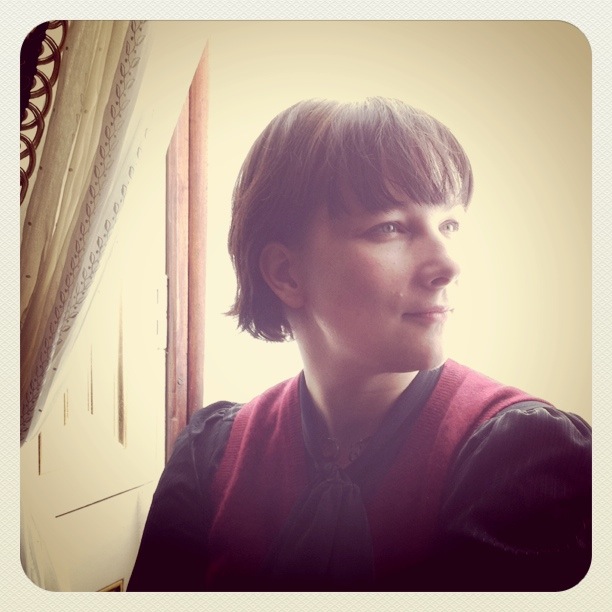
Picture: © Rose Callahan
Category Dandyism, Interviews
Roosevelt’s Cape
2March 21, 2013 by Ville Raivio
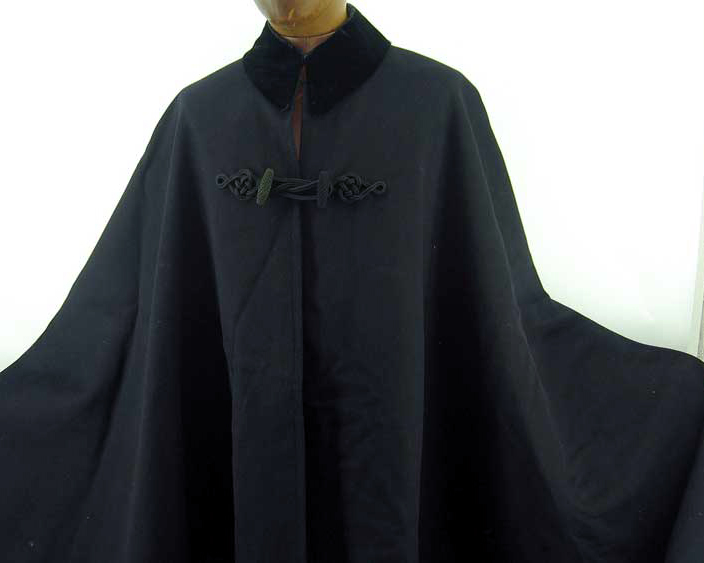
The Yalta conference has left plenty of Americans scratching their heads. Held from the fourth to the eleventh of February in 1945, the conference was a meeting of the most powerful victors of World War II. The UK was represented by one Winston Churchill, The Soviet Union by a certain Stalin and the USA’s main man was Franklin D. Roosevelt. The three met to discuss the future of Europe after the second great war, but this is a story best left for other sites to cover. Instead Keikari will take a look at a certain sartorial oddity preserved in official pictures of said event, namely the cape worn by FDR. This naval officer cape is the most flamboyant garment worn by any American president, leaving plenty of latter-day spectators scratching their heads as to its origins. While Stalin and Churchill presented themselves in their standard apparel, Roosevelt arrived to Yalta in a dramatic cape, though the reasoning behind the garment is clear.
In 1921 Roosevelt contracted polio, which maimed his legs from the waist down and left the candidate wheelchair-bound. He spent the rest of his life in a state of denial, being supported by iron braces or aides when appearing in public. The presiden’t assistants soon found out how laborious and cumbersome daily life became for the country’s main man. Adjustements were made, the dapper cape being one of the many. Allowing greater freedom of movement as well as convenient lifting from his wheelchair, FDR adopted the cape as his signature piece. Polio had changed Roosevelt to an even gentler, kinder person than before, and the garment became a conflicting, pert piece on an otherwise composed man.
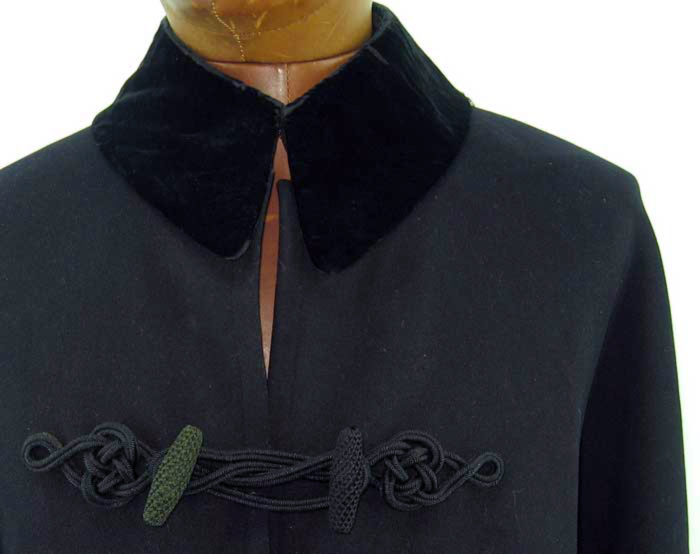
Roosevelt’s cape was of naval officer issue, titled boat cloak, in heavy navy blue wool with a black velvet collar. Its intricate cord frogging was placed high, opening and closing with a barrel loop. History buffs, wheelchair patients and vintage enthusiasts will be delighted to read that similar pieces can be found occasionally on eBay and fleamarkets. Its origins most likely hark back to Roosevelt’s time as the Assistant Secretary of the Navy from 1913 to 1920, which time also left him with a lifelong interest in the American navy.
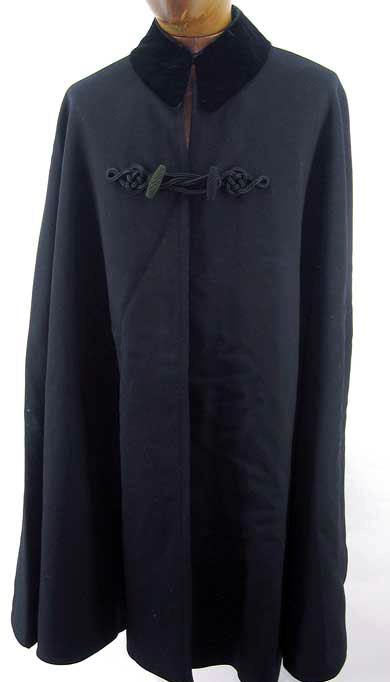
Pictures: © original uploader
Category Coats, Eccentricities
Interview with Andy Barnham
0March 21, 2013 by Ville Raivio
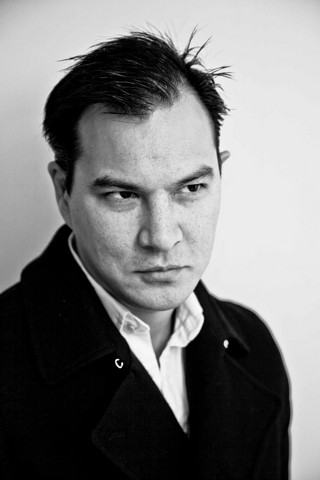
“33 [this interview took place 2012], freelance photographer based in London, UK. I was sent to boarding school in England and then I read Chinese at Edinburgh University. Despite being half chinese I could neither read nor write nor speak chinese, and as I enjoyed languages at school, decided I should learn. Growing up in Hong Kong and the Far East, it was also my aim at the time to go and work in Asia. I’ve had a mixed reaction from my parents. My grandfather was a painter who was not particularly successful and my father was scared that I would follow in his foot steps and not do well. My mother is from a traditional chinese family and wanted me to have a more respectable job such as doctor, lawyer or banker.
I’ve always had an interest in photography but it was mainly in conflict photography. As fate would have it, I joined the British Army after university and had a small digital camera when I was in Iraq during summer ’03. When I returned I realised my photos were terrible and made an effort to get better. This culminated when I was in Helmand, Afghanistan, in summer ’08 where I found I could anticipate shots and angles while soldiering. In so far as classic clothing is concerned, a friend saw my photos when I left the army and I was introduced to a shoe maker who had a store off Savile Row. Street photos became blog photos which in turn led to magazine work and where I am now
After Iraq, I taught myself composition and reportage. Being in the army meant that I couldn’t justify carrying a dSLR, rather only compact cameras. In addition to this being away from power sources while soldiering meant I had to be very strict with the camera battery life, only turning it on when I knew I had a shot and then not draining any more power than necessary with reviewing the shots. After the army I did a quick full time 3 day course to learn the basics of aperture, shutter speed and ISO. I now trawl the internet and magazines for anything that can help my photography.
I love classic clothing, but I find it just not practical nor robust enough for me. Suits are timeless. Just look at photos of Cary Grant, Fred Astaire, Jimmy Stuart… Formal jackets don’t have enough freedom of movement around the shoulders and tend to wear quickly due to the straps of my camera shoulder bags. Also, In order to get the shots I want, I often need to kneel or even lie on the floor. As a result, my own personal style is very informal and is workwear orientated. I love Ralph Lauren and find that my needs are well met between their various ranges. For my workwear needs there’s RRL, and I absolutely love the new Rugby range.
My photography has certainly changed my life. I started as a hobbyist taking photos in conflict zones with a compact camera. I am now using a camera earning a living taking photos of the incredibly rich and creative industry of fashion. I love rugby. I played for 20 years and stopped a because of persistent injury- I sustained the same shoulder injury five times in six games. I would like to play hockey, but due to the nature of my profession and being called at last minute to do work, can never guarantee that I can make training or even a match. As such there’s little point in trying to join a club as I just don’t know if or when I can participate on a regular basis.
1. Don’t be afraid to ask- a lot of people don’t know what they want. Tailors find that the first suit they sell a new client is the suit that they (the tailor) is wearing as the client has trouble imagining a full suit from just a roll of cloth and don’t actually know what they want.
2. Research- look at photos and concentrate on the details to decide what you like- pockets, buttons, lapels, collars. Research also tailors- each tailor is know for different things; Huntsman for their cheque, Anderson & Sheppard on a softer style, Spencer Hart and Thom Sweeney have a younger and edgier touch to them, Tim Everest has impeccable technical skills but also great little touches. Each is different and you need to find one who quite literally suits you. English tailoring has a lot of structure, Italian far less so.
3. You get what you pay for- if you’re happy with a RTW suit, fine, but it will nowhere near as good as bespoke. I suggest saving and having a small number of very good quality pieces that will last and you can treasure rather than a wardrobe of ill fitting clothes. Even if your budget only allows you RTW, see if you can get the piece tailored at the store as it will make a world of difference to how it fits you.
4. Once you’ve chose a tailor, listen to their advice- ask them about what tie, what shirt, what shoes, what colours etc. They are there to help! There is little point having a great suit, but then not making the most of it by wearing a tie/ shirt/ shoes that don’t compliment the look.
5. Looking after the clothes- many people don’t realise that dry cleaning hurts clothes due to the chemicals used. Any good tailor will have their own cleaning service, most of the time for free. It is in the interests of the tailor to keep the item you get from them looking good as you are a walking advertisement of their services. ”
Picture: © Andy Barnham
~ Originally published in Finnish on the 16th of March 2012
Category Interviews
Copyright © 2013 Ville Raivio