Interview with Mark E. Seitelman
0April 10, 2013 by Ville Raivio
‘I am 58 and a trial attorney representing people injured in accidents. It is popularly referred to “plaintiffs’ personal injury”. I have my own private law firm which employs 13 including 5 other attorneys. My cases include accidents involving motor vehicles (private auto, taxi, bus, and truck), construction accidents involving the workers, defective public sidewalks and roadways, private buildings (dangerous stairways and landings, defective pavements, and collapsing ceilings), school accidents, nursing home neglect, medical malpractice, and dangerous drugs and consumer products. I also represent people seeking their insurance benefits which have been wrongfully denied by their insurance company, such as Hurricane Sandy property damage claims.

I am a product of the New York City education system, both public and private. I have a Bachelors of Arts (B.A.) degree in English literature from Brooklyn College of the City University of New York. My law degree is a Juris Doctor (J.D.) from Brooklyn Law School. My wife, Minna, also loves clothes, especially Chanel and Hermes. However, the female enthusiasm is directed at design and style. Everything that she has is ready to wear. Custom holds no magic for her. The same holds for her friends. The female of the species has different sartorial aims and interests. Ironically, although she buys more clothes than me, her costs are less since she buys at sales and at resale shops. Therefore, my wife is somewhat tolerant of my clothing interests. My children and grandchildren have no interest in clothes. They have other interests and pressures of daily life.
I guess that I have had the “solo business gene” in me. My father had his own accounting firm. I had a steak of independence, and I had to have my own firm. I have been blessed with success, and I have been acknowledged a leader in my field by my peers. For example, I am listed as a “Super Lawyer” (see www.superlawyers.com). I am a life member of the Million Dollar Advocates Forum which limits its membership to lawyers with $1,000,000 plus settlements and verdicts (see www.milliondollaradvocates.com
My parents liked to dress well. I would say that my mother placed an inordinate amount of importance on dress and outward appearance. She would comment endlessly about how some professional or other prominent person was dressed poorly or inappropriately. My father liked to dress well and neatly. He is a certified public accountant. He is still around at the spry age of 95! I recall going with him in the 1960’s and 1970’s to his clothier on the Lower East Side in Manhattan. It was located in what is now Chinatown on East Broadway in the shadow of the Manhattan Bridge. My father never shopped at the “fancy” stores uptown, such as Brooks Brothers. The uptown stores were perceived as too expensive (ironically, Barneys New York started as a reasonably priced “downtown store.”) Also, my father came from the Lower East Side which had an excellent clothing and tailoring culture from the “old country.” That tradition no longer exists as their sons and daughters have become doctors, investment bankers, lawyers, professors, etc.
Although my parents liked clothing, as they aged their interest diminshed. I think that one factor was the increased cost of clothing. They were children of the depression, and they could not fathom the present cost. Another factor is that as one ages one’s priorities gets shifted away from vanity. In the college years I turned to classic clothing. Ironically, I was helped by the then current mens fashion. When I graduated college in 1976 there was a revival of the three piece suit, and it continued to when I graduated law school and started working as a lawyer in 1979. Three piece suits were regularly carried in RTW. Since I entered a conservative profession, classic clothing was natural. I first worked for a judge, and then I spent about 6 years with an insurance defense law firm. Casual dress did not exist. It was suit and tie every day.
[For my knowledge] the most important resource was Alan Flusser’s books. Eventually, I was fortunate to be one of his customers. I would say that Alan Flusser has been the seminal teacher of classic style to young Americans. Another training ground was my upbringing. A coat and tie was not foreign to me and my contemporaries. Another resource was old films of the 1930’s to 1950’s. My own style of dress is conservative businessman. I used to be a little more flamboyant, such as bolder striped suits during my Flusser years. But now, my style is more muted. In time I have adhered to Beau Brummell’s dictim that if you turn heads you are not well dressed.
I basically wear bespoke or custom since I find RTW difficult. I have bought from many stores and makers. I have even purchased some accessories from eBay. Incidentally, I must have one of the largest collection of Hermes pochettes (pocket squares) in existence. It numbers in the hundreds. One problem with New York is that there are too many great stores and makers, including the regular visitors from abroad. There are many terrific clothiers that I have not used because I am “full-up” on clothing.
1. Oxxford Clothes. It is hands down the best factory made suit in the world. I buy at its New York store which is is its only retail store. Therefore, the store has a direct “pipeline” to the factory in Chicago. There are fewer chances for mistakes or miscommunications. I have my clothes made to measure. My pattern has been adapted and changed many times so that it is virtually a bespoke product. I have had all types of garments made including all kinds of suits, sportscoats, slacks, and topcoats. I have had everything made from conservative business suits to more flashy sportscoats with casual detailing (e.g., belted backs, shiring, etc.). In sum, Oxxford is my preferred choice all around for fit, service, and finish.
Snapshot Impression: Its coat is soft and molds to the body. You forget that you are wearing a suit.
2. Davies & Son. Alan Bennett is my London bespoke tailor who visits New York City (four times a year). Davies’s work is impeccable. In Mr. Bennett’s own words, Davies is a conservative English tailor. They make clothes that are built to last. I have pieces that I have worn regularly which are 10 years old. They are still going strong. Alan Bennett was recommended to me by two great dressers who are in mens retail. Although they could have purchased their suits from their own stores at a substantial discount, they chose Davies. This was a great endorsement. Also, both of these friends like to boast that some of their Davies suits are 15-20 years old. Davies has made for me suits, sportscoats, and trousers.
Snapshot Impression: Mr. Bennett has been titled “The Protector of Row”, i.e., he is the guardian of its traditions, craft, and excellence. If you want Savile Row, go to Mr. Bennett.
3. Martin Greenfield Clothiers. It is New York City’s major mens clothing factory. It makes Golden Fleece RTW and MTM for Brooks Brothers and J. Press MTM. Greenfield makes an excellent suit. I had tons of Greenfield from Brooks Brothers MTM and RTW. Martin Greenfield is not only one of the great clothing manufacturers, but he is also a great person. He is a Holocaust survivor. He has a cadre of loyal, celebrated customers who delight to be served by him. He is ably assisted by his two sons.
4. Alan Flusser Custom Shop. I thank Alan Flusser for introducing me to the world of custom and classic clothes. I was a customer at his prior boutique in Saks Fifth Avenue as well as its present, free-standing shop. His signature look is the double breasted suit.
5. Turnbull & Asser. Still the masters of shirts and accessories. Rob Gillotte is in charge of its bespoke department in New York City. If money were no issue, I would buy all my shirts there. Shirt heaven.
6. Brooks Brothers. I used to be a more regular customer for its tailored clothing, but I still return for its MTM shirts with Tom Davis. Its MTM shirts are an excellent value, especially the oxford cloth shirts in Brooks’s exclusive oxford.
7. Bruce Cameron Clark. Bruce is a singular stylist and a great character. He used to be the shirt maker at Tommy Nutter. His signature look is tall and lean.
I discovered this online world [of style forums] through a New York Times article centered on Ask Andy About Clothes. It just grew from there. I have met some of the people from the fora, and they have become friends. The regular fashion press does not cover classic menswear to the same degree as the various fora.
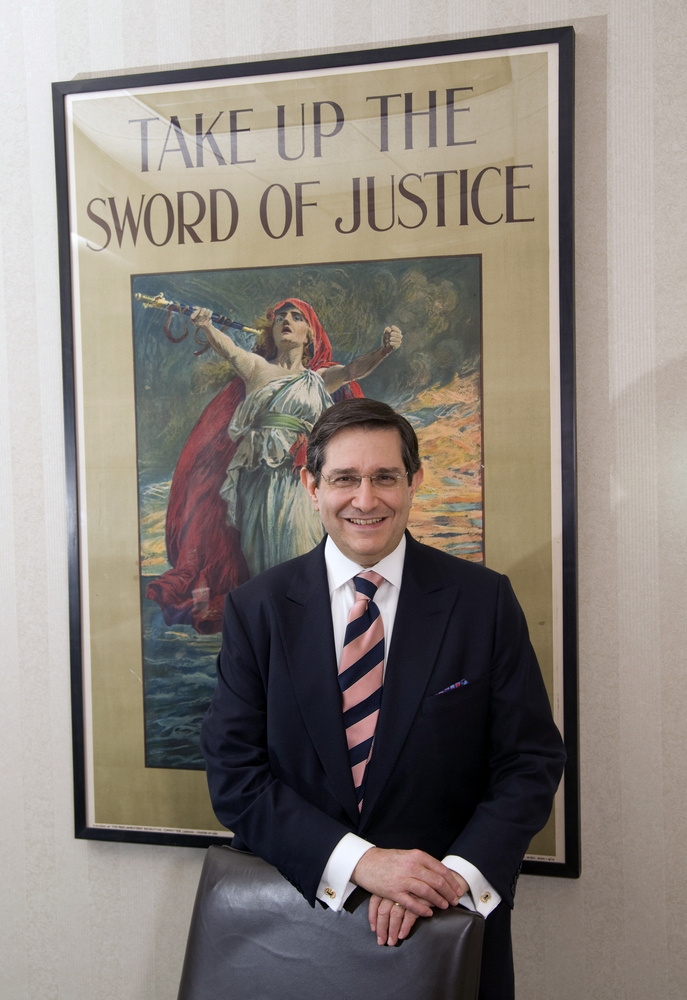
My wife, Minna, and I collect posters from the Belle Epoque and World War I periods. I also have some mens’ clothing posters, such as Edward Penfield for Hart Shaffner & Marx and a James Montgomery Flagg poster for Lee Hats. We are also active in the Jewish community and charities, such as the Hebrew Free Burial Association; The Museum of Jewish Heritage, A Living Memorial to the Holocaust; and the Sanz-Laniado Medical Center.
3. Dress in conformity with your life style, occupation, and social surroundings.
Category Interviews, Men of style, Styleforum
Cecil Beaton
0April 10, 2013 by Ville Raivio
“Be daring, be different, be impractical, be anything that will assert integrity of purpose and imaginative vision against the play-it-safers, the creatures of the commonplace, the slaves of the ordinary.”
~ Cecil Beaton
Category Aphorisms
The Boots of the Household Cavalry Mounted Regimen
0April 9, 2013 by Ville Raivio
Trooper David O’Mahoney of the Blues and Royals has the eccentric job of shining the shoes and boots of the Household Cavalry Mounted Regiment.
Category Eccentricities, Footwear
Interview with Daniel Wegan
1April 9, 2013 by Ville Raivio
‘I’m 30 years old and I make shoes. I don’t have much of an education. Just 9 years of Swedish Primary school and 3 years after that to become a zookeeper. I was quite into exotic animals in my youth and couldn’t think of anything better to do at the time. Turned out to be a waste of time. I´m single without children. In the past my job and clothing passion has probably been attractive to people. Once they realized these things have more importance to me than they, the relationships usually come to an end. My Mother quite likes my passion for clothing and is happy that I’m doing well as a shoemaker. I think every mother would like to see their son dress well. She does get a bit worried that I’ll run out of money one day. Thankfully, I work quite a lot so I haven’t gotten myself into trouble with any tailors yet.
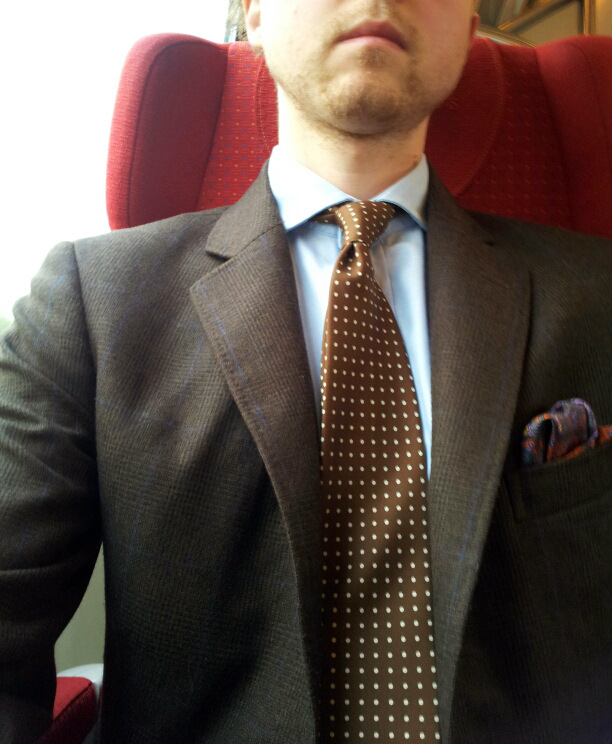
I think [my style interest] started in my mid 20’s when I got dumped by a girl and realized that if I was going to find a new one, I would have to do my best. Since I’m not a looker and my confidence was at an all time low, I guess I had to dress in a way that would help me. Obviously it didn’t really help much, but I did grow a love for clothing and shoes. After a while this passion turned into an obsession with a focus on shoes and how they were made. I think this must have been around 2007-2008, because in March 2009 I took a trip to London to ask the Bespoke shoemakers there how one would go about learning this trade. I also arranged to meet Dean Girling at his home in Norwich to speak to him about the possibility of an apprenticeship as a shoemaker.
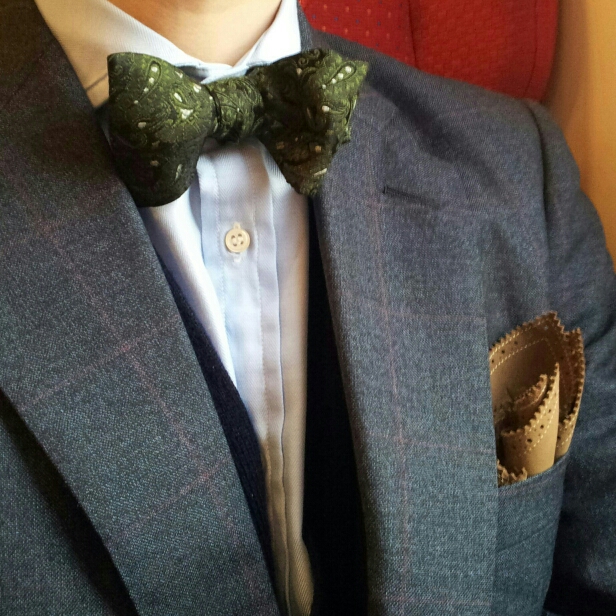
Inspiration: suede handkerchief
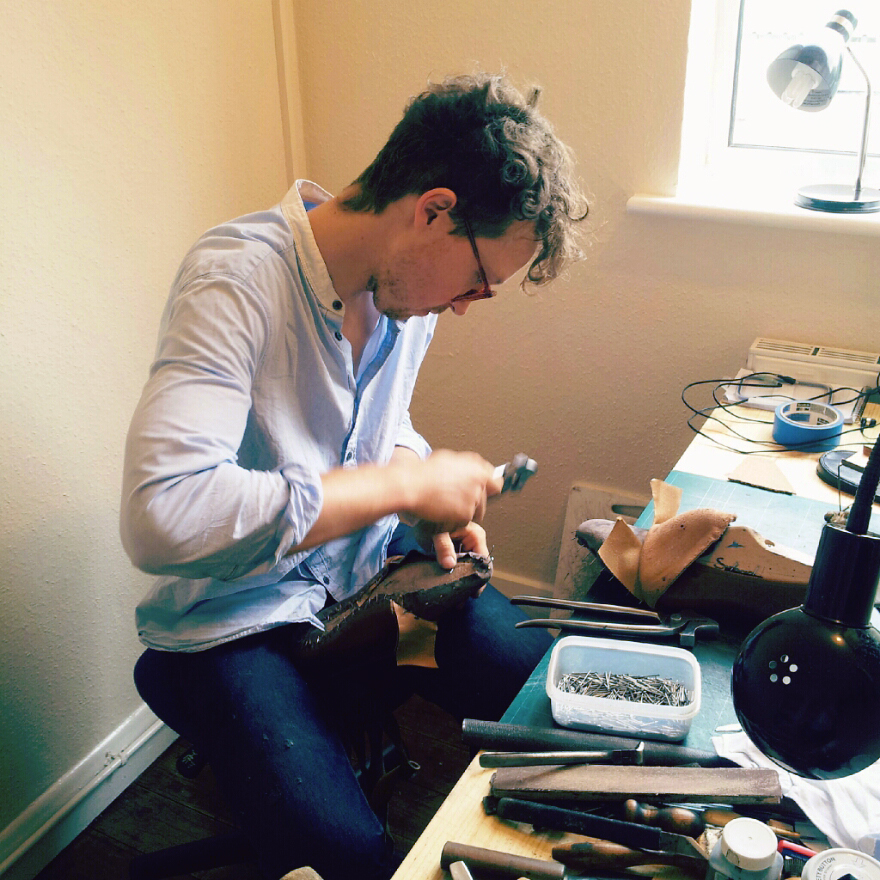
It wasn’t anything I really planned to do. I tried to find an apprenticeship with many different firms in Europe, the only one that was willing to give me a chance was G&G. I met with Dean in March 2009, and in August, the same year, I moved to Kettering and started hanging out in the workshop every day and trying to make myself useful. I wasn’t really told how to do many things, but I learned from books, taking apart old shoes and from some useful advice here and there from people around the shop. They have both been generous and taught me a lot. They are both very busy men and time with them can be hard to come by.
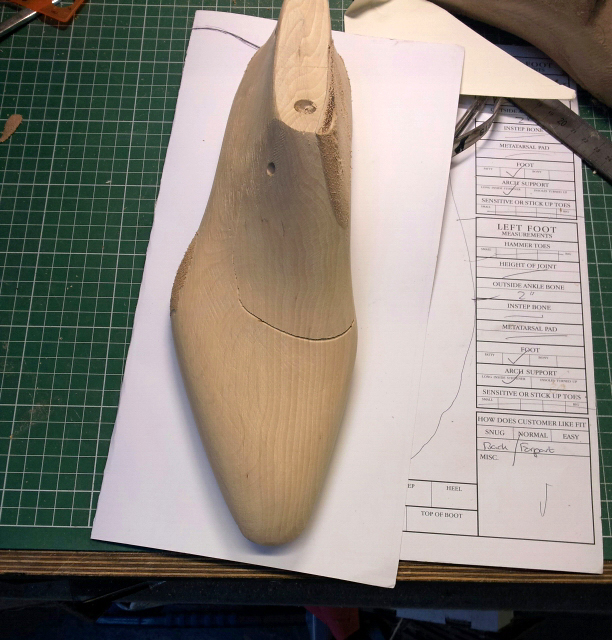
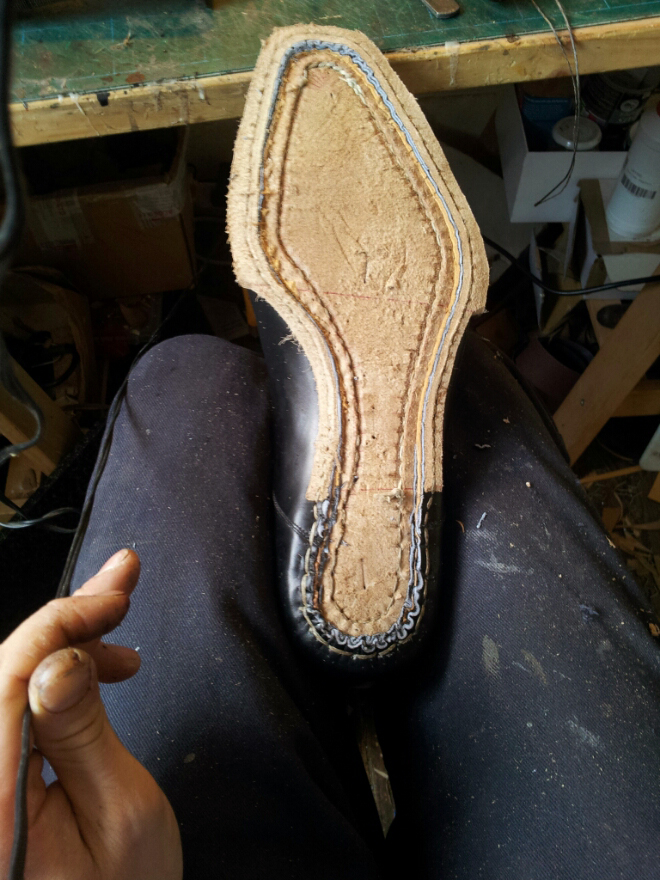
When I started at G&G, I was to become a bottom maker and that’s the job that Dean has done for over 20 years so. It was natural that he was quite important to me, to get me going on the road to become a maker. The fact that Dean doesn’t live in Kettering made it quite natural that I spent more time with Tony, and I don’t think I could have had a better mentor and friend in the early stages of my shoemaking than him. Since the,n my job at G&G has changed a bit from being a full-time bottom maker. I am no longer employed as that, and have transitioned to working as a lastmaker and pattern cutter together with Tony Gaziano. This is something that I never planned for to happen, but the fact that Tony feels confident with me in this position is very flattering and humbling, and I hope that we can take the bespoke side of the business to the next level together.
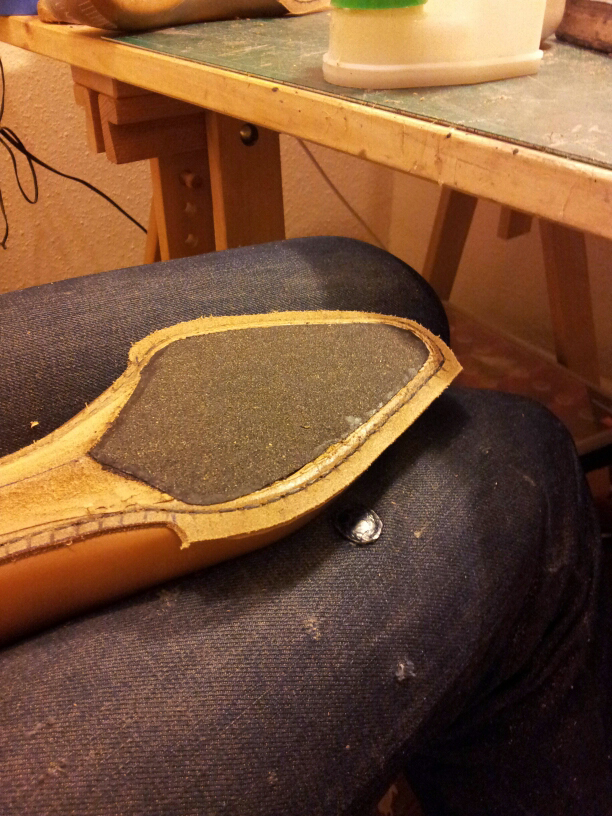
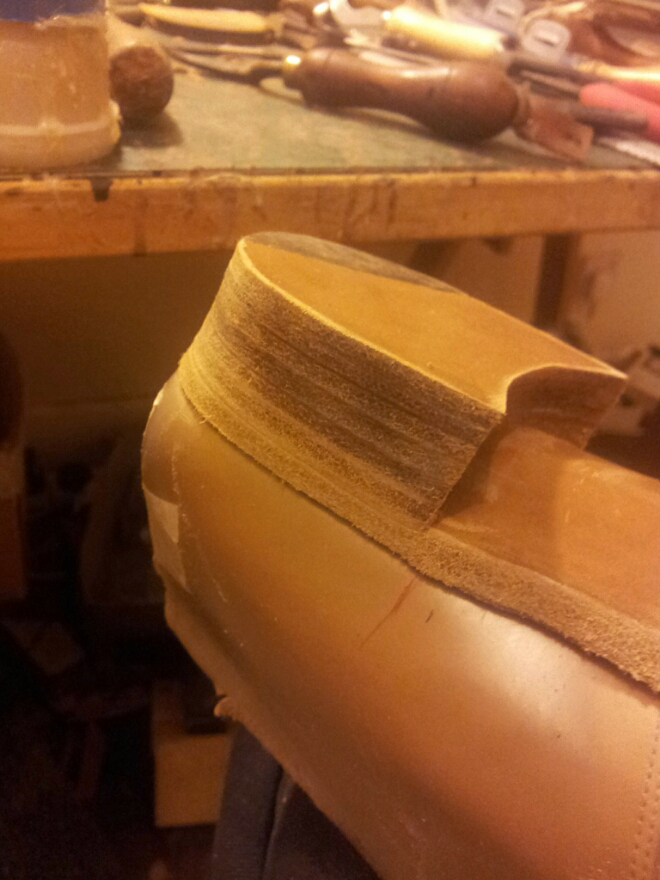
I think [my knowledge] is a combination of all of those. My first real idea of what shoemaking was probably came from websites and blogs, but when I, in august of 2009, moved to Kettering in Northamptonshire to learn how to make shoes at Gaziano & Girling, I got to see shoes being made in real life. A much more tactile experience than the Internet can offer. During these last couple of years I have been given the opportunity to learn and study shoemaking from the craftsmen I admire most, and through their knowledge managed to create my own style of shoemaking by taking methods and aesthetics that suit my way of working, and my idea of beauty and elegance. I would also like to thank the authors of the books about shoe productions published in the late 1800’s and early 1900’s for their time, and also for presenting and attitude that today is lacking in the bespoke shoe trade. A humble, but confident way of relating to the work you do. Pride without being cocky.
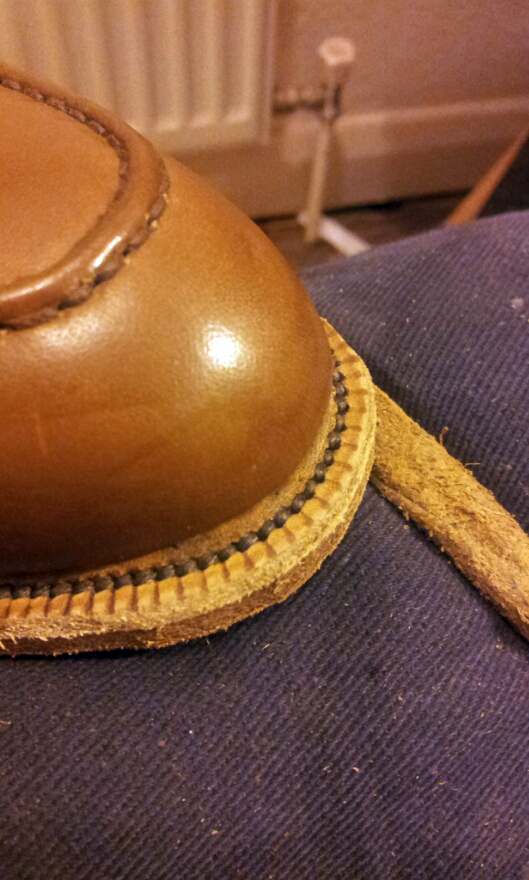
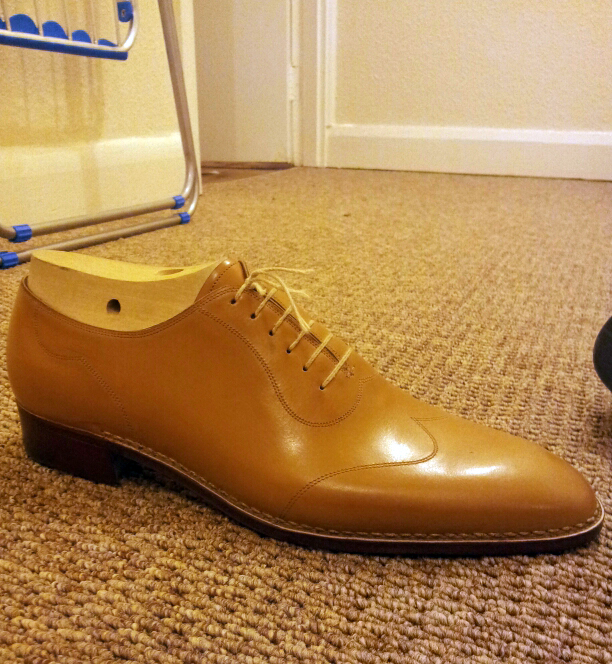
My own style can be a bit schizophrenic. I think I want to dress one way, but tend to go for another. I like the idea of a grey British “Uniform” and I do my clothing like this. When I think about it, I am more comfortable in shades of brown and so on, though. I think it’s because I don’t like to look intimidating. Even if I love tailored clothing, and there is nothing I love more than these things, I don’t want to overdress, and when you don’t have any office job and only wear suits and shoes on your spare time, it can be hard to pull of without looking out of place. Because of this, I dress in things that are not very structured and I probably wear a bit too much color and too many patterns. I am slightly autistic and inside my head everything is very structured and clean, and if I dressed that way it would be too much, and therefore I dress in a way that I think is more like the person I would like to be, rather than the way I actually am. This is also the reason why I rarely polish my shoes. Right now [my favourite model] is balmorals. I’m also very fond of monk shoes.
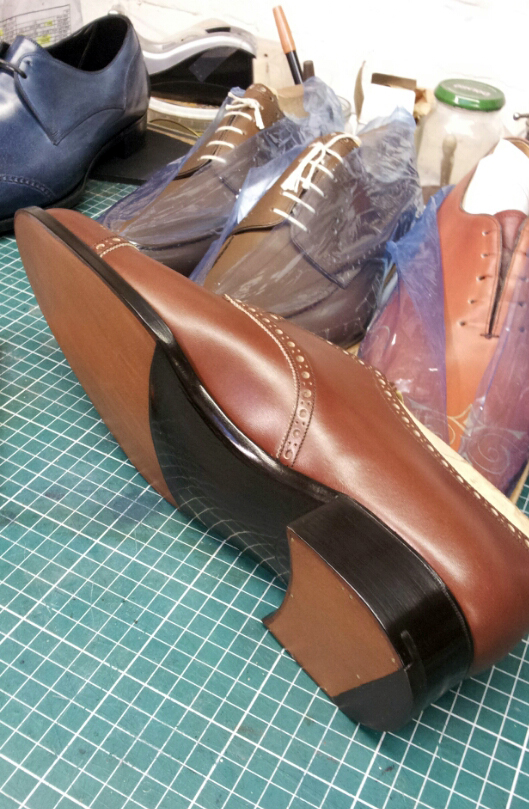
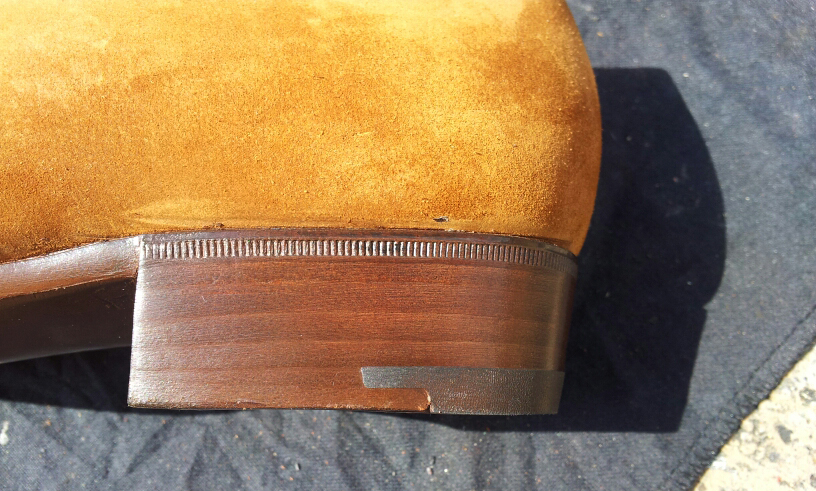
I used to be quite an avid swingdancer before I moved to the UK and this is something I try my best to keep doing, even if I don’t have the amount of spare time to do it as much as I used to. Apart from that, there is not much else I care about. Shoemaking is a big enough universe to keep me entertained and working.
I’m sure most people give the same answers, but my recommendation would be to start building a wardrobe of classics: cap toe oxfords, a bal boot, a monk strap and so on. When I first started, my eye was often drawn to more flashy shoes but nowadays these rarely get as much wear as more traditional pairs. I would also like to recommend people to buy a few pairs of bespoke shoes, rather than plenty of high-end RTW. When I first started in this trade I thought 3000 – 4000£ was a lot of money, and was sceptical these shoes would be that different to a factory-made shoes. Now that I have been wearing bespoke shoes that we make in our workshop at G&G, I would argue that they are worth every penny. The combination of flex and structure, shape and comfort is supperior to any factory shoe.
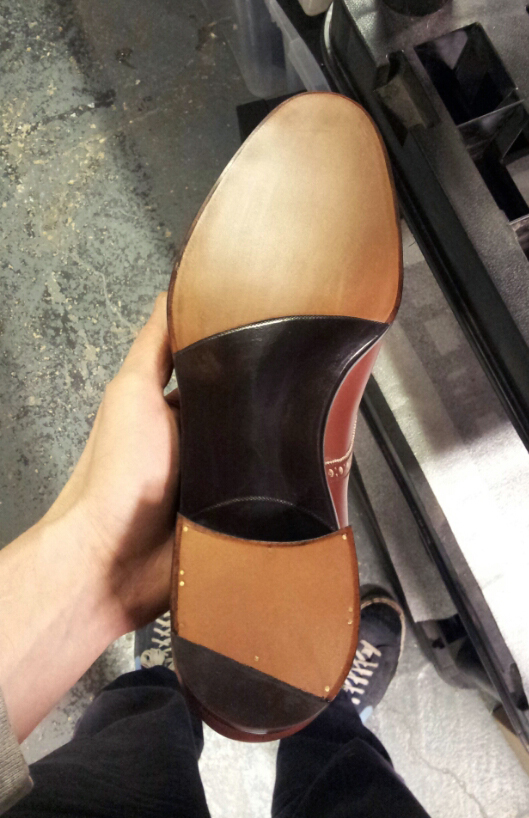
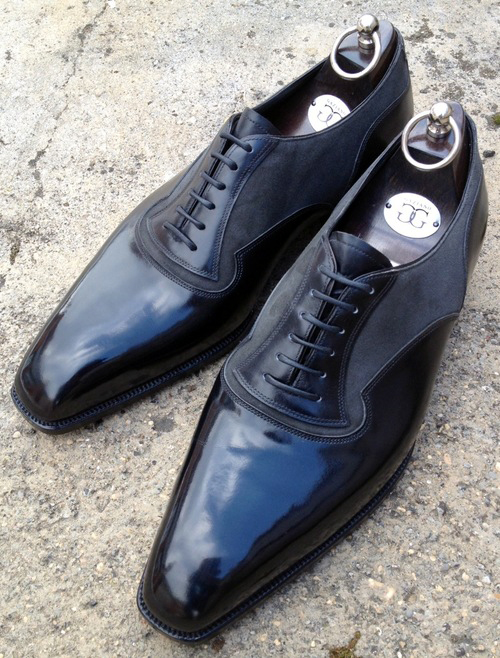
Buy less shoes and better shoes. Things are not what you think they are and more complex than you want them to be. All bespoke shoes are not the same. Every company, and craftsmen, have their way of doing things. I think the most important thing people need to learn is that shoes, and the way things are made, are very, very different between different companies and even craftsmen within the same company. Maybe these differences are not that noticeable for most people. But they ARE different. I hear alot of people talking about weather bespoke shoes are worth the money or if they are different from high-end RTW, and what surprises me is that most of these discussions are between people who have never worn bespoke shoes, saying that it’s not worth the money. Personally, I think there are very few resemblances between the products. There are differences in the way they look, but the biggest diffrence is in the way they feel and how they age.’
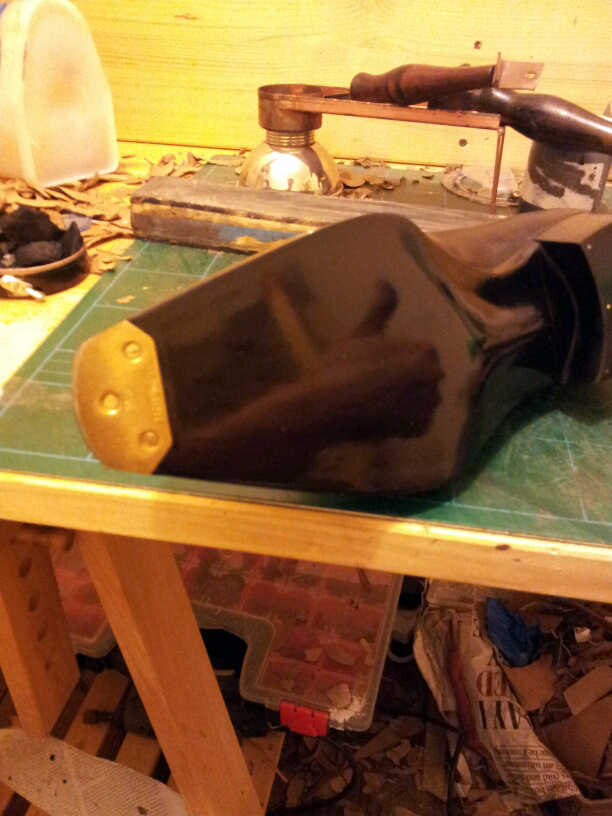
http://www.gazianogirling.com/
Pictures: © Daniel Wegan
Category Cordwainers, Interviews, Northampton
Copyright © 2013 Ville Raivio