An Interview with Paolo Martorano
0March 9, 2019 by Ville Raivio
VR: Your age and occupation?
PM: I’m 27 years old, which I think makes me the youngest proprietor of a custom menswear atelier in New York.

VR: Your educational background?
PM: I had the best kind of education imaginable for this business – I got a degree in textile science from New York’s Fashion Institute of Technology, and then spent seven years absorbing everything I could while working with two of the great names in men’s tailored clothing. One was Alan Flusser, a menswear icon with a great custom atelier, and the other was the legendary retail brand Paul Stuart, where I went to work in 2010, and helped build their custom and made to measure business as right hand to Mark Rykken.

VR: Have you any children or spouse (and how do they relate to your tailoring enthusiasm)?
PM: I’m in a relationship with a wonderful woman who also enjoys dressing well, and appreciates that I present myself as an adult, not like a teenager as is so common among men my age. Everywhere we go, people remark on how well put together we are. I think dressing your age projects crediblity and communicates that you are on top of your game, which is especially important for young professionals.
VR: …and your parent’s reactions back in the days when your passion began?
PM: Both my mom and my dad had parents in the tailoring business, so this was probably no big shock to them. My father’s family were tailors going back four generations, and my grandmother on my mom’s side was a professional furrier and dressmaker. My grandfather on that side passed twenty years before I was born, but I’d pore over the photos of him, and he always looked great, with amazing style.
My folks have been incredibly supportive, especially because I’ve chosen a segment of the garment business that creates a kind of sartorial longevity – quality and style rather than fashion.
VR: How did you first become interested in clothing, and when did you turn your eyes towards classic style? Why classics instead of fashion?
PM: Even when I was in grade school, I was that kid who worried about being underdressed. Eemember, back then, everyone my age wore cargo pants and t-shirts every day, so my love for intricate workmanship and elegant fabrics definitely stood out. The scene in the movie “Catch Me if You Can”, where Leonardo Dicaprio’s teenaged character is at a tailor getting a suit custom made – and orders three, that really made an impression on me! By the time I was seventeen, I knew this was my path. My family’s relationship with tailored clothing goes back four generations, so maybe it’s in my DNA.
VR: How have you gathered your knowledge of tailoring — from books, in-house training, workshops or somewhere else?
PM: When I was a kid, I was poking around in a bookstore and saw a book called “Dressing the Man”, written by Alan Flusser, and I felt like he was speaking directly to me. I started researching tailored clothing on the internet, and once I got my first afterschool job, I bought that book with my first paycheck. Ironically, I went to work for Alan as an apprentice after I left school, and every place I worked up to now has given me more technical knowledge and a deeper understanding of what goes into making any man look great.
VR: What other hobbies or passions do you have besides tailoring?
PM: When you own a business, that’s your passion, so it’s not like I have a lot of time for hobbies. I do love to travel and made my first trip to Brazil last year, which was incredible. I used to think about being an airline pilot – one of those jobs where you got to wear a suit every day, I guess.
VR: How would you describe your own dress?
PM: I think there’s this fallacy that most men who embrace bespoke clothing are dandies or peacocks, and I think I’m nothing like that. My personal aesthetic is based on choosing colors and proportions that flatter my complexion and my physique, rather than express a certain trend. When you learn what colors and proportions are correct for you – and a good way to start is with a dark suit, white shirt, solid tie and handkerchief – you know 85% of what it means to be well dressed, and you’re unlikely to go off the rails. Truly well-dressed people demonstrate consistency more than anything else.

VR: Who or what inspires you?
PM: I like realistic, everyday role models more than film stars or athletes or whatever. For me, inspiration comes from men like Philip B. Miller, who ran Marshall Field and Saks Fifth Avenue, or Edmund Moy, former director of the U.S. mint. They are not celebrities, but they are in the public eye, always well dressed and every time I see a photo of them, I’m getting a master class in how to do it right.
VR: Please tell us how your store was born and what goals you had in the beginning. How have you been received so far?
PM: The kind of men who gravitate to this level of precision and excellence in their dress also seem to understand and respect the entrepreneurial spirit – the impulse to create something and then watch it grow. Over the years, my custom clients, many of whom had achieved remarkable success in their own lives, gave me the confidence that, even though I was young, I could offer something of merit to bespoke men’s tailored clothing in New York if I went out on my own.
I opened my studio in the neighborhood where my prospective clients lived and worked, opting for a quality location rather than a bigger space in the wrong neighborhood. My goal in the beginning was to stay afloat long enough to develop relationships with traditional bespoke clients, as well as attract younger men who were new to the experience. When I’d sold my 50th suit, it made me pause, take a deep breath, and think about where the business could actually go. By the 100th suit, I began to understand that the potential was even greater than I imagined. As we begin 2019, I guess I’m both humble and hopeful in equal measure.
VR: What is the house style of Paolo Martorano bespoke?
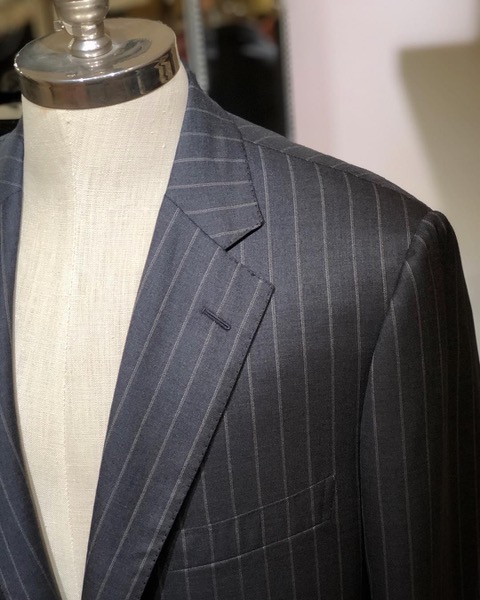
PM: We really don’t have an immediately identifiable “look”, unlike the Savile Row houses or most other U.S. clothiers. I prefer to use the client as the foundation of our style, because the idea of a bespoke suit is to reflect his preferences and tastes, not mine. I will say that my approach features an absolute commitment to quality fabrics, dedication to construction practices that are deliberately classic by nature, and a passion for finish detail that is missing from too many so-called bespoke garments.
VR: There are several fine tailors in New York — why should my readers try you?
PM: As far as real tailors – places where you can still walk in and meet the maker who will fashion your garment – you can count them on one hand and still have room left. I’m not a tailor, I don’t cut or assemble your garment. I do, however, work directly with my master tailor to best realize the client’s point of view. In fact, Paolo Martorano bespoke is the only place left in the country where a client will experience a “toile” fitting.
That fitting begins with a meticulous measurement process allowing us to create a “soft” — or preliminary — paper pattern, and an initial “draft” garment fashioned from scrap fabric or muslin. After any required adjustments have been made, the paper pattern is updated — becoming a “hard” pattern which will live with the client forever. This is a template of sorts that will permit us to make updates over time as the client’s size or preferences evolve.
Only then is the chosen cloth cut. This is the bespoke or benchmade process practiced in the time-honored way. It’s important to note again that I don’t push a point of view down the customer’s throat. They will be wearing that suit for years to come, so it’s their satisfaction that matters. Naturally, I offer advice and guidance, but we are partners in this experience, so I don’t dictate their choices.
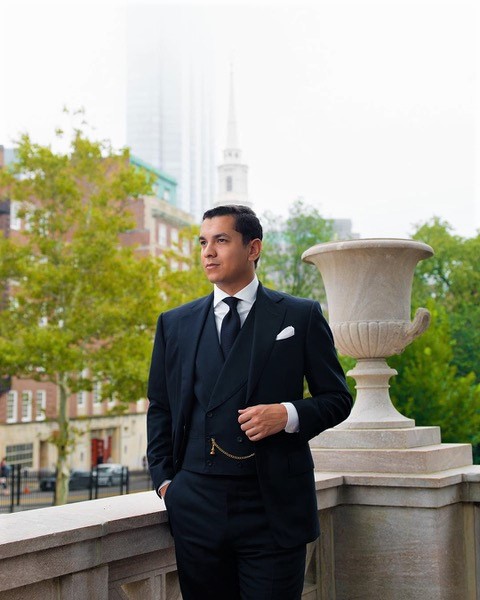
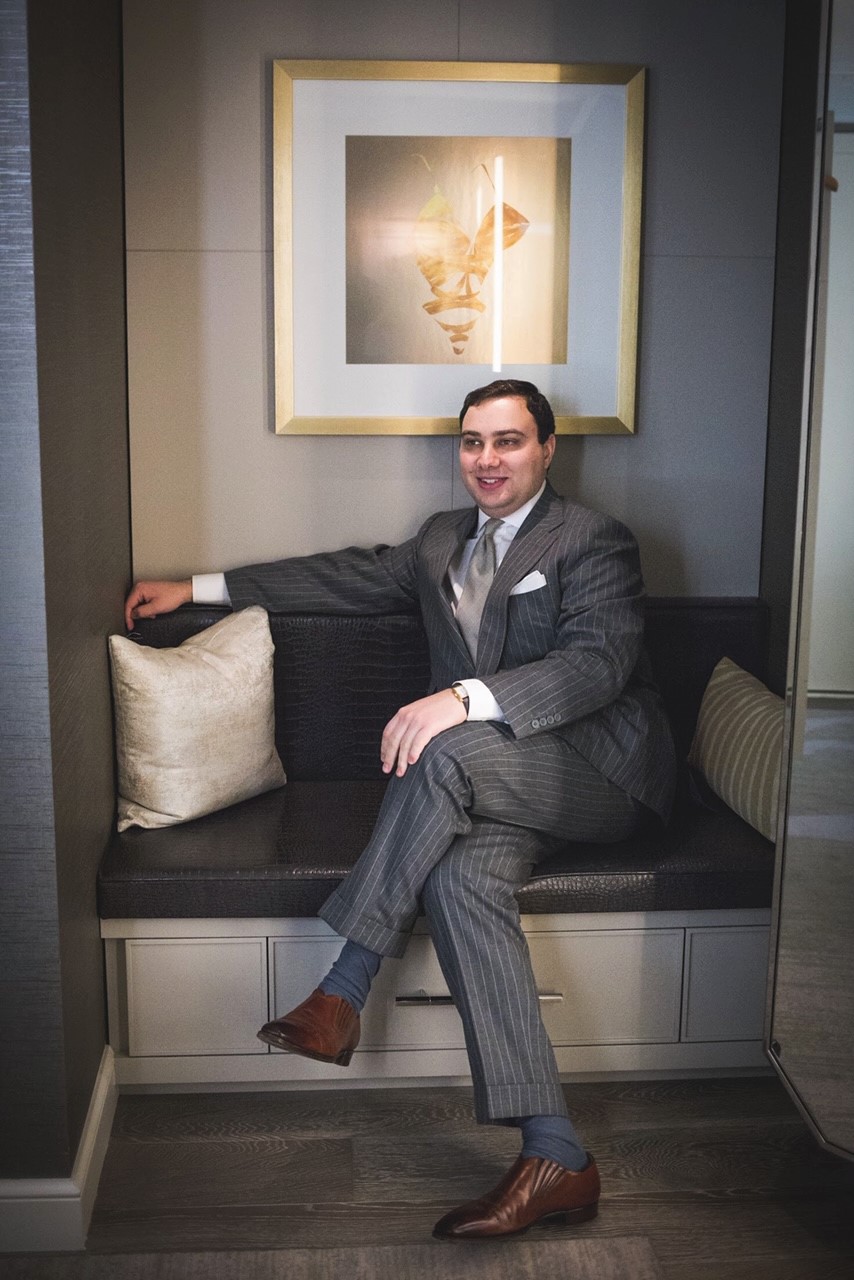
Martorano bespoke as worn by Mr Castiel
VR: Finally, over the years you must have learned quite a bit about fit and proportions and such. Is there a pet peeve of yours you wish more men would know about?
PM: Often, when a client gets interested in bespoke clothing, they want to dive into the most exciting things they can imagine. They get almost intoxicated by it. But that zeal can lead to mistakes, whether it’s the cloth or the style or the proportion – its trial and error. I always shake my head when I see a man wearing a suit that is too tight, and the chest breaks open because the jacket is struggling to unbutton itself. So, fit is of paramount importance to me. I’d tell men to find the scale that fits you first, and then you can express a preference for conserative or more wild style through the use of color, pattern, etc. Personally, I believe the most elegant men wear very simple patterns or solids, with great proportion and scale.
Developing a custom wardrobe is an expensive experiement, but don’t beat yourself up if you make a mistake or two, because those failures are going to teach you what succeeds for you.
Category Interviews, Quality makers, Tradesmen
Anatomy of a Mercer&Sons Button-down Shirt
12February 22, 2019 by Ville Raivio
Mercer&Sons is a very American shirtmaker founded in 1982. It’s helmed by David and Serena Mercer, who founded the factory as a direct slap on the face of Brooks Brothers. BB once sold “The” American button-down shirt, but from the 1970 onwards began to make ever more small changes in order to make their shirts quicker and increase the profit margin. BB finally moved most of their production to lands on far away shores. This simply wouldn’t do for the Mercers, who wanted quality and American manufacture. Thus, they drew their own patterns in the 1980s but kept the details that most good American button-down shirts had held on to over the decades. Offset cuff buttons, lowered second placket button, dense buttonholes, loose fit, and an unfused, rolling collar. The hallmarks of Ivy League-style shirts.
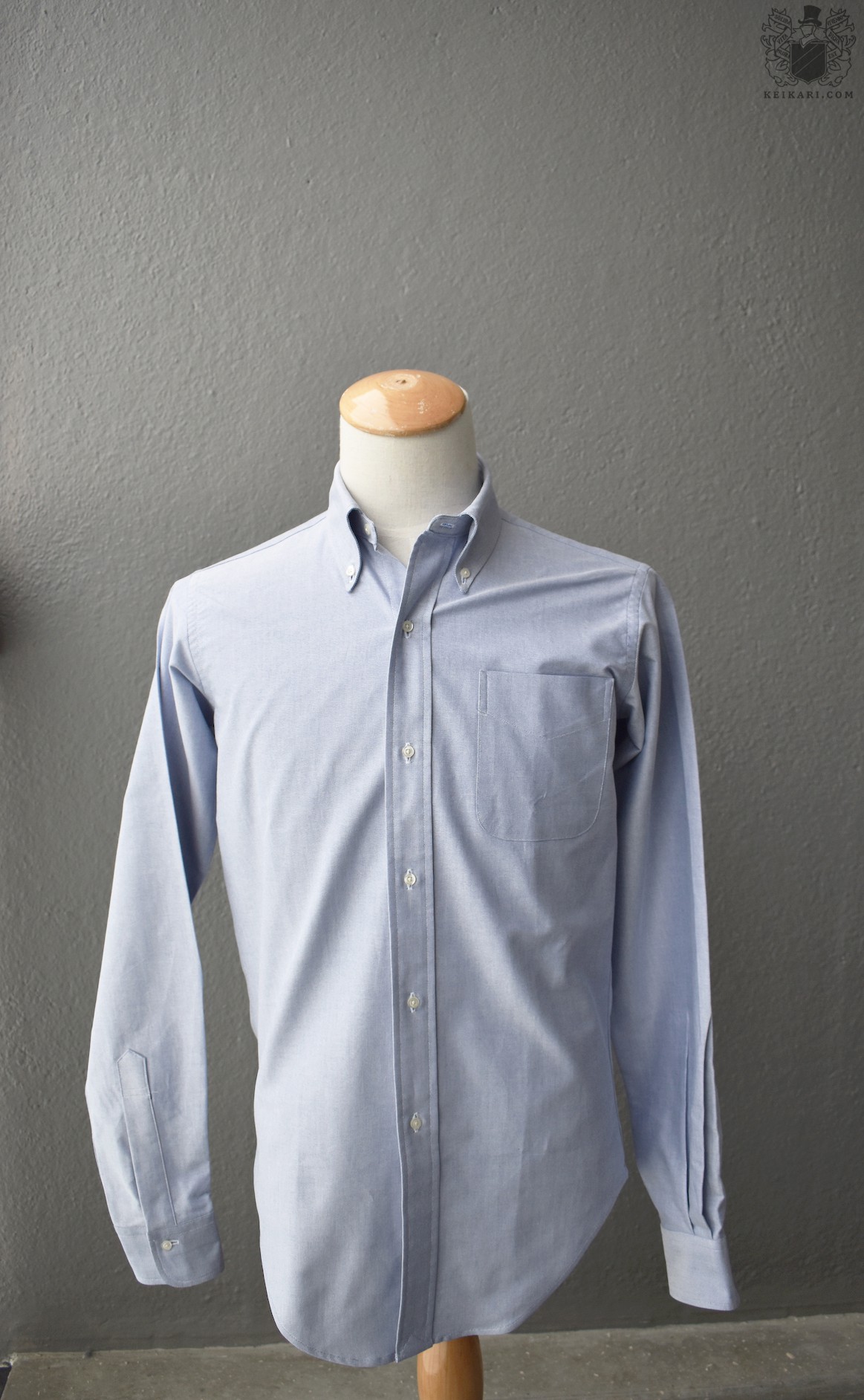
Mercer’s 2-ply Pima cotton fabrics have been specially woven for the factory for decades. Today, Mercer offers boxer shorts as well as their RTW-selection. They only make four collar shapes, though, but the 8.7 cm long button-down version is clearly the most popular one. This one can be had without the collar buttons as a “Button-less” model, then there’s a spread collar with 7.3 cm long points, and a straight collar with the same measurement. By default, Mercer shirts come with barrel button cuffs. All shirts are hand cut and hand made in America, with single-needle stitching. On average, their sizing is very loose but customers can also combine collar sizes to body sizes. The example shirt has a 15.5-inch collar on a size 14-body, along with a taper of 4 inches on the hem. Mercer sent over this OCBD-shirt, or oxford-cloth button-down shirt, for Keikari’s perusal.
First, the fabric. It drapes extremely straight even on a hanger. There is enough heft and body in the yarn, so I will call the fabric a heavy weight. Unlike, say, on a flannel shirt or an overshirt, the oxford cloth that Mercer uses has a very smooth and flat surface. The yarns seem to be woven with a small unevenness, so the fabric looks interesting and reacts well to light. It doesn’t crease much and the weave is loose enough to allow heat as well as moisture pass. I believe this is the kind of oxford cloth that the better shirts used to be made from.
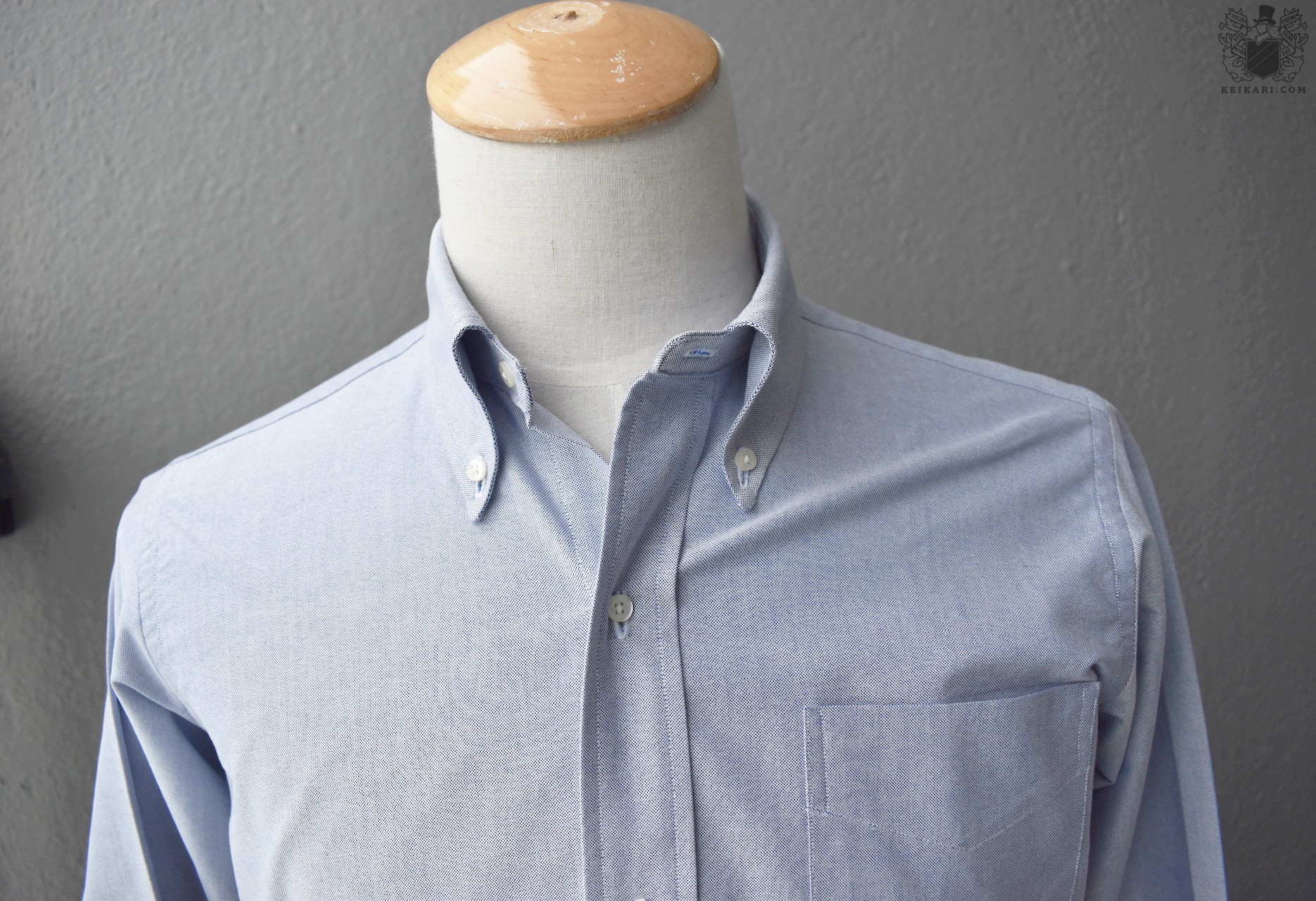
Then, the collar. It is 4,3 cm high at the back, which makes it an extra high one, and the points are 9 cm long with a spread of 8 cm. Combined with the soft construction and hefty fabric, this collar truly rolls. It has one of the most beatiful rolls I’ve seen.
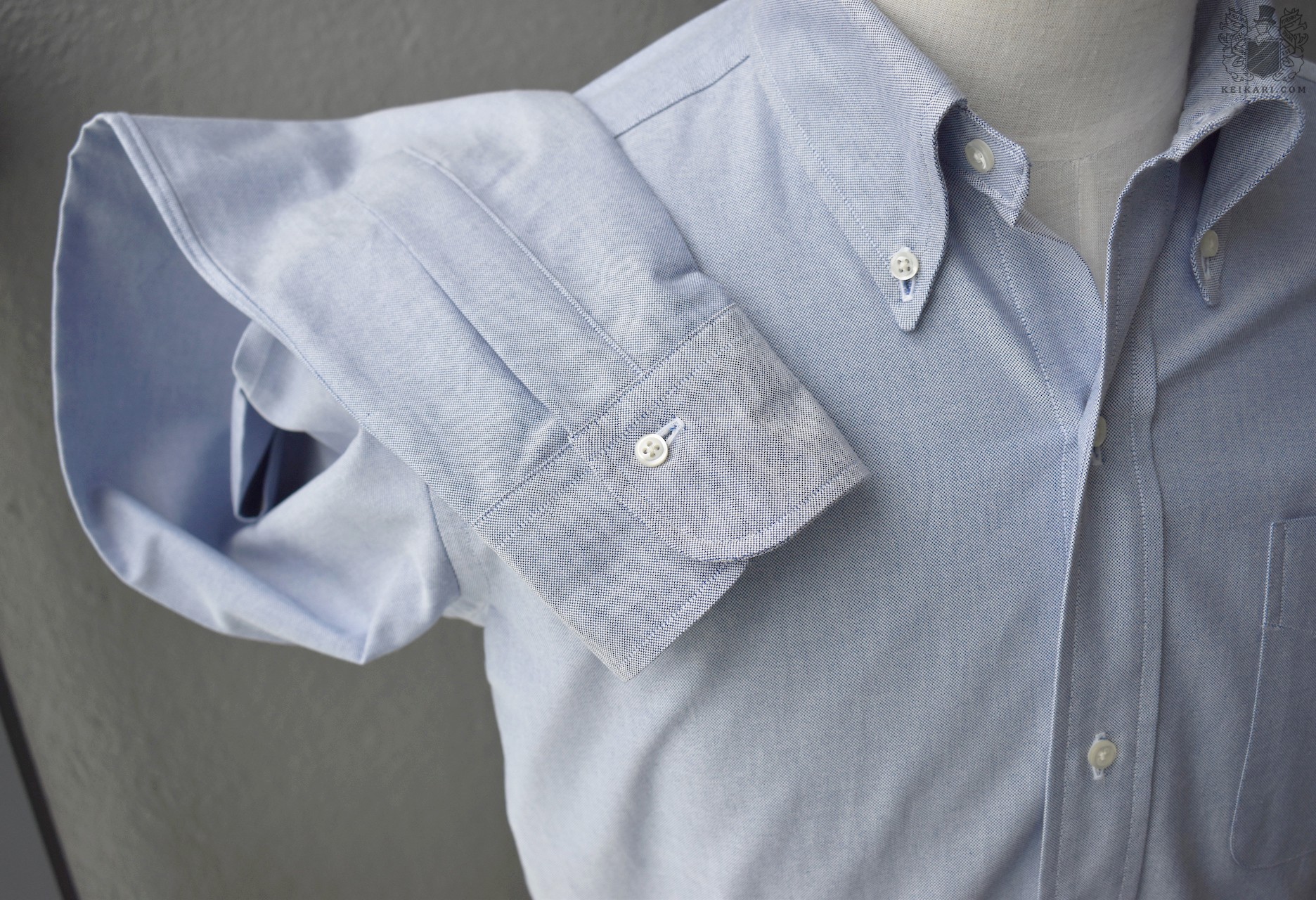
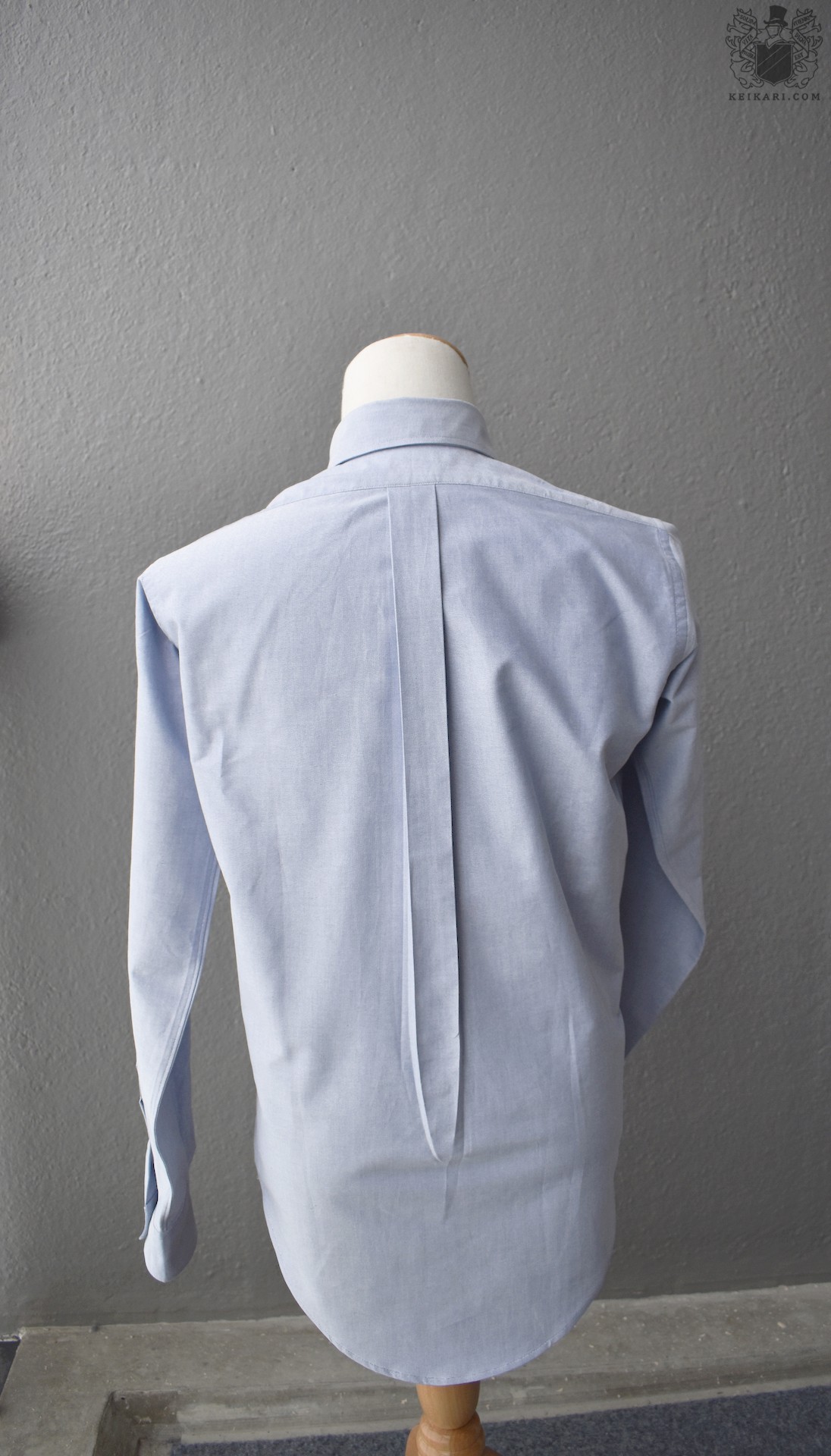
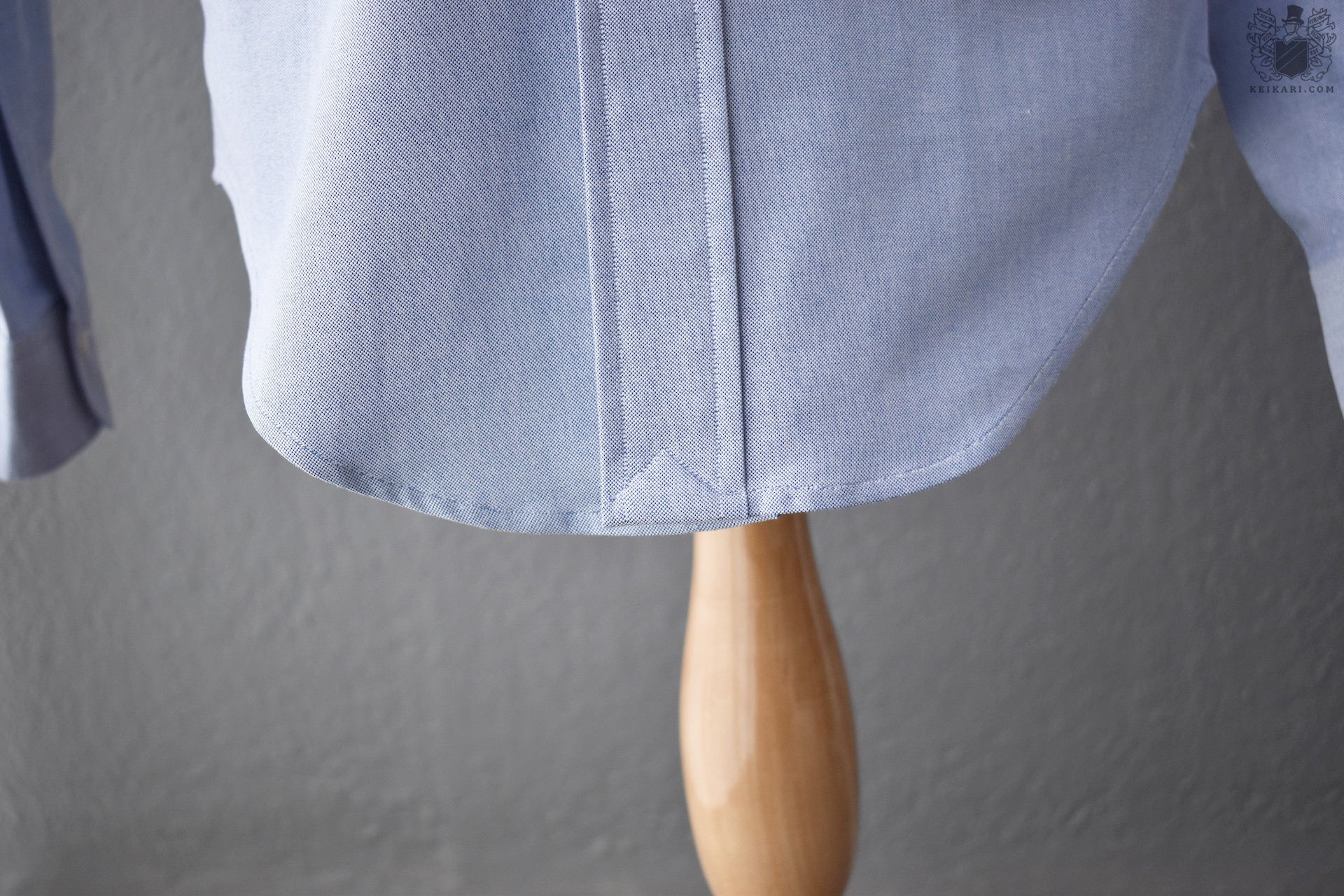
Next, the make. The seams are straight, the plastic buttons are small and clean, the French seams are dense, there are no loose threads, the buttonholes are extremely tight, the box pleat at the back has around 5 cm of loose cloth for comfort, the front and back hems are long to cover all naughty parts. On this custom size, at least, the cuffs are slim and fit close. This is not common enough these days. The shirt is well made in my eyes.
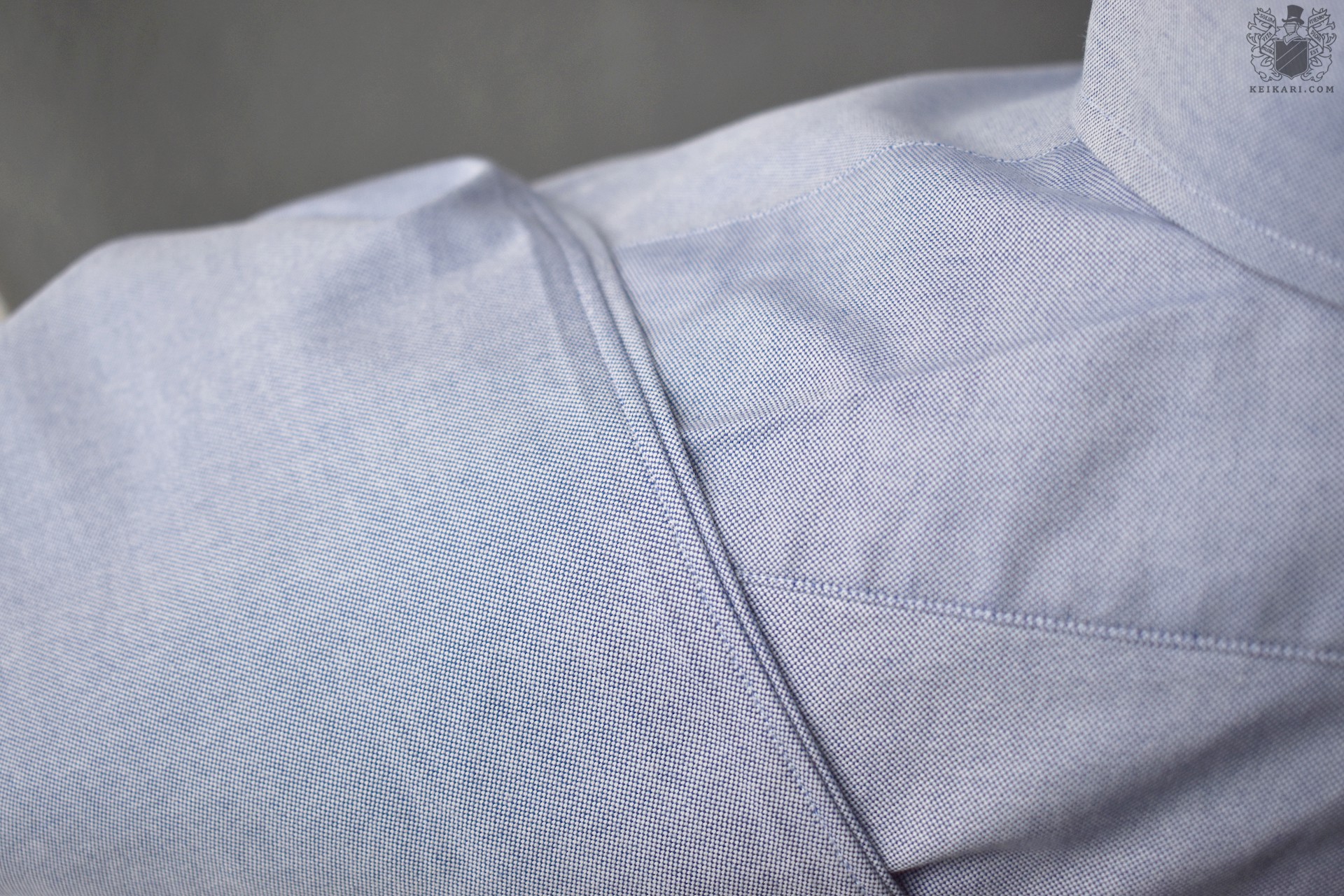
In short, this is the best damn RTW button-down shirt made in America. Just like I had read elsewhere and now seen with these own two eyes. The only things I would change is the extra large cut, which is a default option, and the plastic buttons. Otherwise it puts the things Brooks Brothers calls a shirt to shame and shows what dedication and commitment can achieve. If there truly is a better OCBD-shirt, do let me know in the comments.

Category American style, Quality makers, Shirts, Web stores
An interview with Matt Deckard
0February 19, 2019 by Ville Raivio
VR: Your age and occupation?
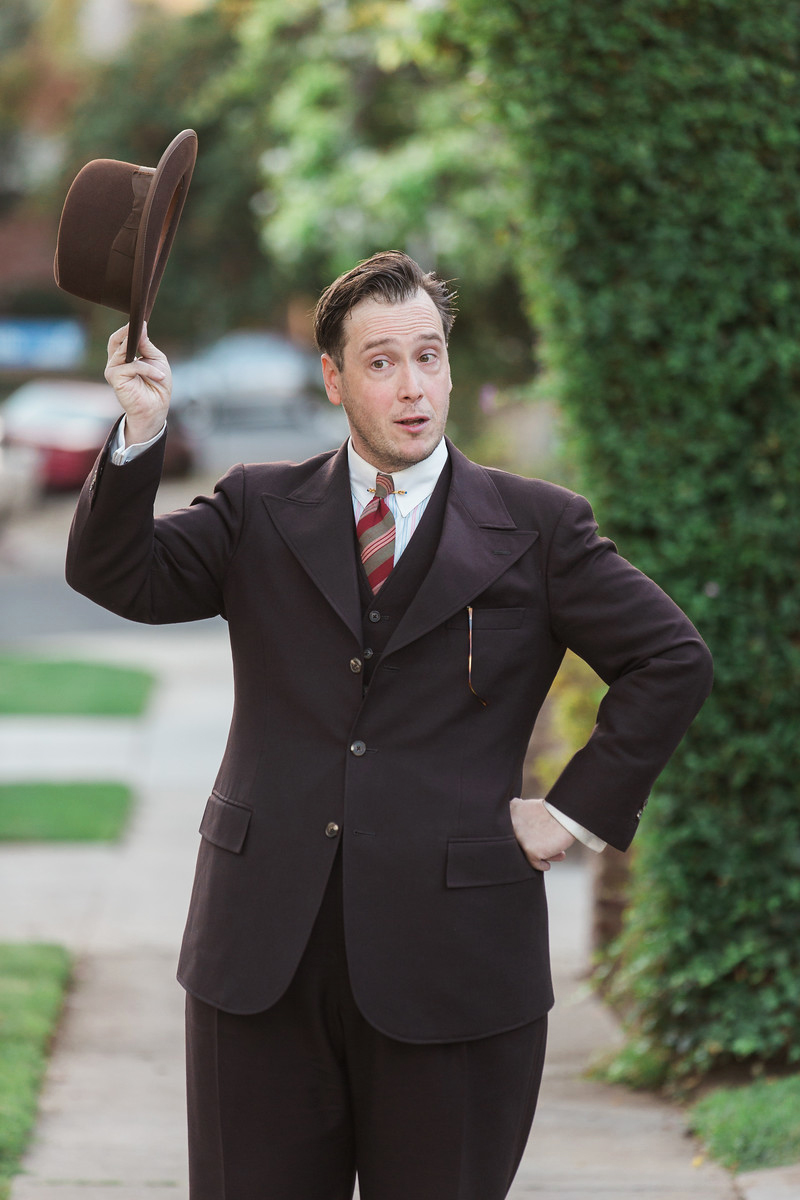
MD: I’m 41, and am a company turnaround specialist…also known as a turnaround man. I go into companies that may be failing, diagnose why, and build a plan to bring the brand back from the brink. I’m also a menswear designer and writer specializing in historical clothing.
VR: Your educational background?
MD: Through college I’ve studied US and world history and some fencing, but ultimately for what I do, I’ve had to learn it on my own through countless hours of going through piles of vintage clothing, hunting down books on garment construction and anatomy and just thousands of old magazines that have forgotten information on how where and when, at times, certain items were in or out of fashion. From the hardest to find minutiae on what makes good felt and bad felt hats, to how to make a better sweatband, to articles on why the militaries of different countries use different wooden forms (lasts) for making their shoes, I’m hungry for as much information as I can get, and process it to see what still pertains to the modern day man.
VR: Have you any children or spouse (and how do they relate to your vintage enthusiasm)?
MD: I don’t, but in the past, my relationships have always been quite accepting of me wearing a suit and hat everywhere I go. It’s pretty easy for a man to toss on that jacket and trousers and shirt and tie. In contrast, most women I have dated love dressing vintage themselves, yet lament on the ease of menswear from the past versus that of the garters and hairdos that were traditional womenswear of the 1920s, ’30s and 40s.
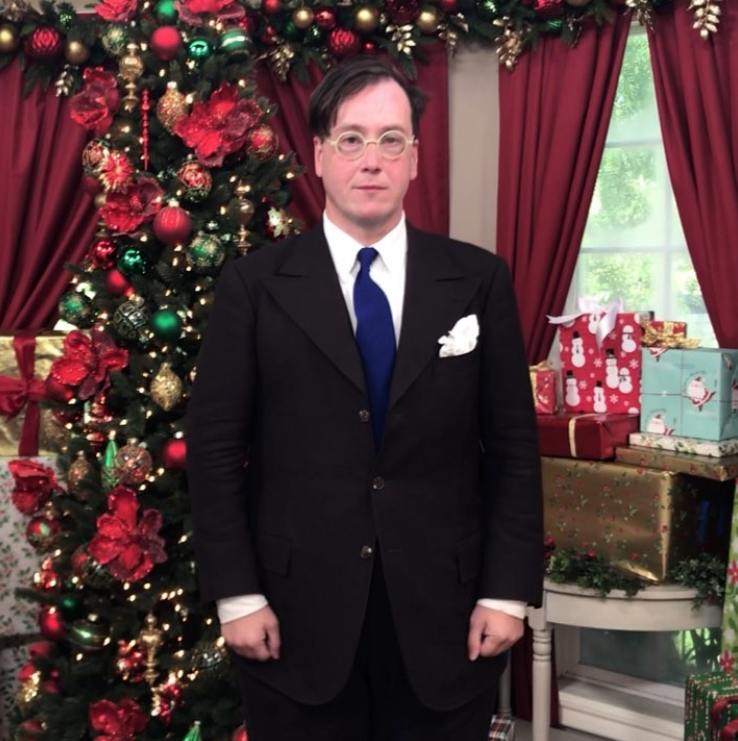
VR: …and your parent’s and siblings’ reactions to style back in the days when you began?
MD: I grew up in a family that was a literal black hole when it came to style. There was no style whatsoever. Just any T-shirt off the rack, and mainly jeans are what my siblings wore.
I’m the only one that really ever wore tailored clothing on a regular basis. My Pop wore a suit and carried a briefcase to work after leaving the Air Force in the 1980s, but as soon as he could, he left those suits in the closet as relics of his past. His new wardrobe consists of various hues of khaki cotton trousers and thick button front casual shirts of all colors. A creature of habit, he never moved toward T-shirts, but the rest of my family lived by stacks of them. I was in that mix for a while… then that all changed.
VR: What other hobbies or passions do you have besides apparel?
MD: I’ve always loved swing dancing, and when I got my first chance, I jumped at it and have done it since. There is a place to swing dance in LA every night of the week.
I am also a massive science fiction addict. Star Trek being the one thing I watched religiously as a child. Trek, and many, many other obscure books and shows that just tell mind boggling tales.
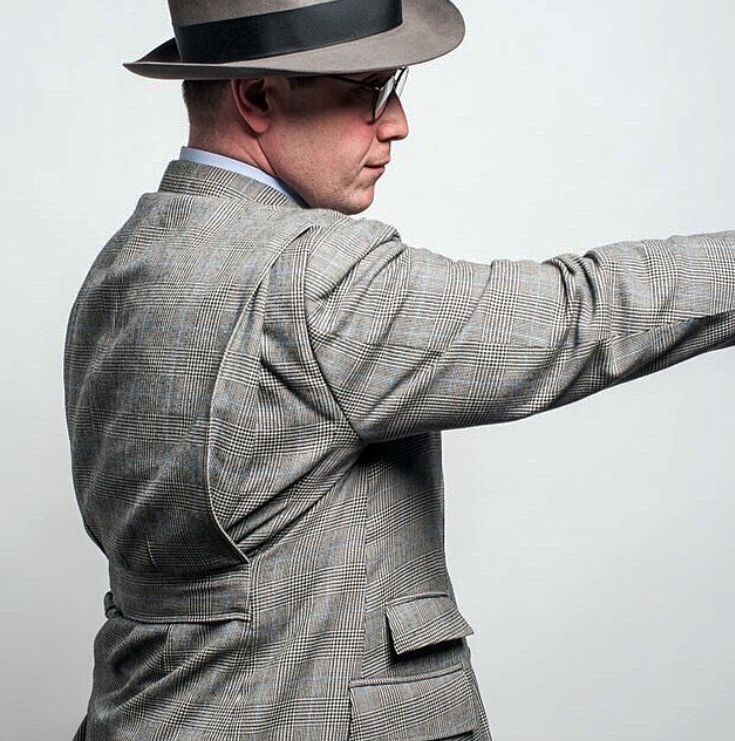
VR: How did you first become interested in clothing, and when did you turn your eyes towards the tailored look?
MD: There is a tone of chivalry to suits that I have always aspired to. I think that originated from when I went to the theater with my parents to see the movie, The Untouchables. Seeing Kevin Costner in that three-piece gray suit of his just sparked something in my soul. He was covered and comfortable and a true man of action. From head to toe, he wore it all and not the other way around. I’d grown up seeing people wearing suits and just thinking they were uncomfortable… but with that movie, my mind was changed.
VR: How have you gathered your knowledge of clothing — from books, in-house training, workshops or somewhere else?
MD: It started with a lot of trial and error of buying often dark-colored shirts and black cotton or navy cotton pants at places like Target. I never really knew what I was doing at the time outside of breaking from the jeans and T-shirt, and moving to shirts that had a collar that I could wear a tie with and pants that had a crease down the legs. I’m a pear-shaped guy, so any suit I tried on off the rack just never fit in any way. Through trial and error I would hunt through thrift stores to find jackets that fit me, and I’d pair trousers that were complimentary to the jackets I’d buy. As time went by I’d gotten very good at putting it all together to the point where people were often asking me to help them up their wardrobe game. It wasn’t just shopping, though, I’d collect Esquire Magazines from the 1930s and look up information on tailors and old makers when I’d find a label I liked in thrift jackets that carried the aesthetics I liked. I eventually moved to finding tailors and one by one I’d whittle those around me down to tailors that would just make what I wanted without their ego or house style being involved.
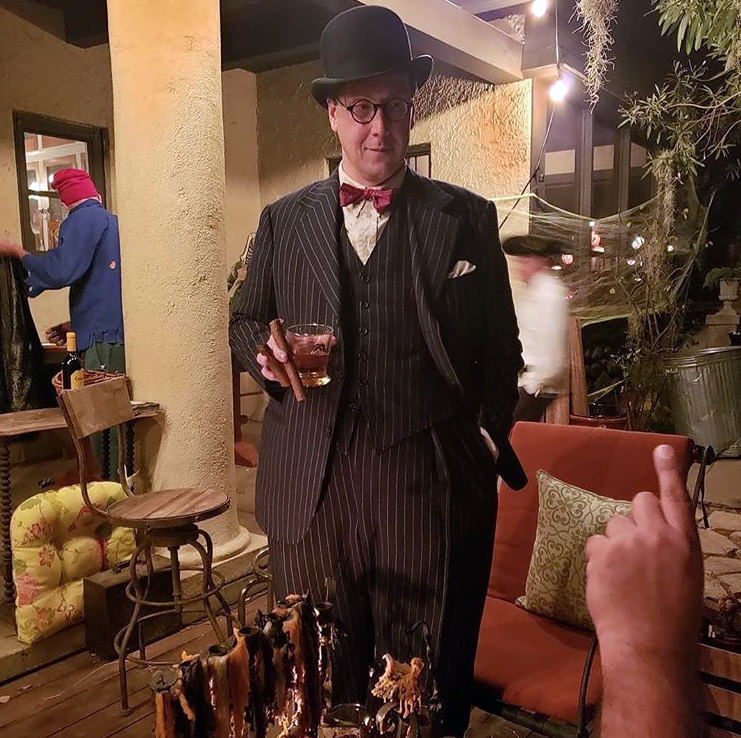
VR: How would you describe your own dress?
MD: I tend to keep it looking quite 1930s in general. At least when it comes to the look of my suits and spearpoint-collared shirts. I used to wear some true vintage clothing, but now all my suits are custom made. I’m not a dandy, but I do fancy myself more of a well-dressed in another era’s clothes. I like the tailoring of today, but to me the balance and proportions of the 1930s were just much more masculine and flattering. I try always to wear three-piece suits where I can ditch the jacket if I become overheated while dancing, and still have that vest to dress me up on the floor.
VR: Who or what inspires you?
MD: Solving problems and understanding people is what inspires me most. Comprehension and insight into what someone is thinking and why they would wear a certain look, or live a certain way has always captured my imagination. There are a few artists out there that I like very much, but when it comes to inspiration, it’s the idea of comprehending someone else that has always inspired me.
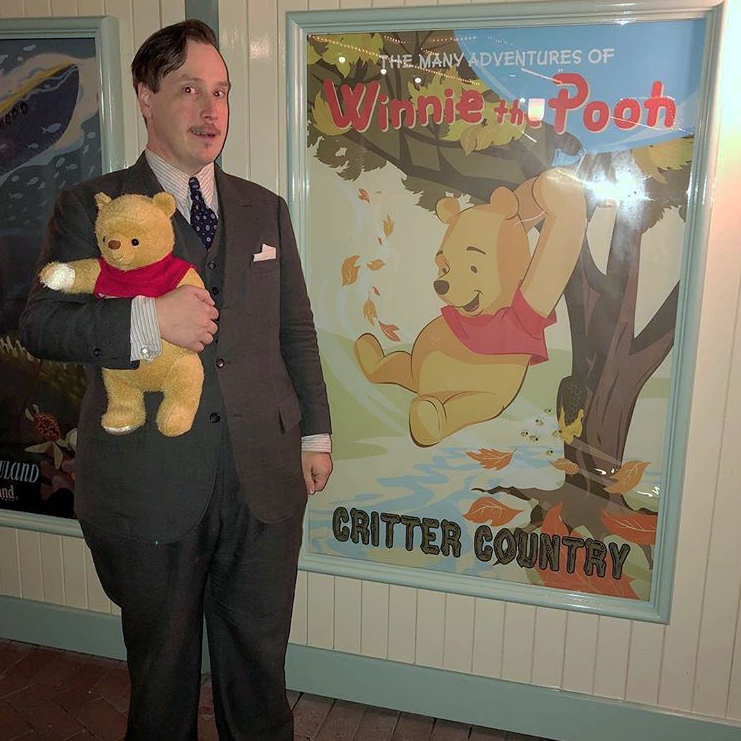
VR: What’s your definition of style?
MD: Style is when your passion truly shows through in how you present yourself.
VR: You have a passion for vintage garments — is there some era that fascinates you over others?
MD: The 1930s is when men’s tailoring went from jackets and trousers that were quite anatomically fitting, to tailors breaking the mold by accentuating attributes like shoulders and the mens’ waistline while giving the vest a snug, almost corset-like fit, and trousers a grander line by putting men in high waists where a wider leg dropped down to cover the foot. The era where Hollywood became the visual center for how a man should look, and the clothes were uniformly changed to accentuate the athletic silhouette that was another step away from the idea that a peacock chest and narrow trousers were the beat-all-end-all in masculinity.
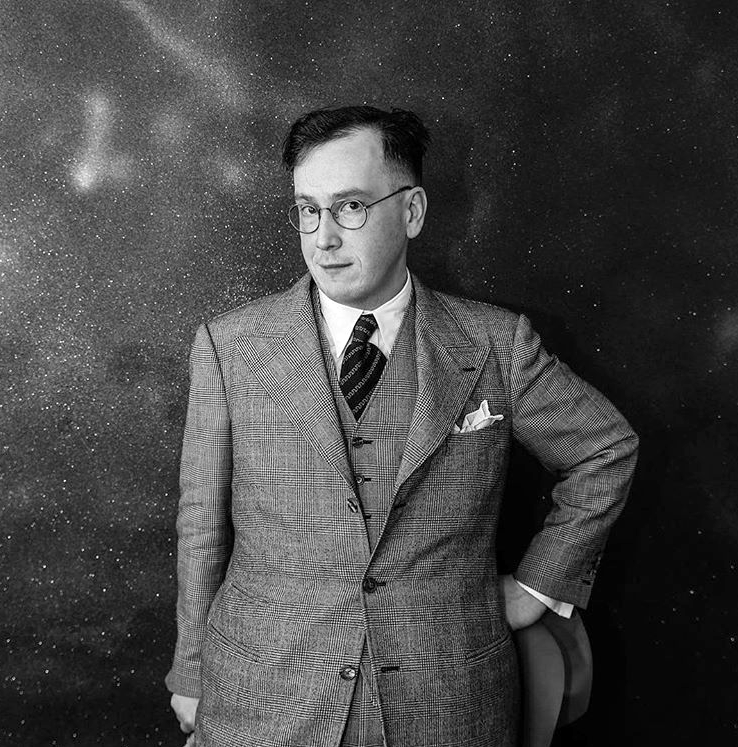
VR: Finally, why should Keikari’s readers acquaint themselves with vintage clothing?
MD: Many people don’t know that if you flip the collar up on a suit jacket, you are actually wearing a military uniform; that the holes in wingtip shoes used to go all the way through to allow water to drain out when wearers were walking through marshes. Today we live in a world where the go-to suit is usually navy blue or charcoal gray, but the past was a time where brown and rust and green and patterns like windowpane were part of the daily rotation. Vintage clothing and collecting it is an exercise in knowing the meaning behind why and how men today still look at the suit as a staple in their wardrobe, and an exercise in learning how to take complicated variations from belt-backed jackets made of linen to yellow shirts with small polka dots as the pattern…
An exercise in figuring out your own style, and often you are doing so on a budget. You will find things that you never thought you would wear, but will become worn out old friends that you find can’t be replaced in years to come.
Category Designers, Interviews, Tradesmen, Vintage
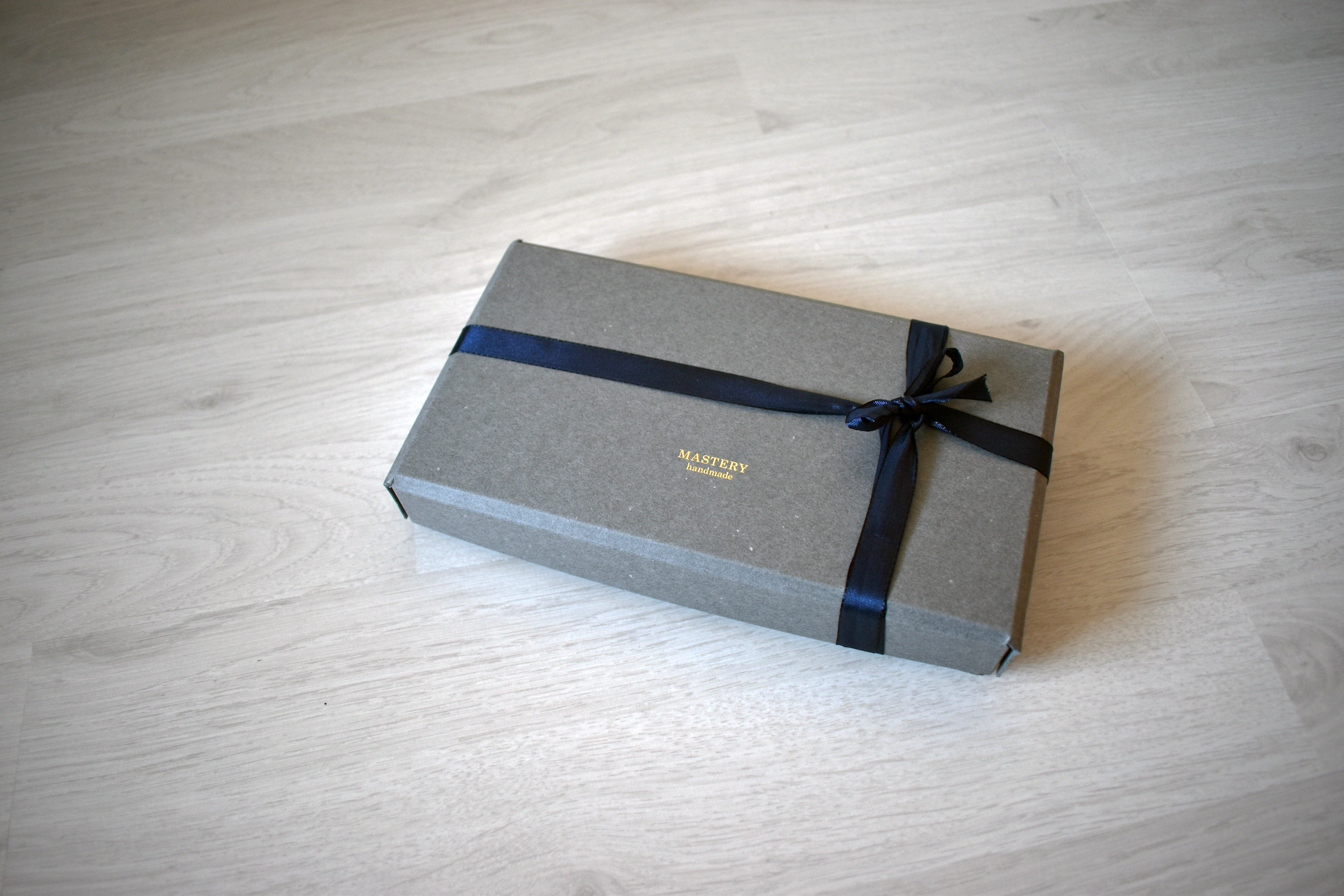
Mastery – Handmade Leather Goods
2February 14, 2019 by Ville Raivio
Mastery is a leather brand based out in Japan and specialised in saddle-stitched leather goods. A one-man operation, it is helmed by a Mr Kage, a self-taught artisan. He began his studies in leather crafting from online manuals in 2004, before this time he had a passion for collecting raw denim. As for leather as a material, he tells me “Personally, I like stuff that looks better with age, meaning the aging process of the leather which will form a patina after repeated use. This process usually tells a unique story of the owner, just like a pair of raw denim.”
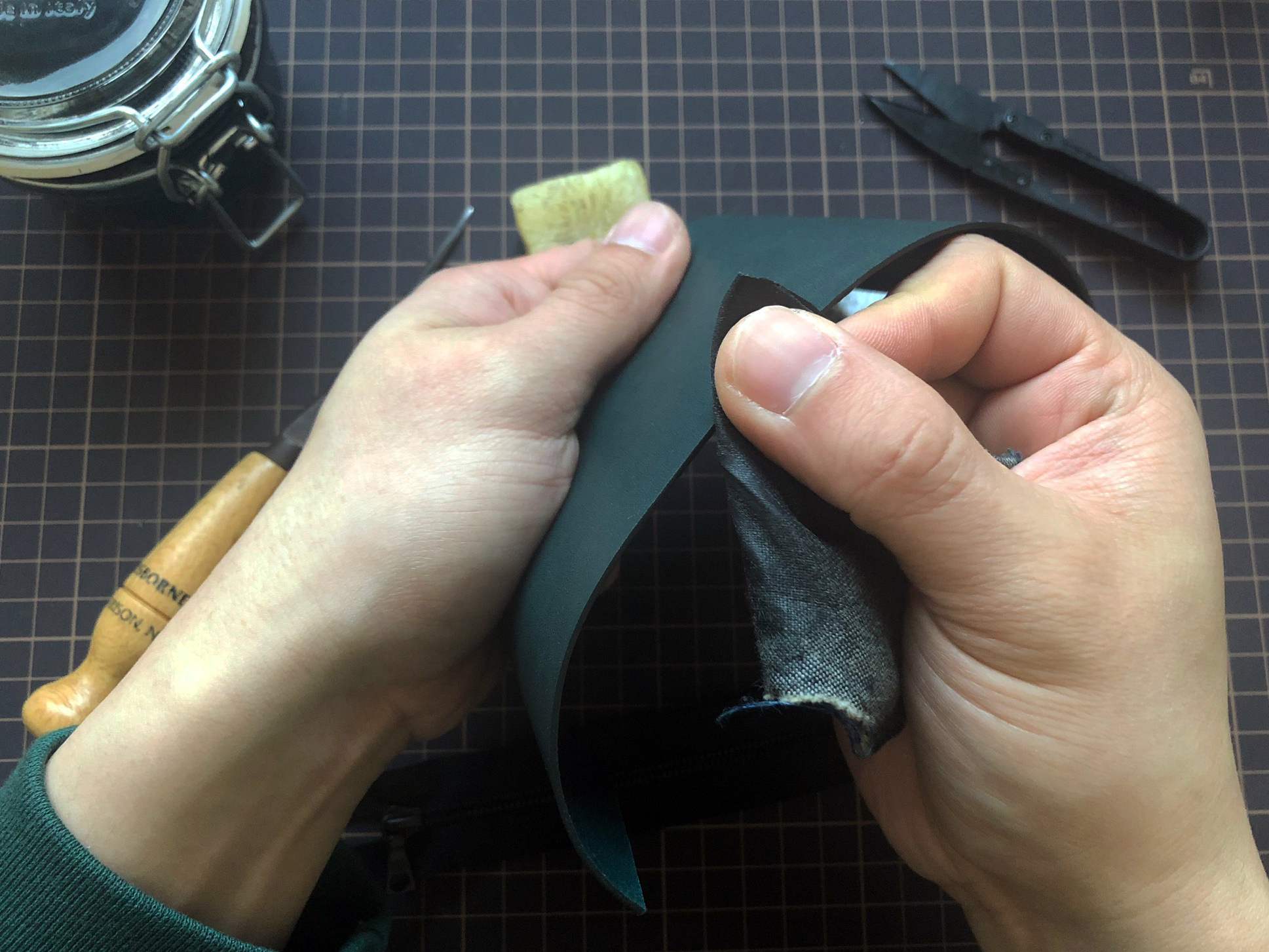
“I only use vegetable-tanned leather, not chrome-tanned, because of the ingredient and the aesthetic (chrome leather tends to appear more plasticky). I don’t use exotic leathers because of the way the animals are treated.” The current range has dozens of wallet models, some 18 bags, keychains, cases for cards and coins, and colourful special makeups.
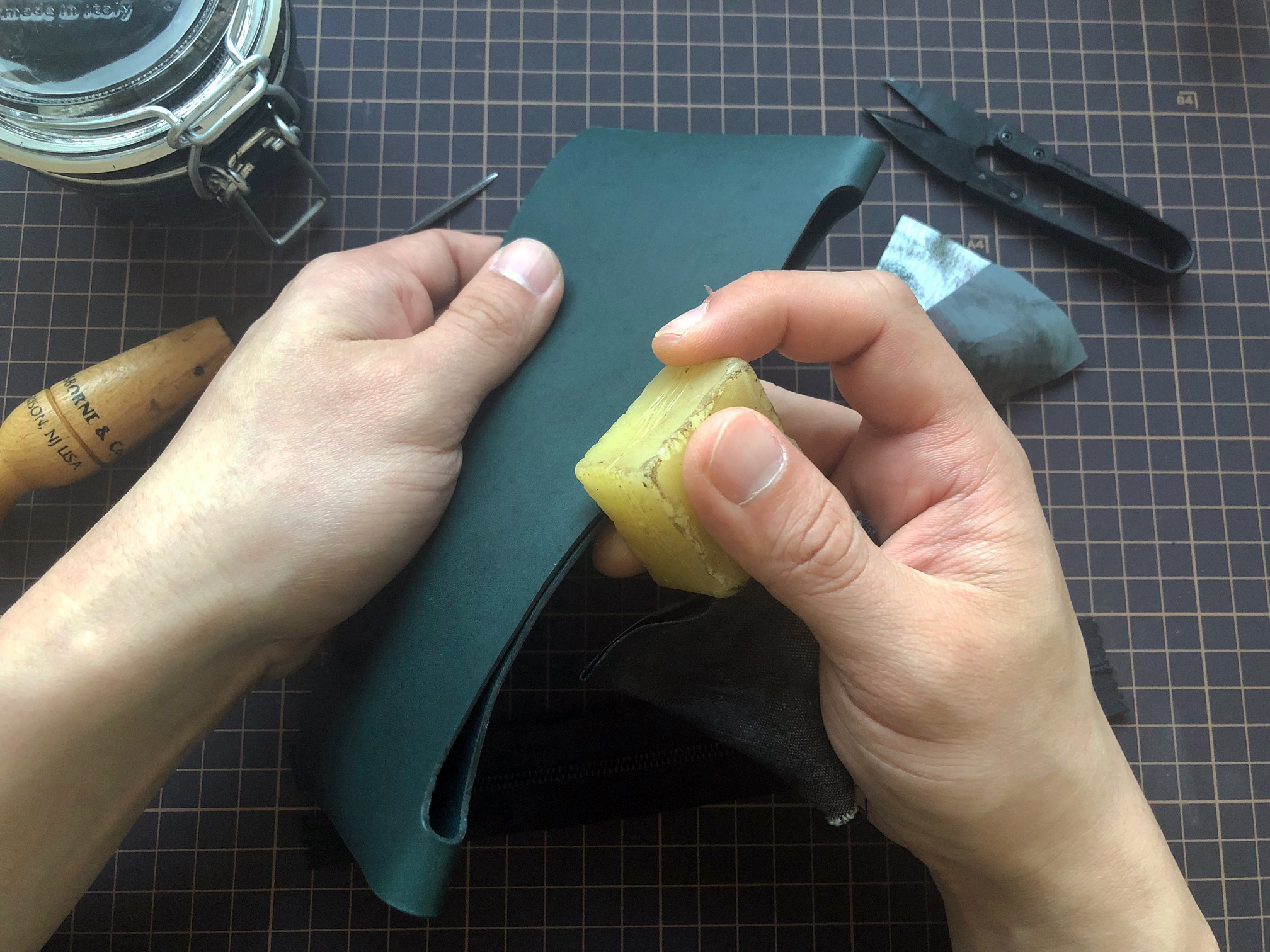
Mastery favours Italian Vacchetta leather, known for its tendency to develop a rich patina with time and wear. The vegetable-tanned hides react to sunlight and moisture, so they’re favoured my bag and case makers. Small scratches become darker with time and part of the unique look. For threads, the company has chosen the French firm of Fil au Chinois for the durability that linen offers. Zippers are made by the famed Swiss company of RiRi for durability. All these are imported to Japan and finished pieces shipped all over the world.

For inspiration, Kage shares the following: “Inspiration for me usually begins with the leather I touch and feel. I want to use that leather in a particular way to showcase its best characteristics, be it the look itself, the color, softness, or the thickness. My designs are mostly classic but contemporary, they reference the ways people carried their stuff around in the old days, and now. Since my products are all handmade and hand-stitched, I will factor in how to make the design more unique, rather than designing mass market factory-made products. Design and craftsmanship are both equally important to me as Mastery’s work is not replication of designs but all handcrafted.”
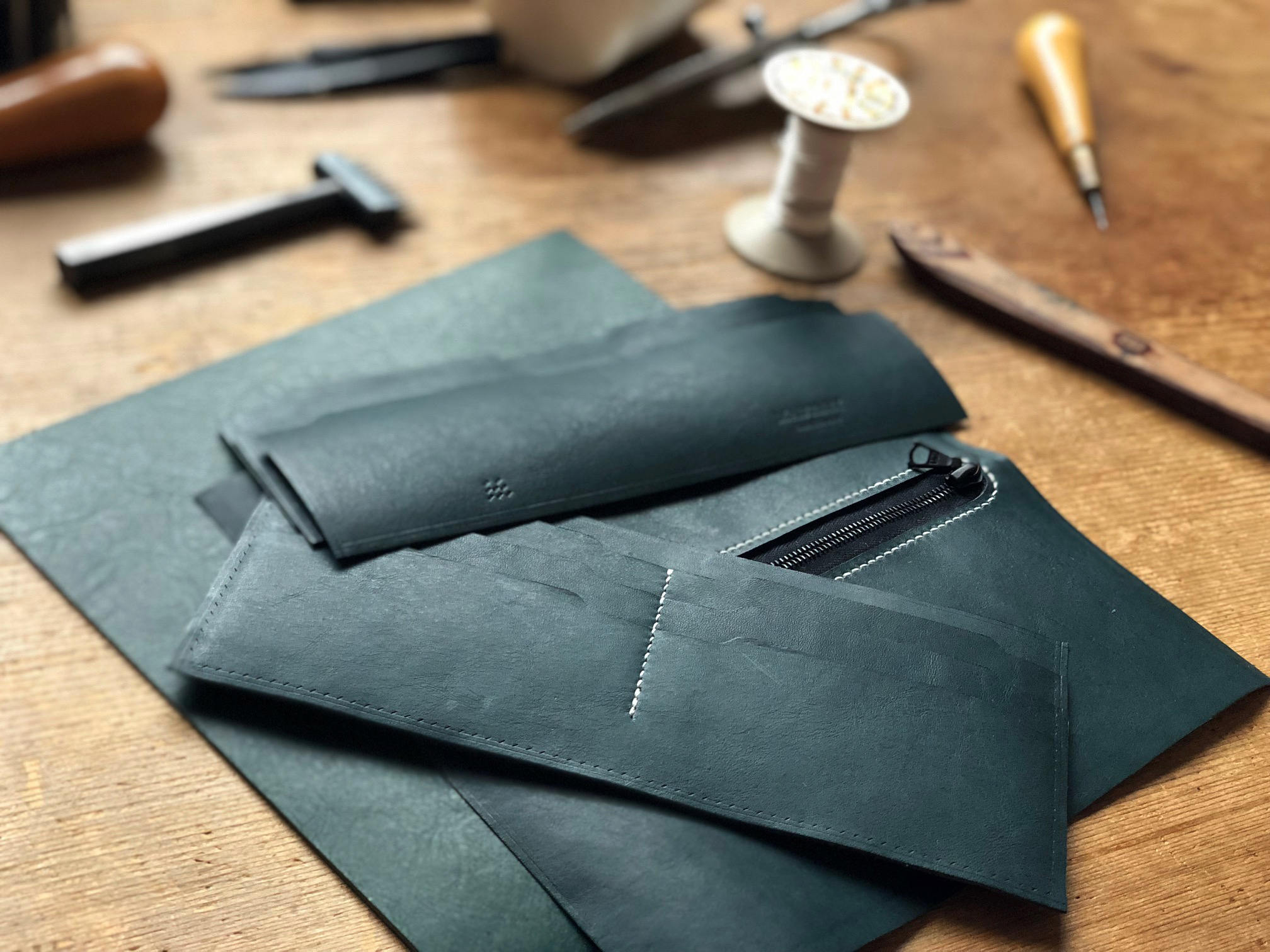
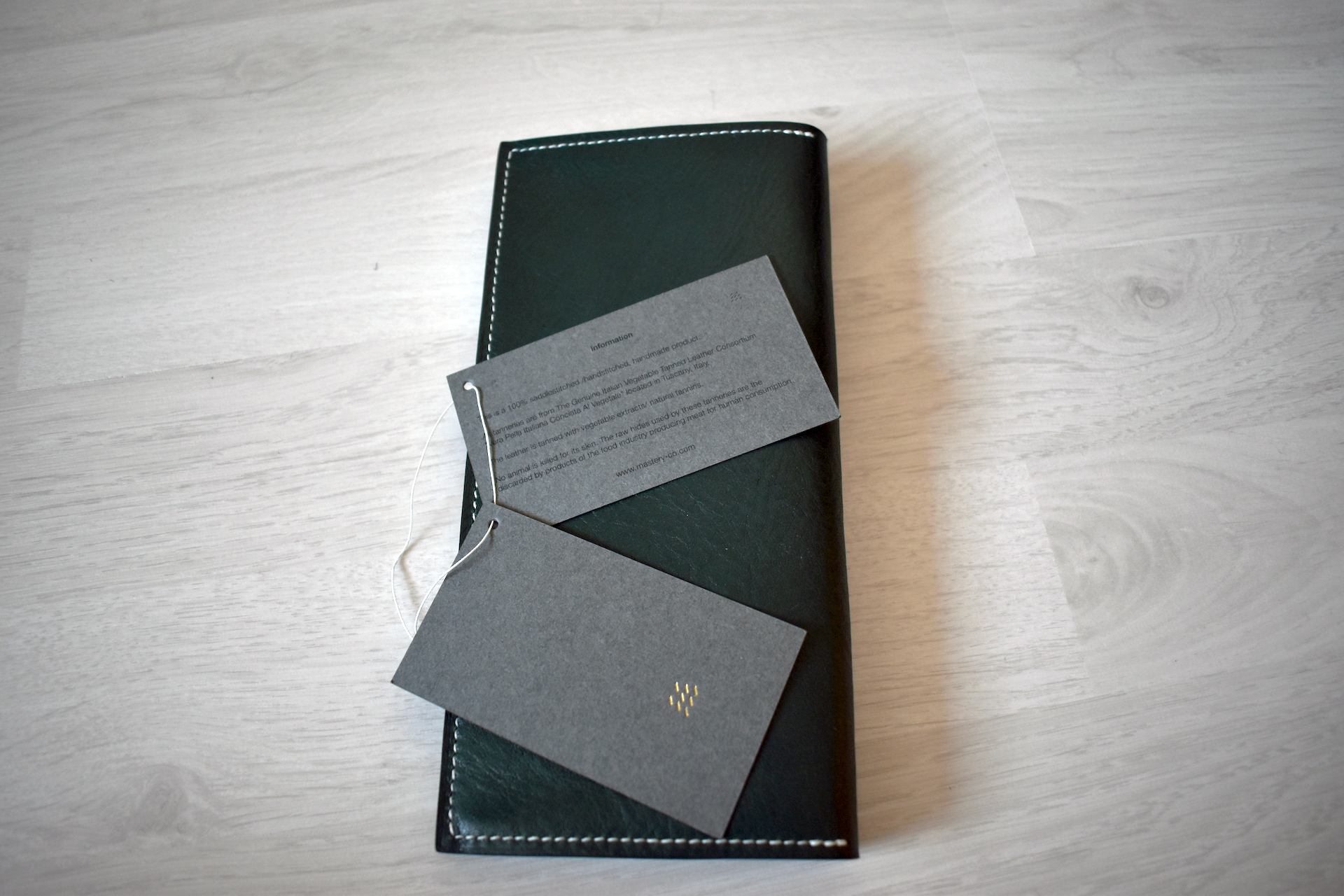
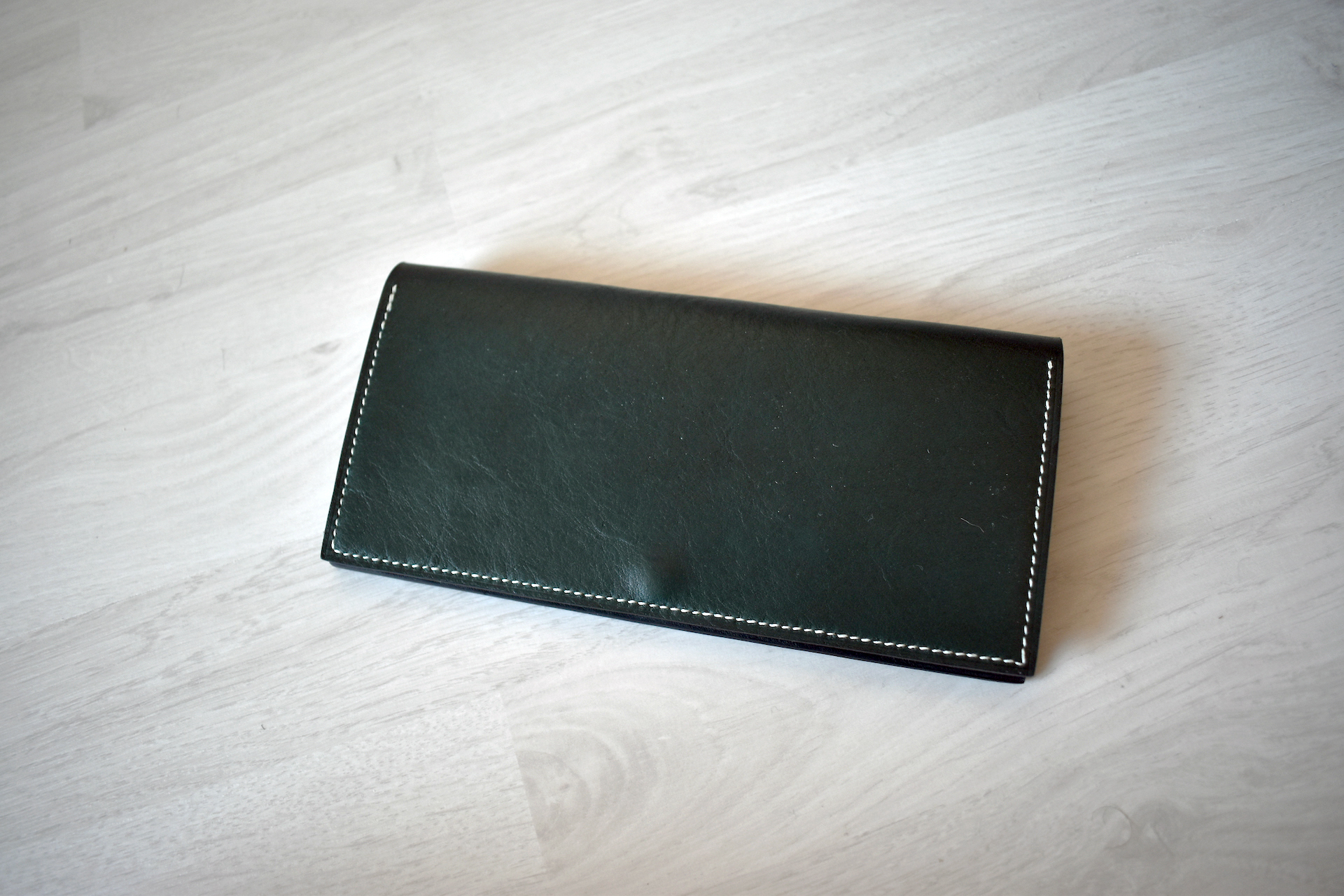
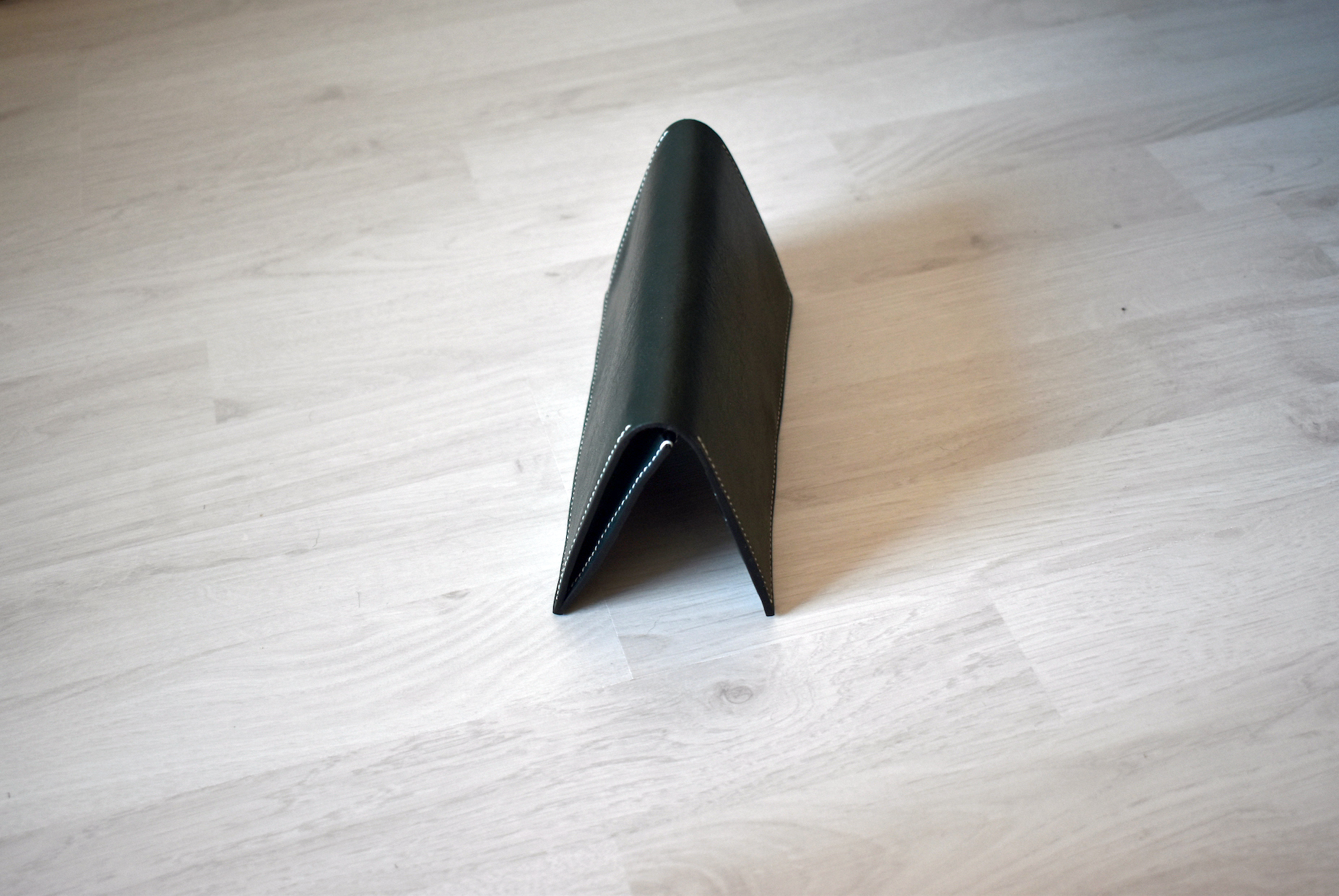
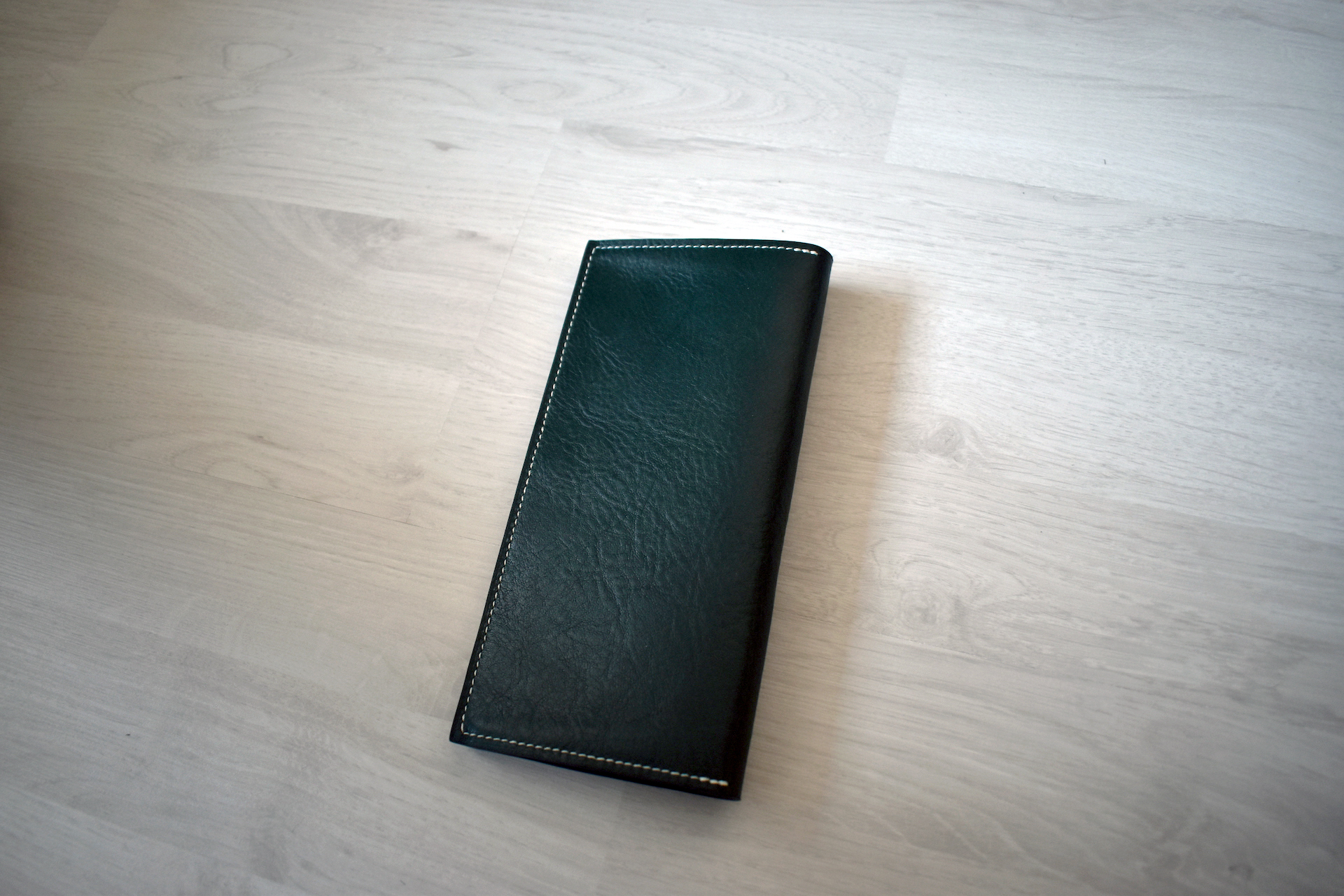
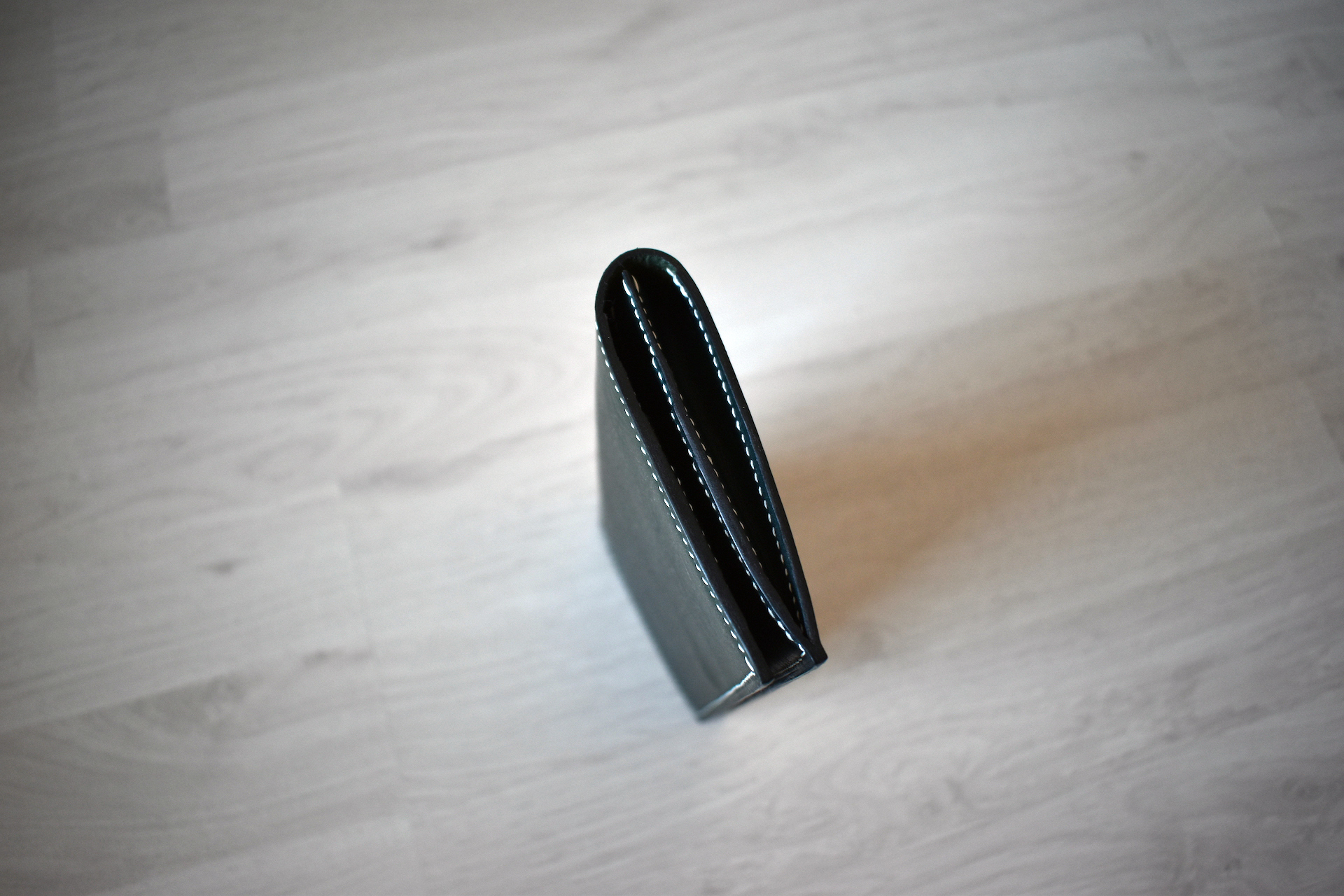
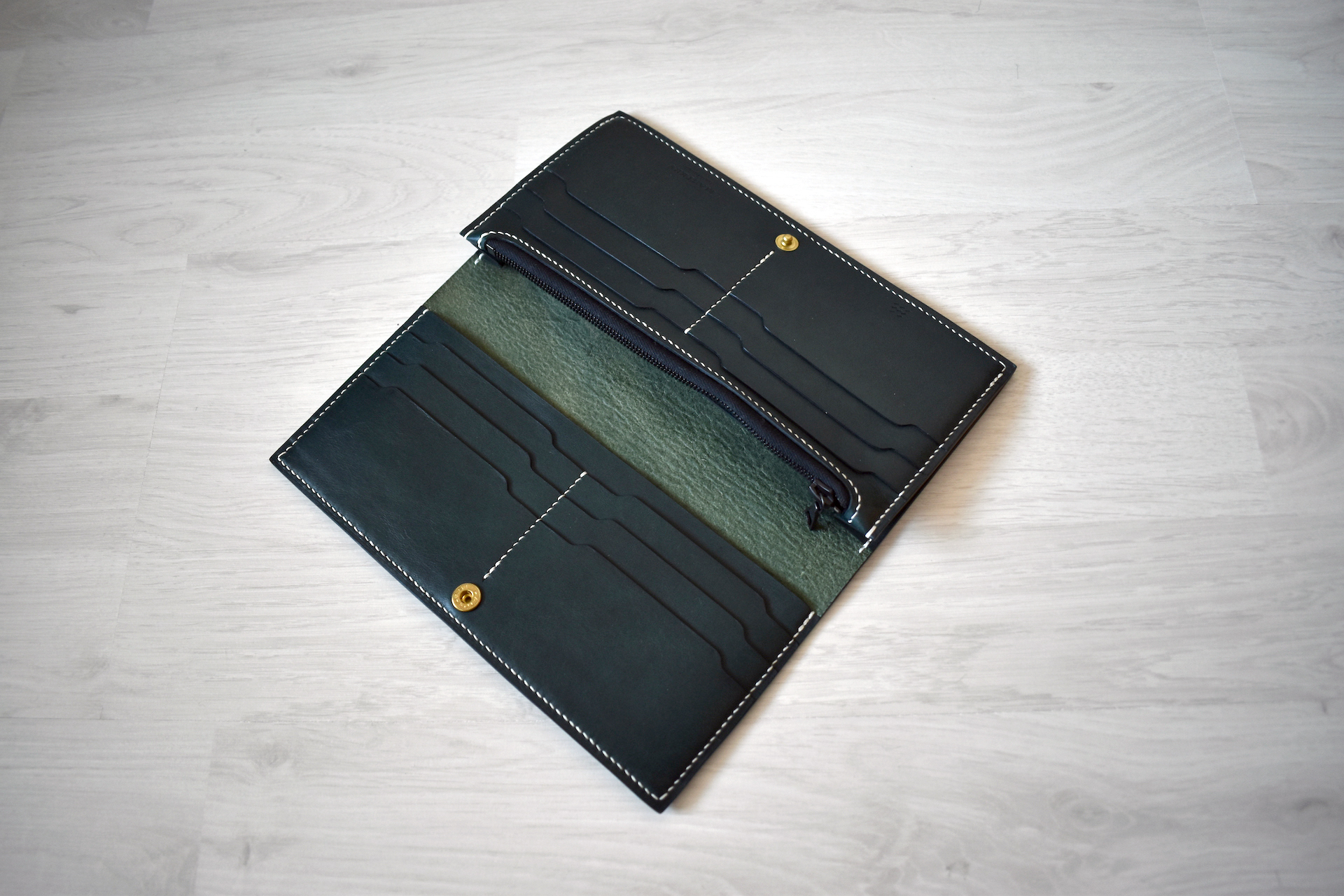
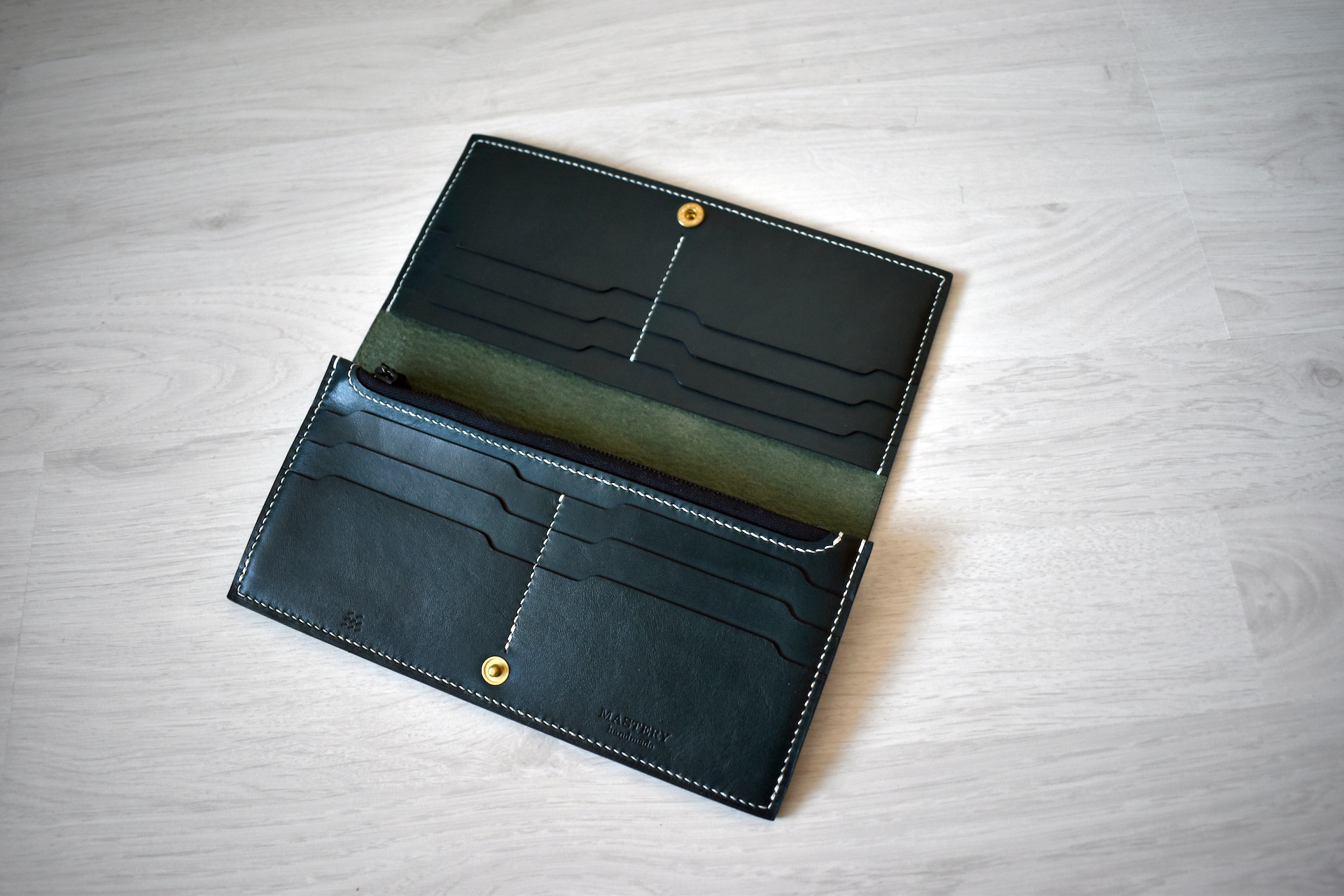
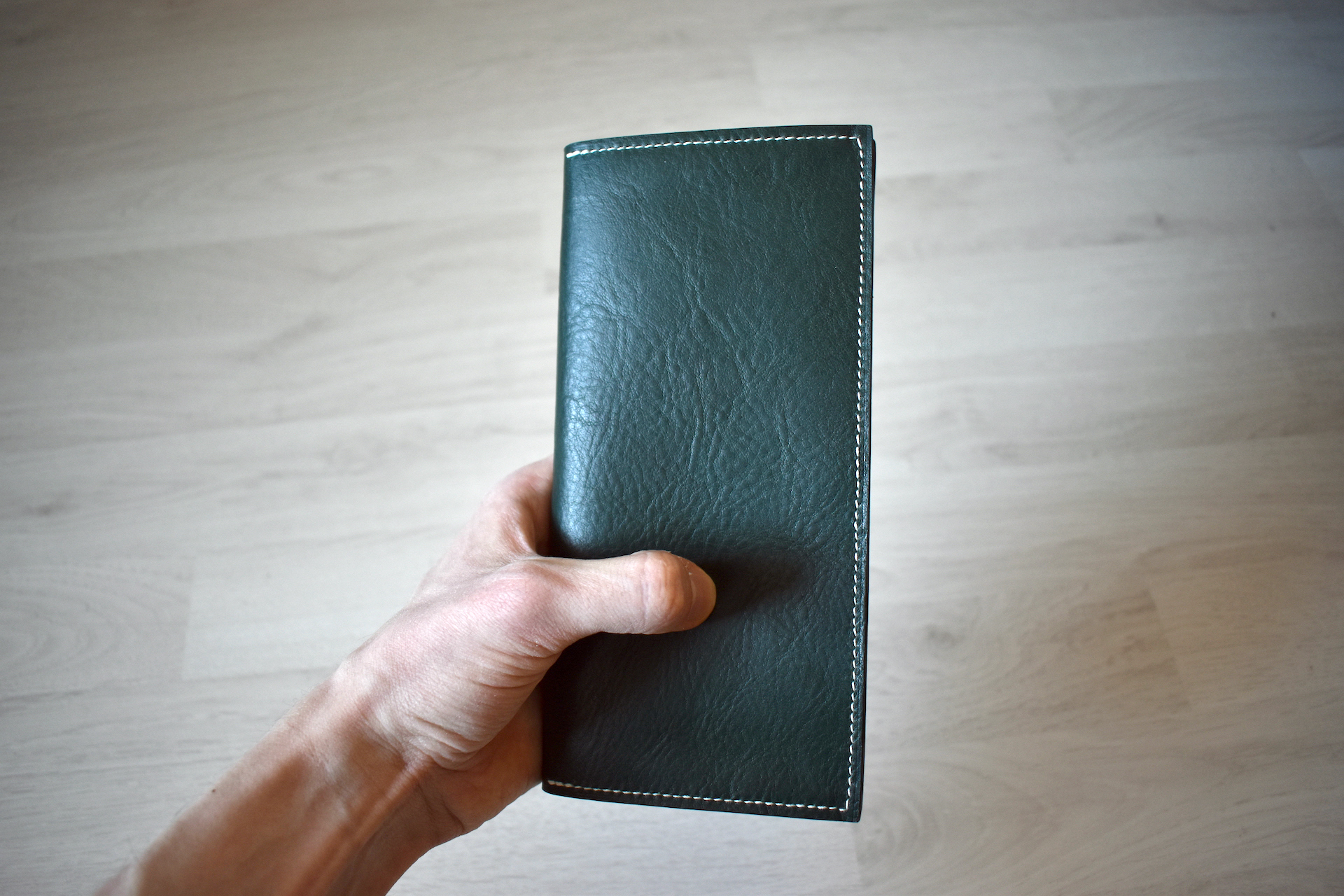
As an example piece of Mastery’s work, above and below are shots of the Long Wallet model in moss green Vacchetta leather which the maker sent for Keikari’s perusal. As each piece by Mastery is made to order, for my model the logo and label are placed inside the wallet instead. The saddle-stitches are straight and tidy, sewn with white linen thread for contrast with the somewhat dark green leather. The wallet closes with one brass popper and the credit card slots have very precise measurements. Thus, they feel stiff at first before loosening with wear. The edges are burnished and dyed black, and the model features a small coin pocket. With all cards added, the design remains slim though longer than most. There is room enough for much and more. All is clean and precise, as usual with Japanese craftswork.
Category Accessories, Leatherworkers, Quality makers, Web stores
An Interview with Paul Farrant
2January 30, 2019 by Ville Raivio
VR: Your age and occupation ?
PF: 56, Property Manager.
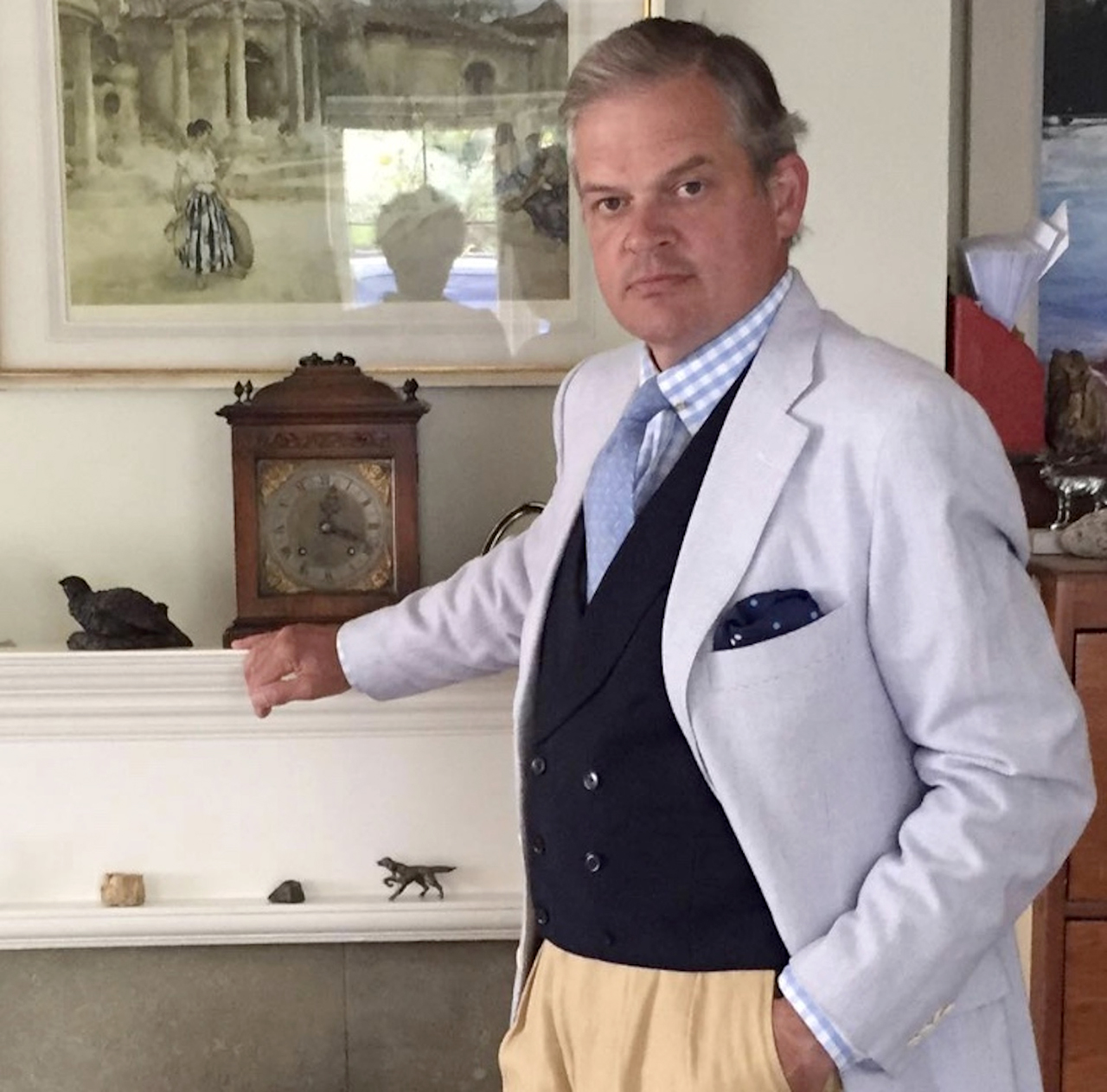
Summer gear
VR: Your educational background?
PF: I attended St. Chris in Letchworth, Hertfordshire. A forward-thinking, co-educational, vegetarian boarding school. After a short spell working for my grandfather’s engineering company I was fortunate enough to be offered a position, aged 20, at the Dorchester Hotel in London.
VR: Have you any children or spouse (and how do they relate to your style enthusiasm)?
PF: Yes, I am married to Jackie and we have two teenage children. Olivia & George. I think it would be fair to comment that they tolerate my vintage clothing obsession. There are advantages as the 3 of them have all benefited from some special pieces. As I am in contact with a lot of the dealers I come across women’s items as well as men’s. Jackie has some vintage Huntsman, Henry Poole, Dege and Skinner and numerous furs.
Recently I was walking along Jermyn Street with Olivia & George. I had a Gelot fedora on. George a beanie hat. Someone stopped us and advised George that he should take some style advice from his father. As can be imagined, George has not taken up the advice of the passerby.
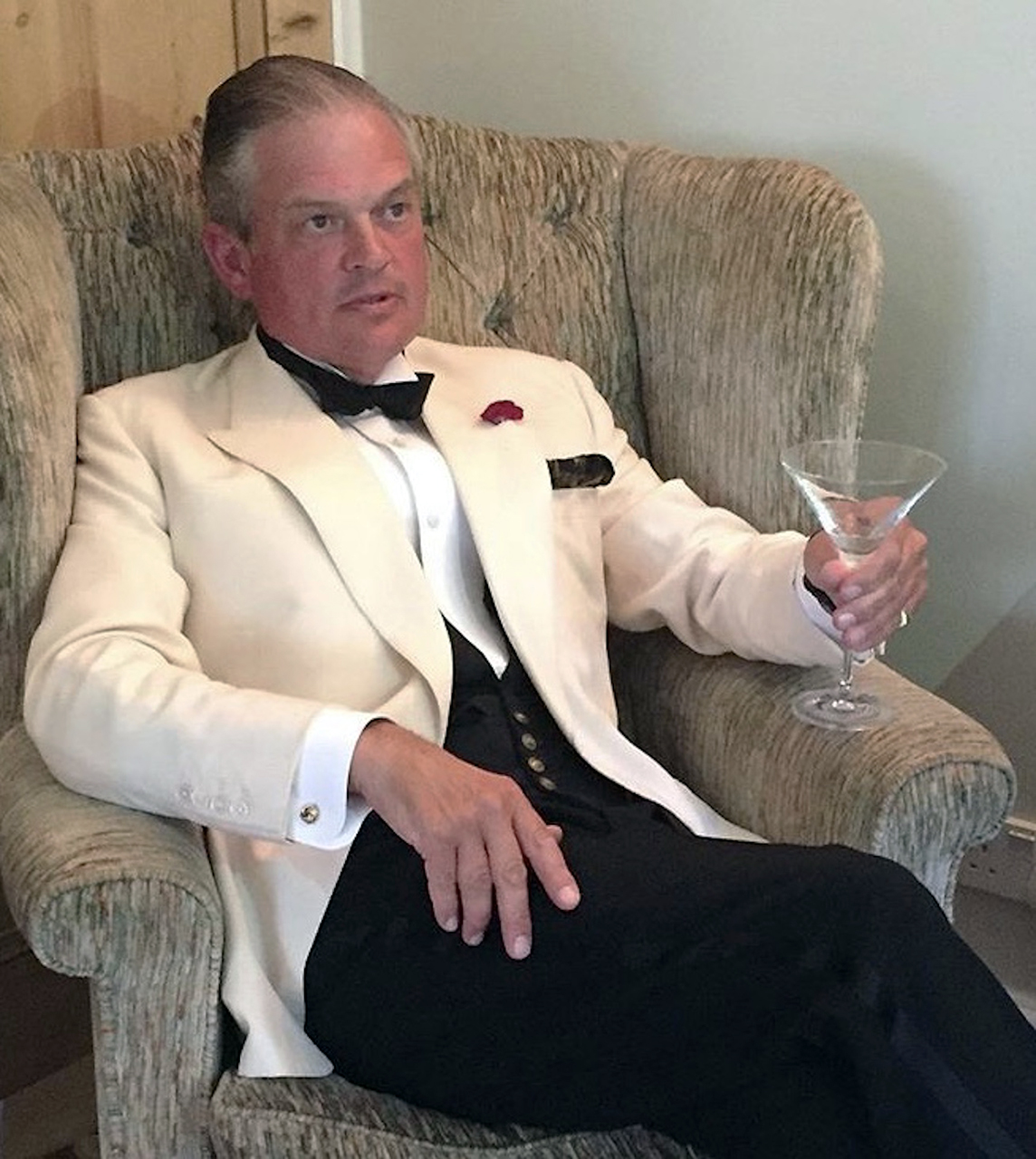
A summer party look
VR: …and your parents and siblings’ reactions back when you were younger?
I owe a lot to my mother. She has to take credit for being such a fine role model. Now in her 70s, she is still most elegant. My grandfather spent a lot of attention on his clothes too. His tailor was Airey & Wheeler in Piccadilly.
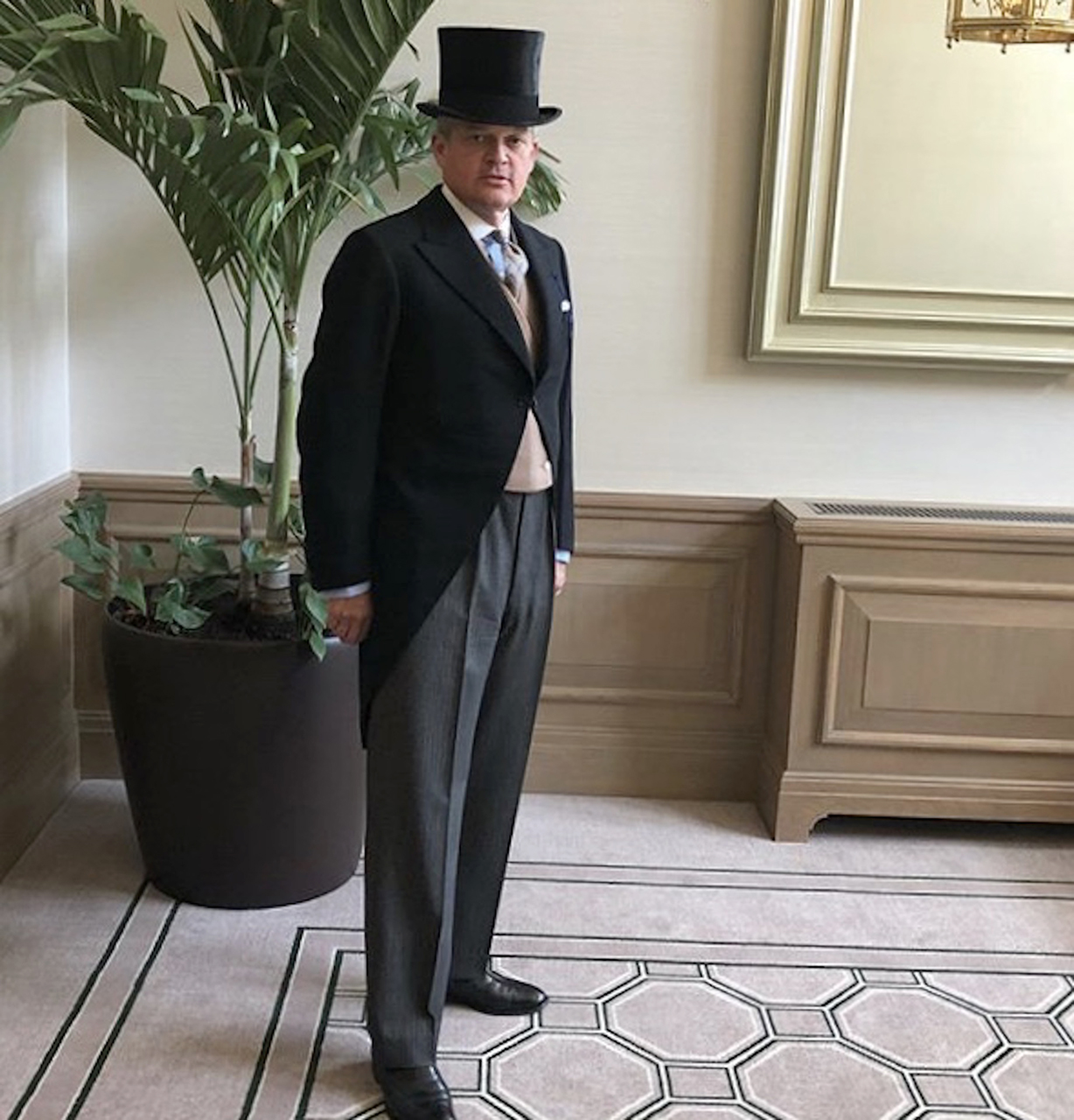
A 1938 Huntsman morning suit, Lock silk topper
VR: What other hobbies or passions do you have besides apparel?
PF: I enjoy fishing with George. I manage to include some vintage equipment especially when fly fishing. Sometimes using vintage is a big disadvantage, though. Last year I snapped a rod and lines, as lures and nets weaken over time.
My love of good food and fine dining has led to my collection of vintage menus. Although I have stopped adding to this. They are starting to be included on one of three of my Instagram accounts, vintage_menus.
I am very pedantic about quality of ingredients and presentation. After my early years at the Dorchester I worked for the Royal Household. My position here was involved with food supplies, presentation, menus and seating planning.
My other Instagram account is vintage_clothing_labels. On this account I post interesting labels of vintage pieces of mine and others, such as Hornets and Hogspear.
I used to horse ride a lot, but don’t get the opportunity so much now. I have kept my riding ‘kit’.1957 Lobb’s boots and 1947 Huntsman riding breeches. I recently sold my hunting pink swallow tails made by French C1900 of Kilgour, French & Stanbury to an American collector.
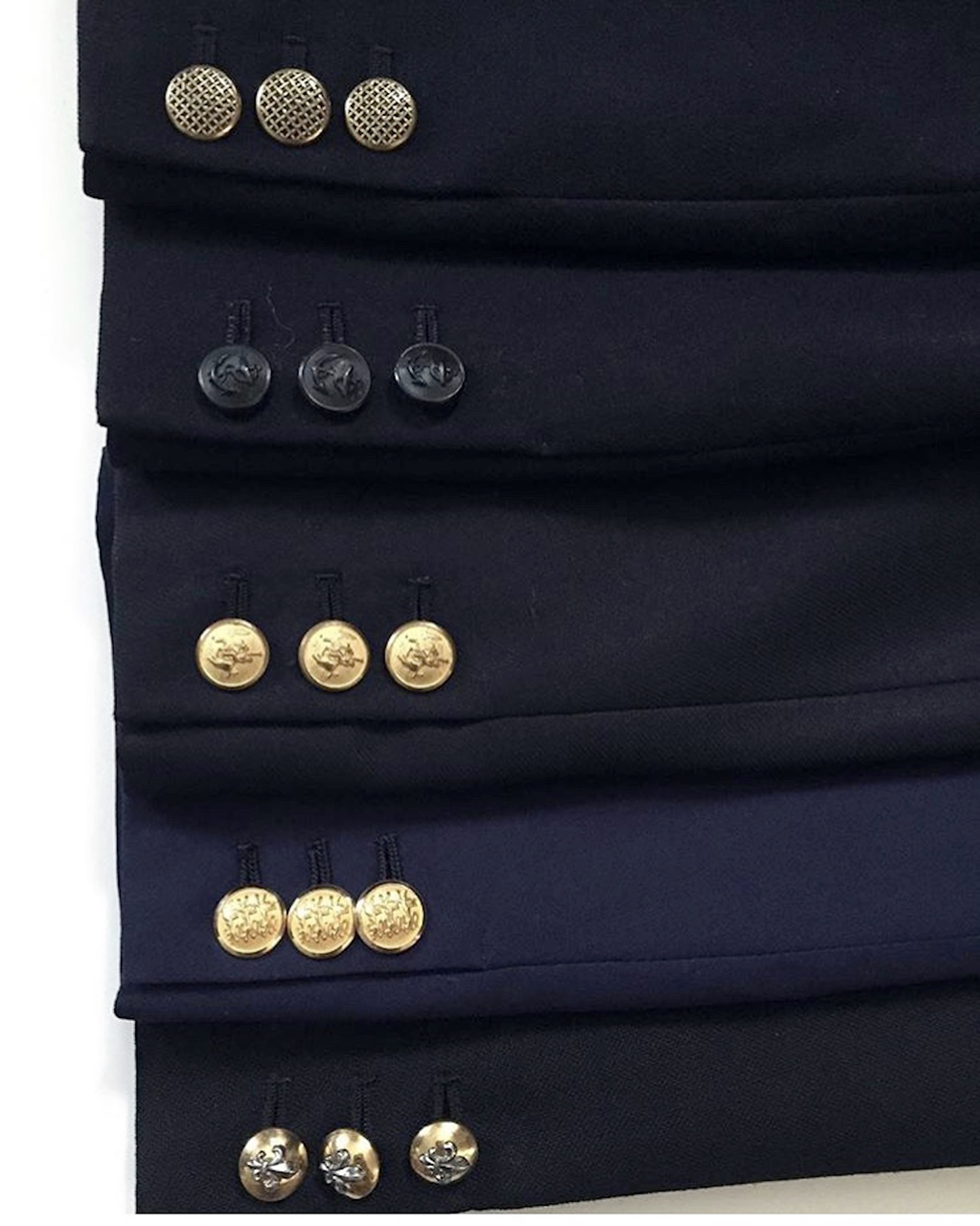
City blazers
VR: How did you first become interested in style, and when did you first turn your eyes to the classics?
PF: I have enjoyed a more formal and classic style from as early as around 10 years old. My mother reminded me, over the recent Christmas holiday, how she bought me a Harry Hall tweed hacking jacket when I was 11. Apparently I wouldn’t take it off and paraded around like a peacock.
My first job at the Dorchester Hotel continued with the formal dress theme. In the front office, in those days, we wore full morning dress during the day. This was with starched detachable collars too. During the evenings we changed into black tie.
During my time at Buckingham Palace we wore morning dress for the day and white tie in the evening during State visits.
I have always preferred a more structured cut, such as Huntsman. While I can see the benefits of a more softer cut, giving ease of movement, such as Anderson & Sheppard, they don’t suit my shape as well.
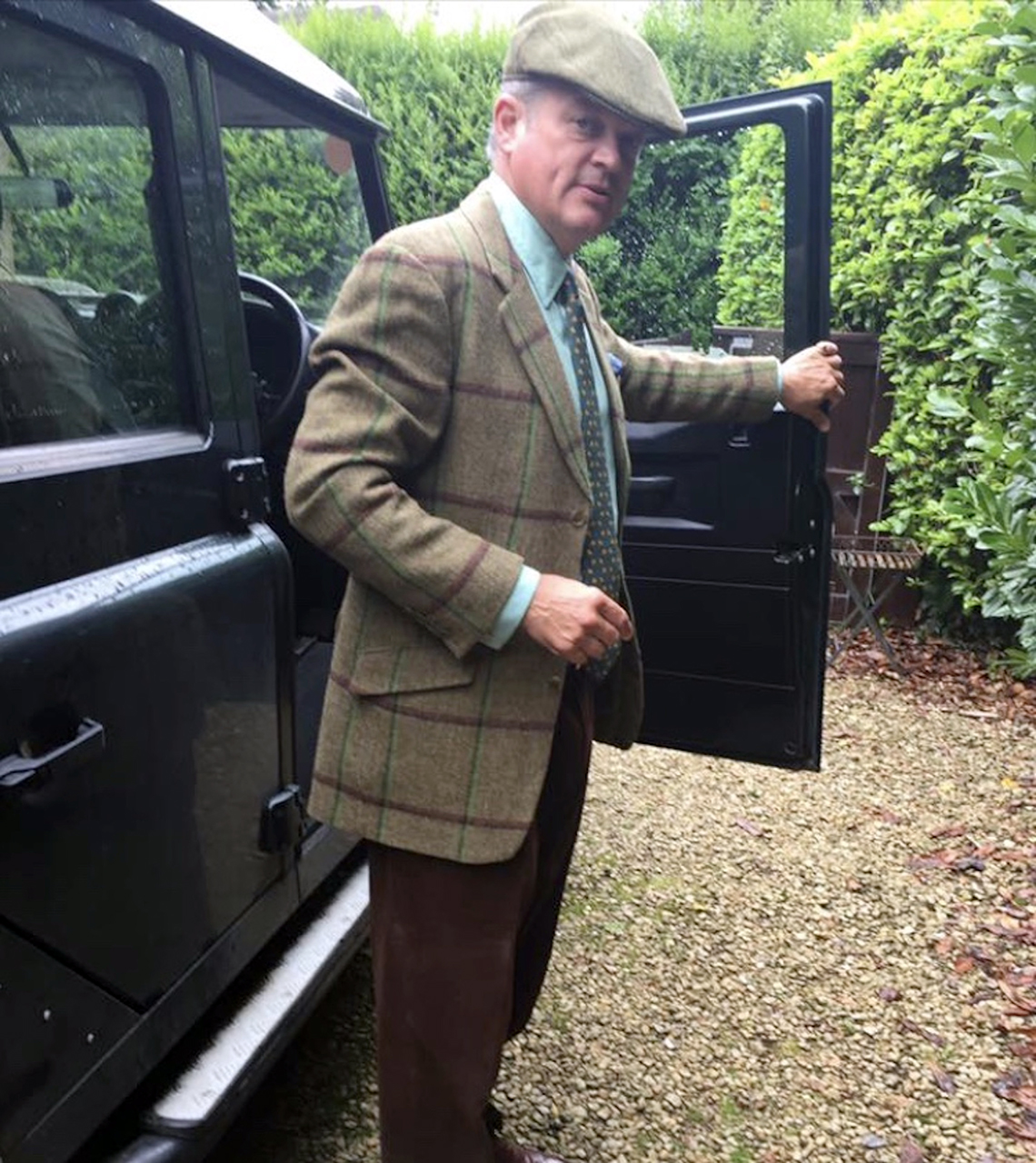
A country look
VR: How have you gathered your knowledge of the vintage look — from books, talks with salesmen or somewhere else?
PF: I suppose the largest influence during my earlier years was regularly trawling through charity shops. 30 plus years ago, before access to the Internet, one could pick up some treasures at very reasonable prices. This has very much changed. The quality pieces do not come through and prices are higher. Though there are still bargains to be found. It’s just harder and more time consuming. My ‘strike rate’ is rapidly decreasing over the years.
On the plus side we now have eBay. I check this every day. John Morgan of Hogspear has to be a favourite. He still manages to locate some goodies from private house sales.
My friends at Hornets in Kensington are valuable for an opinion. Bill Wilde has a wealth of knowledge and we frequently chat over a glass or two in the local pub.
During my working life I have been fortunate enough to work with two royal valets. Sydney Johnson was valet to the Duke of Windsor. I knew Sydney from my Dorchester days when he was then valet to the Sultan of Brunei. During my time travelling with the Court I met Michael Fawcett. Then valet to the Prince of Wales. Michael would give me lessons on various aspects of maintaining a wardrobe and dress style. At Sandringham, one Christmas, we painstakingly went through all the various ways of presenting a pochette in the top pocket of a coat. Note coat, not jacket. Potatoes have jackets!
And of course Billy Tallon was often present at our gatherings. Backstairs Billy as he was known. Page to HM the Queen Mother. A most diverting character.
VR: How would you describe your personal style?
PF: I am neither a follower of past fashion or future fashion. Just somewhere in between.
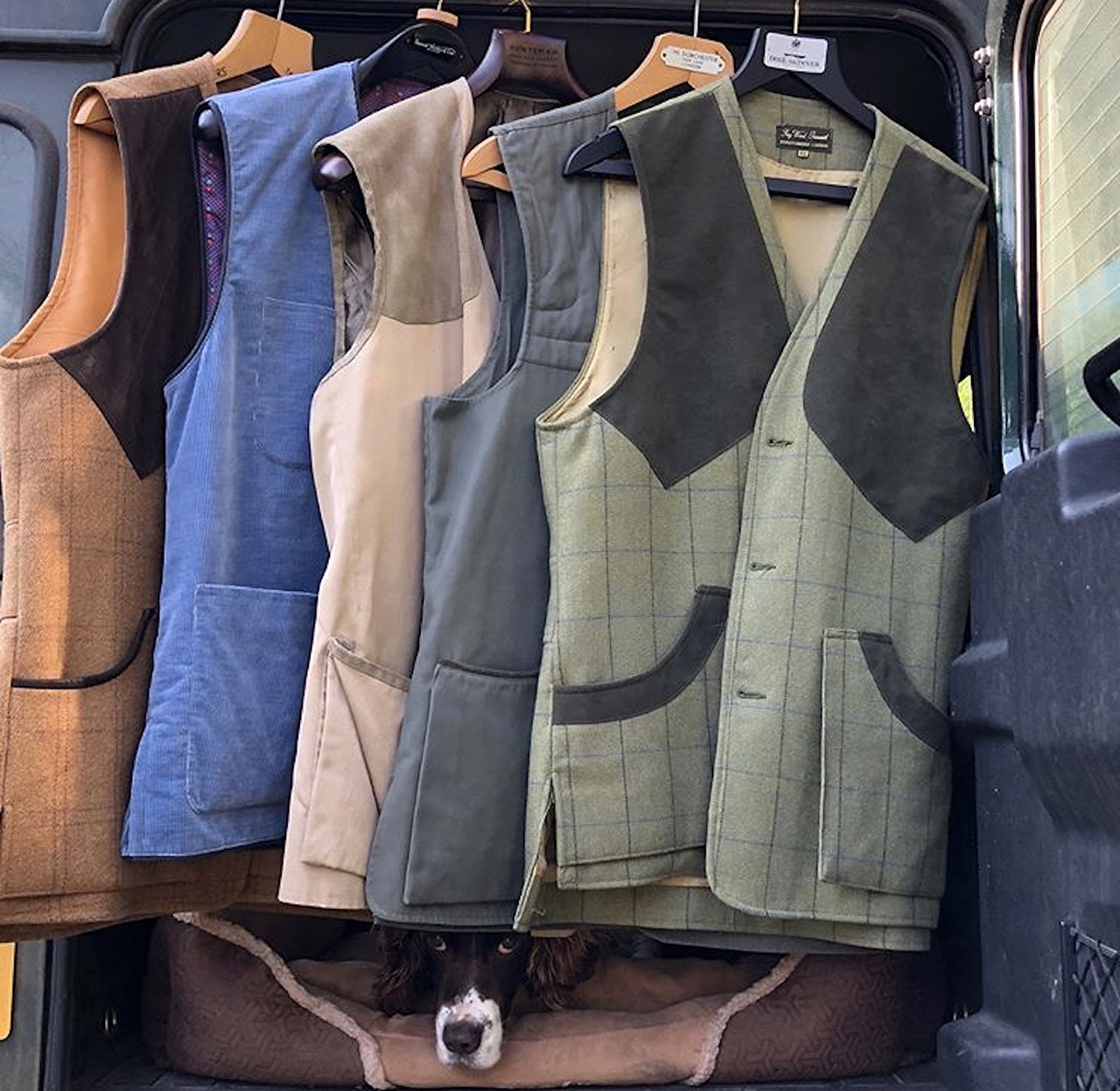
Shooting gilets with a spaniel accessory
VR: Among so many companies you’ve tried, which artisans or RTW do you favour and why these?
PF: My collection now has been honed to such an extent that I now have mostly Savile Row pieces. About 30 lounge suits. During my 20s I favoured Hackett and Chester Barrie. Hackett I have a great fondness towards as I bought from them in New Kings Road in the mid ’80s. Chester Barrie offered great quality and their 40 reg fitted me like a glove. They made for Turnbull & Asser and Huntsman too. Two of my preferred outfitters. Oliver Brown and Herbie Frogg were RTW favourites too. Simpson’s always for cashmere jumpers. Tremendous quality and value in the seasonal sales.
For suits and topcoats I prefer Huntsman & Sons and Dege & Skinner. There are others on the Row as equally as good, but these two I have had an acquaintance with for many years.
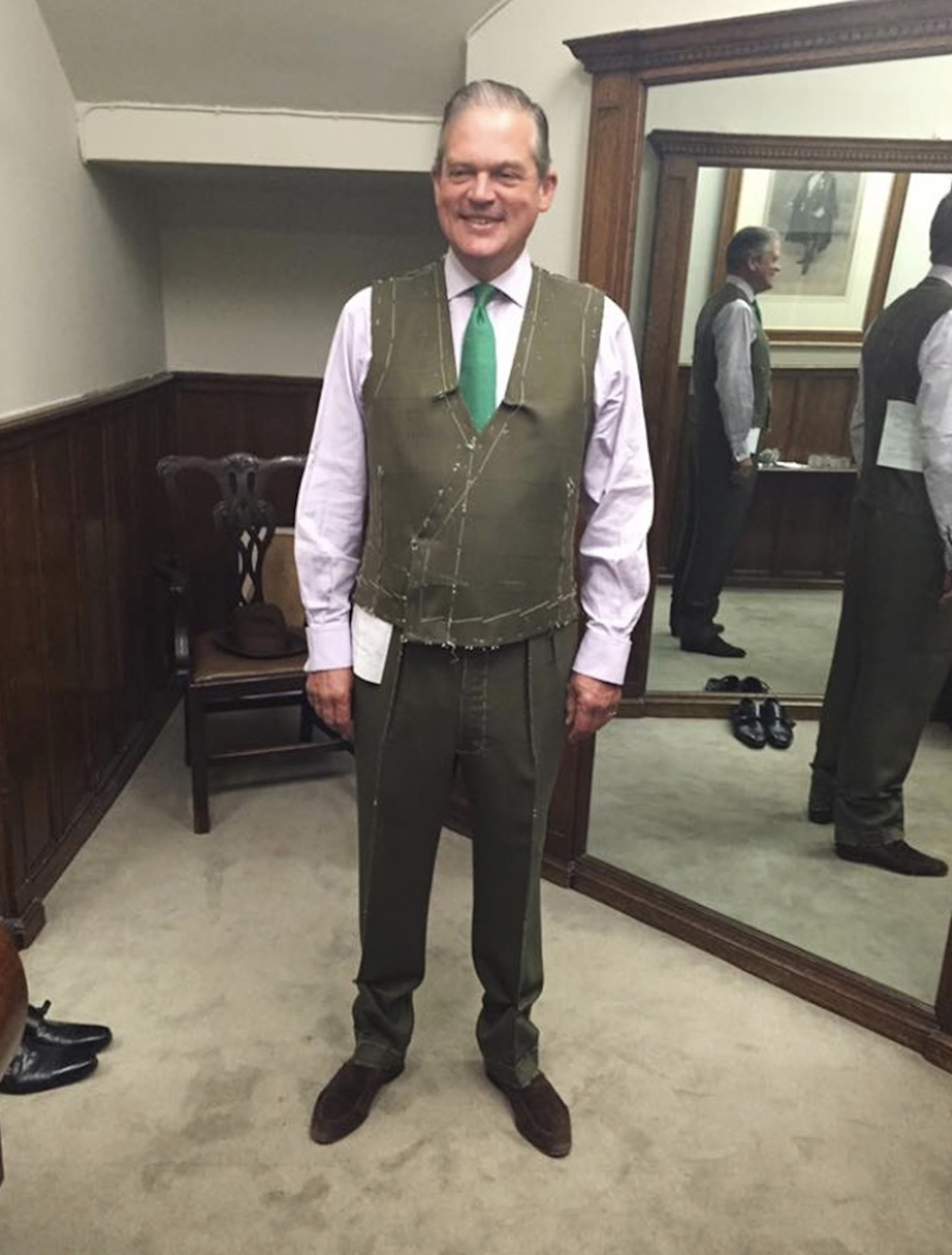
At Huntsman
VR: Have you any particular style or cut philosophy behind the clothes you collect and wear?
PF: I am fairly open on all styles other than the Italian cut. It does not do for me at all. Too heavy on the shoulder and square. I prefer a double vent, too, on a coat. When wearing a suit I usually wear braces. Always when wearing a vest. There’s nothing worse than seeing a gap (usually with a bit of shirt fabric) between the top of the trousers and the bottom of a vest (waistcoat). The other ‘no, no’ is wearing a belt and braces. Hard to believe, but I have seen it!
All in all I subscribe to the best quality fabrics and workmanship in a classic Savile Row style.
Other than Purdey, Ray Ward and Holland & Holland I am beyond designer names. I have given my Gucci and Hermes belts etc., to my teenage children. They seem to enjoy wearing Purdey and Holland & Holland too. George has all my Ralph Lauren Purple Label now.
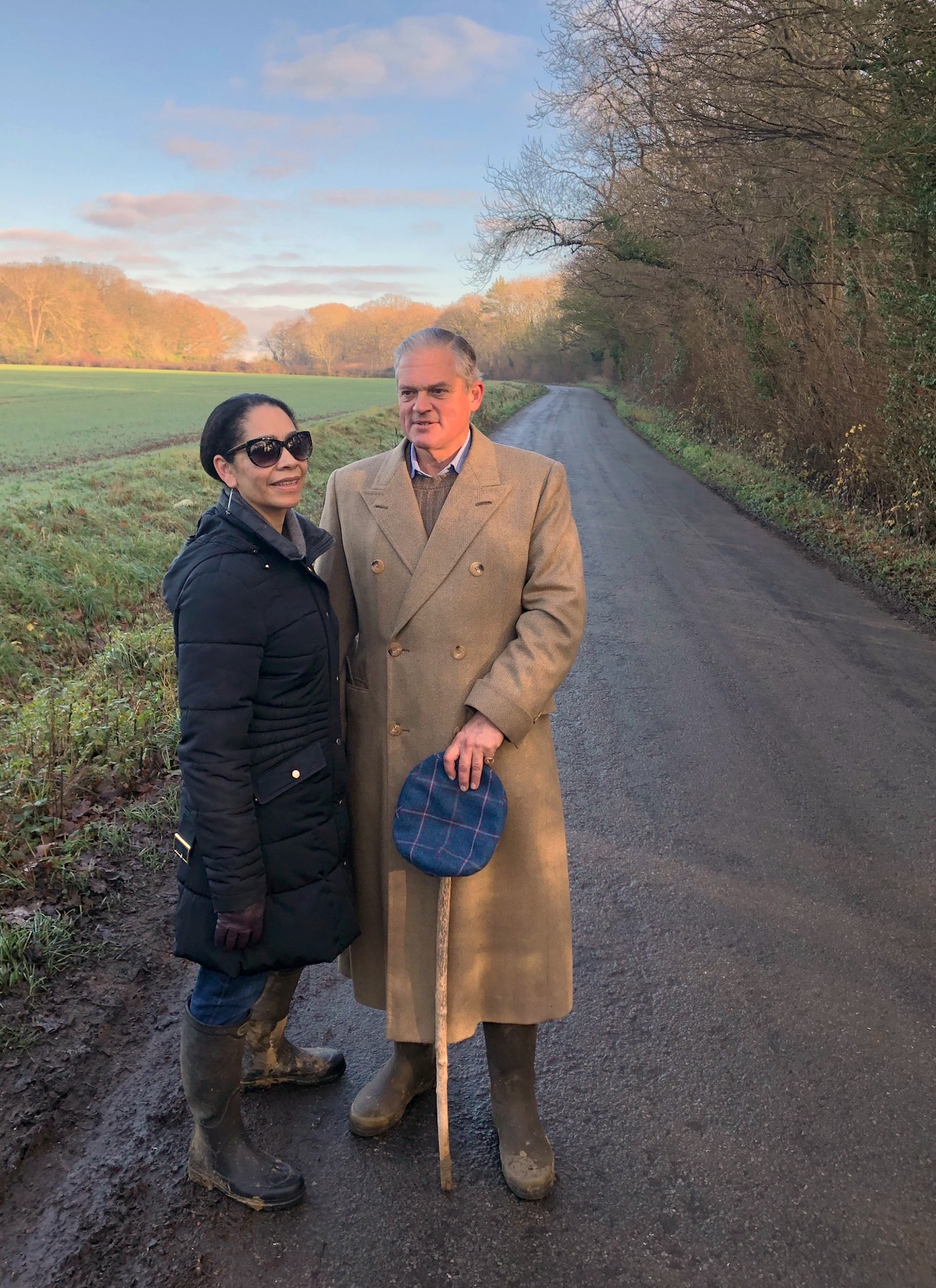 A Jones, Chalk & Dawson top coat with cuffed sleeves, Huntsman house tweed cap
VR: Who or what inspires you?
PF: This is pretty straightforward to answer. Who would be The Duke of Windsor. Ahead of his time in many respects. What would be craftsmanship and fabric quality. Vicuña being the king of fabrics. For tweed it has to be the Islay Woollen Mill.
VR: What’s your definition of style?
PF: I think I have to borrow a quote from Hardy Amies on this. It is something I try and adhere to. A man should look as if he has bought his clothes with intelligence, put them on with care and then forgotten all about them.
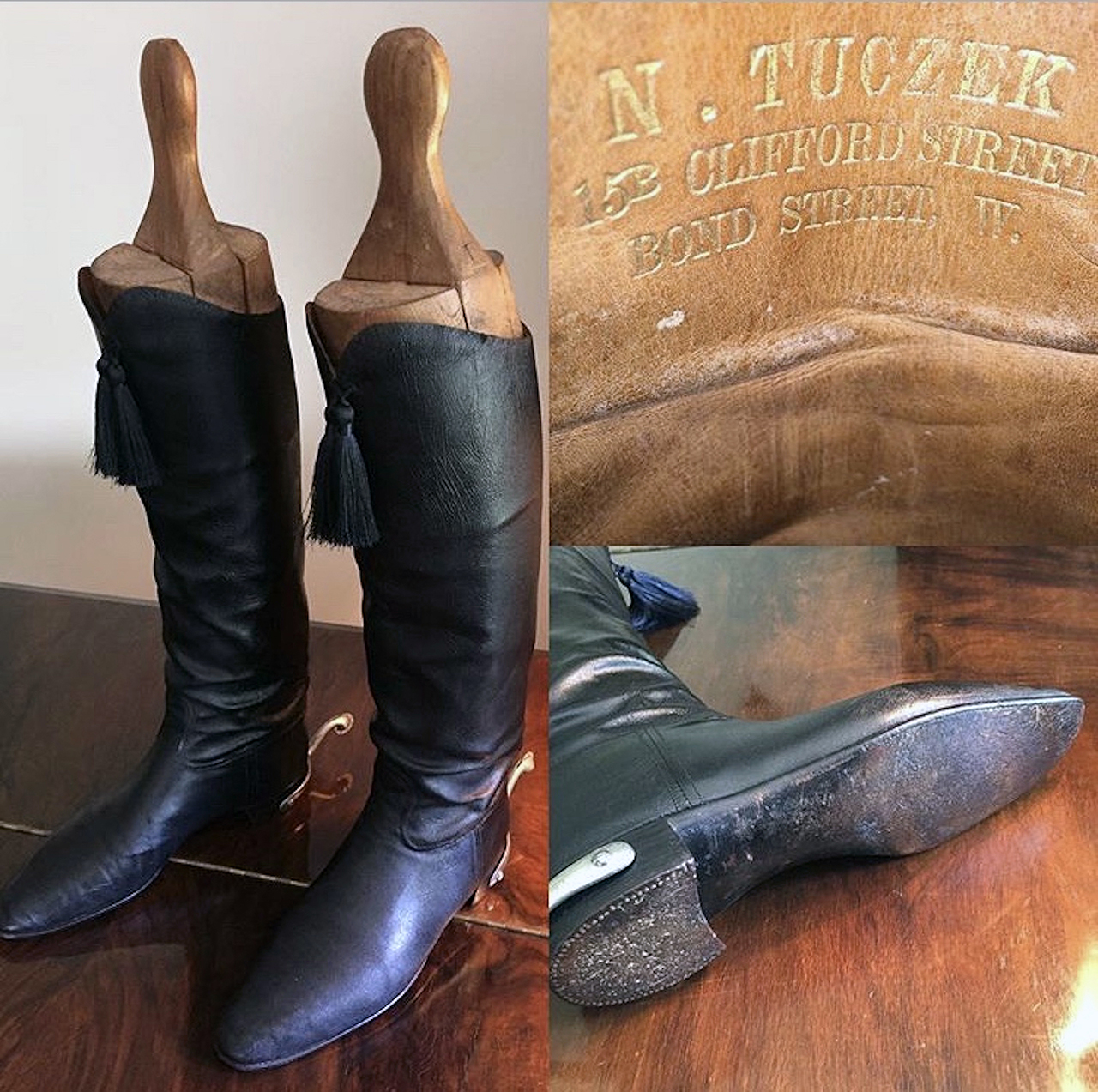 Hessian cavalry boots by Nikolaus Tuczek
VR: Finally, given your knowledge on the subject why should Keikari’s readers consider vintage tailoring?
PF: At the end of the day it’s each man, or woman, for their own. What goes around comes around. I’ve seen some big named hitters buying vintage to replicate or at least for ideas. As the great YSL put it ‘ fashions fade, style is eternal’.
Category Interviews, Men of style, Vintage
Copyright © 2013 Ville Raivio