Interview with Teemu-Pekka Leppänen
0April 20, 2013 by Ville Raivio
‘I’m just about to turn 38. In this business, age generally helps. Somehow you get a little bit more respect, the older you seem to be. We call this “Grey hair syndrome”. I guess it must be because in the trade each and every bit of skill in the respective part of shoemaking is painstakingly achieved, and honed over years and years. No matter how many years you may have under your belt, everyday one can still learn something new. I’ve been The Workshop Manager at G.J. Cleverley’s for over 10 years now.
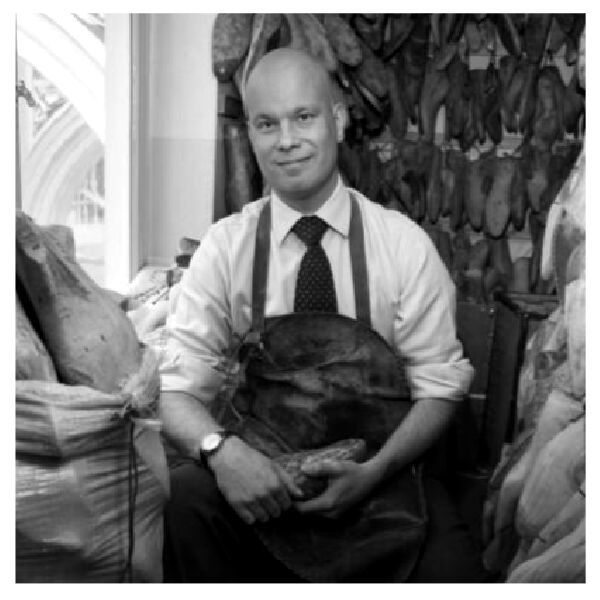
I started being interested in shoes from a very young age. My mother tells me, that “kenkä”, the finnish word for shoe, was the first word that I learned to say. Also, in primary school I was refused to take up textile design as a subject over woodwork, because my mother was the teacher in the class, and she didn’t want to teach her own son. That, and general interest in working with your hands, made me choose to study Special techniques in handiworks, in which my major was shoemaking, from “Kuopion käsi-ja taideteollisuus akatemia”. This was a BA course for 3 years, after which I wanted to further my studies with an intensive course in shoemaking and repairing in Kankaanpää, Finland.
The end of the course was always going to be integral part of the training, because it was the work experience section. In my mind, I always had only a handful of options, because I was always more interested in the actual making side of shoemaking rather than design. England, and particularly London, has an amazing heritage for bespoke shoemaking. Also, it was an obvious choice because a beautiful girl I was going out with was doing her work experience in London at the same time.
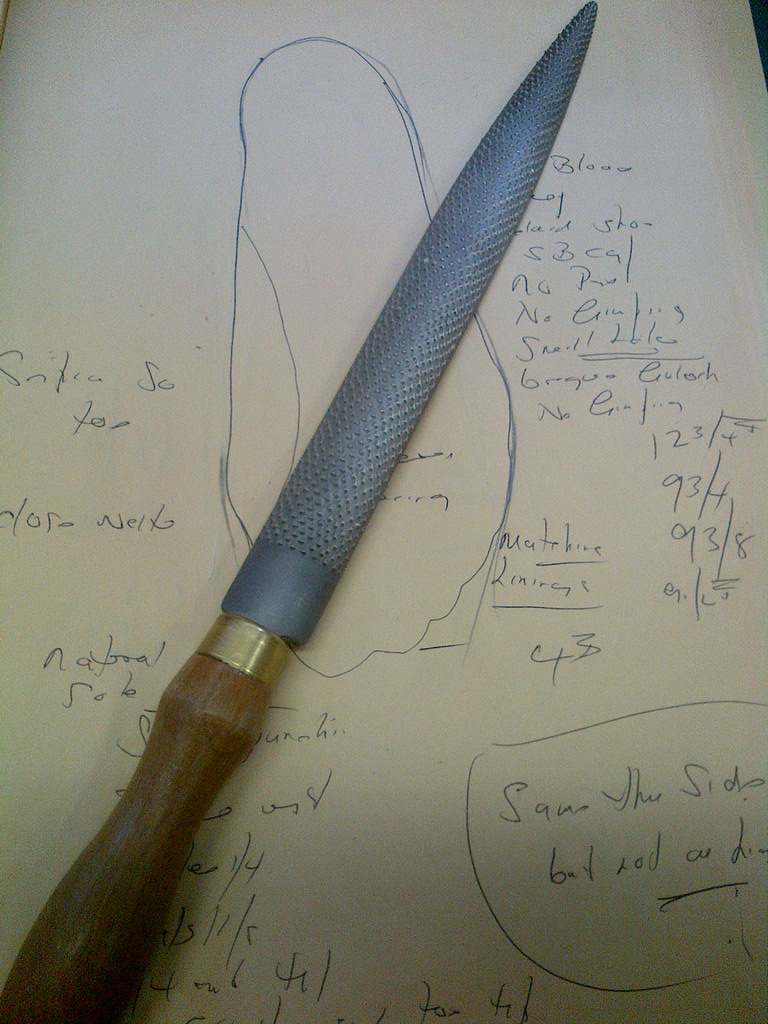
As soon as I had started my work experience job, it became very clear to me how much there was to learn about the whole of the shoemaking process. I became convinced that any type of learning that one does in a shoemaking college of any sort only provides a mere base for all future learning. After my 3-month-long work experience period of tea making, polishing, shoeroom finishing and the occasional glimpse of shoemaking, I got very interested in the trade.
I was delighted to hear that my current employer at the time was also very happy with my progress, and did offer a contract for me. After some thought I was happy to accept the offer and start up my life all again in a new country. It proved to be a very good place to hone my skills and meet lots of similar-minded individuals. I started out in the shoeroom, finishing, taking off (pulling the last out of) and socking (inserting the interior of shoes) all the finished shoes, and soon got more interested in bottom making. Learned a great deal of bottom making under a very experienced guidance, and finally got more and more interested in last making. Mainly by the poor standard of last making that was in place, that meant lots of more unnecessary work for the bottom makers.
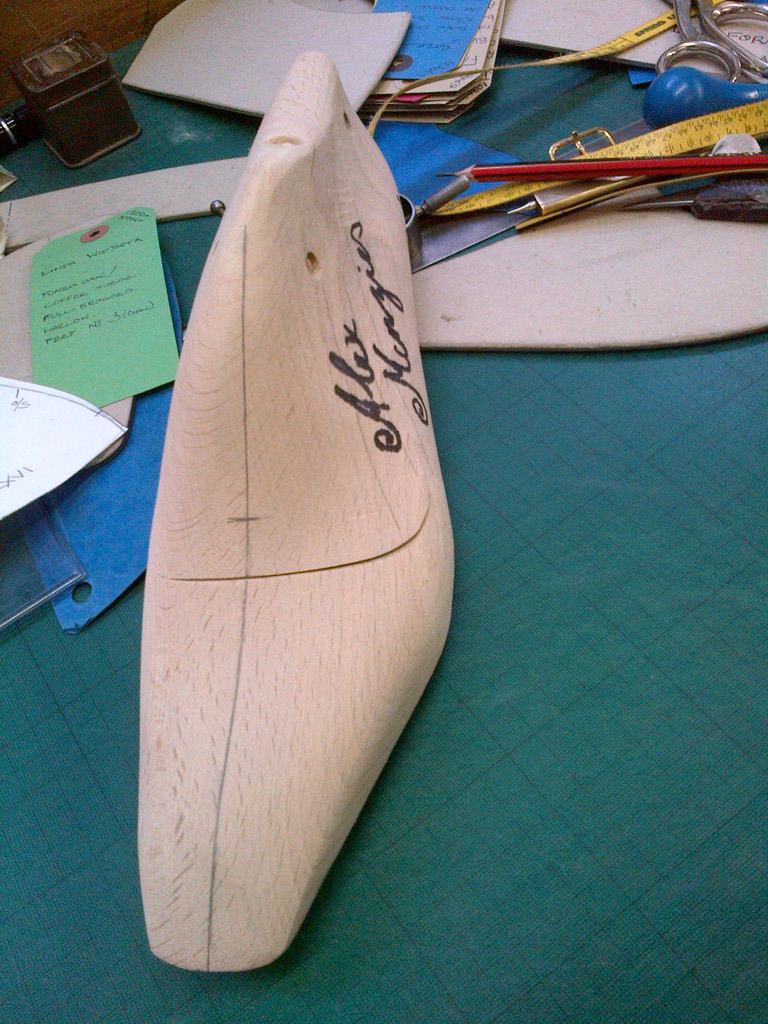
Towards the end of my tenancy I had acquired a good set of skills in last making, and practically jumped at the chance, when I heard that The Best Shoemakers In The World were looking for a new last maker. I got a slot in an interview and somehow my five years’ experience in the trade was enough to pull the result towards my way. It was a good foundation, but still it opened up my eyes to how vast the learning curve is to learn just one area of the shoemaking. The great reward in shoemaking is the fact that, after each day of hard work, one can hold the day’s creation in their hands and admire the results. You get to meet lots of very interesting people from all different walks of life. It gives me great pleasure to occasionally spot the shoes, that I was part of making, in a catwalk, cinema or even just on the street.
In English shoemaking, the four different shoemaking principles are divided into four separate specialist fields: Last maker, as you can imagine, will measure the customer and make their last (a wooden replica of the client’s feet). The pattern maker and Clicker will make the paper pattern to the design chosen, and cut the desired pieces in the material chosen by the client. The closer will stitch together the pieces of leather to form the upper part of the shoe. The bottom maker will last (pull over) the leather upper over the last, and stitch the upper onto the leather insole by hand. To master any one of these four principles would last 5 to 10 years. That, I feel, is the secret of the exquisite skills of English shoemaking.

I do hope my children will learn to like the art of crafts as well. My son, Eelis, 5, has already taken his first steps towards it by re-subscribing for his school’s sewing club for the third time. And my daughter Emmi, 7, has excelled in several different areas of crafts at home and school. I met my wife in the college, we were on the same course for three years, so naturally we’ve a fairly good understanding about each others’ work. She does bookbinding and leather interiors, so even if the objects are different, the main theme still remains the same. Even the local magazine for this area in South London did an interview of our family at the end of last year.
Travelling is big part of the trade, because not everybody will be able to come and see you in the shop. Therefore, each year, before we start to travel, I’ll try to make sure that there would be at least two or three new designs on the show. Therefore, it’s very difficult to pick just one shoe that would my favourite. It think it does evolve all the time, when new designs are being drafted. But one of my all-time favourite designs is the old George Cleverley’s Elastic-sided shoes with a brogued cap. An incredibly simple design that delivers on the functional level. Excellent travelling shoe, very comfortable casual shoe that provides support for all day because of the side elastics.
Cleverley’s does carry on the legacy of the traditional english bespoke shoemaking that started hundreds of years ago. George Cleverley was a shoemaker in the third generation, therefore the traditions are very deep within the company. Which makes it a great honour to be working for them. The fit of the shoes is always the first priority, combined with the elegance of handmade shapes and designs. There is an old saying within the trade: “People in the know go to Cleverleys: people who don’t, go elsewhere”.
Because of my young family, I don’t get a chance, nor that I would want it either, to have much time to do anything else apart from shoemaking and my family. Therefore I do try to use my commuting time for myself, that’s why I try to cycle to work whenever I’m not taking the children to school. I’m also a member of the local cycling club and occasionally join them for a weekend ride. Hopefully one day my family may share this passion as well!
When I was in the college I used to wear size 7.5 shoes. When I started my journey into shoemaking, and sizing, and all the rest of it, I ended up wearing size 10. And I’m now much more comfortable for it. I’d never wear the same shoes twice in the same week. It’s important to let the shoes breathe. In the same token, all shoes will need to be worn every now and then. If you were to leave a pair of shoes sit in the cupboard for too long, they will dry up and start creaking and, at worst, the leather can crack. I’ll always keep the shoetrees inside the shoes when not wearing them, this absorbs the moisture from inside the shoe and keep their shape. Also important is to polish the shoes regularly with a wax-based polish, that will also nourish the leather. ‘
Pictures: © Teemu-Pekka Leppänen
Category Cordwainers, Interviews
The Definition of the Neapolitan Cut
0April 19, 2013 by Ville Raivio
Today’s link leads to the oddly names BespoKenN, whose author offers a fine, referenced definition of the Neapolitan cut. Mind you, the city houses dozens of houses with differing views on tailoring, and not all Neapolitan cuts are identical. Their common characteristics, however, are similar enough to allow a definition. Soft, easy, comfortable and light, quite like la dolce vita itself.
http://www.bespokenn.com/post/5277648787/what-is-a-neapolitan-jacket
Category Jackets, Links, Naples, Suits
Plaid or Tartan Dinner Jackets
0April 18, 2013 by Ville Raivio
Today’s link leads to The Black Tie Blog, where Peter Marshall muses on the rare informal black tie piece, the plaid (or tartan) jacket. Not content with the jacket alone, Marshall has also penned a few lines on plaid black tie trousers as well as its plaid black tie accessories. The careful reader will also find a link to Black Watch blog, which houses some rare pictures of these well-plaid apparel in action.
http://blog.blacktieguide.com/2012/06/21/the-tartan-dinner-jacket/
Category Formalwear, Links
Chensvold in Quote
0April 18, 2013 by Ville Raivio
‘If you’re young and healthy and charismatic and radiant with life’s possibilities, you’ll probably make a great impression in just about anything you wear as long as they fit you.’
~ Christian Chensvold
Category Quotations
Interview with Karen Alberg-Grossman
1April 18, 2013 by Ville Raivio
‘Editor and chief of MR magazine; I like to think that I am truly ageless (but the mirror does not always agree), BA degree from Syracuse University. My husband Terry Grossman is a C.P.A. and typical American male shopper: he helps me understand the fashion-adverse mindset of many American males from the Baby Boom generation. My three kids are in their 20s and early 30s: they are my inspiration for fashion risk-taking and personal style. Each has a very unique way of dressing that relates to his/her individual personality. For example, my oldest son, Mike, wears mostly black or white plain tee shirts with jeans (he is a wilderness trainer and spends much of his time climbing.) Dan has a corporate job and is very preppy: he wears mostly button-down collar shirts and khakis. Erica is highly creative and somewhat bohemian, with a passion for accessories and jewelry. She always looks fabulous, never ordinary.
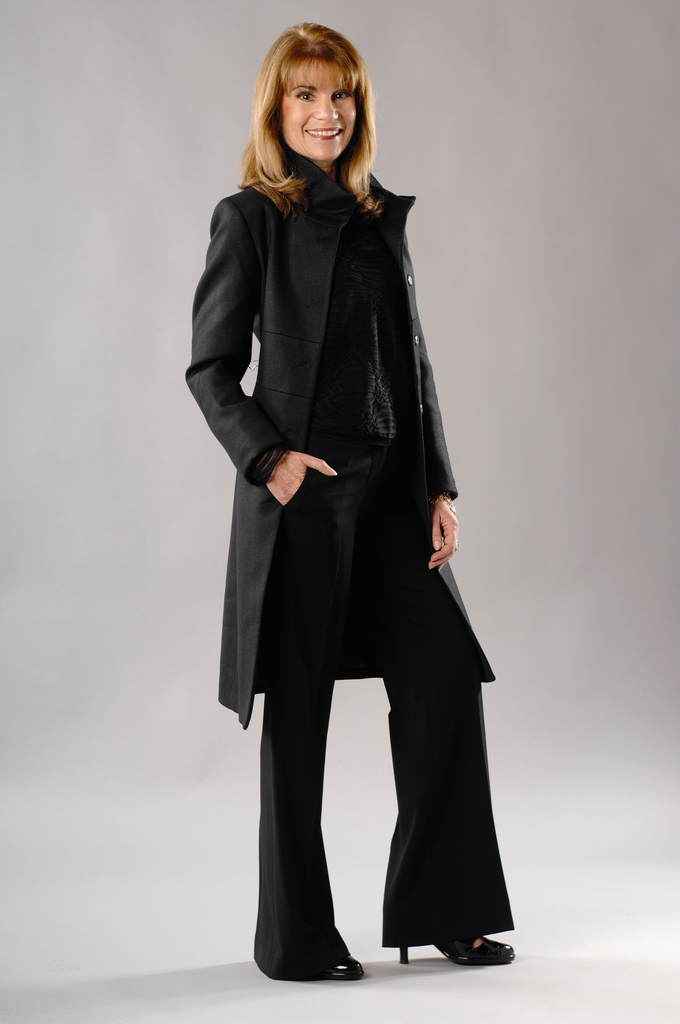
I grew up in the mod 60s and wore the shortest skirts, the whitest lipstick, the blackest eyeliner. My parents were horrified, but that didn’t stop me. My father, Max Alberg, was vice president of menswear at Macy’s in NYC where he worked for 30 years. I worked there, too, when I was in high school and in college during summer vacations, and learned a lot about the business of fashion. He was also a very dapper dresser with tremendous style and charm. I learned so much from him, about quality and style and first impressions, but, more importantly, about how to treat people.

Ms Alberg-Grossman as host of the pretigious Uptown Downtown dinner at the Four Seasons hotel in NYC
Most of my knowledge comes from shopping the market (trade shows, showrooms, factories) and from staying in constant touch with retailers. I am also always talking to men about how they dress and why. We do focus groups and consumer surveys on a regular basis. My mother, Ursula, comes from a very affluent family in Germany and truly values appearances. To this day, I make sure I’m well dressed whenever I see my mom; she does not react well to sloppy or overly trendy.
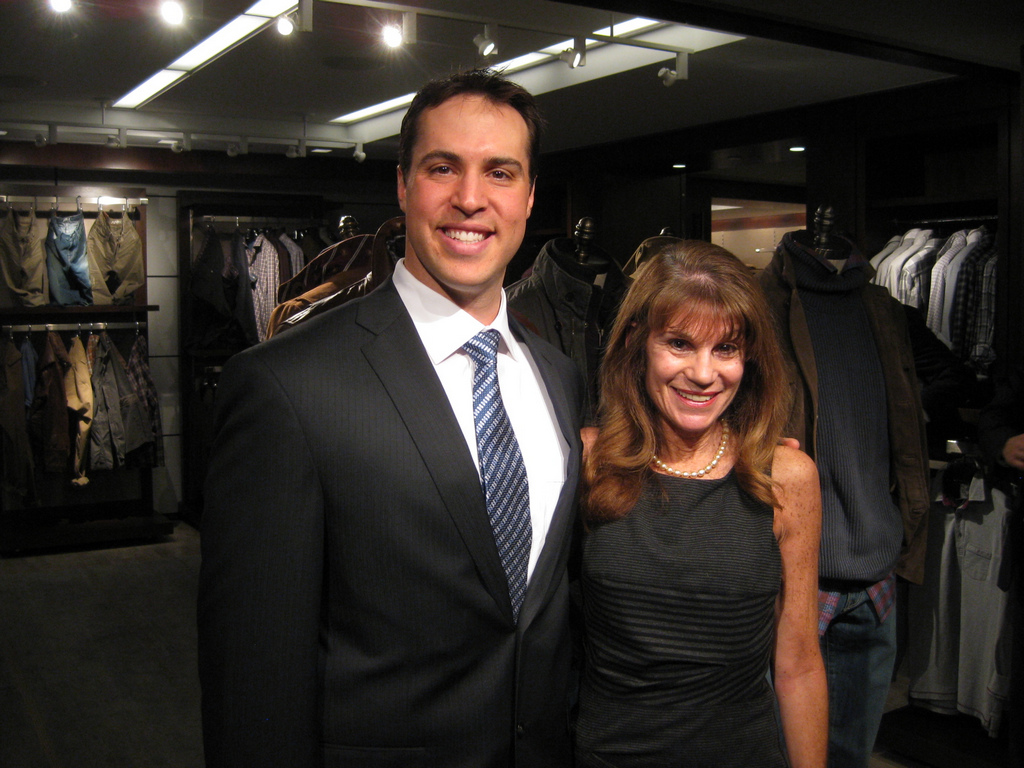
Ms Alberg-Grossman with Mark Teixeira of the New York Yankees
MR magazine is the largest men’s trade magazine in the States. We launched in 1990 because we felt that DNR (the men’s counterpart of WWD) was not doing a good enough job capturing the heart and soul of the industry. DNR has since gone out of business, while MR is going strong, both in print and online. We write about the business and the fashion, but we also write about the people and what makes them tick. MR is essentially a trade magazine for industry insiders. GQ and Esquire are consumer magazines. That said, consumers who want to learn more about the business tend to love MR because it goes a level or two deeper.
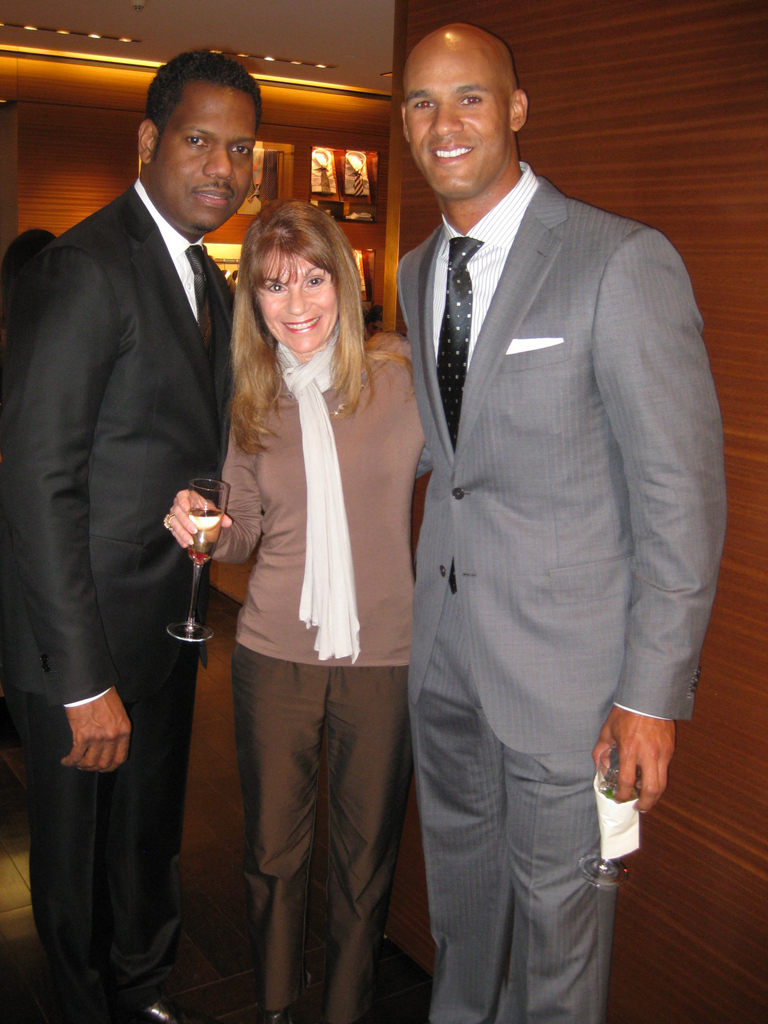
Ms Alberg-Grossman with Jason Taylor (right), former Miami Dolphins football star, now commentator for ESPN, at a Zegna event in NYC
MRket is the quintessential men’s trade show, featuring luxury to contemporary menswear collections. There’s a separate section for new and innovative companies and much trend information and direction. All the top menswear stores in America, and internationally, shop MRket in NYC and Vegas. Technology has revolutionized the industry: more business is done online, more items are customized via new fitting and design technology, more marketing is done through social media. That said, it’s still mostly about beautiful clothing sold by knowledgeable experts. Fashion-wise, there’s a definite trend to dress-up; tailored clothing has never looked more beautiful and is increasingly popular among young people.
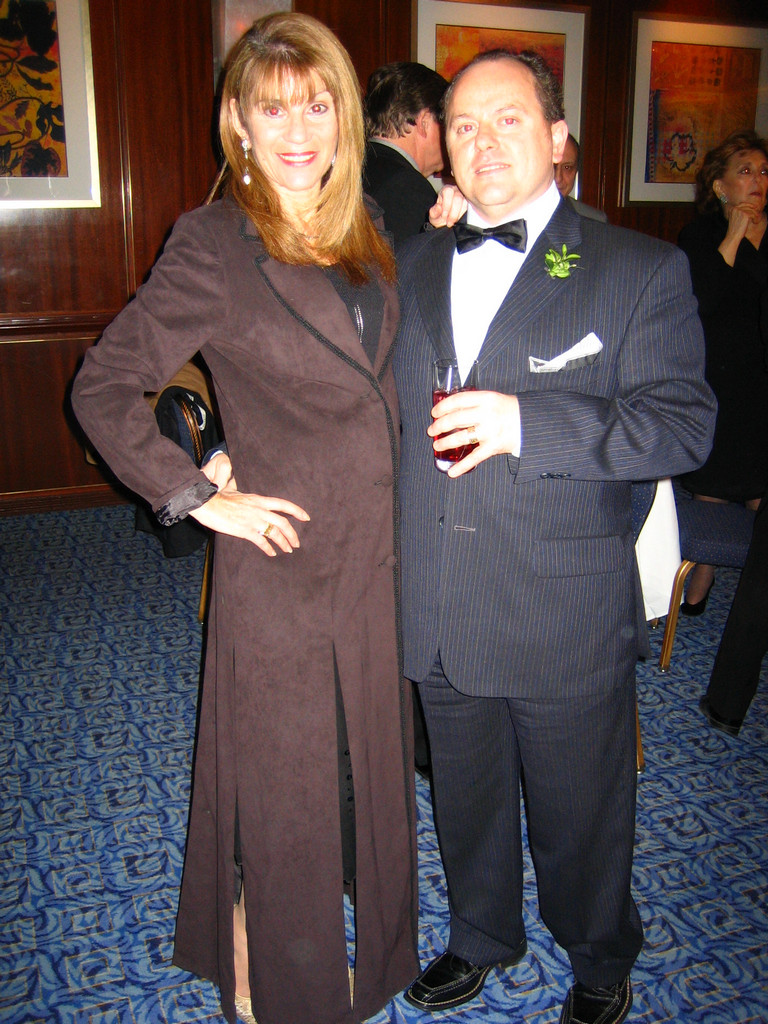
Ms Alberg-Grossman at a IACDE convention modelling an award-winning coat
I love sitting in parks or cafes or train stations or airports and striking up conversations with interesting people, many of whom happen to be men (I believe flirting is one of the joys of life, at any age). My personal style, these days, is understated and subdued. I like to wear simple, fitted sheath dresses or slim pants with tailored jackets. I don’t buy very expensive clothing, except on occasion; two favorite brands are Kenneth Cole and BCBG. My personal blogs are more about business and life than they are about fashion. For example, I just wrote about my son’s beach wedding in Costa Rica and how hard it was for the guys to figure out what to wear. But my MR editors (all in their 20s and 30s) are very tuned in to the contemporary fashion scene, and your readers would learn a lot about men’s fashion and lifestyle trends by checking out MRketplace.com on a daily basis.
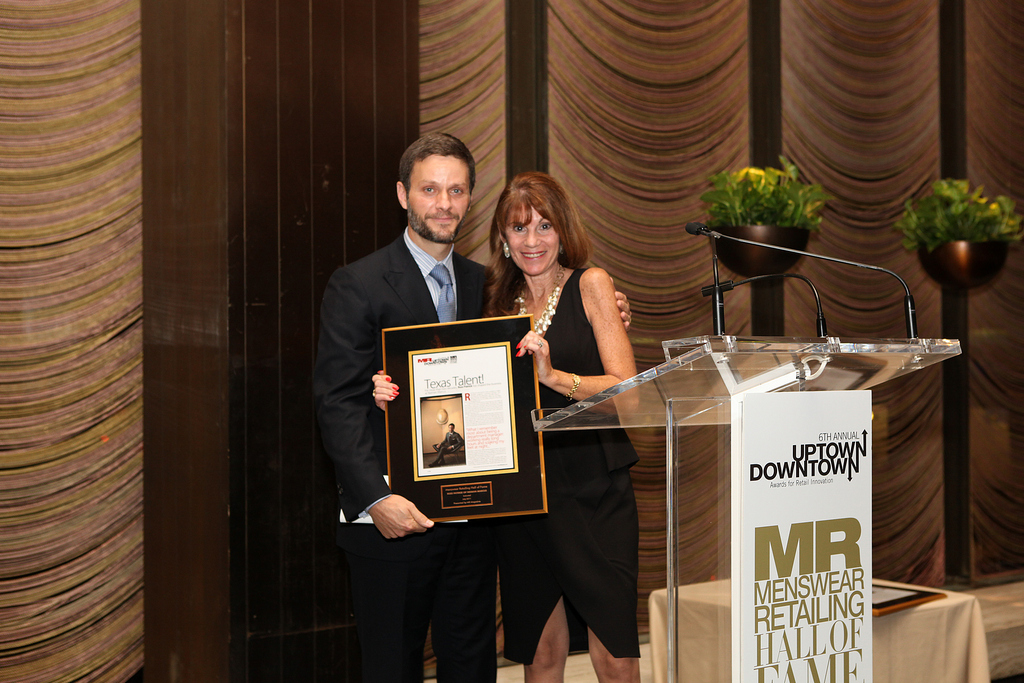
Ms Alberg-Grossman presenting an award to Russ Patrick, VP of Neiman Marcus, at the sixth annual Uptown Downtown dinner
I love beach yoga, theater, and music of all kinds. I also love writing poetry and essays: my next goal is to work with elderly people, helping them to write their life stories. Very simply, I would like men to know that they can step up their style quotient without looking foolish by making a few simple changes. Buy clothes that fit (have a professional help you). Embrace a more modern look (clothes today are a bit slimmer and more body-conscious). Don’t be afraid of color, if not in the apparel itself, then in the accessories (socks, scarves, pocket squares, hats, belts). Pay attention to shoes (brown suede looks great with grey and navy clothing!) And don’t feel you must follow a rule book: express yourself and have fun with clothing. For why not?’
Pictures: © Karen Alberg-Grossman
Category Interviews
Copyright © 2013 Ville Raivio