Boehlkeism
0April 30, 2013 by Ville Raivio
‘…consumers today are expected to pay for a clothing brand’s advertising, which can be described as a form of admitting that they have no taste of their own.’
~ Will Boehlke
Category Quotations
Cary Grant’s Style Philosophy
5April 30, 2013 by Ville Raivio
Originally published in five parts on This Week magazine in 1962, the following text is the only public article from Grant’s pen concerning style.
* * *
‘I’m often asked for advice or an opinion about clothes, and I always try to answer the best I can, but I’m not inclined to regard myself as an authority on the subject. Many times during my years in films, some well-meaning group has selected me as best-dressed man of the year, but I’ve never understood why. The odd distinction surprises me: first, because I don’t consider myself especially well dressed, and, secondly, I’ve never, as far as I can compare the efforts of others with my own, gone to any special trouble to acquire clothes that could be regarded as noticeably fashionable or up-to-date.
Some of my suits are ten to twenty years old, many of them ready-made and reasonably priced. Those that were custom-tailored were made by many different tailors in many different cities: London, Hong Kong, New York and Los Angeles. I believe that American ready-made clothes are the best ready-made clothes in the world: that the well-dressed American man makes a better appearance than the well-dressed man of any other country.
No, it isn’t only money that determines how well a man dresses—it’s personal taste. Because of the demands of my work, I’ve purchased dozens of suits over the years and they all have one attribute in common: they are in the middle of fashion. By that I mean they’re not self-consciously fashionable or far out, nor are they overly conservative or dated. In other words, the lapels are neither too wide nor too narrow, the trousers neither too tight nor too loose, the coats neither too short nor too long. I’ve worn clothes of extreme style, but only in order to dress appropriately for the type of character I played in particular films. Otherwise, simplicity, to me, has always been the essence of good taste.
I believe men’s clothes—like women’s—should attract attention to the best lines of a man’s figure and distract from the worst. In all cases, the most reliable style is in the middle of the road—a thoughtful sensible position in any human behavior. Except perhaps on the freeway—but, even then, the middle lane, providing of course, it’s on your side of the road, usually gets you where you’re going more easily, comfortably, and less disturbingly. And so it should be with clothes. They should be undisturbing, easy and comfortable.
There are many established stores or haberdasheries in each city, and probably in your neighborhood. Look at the suits in the windows. See how they compare with those worn by men whose taste you respect and admire. Think about the practical, functional and long-wearing qualities as they apply to your particular job or social activities. It’s better to consider carefully before buying than to regret your purchases for months afterwards. Study the cut, the price.
And here, by the way, is a tip. If the sleeves seem disproportionately wider than customary, it indicates a very deep armhole. Don’t contemplate buying if you are of average or slim size—you’ll get a well-fitting back but an extremely loose-fitting front and sleeves that tend to ride up if you lift your arms. A deep armhole is popular with many manufacturers because each coat fits a wider range of customers.
How much on should pay depends on how much one has to spend. I’m reminded of a piece of advice my father gave me regarding shoes: it has stood me in good stead whenever my own finances were low. He said it’s better to buy one good pair of shoes than four cheap ones. One pair made of fine leather could outlast four inferior pairs, and, if well cared for, would continue to proclaim your good judgment and taste no matter how old they become. The same applies to suits, so permit me to suggest you buy the best you can afford even though it means buying less. Rather like the stock market: it is usually more sensible to buy just one share of blue chip than 150 shares of a one-dollar stock.
What should one buy? Well, if a man’s budget restricts him to only one suit, then I would choose something unobtrusive. A dark blue, almost black, of lightweight cloth, serviceable for both day and evening wear. I suggest lightweight because nowadays most restaurants, offices, shops and theaters are well heated during fall and winter. I found that so even, surprisingly, in Moscow. With such modern indoor comfort, one need only be concerned with cold weather while out-of-doors.
Which brings us to overcoats. I’ve learned to wear overcoats that button up to the neck yet still appear neat when left open. It mystifies me that some men wear heavy single-breasted and even double-breasted, overcoats to protect themselves from cold, yet expose the most vulnerable part of their chests with V-neck openings. By wearing an overcoat that buttons to the neck, there is no need for a scarf.
The topcoat I use for traveling can be worn spring or fall. It’s black and therefore not only less apt to show dirt and travel stains, but usable for both day and formal wear. It’s made of a gabardine-type waterproof material, with slash side pockets that enable one to reach through easily for change, or to carry a book, or something similar, protected from the rain. There is also a detachable lining that buttons inside for very wintery days. An all-purpose coat.
What about a second suit? Well, I think a grey worsted or flannel would be most serviceable. Not too light in color, not too dark. And, this time, of medium weight but not more than what is known as ten-ounce cloth. It might be advantageous to purchase an extra pair of trousers for wearing separately with a sweater or a sport shirt. A grey flannel suit, with or without extra trousers, together with a sport coat could, at a pinch, be sufficient for a weekend in the country.
A sport coat ought to be easy-fitting, its pattern neither loud nor flashy. If you’re unsure which plaid or check to choose, then one of those dark blue, single-breasted blazers that have been worn by all classes in England for years, and have since become popular here, is acceptable for most casual wear.
Except, of course, on very hot days. During summer I’ve taken to wearing light beige, washable poplin suits. They’re inexpensive and, if kept crisp and clean, acceptable almost anywhere at any time, even in the evening. Also, the coat can be worn with grey flannels at the seashore or in the country, and the trousers used separately with a sport shirt and moccasins, or a pair of those heavy-soled white canvas shoes that are popular with young college men.
Poplin or seersucker suits are the mark of no special social class or income group, but are worn by all. And, providing he is well-mannered, a young man wearing such a suit can confidently approach the other fellow’s girl, secure in knowing that his way of dress is no deterrent.
A cardigan coat sweater of lightweight wool and conservative color is a useful investment. It can be worn without a coat on many occasions, and has the advantage of being easily slipped on without those arm-raising contortions and the need to re-comb your hair.
How do I feel about ties? If I had only one to choose, then I think a black foulard, not too wide nor too narrow, is best, as it’s acceptable with most clothes. An expensive tie is not a luxury—the wrinkles fall out quicker and the knot will hold better. Personally, I wear ties of small, conservative pattern and color.
Shoes? I’ve already mentioned that good shoes look better and last longer. If a man must limit himself to only one pair of shoes for city wear, then they should be black. If two, then a brown pair of darkest chocolate color are useful with almost all suits and, if he has no moccasins, even with grey flannels. The moccasin type of shoe is, to me, almost essential and especially convenient when traveling, since they can be easily slipped off in the airplane or car.
If your pocket handkerchief is monogrammed, don’t wear it carefully folded to show the monogram peeking above your breast-pocket. That’s somehow ostentatious.
Shirts should usually be white for the evening, but, in the city’s grime, it’s practical and permissible to wear a light blue or conservatively striped shirt during the day. The type of collar should suit the contours of the neck and face. As a younger man, I tried wearing a flared, too-high collar that, although modish amongst those I regarded as the sophisticates of that day, looked ridiculous on my 17 1/2- inch neck. Luckily, after the embarrassment of viewing myself from almost every angle on screen, that mistake was soon rectified. Button-cuffed shirts are simplest to manage, but if you wear cuff links, as I do, don’t, I beg you, wear those huge examples of badly designed, cheap modern jewelry. They, too, are not only ostentatious, but heavy and a menace to the enamel on your car and your girl friend’s eye.
Learn to dispense with accessories that don’t perform a necessary function. I use belts, for example, only with blue jeans, which I wear when riding, and content myself with side loops, that can be tightened at the waistband, on business suits.
A tip about trousers. Trouser cuffs seem to me unnecessary, and are apt to catch lint and dust. However, whether you prefer cuffs or not, ask the tailor to sew a strip of cloth of the same material, or a tape of similar color, on the inside at the bottom of the trouser leg where it rubs the heel of the shoe. It will keep your trouser-bottoms from fraying.
Do I have any special do’s and don’t’s about clothes? I can’t think of and rules about clothes, since there really aren’t any, but I suggest you buy trees to conform to the shape of your shoes, and keep your coats on curved hangers.
Take care of your clothes, keep them clean and in good repair. I suggest you avoid using heavily scented cologne or soaps. When I meet a man I like him to smell like a man, or not to smell at all; certainly he shouldn’t smell like a woman. Do see that your socks stay up. Nothing can spoil an otherwise well-groomed effect like sagging socks. Don’t stuff your pockets with heavy articles and bulging wallets filled with seldom-used cards. They ruin not only the neatness of your appearance but the actual tailoring of your suit.
Don’t be a snob about the way you dress. Snobbery is only a point in time. Be tolerant and helpful to the other fellow—he is yourself yesterday.
Don’t overbuy. When you contemplate an article, judge whether or not it harmonizes with items you already own. Again, avoid exaggeration of current fashions. It’s best to be inconspicuous. But inconspicuous does not mean dull. Extreme dullness can be conspicuous in itself. Just do the best you can.
Come to think of it, who knows how anything becomes bad or good taste? Who decides a standard of esthetics? If it’s the majority, then how is it the minority are the ones considered well dressed? Everything is only exactly what it is. If a man wears the kind of clothes that please him, then, providing they’re clean and don’t shock society, morals, and little children, what is the difference as long as that man is happy?
Yes. Somewhere I read that Harvard’s Professor Archibald MacLeish was asked by a student about to graduate into our highly competitive world what advice he could give him. Professor MacLeish’s answer was, “Wear your Sunday suit every day.” The inference, of course, being that the suit would give the young man such confidence in seeking positions that he would eventually own many Sunday suits, for any and all days.
Splendid advice even by itself, but it’s probable that the professor meant not only his Sunday or best suit, but also his Sunday or best smile, disposition, and behavior—knowing that each begets the other. So wear, not only your clothes, but yourself, well, with confidence. Confidence, too, is in the middle of the road, being neither aggressiveness nor timidity. Pride of new knowledge—including knowledge of clothes—continually adds to self-confidence.’
Category American style, Reading, Style Icons
Interview with ‘unbelragazzo’
1April 30, 2013 by Ville Raivio
VR: Your age and occupation?
UBR: I’m 31 years old and I’m a professor.
VR: Your educational background?
UBR: I have a PhD.
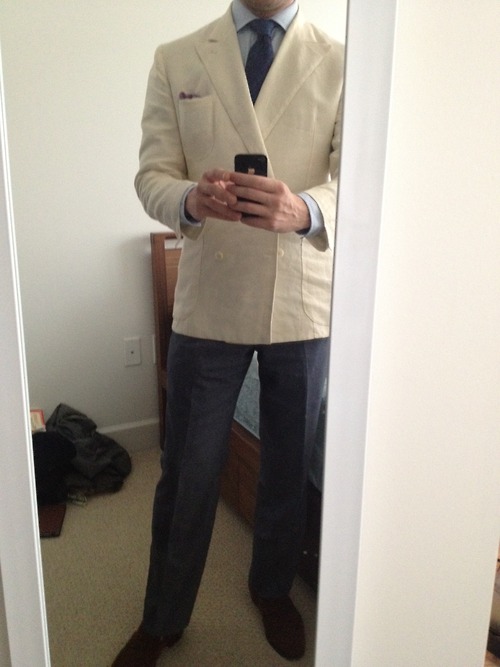
VR: Have you any children or spouse (and how do they relate to your style enthusiasm)? And your parent’s and siblings’ reactions back in the days?
UBR: I have neither spouse nor children. My mother likes that it’s something I care about and shares some of my interest. My father likes to know what I’m working on and will read stuff that I write, but I think considers it a bewildering, if mostly harmless, hobby. I think my brother would be more interested in clothing, but these days he spends 90 hours a week in scrubs.
VR: How did you first become interested in clothing, and when did you turns your eyes towards classics?
UBR: The seeds of my current more serious interest were first sown (sewn?) when I lived in Italy for a year during college. I walked by the Armani store every day on my way from my apartment to the university. At the time, I was really attracted to the way their fabrics draped – they were using fabrics that really nobody else was using at the time, or since, really. The clothes had a relaxed, but sophisticated look, and beautiful neutral colors. That store made me realize that men’s clothing could be truly special. I don’t know if it’s because I’ve changed or because they have, or both, but these days I don’t feel the same way when I walk by Armani storefronts.
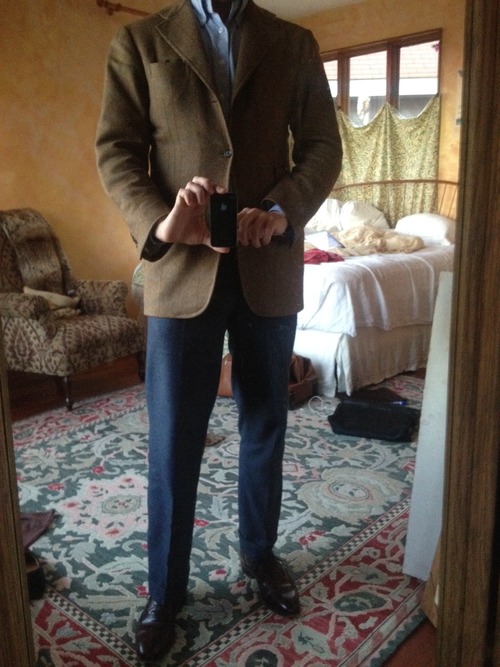
VR: How did you find Styleforum, and what has kept you active on the site?
UBR: This is the jacket that got me into StyleForum and #menswear. Two years ago I went on eBay to try and replace a ruined item and started browsing innocently. Next thing I knew I saw a listing for a jacket that looked absolutely stunning. It was used with a BIN for $600 or something like that, which seemed really high to me at the time, given that eBay’ed Armani could be had for less than $100 on occasion. Moreover, I hadn’t even heard of the maker.
So I googled ‘Cesare Attolini’ and, of course, found an SF thread. I bought the jacket and have loved it ever since. I continued to lurk on SF for a month or two, amazed at the amount of time these idiots spent discussing men’s clothing and taking pictures of themselves in bathrooms, never thinking within months I’d be among the most degenerate offenders.
Since then I’ve made some e-friends through the site, so I come back to hang out with them and other like-minded enthusiasts. No longer can a gentleman go lounge around at his tailor’s shop and talk clothes with other clients. Today these matters must be discussed anonymously from your computer when no one is looking.
VR: How have you gathered your knowledge of clothing– from books, in-house training, workshops or somewhere else? Who or what inspires you?
UBR: From observing friends and people on the street, watching movies, reading books. I maintain a sort of menswear bibliography on Styleforum: http://www.
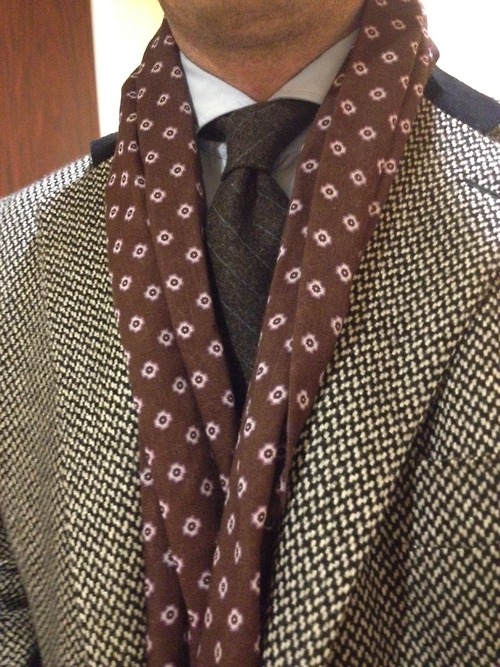
Today there are also many Internet personalities with interest in personal style and excellent writing skills. I’m sure I’m leaving out somebody important, but in particular I’ve learned a lot from Guido Wongolini, Derek Guy, Jesse Thorn, RJMan, Will Boehlke, voxsartoria, and Manton. I am immensely grateful to them for posting their thoughts and experiences, and often responding to my pestering questions.
VR: How would you describe your own dress? Which tailors/RTW makers do you favour?
UBR: I use Napolisumisura and Steed for jackets, trousers, and suits, Geneva Custom Shirts for shirts, Vanda Fine Clothing and EG Cappelli for ties, Carmina and Gaziano and Girling for shoes, Rubinacci and Drakes for pocket squares, Bresciani for socks. As RJMan would say, if it were possible to die from an overdose of Internet-approved brands, I’d have perished many lengths of London Lounge cloth ago.
I’d describe my clothes as comfortable, well loved, and much more expensive than I would like them to be.
VR: What is your definition of style?
UBR: Your style is the difference you make in a room when you’re in it.
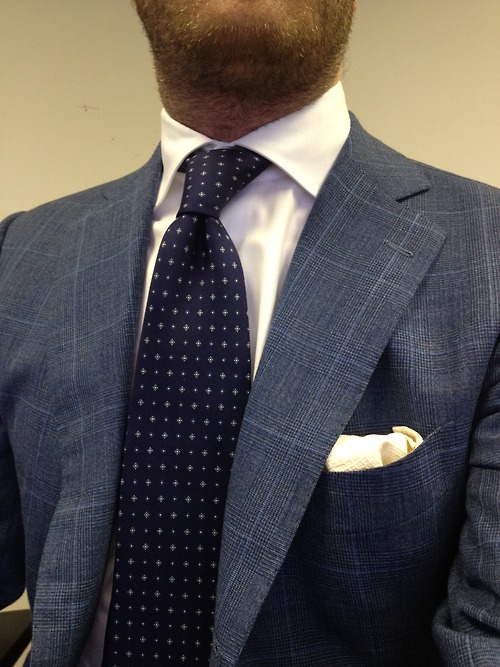
VR: Please describe how Ivorytowerstyle was born. How have you been received?
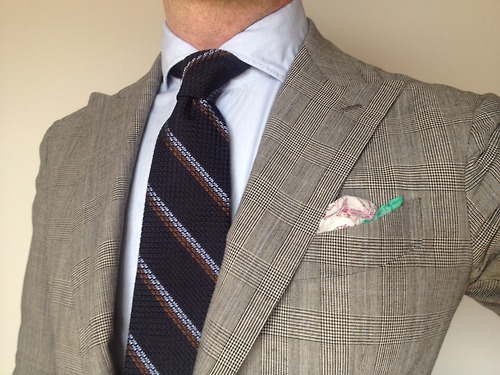
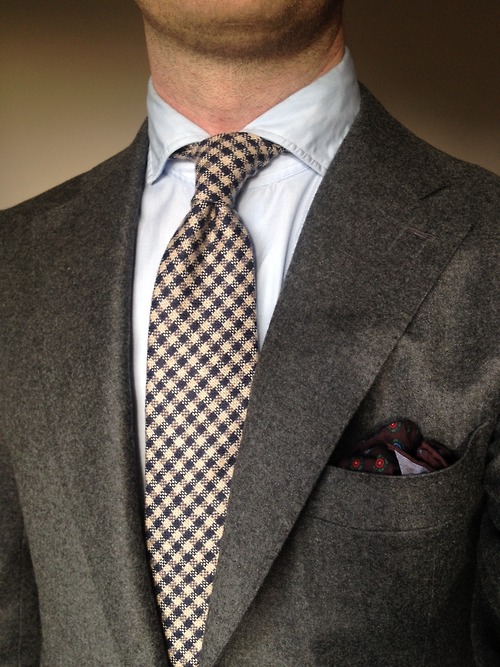
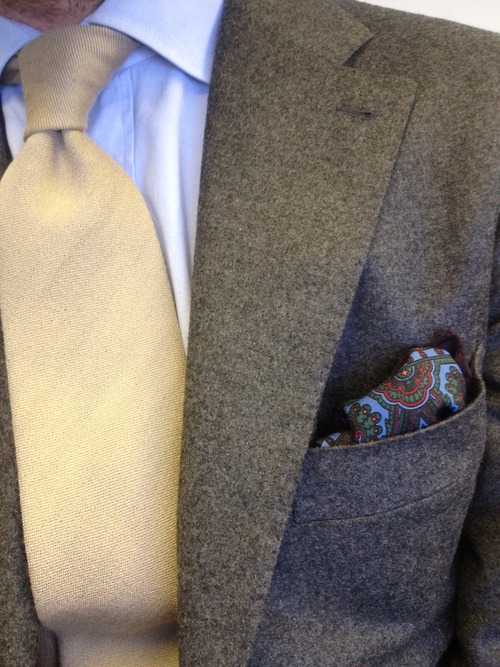
UBR: I wanted to have a personal diary of what I was wearing, seeing, and thinking about regarding clothing. Most of the pictures at the beginning were pretty terrible quality. Eventually I got a little bit of an audience as I improved my photographic skills.
Headless self-portraits can only be so interesting though, so recently I’ve started to focus more on writing articles.
VR: There are thousands of style sages around the world — why should my readers have a look at your texts?
UBR: I really hate self-promotion. But if you’re enjoying this interview, you’ll probably like my site.
VR: What other hobbies or passions do you have besides apparel?
UBR: I love music of all sorts. I’ve been playing guitar and singing for 20 years now. Only recently did I start worrying about what effect guitar straps might have on the shoulder lines of my jackets.
VR: Over the years you must have learned quite a bit about style. Is there something you wish more men would know? This is great opportunity to make a lasting influence on my younger readers. Most of us aren’t blessed with rakish relatives, which makes learning about style a challenge later in life. All tips and thoughts are valuable.
UBR: Cultivate a strong interest in personal hygiene. This includes cleaning and trimming your finger and toenails. In private.
Be courteous, respectful, and generous to your fellow humans. Nothing (except long, filthy fingernails) is less stylish than snapping at a waiter or salesperson.
Stand up straight.
Look people in the eye when you are speaking with them.
Be able to tell at least five entertaining stories or jokes, at least two of which can be told in polite company, and at least one of which cannot. Write them out and practice in front of a mirror if you have to.
Read. And I don’t mean books on color coordination and jacket construction. Read all of Shakespeare at least once before you even crack open Flusser or Roetzel.
Avoid cliches. Start with your speech and then work from there.
Learn which classic cocktails you like best and order those. Cocktail “menus” are for women. If your “classic cocktail” of choice includes Coke or Red Bull as an ingredient, start over. All of these things are far more important to your style than anything having to do with what you’re wearing. If you act like a gentleman but dress like a slob, people will mostly just assume you have more interesting things to think about than your clothes. If you dress like a gentleman but act like a cad, people will assume you’re insecure and trying to compensate for something. They’ll probably be right.
But I suppose that anyone reading this, especially this far, has some interest in clothing. So I’ll give some advice directed at that audience, and here it is: Be aware of what is driving your interest.
In my observation, most people who have an interest in tailored clothing are motivated by at least one of the following three desires. All of these are stereotypes. Few people will fit exactly into any one of the three categories. Most will fit into all three in some degree.
The first is the desire to achieve other goals, be they professional or social, using clothing. They want to make a good impression, either directly or through the extra confidence they get from wearing nice things. They want to dress appropriately in professional settings so as to advance their career. They want to dress appropriately in social settings so as to show respect to the occasion and their hosts, and to make friends and influence people. This is admirable, and the easiest desire to satisfy. To the vast majority of the general public, even the small share of the public that makes decisions on promotions and party invitations, most suits look the same. A navy Brooks Brothers suit taken to a competent alterations tailor, worn with a white shirt and conservative necktie, will make as good an impression, and give you as much confidence, as clothes ever can. For these people, scouring internet forums and blogs is only going to be counterproductive.
The second desire is to be envied by others. These are the people who crave rankings of clothing brands by “quality” and lists of rules to follow, so that they can feel their own sense of superiority as they work their way up the rankings or down the rules. If the first thing you think of when you buy something new is how much everybody online is going to drool over the pictures you post, then you are possessed by this demon. And it is a demon that lives inside all of us. This is the most insidious of the three desires. It may be appeased by some temporary adulation, but ultimately leads to dissatisfaction and disillusion. If you diagnose this malady in yourself, treat with a shopping moratorium until you feel cured.
The final desire is a genuine appreciation of the history and aesthetics of men’s clothing and quality craftsmanship per se. This is the most noble and most rewarding of the three desires. These enlightened souls can enjoy some of the most beautiful things human hands can produce without being constantly haunted by the idea that someone else might have something better, or that they might be photographed with some disqualifying wrinkle on your sleeve. At its best, the online community deepens and broadens this appreciation.
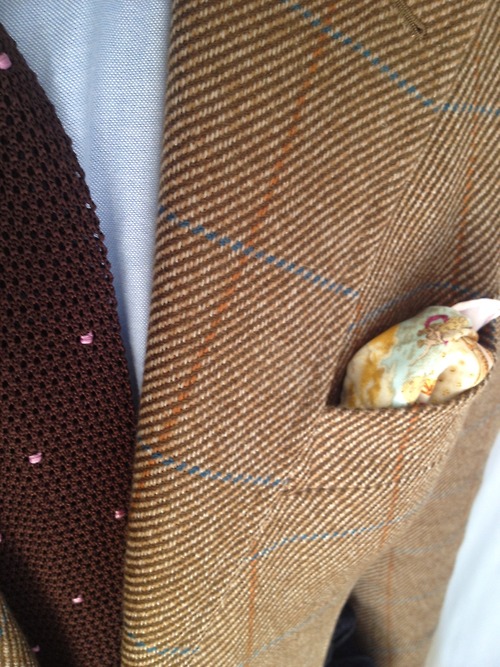
So my advice is to think about which of these forces is strongest in you and act accordingly. Oh, and always wear nice shoes.
http://ivorytowerstyle.tumblr.com
http://www.styleforum.net/u/133000/unbelragazzo
Pictures: © ‘unbelragazzo’
Category Bloggers, Interviews, Men of style, Styleforum
J. Alfred Prufrock
0April 29, 2013 by Ville Raivio
I grow old… I grow old…
I shall wear the bottoms of my trousers rolled.
Shall I part my hair behind? Do I dare to eat a peach?
I shall wear white flannel trousers, and walk upon the beach.
~ T.S. Eliot, from The Love Song of J. Alfred Prufrock
Category Quotations
Interview with Patrik Löf
1April 29, 2013 by Ville Raivio
’37 years old, founder of Skoaktiebolaget. I started working when I was 18 and never stopped. I guess I’m what you’d call “self-educated”. My wife used to think I was a bit crazy, I mean not that many men have more shoes than their spouses, but now she puts up with my passion for shoes and is actually starting to replace her “fashion” shoes with Carmina shoes. My kids are too young to care, but kids seem to have knack for stepping on your newly polished shoes. I come from a family of entrepreneurs and they have always been very supportive. Maybe they raised an eyebrow or two when I mentioned that my new venture was to start up a shoe store, but they know how ridiculously stubborn I am when I got my mind set on doing something, so I don’t think anyone really considered dissuading me.
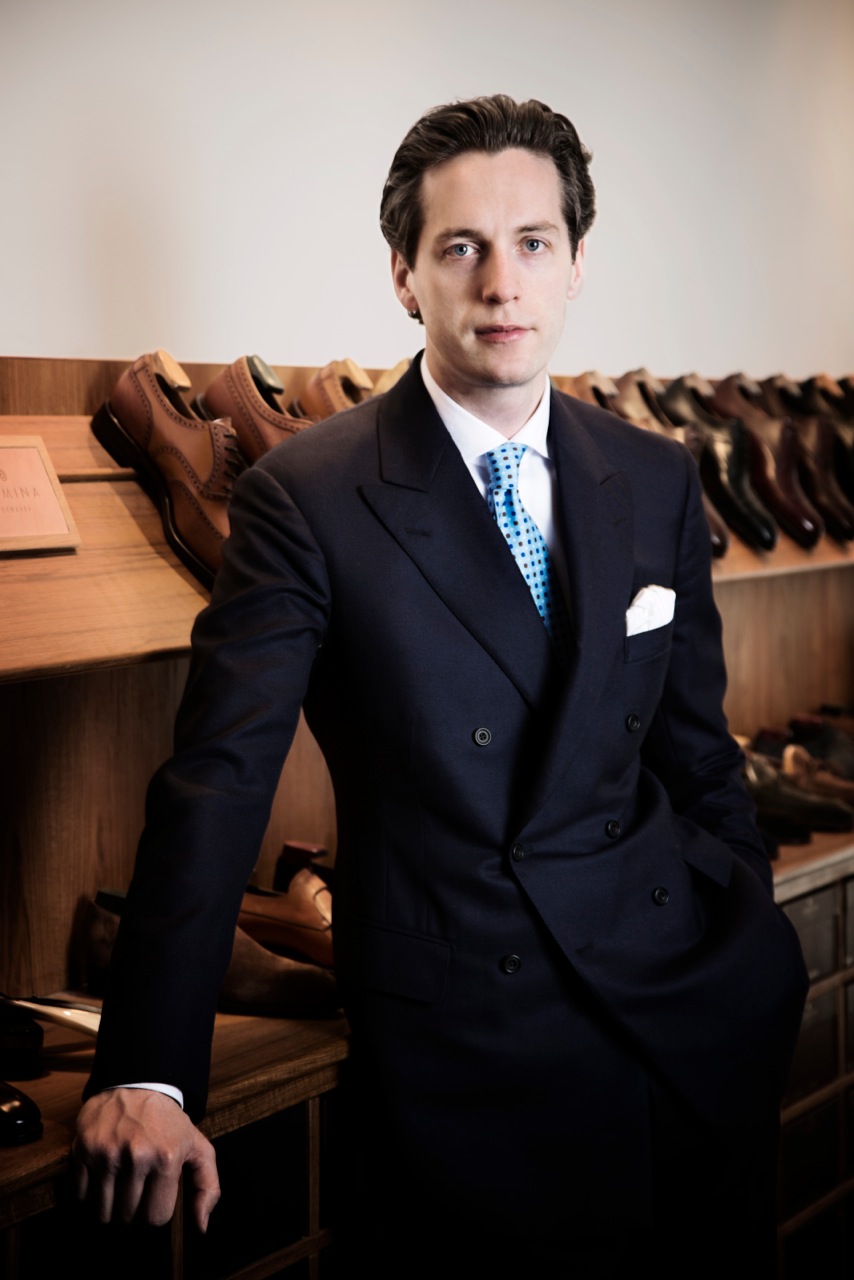
All pictures taken in Skoaktiebolaget’s retail store
I received Bernhard Roetzel’s book “Gentleman” as a gift from a friend, and that was a real turning point for me. I acquired more books on the topic and I found it so fascinating to read about classic style; the history, the manufacturing process, what prerequisites a good fit, et cetera. All the small rites attached to this lifestyle is also fascinating; polishing your shoes for that impeccable shine, tying the perfect “imperfect” tie knot each morning, ironing your shirts, et cetera. I think there is a time for fashion for everyone, but after a certain point in life we become weary of fickle things, like fashion, and look towards other ways to express style. Classic style is often so much more subtle and therefor more interesting. To me at least, it has more depth and nuance than fashion.
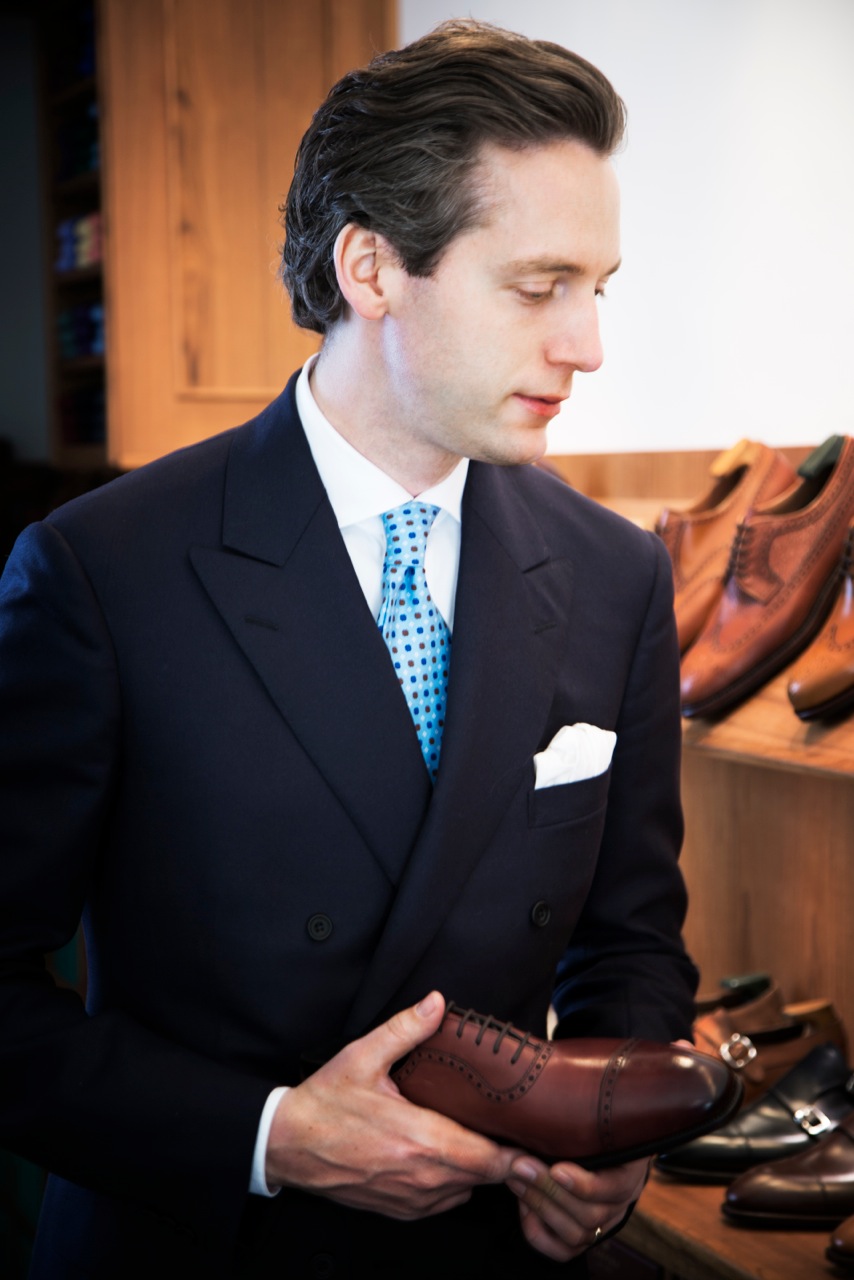
My starting point was “Handmade Shoes for Men” by Mr. Vass. This was almost over a decade ago when the amount of knowledge on the Internet was still pretty limited. Not long after that, though, I found forums like AskAndy and Styleforum. But being a hands-on guy, I knew I had to go out there and see shoes being made, not just read about it in a book or research online. My first visit at a shoe factory was about five years ago when I visited Gaziano & Girling for the first time. Tony and Dean have been very educative and helpful. The visits at Carmina are also always rewarding, Mr. José Albaladejo is very eager to listen to our ideas and suggestions and he has a wealth of knowledge to share. Another fun factory visit was our latest trip to Bologna and Enzo Bonafé, where they still hand-welt their shoes, this is a process I’ve studied at the G&G factory for bespoke shoes, but never for ready-to-wear, it’s insane how much time that goes into a pair of ready-to-wear Bonafé shoes.
I would describe [my style] as quite conservative, but I do love a little bit of playfulness in details. I love navy suits, preferably double breasted, and with sportscoats I favor bold patterns because I find it settles my tall and slim frame. Also, generous trouser cuffs are a big help when you’re as tall as I am. I don’t wear jewelry, bracelets or necklaces that are so popular these days. I wear my wedding ring and on rare occasions a watch. When it comes to accessories I’m a bit ascetic. I have made a lot of garments from Graham Browne of London, they are great chaps to work with, but the drawback is of course that they are very busy, and rarely have the opportunity to travel to Stockholm. I have also worked with Bauer, the last remaining bespoke tailoring house in Stockholm, and Annika Heed who runs a very small bespoke operation out of haberdashery Hans Allde. My latest project is with Napoli Su Misura, they travel regularly to Stockholm which is very convenient, and I love the Neapolitan tailoring style so it will be very fun to see how this develops.
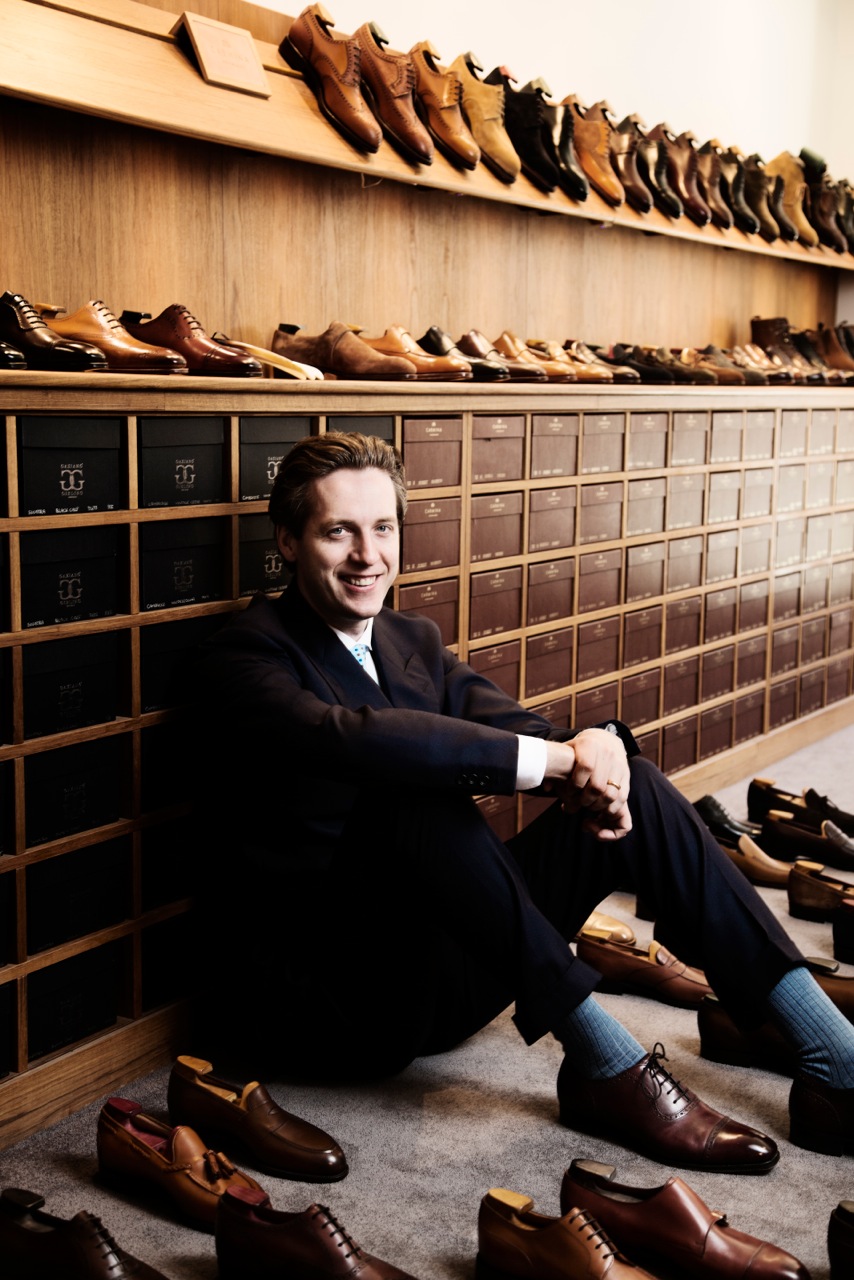
For work, I prefer Oxfords, you can’t beat that smart, elegant look in a professional environment. I also really, really love split toe shoes and I could not resist a wonderful split toe derby with a Norvegese construction when we developed our new Bonafé collection arriving in April. I think our clients really “feel” that what we’re doing at Skoaktiebolaget is something special. When it comes to online sales we like to have dialogue with our clients before they make a purchase in order to ensure a good fit, style and everything else you would experience when visiting our store on Humlegårdsgatan. We’re not looking for huge volumes; we’d rather build a long and lasting relationship with our clients and develop our business together with them.
To be honest, I was really frustrated that the selection of premium shoes available in Stockholm was so meager before. Almost two million people live in Stockholm, so it was just absurd that the variety was so poor. Hence the idea had been brewing for a while, and when opportunity presented itself, there was no hesitation what so ever, Skoaktiebolaget went from the drawing board to reality in just a few months. The vision with Skoaktiebolaget has always been to create a leading premium shoe store, not only in Sweden, but worldwide. I think we have come a long way in this short time, but there is still much work to do. Our main goal right now is to improve our existing concept. Another important goal is to try and reach more clients in the Nordic countries and not only the US, where the lion’s share of our export goes to.
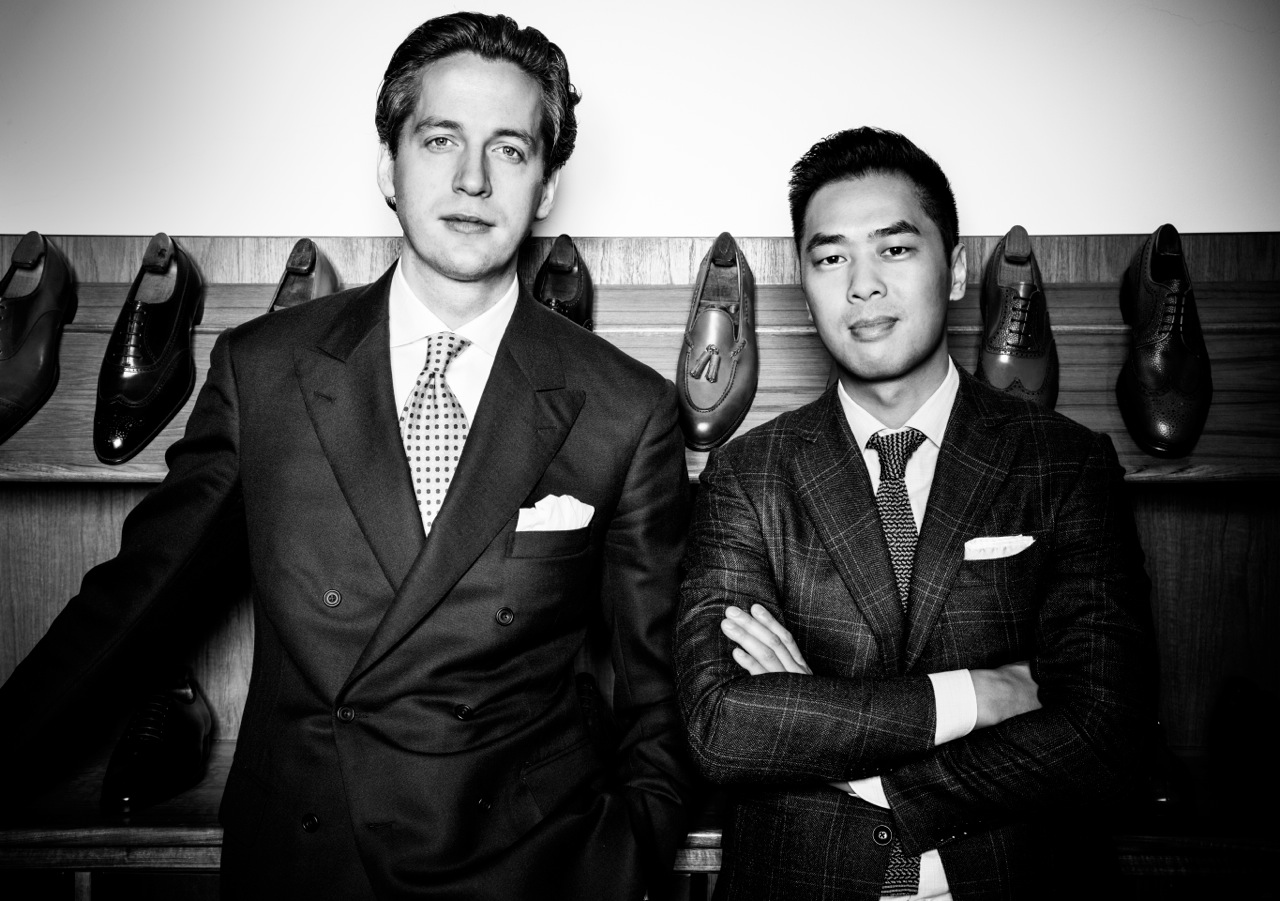
Mr Löf with SAB’s co-owner Daniel Tung
We have been received brilliantly! What delights me the most is the overwhelmingly positive feedback my team has received with regards to customer care; both from in-store clients and mail order clients. The response from the US has been especially overwhelming, it’s amazing how many shoes we ship to the other side of the Atlantic each month.
Basically, classical men’s clothes and shoes are my hobbies. Because I run a couple of businesses besides Skoaktiebolaget, and also have small kids, I don’t really have much “free” time, although I consider a lot of what I do for work relaxation…I don’t know if that makes any sense, but working with what I love is a special kind of freedom. I also try to spend as much time as possible at our summer house in the Stockholm Archipelago, the serenity of the countryside is an important change of scenery from an otherwise very hectic city life.
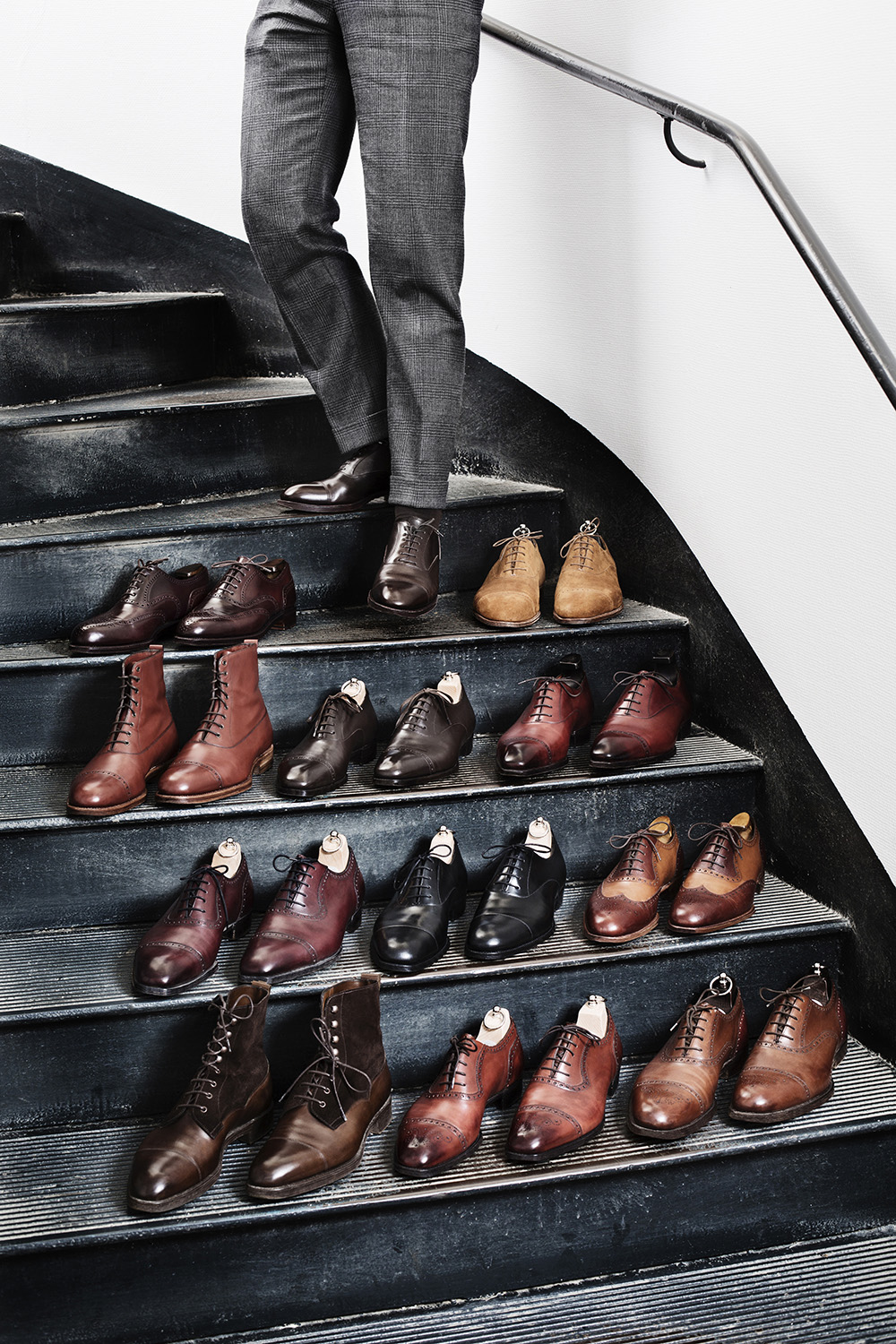
Over the years I’ve first and foremost come to the insight that most people buy shoes with their gut. You can try to persuade people and go into discussions about the financial, environmental and aesthetic perks of premium shoes, but what it all comes down to is your gut, you have to be able to feel for a pair of shoes. It’s like love; it doesn’t always make a lot of sense.’
Pictures: © Kjell B. Persson
Category Interviews, Styleforum, Tradesmen
Copyright © 2013 Ville Raivio