Elegance in Black
0June 13, 2013 by Ville Raivio
Today’s link leads to Dandyism.net, which hosts an old article on the then-rising phenomenon of well-tailored black American men, first published in Los Angeles Times. Fonzworth Bentley shares the inside look with Mr C.
Rozsnyai Shoes
2June 12, 2013 by Ville Raivio
Rozsnyai Shoes (pronounce ROASH-gnaw-yee) is a Hungarian artisanal shoemaker founded in 1980. The business began its path by making fashion shoes for women, theatres and bulk orders. Later on they switched to orthopedic shoes as European companies couldn’t compete with Chinese bulk make. High-end materials and finishing became part of the business some 15 years ago. The company’s manufacturing is based in Debrecen, some 200 kilometres from the capital and their main store, which is housed at number 4, Haris Köz. Shoe fans will recognise the pedestrian street as it also houses several other shoemakers of more or less renown around the world. The Hungarian school of shoemaking has maintained its guild-like nature as machines have not replaced hands, and this holds true for Rozsnyai too. Beside their own pairs, the company also makes footwear for several stores in Europe.
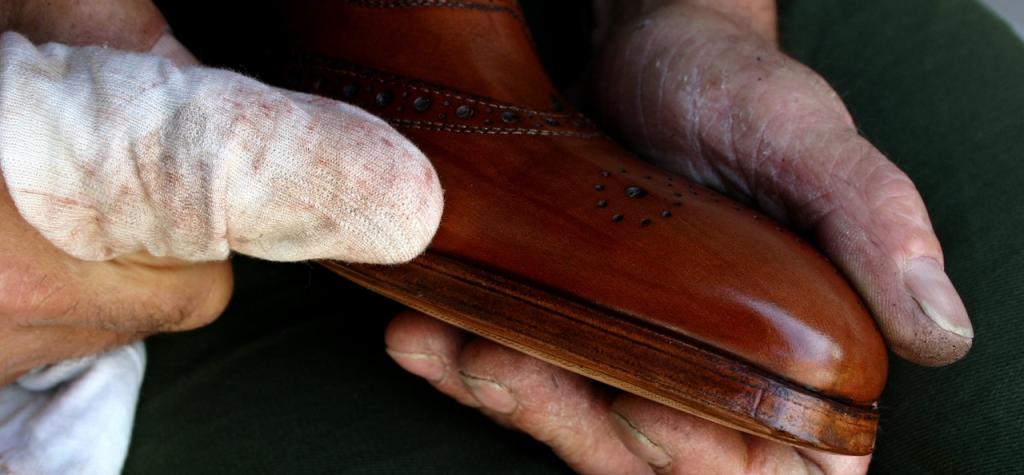
Today Rozsnyai remains active in high-end, orthopedic, made to measure and made to order shoes for men and women. Thanks to Hungary’s wage rate, they are able to offer fully handmade shoes for competitive pricing. Paper tracing, clicking, brogue punching, closing, welting, soling and finishing are made by hand with the stength of 22 cordwainers. Leather options range from Italian calf and buffalo uppers to American shell cordovan as well as exotics: stingray, shark, eel, crocodile, ostrich, elephant, hippo, iguana, snake, so on, with some 33 colours to choose from. Soles, insoles and welts are vegetable-tanned for comfort and durability. Toecaps and heel cups feature leather stiffeners, leather sole waists can be carved for a lighter look. Rozsnyai favours crust leathers with in-house painted finishes, with lasts coming from Romania. Pairs can be made with a blind, goyser, Norvegese or plain welt.

The company’s MTO program is extensive, with a 50€ surcharge, though the customer is restricted to readymade lasts. The style can be copied or designed from scratch, with free range with the uppers, leather type, stitchings, soles, colours. Mail and email sales are welcome, with detailed instructions for measuring and returns accepted. Models range from classic oxfords and derbies to fashion-forward and pointed pairs, with a specialty for the eponymous Budapester model, and lasts follow these lines. Rozsnyai remains a strong competitor to other Hungarian shoemakers, with the added benefit of smaller renown outside the country. This leads to short waiting periods for those customers in the know.
In March 2013, Rozsnyai took part in The International Shoe Service (ISS) exhibition, which is organised every three years in Wiesbaden by HDS. The main event was the contest of shoemakers in two categories: shoe making and shoe repairing. The firm sent two pairs of men’s and ladies’ shoes to each category, receiving three golden and one silver medallion — the highest rating in the contest among 45 shoemakers from ten countries.

http://rozsnyaishoes.com/index.php/en/
Pictures: © Rozsnyai
Category Footwear, Quality makers
Tweed for Health
3June 11, 2013 by Ville Raivio
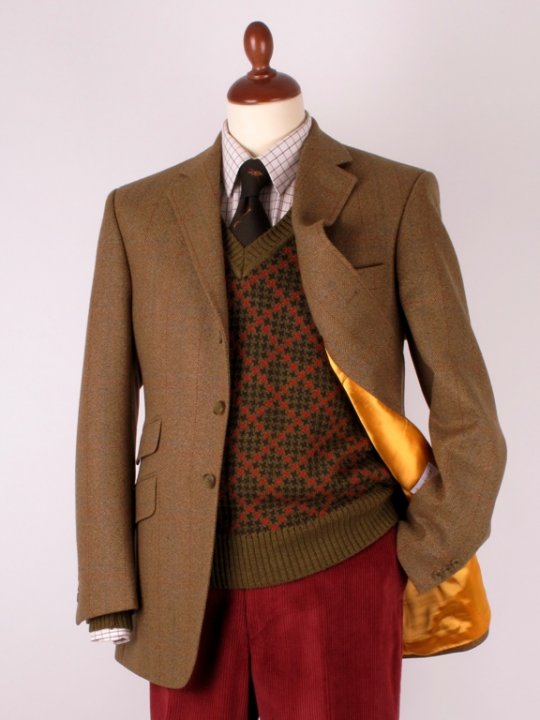
Today’s inspiration: brown windowpane tweed jacket, red corduroy trousers, Tattersall shirt, hunting tie, whimsical jumper.
Picture: © original uploader
Category Inspiration
Chesterfield
0June 11, 2013 by Ville Raivio
‘Take great care always to be dressed like the reasonable people of your own age, in the place where you are; whose dress is never spoken of one way or another as either to negligent or too much studied.’
~ Philip Dormer Stanhope, 4th Earl of Chesterfield (Lord Chesterfield)
Category Quotations
Interview with Andy Stager
2June 11, 2013 by Ville Raivio
‘I’m 33, and Ellie’s 31. I’m a pastor of a Presbyterian church called Hill City Church, which we started in 2011 in Rock Hill, South Carolina (near Charlotte, NC). We’re a mixed bag of artists, university students, families with lots of children, and empty-nesters. Many of us have in common a negative experience with religion and church, with a hope that it can be better if we keep the main things central and cultivate rich community, almost like extended family. Ellie, of course, runs The Cordial Churchman. Since we are both involved in entrepreneurial endeavors, we end up helping one another all the time, and talking shop together about what works and what doesn’t, what matters and what doesn’t, and especially how to make both our contexts into environments where the people love the work, thrive in the the culture, and are dedicated to the outcomes. So far, we’re really happy with how both are going. We essentially get to share our life and work with the people that we love, doing things we love. And that’s a massive bonus that most people don’t have the opportunity to enjoy. We don’t take it for granted.
I’ve got a Bachelor’s degree in history from Kent State University in Ohio (where the infamous Kent State shootings happened in 1970, subject of Crosby, Stills, Nash and Young’s “Four Dead in Ohio”). Ellie went to the University of Akron, across town, and studied business. We then moved south for me to attend the University of South Carolina for a Master’s in European history. During that time, I also got a divinity degree at Reformed Theological Seminary in Charlotte, and ended up becoming a pastor. We are both probably learning more now in our endeavors than we ever did in university, though.
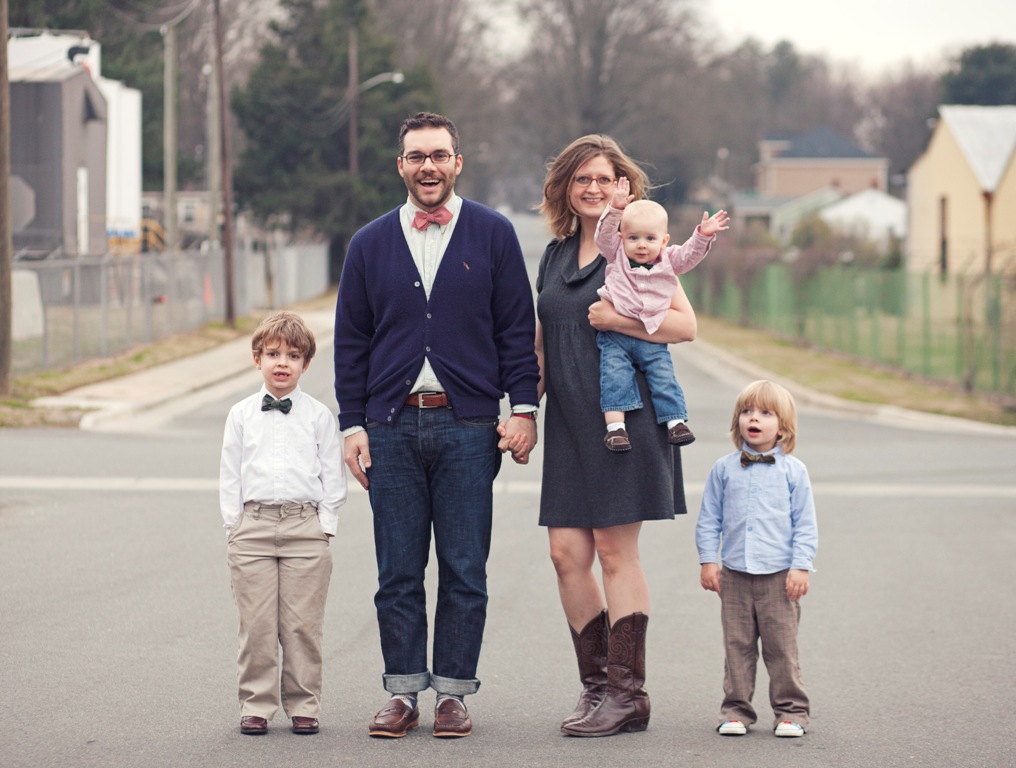
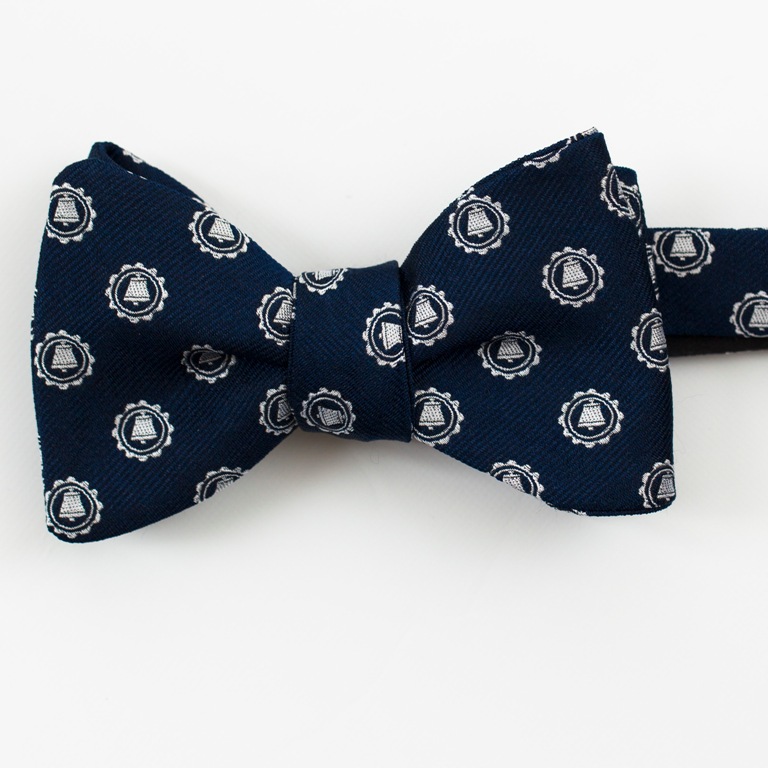
Ellie and I have been married for 10 years, and we’ve got 3 young boys. I’d say that in a way, our boys were the initial catalyst for starting The Cordial Churchman. Ellie had received a sewing machine from her mother for her graduation, and finally got around to tinkering with it. She was sewing some simple outfits for them out of seersucker (the quintessential southern fabric), and I wanted something. She couldn’t do a suit, of course. So I suggested a seersucker bow tie — something I’d never seen or heard of before. She made it, and it was horrible, but you couldn’t tell when we tied it up. It looked so good that I bragged about it on Twitter. Within one day, we had 25 people asking to buy one. And of course we both panicked. So we owe it to our boys in a way. Interestingly, our oldest boy likes to get dressed up and wear bow ties. He’s our little indoors-loving intellectual. Our second boy absolutely hates bow ties, and would be content wearing cut-off jeans and rolling around in the mud all day.

[People should choose us because] it’s going to be very difficult to find top-shelf quality, handmade-in-America neckwear and accessories that are made-to-order, customizable, and at an affordable price point much anywhere else. Expect ascots, lapel flowers, and a steady stream of new, customizable, handmade-in-America bow ties soon.
My parents always called me a “clothes horse” — even when I wore jeans and t-shirts every day. I wasn’t ever quite sure what they were talking about. But I suppose I was fairly conscious of what I was wearing and people told me I had a particular style even before I discovered “grown-up clothes”. Ellie kind of dressed the same. She had a punk-rock phase, and wore lots of long socks with shorts, and other monstrosities! But her mother is to be credited, because she was always sewing things — mostly quilts. So Ellie had sewing in her blood and in her consciousness from childhood.
Well, my coming-of-age with respect to clothing happened when we moved from a blue-collar industrial town in Ohio to a fairly aristocratic southern context in the capital of South Carolina. We showed up to the historic First Presbyterian Church (founded 1795) in 2004, and I was wearing cargo pants, Birkenstock sandals, and an untucked polo shirt. I walked in, and men were wearing khakis and navy blazers, seersucker suits, and bow ties. But because I was attracted to traditional forms of church, I stuck around and learned how to put a decent outfit together, and eventually how to tie a bow tie.
One of the elders there (named Henry) took me out and bought me a grey flannel suit, a navy blazer, some white and blue oxford cloth button-downs, and a couple very traditional striped neckties. I loved them. I protected them with my life. Henry taught me that context was important; that, especially for men, one dressed not first and foremost to make a statement, but to set others at ease, and make them feel comfortable.
This notion set me on a course to learn as much as I could about the history of menswear. I read as much as I could online and in books about the origins of bow ties, neck ties, suits, formal wear, fabrics, shoes, and all the rest. Mostly I perused Ask Andy About Clothes forums and Wikipedia articles. Then I followed an Italian young man who goes by Giuseppe (anaffordablewardrobe.
Of course, as a new Rule Learner, I learned to loath this. I loathed the sloppiness that I had very recently embodied, and I looked down on people who “expressed themselves” instead of taking the moral high road and dressing in order to set others at ease. You know: the zeal of the convert.
By now, I have come full circle — or at least 3/4 of the way around the circle. I think that in our postmodern age, no one is able to do much of anything unselfconsciously. Everything is, for better or worse, a statement, a self-expression, whether conformity or non-conformity. And I guess I’ve learned to embrace this. In most contexts I am now in, putting on a tie is a pushy act of non-conformity. Putting on a bow tie, all the more so. But it just doesn’t make sense to look down on people who don’t self-express the way you do. Sure, you might think that someone would look a lot better if they tucked in their shirt (or picked one that had a collar). And that’s completely legitimate. It’s an opinion, a taste. But, at least for me, putting on a jacket and a pocket square would be a lot less fun if everyone did it out of social conformity.
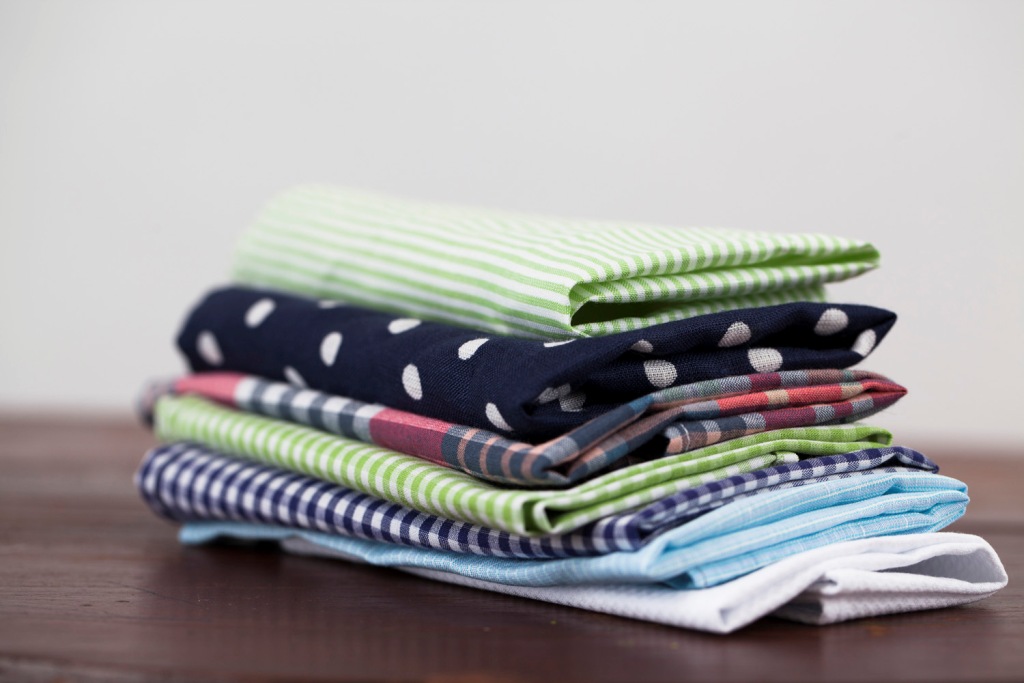
I wear an oxford cloth button-down (usually Ralph Lauren), a necktie or bow tie, and a pair of Levi’s jeans almost every day. When it’s not too hot, I love to wear a blue blazer or tweed jacket, always with a pocket square (usually made by The Cordial Churchman). On my feet I’ve usually got Bass Weejuns (with the penny in there), although today it’s raining and I’ve got my Le Chameau Wellies on. From March through September I almost never wear socks. In cooler weather I love a pair of desert boots and especially my Wolverine 1000 Mile boots in a light tan with red shoe laces — which has kind of been my quirky thing for 15 years, when I used to wear Doc Martens oxfords every day (come to think of it, I could actually go for a pair of classic Doc Martens again). I would enjoy being in a suit-wearing context again some day, but for now, I’m enjoying the relaxed but put-together and detailed approach to sticking out just a tad.
Style is a way of doing things — from getting dressed to raising kids to being a church — that stands unashamedly in a tradition without being slavishly circumscribed by that tradition. That fella who curates Close Up and Private inspires me in terms of menswear. Big time. People who do the hard work required to persevere in an entrepreneurial effort always inspire me.
I read voraciously. Philosophy, theology, business, sociology. I also love coffee. My main passion, though, is probably sort of like the Danish thinker Søren Kierkegaard’s: to disturb people who think they know everything they need to know about Christianity, and suggest to them — in the context of community and genuine friendships — that Jesus of Nazareth, as he comes to us from the gospels, is pretty unpredictable, dangerous, and compelling.
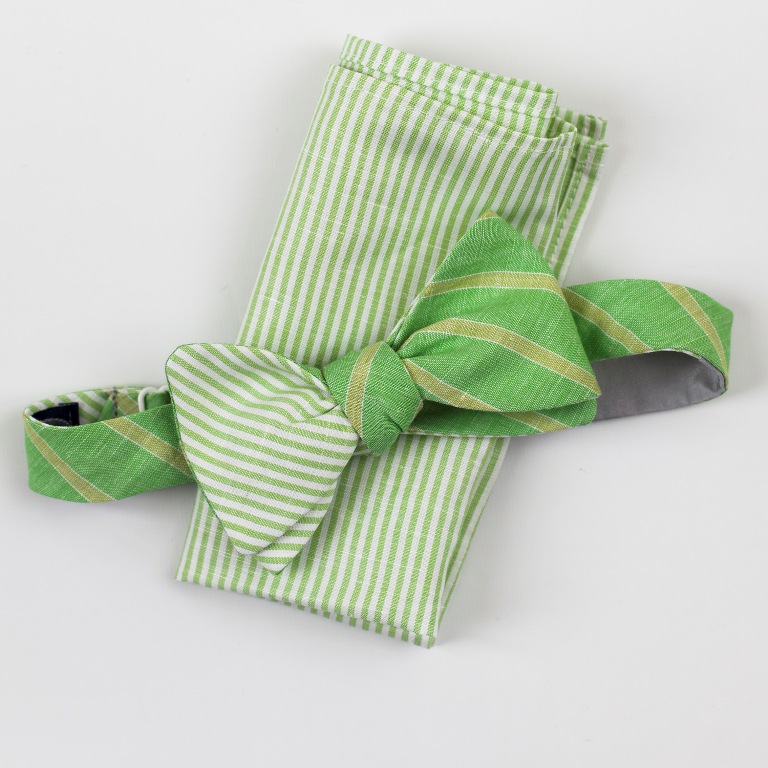
We get dozens of emails every week from people that want to try bow ties for the first time, or buy them for someone else. They think that there’s a magical formula for what goes with what. The genius of menswear is that, if you keep to the basics, just about anything goes with everything. Get a couple of blue and white oxford cloth button down shirts, brown shoes, khakis, blue jeans, a navy blazer, and a brown belt. Then wear almost any neck tie or bow tie, and you’re going to look great. Don’t worry about “matching”. Stick to the basics in the foundational wardrobe, and then let your bow tie or necktie pack the punch.’
http://www.thecordialchurchman.com/
Pictures: © The Cordial Churchman
Category Interviews, Quality makers, Tradesmen, Web stores
Copyright © 2013 Ville Raivio