Necktie Knot Models
0June 20, 2013 by Ville Raivio
Today’s inspiration is a host of knot models, both common and uncommon, along with a link to tying instructions. With instructive videos pending, neckwear bondage has never been as easy.
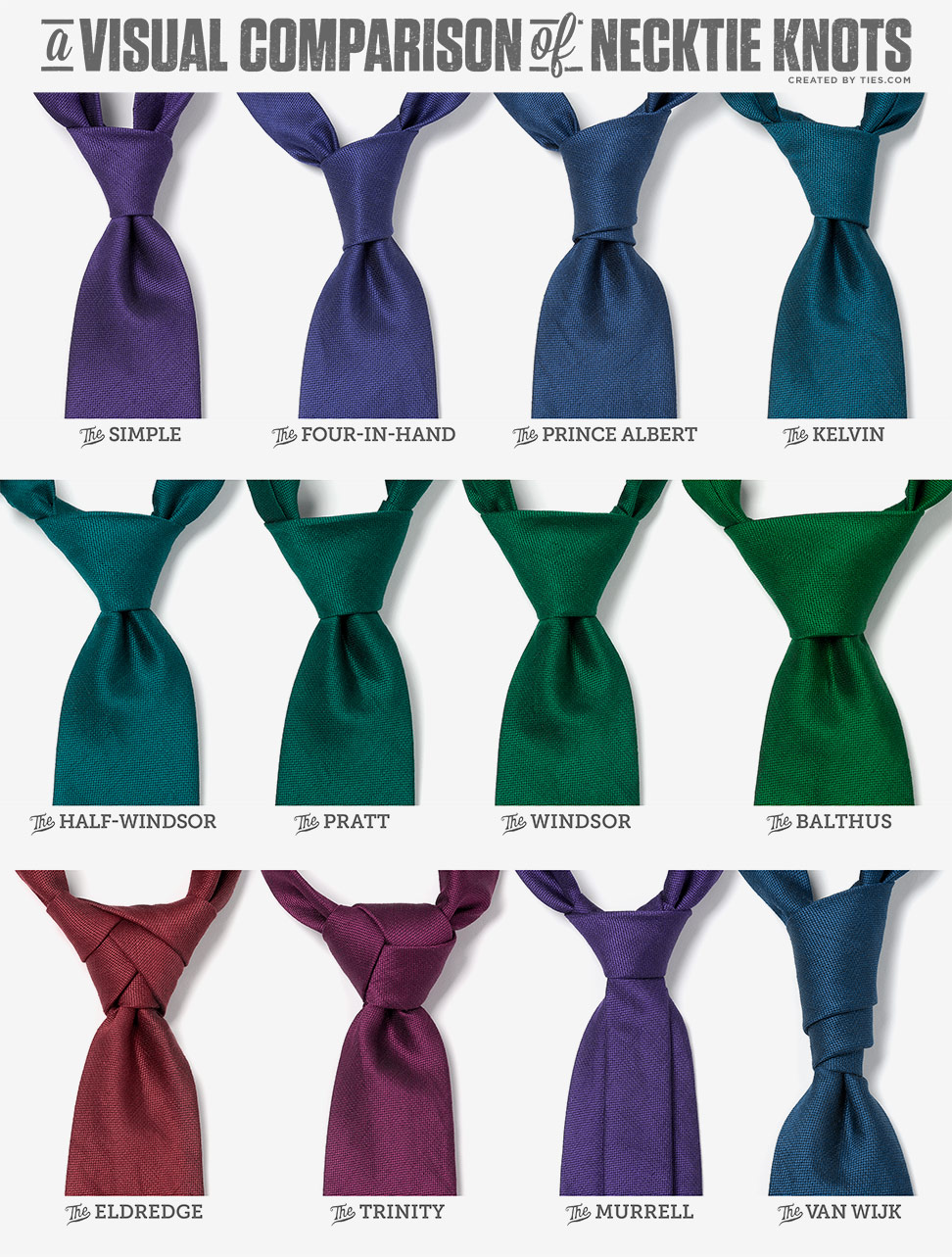
Picture: © Ties.com
Category Inspiration, Links, Neckwear
Interview with Justin FitzPatrick
4June 19, 2013 by Ville Raivio
‘I am 29 years old and my occupation is….well, I do several things, such as blogging, expert shoe polishing and shoe designing so it’s hard to have just ‘an’ occupation. But I guess that I would most likely like to be known as a shoe designer. I have a bachelor’s degree (4 year – BA) from the University of Washington. My major (main focus) was in Entrepreneurship and my minor (sub-focus) was in Marketing. Well, I am married, coming up on 3 years now, and am actually due a baby boy at the end of June/early July, my first born. I think that my wife loves that I have such an interest in shoes, that way she doesn’t feel guilty when she wants to buy hers! Plus, I tend to buy her lots of them, as I appreciate women’s shoes as well and want my wife having stylish shoes, too! She really likes my shoes so that is really nice, and it’s not just because I am her husband, as she has no problem telling me that she doesn’t like a design of mine. My wife is Italian and is quite a snob when it comes to clothes, so I think that overall she really appreciates my sense of style and the fact that I am interested in clothes. It’s one thing we have in common, you know.

My parents were always very supportive of everything that I was interested in. My mother always knew that I loved shoes and knew how to manipulate me with that fact. I remember once that she wanted to get me to read a book (but I hated reading, like a typical teenager) and offered to buy me two pairs of shoes at my choice. Let’s just say that I quickly read that book! My mother was the type to support me no matter what I chose, so long as I was happy. I could have been a librarian and she would have been as proud as ever. My father always got a kick out of my interest in fashion. He is your typical daredevil man’s man, who likes American muscle cars and jumping out of planes, an adrenaline junkie, so to speak. So, needless to say he thought it was funny how I was all prim and proper into my clothes and shoes and all. But like my mother, he was always supportive of my decisions so long as I was happy and gave my all to whatever I did. He was the one that taught me that true success is not about how much money you make but rather about being happy with what you do in your day to day life. That has driven me to always do what I love.
I have always been interested in shoes. I can’t really pinpoint the time when it first started though, as it was really before my time of true remembering, like around 4-5-years-old. When I was growing up, one was really judged by his footwear and subconsciously this must have affected me, so it was important for me to have the latest and greatest shoes, or at least ones that looked good. I first started becoming interested in dress shoes (leather-soled shoes) as I was approaching the end of high school. Back then, however, I am ashamed to say that I was wearing square-toed Kenneth Coles. But hey, I was 18 and was just learning. I was approaching college and knew that I needed to start dressing like an adult so that started to sway my decisions towards mature clothing.
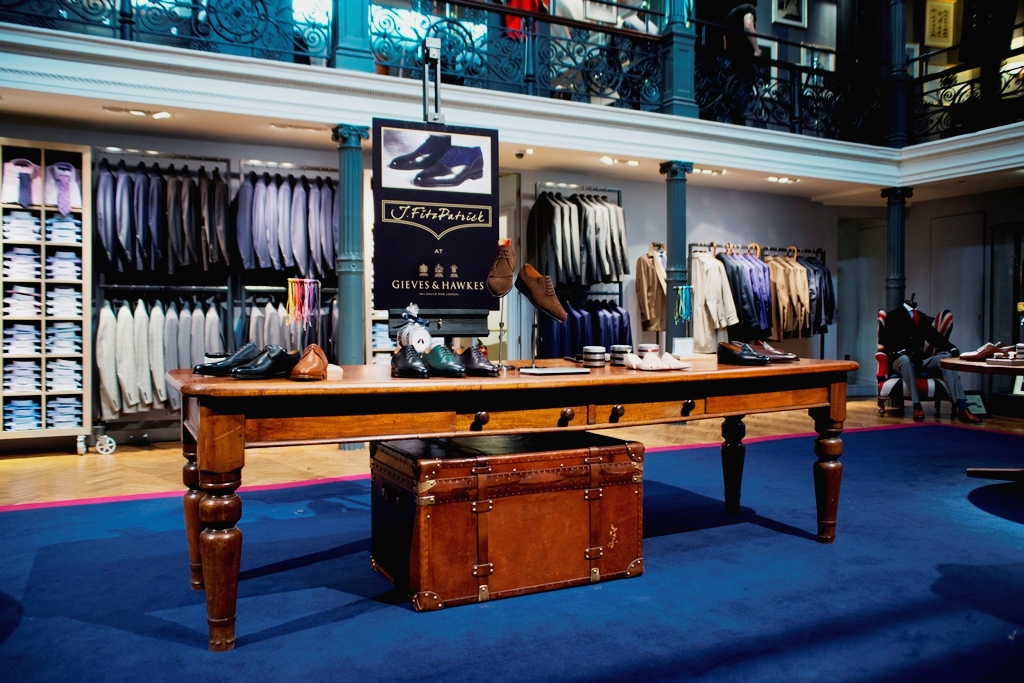
Then I got a job at Nordstrom (a large department store in the US) and that is when my passion really started and I knew that I wanted to start my own shoe line. But the interest in classic welted shoes did not come around until 2 years after University, when I moved to Italy to learn bespoke shoemaking under the late Stefano Bemer. There my eyes were opened and I saw how a classic shoe could be so much more than some boring super round toe black oxford. Stefano made some of the most beautiful shoes that I had ever seen (even to this day) and from then on I knew that I wanted to make things like he did.
There was a time where I liked all of the fashion brands, the Gucci’s, the Prada’s, etc. I quickly learned, though, that fashion was fake. How can something be nice for only a season or a limited time period? It makes no sense. If something is nice, then it should always be nice. But not in fashion. The idea of trends started to disgust me and therefore I did not want to make things of that nature. I wanted to make shoes that people could always appreciate, not just for a year and then off to the next big thing. But I did like the idea of being unique, so it was my intention to make shoes that were classic in style and shape but had modern twists on them, such as slight detail alterations and unique colorations.
Well, I absolutely love football (soccer). It was my first dream in life to become a football player. I soon realized that I would not become one, but it is still my greatest active passion. I don’t actually watch it (as I don’t really have time to) but if I could play 2-3 times a week (which I don’t get to do, time being the issue again), I would be a very happy person. Music is a part of me. It is what drives my emotions and helps me cope with life, the good and the bad. I couldn’t live without music. Films are another hobby I love. It is one of the few things that can help me quiet my ever-thinking brain. It is my release. Travelling is a great passion of mine, although I don’t get to do it so much right now as I am trying to build my business. But I love discovering new things about the world, experiencing new cultures and trying new foods. It is so exciting and eye-opening. My two absolute greatest passionsm howeverm would be (1st) spending time with my wife, soon-to-be-son and parents (when I can, as they are not so close) and (2nd) spending time with my best friends, as without all of these people nothing else in life would matter.
A good shoe is something that is made of good quality materials, has natural shape to it (contoured like a foot, not just made on a bulbous last), and presents a good value for money. It should hold up well and be comfortable too. A good shoe is not necessarily only those above £300, although it is mainly the +£300 ones that compromise the “good” shoes. I have many inspirations if I am going to be honest. First and foremost, the idea that I need to provide for my family (wife, children & parents) and give back to those that have helped me along the way, account for my biggest form of inspiration. My parents inspire me to be the best human being that I can be as well as the idea to hope to make a positive difference in the world. Being a role model in the shoe community inspires me, as I hope to show young individuals who are looking for their way in life that with passion, drive and determination, anyone can achieve their dreams. And lastly, great shoemakers inspire me to become a great shoe designer.
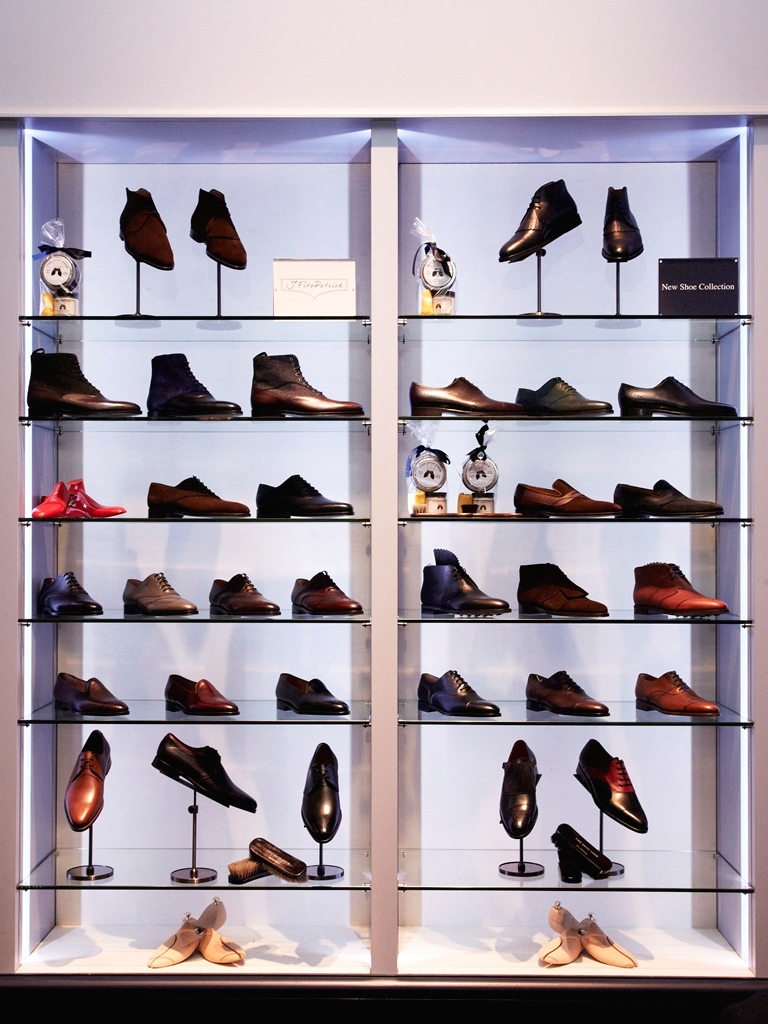
When I decided that I wanted to start my own shoe line, I knew that in order to be a good businessman, I had to learn everything there was to know about shoes, most important of them all was how to make them. So, I knew that I wanted to learn from one of the masters in Europe but also knew that before I went to one, I wanted to have some experience under my belt. I therefore found a one-week course in my home state of Washington that offered a course in cemented shoemaking. We did all the beginning work by hand (cutting, clicking, stitching the uppers, lasting, etc) but then attached the sole by cement. It gave me the base knowledge for shoemaking but was a long way off from the real thing. I then read László Vass’ book, Handmade Shoes, to gain a bit more theoretical knowledge.
With that knowledge I went to Italy and took up an apprenticeship, thus learning how to make shoes by hand, from start to finish. In Italy, I did a bit of everything, but specialized in making/finishing (the bit where you take the upper and the last and attach the welt and sole). I did, however, do a bit of clicking (cutting the pattern out of the leather) and last making, too. While there, I made my own last, and 5 pairs of shoes. The rest of my knowledge has either been self-taught (like my shoe designing), learned from spending time in a factory or the fact that I am fortunate enough to have spent a decent amount of time with Tony Gaziano, picking his brain every single chance I get. I owe a lot of my knowledge to his sharing his experiences with me.
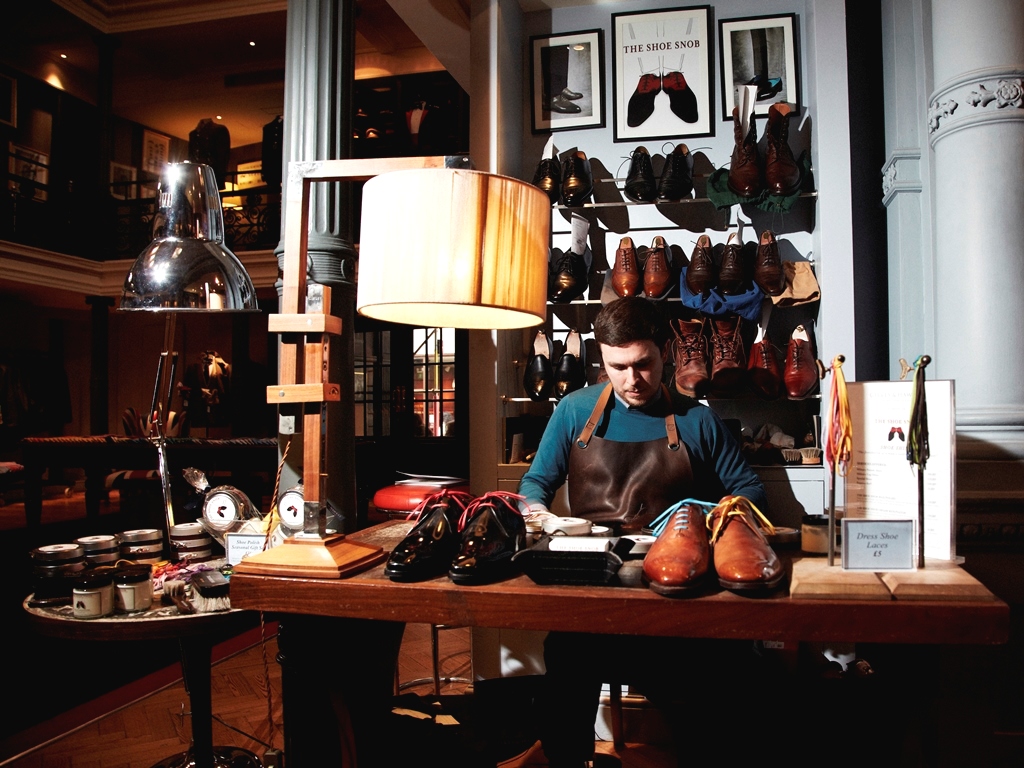
I really can’t describe [my style] if I am going to be honest. I tend to think of myself as kind of a chameleon, being able to adapt to my environment, but since I have lived in America, Italy (Florence, to be exact) and now London, I have kind of blended the three cultures of dress to make my very own. As a slim guy, I like a very fitted look (like the Italians), but have now become a bit more classic and conservative in my tastes (much like the English), whereas I used to be a bit more bold. And in America, within the urban streetwear environment (that I used to be involved with as a youth), there is a big emphasis on matching, which I have now translated into smart attire, by still keeping a fairly color-coordinated outfit.
But then I am a very moody person in the sense that one day I feel like dressing one way and then the next day I dress another. I am not a consistent dresser. I dress how I feel…and it could be soft shoulder Italian one day, conservative English the next or preppy American. Then some days I blend it all together and just call it the “Justin!” [As for shoes,] I wear it all…but as a general, I like classic models/shapes with the injection of color and/or the use of abnormal materials, such as flannels, tartans, cloths, etc…I love Balmoral boots, wholecut loafers and saddle shoes (dress ones, not the chunky American ones with white leather).
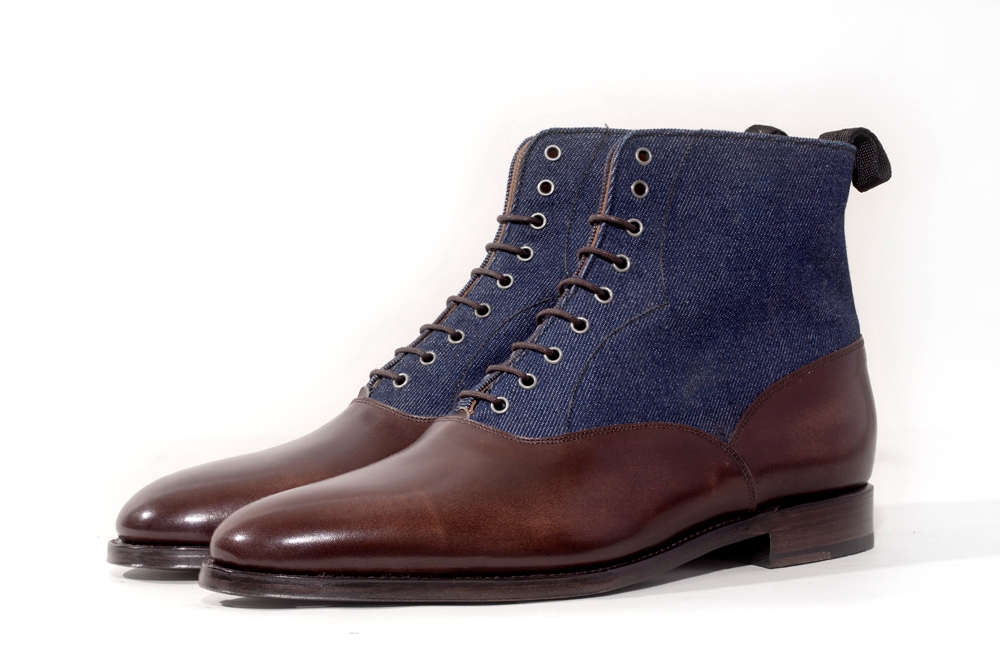
The Shoe Snob was born of two reasons; one, out of passion and one, out of business. I had always read all of the fashion magazines, looking for inspiration and information on new things that I did not know about. What I came to realize, though, was that I was not really learning anything about shoes, as they never really dedicated very much to them and when they did do so, it was usually the same brands that they were writing about. I wanted to know more, learn about shoemakers across the world, not just about the popular designer brands in America or Europe. I knew that I was not the only one who thought like this and also knew that I had the passion to do something about it. As I wanted to make my life one that involved shoes, it was something that made sense as a way to continue learning while at the same time sharing my knowledge. This was the passionate reason why I started it.
As for the business reason, well, allow me to explain. So, after university, I created a 5 year plan to learn everything I could about footwear before I started my own brand. In those 5 years (which became about 6), I had a period of about 1 year of transition that did not really allow me to carry on with learning. But I am the type of person who needs to utilize every second I can and hate the feeling of doing nothing, of not going forward. So, I wanted something to do, something that could help me in my quest. I therefore thought about a blog and being able to knock out two birds with one stone. I knew that if I created it and did it well, then I could be that source of knowledge that other shoe enthusiasts (like myself) were craving. I also knew that if I did it right, I could gain a mass of supporters that I could share my journey with and thus create a clientele of customers before I even had a brand. That meant I could create demand before there was even a product and that when my product was actually available, I would then have sales waiting to be made by all of my supporters. With these two ideas, I started the blog and never looked back.
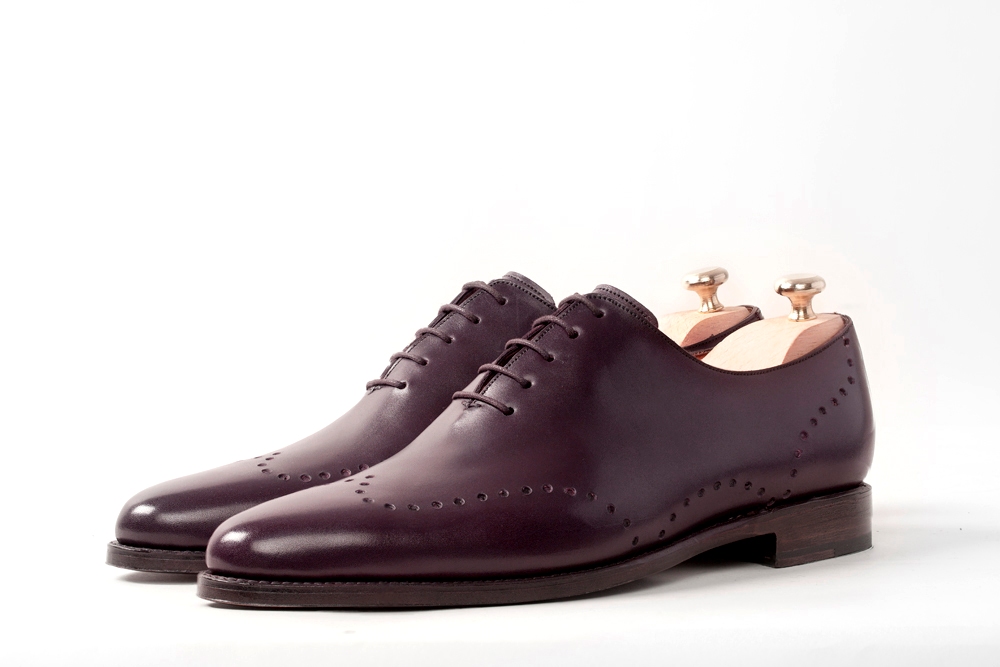
As far as I know, my blog has been very well-received. I believe that I share and provide knowledge about the shoe industry that no one else in the world does, like all of the insider secrets, information that I feel that the customer should have in order to make informed decisions about their footwear purchases. I do my best to highlight new brands that are making good footwear that deserve to be seen but might otherwise have a hard time of getting their names out there, especially as this day and age the magazines only put in what they are paid to, as opposed to being true journalists and finding the latest and greatest of the world.
My goal for the blog was to create THE go-to dedicated shoe source where people could go and learn everything there was to know about shoes and the industry, as well as enjoy some nice pictures and I believe that I have done just that. For that reason I believe people appreciate the blog and continue to go back and learn more and more. And the more I learn myself, the more I want to share that knowledge as it is important for me to see men wearing better shoes.
I guess I should start at The Shoe Snob as a brand and as my parent company, really. The goal behind this was to basically provide the consumers of the shoe industry a one stop shop they could go to and get the majority of their essential shoe products, from the shine accessories to shoe trees and then the shoes, too, under a trusted label that sold products which not necessarily were the best in the world, but rather the best that one needs at the best price. For example, for me the idea of a horsehair shoe brush that costs £100, because its handle is made of horn, is ridiculous. That is just flash to me. The idea of the horsehair brush is to have good bristles that bring out the shine. But I also don’t think that the best bristles in the world are going to make a huge difference to some simply good ones. That being, my horsehair brush is not the best in the world, but the best for what one needs at a good price…same with my shoe trees. The accessories have been received quite well, a lot better than I had expected, to be honest, which of course makes me quite happy!
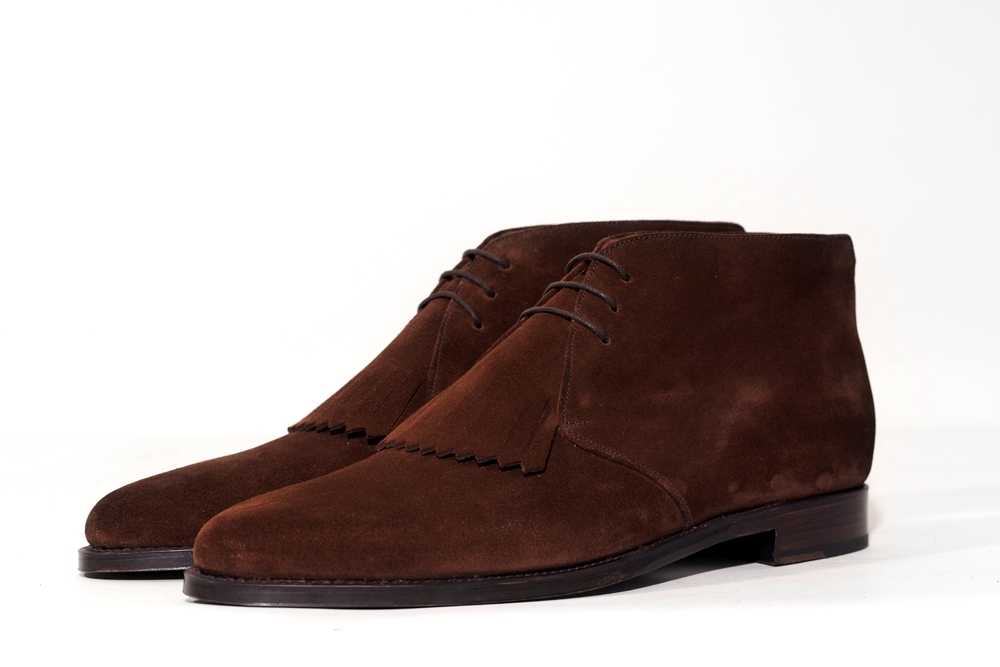
My accessories really just came about. There was no goal in the beginning. I was shining shoes and the idea of selling my own polish came from a few people, but more so one in particular, who said that if I was running a shine stand, I might as well be using and thus selling my own products. It made sense and so I did just that. Over time, I just happened to stumble upon other products and then added them to my collection of goodies. Now that I have a relatively decent selection of products (with a few that have still yet to be released), it has become a proper business and there are now goals involved.
As per the shoes, well, underneath The Shoe Snob brand is my footwear collection, J.FitzPatrick footwear. While the The Shoe Snob brand is a far catchier and stronger name in branding terms, I did not name the footwear line that as I felt it a bit too gimmicky for a smart dress shoe brand. But the names will always be associated. Therefore the idea was to start a line named after me (as most brands of this nature are named after the founder) that could supply men around the world a well-made, stylish shoe at a good price for the quality. So far, I feel that my shoes have done very well. I had a very good launch, where many of my blog’s readers were very supportive, purchasing a good amount of my initial stock and leaving a lot of good feedback. So far I have not had any complaints, but I have had a few setbacks on quality control which slipped between my fingers. But these things unfortunately tend to happen, and you can only deal with it in a professional and timely manner as to rectify the situation. and since customer service is very important to me, I handle them quickly and fairly. Everybody who has left feedback has only said very kind and wonderful things with regards to the fit, comfort and quality, and I am very fortunate and grateful for this reason.
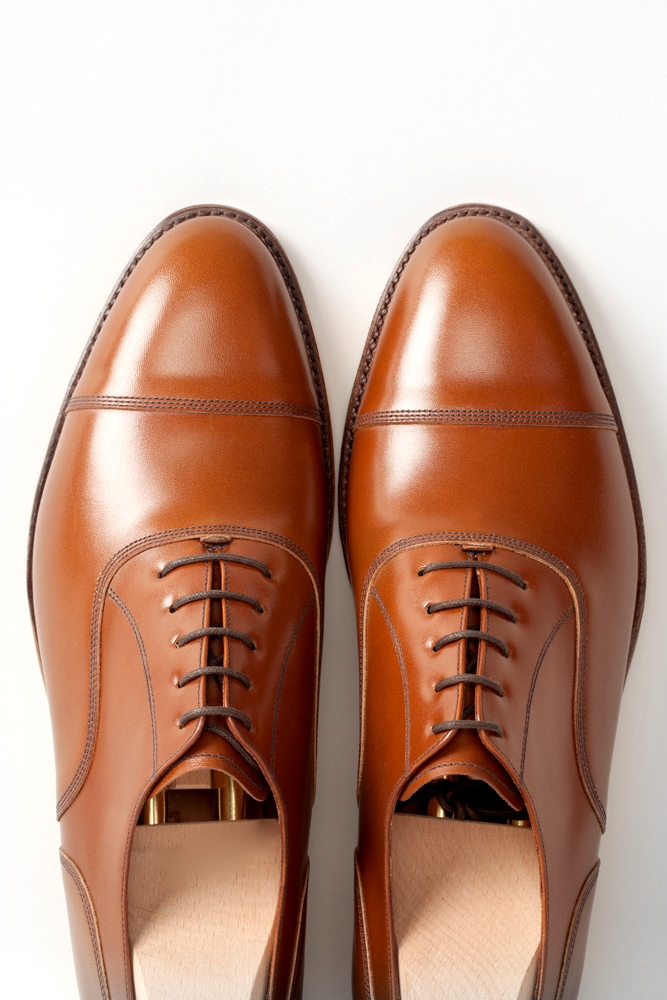
Well, I am currently working on all of my online ventures. Soon, I will be launching a proper web-shop for my accessories business, adding a few new products as well as looking to add a few more in the not-so-distant future. I will also be revamping the blog very soon, making it more website-like and less blog-like. With this I can make it a bit more functional and install plug-ins, like Paypal, that allow blog readers to buy directly off of the blog. That way, I can create “blog exclusives.” For instance, there are many shoes that I would like to design which I know the average person probably wouldn’t fancy, but that my blog readers would love. And as they are the ones who have helped me get to where I am, I want to give back to them by offering them things that no one else will be able to have…and then, hopefully before year’s end, I will look to launch a web-shop for the shoes. Right now, I will be putting most of my efforts in to these things and then when I have finished all of them, I will start looking at wholeselling my shoes to shops around the world, in the hopes of building the brand.
[As for shoemakers,] this is really difficult as I love so many. For top-end shoes, Gaziano & Girling and Aubercy have to be my favourites, as is probably known since I quite frequently show them on the blog. For best bang for your buck, I really like Vass, Carmina, Meermin and Ed Et Al, and for leading the way in style and design, I love Septíème Largeur. As per tailors, well, even though I work on the Row, I can’t really claim to be so savvy of what makes a good tailor. I can tell you what I have seen that I like, but then I could name all of them as they all show something different that I am attracted to. If I must spit off a few, I would say Chittleborough & Morgan; my friend Lee Webb, who works at Gieves & Hawkes; another friend Fred, who works for another firm that has too many names to list out; Anderson & Sheppard; Timothy Everest; Cifonelli and a million Italian ones that I don’t know the names of…in reality, I am not one to give great advice when it comes to great tailoring…
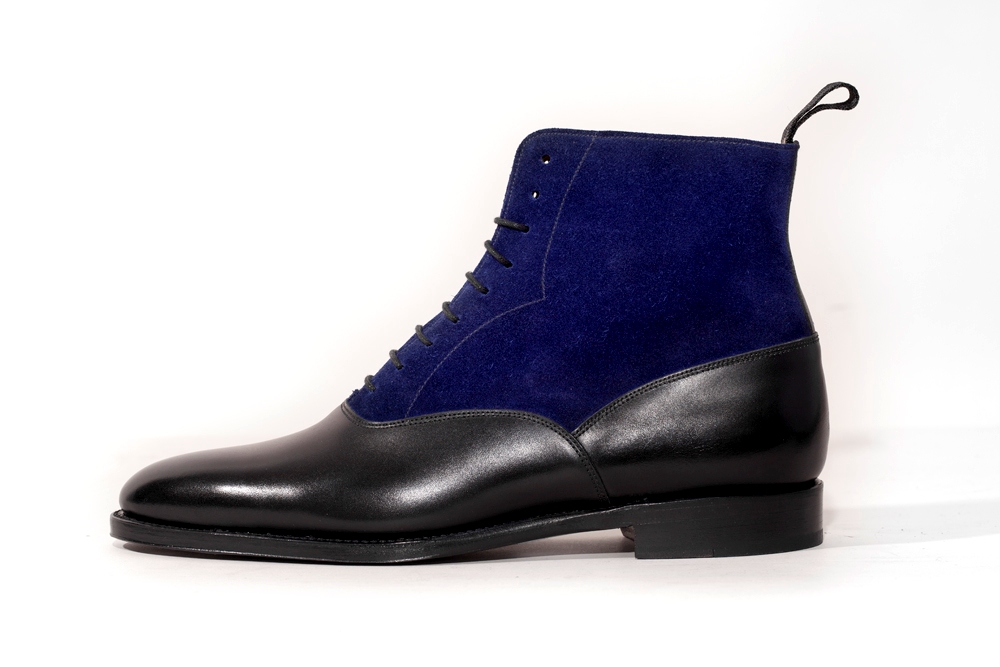
If I am going to be completely honest, if it is not on my blog (when it comes to shoes), then I don’t know about it or am not expert enough to make a post about it. I try to give all of my knowledge on my blog, without holding anything back. I just recently did a post about leather quality that many would find intriguing, but to be honest there is far more in my blog than just posts with regards to “maintenance, buying & polishing.” If one were to scroll through my archives, one would see a vast world of knowledge anywhere from the pricing structure of shoes (how it comes to its retail price), how a last & pattern can separate the good from the great, the making of a shoe, among many, many other informative posts.
As per oak bark soles and vegetable-tanned leathers, well, I don’t really have expert experience in those subjects to be honest. That would be a question for someone who works in a tannery and has dealt with all manners of leather. I can tell you that most uppers are chrome-tanned leather as it is far less affected by the elements and is far easier to work with as it maintains its shape better. It may not be as comfortable but it does not stain as easily. Most linings are vegetable tanned leather. But one does not need rakish relatives to figure these things out. One must simply be like a sponge and absorb as much information as one can from research and asking questions. All they need is interest and passion. No one in my entire family knows anything about shoes or style for that matter and look at me…I made a point to find the information any way I could…
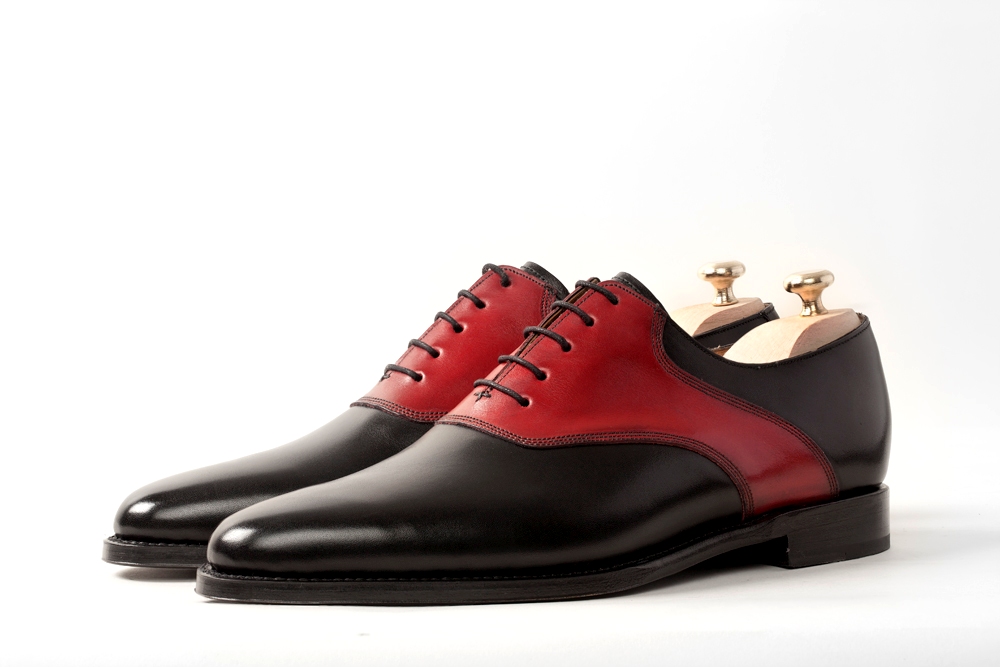 Pictured: J. FitzPatrick’s signature model
I thank you for hosting me on your wonderful forum and hope that everyone has enjoyed reading about my story.
Sincerely, Justin FitzPatrick’
Picture credits:
1) Justin FitzPatrick
2) Adam Priscak
3) Adam Priscak
4) Khalil Musa
5) Khalil Musa
6-10) Harry Watts
Category Arbiter Elegantiae, Bloggers, Interviews, Quality makers, Styleforum, Tradesmen
The Short History and Reviews of Button-down Shirts
0June 18, 2013 by Ville Raivio
Today’s links lead to Put This On, whose menswear maverick Derek Guy has given form to a magnum opus on the history, anatomy and details of OCBD shirts, with reviews to boot. Dictionary-worthy material, through and through, well worth the read for any style buff regardless of collar preferences or inclinations.
http://putthison.com/post/47626406181/the-oxford-cloth-button-down-shirt-series-part-i
http://putthison.com/post/47706678968/the-ocbd-shirt-series-part-ii-the-golden-era
http://putthison.com/post/48205704497/the-ocbd-shirt-series-part-iii-the-reviews
http://putthison.com/post/48282763950/the-ocbd-shirt-series-part-iv-the-reviews
http://putthison.com/post/48620115395/the-ocbd-shirt-series-part-v-the-reviews
http://putthison.com/post/48745811905/the-ocbd-shirt-series-part-vi-our
Category American style, Links, Shirts
Interview with Gus Walbolt
0June 18, 2013 by Ville Raivio
‘I am 59 and am a consultant to CEOs and owners of creative enterprises including home décor, gift, fashion and retail. Bachelor of Arts, Business Administration. I’m married to a wonderful Brit who appreciates and encourages my sartorial interests. Our daughter appreciates it for what it is, but in her high tech career, T-shirts and hoodies are considered well-dressed. My son is an actor and singer and after years of T-shirts he recently discovered the appeal of nice tailored clothing, pocket squares and single monk tan shoes. I believe I heard the angels rejoicing. I have been a long-time collector of vintage guitars from the 50’s and 60’s and was formerly a writer for Vintage Guitar magazine. I am fortunate to live near 30,000 acres of open space for hiking and mountain biking.
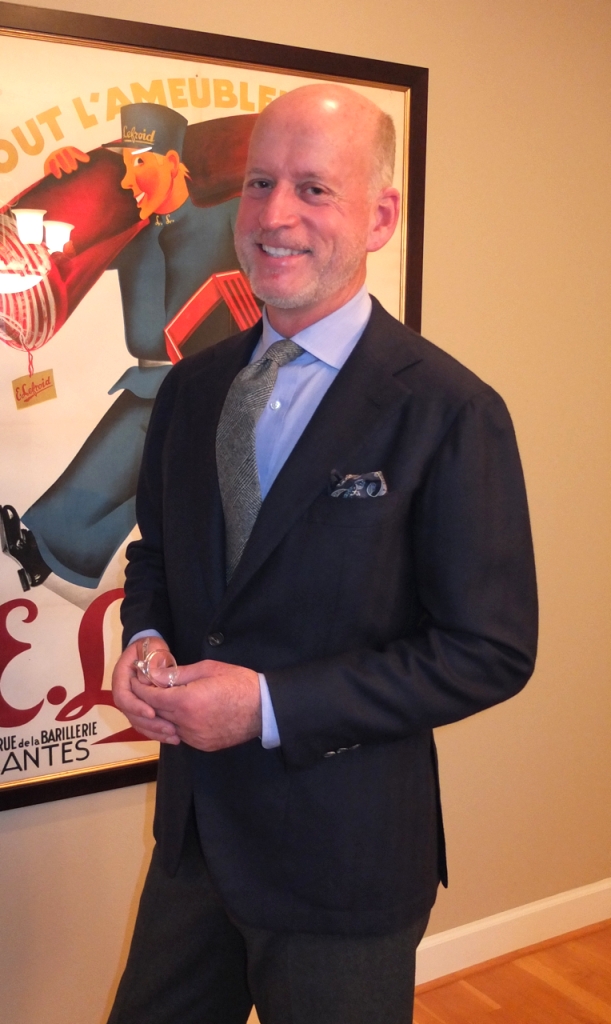
Growing up in the 60’s and 70’s were radical times of change in the world and especially in apparel. My parents were delighted that I wanted to look nice. My father wore the “Mad Men” uniform of a grey suit and hat to work each and every day in the 1960’s (coincidently to the Time Life building in Manhattan where Mad Men is supposed to take place). In 1970, after relocating us to the San Francisco Bay Area, he became more business casual (for the period) in a sport coat, rep tie, button-down shirt and loafers.
I feel that I grew up at the very best time to fully enjoy the evolution and options in menswear. In the early 60’s I began school in an agricultural area of Central California where everyone wore denim, including bib overalls. This was true workwear. We then moved to a small village on the outskirts of New York City that oozed classic Ivy League style. This drastic contrast to rural California allowed me to notice immediately how differently people appeared because of what they wore. There was an unofficial uniform of chinos, corduroys, oxford cloth button-down shirts, Lacoste polos, Bass Weejuns oxblood-colored penny loafers and heather-colored crew neck Shetland wool sweaters all in a carefully edited range of “approved” colors. We wore navy suits and white gloves to weekly ballroom dancing classes and blue blazers to the country club and church. No blue jeans or sneakers were allowed at school.

I noticed how the colors and materials mixed and matched so well. These colors also seemed to make everyone look their best. Personal expression was not encouraged. Anyone who wore anything different was ridiculed. Then came the radical 60’s and older brothers came home from Ivy League schools wearing distressed jeans, hiking boots and chambray work shirts under tweed or corduroy jackets. There was a sudden mix of traditional and workwear and it was very cool. The summer of 1970 we moved to California near San Francisco. The dress was Levis 501, Clark’s desert boots and T-shirts. For dressy occasions, because of my NY upbringing, I was comfortable in navy blazers, rep ties and button-down shirts. For formal I would go for a white dinner jacket.
After college and early in my career of art publishing I could have dressed in any manner I chose. I made a deliberate decision to dress in classic styles but with some color and flair. Artists and designers inspired me to try new combinations of colors and patterns and style (this was also the inspiration for my Tumblr blog name ABITOFCOLOR). At the same time, for variety, and in more casual settings I began to incorporated elements of workwear into my classic wardrobe. It was typical for me to travel wearing a tweed jacket, jeans and a chambray shirt with loafers or a blue blazer, rep tie, oxford cloth shirt and jeans. Living outside of NYC and San Francisco had its advantages. There were no shortage of truly great men’s specialty stores and many very well-dressed people around me. I would rather shop than go watch football or baseball so I would head into the city and look at fine clothing.
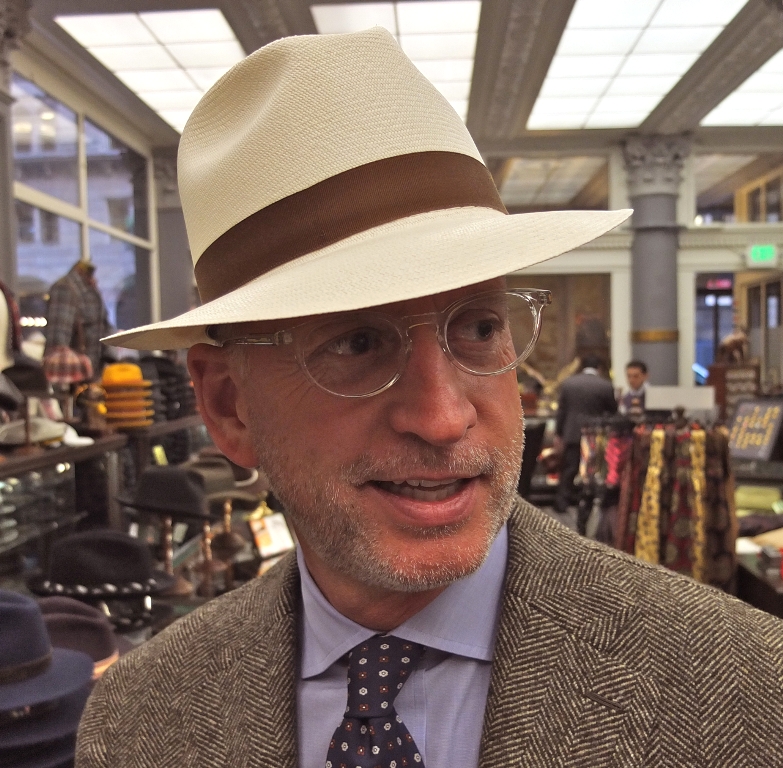
I had a good understanding of traditional clothing growing up in New York, but then I met the owner of Billy Blue in San Francisco (a specialty menswear store owned by Billy Bragman). Billy challenged me to break away from traditions and to experiment with Italian tailoring. He was bringing in private label jackets and suits from Italy from the makers of Armani’s black label line. They were much more traditional than what Armani was doing but still with Italian flair and with new fabrics. He pushed me to mix them up with new silhouettes of pants, different belts (woven horse hair) and even a broader range of material colors. I liked it.
It was “fresh” and seemed smart. It took traditions and gave them a respectful twist. In addition to all of this, I was working with my creative team to develop hundreds of products a year for the gift and home décor markets. Every day we were making important decisions about color, design and patterns. We researched color and design trends in all areas of home décor and fashion. I was a member of the Color Association and attended Color Marketing Group meetings to share color trend information. That had a further significant influence on me and it was fun to be a part of a small group that was ahead of design trends. Major retailers would look to us for style and trend advice.
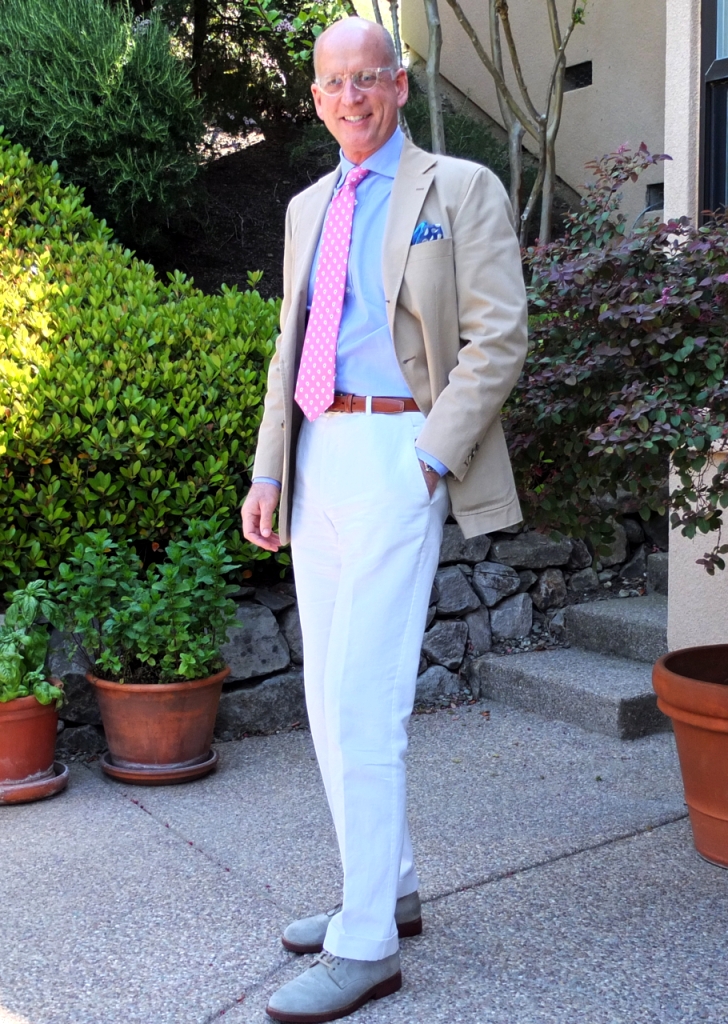
I mix Italian with British and American traditional and workwear. One friend joked that I was a “prep-ino”. I’ve had a great relationship for a number of years with Mina and Dino at Napoli Su Misura of Naples for jackets and pants. For shirts, I mostly use Joe Hemrajani of My Tailor and use almost exclusively Thomas Mason fabrics. For shoes, Lobb and Edward Green, but I love my Bontonis for something with a bit of Italian flair. For jeans, I have an extensive collection of Levis LVC, especially 1947s but am experimenting with new brands currently. Most of my ready to wear apparel I get from Khaki’s of Carmel. They have the most expressive array of accessories of any menswear store in the USA.
[As for finding Styleforum,] there were these wonderful stories about amazing pant makers, trips to Italy for bespoke commissions and also every day discussions about fit, looks and trends. It was fantastic to read first-hand accounts of what people were buying and why. A group of members around San Francisco began putting together gatherings for cocktails and dinner. These regular get-to-gathers have continued and last year I was a part of helping to coordinate the Tenth Anniversary weekend held in San Francisco. In my personal and professional life I found color and patterns to be highly creative and expressive. I love mixing the simplicity of the classics but with the flair that a bit of color or pattern can add to an overall outfit. My blog has given me an opportunity to share this perspective with a broad audience, especially with a lot of smart, young guys who are eager to learn more about fine clothing and developing their personal style. I really enjoy the positive interaction and sharing resources.
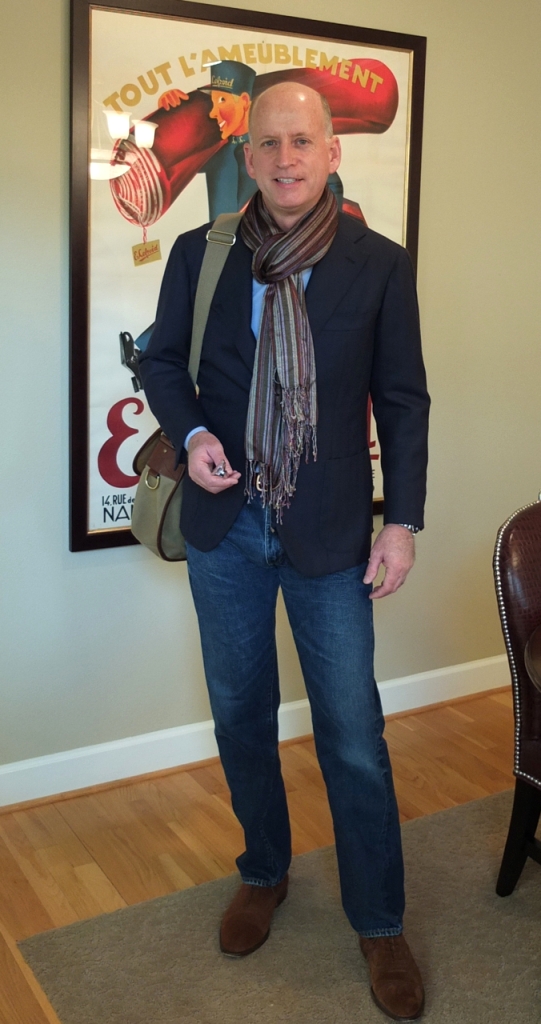
Most of all I believe you need to find a fit and proportions that allow you to look your best. Just because skinny fit pants are fashionable doesn’t mean they are suited for every build. It is inevitable that the pendulum will swing and that fit and cuts will go from very trim to quite wide and back again. It is best to find the cut that is right for you. And by cut I also mean the width of the lapels and size of shirt collars. No matter what your complexion, find a few special colors that aren’t so common but compliment your coloring. For me a deep mossy green for jackets and pink or lavender shirts in just the right shade have been hard to find, but they are my look. Avoid fashion colors if they don’t flatter your skin and hair color.’
http://www.styleforum.net/u/15839/pocketsquareguy
Pictures: © Gus Walbolt
Category Bloggers, Interviews, Styleforum
The Dandy by Charles Baudelaire
0June 17, 2013 by Ville Raivio
Charles Baudelaire is to literary dandyism what Brummell is to social dandyism. The latter lived the part, the former theorized the art. Baudelaire’s dandiacal input was scattered, with many references to and characters inspired by the English rakes. The Dandy forms his longest cohesive take on the phenomenon, and his words are quite like his life. ‘Dandyism is a setting sun; like the declining star, it is magnificent, without heat and full of melancholy.’
The Dandy
by Charles Baudelaire
The wealthy man, who, blasé though he may be, has no occupation in life but to chase along the highway of happiness, the man nurtured in luxury, and habituated from early youth to being obeyed by others, the man, finally, who has no profession other than elegance, is bound at all times to have a facial expression of a very special kind. Dandyism is an ill-defined social attitude as strange as dueling; it goes back a long way, since Caesar, Catilina, Alcibiades provide us with brilliant examples of it; it is very widespread, since Chateaubriand found examples of it in the forests and on the lake-sides of the New World. Dandyism, which is an institution outside the law, has a rigorous code of laws that all its subjects are strictly bound by, however ardent and independent their individual characters may be.
The English novelists, more than others, have cultivated the ‘high life’ type of novel, and their French counterparts who, like M. de Custine, have tried to specialize in love novels have very wisely taken care to endow their characters with purses long enough for them to indulge without hesitation their slightest whims; and they freed them from any profession. These beings have no other status but that of cultivating the idea of beauty in their own persons, of satisfying their passions, of feeling and thinking. Thus they possess, to their hearts’ content, and to a vast degree, both time and money, without which fantasy, reduced to the state of ephemeral reverie, can scarcely be translated into action. It is unfortunately very true that, without leisure and money, love can be no more than an orgy of the common man, or the accomplishment of a conjugal duty. Instead of being a sudden impulse full of ardor and reverie, it becomes a distastefully utilitarian affair.
If I speak of love in the context of dandyism, the reason is that love is the natural occupation of men of leisure. But the dandy does not consider love as a special aim in life. If I have mentioned money, the reason is that money is indispensable to those who make an exclusive cult of their passions, but the dandy does not aspire to wealth as an object in itself; an open bank credit could suit him just as well; he leaves that squalid passion to vulgar mortals. Contrary to what a lot of thoughtless people seem to believe, dandyism is not even an excessive delight in clothes and material elegance. For the perfect dandy, these things are no more than the symbol of the aristocratic superiority of his mind. Thus, in his eyes, enamored as he is above all of distinction, perfection in dress consists in absolute simplicity, which is, indeed, the best way of being distinguished. What then can this passion be, which has crystallized into a doctrine, and has formed a number of outstanding devotees, this unwritten code that has molded so proud a brotherhood? It is, above all, the burning desire to create a personal form of originality, within the external limits of social conventions. It is a kind of cult of the ego which can still survive the pursuit of that form of happiness to be found in others, in woman for example; which can even survive what are called illusions. It is the pleasure of causing surprise in others, and the proud satisfaction of never showing any oneself. A dandy may be blasé, he may even suffer pain, but in the latter case he will keep smiling, like the Spartan under the bite of the fox.
Clearly, then, dandyism in certain respects comes close to spirituality and to stoicism, but a dandy can never be a vulgar man. If he were to commit a crime, he might perhaps be socially damned, but if the crime came from some trivial cause, the disgrace would be irreparable. Let the reader not be shocked by this mixture of the grave and the gay; let him rather reflect that there is a sort of grandeur in all follies, a driving power in every sort of excess. A strange form of spirituality indeed! For those who are its high priests and its victims at one and the same time, all the complicated material conditions they subject themselves to, from the most flawless dress at any time of day or night to the most risky sporting feats, are no more than a series of gymnastic exercises suitable to strengthen the will and school the soul. Indeed I was not far wrong when I compared dandyism to a kind of religion. The most rigorous monastic rule, the inexorable commands of the Old Man of the Mountain, who enjoined suicide on his intoxicated disciples, were not more despotic or more slavishly obeyed than this doctrine of elegance and originality, which, like the others, imposes upon its ambitious and humble sectaries, men as often as not full of spirit, passion, courage, controlled energy, the terrible precept: Perinde ac cadaver!
Fastidious, unbelievables, beaux, lions or dandies: whichever label these men claim for themselves, one and all stem from the same origin, all share the same characteristic of opposition and revolt; all are representatives of what is best in human pride, of that need, which is too rare in the modern generation, to combat and destroy triviality. That is the source, in your dandy, of that haughty, patrician attitude, aggressive even in its coldness. Dandyism appears especially in those periods of transition when democracy has not yet become all-powerful, and when aristocracy is only partially weakened and discredited. In the confusion of such times, a certain number of men, disenchanted and leisured ‘outsiders’, but all of them richly endowed with native energy, may conceive the idea of establishing a new kind of aristocracy, all the more difficult to break down because established on the most precious, the most indestructible faculties, on the divine gifts that neither work nor money can give. Dandyism is the last flicker of heroism in decadent ages; and the sort of dandy discovered by the traveler in Northern America in no sense invalidates this idea; for there is no valid reason why we should not believe that the tribes we call savage are not the remnants of great civilizations of the past. Dandyism is a setting sun; like the declining star, it is magnificent, without heat and full of melancholy. But alas! the rising tide of democracy, which spreads everywhere and reduces everything to the same level, is daily carrying away these last champions of human pride, and submerging, in the waters of oblivion, the last traces of these remarkable myrmidons. Here in France, dandies are becoming rarer and rarer, whereas amongst our neighbors in England the state of society and the constitution (the true constitution, the one that is expressed in social habits) will, for a long time yet, leave room for the heirs of Sheridan, Brummell and Byron, always assuming that men worthy of them come forward.
What to the reader may have seemed a digression is not one in fact. The moral reflections and musings that arise from the drawings of an artist are in many cases the best interpretation that the critic can make of them; the notions they suggest are part of an underlying idea, and, by revealing them in turn, we may uncover the root idea itself. Need I say that when M.G. commits one of his dandies to paper, he always gives him his historical character, we might almost say his legendary character, were it not that we are dealing with our own day and with things that are generally held to be lighthearted? For here we surely have that ease of bearing, that sureness of manner, that simplicity in the habit of command, that way of wearing a frock-coat or controlling a horse, that calmness revealing strength in every circumstance, that convince us, when our eye does pick out one of those privileged beings, in whom the attractive and the formidable mingle so mysteriously: ‘There goes a rich man perhaps, but quite certainly an unemployed Hercules.’
The specific beauty of the dandy consists particularly in that cold exterior resulting from the unshakable determination to remain unmoved; one is reminded of a latent fire, whose existence is merely suspected, and which, if it wanted to, but it does not, could burst forth in all its brightness. All that is expressed to perfection in these illustrations.
from The Painter of Modern life (1863)
Copyright © 2013 Ville Raivio