
An Interview with Juhn Maing from Sleevehead
0September 21, 2019 by Ville Raivio
VR: Your age and occupation?
JM: I have been a consultant, entrepreneur and technology advisor. Perhaps the best way to describe myself today is that I am a writer and entrepreneur in my 40s interested in menswear, luxury and technology, as well as a lifelong learner and student.
VR: Your educational background?
JM: I am very fortunate in having had a nexus of wonderful teachers, institutions and opportunities starting from first grade in elementary school and continuing through secondary, undergraduate and graduate school. This has helped me to explore interests across a variety of disciplines and fields, mostly in the liberal arts but also in diverse technical or applied fields like computer science and textile science. I think everything started with my parents’ decision to enroll me in Punahou School in sixth grade – perhaps one of the best decisions they ever made at least from my perspective. From sixth grade to the end of high school, I found Punahou’s teachers, campus, students and staff to be very special. My experience there continues to shape how I think and act, especially the wonderful faculty who spurred on and encouraged my interests in writing and the humanities.
As an undergraduate student, I studied literature, history, philosophy, political science, religion and German at Stanford University. At the graduate level, I continued my studies in political science, social science and methodology (e.g. statistics, linear methods) at the University of Chicago. True to its reputation, my UC experience was a particularly intense learning experience. Two classes in particular – data analysis and linear methods (e.g. regression models) – defined my UC education and indelibly shaped my ability to think and write critically, narratively and cogently.
While working in technology, I enrolled in evening classes at the Fashion Institute of Technology (FIT) in menswear, sewing, production, pattern making, textile science and textile quality management. As a side note, one of the most difficult things I’ve ever done was learning how to sew at FIT. But well worth it! As I’ve written elsewhere, there are certain insights you can only gain by becoming a maker or at least learning to become a maker. Without this experience, I think I would have far less interesting things to say about artisans and craftsmanship.
Most recently I enrolled in a specialized master’s degree in luxury brand management at ESSEC Business School to gain insight in the luxury sector. I truly believe in the benefits of lifelong learning and the attitude that goes with it. If you maintain an open, ready mind at all stages in life, you’ll not only grow and develop but you might also discover, create or launch a novel idea, product, company, connect with new friends and like-minded people, etc.
Looking back, my most influential classes come easily to mind. At Stanford, Rene Girard’s seminar on Heidegger was a master class on how to approach and interpret a text persuasively through a lens, Robert Greer Cohn’s courses on French literature taught me that reading literature is both systematic and intuitive, Paul Robinson’s class on European history enabled me to write with empathy on the imagined and actual worlds found throughout history. At the University of Chicago, Mark Hansen’s classes on data analysis and linear methods were like “shock therapy” in rigorous thinking and analysis. At FIT, Robert Rand’s fundamentals of textiles class was a revelation because it opened up the complex, multidisciplinary and fascinating world of textiles.
VR: Have you any children or spouse (and how do they relate to your style enthusiasm)?
JM: I have neither. So I think it’s fair to say that I can blame only myself for what I wear and I find interesting in menswear, fashion, style and design!
VR: …and your parents and siblings’ reactions back when your interest began?
JM: They have taken a mild interest in my pursuits but thankfully have not impeded me in any way. It helps that we all have different interests.
VR: What other hobbies or passions do you have besides apparel?
JM: Besides writing and menswear, I have had a lifelong interest in music – mostly listening and appreciation rather than playing or performing. While I enjoy live performances and concerts, my initial interest as a child began in recorded music. Until the advent of digital/streaming music I regularly collected CDs and LPs in classical, pop/rock and jazz. I still prefer analog music on physical media or high res digital files, and have not yet signed up for streaming services like Spotify or Apple Music. These are undoubtedly convenient and affordable but I still find that the music I enjoy the most is not fed to me but rather the result of my own intentional browsing and exploration.
I am also an avid reader of short and long form content. I have been a subscriber to The New Yorker for more than 25 years and recently began subscribing to The Economist. I look to The New Yorker for current perspectives on society, culture, literature and the arts and to the Economist for politics, business and current events. Both adhere to a level of excellence in writing, journalism and content creation that is harder and harder to find these days. Another interest is travel but not simply to “collect experiences” for myself but rather as a way to discover and draw connections between people, places and things.

VR: How did you first become interested in style, and when did you turn your eyes towards the classics?
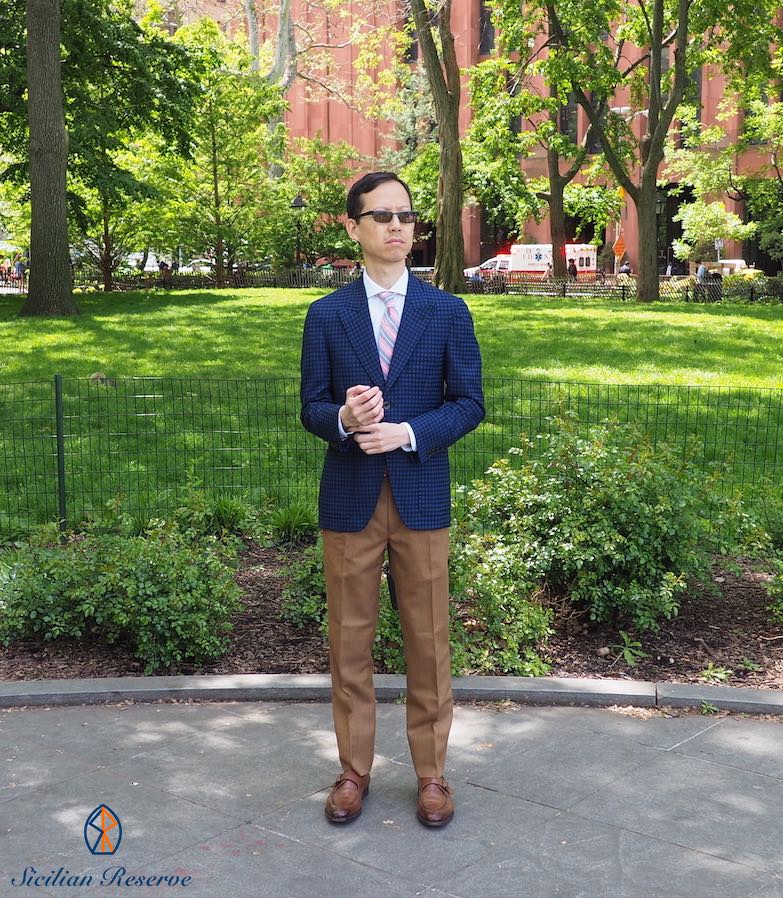
JM: As I noted in the July 2019 Stanford Magazine feature on Sicilian tailoring, I became interested in style out of personal and professional necessity. Admittedly, this is par for course for anyone who works in an office and/or meets customers. But my particular body sizing made it very difficult for me to find anything that fit me off-the-rack. Hence my journey started in RTW, progressed through MTM and ended up in bespoke tailoring. And I started with classic menswear since that was and should be the natural starting point for anyone who needs to dress in a professional setting.
VR: How have you gathered your knowledge of the tailored look — from books, talks with salesmen or somewhere else?
JM: Initially, I learned about the tailored look from all of the above sources you mentioned. I would add online sources as well. But my breakthrough did not come from speaking with salespeople or reading a book. As I described above in my educational background, there is a crucial aspect to artisanal work like tailoring that cannot be truly understood unless you become a maker yourself or learn to become one. My glimpse into this world was invaluable and very instructive because I learned why things are done in a certain way (as opposed to vaguely being aware that such things are done). It helped me ask the right questions and appreciate the critical elements of men’s tailoring both as a customer and as someone who writes on men’s tailoring.
VR: How would you describe your personal style?
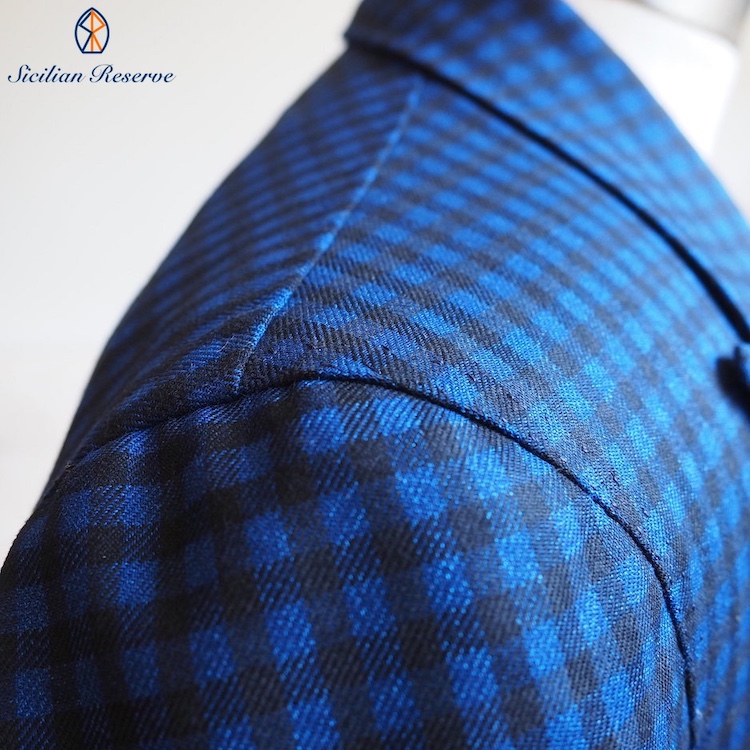
JM: I find that my sense of style is a living, adaptive process rather than a fixed tradition or canon. I know for many men classic style is a fixed thing – it’s about following traditional rules of dress. But for others, it’s the complete opposite. Neither fully captures my style. On the one hand, I am certainly aware of sartorial traditions and “rules.” But I also dress for the situation and context I find myself in, which invariably change with the time and place. Perhaps my style can be described by two well-known dictums – “know thyself” and “nothing in excess”. My style is about balancing the contrasts in life – following the rules v. knowing myself, discipline v. imagination, constancy v. change.
VR: Among so many companies you’ve tried, which artisans or RTW makers do you favour today — and why these?
JM: Great question and well-timed! I actually blogged very recently about 10 brands (or makers) to know based on my personal experience as a normal customer. The list is not exhaustive and I’ll undoubtedly add to it in the future but it is a good place to start.
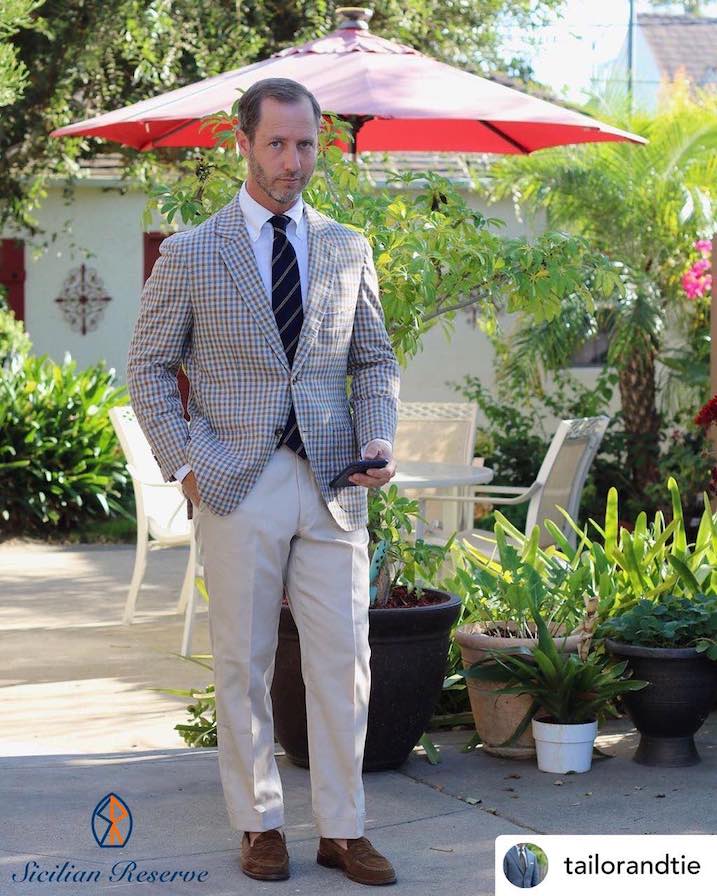
VR: Have you any particular style or cut philosophy behind the clothes you’ve commissioned?
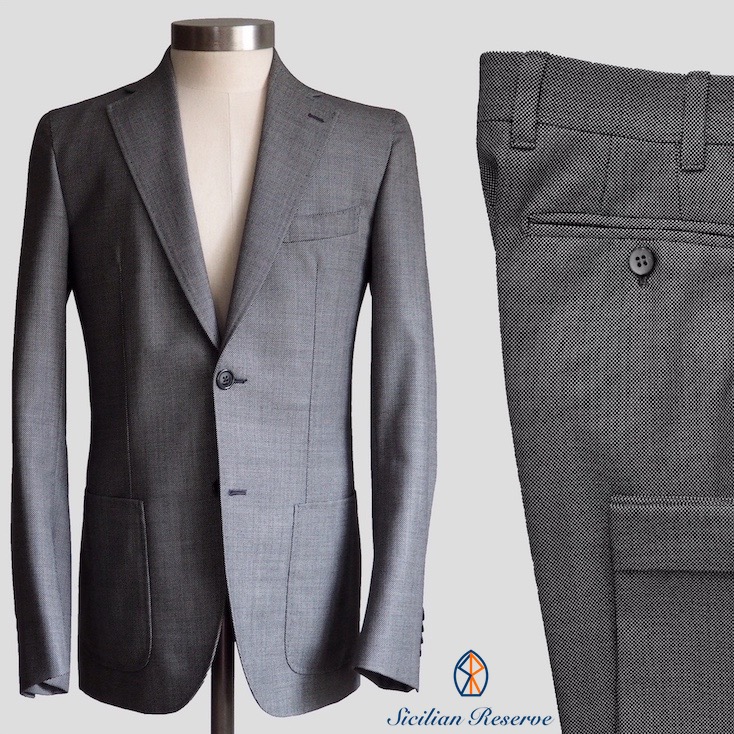
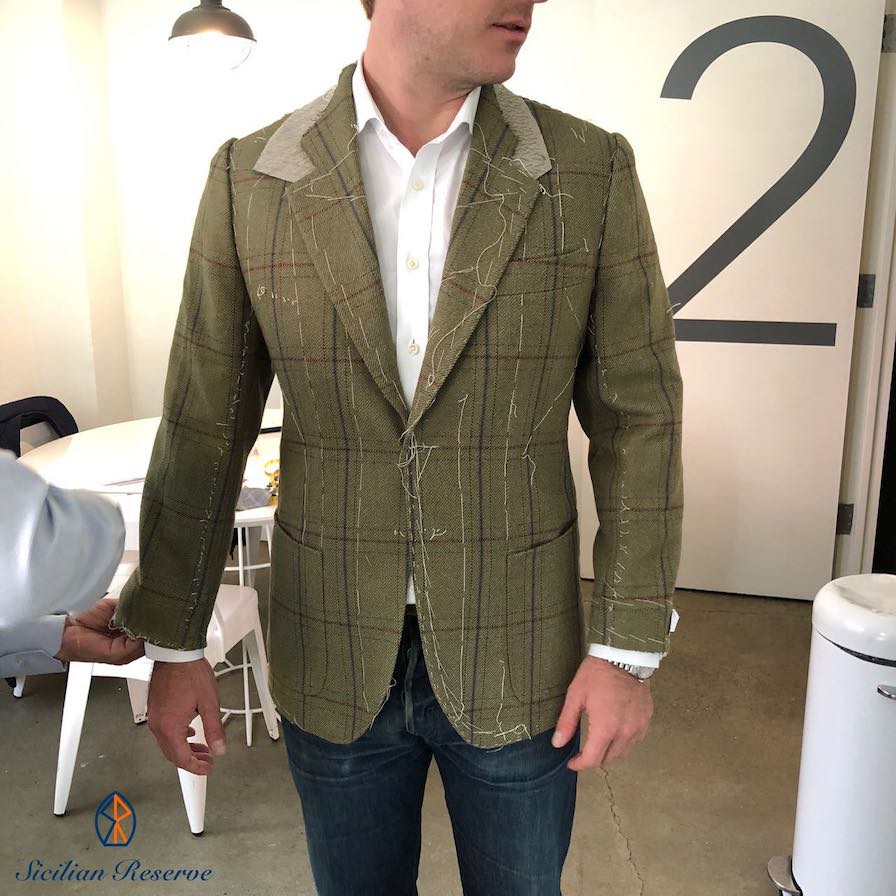
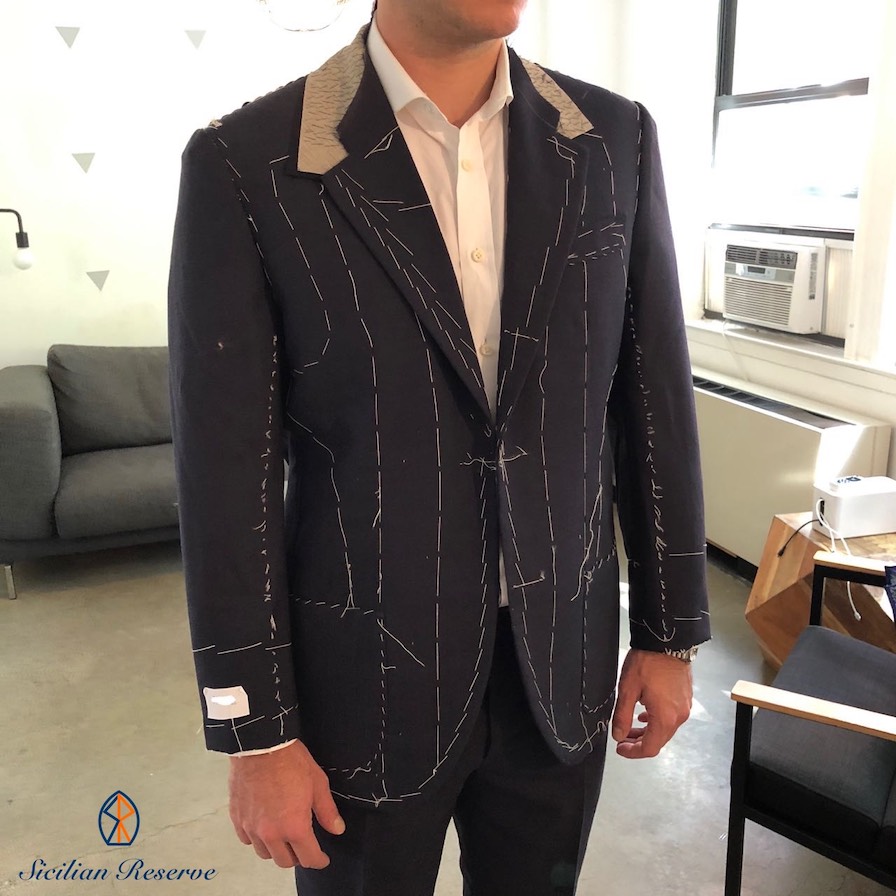
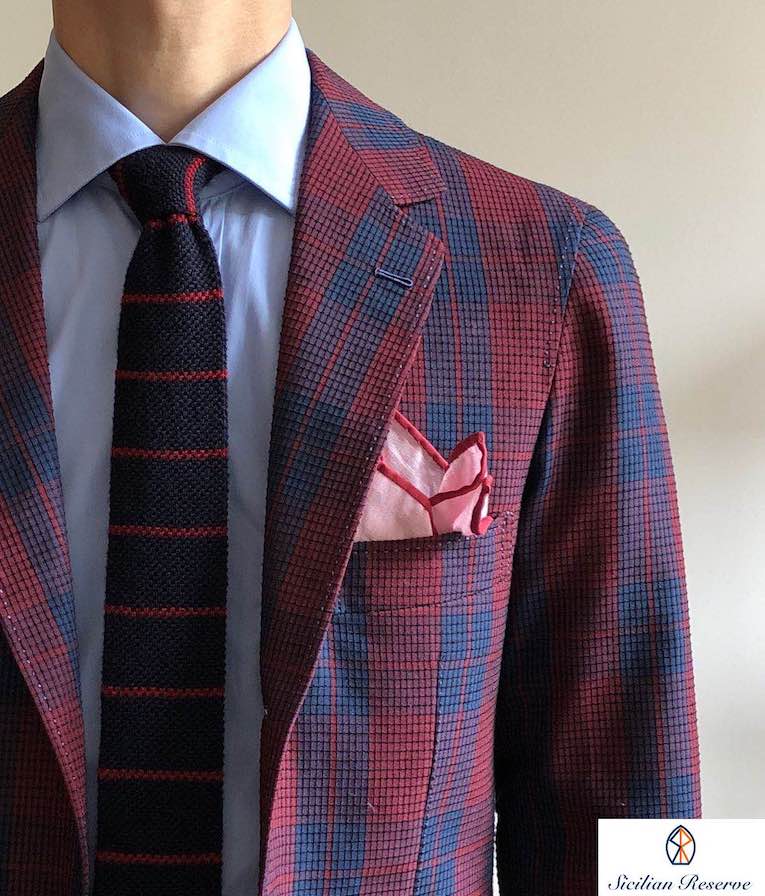
JM: There is a definite spectrum in terms of men’s tailoring from structured to unstructured. In fact, it’s possible to category every tailor on this spectrum. (I should note that at least two dimensions are needed to create a proper tailoring framework but this is a good approximation). I have tried both structured and unstructured and everything in between, including Savile Row, Neapolitan, Sicilian, American, Hong Kong, and Southeast Asian tailoring. Bespoke tailoring can attract very decided adherents of one cut or another. I don’t think one particular cut or tailoring strategy “rules them all”. Having said that, I find that I find Sicilian tailoring offers an especially pleasing, harmonious blend of structured and unstructured tailoring that works well for many people.
VR: You’ve been blogging for over 10 years now. How was Sleevehead first born and what were your goals in the beginning?
JM: I started blogging in 2005 so it’s nearly 15 years actually. I’m afraid there is no remarkable origin story apart from a few things that coalesced. For one thing, I enjoy writing. In the early days of the web, I did not find much online in terms of blogs and other content on menswear and/or with point of view that was interesting to me. Since Blogger was free, I decided to start blogging myself. I did not have any goals per se apart from just writing about topics and experiences that were interesting to me and I thought might be interesting to others.
VR: Did readers request you to write up Sleevehead’s Guide to Sicilian Tailors, or how did the book come about?
JM: For better or worse, the original idea for the book was something I realized on my own. I knew I needed to share what I discovered about Sicilian tailoring and was thinking about possible options. One option was posting what I discovered on a well-known discussion forum. This was something I was somewhat seriously considering. It required the least effort and offered the path of least resistance. In hindsight, I am very, very glad I refrained from committing what would have been an act of self-immolating altruism! If the reasons against freely sharing on a third-party platform are not apparent, they should become much clearer if you think about the time and money (think hundreds of hours, multiple bespoke commissions and multiple roundtrip transatlantic airfares) that made the discovery possible.
The other option was simply blogging about it, attracting an audience and then placing display ads to monetize the content. That was also not particularly appealing to me (though from a purely financial perspective something I probably should have chosen this option). In the end I chose to share the discovery through traditional long-form content (i.e. a book) which does both justice to the topic and provided my own platform and audience that was helpful later on (see the question below on Sicilian Reserve). In the process I also learned how to to self-publish a book including all the essential pieces of the puzzle such as graphic design, copyediting, proofreading, photography, etc. Another valuable learning experience.

VR: Who or what inspires you?
JM: I’m inspired by anyone, anything or any spirit that enlivens and enlightens our world. This is something I wrote in the dedication to the second edition of my guidebook. There is no limit to the people, places, sights, sounds, things or ideas that can inspire. But the odd thing about inspiration is that it can be both rare and plentiful. The key is the willingness and openness to search for it. The social theorist Gramsci has a wonderful, double-sided phrase for this and much else in human affairs – “pessimism of the intellect, optimism of the will”. Willful optimism led me to discover and explore the world of Sicilian tailoring. However, there is a fine line between being inspired and simply following. If I had just followed what I read online or what others were doing, I would have stopped my search long ago at the well-known tailors in London, Paris, New York, Milan, Rome and Naples. I never would have discovered Sicilian tailoring which I regard as the third pillar of heritage bespoke.
VR: What’s your definition of style?
JM: This is a perfect segue to my next book which will be on masculine style (the working title is “Sartorial Personae: Understanding Masculine Style”). Curiously, the problem with style is that everyone has their specific, almost hermetically sealed take on it. Generally, there are two approaches to defining style. One is about timelessness, elegance, etc that only a select few have access to. It’s a binary selection – you either have it or you don’t. The other is simply “expressing or being yourself” which quickly becomes solipsistic and ungeneralizable because it is so personal or subjective. Both approaches oversimplify and are not especially helpful. In the end, I find that style is rarely just one thing or one dimensional. In my view, having a distinctive style usually means an interplay of different things. For example, what makes style distinctive is often that it can be both familiar (consonant) and unfamiliar (dissonant), neither too familiar (cliche) nor too unfamiliar (strange). I’ll unpack what this means concretely by looking at male style icons from the past and present. With this book I wish to cut through the clutter and provide some interesting, yet actionable content on what has been a rather slippery, elusive and poetized topic.
VR: Finally, you now have your own company, Sicilian Reserve, set up. How does your service work and why should my readers try you out?
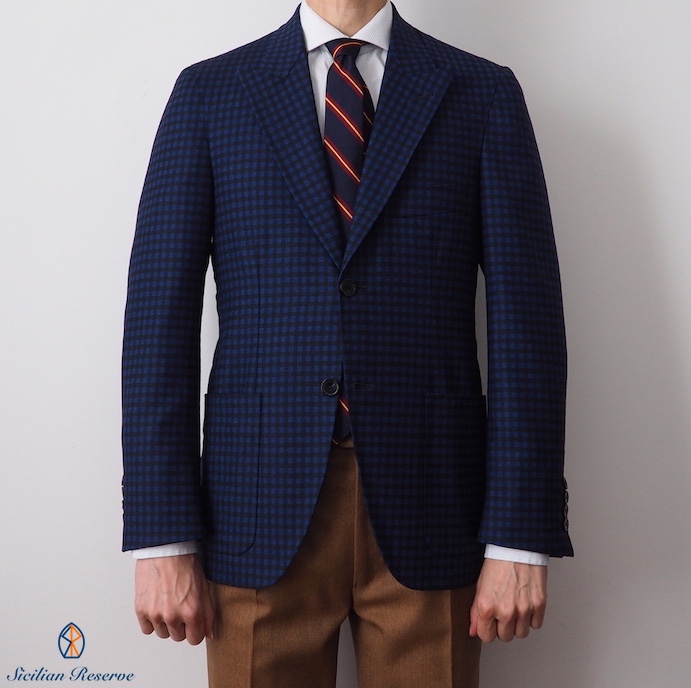
JM: With Sicilian Reserve, I work with Sicilian tailors to connect them to customers in the US and elsewhere. We currently meet customers in New York City and the Bay Area/San Francisco and are open to visiting other cities depending on interest level. As my readers and customers know, I truly regard Sicilian tailoring as the last secret left in heritage bespoke tailoring, i.e. a tailoring strategy with a history, critical mass and provenance. This is also why I continue to make the case and spread the word on these remarkable tailors. Many thanks for the opportunity to share my thoughts.
Category Bloggers, Interviews, Italian Style, Tailors, Tradesmen, Web stores, Writers
At the Enzo Bonafé Factory
0September 21, 2019 by Ville Raivio
Category Footwear, Quality makers, Videos
An Interview with Emil Levin
2August 17, 2019 by Ville Raivio
VR: Your age and occupation?
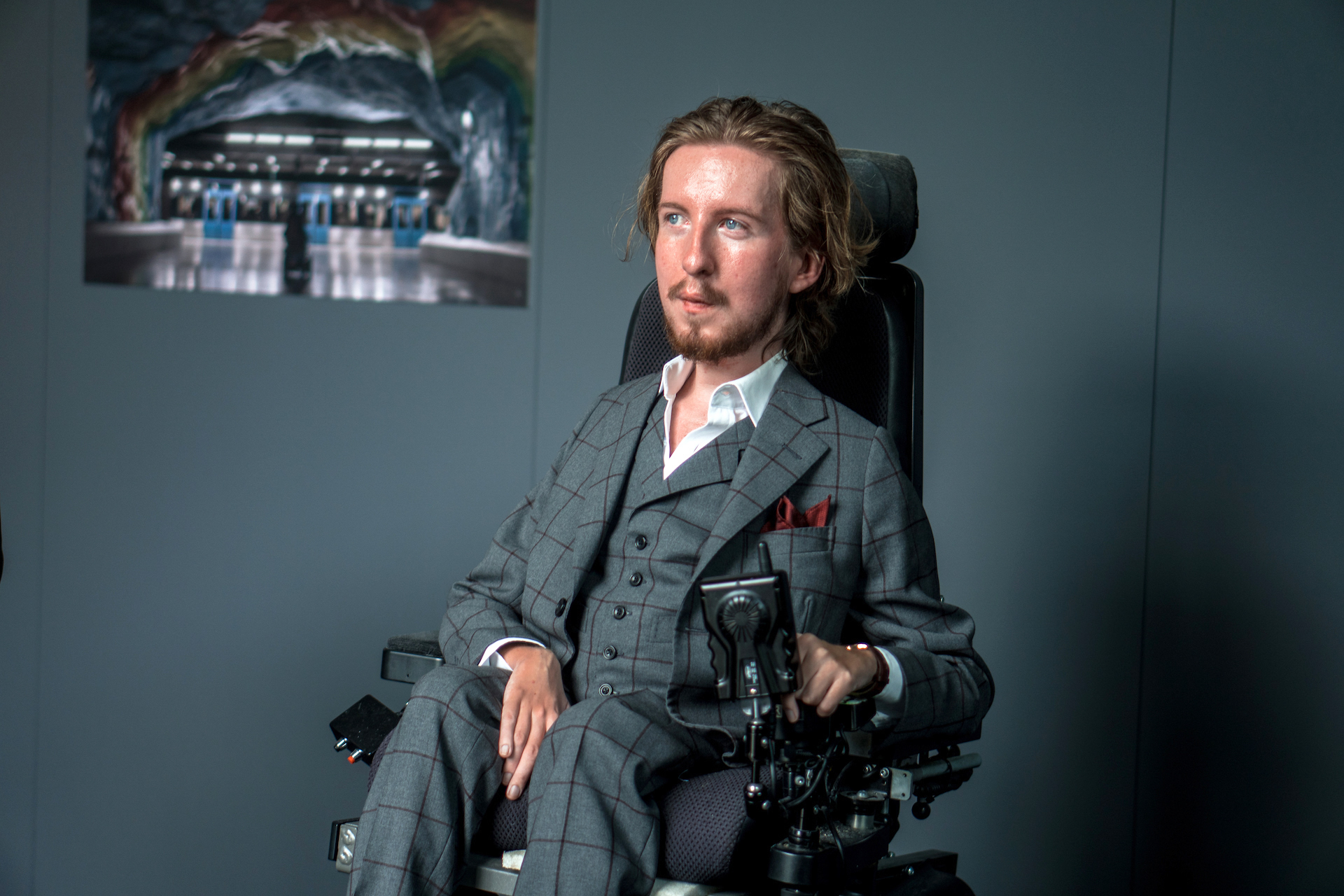
EL: I am 24 years old, and currently I am working on becoming an established influencer in menswear and lifestyle, at the same time I’m a co-founder of Helvin Watches. Being an influencer on social media is quite new for me, but it opens doors to spread my message across a wide audience. I feel that the world could need a face in menswear that is different from what we are used to seeing, and I hope I can contribute to that.
VR: Your educational background?
EL: I studied Social Studies in High school. I was never really the guy to study much, but it did help me find two of my todays biggest interests: philosophy and psychology. I believe there are so many great things to learn today about life and human behaviour, things that can benefit us in our daily life.

VR: Despite having SMA2, you favour tailored clothing instead of more comfortable, stretchy sportswear. What’s your motivation?
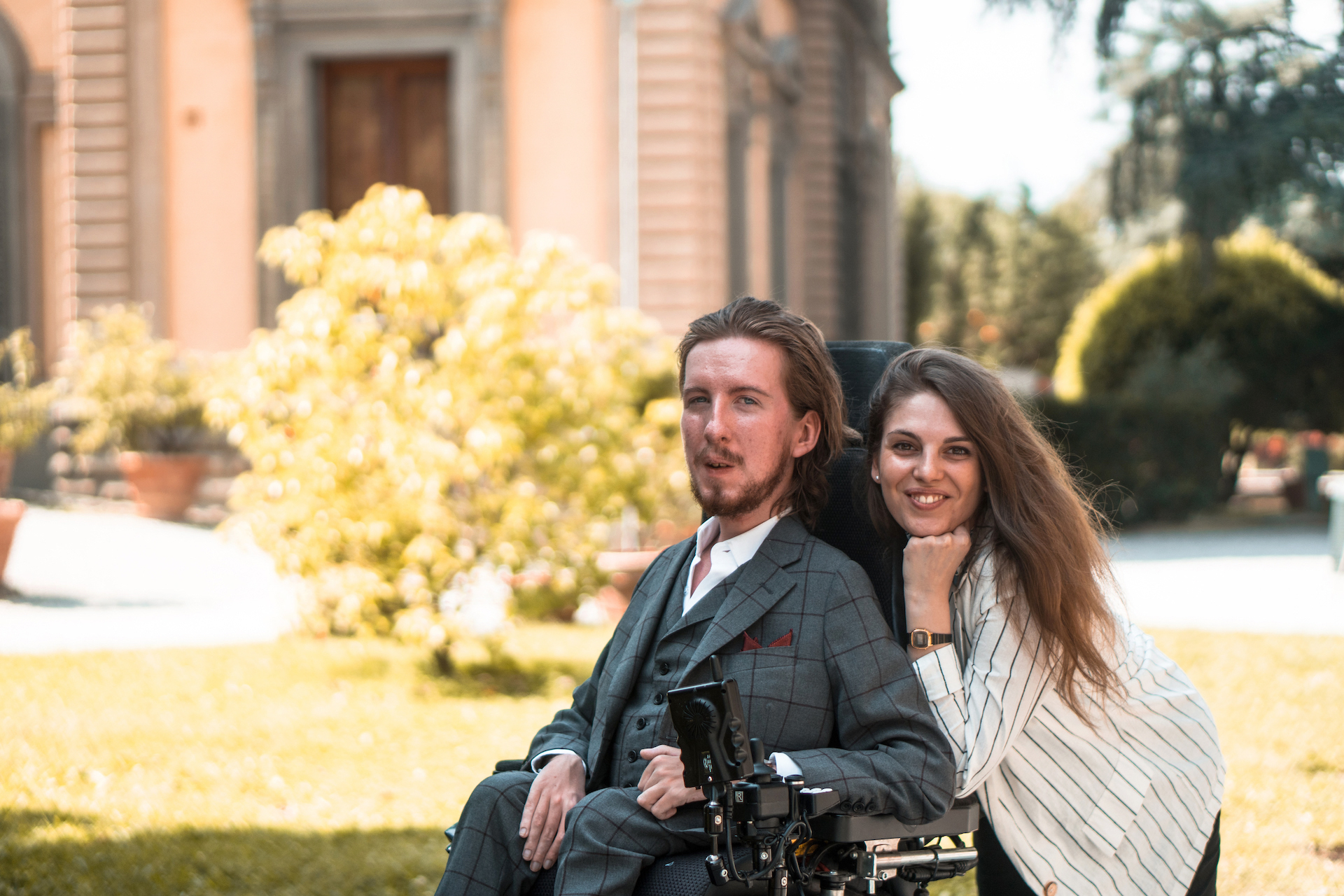
EL: My motivation is quite simple, I demand that I shall do my best in every situation in this life, and that includes dressing well. I understand the power of appearance and how it affects people, especially in my situation, where the difference between wearing a suit versus a T-shirt is enormous. People’s reactions to a man in a wheelchair change drastically depending on what you wear, that directly shows how important it is. I also honestly prefer tailored clothing because it feels better, not psychologically only but also physically.

VR: What were your parents’ and siblings’ reactions when you changed your style?
EL: All were positive to it. I suppose it was a sign I was growing up, especially since it was quite a drastic change from my previous style, where T-shirts and baggy jeans were dominating.
VR: What other hobbies or passions do you have besides apparel?
EL: I have quite a few hobbies that I do almost daily. Playing video games is one of them. I’ve always loved to play games of any kind, and since you only need a minimum of muscle strength to play video games, it is really perfect for me. I get to compete on the same level as others. Reading is also one of my favourite hobbies. To learn is to grow and I always want to keep growing! I am also very interested in art. It’s truly a joy to sit down, relax and paint. I am using a tablet to paint via my computer. It’s quite amazing how technology has come so far as to be able to recreate a realistic feel of painting.

VR: How did you first become interested in clothing, and when did you turn your eyes towards the tailored look?
EL: Clothing has been an interest for me ever since I started High school, it used to be more ”swag” than ”class” for me. However, when I was around 18 I started to watch a lot of Youtubers who showed a more classic sense of style. A style which I had enjoyed for years, mostly thanks to James Bond if I’m going to be honest. It all came together when I joined an FB group made by the famous Youtube channel Real Men Real Style. There I saw how others styled their suits and it inspired me to pursue the classical style myself.

VR: How have you gathered your knowledge of clothing — from books, in-house training, workshops or somewhere else?
EL: I mostly gained my knowledge from observation and through different Youtube channels. With observation I am talking about looking closely how people dress, both in real life but also in fiction, like movies. Real Men Real Style, the Youtube channel, has probably given me most knowledge on how to dress in a classic way.

VR: How would you describe your style?
EL: I would describe it as being elegant with a twist. I like to dress in a way that gives off a strong presence without being flamboyant.
VR: Who or what inspires you?
EL: I have many inspirations. Life constantly brings me new people that inspire me. I do, however, have a few people that have inspired me for quite some time. Niccolò Cesari (@niccocesari), Isao Kato (@cento130) and the brothers from @artwoth_brothers are a few guys who I’ve been following on Instagram ever since I started using it, and they have had an impact on my style! One new addition to this list is my friend Giorgio Giangiulio (@giorgiogiangiulio). What all these gents have in common is impeccable style. If we’re talking fiction, James Bond definitely has a spot. But at the end of the day, what inspires me most is the fire in my heart that fuels me so that I can do my best in this blessed life I am given.

VR: What’s your definition of style?
EL: My definition of style is simply: A way of expressing yourself.
VR: You recently visited Pitti Uomo for the first time. What expectations did you have before the trip, and what was the reality like?
EL: It was really amazing. I had seen so many photos of it, but most of them were outdoors, which made me believe that everything was outdoors. Was quite surprised when most of it was indoors. What made it so wonderful and what really exceeded my expectations was that everyone was so kind and cheerful. Every person who attends Pitti Uomo has one thing in common: We all like menswear. It was a fantastic experience, one that will be repeated.

VR: Finally, you are also part of the watch company Helvin. What makes this firm different from your competitors?
EL: Indeed I am. Besides our Swiss part movement, we also give away 50% of our profits to research for a cure for SMA. It is something that I am passionate about, not only because I have this disease myself, but also because I know a few people who have and are very much in need of a cure or treatment fast. SMA is a very individual disease, some people can manage quite fine, while others cannot. That’s why it’s important to hurry up the process as much as we can in order to help those people before it’s too late. I am very happy that we at Helvin took this decision.
Category Interviews, Men of style
Anatomy of a Kamakura Shirt
2August 9, 2019 by Ville Raivio
Kamakura is a Japanese shirtmaker founded in 1993 by husband and wife Yoshio and Tamiko Sadasue. They began as a small store in the namesake city, Kamakura, and have since expanded into 25 outlets around Japan. The greatest inspiration for the company’s designs and detailing is the all-American Ivy League style of the 1950s, which reached Japan in the ’60s. In 2012, Maker’s Shirt (the formal name of the company) braced itself and crossed an ocean to branch out to the USA. This is all fine and dandy for any company, but the most important points for me, when I read about Kamakura first some 7 years ago, were their Ivy inspiration and price-quality match. Not too many Japanese shirtmakers have successfully reached out to international customers, but Kamakura seems to offer something sweet.

Kamakura uses single-needle stitching, 22 stitches per inch, shell buttons, and take pride in using un-fused collars and cuffs. Chest pockets are sewn askew to appear straight when worn, and sleeves are sewn curved to follow the natural line of the hands. All shirts are made in Japan, though this excludes Kamakura’s Neapolitan lineup which wouldn’t be very Italian if made elsewhere.
The company has a made-to-measure program that allows small changes to stock sizes, and free range with the choice of collar and cuffs. Kamakura offers 11 collar models: Semi-Spread, Open Collar, Spread, Cutaway, Tab, Round, Pinhole, Button-down, One-piece, Straight, and Wing. The last two only on black tie shirts. Cuffs are limited to 3 options, a rounded button version, french cuffs, and a convertible one. Currently the Kamakura web store has 35 pages of shirt models, which makes for some 700 permutations. Few companies have such a range, though this does overwhelm the man who’s unsure.

As for lineups, Kamakura offers casual shirts which are not really meant for tie pairing, vintage Ivy models, Italian cotton models, a laid-back 134-collection, shirtings with 200 or 300 or 400 yarns per square meter, short sleeve models, black tie shirts, oxford cloth button-downs, Indian Suvin cotton shirts, easygoing traveller shirts, Chinese Xinjiang cotton shirts, Neapolitan shirts, even corduroy shirts. The company has grown into ties, bags, coats, trousers, belts and others but the core remains in shirts with a great price-quality deal. The maker has four cuts: a slimmer and regular Tokyo as well as a slimmer and regular New York. The Japanese one is closer to the body in both versions. The webstore delivers to all locations, free of charge for orders over 138USD. The company reimburses part of the customer’s VAT payment as vouchers, though this needs action from the customer as proof must be provided. Kamakura never has sales.

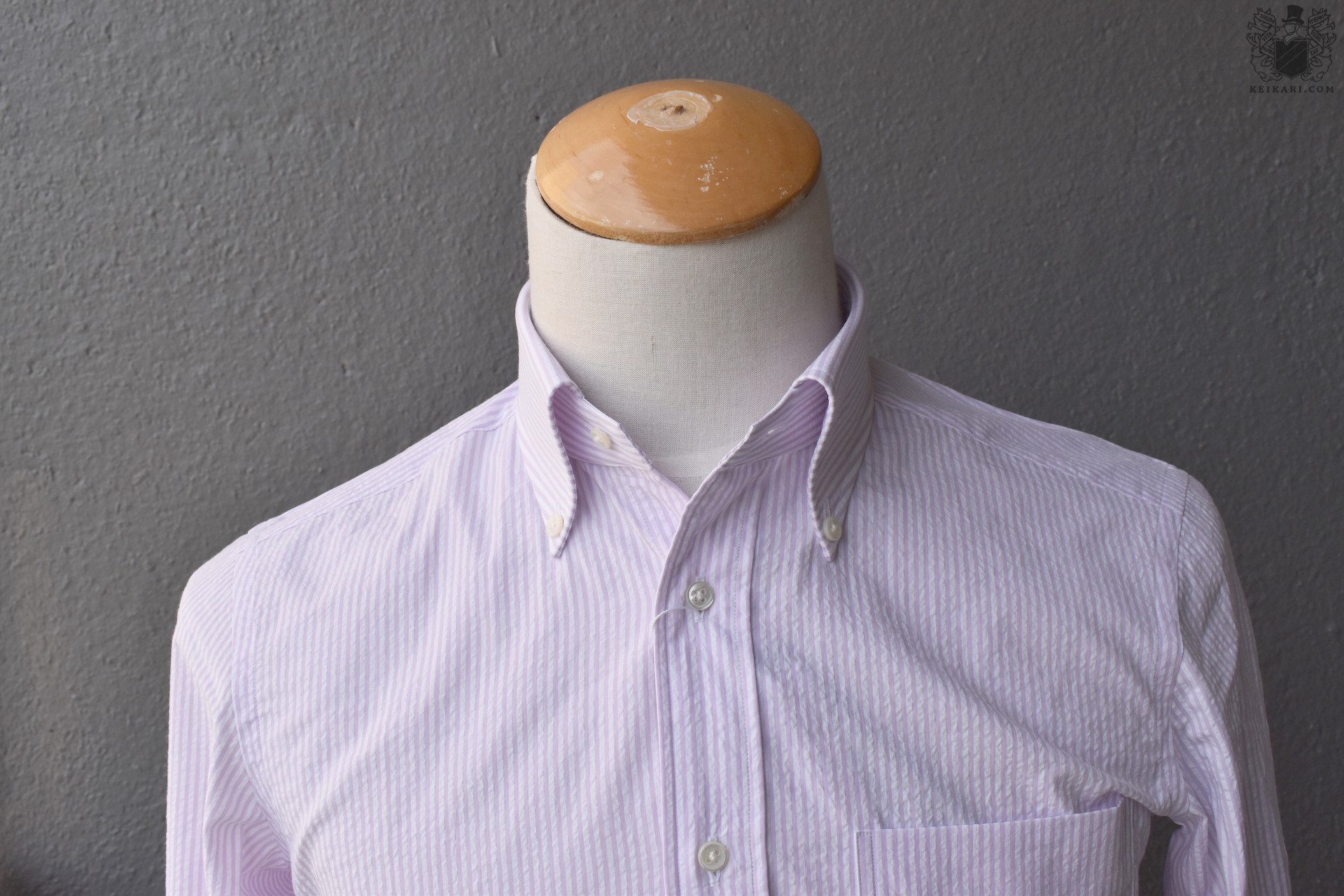
In today’s post I am reviewing a button-down shirt from Kamakura’s regular lineup. The only difference with this one is the fabric as seersucker is rarely used in finer collar shirts. This really is among the most interesting points with Kamakura: their range of models and fabrics is so large that there’s bound to be something for most men, if only the cuts appeal. Regarding the cut, this Tokyo slim fit is definitely among the most form-fitting I have tried, both on the body and sleeves. The closest comparison I can offer is Suitsupply’s extra slim fit.
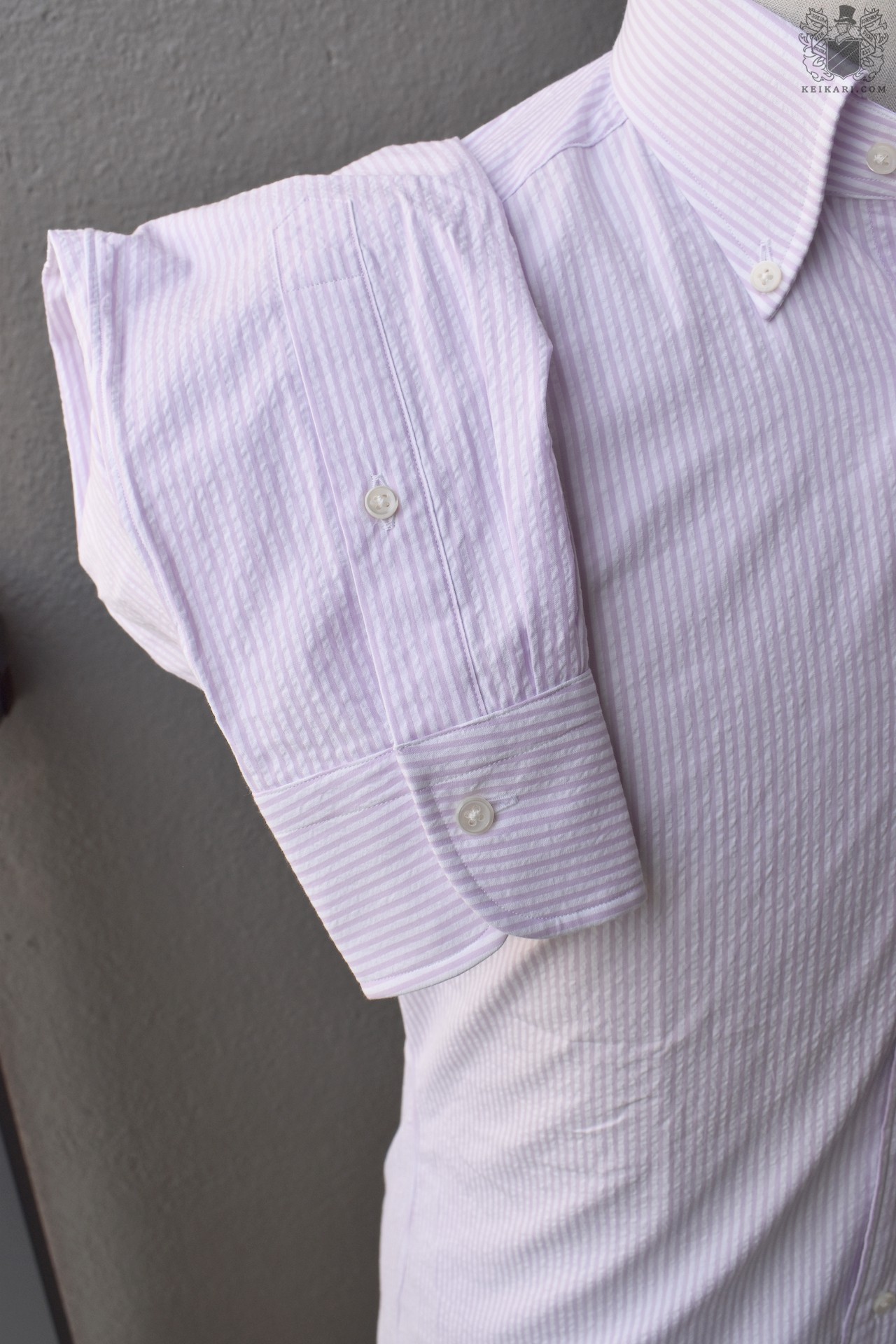
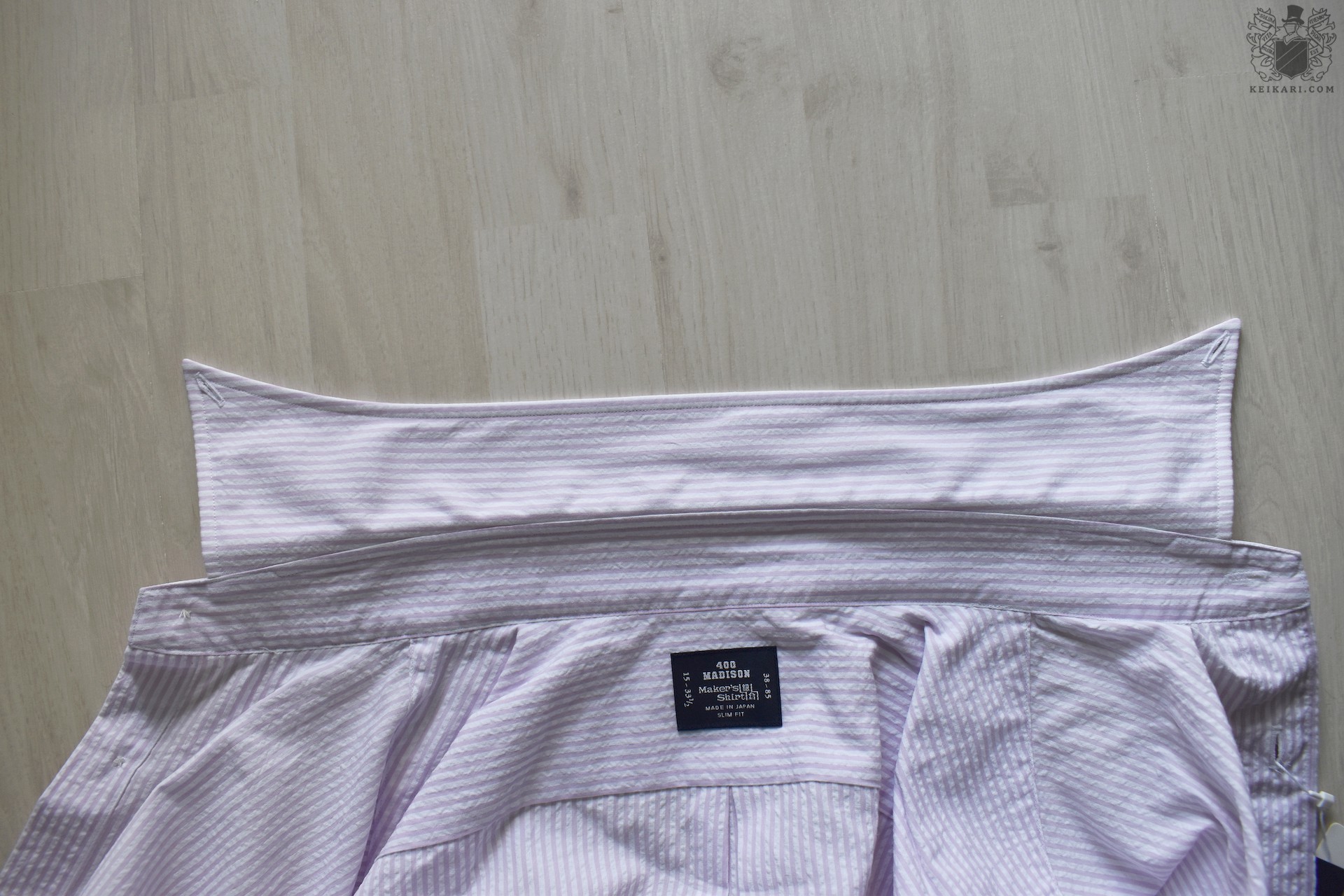
The chest in size 38 has the usual measurement of 56 cm, but I wager that the front panel has been cut smaller than usual, with more room at the back. This makes the chest fit very close and very clean, though only on a slim body. The sleeve is only 40 cm at the top, 32 cm on the elbow, and 22 cm on the wrist. While I’m at it, I must note that the cuffs fit closer than on any other RTW shirt I’ve tried, at only 20 cm from button to hole. As for the collar, it is 4.4 cm tall with 8.6 cm long points. This is enough to make it stand out, more so with the wonderful collar roll which is only possible thanks to the un-fused construction. The lining is strong but bendy.
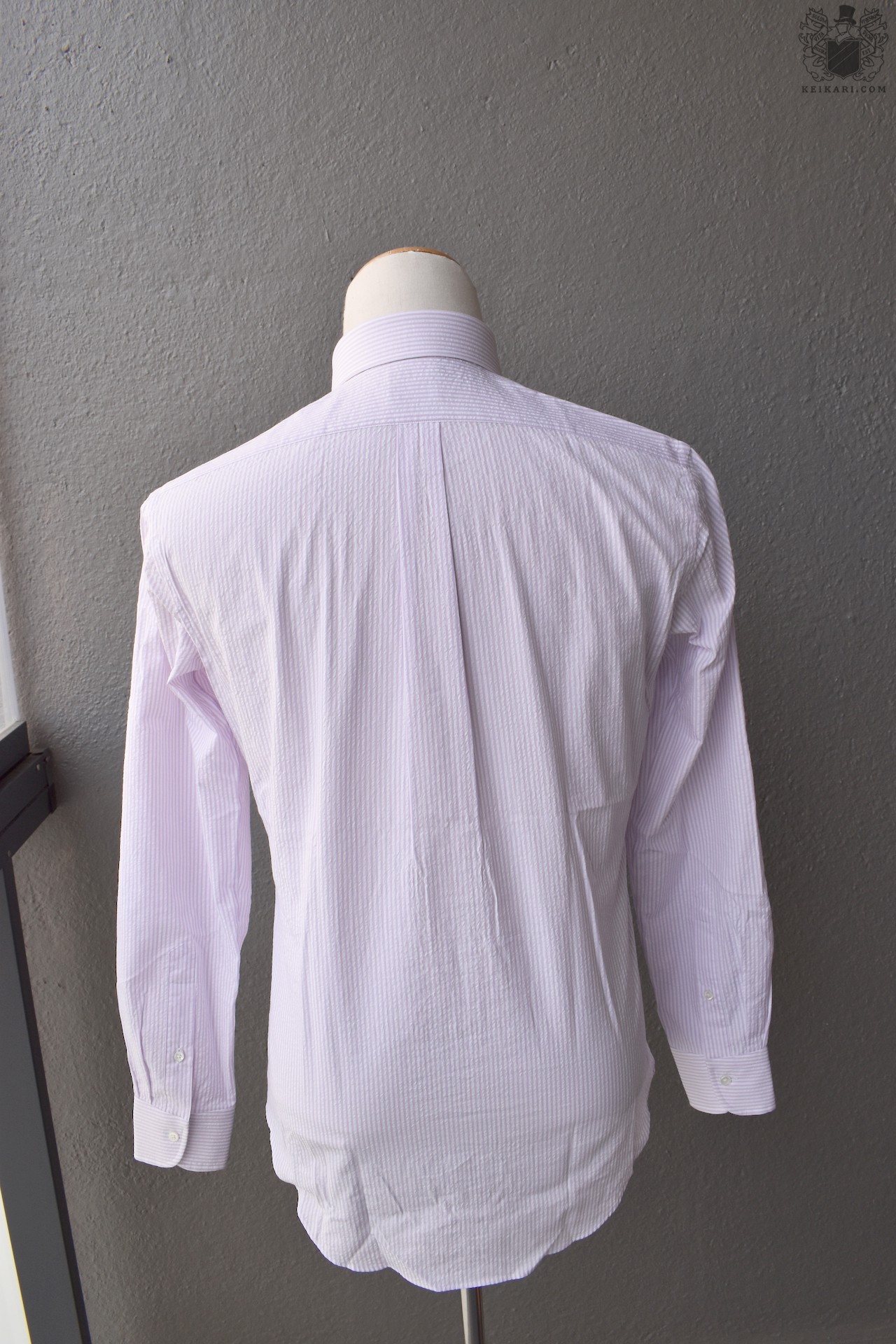
Most Kamakura shirts retail for 89 dollars on the web store, but this quickly rises to more than 100 euros after customs duties and VAT are added. All stripes have been carefully matched, a fine feat especially on the sleeve tops as the sleeves have been sewn in an angle. Buttonholes are clean, seams straight, the fabric feels soft and nice. The placket is swell and wide, without fusing. The cuffs have the usual rounded end, but they have also been sewn on in an angle. I’ve rarely seen a similar construction. The buttons are generic.

The only negative point with this shirt is the button attachment, likely all must be sewn on again within the year. The threads are loose and shoddy. Only time will tell how the shirt wears and behaves after a few years of washing, the fabric’s manufacturer is not mentioned and it only has a single-ply thread. Still, all this combines to make a shirt that, in my view, is the best damn price-quality deal I have found so far. It is not the finest in make or fabric or rarity, but offers so much for the price point. It is a very well made shirt with an interesting fabric and a truly slim cut, delivered to the doorstep from Japan in less than two weeks. The Japanese show once again that they must be taken seriously in men’s classic clothing.
Category American style, Japanese Style, Quality makers, Reviews, Shirts, Web stores
Copyright © 2013 Ville Raivio