Interview with Niels Holdorf and Benedikt Fries from Shibumi
4July 24, 2013 by Ville Raivio
Your age and occupation?
Niels: I’m 25. I studied Comparative Literature here at Free University of Berlin. So the next logical step was to found a Classic Menswear label. Together with Benedikt I own Shibumi.
Benedikt: I’m 26 and co-owner of Shibumi. I made an apprenticeship as retail salesman and after that launched an online shop for streetwear which I was running for the past 4 years.
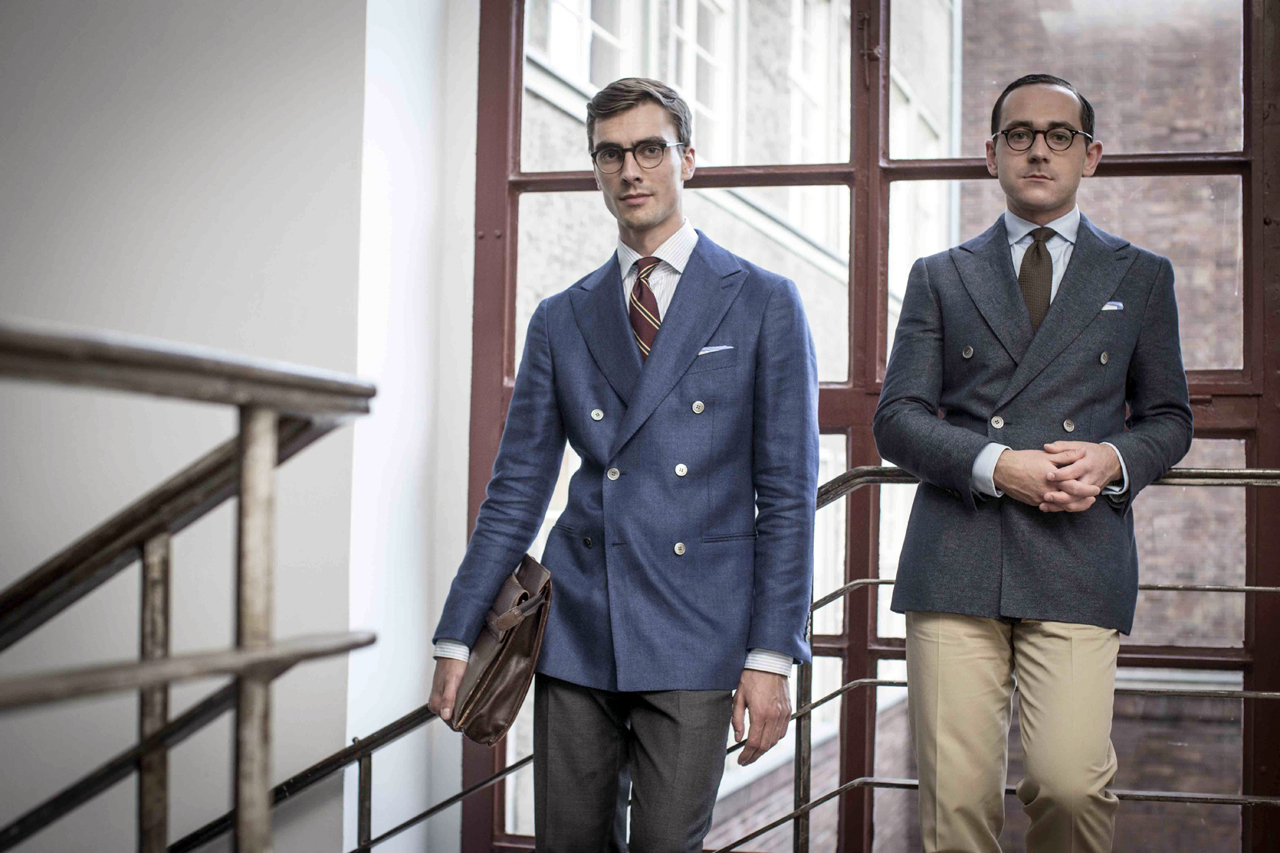 Mr Holdorf (right) and Mr Fries (left) sporting Shibumi ties and handkerchiefs
Have you any children or spouse (and how do they relate to your style enthusiasm)?
Niels: My girlfriend had to listen to me rant about lapel widths and the difference between black and white tie for as long as we’ve been together, so she was quite happy when I met Benedikt and could get it out of my system that way. Overall she likes having a well-dressed partner though she doesn’t fully understand my obsession with it.
Benedikt: No children, no spouse.
…and your parents and siblings’ reactions back in the days?
Niels: When I first became interested in classic clothing the change was quite harsh; I think it was in my last school years. Before I wore black exclusively for some years — nothing goth or the like, but just plain black clothes. In a few weeks I went from all black to leather-soled loafers, beige chinos, pink shirts and a light blue sweater! My mother was very happy. At the beginning I earned some strange looks but everyone agreed that it was a change for the better and soon everyone got used to it. Now, people (friends, relatives) come to me for advice when men’s clothing is concerned and I’m very happy about that.
Benedikt: They always knew that I’m crazy.
What other hobbies or passions do you have besides business and style?
Niels: Hm. Reading, I guess. I always read a lot which also led to studying comparative literature. I am a rather introverted person which also reflects in the way I dress (very simple). These days I read a lot of American writers like Paul Auster or John Updike. I also enjoy comics a lot. As a child I read Hergé’s Tintin over and over again (over years, I got all of them as birthday and Christmas gifts) and when I look at them now I notice that he paid very close attention to the way his characters dressed. Maybe that helped my later interest in classic menswear.
Benedikt: Sports, especially fitness, basketball and squash. Otherwise music, movies, books — I have top 5 lists of everything, you want to read them? :-)
How did you first become interested in clothing, and when did you turn your eyes toward classics? Why classics instead of fashion?
Niels: I don’t really know why it happened — maybe it was part of growing up. You finish school, you can drink, drive (not at the same time obviously) — and I just liked the way it looked. I don’t differentiate that much between fashion and classics — after all, the clothes we wear today, even if they are classics, are a modern iteration of an archetype. Maybe what does stay the same is the principle behind classic clothing: not to be the focus of attention but to present the wearer in his best possible light. That doesn’t mean that I don’t appreciate high fashion — much to the contrary. In the classic menswear community there are some people who look down on runway fashion, usually commenting on how silly that would look in the streets. I think they get it wrong. It’s a totally different beast with totally different goals and starting points.
Benedikt: I was always very interested in clothing, but when I was a teenager I liked baggy pants better than suits. I turned my eyes toward classics 4 years ago. I moved to Berlin and changed my whole life, but maybe I just grew up. I like the fact that you can wear classic suits, shirts, ties…for so many years without going out of style. That’s great.
How have you gathered your knowledge of apparel — from books, in-house training, workshops or somewhere else?
Niels: Mostly from books and the Internet. Only later I met people whose personal style I admire, there was no-one in my immediate environment. I read Roetzel first, but his book is more eye-candy, or a fairy tale book (as he likes to call it himself); this piqued my interest. After that came Flusser and Antongiovanni both of which I really like and recommend. But the most I really learned from the Internet, first from Styleforum (I’ve been a member since 2006) and later German Stilmagazin.
Benedikt: I’ve never read a book about classic menswear. I learned a lot from online forums and blogs, otherwise I learned from chats with tailors and friends.
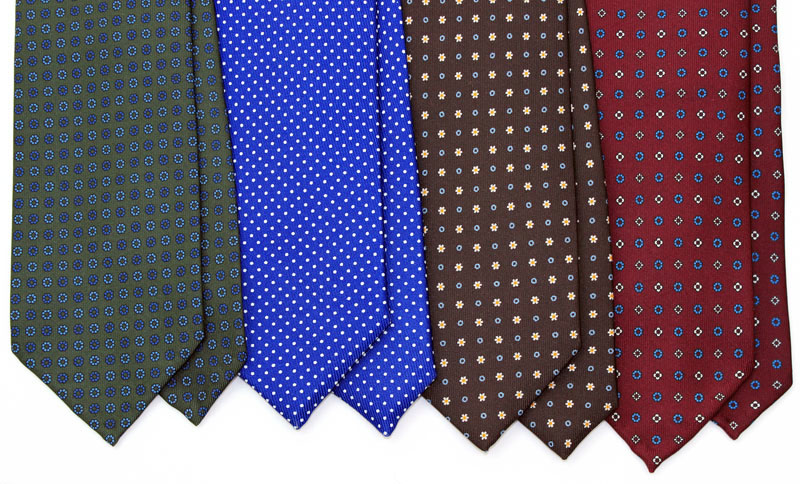
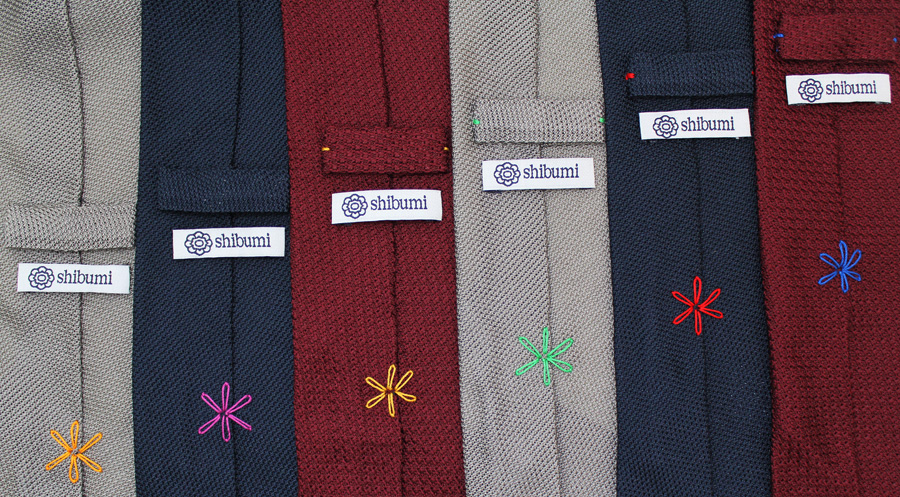
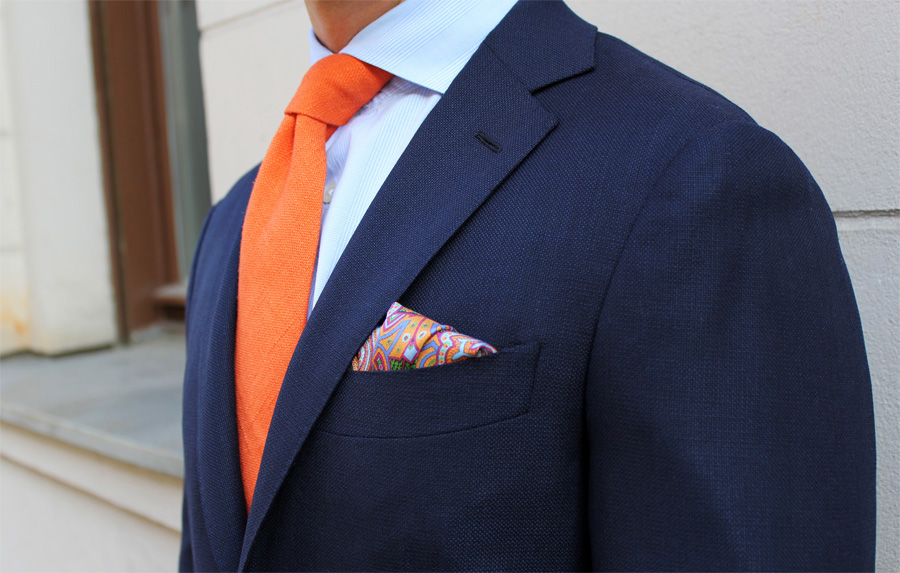
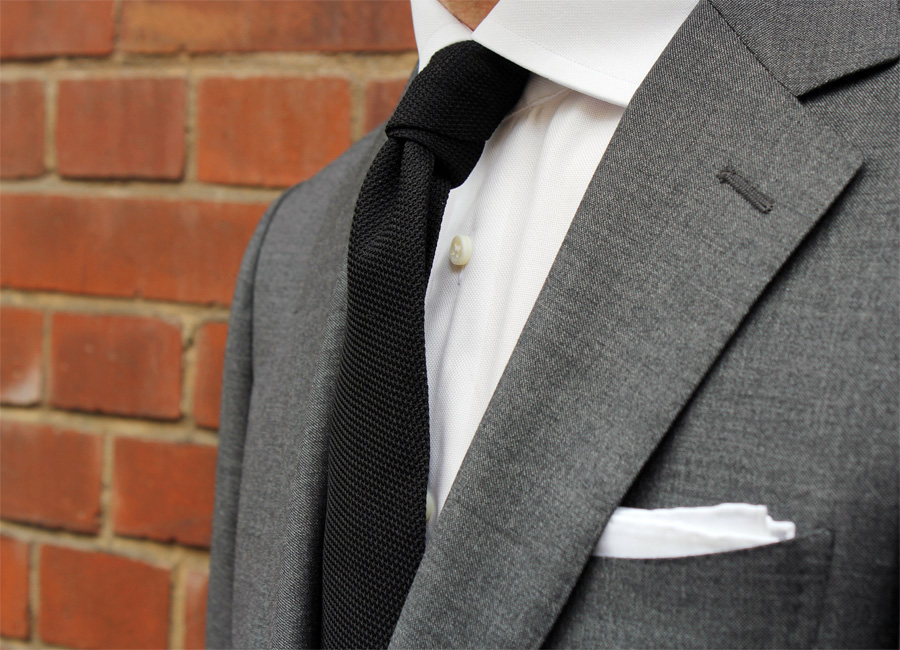
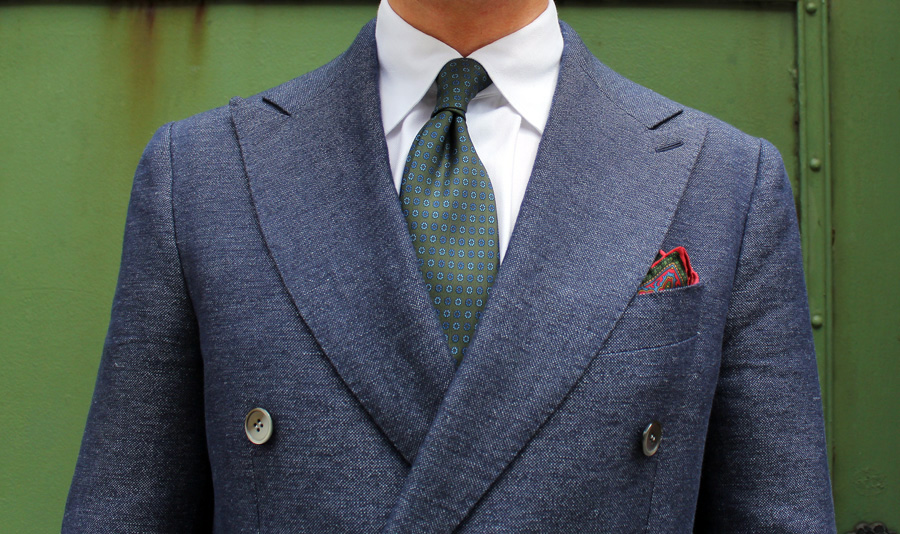
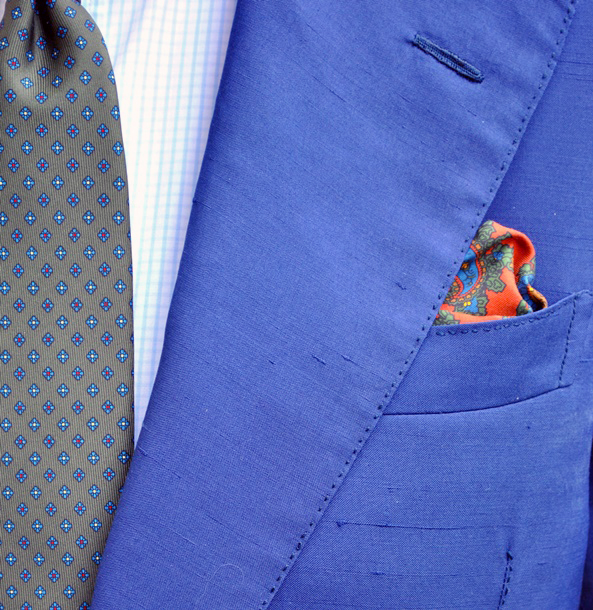
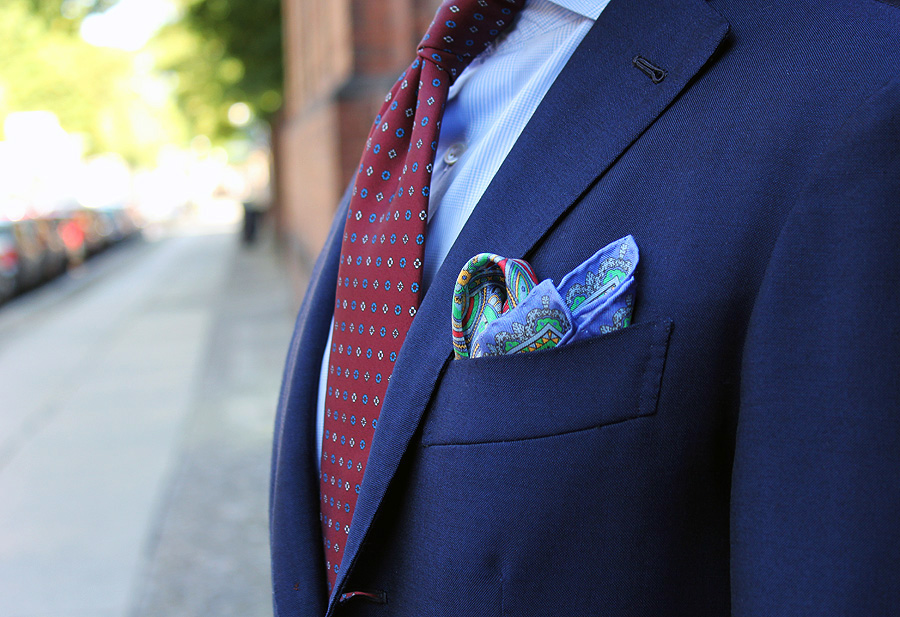
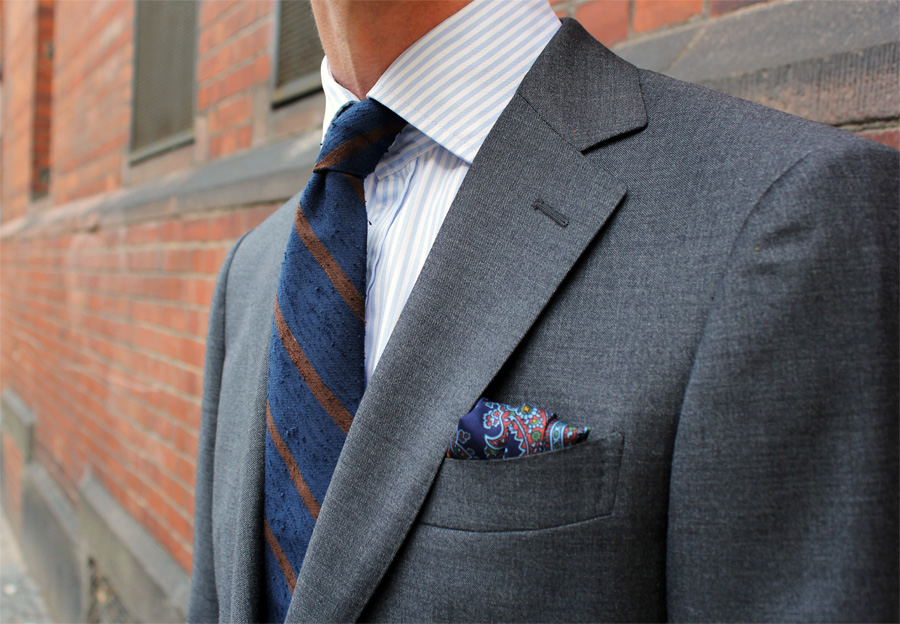
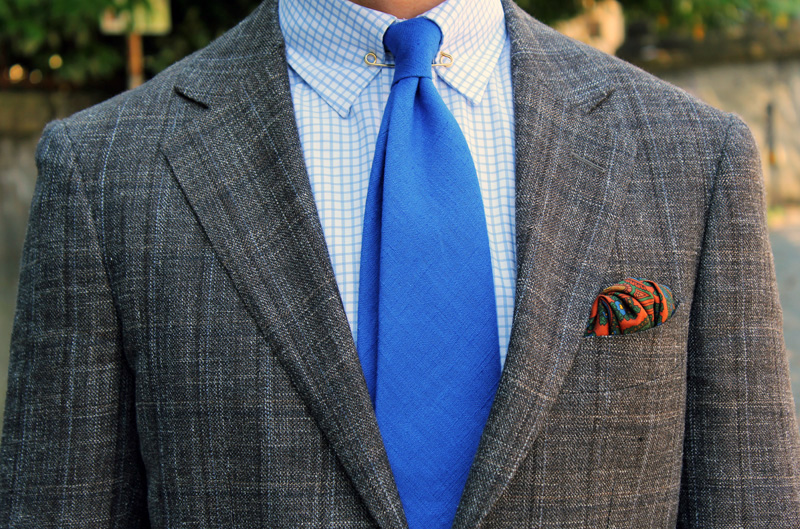 All photos feature ties and ‘kerchiefs from Shibumi
How would you describe your own dress? Have you any particular style or cut philosophy?
Niels: Hm. I’m not old enough to have a personal style and I think it’s silly to call it so before you’ve experimented for a considerable time; in fact I’m not sure one even needs a personal style. I think it should be enough to be well dressed. Ideally, your personality is what catches your opposite’s attention, not your dress. Most of my outfits have some things in common though. I don’t dress loudly, I don’t like it and it doesn’t suit me. I can appreciate it on others of course, but in general I prefer quieter outfits. There are a few things I like though; matte textures for example. Oxford cloth for shirts, flannel for suits, shantung for ties, suede for shoes. Ancient Madder silk – just beautiful. I also like blue a lot. I think I could live with an entirely blue wardrobe; navy to mid-blue suits and sport coats, light blue shirts, dark blue grenadine ties… Okay, I don’t like blue shoes. So maybe it wouldn’t work that well.
Benedikt: That’s a really difficult question, because I don’t think about that anymore. Maybe you could describe my style as Ivy League meets Napoli. But that sounds very corny.
Apart from Shibumi’s own goods, which RTW makers or tailors do you favour today?
Niels: I’m tall and thin so many clothes don’t fit me. I don’t think this is necessarily a bad thing since it forces me to only buy what I really need; had I a regular 40 body, I would probably have a lot more useless items in my closet. RTW makers, tailors — although personally I wouldn’t wear it, I enjoy Kamoshita’s blend of Japanese and western aesthetics. It’s a thin line to walk and he always does so gracefully. Tailor-wise I prefer something very unspectacular — think the tailors of Northern Italy or the softest of English tailors.
Benedikt: I really dig the flamboyant style and shape which many Neapolitan tailors prefer. But my favorite tailor is Liverano, unfortunately he’s way too expensive for me. I love the silhouette of the extended shoulder combined with the extreme open quarters. I also love the clean look of the dartless front.
Please tell us how your company was born and what goals you set for yourself in the beginning.
Niels: When I met Benedikt he already had plans to start his own label, he was in the very first stages though. We talked a lot about it as we became friends and I realized there was nothing I had as much passion for as this. I gave it some thought and finally decided to take the plunge. What we aim for is pretty easy to explain: a top-notch product, tastefully styled, for a good price.
How have you been received so far?
Niels: We’re very happy to have been received quite well so far. I think people notice how passionate we are about our products and it carries over.
How would you describe the goods of Shibumi?
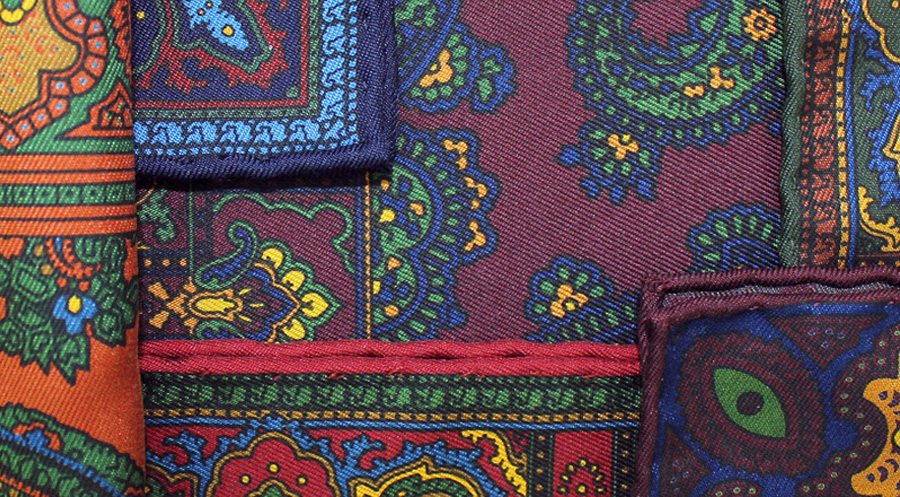
Niels: As shibui, of course :D. Shibumi stands for a Japanese concept of aesthetics and means something along the lines of “simple beauty without flashiness” or “refined elegance”. Shibui is the adjective that goes with it. It perfectly embodies our understanding of classic menswear: being well-dressed without being loudly dressed; classic style that is not an anachronism. We’re both quite young and believe very much in a classic and contemporary look.
There are dozens of accessory web stores in Germany alone — why should my readers choose you?
Niels: I think there are a few factors that speak for us. First, we offer very good quality for a very fair price; second, what you get when you buy Shibumi is a classic item, tastefully and modern styled. I don’t think we do have that many competitors in this special field, especially in Germany.
Who or what inspires you?
Niels: Many things. Color-wise I really like Japanese woodblock prints like Hokusai’s 36 Views of Mount Fuji. There are a few well-dressed men whose style I admire, some of whom I know, like our friend Herbert Stricker, some of who I don’t know like Yasuto Kamoshita.
Benedikt: I never thought about that before. For color combinations, I’m sometimes inspired by art or stained-glass windows of old (especially Italian) churches. But I think mostly I inspire myself.
What is your definition of style?
Niels: Style, for me, has a lot to do with appropriateness or, to use a less complicated word, fit. In every sense of the word: clothes have to fit, meaning they have to fit you, fit the occasion, fit your personality, fit your mood… if all these come together, you have style. But just in the clothes sense — real style has very little to do with clothes.
Benedikt: Not surprisingly, I agree with Niels. I would also add that if you are more comfortable in jeans and a t-shirt, you should wear that. Your clothes should not be a costume, no matter if that costume is classic. Anyway, even if you are a t-shirt kind of guy, you need at least one good suit, shirt, tie. There are just occasions when you have to wear one.
Over the years you must have learned quite a bit about style. Is there something you wish more men would know? This is a great opportunity to make a lasting influence on my younger readers. Most of us aren’t blessed with rakish relatives, which makes learning about style a challenge later in life — and yet another trait men are supposed to master. All tips and thoughts are valuable.
Niels: So many things. Fit is king. Subtle is good. Don’t worry about overdressing, if you’re friendly and open, you’ll be received even better. Dress according to your age, the occasion and your mood. Classic doesn’t mean old-fashioned. Learn the basics, the classics! There is a reason they are classics. People always say first learn the rules, then break them. Perfectly true, but I feel many people don’t do the first part. In the end, it’s just clothes. They’re not really important. Be water, my friend.
Benedikt: Trousers always should have cuffs and creases. Forget belts — try braces or side-adjusters. Don’t buy too many things! Four suits of great quality and perfect fit are so much better than thousands of suits you only bought because they were cheap or on sale. Buy only things you really, really want or need. Don’t try anything, just do it.
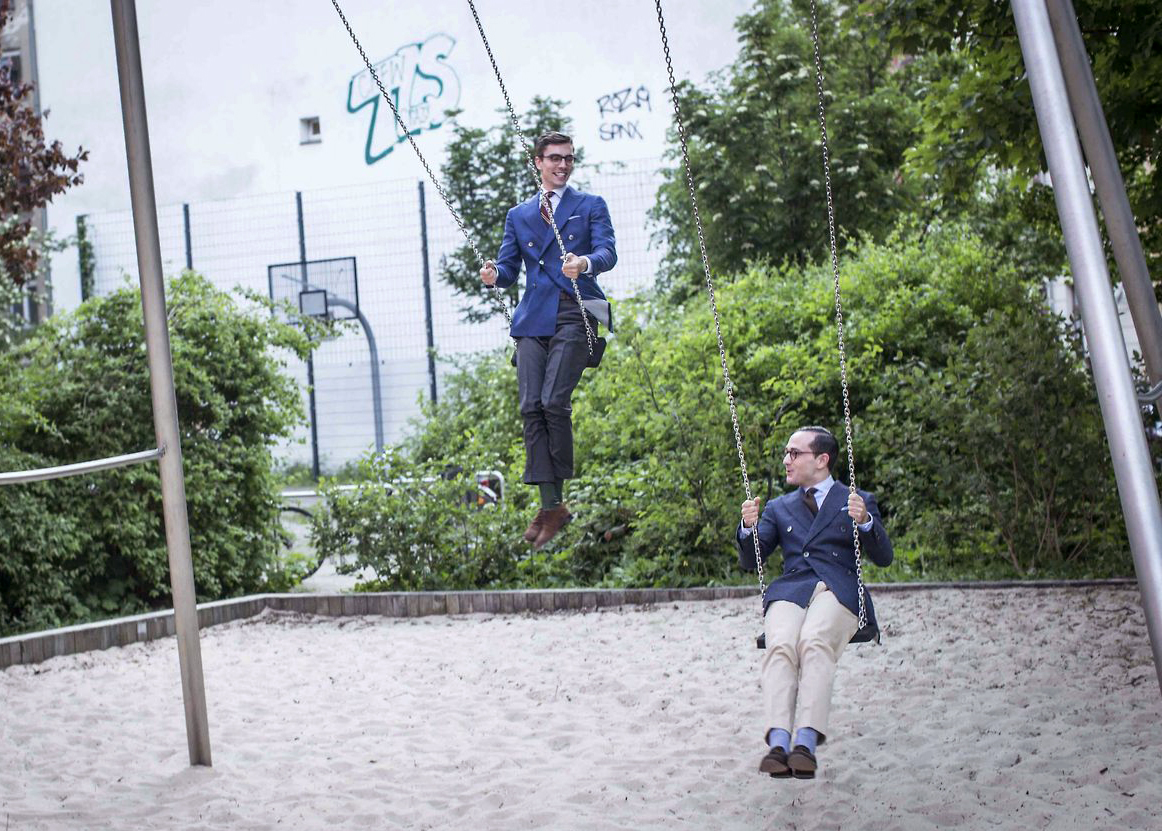 Mr Holdorf and Fries, doing their thing
Pictures: © Jan Philipp Eberstein
Category Interviews, Quality makers, Styleforum, Tradesmen, Web stores
Miyagi Kogyo Shoes
0July 24, 2013 by Ville Raivio
Category Footwear, Japanese Style, Quality makers, Videos
A Beginner’s Guide to Italian Men’s Style
0July 24, 2013 by Ville Raivio
The Wall Street Journal recently featured a lengthy piece on Italian style. Barney’s executive vice president of menswear Tom Kalenderian, among other buyers and retailers, sheds a bit of light on the sartorial memes originated by Italian peacocks and later adopted by American males for the joy or sorrow of retinas everywhere.
http://online.wsj.com/article/SB10001424127887323740804578600161067576062.ht
Interview with ’emptym’
0July 23, 2013 by Ville Raivio
‘I’m 39. This year, truly. After that, just like Jack Benny, it may be forever. I’m a professor. As an undergrad I studied international relations, did some philosophy and theology in Germany, and have a PhD. My family is fairly into aesthetics, but they definitely aren’t as interested in it as much as I am, except perhaps my sister and one brother, who’s an architect. My main interests outside of work and family are martial arts, motorcycling, the outdoors, and social justice issues in the broad sense.
There’s probably no such thing as timelessness in dress, but I think there are environmental, social, practical, and financial advantages to preferring things that won’t quickly go out of style. From as far back as I can remember, I’ve preferred things that are handmade and designed to last. For example, my dad used to travel for work and would bring back little presents for us kids. I always preferred things made of wood or metal to those made of plastic. For a while, I wanted to be a craftsman of some sort.
My interest in clothing probably started when my mom and sister would take me with them when shopping, which didn’t really happen that often or for very long. But I can remember them asking each other and me for feedback on what they were thinking of buying. The earliest clothes I remember were things I had in kindergarten, like Wrangler jeans, Grapevines corduroys, a green track suit, and Oakland Raiders pyjamas, which I always wanted to wear under my normal clothes to school.
There are pictures of me in coat and tie as a kid, but the first time I can remember paying attention to that kind of dress was sometime in junior high, when my dad took me to buy shoes. He pointed out Florsheims and told me that he and my grandfathers on both sides wore them. I learned things from them by observation, of course, but they didn’t intentionally teach me much about dress, other than how to polish shoes or tie a tie.
When I was in high school, my sister gave me a year’s subscription to GQ and the book Personal Style, by James Wagenvoord. I read those pretty carefully but I didn’t buy any more material on style until I got Roetzel’s book in Germany several years later. I bought it mainly for a fun way to practice German, but I learned a lot about traditional men’s clothing from it too. That, plus living abroad there and in the Philippines, gave me a more international outlook.
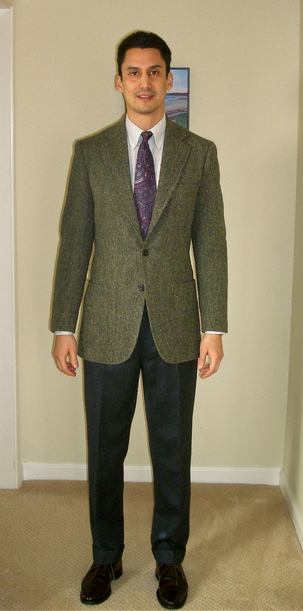
So I’d say my style is pretty much a product of my family and background: my dad’s New England, LL Bean-influenced style, my mom’s Filipino/Spanish/Chinese heritage, some Southwestern cowboy/surfer/skater stuff from being raised in Nevada, and traditional East Coast stuff from college, grad school, and a few years working there. So I might wear a barong one day and cowboy boots with a tweed jacket the next. Generally, though, I try to dress fairly unobtrusively. For work I wear a moderately cut sport coat and tie. Casually, I tend to wear jeans and an old shirt or sweater. The items are typically plain, but they’ve been selected for fit, construction, and materials.
Instead of accumulating a lot of things, I prefer to have a relatively small amount of high-quality items that are versatile, durable, and practical. I hate waste, so before buying something, I’ll think for a long time, usually years, about what I want/need, its purpose, what type of materials and design would be best, and where to get it in a way that’s economical but also environmentally friendly and socially responsible. So almost all my stuff is from thrift stores or custom made. And for the past few years, I’ve made myself give something away if I get something new.
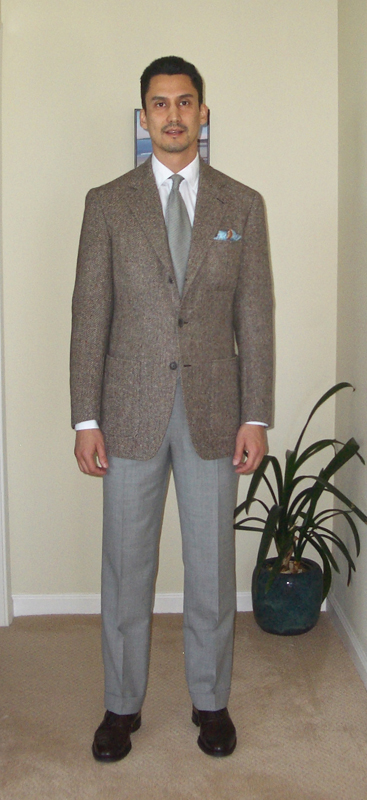
For suits and sport coats, my favorite for the past few years has been W.W. Chan. I was fortunate enough to have spent a week or so in Hong Kong and got my first suit then. Their head cutter, Patrick Chu, and everyone else they have working for them is extremely competent and courteous. I’d like to find a local tailor, but I haven’t been able to find anyone as good as Chan for the money. If I had unlimited resources, I’d go to Chris Despos in Chicago. He’s a smart, kind man, who’s really dedicated to the pursuit of excellence.
Chan and Salvatore Ambrosi have made me pants that fit perfectly. Chan’s are machine-sewn and have the cleanest lines possible. Ambrosi’s have a little more shape to them and these little old-school details that make them works of art. My favorite example is probably the button at the corner where the fly, the waistband and the other side of the pants meet. It faces the opposite direction of most buttons. At first I thought it was silly, but now I appreciate how it keeps the top of the fly closed. I should also mention Cornell’s in Manila who make very good clothes, particularly their pants.
I’ve tried several shirt-makers, but I like Luxire and CEGO best. Carl, the owner of CEGO is a lot of fun and knows his stuff. If I lived in New York, I’d buy a lot of shirts from him, partly just to hang out in his shop. Luxire is probably the most interesting company I use now. Ashish, the owner, is a family man, very smart, and committed to delivering top-quality products. Luxire’s branching out into other types of garments and will eventually to be able to make anything, even weave their own sweaters. They already provide the best value for shirts and pants of anyone I know in the world. And they have total flexibility about details. I recommend their stuff to my friends.
For shoes, I’m fortunate enough to have a pair of custom boots made by D.W. Frommer II, who’s thought by many to be the world’s best cowboy boot maker. I’m visiting him in a couple months to have the fit assessed and order a new pair. The ones I have from him now are easily my favorites, what I’d wear if our place was on fire. They’re a good example of something I thought through for years, in this case over ten. I commute by motorcycle or bicycle and these are dressy enough for coat and tie, but high and strong enough to offer some protection in the rain or a fall, and even the materials they were made of (from Horween and Baker) are socially and environmentally friendly.
Again, if I had the resources, I’d love a pair of shoes by Perry Ercolino just outside of Philadelphia.
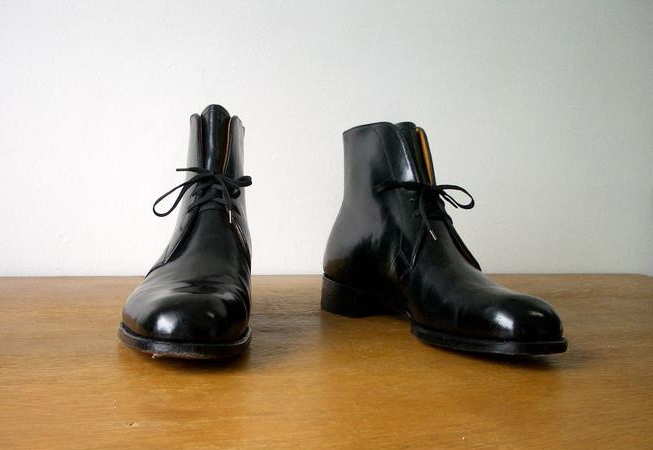 High shell cordovan chukkas by Frommer
For RTW, I really like Alfred Sargent, Rider Boots and Alden. I think I have more Alfred Sargent shoes than any other, partly because of their great, former manager, Chay Cooper. I worked with Chay on a few mto’s, one of which became a handgrade model that’s named after me. I wish Florsheim would make shoes to their old standards and in the US, particularly the Yuma/Langsford loafer.
Most of my ties and pocket squares were from thrift stores, but I have a few from internet favorites like Panta, Vanda, Howard Yount, Kent Wang, Hober, and Drake’s. I particularly like that Gerald and his wife make the Vanda ties.
For casual stuff, I like regular jeans from Levis or Taylor Stitch, Onno hemp t-shirts, and outdoors stuff from Patagonia, some of which I’ve owned for 20-something years.
I found Styleforum in 2006 when I moved (back) to DC and googled “alterations tailor, Washington DC.” A bunch of internet forums showed up on the first page. At the time, I thought I knew a lot about clothes, but the forums opened my eyes to many details about tradition and some of the world’s best craftsmen. At first, I preferred the London Lounge, since I thought it had the highest concentration of knowledge. But there was so much more activity on Styleforum and a broader range of discussion. The Current Events section has some really smart, informed guys participating: economists for different governments, a Bush speechwriter, professors of various fields. Before I became a moderator, the majority of my time was spent on CE. Now I barely have time for it.
I’m inspired by almost everything. When I was a kid, I had one of those “oneness with a loving universe” moments. Since then I’ve usually been able, as the Jesuits say, to find God or infinite goodness in all things. Prayer helps to sustain that, as do friends and family, jogs along the bay, etc.
The forum influences my style a lot, but in particular, I’ve admired and been influenced by guys like itsstillmatt, Manton, T4phage, RJman, dopey, edmorel, Parker, Maomao, the Armoury guys, alden, A. Harris, Baron, Neofinitia, whoopee, and Tirailleur1.
The blogs/tumblers I visit most often are TheGiftsofLife, ASuitableWardrobe, DieWorkWearDie, ABitofColor, Voxsartoria, and TheHCC.
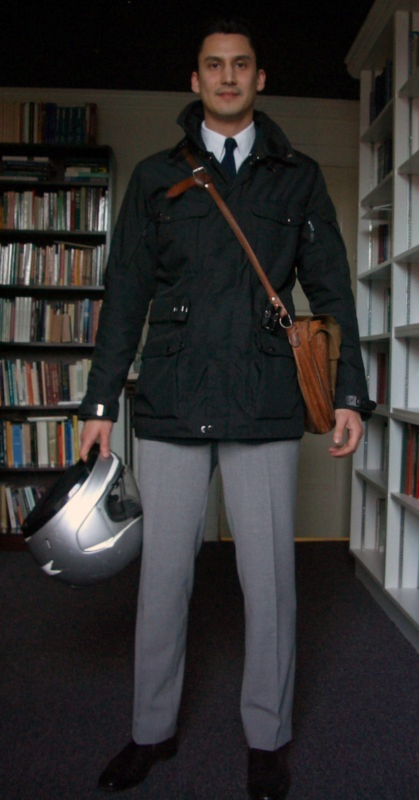
I’m not sure I can define style, but if I had to try, I’d say it’s a lot like an Aristotelian virtue such as courage or moderation: Anyone can act virtuously by accident, but to do it consistently takes years of study and practice. And one only really has a virtue when one has developed a habit and thus can act with ease. It involves learning and applying general principals, but it’s more about becoming a certain kind of person, the kind who can assess the many different particularities of a concrete situation and make a good judgment of what’s best here and now, regardless of whether or not it follows tradition perfectly or is creative of tradition.
The fundamental thing I recommend is that people pay more attention to what they do and why they do it. We often follow swiftly-changing trends created by marketers trying to sell products and make profit. Change and money aren’t bad. But I think we should ask ourselves a lot more questions about what we do than we usually do. Why do I want this? Is it just to fit in? Is it just to feel different? Is it because some celebrity (or WAYWRN star) endorsed it? Do I need it? Is there a better way I could spend my money? How was the item produced? Were the workers treated well? Was the environment?
Style, in my opinion, is an important part of life, but it should be viewed in light of the larger whole.’
http://www.styleforum.net/u/15964/emptym
Pictures: © ’emptym’
Category Interviews, Men of style, Styleforum
Fop Culture
1July 20, 2013 by Ville Raivio
In 2006, the online world of menswear forums was penetrated in ink. Christian Chensvold penned an article about the mostly well-off men spending time on style forums, like AAAC, Filmnoirbuff, The London Lounge and Styleforum, and spending copious amounts on clothing and accessories. Marc Grayson, Jan Libourel, Jeremy Jackson, Andy Gilchrist, Michael Anton and good old Fok have their say as well. Every forum addict would do well to read the article.
Not all spouses are understanding and approving of the passion. As one interviewee says of his better half, “She regards it as highly eccentric and time-wasting…I say, ‘It’s not as if I’m on some porn site,’ and she says, ‘That would be normal.’”
http://www.dandyism.net/2006/12/12/fop-culture/
Category AAAC, Links, Reading, Styleforum
Copyright © 2013 Ville Raivio