Mastroianni in Quote
0September 4, 2013 by Ville Raivio
‘The day when everyone is very, very elegant, I will start to go around dressed like a tramp.’
~ Marcello Mastroianni
Category Quotations
Interview with Chihiro Yamaguchi from Guild of Crafts
1September 4, 2013 by Ville Raivio
‘I was born in 1960, and I am a bootmaker. I graduated from the Cordwainers College (the University of the Arts London) in 1990, specializing in shoemaking education. I have two children, and they are still in school. The elder one is currently attending an art University, and the younger one is still in High school. My father was a stone engraver, focusing on traditional Japanese style engraving. Naturally, as his eldest son, he wanted me to follow in his footstep, but I wanted to explore other things, so I chose a different path.
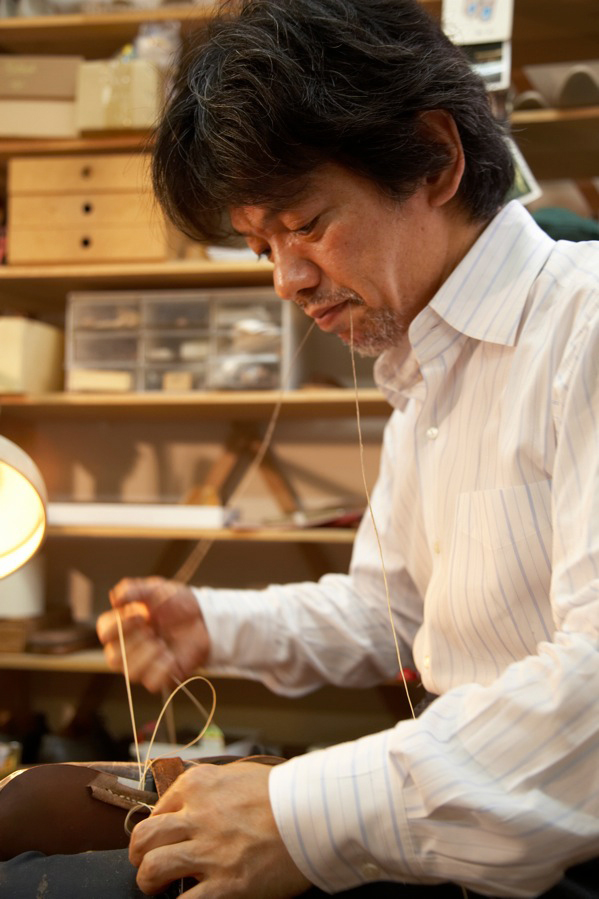
Though, my younger brother has taken over his job and become a stone engraver as well. In all, many members of my family are involved in arts and crafts related work to this day. I enjoy drawing and painting very much. I used to be a fine arts student when I was in Japanese college. Drawing and painting relax my mind, and keep my spirits up. This is particularly important as I have a lot of stress from work. I also like to play the Ukulele whenever I can find the time.
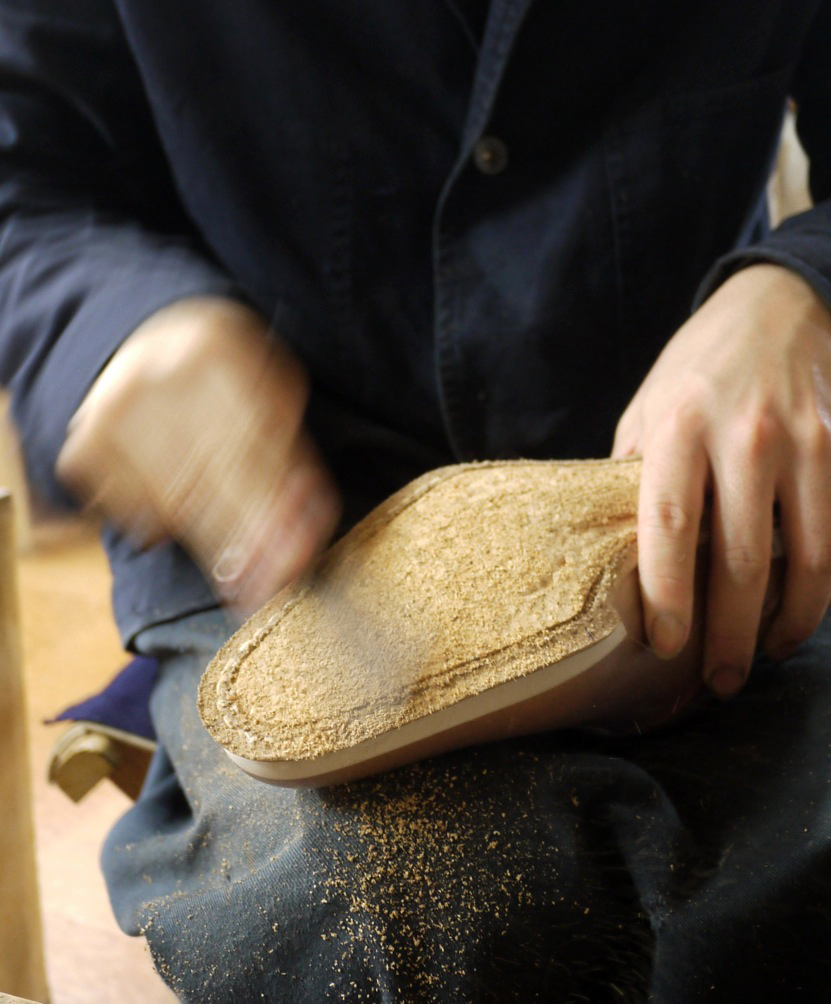
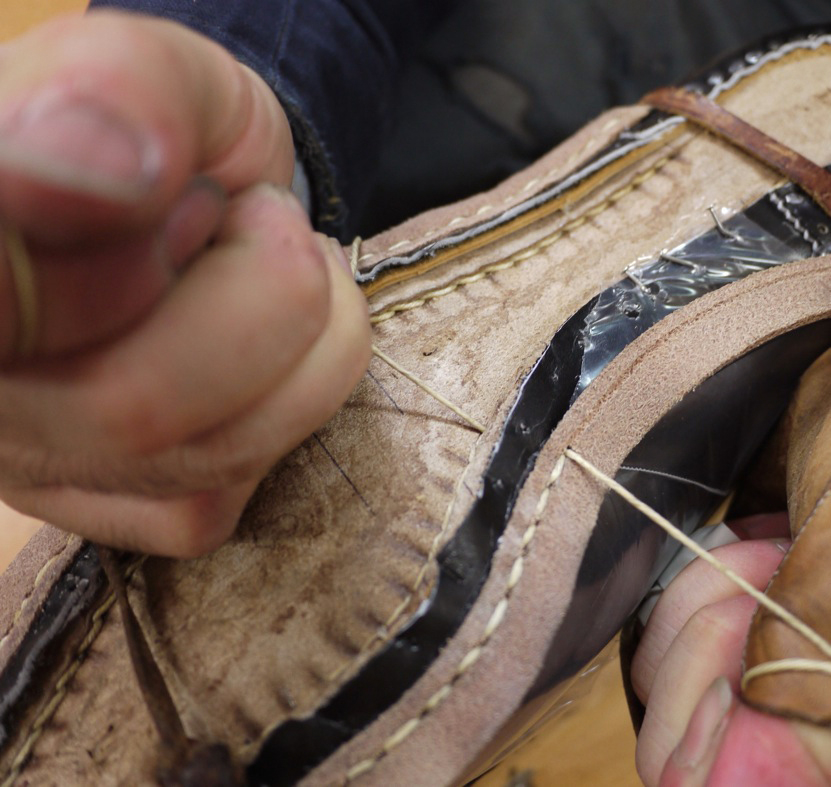
Soleful filing, welt stitching
I started to be conscious about fashion when I was in high school. For some reason footwear, among all fashion items, attracted my attention, and I felt the importance of a nice pair of shoes to complement other clothing items. Besides, I found things made of leather so attractive. Leather goods have a character as they age, and if one takes good care of them, they look better as time goes by.
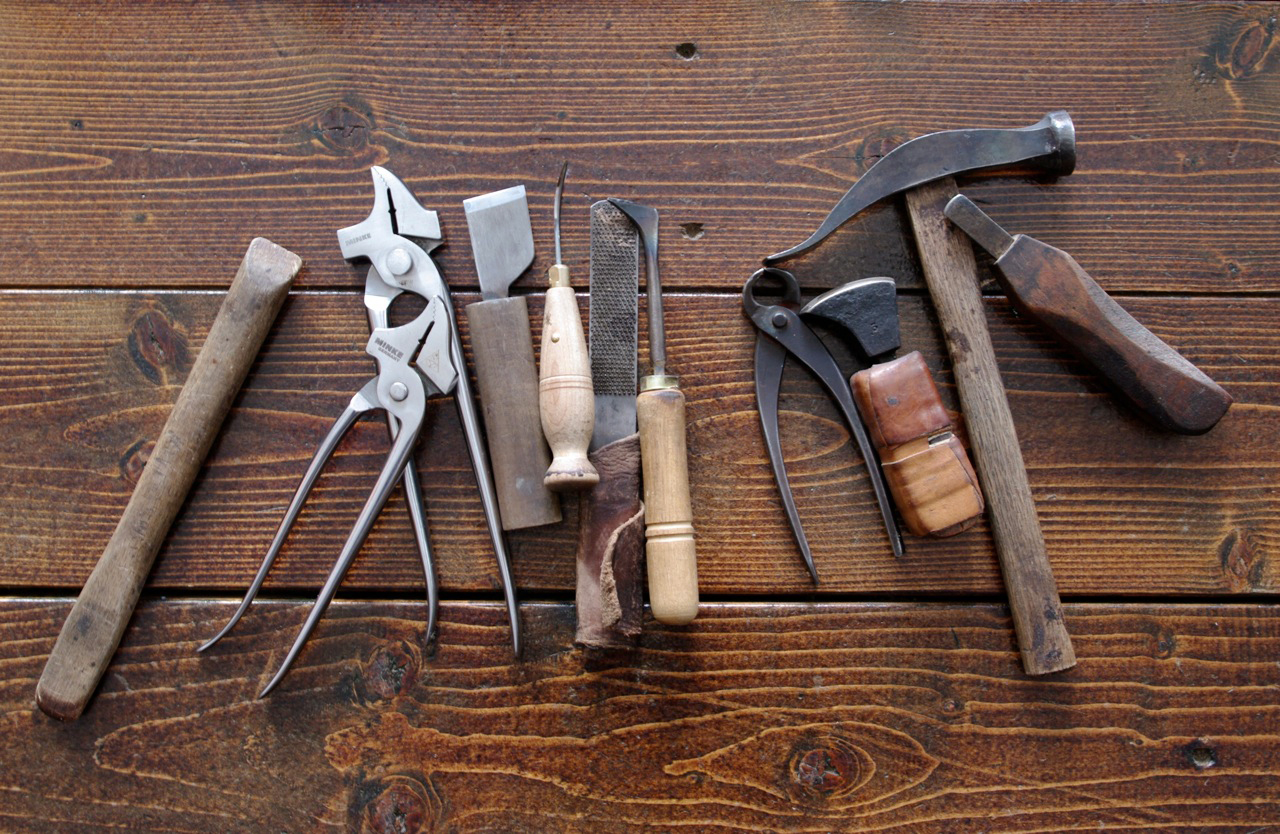
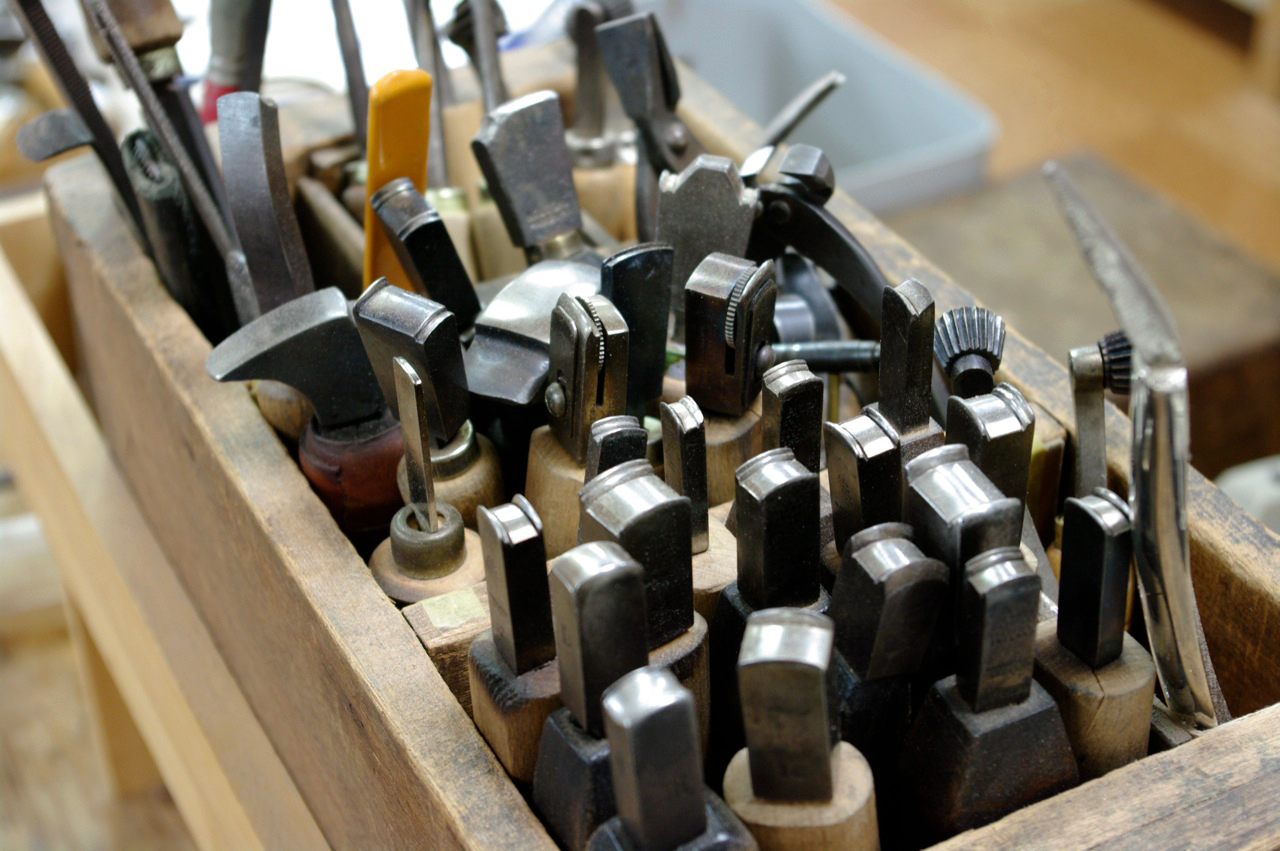
Tools of the trade
Footwear and leather goods are like partners for life. They introduce their owners to the people around. Fashion changes your appearance, shoes raise your heart. I indulge in classical things/design rather than fashionable items. Classics never go out of style, they retain their character and are appreciated by all, it never comes and goes. So when I create something, I want it to last a lifetime.
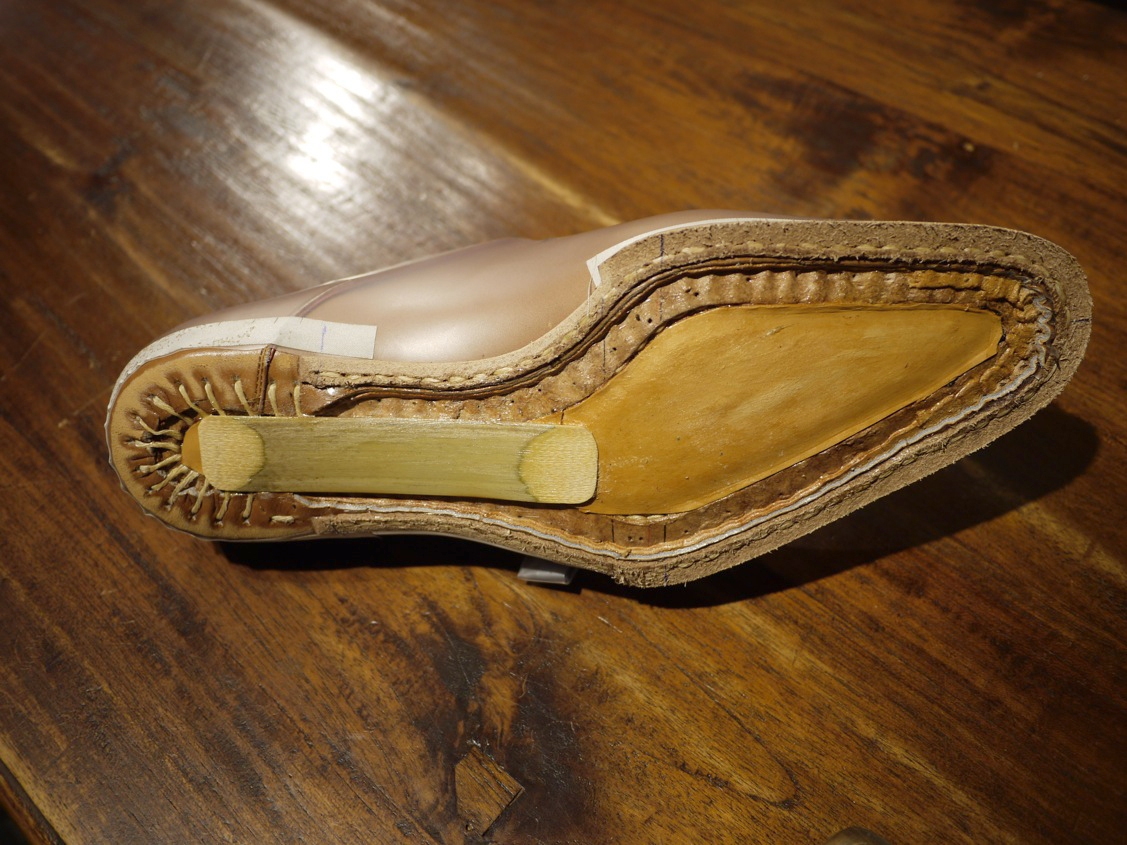
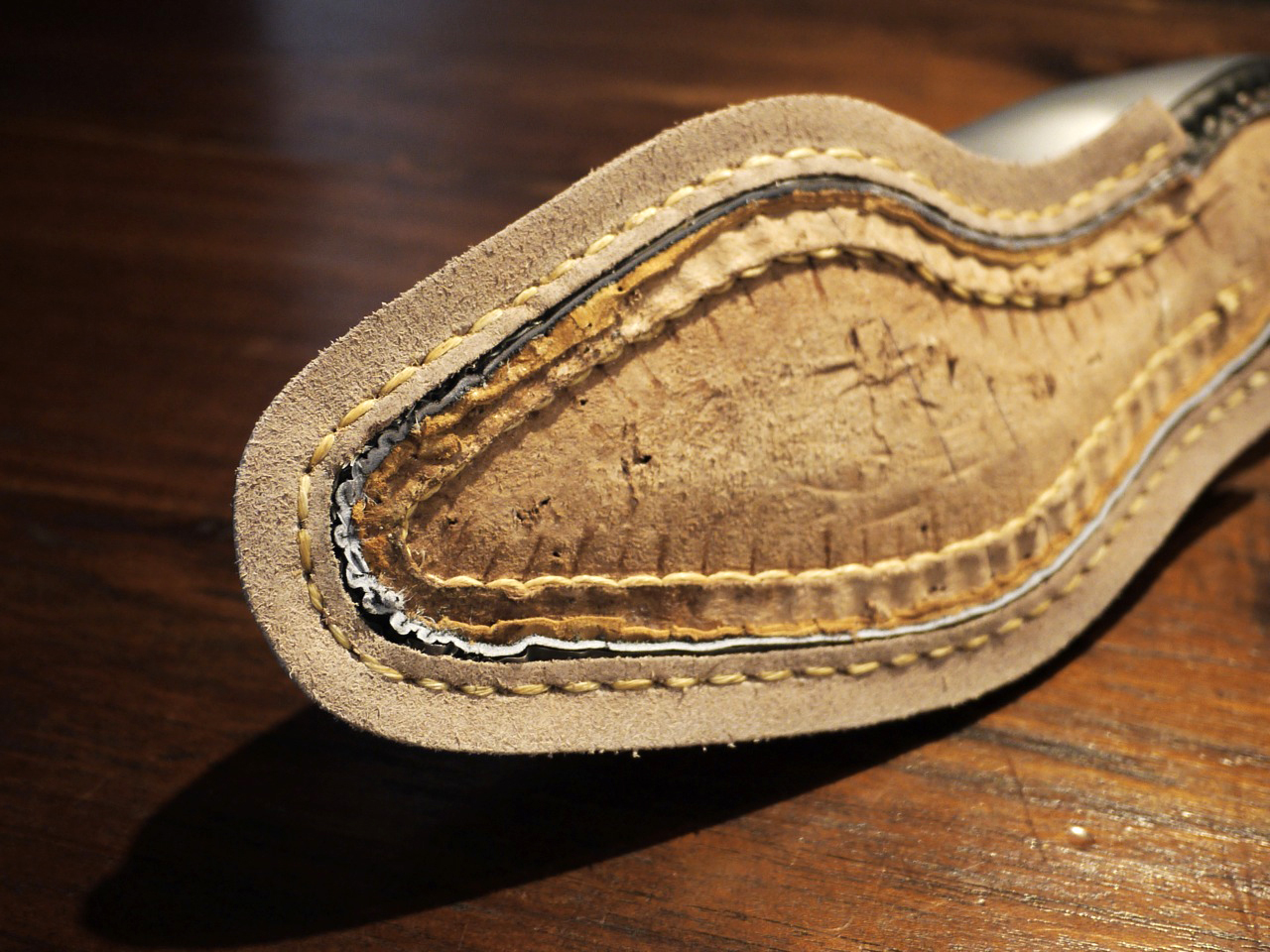
Bamboo shank with the inner workings of shoes
I have been in “the footwear world” for more than 33 years, and I’ve met and learnt from so many craftsmen and artisans. It is difficult to name them all. I gathered my basic knowledge and experience with shoes when I worked for a shoemaker when I was 20 to 26. After I graduated from Cordwainers college in London, I worked with Chris Spencer (Tecnic Shoes in England), and then at Tricker’s, Crockett&Jones, Dr. Martens, Stefano Bemer, Gabriel (in Venice), Clouds (in Lucca).
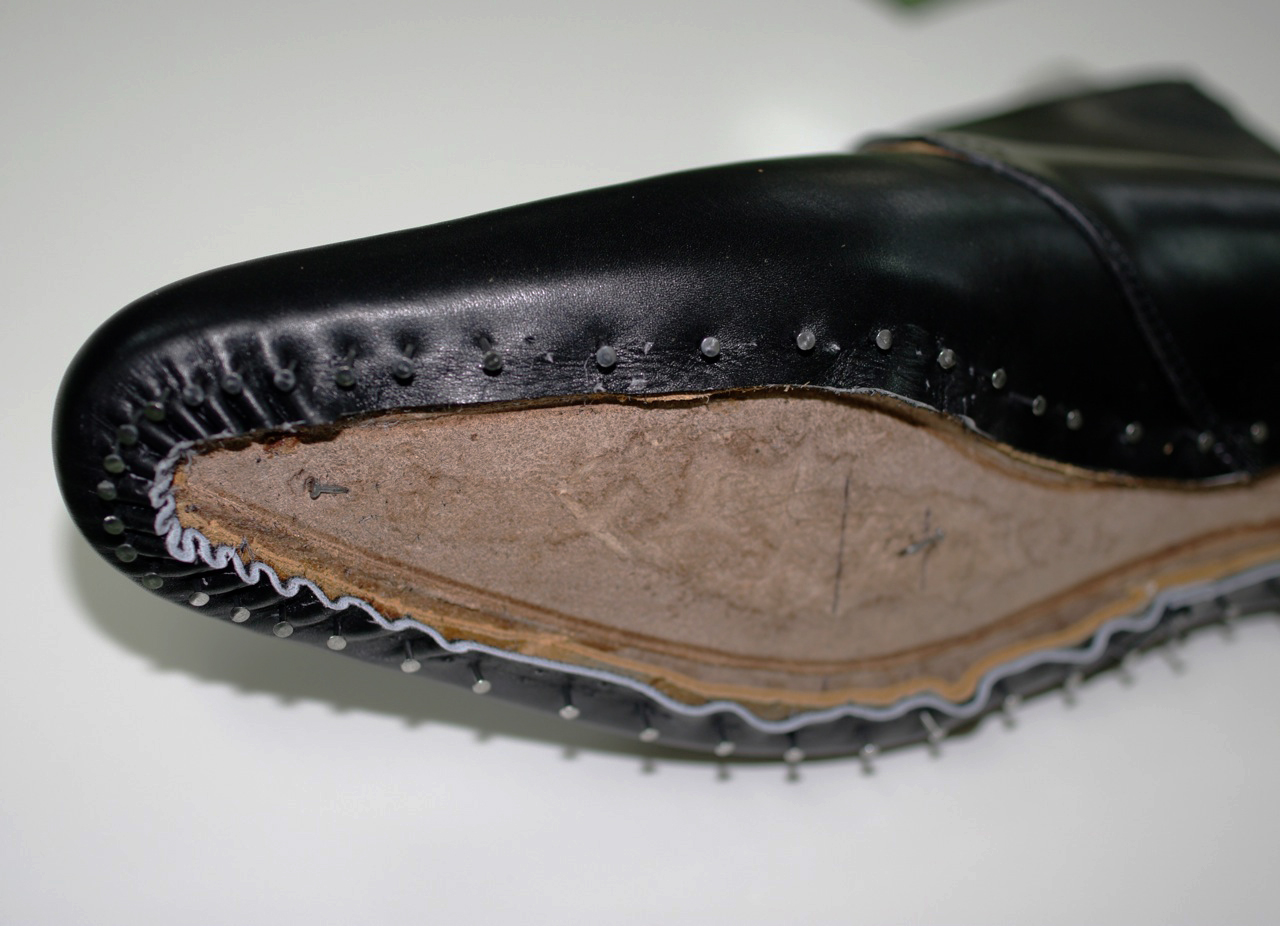
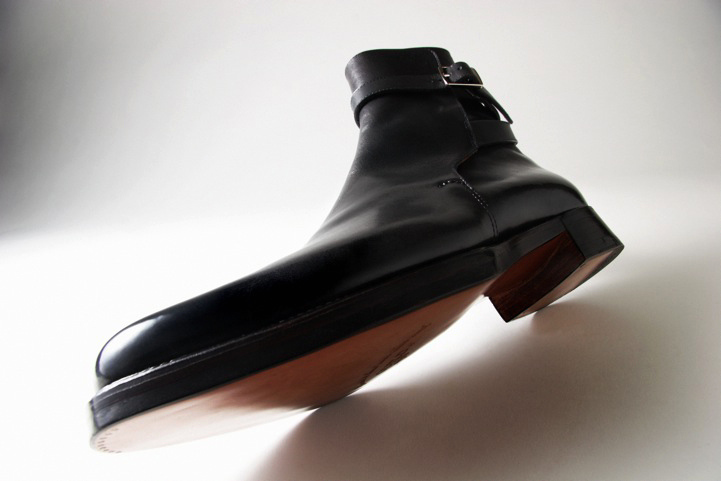
Just lasted, the Jasper model
I learnt a great deal about shoemaking from these places. I am also greatly indebted to Mr. Len Robinson — who used to work for Edward Green and Tricker’s in their handmade section — who taught me a lot about high-end handmade shoe techniques. Mr. Robinson is indeed a true artisan in the world of bespoke shoemaking.


The Triniquet model, sole: finished
I was asked to stay at the cordwainers’ college as a teacher at the time when I graduated. And to obtain the permission to work in England, the principal offered me membership in the Guild of Master Craftsmen. But to get the membership, I was required to submit samples of my works, portfolio, and two letters of recommendation.
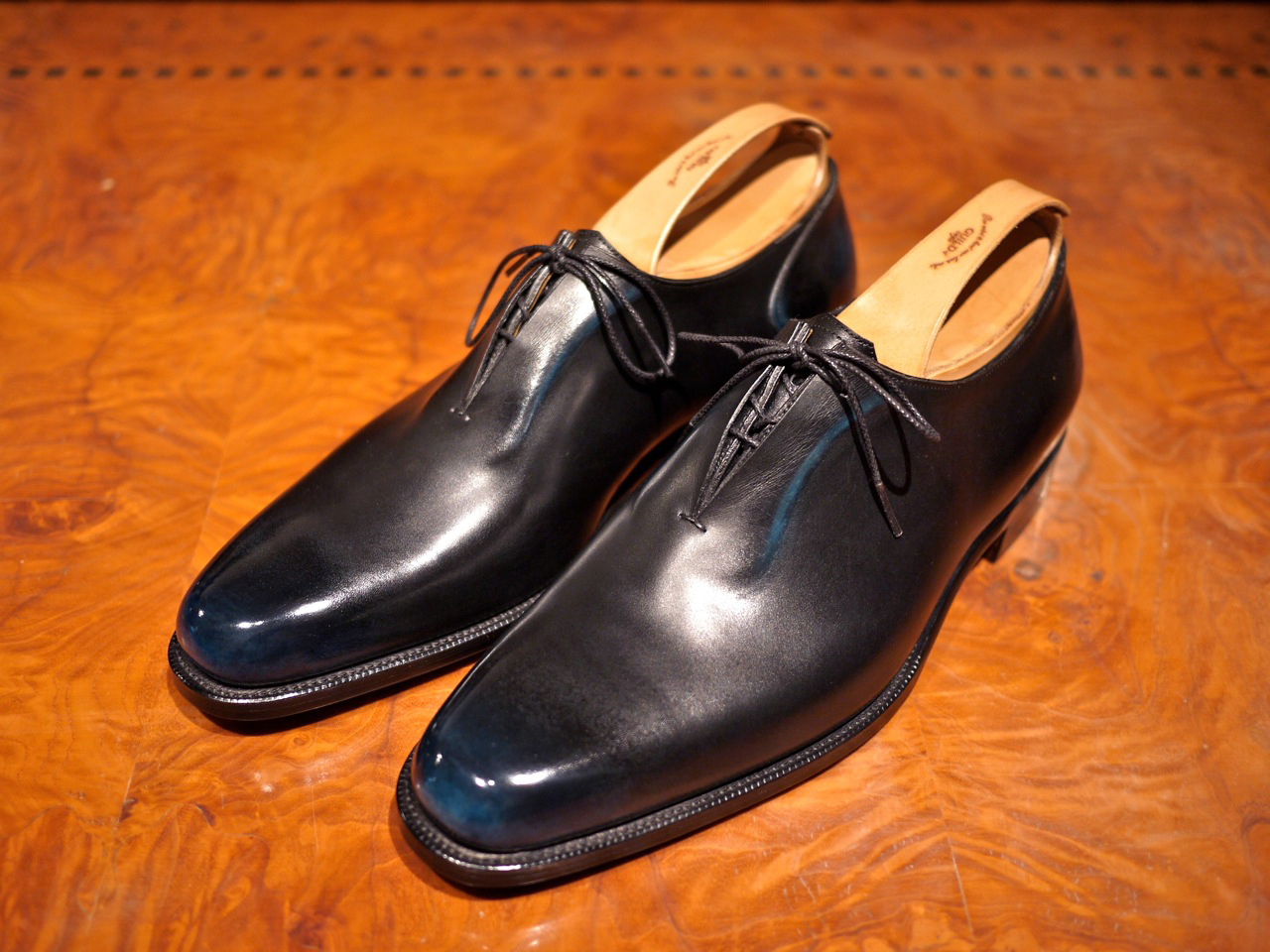

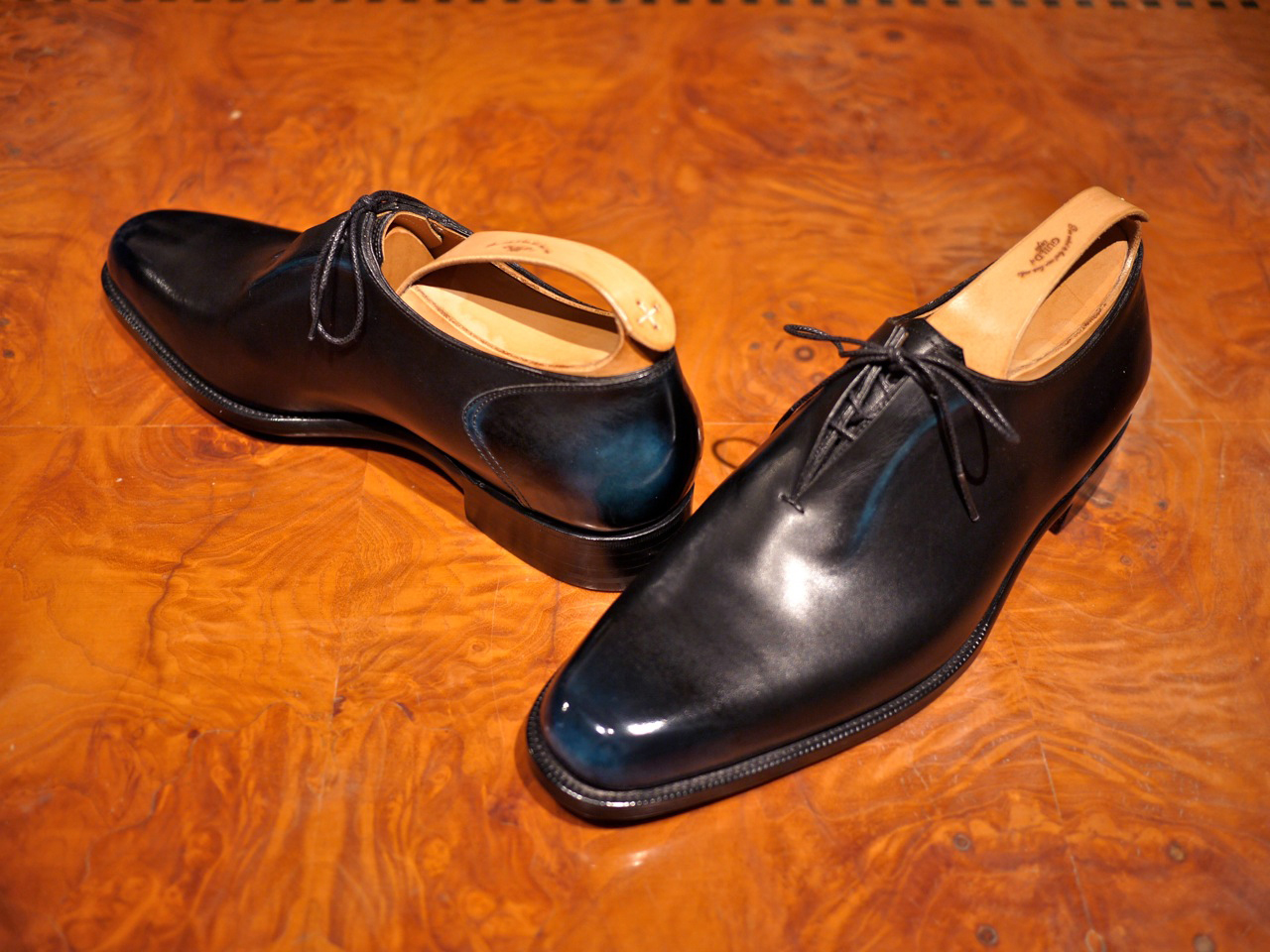
The Waver model with blue accents and engraved medallion
The principal of the college provided me with one, and the president of “Cole Haan Japan” wrote the other. That’s how I was inducted to the Guild of Master Craftsmen. I named my company “Guild of Crafts” in Tokyo when I decided to create shoes under my own name. That was about 18 years ago. So far, I have found my place and established my brand in the shoemaking world.

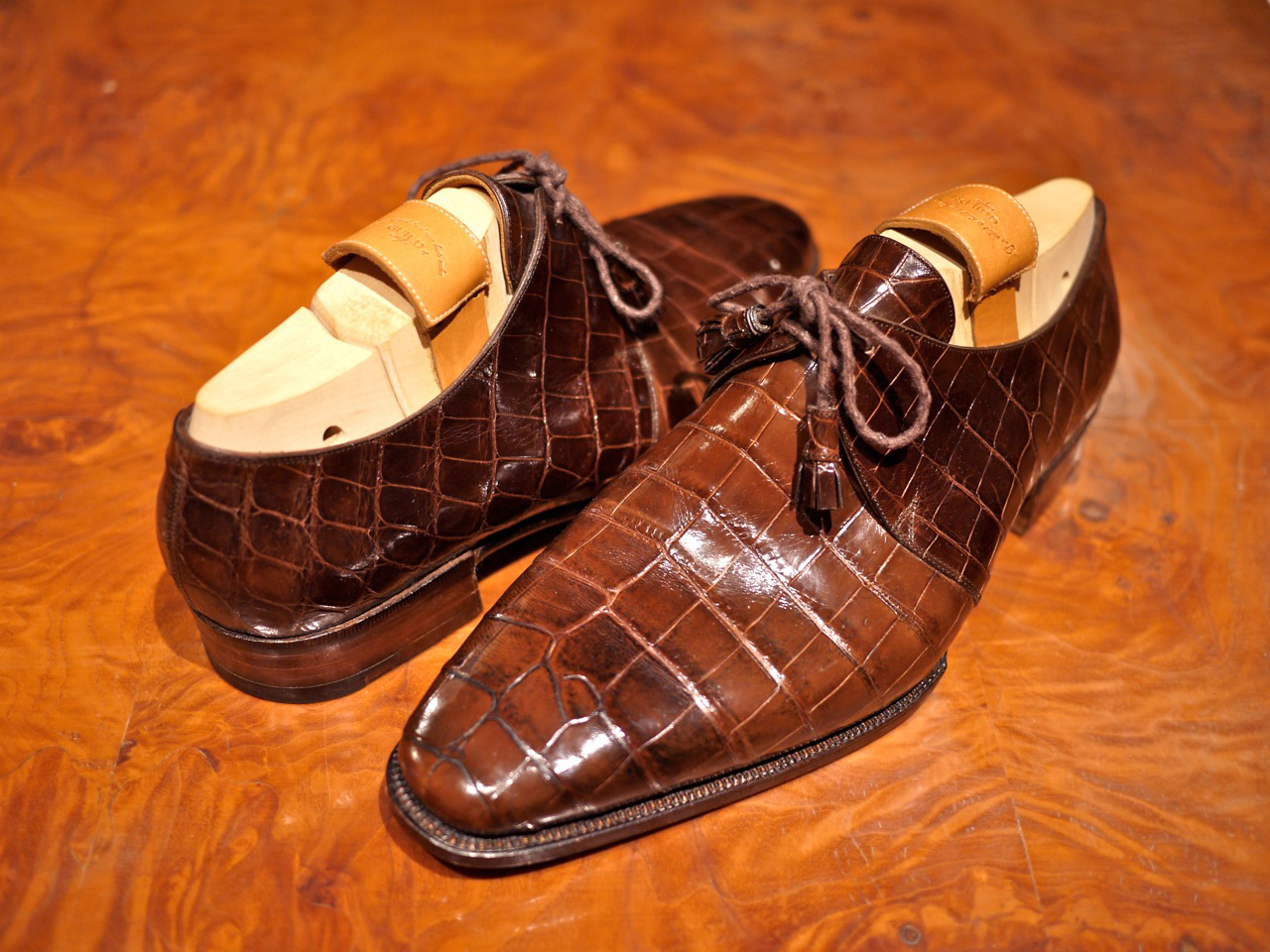
The Grady model with two-tie lacing
[As for my house style, it’s] Be Simple and Smart. Don’t Be Noisy and Self-satisfied (masturbation). Don’t forget Pop and Classic. The style called “Permanent” is what I want to make one day. My favourite model is my Jodhpur Boots named “Jasper Ⅱ” (see attached picture). And I like French Calf the best at the moment. I patronize a tailor in Ginza, named “IDEM“. Although it is not very well known, they make superb products, and I enjoy having my clothes made there. IDEM is a hidden treasure in Tokyo.
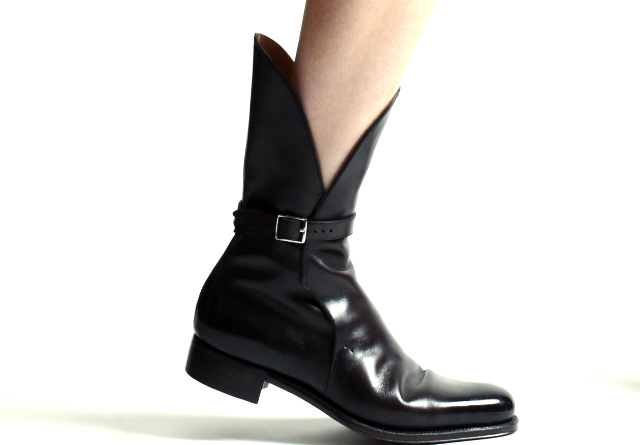 The Jasper II model
The reader should choose Guild of Crafts as there aren’t many people who can study one thing, stay with it and perfect it for more than 30 years. [My advice:] polish your shoes well. A nice pair of shoes speaks a lot about the person who wears it, and it will open a lot of doors for you.’
Pictures: © Guild of Crafts
Category Cordwainers, Interviews, Japanese Style, Quality makers, Quality Stores, Web stores
The 50 Most Stylish Leading Men of the Past Half Century
0September 4, 2013 by Ville Raivio
GQ does love its lists. The following is a compilation of 50 ‘most stylish’ actors from the past fifty years, including several well-known and-photographed figures already familiar to style buffs. The photos come with short descriptions of the looks these men have become remembered for. What’s striking, though, is the miniscule number of contemporary actors (not to mention the inclusion of that Twilight Pattinson) on this lad’s mag list. Pattinson is also the youngest face, but his is hardly a classic look. Who the hell, among their peers, can the young adults of today look up to for inspiration?
http://www.gq.com/how-to/fashion/201003/most-stylish-actors-leading-men-oscars?printable=true
Category Links, Style Icons
Interview with Robin Baba AKA nutcracker
0September 3, 2013 by Ville Raivio
VR: Your age and occupation?
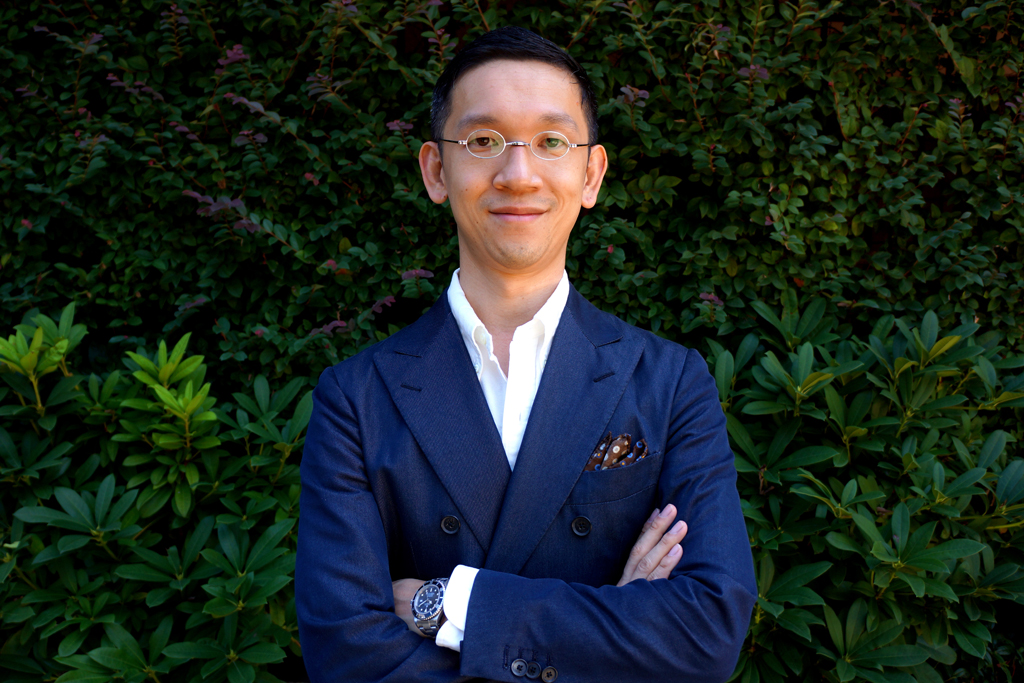
RB: I’m 36 yrs old, and currently I head a company in Japan that imports food and health products, among others. In the past I have worked in my family’s business in Taiwan, namely in jewelry retail and hotel business. I still travel back and forth from Tokyo to Taipei to tend to a new business venture.
VR: Your educational background?
RB: I was born in Taiwan with a Taiwanese father and a Japanese mother, and was raised and educated in both countries. I went to college in the United States (The College of William and Mary in Virginia), and have degrees in History and Art History (with a focus in Japanese folk art).
VR: Have you any children or spouse (and how they relate to your shoe enthusiasm)?
RB: Yes, I am married and we have one beautiful daughter. I remember when she was in kindergarten, she told the whole class that her daddy loves to polish shoes. Once, when I went to pick her up, one of her little friends asked me how my shoes were. They must have told their parents too.
VR: …and your parent’s and sibling’s reactions back when you were younger?
RB: My father used to be involved in the fashion industry, so I think my parents weren’t particularly surprised with me being obsessed in shoes. I was told that my late grandfather (who I recall was always well-dressed) used to spend a lot of time polishing his shoes, so my dad believes I must have inherited his genes.
VR: What other hobbies or passions do you have besides footwear?
RB: Woodworking has always been my passion. Some years ago, I seriously considered becoming a professional cabinet maker. Applying hand rubbed tung oil on furniture, which may take several days to complete, was among my favorite passtimes. I also enjoyed collecting antique woodworking tools. Unfortunately, since moving into a new apartment, I had to put my woodworking hobby on hold.
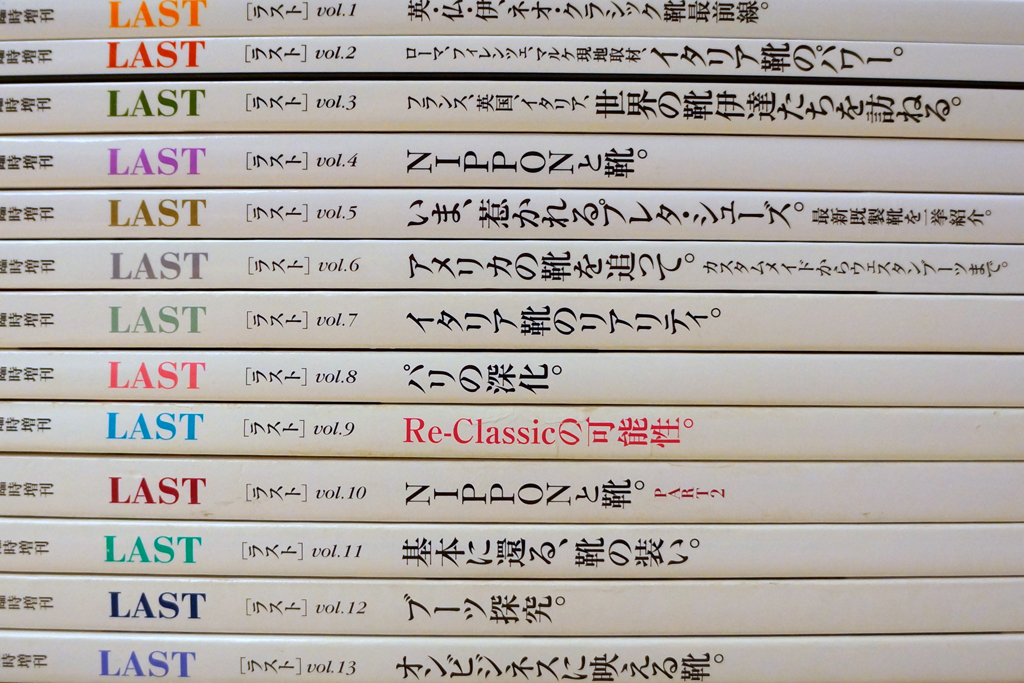 Shoe lore: Japanese shoe magazines
VR: How did you first become interested in shoes, and when did you turn your eyes toward classic shoemaking? Why classics instead of fashion?
RB: I actually started my interest in fine shoes by taking care of my parents’ shoes. Over the years my dad has amassed a number of fine shoes, but they were often left unkept for years. Frankly, I’d never heard of John Lobb before handling my dad’s pair, but learning how expensive they were, I volunteered to keep them clean and polished. I suppose I developed my penchant for classic footwear from seeing and caring for my dad’s shoes, and never really looked back at shoes made by fashion brands. He eventually passed down those old Lobbs to me, and although they were slightly too big, they were my first pair of nice shoes.
VR: How have you gathered your knowledge of shoes – from books, in-house training, workshops, or somewhere else?
RB: Before moving back to Japan, magazines and books were pretty much the only sources of knowledge for me. I think they offered me quite a complete picture of what’s what and who’s who in the world of fine shoes (I have issues of MEN’S EX dating back to the ’90s). Since moving back to Japan, I’ve had opportunities to visit and speak with numerous shoemakers, who have been more than helpful in answering any specific questions. I’m also considering enrolling in a 6-month long shoemaking school to learn the craft hands on.
VR:How did you first discover Styleforum and what has kept you active over the years?
RB: I bumped into Styleforum as a pure coincidence when I was searching online for certain shoemakers. I recall typing in ‘Edward Green’ or ‘Gaziano&Girling’ on Google, and saw the link to SF. I have been reading and posting on Japanese shoe forums for a while before I discovered SF, but I prefer SF so much more for its level of civility and a sense of camaraderie among members.
I did notice that there was a severe lack of information about Japanese shoemakers on SF, and in the English language as a whole. Yet many fellow members seemed quite eager to know more about them. Since I do have experience (from my previous jobs) in translation as well as in graphics, I thought it would be fun to make translations of some of my favorite shoe-related articles from Japanese magazines. I was actually quite taken back by all the positive responses from fellow members. After doing that for a couple of years, I decided it was about time to start a discussion thread dedicated to Japanese shoemaking. I’m ecstatic to see how well the thread is being received, thanks to the many great contributors.
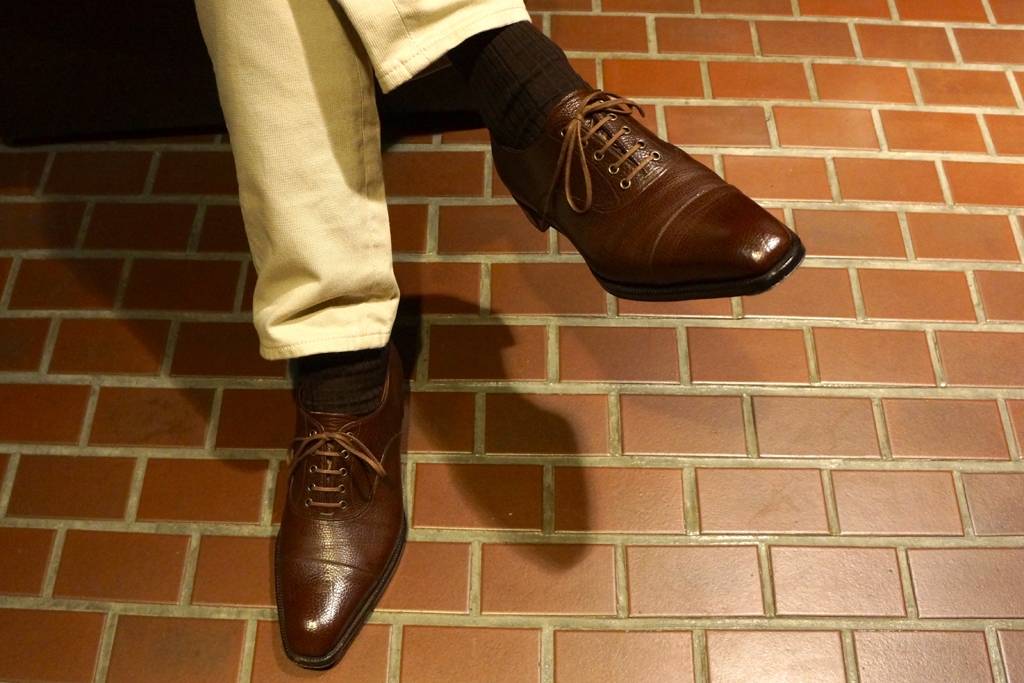 Captoe oxfords in llama skin by Spigola (Koji Suzuki)
VR: How did you get the idea of visiting so many cordwainers all around Japan?
RB: Japan is quite an exciting place for the world of bespoke shoemaking right now. There are probably more cordwainers active in Japan than anywhere else in the world. Unfortunately, there is very limited amount of information or even pictures available in English (in print or online), and frankly I thought that was unfair for the Japanese cordwainers who may have gotten more international recognition (and possibly commissions) if not for the language barrier. So I wanted to do something within my ability to change that, though all I really do is just visit them, chat with them, and take some photos of their works. The response has been overwhelmingly positive, both from fellow SF members and from the Japanese cordwainers themselves. This endeavor has been quite rewarding and educational for myself too, and I have been fortunate enough to develop friendships with some of the shoemakers, who I now regularly correspond with.
VR: Many of the makers you’ve visited have amassed their skills in Europe. Despite regional differences, do you feel there’s a distinct philosophy to Japanese shoemaking?
RB: Indeed, Japan is blessed to have such a large number of talented cordwainers. Any attempt to generalize Japanese shoemaking into few key characteristics is quite difficult, because as you noted, many of the makers were trained abroad, particularly in Europe. Just like the Parisian style was brought together by the various regional shoemaking traditions (of the immigrant shoemakers), Japan has become a melting pot of various styles brought together by returning cordwainers. While foreign-trained cordwainers often take their place in the limelight, let’s not forget that the majority of shoemakers, and some of the finest, were trained right here in Japan.
If there is indeed a culture of excellence that is shared by Japanese cordwainers, I believe it is largely brought upon them from the consumers’ side. Perhaps due to the relatively short history of having a bespoke culture, Japanese buyers tend to have an unusually high expectation for perfection when it comes to workmanship and fitting. Cordwainers tell me how Japanese clients often demand a perfect fit from the very first pair, and it is not rare for clients to ask for re-dos if they are not completely satisfied with the fit (to which the cordwainers most often comply). I believe this sort of ‘burden for perfection’ prompts cordwainers to heighten their sense to ensure high degree of fit and finish. Their level of service is not often found elsewhere, such as an extensive trial fitting period (sometimes a month or more) to ensure accurate fitting.
VR: How would you describe your own dress? Which RTW makers or tailors do you favor?
RB: I tend to find some makers or specific models that I like, and stick with them for a period of time. Lately I find myself wearing my Levis 519s pretty much everyday (I have a couple of same pairs). I’m also quite fond of my soft-tailored suits and sport jackets by Isaia and Ring Jacket, and so far they’ve been more than sufficient for every occasion. Yes, I invest most of my fashion allowances on shoes.
VR: …and the same questions with regards to shoes.
RB: Among the RTW makers, I’ve had the best luck in fit with J.M. Westons, but style-wise I’m more fond of English brands such as Edward Green, Crockett&Jones, and Gaziano&Girling. Recently, I’ve had a chance to serve as a product monitor for the Taiwanese shoe brand Kamioka, and have been quite impressed by their shoes too. I’ve only recently started to invest in fine Japanese shoes, and so far a pair from Spigola, and a pair from Il Quadrifoglio (by Atsushi Qnai) have exceeded all my expectations. My favorite off-work shoes are the New Balance 996.
VR: Who or what inspires you?
RB: Lately I’ve been trying to find inspiration from the past style icons hailing from Japan, such as Jiro Shirasu and Prince Tomohito.
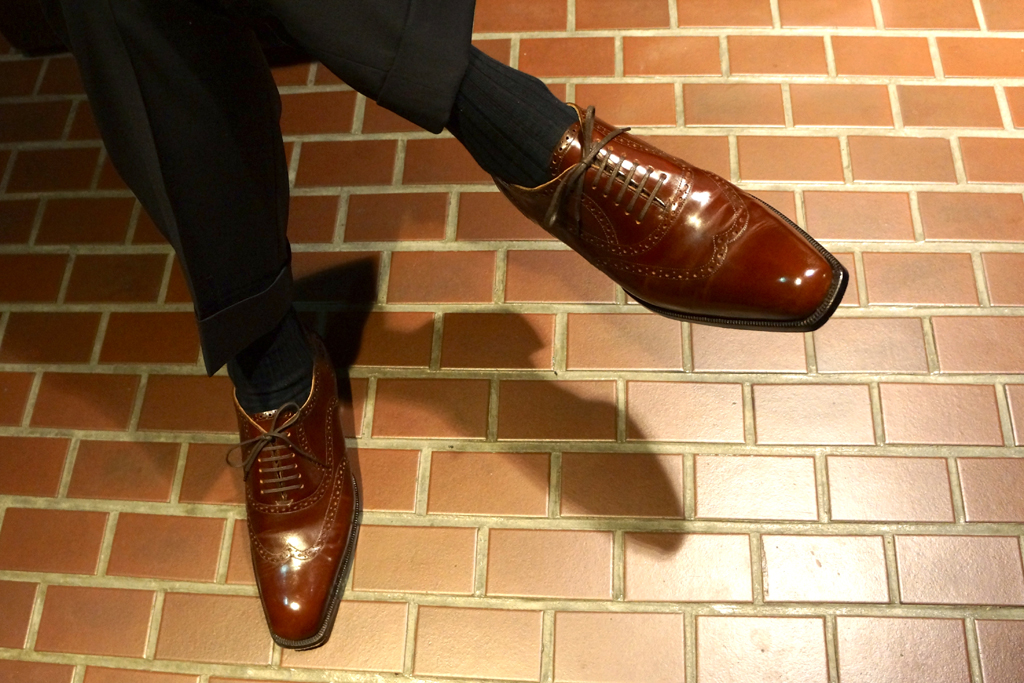 Wholecut calf leather oxfords with imitation broguing by Il Quadrifoglio
VR: Over the years you must have learned quite a bit about footwear. Is there something you wish more men would know? This is a great opportunity to make a lasting influence on my younger readers. Most of us aren’t blessed with rakish relatives, which makes learning about style a challenge later in life. All tips and thoughts are valuable.
RB: When it comes to handmade shoes, I believe the makers’ characters are often reflected upon their creations. Having met quite a few cordwainers and listening to what they have to say, I must state that more often than not I have developed a deeper appreciation for their craft. If you ever have the chance, visit and meet your favorite shoemakers at trunk shows, or at their workshops. Have a chat with them, and learn about their philosophy, process, and their aspirations. I believe the craftsman also enjoys seeing the faces of those who show appreciation for his work (and you don’t necessary have to be his client!).
http://www.styleforum.net/u/89816/nutcracker
http://www.styleforum.net/t/343005/japanese-shoes-bespoke-rtw-super-thread/0_100
Pictures: © Robin Baba
Category Footwear, Interviews, Japanese Style, Styleforum
At the Quoddy Shoes Workshop
0September 3, 2013 by Ville Raivio
Category Footwear, Quality makers, Videos
Copyright © 2013 Ville Raivio