The Features of Oxxford Clothes
0November 4, 2013 by Ville Raivio
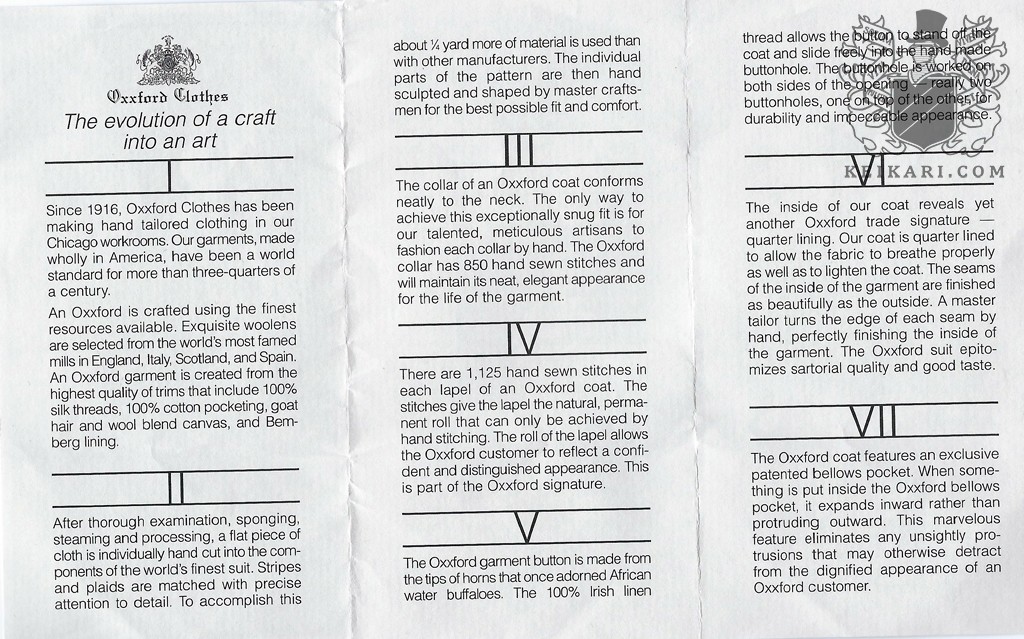
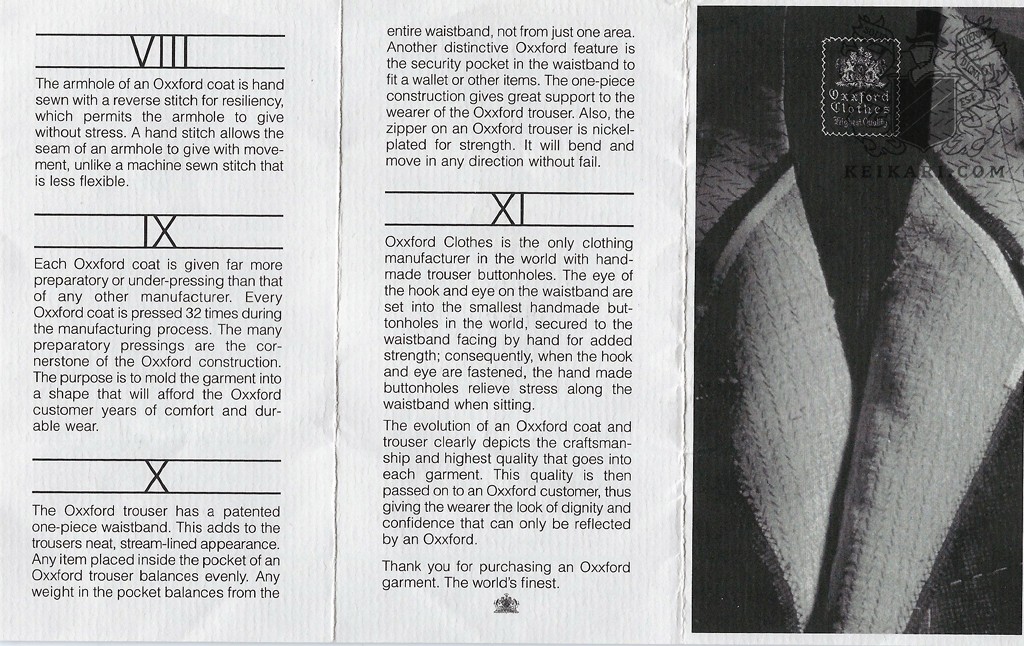
A little something that came with an Oxxford jacket of mine, this scanned copy sheds light on the features of Oxxford Clothes. The maker devotes more time, materials and handwork on its clothing than any other on the market — but best not just take my word for it, Mr Diduch over at Tuttofattoamano has previously dissected one jacket and provided commentary on the findings. The O to the XX stands peerless.
Category American style, Jackets, Quality makers, Suits, Trousers
Interview with Tetsushi Ueda
0November 4, 2013 by Ville Raivio
VR: Your age and occupation?
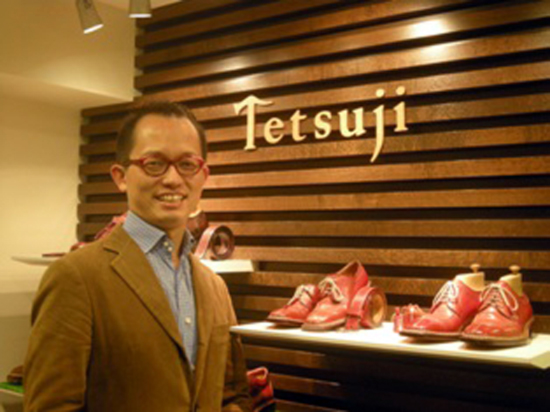
TU: I am 40 years old. I manage a shoe store, and I am also a shoemaker.
VR: Your educational background?
TU: I graduated from the Kyushu Technical University, majoring in Industrial Design.
VR: Have you any children or spouse (and how do they relate to your shoe enthusiasm)?
TU: Yes, I am married, but we don’t have a child. My wife and I run the store together.
VR: …and your parent’s and siblings’ reactions back when you were younger?
TU: They are warmly supportive.
TU: What other hobbies or passions do you have besides shoemaking?
TU: I love to cook: Japanese, Italian, Chinese etc…. I cook them all.
VR: How did you first become interested in shoes, and when did you turn your eyes towards shoemaking? Why classics instead of fashion?
TU: In college, I majored in Industrial Design, which is essentially ‘3-dimensional design’. I was enamored by how identical products would change over time when used by different people in separate environments. My interest in shoes started as a pure coincidence. I love cars, and I initially aspired to become a car designer. I thought designing cars would be the most worthwhile endeavor among the sculptural designs. However, I wasn’t able to pass the car manufactures’ entrance exams. Disappointed, I decided to try one more time to get hired as a designer.
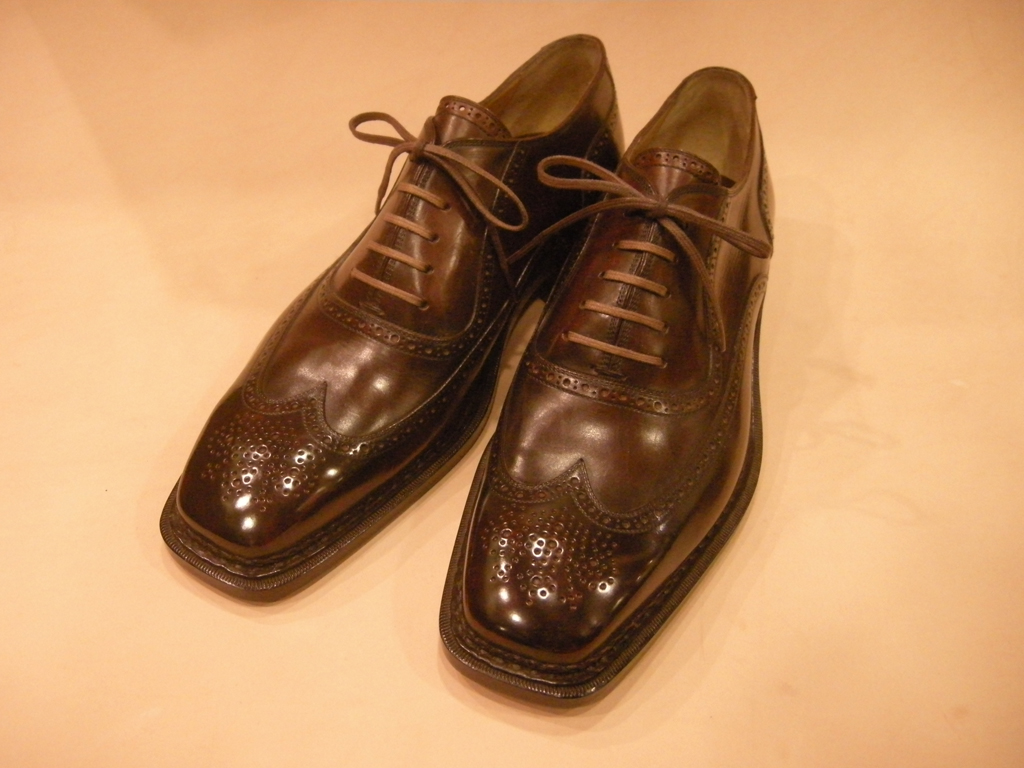 Full brogues with Norvegese stitching
On a college bulletin board, I happened to see a recruitment brochure for a ‘shoe designer’. I realized that shoes are indeed designed 3-dimensionally, so I immediately called the recruiter, Regal Corporation. I was fortunately hired by Regal, and was determined to stay at least 3 years working for them. However, I wasn’t able to completely abandon my passion for designing cars, so I always carried a set of sketching tools with me. I gradually developed interest in shoes after 6 months of training at the sales, the production lines, and through attending seminars conducted by leather industry experts. After my training, I was transferred to the Planning department, and my passion for shoes developed even more.
At the Planning department, I was in charge of the Italian brand GEOX. I designed the shoes, selected the leathers, commissioned the samples, and spent the rest of my time traveling around the country giving presentations to our corporate customers. I soon became interested in hearing the voices and opinions from customers themselves so on weekends, I volunteered to work at the retail stores. I also organized events such as offering personalized coasters on Father’s Day, and conducting feet measuring and consulting sessions. One of the customers asked for my consultation in regards to his left and right feet differing in size (since he injured his right foot in his childhood). Another customer said his ankle bones are abnormally located, and couldn’t fit in any shoes bought off the rack.
I was taken back when I first about the abnormal ankle. So the next day, I consulted our company’s ‘orthopedic laboratory’ and asked to see the data on ankles. When I saw the data, I was in shock. While the data only included the ankle heights on 25 cm size feet and below, 1 out of 4 men had their ankle bone located below the standard top lines of our footwear, and were wearing them uncomfortably. With so many shoes being sold in the market, I simply couldn’t digest the fact that so many people were still having troubles with fitting. It was during this time that I got interested in order made shoes tailored for each client’s feet.
Since most of the shoes I admired were made in Italy, it felt naturally for me to seek my study in Italy. I believe shoes could be classified as functional beauty. I realized this after moving to Italy. The basic design of shoes was not developed in these past few years. Rather, they are a culmination of a long history of trial and errors. I wish to first learn more about the classic styles. Hence, I prefer classic over fashion.
 Heavy trail boots with ball straps — and yes, it’s a real technical term
VR: How have you gathered your knowledge of this area — from books, in-house training, workshops or somewhere else?
TU: I accumulated my skills and know-how from my employment, my apprenticeship, and from the real world experience since I started my own business. I believe the latest trends could only be learned from real world experiences, not from schools.
VR: I have read that you were apprenticed under Mannina. What made the company special for you over so many others in Italy, and how would describe the ‘house style’ they have?
TU: When I started my life in Italy, I walked around Florence every day looking for shoe workshops after attending classes at a language school. I took notice of Mannina on the very first day when commuting to school. Intuitively, I thought this place was it, but I searched for other workshops too. I eventually decided on Mannina, and asked if I could apprentice there. Their house style is to realize the desire of the clients at an affordable price. That was exactly what I also envisioned for my own path.
VR: Do you have a favorite shoe model (e.g. monk, derby, oxford, balmoral boot) and leather type?
TU: My favorite style is the Y tip derby in Norvegese construction (pictured below). This model is made on the very first last that I crafted at Mannina, 1 year into my apprenticeship. I love to use Italian full vegetable-tanned leather; Conzeria, 800, Baradache are some of the better ones. I’ve been on business for over 10 years, and I think these leathers really capture the attention from both the makers and the clients. I don’t plan to ever stop using them, and I hope more makers around the world would use them too.
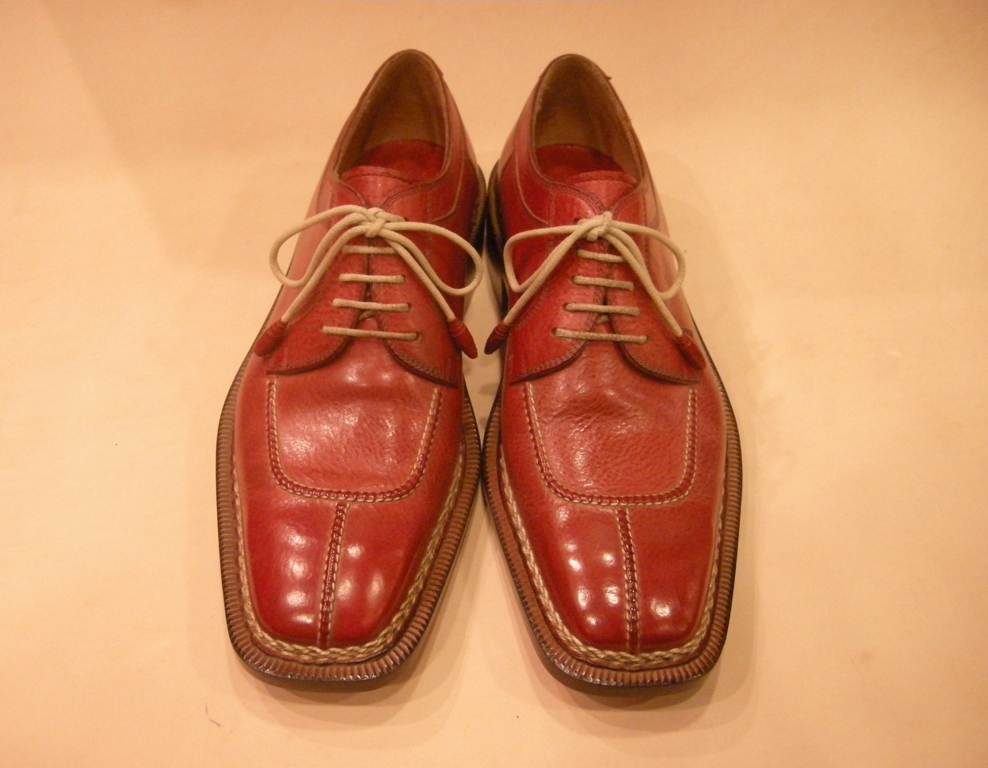 A Norwegian Norvegese-welted derby
VR: How would you describe your own dress? Which tailors or RTW makers do you favor?
TU: My personal style revolves around jackets/pants. I almost never wear suits. I am fond of shirts. Among them, I love Luigi Borrelli the best. I tried them on the very first time when I was still at Mannina. Aside from shoes, the store carried shirts, ties, sweaters etc…
VR: Please tell us how your company was born and what goals you set for yourself in the beginning. How have you been received so far?
TU: As I previously answered, I wanted to make a store that would help solve people’s orthopedic problems. If the ankles tend to rub against the top line, then simply alter the pattern to solve the problem. I wanted to offer such services. When I started my business, I was determined to make it a client-oriented store. I wanted to offer as many styles as possible according to the wishes of the clients. I don’t want anyone to be inhibited to enjoy their hobby/sports due to orthopedic problems. I’m happy to say that my clients give positive comments about the comfort and the variety of shoes offered here.
VR: How would you describe the ‘house style’ of the shoes you make?
TU: My house style is defined by my pursuit of functional beauty. Shoes may look quite different depending on the intended usage. Mountain boots have their charm, and riding boots also have their distinct charm. My house style is not defined by the beauty on the surface, but a beauty that comes from the function.
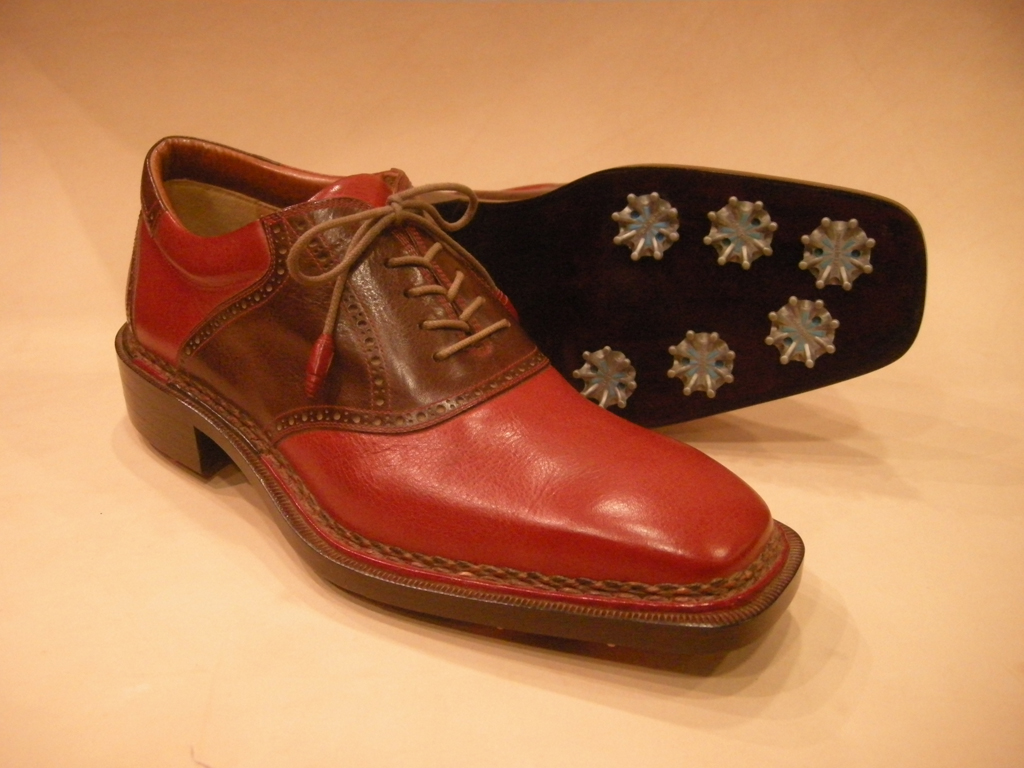 Saddle Norvegese golf shoes
VR: There are dozens of cordwainers in Japan alone — why should my readers visit you?
TU: There are numerous cordwainers in Japan, and we each have our own ideals. I believe such ideals do manifest in the shoes. I would leave it up to the customers to determine which shoes speak to them.
VR: Do you feel that Japanese cordwainers are different from the European ones?
TU: Yes, I believe there are differences. A little while ago, I saw a craftsman from Ferragamo showing a shoemaking performance. He interacted with the audience by answering many questions, and my impression was that this gentleman seemed to really enjoy shoemaking. That really struck me, since he seemed to enjoy making shoes much more than the counterparts in Japan. I felt something similar during my apprenticeship in Italy.
VR: Over the years you must have learned quite a bit about shoes. Is there something you wish more men would know? This is an extremely useful chance to have a lasting effect on Keikari’s younger readers, who so far haven’t had years of experience with welted pairs.
TU: I would like men, and also women, to know that well-fitted shoes feel even more comfortable than walking barefoot. There is a pair of perfect fitting shoes waiting for you somewhere in the world, or better yet, you can have it made. Well-fitting shoes could make you healthier, and would make your walks more enjoyable. Please find a pair that fits your feet, and enjoy your everyday life.
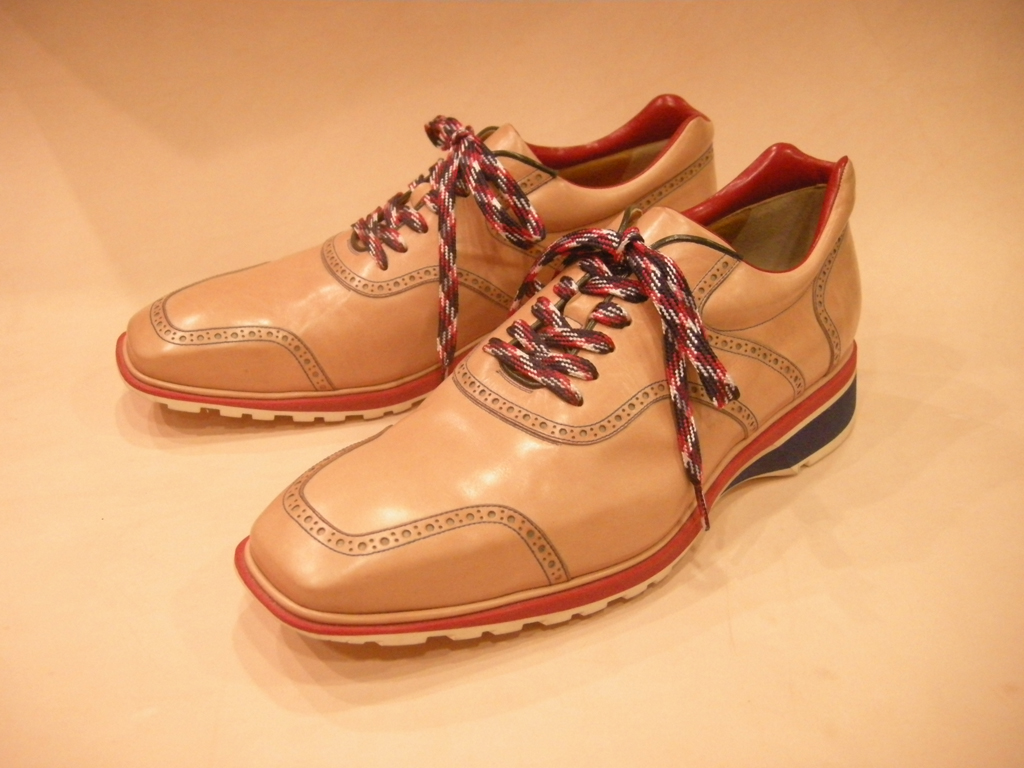 Calfskin trainers
Often times I hear about the benefits of hand-welted shoes, but I don’t necessary agree that a pair of shoes have to be handmade, nor welted. A good pair of shoes should be determined by how good it feels on your feet. You don’t read an instruction manual when trying on a pair of shoes. Rather, trust your instincts when trying on a pair.
Aside from making order-made shoes, I am also working on something called ‘Shoe Search System’. If I may, please let me briefly introduce how this works: First, the feet are measured in a 3-D scanner. Similarly, a manufacturer’s collection of lasts is also scanned. By matching the customer’s foot shape with the database, the system can present the closest-fitting last(s) along with the designs, colors, and the price points.
If such system can be adopted worldwide and shared online, a customer would be able to select shoes from around the world, instead of being restricted to his neighborhood. Since I can literally go on and on in regards to this subject, if interested, more detailed information could be found on my Facebook page, Tetsujiya.
 Side-lacing
About the Olympics:
As you may know, Tokyo will be hosting the Olympics in 7 years. While I still feel a bit of ambivalence due to the Fukushima disaster, I think this event would be a good chance for us (shoemakers) to convey our messages. While I have mostly implemented my knowhow in last and shoemaking for my customers, I really hope to offer such services for some athletes too. Shoes inherently play an important function for various sports. I am interested in designing lasts that would improve the athletic performance, such as a faster time in running. It is my wish to work with an athlete, regardless of nationality, who is willing to communicate, and who is willing to share the Olympic dream with me.
Category Cordwainers, Interviews, Japanese Style
Interview with Ryota Hayafuji
1November 2, 2013 by Ville Raivio
VR: Your age and occupation?
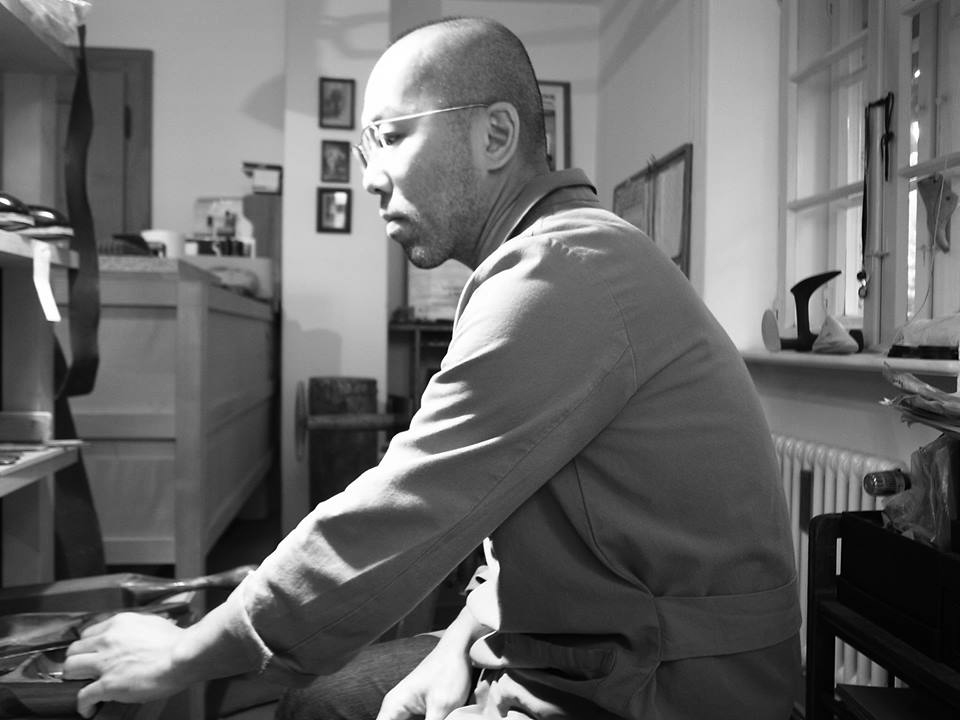
RH: I am 41 years old, and my occupation is shoemaker. I am currently based in Münich, Germany, but I am Japanese.
VR: Your educational background?
RH: I graduated from The Cordwainers’ College in London with a Higher National Diploma in Footwear Technology.
VR: Have you any children or spouse (and how do they relate to your shoe enthusiasm)?
…and your parent’s and siblings’ reactions back when you were younger?
RH: Either fortunately or unfortunately, I am single. So I cannot say what my wife or kids think about my profession. But my friends think it’s cool! My parents were supportive of my career. When I was a child, I liked drawing cartoons and being creative. My mother was a hairdresser, so she understands how rewarding it is to work with your hands. My father was very easygoing. He just wanted me to pick a career that I enjoyed doing.
VR: What other hobbies or passions do you have besides shoemaking?
RH: I enjoy cycling around Münich and drinking beer. The two are a good combination. I go all around Münich, just wandering and keeping an eye out for interesting things or people – looking for anything that will surprise me. I really enjoy going to flea markets and searching for treasures. Even though it’s usually all rubbish. Doing these activities inspires my shoemaking more than anything.
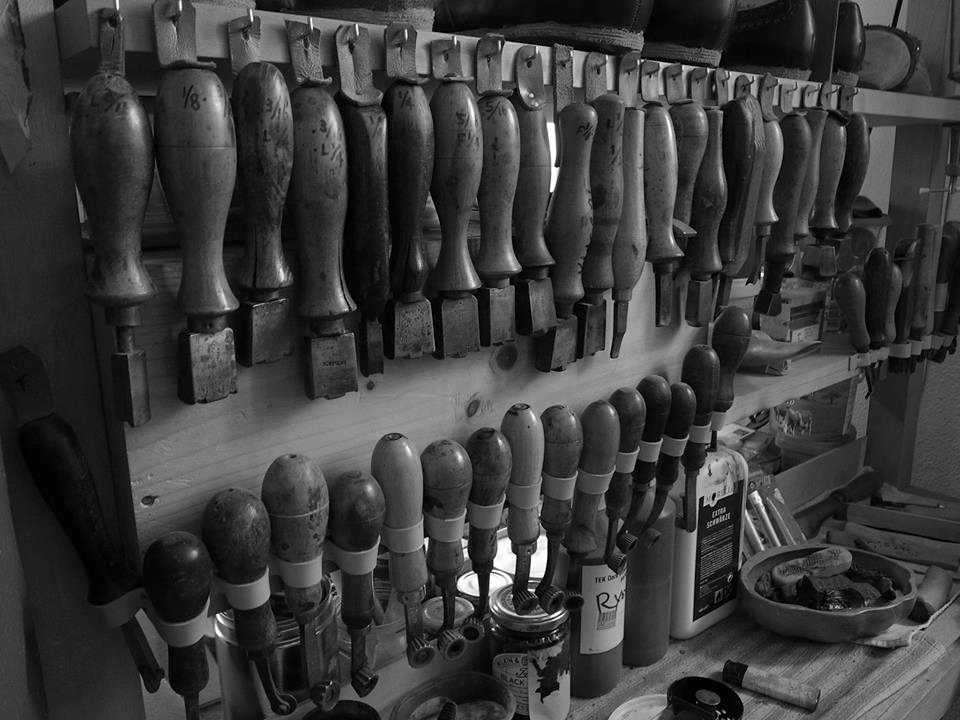
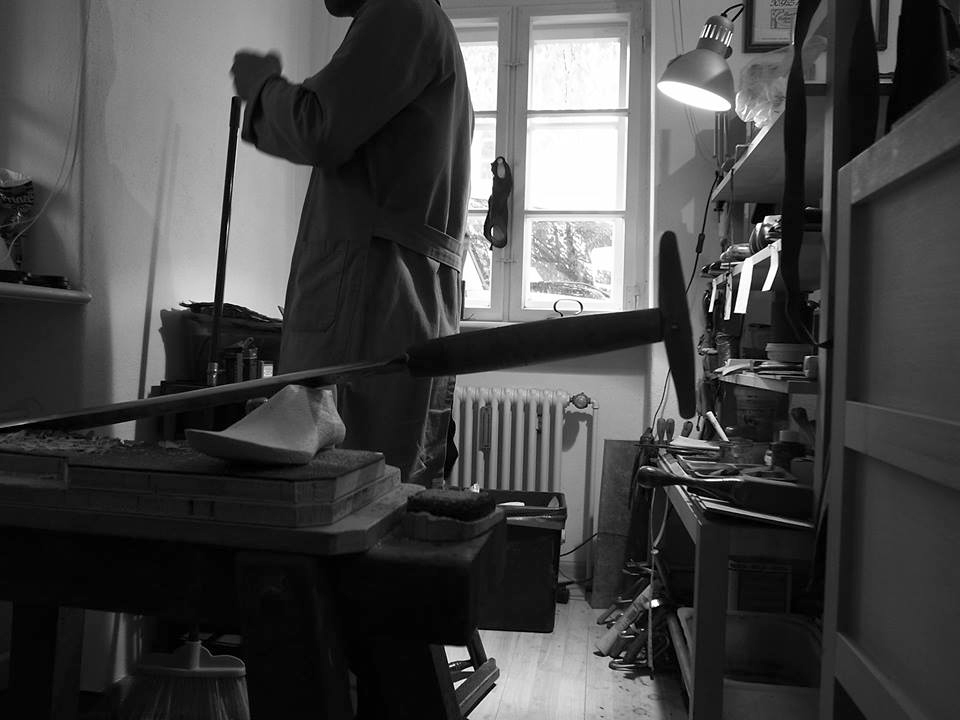 Featuring the shoemaker’s stock knife for hand-carved lasts
VR: How did you first become interested in shoes, and when did you turn your eyes towards artisanal shoemaking? Why classics instead of fashion?
RH: When I was around 10, my father handed down a pair of sneakers to me. Wearing something that my father had worn made me feel very special. I felt like a different person than when I wore children’s shoes. My father’s shoes were too big for my feet, but I was excited for my feet to grow so that I could fill them. The connection I had with my father’s shoes kindled my interest in footwear. I decided to get into shoemaking when I was in high school. I had some pairs of shoes I really liked, but they would break down quite quickly. When I was 20 or 21, I discovered a pair made in England. They had a double construction stitching, and they could be repaired even when the outsole was damaged. The possibility of repairing shoes really interested me. Later on, I discovered that shoes were not made just in factories, but also by shoemakers with skills developed centuries ago in Europe. Learning this had a big impact on me because it showed me that a pair of shoes made by a shoemaker has a hidden story and character.
VR: How have you gathered your knowledge of this area — from books, in-house training, workshops or somewhere else?
RH: When I was 23, I found an article about The Cordwainers’ College in London. I was desperate to go, but I saw the tuition was very high for international students. I saved money for four years by getting a job as a shoe salesman in Tokyo. The shoes I sold were classically made in England, The U.S., Italy and France. Later, I had an opportunity to visit a small shoe factory in Japan, which set my imagination on fire. Shortly after that I left Tokyo for London to attend TCC. There I was trained by a bespoke cordwainer who was an outworker of a major London shoemaker. TCC also has a library full of books on shoemaking. After graduating I was eager to begin working, and I decided to move to Paris. There I got to know a bottier, who taught me the Parisian style of shoemaking.
VR: How would you describe your own dress? Which tailors or RTW makers do you favour for clothes?
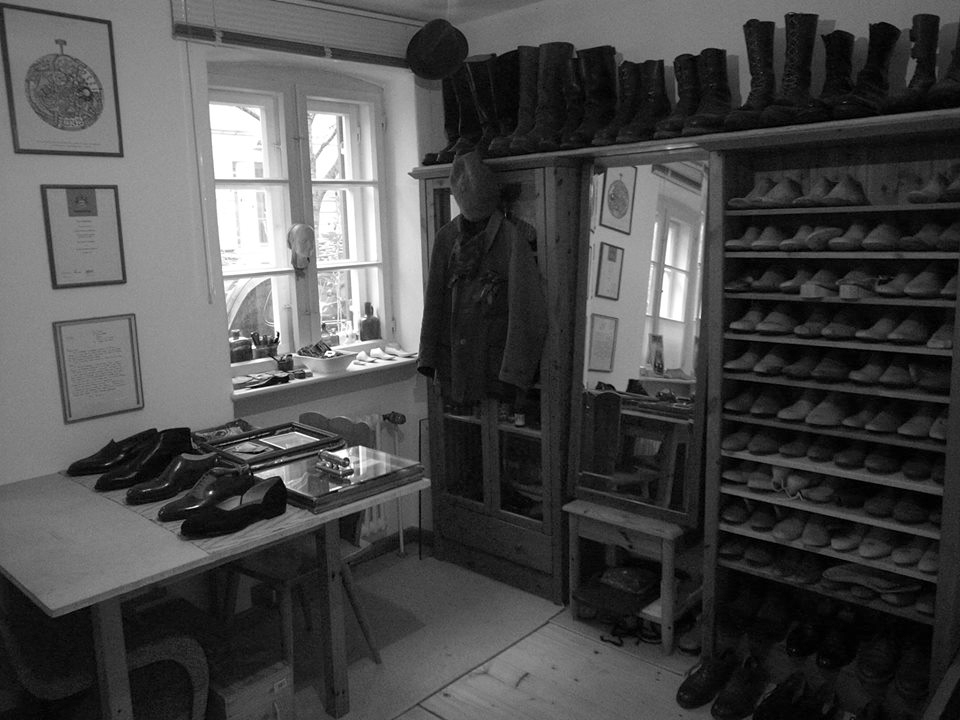
RH: My style is a little bit dapper. I think people typically imagine a shoemaker as someone wearing old shirts full of holes and covered in dirt. Shoemaking is perceived by many to be a construction type-job. I dress sharp to show that I take my work seriously. When I’m working, I wear a shirt and tie with a working coat and an apron. On my feet I will be wearing a pair of my own shoes, and they are almost always brown. On weekends, depending on the weather and my feeling, I dress a bit more relaxed. I get a lot of my clothing from flea markets and quality second hand stores. I wear some very old things. If I were to have something tailored, I would call up my friend Mr.Ueki’s “Sartoria Ciccio”, or my other friend, Mr. Osaku, a pants maker.
VR: Please tell us why you decided to set up your own company in Germany, and what goals you set for yourself in the beginning. How have you been received so far?
RH: Ending up in Germany was an accident. I first came to Münich in 2009, on a student visa. I then turned that into a trainee visa, then into a work visa, and then a self employee visa! I decided to set up my work here because I really enjoyed the Münich lifestyle – not because of Germany’s handmade shoe culture. There were good shoemakers here many years ago when Germany had a king. But with the industrial revolution, the traditional shoemaker craftsmen weren’t able to survive. I find it sad that this classic European skill is being lost. It’s a little bit strange feeling as a Japanese man trying to continue the traditions of Europe.
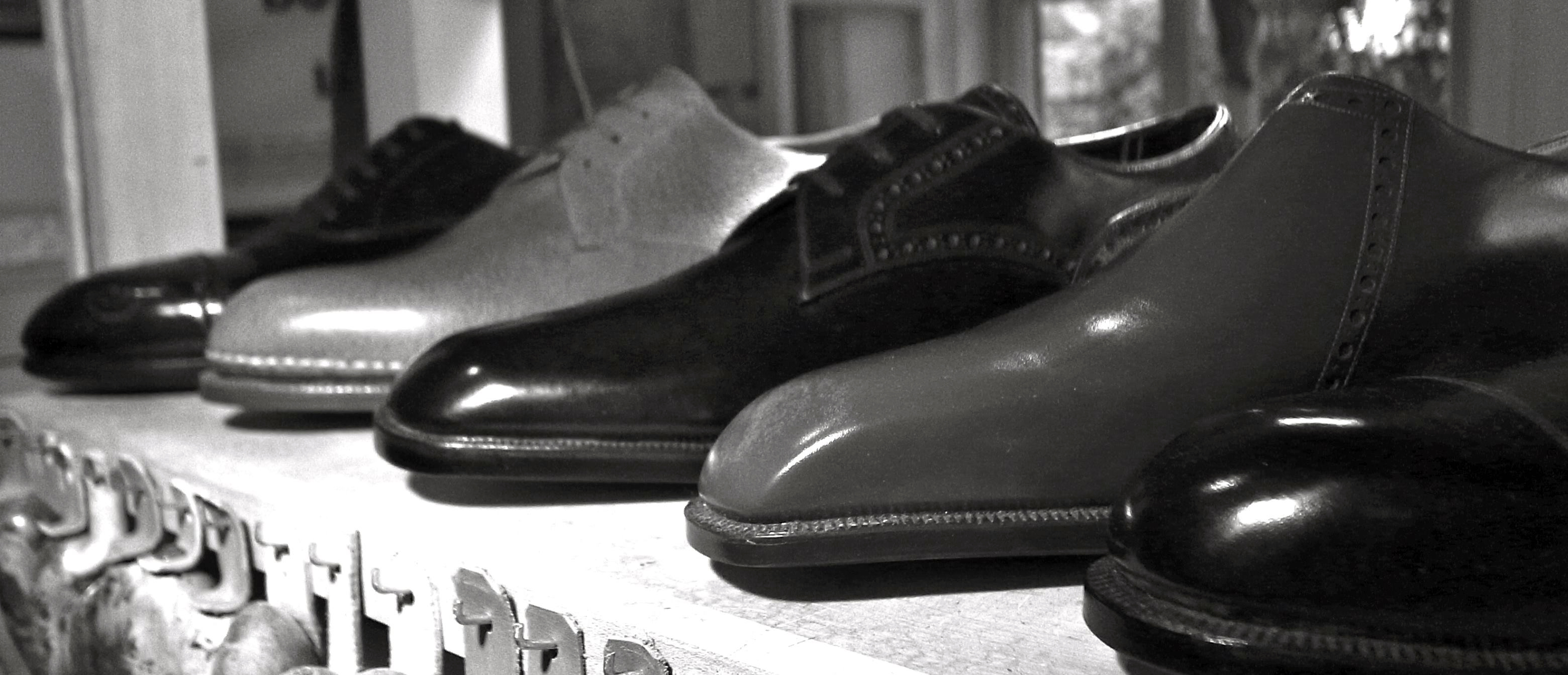 Toe shapes, welts, tight stitches
VR: How would you describe the ‘house style’ of the shoes you make?
RH: I think all my shoes look like they could have been worn in the 1920s or ‘30s. I only make designs with simplistic beauty. I want my shoes to be timeless, not gaudy.
VR: Do you have a favourite shoe model (eg. monk, derby, oxford, balmoral boot) and leather type?
RH: My favourite material is calf leather. It is strong and very useful when making shoes and the color is classical. My favorite shoe is an original v-front derby. While I was in Paris, struggling to find work as a shoemaker, I hit upon a design idea. That model is my souvenir of a time in my life, so I will always have a strong connection to it.
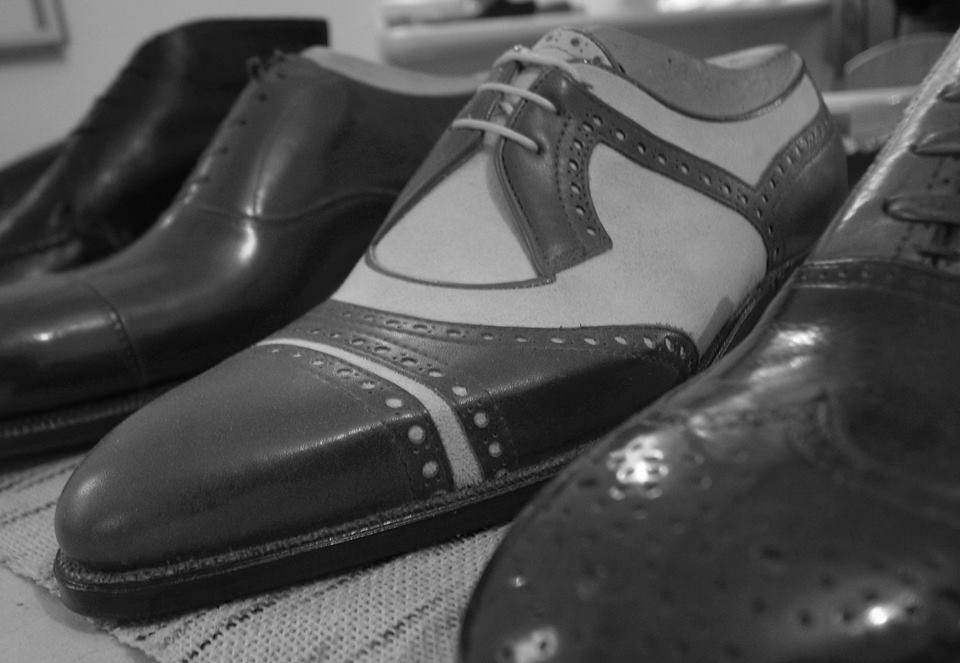 V-front from the front
VR: There are dozens of cordwainers in Germany alone — why should my readers visit you?
RH: What I love about Münich is the area I live in. Within my neighborhood of Haidhausen, there is a craftsmen’s village. Around 23 years ago, a law was instated to reserve this area for artisanal craftsmen only. Nearly all my neighbors are artists, and I think it is the best part of the city. I ran away from the bustle of big cities. Now that I’m living in Haidhausen, I’ve found that I have more energy and creativity than before. I think that when customers look at my shoes they can see both the shoemaking history of the big European cities, and the relaxed spirit of Haidhausen.
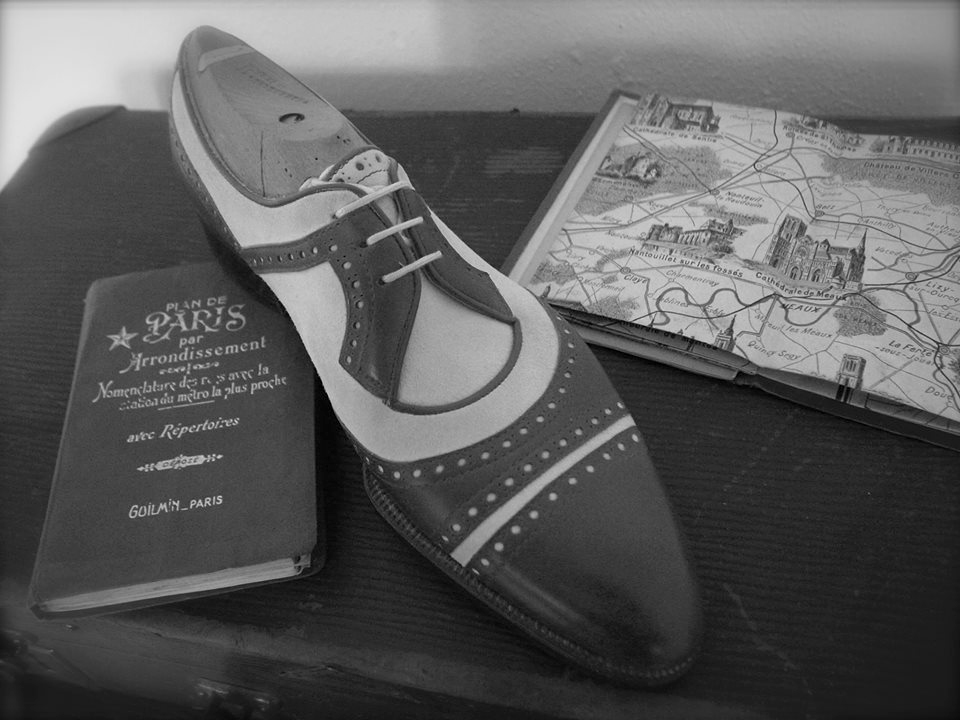 The Hayafuji signature model: The RH V-front Derby
VR: Over the years you must have learned much about the fine world of footwear. Is there something you wish more men would know about shoes? This is an extremely useful chance to have a lasting effect on my younger readers.
RH: There are two schools of thought to menswear. Some people want to wear the trendiest brands and get noticed. Other people are more interested in understated quality and craftsmanship. I can see the benefits of both sides. It is a personal preference depending on how someone lives his life. I respect people on both sides. Myself, I prefer men’s classics. I like vintage style and things that smell and feel luxurious. Classics have no limit on their lifetime and can be repaired. On the other hand, trendy menswear is fast changing. When it is no longer in style, it is discarded. I don’t want to be putting clothes in the rubbish – I want to repair them.
Category Cordwainers, Interviews
Style: A Eulogy by G. Robert Ogilvy
0November 2, 2013 by Ville Raivio
G. Robert Ogilvy, who pens himself down as ‘Essayist and critic by night. Young fogey. Agent provocateur.’, has a talent for acerbic prose. His eulogy for style chuckles, raises eyebrows in delight and comes with plenty of quoteworthy chapters. Attached are two. Follow the link for many more.
‘It defies logic. People who’ve clearly never been to the gym only ever wear gym clothing. People who’ve never even cut their own grass dress like migrant farm workers. Women wear push-up bras to funerals. Men rarely wear neckties, and when they do, they buy them from Donald Trump. There are even people who think Birkenstocks are cool.’
‘Clothing which was once considered underwear — like tank tops, leggings, or pajama bottoms — is now considered appropriate clothing to wear while grocery shopping or going to the bank. You know how exhausting it is to button a shirt.’
https://medium.com/i-m-h-o/9ebf3b359ae2
Category Laments, Links, Reading
Copyright © 2013 Ville Raivio