Interview with Will Moul from Mr Lapel
0January 2, 2014 by Ville Raivio
‘I’m 28 years old and an assistant dairy and frozen manager at a grocery store. I studied aeronautical science for one year at LeTourneau University, earning my private pilot’s license, and studied history at Northwestern Iowa College for the remaining three years, graduating with a bachelor’s degree in that field. Cassie and I married a year and a half ago. We currently don’t have any children other than our fur baby, Sir Kingsley. Vintage style actually played a role in Cassie and I coming together. We met at her place of work where, she admits, my vintage style drew her attention to me from the rest of the crowd. Before she even knew my name I was the “cool hat guy”. Cassie herself is a stylish woman who owns a classy wedding and boudoir photography business. She appreciates my style and that of her clients. Cassie supports my exploration of vintage style and has photographed me in vintage duds in the past.
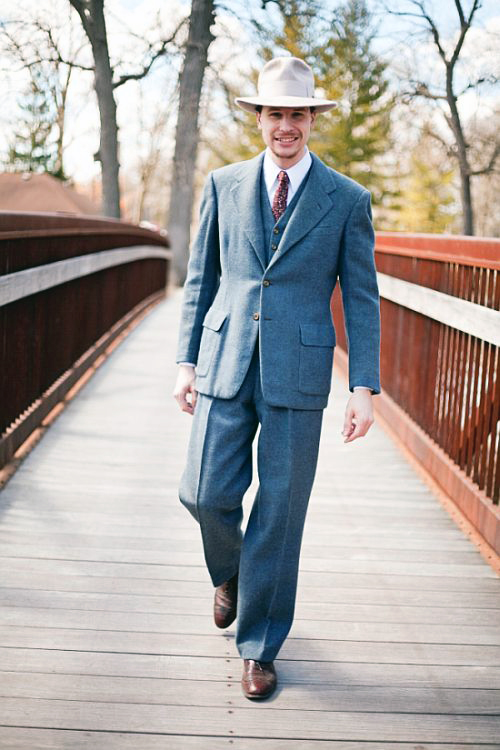 1940s tweed suit
My family was very supportive. My parents are collectors so our house was always full of antiques, vintage furniture, and historical pieces when I was a kid. It helped drive my interest in all things old. We would go out to antique shows and shops looking for the next neat thing and I have many fond memories of that. So not only were my parents supportive, they were the ones who introduced me to the world of vintage. I love to shoot firearms, whether vintage or new; collecting militaria, mainly American from the Second World War; hiking, fishing, and camping; reading; and playing airsoft. And history in general.
When I was young my parents would always make me dress my best, especially for church. That had a huge influence in the way I dress today. Also, family history is a factor. My great- great-grandfather owned a chain of four haberdasheries called J.C. Petersen & Co. in central Iowa and as a kid I always heard about him and his stores. It’s been a fun side hobby finding vintage pieces from his shops and knowing that my predecessor and his sons had sold those pieces. So maybe a love of quality clothing runs in the family.
 Mid-60s tweed jacket with flannel trousers
Where I live vintage is pretty abundant and therefore cheap. I’m able to buy a high quality vintage sports coat for pennies on the dollar compared to a lesser quality modern equivalent. Not to mention I don’t find modern menswear to be all that high quality, especially when compared to vintage. Fabrics are thin, cheap, and don’t drape well. Most RTW suits are fused and not very well made. Modern aesthetics don’t appeal to me either.
When starting off in vintage, much of my knowledge came from other collectors in the field. While I know a lot about vintage style, there are other people in the field who know even more and are willing to share that knowledge. The internet has expended our ability to share info and has played an important part in my search for vintage knowledge. The website The Fedora Lounge was priceless when I first began.
Experience is perhaps the most important factor in obtaining knowledge. Being able to hold a hat from the 1930s, a ’50s tie, or wear a vintage belted back suit will teach you more than reading a description about those items. Because of this experience I’m now able to spot vintage pieces from across the room without even holding or examining them closely. I’m now able, like those experts who helped me, to enjoy sharing the knowledge I’ve gained with other beginners. We all start out in the same place, we might as well pass knowledge on to the next generation.
 A late 1920s suit recently sold on Etsy
My dress reflects what I consider to be the best of the best of vintage style. By that I mean timeless: it looks great no matter what decade it’s worn. I don’t like my clothing to look like costume pieces and if I’m not careful it can easily look that way. There’s nothing wrong with wearing bold or in-your-face pieces of vintage, I love doing that, but the key is to wear them with restraint. And it also helps to wear it with confidence; if you’re going to wear vintage, you need to wear it and not let it wear you. That can be difficult to do which is why confidence is so important. Hence why, if something isn’t my style, doesn’t fit well or flatter my build, it goes away, quickly.
I don’t really have any favorite makers or tailors, I’m not a slave to a brand name or a flavor. I look for quality, of which there was plenty back in the day. I do like a brand called FashionPark, their suits seemed to have been a notch higher than most RTW vintage pieces I find. I got married in a FashionPark suit. Unfortunately, like so many good brands, FashionPark seems to have disappeared in the 1960s or ’70s.
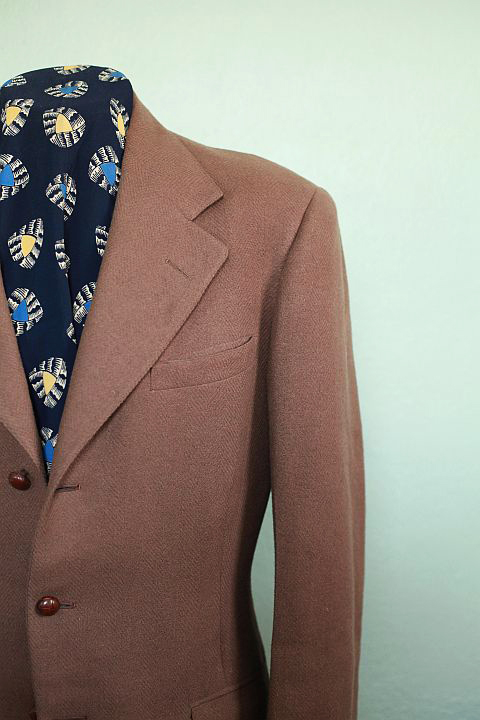 A late 1930s drape jacket
I enjoy all of the decades from the 1920s – 1960s, but the late 1920s through the early 1940s is my favorite period. I prefer this period because the clothing, especially the suits, were all very flattering for the male figure, even for larger men. It was the dawn of the drape suit, with shapely shoulders, bold chest, and nipped waist. A very athletic look that we so often see on our favorite actors of yesteryear: Clark Gable, Cary Grant, Gary Cooper, Jimmy Stewart. The proportions were just right. And then in the mid-1940s the style ‘evolved’, things got exaggerated and the proportions changed for the worse in my opinion.
But the 1920s and 1930s was such a time for experimentation in men’s style and the bedrock upon which today’s fashion is built. Look at the major fashions of today and they can, through one way or another, be traced back to the Golden Era. Belted backs, Oxford Bags, drape suits, crazy Deco ties, classic fedoras – all decades since have looked back to the Golden Era for inspiration. The mid-1960s looked back at the 1920s, the early 1970s had a similar spirit as the late ’20s-early ’30s (while mutilating some of the styles), the 1980s revived portions of the 1950s. And today we take from all of those periods and tweak to our liking. Modern style truly is a cycle that started during the Golden Era.
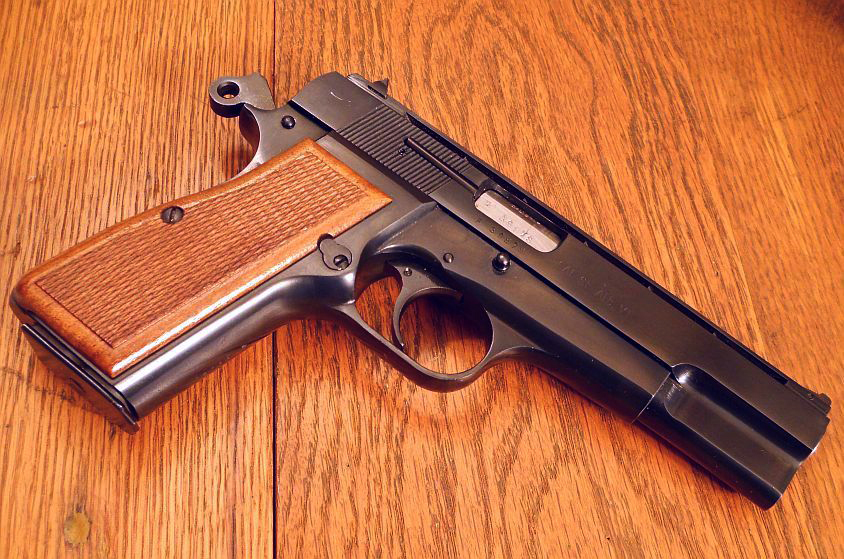 1970s Hi-Power handgun, an engagement gift from Cassie
I’m inspired by a well-proportioned drape suit, the sound of a World War Two fighter, a beautiful sunset while grilling or fishing on the lake, the mirror blued finish of my 1970s Hi-Power handgun, my wife, and my relationship with Jesus Christ.
My style definition is dressing elegantly and having the natural sense to dress well. Many men today, especially in the fashion centers around the world, wear fashionable clothing that is meant to shock or stun the viewer. And most importantly, modern fashions do not flatter the natural shape the male figure but rather feminizes it. I’ll probably take a lot of flak for that. My view of style is that of the elegant man: he’s masculine yet understands the finer points of dressing elegantly. Elegance is what separates the stylish man from the fashionable man or just the everyday man. Masculinity doesn’t have to be super trendy and hip or gruff, macho, and obscene. It can be respectful, reserved, and sexy all at the same time.
Something that is stylish looks great no matter what decade it is. Human perception of proportions and the Golden Ratio doesn’t change over time and the male figure has basically remained the same over the years. Therefore, a piece of menswear that is considered stylish and classic yesteryear should still be stylish today. A classic suit, hat, or pair of shoes will always be stylish because they will always look right if worn well.
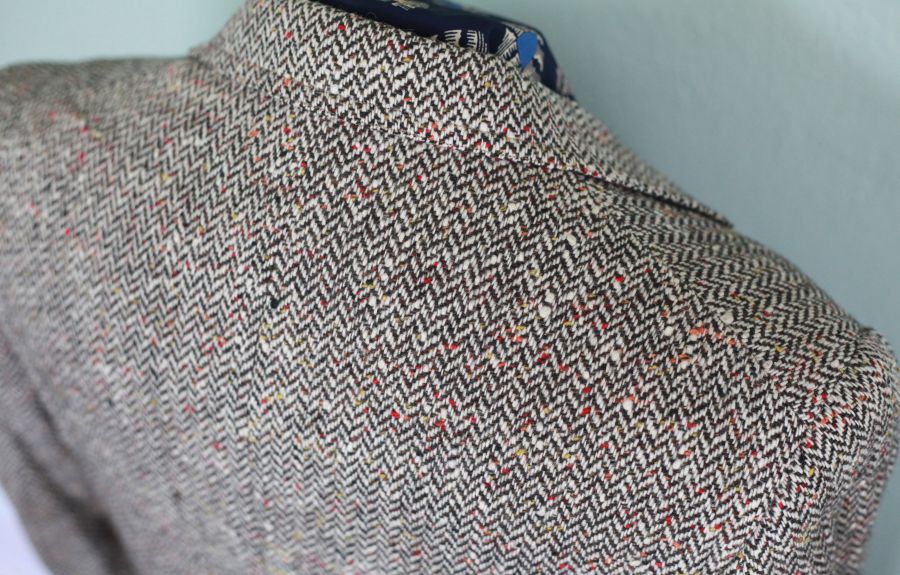 The herringbone pattern of a 1940s donegal tweed suit
The Houndstooth Kid Haberdashery was founded two years ago in December, 2011. I’d been selling on another more obscure site for several years before deciding to move to a wider audience. There’s quite a selection for sale, everything from the 1920s through to the 1960s at a myriad of price ranges. From casual and western to workwear and formal dress, it has all kinds of variety. I like to sell quality vintage items, no junk, and at prices that are fair to both parties.
Just as I’m an experienced vintage collector, I’m also an experienced and trusted seller. In the past I’ve done business with Sony Picture Studios and multiple big name performance theaters along with dozens of other collectors around the would. Shop selection is very good and my prices tend to be more affordable than other sellers. I was able to confirm this when I visited New York City earlier this year, where vintage has been gobbled up by collectors and sellers alike, making prices too high for many to afford. However, where I live vintage is still very much available and, thanks to a lack of collectors, relatively cheap. That lets me pass the low prices onto the buyer, even when the piece is a so-called ‘holy grail’.
 Married in a 1930s belted back jacket, 1950s ‘Hollywood’ trousers, and a crazy 1930s tie
Not to mention I treat every buyer or potential buyer fairly and help them in any way I can. I want every collector to have a great experience with my shop and to help build their collection from scratch, just like I had to.
My tips:
Study the so-called-rules of style, learn how to use them, and then learn how to bend and break them well. Look to the stylish men of the Golden Era for inspiration and try new things.
When you put together a new kit examine it long and hard in the mirror. If it looks right then wear it in public with confidence but if it doesn’t look right to you either fix it or ditch it. Sometimes what you might think is the oddest combination of pieces will actually look great in the mirror.
 Wedding suit, a 1941-dated Fashion Park 3-piece
Everyone makes mistakes. The key to this is to learn from your mistakes. Cary Grant didn’t always get it right and neither will you. But whatever you do, always be confident in your choice. When trying new things you may unwittingly leave the house looking like a Christmas fruit cake, garnering all kinds of stares and derision. However, when this happens, you need to at least be a confident Christmas fruit cake, for there is nothing so pathetic as a downtrodden, slump-shouldered Christmas fruit cake. Then learn from your mistake.‘
Photos: Eric Yerke and Cassie Moul
Category Bloggers, Men of style, Vintage, Web stores
Men’s Jazz Clothes in the 1910s and ’20s
2December 16, 2013 by Ville Raivio
‘When a real smart ticker [pianist] would enter the place, say in winter, he’d leave his overcoat on and keep his hat on, too. We used to wear military overcoats or what was called a paddock coat, like a coachman’s; a blue double-breasted, fitted to the waist and with long skirts. We’d wear a light pearl-gray Fulton or Homburg hat with three buttons or eyelets on the side, set at a rakish angle…then a white silk muffler and a white silk handkerchief in the overcoat’s breast pocket. Some carried a gold-headed cane; or, if they were wearing a cutaway, a silver-headed cane. A couple of fellows used to wear Inverness capes, which were in style in white society then.
When you came into a place you had a three-way play. You never took your overcoat or hat off until you were at the piano. First, you laid your cane on the music rack. Then you took off your overcoat, folded it and put it on the piano, with the lining showing.
You then took off your hat before the audience. Each pianist had his own gesture for removing his hat with a little flourish; that was part of his attitude too. You took out your silk handkerchief; shook it out and dusted off the piano stool.
Now, with your overcoat off, the audience could admire your full-back or boxback suit, cut with very square shoulders. The pants had about 14-inch cuffs and embroidered clocks. Box-back coats were worn single-breasted, to show your gold watch fob and chain. Some pianists wore a horseshoe tie pin in a strong-colored tie and a gray shirt with black pencil stripes.
We all wore French, Shriner&Urner or Hanan straight or French last shoes with very pointed toes, or patent-leather turnup shoes, in very narrow sizes.
Fred Tunstall was a real dandy: I remember he had a Norfolk jacket with EIGHTY-TWO PLEATS IN THE BACK. When he sat down at the piano, he’d slump a little in a half hunch, and those pleats would fan out real pretty. That coat was long and flared in the waist. He had a very short belt sewn in the back. His pants were very tight. He had a long neck, so he wore a high, stiff collar that came up under his chin with a purple tie. A silk handkerchief was always draped very carefully in his breast pocket. His side view was very striking.’
~ as told by James P. Johnson in Whitney Balliett’s Collected Works: A Journal of Jazz
Category Eccentricities, Quotations, Vintage
Guerreisms
0December 3, 2013 by Ville Raivio
A few years ago, The Sartorialist was an excellent source for up-to-date menswear inspiration. The Lucas, the Linos, the Plutinos and many anonymous men made up an endless collection of cloths, patterns, colours and cuts along with some humorous moments of bucket hats and sprezzatura gone awry. Schuman offers these no more, instead focusing on runway shows, women and derp-like street figures. I have replaced my dose of The Sartorialist with random peeks into Guerreisms, the great photo collection of one Karl-Edwin Guerre. Here’s hoping his lens will remain clear and focused.
Category Links
Oxxford Clothes — Always Be Faithful to Quality
0December 1, 2013 by Ville Raivio
Category American style, Quality makers, Videos
Interview with Brian Trunzo from Carson Street Clothiers
0November 30, 2013 by Ville Raivio
’I am 29 years old, and I am a co-founder of Carson Street Clothiers, a luxury multi-brand menswear retailer and fashion label in New York City. I earned my BA in History and Journalism from NYU in 2006 and a JD from Villanova University School of Law in 2009. My father was a Studio 54-esque, greasy Italian immigrant from Calabria who settled in Bensonhurst, Brooklyn, in the ’60s. He has some absolute gems when it comes to the vintage photos department: he and his brothers had such sprezzy, interesting style back then; long sleeve polos, big collars, chest hair, double breasted suits, fedoras – really cool stuff. I am an avid chess player and love to visit museums. You just learn so much from either activity.
 Trunzo (right) with CSC co-founder and sock wingman Matt Breen
The first identifiable moment I became aware of my interest in fashion was in my teenage years in the late ’90s, when my older cousin took me on a shopping trip to NYC. I grew up in Staten Island, so I wasn’t very far away, but my knowledge of the city was extremely limited. He took me throughout SoHo (he had a MASSIVE apartment back then – the neighborhood has changed so much) and up on to 5th Avenue to shops like Moschino, Atrium, Emporio Armani and Prada. I was blown away.
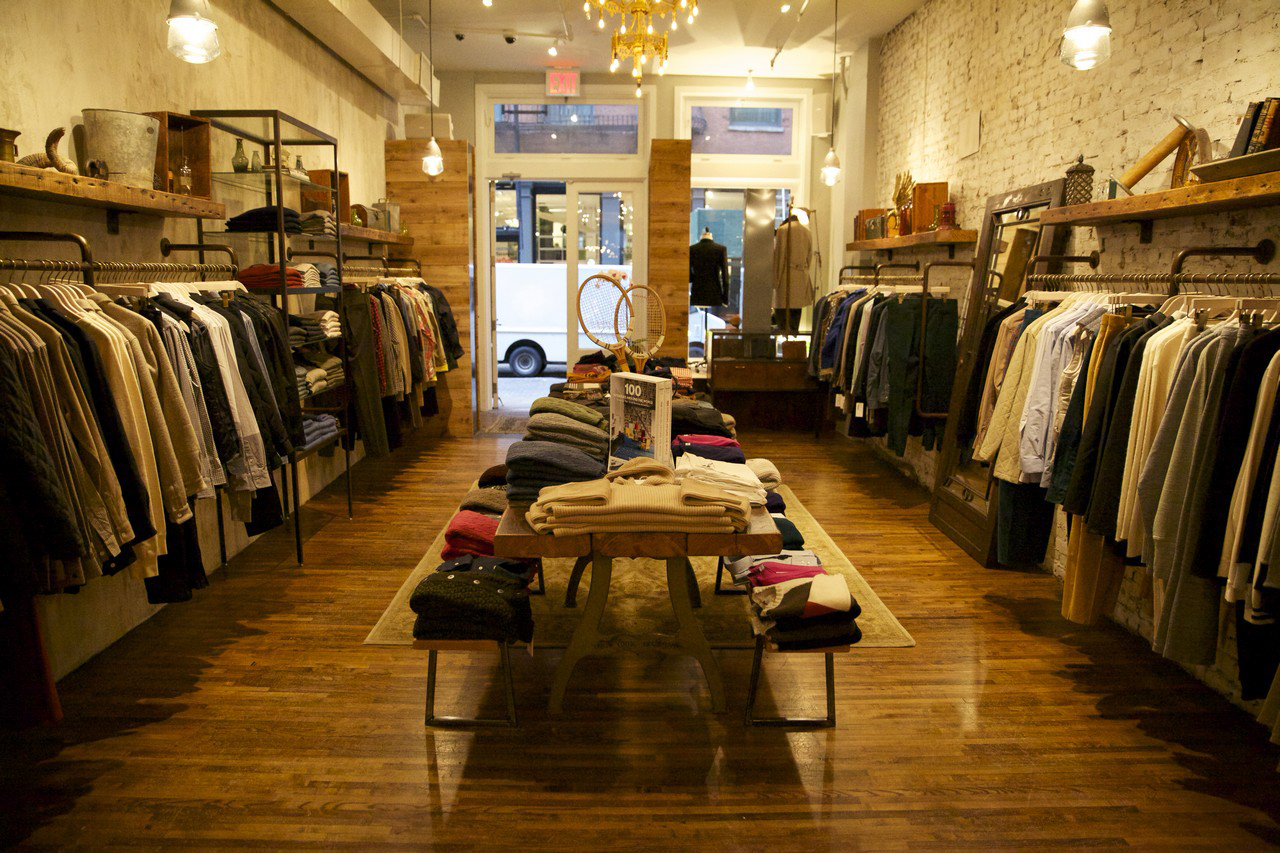
Moschino was my favorite – I would save all my money from delivering pizzas to buy a couple of traffic tees. Man, I wish I still had those tees. As per classic style over fashion, things really changed when I studied abroad in Paris in 2004 – Parisians just had this je ne sais quoi about them…a leisurely confidence that I wanted to mimic in timeless pieces. It took me quite some time to reach that point, and I am still learning (as I hope I always will), but boy did that change my perspective on things.
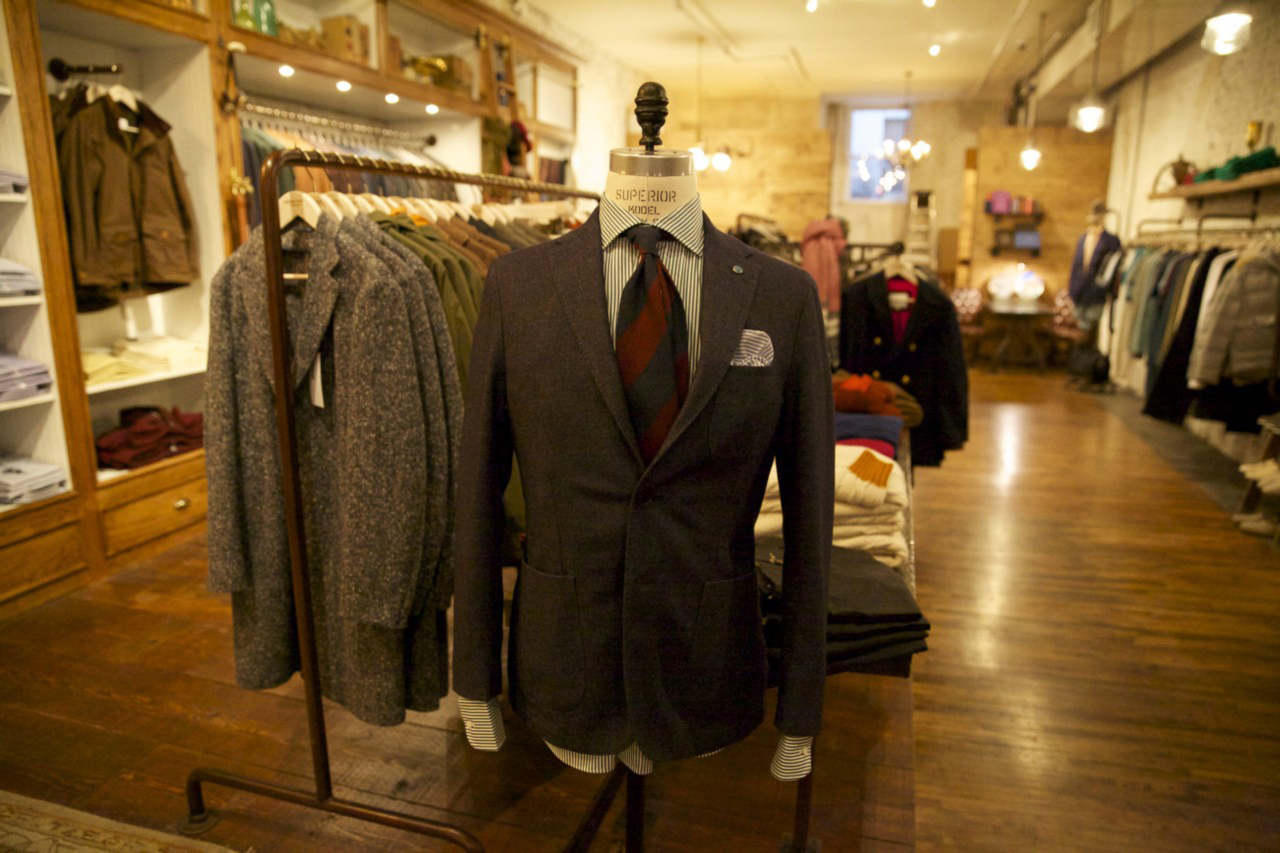
[My knowledge comes from] books, traveling and the Internet. Also, just living in NYC – there’s so much amazing style around us, sometimes all you have to do is pick up your head and take a look around. I gravitate toward a contemporary, cropped, tailored aesthetic. My favorite brands (besides Carson Street, of course) include Patrik Ervell, AMI, Michael Bastian and Eidos Napoli. I just like to have fun with my clothes.
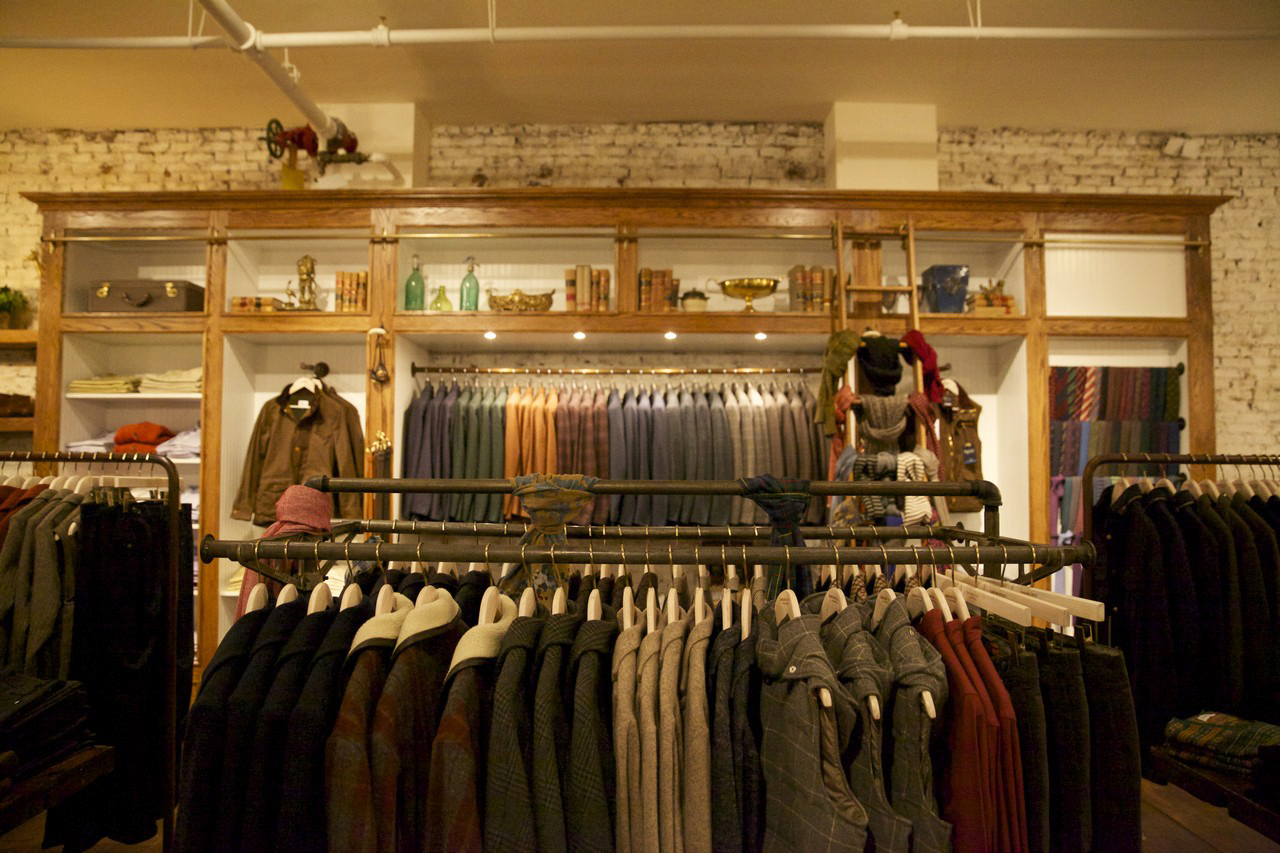
Matt (my business partner and co-founder) and I went to law school together and were roommates for our last two years in Philadelphia. We always knew law wasn’t really for us and plotted throughout law school to potentially go into business together someday. Right around the time I was growing tired and unimpressed with law (mid-2010; it didn’t take long), I started writing a style blog called Nice Try, Bro. From there, I went on to meet so many designers and editors in the industry – we really felt like we had a good base and support system to get started. And so it went.
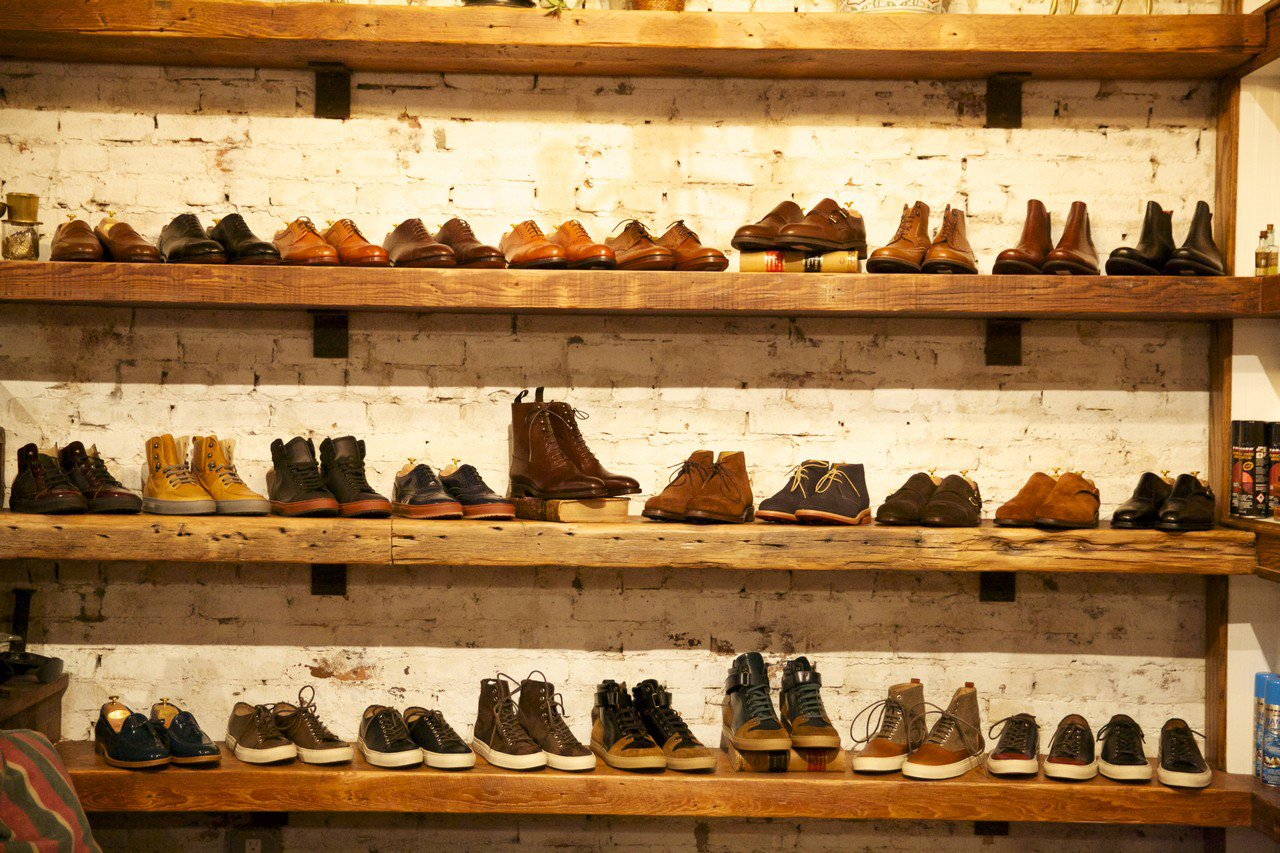
We have been blessed to receive great press thus far, and the response to it has been even better. Much love and thanks to all of our supporters! We’re not in the business of telling people why (or why they should not) do one thing or another. We believe the proof is in the pudding: a beautiful product, excellent customer service, interesting employees, comfortable accommodations, and a masculine and refined aesthetic – come on by and judge for yourself!
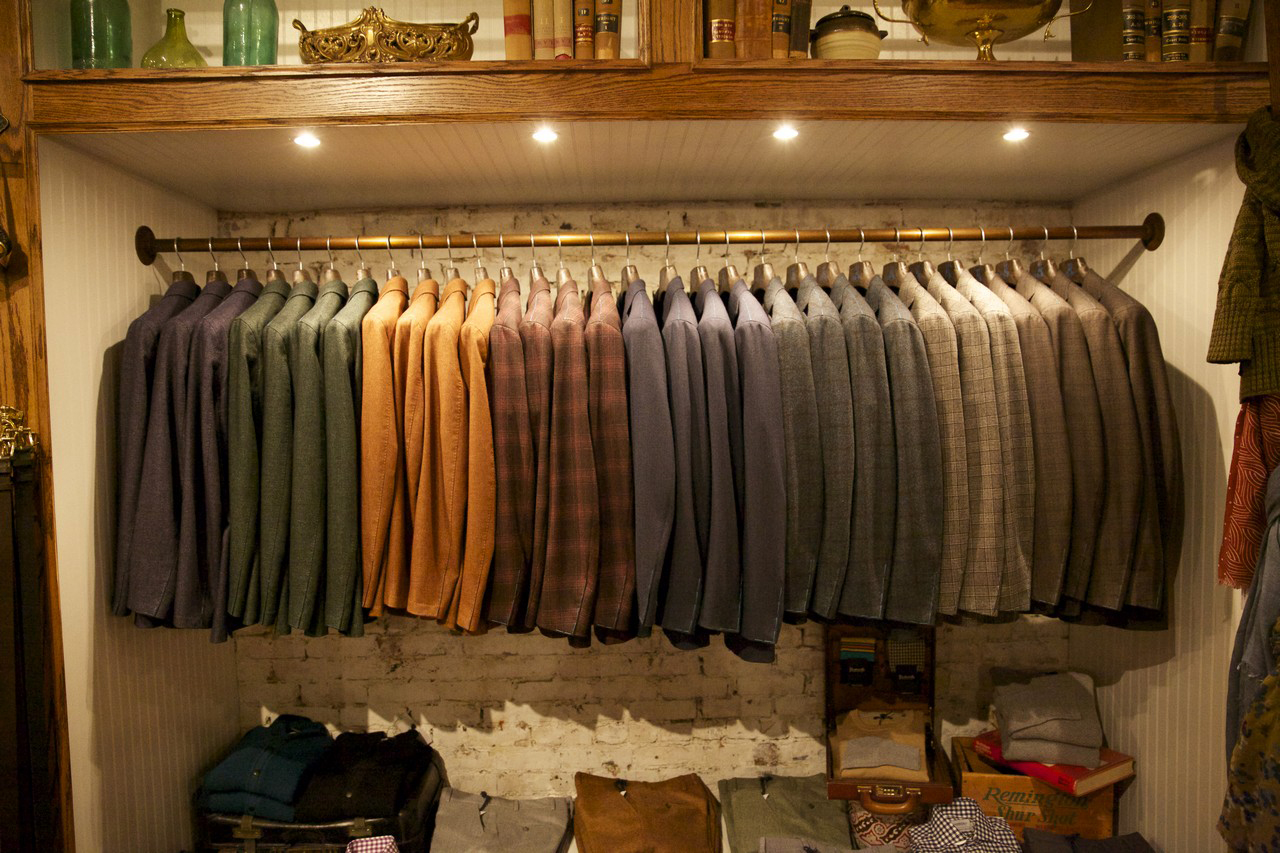
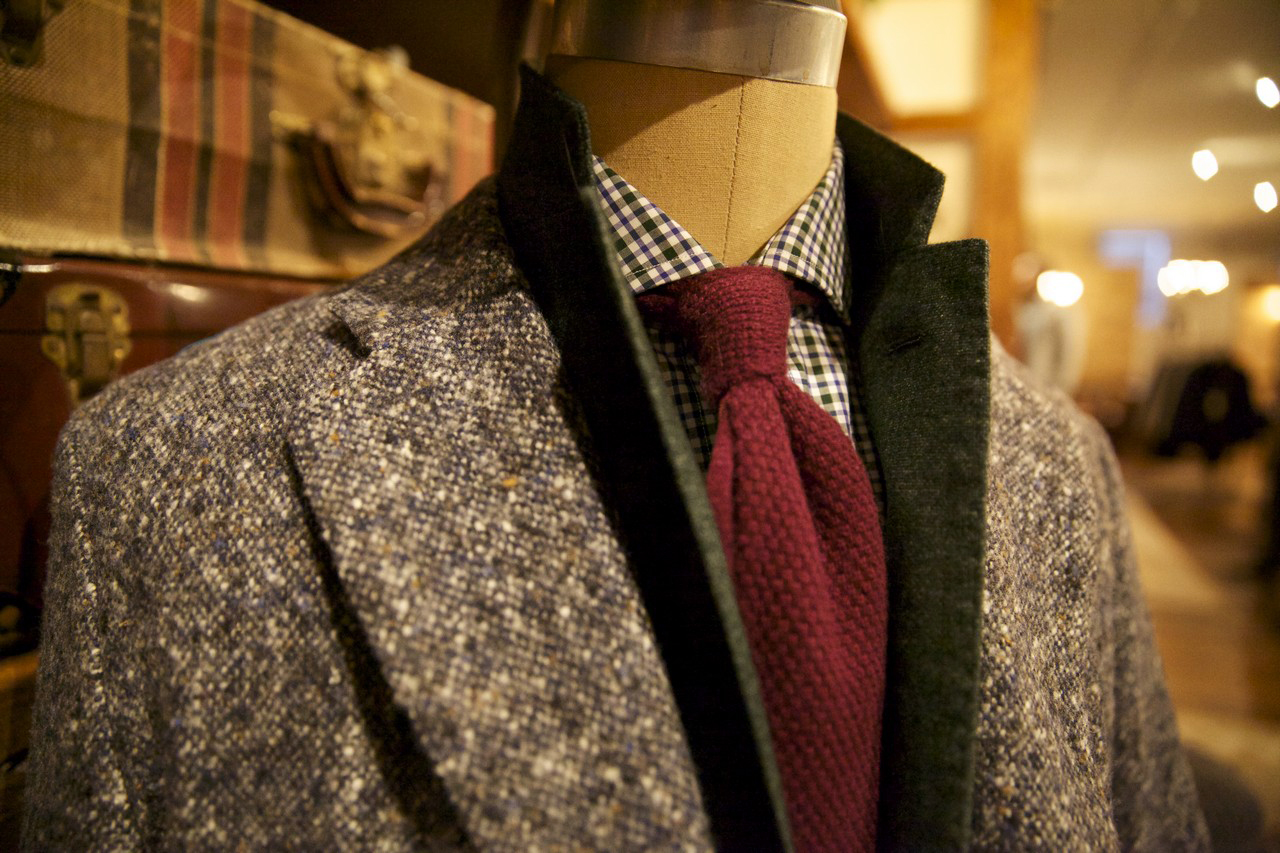
The CSC house brand is a fusion of classic American and contemporary European (namely, Italian) sensibilities personified. We manufacture shirts, trousers, ties, square, sports jackets and now footwear (with other small leathers on the way) with an eye toward longevity and durability. All products are currently made in America, Italy, and France. We use only the finest mills, manufacturers, hardware etc. – we are a detail-oriented company that will not produce anything but high quality garments for our clientele.
Our CSC footwear drops very soon (we will have 9 different models), and we are continuing to expand our label. Expansion is always in the back of our collective mind, so…yeah…stay tuned! Who or what inspires me? Who – My father. What – Life. My definition of style is one’s individual interpretation of how one dresses and presents himself on a day-to-day basis. As for tips, get the basics down first; experiment later.’
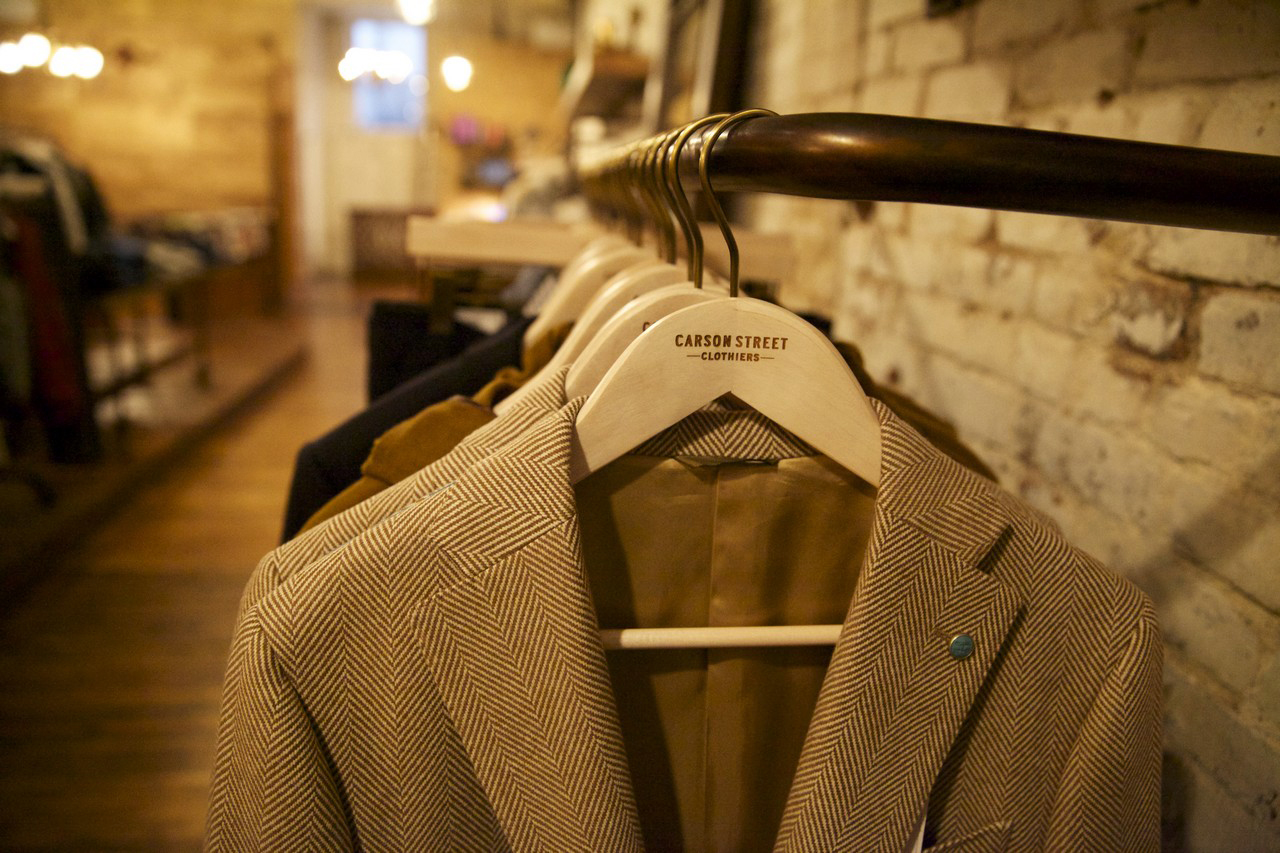
Photos: Carson Street Clothiers
Category Interviews, Quality Stores, Tradesmen, Web stores
Copyright © 2013 Ville Raivio