Anatomy and review of Turnbull&Asser shirts
4February 3, 2014 by Ville Raivio
The basics
The English firm of Turnbull&Asser prides itself with a 128-year history, during which it has clothed a remarkable horde of renowned men. T&A does offer a wide selection of accessories and off-the-peg clothing, but its specialisation lies in collared shirts. The maker has achieved an enviable reputation the younger guns on Jermyn Street can only dream of, but this much and more has been said in many publications already. Unlike several established makers and fresh firms, T&A has not taken part in the price bonanza that has given birth to 4 SHIRTS FOR 100£ or similar clauses with more exclamation marks. The company still owns a factory in Gloucester and offers English shirts for the man who cares. T&A charges 155 pounds for a shirt instead of a small heap of shirts for the price and, given their reputation, I had to find out what makes their English shirts so very special.
Overall cut and collar
Turnbull&Asser shirts are known for their vivid colours and vast selection of stripe fabrics. The company archive houses tens of thousands of more or less interesting shirtings, and a recent remake of The Great Gatsby reminded me of the original film from 1974. It’s a colourful scene, the one where Jay shows Daisy how big his is, both the house and his fortune, and they pass through the many rooms all the way to one bedroom. It is romantic to think that Daisy is moved by seeing the man after so many years, but I like to humour myself by picturing that the shirts are the cause. “They’re such beautiful shirts…It makes me sad because I’ve never seen such beautiful shirts before!” she screams, tossing Jay’s dozens of Turnbull&Asser shirts around the room and breaking into tears. With this memory in mind, there really was no other shirt but a striped one to review.
What’s in a shirt
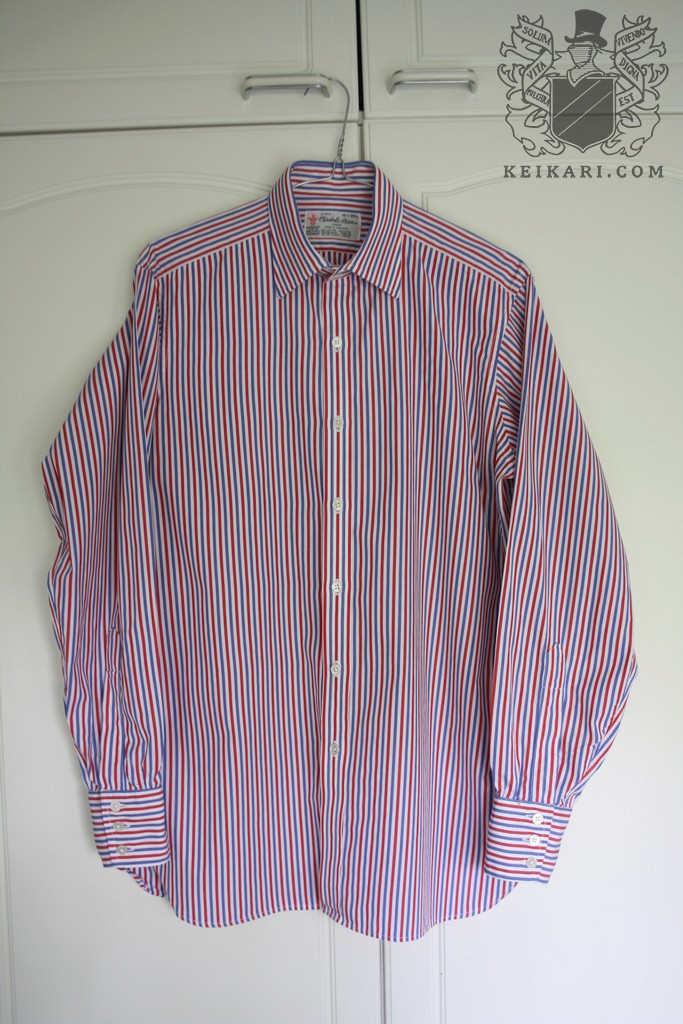
The example shirt is an off-the-peg shirt from T&A’s selection, made with a straight collar instead of the Classic one. This shirt has three buttons on a crooked cuff, a signature detail of the house. I have owned and handled several shirts from the maker since this one, and must say that T&A’s fabrics are an experience. They never pill, the colours are bright, the surface smooth and all fabrics have a nice rustle when fondled. Most of them are woven in Italy of Egyptian cotton, and my little bird tells me that they’re made in the Albini factory. Fabrics in the Classic range are more or less the same each year, the Exclusive range offers smaller and limited runs changing with the season. All seams are straight, the single-needle stitching dense and the cut clearly more form-conscious than the usual baggy English one. A sad detail is the lack of pattern matching on the gauntlet, body and shoulders.
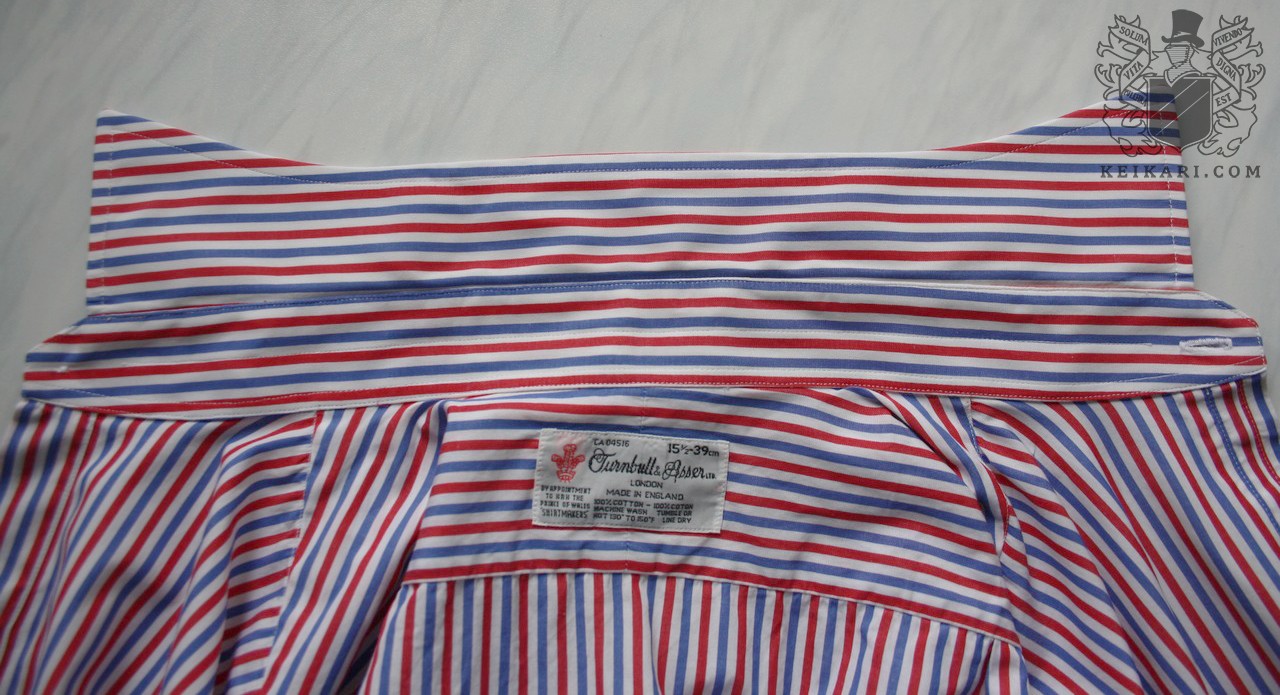
Straight collar shape
The shirt has been made from 33 pieces as a mixture of varying handwork and machine precision. No spare buttons are attached because buttons do not come loose on T&A shirts — or so they say. Still, the buttons have been hand-sewn with a shank and seem to be strongly there. The Australian mother-of-pearl buttons are quite generic: not too thin, not too fat, not too wide nor narrow. They’ve a pleasant sheen and shape with one groove. The hem is longer and remains tucked in all situations. The cuffs are cut to meet askew and to be closed with three buttons (or less, if sprez is of interest), and I’ve never met another maker with a similar cuff. Most shirts on the market have three to five wide folds around the cuff to produce a narrow sleeve, but T&A has its shirred into a dozen or more tiny folds. A detail I love. The sleeves are set high and the armhole is cut small to allow great freedom of movement. The placket is firm and of average size.
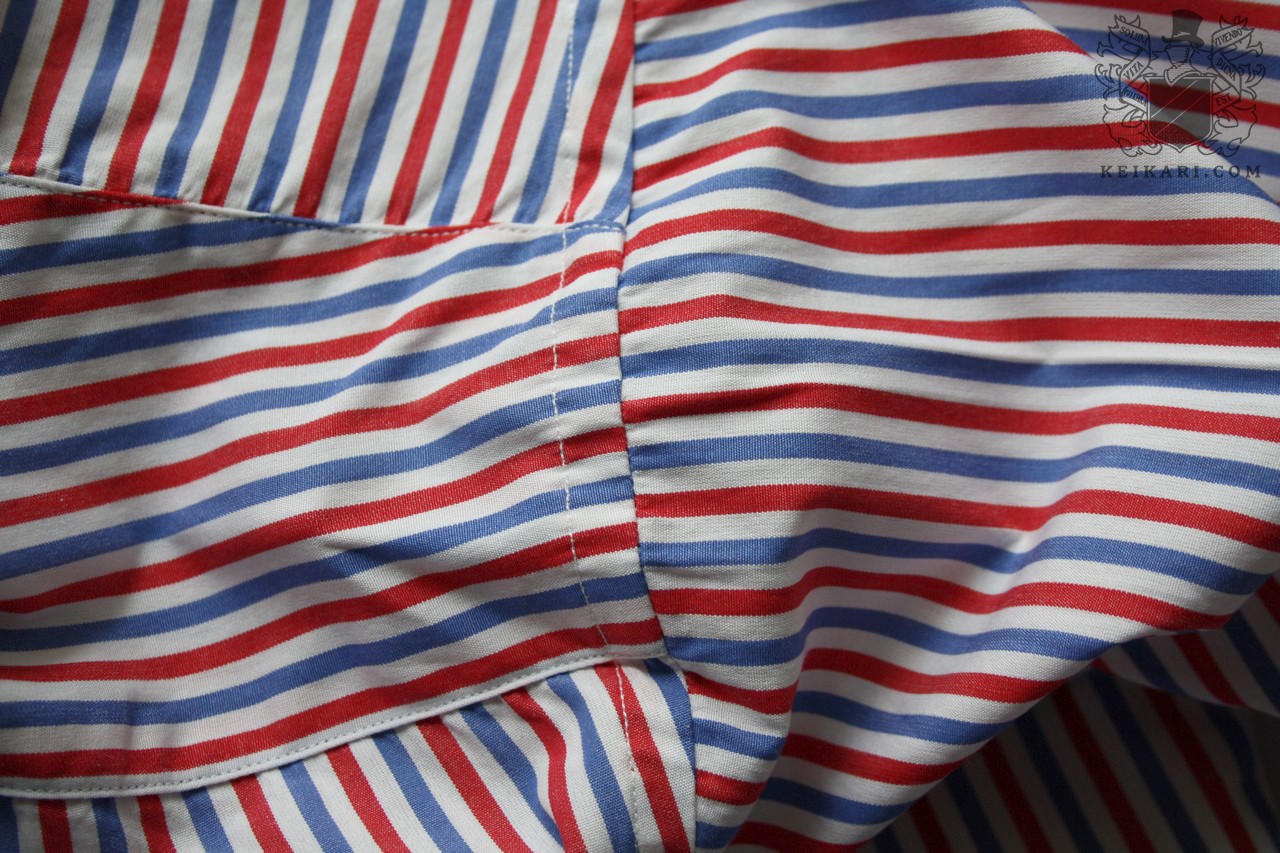
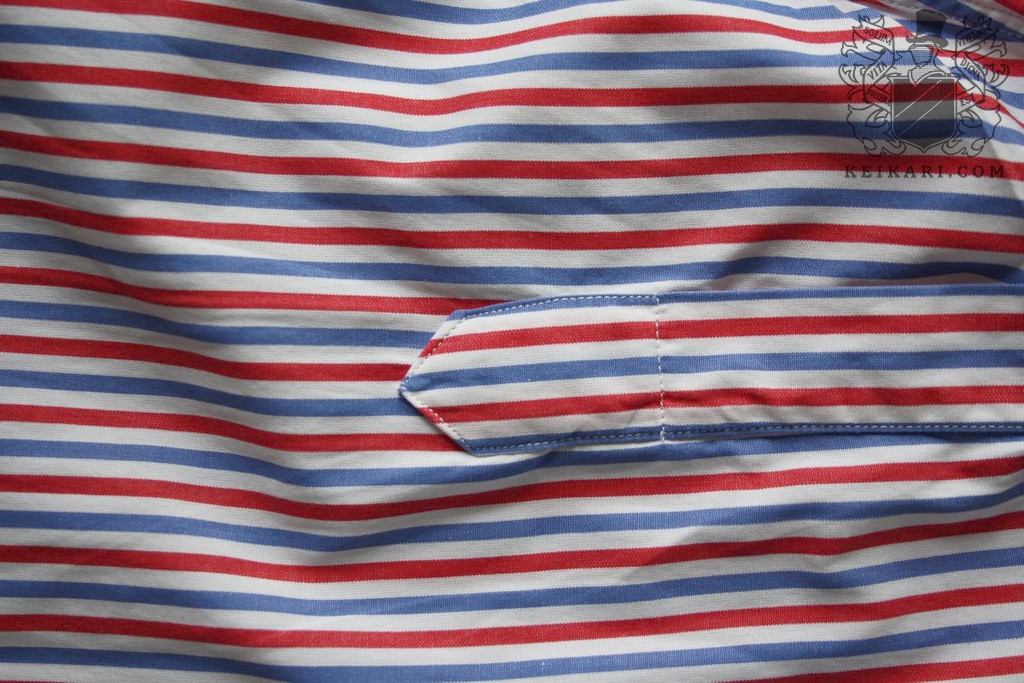
Unmatched patterns on gauntlet and shoulder to sleeves
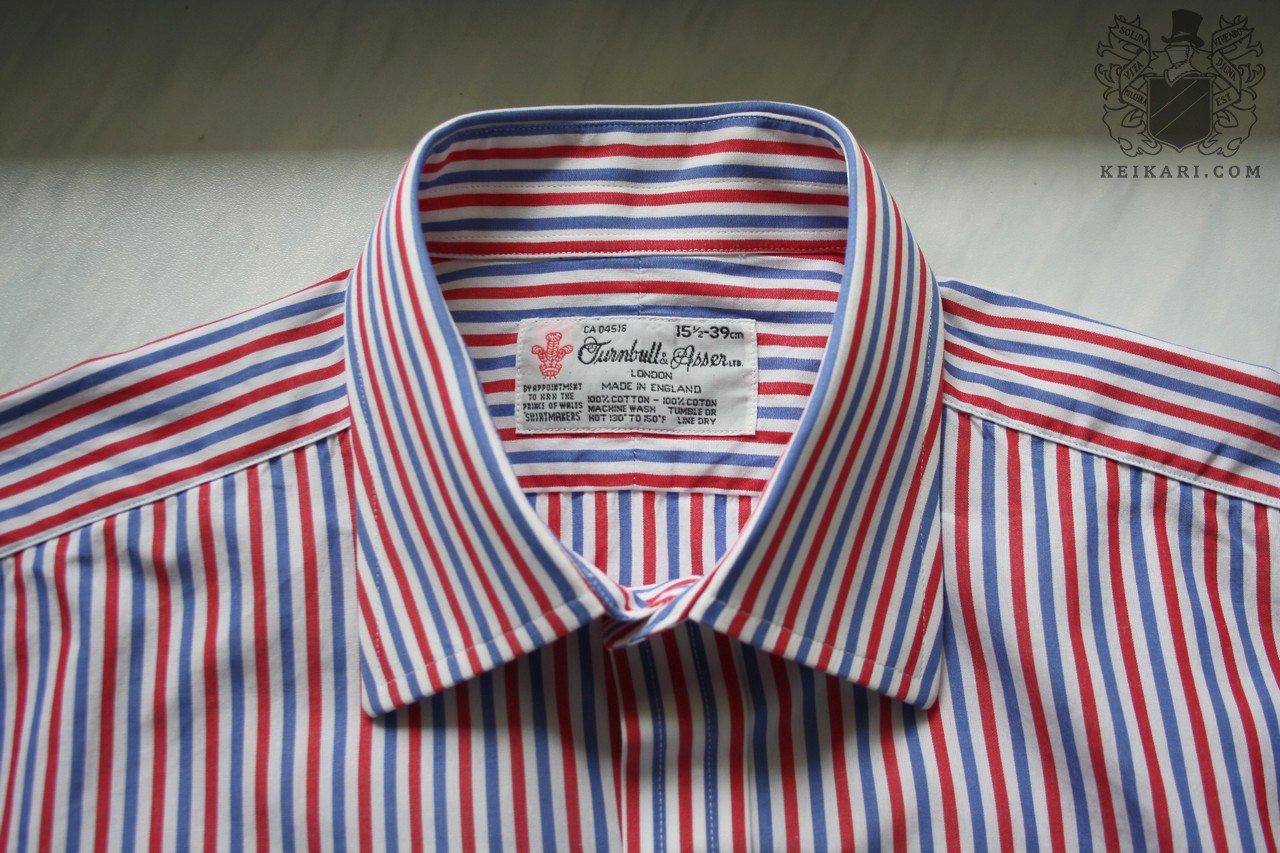
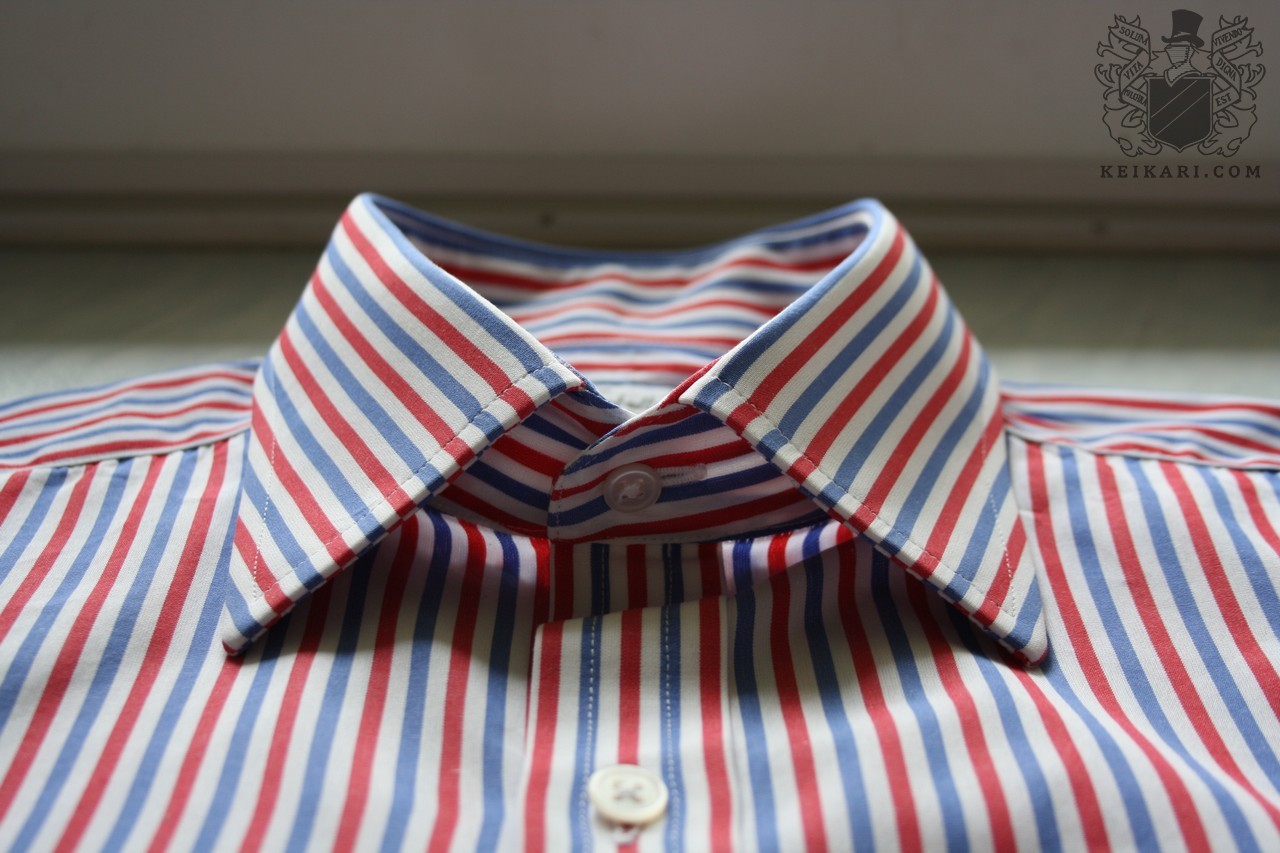
Turnbull&Asser still hangs onto unfused collars and cuffs with a woven bias-cut interlining, an old construction offered by far too few makers. Theirs is a stiff collar which will hold its shape in all situations, and the same goes for the cuffs. While these will be unpleasant for the sensitive skin, I’ve seen that the collar can be bent to produce a roll. Not an arching one like those on Ivy League collars, but a stiff roll which can’t be achieved with a fused one. A laudable detail: the collar points will remain in contact with the body of the shirt regardless of how they’re worn. The usual collar back height is 4 cm, which guarantees an excellent presence and shape. While the example shirt has a straight collar, T&A’s signature model is the Classic collar, a slightly spread model with a unique outward flare to the collar point. To show the shape, I’ve taken a few photos of another T&A shirt with this collar. It really must be seen in person.
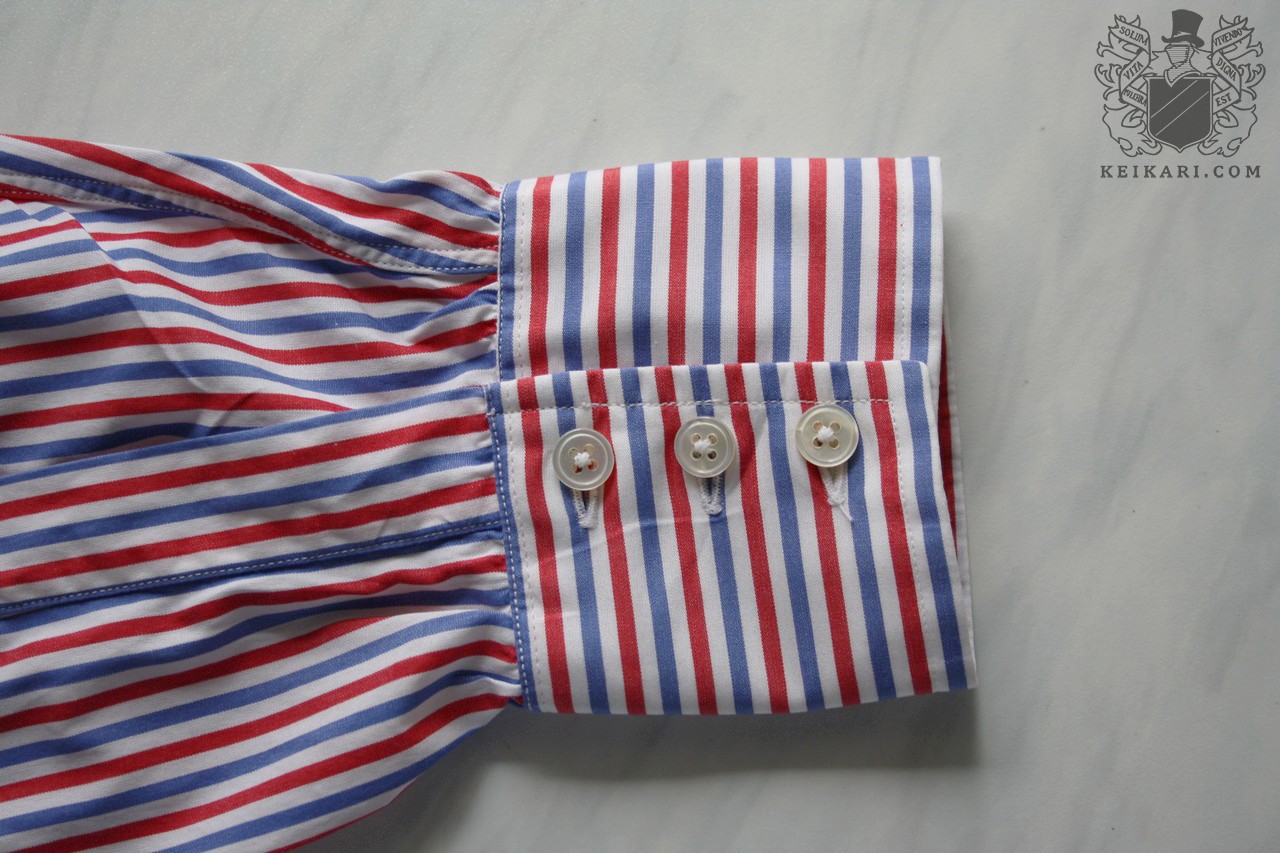
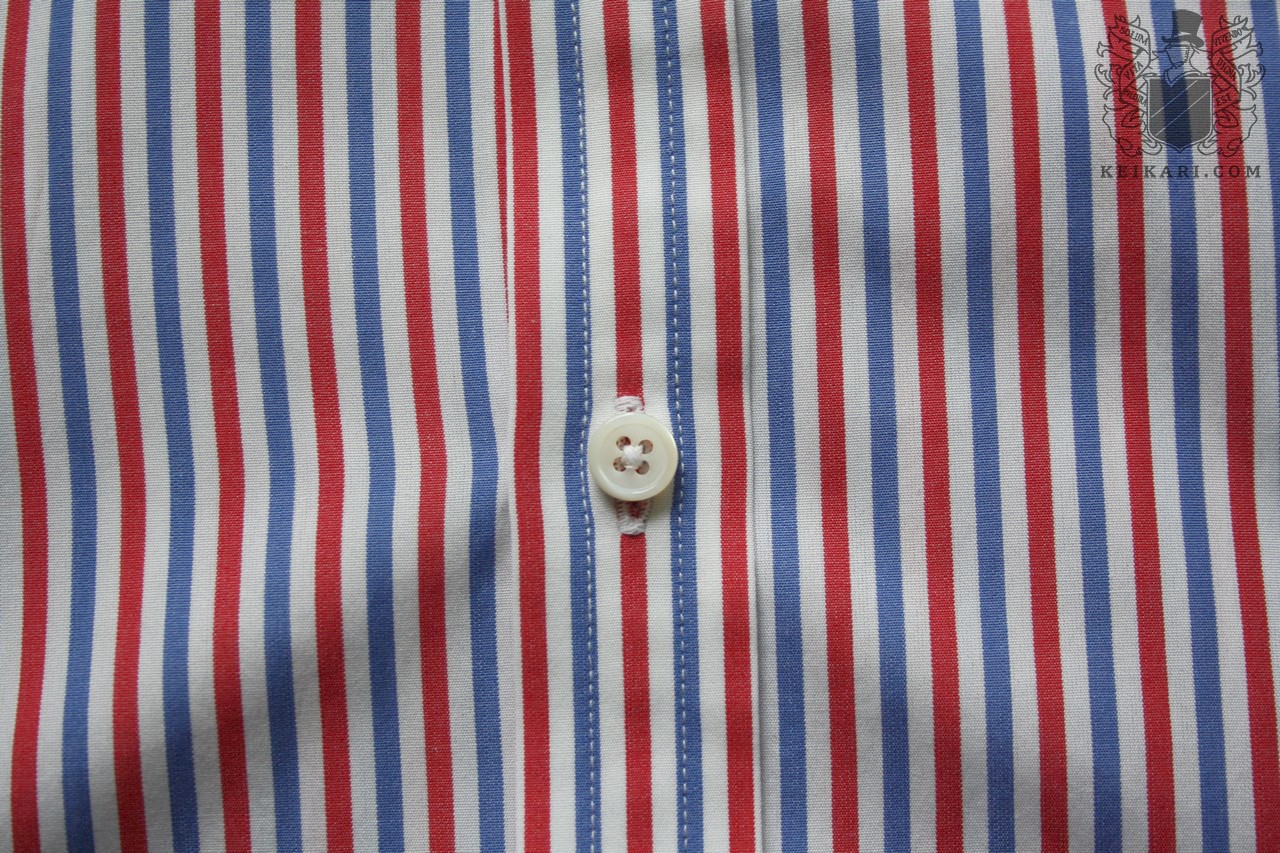
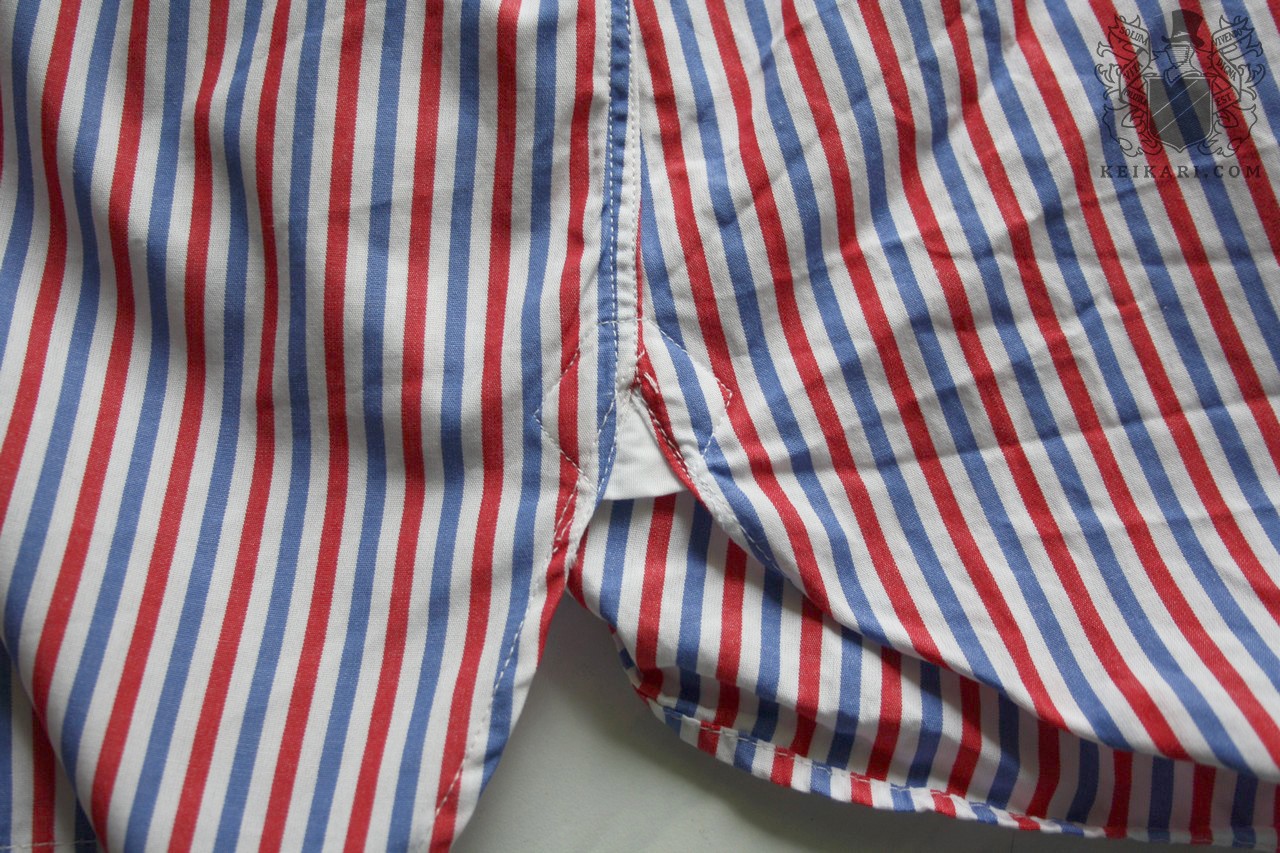
Three-button cuff, hexagonal gusset and placket
While the collar does have removeable stiffeners, I’ve found no use for them. The stiffy holds its shape just fine without any addendums. T&A’s yokes are hand cut with the top yokes being cut on the bias. While they offer no significant benefit on a readymade shirt, they’re a nice detail to have. There are also small hexagonal gussets laid on and sewn where the side seams join the shirt tails, yet another nice detail which the maker informs us will strengthen the seams. The only points I’d change are pattern-matching throughout, the quite wide cuffs, the half-inch sizing and the second-highest button, which should be set lower.
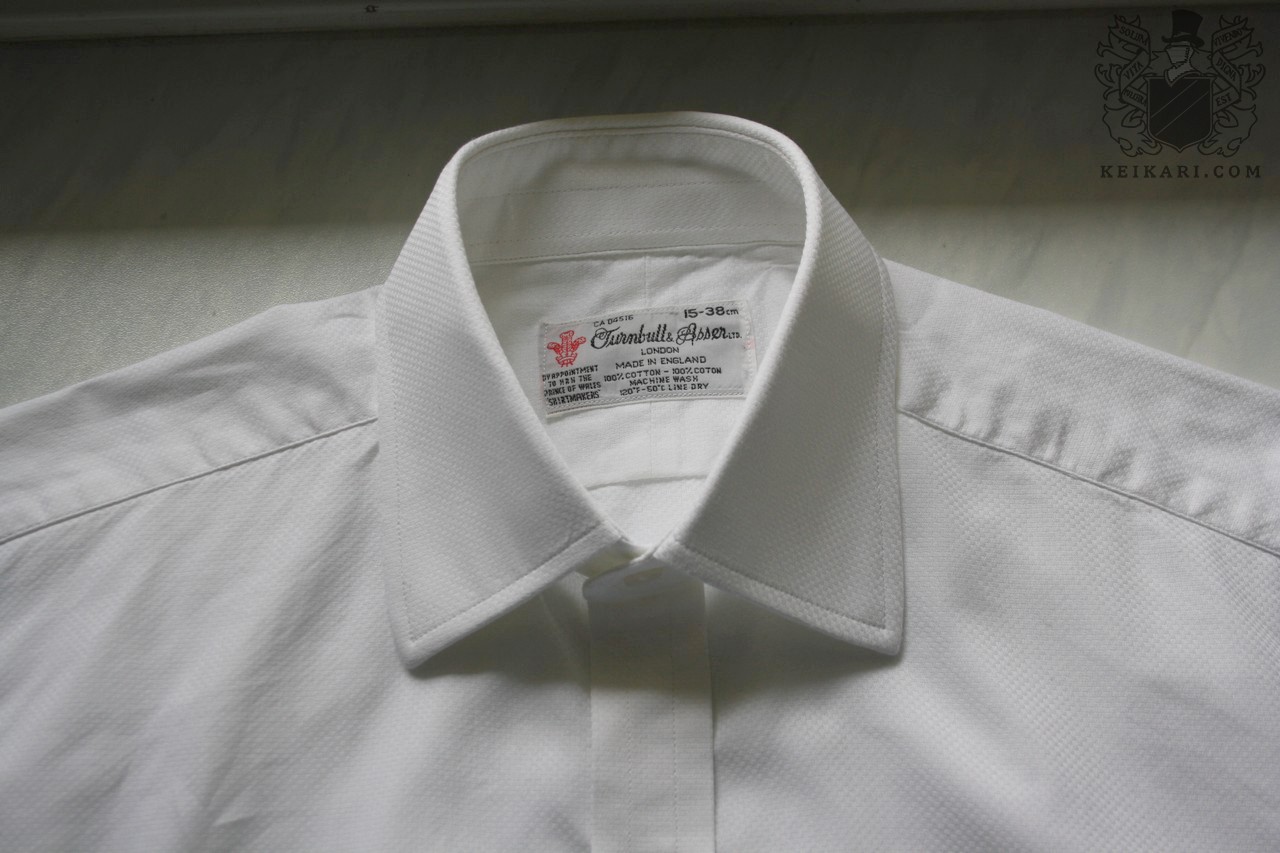
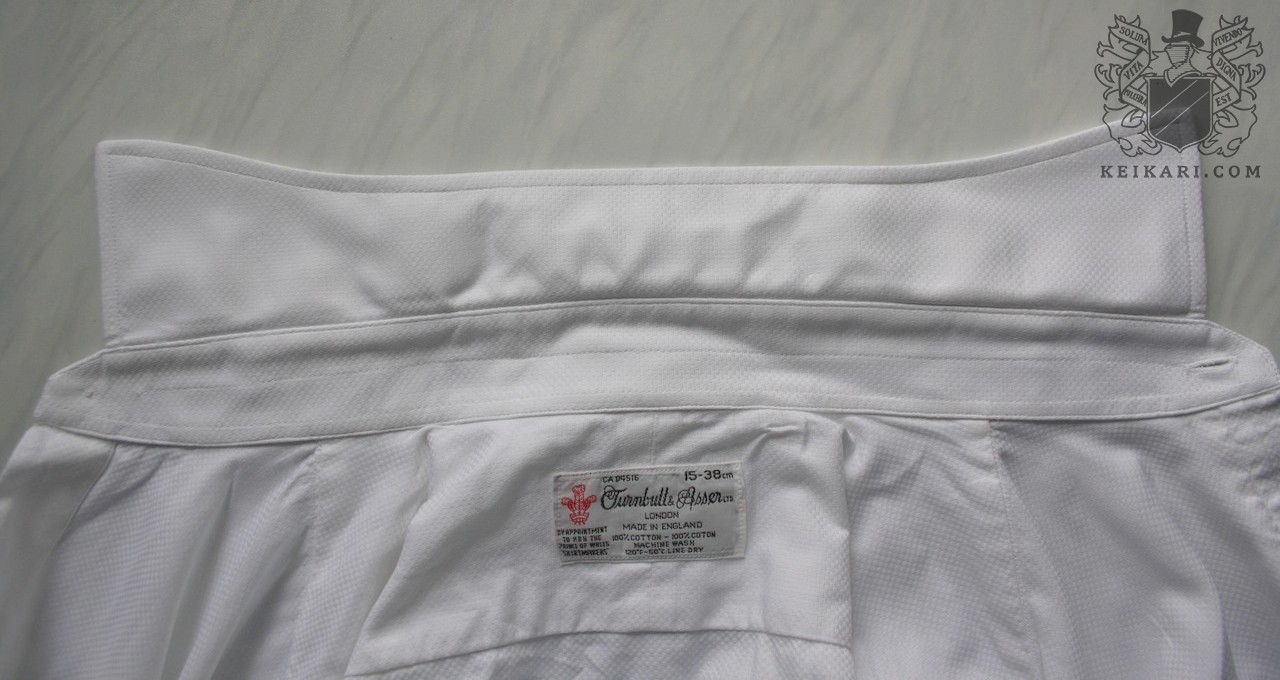
The Classic collar shape
Conclusions
As a whole, I feel Turnbull&Asser shirts are always worth their price: the make, fabrics, collars, details and construction are excellent. Regrettably they only offer collar sizes by the half-inch: if the reader’s neck size is a European 40, T&A’s size 15½ may just be too tight and 16 too large. The collar button can always be moved a bit, but it may not be enough. When worn open, the problem disappears but won’t make for a formal whole. What I do love is the unfused but stiff construction, the materials and the signature cuff and collar. I have owned, handled and tried shirts from most of the makers on Jermyn Street, and I feel Turnbull&Asser is the best one out there.
First published in Finnish on the 30th of 11. 2012.
Category Jermyn Street, Reviews, Shirts
The world according to Hirofumi Kurino
2February 3, 2014 by Ville Raivio
Category Japanese Style, Videos
Interview with Jesper Ingevaldsson from Shoegazing
2January 31, 2014 by Ville Raivio
VR: Your age and occupation?
JI: I’m 29 years old, and work as Communications Manager for a maritime competence centre at the Chalmers University in Gothenburg, Sweden. On my free time I write Shoegazing, a Swedish shoe blog.
VR: Your educational background?
JI: I have a bachelor’s degree in Journalism, and have worked as a journalist for several years, the last four at the Swedish National Radio. I just recently switched to “the other side” and started working in communication.
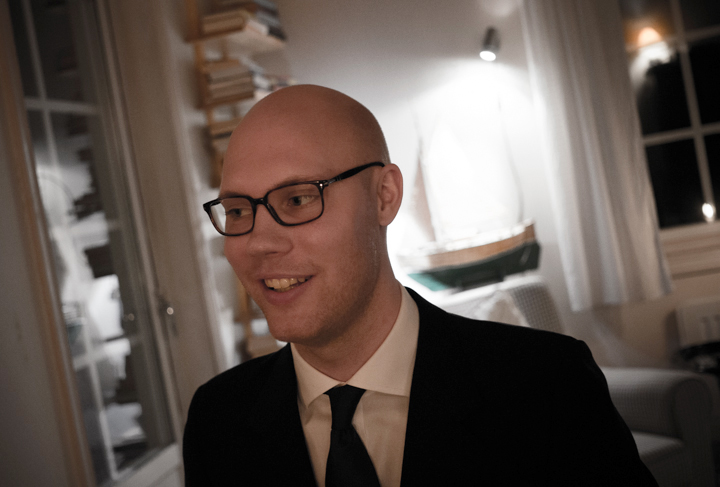
VR: Have you any children or spouse and how do they relate to your shoe enthusiasm?
JI: Yeah, I have a three year old boy and a new kid incoming this summer. When I met my wife I was an indie-pop guy who wore slim jeans and Adidas Superstar II-sneakers all year round. She is still a bit confused about my switch in style, but it was more so the first years. Nowadays she mostly likes the new shoes I show her, I turned her to the good side. And she also has some quality footwear nowadays, and of course has realized that they are superior.
VR: …and your parent’s and siblings’ reactions back in the days?
JI: They know that when I get interested in something, I always go all in. But they think that I spend ridiculous amounts on shoes.
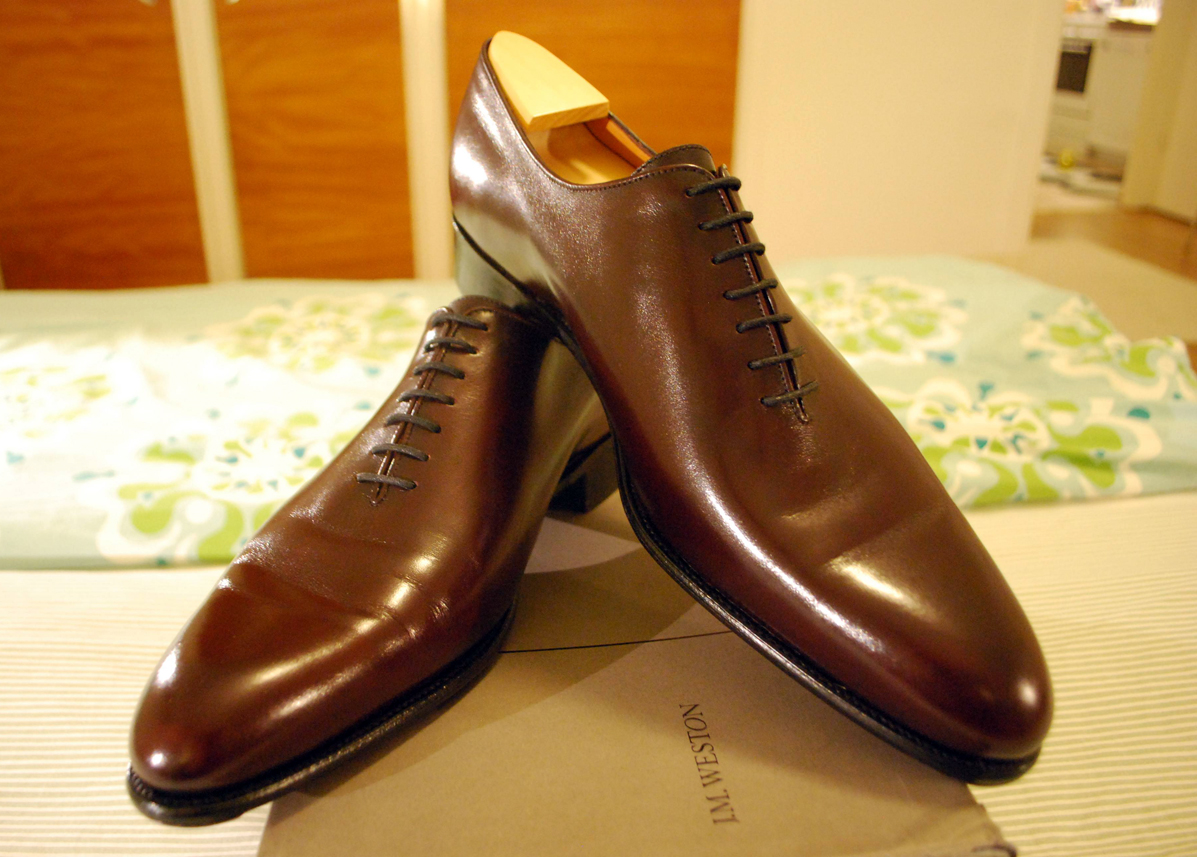 Rare seven eyelet model by J.M. Weston
VR: What other hobbies or passions do you have besides footwear?
JI: The music is still with me, although to a much less extent. And I’m also very interested in sports, specifically bicycling. I was actually a professional cyclist in my youth. Went to a National sports college for bikers and was in the junior national teams in both mountain bike and road bike. After school I got signed by a professional road team and was a full time cyclist for a couple of years, but I had problems with bad blood values and was ill a lot, so at the age of 21 I quit the athletic career.
VR: How did you first become interested in clothes, and when did you turn your eyes towards classic shoemaking? Why these instead of fashion shoes?
JI: As mentioned, I was everything but a style aficionado back in the days. Had started to wear more “grown up”-clothes though and about six years ago I bought a classic wool overcoat which I really loved, and suddenly started to hang out on classic style pages like Manolo.se and other Swedish style blogs. I wanted to try out a pair of Goodyear-welted shoes and bought a pair of Loake 1880s from Pediwear. I remember thinking that £170 was a lot of money for a pair of shoes, but I immediately fell in love with the shoes, the feel of them, and since then I haven’t bought anything else than traditionally made quality footwear. It was especially the craft and the leather that draw me to it.
VR: How have you gathered your knowledge of apparel — from books, in-house training, workshops or somewhere else?
JI: From every possible resource I’ve found. I’ve read lots of books, everything from brief guides like A Guy’s Guide to Shoes over to more substantial pieces like Vass and Molnar’s Handmade Shoes for Men, and also books like Golding’s eight volume standard piece on how to make shoes (haven’t read it all though). I’ve talked to and spent time with cobblers and gotten to know bespoke shoemakers, and try to learn as much as possible from them. I read ridiculous amounts of forum threads, blogs and other online pieces. And of course, I’ve bought, used and cared for plenty of quality shoes.
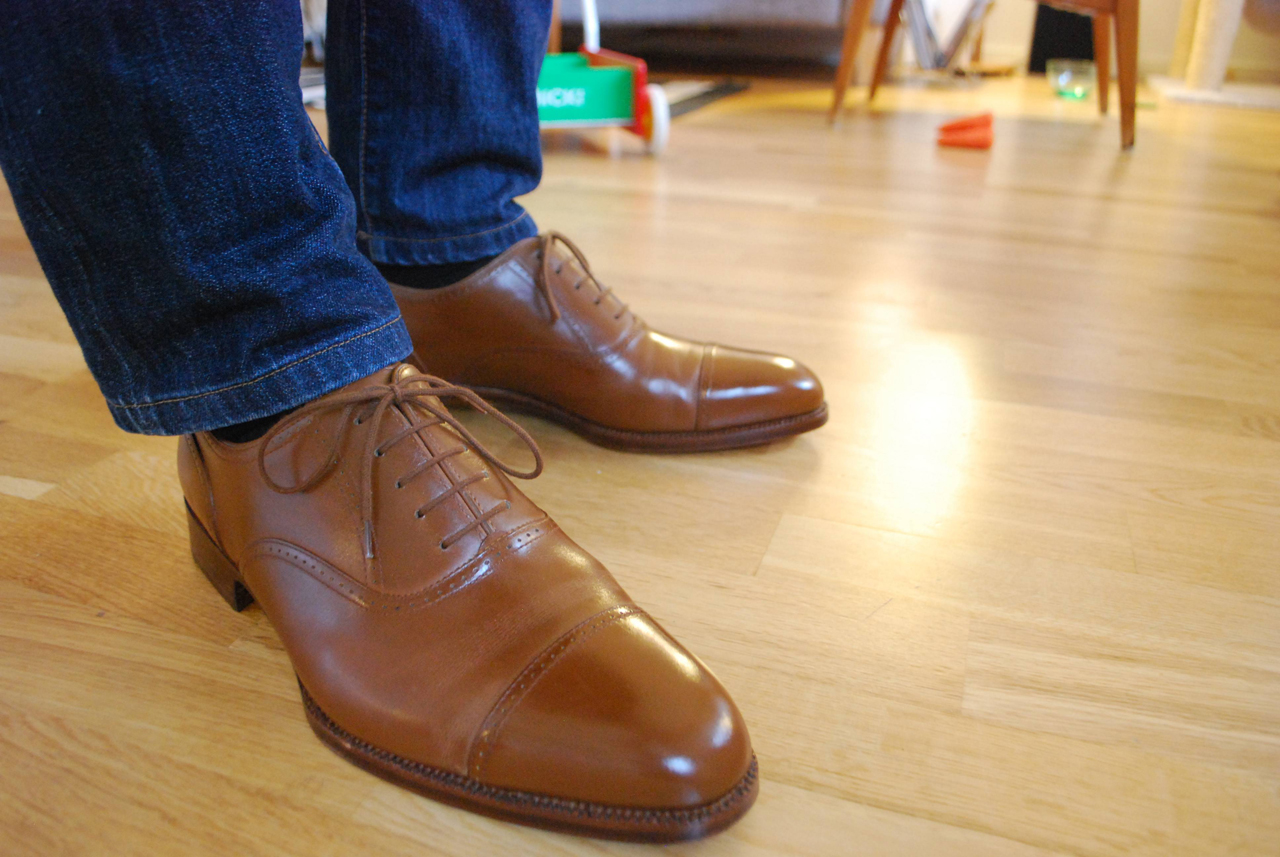 Long-distance bespoke kicks from Jan Kielman
VR: When did you decide to set up Shoegazing and what’s your motivation for the blog? How do you select the content for the site, and what’s feedback been like so far?
JI: I wrote the first blog post about one year and four months ago, and since then I’ve written 160 articles. I missed a place which wrote about quality shoes often here in Sweden, and my wife had tried to convince me to start a blog for some time since she knew I had a lot of knowledge about shoes, and as a journalist could write well enough. So I thought, what the heck, I’ll give it a shot. And the response from my readers has been amazing, and that is the main reason why I enjoy it so much. They are very supportive, and I get asked a lot of questions in the comments sections, over mail and now since I started a forum in that. I have about 10 000 unique visitors a month, and nowadays they come from all over the world and use the translation tool on the blog, although of course Swedes are in a the majority.
I try to write about a broad range of subjects: buying guides, shoe care, about construction and leather, about the industry, factory visits and cobblers, reviews of shoes and much more. I often write pretty long articles, and the great thing is that my readers seem to love that. People often say that everyone wants short and fast info online, but we shouldn’t underestimate people’s interest in longer, in-depth articles as well.
It’s also pretty inspiring, and frightening, when you realize that you have a lot of influence through the blog. For example, since I wrote a buying guide to the brand Vass they sell a lot of shoes to Sweden, it’s now one of the countries that they do most direct sales to. After I wrote about sunken rubber toe taps I’ve been told by cobblers all around Sweden that they have seen plenty of men bringing in their shoes and ask for them to install it on their shoes. And when I wrote a report on a great cobbler in the small town Borås, he had customers from all over the south of Sweden visiting him with their shoes talking about that they read about him on the blog.
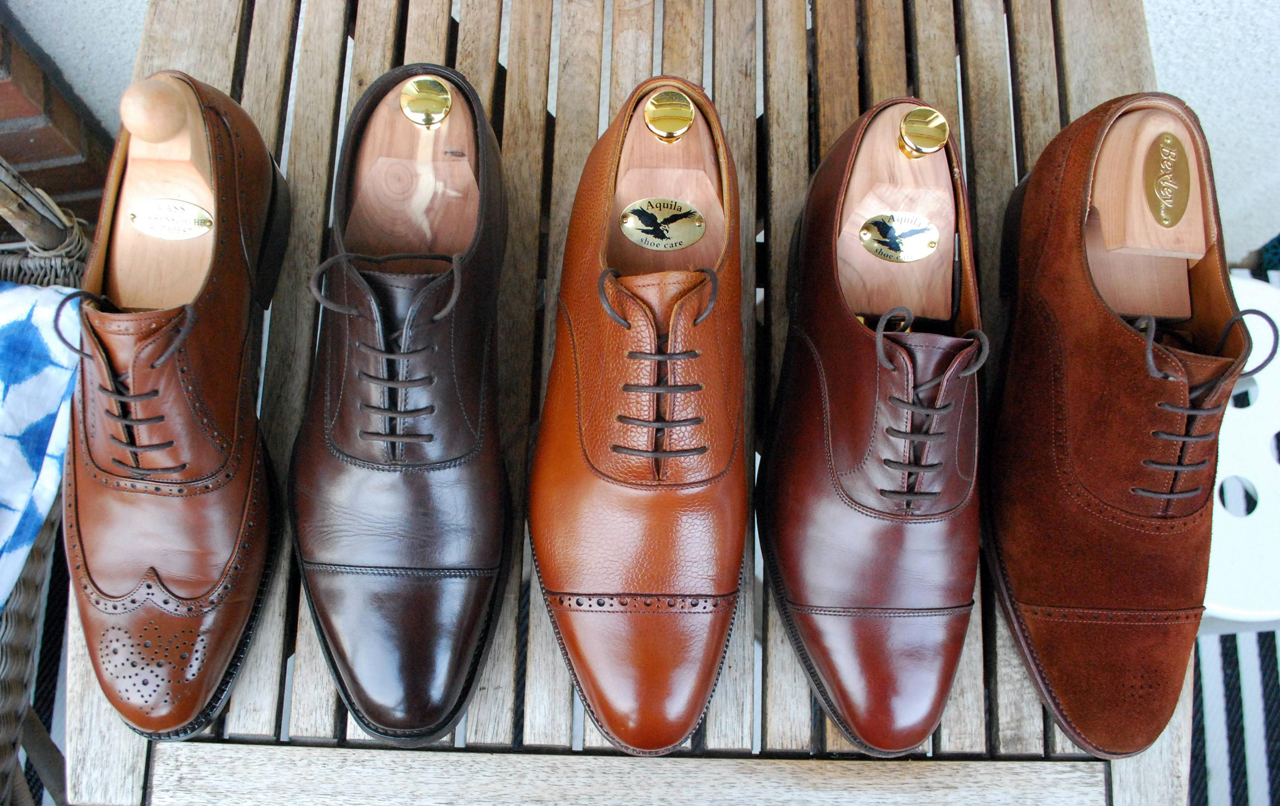 Last comparison from Shoegazing
VR: How would you describe your own dress? Which RTW makers or tailors do you favour?
JI: I wear sort of a mix between Italian and English classic style. I like a pretty slim silhouette, but otherwise basic classical style with no large excesses. My standard outfit at work is odd pants, a single-buttoned jacket, shirt, tie and handkerchief. And of course, a pair of well-polished shoes. I like to support Swedish brands like Oscar Jacobson, Eton or Amanda Christensen, but brands that I like the most is for example Caruso, PT01 and Drake’s.
VR:…and the same questions regarding footwear. I’m sure you’ve tried and owned quite a number of shoes and must have favourites in each price point.
JI: Oh, this is hard. In the budget section I’d say Loake with their 1880-range. They offer good shoes at a great price, are classic and very solid in construction and quality check.
My favourite in the mid-range category would be Spanish Carmina, they came as a fresh new wind in the industry a couple of years ago and have achieved great things in short time. I like their lasts and styles, the quality is great for the price, and I also think that their business model, where stores mainly do their own make ups of the different models, is great and gives a lot of options for the customers.
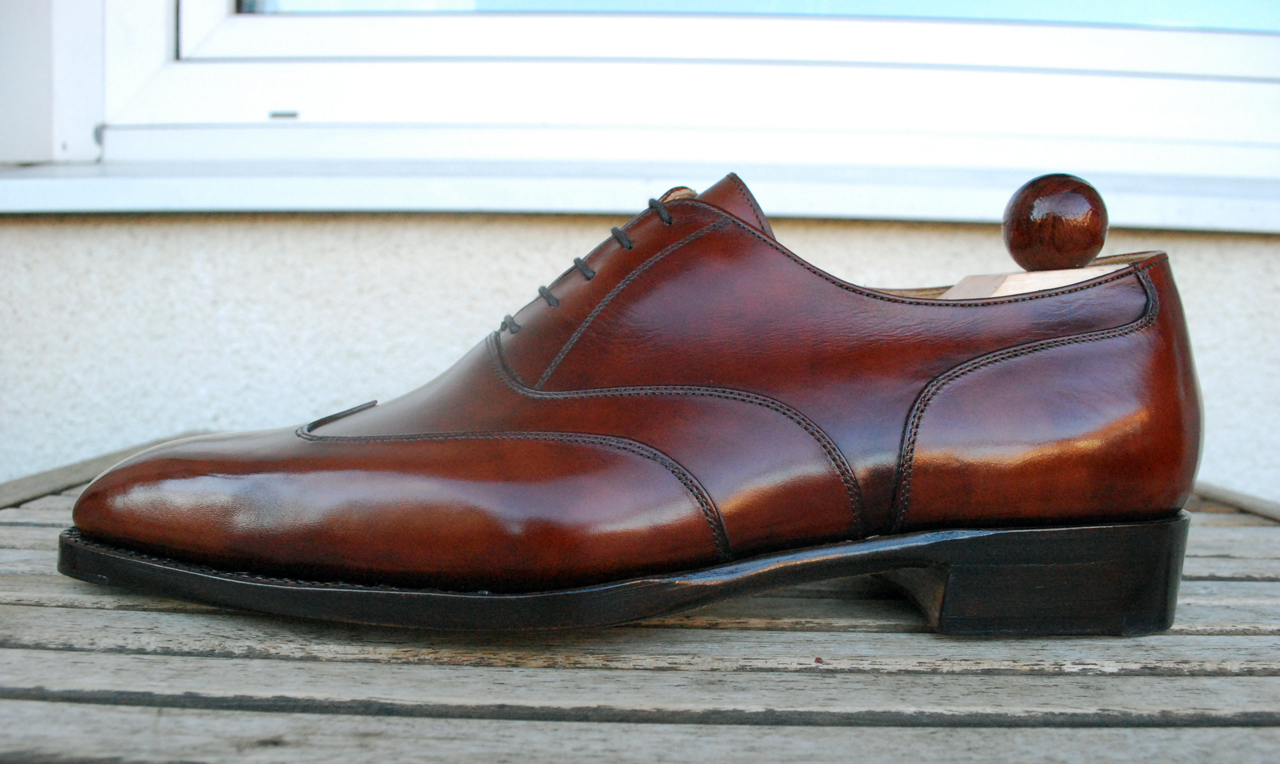 Clean lines that spell Vass, made from ILCEA’s fabled museum calf
In the premium section I’d say it’s a tie between Gaziano & Girling and Riccardo Freccia Bestetti. G&G have amazing lasts and superb material, Bestetti makes incredible handmade footwear with unique lasts, and offers a superb semi-bespoke service.
Last but not least, I have to say that the brand that offers most value for money in the world would without a doubt be the Hungarian brand Vass. Completely handmade shoes with great materials, and both classic lasts as well as modern takes made by Roberto Ugolini, to a price that starts at just above 400 euros is almost too good to be true.
VR: Who or what inspires you?
JI: I’m inspired by people who are true craftsmen. All the amazing bespoke shoemakers out there in the world, everyone from the freelance closer who works in a basement outside of London to Japanese makers who spend 70 hour on one pair of shoes just to make them perfect and end up almost losing money on the process. Tailors, who hand-stitch jackets, bespoke trouser makers like Ambrosi and so on. And my twin brother, who is a professional saddler and leather craftsman, who makes amazing things for me, like a completely hand-sewn briefcase and hand-stitched belts that seem to never come apart.
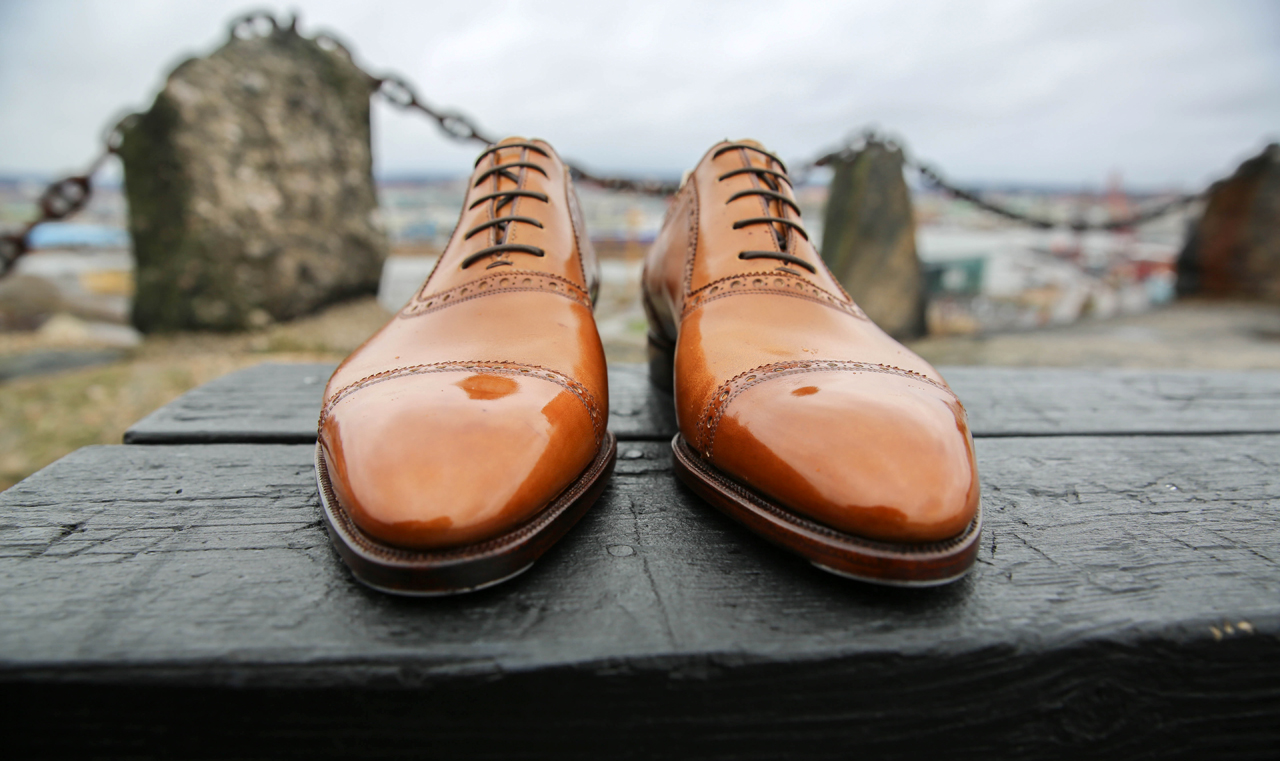 The sumptuous curves of Bestetti
VR: What is your definition of style?
JI: For me style is when someone has thought his or hers outfit through very carefully, yet feels so comfortable in their clothes that they look like they walk around in their pajamas alone at home.
VR: Is there something you wish more men would know about shoes?
JI: Gosh, there’s so many things… But ok, apart from the obvious stuff, like don’t wear the same shoes two days in a row, use shoe trees, wipe or brush of your shoes after every wear, etc., I would like to discuss fit.
First of all, if you buy shoes online and haven’t tried them on before, don’t expect them to fit well. I always include one return for exchange in my budget for the purchase. And since it, in most cases, is a RTW-shoe on generic last, the chance for a really, really good fit is actually pretty low. But there’s a lot that can be done to improve fit of shoes that’s not quite there. You can fit heel or tongue pads (either stick-ons or have a cobbler do a more professional work with leather glued and sewn on), there’s plenty of different insole types, you can stretch the shoes up to one size in width (and pinpoint the places that need more space), and so on.
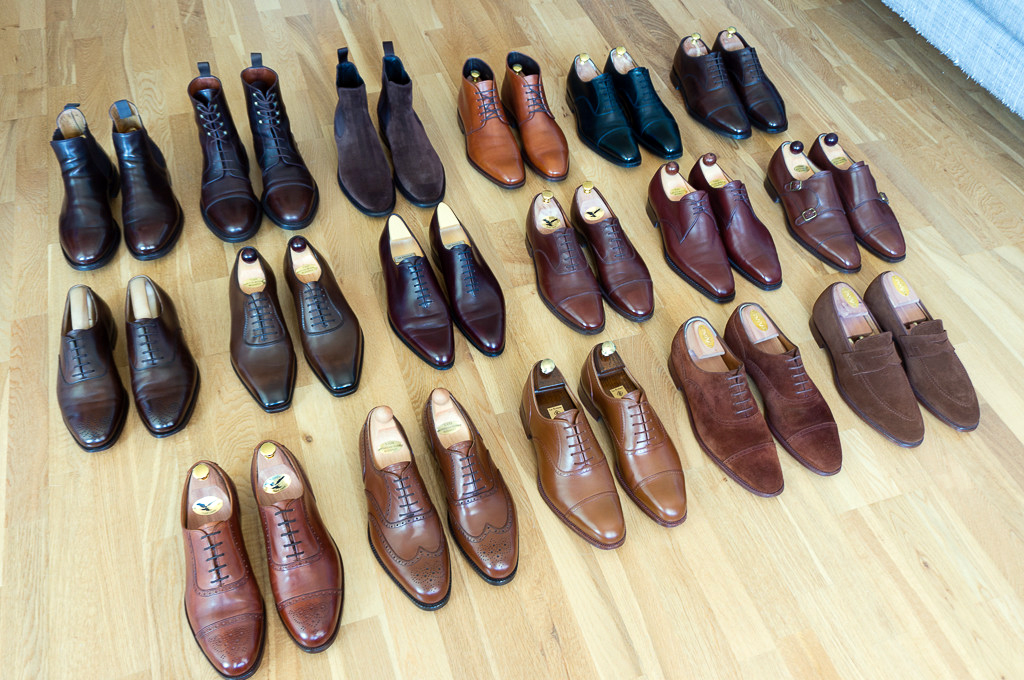 Collector’s digest
A good cobbler is your best friend here. Many people are so eager to use their new purchase right away that they settle for a decent fit instead of returning for a different size or taking them to a cobbler to do adjustments. It’s always worth the wait, trust me. I mean, what’s a week or two when quality shoes taken care for can be around for decades.
I also would like to address the fact that buying high quality, traditionally made shoes instead of glued crap is good in so many ways. You support workers who have relatively good wages and decent working conditions. You buy products that last a long time, which is much more sustainable and environmentally friendly than to toss and buy new ones all the time. You support good animal husbandry, since high quality leather comes from animals that have lived calm lives with much outdoor time in safe environments. And so on. The fact that quality shoes look and feel much better doesn’t make it worse.
Photos: J. Ingevaldsson
Category Bloggers, Interviews
Yasuto Kamoshita with Antonio Liverano
0January 28, 2014 by Ville Raivio
Category Italian Style, Japanese Style, Videos
Charles Bukowski on style
0January 27, 2014 by Ville Raivio
Style is the answer to everything.
A fresh way to approach a dull or dangerous thing
To do a dull thing with style is preferable to doing a dangerous thing without it
To do a dangerous thing with style is what I call art
Bullfighting can be an art
Boxing can be an art
Loving can be an art
Opening a can of sardines can be an art
Not many have style
Not many can keep style
I have seen dogs with more style than men,
although not many dogs have style.
Cats have it with abundance.
When Hemingway put his brains to the wall with a shotgun, that was style.
Or sometimes people give you style
Joan of Arc had style
John the Baptist
Jesus
Socrates
Caesar
García Lorca.
I have met men in jail with style.
I have met more men in jail with style than men out of jail.
Style is the difference, a way of doing, a way of being done.
Six herons standing quietly in a pool of water, or you,
naked, walking out of the bathroom without seeing me.
~ Charles Bukowski in Mockingbird Wish Me Luck, 1972
Category Quotations
Copyright © 2013 Ville Raivio