Interview with Atte Rytkönen from DressLikeA
0June 12, 2014 by Ville Raivio
VR: Your age and occupation?
AR: 28, Legal Advisor / Lawyer.
VR: Your educational background?
AR: Master of Law (graduated 2012).
VR: Have you any children or spouse (and how do they relate to your style enthusiasm)?
AR: Yes, I do have a spouse whose own style actually is impeccable, no hassle but very clean and simple. I’ve said that she leaves me in the shade when it comes to style and dressing up. But I guess that’s the way it should be, so I just try to make my best and stand up to those standards myself. I think shopping and dressing-up in general is more like a mutual interest where both can rely on another and ask for another opinion when needed. In terms of the blog, more than anything I think she’s just supportive and understanding. And no, I have no children.
VR:…and your parent’s and siblings’ reactions back in the days?
AR: Well, I guess this hobby or enthusiasm has never been a problem for any of them but, on the other hand, they’ve never had any other kind of reactions on the matter either. They’ve realized from the start that it’s a permanent part of me.
The feedback I’ve gotten from my mother or from my brothers has always been positive, and I think in a way the sparkle for being well-dressed dates from my childhood, when my mother always took care that all the children were appropriately dressed no matter where we were heading.
Secondly, when I was younger, I used to look up to my brother who I felt was very stylish and properly dressed. Nowadays, however, the roles might have changed and I’m the one taking care of their shoes and garments and all the gifts they ever get from me are somehow clothing-related. I guess (and hope) they’re pretty fine with it.
VR: What other hobbies or passions do you have besides apparel?
AR: To put it shortly, sports — in all kind of forms. I played ice-hockey till I was 18, I’ve played football, floor ball and I used to dance for quite a many years as well. Nowadays, it’s mainly gym, jogging and taking care of myself in other ways. I still follow ice-hockey and other sports pretty closely and my team HIFK has a huge place in my heart. Basically, I try to go to every home match they have during the season.
Also, I’ve always been fond of good food and drinks, but I’d say recently that interest has gotten bigger and bigger. I’m definitely not that good a cook and I can’t say to be an expert when it comes to wines or other drinks, but I really enjoy good restaurants and feel passionate about drinks in good company.
VR: How did you first become interested in clothes, and when did you turn your eyes towards classic clothing? Why these instead of fashion pieces?
AR: I think it was in the end of primary school or the first grades of secondary school when I first time was influenced by, and got interested about, trends and fashion (such as Adidas Superstar sneakers, Micmac jeans, etc.) I got very inspired by David Beckham who I really looked up as my idol and at that time I started to pay attention to the way I looked for the first time (for real). During my years in secondary school and high school I got “awarded” as being “The best-dressed guy” and “Trend of the year” in our school so I guess that also feed my interest in its own way.
In terms of more “classic style,” I guess part of it originates from the way I was raised (as mentioned earlier) but most of all I believe my occupation, and the fact that I’ve always wanted to be a lawyer, plays a big role in it. Through these ideas, visions and, of course, many TV-series, I’ve always had this picture of how one should be dressed in legal profession and what’s the standard in the field. So I believe that influenced the way I started to dress myself already in high school and why I became interested in menswear.
And, well, “why these instead of fashion pieces” is a tough question and I probably would avoid such a strict statement when it comes to my own way of dressing. Actually, I would avoid it in general as well because I believe dressing oneself and style need always to be linked to the context, environment and era. Thanks to the rise of the so-called #menswear-culture, classic style is now a “big thing” again, and someone could even claim it to be a trend at the moment. On the other hand, classic style has its own cycle and trends in terms of what’s popular and what’s not.
Finally, it’s a fact that there are pieces that can be seen and called as “timeless classics,” and making those the core and ground of one’s dressing gives it not just stability but also versatility. If we take the navy blue blazer and grey flannel trousers, for example, we have a classic combination that can be made suitable for almost any situation by just modifying the materials, textures and accessories chosen. So maybe it could be said that going with the classics make one’s choices easier and safer, but still choices need to be made on the aesthetic- and personal preferences.
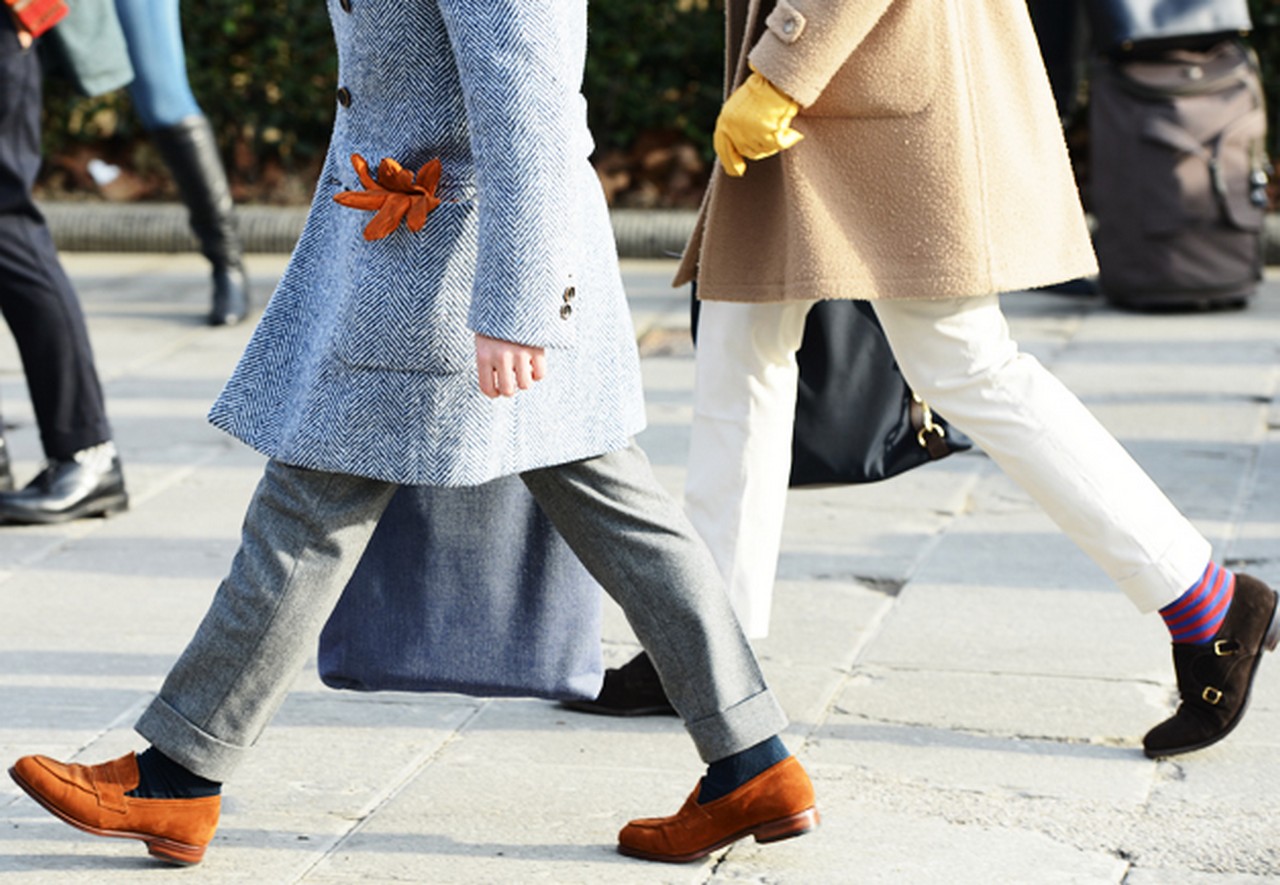 As seen on Pitti Uomo through Tommy Ton’s lens
VR: How have you gathered your knowledge of apparel — from books, in-house training, workshops or somewhere else?
AR: Like everyone, I believe, who has interest in classic menswear, I’ve read the books written by Roetzel and Flusser. Also I think one of the first places I looked for information back in the days was the Keikari-website. I’ve also acquired and read other books but I need to admit that most of my knowledge I’ve gathered through websites and forums. During the last couple of years, I’ve been lucky to meet a lot of people from the industry, who posses a huge amount of knowledge. Following what they are doing, having discussions with them and being able to see the industry “from the inside” has been a great experience, and through those people I’ve gained a great deal of knowledge as well. But there’s still a lot to gain…
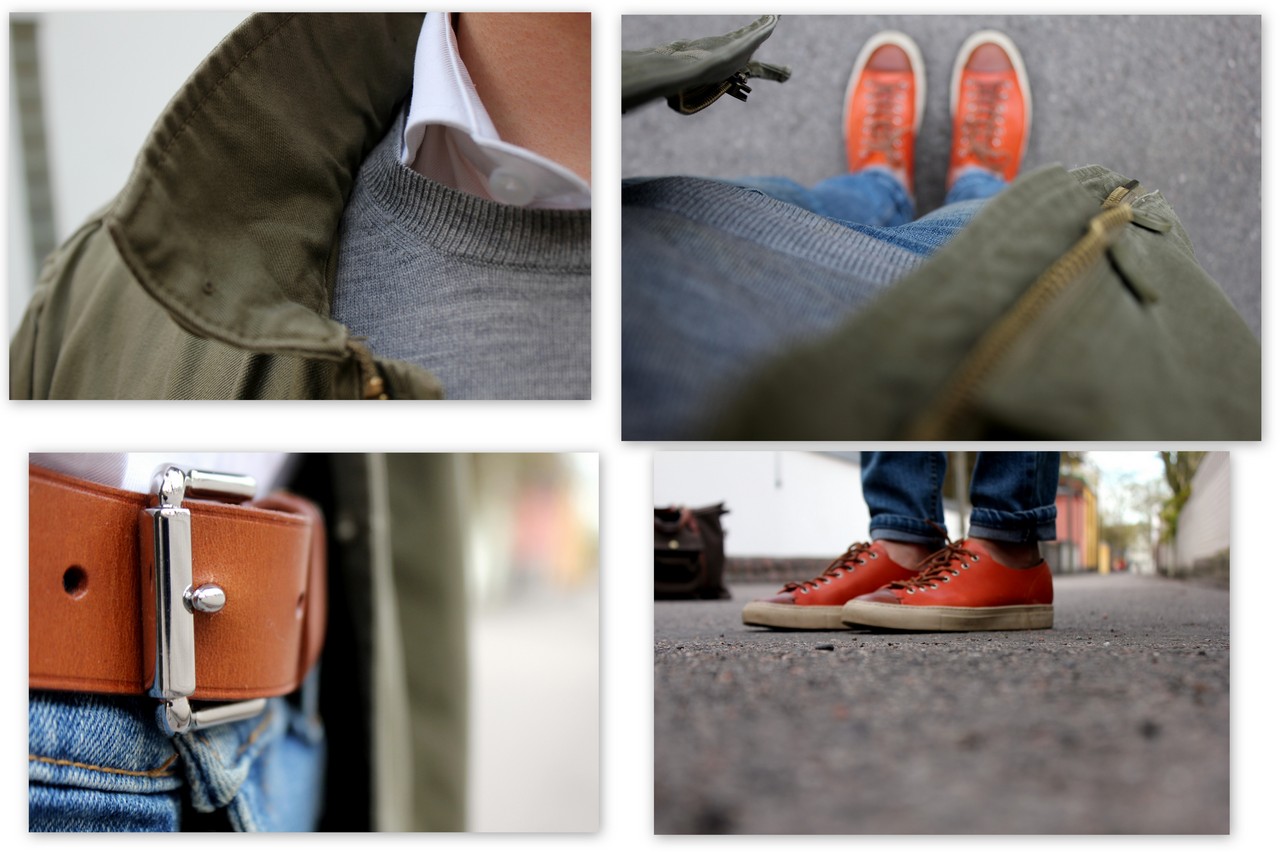
VR: When did you decide to set up DressLikeA (at Blogspot) and what’s your motivation for the site? How do you select the content?
AR: Well, it’s now been around three years since I started DLA, which in the first place happened after many of the people I knew had told me I should start posting. That, I think, was because during this time there were only a couple of blogs concentrated on menswear and men’s “classic style” in Finland (Keikari being one of the only ones). Despite this, the main reason for starting to post, however, was to use the blog as an inspiration board for myself.
Many things have happened after that. From the beginning, or at least from the point when I moved my blog from Blogspot to Tumblr, the reception for the site has been more generous than I could have ever even hoped for. The main reason for my blogging is still to bring up content I get inspired by, but I also recognize the fact that through my posts I can inspire others.
In terms of content, there are of course many sources of ideas and inspiration. First of all, nowadays I get a lot of feedback, questions and inquiries from my readers (which I’m really grateful,) so those often inspire me to write about products or how to wear or acquire some specific pieces, for example. Secondly, the content of the blog is, of course, a lot inspired by my own style choices. Many times if I’m looking to buy something, or have bought something, I may find it useful to write about that to help my readers in case they’re going through a similar thing. And thirdly, there are obviously seasonal changes and trends that are interesting and inspiring to write about.
There are many good Tumblr-blogs (and #menswear-blogs in general) so what I’m trying is to make DLA original and personal, and to be something that stands out of the crowd while not just being one of the sites re-blogging the same pictures like others.
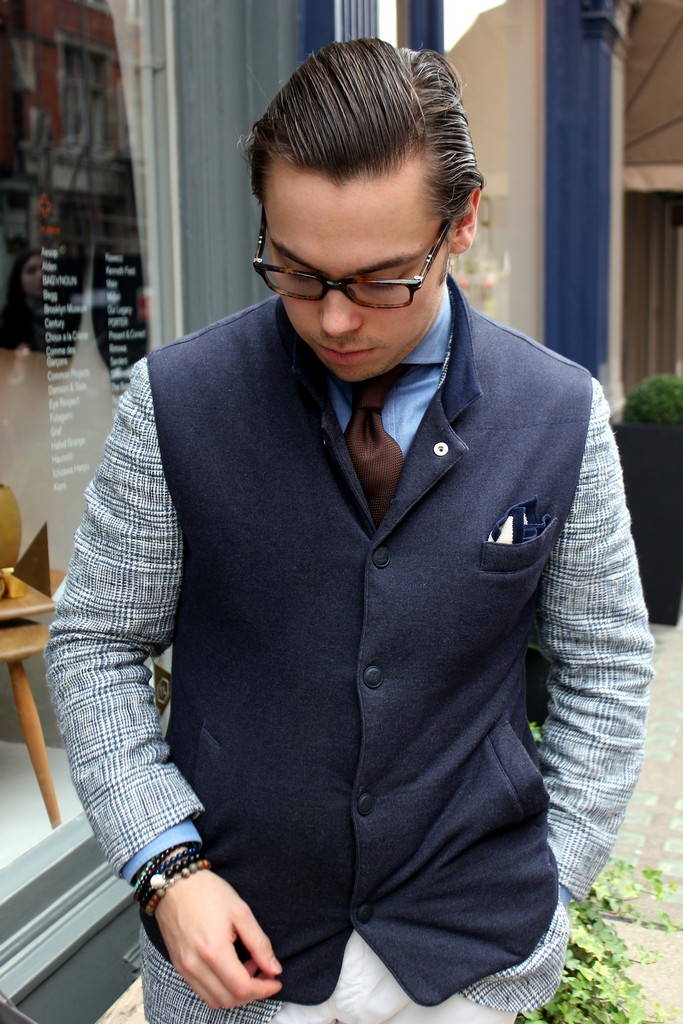
VR: You’re also part of the new Tyylit.fi-website. When was the idea born and what plans do you have for the content?
AR: Right, tyylit.fi is a project that has developed into what it is (at the moment) through the last couple of years. First of all, in a way to give credit for the founding of Tyylit, my thanks go out to you, Ville, because Keikari’s forum was the place where we guys now running tyylit.fi met in the first place.
Tyylit.fi has two different sides, the blog and the forum. In the blog, there are three editors in addition to myself and, in terms of content; we try to cover not just menswear and clothing, but to write also about movies, drinks, traveling, culture and lifestyle in general. We are just at the beginning of our journey when it comes to tyylit.fi but I firmly believe that it’s something Finland has been missing, and the kind of website there’s a real demand for. As I’m writing DLA in English and most of my readers come from abroad, I did not want to change the language into Finnish. On the other hand, writing one blog in two different languages did not sound like a good idea either. So far I’ve been really satisfied with what we have done with #tyylit and I believe it will grow to be the biggest style and #lifestyle-site for men in Finland.
So, whereas Keikari is mostly about classic style, tyylit.fi tries to cover style in a more broad perspective. Some people have tried to build some kind of a confrontation between tyylit.fi and Keikari, but I personally believe that, as the menswear-culture in Finland is still in its infancy, there’s definitely a place for both sites and both communities.
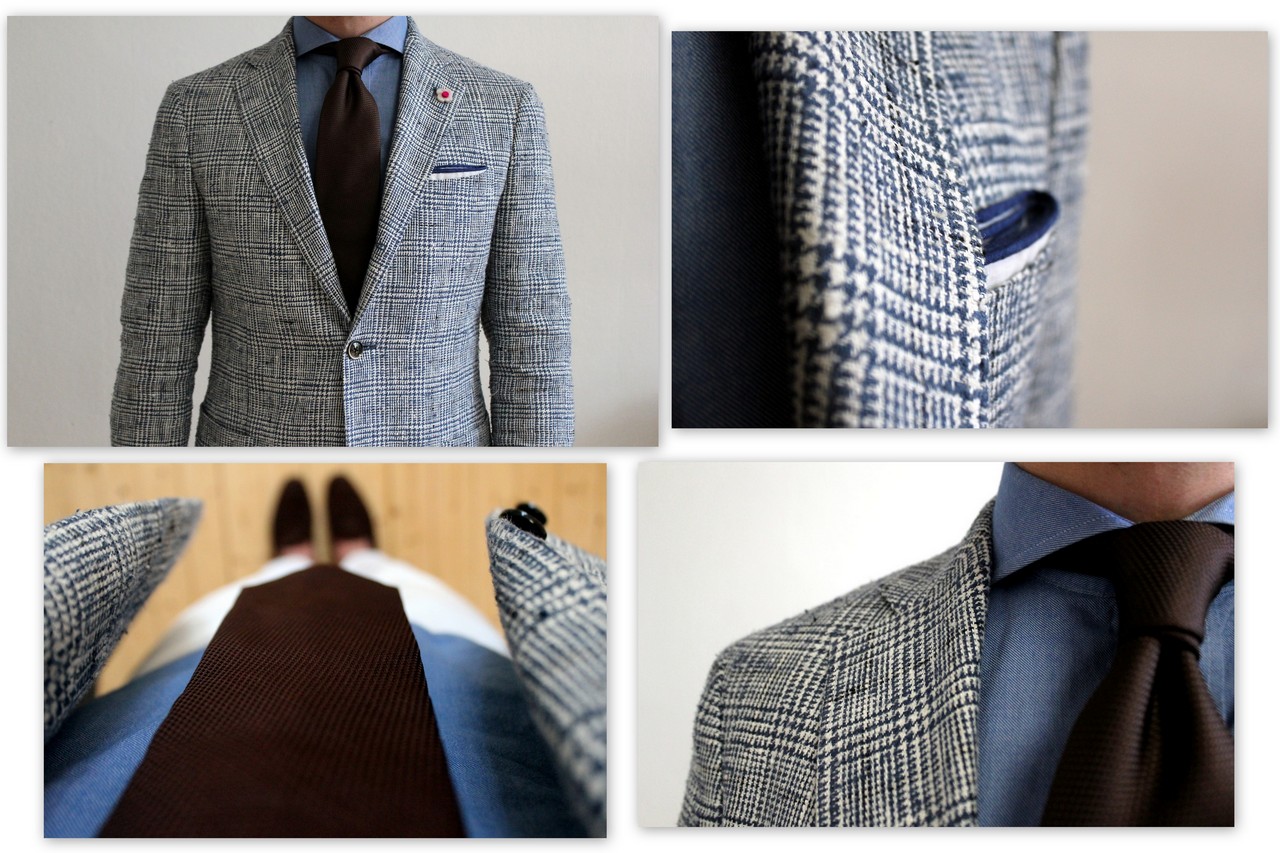
VR: How would you describe your own dress? Which RTW makers and tailors do you favour?
AR: My style is simple and adaptable. In general, I’d claim my style to be pretty versatile but always guided by the phrase “Whatever you wear, always dress to kill” — which actually stands as a guideline phrase for DLA.
What I mean is that it doesn’t matter whether you’re wearing a suit or jogging pants, you need to be able to feel confident and representative in whatever you’re wearing. I try to keep my style always appropriate for the occasion; at work my style is mainly formal (whenever necessary), outside of work it has more of a casual twist. A couple of years ago my style was a lot more about bright colors and a lot of different details but I’ve come my way to learn how to keep it simple.
Secondly, I personally admire Italian style as well as the way of thinking, so most of my influences and the style I’m aiming for come from there. However, I am living in Scandinavia where we have 4 clearly different seasons, and every now and then it can get really cold and snowy, so even though one might be inspired by the Italian way of dressing, one needs to learn to adapt the style to the climate.
All in all, style, clothing and dressing oneself need to be fun and inspiring, not something inflexible or something you are “forced to do”. You need to acknowledge certain rules and etiquette that are not meant to be broken, but, on the other hand, after you’ve learned to deal with the rules you can also learn how to break them in a right way.
In terms of brands, shops and tailors, I more and more try to favor Finnish brick and mortar shops (such as Vaatturiliike Sauma, My o My, Fere and Schoffa) as well as stick with the brands I know the people behind of. When talking about brands, for suits and jackets I favor Lardini, G.Abo Napoli, L.B.M 1911, Tombolini and SuitSupply at the moment. Most of my trousers come from the Korean brand Finealta which is specialized to making just trousers, and I believe two thirds of my current ties are made by Drake’s or Viola Milano. In shoes, I have multiple pairs from Alfred Sargent, but I’m also a huge fan of Carmina and Crockett&Jones. Finally, I value a lot of (new) brands that are born from the passion of their founders, such as Christian Kimber Footwear and the before mentioned Viola Milano for example.
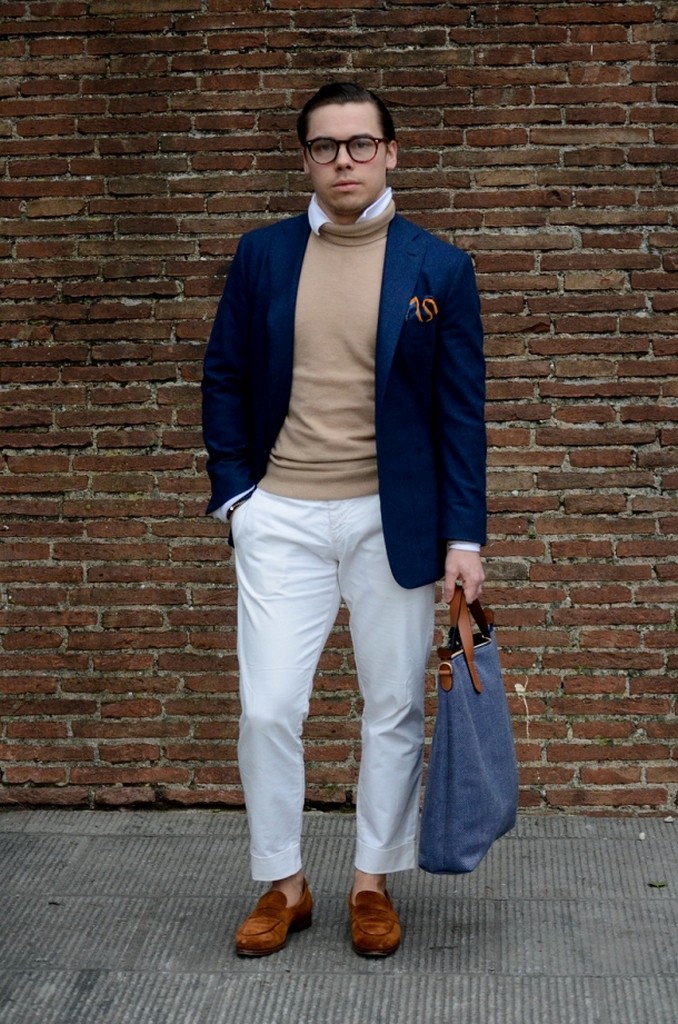
VR: Who or what inspires you?
AR: In general, I try to gather inspiration from everyone, wherever I am and whatever I see. But basically I happen to find most of my inspiration from people walking on the streets, the guys at Pitti Uomo or at NY or Milan fashion week, the people I have around me, the places I travel and very much the colors I see around me. In addition, I read a lot of other blogs and magazines which are a big source of inspiration for me as well — not only in terms of my personal style, but also for the blog of course.
One thing I always want to point out, when someone asks about my inspiration, is a quote I found years ago on Styleforum; when it comes to developing your own style (or the style of your blog for that matter,) you need to separate inspiration from copying someone’s style. You must always investigate, you must learn, you must understand and then you must choose. If you’ve done your due diligence and appreciate the process, then you’ll never let “the popular opinion” dictate your success.
Finally, there are many people I admire and I get inspired by. In case of certain individuals, I come up with names like Ezio Mancini, Renato Plutino, Yukio Akamine, Jeremy Hackett, Brunello Cucinelli, Alberto Scaccioni, Patrick Johnson, Agyesh Madan, Nick Ragosta, Antonio Ciongoli and one of my dear friends Tuomo Pynttäri from Vaatturiliike Sauma.
VR: What is your definition of style?
AR: I think style is all about good manners and respect for other people. In terms of clothing and style, I’d say it’s essential to be able to dress oneself according the situation and environment and to do that with simplicity, adaptability and personality.
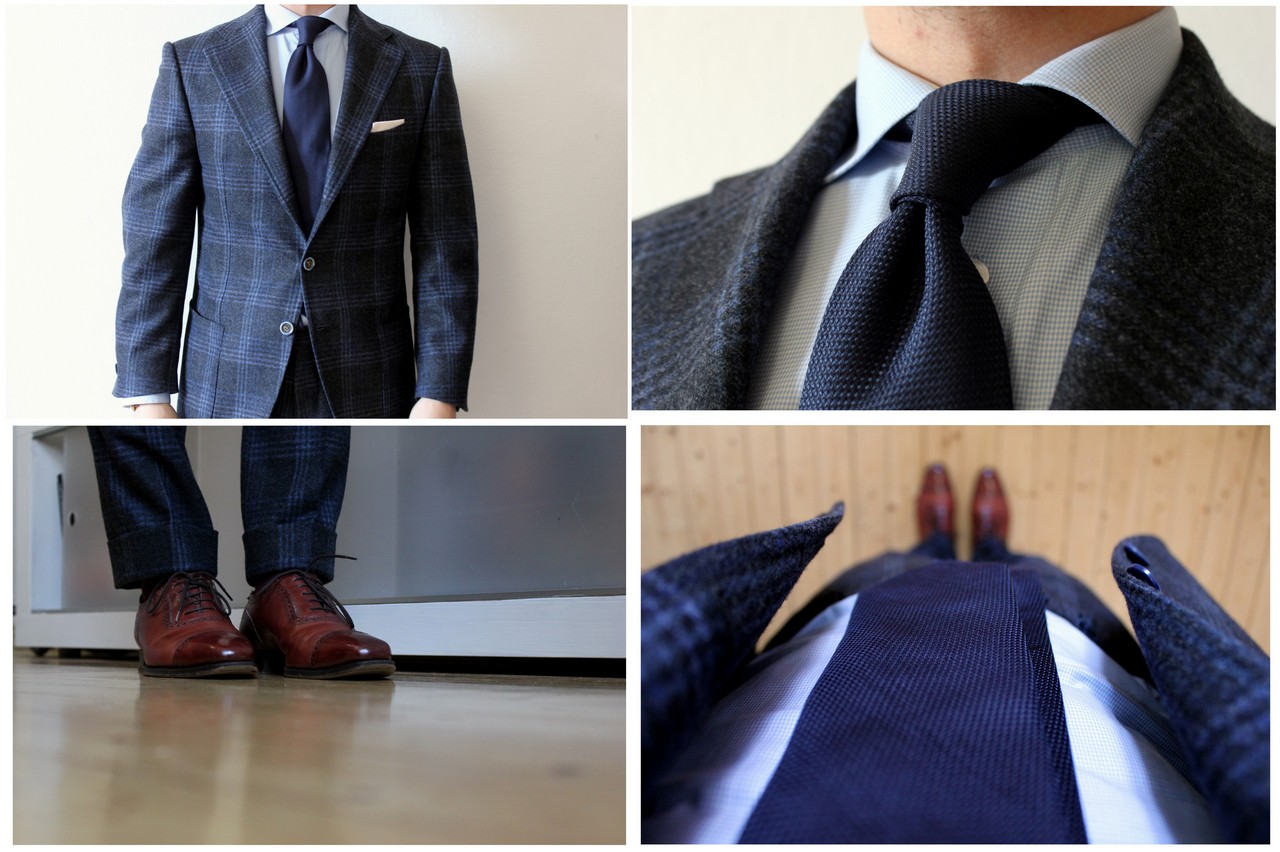
VR: Is there something you wish more men would know about dressing well?
AR: First of all, simplicity is beautiful and most of the times less is more. It also might sound a bit arrogant, but one of the greatest recommendations that many times stands true is “If you’re not sure what you’re doing, don’t try it”. One can, of course, learn (and everyone does) through trial and error, but not everything needs to be done that way. So, if you’re not sure, play safe. Go with simple combinations, follow the color-wheel, and mix colors and textures that are close to each other. As said before, you don’t need to follow every rule but it helps if you know them.
Secondly, dressing oneself starts from awareness, both for oneself and the environment. Age, presence, build, skin color, the specialties of body, and, through these combinations, finding the colors and style that suits oneself. Not all styles or clothing suits everyone, so just copying someone else does not lead you to success. In addition to yourself, you must also acknowledge the environment you are dealing with. If jeans and a polo-shirt are the norm at the workplace, it might look odd if you one day arrive to the office fully dressed-up wearing a suit and a tie and just giving the impression that you’re trying too hard.
So, to put it shortly, dress according to your age, dress according to the situation and dress according to the environment.
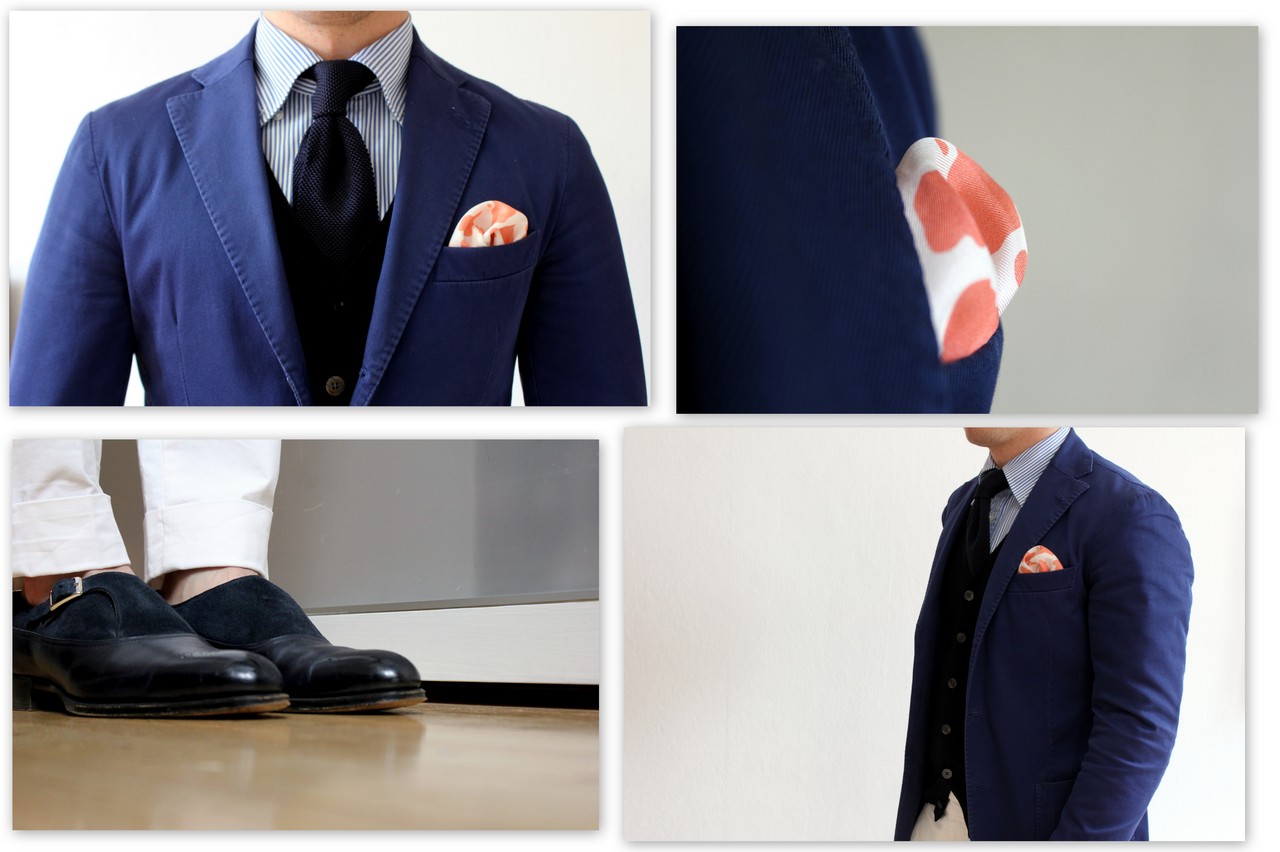
In the beginning, you should concentrate on basic acquisitions and build the wardrobe piece by piece. Start with garments that are versatile and choose quality not quantity. One can never underline the importance of a good fit. That’s the most important thing to pay attention to. You don’t need an expensive suit to stand out — jeans and a t-shirt will do if you just make sure the fit is right. After you’ve covered the basics, you can move to the next step and start making purchases just based on feeling.
Finally, my advice for not just those who are in the beginning of their path but who already have covered the basics, who read blogs and spend time on the forums; Concentrate and focus your energy on how you can make yourself look better not through negativity or finding mistakes in the way others are dressed. In the end, dressing up, menswear and clothing are supposed to be something that make you feel good.
Photos: DressLikeA
Category Bloggers, Interviews, Men of style
Can I get vents added to my ventless jacket?
0June 2, 2014 by Ville Raivio
Scrolling back a few years, the incomparable Manton took the time to once again answer the bit that habitually comes up online. The short answer is no and the longer answer is…maybe. Much depends on the fabric, the original maker and the alterations fellow.
http://asuitablewardrobe.blogspot.com/2009/12/guest-post-no-you-cant-add-vents-to.html
Category Reading
Interview with Andrey Bokhanko from Gents’ Club
0June 1, 2014 by Ville Raivio
VR: Your age and occupation?
AB: 34 years old, software engineer (believe it or not!)
VR: Your educational background?
AB: I studied software engineering at a university; then got a PhD on software engineering (and not elegance!) Although sometimes software systems may be quite elegant.

VR: Have you any children or spouse (and how do they relate to your style enthusiasm)?
AB: Married, no children. My wife is OK with my enthusiasm — as long as I spend as much on her clothes as I do on mine.
VR: …and your parent’s and siblings’ reactions back in the days?
AB: I grew up in the ‘80s and ‘90s, which were not a very elegant time in Russia. Like almost everyone, back then I was mostly concerned with what to eat and how to protect myself from the elements — not with style.
VR: What other hobbies or passions do you have besides apparel?
AB: Mostly procrastinating and enjoying the “little trifles of life,” as Will Self put it.
VR: How did you first become interested in clothes, and when did you turn your eyes towards the classics? Why these instead of fashion?
AB: When I finally started to look for something else besides low prices on clothes, I decided to read a book on the subject. I was fortunate to find Gentleman: A Timeless Fashion by Bernhard Roetzel — the book that got me hooked. I’ve never really looked at fashion since then (or ever).
VR: How have you gathered your knowledge of clothing – from books, in-house training, workshops or somewhere else?
AB: Books, forums, old Hollywood movies — just like everyone else. Apart from Roetzel’s book, Michael Alden’s (the founder of thelondonlounge.net) writings have had a profound impact on my understanding of style.
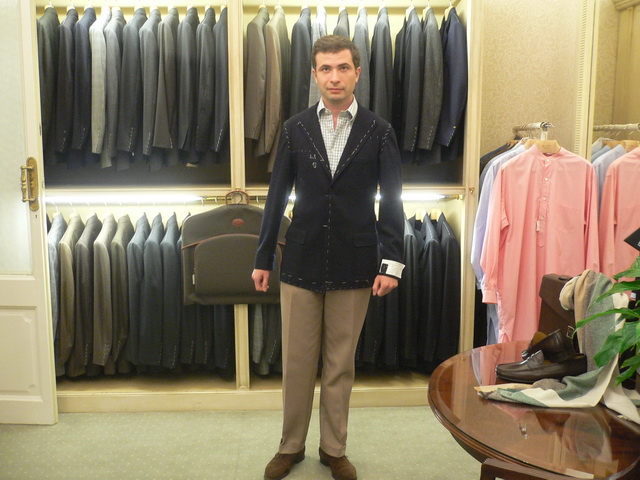 Suiting up
VR: When was Gents’ Club founded and what was goals did the founders have in mind? Have you organised any events for the members?
AB: It started back in January 2010. As for the goals, I guess we (the three founders) simply wanted to create a quality Russian-language forum about classic men’s style. Probably a combination of what is, or was, good in The London Lounge and styleforum.net. We used to have monthly meetings every last Thursday of the month, but not anymore. Style forums are slowly dying, being replaced by the Facebooks and Instagrams of the world, and I’m afraid our forum is not an exception. These regular “last Thursday” meetings are already gone.
VR: How would you describe the style of Russian men and businessmen in general?
AB: It is very different depending on where you look. Civil servants prefer one thing, like jackets that are too big and trousers that are too long, businessmen prefer another, such as your usual Italian stuff that is OK, but frankly makes them indistinguishable from one another, and most people simply don’t care. Of course, there are men who dress very, very well. And I like to think that there are more and more of them with each passing day. Maybe due to the big influence of our little forum? But you really have to know one thing: the ladies in Russia not only look beautiful, they dress beautiful as well! The male population is way behind.
VR: How would you describe your own dress? Which RTW makers or tailors do you favour?
AB: “Country in a city” or “A weekend in the middle of a work week”. As I said, I’m a software engineer, so I really can wear whatever I like as long as it is not too formal. Yet I like classic, which mostly means formal in our day and age, clothes! This leads to a collision of opposite things.
My tailors and shirt makers are Kent, Haste & Lachter in London, I get shoes from the usual stable of English makers (from Cheaney to Green with no favourite brands so far) and, of course, I frequent English county outfitters like Cordings. As for knitwear, Westaway&Westaway’s online shop is my absolute favourite.
VR: Who or what inspires you?
AB: Fred Astaire, if you mean “style hero”. Too many people to list here if we start to speak on other aspects of life.
VR: What is your definition of style?
AB: It is a projection of who you are — to the outside world and to yourself.
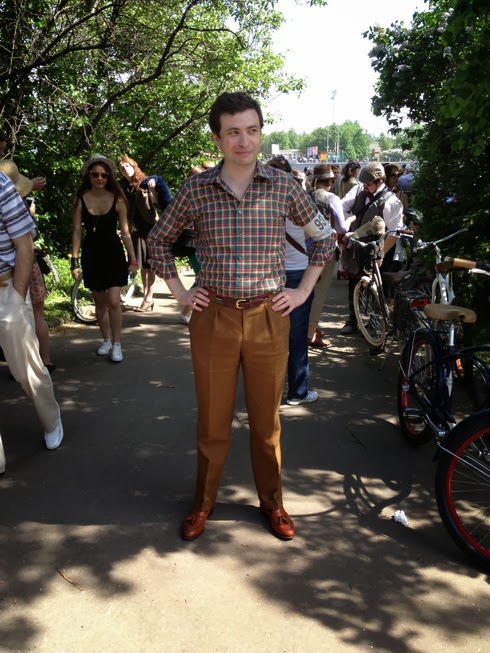 Tweed Run 2014
VR: Is there something you wish more men would know about shopping for classic clothes in Russia?
AB: One tip: do your shopping somewhere else! :-)
Photos: Andrey Bokhanko
http://bespokeetc.blogspot.ru/
Category Bloggers, Interviews
Factory tour at J.M. Weston
0May 30, 2014 by Ville Raivio
Category Footwear, French style, Quality makers, Videos
Identifying quality leather
0May 29, 2014 by Ville Raivio
“Genuine leather” has not been a useful marking in decades. Leather can be made from most any animal, and it ranges in quality from beat-up poor to illustrious, so the marking of does not serve the buyer much at all. Each animal and hide is an individual, thus leathers will have clear distinctions from the start. These will only grow stronger with the chosen tanning method and handler, making the skill of spotting quality in leather useful for any man. Thanks to swell durability, adaptability and ease of use, leather is unsurpassed in manifold objects. The most common uses are belts, accessories, footwear, bags and furniture, but imagination alone is the obstacle. Even miracles are not ruled out, for any skilled cordwainer can make a flat hide bend to a 90-degree angle and stay put for years, as exampled by seamless Chelsea boots.
Tanning methods are several. Vegetable-tanned leather is tanned true to its name, with tannins derived from plant sources like bark and leaves, and this method is among the oldest still in use. A prime material among the Flora is the venerable oak, whose leaves and bark, combined with patience and time, yield some of the strongest leather known to man. Oak-bark tanned leather also has a pleasant smell, light colour and a high price tag. Most vegetable-tanned hides are light brown and spread wonderful aromas for the curious sniffer. These hides are fairly easy to craft into beautiful goods and the tanning process, while slow like the turn of seasons, is environmentally sound. Vegetable-tanned leather doesn’t enjoy moisture, though, and thinner leathers will bleed colour and turn unstable or brittle with time while the thickest hides, like leather sole bends, will only laugh the rain to scorn. Concerning apparel, vegetable hides are mostly used on soft moccasins, leather linings, gloves or inner and outer soles.
The vast majority of leather is chrome-tanned, a method born in 1858 when chromium sulfate was first used in tanning raw hides. This inorganic ion compound is highly effective and fast, producing flexible, moldable and moisture-resistant leather that keeps its colour. Drum-fresh chrome hides are blue due to this tanning agent and must be dyed before use. If the tannery practices shenanigans by not cleaning residue liquors, chrome tanning is highly unsound for the environment. While vegetable tanning takes from a few days to closer to one year, chrome hides will be ready in a day or two. The end result will look like the blue diva from The Fifth Element and reek like a Mangalore, but chrome leathers will age well and resist moisture so this leather is widely used in finer leather goods.
Vegetable and chrome tanning can also be combined. Then the process won’t take as long or reek as much, and the end result is a fairly swell union of the historical tannins and industrial chrome. Apart from these two, raw hides can also be tanned with formaldehyde, cow brains, oils, aldehyde, rose oil, synthetic tannins and aluminium salts, which all have their effect in the finished leather. The tanner may also take his cue from Native Americans, who crafted raw hides by scraping them thin, soaking them in lime and then stretching them between a few poles. This native leather is the least durable and most stiff, but also the easiest and cheapest. After one or several methods, the leather can also be treated with oils, waxes and tallow. Apart from colouring, different patterns can be pressed or carved onto the surface to change the result and form artistic visions or an artificial grain.
Manufacturers have ways to have their way with customers. Enter “Genuine Leather,” exeunt earnestness. All leather is leather, yes, but not all leather is worth buying. The poorest of these is called corrected grain leather, whose surface grain is sanded off to remove scars, blemishes, unevenness or stretch marks, then coated with a thin layer of plastic that creates an unnatural shine. These hides are taken from old and battered animals and chemical treatment is simply used to hide imperfections. All hides that won’t make the cut to become quality leather are corrected. This poor leather-like substance can be identified by its high shine, plasticky surface and pungent smell. Hair follicles can’t be seen at all for they’re sanded off and covered with a plastic film. When bent, corrected grain leather will form deep creases that cannot be prevented with shoe trees or one litre of Saphir. In due time, these will turn into crevices, to clefts, to chasms, until the leather breaks into a void.
The most common leathers are bovine. Calfskin is very durable, smooth, clean and long-lasting but expensive, while older cow hides are cheaper and good enough for many uses, and water buffalo is another very durable leather and spotted with bigger follicles than calf. Bovine hides are around three millimetres thick, and most will be split in the tannery as per the customers’ wishes. The thickest hides will be split into several parts and most shoe leathers measure a bit over one millimetre, glove leathers thinner still. Some thick leisure bags and work wear boots use unsplit leather for added beefiness, though most bags use leathers in the measure of two millimetres. Bovine leathers split into two parts become top-grain leather, the upper part with follicles, and split leather, the bottom part with the flesh side. This lower part retains but ~10% of the full hide’s original strength, making split leather always the poorer choice. It’s often pressed with machines to make an artificial grain on the upper side that once was the animal’s outer skin.
The fleshy side of split leather is usually cleaned by sanding, thus forming split suede. This material is less durable than suede made from the top-grain side, which is as fine and dandy as top-grain leather. The highest-quality shoe and clothing suede uses top-grain leather, either in the form of nubuck or reverse calf. Nubuck is the top surface that is lightly sanded to form a nubby texture that’s denser than suede, and reverse suede is the bottom surface that’s finished to form a uniform suede nap. All suedes gather more dirt and get more soiled than smooth leathers unless the nap is treated with protective coating, usually with a spray of sorts. Suede can also be cleaned with special products that make a world of difference. Thus the poor reputation of suede as a delicate, less durable material is an untrueism.
The upper part of a split hide, top-grain leather, is the better stuff. It still has the durable outer surface that used to house the animal’s hair. If this top-side has nicks, cuts, bruises or blemishes, these can be sanded down and finished with a top coat of dyes, which make the leather less cool and prevent a nice patina. As long as the treatment and dyes last, the coated leather shuns dirt and moisture better than aniline-dyed leather. Most of the better leather goods in stores, such as pricy bags and footwear, are made from more or less modified top-grain leather.
By far the finest leather type is aniline-dyed top-grain calf leather, which is never coated or sanded to hide natural marks. Only the finest hides justify the trouble of aniline dyes, which soak through the surface deep into the leather, preserving the grain, surface, texture and quirks of the leather. Most makers will click or cut away all spots with traces of the animal’s past life, leaving the best bits for the best uses. Follicles can be seen clearly as small dots and the strength and durability are much better than on splits. Aniline calf allows evaporation from the wearer’s skin, preventing hands or feet from getting gurgly and squishy inside gloves or shoes.
Instead of breaking down to crevices, top-grain leather develops patina after bending and with abrasion as the years pass by. Unfortunately not all tanners allow plenty of time for the hides to drink deep of the dyes, and leathers such as these are rush-jobs that lack depth. Aniline-dyed and rush-dyed leathers are difficult to differentiate for the layman, unless the leather goods show the sides or bottom surface of the hide. If either of these spots shows blue colour instead of the surface colour, the leather has been shoddily tanned. Trouble is, most hide corners are quickly coated to hide the blues below. Scratching the leather may show the truth, even if the reader can’t handle it.
After internalising all this, I hope the reader understands why “Genuine leather” is not a reliable marking. If the seller doesn’t know what’s for sale and the customer knows no better, what follows is commercial theatre — or cheating at its rudest. Before making a purchase, it can do no harm to inquire the seller if the goods have been made of aniline-dyed top-grain calfskin, that quality stuff with no peers. Vegetable and chrome tanned leathers, in turn, can be separated with a few handy tips. When the surface is scratched and these scratches can be hidden by brushing the surface with a cloth, the leather is tanned with vegetable tannins. Smell is another factor, as natural tannins are pleasing for the nose. Burning a small cut of the leather should also show what’s what: green ash is a sign of chrome.
Asking about the origin is helpful. At the moment, the finest raw hides are raised and tanned in Europe, where certificates and advanced technology yield quality. Better still to ask about the tannery, though this bit does demand knowledge about the differences between the many hundred makers in Europe alone. Perhaps the easiest route to fine results is to buy one’s leathery charms from reputable makers trading in leather goods. They must uphold a fine level in order to keep their reputation and client base gathered over decades or centuries of excellence. Specialty stores, whose retailers are in it for the passion as well as a bit of profit, can likely be depended on when leather is concerned. Corrected leather can be spotted by looks alone, but split and top coated leathers are more difficult to tell from aniline hides just with eyes. As long as there are buyers, there is a shyster for each of them — and the client usually gets what he pays for. Excellence in leather is an investment in time.
With proof-reading and help from Master Leather Man Jussi Neirtamo from Nippanappa and CEO of Ahlskog tannery, Carita Pöntiö.
First published in Finnish 3.3.2013.
Copyright © 2013 Ville Raivio