Undergrad style
0September 10, 2014 by Ville Raivio
“University undergraduates dress like normal people, only more so.”
~ Esquire’s September 1940 issue
Category Quotations
Ivy Leaguer Casts Wary Eye at Fads
0September 1, 2014 by Ville Raivio
Ivy Leaguer Casts Wary Eye at Fads
In which a product of Princeton explodes the theory that 1957’s male children are blue-blooded Ivy Leaguers.
By J. B. Underhill
If there’s anything that gets bigger laughs in the Ivy League than Ivy League fashions it’s a dunning notice from Brooks Brothers. For like that famous New York clothing store which put its first suit together in 1818 and hasn’t changed the cut since, Ivy League dress is the product of age, tradition, studied casualness and the economic effects of a couple of wars and depression.
Fashion a la Yale, Harvard, Princeton, Cornell or even Columbia just “growed” like Topsy. And all the attempts at imitation put out by the Grand Rapids type of clothing manufacturers can’t fake it. Take the “pear shape,” for example. That’s the no-padding, no-pleats effect that makes any Ivy Leaguer (he’d never be caught dead using the term) look like a bag of potatoes. He’s gathered on top like a barley sack, flares at the waist, then narrows at the ankle like an Edwardian dude.
Distinctive shape
The distinctive Ivy shape, of course, is accented by a tweed jacket and gray flannel trousers. The shirt, of course, is Oxford cloth, with a button-down collar. They have been worn by Ivy idlers since Scott Fitzgerald’s campus hey-day. The button-down stemmed from the polo shirt. Kept the points from slapping the rider’s eye, the fashion tradition says. For a while such prominent clothing establishments as Brooks in New York, J. Press, Chipp, Langrock and Fenn-Feinstein, which are scattered in the Ivy metropolises, put a button in the back. But this decoration atrophied during World War II. Hasn’t come back either, except in imitation shirts.
Want to tell an authentic Ivy League Oxford button-down? Look at the breast pocket. It won’t have one. The well-dressed casual Yalie caries (a) his father’s cigarette case (b) a crushed pack in his hip pocket (c) a pipe.
Three buttons
The jacket must have three buttons, setting up a constant war between the Ivy dresser and the pressing establishment which irons his clothes. Pressers think all sports jackets should have that be-bop, two-button drape effect. They press them that way. Joe Ivy takes most of this press out by buttoning up three button and hanging the garment in a steamy bathroom. Mildew sometimes sets in, but the purity of the three-button line is preserved.
Jackets skirts are cut long out of deference to the horsey set from Baltimore, Philadelphia, a few Connecticut provinces and the Myopia Hunt near Boston which each year assimilates any number of “Yoicks” -shouting Harvards. The swirl also conceals the hip flask needed for dry weekends at Vassar.
“Look, Jack, if i wanted pleats in my trousers I’d wear a double-breasted suit, too.” With this rapier-sharp jab, a classmate of mine pinioned a “boldlook” men’s store salesman in Dubuque, Iowa, several years ago. He since has bought all his clothes by mail from New York, adding inches to his carefully calculated measurements in the Manhattan store’s files as the years go by.
Pleats banned
For by their pleats ye shall know them. A pleat at the belt is to the Ivy Leaguer like the wrong shade of lipstick to the high fashion model. If caught at the Yale, Harvard or Princeton clubs in such attire, he would probably lose seat privileges at a Big Three football game. Shoes: If he’s out of college, cordovans shined – but not too shined – are musts. On the campus white buck shoes still are popular – if they are properly dirtied.
There is a special pit in the Harvard Yard where undergraduates (usually in the dark of the moon, because it would mean automatic disbarment to be caught) rough up their bucks to a proper dullness. White bucks so caught on in the Ivy League, that “white shoes” or simply “shoe,” became a common adjective for “fashionable,” or “up-to-date.” But the anti-white buck faction is making spectacular inroads. The group was spearheaded by a group of members of Princeton’s most exclusive Ivy club who took to wearing dirty white sneakers with their traditional dark gray flannel slacks.
The ultimate was struck in 1955 by a DKE at Yale named F. Peter Ffost, 3d, who had summered at Cap d’Antibe, soaking up a miraculous Mediterranean tan. He appeared in the fall at New Haven in a gray flannel suit and bare feet which he had protected from the sun with liberal applications of fuel oil. The contrast between his fish-belly-white feet and his Bond Street flannels ended the white shoe madness. Those in the know turned to black shoes, once thought to be extinct except in the cow colleges west of Philadelphia.
“Ties are to be striped; write it 100 times on the blackboard.” In the fashionable Eastern prep schools from St. Paul’s to Lawrenceville, young men are taught to hold up their places in the Ivy world. By freshmen year, scarcely a purchaser of ties at the Yale Co-op fails to know what British regiment he is joining when he tucks his rep stripe through his button-down collar points. “I always go over to the public library before buying a regimental striped tie,” one of the youths said the other day at the tie counter. “Make sure that way that it’s one of the really good regiments.”
When you care that much, brother, you can wear your Ivy League imitations with enough flare to make that Harvard man repeat his classic about Ivy fashions and the way they’ve taken the hinterlands by storm.
“You know, it’s awfully difficult these days,” the youth declared while sampling the Amontillado at Locke Ober’s in Boston. “There was a time when no one would wear a tweed coat and gray flannels unless he knew he was SUPPOSED to wear a tweed coat and flannels. Now you can’t be sure whether he’s supposed to, or is just wearing them.”
First published in St. Petersburg Times, 21.3.1957.
Category American style, Reading
A history of the sack cut
3August 28, 2014 by Ville Raivio
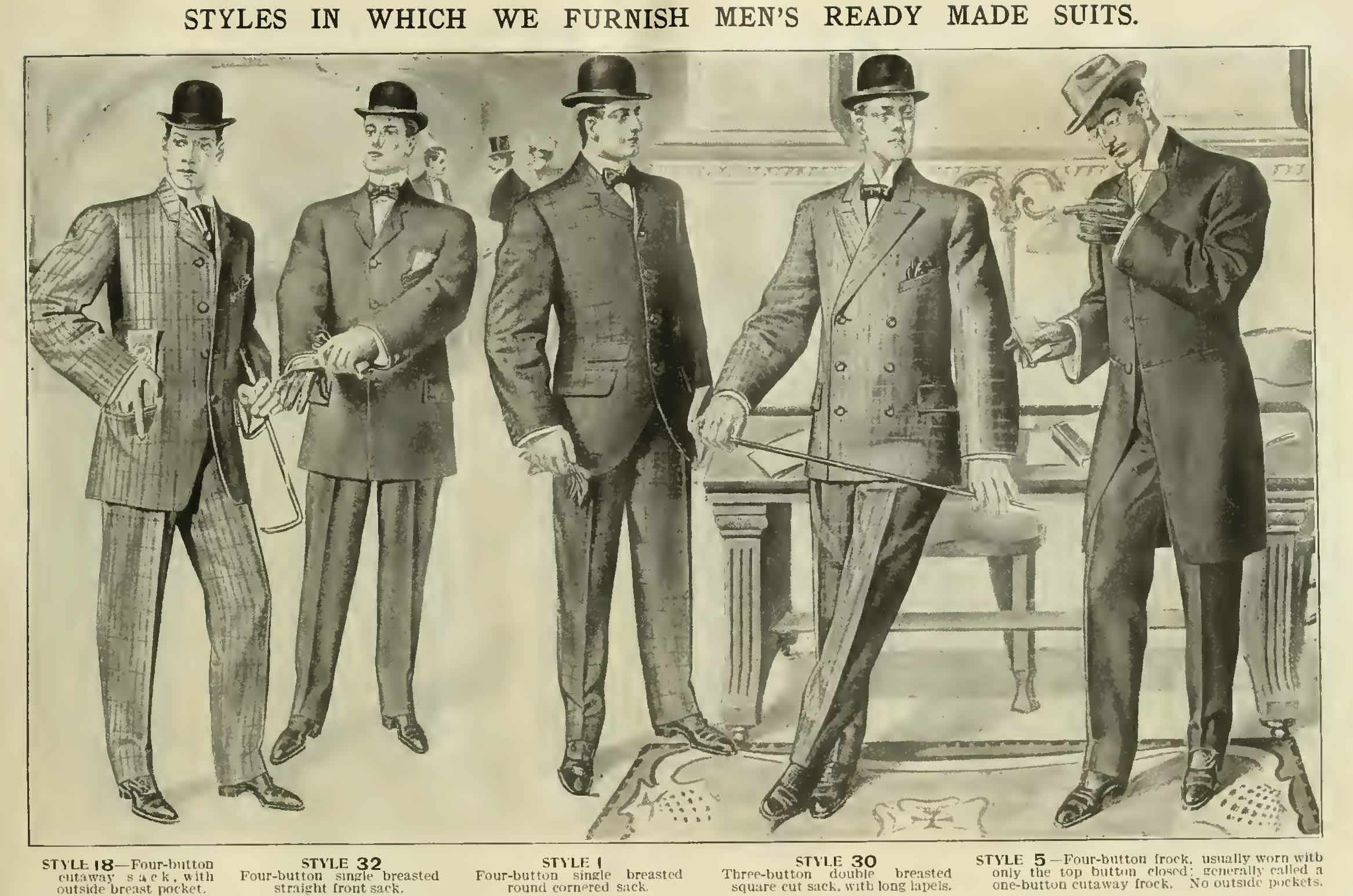
The sack cut is a method of cutting jackets and coats, and it stands out from the commonplace. Most contemporary jackets have two darts from the chest to just above the pockets. These are used to taper and bring form to apparel as well as making the male waist, usually narrower than the shoulders, stand out better. Sack jackets have no darts. This style of cutting was born in the mid 1800s France, back when all men’s formal and frock jackets had backs formed from four curving panels. Yet the sack’s backside is formed from two large, straight panels. The clean front and even cleaner back of the French sacque jacket were something novel and distinguished, easier and faster to make as well. The sack-like name is either derived from the jacket’s French word or from the straight-hanging drape.

Contemporary Brooks Brothers “sacking” with a dartless chest
The sack maker must draft the pattern and cut the cloth more accurately than usual to make the clothing follow the body’s forms — or forget the thing entirely. The sack cut, you see, is one of the oldest forms of the suit, which enabled industrial clothing manufacture and dressing the American nation at the end of the 19th century. The cut is loose and fits both the lithe and plump man, but suits just about no one without alterations. When the suit was nearly everyman’s usual day garment, the navy blue serge sack was each man’s wear throughout the American continent. Indoors workers and clerks used theirs for business, artisans for Sunday and church best, the gentry for leisure — as told by Esquire’s Encyclopedia.
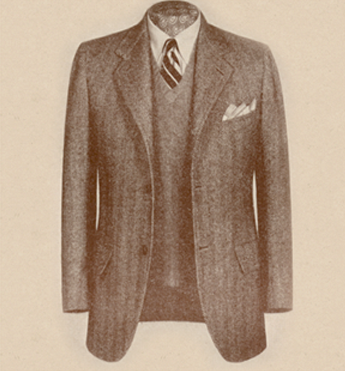
Ye olde Brooks Brothers #1 Sack Suit
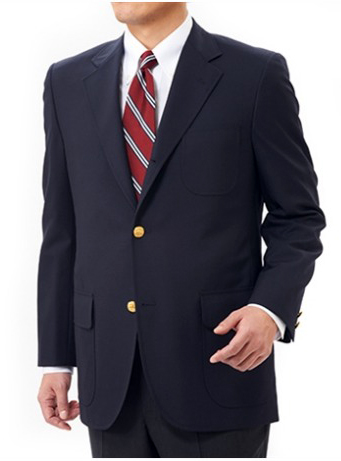
One cannot write about sack jackets without telling the tale of BB’s Number One Sack suit. This model was born in 1901 and became the most popular American sack garment, reigning over the male dress for over six decades. It wasn’t the first of its kind, but the hundreds of stores and peerless price-quality of BB made a difference. This show-three-button-two, single-breasted, straight hanging, and natural-shouldered garment was just as American as jeans with a T-shirt is today. The full cut covered bodily forms and kept eyes on the opinions and know-how of men instead of their frames. It also fit every body type so Brooks Brothers was spared the trouble of creating dozens of cuts for their selection. The sack jacket was essential part of the Ivy League style from the very beginning.
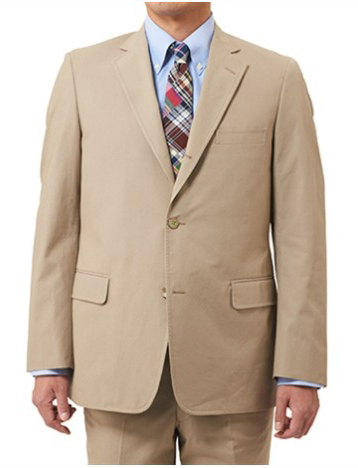
Brooks Brothers for Japan
Today the sack jacket is a rarity, made only by a handful of stalwart American factories and artisans. For some reason the loose, mostly shapeless jacket has also been left in the shade in universities and politicians as well, though they used to be ubiquitous on both fields. Making sack-styled clothes would be easier and faster than crafting dartful, body-conscious jackets, so factories do have an incentive for returning it. The sack jacket is also nice and comfy to wear, but perhaps the vogue has parted ways with the look of the past for good. The cut does live on the shoulders of discerning Ivy League enthusiasts, and on the senior men who dressed this was already in the ’60s or before. The waning popularity is a loss because the dartless chest is very clean-looking. A jacket like this can also be altered to conform to the body-hugging look of our latter day, so there’s really no reason for doing in the sack for good. The sack jacket is the apple pie of American style, and long may it live.
Brooks Brothers for Japan
Photos: Matti Airaksinen, Brooks Brothers
Category American style, Coats, Jackets, Suits
Copyright © 2013 Ville Raivio