Real craftsmen are dying off?
0November 10, 2014 by Ville Raivio
“It is ironic that luxury products are so prevalent in the world today and yet, at the same time, real luxury and real craftsmanship seems to be going down. Everybody knows Edward Green shoes or Hermès ties or Drake’s scarves and they’re all very well-made products. But there used to be dozens and dozens of good tailors in New York and now there are maybe half a dozen, and maybe only two or three custom shoemakers in the whole country. Everyone thinks about luxury but real craftsmen are dying off.”
~ G. the Bruce Boyer
Category Quotations
A history of the fedora hat
2November 4, 2014 by Ville Raivio
The fedora is a soft felt hat with a wide brim, a deep dimple at the middle of the crown, and small dimples on both sides of the crown’s front. The brim circles the crown, the ribbon decorates the brim, and most quality fedoras also have a band that can be attached to the buttonhole on coat lapels. This way the hat won’t flutter into the ground should a strong gust whip outside. The man in the lookout for an individual look can bend his brim askew or customise the crown’s shape to his heart’s content. The fedora hat is named after the play Fédora, first shown in 1882. The French dramaturgist Victorien Sardou wrote his play especially for the legendary Sarah Bernhardt, whose role was the title one as the princess Fédora.
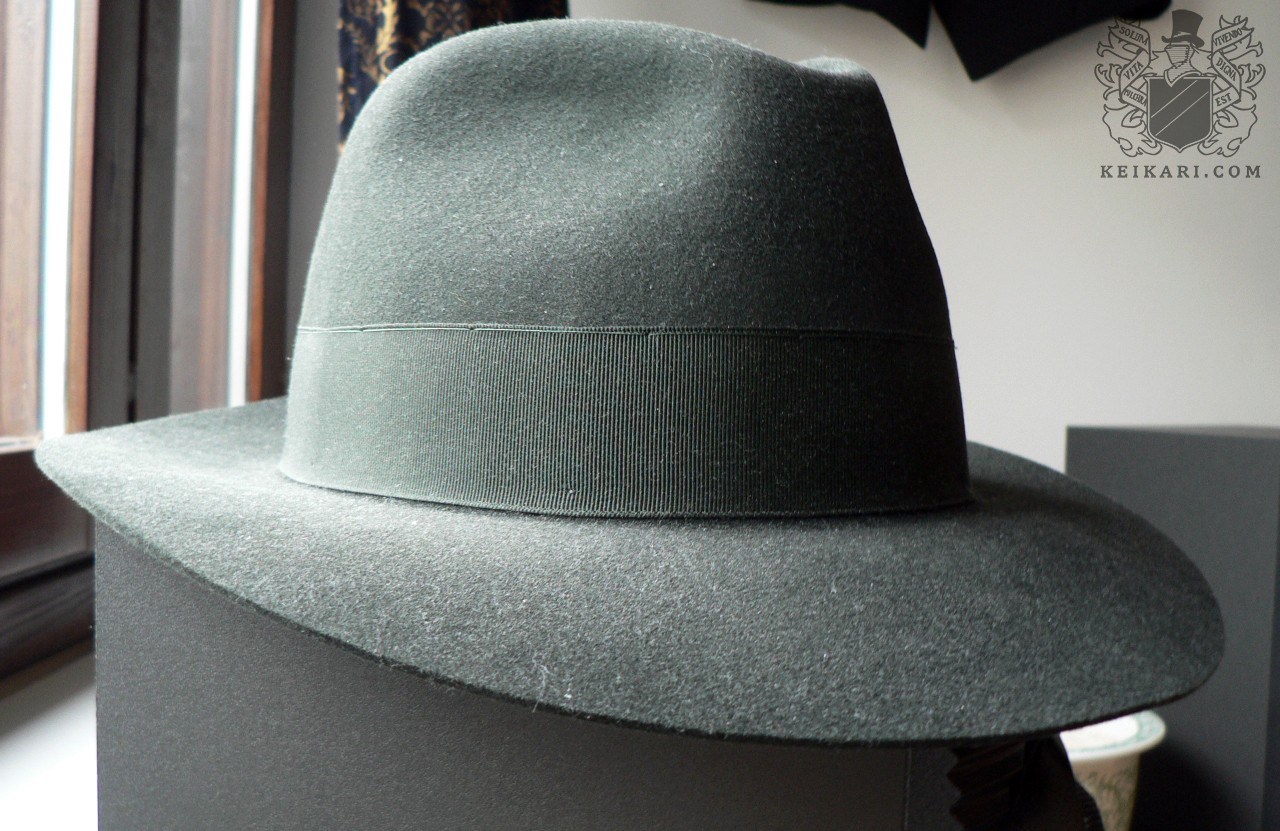
In the play she indeed wore a soft felt hat with a strong dimple in the crown, and the brim turned up markedly, and this the audiences took to. Bernhardt was otherwise a well-known wearer of men’s clothes long before copyists like Marlene Dietrich. Inspired by the strong Bernhardt, suffragettes took the fedora as their own and wore this headgear on both sides of the Atlantic beginning from the last stages of the 19th century. This genderised joy lasted for a few decades before men took the fedora by horde and power as their own, and the prior hat styles lost their appeal before this new, softer one.
Compared to the popular top hat of yore, the fedora was cheap and warm headwear that could be conveniently folded into smaller space, and as it was also lower it was better suited to motoring. Thus it ousted the top hat, the hard homburg and the rock-hard bowler hat at the last by the 1920s. The fedora differs from the very similar-looking trilby due to its wider brim, and for this reason it also best suits the man wide in face. The finest versions were made from fur or beaver and rabbit felt, the cheaper ones from lambswool felt. Fur felt is still better quality as it flexes more, is warmer to wear and keeps its form when wet.
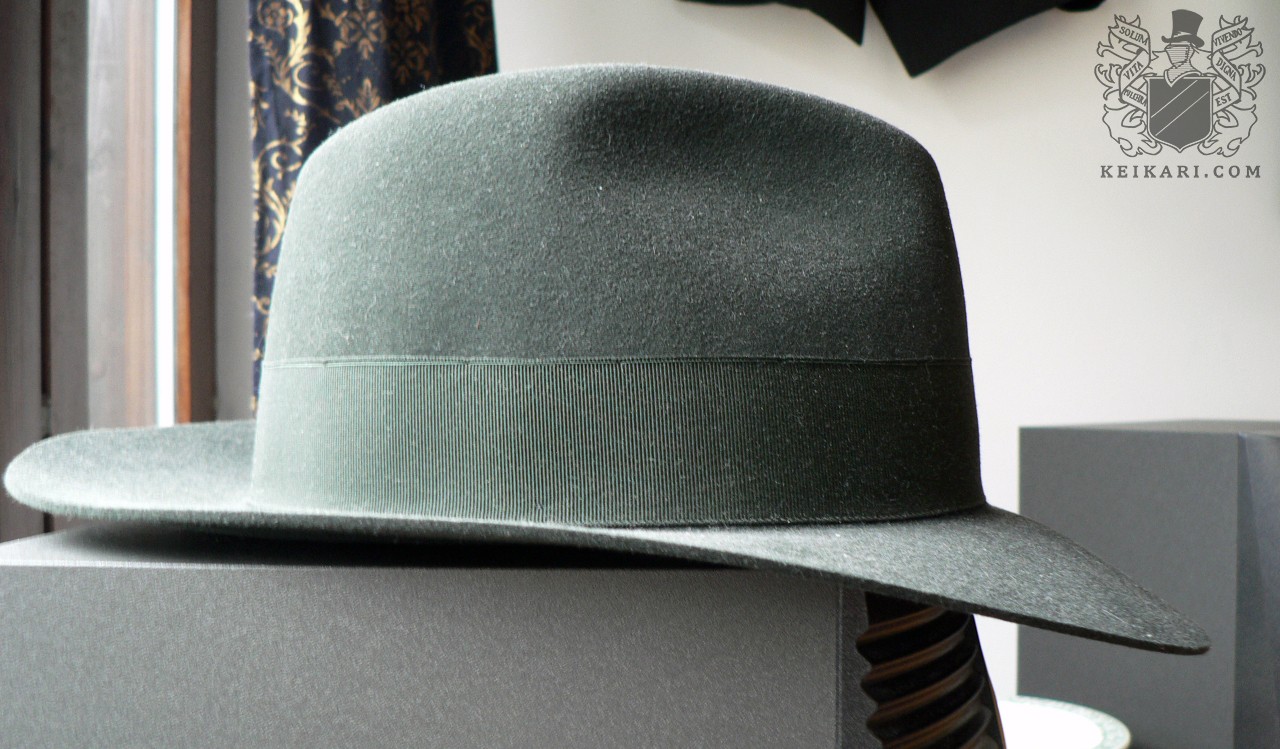
The reader likely best knows the fedora from countless films made until the 1950s. The Great Loosening, or the abandoning of the formal culture of dress, began in the next decade and so the fedora was switched to a grand hairstyle or any other headgear that had no stench of the past. Still, this hat has partly stayed alive thanks to Hollywood, actors, musicians and bald men. It protects the head well and sets the wearer apart from a wide sea of beanies, and Indiana Jones, for one, couldn’t be imagined in any other apparel. Without the fedora all mafia films would be but pale mirages.
The felt hat is the warmest headwear a man can choose. Warmth from the head is stored into the crown, and natural hair insulates well and warms the noggin even more. Ears are naked, to be sure, but rare is the man who has lost his own to wind or frost. The fedora is very soft and flexible, so it can be handily folded into a bag, say, when stepping in. Fur felt models also return to their shape when the bent hat is raised up once more. In hat semantics, the fedora has always been a suit accessory and clearly more formal than a flat cap, but takes second place after the homburg due to softness. The bowler and top hat are another things entirely, for the former has nearly disappeared from all places, and the latter is formalwear. The man contemplating fedoras best think twice as this apparel has become a rare sight — and like all rare things it looks peculiar. If the verdict is in favour of the fedora, this trusty garment will keep its benefactor warm and stylish year to year.
Category Hats and Caps
A tailor’s song
0November 1, 2014 by Ville Raivio
Bill Smith was a tailor, a ‘prentice he’d been
whose work was as perfect as ever was seen
he knew how to build up a front and to press
a frock coat, a morning coat, lounge, or a dress
for full forty years at the trade he had worked
and during that period no job he had shirked
but one fact his conscience continually mocked
he’d not made a job yet that couldn’t be cocked!
chorus: fol-de-rol-liddle-lol; fol-de-rol-lay; more collar-ology every day!
said Smith: “Now this frock coat I’m starting to make
will be absolutely perfection I’ll stake;
every point will be studied, the collar fit clean,
the edges I’ll prick with a fifteen between.”
the fronts then he molded artistic and true
he pinked it so much that his shopmates turned blue
a penny an hour were his earnings if clocked
on this wonderful garment that couldn’t be cocked.
chorus: fol-de-rol-liddle-lol; fol-de-rol-lay; no collar-ology encore I’ll say
the words that gave them a most terrible shock
were “I ordered a lounge and you’ve made me a frock.”
fol-de-rol-liddle-lol; the theme of my song: no matter what happens the journeyman is wrong!
~ as told in Nothing but the Best by Thomas Girtin
Category Quotations
Copyright © 2013 Ville Raivio