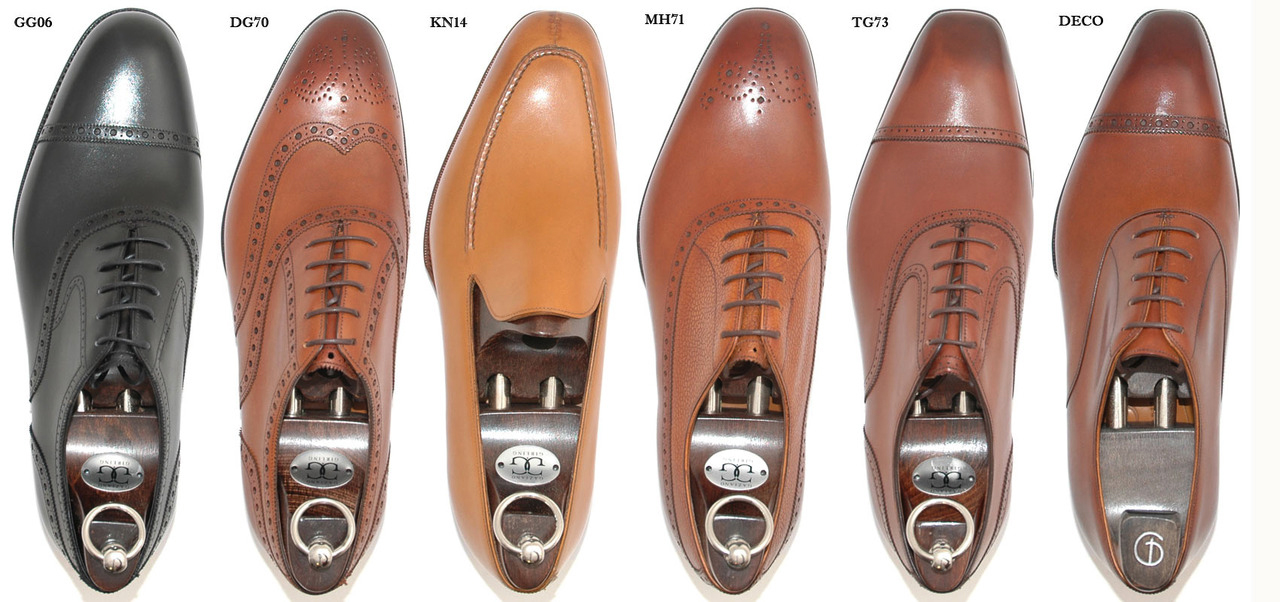
Gaziano&Girling last shapes
0May 10, 2018 by Ville Raivio
Collage courtesy of Bespoke-England, sadly defunct now, for illustration and web store shopping purposes.
Category Footwear, Northampton
Anatomy of a Kiton shirt
0May 7, 2018 by Ville Raivio
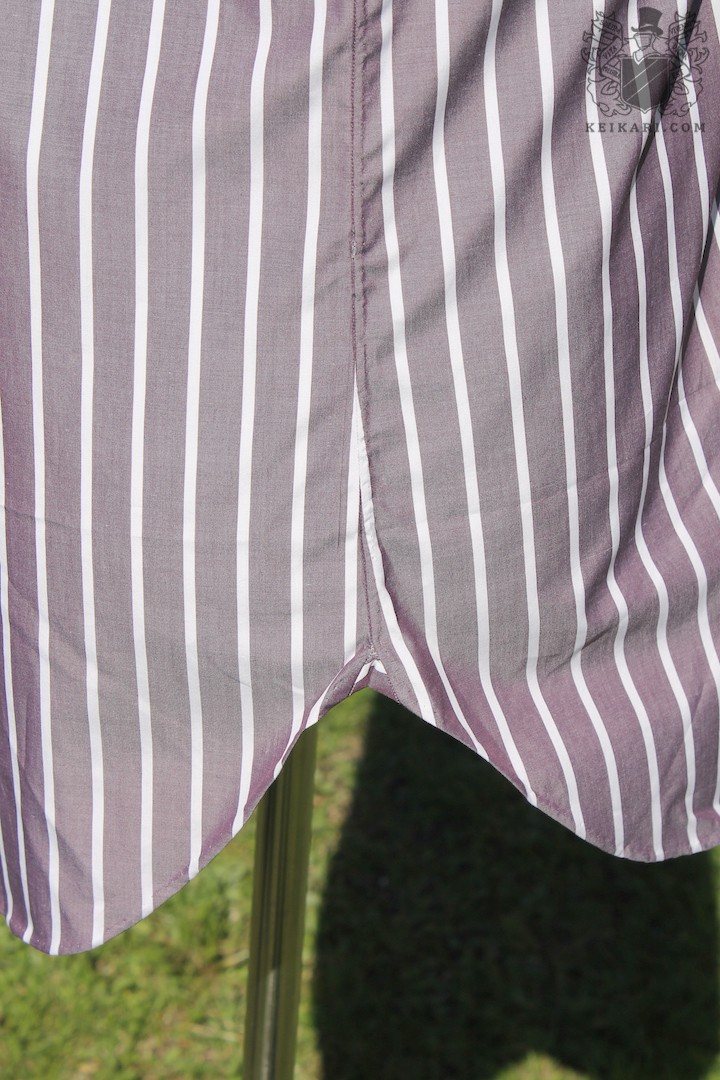
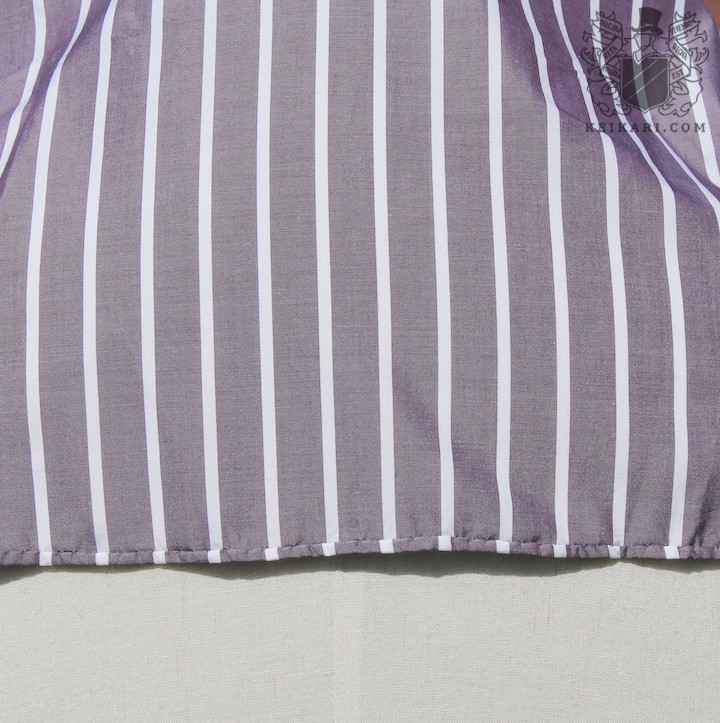
“ll meglio del meglio più uno“ or The best of the best +1 is the slogan of Kiton, that Neapolitan tailoring factory with the red dot logo. Their shirts take 22 steps to make, nearly everything is sewn by hand, and they allow some six hours of production time for each shirt. This is more than any other shirtmaker I know of. Only the edges of cuffs and collars, and the side seams on the sleeves and body are sewn by machine. This ensures clean lines, but those side seams are afterwards hand-sewn for decoration. The most time-consuming point, I wager, is the hem that’s folded and sewn like the edges of artisanal handkerchiefs. I also wager that Kiton sees this effort because they can, and because most companies won’t bother. The shirtings of choice for Kiton’s shirts are woven by Carlo Riva, a tiny shuttle loom operation in Como. Legends have it that Riva allows their finished fabrics, which are not treated with chemicals, to set for a year in store before they’re sold. It was finally time to see what the fuss was about with an example shirt from Naples.
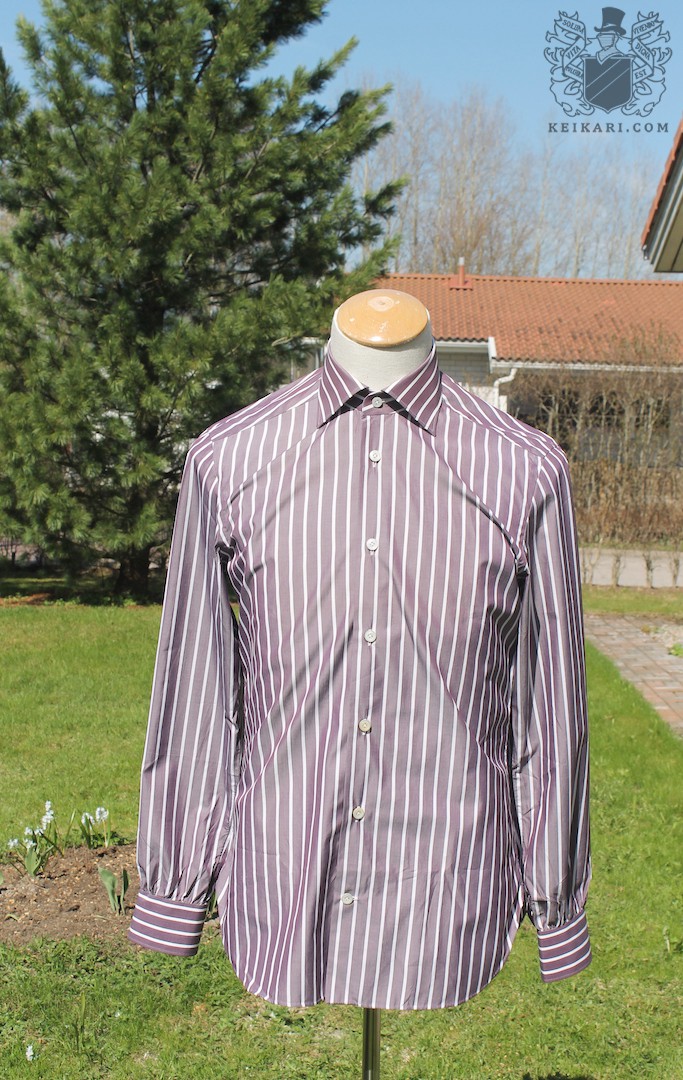

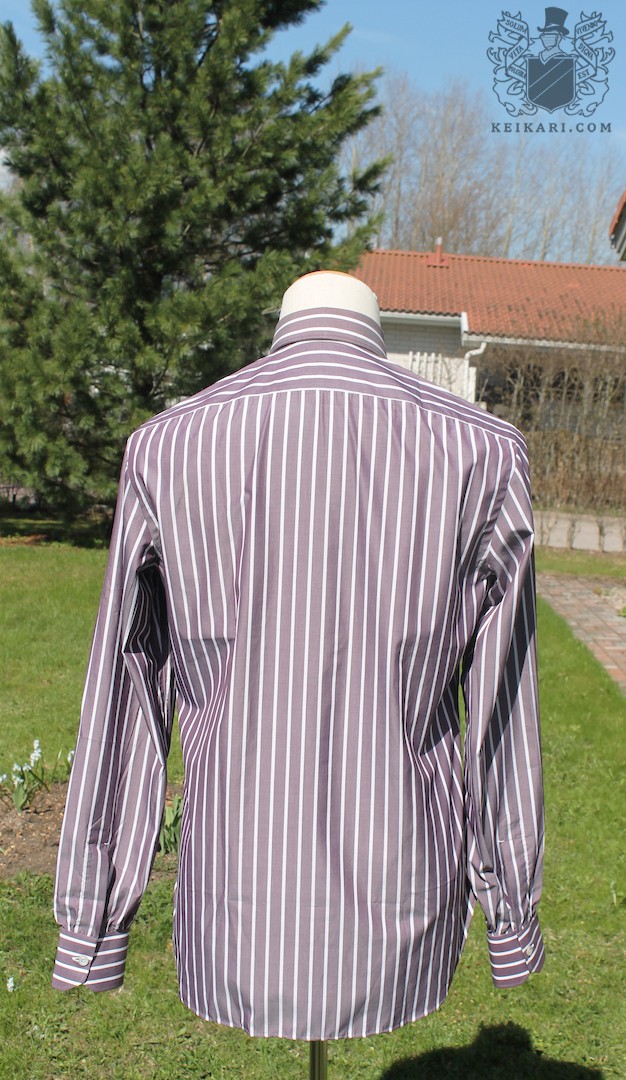
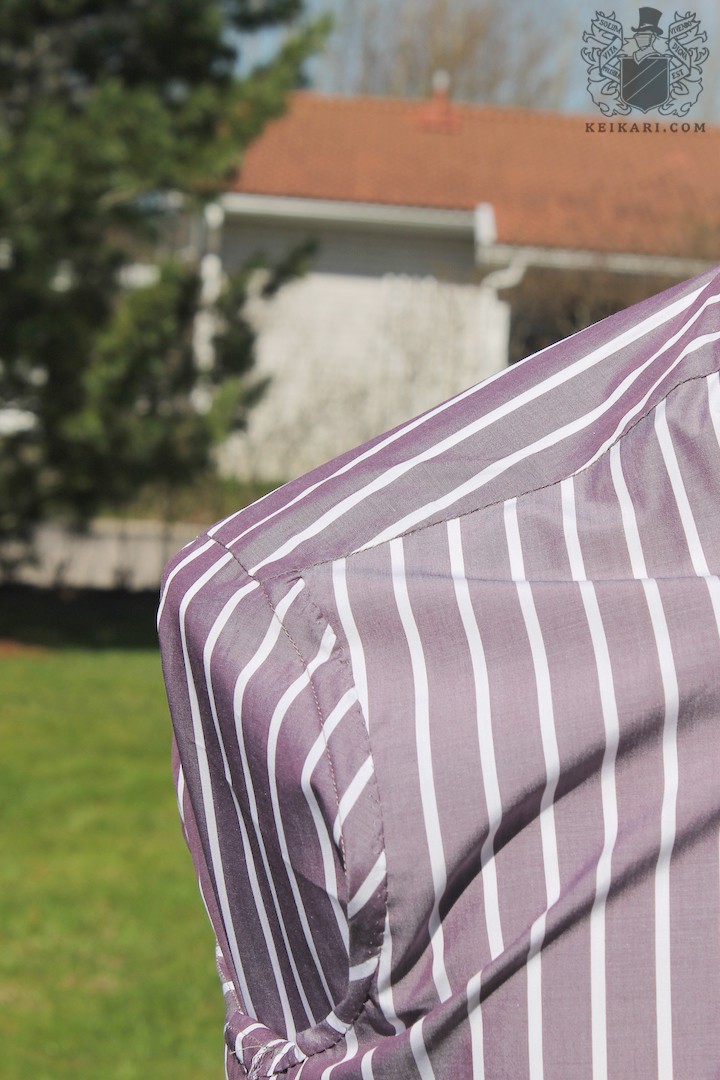
The shirt’s fabric feels extremely silky, light, smooth, soft, and looks translucent. If handled blind-folded, I would likely say it has plenty of silk woven in — but no, all’s cotton that glitters here. This is the Riva way. For whatever reason, the wash tag states that the shirt can handle 60 C washing, which is rare to see. The cut is a standard one, not as close as what Turnbull&Asser offers but not one of the sailcloth shirts called “traditional” cut. The chest measurement per side is 59 cm, and the sleeve on the bicep is 19 cm per side on a size 39 shirt. Another detail I haven’t seen from other makers: the body’s pattern curves inwards on the waist. Nearly every maker cuts a straight body. The notched button cuffs are shirred cleanly. The shirt has no placket, the wide buttons are sewn with that decorative Neapolitan chicken foot -stitch. The buttonholes are minutely fine and dense, the folded hem is as well superbly clean and tightly sewn. The yoke is, surprisingly, only a single piece instead of the usual double.
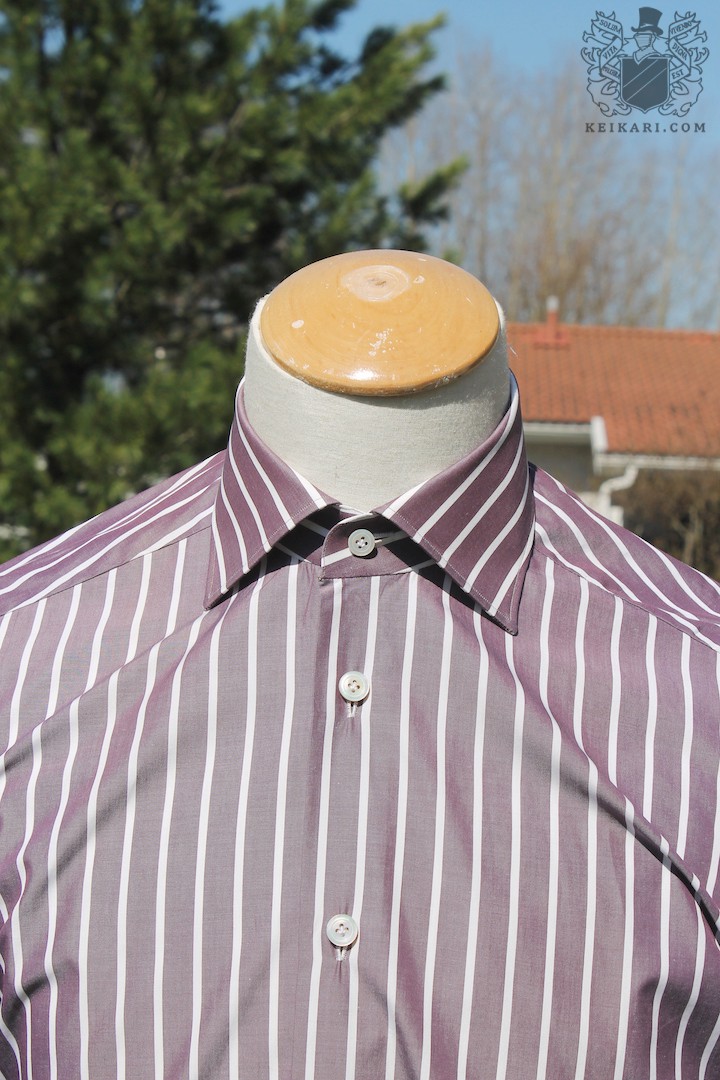
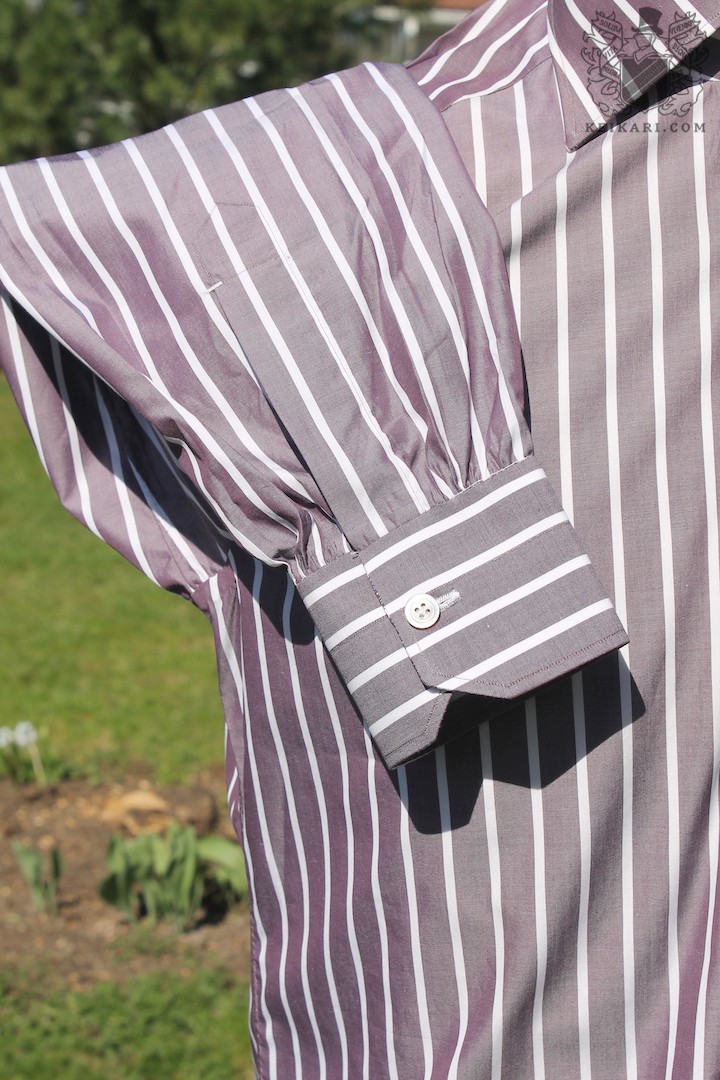
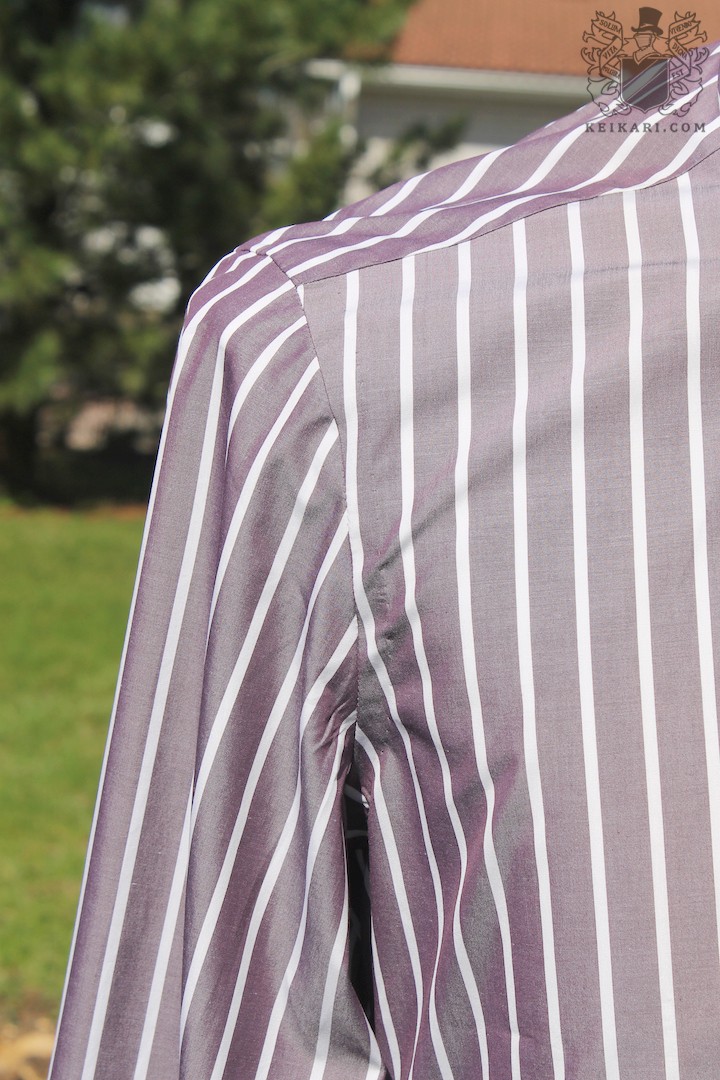
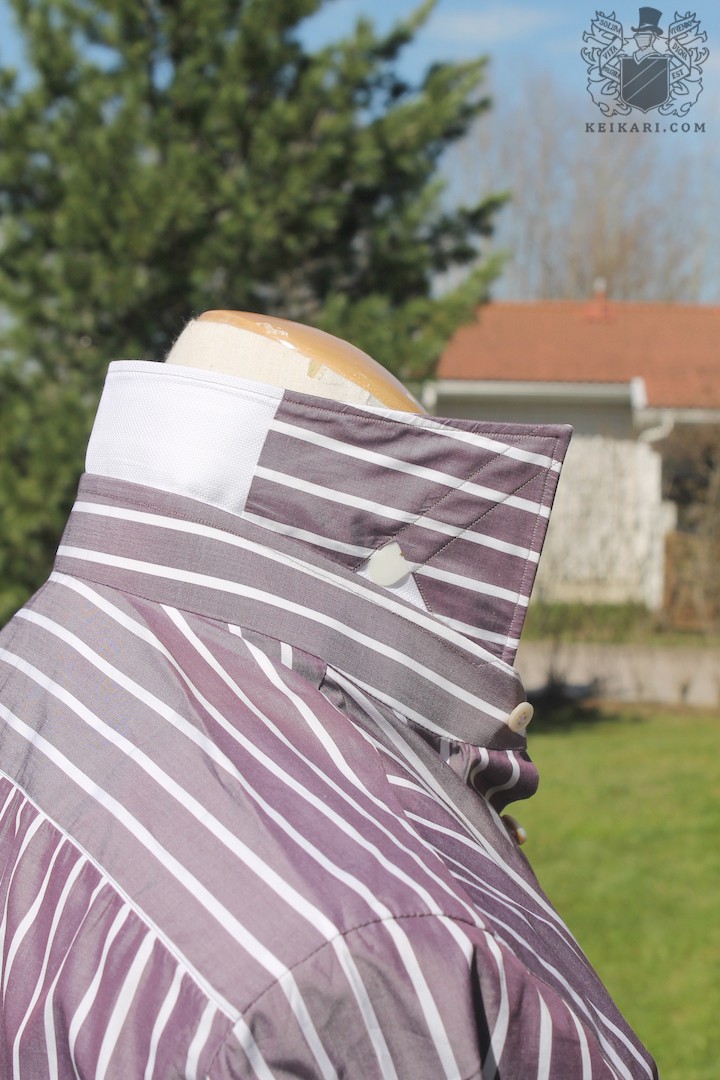
The stripe fabric is cleanly matched on the cuffs but not so where the left shoulder meets the sleeve, far from it. The collar’s back height is 4 cm and point length 9 cm, enough to make it stand out among a sea of boring collars. It’s fused and light, and the two-part collar is hand-sewn on both seams — something I haven’t seen from other makers. Supposedly it ensures that the collar never collapses, even when worn without a tie. Its backside and points feature oxford cotton contrast lining, a nice add of colour that no one will see. The mother-of-pearl buttons are undyed, flat but wide. It remains to be seen how well all this hand-sewing holds up with wear and washes, but Kiton’s artisans really do shine in their work. All stitching is only some 4 mm apart, straight, with tiny picks visible, a time-consuming choice that calls for a steady eye and hand.
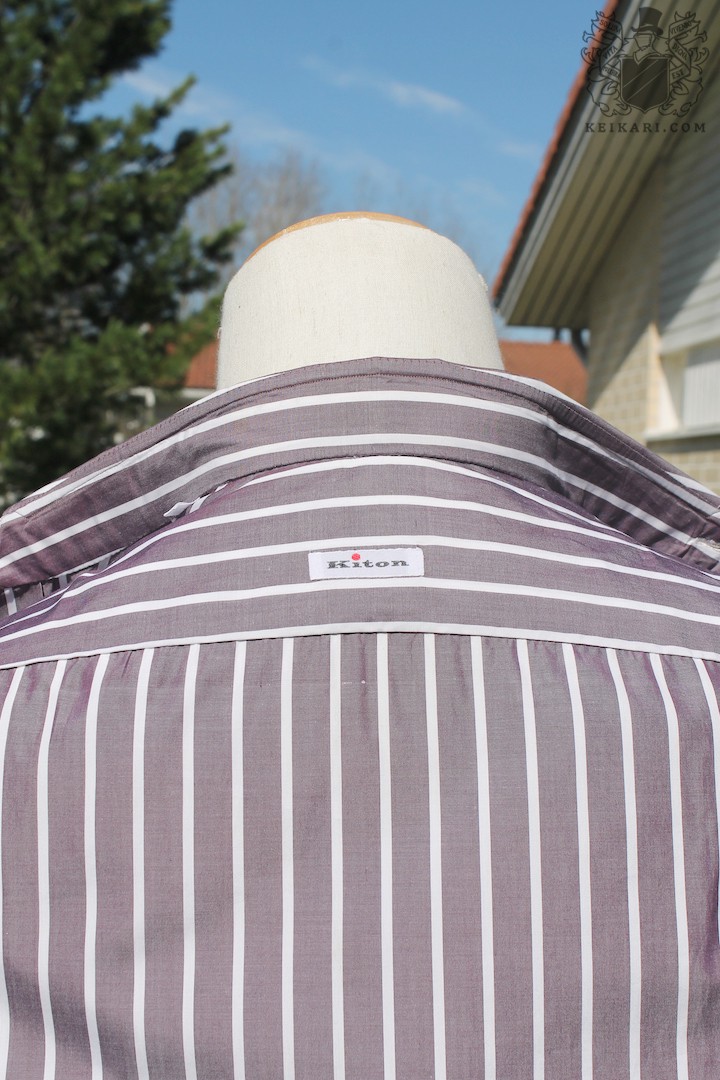

Kiton shirts retail for some 400 euros in Europe. This is a grand sum, more so as one can get two bespoke shirts for the price of a single readymade piece. Thus, it is difficult to justify one of these as a shirt…but rather as an example of artisanal craft at its finest. One does not simply get a Kiton shirt because it’s reasonable. The fabric, the components, the shape of the collar, the fineness of the sewing — all appear to be among the highest quality available.
Category Naples, Reviews, Shirts
Keikari has returned to Facebook
0April 21, 2018 by Ville Raivio
After a short break, Keikari has returned to Facebook. There I will share more or less inspiring style photos as before — no ads or bullshit.
Category Links
George Hoby, bootmaker
0April 12, 2018 by Ville Raivio
“Hoby was not only the greatest and most fashionable bootmaker in London, but, in spite of the old adage, ‘Ne sutor ultra crepidam,’ he employed his spare time with considerable success as a Methodist preacher at Islington. He was said to have in his employment three hundred workmen; and he was so great a man in his own estimation that he was apt to take rather an insolent tone with his customers. He was, however, tolerated as a sort of privileged person, and his impertinence was not only overlooked, but was considered as rather a good joke. He was a pompous fellow, with a considerable vein of sarcastic humour.
I remember Horace Churchill, (afterwards killed in India with the rank of major-general,) who was then an ensign in the Guards, entering Hoby’s shop in a great passion, saying that his boots were so ill made that he should never employ Hoby for the future. Hoby, putting on a pathetic cast of countenance, called to his shopman,
‘John, close the shutters. It is all over with us. I must shut up shop; Ensign Churchill withdraws his custom from me.’
Churchill’s fury can be better imagined than described.
On another occasion the late Sir John Shelley came into Hoby’s shop to complain that his topboots had split in several places. Hoby quietly said, ‘How did that happen, Sir John?’
‘Why, in walking to my stable.’
‘Walking to your stable!” said Hoby, with a sneer. ‘I made the boots for riding, not walking.’
Hoby was bootmaker to the Duke of Kent; and as he was calling on H.R.H. to try on some boots, the news arrived that Lord Wellington had gained a great victory over the French army at Vittoria. The Duke was kind enough to mention the glorious news to Hoby, who coolly said,
‘If Lord Wellington had had any other bootmaker than myself, he never would have had his great and constant successess; for my boots and prayers bring his lordship out of all his difficulties.’
One may well say that there is nothing like leather; for Hoby died worth a hundred and twenty thousand pounds [in 1832].
Hoby was bootmaker to George III, the Prince of Wales, the royal dukes, and many officers in the army and navy. His shop was situated at the top of St James’s Street, at the corner of Piccadilly, next to the old Guards Club. He was bootmaker to the Duke of Wellington from his boyhood, and received innumerable orders in the duke’s handwriting, both from the Peninsula and France, which he always religiously preserved. Hoby was the first man who drove about London in a tilbury. It was painted black, and drawn by a beautiful black cob. This vehicle was built by the inventor, Mr Tilbury, whose manufactory was in a street leading from South Audley Street into Park Street.”
— as told in The Reminiscences and Recollections of Captain Gronow
Category Cordwainers, Quotations, Vintage
Interview with Kohki Watanabe
0March 26, 2018 by Ville Raivio
VR: Your age and occupation?
KW: I am 25 years old, turning to 26 in April, and I am a student of the double bass.

VR: Your educational background?
KW: I am studying classical music and currently in 4th year of Bachelor of music at Royal Academy of Music in London.
VR: Have you any children or spouse (and how do they relate to your style enthusiasm)?
KW: No.

1960s George Cleverley brogues
VR: …and your parents and siblings’ reactions back when you were younger?
KW: My family already knew my passion was going to be serious when I got interested in menswear because I had been always keen on something particular in my life, like classical music.
VR: What other hobbies or passions do you have besides apparel?
KW: I am a big fan of car races, especially Formula 1, WEC (World Endurance Championship). I have been to Suzuka Circuit, Silverstone Circuit and Donington Park several times to see Grand Prix and some races. Last year, I visited Goodwood Revival where you can see a lot of vintage cars actually running, and people dressed up in 1940s to 1960s manners. For me it was like a dream.

1940s Peal & Co. bespoke full brogues
VR: How did you first become interested in style, and when did you turn your eyes towards the classics?
KW: It was when I was 13 years old. My parents bought me a pair of Clark’s desert boots. That was my first opportunity to feel how leather shoes are comfortable and to know how durable they are. Moreover, I was fascinated by the aging of the leather shoes. The more I wore them, the more the shoes became characteristic. This is something you cannot experience with trainers or flip flops. Then I rapidly developed my interest in well-made shoes and started reading menswear magazines to get more information. What always catches my eyes are English shoes like Edward Greens, Church’s and Trickers. They are simple, understated, and classic.
As for clothing, a Japanese cartoon called “Sarto Finito” helped me to build up my knowledge. You cannot underestimate this cartoon. It is a serious stuff. The stories are about tailored garments, a Japanese tailor in Naples, who is the main character, his friends and customers. But the biggest impact which changed my taste completely was when I was 17 and flicked through a Japanese menswear magazine which featured many Japanese tailors and introduced their house style suits. I was impressed by a navy suit from batak house cut, based in Tokyo, in terms of the shape. Since then my main interest has been bespoke garments, both new and vintage.
VR: How have you gathered your knowledge of the tailored look — from books, talks with salesmen or somewhere else?
KW: Mainly from my friends in the sartorial industry, films, and garments themselves.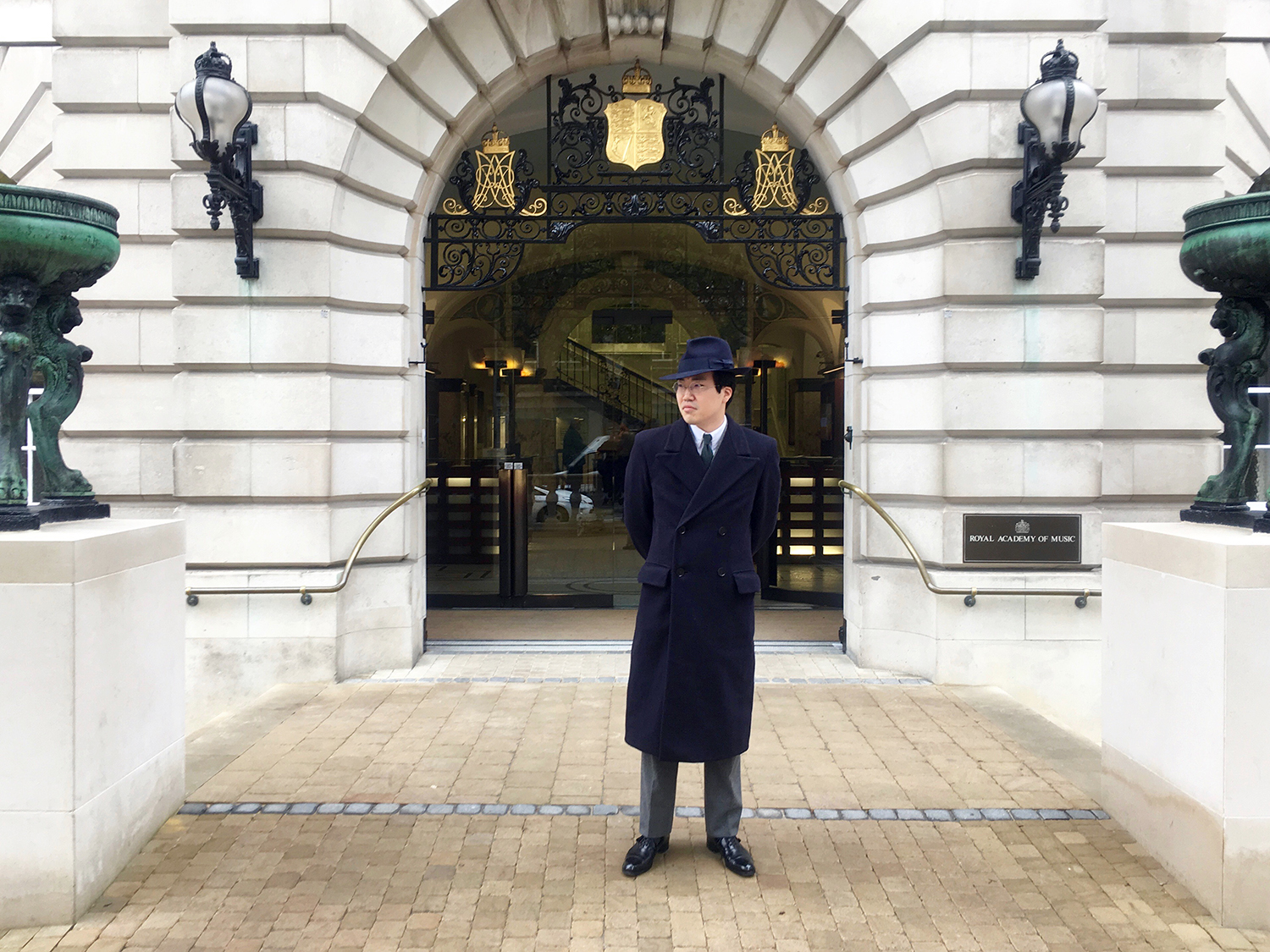
VR: How would you describe your personal style?
KW: I have always stayed with the traditional side which is not affected by trends, and I’ve just felt the greatness of it.
VR: Which artisans or RTW makers do you favour and why?
KW: My current dream is getting a pair of shoes made by Ms. Emiko Matsuda from Foster & Son. In my opinion she makes the most elegant shoes.

1930s Henry Maxwell bespoke boots
VR: Have you any particular style or cut philosophy behind the clothes you collect and wear?
KW: The clothes and shoes I collect are made to last and must be elegant. I am not a big fan of something that strongly reminds you about particular eras. Therefore, being timeless is very important in my collection.
VR: Who or what inspires you?
KW: Fred Astaire especially in a dinner suit or evening dress. He is just stunning. Except him, there is no individual who particularly inspires me. As a classical musician, J.S. Bach, Johannes Brahms, Gustav Mahler and Anton Bruckner are my inspirations. The recording of Brahms’ Symphony No.1 by Leonard Bernstein and Vienna Philharmonic is the first recording of classical music I ever bought and it still remains in my regular playlist.
VR: What’s your definition of style?
KW: As far as I understand, style is something which is created with personal principles. In my case, classic and timeless.
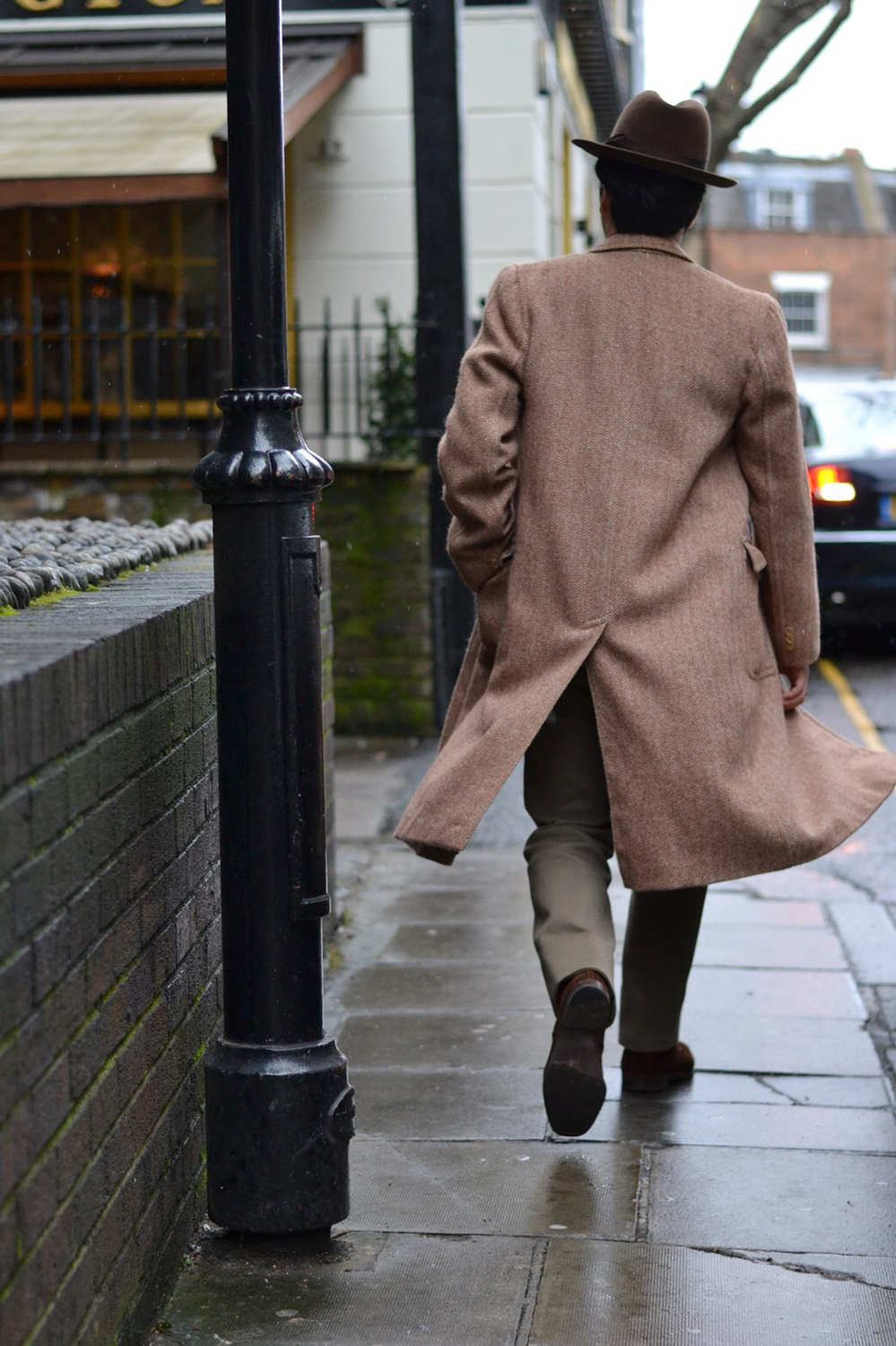
VR: Finally, given your knowledge on the subject, why should Keikari’s readers consider vintage footwear?
KW: Vintage shoes normally have better quality of leather and, as for RTW, there were more varieties of the styles and lasts in the past. Also, considering the background of shoes is such an exciting experience, the ex-owner, history of the shoemaker, and so on. The first vintage shoes I purchased were CC41 black oxford shoes made by True Form in Northampton. CC41 means utility, made between 1941 to 1952. The shoes fit me perfectly and they are still the most close-fitting but comfortable pair I have ever had.
Photos: the Watanabe archives
Category British Style, Footwear, Interviews, Men of style, Vintage
Copyright © 2013 Ville Raivio