
An Interview with Shoemaker Michelangelo Torre
1April 4, 2026 by Ville Raivio
VR: Your age and occupation?
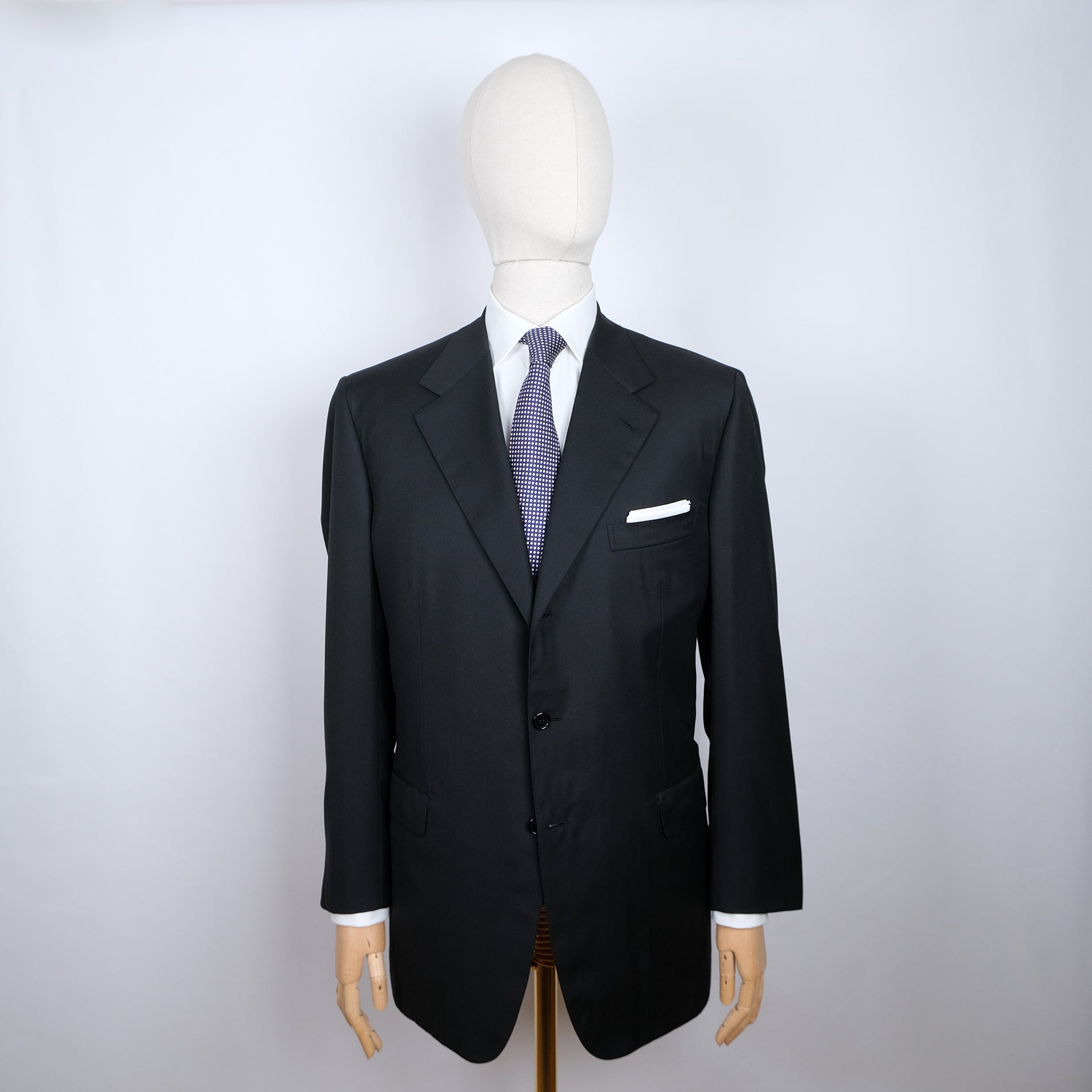
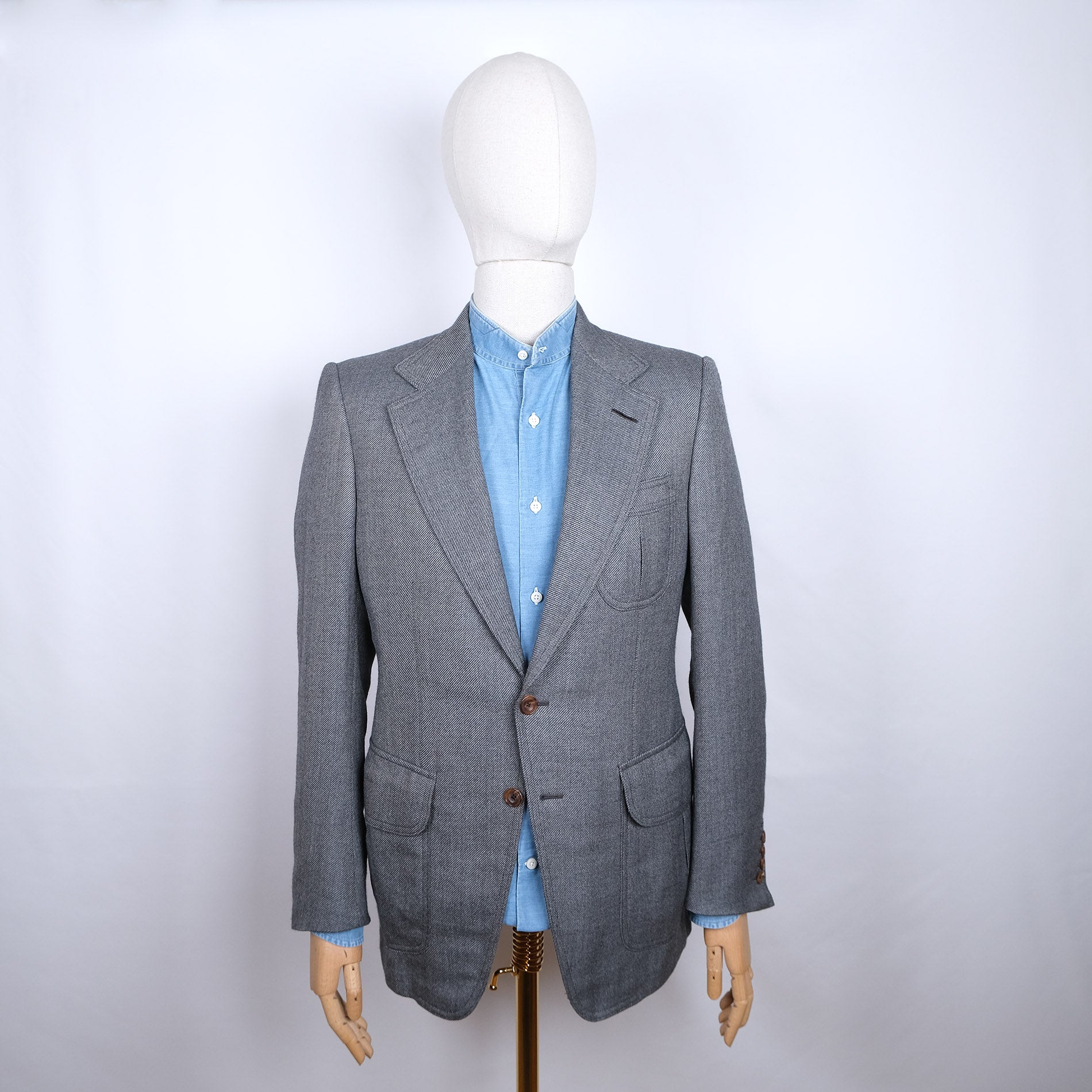
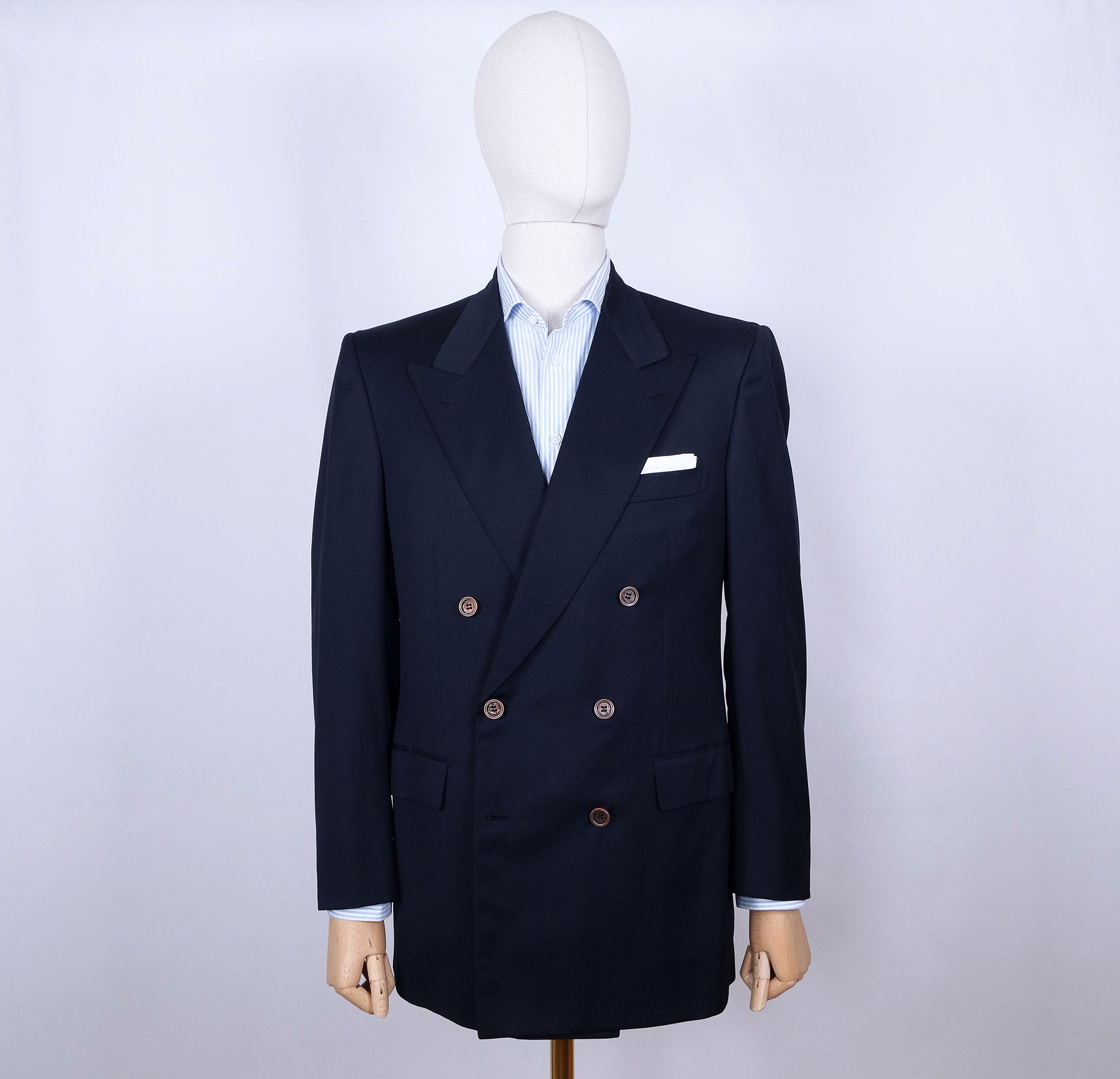
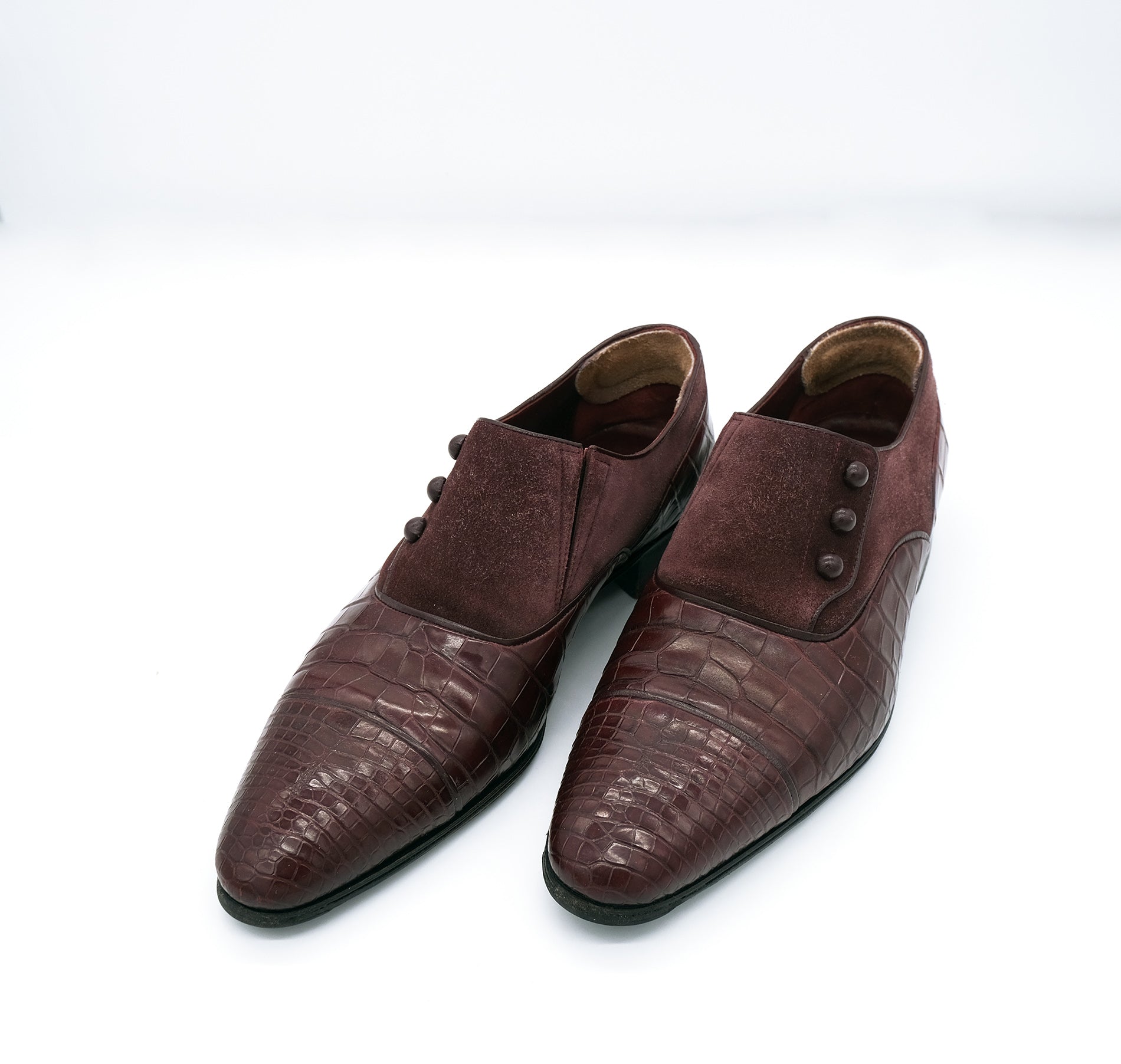
Products from Pukimo Raivio
- Brioni, hand made black suit, size 54/56EU- Tom Ford, grey sports jacket, size 48EU, wool-mohair-silk
- Brioni, blue blazer, size 50EU, metal buttons
- Artioli, burgundy loafers, size 41EU, crocodile leather shoes
 |  |
|---|---|
 |  |
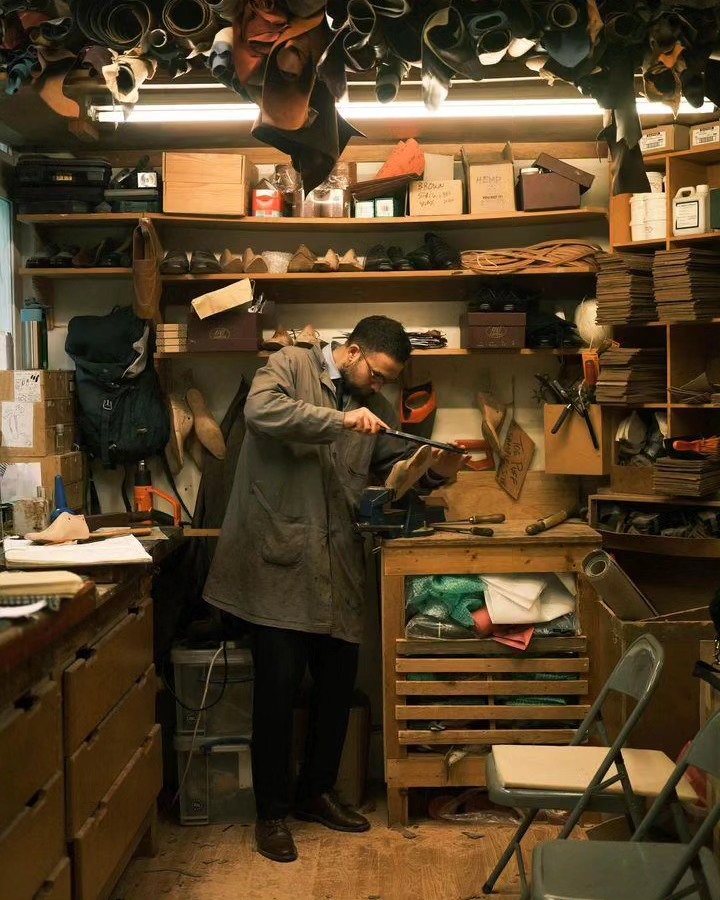
MT: I am 36 years old, and I am a Bespoke Lastmaker and Shoemaker in London.
VR: Your educational background?
MT: I studied foreign languages and International Business Culture at the University of Urbino and earned my bachelor’s degree there.
 VR: Have you any children or spouse (and how do they relate to your shoe enthusiasm)?
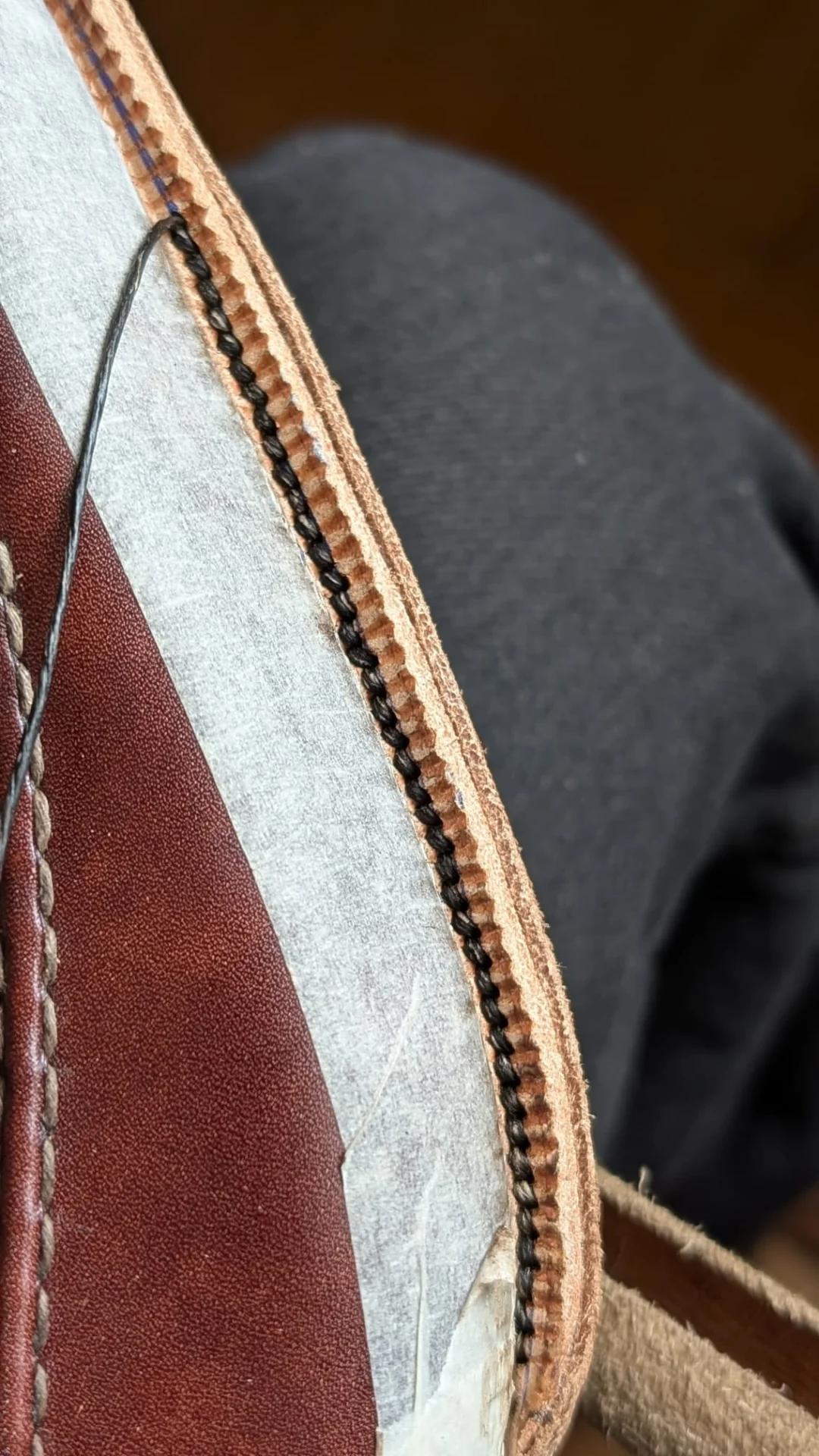
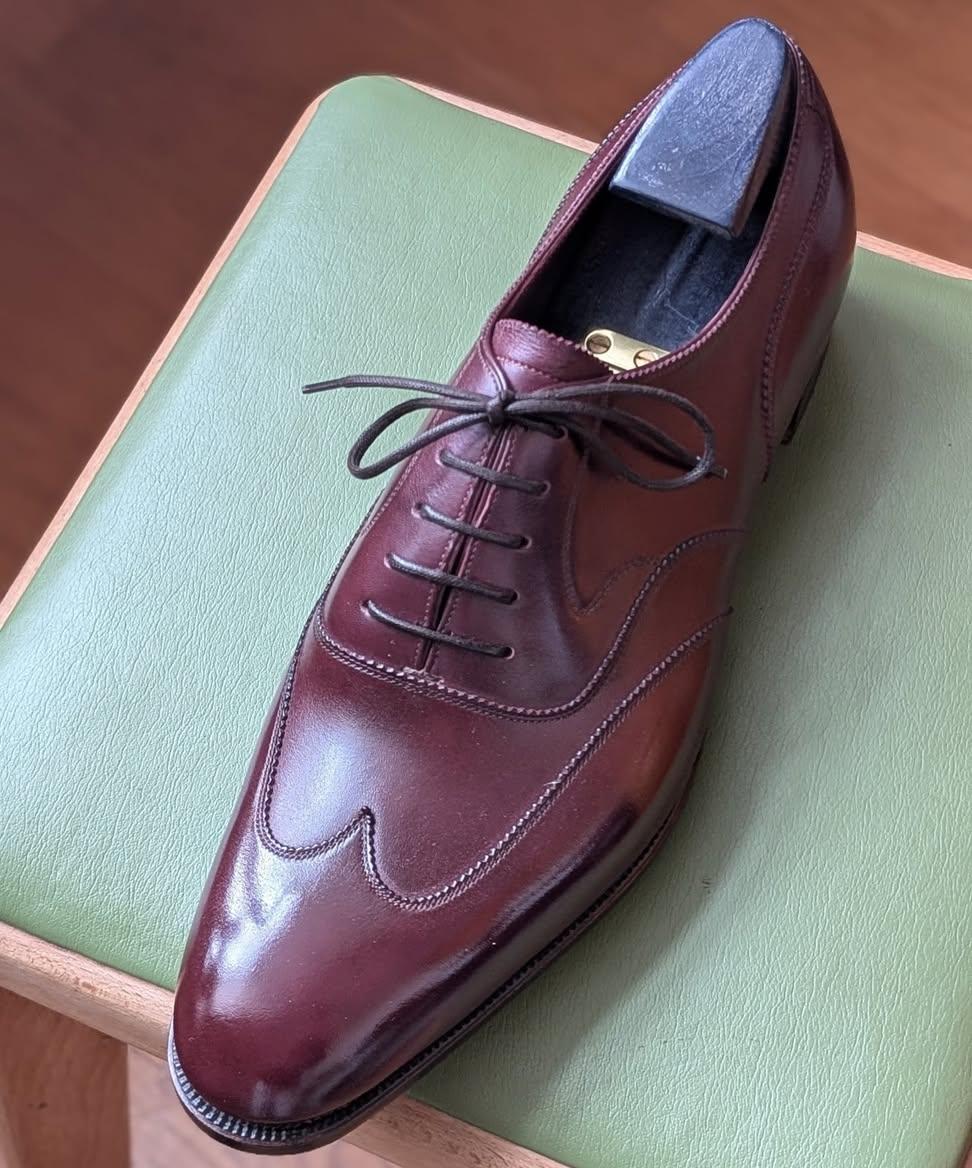
MT: I’m married to Laura, who was actually my very first client when I started exploring shoemaking. The first pair I made for her was a dark burgundy side-lace Oxford, which was a well-loved style at the time. She’s always been very supportive and has a great eye for design: some of her suggestions, like a black pigskin two-tie derby with grosgrain, have ended up being quite popular among my clients!
VR: …and your parents’ and siblings’ reactions back when you decided to become a shoemaker?
MT: It wasn’t an immediate decision for me, so my family wasn’t really surprised when I said I wanted to become a shoemaker. It was more of a gradual, steady process. The biggest challenge for them was probably finding space at home for all my tools and the finishing machine while I was still living there! But apart from that, they were very supportive, even when it started out as just a weekend hobby.
 VR: What other hobbies or passions do you have besides footwear?
MT: I love boxing, and I can’t live without my weekly sparring session. Travelling is really important for me too, and I try to do at least one big trip each year. A friend’s grandfather used to say, ‘There’s more time than life,’ which I think is a great reminder to step outside your comfort zone and see what else is beautiful out there. I’m also really into wine and viticulture: they’re expressions of the environment and the producer’s personality… a bit like shoemaking, in a way!
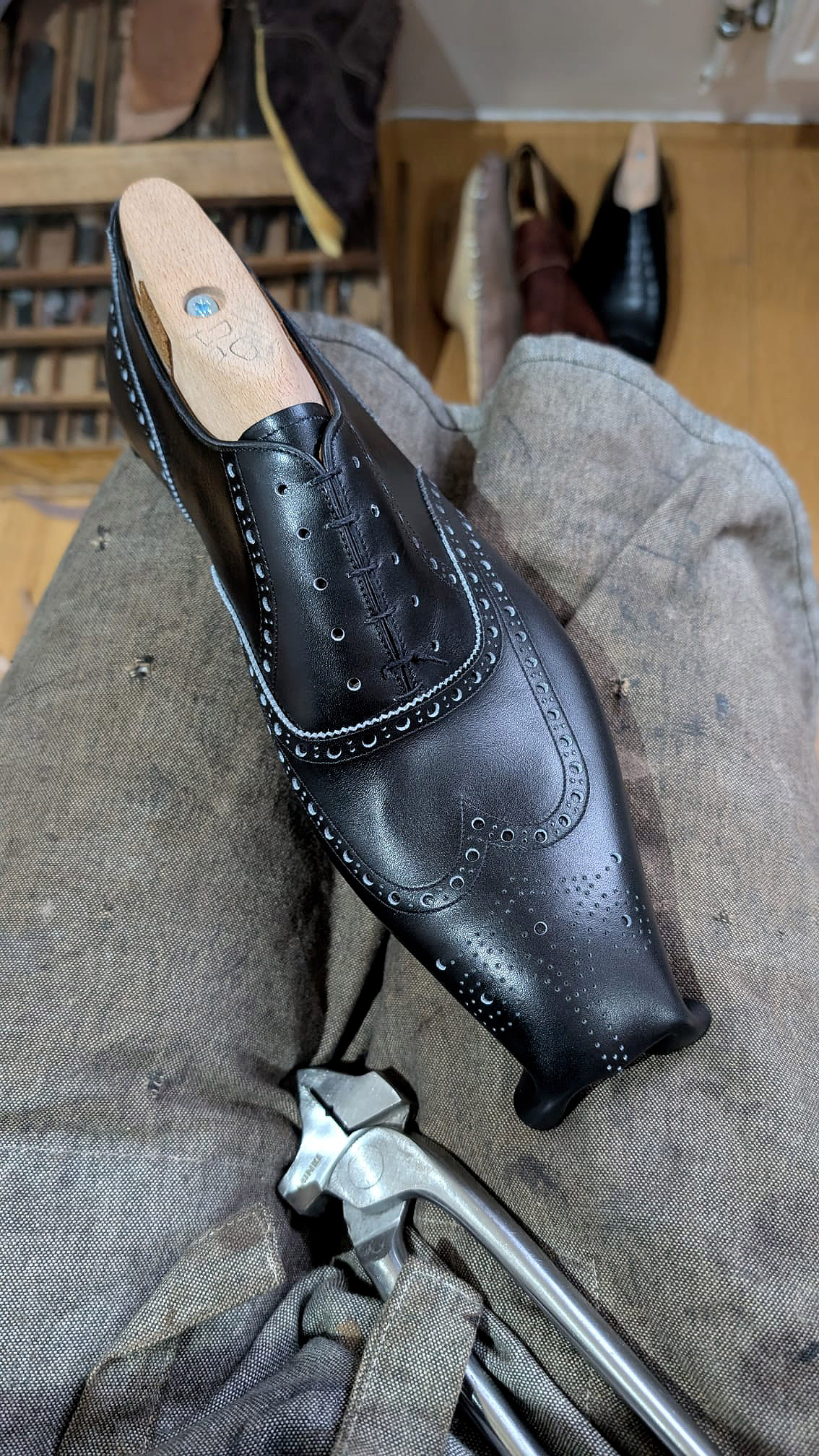 VR: How did you first become interested in shoes, and when did you turn your eyes towards artisanal shoemaking? Why classic models instead of fashion?
MT: My parents and I are from Barletta, a city in Puglia in the south of Italy, where one of the main footwear districts has always been based in. Both of them worked in those factories when they were teenagers, so I like to think that the seed of my interest in shoemaking came from their experience.
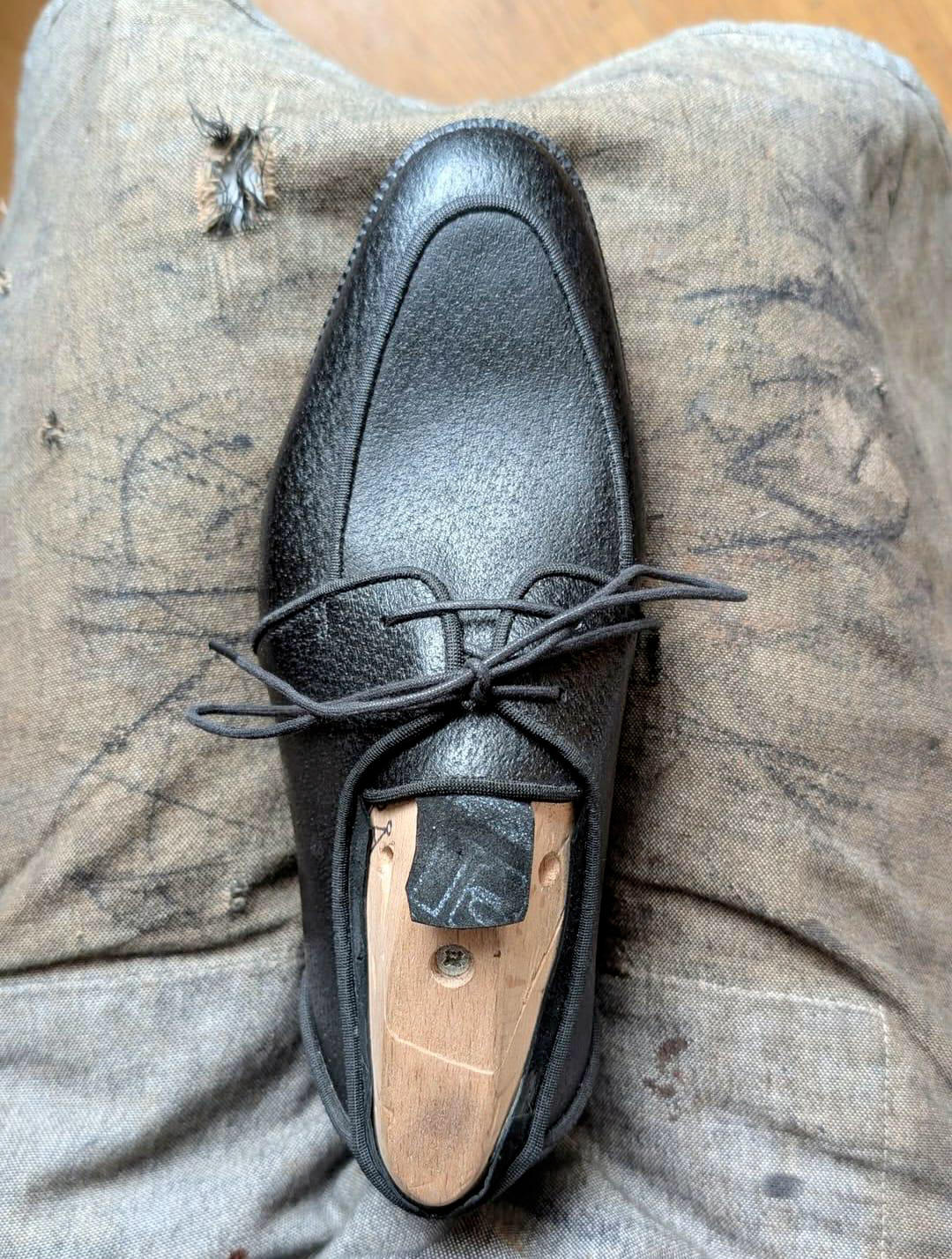 VR: How have you gathered your knowledge of the gentle craft — from books, in-house training, workshops, or somewhere else?
MT: It’s been a long journey, and I’m still learning. First of all, I’m very grateful to everyone who’s shared their knowledge with me along the way. I actually started while I was at university, and I used to spend every Saturday morning at an old cobbler’s, Gabriele’s, home learning how to repair and polish shoes. Friends and relatives would give me their shoes, and I’d work on them for free just to practise.
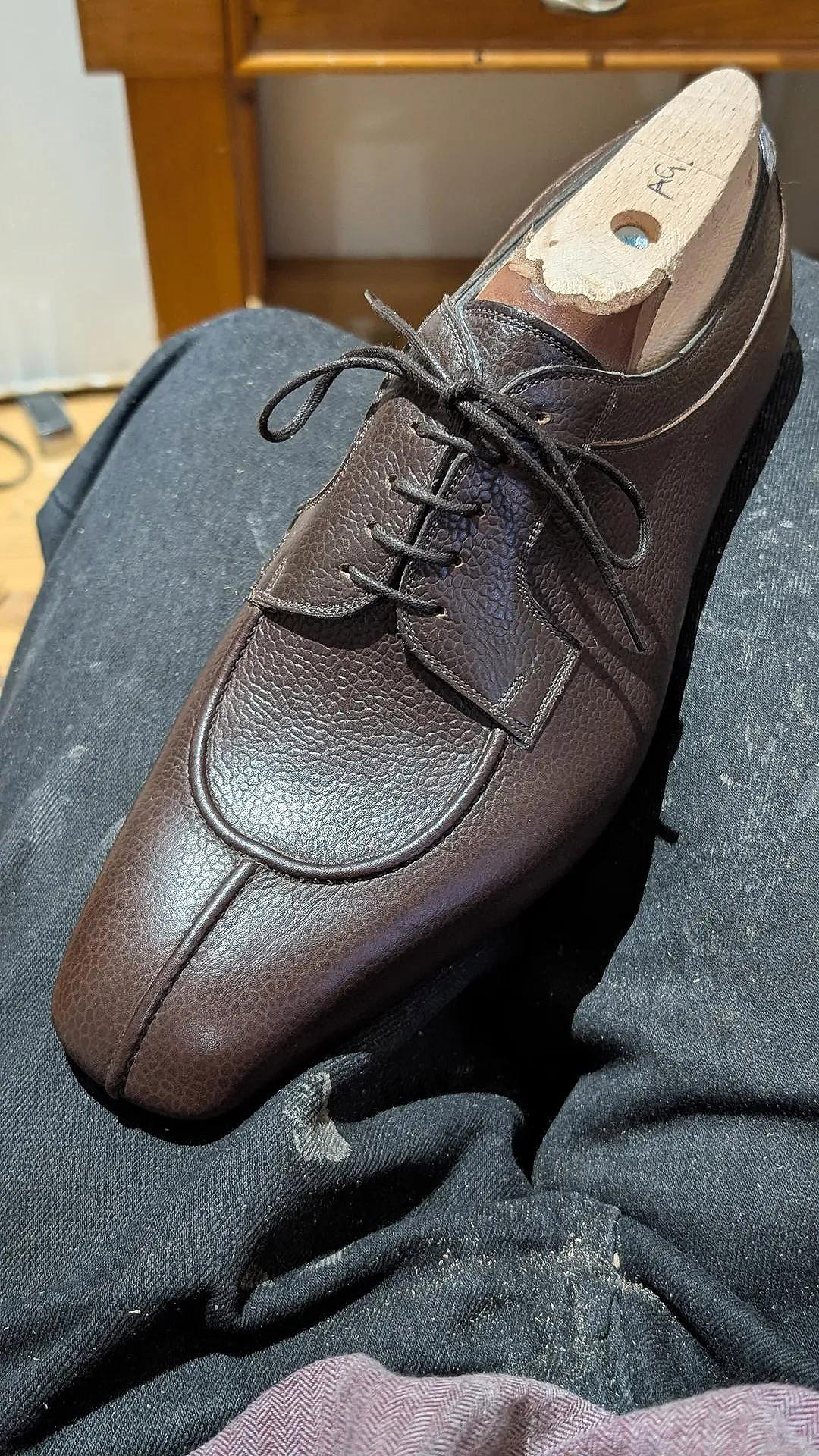 Later, I moved to Sweden, where I lived from 2015 to 2021. I was working in a wine bar and, fortunately, the owners were very supportive and gave me time off to pursue shoemaking. During that period, I travelled to Japan twice: first to Kobe to learn from Atsushi Onai at Il Quadrifoglio, and then to Yokohama to study with Toru Saito. At the same time, I kept practising shoemaking at home during my days off from hospitality and developed a strong interest in lastmaking. I guess YouTube and Instagram had a lot to do with this.
Riccardo Cianci of Calzoleria Carlino was holding a course in Traditional Lastmaking at the time, so I went to Italy to take the course with him, and that’s where I learned how to measure feet and carve lasts. Just before Brexit, I briefly visited London looking for opportunities as an outworker and reached out to several houses in the West End. That’s when Adam Law, who was Workshop Manager at Cleverley at the time, started sending me repair work to Sweden—and that’s really how my professional career began.
A few months later, he told me about an opening for an apprentice lastmaker. I didn’t hesitate—I left my job, moved to London, and joined Cleverley, where I worked as a lastmaker for five years. During that time, I also learned a great deal from John Carnera and from travelling with George Glasgow Jr for trunk shows in the US, which gave me valuable experience in client relations and service.
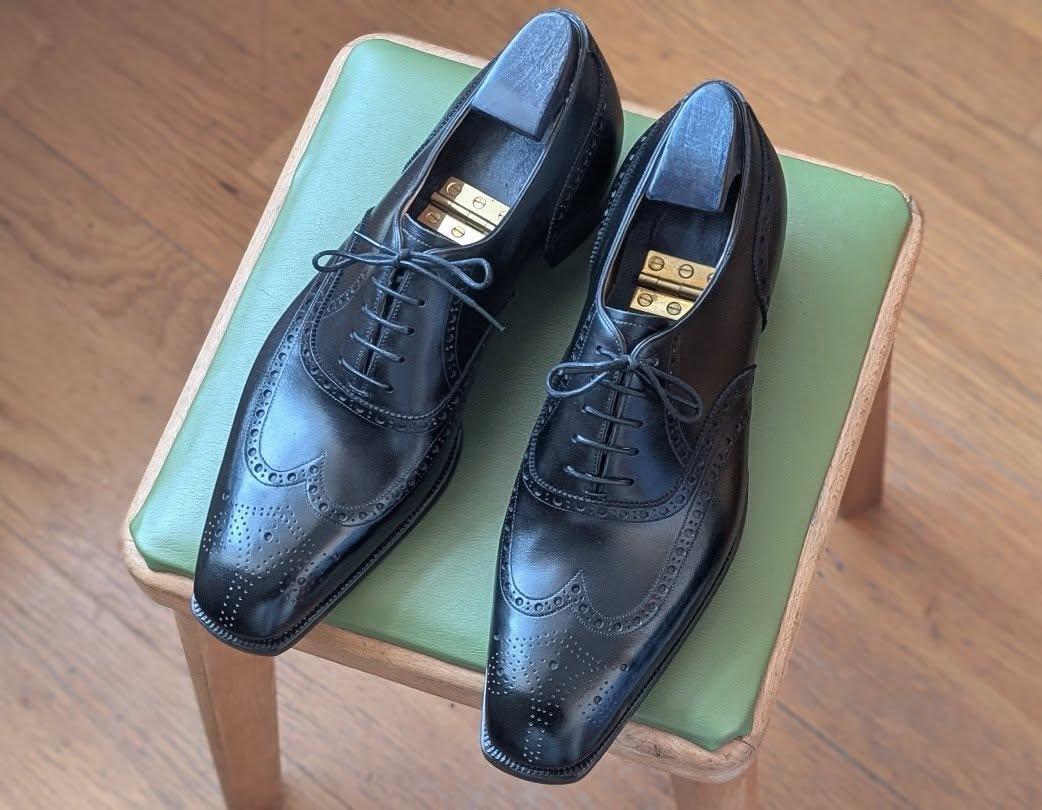 VR: How would you describe the “House Style” of Torre footwear?
MT: My years at Cleverley have definitely influenced the shape of my lasts. At the moment, I’m gradually moving towards softer shapes together with a lower toe spring, and I’m drawing more inspiration from Italian patterns, especially those featured in La Scarpa Maschile by Irvana Malabarba, which I consider a bit of a bible. So I’d say the house style is evolving, but it sits somewhere between the structure of English shoemaking and the elegance and lightness of Italian design.
VR: Do you have a favourite shoe model (eg. monk, derby, oxford, balmoral boot) and leather type?
MT: I have quite a high instep, so I tend to wear derby shoes. Lately, I’ve also been enjoying Chukka boots and Adelaide Oxfords. But styles go in cycles…so if you ask me again in three years, I might be all about a low-vamp loafer.
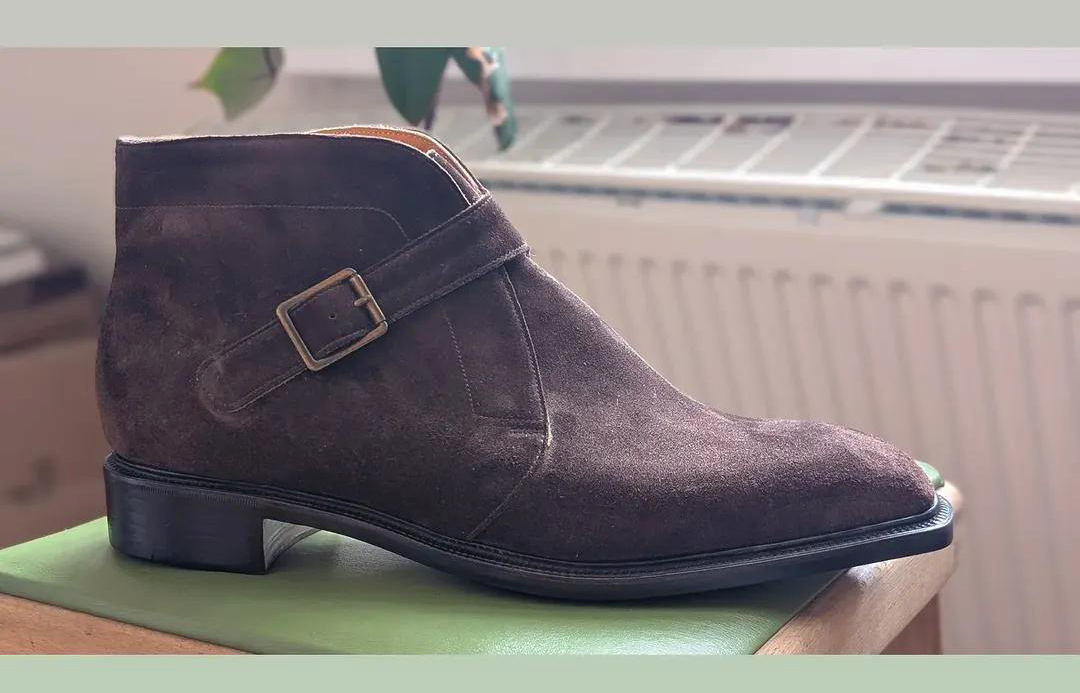
VR: There are several fine shoemakers in England — why should my readers try you?
MT: England, and especially London, has some truly outstanding shoemakers, so it’s a privilege to be part of that tradition. What I think sets me apart is the combination of influences behind my work: the Italian subtle sense of style and wearability, and the lastmaking training in England. That mix shapes both the aesthetic and the way I approach this craft. I try to offer something that balances structure, elegance and lightness with a strong focus on fitting, details and on building a personal relationship with each client. For me, it’s not just about making shoes, but about creating something that really reflects the individual wearing them.
 VR: What is your definition of a well-made shoe?
MT: For me, a well-made shoe is well-structured but also light and flexible. It supports you comfortably throughout the day, looks smart without being flashy, and has a hint of personality that makes it yours on that particular occasion. Lastly, when you put it on, it should feel effortless!
VR: Who or what inspires you?
MT: Calzoleria Gatto, Gaetano Messina, Anthony Cleverley, Dimitri Gomez, Emiko Matsuda, Muhammad Ali, Diego Armando Maradona, James Brown, Aretha Franklin, The White Stripes, ’90s Armani, Missoni, Raffaella Carrà, vintage cars (I hate driving though), Paul Thomas Anderson.
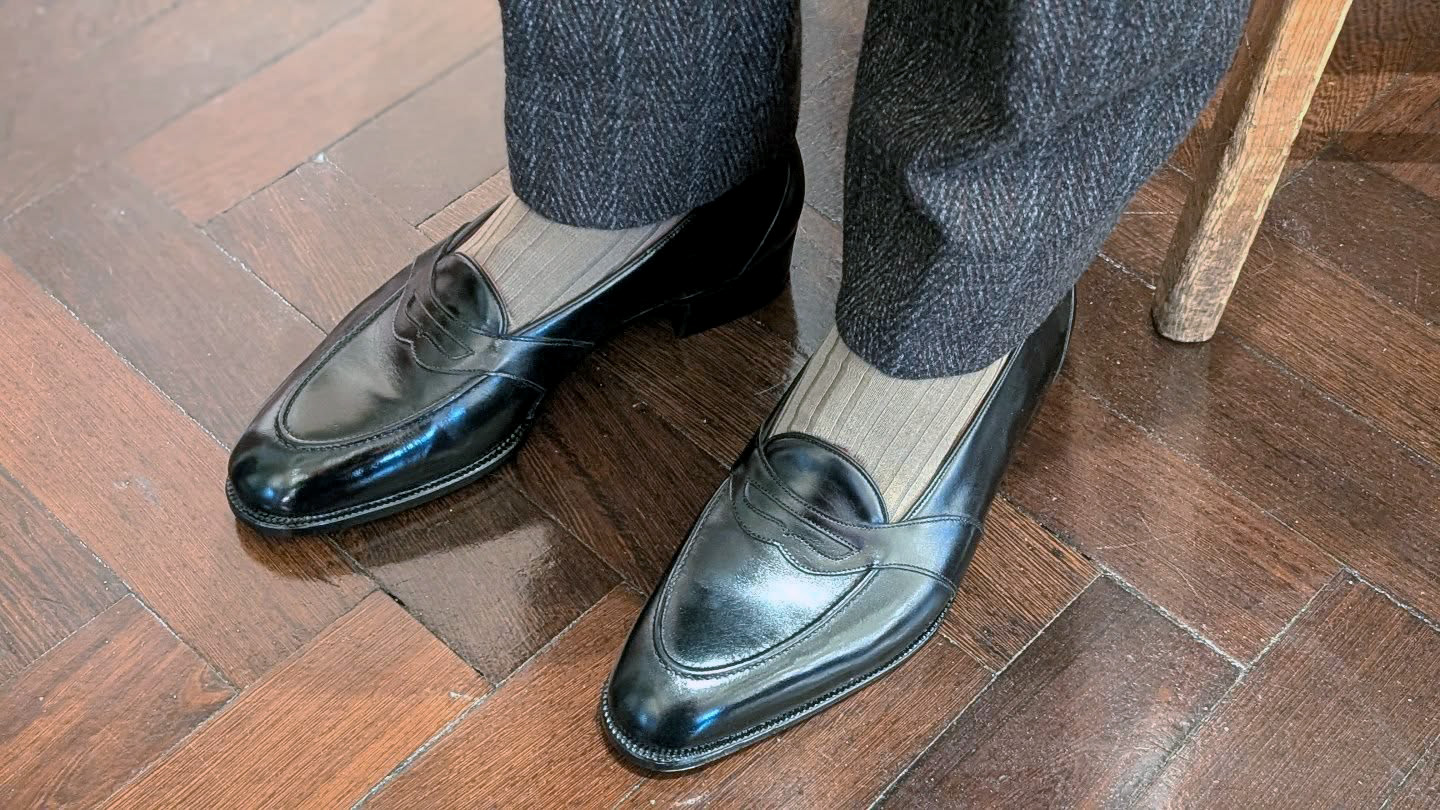 VR: Finally, how do you see the future of British shoemaking under the pressure of rising costs of living, difficulties with finding fine quality leather, etc?
MT: This has been a topic for ages, and yet the bespoke side of shoemaking is still flourishing. I can’t control rising costs, and I can’t predict the future, but, as a small operation, I can focus on flexibility. By experimenting with new materials and approaches, while staying true to the craftsmanship and values that make shoemaking unique, I hope to keep offering something meaningful to clients.
Category Cordwainers, Interviews | Tags:

Such an interesting interview, thanks. Kudos to Mr. Torre.