Anatomy of an Isaia shirt
1July 12, 2017 by Ville Raivio
The Neapolitan tailoring factory of Isaia was founded in 1957 by the eponymous brothers Corrado, Enrico and Rosario. They moved their father’s fabric store, which also housed a small tailoring section, to Casalnuovo, some 13 kilometres from Naples, and changed its focus to made to measure garments. The move was smart because nearly half of Casalnuovo’s residents worked in tailoring already. Over the years, the company has spread its woollen tentacles towards ties, sportswear, bags, and shirts. Most garments are made by hand or finished so, and the House Cuts seem to be on the trimmer side, jacket constructions are light, while cloths show strong patterns or colours. Today’s example is a smart shirt courtesy of a lucky sales find.
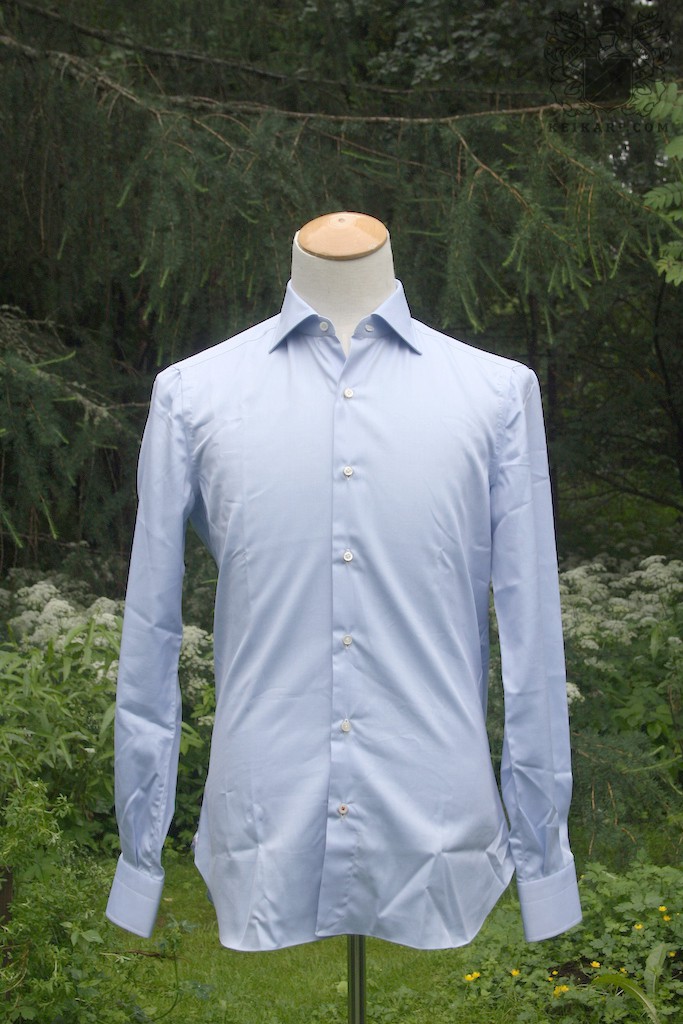
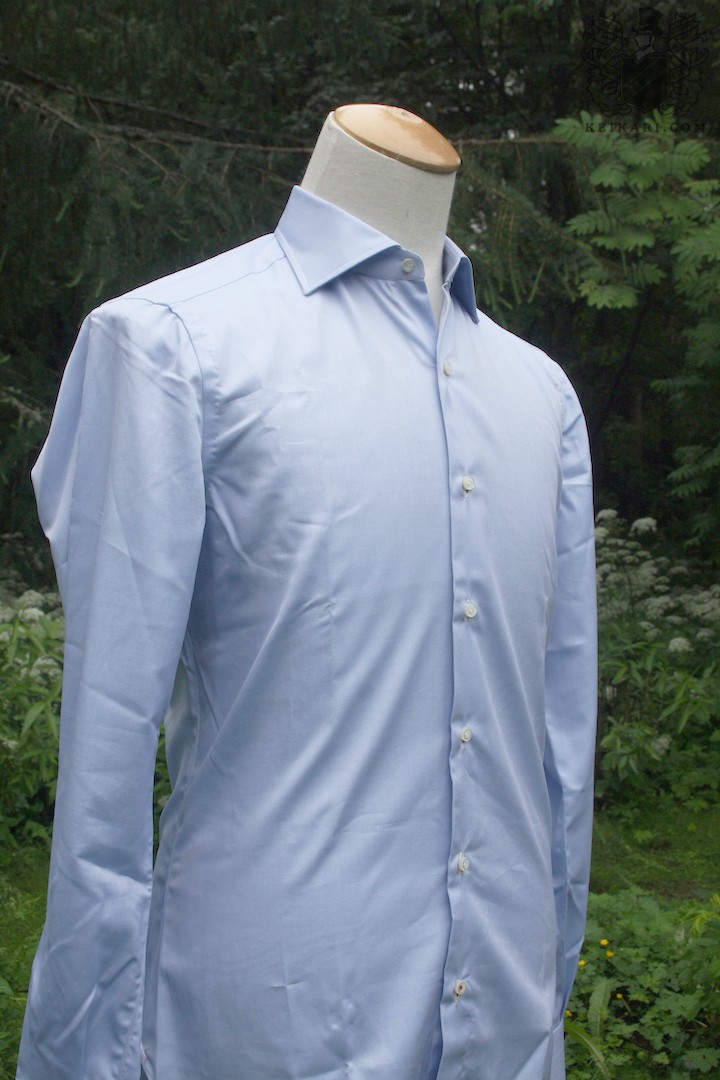
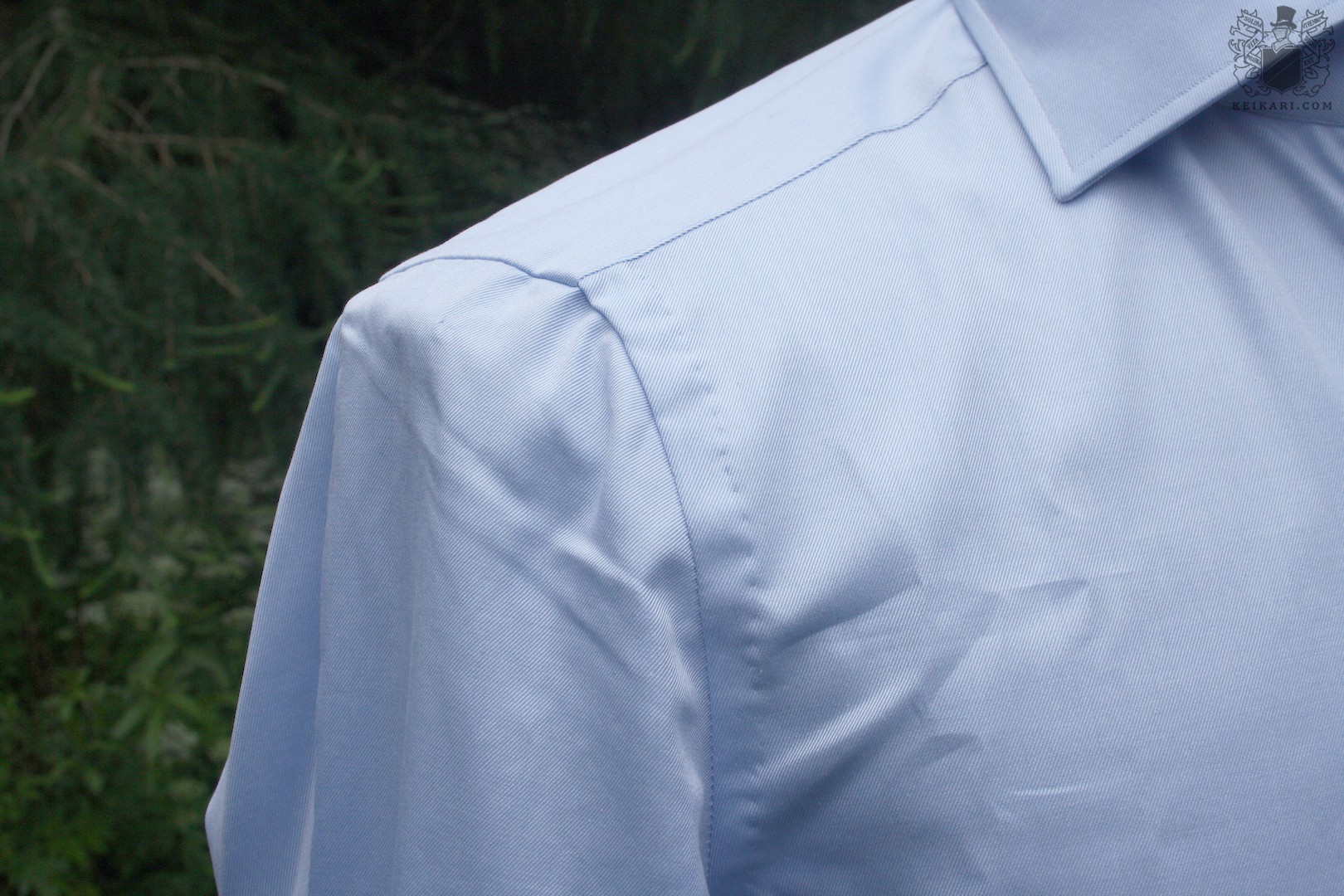
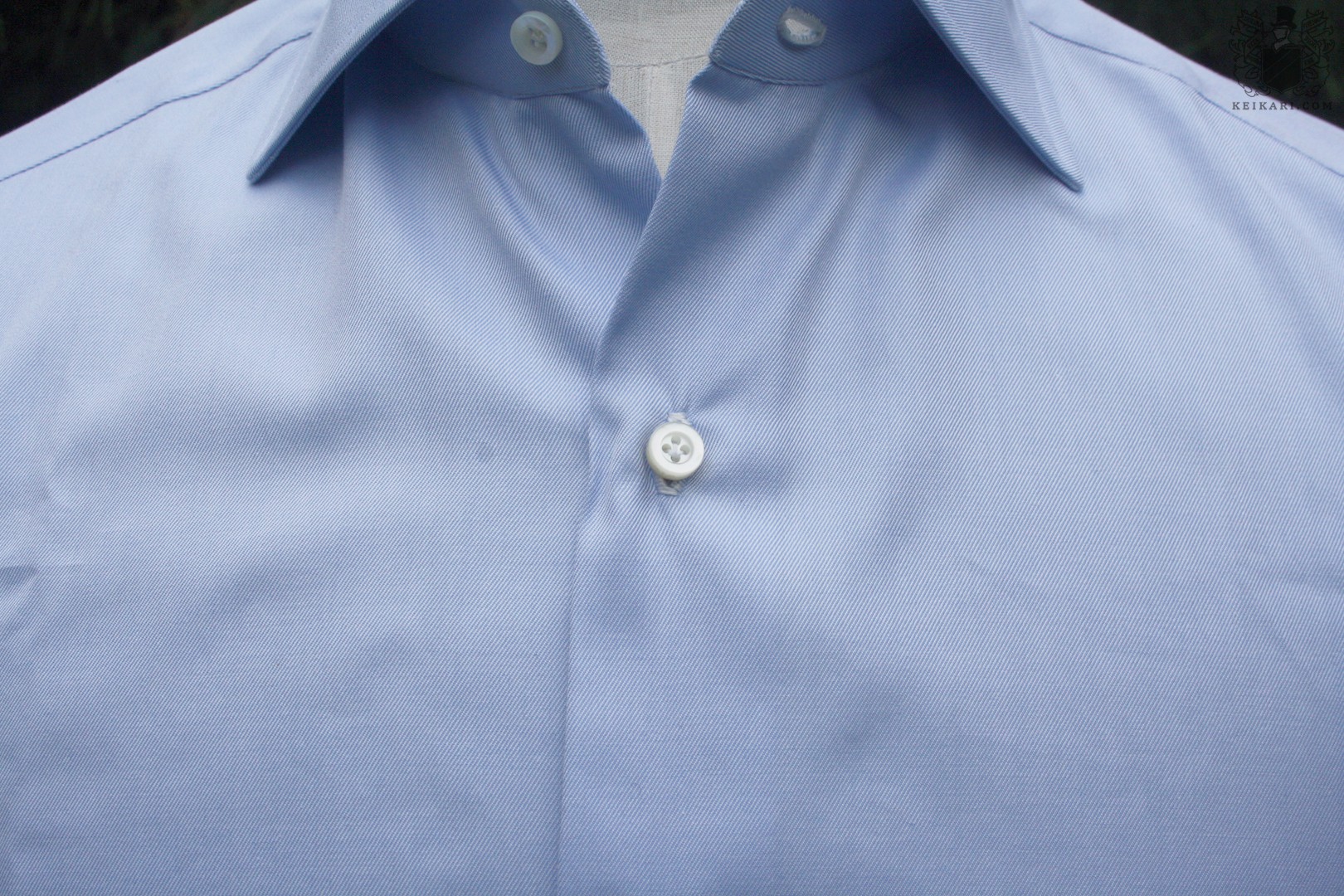
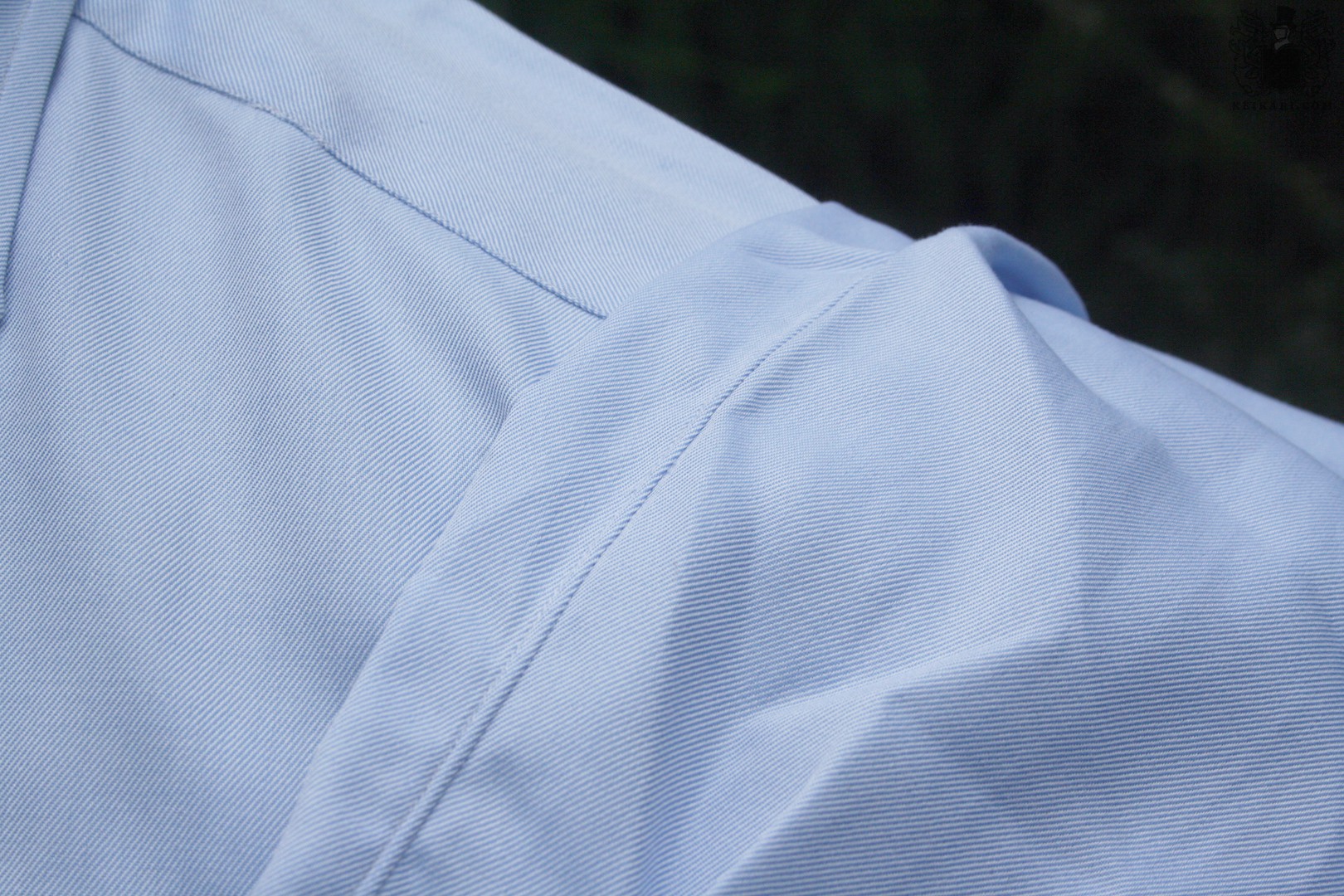
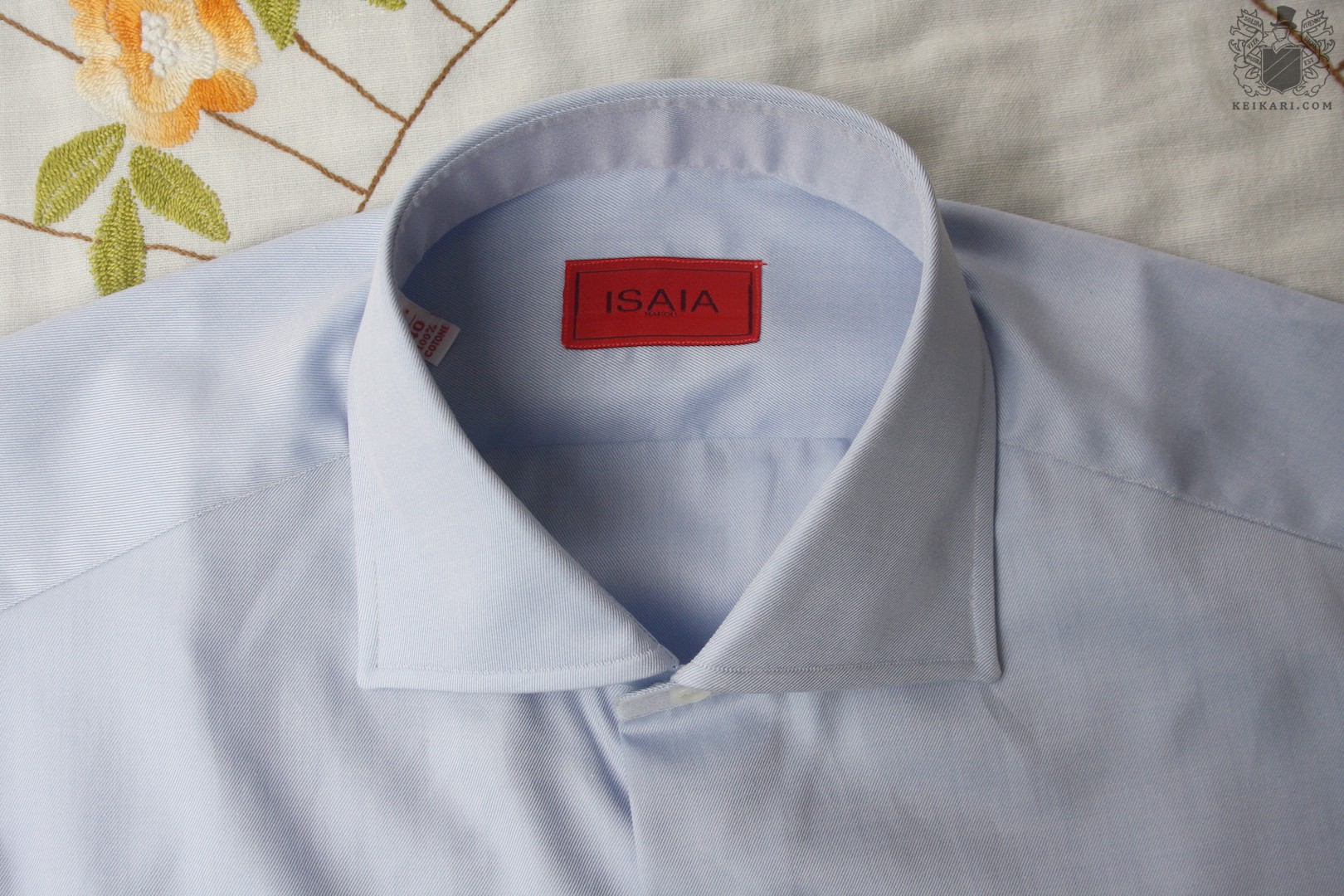
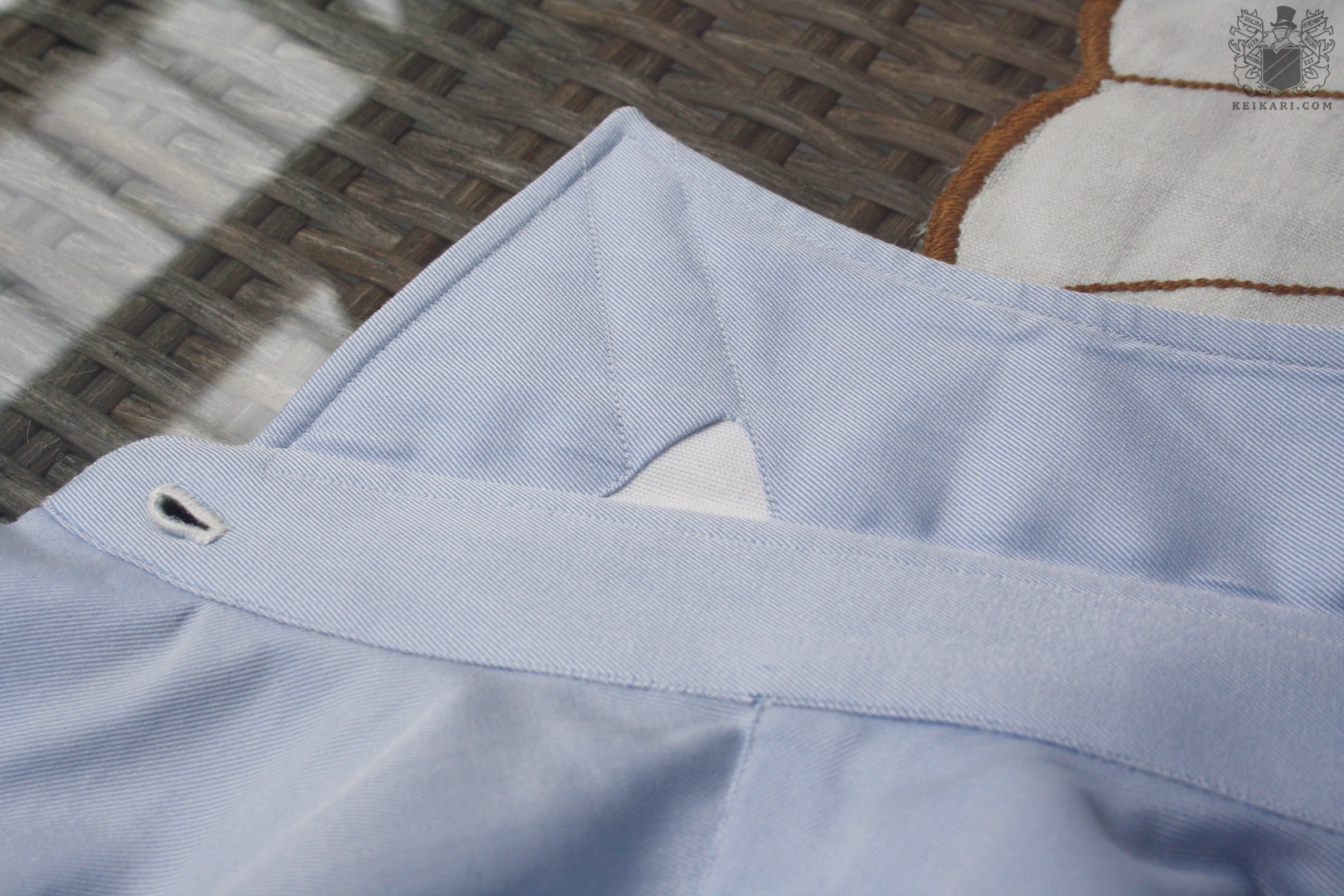
A size 40 shirt in the regular sizing, the cut is on the slimmer side but not overly so. Definitely closer to the body than most English shirts, not near the prophylactic dimensions like those on fashion house shirts, this is a nice medium way. The armpit to armpit measure is 59 cm and sleeve girth next to the armpit is 42 cm. The sleeves are cut high for greater movement. As for the collar in this model, which features white constrast fabric in its stiffener slots, its back height is 4,2 cm with a point length of 8,5 cm and a spread of 15 cm. The collar and cuffs are lightly fused. The most surprising thing is the sleeve length from shoulder seam to cuff end: 68,5 cm, definitely longer than on most RTW shirts I have owned. Too much for most hands. The shoulder’s back portion has no split yoke, all seams are very narrow and tidy, sewn with a very straight and dense setting. The cotton fabric feels soft and strong, light plays beautifully on its surface.
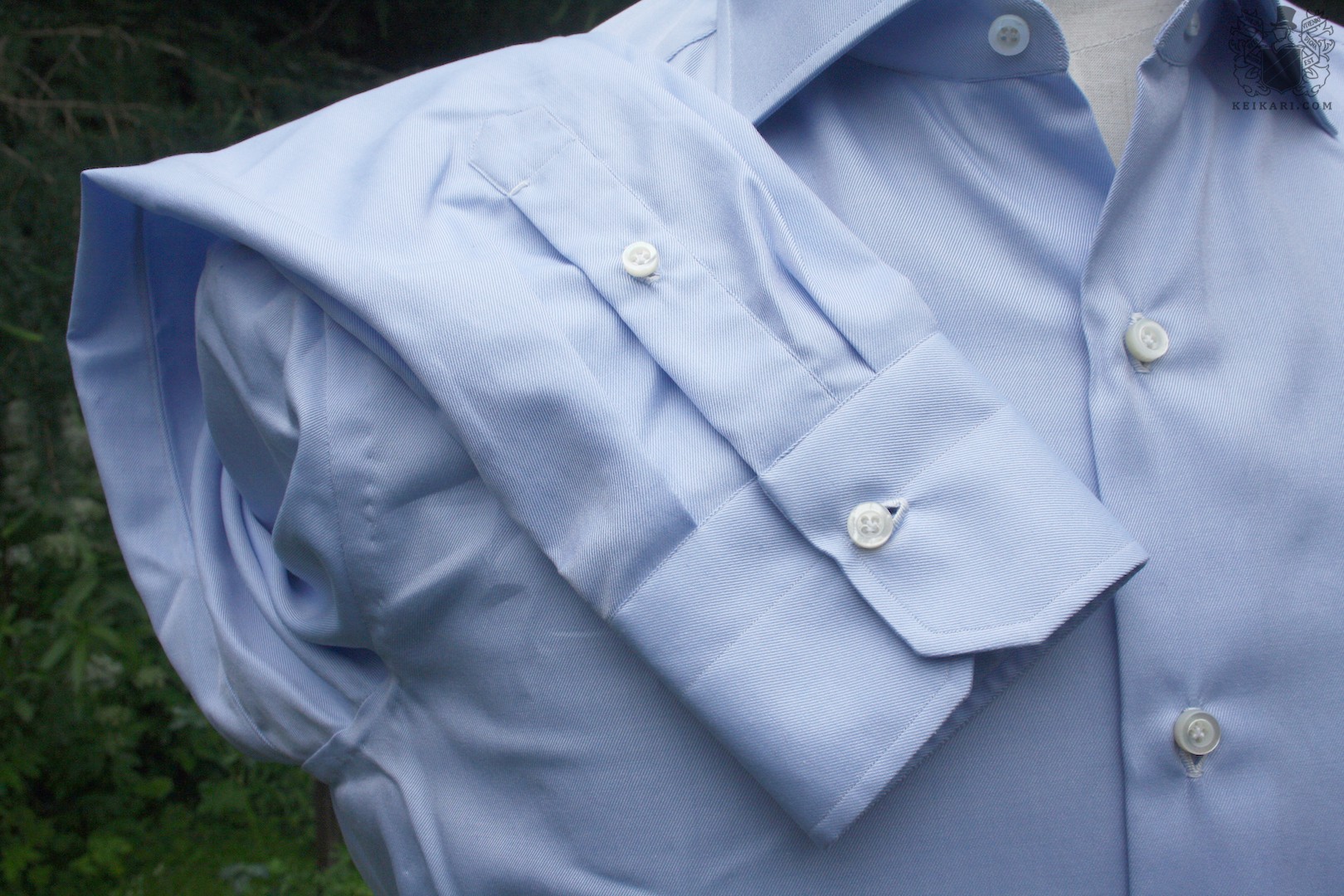
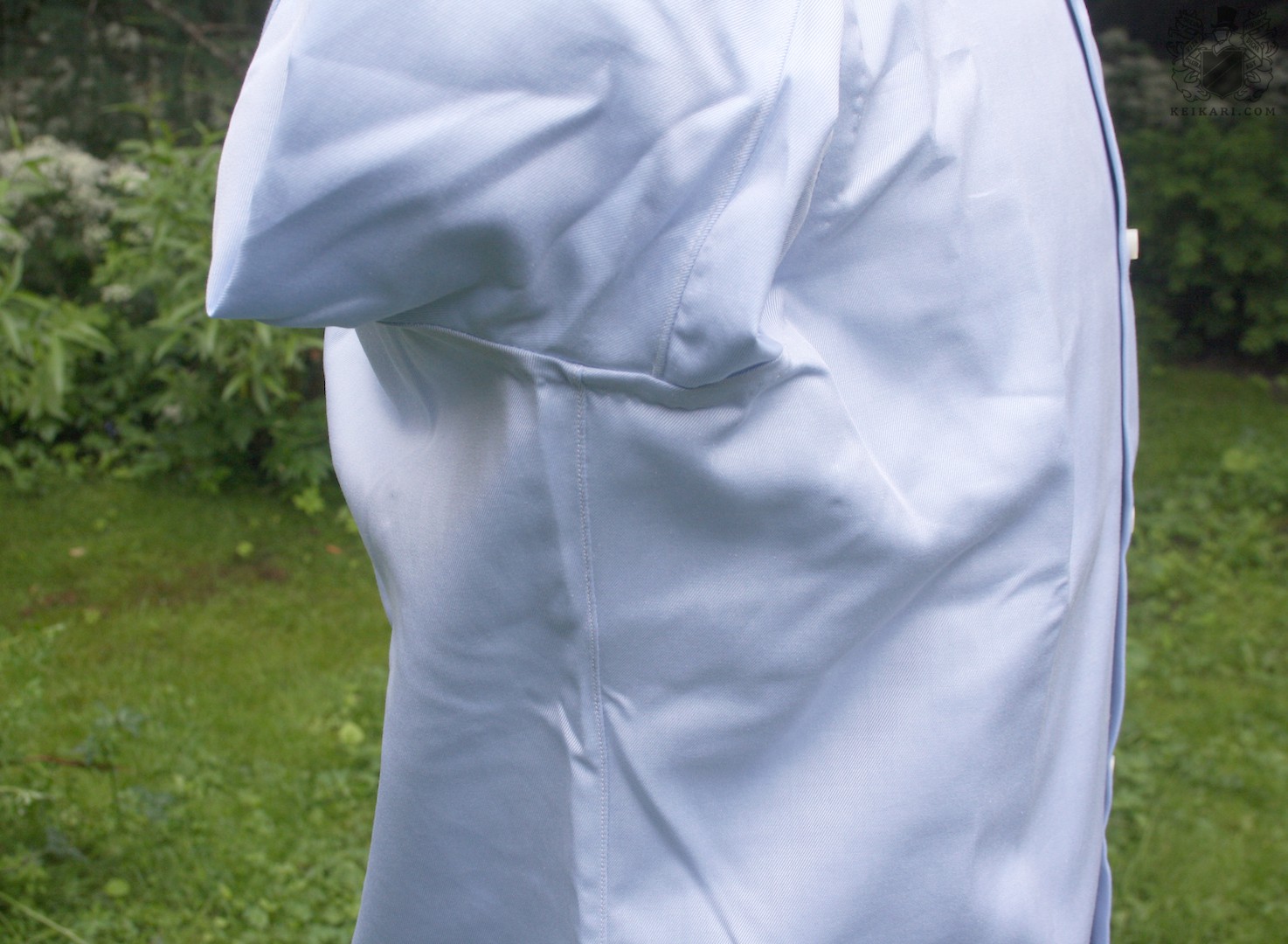
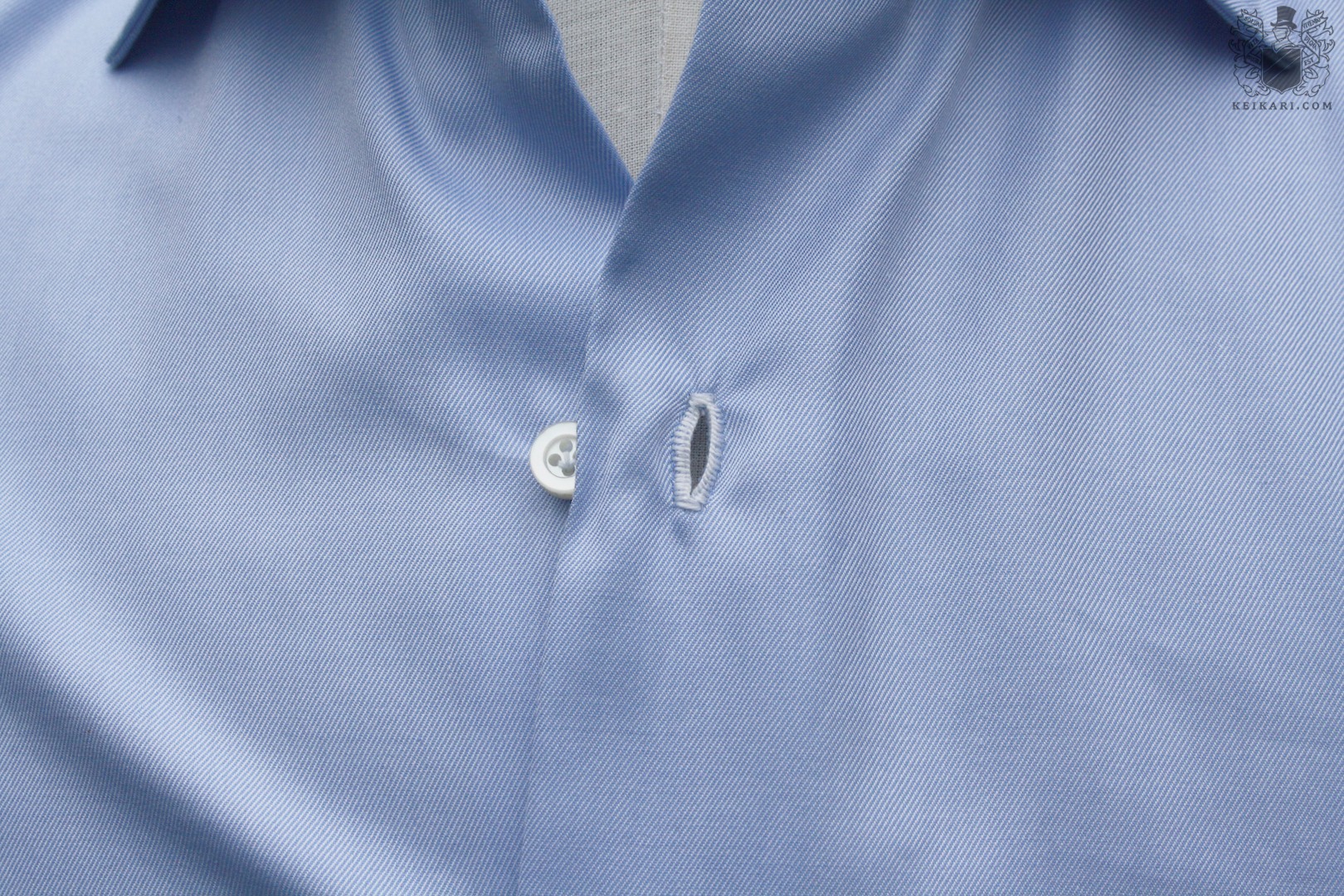
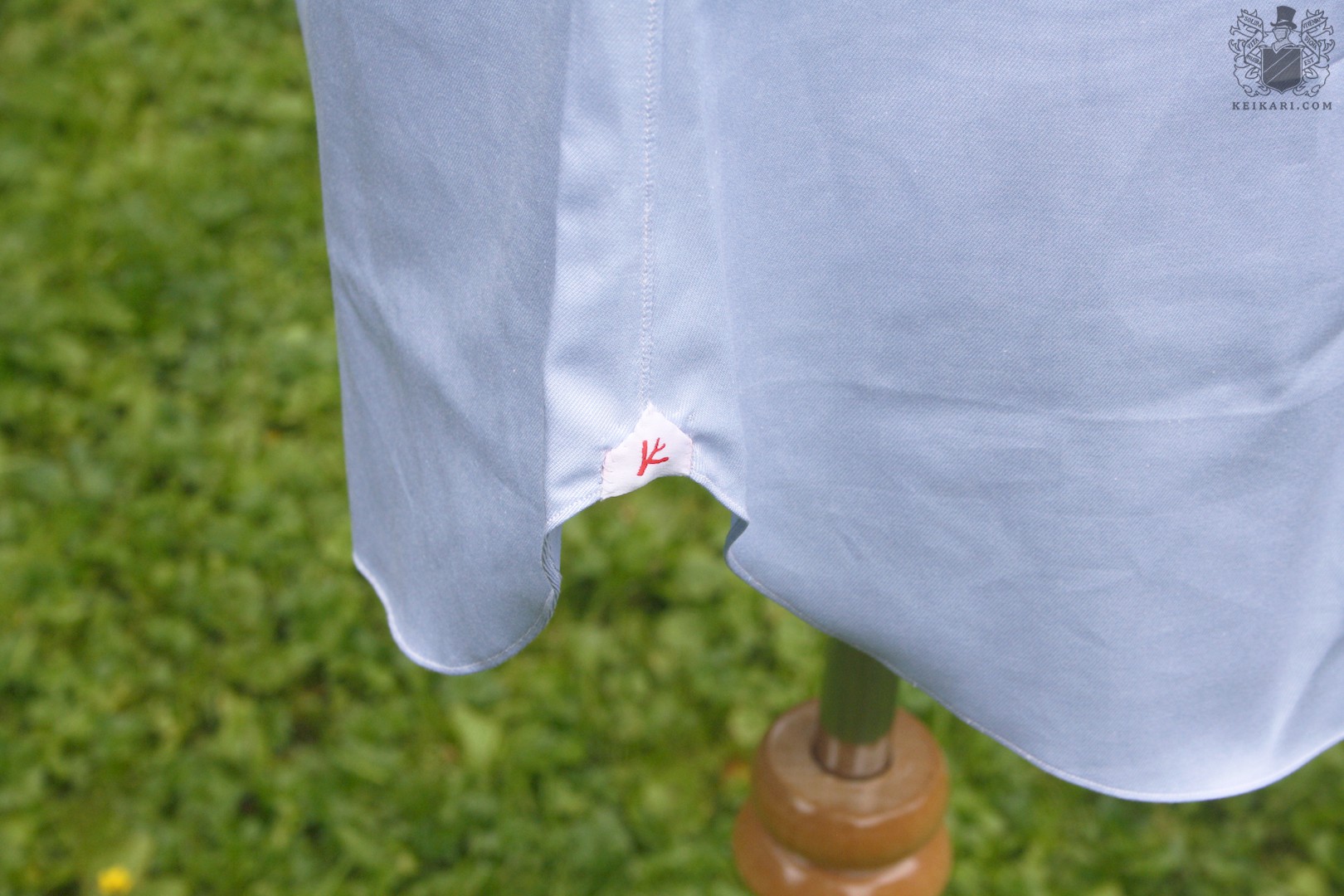
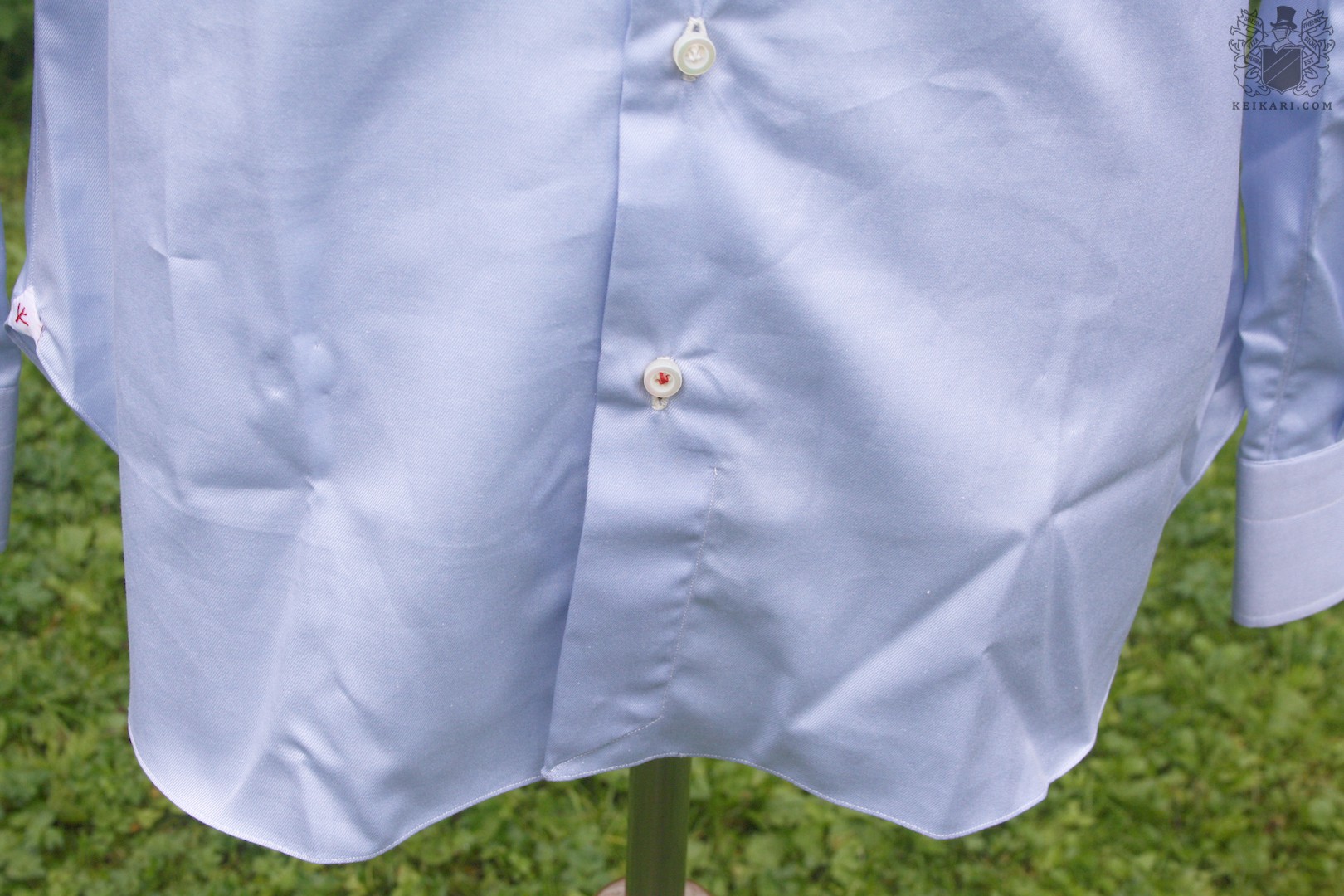
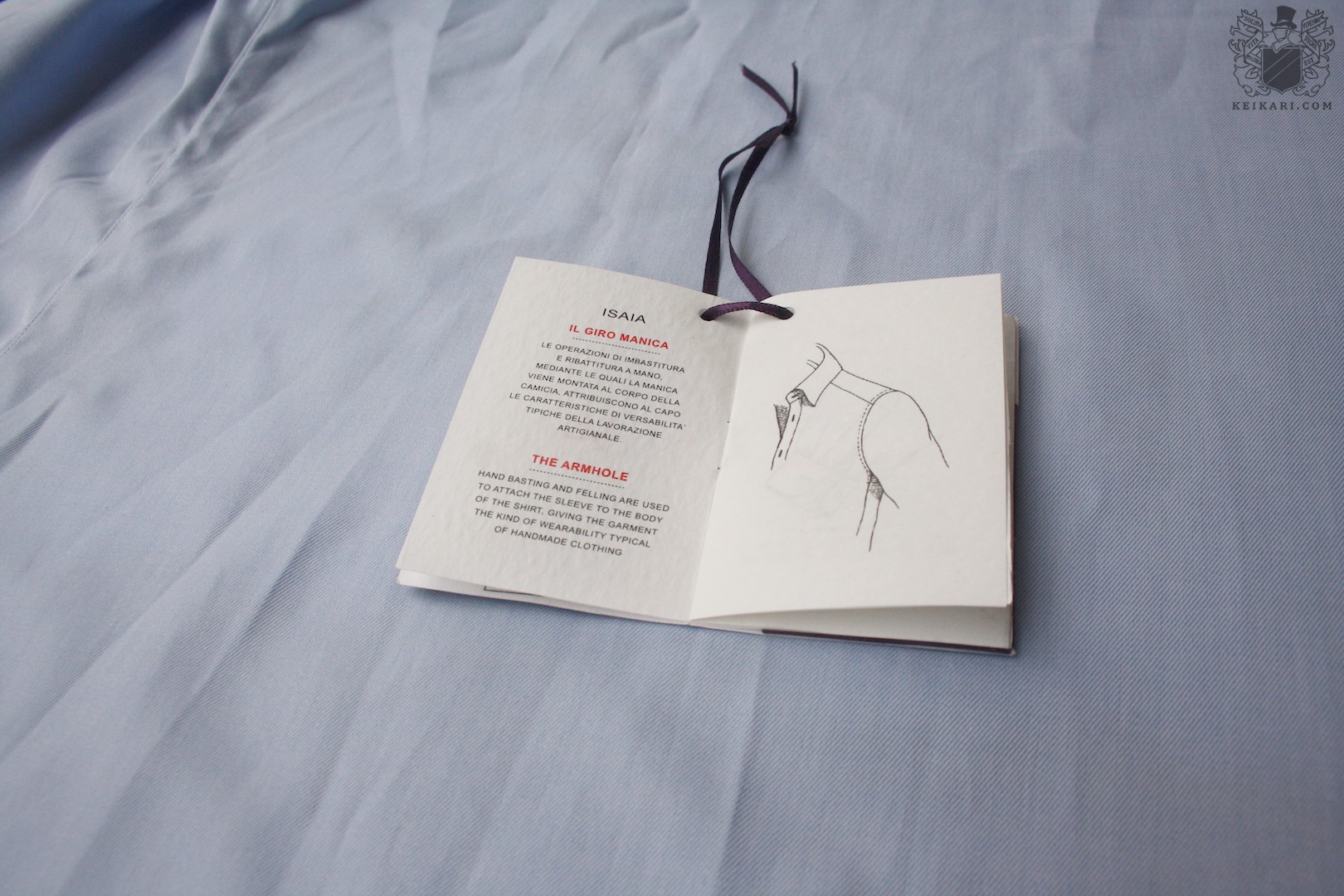
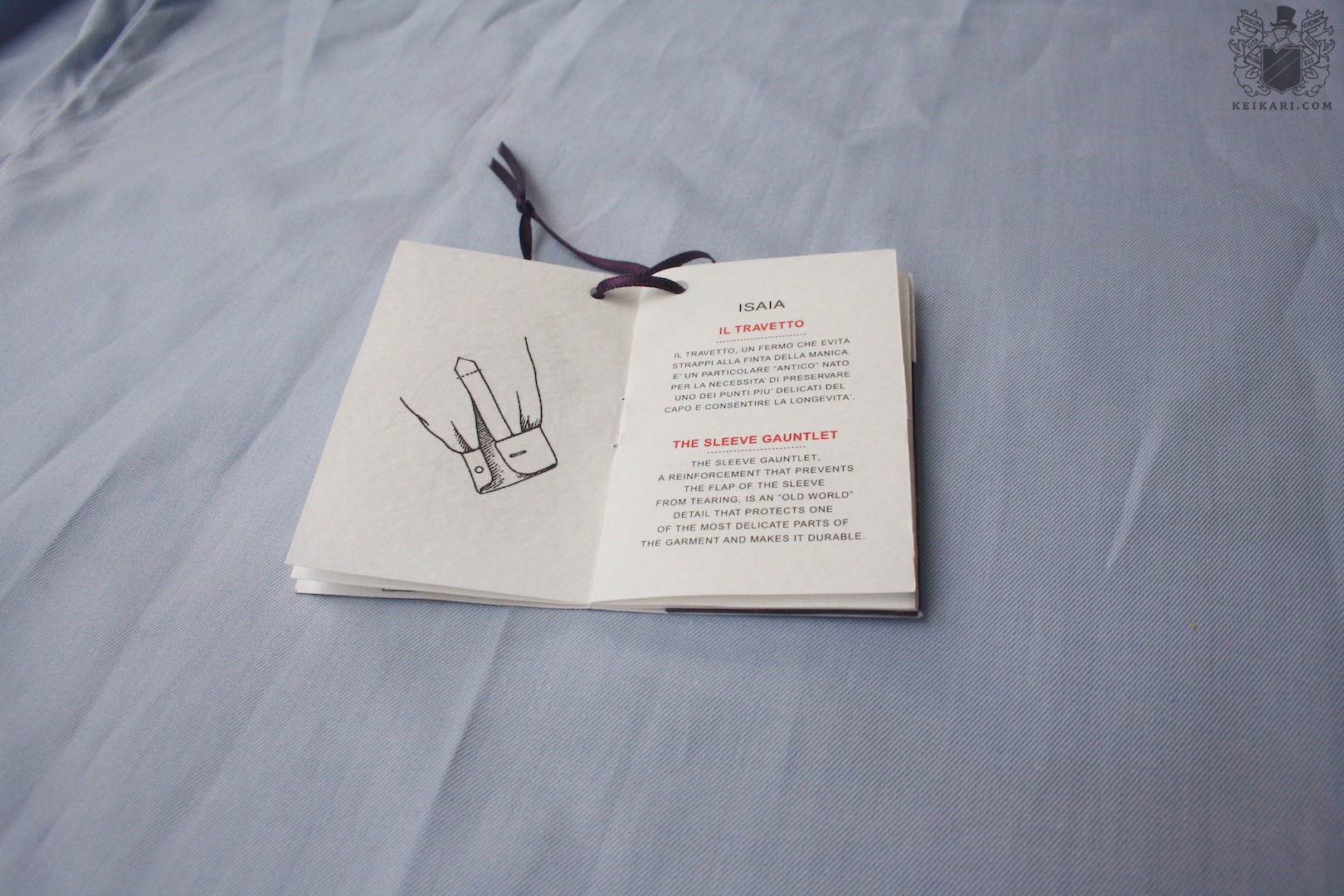
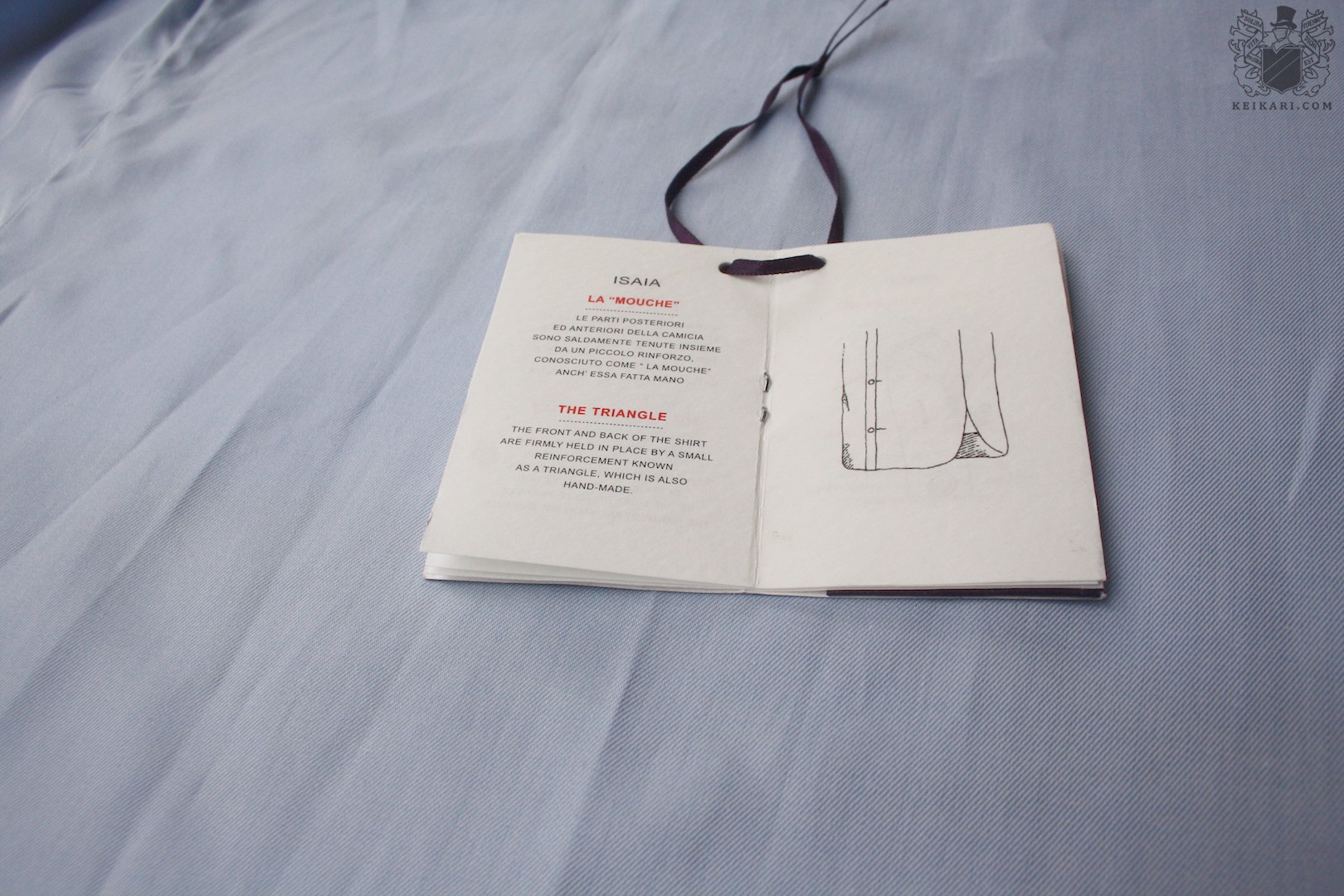
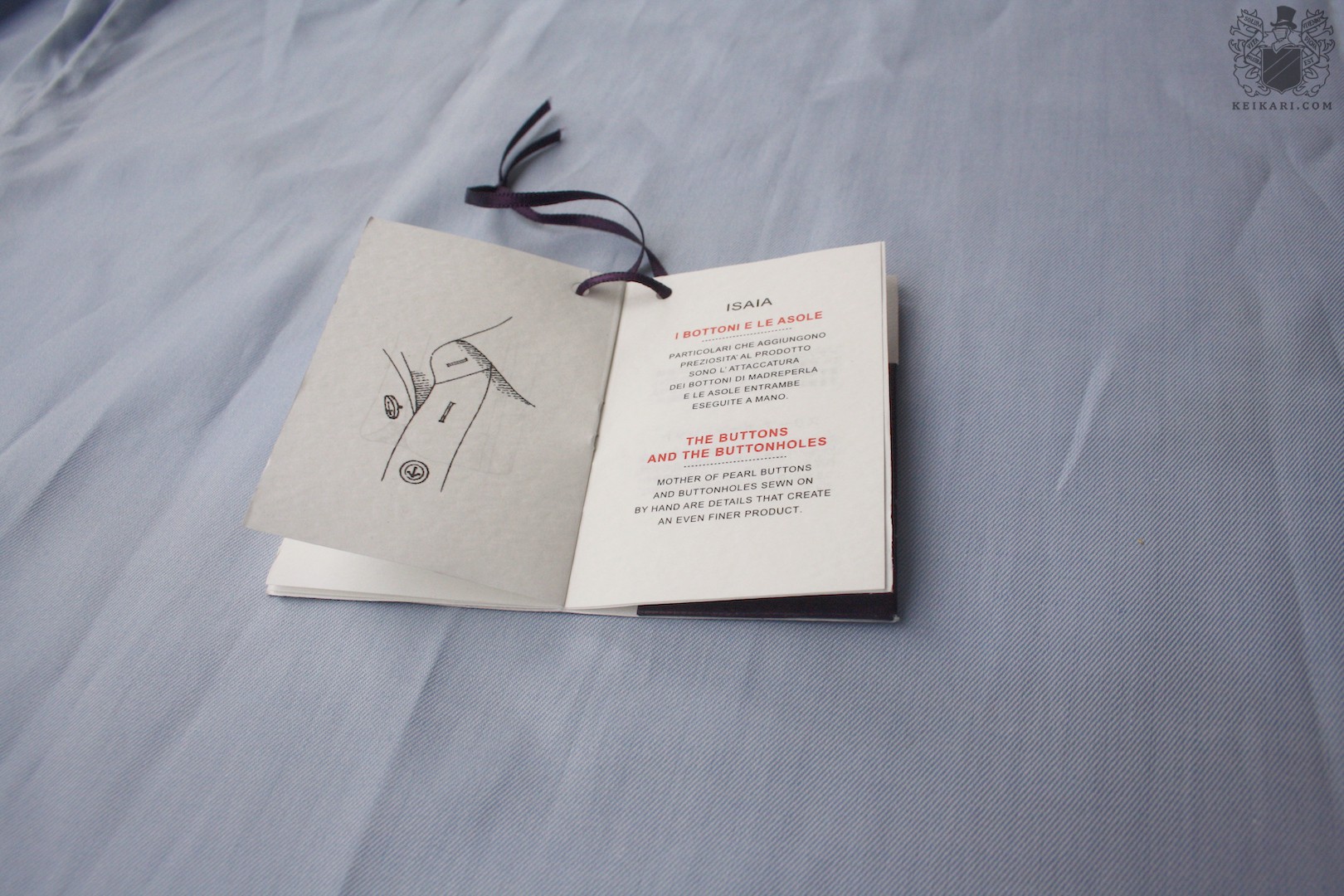
A paper leaflet comes with each Isaia shirt, summing up the patience and effort devoted to their make. Along with machine sewing, the sleeves have decorative, neat hand-sewn seams. The sleeve plackets have hand-sewn bar tacks, a small gusset with the Neapolitan red coral Isaia logo is hand-sewn at the hem. All buttons are hand-sewn with the decorative crow’s (or chicken’s) foot stitch and all buttonholes are hand-sewn tightly. The thick mother-of-pearl buttons are very lively and beautiful. The shirt has no placket under them. The last button is attached with a dark red thread that mirrors the coral logo’s shade. The fabric is twill, with a small pattern, but the angle of this pattern is closely matched on the sleeve placket.
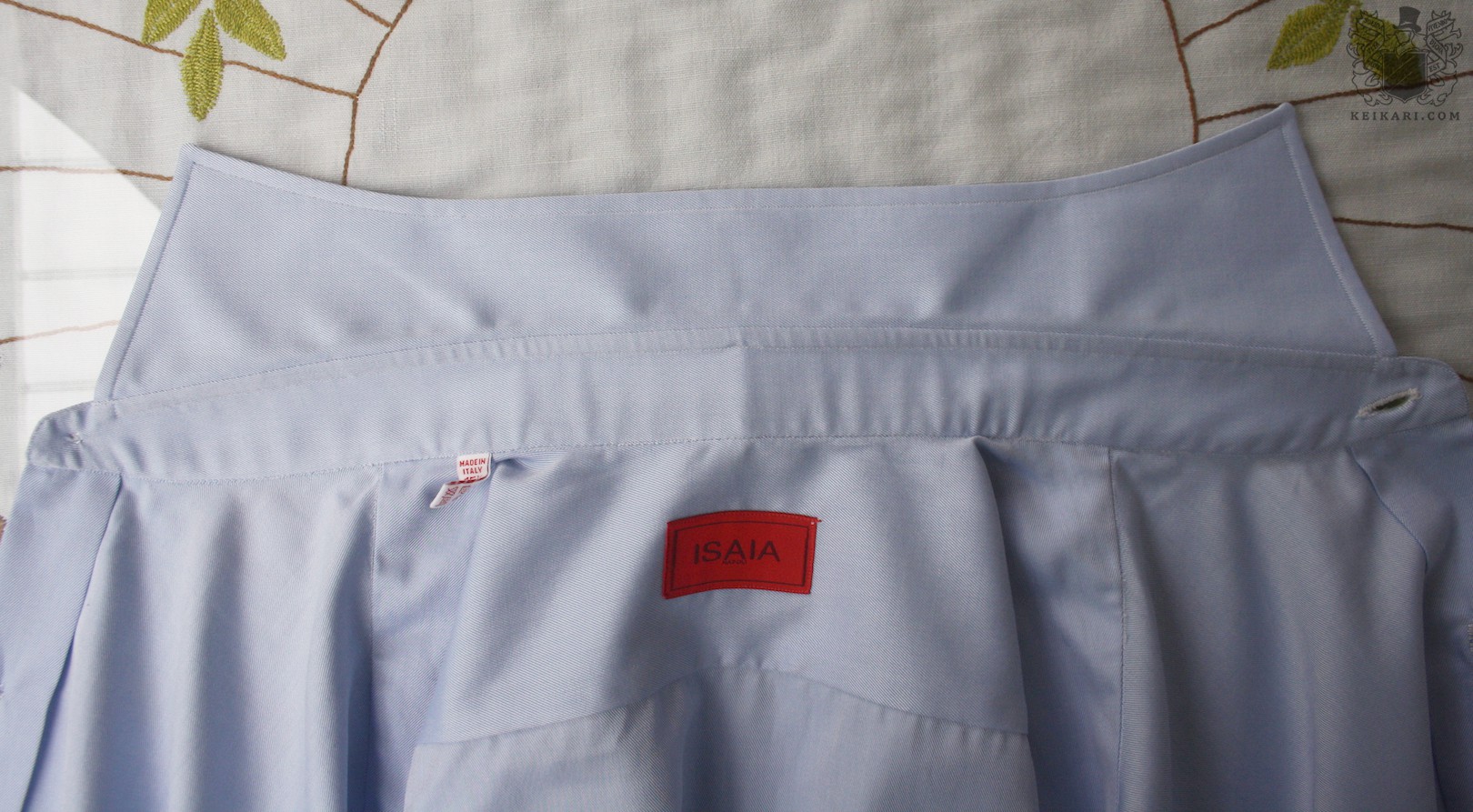
In sum, Isaia offers the finest RTW shirt I have tried so far. While a handful of companies, such as Kiton or G. Inglese, use finer fabrics and feature more hand-sewn details, these additional sewings are decorative instead of functional. What’s more, hand-sewn seams have a tendency to come apart with repeated laundry washes. Once one stitch is loose, many more will unravel. This prettiness also comes with a hefty additional price. Isaia’s shirts cost around 200 euros in Europe and are worth their salt, even more so while on sale. Several fine makers, such as Turnbull&Asser, Charvet or Brioni, offer shirts at a similar price but lack the beautiful finishing that sets the Neapolitans apart. My oldest shirts from Isaia have turned five years now and look as well as feel new. For me, theirs is the finest combination of cut, make, materials and finishing in RTW shirtmaking.
Category Naples, Reviews, Shirts
Walt Whitman on quality shoes
0April 1, 2017 by Ville Raivio
“Probably there is no way to have good and easy boots or shoes, except to have lasts modeled exactly to the shape of the feet. This is well worth doing. Hundreds of times the cost of it are yearly spent in idle gratifications — while this, rightly looked upon, is indispensable to comfort and health. The feet, too, must be kept well clothed with thin socks in summer, and woolen in winter — and washed daily.”
– Walt Whitman in his Manly Health and Training columns according to NPR
Category Quotations
Dressing up at Harvard
0March 12, 2017 by Ville Raivio
“Harvard lecturer Stephen Shoemaker, whose courses include ‘Harvard’s History and Evolving Religious Identity,’ has been a J. Press customer since the 1990s. His students often ask him why he always has to dress up for class. To which Shoemaker, in his three-piece suit, is often tempted to respond: ‘Well, why do you always have to dress so down for class?'”
— as shared in Style with Staying Power
Category Quotations
Made to measure shoes by Buday #2
0March 11, 2017 by Ville Raivio
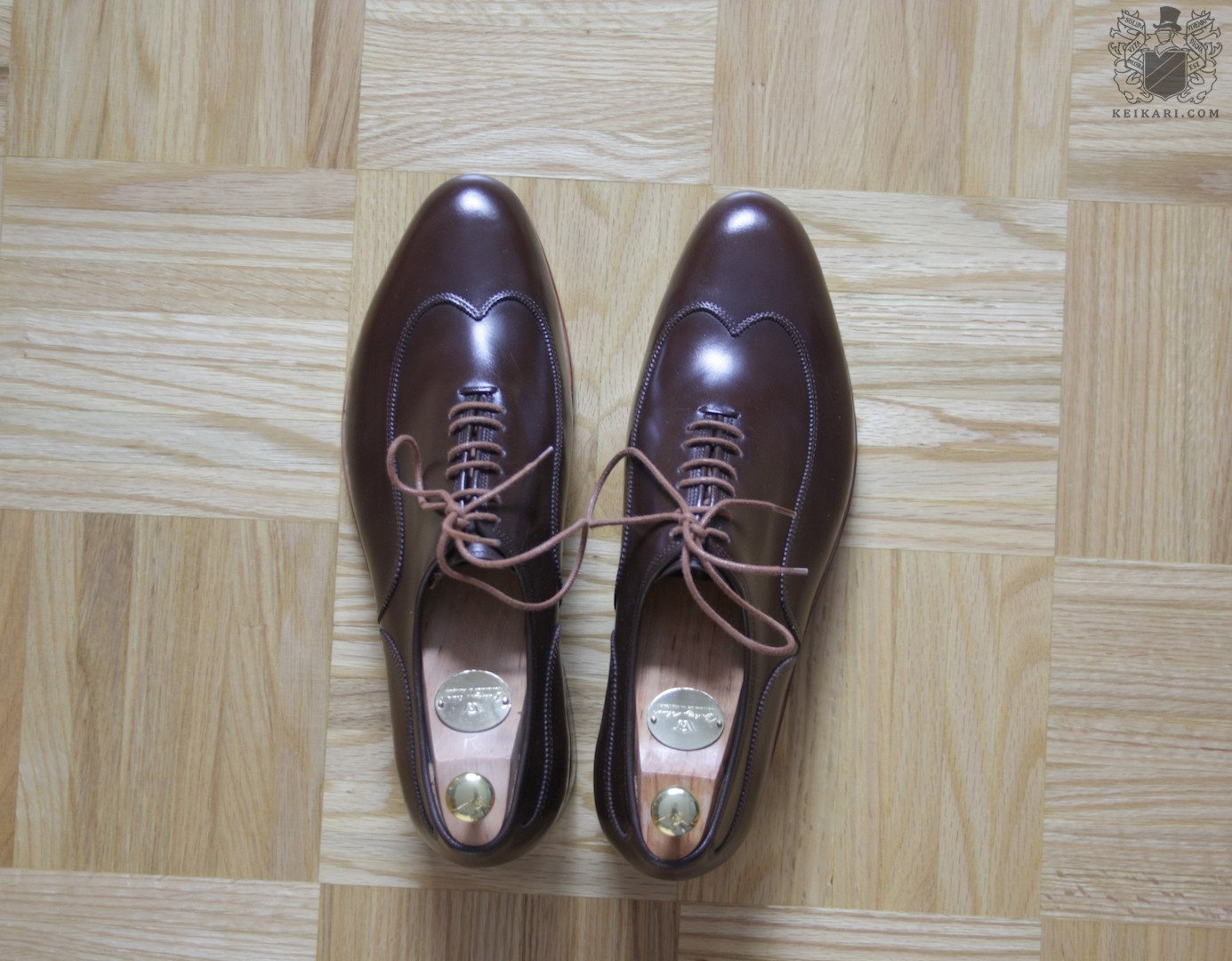
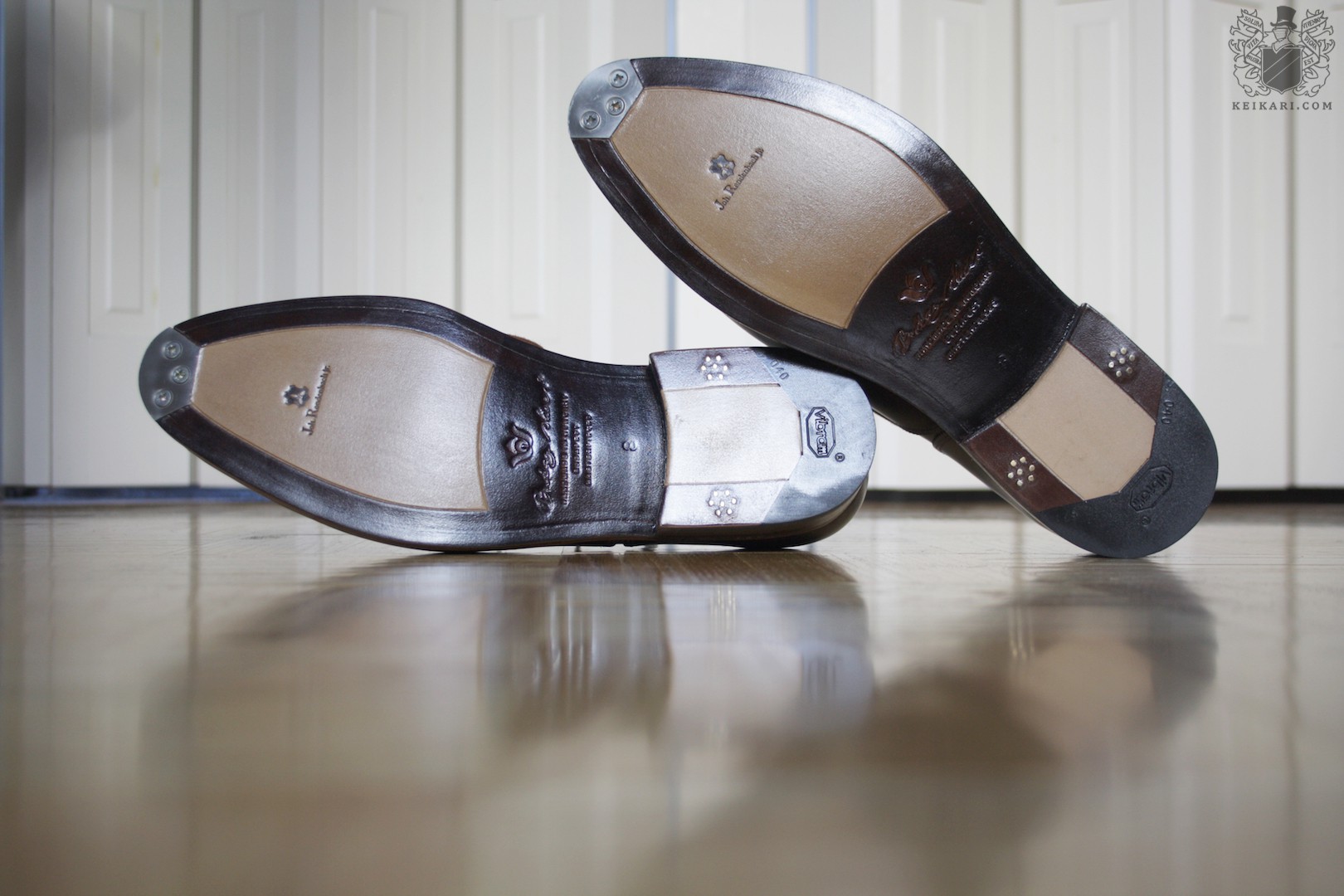
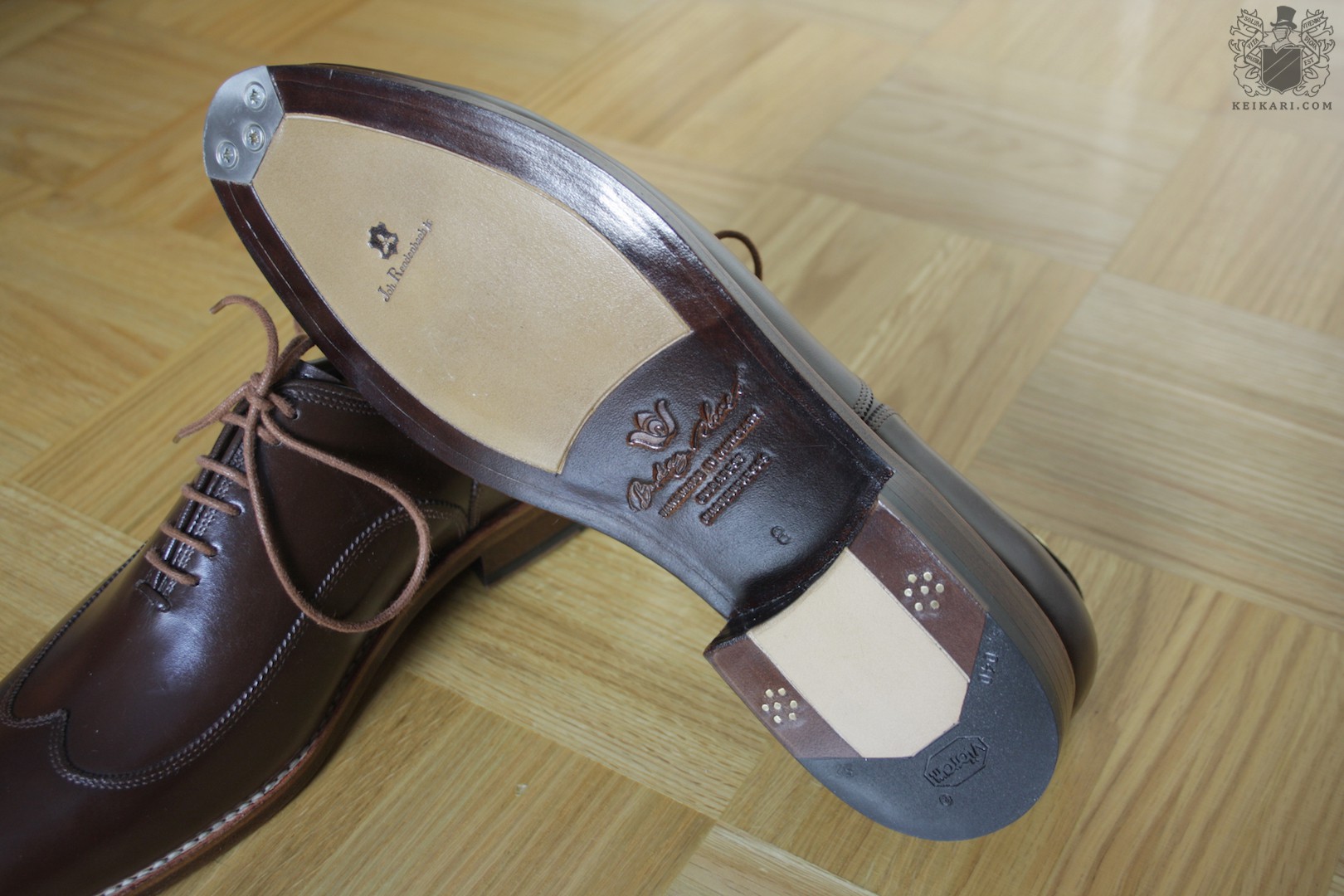
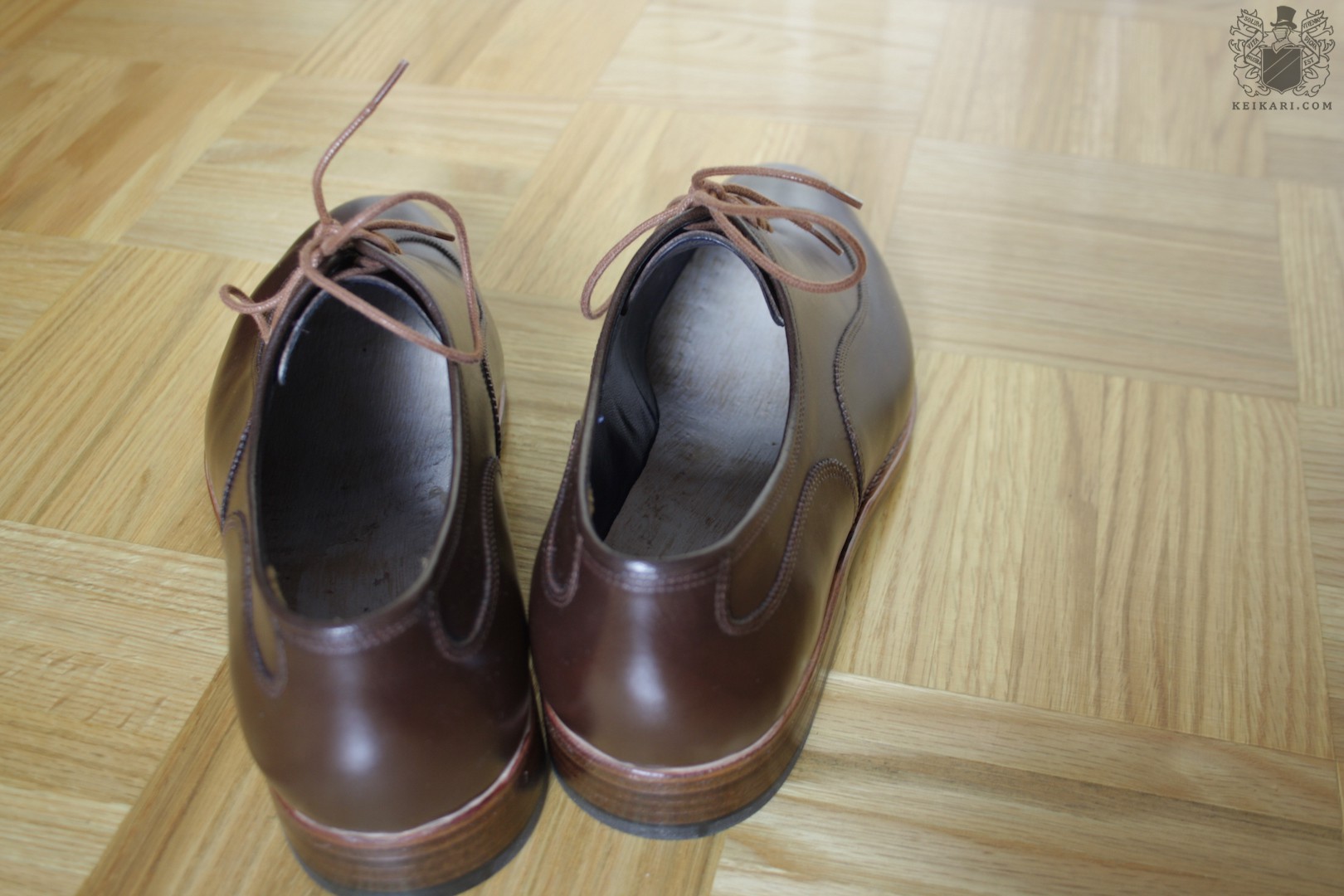
Last year, with the help of Buday, I set about to try yet another Hungarian shoemaker I had read about but not seen in person. The end result is arrived in the form of the Paris model: a gimped austerity brogue made on the London-last from mid-brown calfskin, with single oak-bark leather soles, double-spaced lacing, piping around the ankle, steel toe plates and clean seamless heelcups. To make them more personal, the shoes were also made to measure and feature bright blue lining along with an undyed welt top and white welt stitching. These small details delight the owner, but won’t stand out like the ever-more popular “luxury” sneakers that feature uppers stamped with brand logos. When having clothes made, there is no need to shout — a commission is already personal without eye-grabbing gimmicks.

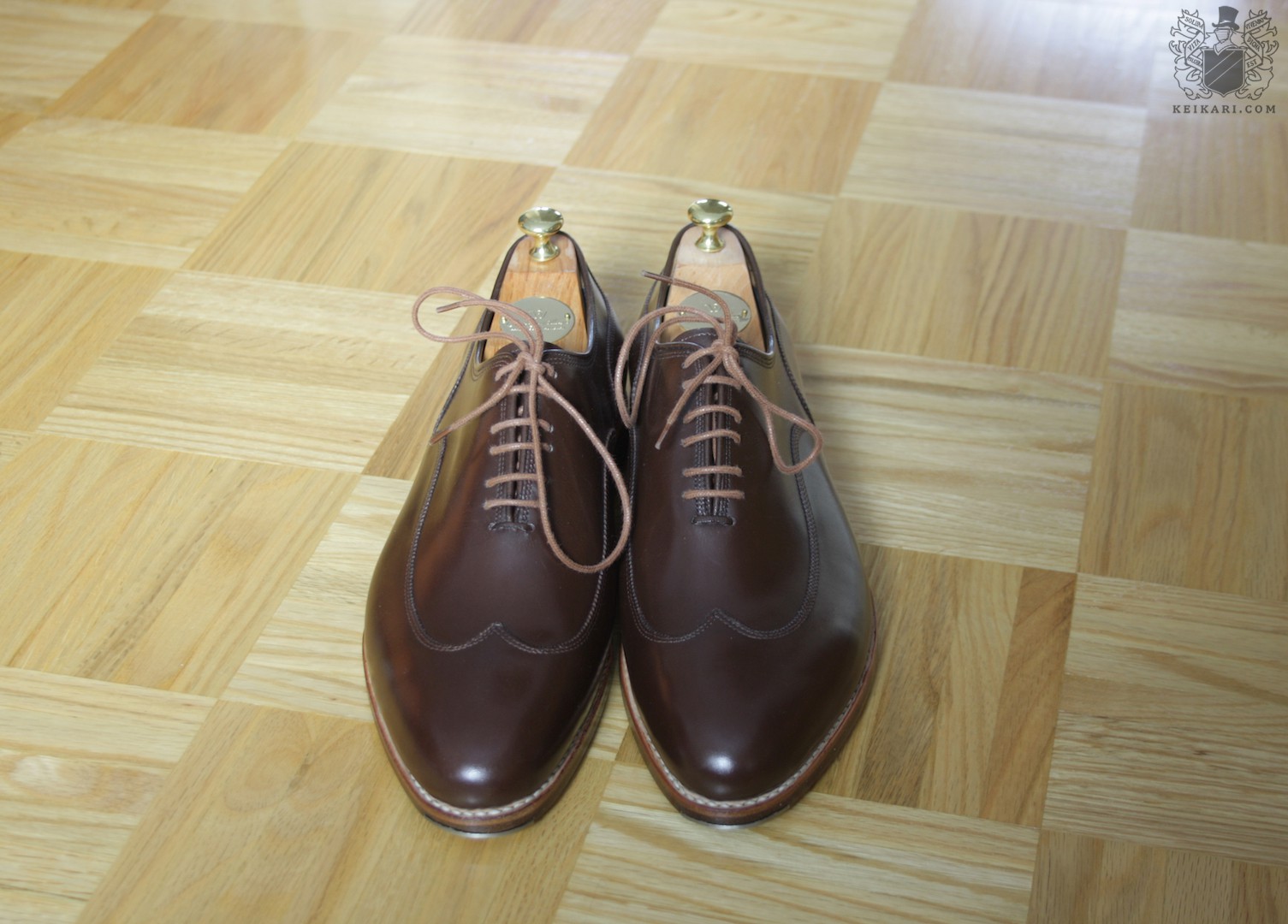
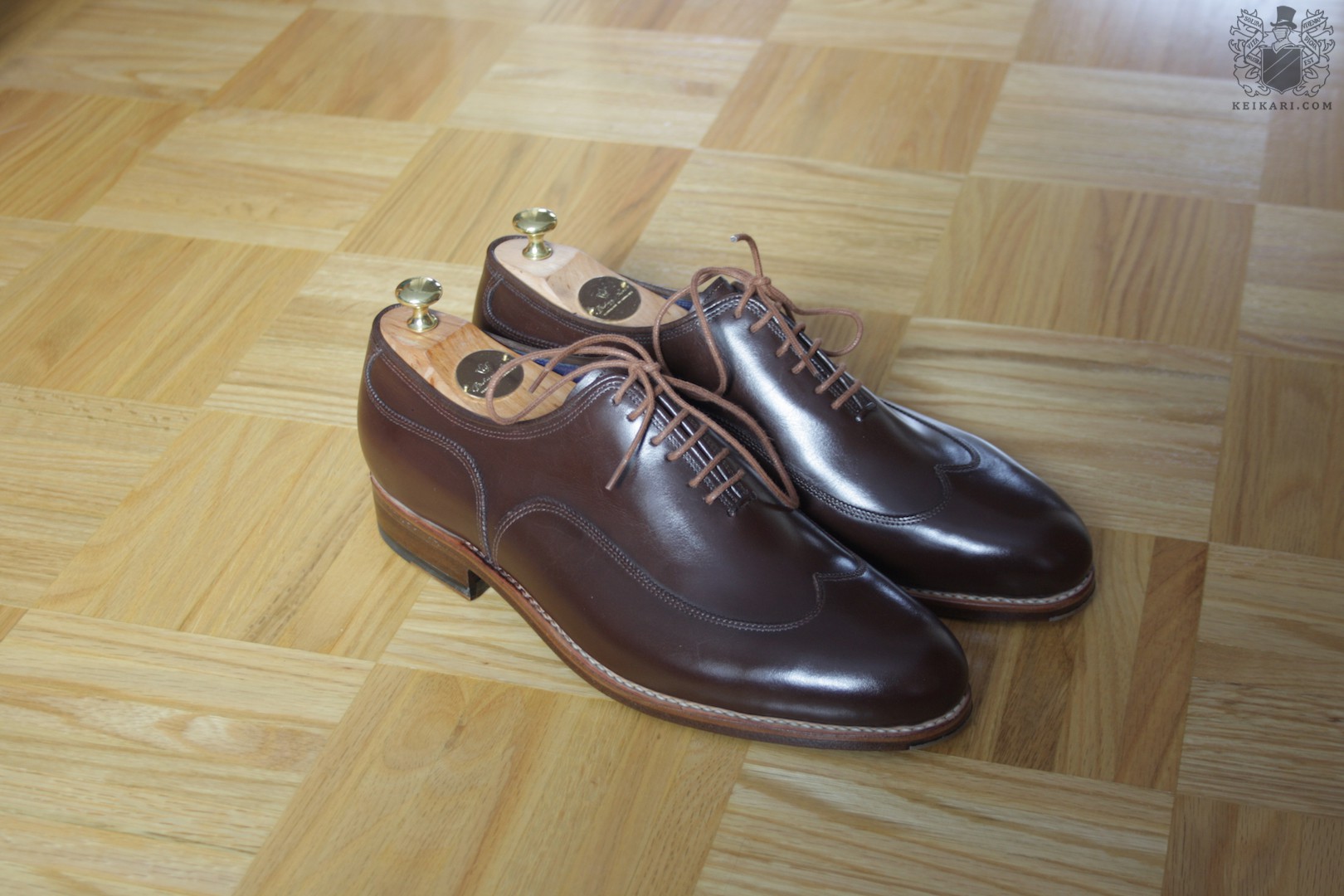
The London-last is Buday’s most traditional round toe form: not extended or short, nor narrow or wide, but with a high instep like most Hungarian lasts I’ve tried. The Italian calfskin is very smooth and even, not particularly soft or stiff, and comes in a chocolatey shade. The leather snaps back tp the last’s shape quickly after bending. The all-leather heel stiffener is strong and covers the whole cup. The toe stiffener is likewise strong, though smaller in size. The upper stitching is double-rowed, dense and neat. While the design is on the conservative side, the edges are peppered with gimping and the lacing holes are struck in pairs. Most shoes have an even space between all holes, but the Paris model leaves more room after each pair of holes. These bits, combined with the lengthened and high-reaching wingtip portion, are enough to set the shoe apart. Again, there is no need for shouting with striking patina work or large-scale details if the design is smart.
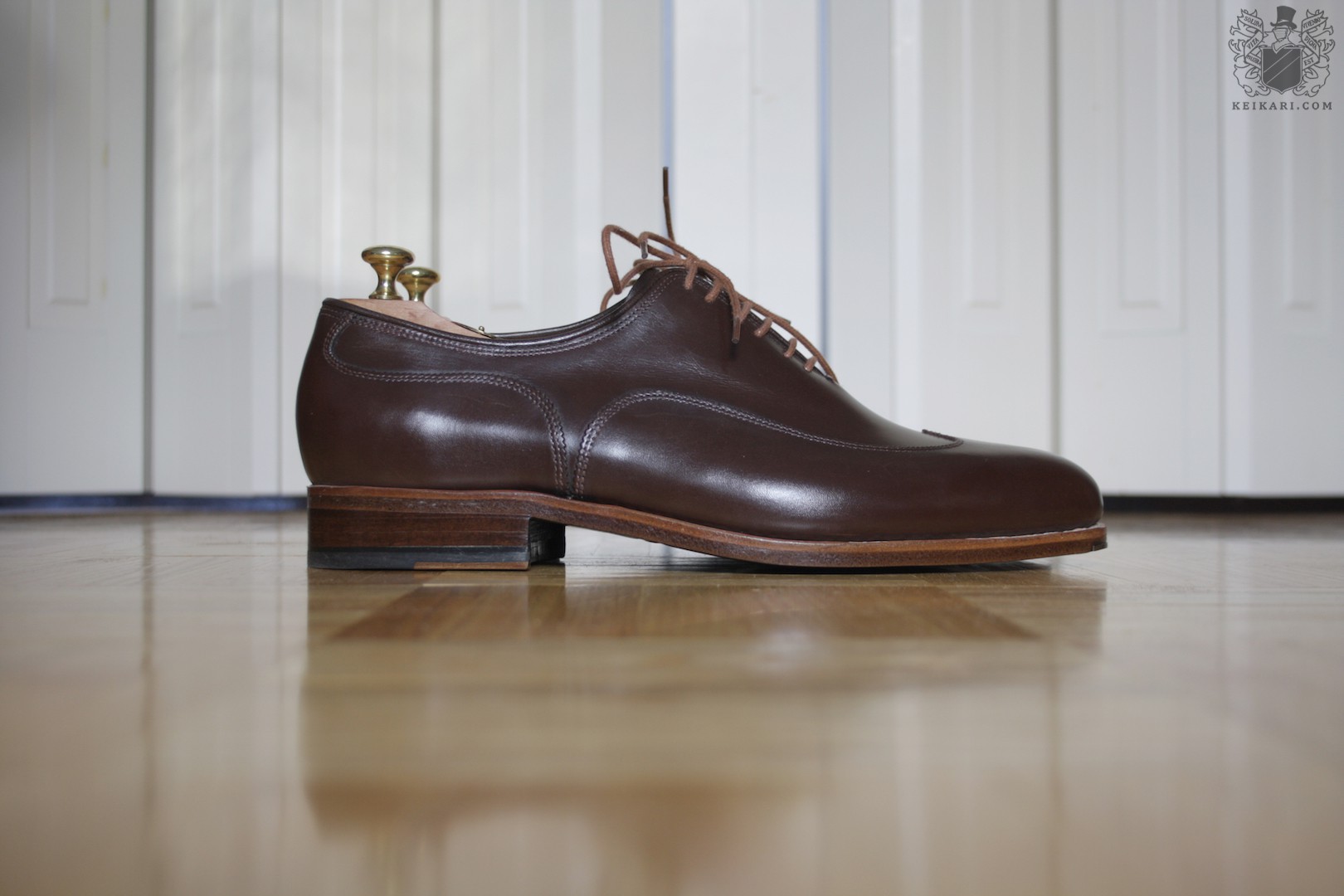
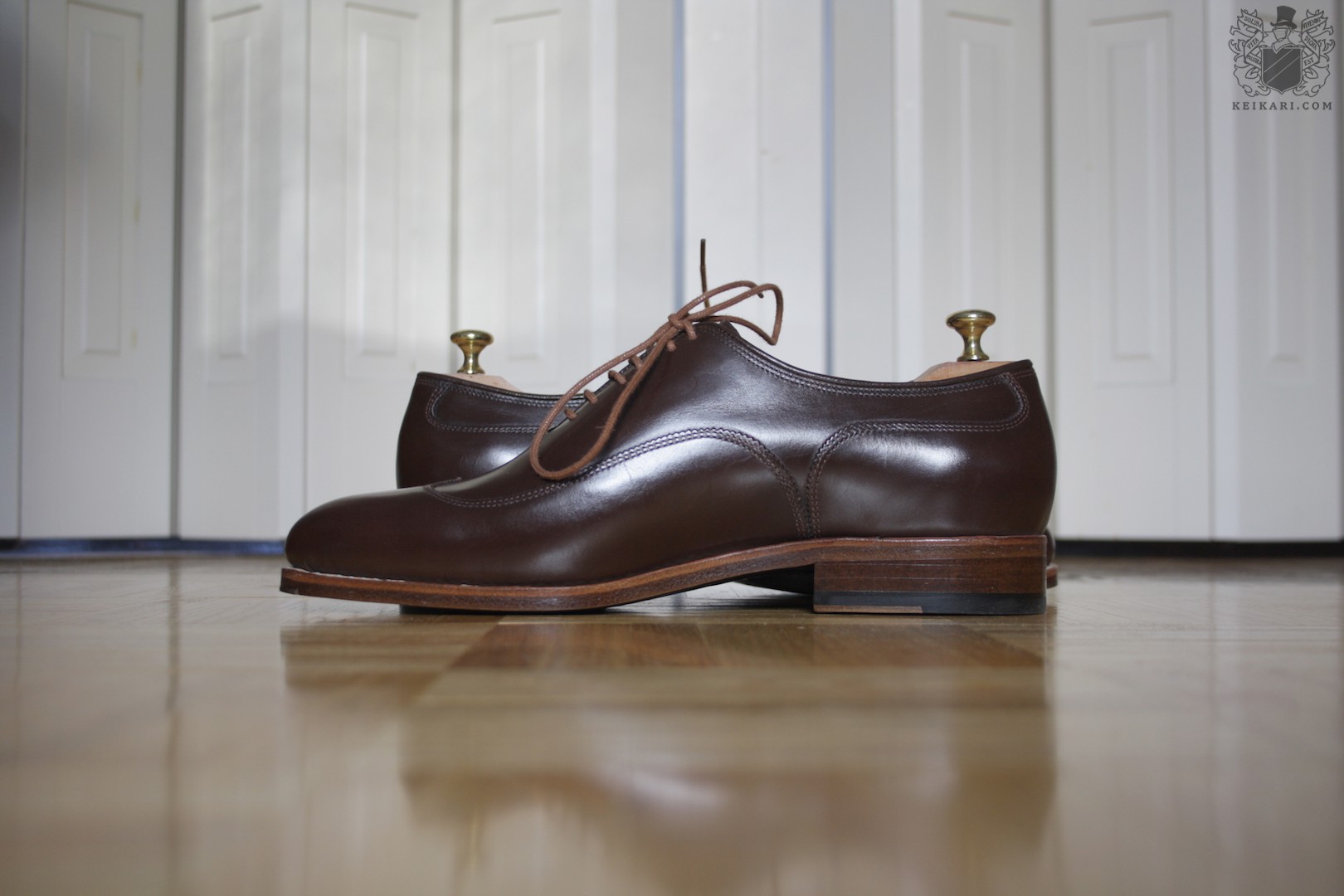
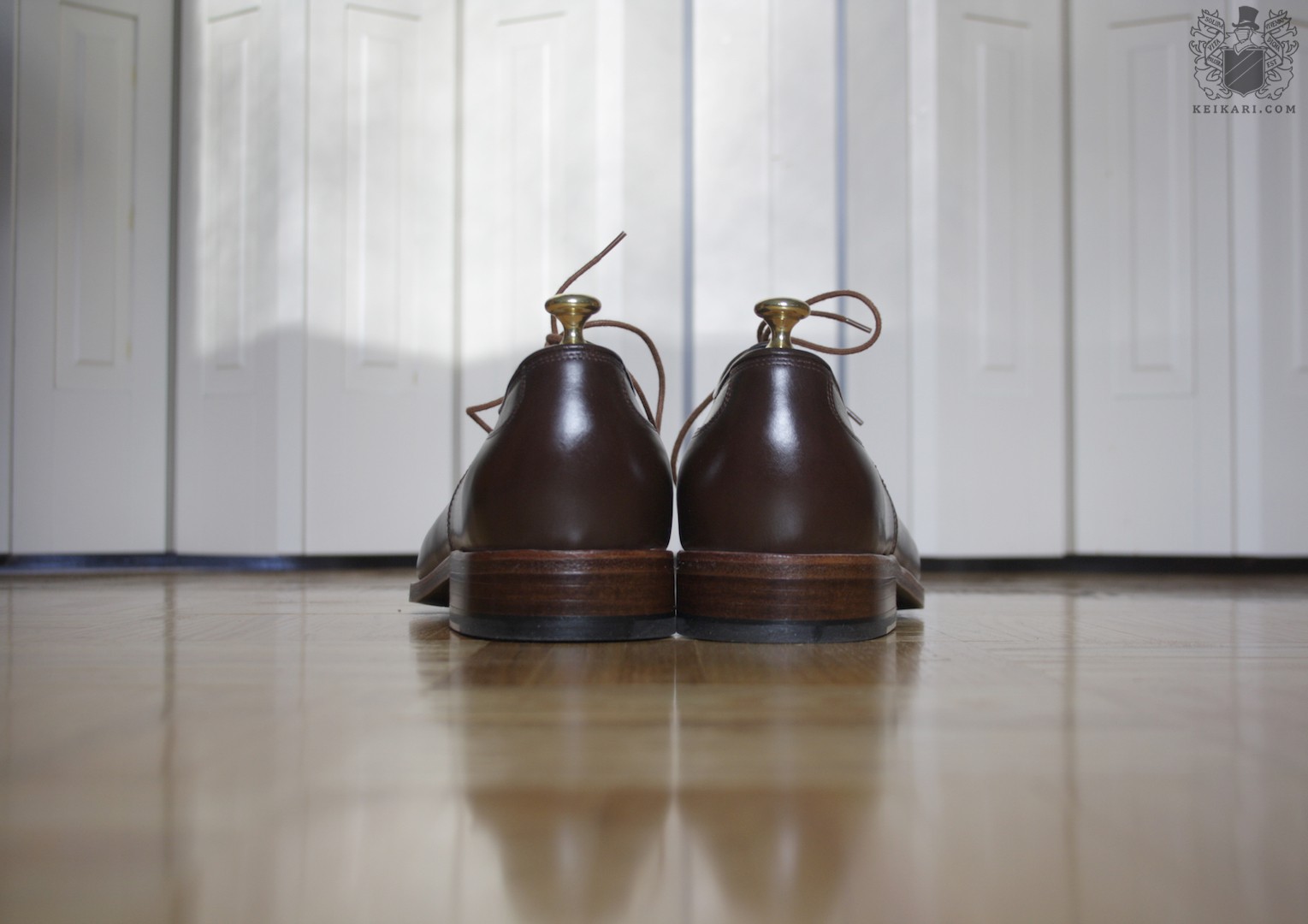
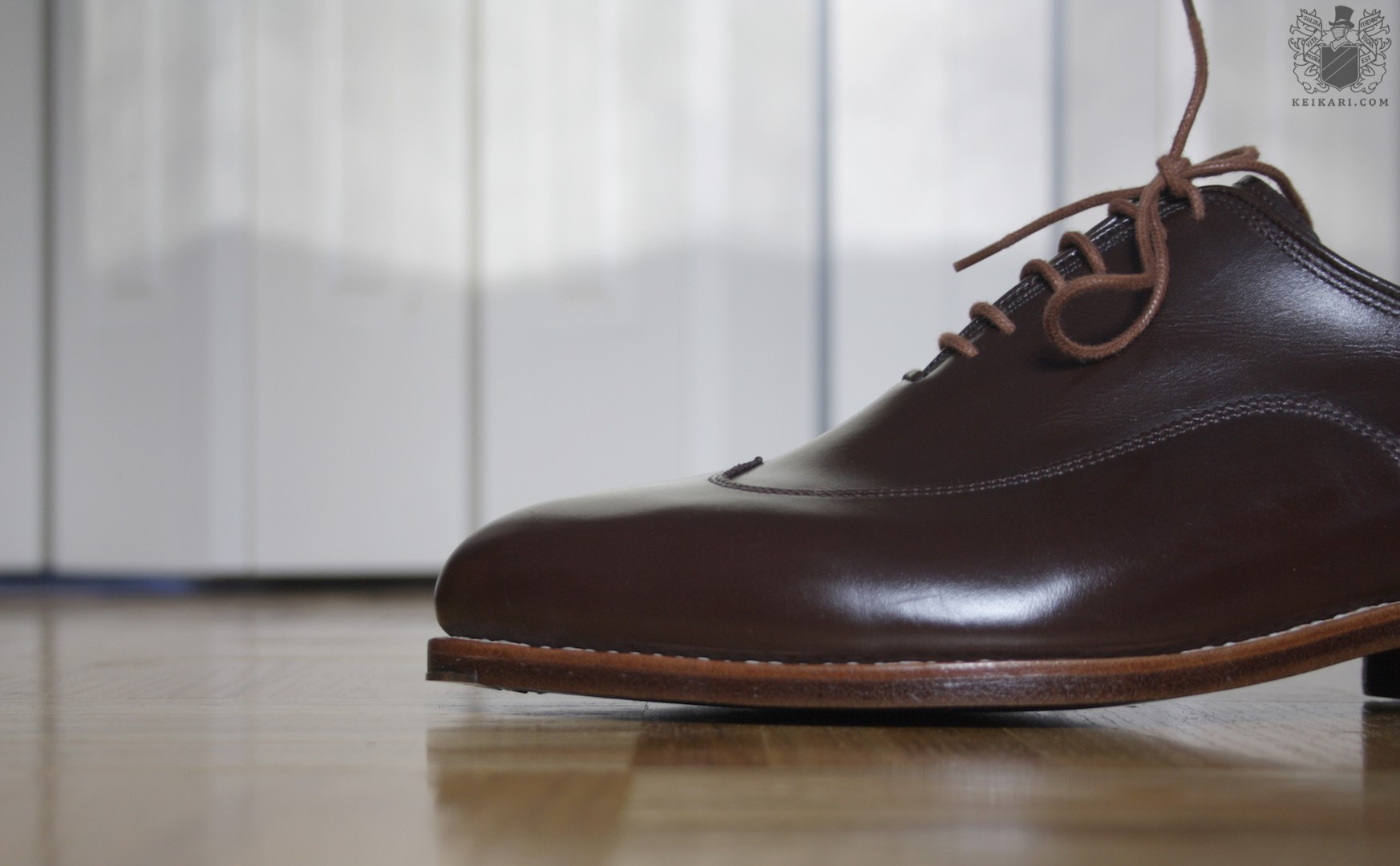
As with all Hungarian shoemakers I’ve tried, the Buday pair’s sole and welt together are thicker than those found on dressy Italian models. This makes for a bulkier look but lengthens the use before a re-soling is needed. However, when viewed from top-down, most of the pair’s welt disappears under the contours of the last, more so than with other Hungarians. The welt stitch is even in size. The Rendenbach soles come with a fancy finish and large grooves that hide the sole stitches. Unlike Buday’s regular pairs, their made to measure shoes also come with a jar of glue, a brush, two sets of foam heel pads, thicker leather insoles, shoe bags, spare laces, thin leather sockliners plus thin liners with foam inserts. With this arsenal, the customer can modify the fit to his liking and beat any errors made while he took his own measurements. The shoe box is a thin, grey cardboard setup, and the beechy shoe trees have a smooth finish and a very close fit.
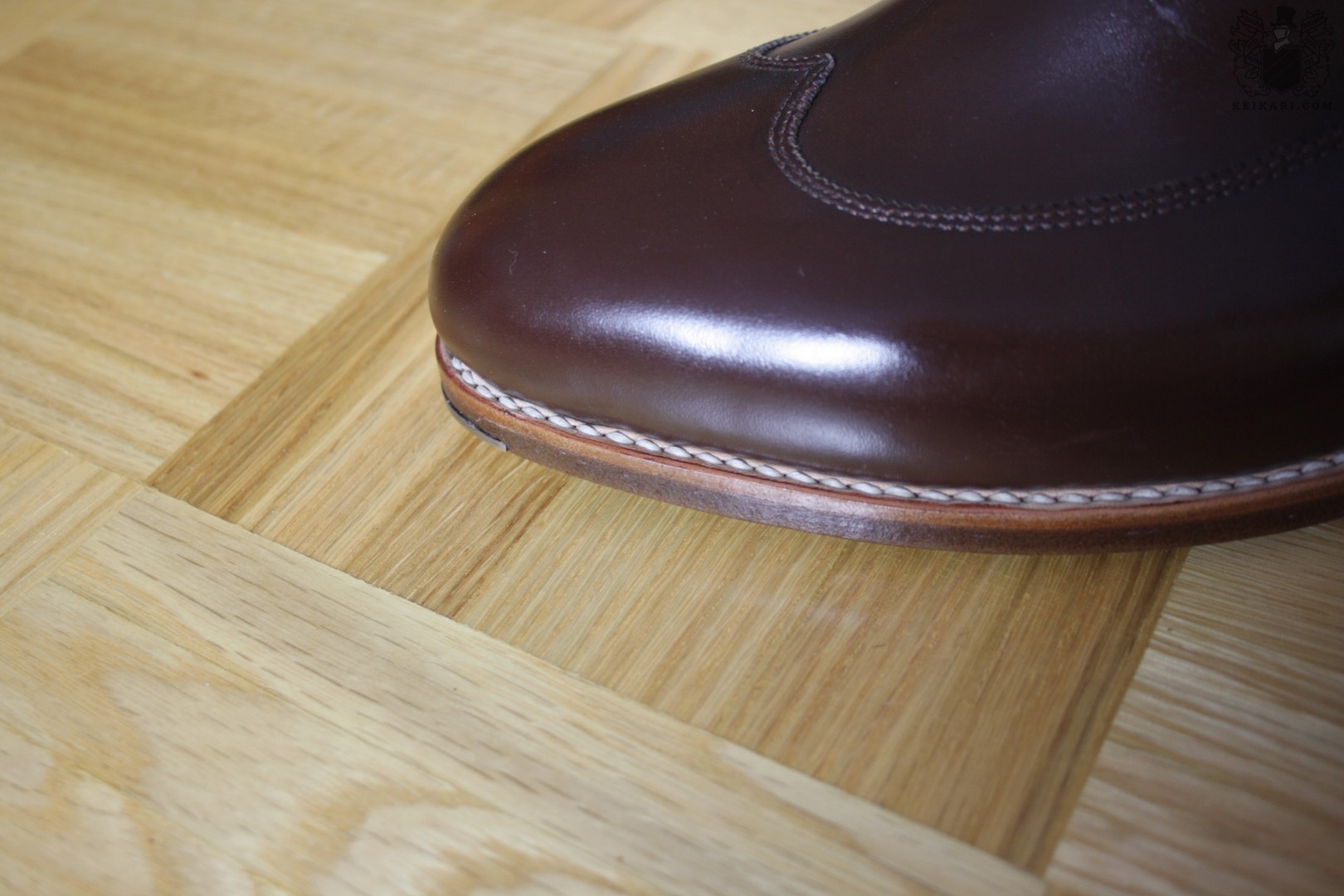
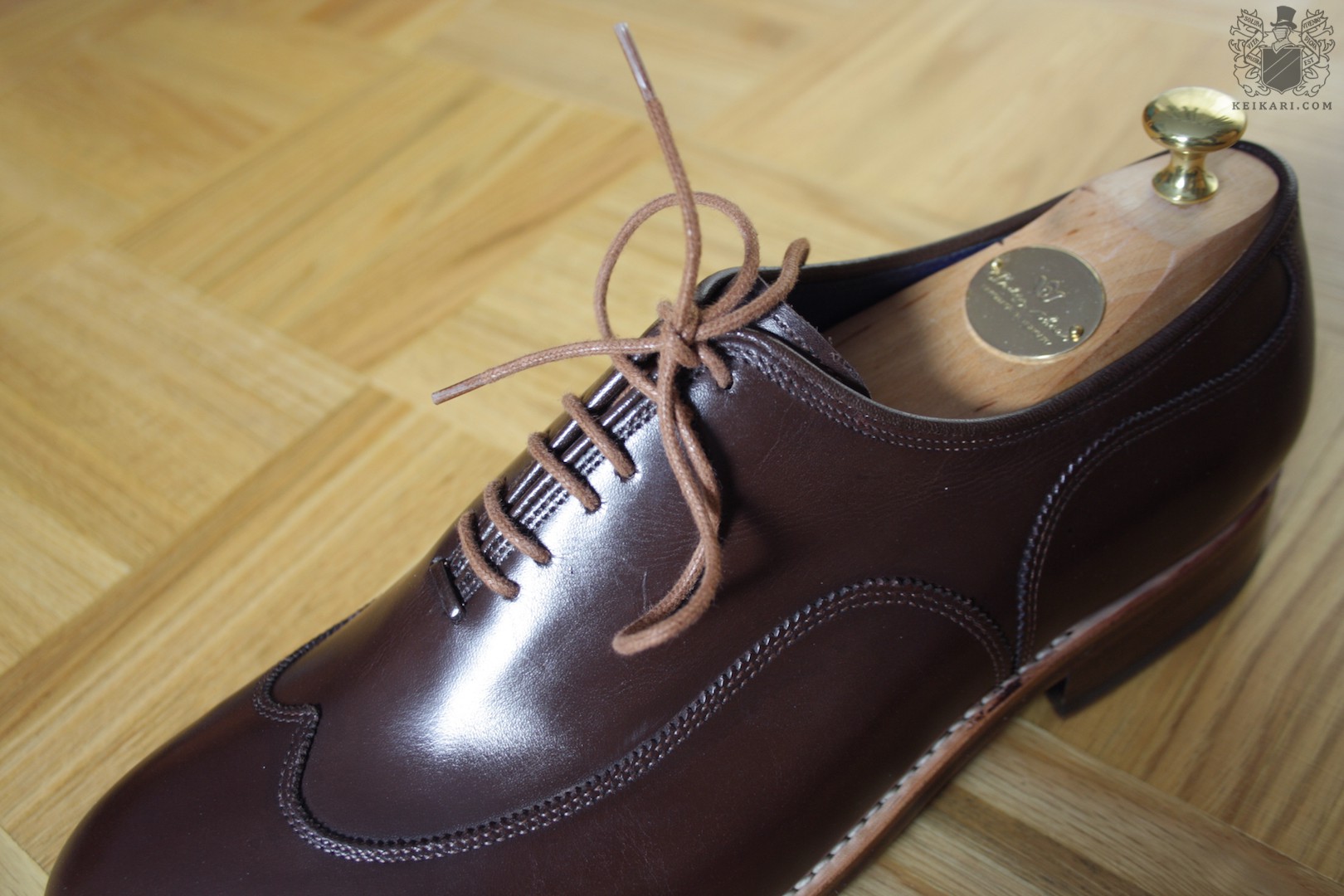
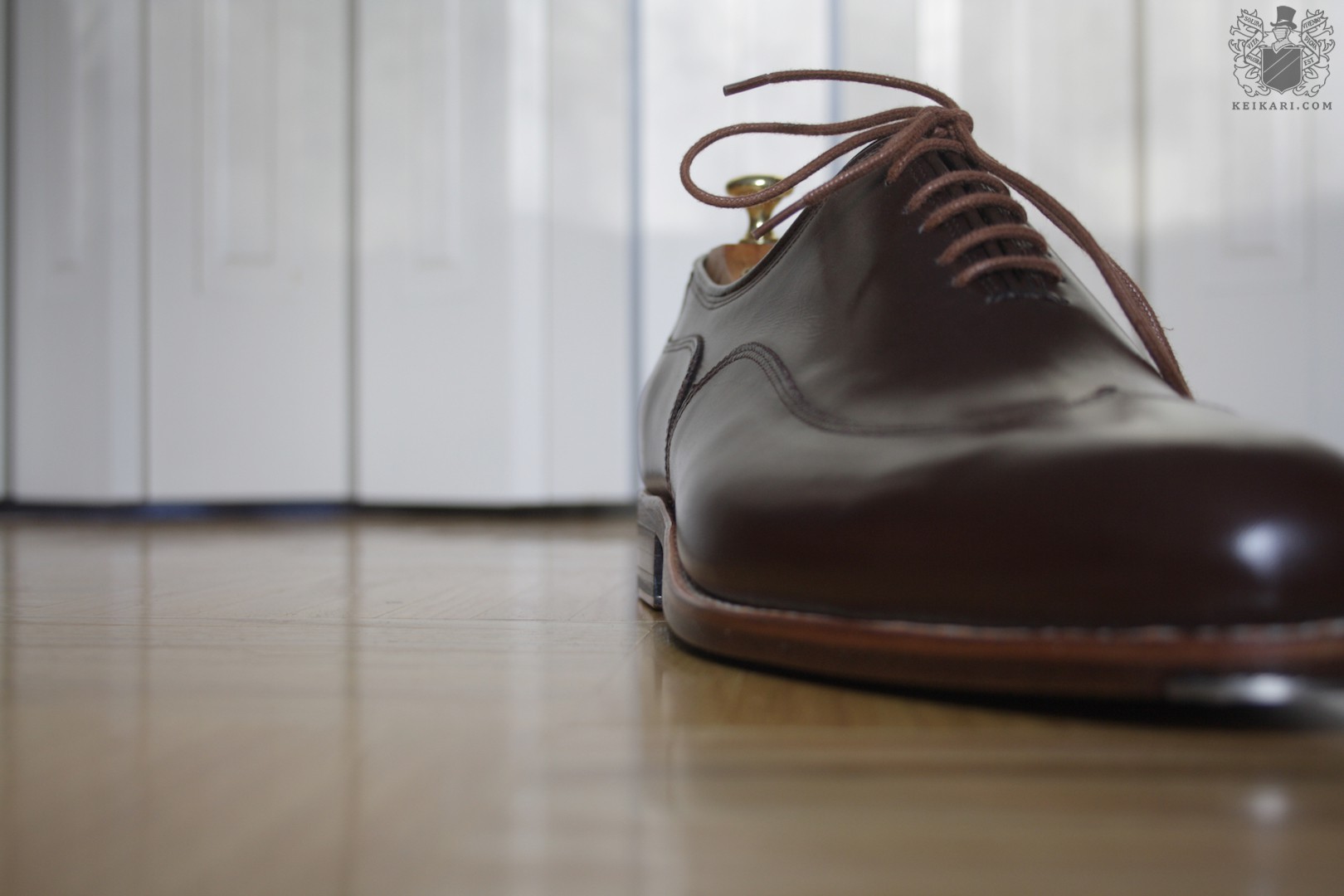
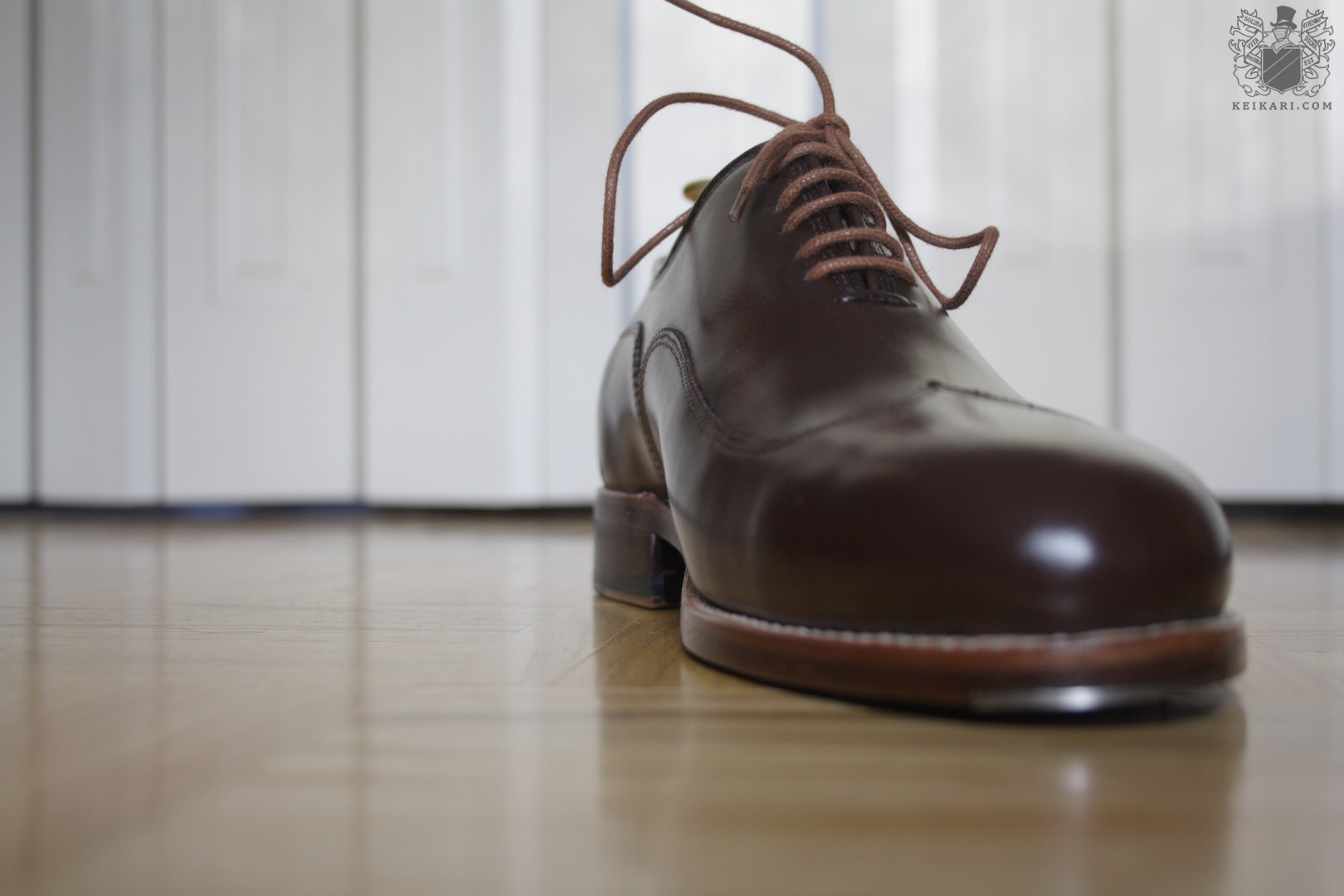
Finally, the fit, the most important bit with MTM shoes. My slim heels rise up from most heelcups, but here they remain sturdily in place. Another point is my wider left small toe that usually rubs against the last’s edge. Here it does not. The insteps are securely hugged under the tongues and lacing, and all toes have wiggling room. In short, the fit is, as subjectively as I can say, good after the leather insoles and foam as well as thin liners were added.
Category Footwear, Projects, Quality makers
Anatomy of a Cordings tweed jacket
0March 9, 2017 by Ville Raivio
Cordings, that little shop in Piccadilly, London, sent over a most British tweed jacket for Keikari’s anatomical series. The company has been in the countrywear business since 1839, so I assumed they would know what to offer. It was time to find out about their jacket side as the jacket matches the trous from way back when Cordings was last featured. As before, the cloth is very coarse and many-coloured, heavy by today’s standards at 600 grams per metre, intended for robust wear. Individual threads come in shades of yellow, green, brown, grey, blue.
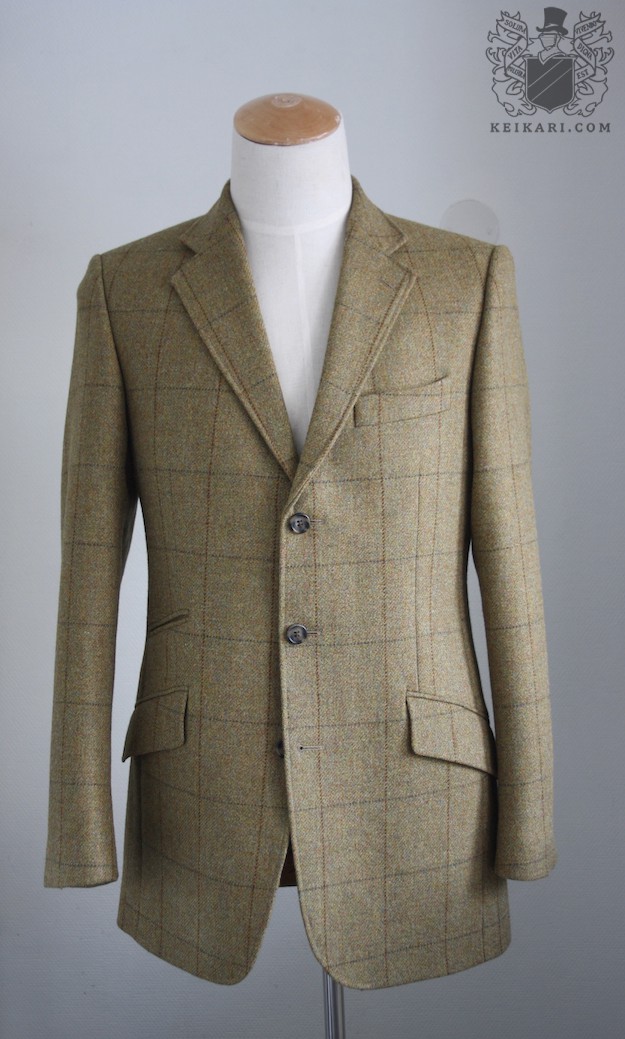
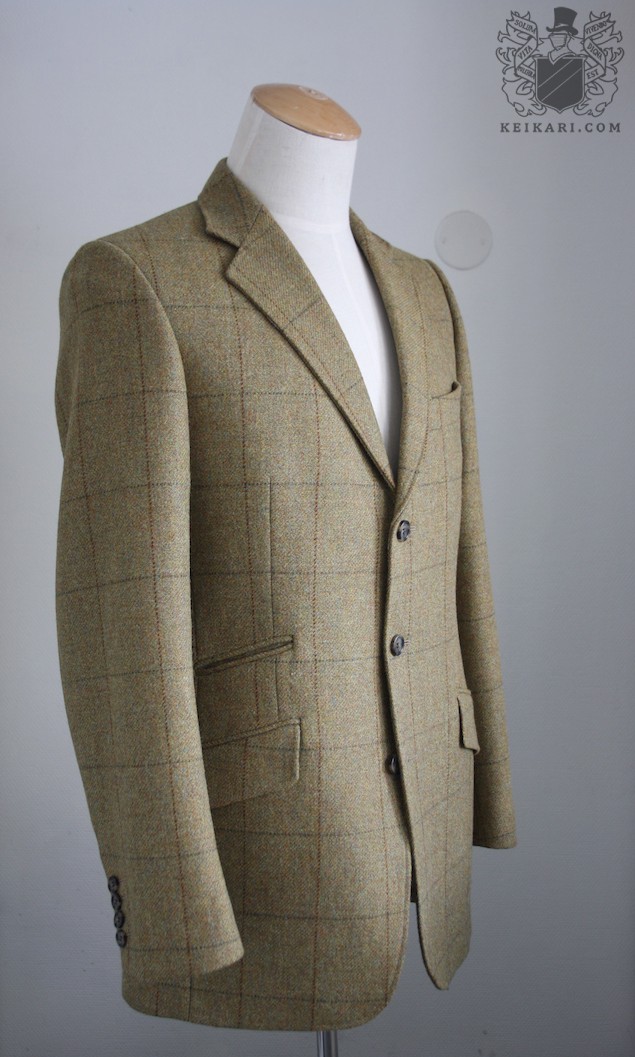
The cut is a British collection of strong and roped shoulders, nipped waist, three buttons, hacking pockets, flared skirt, notch lapels. The lapels are on the slimmer side at 7.5 cm, with a high gorge, and sharp lines from the buttoning point onwards. A sharp V-shape under the neck leaves little room for the shirt, but does keep the wind at bay. The skirt has a long, rounded line from the buttoning point downwards, and comes flared for a bit of equestrian spirit and room for movement. Hacking pockets are another horsey detail, and a ticket pocket gives more room for the little things in our lives. The breast pocket is cut high and its edges are wide.
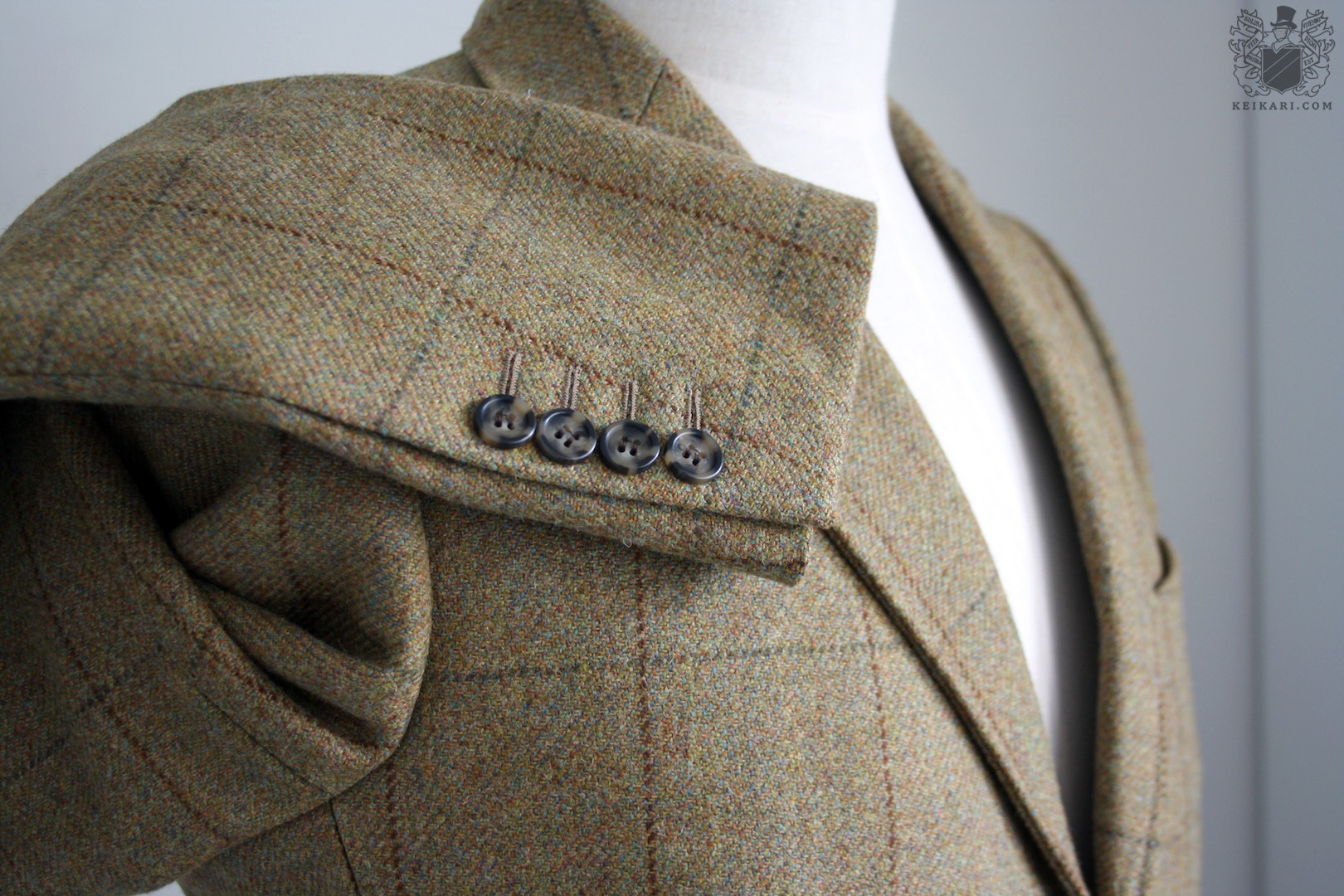
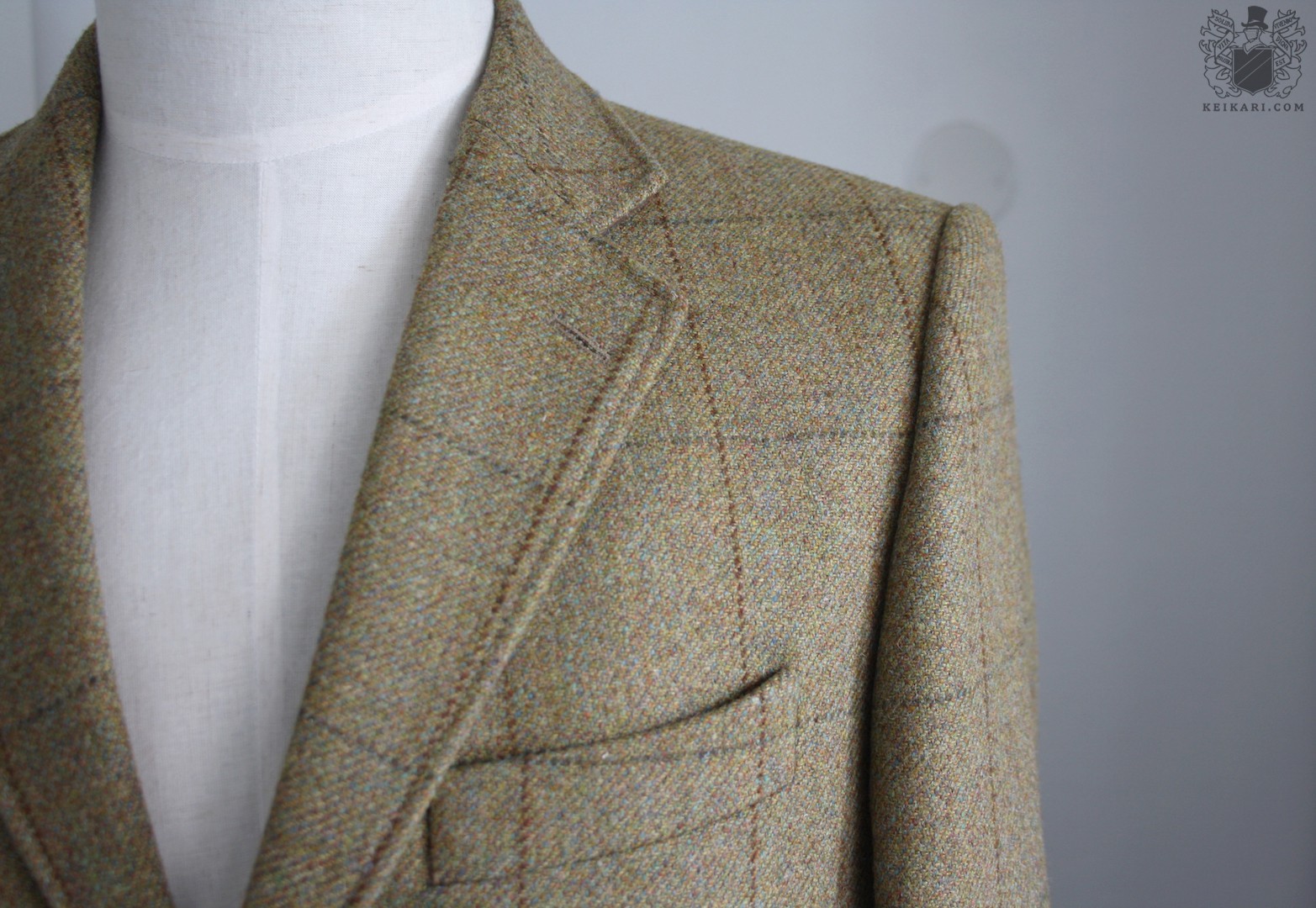
In a size 38 jacket, the chest measurement is 54.5 cm inches but ithe piece curves strongly outwards. The shaping is sturdy enough not to leave billowy creases on a willowy chest. As the shoulder seam distance is 45.5 cm, I would describe the typical Cordings shoulders narrow. This is a boon for us pencil necks as most British country jackets have fat and wide shoulders, too wide for the slim Jim. As the cuff girth is just 28 cm, these are slim as well. Same goes for the sleeves on the bicep at 58 cm. In sum, Cordings is different from most countrywear makers because their regular cut is slim, but with enough space for comfortable movement.
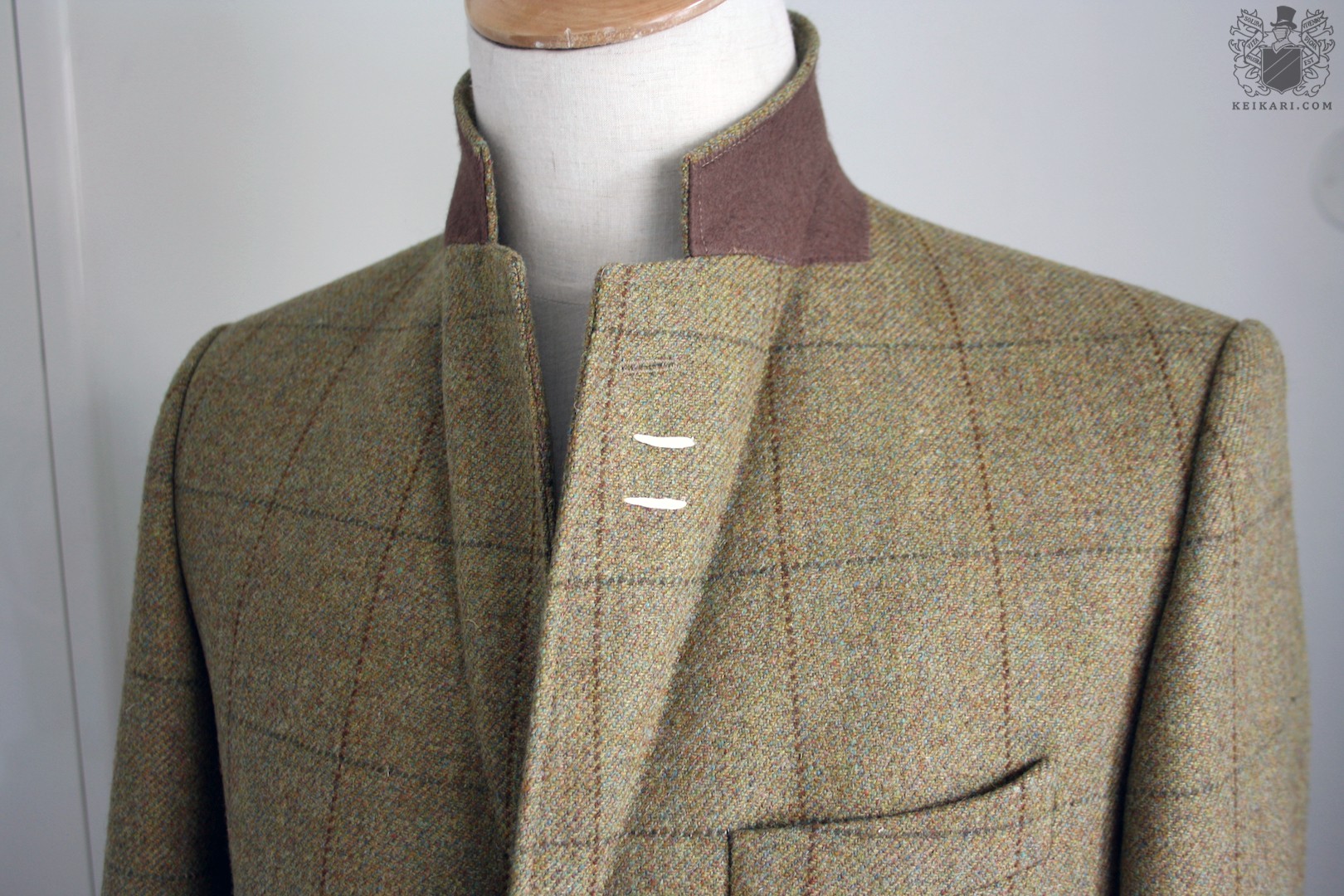
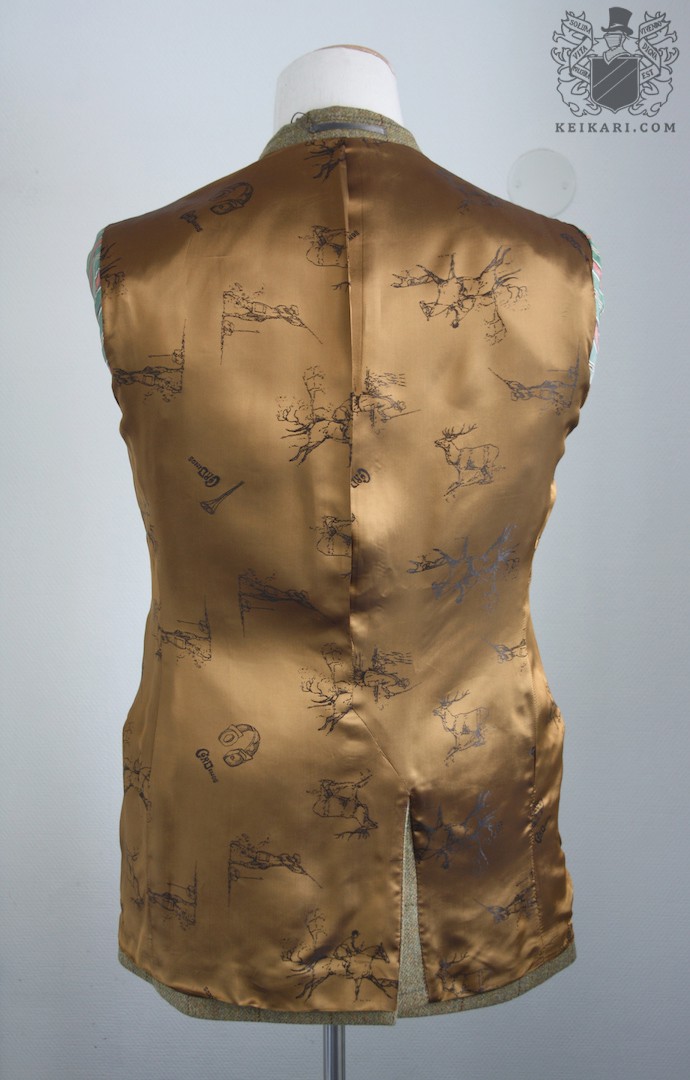
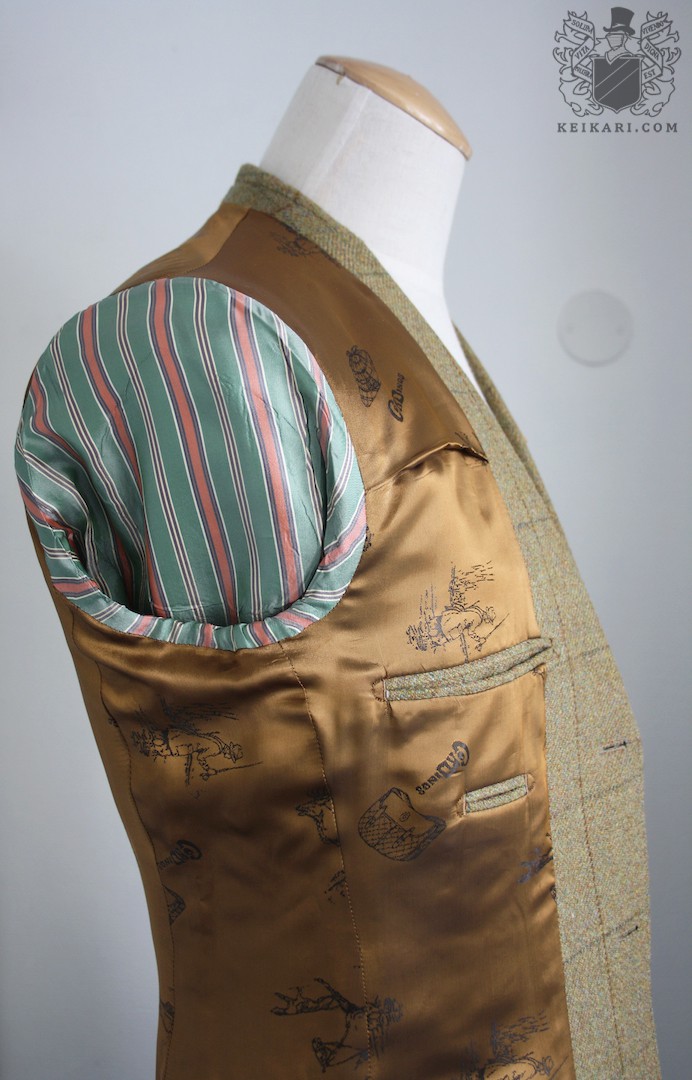
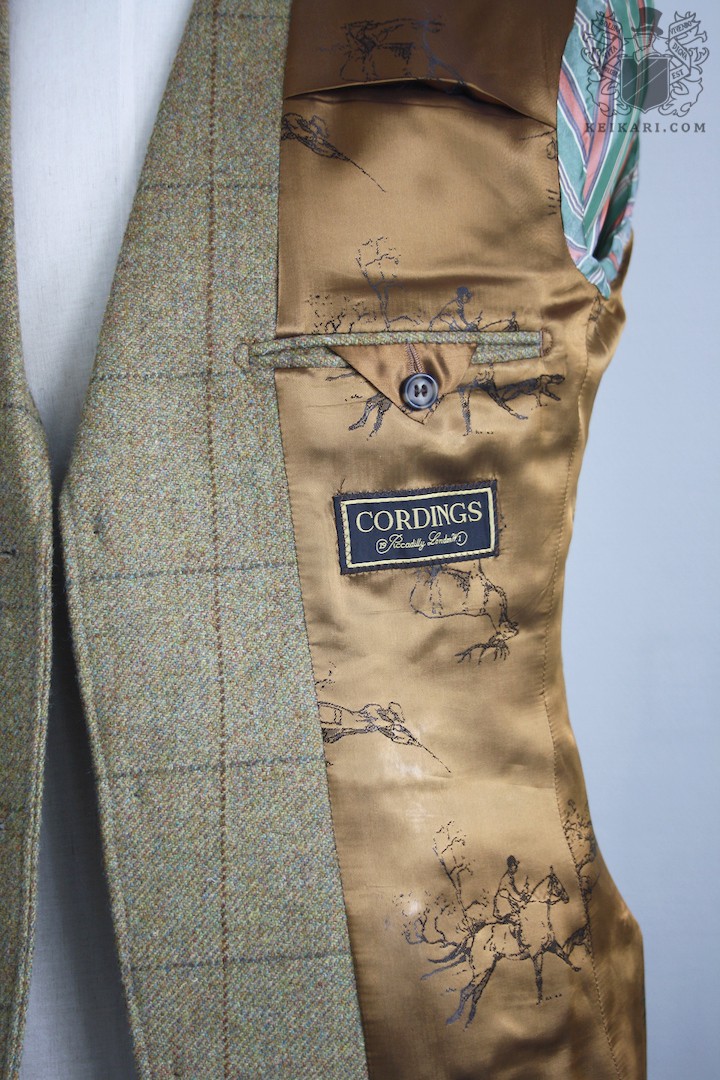
The wrist buttons are functioning and the buttons made from urea. The undercollar has a contrast felt and under the lapel are placed two loops for the lapel flower stem. The golden satin lining depicts scenes of hunting, fishing and other masculinely leisurely outdoor pursuits. The sleeves are finished with a contrast stripe lining. Seams are tight and straight, no loose threads can be found, the sleeveheads are high enough, patterns are matched well enough. As presumend, this is the British RTW tweed jacket I will compare all others to. Few makers offer a similar combination of the right cloth, cut and finishing.
Category British Style, Jackets, Quality makers
Copyright © 2013 Ville Raivio