An interview with shoemaker Patrick Frei
0October 2, 2018 by Ville Raivio
VR: Your age and occupation?
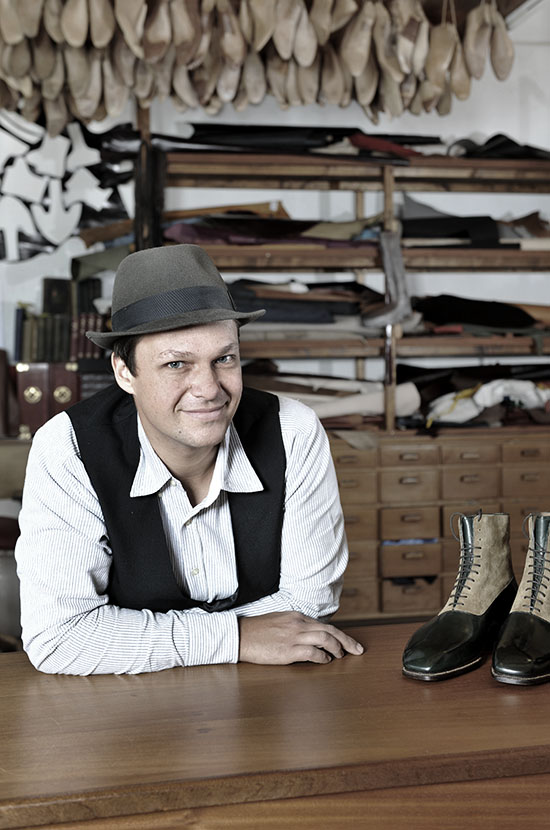
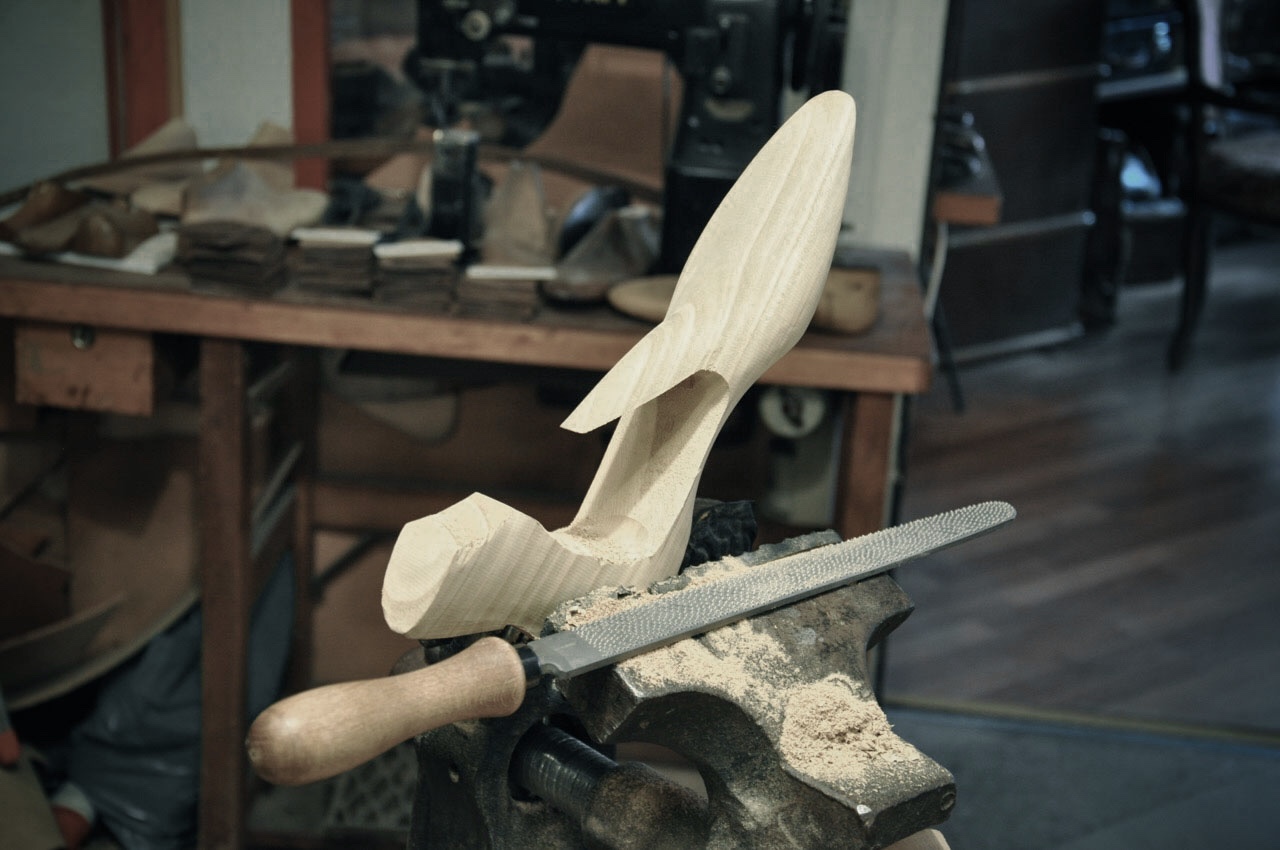
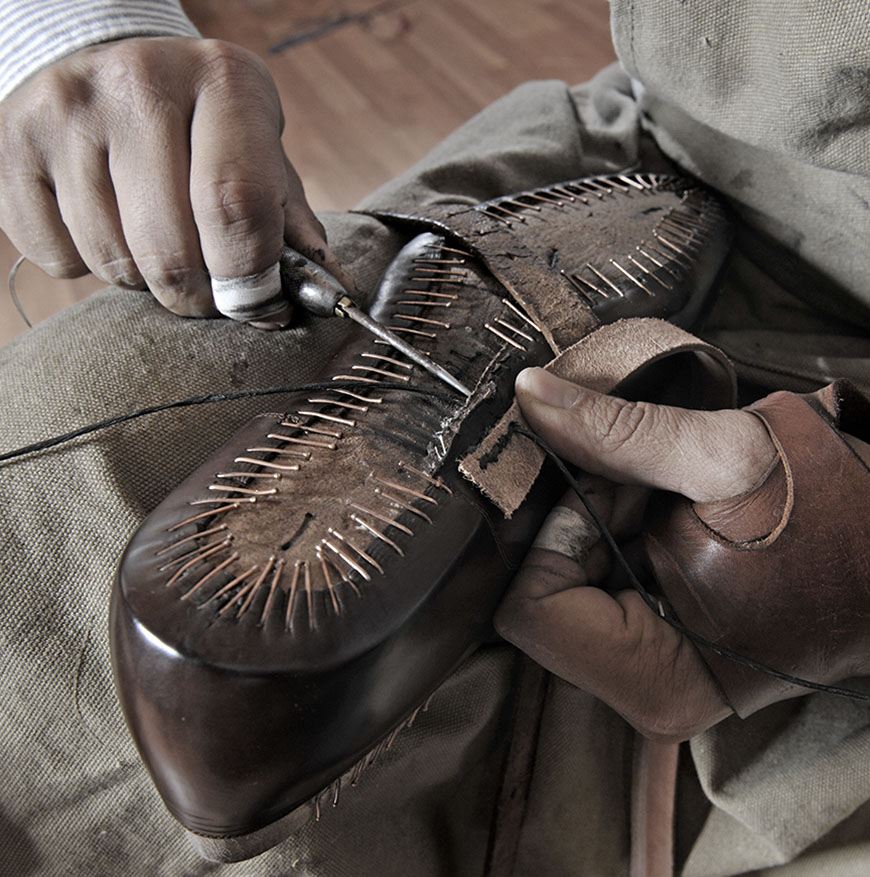
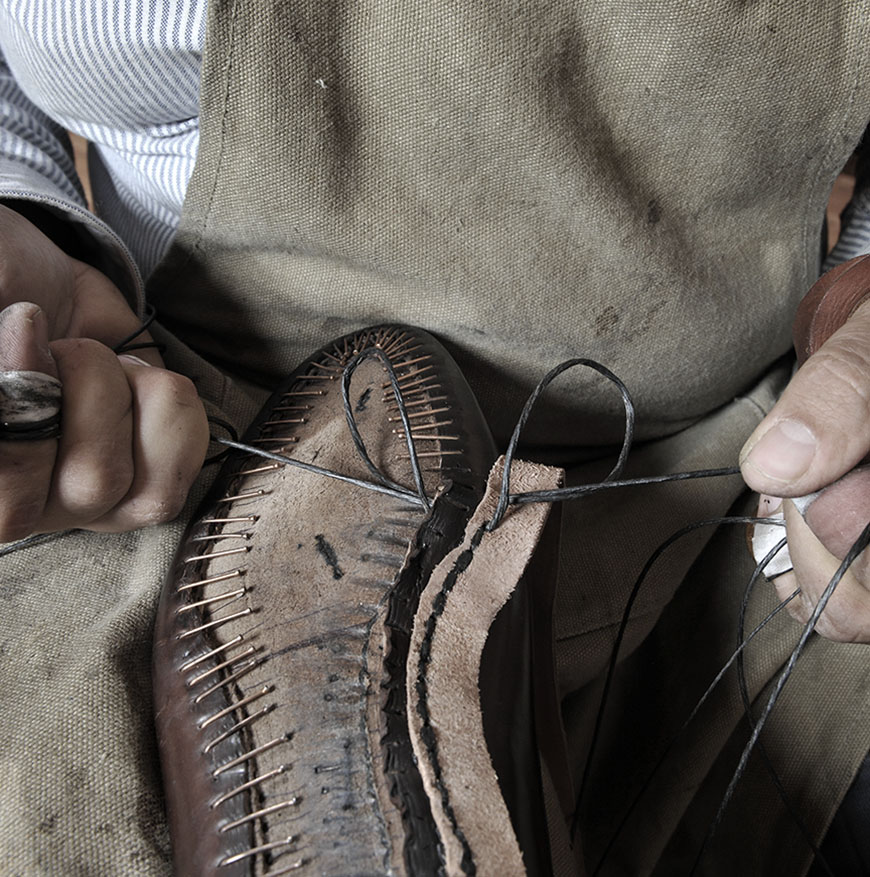
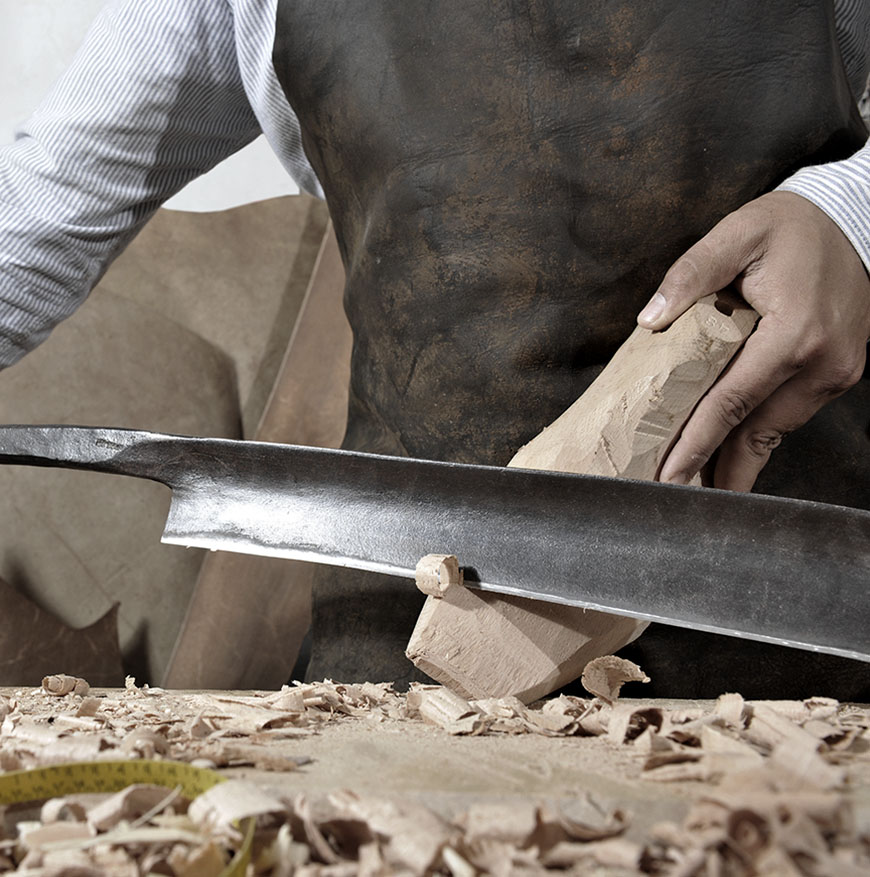
PF: I am 36 years old and I am a shoe- and bootmaker. I make lasts, uppers, bottoms and trees.
VR: Your educational background?
PF: I graduated from high school and did a traditional apprenticeship with a master shoemaker before continuing elsewhere.
VR: Are you married and do you have any children (and what do they make of your enthusiasm for shoes)?
PF: I have two daughters (five and seven years old), who regularly visit me in the workshop. They like exotic leathers and the elder one works occasionally with wood on the last bench. My wife is used to my shoe obsession and likes what I do. If I need a second opinion on anything related to shoes I ask and trust her. Most of the time.
VR: How did your parents and siblings react when you decided to become a shoemaker?
PF: My mother always supported me and thought it was a good choice. My father had more doubts and wanted me to study. Today he is very proud of what I do. Without my wife and her trust in me and how I work I don’t think I would have got this far…

VR: What other hobbies or passions do you have besides footwear?
PF: I am really passionate about antique pocket watches. For me, many of the high-end watches made between 1750 and 1920 are pieces of art. Entirely made by hand. Perfection, from both a technical and an aesthetic viewpoint. I see parallels to shoemaking in watchmaking. Both crafts peaked around 1900 – at that time many craftsmen were very proud and managed to work at an extremely high level.
I also restore old Italian lever espresso machines and practice coffee-making daily.
I also enjoy juggling, hiking, beatboxing, cycling, campfires with friends, and malt.
VR: How did you first become interested in shoes, and when did you start to focus on artisanal shoemaking?
PF: After school and civilian service I spent 18 months traveling through South America. I used to juggle a lot and do street performances around then and was really into classic suitcases. I met an old man in Cochabamba, Bolivia, who made traditional suitcases and trunks. I stayed with him for several weeks and learned how to make them. That was my first experience of leather-working and I wanted to learn more about it and get more deeply involved in it. Back in Germany I wanted to buy leather for a hatbox from a shoemaker. It was the first time I wondered how shoes were made. I had a friend who was already learning how to make shoes and he showed me a bit of his work and gave me the Laszlo Vass book. I immediately knew that I wanted to learn this gentle craft and was lucky enough to find a master, Feri Braun, who took me on as his apprentice in 2005.
After two and a half years I finished my education and started working on my own. Being young and self-confident, I thought that I already knew a lot. One day I visited my shoemaker friend Manu Pohl in Munich, who at the time was working with the royal Bavarian shoemaker Heribert Dirrigl. The Dirrigl family had been making shoes for over 400 years. Now only Heribert Dirrigl was left, still making shoes at nearly 80. It was there that I discovered sample shoes from 1900 that blew my mind. Such perfect craftwork and so balanced. Made 100% by hand without machines or electricity. I had never seen anything like them. That was when I realized I actually knew very little, and I wanted to learn how to make real masterpieces.
I studied and experimented a lot and visited numerous shoemakers all over Europe (Scheer&Söhne, Peron&Peron, Herve Brunelle, Foster&Son, Gaziano&Girling, Florian Haderer, etc.)
VR: Why classic models and not fashion?
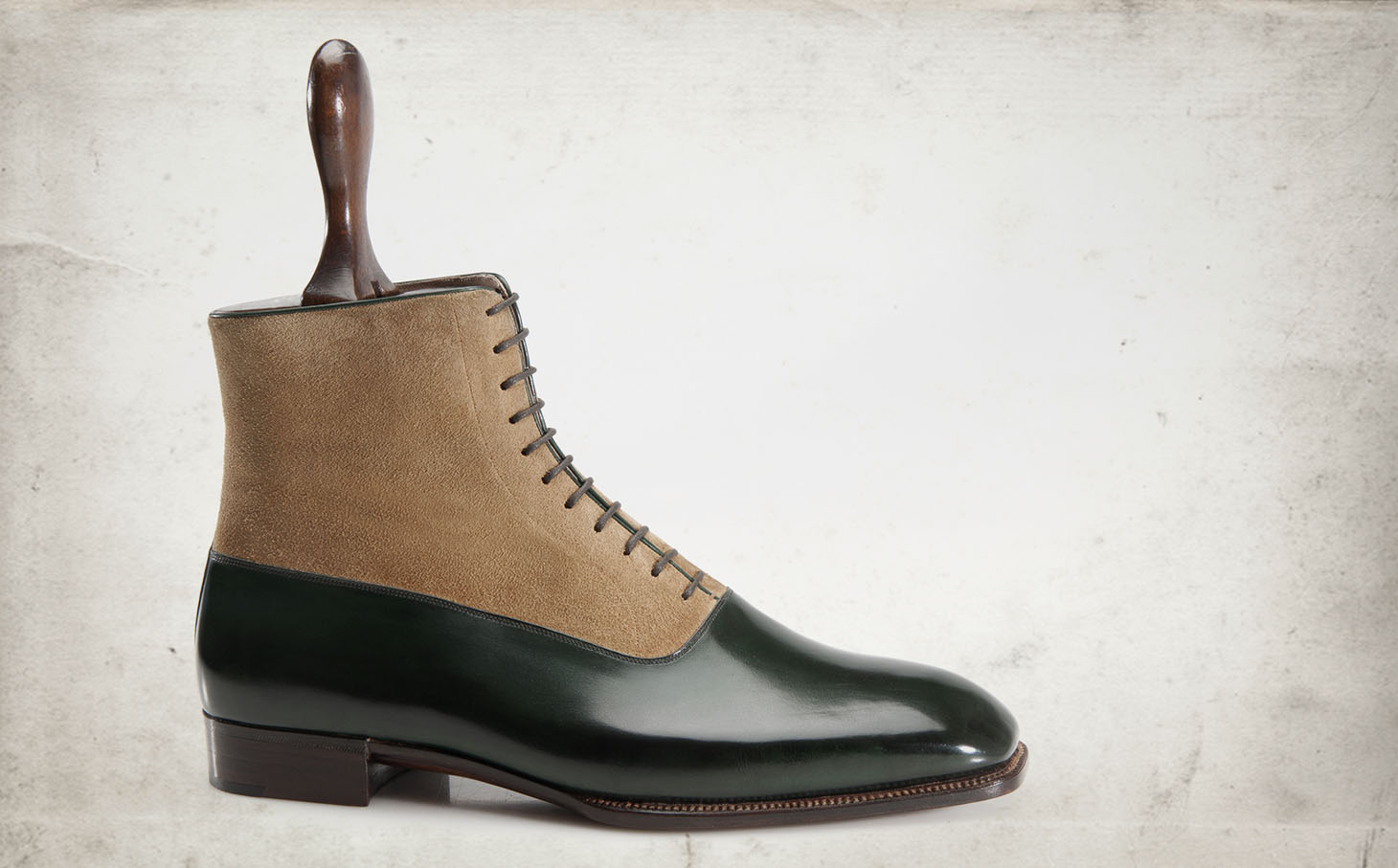
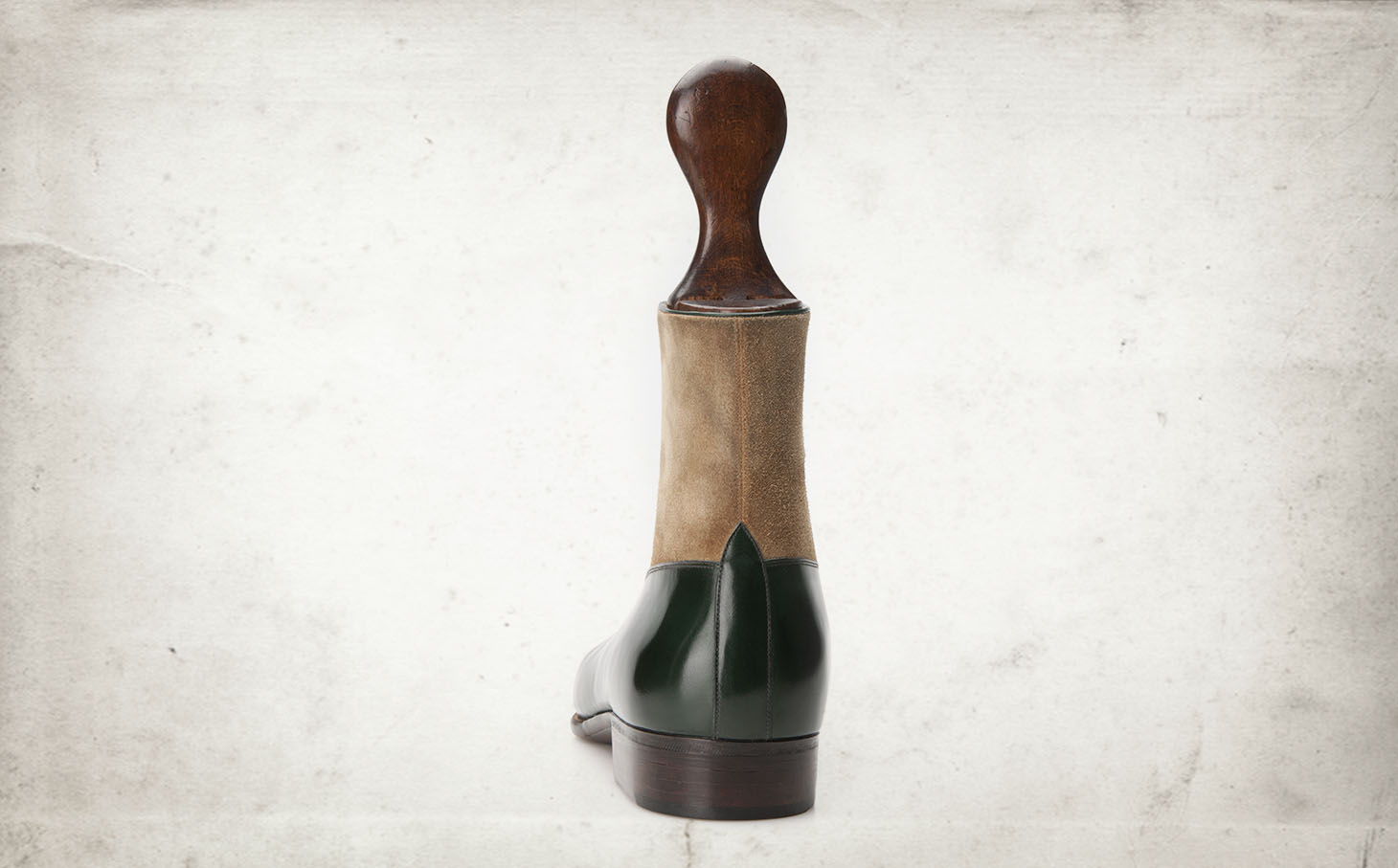
PF: I generally prefer classic and traditional stuff. I think many beautiful things have evolved over a long time and are just perfect how they are. That said, I am very open to experiments and developing things. We should not forget that an Oxford or Full-Brogue was not always there. Creative minds invented them.
With traditional shoemaking I can make everything myself, from the design to the finished product. I can explore the secrets of every step and find out where the perfection lies for me. In fashion I often see good ideas or designs, but if the material is poor quality or the proportions of any part are not right or if it is not made properly, it will never be a masterpiece.
VR: Where does your knowledge of the craft come from – books, in-house training, workshops or somewhere else?
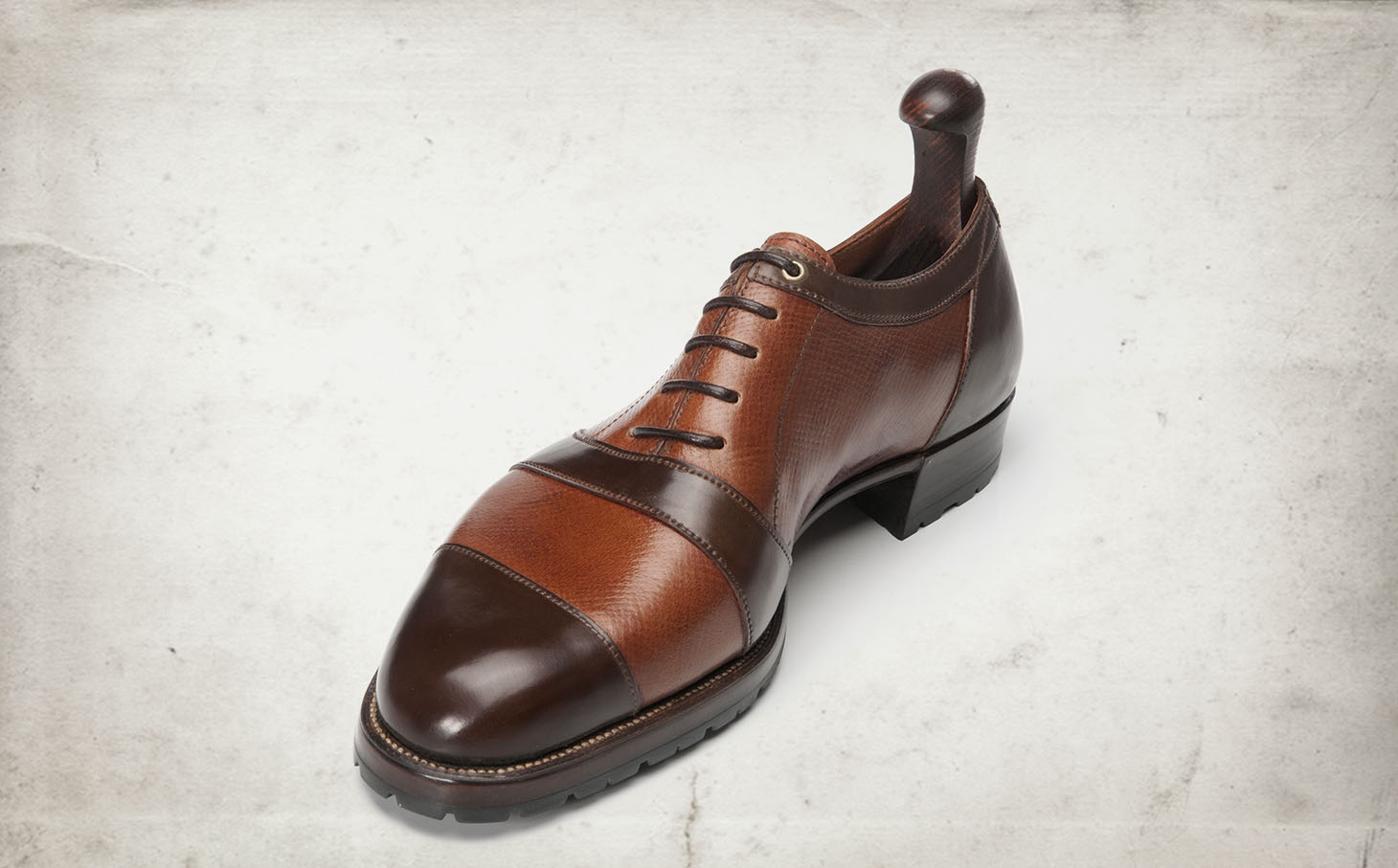
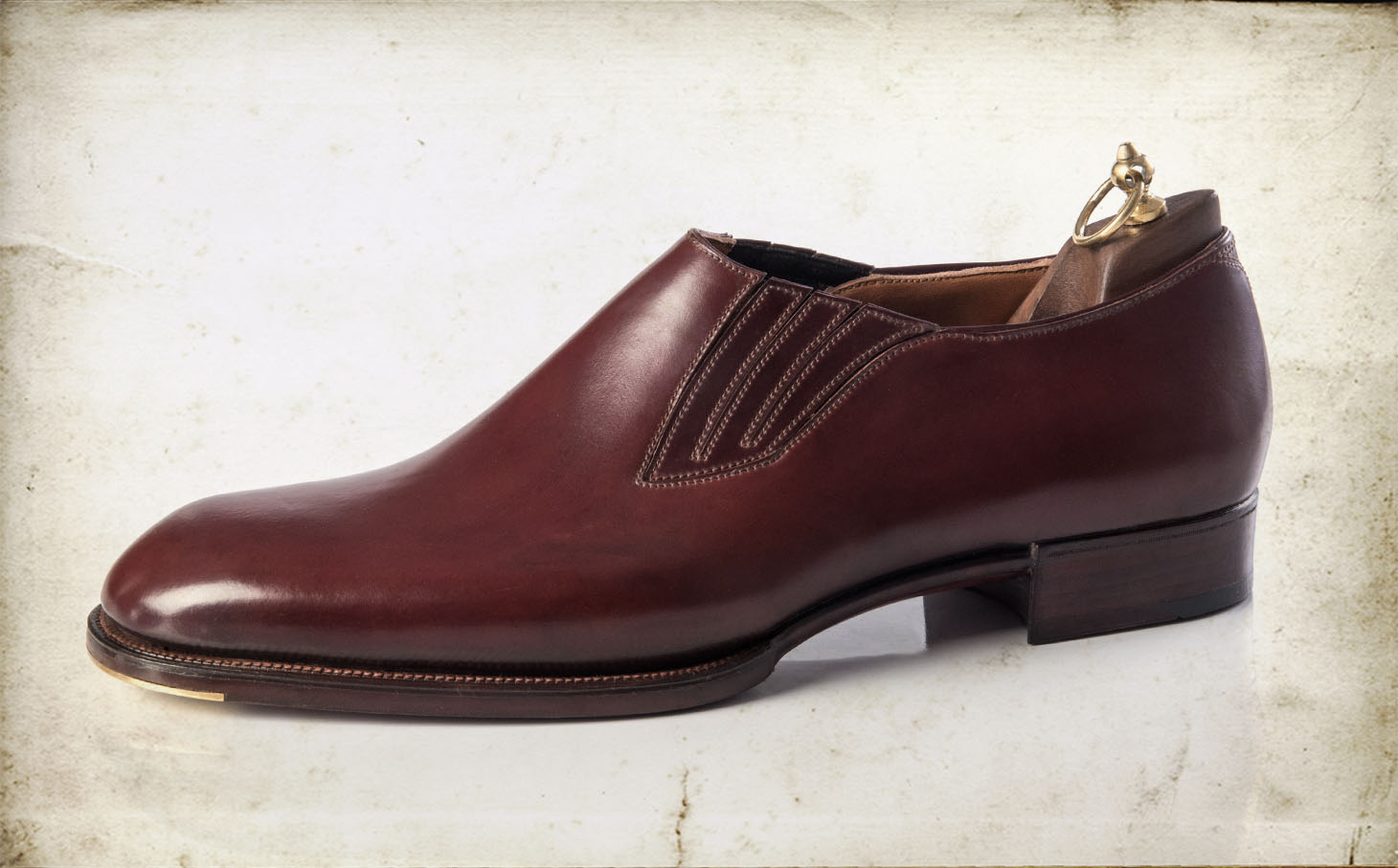
PF: After completing my apprenticeship and first seeing antique sample shoes, I started collecting a great many antique shoemaking books. I studied and experimented a lot and visited numerous shoemakers all over Europe. I was received everywhere with open arms, discovered old techniques and learnt that many shoemakers had created their own distinctive ways of making shoes over the centuries. On a visit to John Lobb I had the very good fortune to be invited to stay at the shoemakers’ cellar for a few days, and finally Mr. Lobb Senior gave me a day with an experienced last maker as a gift. After my education, where I learned the basics, I never worked for other shoemakers, and I guess you could say that I am mostly self-taught.
VR: How would you describe the house style of Frei shoes?
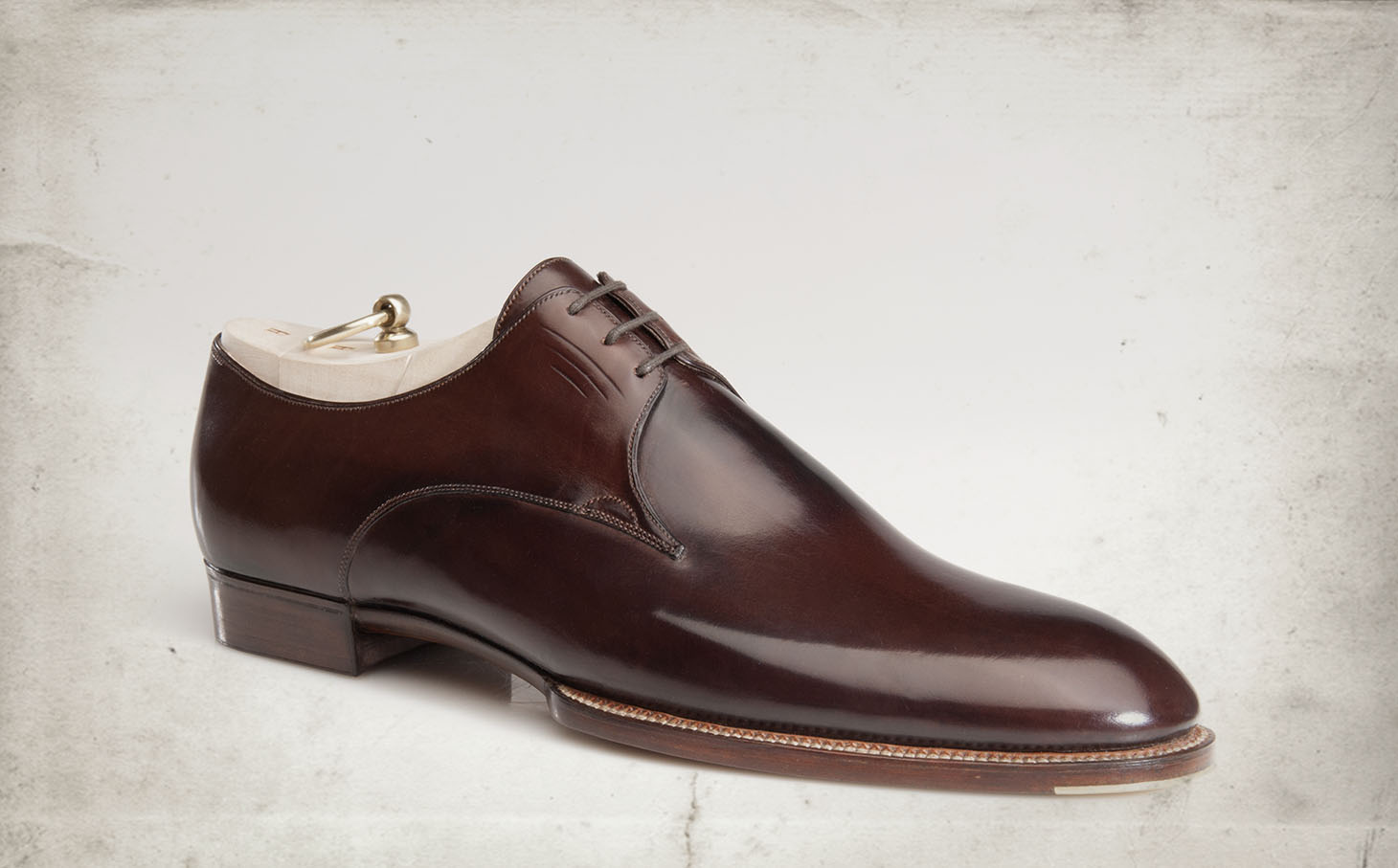
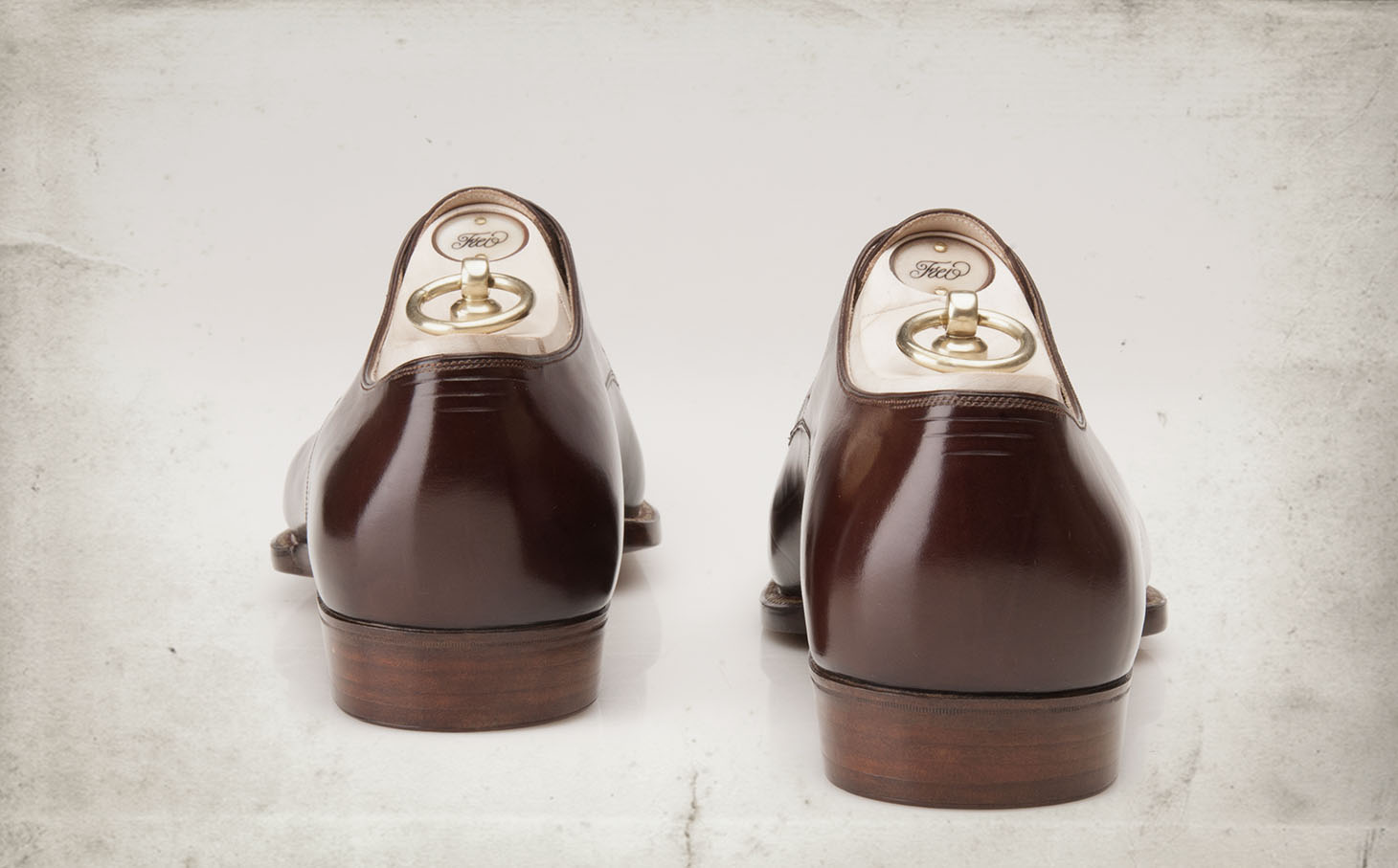
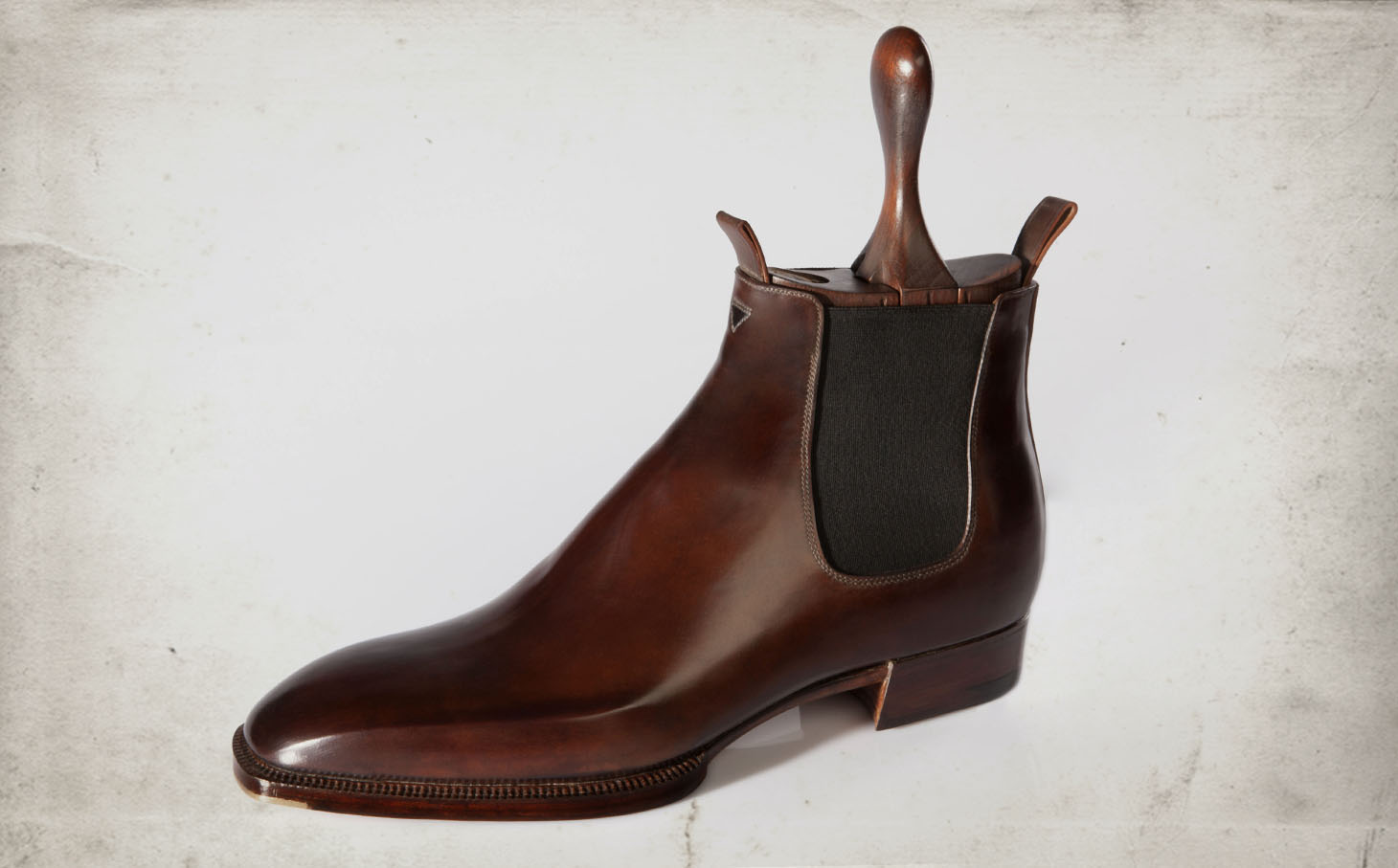
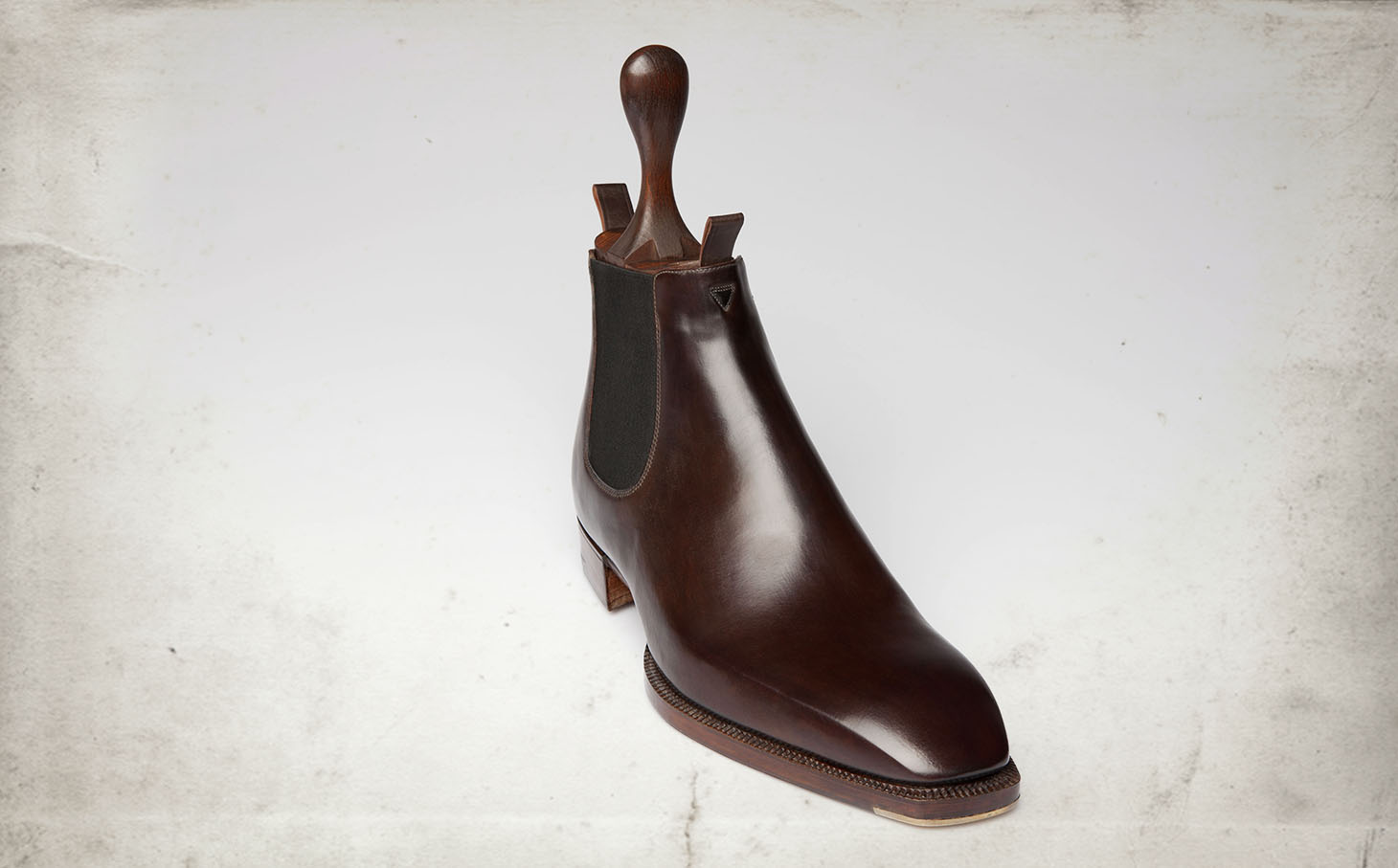
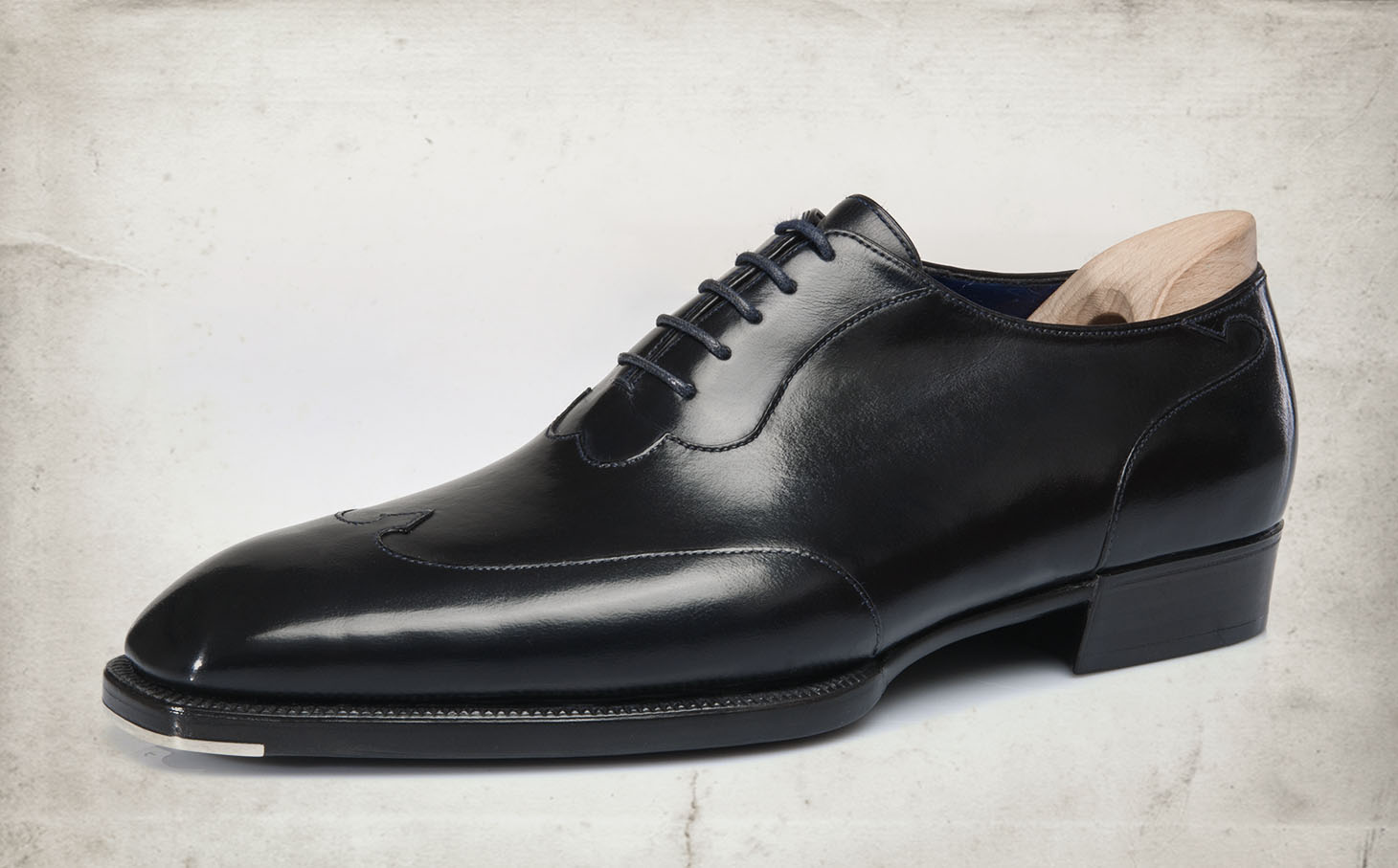
PF: I make different styles of shoes: fine shoes, country shoes and casual shoes, for men and women. Nevertheless, I think many people see a continuous thread running through my work. I suppose I am particularly influenced by the Belle Époque of shoemaking around 1900 and add my modern interpretation of sharpness.
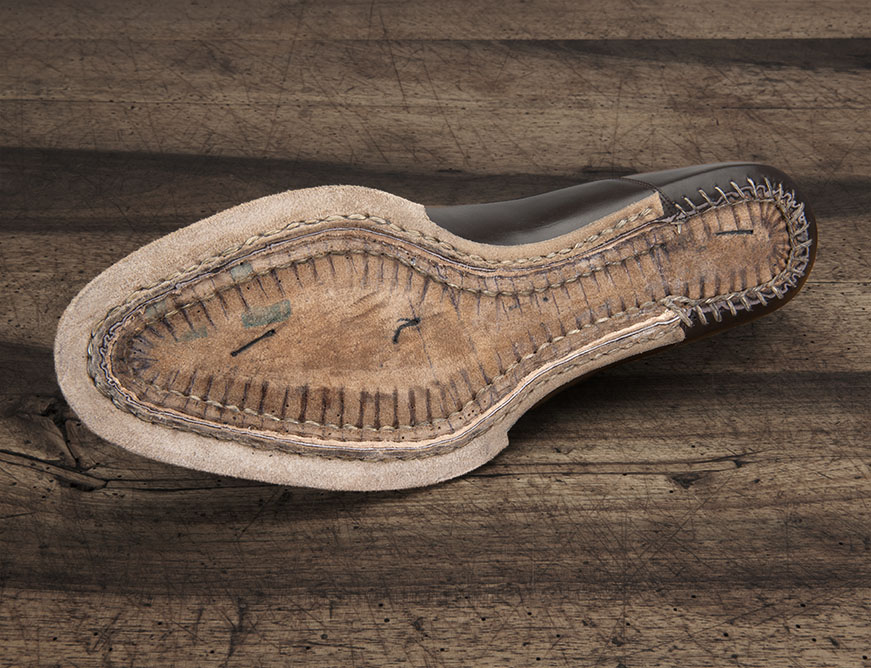
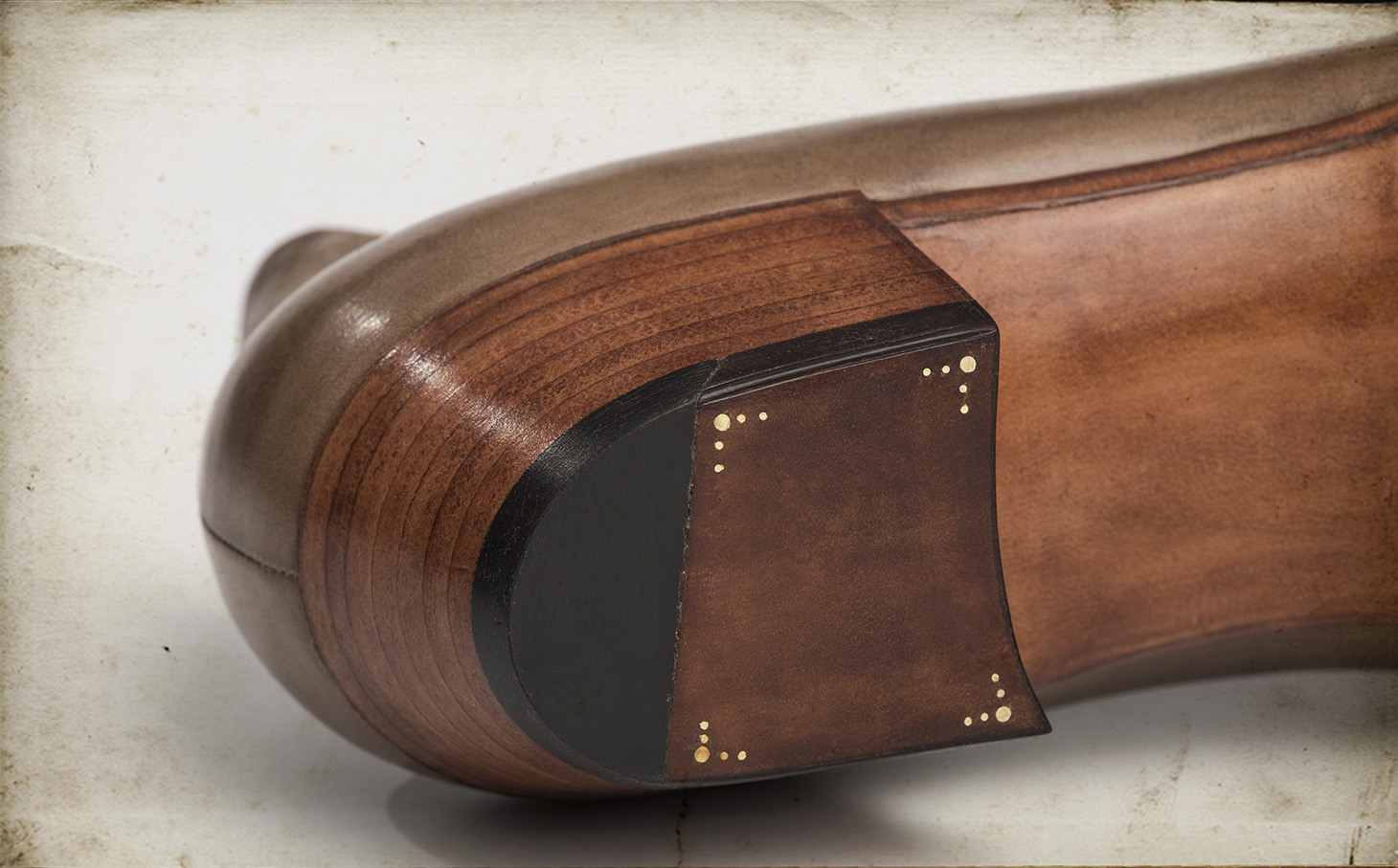
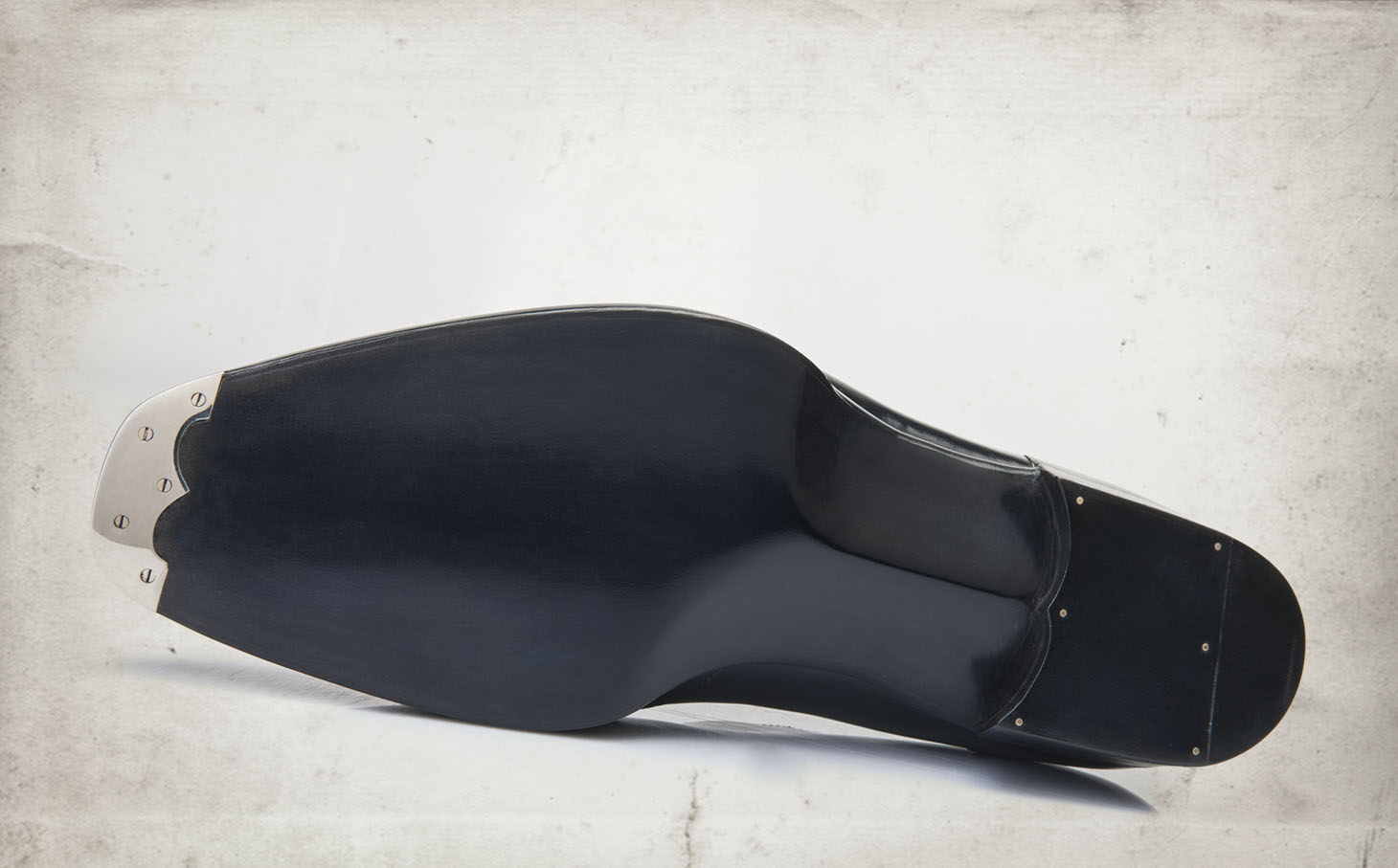
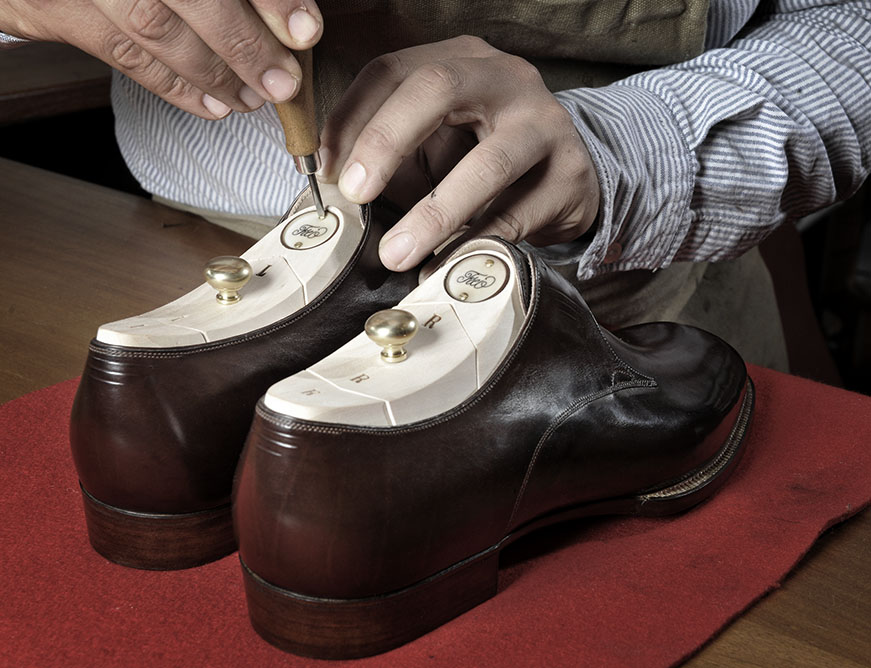
What defines my house style, beside the last shapes and the actual making, is the unique way of making hand-scratched toe plates, my own styles of trees and newly developed construction techniques. For example, the extremely narrow waists and the Freiburgian welt, which is a kind of half blind Norwegian welt. Special and refined details are very important for me.
With the shoe I made for the World Championships I reached a new personal level and created a new category of shoes. I now offer Divine shoes in addition to my fine shoes. Divine shoes are very special – individual projects that I make as a piece of art. These shoes require between 300 and 450 hours of work and are available as artworks for collectors and as walking art. I suppose that in future the Divine shoes will be perceived as an important part of my house style.
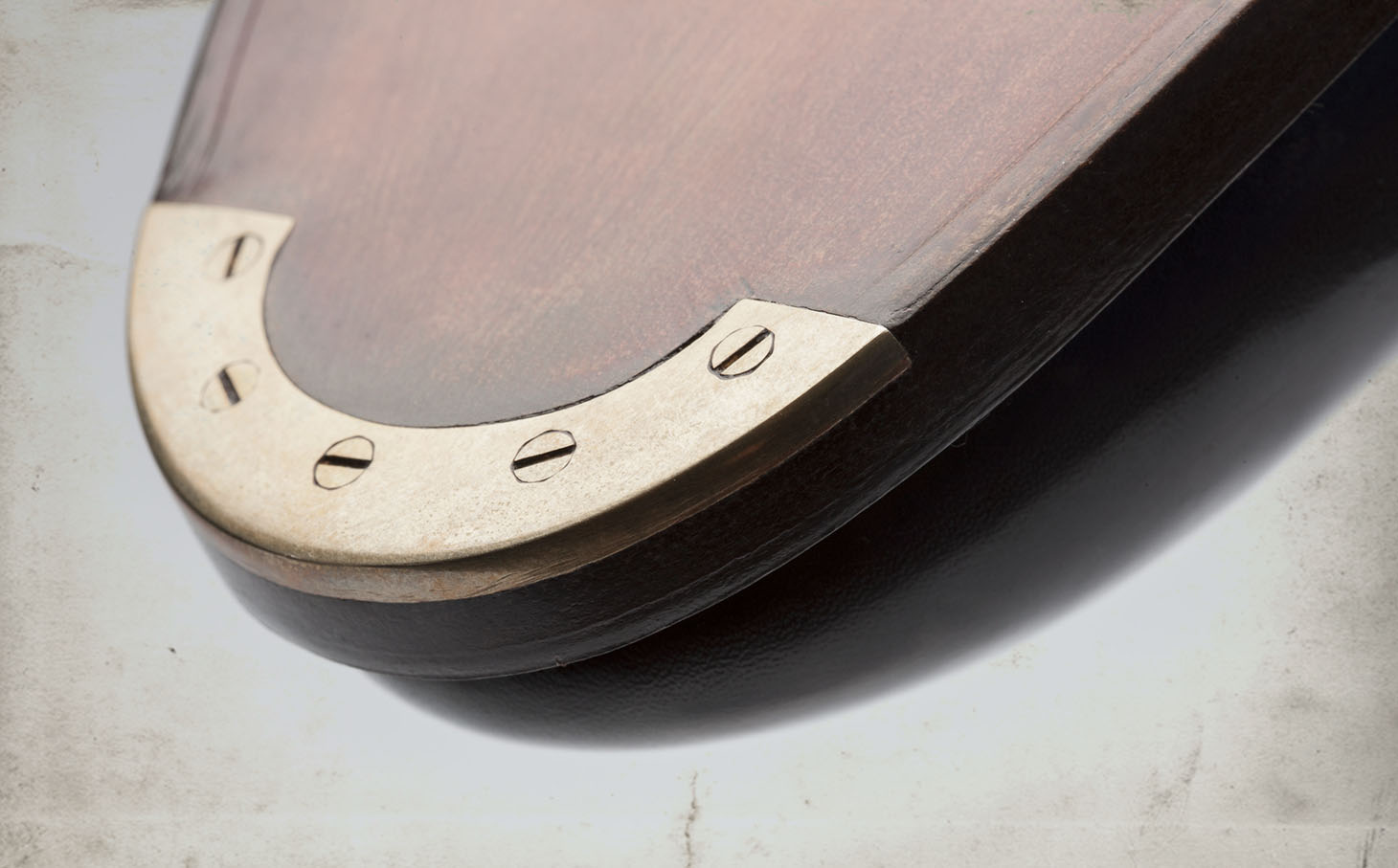
Pictured: unique toe plates
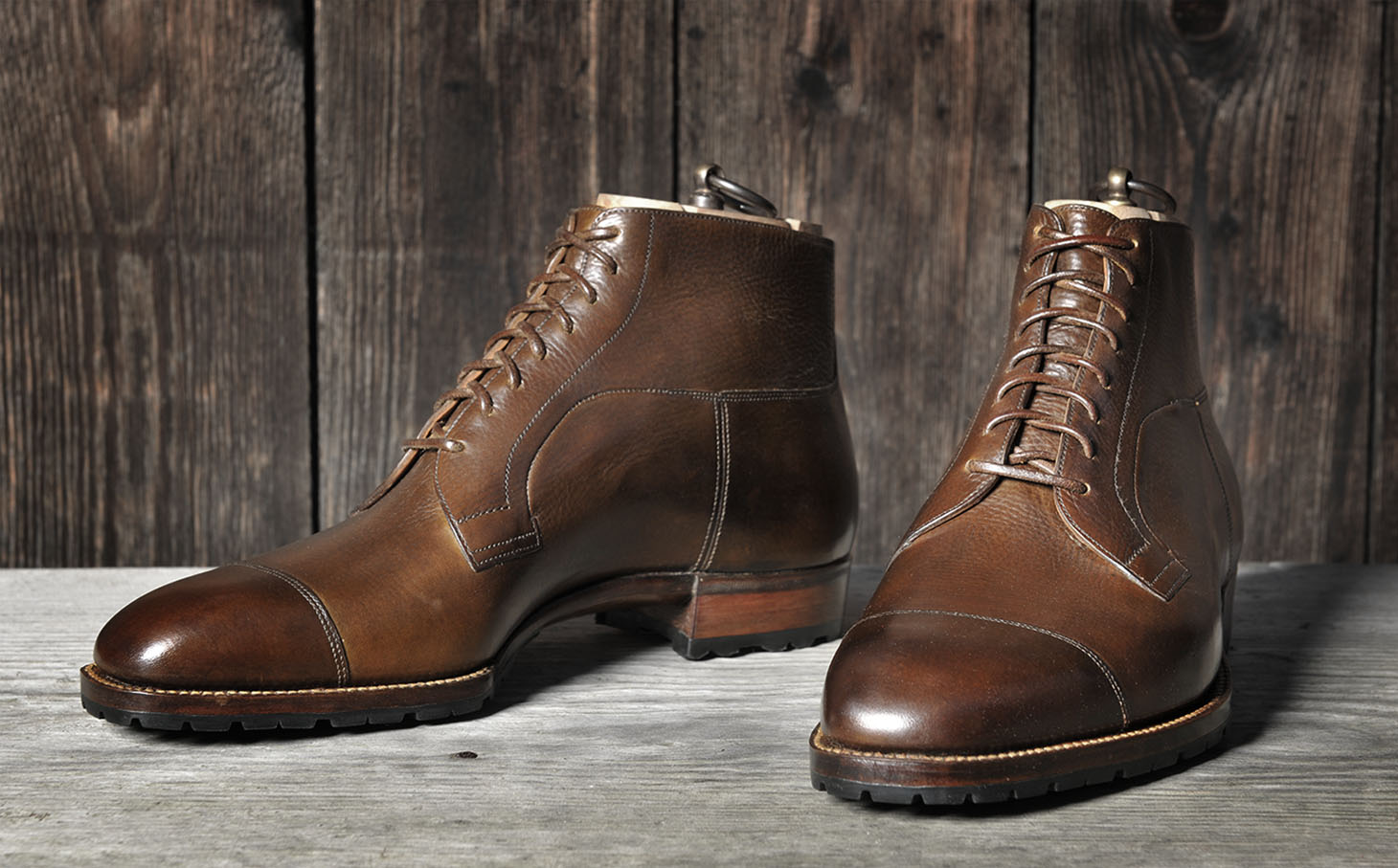
VR: Do you have a favourite shoe model (e.g. Monk, Derby, Oxford, Balmoral boot) and leather type?
PF: Actually, I would have to lie if I had to pick one. It is more the overall picture of a shoe that makes me fall in love with it. If the pattern for the upper perfectly fits the type of last shape and the material is perfect for that model and the thickness and width of the sole match…
It’s the same thing with types of leather. Old stock hand-grained box calf is beautiful, but I also love the veg tan Tuscan leathers and many more.
VR: There are several quality shoe companies in Germany – why should my readers visit yours?
PF: In the bespoke shoe segment, I find myself in the high-end niche.
I always try to make the perfect shoes for the unique individual. I figure out what purpose the shoes will serve, what comfort means to the wearer and his feet. I take into account how the client dresses, his physical characteristics and his whole demeanor. In the end the finished shoes truly belong to that individual and the connection is obvious. This means that the shoes can’t go out of fashion for that person, even after many years. It is beautiful to see how many customers view their shoes as true companions.
Even if a customer orders a classic style, like a Toe-Cap Oxford, it has to be designed all over again: first, because the lasts are different every time, and second, because the customer is different every time. For example, a long toe cap is more modern and extrovert and a short toe cap more elegant and feminine. These decisions have to be taken in view of the person wearing the shoes.
My customers can be experts on shoes, but they don’t have to be. I navigate them through different models, styles and shapes and leave to them how many decisions they want to make and where they trust in me and my opinion as to what would be the right choice for them.
To choose me, one has to like what I do and who I am. The client does not only get the final product, but the whole process. The final product is strongly influenced by the customer and by me and the way I make shoes. My aim is not to increase efficiency, to optimize and rationalize everything and make it more economical. My aim is to create masterpieces that leave lasting impressions. I am driven by the idea of beauty and perfection.
VR: What is your definition of a well-made shoe?
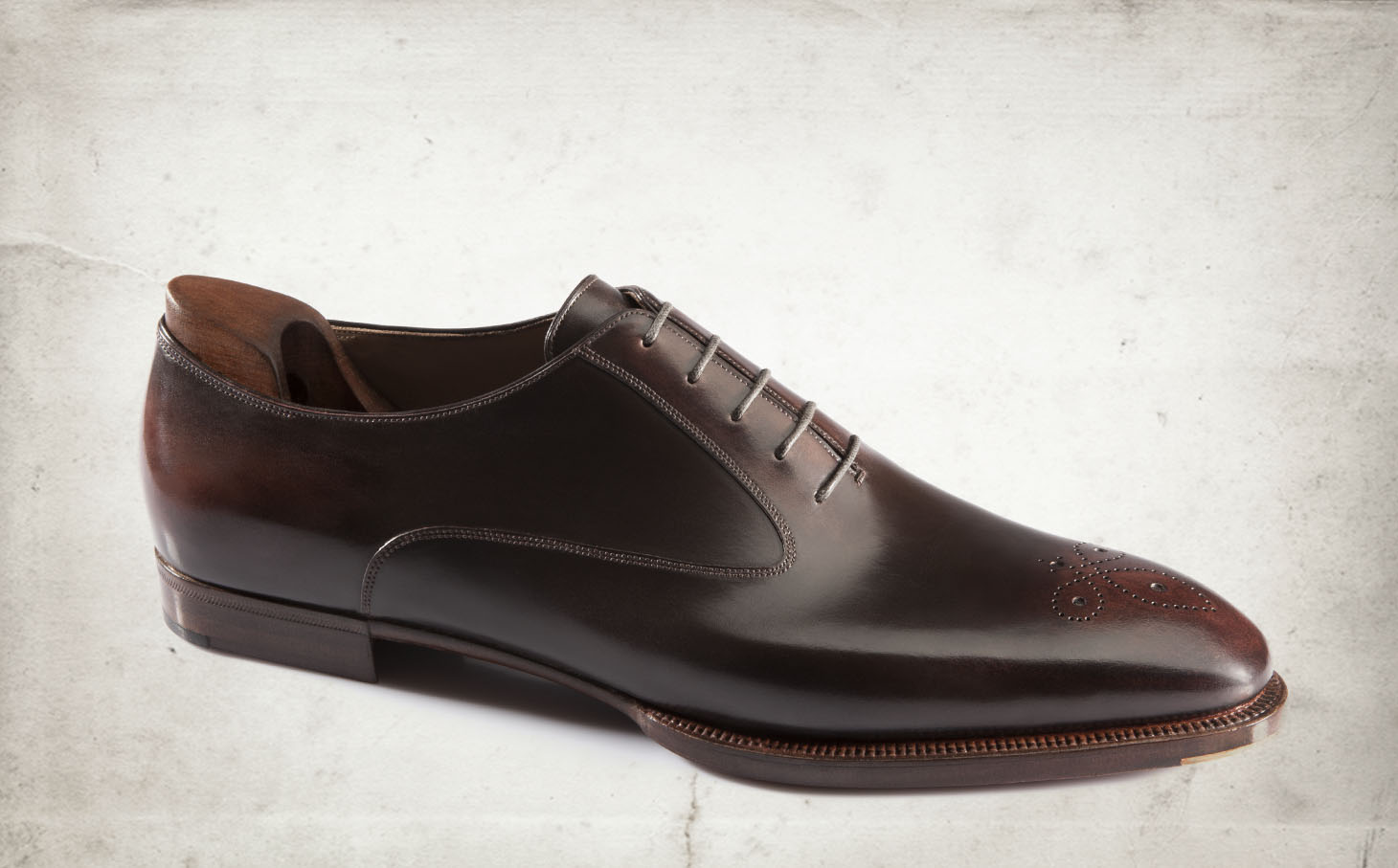
PF: On the one hand a well-made shoe must be functional, which means comfortable, durable and good for the feet and the rest of the body. On the other hand, there is the aesthetic aspect: proportions, surfaces, clarity and the overall impression. I think the combination of traditional techniques, quality materials and expert craftsmanship can create an excellently made shoe.
VR: Who or what inspires you?
I am inspired by many people and things, but I want to name two magnificent watchmakers and one shoemaker.
PF: Abraham Louis Breguet created stunning watches at the end of the 18th century. His creativity, sense for beauty and purposefulness were just incredible. Many of his inventions are still used in the 21st century and he is to this day considered one of the greatest, if not the greatest, watchmakers of all time.
Ferdinand Adolph Lange built up a small industry for fine pocket watches in Germany in the mid-19th century. The level of craftsmanship he reached was extraordinary. He established a watchmaking village, Glashütte, from nothing, where his knowledge was passed on to many young watchmakers who went on to make some of the world’s finest watches, without forgetting their sense of community. They had their own pension system and took care of the people in the village. Ultimately, the German Watchmaking School was established in Glashütte. Watchmakers were trained at the highest level and produced real masterpieces.
Pietro Yantorny made some of the finest (ladies’) shoes in the world at the beginning of the 20th century. He was born to Indian immigrants in the south of Italy and raised in poverty. At twelve years of age he started to work as a shoemaker and made his way, without being able to read or write, via Nice and London to Paris. He worked mainly as an employed last and tree maker. In 1904 he opened his first store in Paris and won a Gold medal at the Expo in Rome. This marked the beginning of the manufacture of one of the most refined and beautiful shoes and trees I have ever seen.
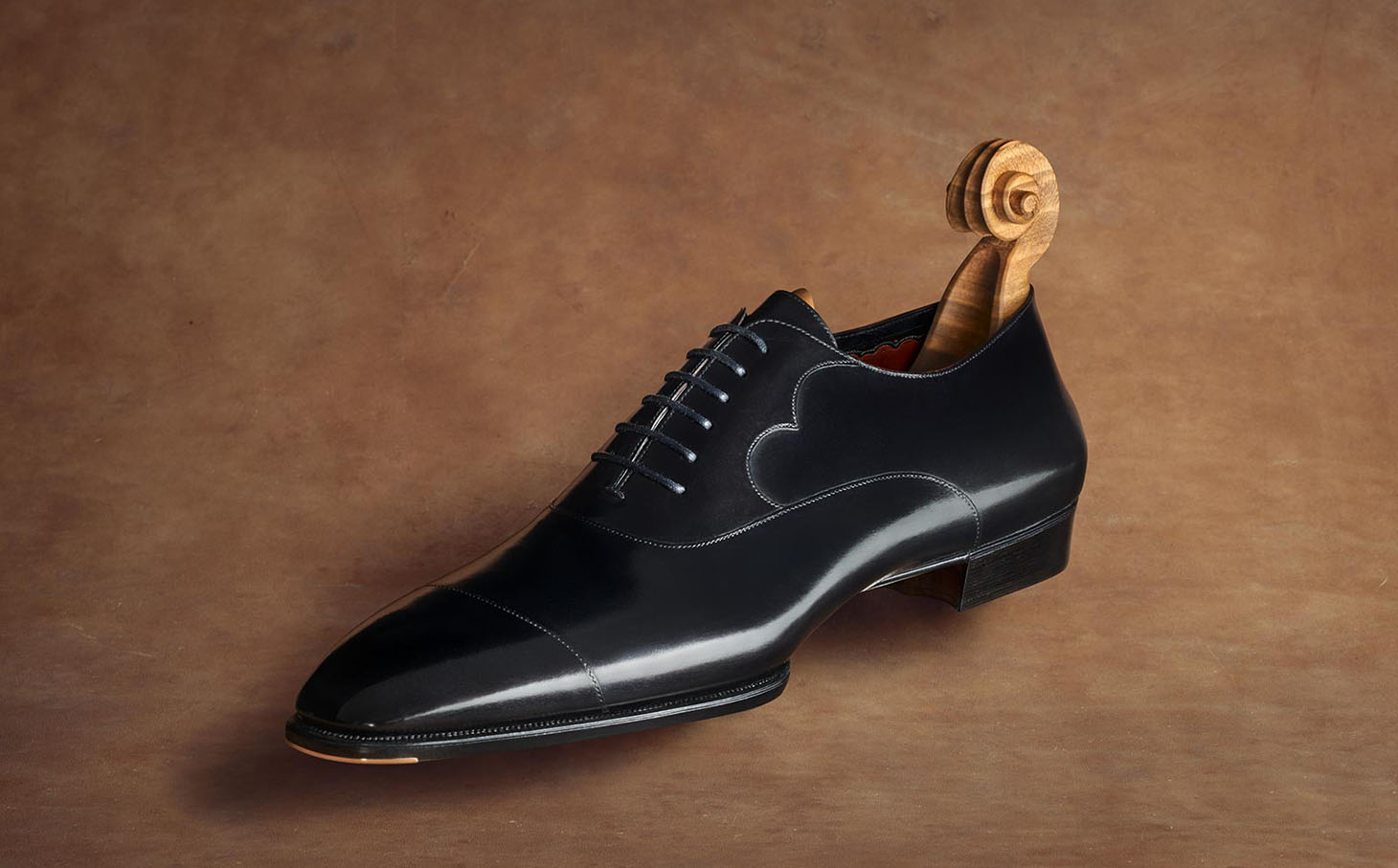
Pictured: the gold medal exhibition-grade pair
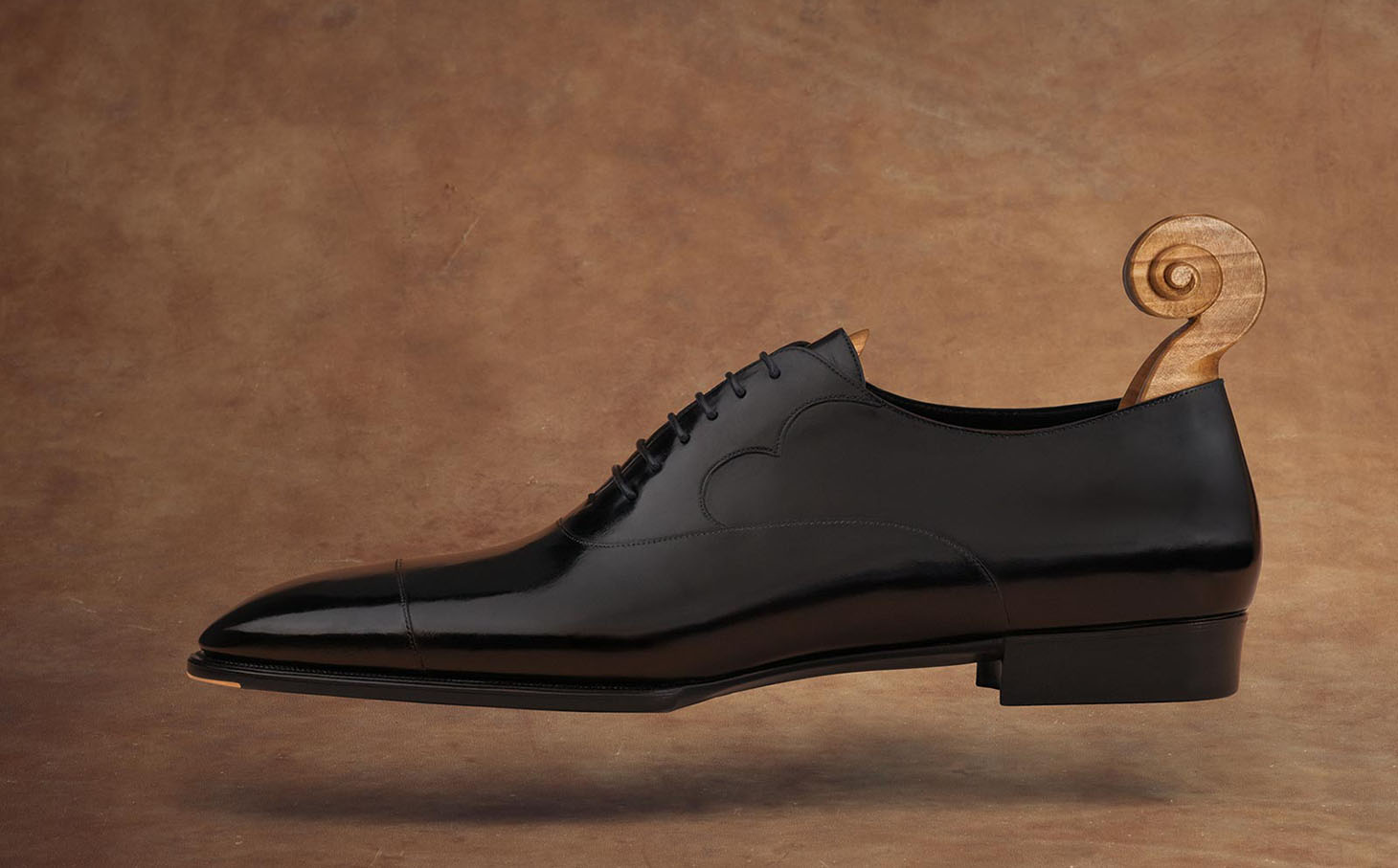
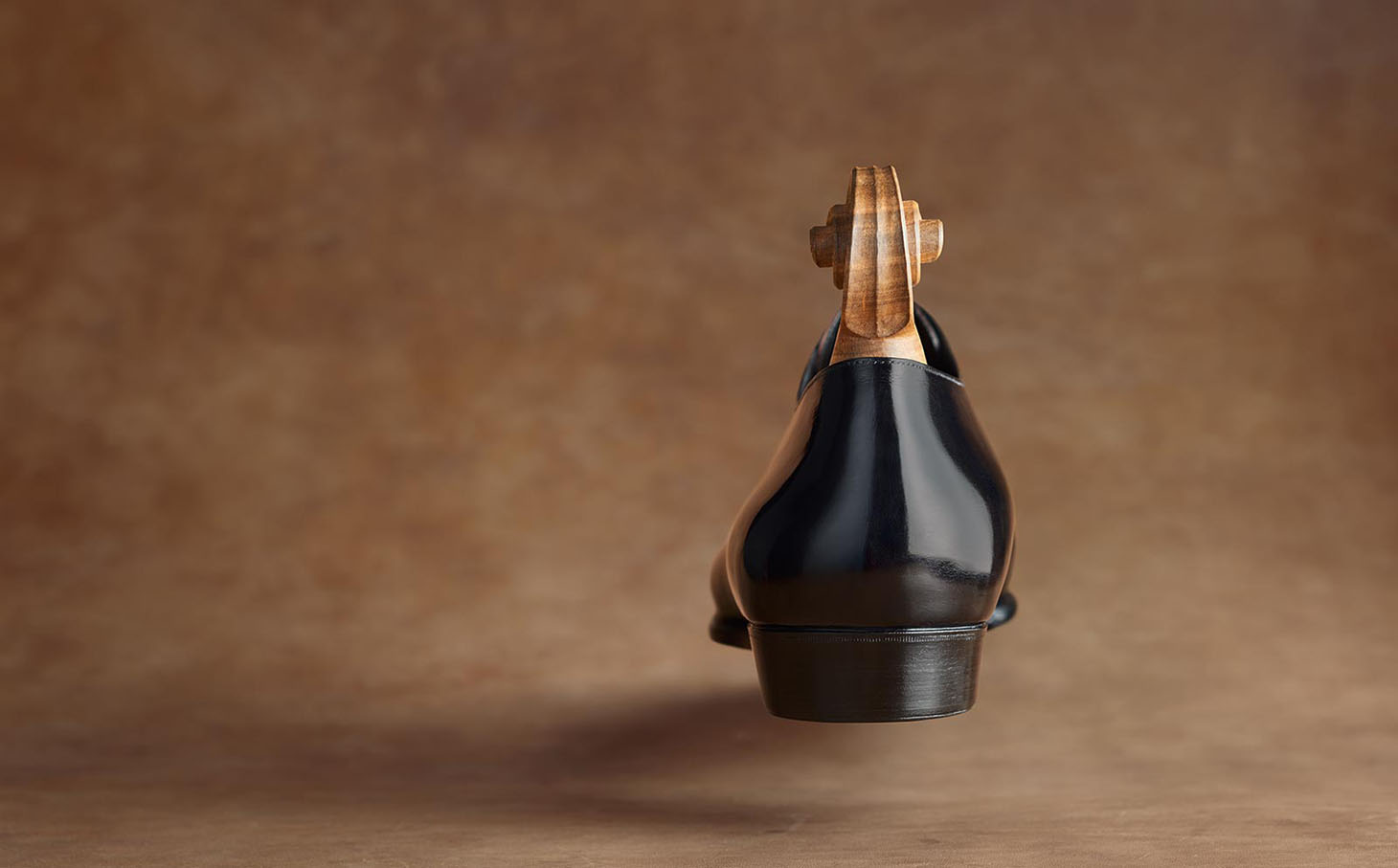
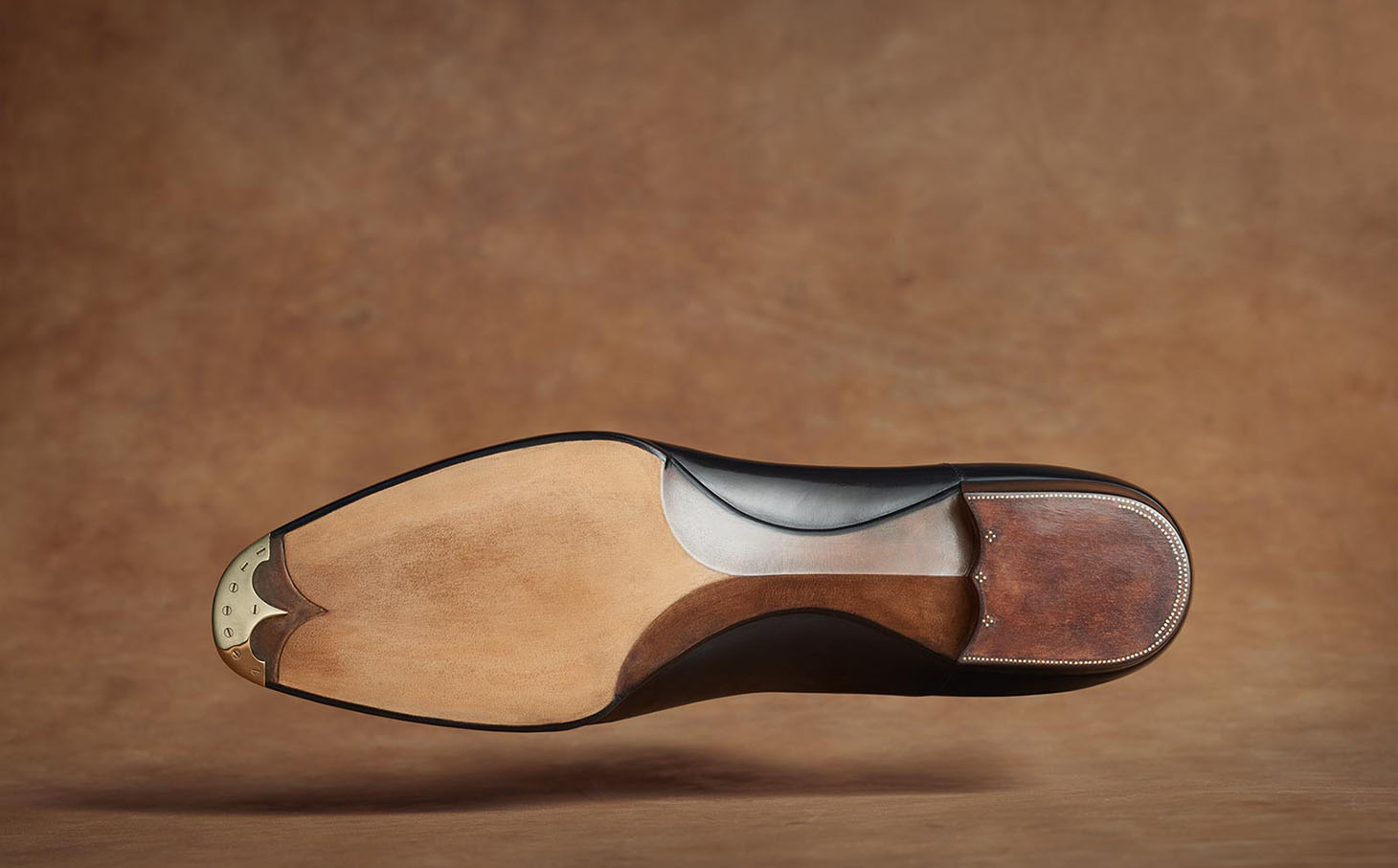
VR: Finally, you recently won the Gold medal at the World Championships in Shoemaking in London, hosted by Shoegazing. What goals did you set yourself when making the winning shoe?
PF: Actually, when I first heard of the competition I decided not to take part, because I had so much work on and little time. In the end I simply didn’t manage to not sign up. It was such a big attraction for me to make my personal masterpiece. I have always loved the antique competition shoes in the cabinets of the royal shoemakers. These shoes are more objects of art than functional shoes. The shapes are exaggerated and the work is extremely refined and beautiful. That is what I wanted to achieve – the quality of the Belle Époque of shoemaking around 1900 with the careful addition of a modern take on design and some technical details I had developed myself.
It was a beautiful experience to make the shoe and then to meet many of the shoemakers and aficionados in London, and then of course be honored for my work.
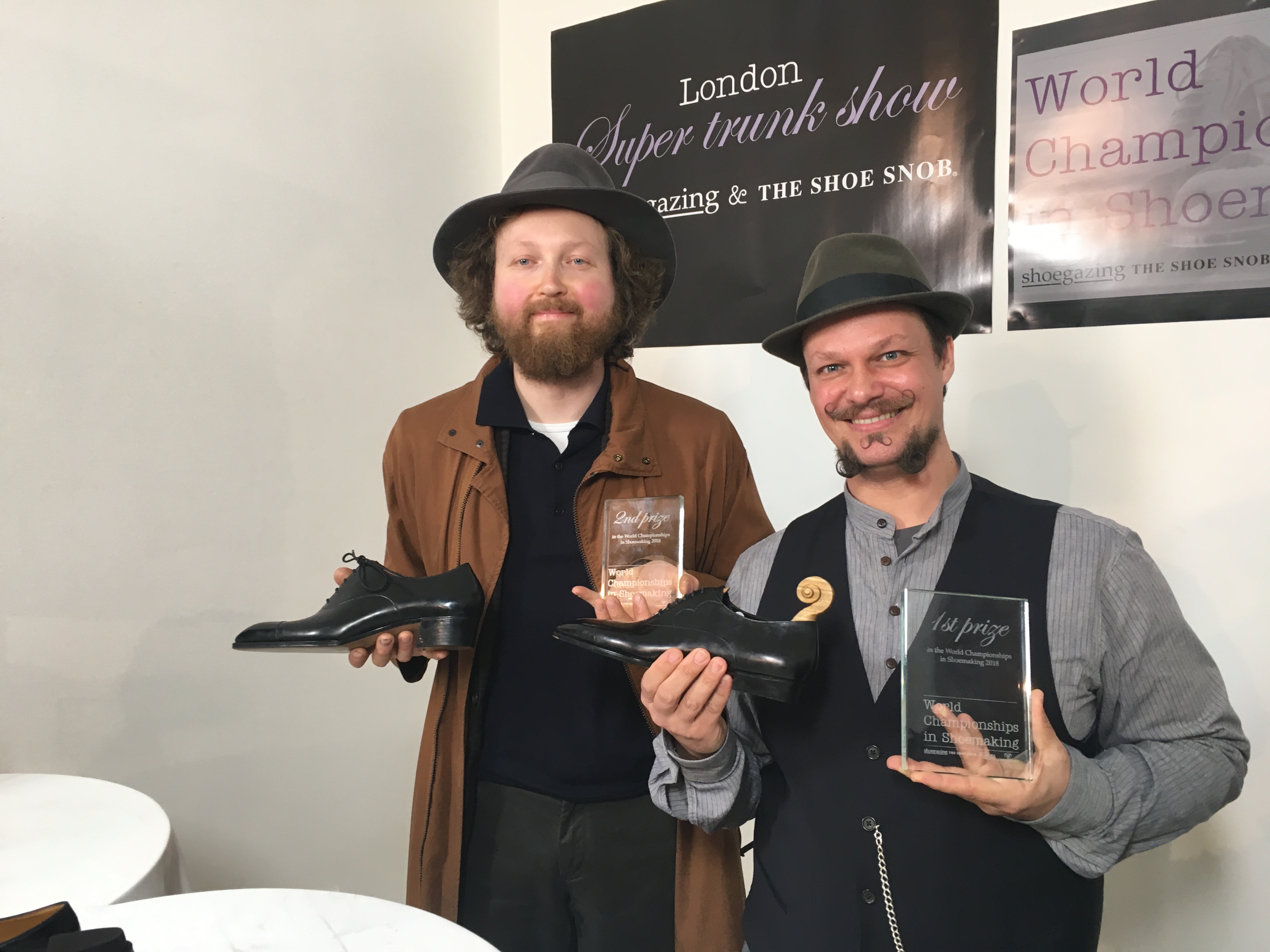
With Daniel Wegan from Gaziano&Girling, the silver medallist
Category Cordwainers, Interviews
What we lost in the casual revolution by G. Bruce Boyer
0September 18, 2018 by Ville Raivio
Who else but G. Bruce Boyer? Let us leave it to him to tell what the western culture has lost by forsaking tailored clothing. The following piece, published on First Things, a journal on religion and public life, serves a few jabs and explanations.
”How is it that we have gone from wearing suits and ties to the office to wearing T-shirts, baseball caps, and a variety of military garments and ranch hand wardrobes? Everyone who’s ever perused photos of baseball games (or almost any other crowded venue for that matter) in an old Life magazine from the mid-twentieth century finds it remarkable that the majority of men in the crowd are wearing white shirts and ties, and business hats (a category of menswear now extinct). The metamorphosis over such a relatively short time to polo shirts and cargo shorts on most of the crowd is a bit staggering, almost as though we were looking at two different species. The history, the sociology, the psychology of dress all seem to come rushing in to confound my thoughts. But then I’m not alone.”
Aye, there’s the rub.
Category Arbiter Elegantiae, Reading, Society
An interview with Jack Simpson
1September 6, 2018 by Ville Raivio
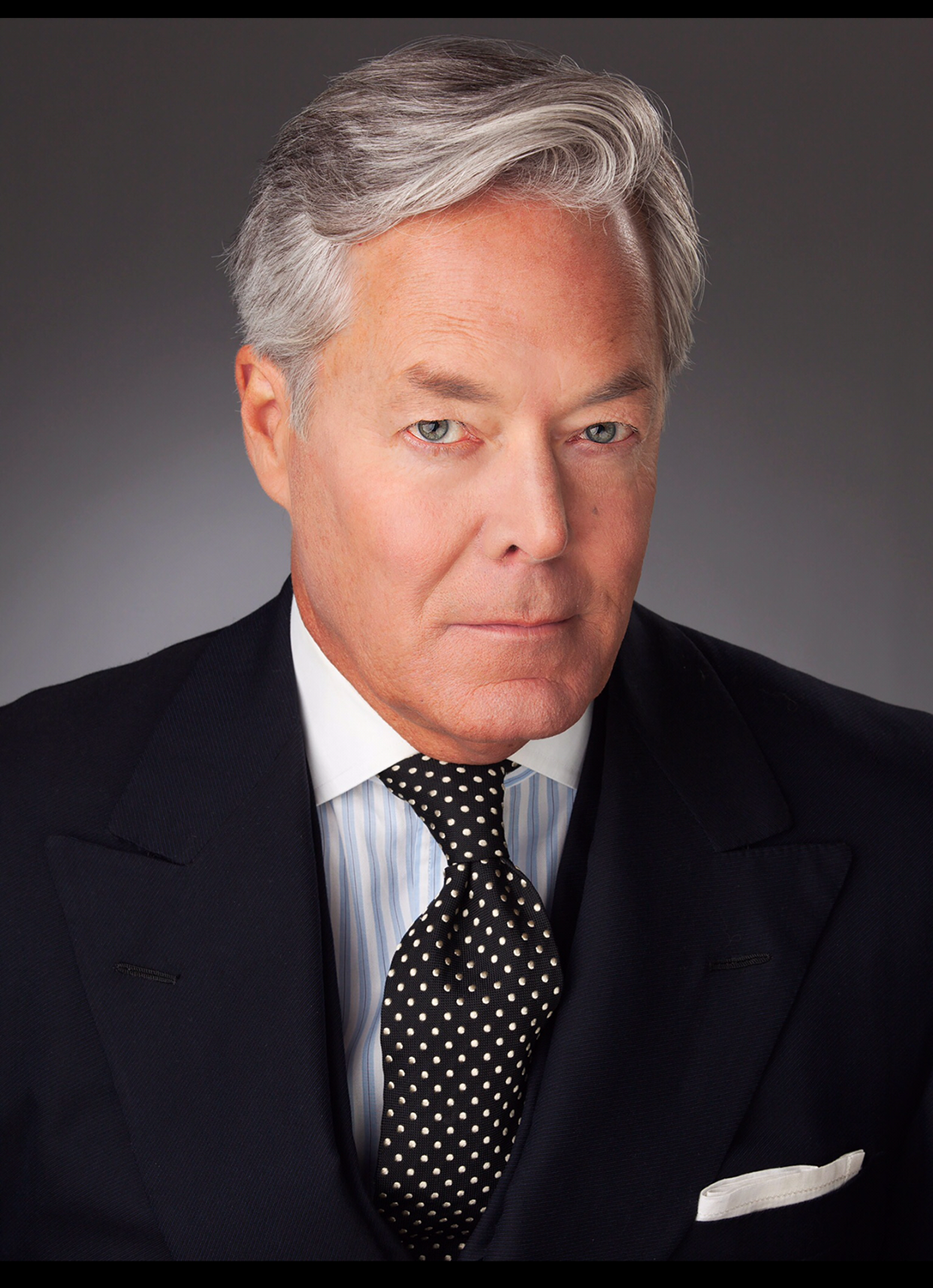
Age & Occupation
As most who find themselves in the creative field, I see age bias to be especially shortsighted. Outside of my couture endeavors, I am a model, albeit one on a select basis. Age is an elusive factor, as an image of a senior man with a young woman is often of greater emotional interest than a similar photo with a woman of a certain age; the same is true for an older woman and a younger man. Giorgio Armani teaches us that age may even enhance one’s design vision, and, moreover, innate appeal. Mr. Armani and I have one thing in common: he started his business at the age of 40, as did I.
Education
I had the good fortune to be awarded a Morehead Scholarship to the University of North Carolina, one given to those young people who show promise in both scholarship and leadership. However, I left after two years, perhaps naively so, for more creative stimulation.
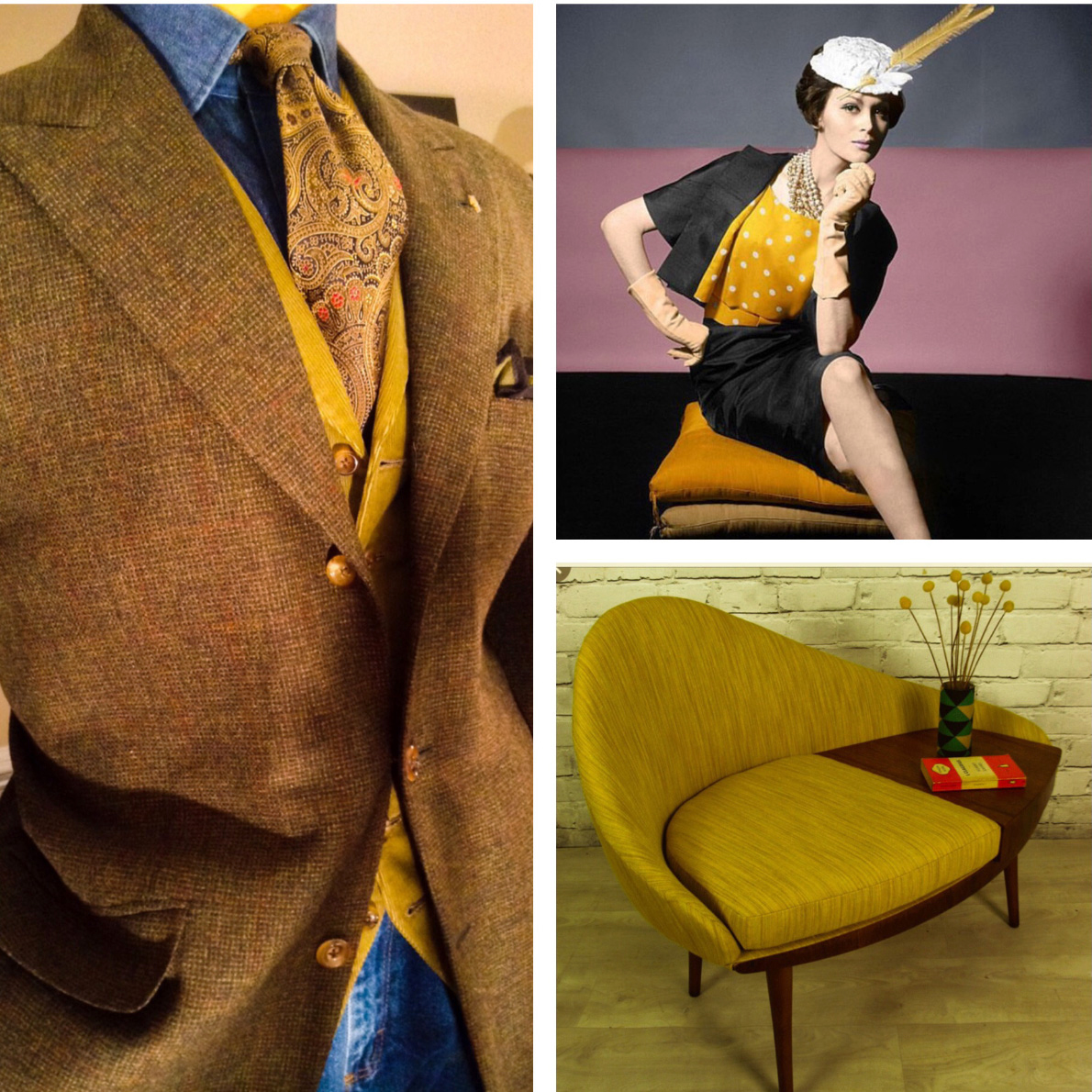
Inspirations
Spouse & Children
My wife’s career has also been in the luxury apparel industry, and she is the only woman to have served as the North American agent for the revered cashmere brand Malo. One of my two sons managed a luxury menswear boutique at 25; the other is far too well-grounded to consider apparel as a career, even though we had a bespoke cashmere blazer made for him at four years of age. Both my wife and I shopped for the boys in Paris and Milan when they were very young. It now seems to me that it may have been somewhat frivolous, yet it surely instilled in them an appreciation for the value of refined self-expression.
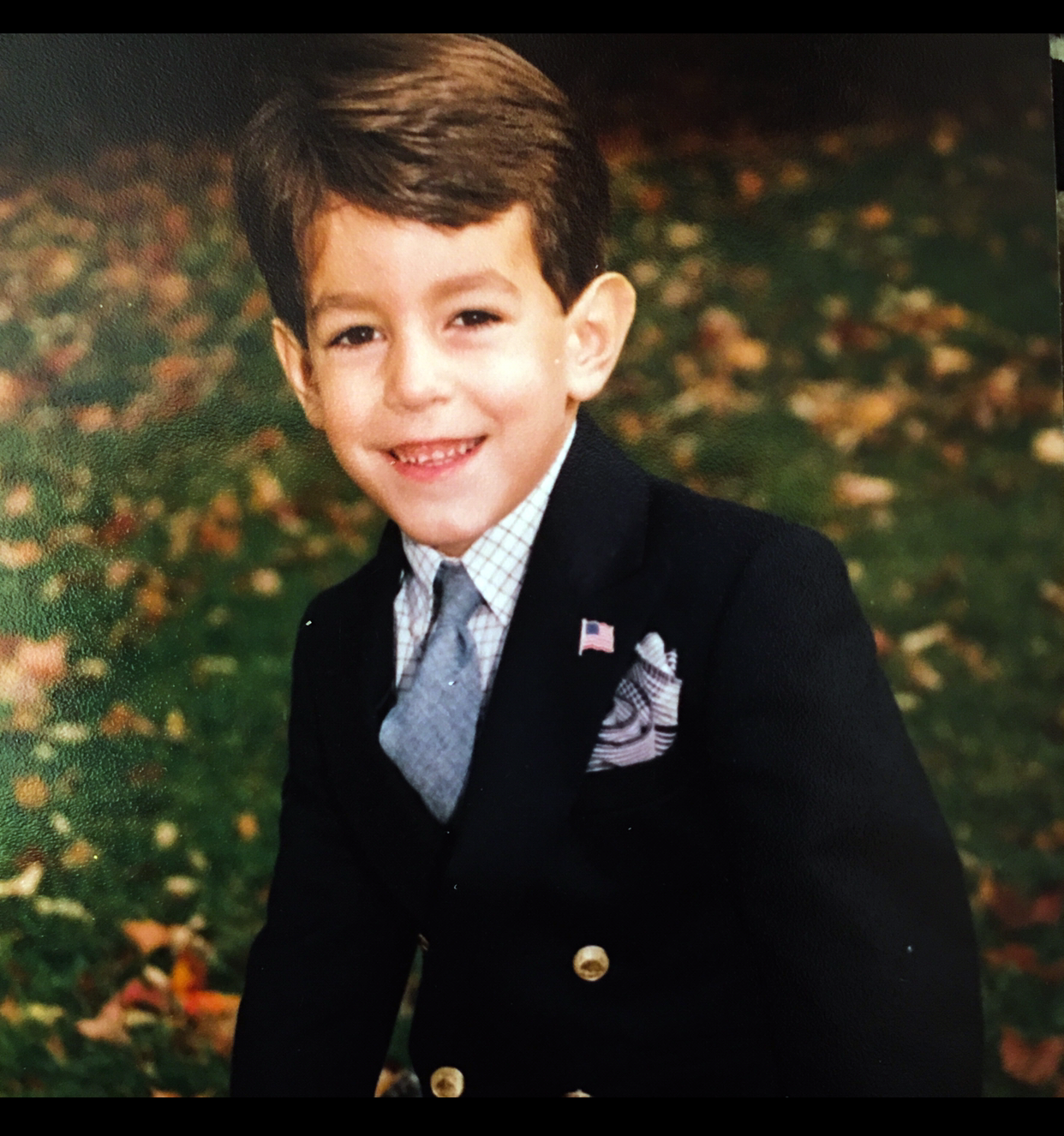
The infamous cashmere jacket
Father & Siblings
One of my first memories of rejection related to the adult world was when my father, a long time clothing enthusiast, took me to the local menswear shop to be fitted for a sports jacket. The owner told us that I was too slight for any of their stock, a crushing moment then for me. I later worked, while in high school, for a similar independent specialty retailer of menswear, perhaps motivated by my earlier experiences; two of my three brothers did the same.
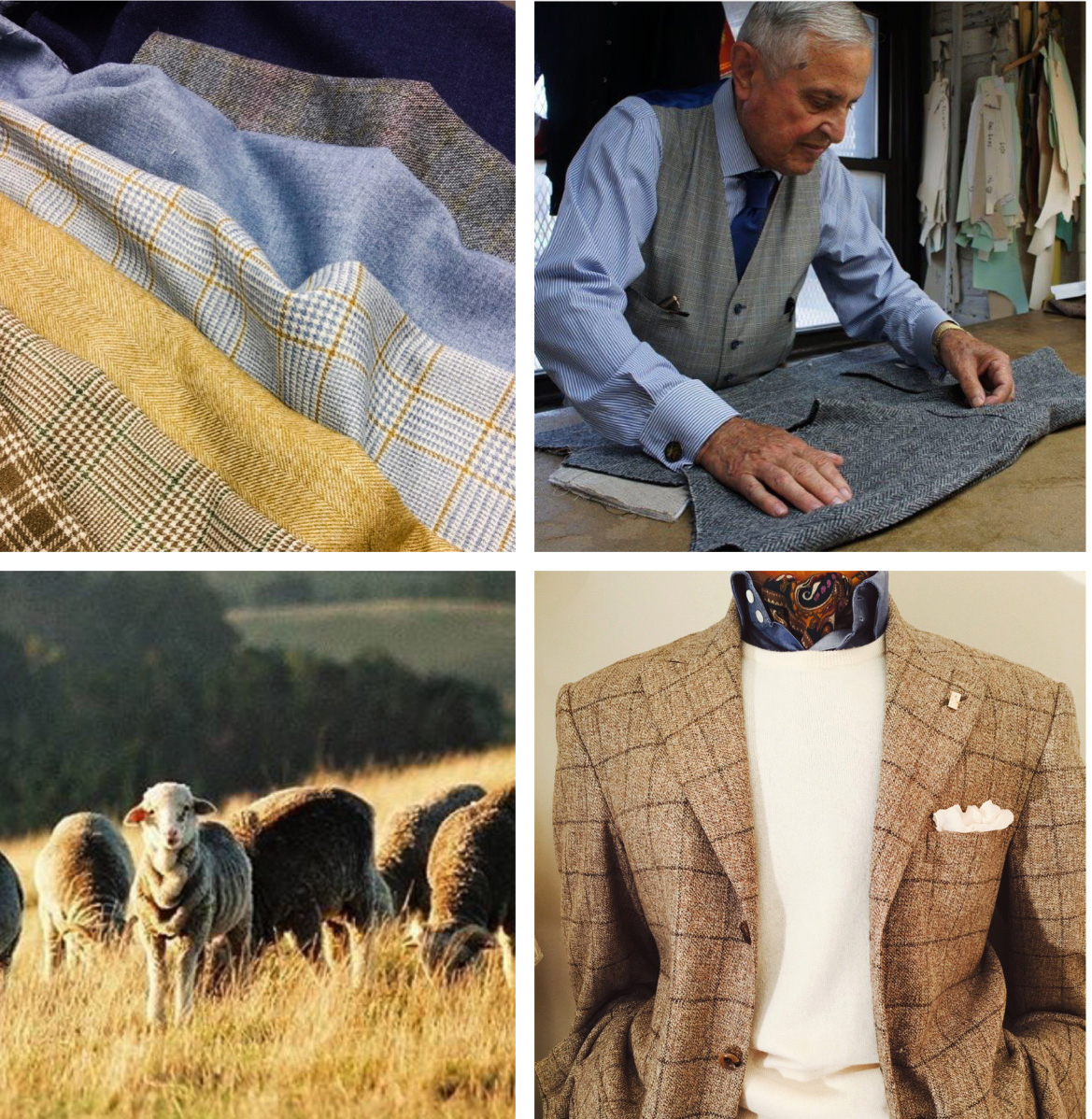
Jack Simpson MTO comes from the Martin Greenfield factory
Other Interests
My interests outside of clothing design are diverse. Sport has long been a passion, and I served as both a head coach, as well as president, of youth football in the Connecticut town where we raised our sons. Both Formula 1 and IndyCar racing have long been of keen interest. I structured a deal for the company I headed at the time for an associate sponsorship of Paul Newman’s IndyCar team, and I often flew with him to races. Paul became a client, and the suits we made for him carried his unique signature of classicism edged with irreverence. Each was made in a 4/1 DB with three open patch pockets…even his tuxedo. If one were to review my Instagram feed, you would find my principle subjects of interest to be period automobiles, the Golden Age of Hollywood, fashion illustration of the 1930s and 1940s, vintage furniture, and those gifted artists and painters whose voices reflected the intersection of color and movement.

First Inspiration
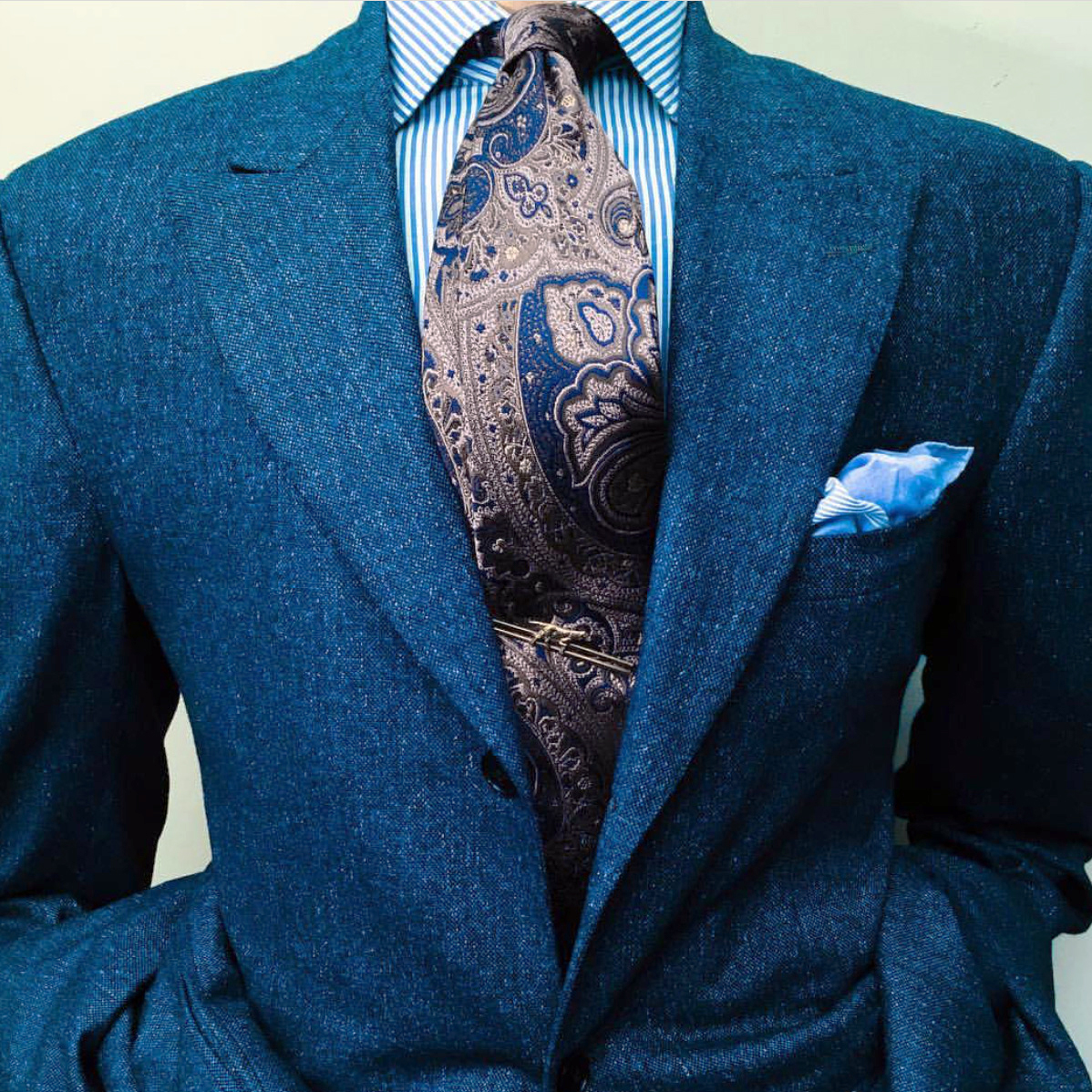
I read Ian Fleming’s James Bond novels in my early youth. The way he described the clothing and overall lifestyle moved me greatly, as later did the films. Sean Connery’s clothing in “Goldfinger”, especially the brown barleycorn tweed jacket, which was most memorable when he stood aside his silver Aston Martin in Switzerland, provided an invaluable lesson in masculine classicism and rakish male elegance.
Gleaned Knowledge
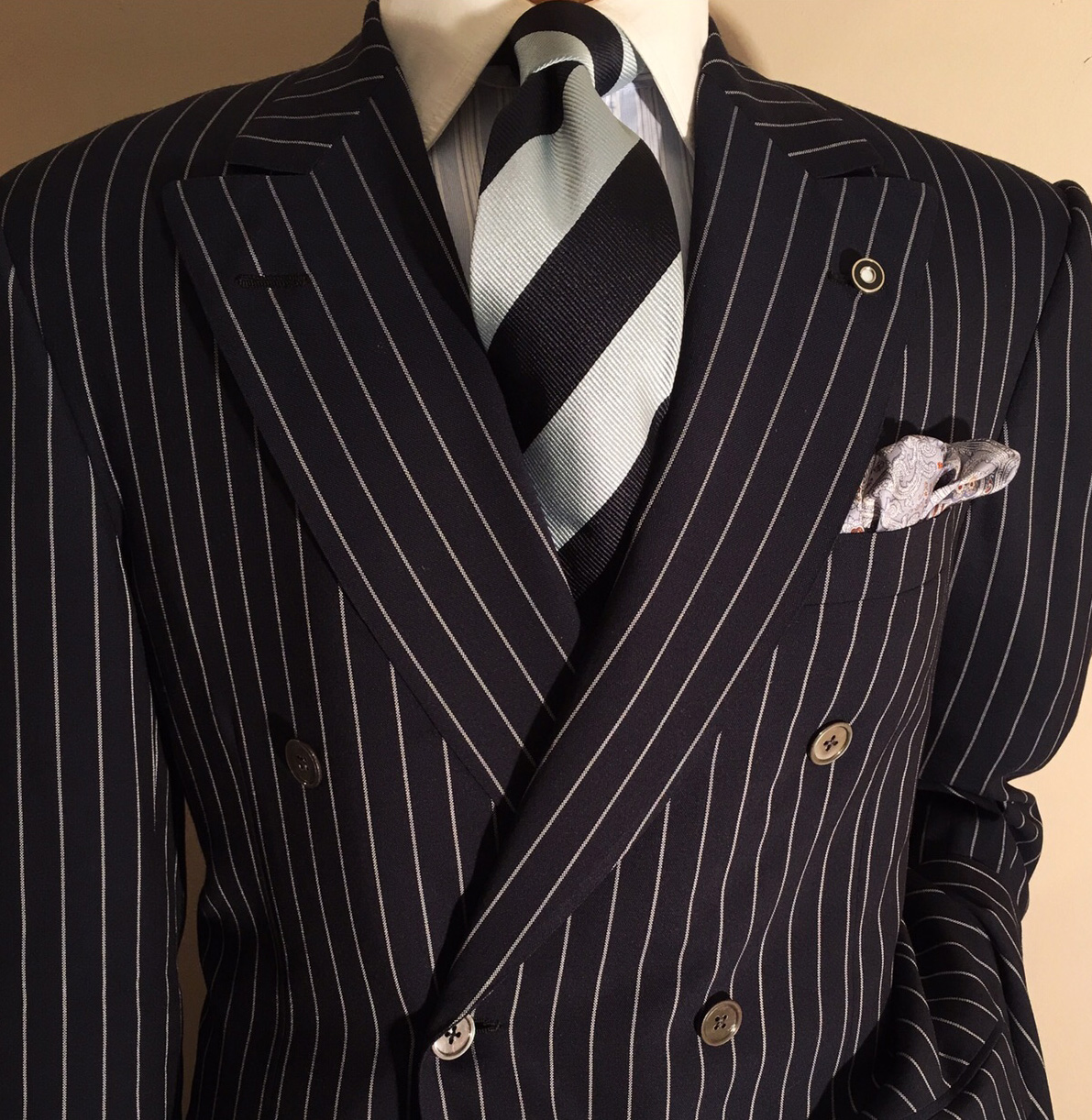
My design aesthetic, both personally and professionally, has benefitted greatly from life experiences. I had the good fortune of being recruited by the noted designer Alexander Julian when his company was in its infancy. This gave me the opportunity to be involved in all aspects of the business from textile design to marketing. Alex, a five time Coty Award winner, taught me much.
Design Influences
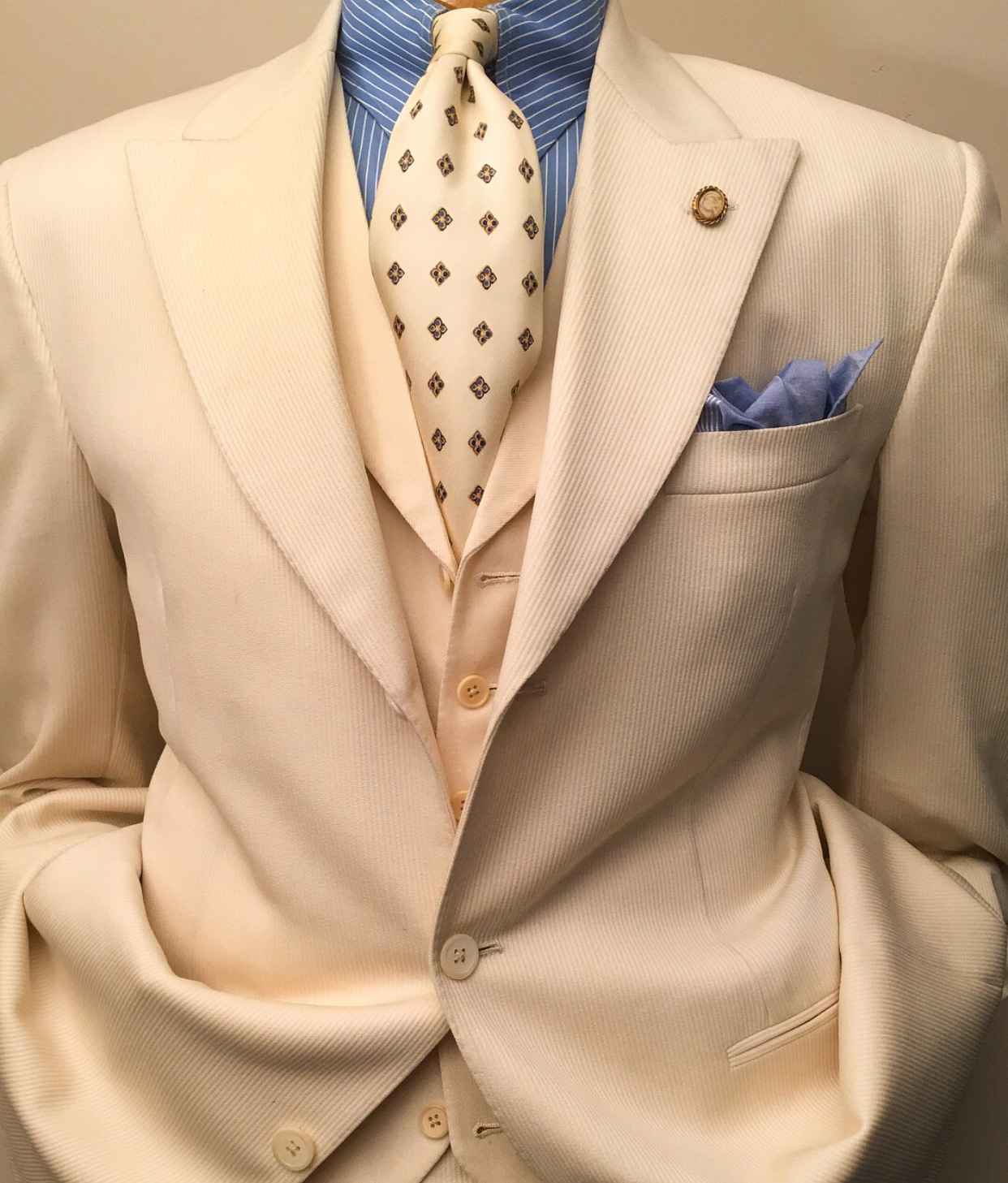
Elegance has long been a focus, and I have had the opportunity to create designs for a number of actors and statesmen who have been greatly admired for their sophistication and grace. These relationships allowed me to study the presence, style, and personal presentation of each man. Through my early attendance at the international trade fairs Ideabiella and Premiere Vision, I was exposed to equally elegant men in luxury menswear. It is from these collective experiences that the lessons of taste and creativity remain at the forefront.
But I am also an avid reader, and the wisdom of a great many have influenced my design aesthetic. Among them are:
Oscar Wilde, “Consistency is the last refuge of the unimaginative”;
Lord Chesterfield, “Dress is a very foolish thing, and yet it is very foolish not to be well dressed”;
Charles Baudelaire, “Dandyism emerges in times of transition”;
Coco Chanel, “In order to be irreplaceable, one must always be different”;
Karl Lagerfeld, “Trendy is the last stage before tacky”;
Sir Francis Bacon, “Fashion is the only attempt to realize art in living forms and social intercourse”;
Diana Vreeland, “Style, all who have it have one thing…originality”;
David Bayles, “Craft is the visible edge of art”;
Frank Lloyd Wright, “Give me the luxuries of life, and I will willingly do without the necessities”; and
Harry Winston, “People will stare. Make it worth their while”.
House Style
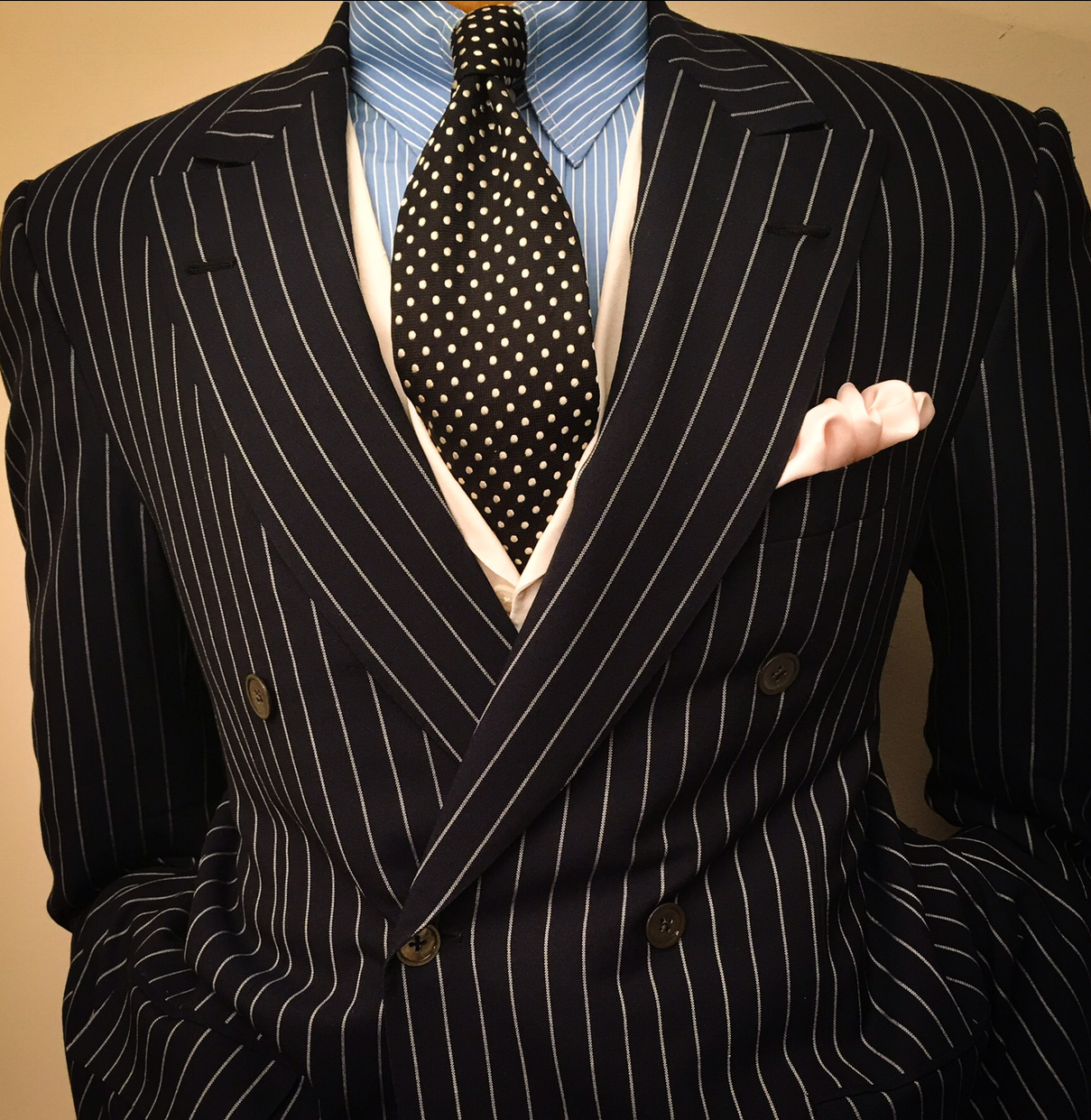
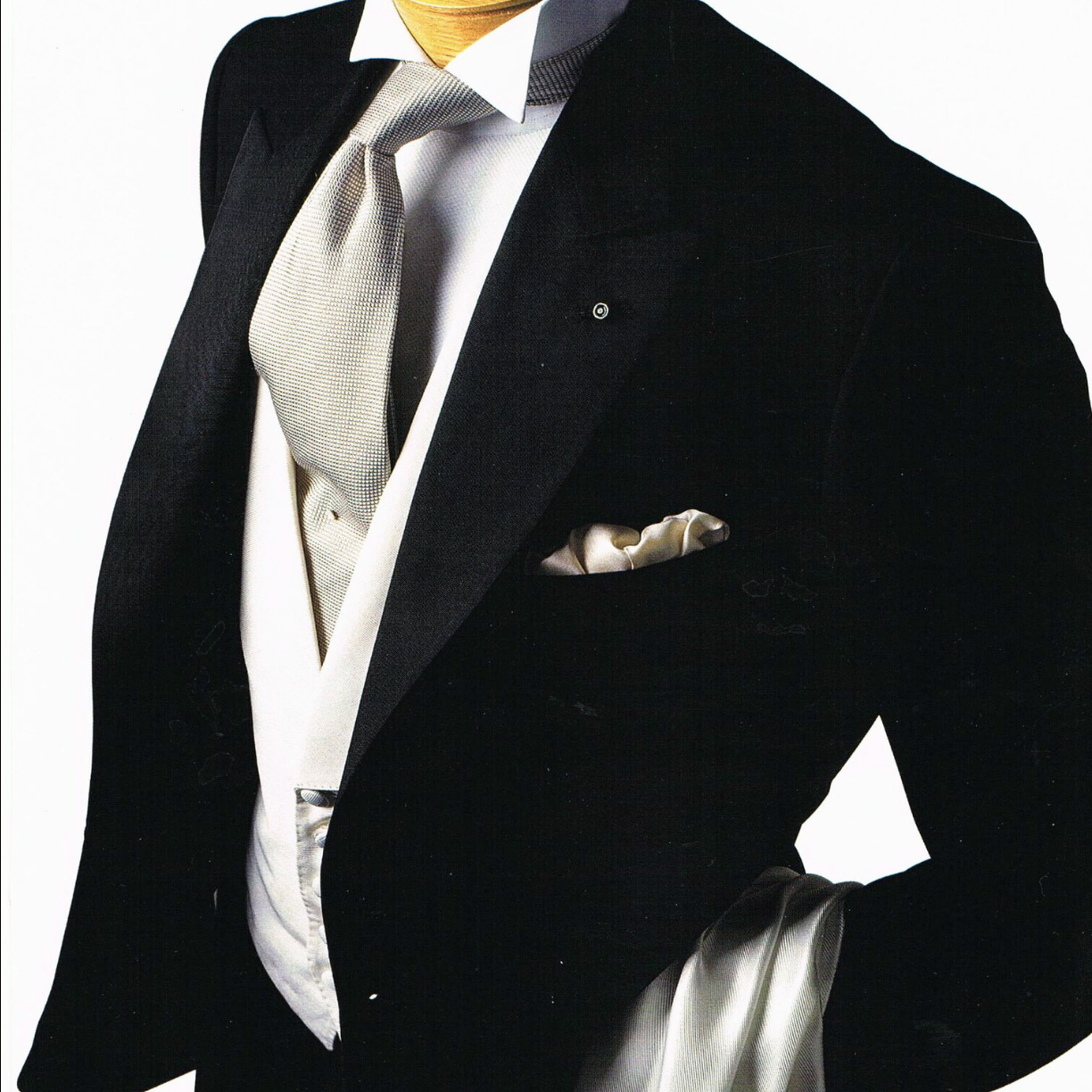
We believe that style emanates from individual taste, and our house design centers on exacting architectural disciplines in model and pattern development, with the first objective to provide the client the opportunity of wearing a garment for upwards of 15 years. We also favor the idea of appropriate dress for every occasion. We encourage our clients to develop a balanced wardrobe; this includes elegant casual wear in addition to a tasteful, demonstrative professional wardrobe. Additionally, we believe that formal wear should be the most dramatic in the male wardrobe. Where anatomically appropriate, we think that these clothes should be steeped in an elan of natural glamour, with softly roped shoulders and superbly sculpted waistlines. Above all else, our design aesthetic subscribes to the twin tenets of classicism laced with wit, and of convention challenged by creativity.

Company Founding
When I founded the company in 1994, it was my belief that the world of designer menswear, which had been my professional focus for 13 years, and the world of custom tailoring would one day be merging. We were likely early in that reality, but it seems to me that this union is very much the case in the present day.
Couture v. Custom
The notion of couture was developed in Paris in the 1930s, with a one-on-one relationship between designer and client. In contrast, the modern day custom experience in America is rarely guided by the hand of an experienced designer. As such, our service is fundamentally different. Not only was my brand an exclusive at Neiman Marcus, I have also served as creative director and designer for Oxxford Clothes. This gave me the opportunity to work directly with textile designers in the finest mills in Europe to create proprietary fabrics, as well as to work with highly experienced pattern makers to create proprietary patterns. It is this body of knowledge that distinguishes our couture services.

Workshops and Quality
We have two levels of artisanal craftsmanship from our tailoring partners: bespoke and hand-finished, made-to-measure. When a man buys our suit, he is also buying our reputation, our tradition, our quality, our durability, and our value. The same is true for shirtings, for which we have both a made-to-measure factory and a full bespoke atelier, with whom we have worked with for 25 years. The Robb Report, in its 13th annual Best of the Best issue, named our made-to-measure suit among the world’s finest.
Brand Aesthetic
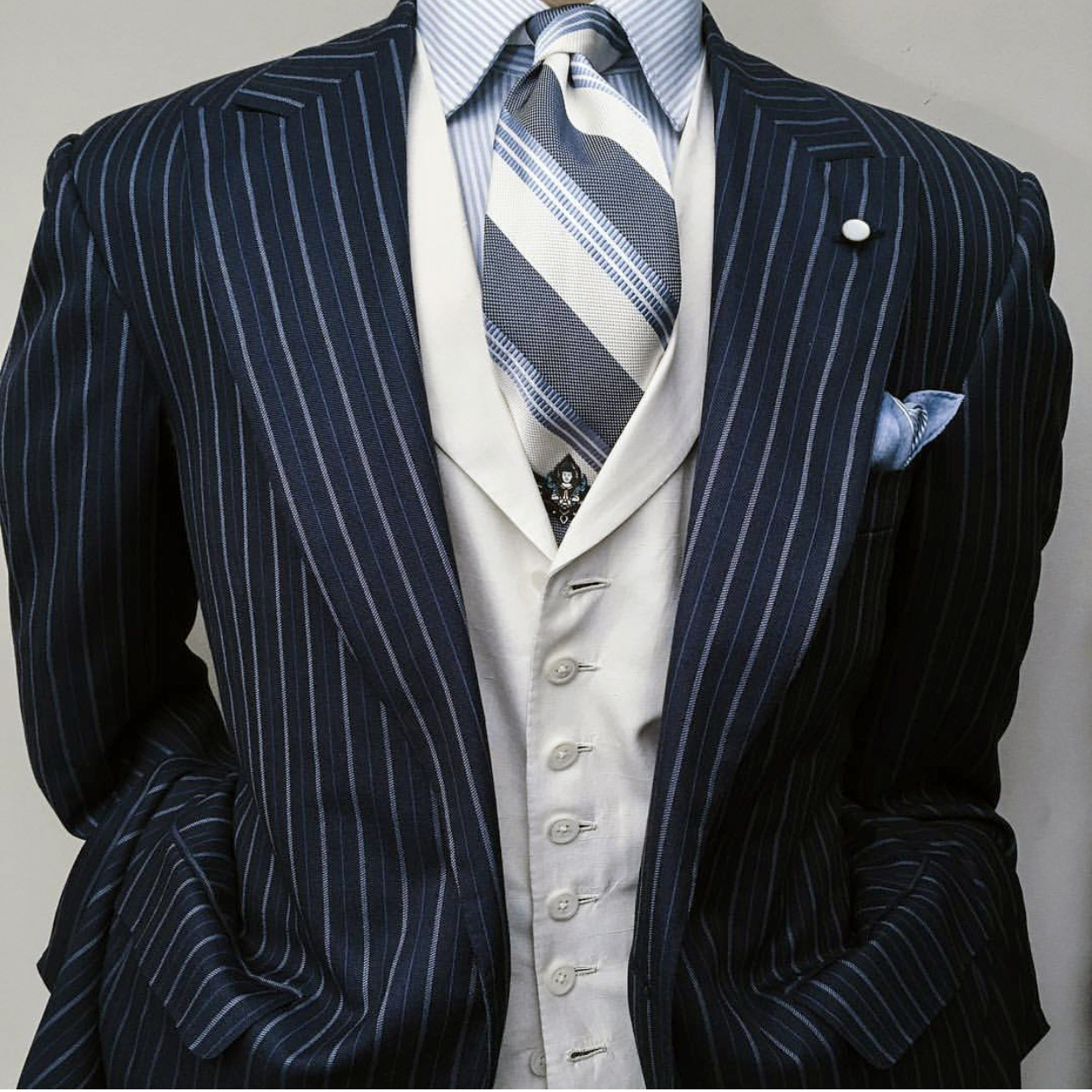
The most distinguishing feature of our service is the individual lifestyle approach to wardrobe development. Within our presentation, The Nine Categories of Dress for Accomplished Men, are over one hundred seasonal boards, each with a swatch presentation of complete ensembles. This allows me to study a man’s tastes and inclinations in order to nurture him through the wardrobe development process. Dress for men, be it for professional or personal use, has seldom been more confusing. Corporate America has shaken the very foundation of conventional business attire through the movement to casualization. Few men seem to understand the new rules; fewer still have the time to research the best options. I have spent my entire career in luxury apparel. Through interviewing my clients about their wardrobe needs, I have seen a pattern emerge. The lifestyle of the accomplished man demands that he have separate clothes for business, for high profile social occasions, and for formal events. Our goal is to design a modern wardrobe that fulfills all of a man’s lifestyle needs: designs developed exclusively for him in models created to flatter his physique.
Inspiration
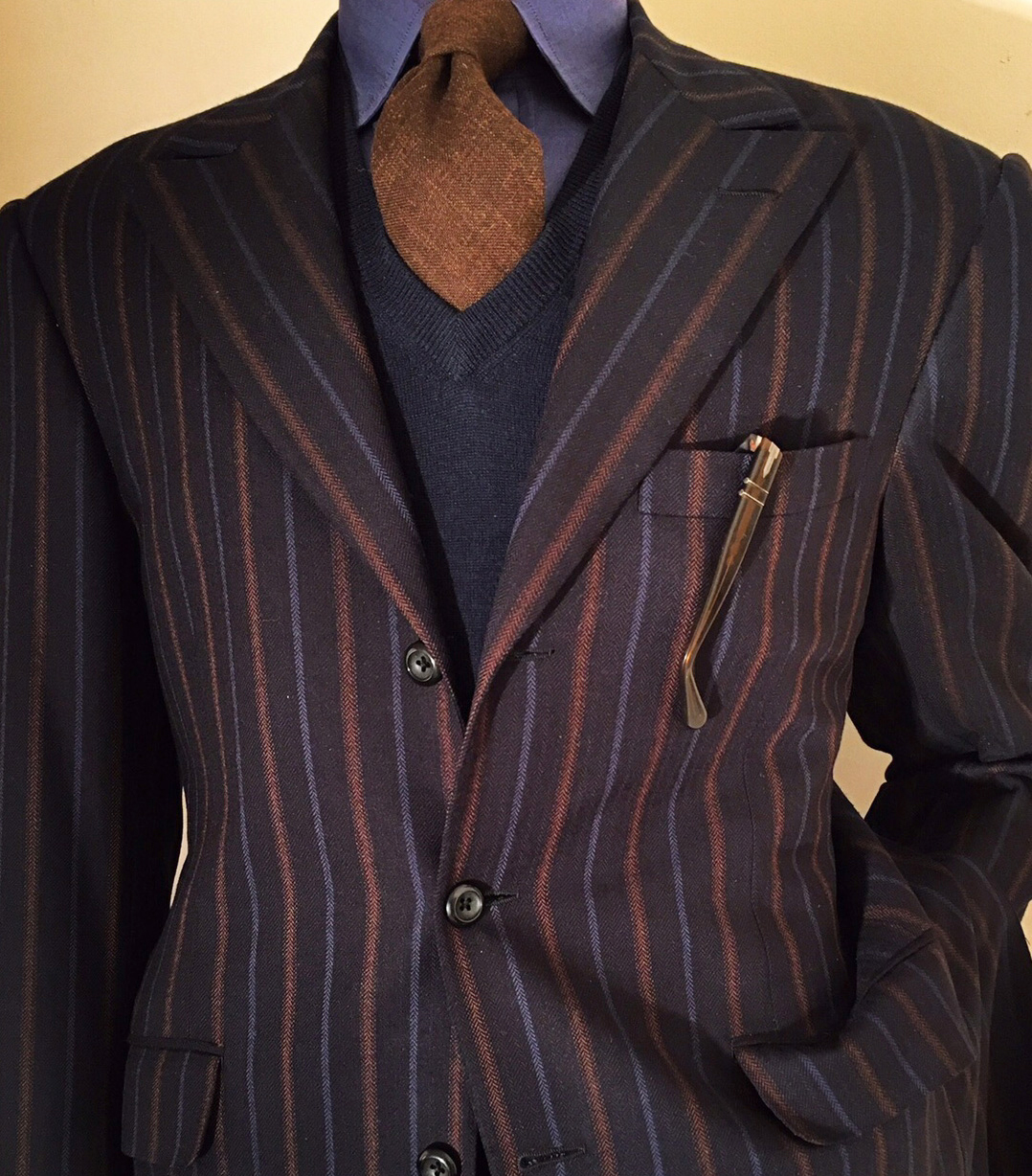
I am informed by art and inspired by the elegance of the Golden Age of Hollywood. I am also challenged by the lifestyle needs of our clients. After our inclusion in a feature on the world’s top custom brands in Departures magazine, the first five men to contact us offered the same personal insights: “I am in my late fifties and my wife is twenty years my junior. I want to change my look, but I do not want to look foolish.”
Style
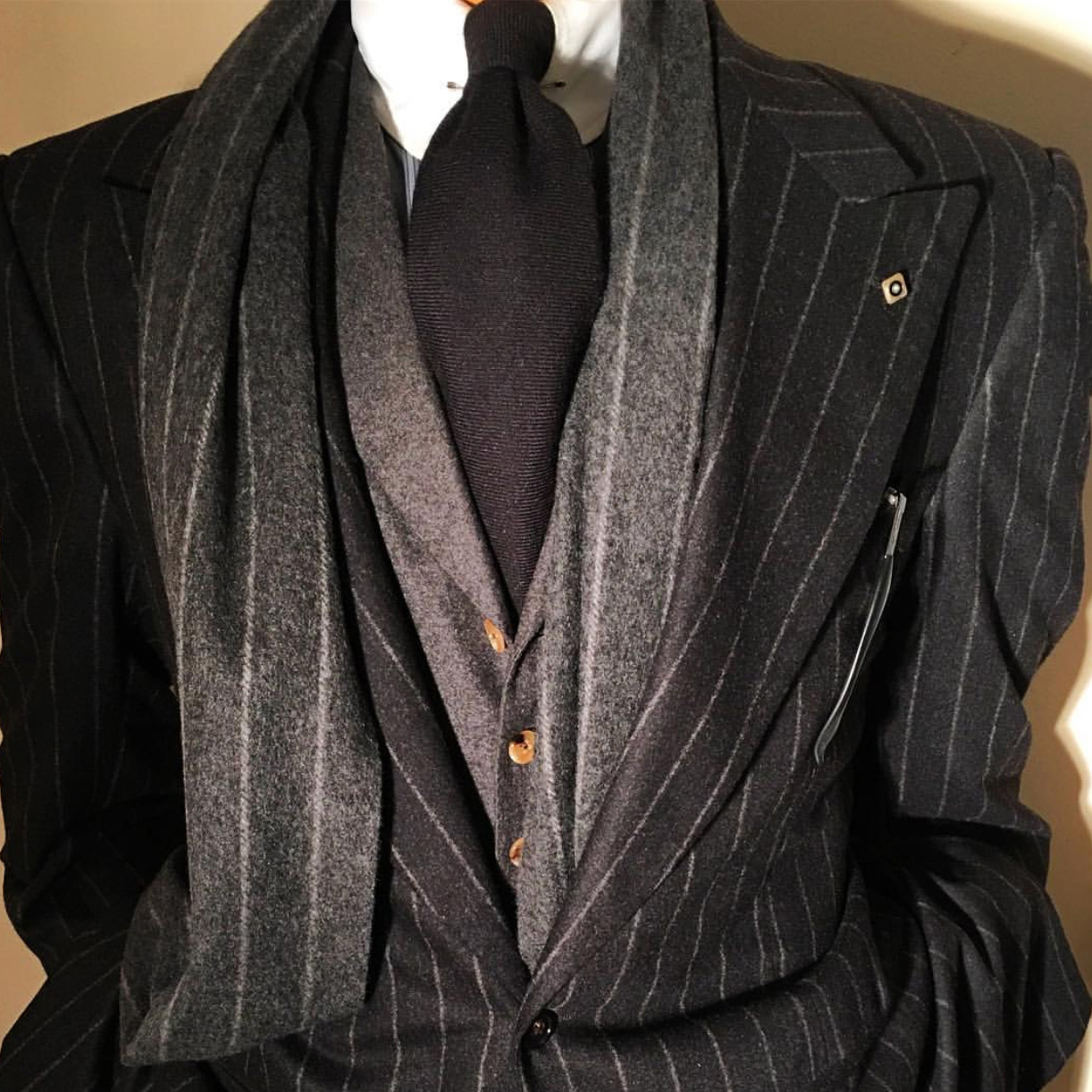
Style, to me, is the outward expression of one’s creative intellect. As my friend Bruce Boyer has written, “Real style is never right or wrong. It’s a matter of being yourself on purpose.”
Design
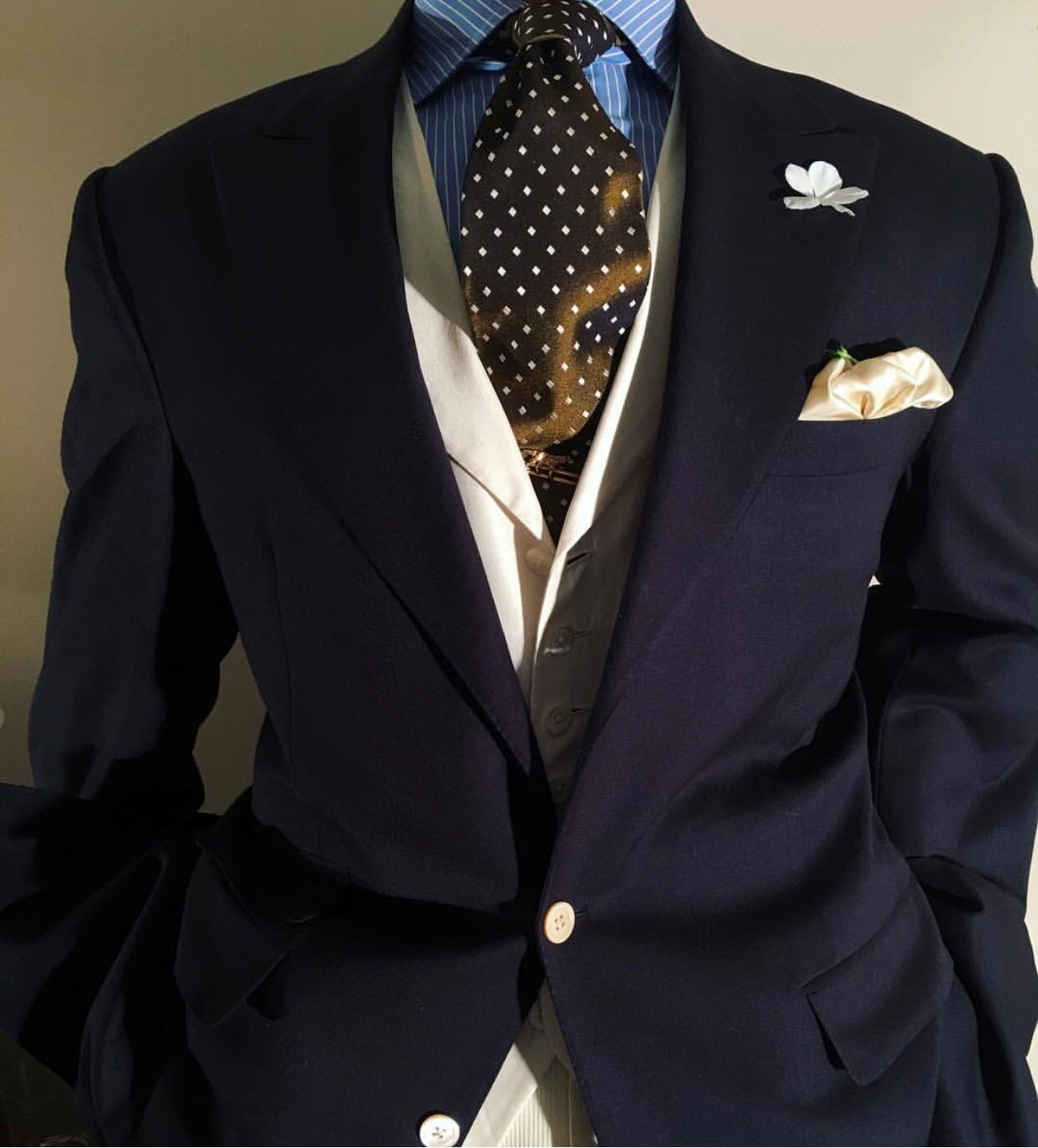
The design process starts with color. In advance of each season, I develop concept boards with twenty key shades, as well as thirty additional colors to be used in complement. This palette is consistent throughout all categories and ensures continuity in overall presentation. If a man selects two ensembles, the shirts and ties will be interchangeable.
The most expressive aspect of the men’s field is neckwear, and I turn to mill archives in England and Italy for pattern design inspiration, adjusting for scale and color pairings. That said, in menswear it is fabric that determines direction. I have long felt that the clothing must honor the cloth; this, without question, is the most pivotal aspect of design for the individual, as it instructs me on the nuances of cut, the elements of drape, and the line of shoulder for each of our clients.

Category Designers, Interviews
Frank Lloyd Wright’s wisdom
0July 31, 2018 by Ville Raivio
“Give me the luxuries of life, and I will willingly do without the necessities.”
— Frank Lloyd Wright
Category Quotations
Many men actually don’t know what to wear
0July 26, 2018 by Ville Raivio
”It used to be rather simple and time-saving: a man would get up in the morning, put on his business uniform – dark suit, white shirt and tie, black cap toes – and go to work. If he wanted to incorporate a few personal touches, like a natty pocket square or somewhat intricate wristwatch, fine. But he didn’t need to spend a great deal of time worrying whether or not his mock turtleneck was appropriate with his canvas gamekeepers jacket, or whether he should wear his leather blousson with the pastel gabs or the jewel-tone, narrow-wale cords, or what sort of footwear would be appropriate with the peacock blue stretch denims. Today, with all the high-tech innovations and information at our fingertips, it would seem that many men actually don’t know what to wear. I mean, they can’t dress themselves because they no longer know what’s appropriate for virtually any occasion except weight-training.”
– G. Bruce Boyer
Category Quotations
Copyright © 2013 Ville Raivio