Mastery – Handmade Leather Goods
2February 14, 2019 by Ville Raivio
Mastery is a leather brand based out in Japan and specialised in saddle-stitched leather goods. A one-man operation, it is helmed by a Mr Kage, a self-taught artisan. He began his studies in leather crafting from online manuals in 2004, before this time he had a passion for collecting raw denim. As for leather as a material, he tells me “Personally, I like stuff that looks better with age, meaning the aging process of the leather which will form a patina after repeated use. This process usually tells a unique story of the owner, just like a pair of raw denim.”
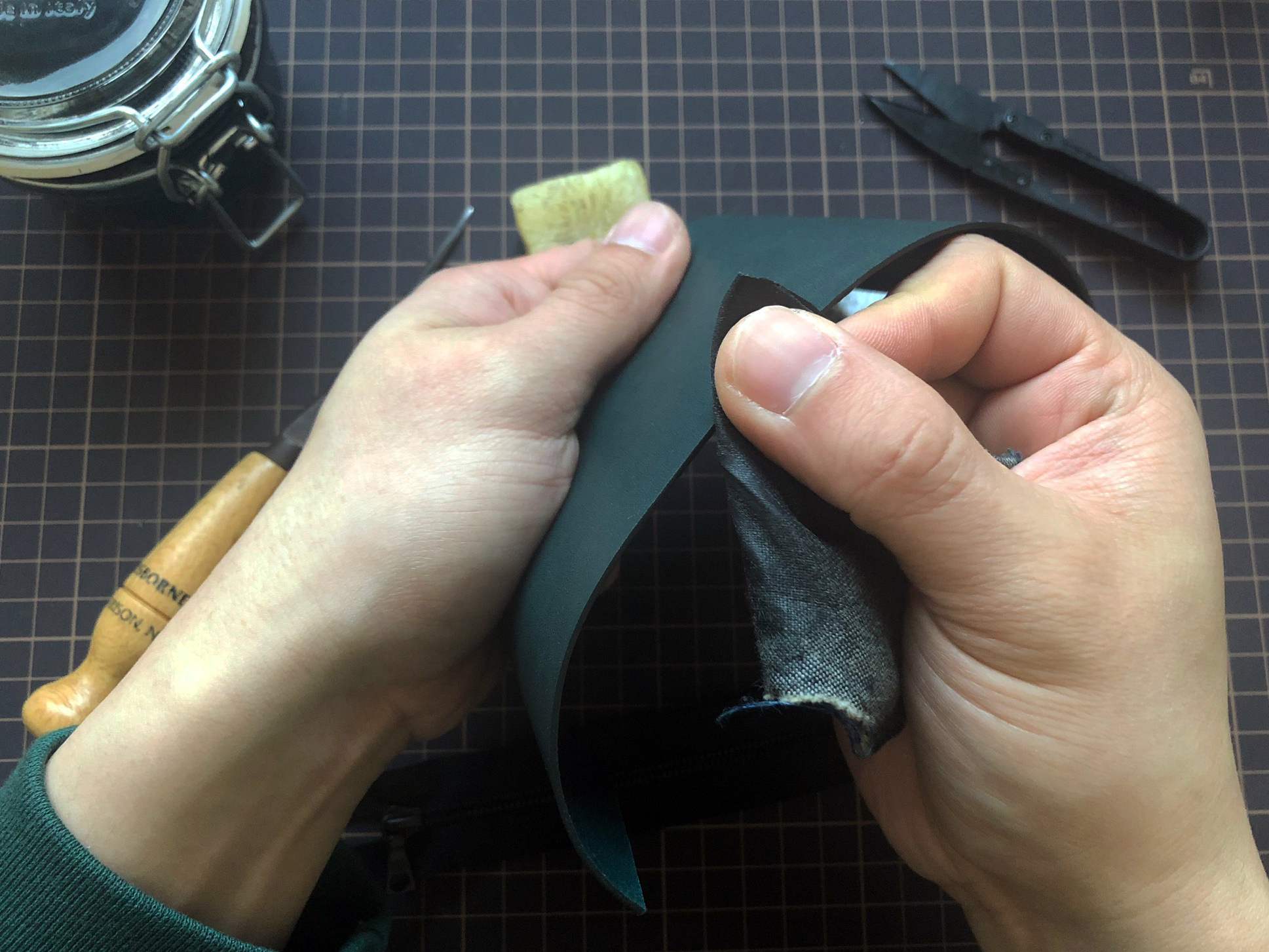
“I only use vegetable-tanned leather, not chrome-tanned, because of the ingredient and the aesthetic (chrome leather tends to appear more plasticky). I don’t use exotic leathers because of the way the animals are treated.” The current range has dozens of wallet models, some 18 bags, keychains, cases for cards and coins, and colourful special makeups.
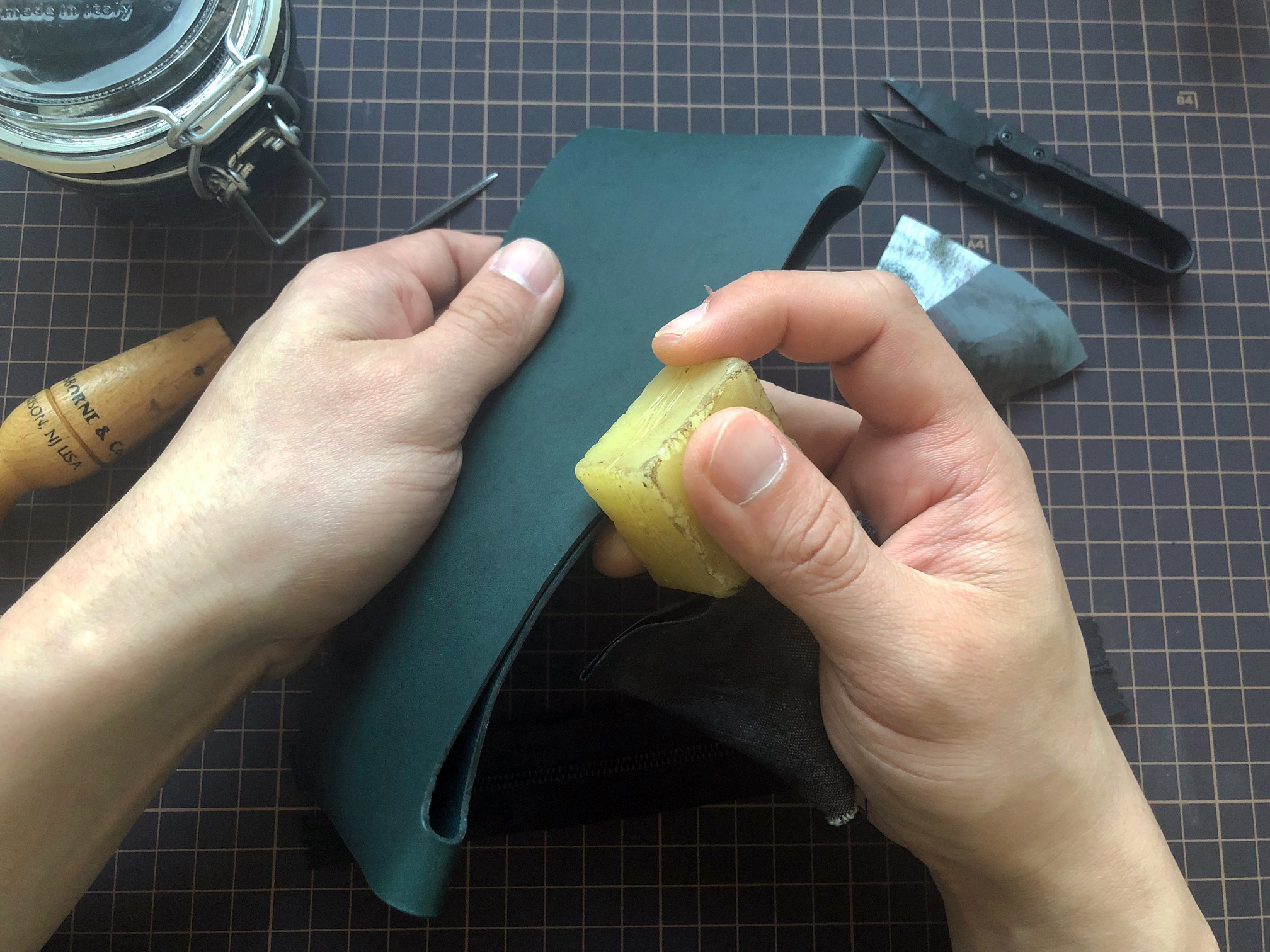
Mastery favours Italian Vacchetta leather, known for its tendency to develop a rich patina with time and wear. The vegetable-tanned hides react to sunlight and moisture, so they’re favoured my bag and case makers. Small scratches become darker with time and part of the unique look. For threads, the company has chosen the French firm of Fil au Chinois for the durability that linen offers. Zippers are made by the famed Swiss company of RiRi for durability. All these are imported to Japan and finished pieces shipped all over the world.

For inspiration, Kage shares the following: “Inspiration for me usually begins with the leather I touch and feel. I want to use that leather in a particular way to showcase its best characteristics, be it the look itself, the color, softness, or the thickness. My designs are mostly classic but contemporary, they reference the ways people carried their stuff around in the old days, and now. Since my products are all handmade and hand-stitched, I will factor in how to make the design more unique, rather than designing mass market factory-made products. Design and craftsmanship are both equally important to me as Mastery’s work is not replication of designs but all handcrafted.”
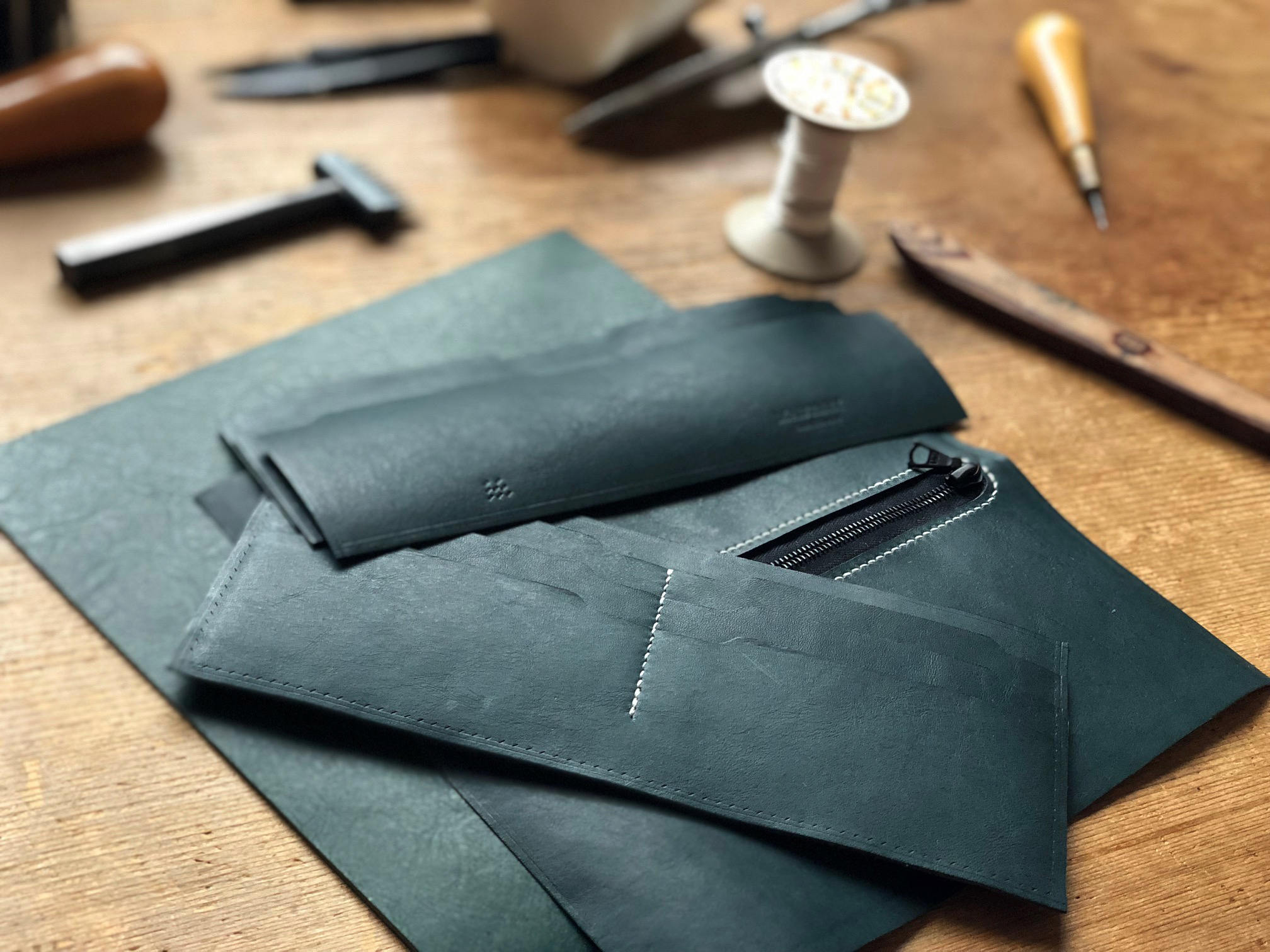
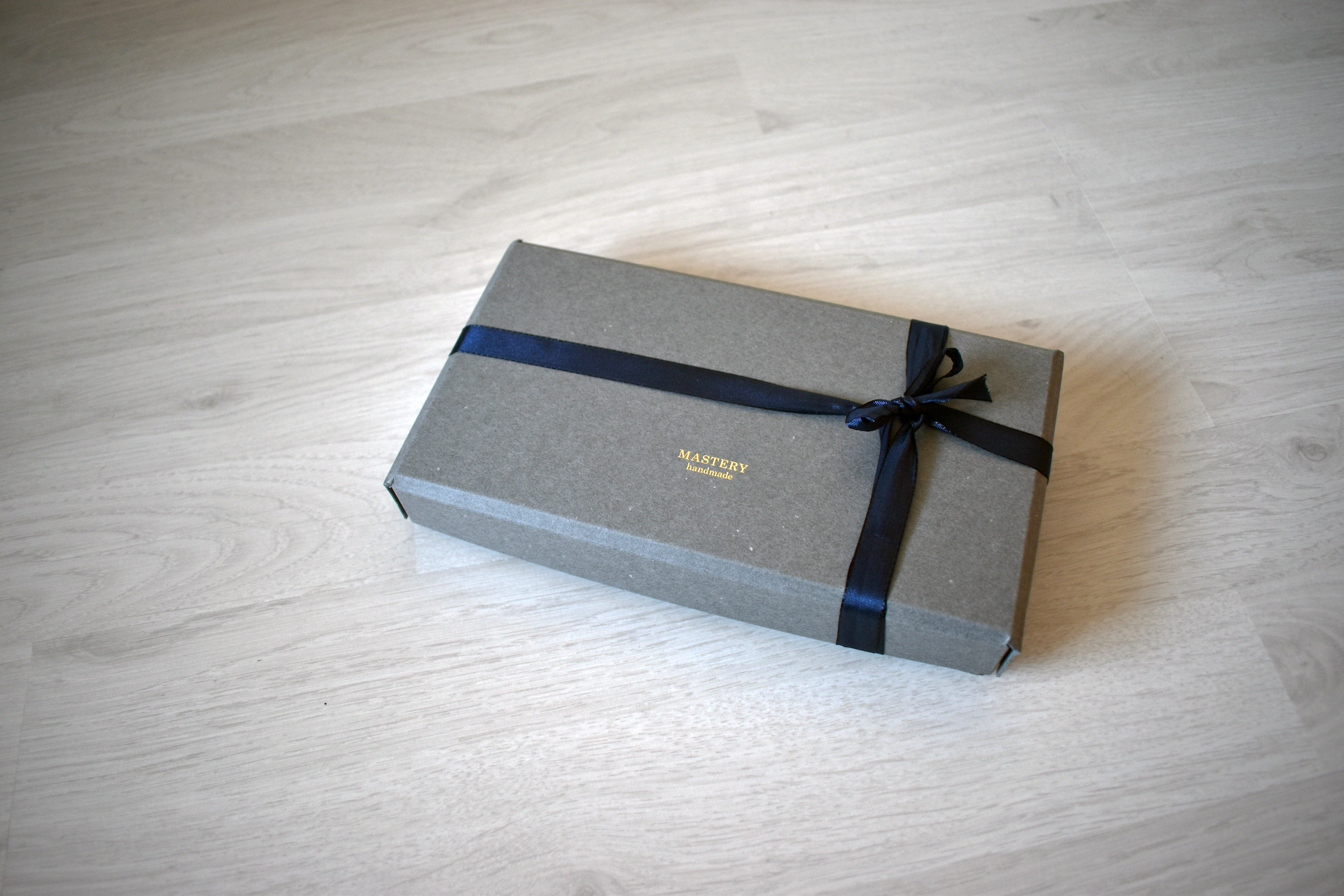
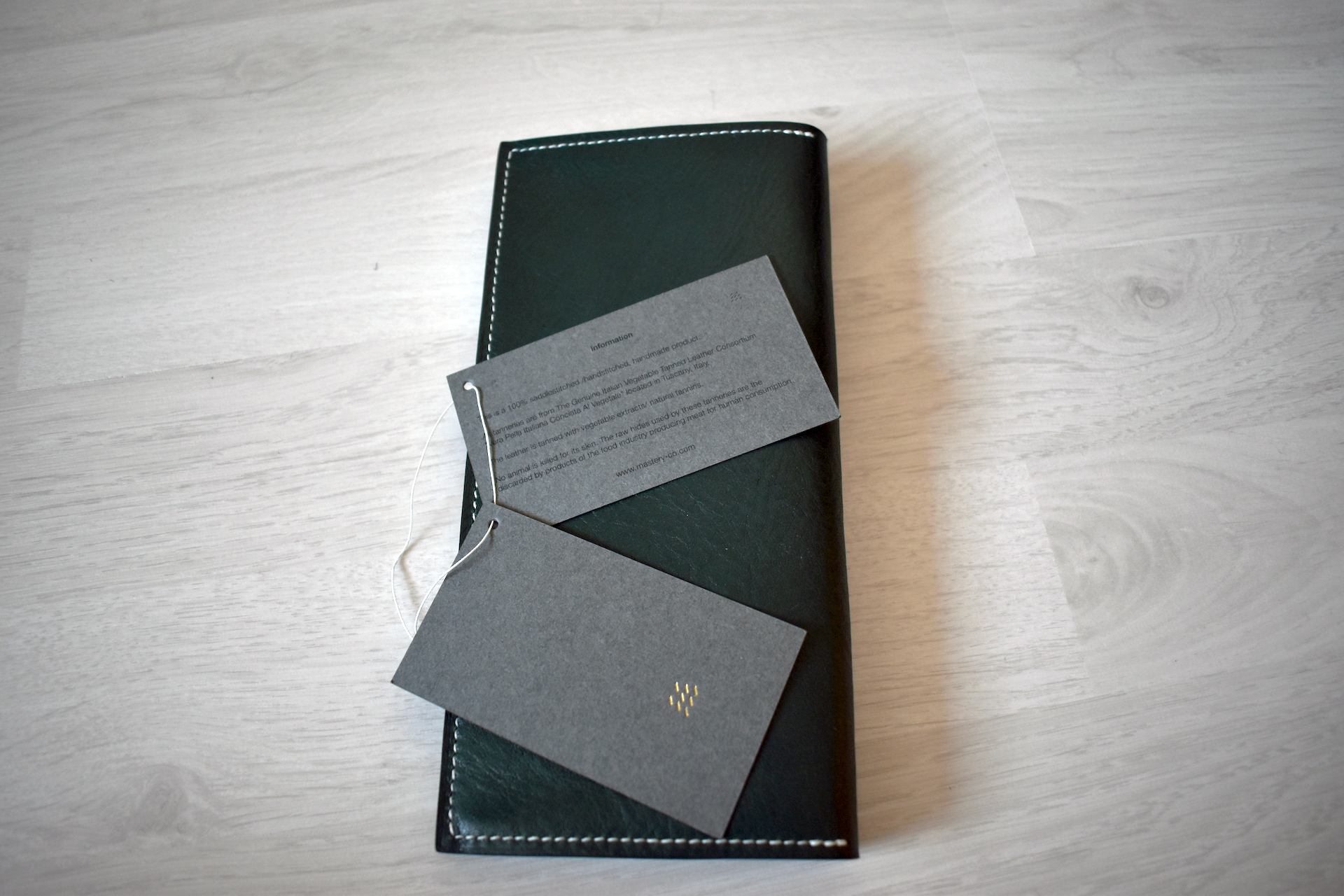
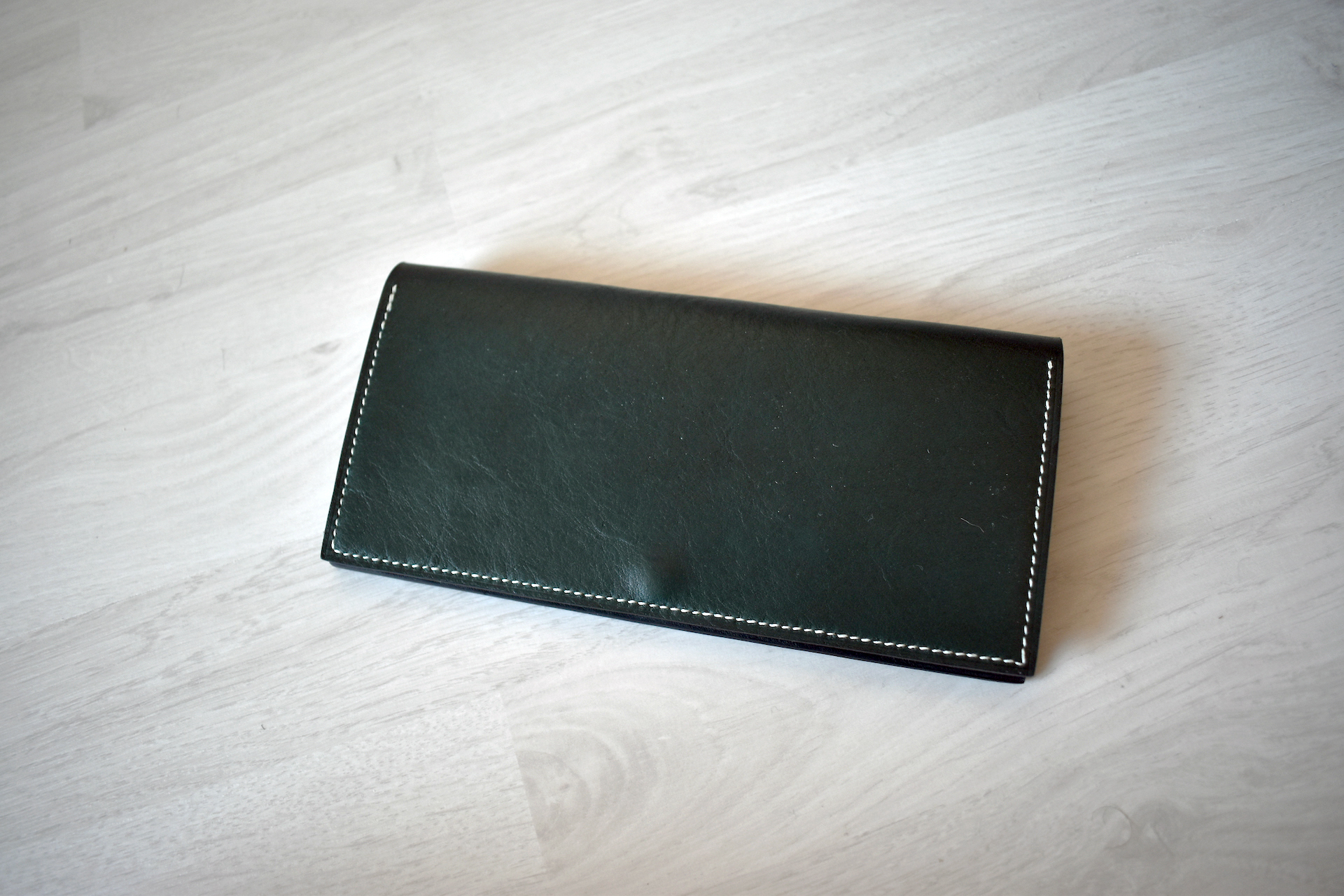
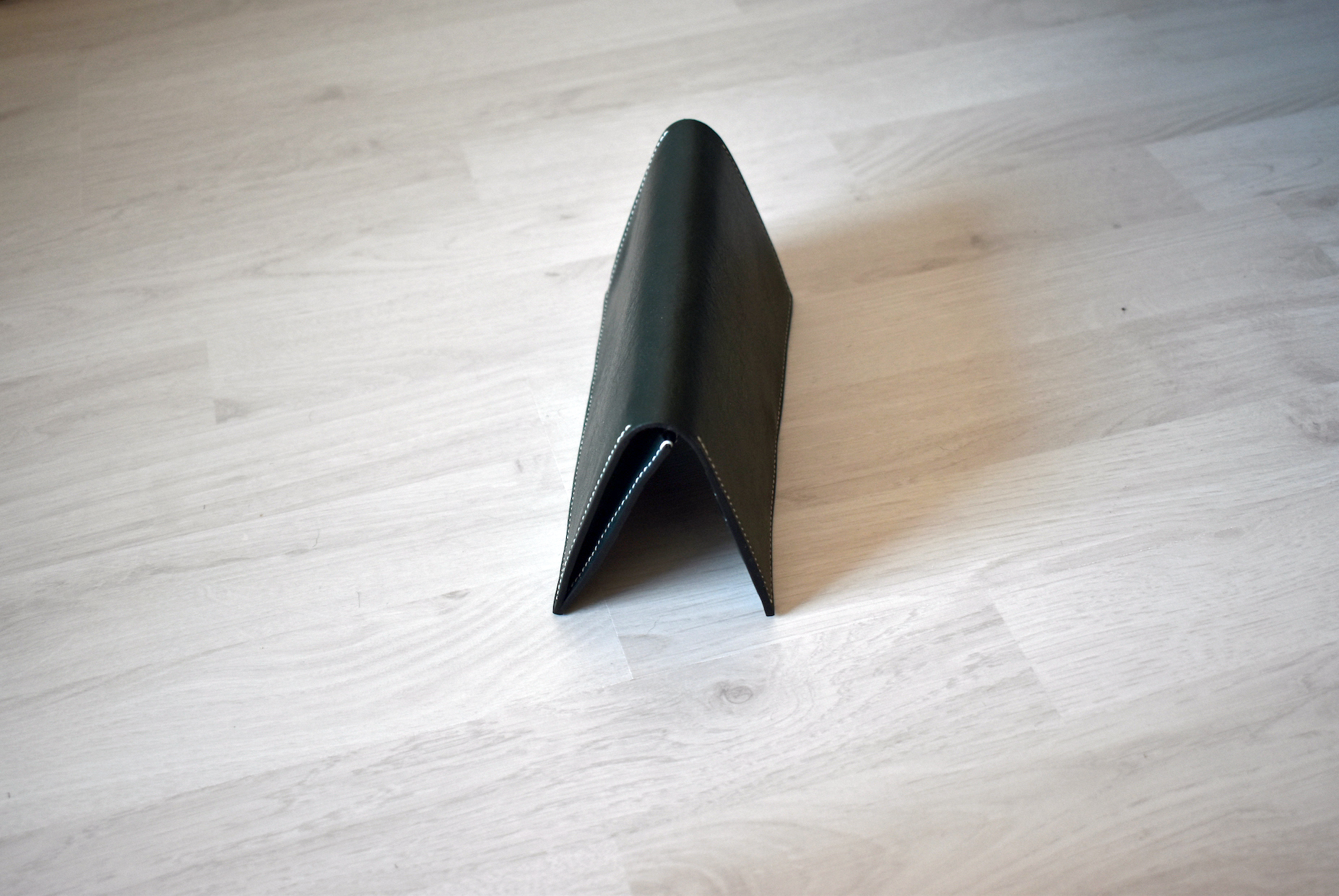
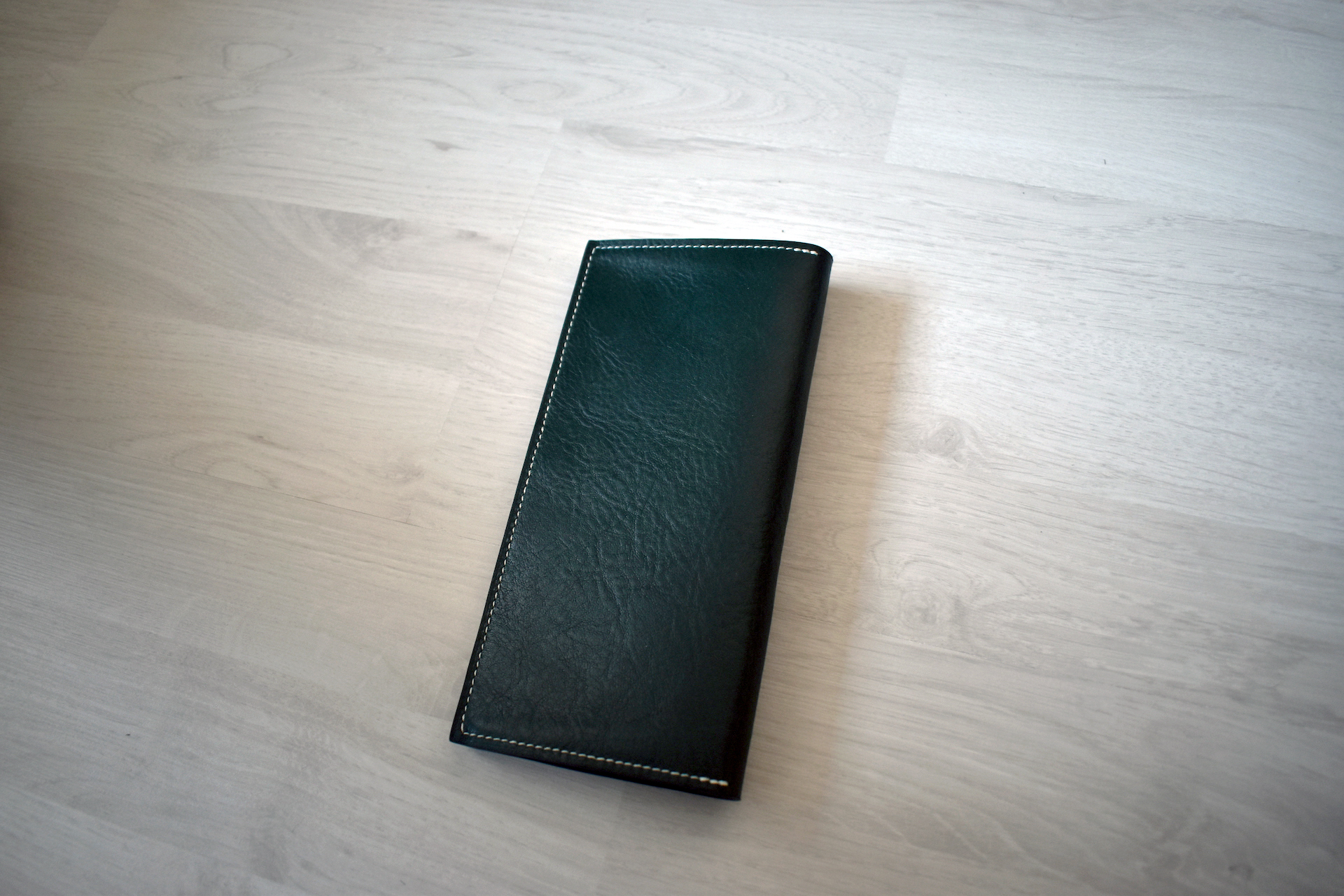
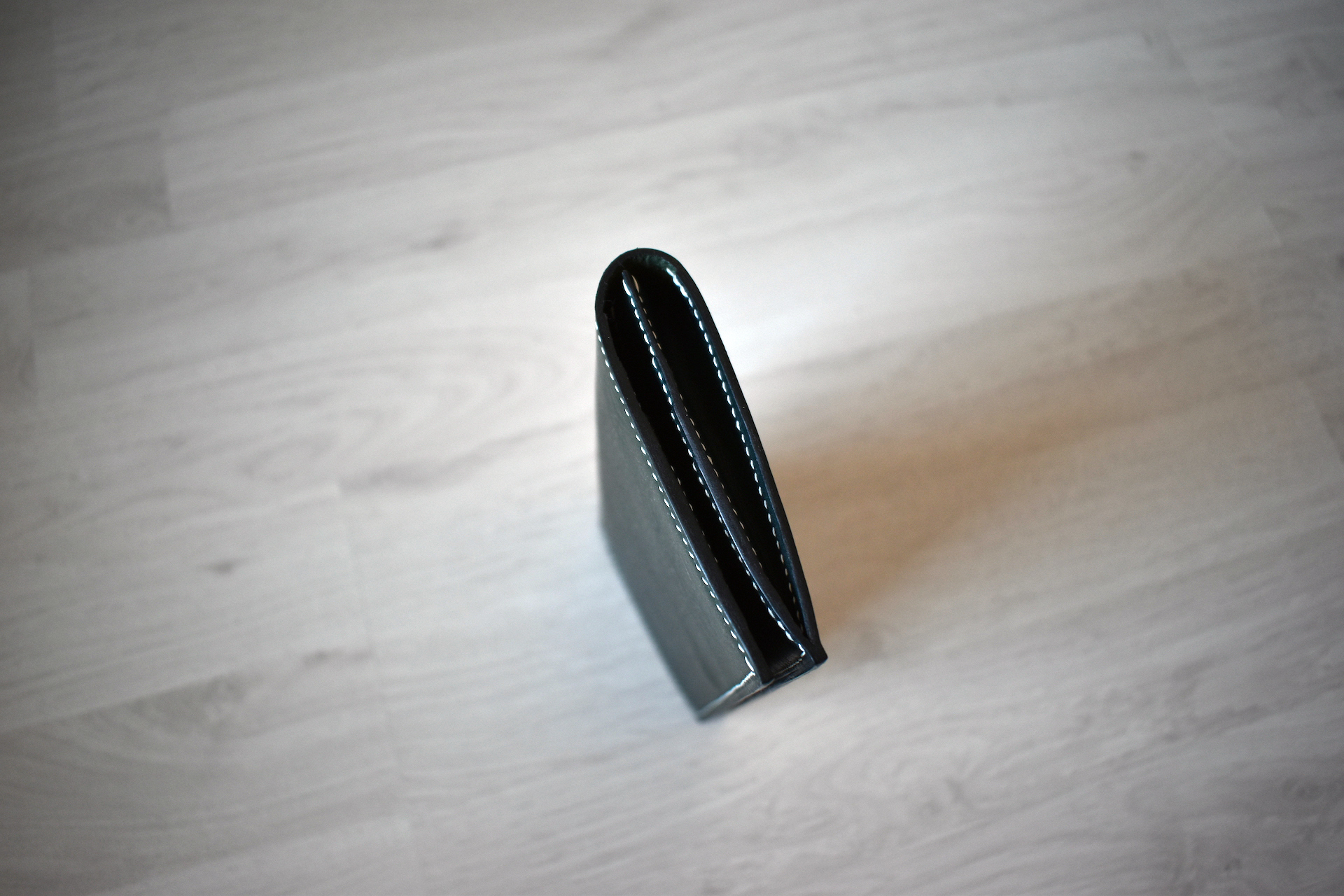
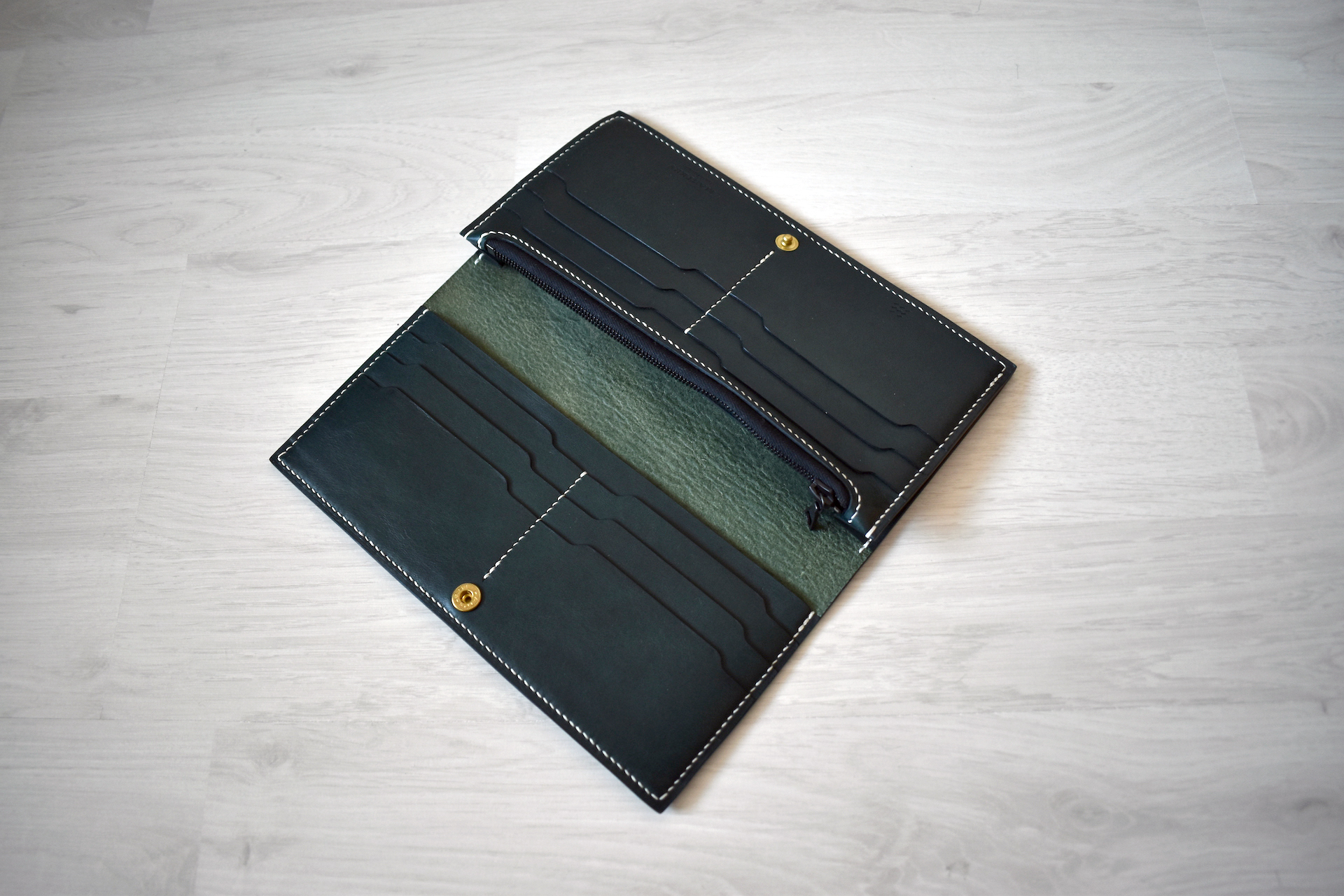
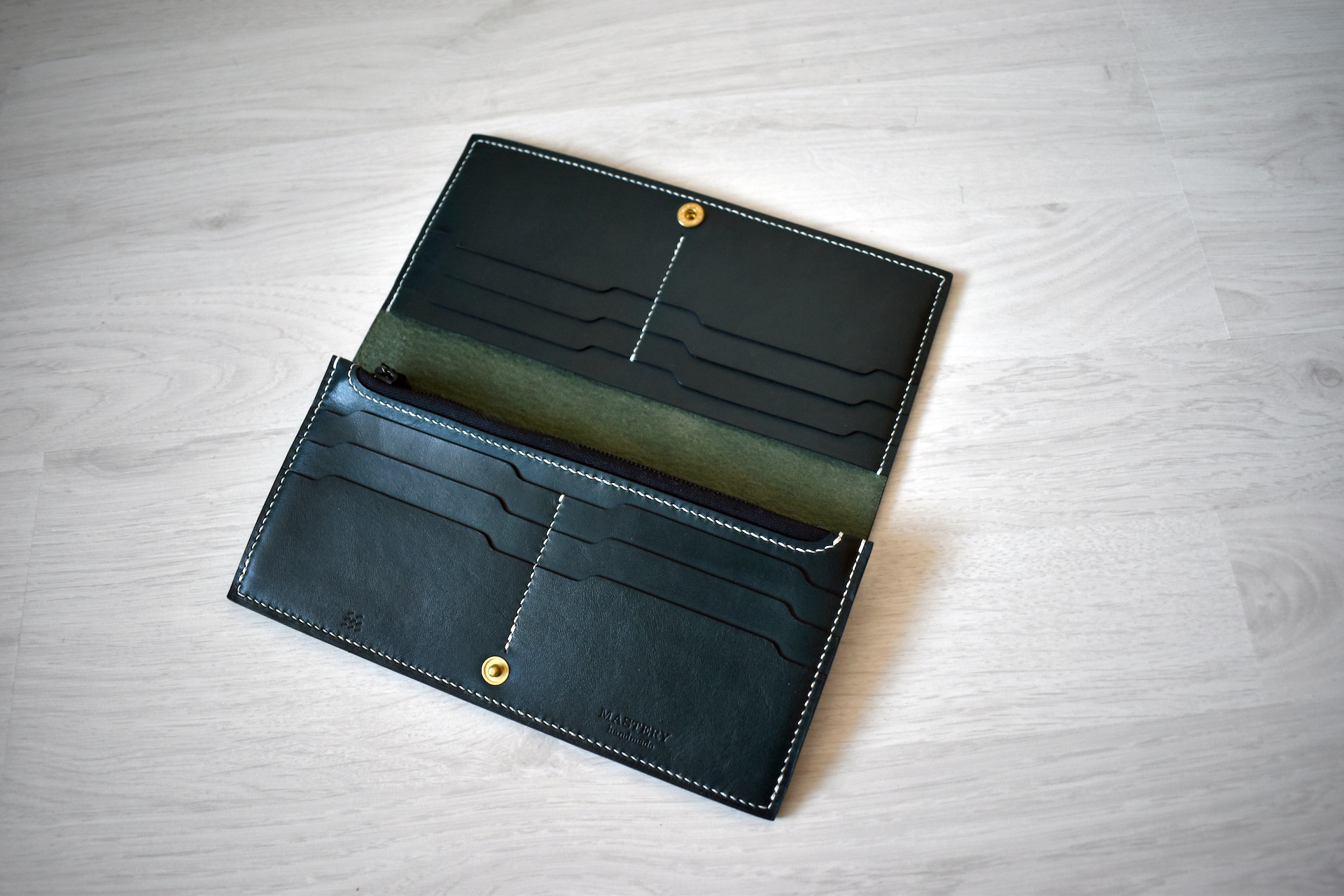
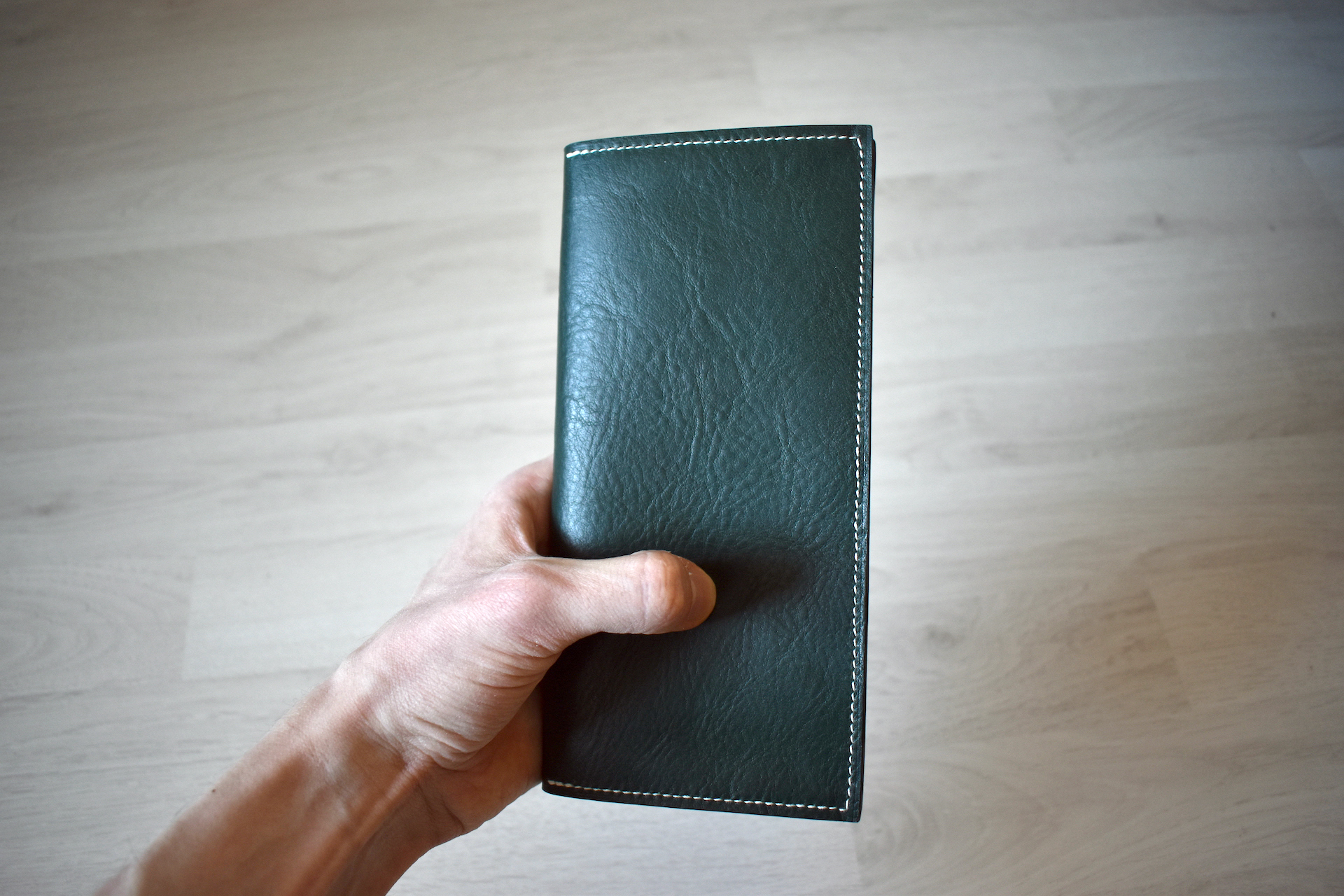
As an example piece of Mastery’s work, above and below are shots of the Long Wallet model in moss green Vacchetta leather which the maker sent for Keikari’s perusal. As each piece by Mastery is made to order, for my model the logo and label are placed inside the wallet instead. The saddle-stitches are straight and tidy, sewn with white linen thread for contrast with the somewhat dark green leather. The wallet closes with one brass popper and the credit card slots have very precise measurements. Thus, they feel stiff at first before loosening with wear. The edges are burnished and dyed black, and the model features a small coin pocket. With all cards added, the design remains slim though longer than most. There is room enough for much and more. All is clean and precise, as usual with Japanese craftswork.
Category Accessories, Leatherworkers, Quality makers, Web stores
An Interview with Paul Farrant
2January 30, 2019 by Ville Raivio
VR: Your age and occupation ?
PF: 56, Property Manager.
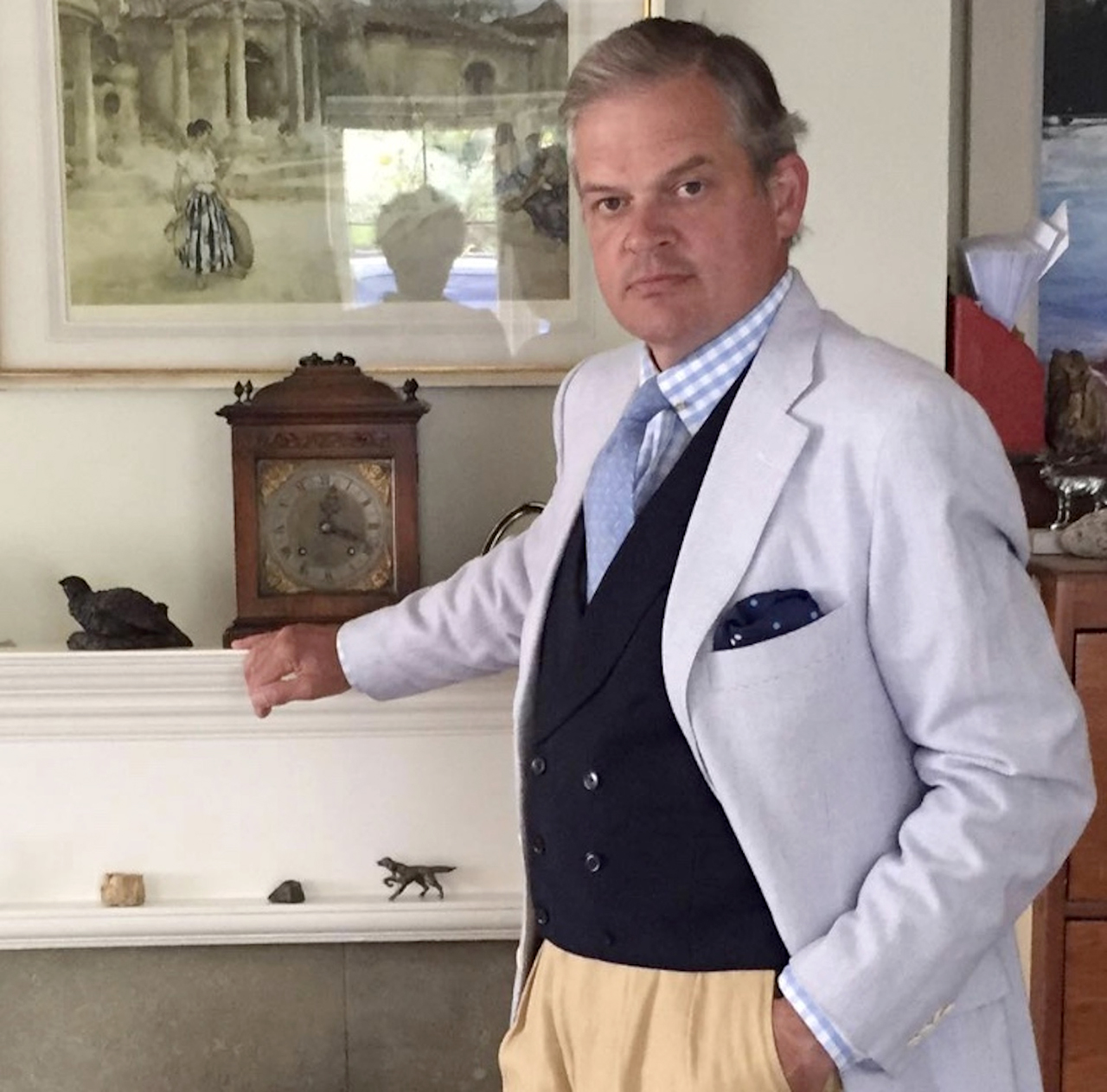
Summer gear
VR: Your educational background?
PF: I attended St. Chris in Letchworth, Hertfordshire. A forward-thinking, co-educational, vegetarian boarding school. After a short spell working for my grandfather’s engineering company I was fortunate enough to be offered a position, aged 20, at the Dorchester Hotel in London.
VR: Have you any children or spouse (and how do they relate to your style enthusiasm)?
PF: Yes, I am married to Jackie and we have two teenage children. Olivia & George. I think it would be fair to comment that they tolerate my vintage clothing obsession. There are advantages as the 3 of them have all benefited from some special pieces. As I am in contact with a lot of the dealers I come across women’s items as well as men’s. Jackie has some vintage Huntsman, Henry Poole, Dege and Skinner and numerous furs.
Recently I was walking along Jermyn Street with Olivia & George. I had a Gelot fedora on. George a beanie hat. Someone stopped us and advised George that he should take some style advice from his father. As can be imagined, George has not taken up the advice of the passerby.
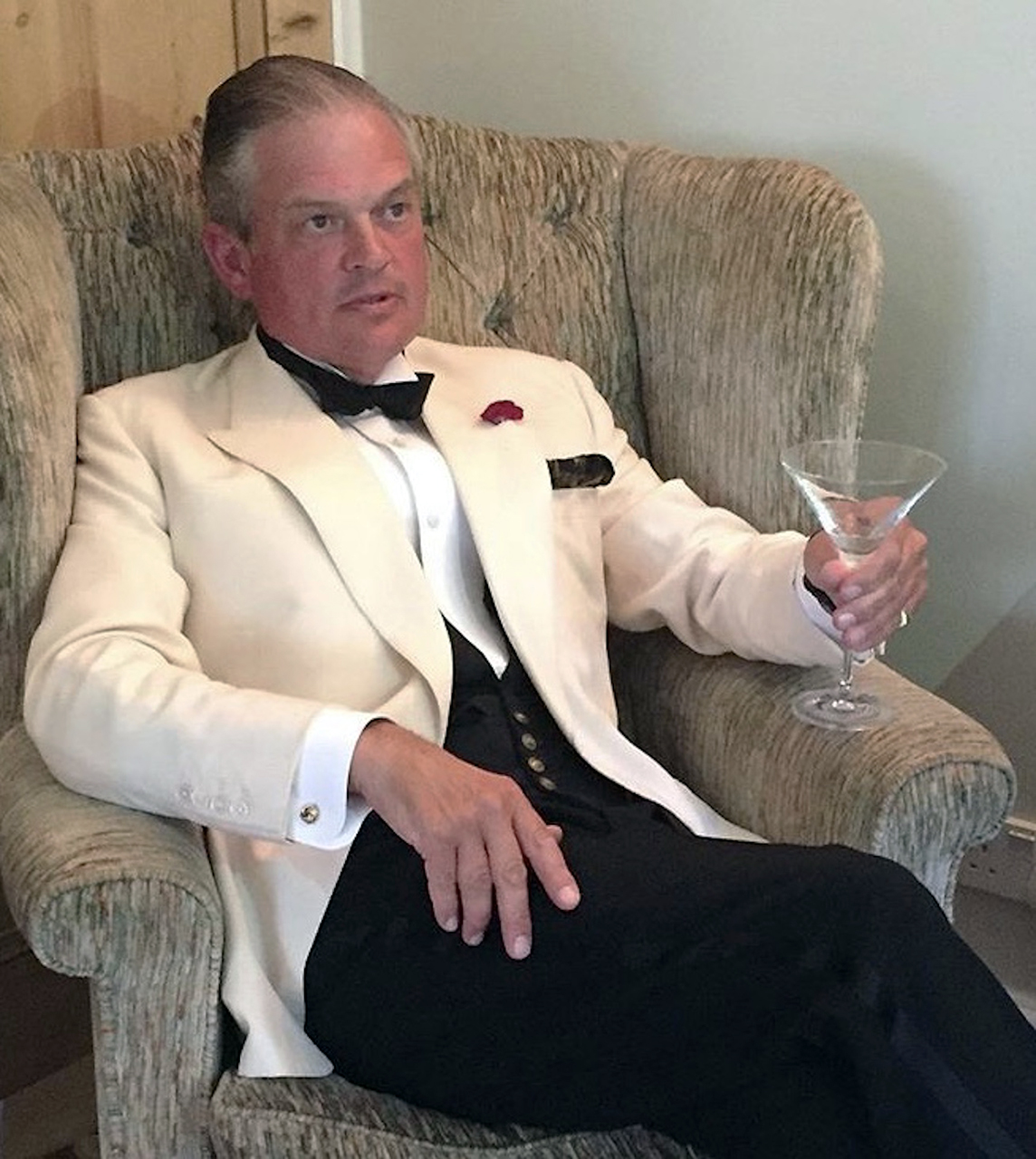
A summer party look
VR: …and your parents and siblings’ reactions back when you were younger?
I owe a lot to my mother. She has to take credit for being such a fine role model. Now in her 70s, she is still most elegant. My grandfather spent a lot of attention on his clothes too. His tailor was Airey & Wheeler in Piccadilly.
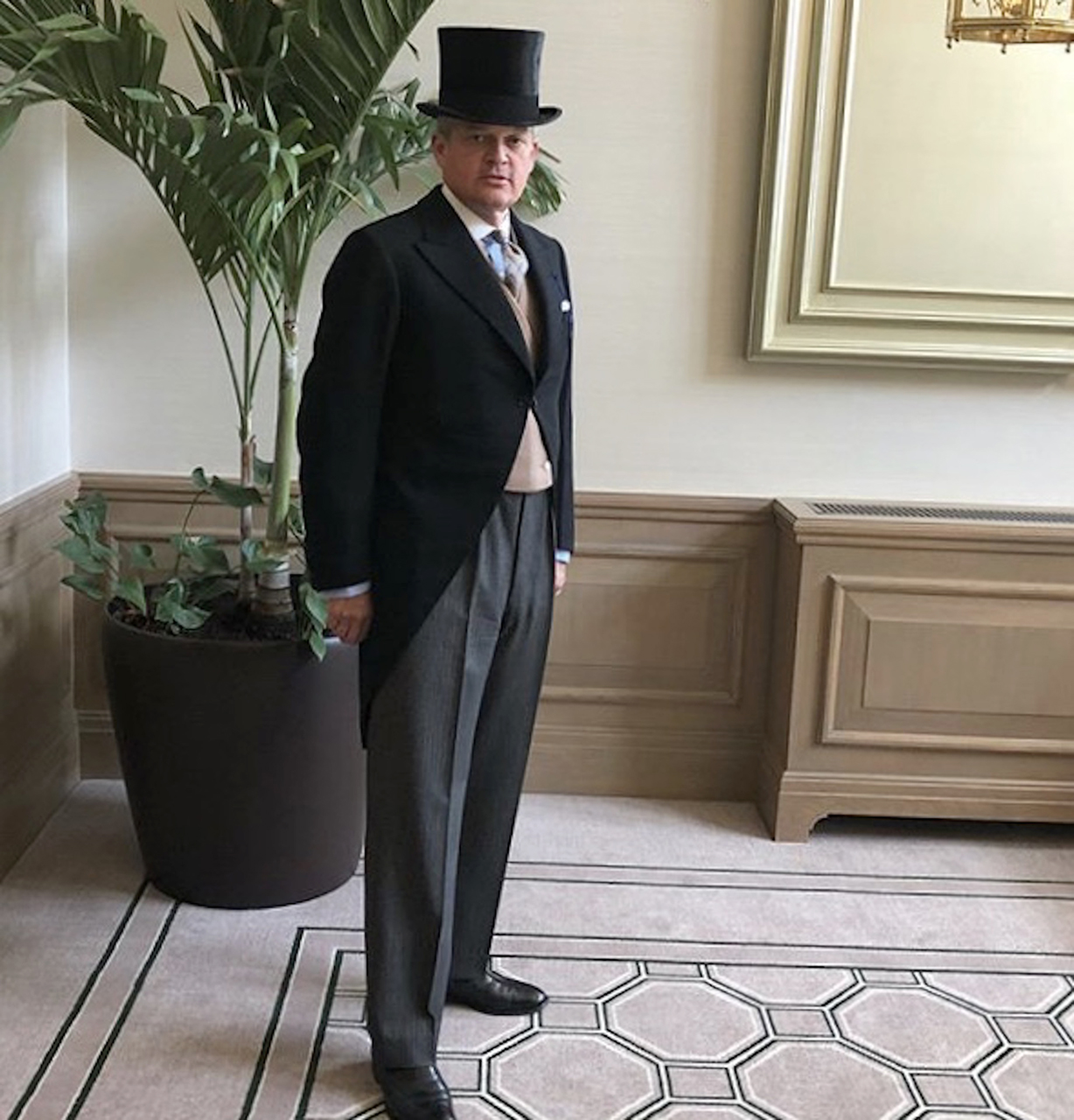
A 1938 Huntsman morning suit, Lock silk topper
VR: What other hobbies or passions do you have besides apparel?
PF: I enjoy fishing with George. I manage to include some vintage equipment especially when fly fishing. Sometimes using vintage is a big disadvantage, though. Last year I snapped a rod and lines, as lures and nets weaken over time.
My love of good food and fine dining has led to my collection of vintage menus. Although I have stopped adding to this. They are starting to be included on one of three of my Instagram accounts, vintage_menus.
I am very pedantic about quality of ingredients and presentation. After my early years at the Dorchester I worked for the Royal Household. My position here was involved with food supplies, presentation, menus and seating planning.
My other Instagram account is vintage_clothing_labels. On this account I post interesting labels of vintage pieces of mine and others, such as Hornets and Hogspear.
I used to horse ride a lot, but don’t get the opportunity so much now. I have kept my riding ‘kit’.1957 Lobb’s boots and 1947 Huntsman riding breeches. I recently sold my hunting pink swallow tails made by French C1900 of Kilgour, French & Stanbury to an American collector.
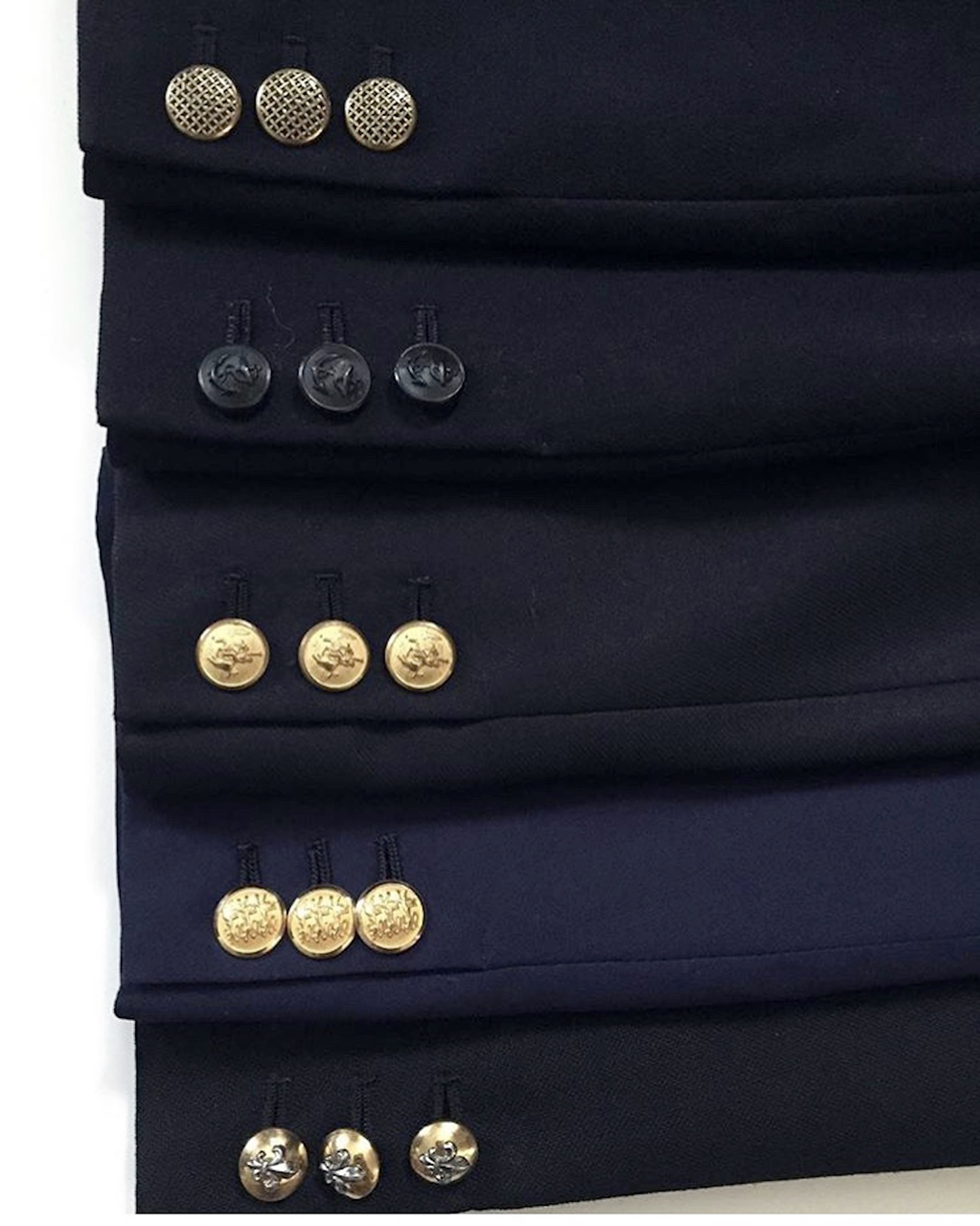
City blazers
VR: How did you first become interested in style, and when did you first turn your eyes to the classics?
PF: I have enjoyed a more formal and classic style from as early as around 10 years old. My mother reminded me, over the recent Christmas holiday, how she bought me a Harry Hall tweed hacking jacket when I was 11. Apparently I wouldn’t take it off and paraded around like a peacock.
My first job at the Dorchester Hotel continued with the formal dress theme. In the front office, in those days, we wore full morning dress during the day. This was with starched detachable collars too. During the evenings we changed into black tie.
During my time at Buckingham Palace we wore morning dress for the day and white tie in the evening during State visits.
I have always preferred a more structured cut, such as Huntsman. While I can see the benefits of a more softer cut, giving ease of movement, such as Anderson & Sheppard, they don’t suit my shape as well.
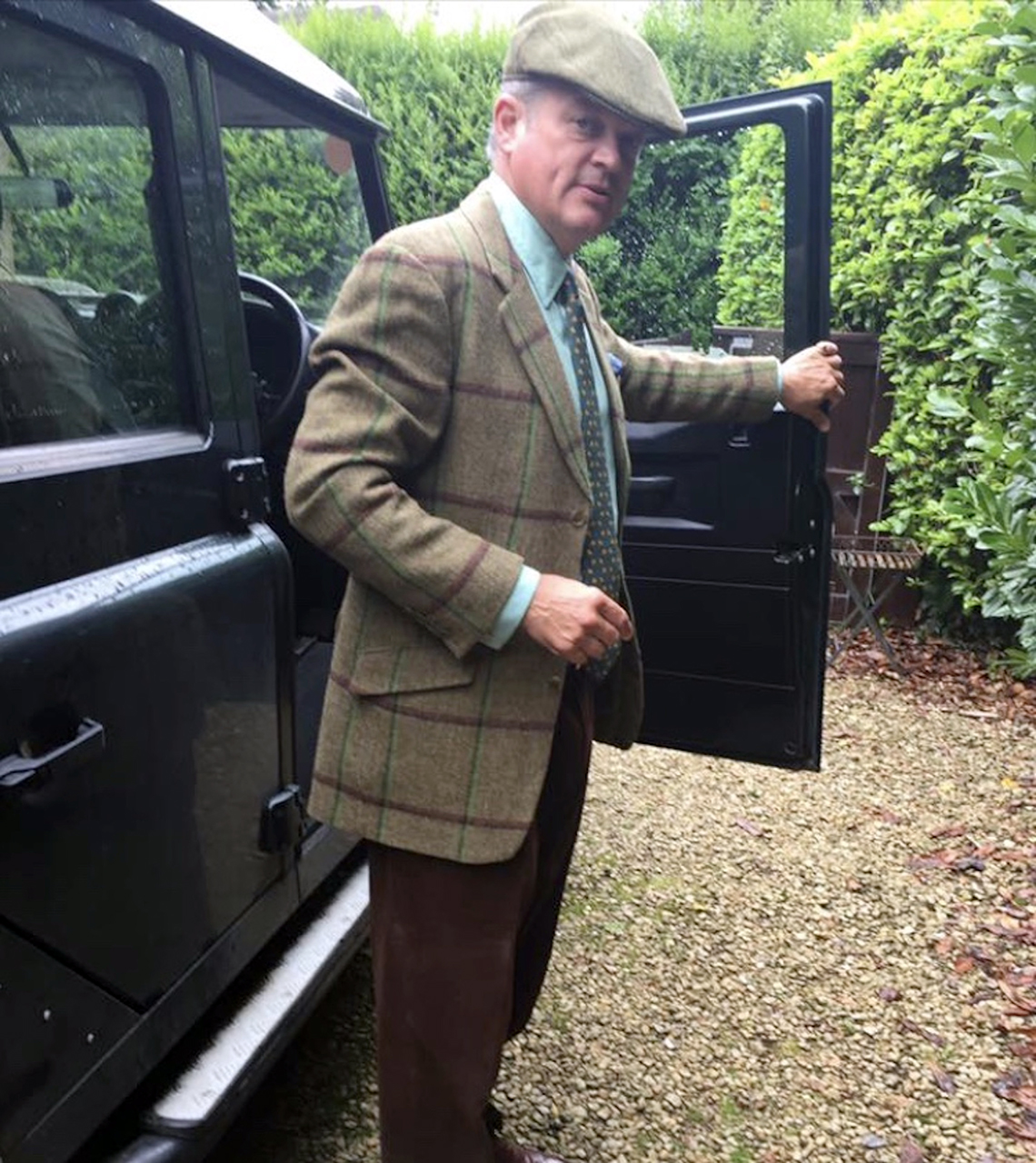
A country look
VR: How have you gathered your knowledge of the vintage look — from books, talks with salesmen or somewhere else?
PF: I suppose the largest influence during my earlier years was regularly trawling through charity shops. 30 plus years ago, before access to the Internet, one could pick up some treasures at very reasonable prices. This has very much changed. The quality pieces do not come through and prices are higher. Though there are still bargains to be found. It’s just harder and more time consuming. My ‘strike rate’ is rapidly decreasing over the years.
On the plus side we now have eBay. I check this every day. John Morgan of Hogspear has to be a favourite. He still manages to locate some goodies from private house sales.
My friends at Hornets in Kensington are valuable for an opinion. Bill Wilde has a wealth of knowledge and we frequently chat over a glass or two in the local pub.
During my working life I have been fortunate enough to work with two royal valets. Sydney Johnson was valet to the Duke of Windsor. I knew Sydney from my Dorchester days when he was then valet to the Sultan of Brunei. During my time travelling with the Court I met Michael Fawcett. Then valet to the Prince of Wales. Michael would give me lessons on various aspects of maintaining a wardrobe and dress style. At Sandringham, one Christmas, we painstakingly went through all the various ways of presenting a pochette in the top pocket of a coat. Note coat, not jacket. Potatoes have jackets!
And of course Billy Tallon was often present at our gatherings. Backstairs Billy as he was known. Page to HM the Queen Mother. A most diverting character.
VR: How would you describe your personal style?
PF: I am neither a follower of past fashion or future fashion. Just somewhere in between.
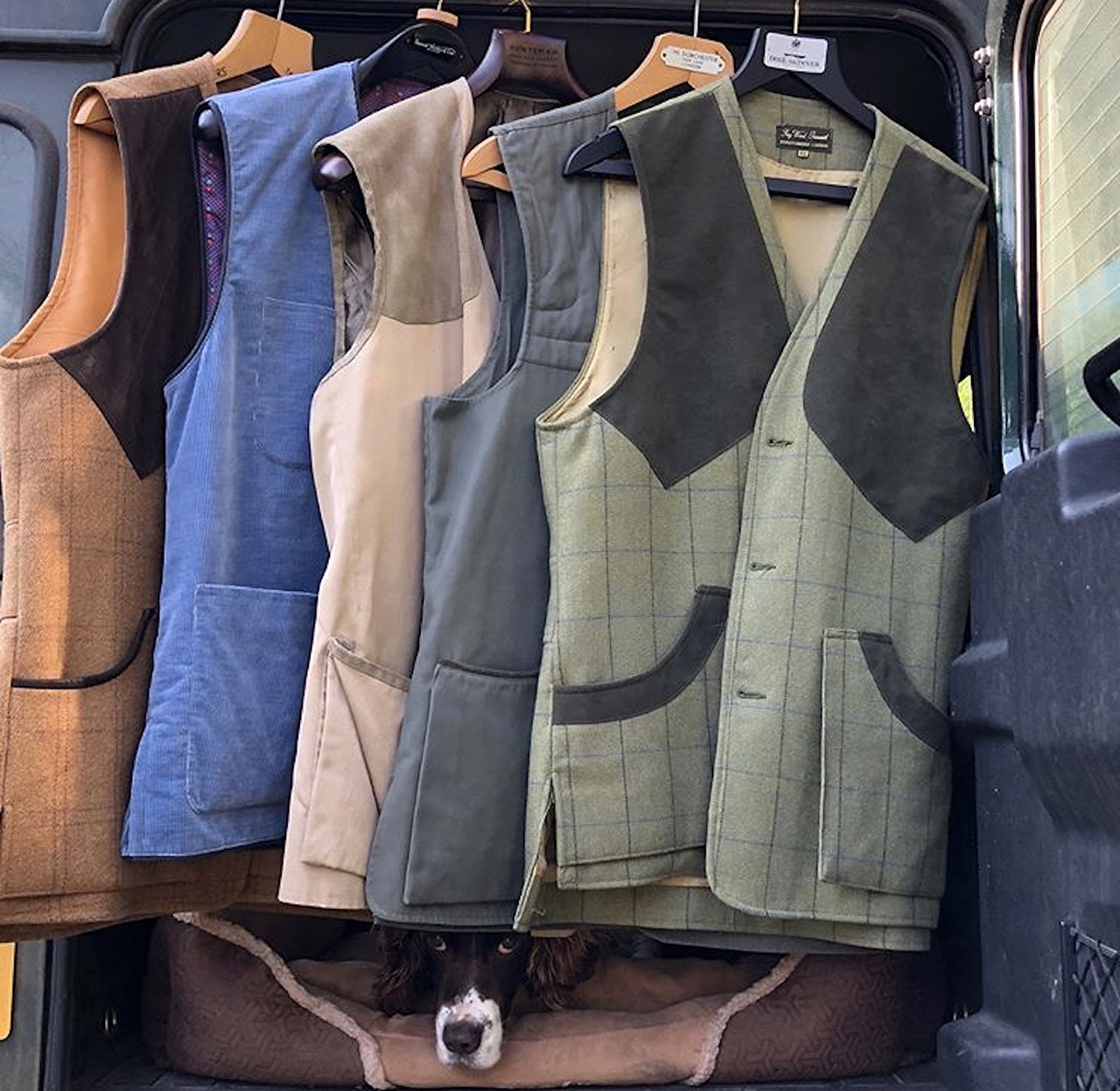
Shooting gilets with a spaniel accessory
VR: Among so many companies you’ve tried, which artisans or RTW do you favour and why these?
PF: My collection now has been honed to such an extent that I now have mostly Savile Row pieces. About 30 lounge suits. During my 20s I favoured Hackett and Chester Barrie. Hackett I have a great fondness towards as I bought from them in New Kings Road in the mid ’80s. Chester Barrie offered great quality and their 40 reg fitted me like a glove. They made for Turnbull & Asser and Huntsman too. Two of my preferred outfitters. Oliver Brown and Herbie Frogg were RTW favourites too. Simpson’s always for cashmere jumpers. Tremendous quality and value in the seasonal sales.
For suits and topcoats I prefer Huntsman & Sons and Dege & Skinner. There are others on the Row as equally as good, but these two I have had an acquaintance with for many years.
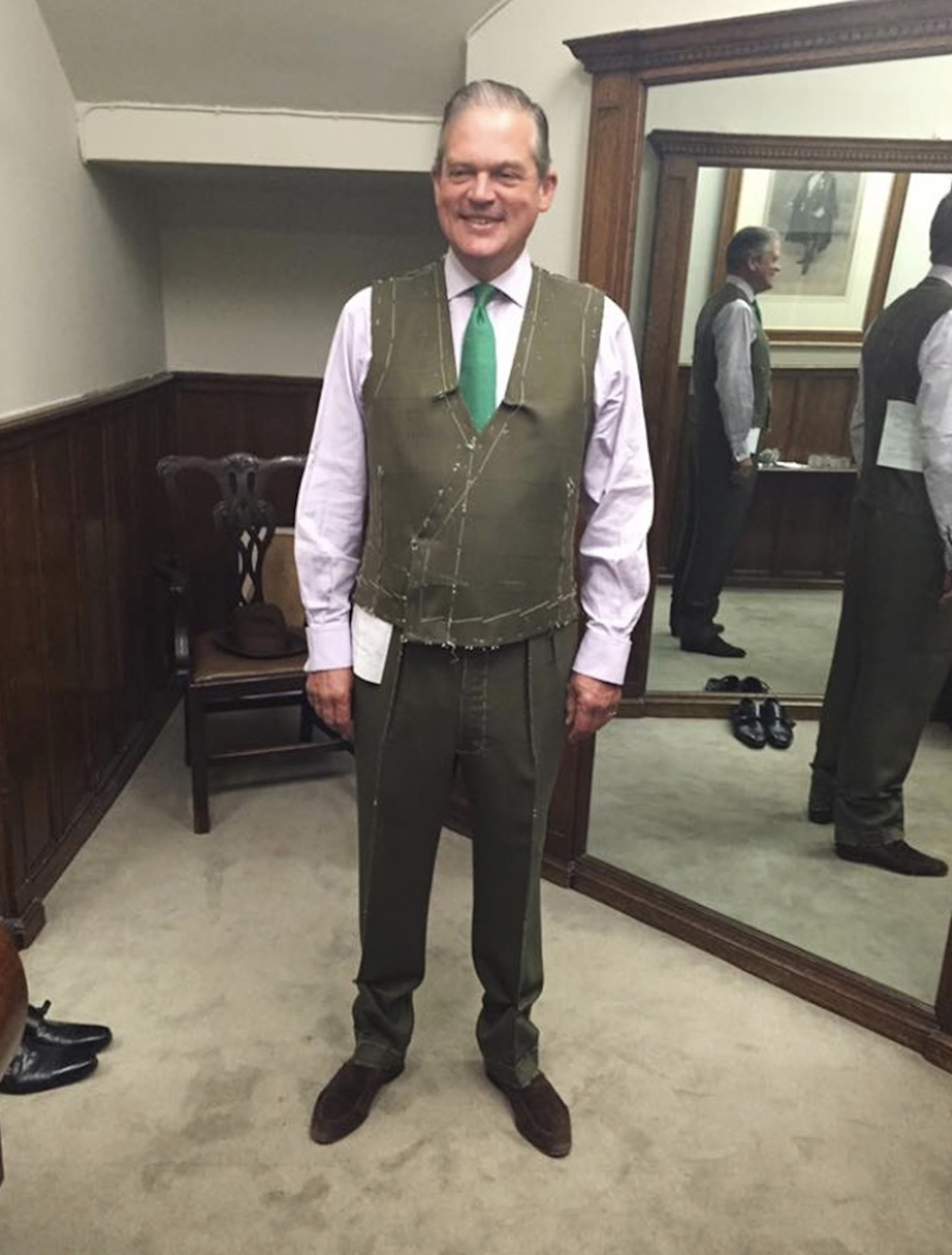
At Huntsman
VR: Have you any particular style or cut philosophy behind the clothes you collect and wear?
PF: I am fairly open on all styles other than the Italian cut. It does not do for me at all. Too heavy on the shoulder and square. I prefer a double vent, too, on a coat. When wearing a suit I usually wear braces. Always when wearing a vest. There’s nothing worse than seeing a gap (usually with a bit of shirt fabric) between the top of the trousers and the bottom of a vest (waistcoat). The other ‘no, no’ is wearing a belt and braces. Hard to believe, but I have seen it!
All in all I subscribe to the best quality fabrics and workmanship in a classic Savile Row style.
Other than Purdey, Ray Ward and Holland & Holland I am beyond designer names. I have given my Gucci and Hermes belts etc., to my teenage children. They seem to enjoy wearing Purdey and Holland & Holland too. George has all my Ralph Lauren Purple Label now.
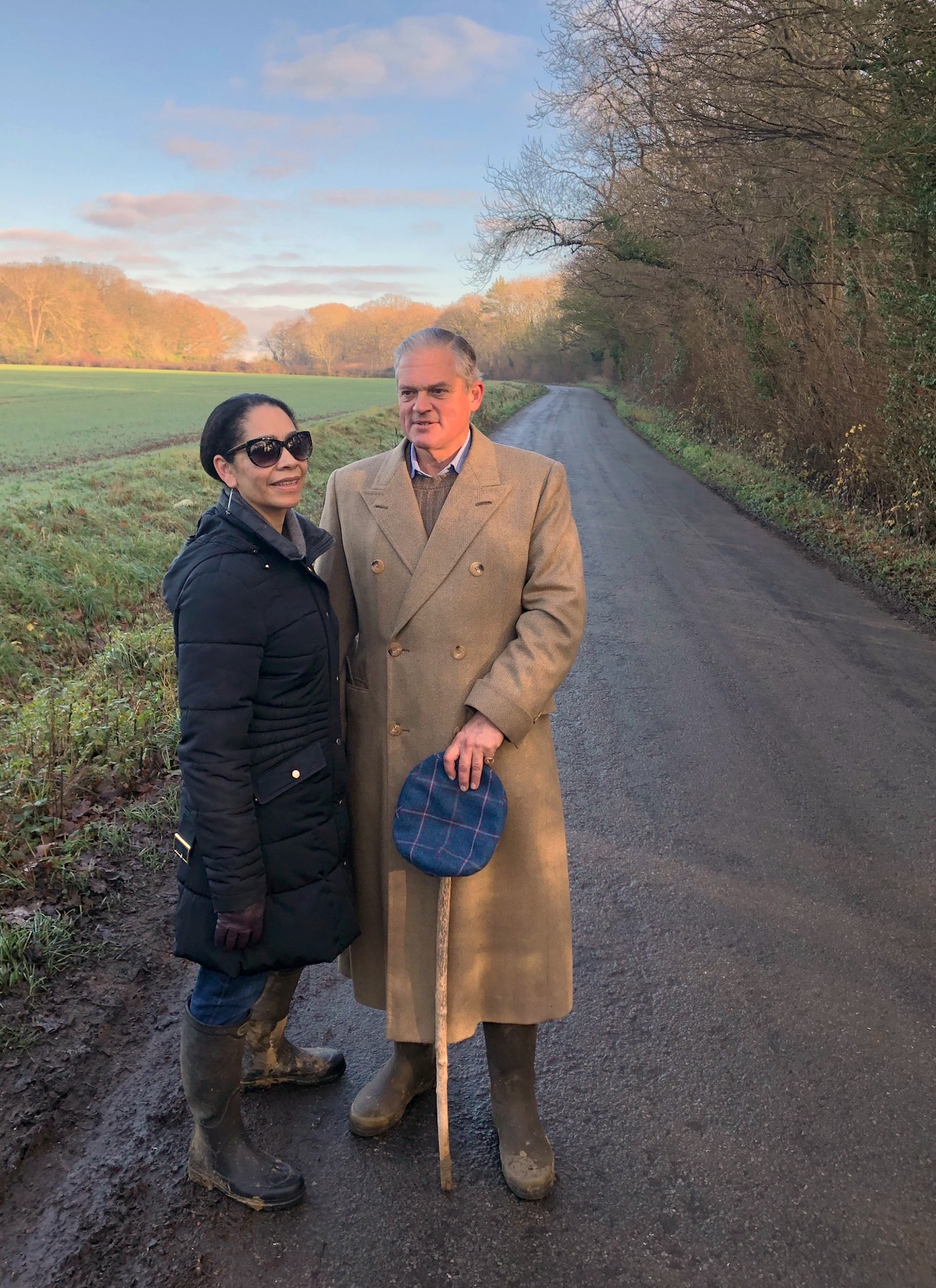 A Jones, Chalk & Dawson top coat with cuffed sleeves, Huntsman house tweed cap
VR: Who or what inspires you?
PF: This is pretty straightforward to answer. Who would be The Duke of Windsor. Ahead of his time in many respects. What would be craftsmanship and fabric quality. Vicuña being the king of fabrics. For tweed it has to be the Islay Woollen Mill.
VR: What’s your definition of style?
PF: I think I have to borrow a quote from Hardy Amies on this. It is something I try and adhere to. A man should look as if he has bought his clothes with intelligence, put them on with care and then forgotten all about them.
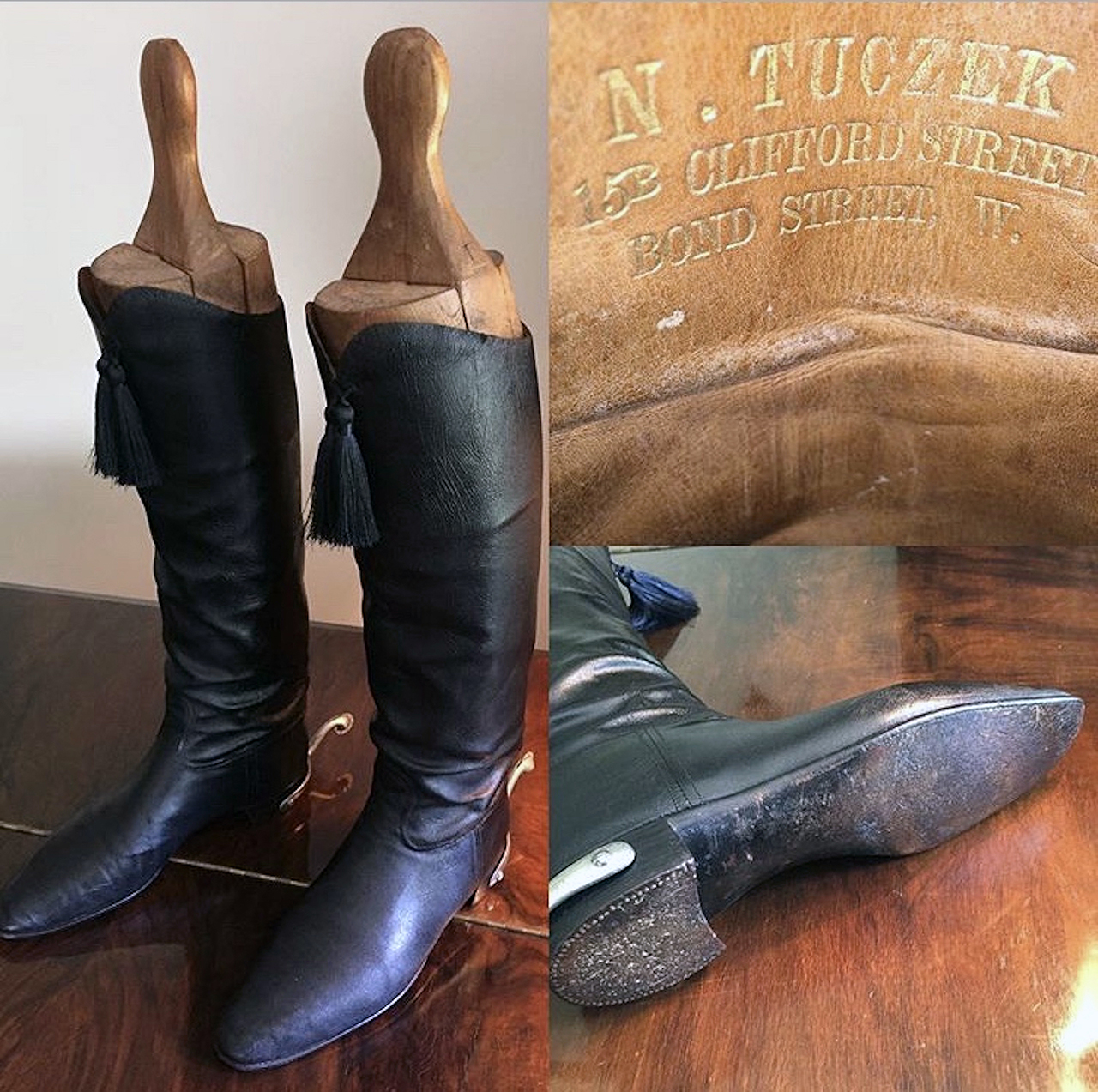 Hessian cavalry boots by Nikolaus Tuczek
VR: Finally, given your knowledge on the subject why should Keikari’s readers consider vintage tailoring?
PF: At the end of the day it’s each man, or woman, for their own. What goes around comes around. I’ve seen some big named hitters buying vintage to replicate or at least for ideas. As the great YSL put it ‘ fashions fade, style is eternal’.
Category Interviews, Men of style, Vintage
A Tour at Hornets of Kensington, Vintage Outfitters
0January 29, 2019 by Ville Raivio
Category British Style, Quality Stores, Videos, Vintage
An Interview with Paul Vincent from SEH Kelly
3January 10, 2019 by Ville Raivio
VR: Your age and occupation?
PV: 35, Menswear designer.
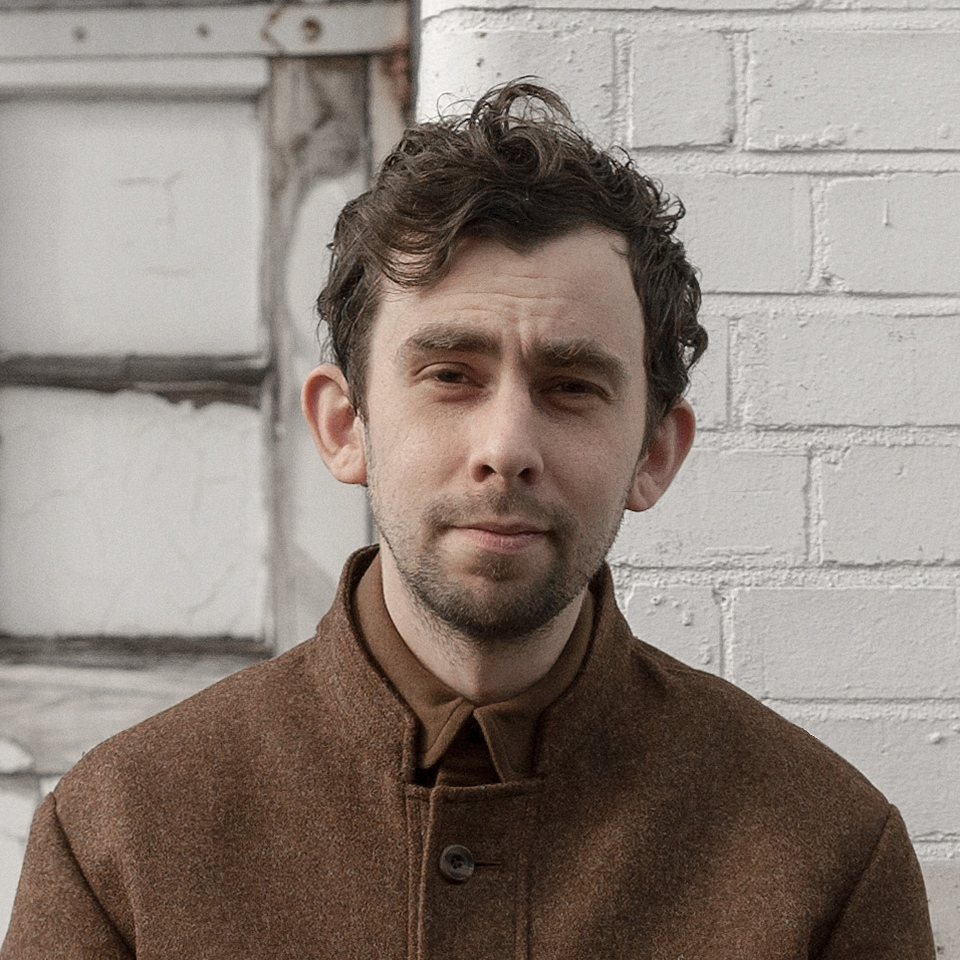
VR: Have you any children or spouse?
PV: Yes — my spouse is Sara Kelly, who is the other half of our company. She worked for years on Savile Row in London, and the experience of that time was fundamental for the start of the business, and is a strong influence on us to this day.
VR: How did your family react when they first learned about your passion for clothing?
PV: I’ve never really discussed my profession with my parents to any great level of depth. They have always seemed happy so long as their children are happy, and have never pushed me or my siblings in any particular direction.
VR: What other hobbies or passions do you have besides apparel?
PV: My work dominates my life, and absorbs my time and thoughts to a great extent. I love it. I am also interested in politics, sport, and architecture, and film. However, nothing that can be defined a a hobby: my hobby is my job. Even when I am reading about politics or watching football, I am also thinking about my hobby.
VR: How did you first become interested in style, and when did you turn your eyes towards more classic pieces? Why these instead of fast fashion?
PV: I have spent disproportionate amounts of my income on clothing since my early teens. I cannot readily explain why, to be honest: it is not to make a statement, and it is not to stand out; it must be for some inexplicable sense of satisfaction within the self. As time has gone by, as with any strong interest or hobby, I have sought to deepen and expand my knowledge, and that has lead me along the way to the classic forms of menswear. This currently dwells on traditional styles of coat and jacket from the past hundred years, and the materials woven in traditional and / or region-specific ways from around the British Isles.

VR: How have you gathered your knowledge of the tailored look — from books, talks with salesmen or somewhere else?
PV: Just here and there. It isn’t an active process. There is no shortage of information online, of course, but I stumble upon it rather than seek it out. We are also fortunate to work closely with people very knowledge on these subjects, at factories or mills, and they’re often not backward in coming forward with their knowledge.
VR: When did you decide to set up your own clothing company, and what goals did you set for yourself in the beginning?
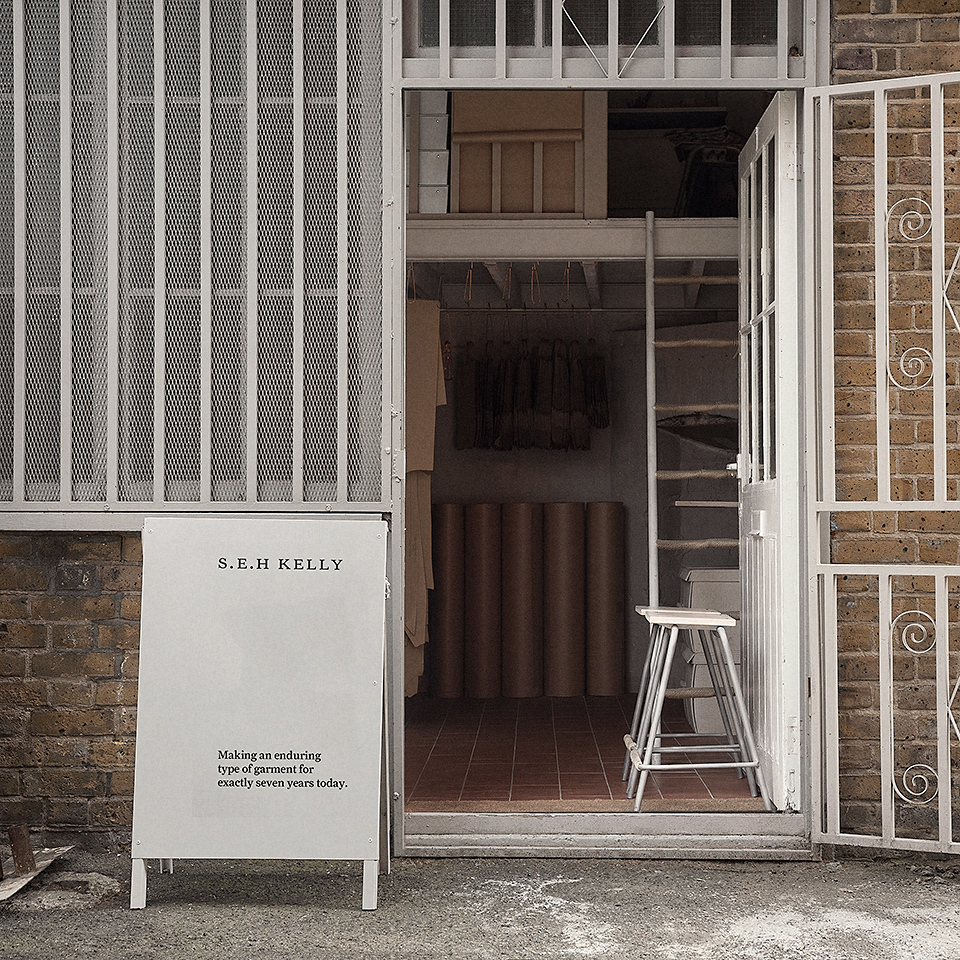
PV: We set up the business in 2009, as the recession / “credit crunch” began, and we were both left with nothing much to do with our time. Sara, however, had a wealth of knowledge and contacts with various mills and factories, from her time on Savile Row, so we decided to try something new. Our sole goal, which is the same to this day, is to make a particular type of garment, made with cloth and components from around the British Isles, and to market it at a sensible price (one which will also sustain a niche business, I mean).
VR: Is there a story behind the company name?
PV:It’s just Sara’s name. She came up with a long list of brand names, and I didn’t think much of them. “Why not just use your name,” I suggested, “it looks good written down.”
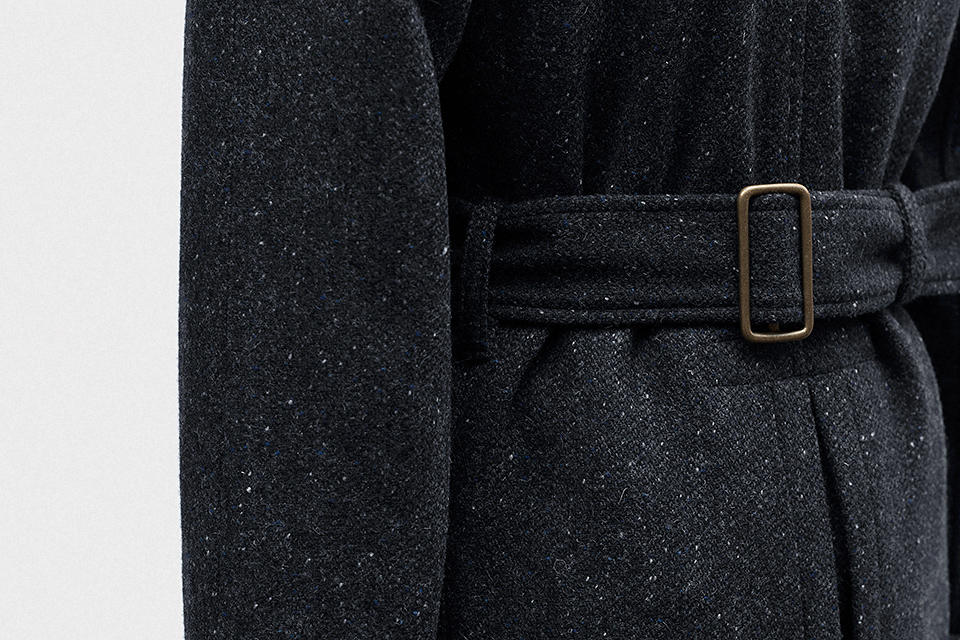
VR: What’s your criteria for choosing the factories and weavers who take part in creating SEH Kelly’s wares?
PV: We don’t choose them on aesthetic grounds, but on grounds of authenticity, story, or very apparent regional provenance. We have worked with weavers on remote islands who make very decorative and textured tweed, and mills in the middle of cities that make cloth the opposite of that. I am always keen to learn about what they make, and how we can apply that to our styles.
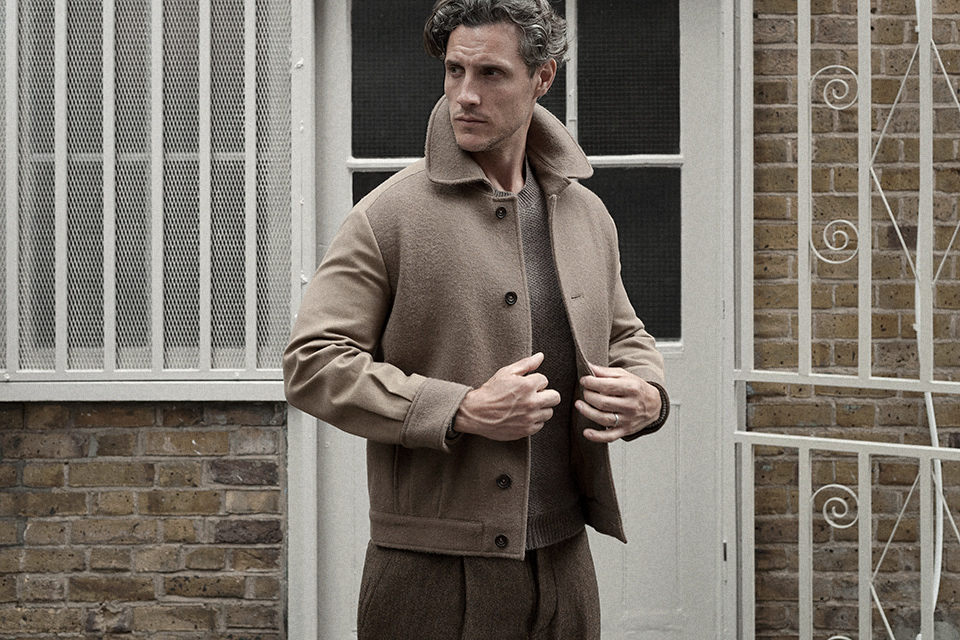
VR: What’s your style or cut philosophy behind the clothing?
PV: We hope to make things that endure trends and other vagaries of fashion. I try to look at things through the lens of “What will that look like in five years’ time?” — both from a stylistic perspective, but also a quality and material perspective, in terms of how the thing will age with time.
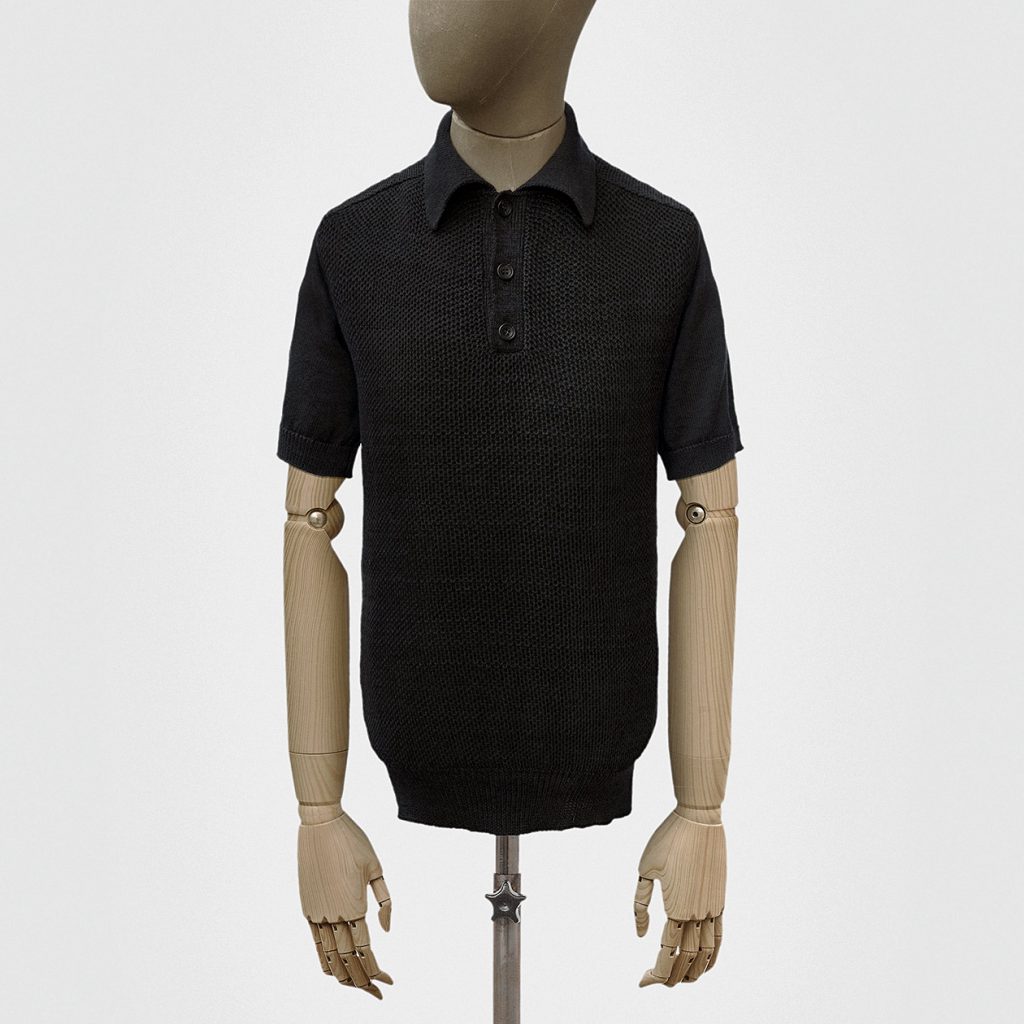
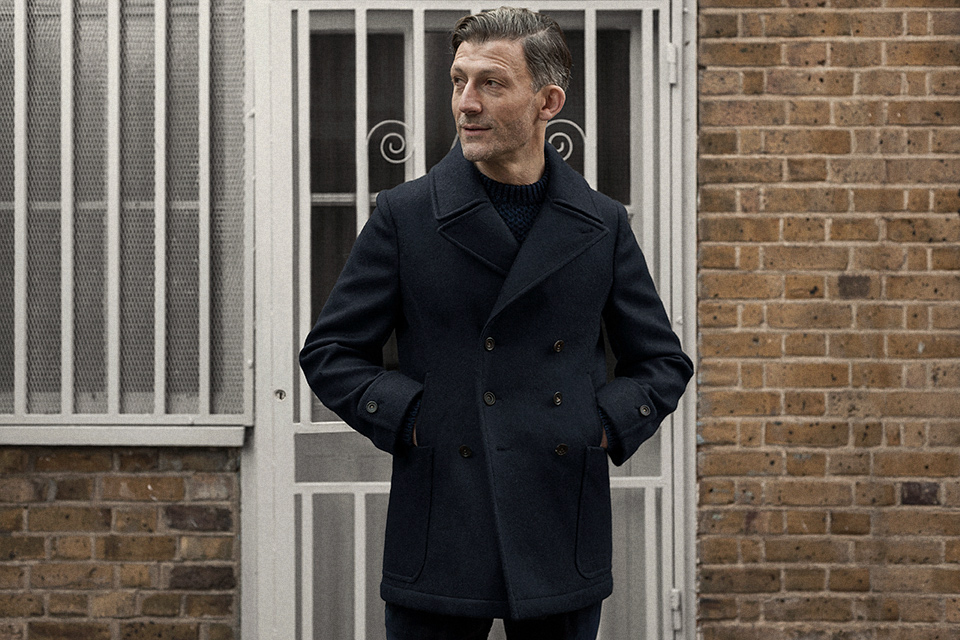
Our cut is a classic English one — one which has mostly prevailed in men’s outfitters from the middle of the 20th-century onwards — and so is quite straight, up and down. The style is mostly simple and unadorned. We strive for simplicity, but also innovation, here and there. Ideally, these two qualities will go hand in hand: there is nothing better than one aspect of a garment doing two jobs, such as a seam that doubles as an entry-point for a pocket, or a pocket that can also serve as a belt-loop.
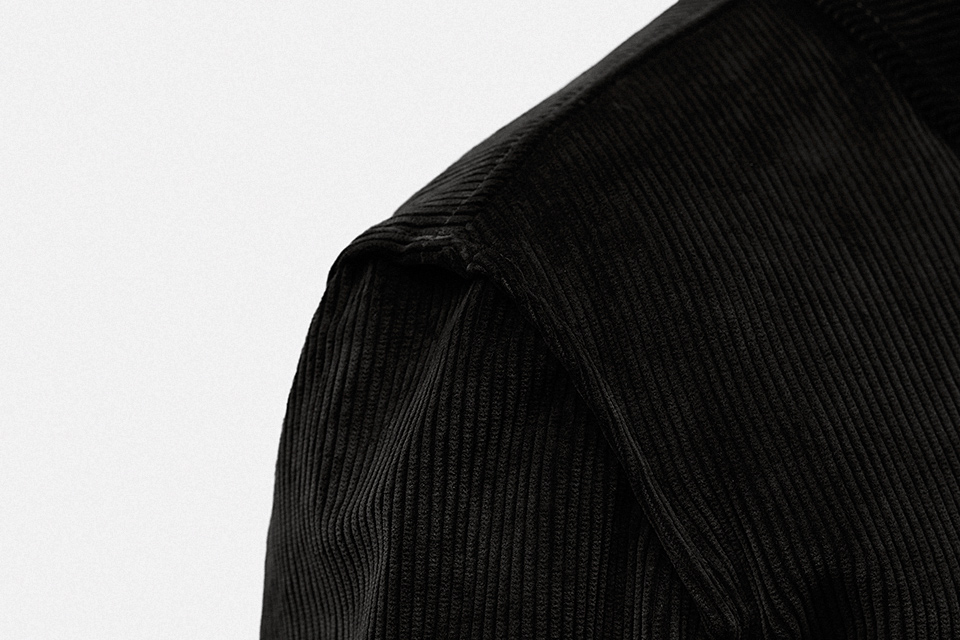
VR: How would you describe the “House Style” of SEH Kelly?
PV: It is perhaps a classic English style, but modernised through by alternative means of construction. We do lots of different styles of shoulder, for instance, such as raglan, semi-raglan, split-sleeve, Dolman, Magyar, and others. Despite this, the proportions and shapes of more cosmetic aspects of a garment — such as collars, pockets, and the other things — consistent, and quite “classic”, right across the board. They do not change.
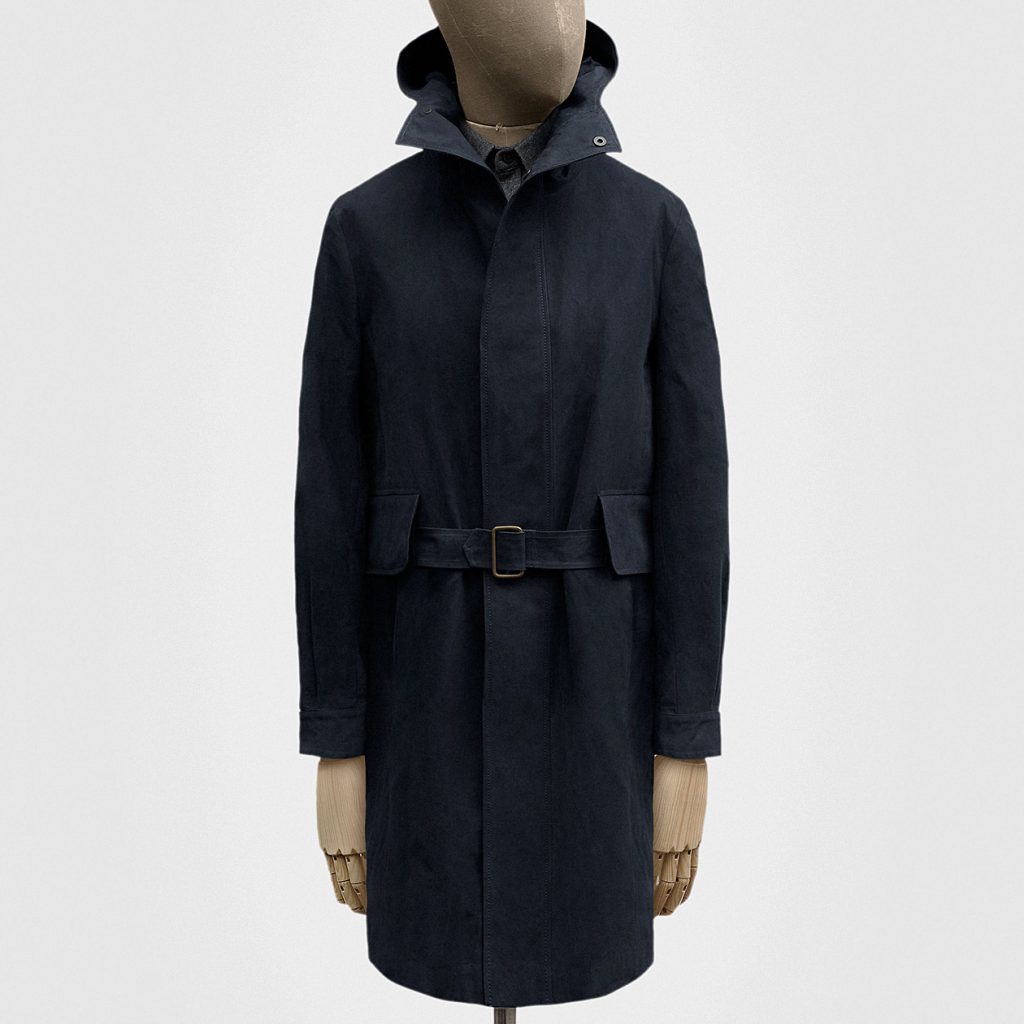
VR: Who or what inspires you?
PV: Going to the factory every day, and building on what went before. We keep evolving our styles, to make them better, and to apply new learnings to old developments. That is the principal source of inspiration: to keep pushing forward in terms of quality of cut, design, and material. I am never fully happy with any of our garments for very long, and always wish to make them more pleasing to look at, to wear, and to be more lasting. Being surrounded by people at the factory who have the same outlook strengthens that resolve.
VR: What’s your definition of style?
PV: The old Hardy Amies quote, about getting dressed with the utmost care, but looking to all the world like you haven’t tried at all, is perhaps the best one for me.
VR: Finally, how would you say British style differs from Italian?
PV: I don’t really think I can answer that without falling back on cliches of either. British tailoring is more reserved and more structured; Italian looks to be lighter and more fluid. But then there is street style, there is high fashion, and there are the manifold and impossible to map influences on both from other cultures. I could not sum it up, and I do not know enough about either to make an informed response beyond that.
Category Interviews, Quality makers, Web stores
Bespoke shoemaker Toru Saito
0December 14, 2018 by Ville Raivio
Category Cordwainers, Japanese Style, Videos
Copyright © 2013 Ville Raivio